

Getting diesel mechanic certification opens doors to better jobs and higher pay in the trucking and transportation industry. The National Institute for Automotive Service Excellence stands as the gold standard for proving technical skills to employers nationwide. Since 1972, ASE has helped mechanics demonstrate they possess the knowledge needed to work on complex diesel engines and modern emission systems.
Professional credentials separate qualified technicians from entry-level workers in this competitive field. Programs like Universal Technical Institute’s 45-week Diesel Technology course count toward the work experience required for ASE exams, allowing students to build qualifications while still in school.
The path to becoming a certified diesel mechanic involves passing specific tests and gaining hands-on experience. Master Technician status represents the highest achievement level, earned by passing multiple examinations within a certification series.
Key Takeaways
- Industry Recognition: ASE certification validates diesel mechanic skills to employers across all 50 states
- Experience Requirements: Two years of documented work experience required before testing, with technical school programs counting as one year
- Master Status Advantage: Achieving Master Technician credentials demonstrates expertise across multiple diesel systems and increases earning potential
- Competitive Salaries: Certified mechanics earn 15-25% more than non-certified technicians with median wages exceeding $60,000 annually
- Specialized Training: Manufacturer-specific programs from Cummins, Peterbilt, and Daimler provide additional career advancement opportunities
Understanding Diesel Mechanic Certification Requirements
Becoming a certified diesel mechanic involves meeting specific prerequisites that demonstrate both theoretical knowledge and practical skills. The certification path varies based on chosen credentials, but all share common elements designed to ensure technicians can safely and effectively maintain complex diesel systems.
Work Experience Prerequisites
Most diesel certification programs require documented work experience before testing eligibility. ASE certification mandates two years of hands-on professional experience working directly with diesel engines, transmissions, and related systems.
This experience must involve actual diesel engine work rather than general automotive repair. Technical institutes offer programs that count toward this requirement, with ASE Education Foundation-accredited courses substituting for one year of required experience.
Educational Pathways and Training Options
Several educational routes lead to professional diesel technician credentials. Each pathway provides comprehensive training in diagnostic procedures, repair techniques, and modern diesel technology.
Technical institutes deliver intensive 45-week programs focusing exclusively on diesel technology and heavy equipment systems. Community colleges provide two-year associate degree programs combining general education requirements with specialized technical training.
Trade schools offer focused certificate programs lasting 6-18 months, concentrating on specific skill development. Apprenticeships combine paid work experience with classroom instruction over 3-4 years, allowing technicians to earn while learning.
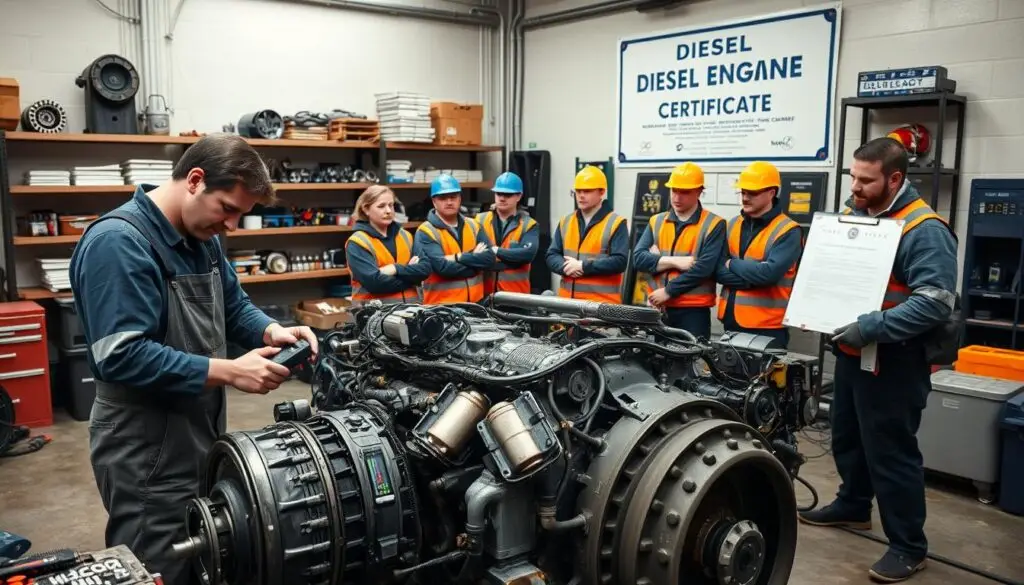
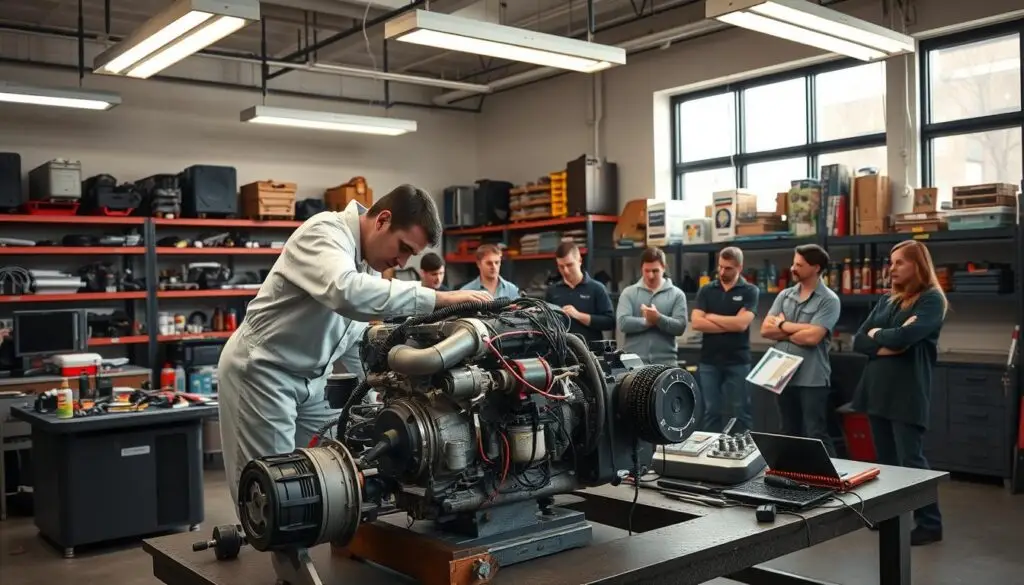
Each pathway includes hands-on training in labs equipped with industry-standard tools and diagnostic equipment. Students work on actual diesel engines, transmissions, and hydraulic systems to develop practical troubleshooting skills employers demand.
Industry Standards and Regulations
While federal law does not mandate diesel mechanic certification, industry standards have evolved to ensure quality and safety across the transportation sector. Many employers now require or strongly prefer certified technicians for all diagnostic and repair work.
These standards guarantee mechanics possess the knowledge to diagnose problems accurately and perform repairs meeting manufacturer specifications. The push for certification reflects the increasing complexity of modern diesel engines with electronic controls, emission systems, and computerized diagnostics.
ASE Diesel Certification Overview
The National Institute for Automotive Service Excellence operates as the premier credentialing organization for professional mechanics. Since 1972, ASE has developed comprehensive testing programs that validate technician skills across the automotive and heavy equipment industries.
Their certification system helps technicians prove expertise while giving employers confidence in hiring qualified professionals who meet rigorous national standards.
National Institute for Automotive Service Excellence Background
ASE operates as an independent, non-profit organization dedicated to improving vehicle repair quality through technician certification and training standards. The institute offers more than 50 different certification tests, including specialized programs for diesel mechanics working on commercial vehicles.
Industry professionals design each test to reflect real-world repair scenarios encountered in dealerships and fleet maintenance facilities. Working technicians, equipment manufacturers, and technical educators collaborate to create questions testing practical skills needed for daily operations.
Types of ASE Diesel Tests Available
Diesel technicians can choose from eight specialized test categories in the Medium/Heavy Truck series. Each examination focuses on specific systems and components critical to commercial vehicle operation.
| Test Code | Certification Area | Focus Areas |
|---|---|---|
| T1 | Gasoline Engines | Engine repair, diagnosis, performance |
| T2 | Diesel Engines | Diesel systems, turbochargers, fuel injection |
| T3 | Drive Train | Transmissions, clutches, driveshafts |
| T4 | Brakes | Air brakes, hydraulic systems, ABS |
| T5 | Suspension & Steering | Alignment, steering systems, suspensions |
| T6 | Electrical/Electronic Systems | Wiring, batteries, electronic controls |
| T7 | HVAC Systems | Heating, ventilation, air conditioning |
| T8 | Preventive Maintenance | Inspection procedures, maintenance schedules |

Testing Process and Registration
Getting started with ASE diesel certification involves several straightforward steps. Candidates register online through the ASE website, where they select desired test categories and schedule examination dates.
Registration costs $34, plus $59 for each standard test. Advanced level tests cost $118 each, reflecting their comprehensive nature and specialized content.
Tests take place at authorized testing centers nationwide throughout the year, providing flexible scheduling options. Each exam contains 40-80 questions focusing on job-related tasks diesel technicians perform daily in real-world repair environments.
Renewal Requirements and Timeline
ASE certifications remain valid for five years from the date of achievement. Technicians must recertify before expiration to maintain active credentials and demonstrate current knowledge of evolving diesel technology.
The myASE Renewal app makes recertification convenient by allowing technicians to complete requirements on their schedule without visiting testing centers. Staying current ensures mechanics understand the latest diagnostic procedures, emission control systems, and electronic troubleshooting techniques essential for modern commercial vehicles.
Medium and Heavy Truck Certification Series
The medium and heavy truck certification series provides specialized credentials for professionals working on Class 4 through Class 8 commercial vehicles. This comprehensive pathway equips mechanics with knowledge needed to service everything from delivery trucks to eighteen-wheelers.
ASE offers multiple test categories validating expertise in different truck systems and components critical to fleet operations and road safety.
T2 Through T8 Test Categories
Each certification test focuses on specific truck systems encountered in commercial vehicle maintenance. The seven core examinations contain between 40 and 75 multiple-choice questions designed to measure technical knowledge and diagnostic skills.
| Test Code | Certification Area | Number of Questions |
|---|---|---|
| T2 | Diesel Engines | 65 |
| T3 | Drive Train | 40 |
| T4 | Brakes | 50 |
| T5 | Suspension & Steering | 50 |
| T6 | Electrical/Electronic Systems | 50 |
| T7 | Heating, Ventilation & A/C | 40 |
| T8 | Preventive Maintenance Inspection | 50 |
Master Technician Status Requirements
Achieving Master medium/heavy-truck technician status requires passing all seven tests from T2 through T8. This prestigious credential demonstrates comprehensive expertise across all major truck systems and positions technicians as elite professionals in the field.
Master technicians often earn significantly higher salaries and qualify for advanced positions in fleet management, technical training roles, and diagnostic specialist positions. Employers reserve their most complex repair challenges for these highly qualified professionals.
Specialized Truck Equipment Certifications
Beyond the core series, specialized certification options expand career opportunities in specific transportation sectors. These additional credentials allow technicians to serve niche markets with unique maintenance requirements.
Transit Bus certifications (H2-H8) focus on public transportation fleets, addressing systems specific to passenger comfort and high-frequency urban operations. School Bus credentials (S1-S7) concentrate on student transportation vehicles with emphasis on safety systems and regulatory compliance.
Truck Equipment certifications (E1-E3) cover auxiliary systems like hydraulic lifts, refrigeration units, and specialized cargo handling equipment. The Electronic Diesel Engine Diagnosis Specialist certification (L2) represents advanced diagnostic expertise in computerized engine management systems.
Commercial Driver’s License for Mechanics
Diesel mechanics who obtain a Commercial Driver’s License gain significant career advantages beyond certification alone. This credential allows technicians to legally operate commercial vehicles during repair testing, quality control checks, and diagnostic procedures.
Many repair shops and dealerships require mechanics to move trucks between service bays, parking areas, and test routes. A CDL eliminates dependence on other staff members for vehicle movement, increasing efficiency and autonomy in daily operations.
| CDL Class | Vehicle Types | Weight Rating | Common Uses for Mechanics |
|---|---|---|---|
| Class A | Tractor-trailers, truck and trailer combinations | Over 26,001 lbs GCWR | Testing semi-trucks, moving customer vehicles |
| Class B | Large trucks, buses, segmented vehicles | Over 26,001 lbs GVWR | Servicing delivery trucks, school buses |
| Class C | Smaller commercial vehicles | Under 26,001 lbs GVWR | Testing passenger vans, small hazmat vehicles |
Fleet maintenance facilities and dealerships often prefer hiring mechanics with combined credentials. This dual qualification enables technicians to perform complete service cycles without coordination delays or scheduling conflicts.
State requirements vary for CDL testing and renewal procedures. Most states mandate passing written knowledge exams covering general trucking rules, air brake systems, and combination vehicle operation. The skills test includes pre-trip vehicle inspection, basic vehicle controls, and supervised on-road driving evaluation.
Training programs typically require 150-240 hours of combined classroom instruction and behind-the-wheel practice. Mechanics pursuing CDL credentials should budget $3,000-$5,000 for training costs, though many employers reimburse these expenses or provide in-house training programs as part of professional development initiatives.
Manufacturer-Specific Training Programs
Leading diesel equipment manufacturers partner with technical schools to offer specialized training beyond standard certification programs. These partnerships create direct pathways to dealership careers while teaching brand-specific diagnostic procedures and proprietary repair techniques.
Students who complete manufacturer training gain competitive advantages in the job market and often secure employment commitments before graduation through early hiring programs.
Cummins Technical Education
Cummins partners with technical institutes nationwide to deliver specialized engine training. Students learn proprietary diagnostic software, emission control systems, and electronic troubleshooting specific to Cummins powertrains.
The program covers ISX, ISB, and QSK engine families used in applications ranging from pickup trucks to mining equipment. Graduates receive Cummins certification alongside standard credentials, positioning them for immediate employment at authorized service centers.
Peterbilt Technician Institute
Peterbilt’s specialized program focuses on Class 8 truck systems and advanced diagnostics specific to their vehicle platform. Trainees work with PACCAR MX engines, automated transmission systems, and proprietary electrical architectures during the intensive 12-week course.
The program includes hands-on experience with current model trucks and prepares technicians specifically for dealership service department roles where brand expertise commands premium compensation.
Daimler Truck Training Programs
Daimler offers comprehensive training for Freightliner and Western Star technicians through partnerships with vocational schools. The program emphasizes Detroit Diesel engines, automated manual transmissions, and advanced driver assistance systems increasingly common in modern commercial vehicles.
Students learn using actual service bay equipment and manufacturer diagnostic tools, ensuring seamless transition into professional repair facilities upon program completion.
Manufacturer Partnership Benefits
Manufacturer-sponsored programs often include tuition assistance or reimbursement opportunities for qualified students. Dealerships actively recruit program graduates, offering higher starting salaries and clear advancement paths compared to general repair facilities.
Technicians with manufacturer credentials typically earn 15-20% more than those with general certification alone, reflecting the specialized knowledge and brand loyalty these programs develop.
NATEF Accredited Diesel Programs
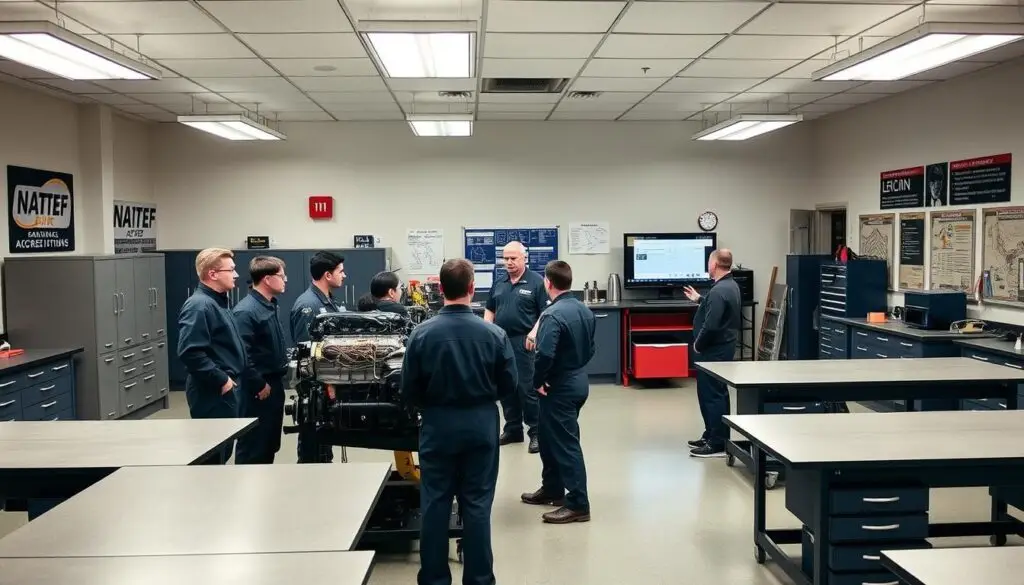
The ASE Education Foundation, formerly known as NATEF, plays a vital role in shaping quality diesel education across the United States. These accredited programs serve as the gold standard for technical training, ensuring students receive industry-relevant education preparing them for real-world challenges.
Schools with this prestigious accreditation demonstrate commitment to excellence through rigorous evaluation of curriculum quality, facility adequacy, and instructional standards.
Program Accreditation Standards
Accredited institutions must meet strict criteria covering multiple operational areas. Programs undergo comprehensive reviews of curriculum alignment with current industry needs, equipment modernization schedules, and facility safety standards.
Instructors must possess proper credentials and maintain current industry knowledge through continuing education. The evaluation process examines workshop tools, diagnostic equipment, and training vehicles to ensure they reflect technology used in professional repair facilities nationwide.
Approved School Networks
Leading technical institutes like Universal Technical Institute maintain ASE Education Foundation accreditation across multiple campuses nationwide. Community colleges and vocational schools also participate in this network, providing accessible training options for aspiring technicians regardless of geographic location.
This coast-to-coast network ensures consistent quality standards while offering students flexibility in choosing programs matching their career goals and regional employment opportunities.
Credit Transfer Opportunities
Students benefit from standardized curriculum requirements that facilitate credit transfers between accredited institutions. This flexibility allows technicians to continue education at different schools without losing progress toward degree completion.
Many programs also offer federal financial aid eligibility, making professional training more affordable for qualified students pursuing diesel technology careers through grants, loans, and work-study arrangements.
EPA Certification for Diesel Technicians
Working with vehicle air conditioning systems requires specialized environmental training mandated by federal regulations. EPA certification ensures proper handling of refrigerants that can damage the ozone layer if released improperly during service procedures.
This certification is mandatory for anyone purchasing refrigerants or servicing climate control systems in diesel vehicles, regardless of other credentials held.
The Environmental Protection Agency requires technicians to pass examinations covering safe refrigerant handling practices and environmental compliance. Core topics include proper recovery techniques for removing old refrigerant, recycling procedures to clean and reuse materials, and recharging methods for adding new refrigerant safely to vehicle systems.
Additional training covers leak detection and repair protocols, record keeping requirements for refrigerant usage, and proper disposal methods for contaminated materials.
Different refrigerant types require specific certification levels. R-134a remains common in older diesel vehicles, while newer models increasingly use R-1234yf with different safety considerations and handling procedures. Each refrigerant has unique properties technicians must understand for safe, compliant service work.
Without proper EPA certification, mechanics cannot legally purchase refrigerant or perform climate control system service work. This requirement protects both environmental quality and ensures customer vehicles meet federal emission standards.
Training typically takes one day and costs between $150-$300, depending on the provider and certification level pursued. Many technical schools and equipment suppliers offer EPA certification courses with flexible scheduling options. Online training followed by proctored examinations has become increasingly popular for working technicians.
Certification remains valid indefinitely, though staying current with changing regulations benefits career advancement and ensures ongoing compliance with evolving environmental standards.
Preparing for Diesel Certification Exams
Getting ready for diesel mechanic certification requires strategic planning and dedicated preparation beyond casual studying. Success on ASE examinations depends on combining effective study methods with practical experience gained through hands-on training programs.
The right preparation approach can mean the difference between passing on the first attempt and facing expensive retake fees while delaying career advancement.
Study Resources and Practice Tests
ASE offers online practice tests providing detailed feedback on performance across all test categories. Each practice examination explains why answers are correct or incorrect, helping candidates understand the reasoning behind test questions and identify knowledge gaps requiring additional study.
Study guides for every test series break down major content areas and show exact time limits candidates face during actual examinations. A free testing demo allows exploration of the actual test platform before exam day, showing how questions appear, navigation procedures, and question flagging capabilities.
Many technicians find this preview significantly reduces test-day anxiety and improves time management during actual certification attempts.
Hands-On Training Requirements
Book knowledge alone will not earn certification credentials. Programs like those at Universal Technical Institute blend online lectures with extensive laboratory work, ensuring students can apply theoretical concepts to real-world diesel systems and troubleshooting scenarios.
Most successful candidates spend at least 40% of preparation time working directly with diesel engines, transmissions, and electronic control systems. This hands-on practice reinforces textbook learning and builds muscle memory needed for diagnostic procedures tested in certification examinations.
Test-Taking Strategies and Tips
Read each question completely before examining answer choices to avoid missing critical information. Eliminate obviously incorrect answers first to improve odds on difficult questions requiring educated guessing.
Budget time based on question count, typically allowing 1-2 minutes per question depending on examination length. Flag difficult questions and return to them after completing easier items to maximize scoring potential within time constraints.
Trust initial instincts unless certain an answer is incorrect, as first impressions often prove accurate when technical knowledge is solid.
Cost Considerations and Financial Planning
Registration fees start at $34, plus $59 per standard test or $118 for advanced certifications in specialized areas. Many diesel repair shops cover these costs for employees as part of professional development programs supporting workforce advancement.
Ask employers about reimbursement policies before registering to understand available financial support. Budget for study materials, practice tests, and potential retake fees when planning certification timelines and expenses.
Some technicians save money by taking multiple tests during one testing window, reducing overall registration costs through combined scheduling.
Career Advancement with Diesel Certifications
Professional credentials open doors to leadership positions and higher-paying roles across the transportation industry. Certified professionals gain immediate advantages in job placement, promotion opportunities, and earning potential that set them apart from non-certified mechanics in competitive markets.
The path from entry-level technician to shop foreman or service manager becomes clearer with proper certifications demonstrating commitment to professional excellence. Fleet maintenance facilities, truck dealerships, and independent repair shops actively seek technicians who demonstrate expertise through recognized credentials, creating natural progression opportunities.
Master Technician status represents the pinnacle of achievement in diesel mechanics. This designation requires passing multiple ASE examinations and accumulating years of hands-on experience across diverse systems and vehicle types.
Employers value this comprehensive expertise, often reserving the most complex diagnostic work and direct customer interactions for these elite professionals who command premium compensation.
Specialized certifications create unique career advantages in growing market segments. Technicians can focus on hydraulic system diagnostics, electronic control module programming, emission control systems, alternative fuel technologies, or preventive maintenance management depending on interest areas and regional employment opportunities.
Career mobility increases significantly with multiple certifications spanning different systems and vehicle types. Technicians can transition between dealerships, municipal fleets, mining operations, and agricultural equipment dealers as opportunities arise.
Each additional certification adds versatility and market value to professional profiles, protecting against industry fluctuations and expanding employment options.
Many schools offer Early Employment Programs connecting students with employers before graduation. These partnerships provide real-world experience while completing certification requirements, creating seamless transitions into full-time positions with established industry relationships and mentorship opportunities.
Salary Impact and Job Market Benefits
Earning professional credentials significantly boosts income potential and career opportunities in the diesel mechanic field. Bureau of Labor Statistics data reveals compelling financial benefits for certified technicians, with substantial wage differences between certified and non-certified professionals across various regions and specializations.
Median Income for Certified Technicians
The national median annual salary for bus and truck mechanics reached $60,640 as of May 2024, according to federal employment data. This figure represents the midpoint where half of technicians earn more and half earn less across all experience levels.
Mechanics holding certifications from the National Institute for Automotive Service Excellence typically command wages above this median, reflecting proven expertise and value to employers seeking qualified professionals for complex repair work.
| Experience Level | Annual Salary Range | Certification Impact |
|---|---|---|
| Entry-Level | $45,000 – $52,770 | +15% with ASE |
| Mid-Level | $55,000 – $65,000 | +20% with ASE |
| Senior-Level | $70,000 – $85,000 | +25% with Multiple ASE |
Employment Growth Projections
The diesel technician field shows strong growth potential driven by increasing commercial vehicle fleets and aging infrastructure requiring specialized maintenance. Total employment is projected to surpass 308,000 positions by 2033, creating excellent opportunities for certified mechanics to secure stable, well-paying positions with advancement potential.
This expansion reflects growing demand for qualified professionals who can service modern diesel engines with complex electronic systems and emission controls.
Regional Salary Variations
Geographic location plays a crucial role in compensation levels for diesel mechanics. Massachusetts offers entry-level salaries starting at $52,770, reflecting higher living costs and strong demand for qualified technicians in the Northeast industrial corridor.
North Carolina shows hourly median wages of $25.57, with the 25th percentile earning $22.00 per hour and the 10th percentile at $18.08. These regional variations reflect local cost of living, industry concentration, and demand for skilled technicians across different transportation sectors.
Building Your Diesel Technology Career
Professional diesel mechanic certification opens doors to rewarding careers in the automotive and trucking industries through proven expertise and specialized knowledge. ASE credentials and manufacturer training programs equip technicians with skills employers value most when hiring for diagnostic and repair positions.
Whether pursuing medium and heavy truck specializations or focusing on specific equipment types, each credential adds measurable value to professional profiles. NATEF accredited programs like Universal Technical Institute’s 45-week Diesel Technology course provide solid foundations for certification success while substituting for one year of ASE work experience requirements.
These programs teach hands-on skills through real-world equipment training that prepares students for certification examinations and immediate employment opportunities.
The investment in professional credentials pays dividends through better job opportunities and higher salaries compared to non-certified technicians. Certified professionals earn significantly more than peers without credentials and enjoy greater job security in changing economic conditions.
With diesel technology evolving rapidly through electronic controls and emission systems, maintaining certifications through five-year renewal cycles keeps skills current and marketable in competitive job markets.
Starting your diesel technology career begins with exploring accredited programs matching career goals and learning preferences. Contact Universal Technical Institute’s Admissions Representatives at 1-800-834-7308 to learn about enrollment options, financial aid availability, and program schedules aligned with your professional aspirations.
Share Your Expertise
Join Heavy Duty Journal as a guest author and reach thousands of industry decision-makers.
Become a Guest AuthorFrequently Asked Questions
What is ASE diesel certification and why is it important?
ASE diesel certification is a professional credential demonstrating technician knowledge and skills in diesel engine repair and maintenance. Founded in 1972, ASE offers over 50 certification tests for automotive and diesel technicians. This certification shows employers you possess required knowledge for professional industry work, improves employment outlook, and significantly increases salary potential.
How long does it take to get diesel mechanic certification?
The timeline varies depending on educational path and work experience. ASE certification requires two years of real-world work experience before exam eligibility. Completing Universal Technical Institute’s 45-week Diesel Technology program counts as one year toward required experience. After meeting experience requirements, candidates can register for and take certification exams available throughout the year at authorized testing centers.
Do diesel mechanics need CDL certification?
While not always mandatory, CDL certification is highly beneficial for diesel mechanics. It allows technicians to test drive and move commercial vehicles during repairs and maintenance procedures. CDL enhances employment opportunities at dealerships and fleet maintenance facilities, especially when working on medium and heavy-duty trucks requiring road testing for quality control verification.
What are the costs associated with diesel technician credentials?
ASE certification costs include a $34 registration fee plus $59 per standard test or $118 for advanced certifications. Many employers cover test fees for employees as professional development investments. Training costs vary from community college courses to specialized programs like UTI’s 45-week Diesel Technology program, with federal financial aid available for eligible students at accredited institutions.
How often do I need to renew my diesel certification?
ASE recertification is required every five years to maintain current industry knowledge and active credential status. The myASE Renewal app provides convenient recertification options allowing technicians to complete requirements on their schedule. This ensures certified technicians stay current with evolving technology and industry standards in diesel engine repair and electronic diagnostics.
What salary can I expect with diesel mechanic certifications?
According to Bureau of Labor Statistics data, the median annual salary for bus and truck mechanics reached $60,640 in May 2024. Certified mechanics typically earn 15-25% higher wages than non-certified technicians depending on experience level and specialization. Master Technician status commands even higher salaries and increased respect throughout the industry, with regional variations based on local market conditions.
Share This Article
Share this post with your network and help other industry professionals stay informed.