Heavy-duty technicians face increasing demand for validated expertise as commercial vehicle systems grow more complex. ASE T-Series certification provides industry-recognized credentials that verify competency across eight specialized testing areas covering Class 4 through Class 8 trucks.
This certification opens career advancement opportunities and demonstrates mastery of diesel engines, brake systems, electrical diagnostics, and preventive maintenance. With strategic preparation and documented work experience, technicians can complete all eight tests within 90 days while maintaining their current workload.
Key Takeaways
- Eight specialized tests: T1 through T8 cover gasoline engines, diesel diagnostics, drive trains, brakes, suspension, electrical systems, HVAC, and preventive maintenance
- Experience requirement: Two years hands-on work or one year combined with technical education qualifies candidates for testing
- Testing format: Each exam contains 40-60 questions, takes 60-90 minutes, and costs between $43-$75
- Strategic timeline: Focused 90-day study plan enables full certification while balancing work responsibilities
- Career advancement: Certified technicians earn 15-25% higher wages and gain preferential consideration for supervisory roles
Understanding ASE T-Series Requirements
The National Institute for Automotive Service Excellence established work experience prerequisites before candidates can register for testing. These requirements ensure test-takers possess practical knowledge that supports theoretical understanding.
Meeting qualification standards involves more than simply logging shop hours. Documentation from employers or training institutions verifies that candidates have performed actual diagnostic and repair work on commercial vehicles.
Work Experience Qualification Paths
Multiple routes satisfy the experience requirement:
- Standard pathway: Two years of hands-on heavy-duty truck repair and maintenance experience
- Education credit: One year of work experience combined with technical school diploma or associate degree in automotive technology
- Military service: Heavy vehicle maintenance roles in armed forces count toward qualification periods
- Apprenticeship programs: Documented helper and trainee positions qualify when properly verified by supervisors
Registration requires proof of experience through employer signatures, training certificates, or military service records. This verification process maintains credential integrity and ensures only qualified technicians attempt the examinations.
Complete T-Series Test Overview
Eight specialized examinations cover every major system in Class 4-8 commercial vehicles. Each test focuses on diagnostic procedures, component function, and repair techniques specific to heavy-duty applications.
- T1 Gasoline Engines: Fuel delivery systems, ignition components, engine mechanical assemblies, and emission controls
- T2 Diesel Engines: Fuel injection systems, turbocharger operation, exhaust aftertreatment, and diagnostic procedures
- T3 Drive Train: Clutch systems, manual and automatic transmissions, driveline components, and differential assemblies
- T4 Brakes: Air brake systems, hydraulic circuits, anti-lock systems, and foundation brake components
- T5 Suspension & Steering: Leaf and air suspension, steering linkage, alignment procedures, and wheel end assemblies
- T6 Electrical/Electronic Systems: Starting and charging circuits, lighting systems, instrumentation, and multiplexed networks
- T7 Heating, Ventilation & Air Conditioning: Refrigeration cycles, heating systems, climate controls, and diagnostic procedures
- T8 Preventive Maintenance Inspection: Scheduled service intervals, DOT inspection procedures, and fluid analysis

Essential Study Resources for Test Success
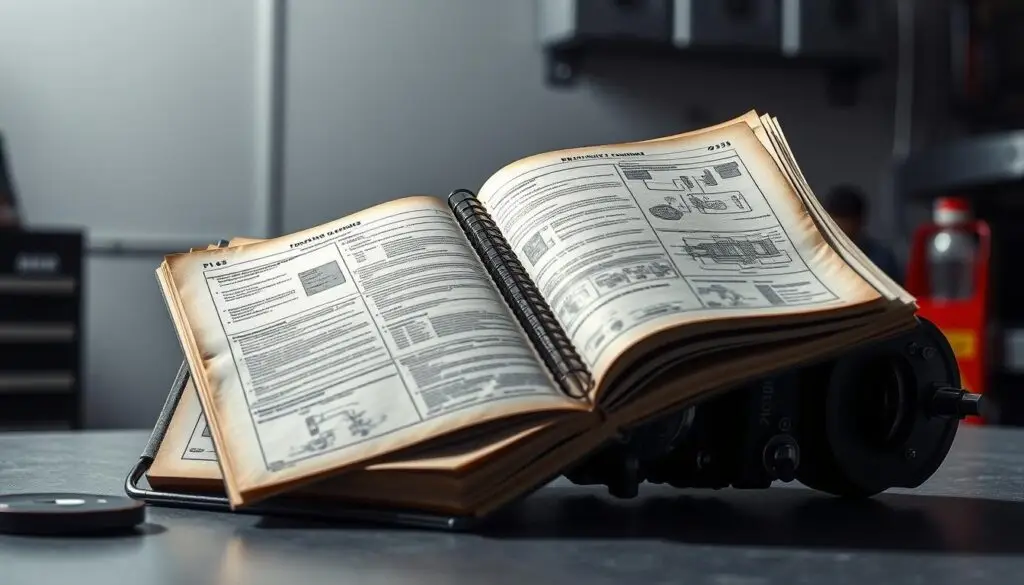
Quality preparation materials directly impact examination outcomes. Modern digital platforms provide comprehensive study tools with adaptive learning features that identify knowledge gaps and track progress throughout preparation.
Selecting appropriate resources depends on learning style, budget, and available study time. Combining multiple platforms often produces better results than relying on a single source.
Top-Rated Study Platforms Comparison
| Platform | Key Features | Cost | User Rating |
|---|---|---|---|
| Pocket Prep | 400+ practice questions, mobile app, daily quizzes, performance analytics | $9.99/month | 4.7 stars |
| iPREP | Video explanations, instant feedback, diagnostic scenarios | $39.99/test | 4.5 stars |
| ASE Official | Sample questions, official study guides, comprehensive task lists | $25/guide | Official source |
| Motor Age Training | Practice tests, technical articles, expert webinars | Free/Premium options | 4.3 stars |
Mobile Learning Advantages
Smartphone applications transform downtime into productive study sessions. Technicians can review questions during lunch breaks, commutes, or slow periods between service appointments.
Effective mobile study apps include these essential features:
- Question of the Day: Daily practice builds consistent study habits without overwhelming busy schedules
- Quick 10 Quiz mode: Randomized question sets enable focused 10-minute study sessions
- Weakest subject targeting: Automatic identification of knowledge gaps directs study time efficiently
- Timed practice modes: Simulate actual test conditions and develop proper pacing strategies
- Offline access: Download content for study in shop environments without internet connectivity
Strategic 90-Day Study Plan
Systematic preparation ensures comprehensive coverage without overwhelming technicians who balance work responsibilities. This proven schedule prioritizes high-demand tests first while building toward complete certification.
The timeline assumes 45-90 minutes of daily study. Adjust pacing based on individual learning speed and prior knowledge in specific subject areas.
| Timeline | Focus Tests | Daily Commitment | Study Activities |
|---|---|---|---|
| Days 1-30 | T2 Diesel & T4 Brakes | 45 minutes | Core system theory, diagnostic procedures, practice questions |
| Days 31-60 | T6 Electrical & T3 Drive Train | 45 minutes | Wiring diagrams, circuit analysis, component testing |
| Days 61-75 | T1, T5, T7, T8 | 60 minutes | Remaining systems, PMI procedures, cross-topic integration |
| Days 76-90 | Full practice exams | 90 minutes | Timed mock tests, weak area review, test-taking strategies |
Schedule related tests together when possible. Taking T2 Diesel and T8 Preventive Maintenance in the same session leverages overlapping knowledge about fluid analysis, filter inspection, and service intervals.
Mastering T2 Diesel Engine Diagnostics
The diesel engine examination challenges diagnostic reasoning more than memorization. Success requires understanding cause-and-effect relationships across fuel delivery, air induction, and emission control systems.
Test questions frequently present symptom-based scenarios that require systematic troubleshooting approaches rather than simple component identification.
Critical Diagnostic Scenarios
Examiners emphasize real-world problem-solving through scenario-based questions:
- Excessive black smoke: Indicates overfueling from leaking injectors, restricted air intake, incorrect injection timing, or boost pressure loss
- Blue-gray exhaust: Points to oil consumption from worn valve guides, turbocharger seal failure, or excessive crankcase pressure
- White smoke at startup: Suggests coolant intrusion, glow plug circuit failure, low compression, or fuel delivery issues
- Hard starting conditions: Trace to glow plug malfunctions, fuel system air intrusion, or supply pump failure
- Progressive power loss: Common causes include turbocharger degradation, EGR valve sticking, fuel filter restriction, or exhaust system blockage
Federal emission standards from the EPA’s heavy-duty engine regulations establish the framework for aftertreatment system requirements that appear frequently in modern test versions.
Fuel System Component Coverage
| Component | Common Failures | Test Coverage |
|---|---|---|
| Fuel Injectors | Spray pattern degradation, internal leaking, sticking solenoids | 15-20% |
| High-Pressure Pump | Pressure loss, contamination damage, worn internal components | 10-15% |
| Fuel Filtration | Flow restriction, water separator effectiveness, air intrusion points | 5-10% |
| Turbocharger Systems | Boost pressure loss, excessive shaft play, oil seal leakage | 10-15% |
| EGR Systems | Valve carbon buildup, cooler restriction, position sensor failures | 8-12% |
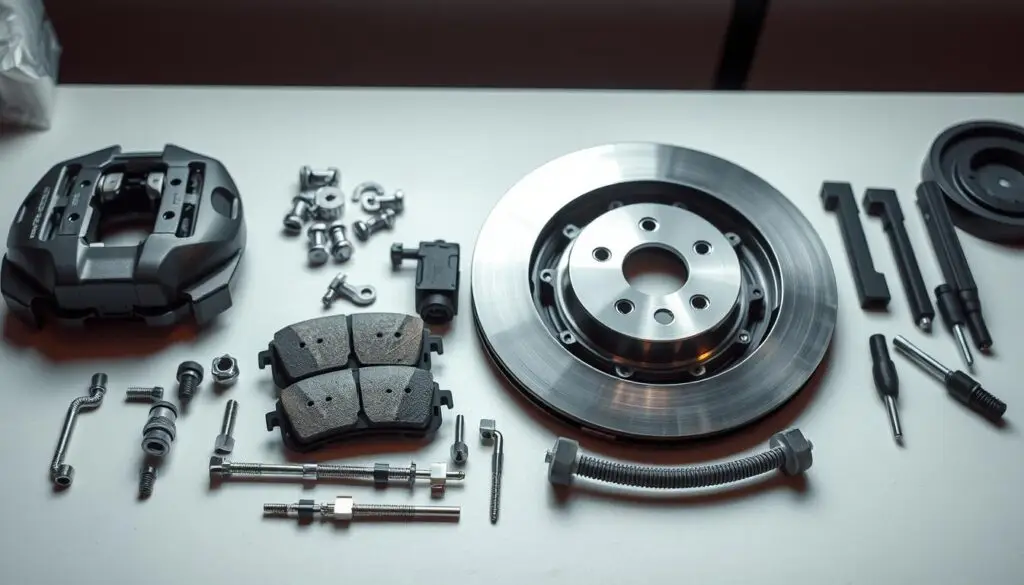
T4 Brakes and T5 Suspension Systems
Brake and suspension knowledge forms the foundation of commercial vehicle safety standards. These examinations require precise understanding of pneumatic principles, hydraulic theory, and mechanical system interactions.
Safety-critical nature means these tests emphasize proper diagnosis and repair procedures that prevent vehicle failures.
Air Brake System Fundamentals
Test questions focus on commercial air brake operation and diagnostic procedures:
- Compressor function: Understanding cut-in pressure (typically 100-105 PSI) and cut-out pressure (120-125 PSI) settings
- Brake chamber types: Service chambers, spring brake emergency chambers, and combination unit operation
- Slack adjuster operation: Manual adjustment procedures versus automatic adjuster function and failure modes
- ABS system diagnosis: Wheel speed sensor testing, modulator valve operation, warning light interpretation
- Trailer connections: Gladhand coupling procedures, emergency and service line functions, color coding standards
Federal regulations under 49 CFR Part 393 Subpart C establish commercial vehicle brake standards that directly correlate with inspection procedures and performance requirements covered in test questions.
Suspension System Diagnostics
Heavy-duty suspension testing emphasizes component inspection and alignment procedures:
- Leaf spring inspection: Identifying stress cracks, spring sag, broken center bolts, and worn bushing conditions
- Air suspension systems: Airbag leak detection, height control valve adjustment, leveling valve diagnosis
- Shock absorber testing: Identifying hydraulic fluid leaks, worn mounting hardware, and dampening efficiency loss
- Alignment specifications: Caster, camber, and toe angle measurements specific to commercial vehicle applications
- Steering linkage: Tie rod end wear patterns, drag link condition, pitman arm inspection procedures
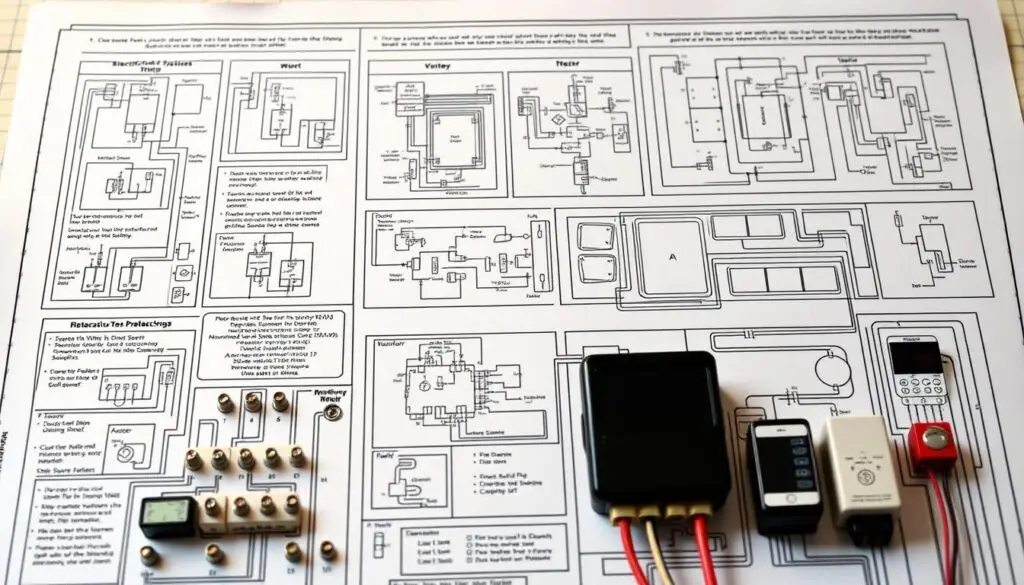
T6 Electrical Systems Mastery
Electrical diagnostics separate competent technicians from master-level professionals. This examination demands comprehensive understanding of traditional circuits and modern multiplexed communication networks.
Low pass rates reflect the complexity of troubleshooting intermittent faults and understanding data bus protocols in heavy-duty applications.
Essential Diagnostic Skills
Successful candidates demonstrate proficiency across multiple testing methods:
- Reading and interpreting manufacturer wiring diagrams with proper symbol recognition
- Tracing power distribution paths and identifying proper ground circuit locations
- Understanding CAN bus and J1939 network communication protocols
- Performing voltage drop testing across connections and components
- Using diagnostic scan tools for module communication verification
- Identifying circuit protection devices and proper amperage ratings
Work with actual manufacturer wiring diagrams during preparation. OEM-specific symbols and conventions become familiar through repeated exposure, which accelerates real-world diagnostic speed after certification.
Common Electrical System Failures
| Symptom | Probable Causes | Diagnostic Method |
|---|---|---|
| No-start condition | Battery failure, starter motor issues, ignition switch, neutral safety circuit | Voltage drop testing, amperage draw measurement |
| Charging system failure | Alternator diode failure, voltage regulator, belt condition, loose connections | Load test, output verification, ripple voltage test |
| Intermittent electrical faults | Loose connections, corrosion buildup, chafed wiring, vibration damage | Wiggle test during operation, resistance checks, thermal imaging |
| Module communication loss | CAN bus wiring damage, terminating resistor failure, module defects | Network resistance testing, scan tool verification |
The SAE J1939 standard establishes communication protocols for heavy-duty vehicle networks and appears frequently in test questions covering electronic diagnostics and data bus troubleshooting.
Effective Test-Taking Strategies
Smart time management prevents rushed answers and maximizes scoring potential. Each examination includes 10 unscored research questions mixed randomly among scored items, making efficient pacing essential.
Understanding time allocation helps candidates maintain steady progress without spending excessive minutes on difficult questions.
| Test | Total Questions | Time Limit | Time Per Question |
|---|---|---|---|
| T1 Gasoline Engines | 60 | 75 minutes | 75 seconds |
| T2 Diesel Engines | 60 | 90 minutes | 90 seconds |
| T3 Drive Train | 50 | 60 minutes | 72 seconds |
| T4 Brakes | 55 | 75 minutes | 82 seconds |
| T6 Electrical Systems | 60 | 90 minutes | 90 seconds |
Maximizing Test Performance
Follow these proven strategies during actual testing sessions:
- First pass approach: Answer known questions immediately, flag uncertain items for later review
- Elimination method: Remove obviously incorrect answers first, then evaluate remaining choices carefully
- Time checkpoints: Monitor progress at 25%, 50%, and 75% completion marks to maintain proper pacing
- Read carefully: Test questions often include “EXCEPT” or “LEAST likely” qualifiers that reverse question intent
- Trust experience: First instinct usually proves correct for experienced technicians with solid preparation
Building Confidence Through Practice Testing
Consistent practice testing improves scores significantly according to educational research. Digital platforms track progress automatically and identify weak subject areas that require additional focus.
Regular practice builds test-taking stamina and reduces anxiety about examination conditions.
Performance Metrics to Monitor
Track these key indicators throughout preparation:
- Overall accuracy rate: Target 80% correct answers on practice tests before scheduling actual examinations
- Subject-specific performance: Identify individual tests requiring additional study focus
- Time management efficiency: Complete practice sessions 10% under allocated time to build comfort margin
- Consistency tracking: Maintain daily practice for optimal knowledge retention and skill development
- Weak area targeting: Allocate extra study time to lowest-scoring topics while maintaining strong areas
Progressive Practice Strategy
Weeks 1-4 focus on understanding concepts and diagnostic reasoning without time pressure. Build foundational knowledge before worrying about speed.
Weeks 5-8 develop speed and accuracy through timed question sets targeting specific subject areas. Practice recognizing question patterns and common distractors.
Weeks 9-11 involve full-length mock examinations under actual testing conditions. This builds mental stamina for completing multiple tests in single sessions.
Week 12 targets identified weak areas exclusively while maintaining review of strong subjects to prevent knowledge decay.
Advancing Your Heavy-Duty Career
ASE T-Series certification validates expertise that distinguishes master technicians from general mechanics. Passing all eight tests transforms career trajectories by opening opportunities for advancement, specialization, and significantly higher compensation levels.
The 90-day study plan balances comprehensive preparation with realistic time commitments for working technicians. Focusing on high-value tests first builds momentum while addressing the most critical commercial vehicle systems.
Certified technicians earn 15-25% more than non-certified peers according to industry salary surveys. Employers value credentials when filling supervisory positions and specialized roles. Customers trust certified professionals with expensive equipment repairs.
Start preparation today by assessing current knowledge through practice testing. Identify weak areas early and allocate study time strategically. Within 90 days of focused effort, you’ll hold industry-recognized credentials that validate professional expertise and accelerate career advancement in the heavy-duty sector.
Share Your Expertise
Join Heavy Duty Journal as a guest author and reach thousands of industry decision-makers.
Become a Guest AuthorFrequently Asked Questions
What work experience qualifies for ASE T-Series testing?
Candidates need two years of hands-on heavy-duty truck repair experience, or one year combined with formal automotive education from an accredited program. Military heavy vehicle maintenance experience counts toward requirements. Apprenticeship and helper positions qualify with proper employer verification.
How many tests are required for Master Heavy-Duty Technician certification?
Master status requires passing all eight tests: T1 (Gasoline Engines), T2 (Diesel Engines), T3 (Drive Train), T4 (Brakes), T5 (Suspension & Steering), T6 (Electrical/Electronic Systems), T7 (HVAC), and T8 (Preventive Maintenance Inspection).
What is the format of ASE T-Series examinations?
Each test contains 40-60 scored questions plus 10 unscored research questions. Time limits range from 60-90 minutes depending on the specific test. Questions use multiple-choice format with four possible answers. Tests emphasize scenario-based questions requiring diagnostic reasoning rather than simple memorization.
How much does ASE T-Series certification cost?
Individual tests cost $43-$75 each through Prometric testing centers. Complete certification requires approximately $500 for all eight tests. Registration fees cover one test attempt. Retakes require additional payment.
Which ASE T-Series test has the lowest pass rate?
T6 Electrical/Electronic Systems shows the lowest pass rate at approximately 30%, followed by T5 Suspension & Steering at 38%. T1 Gasoline Engines has the highest success rate at 89%. Electrical system complexity and evolving technology contribute to T6 difficulty.
How often must ASE certifications be renewed?
Certifications require renewal every five years to ensure technicians maintain current knowledge. Recertification tests contain 20-25 questions completed in 30-45 minutes, focusing on updated standards, new technologies, and current diagnostic procedures.
Can multiple ASE tests be scheduled on the same day?
Prometric testing centers allow multiple tests on the same day. Many technicians schedule 2-3 related tests together, such as T2 (Diesel) and T8 (PMI), or T4 (Brakes) and T5 (Suspension). This approach leverages overlapping knowledge and reduces total testing trips.
What study resources provide the best test preparation?
Pocket Prep receives the highest user ratings at 4.7 stars, offering 400+ practice questions, progress tracking, and mobile convenience for $9.99 monthly. Combining multiple resources produces optimal results including official guides, practice platforms, and hands-on experience.
Share This Article
Share this post with your network and help other industry professionals stay informed.