
By Michael Nielsen, Editor & Publisher | 15+ Years in Diesel Repair
Last Updated: January 2026
📖 Estimated reading time: 19 minutes
Diesel technicians holding National Institute for Automotive Service Excellence credentials must renew their ASE certification every five years to maintain active status. This ASE recertification process ensures professionals stay current with rapidly changing vehicle technologies, diagnostic methods, and repair techniques across both automobile (A-series) and medium-heavy truck (T-series) specializations. Without timely renewal, your credential expires and you’ll need to start the certification process from scratch—a costly setback for fleet technicians who depend on these credentials for career advancement.
The heavy-duty trucking industry evolves at an unprecedented pace. Advanced aftertreatment systems, integrated vehicle health management platforms, and computerized diagnostics have transformed daily shop operations. ASE recertification requirements keep diesel technicians aligned with these industry standards while demonstrating continued professional competency to fleet managers and customers. For commercial operations, maintaining certified staff isn’t optional—it’s a competitive advantage that affects everything from CSA scores to customer retention.
This comprehensive guide walks you through everything fleet professionals need to know about the recertification process. You’ll discover detailed timelines, complete cost breakdowns, two distinct renewal pathways—retesting and continuing education units—plus proven strategies to avoid common pitfalls. Whether your certification expires in months or years, understanding these requirements now helps you plan effectively and maintain your professional standing without interruption.
Key Takeaways
- Five-year renewal cycle: All ASE certifications—including T-series heavy truck credentials—expire after five years and require renewal before the expiration date to maintain active status.
- Two recertification pathways: Choose between passing a recertification exam ($59 per test + $34 registration) or earning Continuing Education Units through approved training programs.
- Master Technician stakes: Heavy truck masters require seven active certifications (T1-T8); if even one lapses, you lose master designation immediately.
- Cost management opportunity: Fleet operations can significantly reduce expenses through employer-sponsored training that qualifies for CEU credits.
- Planning prevents penalties: Allowing credentials to expire forces you to retake full original exams—start preparation 6-12 months before expiration.
- Career protection: Many fleet employers require continuous certification; credential lapses can affect employment status and pay rates.
Understanding ASE Certification and the Recertification Process
ASE certification represents more than a credential—it’s a professional commitment to excellence that distinguishes skilled diesel technicians from the rest. Since its founding in 1972, the National Institute for Automotive Service Excellence has established the benchmark for validating technician expertise across the automotive and commercial vehicle industries. For fleet operations, hiring ASE-certified technicians signals commitment to quality service and regulatory compliance.
The organization offers over 50 different certification tests spanning critical vehicle systems. For heavy-duty professionals, the T-series certifications cover the specialized knowledge required to service Class 6-8 commercial vehicles—from diesel engine diagnostics to air brake systems.
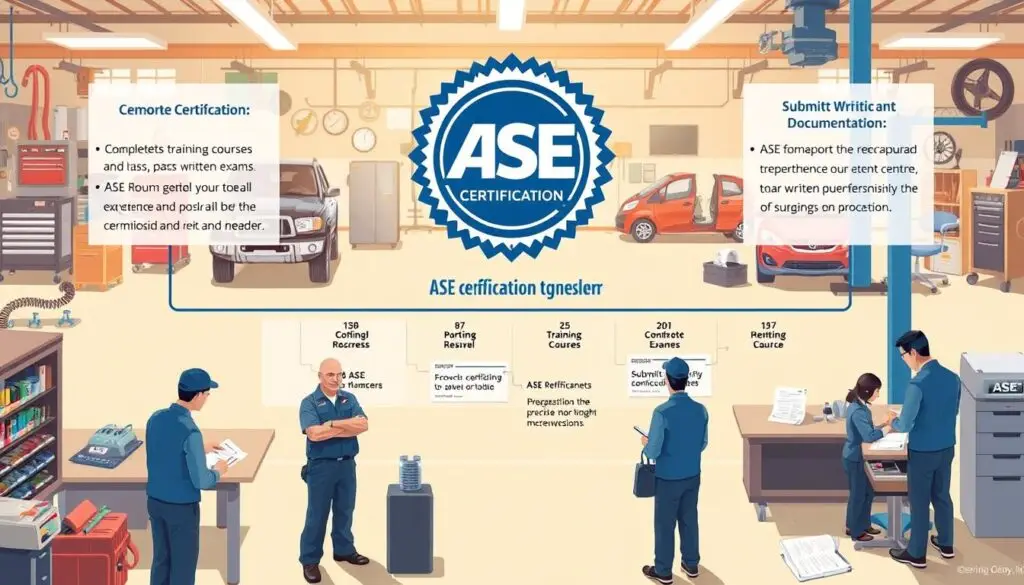
The following table outlines the major ASE certification categories relevant to fleet operations:
| Certification Category | Systems Covered | Fleet Application |
|---|---|---|
| Medium-Heavy Truck (T-Series) | Diesel Engines, Brakes, Suspension, Electrical, HVAC, PM | Fleet maintenance shops, commercial dealerships |
| Engine Systems (A1, A8) | Engine Repair, Engine Performance | General repair shops, dealerships |
| Drivetrain (A2, A3) | Manual/Automatic Transmission, Transaxle | Transmission specialists, fleet maintenance |
| Chassis Systems (A4, A5) | Brake Systems, Suspension and Steering | Alignment shops, brake specialists |
| Transit Bus (H-Series) | Compressed Natural Gas, Transit Electrical, PM | Transit authorities, municipal fleets |
The recertification process exists for a compelling reason: commercial vehicle technology evolves constantly. Today’s Class 8 trucks feature increasingly complex electronic systems, advanced aftertreatment technology, and integrated telematics platforms. According to the National Institute for Automotive Service Excellence, mandatory recertification ensures technicians maintain competency with current diagnostic equipment and repair procedures—protecting both professional reputations and consumer safety.
Mandatory recertification isn’t simply an administrative hurdle. It’s a structured professional development opportunity that ensures you remain competent to service modern commercial vehicles. This requirement protects your professional reputation while safeguarding fleet safety through maintained industry standards.
Complete ASE Recertification Requirements Explained
Understanding the complete requirements for ASE recertification empowers technicians and fleet managers to plan renewal strategies effectively. ASE has established clear standards that balance professional development with practical career demands. These requirements ensure certified technicians maintain current knowledge while offering flexibility in how they demonstrate expertise.
ASE provides two distinct pathways for credential renewal, each designed to accommodate different learning styles and career situations. Whether you choose retesting or accumulating continuing education credits, meeting these requirements keeps your certification valid and your career competitive.
The Mandatory Five-Year Recertification Cycle
All ASE certifications remain valid for exactly five years from the date of issuance. This five-year recertification cycle applies universally across all certification areas—from automobile A-series tests to medium-heavy truck T-series credentials. No exceptions or extensions exist, regardless of work history or circumstances.
The five-year cycle begins the moment you pass your initial certification exam. Your credential card displays the expiration date prominently, giving you a clear target for renewal planning. For fleet operations managing multiple technicians, tracking these dates systematically prevents costly lapses that could affect shop credentials and service capabilities.
ASE designed this cycle to balance industry advancement with reasonable renewal expectations. Five years provides enough time to develop expertise and plan your recertification approach without letting technical knowledge become outdated. Modern diesel engines and their aftertreatment systems evolve rapidly—what you learned five years ago about DPF regeneration strategies or DEF system diagnostics may not reflect current best practices.
Two Options: Retesting or Earning CEUs
ASE offers flexibility through two approved recertification methods. You can choose between traditional retesting or earning continuing education units based on your preferences and situation. Both pathways maintain identical rigorous standards for demonstrating current competency.
The retesting route requires passing a recertification exam covering the full scope of your certification area. These exams assess comprehensive knowledge through updated questions reflecting current technology and repair procedures. Alternatively, the CEU pathway rewards ongoing learning by accepting documented educational activities from approved training programs—including OEM training from manufacturers like Detroit Diesel, Cummins, and PACCAR.
Each method has distinct advantages. Retesting provides a single, focused event that validates your knowledge at once. The CEU approach spreads learning throughout your certification period, allowing you to earn credits as you complete training naturally integrated into your career development.
| Feature | Recertification Exam | Continuing Education Units |
|---|---|---|
| Time Commitment | One test session (2-3 hours preparation) | Ongoing throughout certification period |
| Learning Approach | Comprehensive knowledge assessment | Incremental skill building through courses |
| Scheduling Flexibility | Set test dates and registration deadlines | Complete training at your own pace |
| Cost Structure | $59 per exam + $34 registration fee | Variable: $0 (OEM training) to $500+ |
| Best For | Single certifications, confident test-takers | Multiple certifications, employer-sponsored training |
Work Experience Requirements
ASE does not mandate continuous employment during your certification period for recertification purposes. The work experience requirements that applied to your initial certification—typically two years of relevant hands-on experience—do not reset for renewal. Once you’ve met the original threshold, you maintain eligibility for recertification regardless of employment gaps.
However, staying active in the field provides practical benefits for both recertification pathways. Current hands-on experience makes passing recertification exams easier and helps identify relevant continuing education opportunities. Many fleet technicians find that regular shop work naturally prepares them for credential renewal through exposure to new diagnostic procedures and evolving repair techniques.
If you’ve been away from commercial vehicle work, you can still recertify through either method. The CEU pathway might prove advantageous in this situation, as structured training courses can refresh knowledge that may have diminished during time away from daily repair work on Class 6-8 vehicles.
ASE Recertification Timeline: Key Dates and Deadlines
Every ASE certification operates on a strict five-year timeline that demands attention to key deadlines. Understanding your recertification timeline prevents unnecessary stress and ensures continuous certified status. Missing important dates results in expired credentials, additional costs, and potential employment complications for fleet technicians.
ASE sends notification reminders before your certification expires, but relying solely on these alerts puts your credentials at risk. The organization typically sends reminders at 18 months, 12 months, and 6 months before expiration. However, personal tracking systems—or fleet-level credential management—provide better control over renewal schedules.
Tracking Your Certification Expiration Date
Your certification expiration date appears on several official documents. The ASE certification card displays the expiration date prominently in the bottom corner. Your shoulder patches also show the expiration year, making certification status visible to customers and fleet managers.
The ASE online account dashboard provides the most comprehensive view of all your credentials. Log into your account at ase.com to see expiration dates for each certification you hold. For fleet managers tracking multiple technicians, this centralized view enables systematic credential management across your maintenance team.
Create calendar reminders on your phone or computer as backup notifications. Set alerts for 12 months, 6 months, and 3 months before expiration. This proactive approach ensures you never miss critical renewal windows that could affect your employment or your fleet’s service capabilities.
When to Start the Recertification Process
Begin your recertification preparation six to twelve months before expiration. This timeframe provides adequate opportunity for studying or accumulating continuing education units. Starting early reduces pressure and allows flexibility if unexpected challenges arise—from busy shop schedules to training availability constraints.
Several factors influence when you should start your recertification timeline. Technicians holding multiple certifications need more preparation time than those renewing a single credential. The recertification method you choose also affects timing—CEU accumulation typically requires longer planning than concentrated test preparation.
Your current work schedule matters significantly. Peak season for fleet maintenance may limit study time, so plan accordingly. Consider starting earlier if your shop experiences high-volume periods that restrict personal development time.
6-12 Months
Recommended lead time before ASE certification expiration to begin recertification preparation
Testing Windows and Registration Deadlines
ASE recertification exams are available year-round through Prometric testing centers nationwide. Computer-based tests offer flexible scheduling, allowing you to choose convenient dates and times. Most testing centers operate six days per week with multiple daily sessions—accommodating even demanding fleet maintenance schedules.
Registration for computer-based testing must occur at least two business days before your desired test date. Paper-pencil tests follow a different schedule with specific testing deadlines twice annually. These group tests require registration several weeks in advance and are increasingly rare as digital testing becomes standard.
Peak testing periods occur in spring and fall when many technicians face expiration deadlines. Schedule your exam early during these busy seasons to secure your preferred time slot. Testing centers in urban areas book faster than rural locations, so plan accordingly if you’re near a major metropolitan area.
What Happens After Your Certification Expires
Allowing certification lapse creates significant complications and expenses that extend well beyond the inconvenience. Once your credential expires, you lose certified status immediately. Your name disappears from the ASE technician locator, and you cannot legally display expired credentials—a violation that reflects poorly on both technicians and their employers.
The most critical consequence involves testing requirements. After certification lapse, you must retake the complete original certification exam rather than the shorter recertification test. Original exams contain more questions and cover broader material than recertification assessments, requiring substantially more preparation time and demonstrating current competency from scratch.
Employers view certification lapse seriously because it affects shop credentials and customer trust. According to the Bureau of Labor Statistics, many fleet maintenance facilities require continuous certification as a condition of employment. Some employers reduce pay rates or reassign duties until technicians regain certified status—a direct financial impact that compounds recertification costs.
| Timeline Stage | Action Required | Consequence of Inaction |
|---|---|---|
| 18 months before | Review renewal options, preliminary planning | Reduced preparation time, increased stress |
| 12 months before | Start active test prep or CEU accumulation | Insufficient knowledge retention for exam |
| 6 months before | Register for exam or submit CEU credits | Limited testing availability in peak periods |
| 3 months before | Complete final prep, verify CEU submission | Rushed preparation leads to exam failure |
| After expiration | Must retake full original certification exam | Loss of status, potential employment impact |
ASE Recertification Costs: Complete Price Breakdown
ASE recertification costs vary significantly depending on the pathway chosen, making informed budgeting essential for diesel technicians and the fleet operations that employ them. Whether you opt for retesting or continuing education units, understanding all expenses upfront prevents financial surprises. Current pricing structures include exam fees, study resources, and several additional charges that impact total investment.
Planning your recertification budget requires accounting for both obvious and hidden expenses. Many technicians underestimate the full financial commitment when they focus solely on test fees. A comprehensive cost analysis helps you choose the most economical recertification method for your situation—and identify opportunities for employer support.
Test Registration Fees: Current Pricing Structure
Current test registration fees for ASE recertification exams stand at $59 per individual test. Additionally, technicians must pay a $34 registration fee per testing session, regardless of how many exams they take during that session. This pricing structure offers a significant cost advantage when scheduling multiple certifications simultaneously—a common scenario for heavy truck technicians maintaining T-series credentials.
ASE periodically adjusts these fees, so verifying current prices on the official ASE website before registration remains essential. Testing multiple certifications in one session spreads the $34 registration fee across several exams. A technician renewing four T-series certifications pays $34 once rather than four times—a $102 savings that makes bundled testing financially attractive.
Study Materials and Prep Course Costs
Study materials costs encompass a wide range of preparation resources tailored to different learning preferences. Official ASE study guides typically range from $30 to $50 per certification area. Practice test subscriptions cost between $20 and $100, depending on the provider and number of practice exams included.
Online training platforms charge anywhere from $100 to $500 for comprehensive preparation packages. In-person prep courses represent the highest investment at $200 to $1,000 or more, though these are increasingly rare for working technicians. Your choice depends on learning style, available study time, and confidence level with the material.
CEU Program Pricing
CEU pricing varies dramatically based on provider, delivery format, and course depth. Free manufacturer webinars and training sessions from OEMs like Detroit Diesel and Cummins provide zero-cost options for earning continuing education credits—often covering the latest engine technologies and diagnostic procedures that appear on recertification exams.
Mid-range online courses typically cost between $50 and $200 per certification area. Comprehensive CEU programs from established providers may reach several hundred dollars. The total investment for CEU-based recertification often equals or slightly exceeds exam costs, but the educational value and convenience frequently justify the expense for busy fleet technicians.
Additional Fees and Hidden Costs
Several overlooked expenses add to your total recertification costs beyond basic fees. Replacement credential fees apply if you lose original certification documents or patches. Travel expenses to testing centers include fuel, parking, or per diem costs that vary by location—particularly relevant for technicians in rural areas without nearby Prometric facilities.
Time away from work represents a significant financial consideration for hourly technicians. A full testing day or training session means lost wages unless your employer provides paid time off for professional development. Understanding your fleet’s reimbursement policies before beginning the recertification process helps you plan accordingly and potentially offset these expenses.
Recertification by Test: Step-by-Step Process
When you decide to recertify through testing, you’ll follow a structured process that begins with registration and ends with updated credentials. This pathway works well for technicians who prefer demonstrating current knowledge through standardized examinations. Understanding each step helps you prepare properly and avoid common pitfalls that delay certification renewal.
The test registration process offers flexible scheduling options at approved testing centers nationwide. Most recertification exams take between one and two hours to complete, depending on the specific certification area—making it possible to renew credentials during a single workday.
Registering for Your Recertification Exam
Starting your test registration begins with accessing your ASE account online. If you don’t have an account yet, you’ll need to create one using personal information and previous certification details from your credential card.
Follow these steps to complete your registration:
- Log into your ASE account and navigate to the recertification section
- Select the specific certifications you need to renew from your credential list
- Choose a Prometric testing center near your location using the facility locator
- Schedule your exam date and time based on availability and your work schedule
- Complete payment for each recertification exam you’re taking
Consider scheduling your exam during peak performance hours. Many technicians perform best in the morning when fresh and alert. Additionally, avoid booking tests during busy fleet seasons when you might feel rushed or stressed from demanding workloads.

Choosing Between Computer-Based and Paper Tests
Most recertification now occurs through computer-based testing at Prometric centers across the country. This modern approach offers several distinct advantages over traditional paper formats that benefit working technicians.
Computer-based testing provides immediate preliminary results as soon as you complete the exam. You’ll know right away whether you’ve passed, reducing anxiety and uncertainty. The digital format also offers greater scheduling flexibility, with testing windows available throughout the year rather than limited to specific dates.
Paper-based testing windows still exist for certain certifications but occur less frequently. These exams typically happen during specific testing periods and require longer wait times for results. However, some technicians prefer paper format if they’re more comfortable working through questions on physical test booklets. Both testing methods assess identical content and maintain the same passing standards.
Test Content and Format Changes
Your recertification exam covers the same content areas as your original certification test. However, expect updated questions reflecting current commercial vehicle technology and repair procedures—particularly for T-series heavy truck certifications where aftertreatment systems and electronic controls have evolved significantly.
The industry evolves rapidly with new systems and diagnostic techniques. Your recertification exam includes questions about recent technological developments in your specialty area. This ensures you’re maintaining knowledge relevant to modern Class 6-8 vehicles, not outdated procedures that could compromise repair quality or safety.
Study recent technical service bulletins and manufacturer updates before taking your exam. Pay attention to new diagnostic procedures, emerging technologies like integrated telematics platforms, and updated repair methods introduced since your last certification. OEM training resources from Detroit Diesel, Cummins, and PACCAR often preview content areas covered in recertification testing.
Passing Scores and Results Timeline
ASE uses a criterion-referenced scoring system for all recertification exams. This means you’re measured against established competency standards rather than competing against other test-takers. The goal is demonstrating minimum acceptable knowledge, not outperforming peers.
The organization doesn’t publish specific passing scores because they’re statistically determined for each exam version. Subject matter experts establish minimum competency levels that ensure certified technicians meet industry standards for safe and effective vehicle service.
Computer-based testing provides preliminary results immediately after you finish the exam. These initial scores give a strong indication of your performance. Official scores arrive within three to four weeks through your ASE online account and postal mail, along with updated credential materials if you passed.
If you don’t pass on your first attempt, you can retake the recertification exam after a 30-day waiting period. Many technicians find additional study time helpful for identifying knowledge gaps and improving performance. Focus preparation on weak areas identified by your preliminary results.
Recertification Through CEUs: Complete Guide
The CEU recertification pathway provides flexibility for busy technicians who want to maintain credentials through ongoing professional development. Instead of sitting for formal exams, diesel professionals can accumulate continuing education units through approved training programs. This alternative method keeps knowledge current while fitting into demanding fleet maintenance schedules.
Understanding CEU requirements helps you plan your recertification strategy effectively. Each certification area has specific credit requirements that must be met within the five-year renewal period—and credits must align with your specific certification areas.
How Many CEUs Are Required for Each Certification
ASE establishes specific CEU requirements based on certification type. Most technician certifications—including T-series heavy truck credentials—require a minimum of eight CEU credits for recertification. Each credit represents one contact hour of instruction in approved educational activities.
Credits you earn must directly relate to your specific certification area. Engine repair CEU credits won’t satisfy brake system certification requirements, for example. This ensures continuing education actually maintains competency in your certified specialty rather than providing tangential knowledge. Clock hours and CEU credits follow a one-to-one ratio in ASE calculations.
| Certification Area | Required CEU Credits | Training Hours |
|---|---|---|
| Medium-Heavy Truck (T-Series) | 8 credits per test | 8 contact hours |
| Automobile & Light Truck | 8 credits per test | 8 contact hours |
| Collision Repair & Refinish | 8 credits per test | 8 contact hours |
| Transit Bus (H-Series) | 8 credits per test | 8 contact hours |
| Advanced Engine Performance (L1) | 8 credits per test | 8 contact hours |
Finding ASE-Approved CEU Providers
Locating legitimate ASE-approved providers ensures your educational efforts count toward recertification. The official ASE website maintains a comprehensive provider directory listing all approved training organizations. Always verify approval status before enrolling in any program—unapproved training won’t satisfy CEU requirements regardless of quality or relevance.
Reputable sources include manufacturer training programs from major OEMs. Detroit Diesel, Cummins, PACCAR, and Volvo all offer ASE-approved courses covering their engine and vehicle systems. Industry associations like the Technology & Maintenance Council (TMC) offer approved courses through their professional development programs. Technical schools and community colleges frequently provide ASE-approved continuing education options as well.
Not all commercial vehicle training automatically qualifies for CEU credits. Online platforms like ASE Test Prep offer pre-approved programs specifically designed for recertification purposes. Confirm approval status before investing time and money in any training program—your certificate of completion should display the provider’s ASE approval number.
Types of Qualifying Continuing Education Activities
ASE accepts multiple formats for earning continuing education units, accommodating different learning styles and scheduling constraints. Formal classroom courses at technical schools provide traditional learning environments with hands-on components. Online training modules offer convenience for technicians with irregular schedules or limited access to in-person programs.
Manufacturer technical training sessions qualify when properly documented—making OEM training doubly valuable for fleet technicians who attend for practical skill development. Industry conference sessions and workshops count toward your requirements, including presentations at TMC annual meetings and regional trucking association events. Live webinars from approved providers also generate eligible CEU credits.
Certain activities don’t qualify under ASE guidelines. On-the-job training without formal instruction doesn’t count, regardless of complexity or educational value. Self-study programs without documented completion and assessment won’t satisfy CEU requirements. Always obtain completion certificates for every training activity, documenting the provider’s ASE approval number, course title, and credit hours earned.
Submitting CEU Credits to ASE
Proper documentation ensures your CEU credits receive official recognition toward recertification. Maintain all completion certificates and training records in organized files—physical and digital copies provide redundancy against loss. Each certificate should display the provider’s ASE approval number, your name, course title, and credit hours earned.
Submit your credits through the ASE online portal before your certification expires. Log into your account and navigate to the recertification section. Upload scanned copies of completion certificates or enter credit information manually. Ensure all required fields are completed accurately to avoid processing delays.
ASE reviews submissions within two weeks of receipt. The verification process confirms provider approval status and credit calculations. Start submitting credits at least 60 days before your expiration date to allow processing time and address any documentation issues that might arise.
The HDJ Perspective
For fleet operations managing multiple technicians, the CEU pathway often delivers superior ROI despite potentially higher direct costs. OEM training that qualifies for ASE credits simultaneously builds skills your shop needs while maintaining certifications. When Detroit Diesel or Cummins releases new diagnostic procedures or aftertreatment calibration updates, that training serves dual purposes—immediate capability improvement plus recertification credit accumulation. Smart fleet managers build ASE-approved training into annual development budgets rather than treating recertification as a separate expense category.
Comparing Recertification Methods: Testing vs CEUs
The decision between taking a recertification exam or earning CEUs involves more than comparing price tags. Both recertification methods offer distinct pathways to maintain credentials, each with unique financial implications and time commitments. Understanding these differences helps you select the approach that aligns with your career goals, learning preferences, and budget constraints.
Cost Comparison Analysis
A thorough cost comparison reveals significant variations between the two recertification options. Test registration fees run $59 per exam plus $34 per session, but total investment extends beyond base fees. Study materials, practice tests, and preparation courses can add $100 to $250 to your expenses depending on resources selected.
For technicians maintaining multiple certifications, these costs multiply quickly. A Master Heavy Truck Technician recertifying seven T-series credentials through testing might spend $800 to $1,500 total when including all preparation materials—assuming successful first-attempt passing.
CEU programs present a different financial picture. Individual courses range from $50 to $200 each, with comprehensive packages costing $300 to $500 per certification area. However, employer-sponsored training programs can dramatically reduce or eliminate these costs entirely. Fleet operations that send technicians to OEM training for operational reasons often generate ASE credits as a byproduct—essentially free recertification.
| Recertification Method | Single Certification | Multiple (5+) Certs | Study Time |
|---|---|---|---|
| Testing Route | $150-$300 | $750-$1,500 | 20-40 hours concentrated |
| CEU Programs | $100-$500 | $500-$2,500 | 15-30 hours distributed |
| ✓ Employer-Sponsored CEUs | $0-$100 | $0-$500 | Integrated into work |
| Hybrid Approach | $125-$400 | $625-$2,000 | Varies by certification |
Time Investment for Each Method
The testing vs CEUs debate extends beyond finances to time allocation. Exam preparation demands concentrated study periods, typically requiring 20 to 40 hours of focused review over several weeks or months. This intensive approach works well for technicians who prefer defined timelines and traditional learning structures.
CEU accumulation follows a different pattern. Continuing education spreads across the entire five-year certification cycle, allowing you to integrate learning into your regular work routine. Many fleet employers offer training sessions during paid work hours, making this option particularly time-efficient for technicians who can’t sacrifice personal time for credential maintenance.
The distributed learning model also reduces stress. Instead of cramming information before a test date, you absorb knowledge gradually through hands-on training, online modules, and industry seminars. This approach often produces better long-term retention than intensive pre-exam studying.
Which Option Is Right for You
Selecting between recertification options depends on several personal and professional factors. Your decision framework should consider confidence with standardized testing—some technicians excel in exam environments while others prefer practical, applied learning experiences.
Access to quality training programs plays a crucial role. Technicians working for dealerships or large fleet operations often benefit from employer-provided education that makes CEUs the more economical choice. Independent shop workers might find testing more straightforward and cost-effective without organizational training infrastructure.
Consider these key factors when choosing your pathway:
- Learning style preference: Do you retain information better through focused study sessions or ongoing practical application?
- Schedule flexibility: Can you dedicate concentrated time blocks for test preparation, or do distributed learning opportunities fit your lifestyle better?
- Employer support: Does your fleet offer reimbursement for testing fees or provide access to OEM training programs?
- Number of certifications: Multiple credentials might favor CEU programs that offer bundled learning opportunities
- Test-taking confidence: Your historical performance on standardized exams should influence your choice
Many successful technicians use a hybrid approach, selecting testing or CEUs based on each specific certification. This strategy allows you to retest in your strongest areas while pursuing continuing education for certifications requiring more comprehensive knowledge updates.
Managing Multiple ASE Certifications and Master Technician Status
Professionals with advanced ASE credentials need strategic approaches to manage overlapping renewal timelines and certification requirements effectively. Juggling multiple certifications becomes increasingly complex as expiration dates rarely align. A systematic plan prevents last-minute scrambling and protects professional reputation—particularly for fleet technicians whose employers depend on maintained credentials.
The challenge intensifies when maintaining five, seven, or more individual credentials. Each certification operates on its own five-year cycle based on when you originally passed the test. Effective credential management requires tracking systems that alert you months before deadlines approach, whether you’re managing your own certifications or overseeing an entire maintenance team.
Coordinating Multiple Credential Renewals
Technicians holding multiple certifications benefit from consolidated renewal strategies that save both time and money. Testing for several areas during a single session reduces trips to testing centers and spreads the $34 registration fee across multiple exams. Many professionals schedule two or three exams on the same day when content areas overlap.
Consider grouping related certifications together during study preparation. For heavy truck technicians, T4 (Brakes) and T5 (Suspension and Steering) share common diagnostic principles. T2 (Diesel Engines) and T8 (Preventive Maintenance Inspection) overlap significantly on engine system knowledge. Studying these simultaneously maximizes efficiency and reinforces interconnected concepts.
Registration coordination matters for budget planning. Computer-based tests allow flexible scheduling throughout the year, enabling strategic grouping. Map out your renewal timeline at least six months in advance to optimize your approach and identify opportunities for cost savings through bundled testing sessions.
Maintaining Your Master Technician Designation
Achieving Master Technician status represents the pinnacle of ASE achievement, but maintaining it demands ongoing commitment. Master Heavy Truck Technicians must keep all seven required certifications (T1 through T8, excluding T9) current simultaneously. If even one certification lapses, you lose master designation immediately—a significant professional setback.
Requirements vary by specialization category. Master Automobile Technicians need eight certifications (A1 through A8). Transit Bus masters maintain credentials across their H-series specializations. School Bus masters hold six active credentials. The common thread: all component certifications must remain active simultaneously to retain master status.
When one certification expires, your master status disappears from ASE records until you successfully renew that credential. Reinstatement happens automatically once you pass the required recertification test or submit qualifying CEU credits—no separate master designation application required.
Plan your Master Technician recertification schedule carefully. Prioritize credentials expiring earliest to prevent status loss. Some technicians intentionally synchronize renewal dates by retesting for all certifications within the same year, creating a unified five-year cycle for simpler future planning.
Smart Strategies to Lower Renewal Costs
Budget-conscious professionals and fleet operations can significantly reduce recertification expenses through proven cost-management tactics. These strategies help maintain credentials without financial strain:
- Bundle multiple tests in single testing sessions to minimize separate registration fees and travel costs
- Leverage employer-sponsored training that qualifies for CEU credits instead of paying out-of-pocket for courses
- Form study groups with colleagues to share expensive preparation materials and practice tests
- Access free OEM resources including technical service bulletins, online training modules, and manufacturer webinars
- Register early to secure preferred testing appointments and avoid rush scheduling fees
- Document reimbursement requests showing how current certifications directly benefit fleet operations and customer confidence
Many fleet operations offer partial or full reimbursement for certification costs when technicians maintain active credentials. According to the American Transportation Research Institute (ATRI), workforce development remains a top industry concern—smart employers recognize that supporting technician credentials improves retention and reduces turnover costs that far exceed recertification expenses. Present your employer with a business case showing how certified technicians improve service quality, reduce comeback rates, and enhance shop reputation with customers and equipment manufacturers.
Free Professional Fleet Tools
Cost calculators, fault code lookup, maintenance planners, and more—built for owner-operators, fleet managers, and diesel techs. No signup required.
Preparing for ASE Recertification Tests: Study Strategies
The right preparation strategies transform ASE recertification testing from stressful to manageable. With industry standards constantly evolving, effective test preparation ensures you remain current with diesel technology advances and best practices. A structured approach to studying helps technicians pass recertification exams confidently on the first attempt—avoiding retesting fees and delays.
Staying informed about technological advances in commercial vehicles enhances both your certification prospects and daily repair capabilities. Quality study methods make the difference between barely passing and demonstrating genuine mastery of your certification area.
Official ASE Study Guides and Practice Tests
ASE study guides represent the most reliable preparation resource available for recertification exams. These official materials align directly with test content across all certification areas, including T-series heavy truck credentials. Each guide covers the exact task list your exam assesses—no wasted effort on irrelevant material.
Practice tests simulate actual exam format and difficulty level accurately. Taking multiple practice tests helps identify weak areas requiring additional review before your testing appointment. Scoring consistently above 70% on practice exams typically indicates readiness for the real test, though higher scores provide additional confidence margin.
Official ASE practice tests provide detailed explanations for both correct and incorrect answers. This feedback mechanism strengthens understanding of complex concepts—particularly valuable for diagnostic scenarios where multiple factors influence the correct response. Purchase these materials directly through the ASE website or authorized distributors to ensure current content reflecting recent exam updates.
Online Training Platforms and Resources
Reputable digital platforms offer valuable supplementary test preparation tools beyond official materials. Subscription-based services like ASE Test Prep provide interactive learning systems with immediate feedback on practice questions. Manufacturer training portals from Detroit Diesel, Cummins, and PACCAR often include technical content that aligns with T-series certification requirements.
Quality YouTube channels created by experienced technicians can clarify difficult concepts through visual demonstrations—particularly helpful for diagnostic procedures and system operation explanations. However, evaluate online resources carefully to distinguish legitimate educational content from platforms making unrealistic promises. Look for resources created by ASE-certified professionals or established training organizations with industry credibility.
Creating an Effective Study Schedule
Personalized preparation timelines depend on available study time and baseline knowledge level. An intensive four-week schedule works for experienced technicians needing focused refresher on updated content. Those with limited daily availability benefit from distributed three-month approaches that prevent burnout while ensuring comprehensive coverage.
Consider these factors when building your study schedule:
- Current familiarity with certification area content and recent technology changes
- Daily time available for focused studying without work interruptions
- Preferred learning style and information retention patterns
- Specific test date and registration deadline constraints
Dedicate at least 30-45 minutes daily to study sessions rather than infrequent marathon cramming. Consistent, shorter study periods improve long-term retention significantly better than sporadic intensive sessions—particularly for technical material involving diagnostic procedures and system specifications.
Test-Taking Tips for Recertification Exams
Strategic test-taking approaches improve performance beyond knowledge retention alone. Read each question carefully to identify exactly what’s being asked before reviewing answer options. Many technicians select incorrect answers by misunderstanding question intent rather than lacking knowledge—particularly on scenario-based diagnostic questions.
Eliminate obviously incorrect answers first to improve odds when uncertain. This elimination strategy narrows focus to the most plausible options, increasing success probability even when you can’t immediately identify the correct response. Manage time effectively by not spending too long on any single question—flag difficult items for review and move forward.
Trust your initial response rather than second-guessing answers unnecessarily. Research consistently shows first instincts prove correct unless you clearly misread the question. Practice tests help develop pacing skills and reduce testing anxiety that can impair recall of information you’ve studied thoroughly.
⚠️ Test Day Reminder
Arrive at your Prometric testing center 30 minutes early with valid government-issued photo ID. Late arrivals may forfeit their appointment and testing fees. Verify center location and hours the day before your scheduled exam.
Tracking and Managing Your ASE Credentials
Staying organized with ASE certifications prevents costly disruptions to career progression and earning potential. Effective credential management requires using both official ASE tools and personal tracking systems. This dual approach protects against unexpected lapses that could affect employment status or customer confidence in fleet service operations.
The foundation of proper credential management starts with understanding available resources. ASE provides digital tools designed specifically for certification tracking. However, successful technicians—and the fleet managers who supervise them—implement additional safeguards beyond official systems to ensure nothing falls through the cracks.
Using Your ASE Online Account Dashboard
Your ASE online account serves as the authoritative source for all certification information. This centralized digital platform displays every credential you hold along with corresponding expiration dates. Access your dashboard anytime to verify current status and plan recertification activities—whether managing personal credentials or overseeing technician development for an entire fleet.
The dashboard offers several essential features beyond basic credential viewing. Download digital copies of certificates immediately after passing exams, eliminating delays waiting for physical documents. Your complete testing history remains accessible through the account interface, providing valuable documentation for employment verification and career progression discussions.
Account security should be a priority since your dashboard contains sensitive professional information. Update passwords regularly and ensure contact information stays current. Outdated email addresses or phone numbers mean missed critical notifications about upcoming expirations—a preventable problem that creates unnecessary credential risk.
Setting Up Expiration Reminders
ASE automatically sends expiration reminders through their notification system as certification dates approach. These official reminders typically arrive several months before expiration. However, relying exclusively on ASE notifications creates unnecessary risk to professional standing—email filters and spam settings sometimes redirect important messages away from your inbox.
Create personal reminder systems independent of ASE communications. Set calendar alerts on smartphones or computers starting one year before each expiration date. Schedule multiple reminders at six months, three months, and one month before expiration to maintain awareness throughout the recertification timeline.
For fleet managers tracking multiple technicians, dedicated credential management systems prevent costly lapses across your maintenance team. Spreadsheets listing each technician’s certifications with expiration dates provide visual reference for workforce planning. Update documentation whenever technicians complete recertification to maintain accurate records that support scheduling and compliance verification.
Ordering Replacement Credentials and Patches
Physical ASE credentials occasionally require replacement due to loss, damage, or updates following recertification. Understanding the ordering process and associated costs helps maintain professional presentation standards without unexpected delays that could affect customer-facing interactions.
Three types of physical credentials are available through ASE: wall certificates for shop display, pocket cards for customer verification, and uniform patches for technician apparel. Each serves specific professional purposes and may be ordered separately or together based on your needs.
| Credential Type | Primary Use | Cost | Delivery |
|---|---|---|---|
| Wall Certificate | Shop display, customer confidence | $15-$20 | 2-3 weeks |
| Pocket Card | Customer verification, daily carry | $10-$15 | 1-2 weeks |
| Uniform Patch | Technician apparel identification | $8-$12 | 1-2 weeks |
| Digital Credential | Online verification, applications | Free | Instant download |
Order replacements through your ASE online account by selecting the credential management section. Digital credentials are available for immediate download at no cost—these electronic versions work for many employment verification situations and online applications. Physical credentials require processing time, so order well in advance when starting new employment or needing updated shop displays.
Common Recertification Mistakes and How to Avoid Them
Understanding common recertification mistakes helps maintain ASE credentials without unnecessary complications or expenses. Many technicians encounter preventable problems that delay renewal processes or increase costs significantly. Learning from these typical errors saves time and protects professional standing—whether you’re an individual technician or a fleet manager overseeing multiple certified staff.
Allowing Your Credentials to Expire Completely
Certification lapse creates serious professional consequences extending beyond simply losing certified status. When your certification expires, you must retake the original comprehensive exam instead of the shorter recertification test. The original certification exam covers more content areas and includes more questions than recertification assessments—a significantly more demanding challenge after years away from comprehensive testing.
Set up multiple reminder systems at least six months before expiration dates. Calendar alerts, ASE account notifications, and workplace tracking systems all help prevent certification lapse. Building a three-month buffer into renewal timelines provides adequate time to address unexpected delays from scheduling conflicts, training availability, or personal circumstances.
Improper Documentation of Continuing Education Credits
Documentation errors represent one of the most frustrating recertification mistakes because they’re completely preventable. Common problems include failing to verify ASE approval before enrolling in courses, losing completion certificates, and discovering missing paperwork at submission time when deadlines loom.
Always request certificates immediately after completing any training activity. Maintain both digital and physical copies of all documentation in dedicated folders—redundancy protects against loss. Before enrolling in any CEU program, confirm its ASE approval status through the official provider directory. A course that seems relevant but lacks approval provides zero recertification value regardless of educational quality.
Create tracking spreadsheets recording each completed activity, date, credit hours earned, and documentation status. This system prevents last-minute surprises when you’re ready to submit credits and discover gaps in your accumulated hours.
Insufficient Test Preparation Planning
Many technicians underestimate study time required for recertification exams, particularly after years without formal testing. This miscalculation leads to inadequate preparation and potential exam failures requiring retesting fees and additional waiting periods—a 30-day minimum before reattempting.
Allocate at least 4-6 weeks for focused exam preparation, depending on daily work schedule constraints. Review official ASE study guides and complete practice tests to identify knowledge gaps early. Schedule your exam only after consistently scoring above passing levels on practice materials—rushing to test before you’re ready wastes money and extends your recertification timeline.
Overlooking Available Financial Support
Paying for recertification costs personally without investigating employer reimbursement represents a significant financial mistake. Many fleet operations offer full or partial coverage for certification expenses but require advance approval or specific documentation submission procedures.
Review employee handbooks or speak with management about certification support policies before paying any fees. Some employers reimburse costs only when technicians pass on first attempt, making adequate preparation even more important. Document all expenses with receipts and submit reimbursement requests according to company procedures promptly—delayed claims sometimes face administrative barriers or fiscal year limitations.
| Common Mistake | Consequence | Prevention Strategy |
|---|---|---|
| Letting certification expire | Must retake full original exam | Set reminders 6+ months early |
| Poor CEU documentation | Credits rejected or unverifiable | Verify approval before enrollment |
| Inadequate test preparation | Exam failure, retesting fees | Allow 4-6 weeks study minimum |
| Ignoring employer support | Unnecessary personal expense | Research policies before paying |
Frequently Asked Questions
How often do ASE certifications need to be renewed?
All ASE certifications must be renewed every five years from the date of issuance. This applies to both automobile (A-series) and medium-heavy truck (T-series) certifications. The five-year cycle begins when you pass your initial exam, and your credential card displays the expiration date. ASE sends reminder notifications at 18, 12, and 6 months before expiration, but setting personal calendar reminders ensures timely renewal without relying solely on official notifications.
What is the difference between ASE recertification by testing versus CEUs?
Testing requires passing a recertification exam at a Prometric center, providing immediate results and validating comprehensive knowledge in a single session. CEU recertification involves accumulating continuing education units—typically 8 credits per certification—through approved training programs over your certification period. Testing costs $59 per exam plus $34 registration fee and requires concentrated preparation. CEUs range from free OEM manufacturer training to $500 for comprehensive programs and allow distributed learning integrated into your work schedule.
How much does ASE recertification cost?
Recertification exam fees are $59 per test plus a $34 registration fee per testing session. Study materials add $30-250 depending on resources chosen. CEU programs range from free manufacturer training webinars to $500 for comprehensive packages. Total costs for single certification renewal typically range $150-400 depending on pathway selected. Fleet operations often reduce technician costs through employer-sponsored training that qualifies for CEU credits, making continuing education the more economical route for staff with multiple certifications.
What happens if my ASE certification expires?
Once your ASE certification expires, you lose certified status immediately and must retake the complete original certification exam—not the shorter recertification test. Your name is removed from the ASE certification database, and you cannot legally display expired credentials. For fleet operations, this affects shop credentials and customer confidence. Many employers require continuous certification as employment conditions and may reduce pay rates or reassign duties until credentials are restored.
How many CEUs are required for ASE recertification?
Most ASE certifications require 8 CEU credits for recertification, where each credit equals one contact hour of instruction. Credits must directly relate to your specific certification area—engine repair credits won’t satisfy brake system requirements. Heavy truck T-series certifications follow the same 8-credit requirement per test. Credits are earned through ASE-approved training programs including OEM manufacturer courses, technical schools, online modules, and industry conferences like TMC annual meetings.
Can I recertify multiple ASE certifications at once?
Yes, and bundling certifications offers significant cost advantages. Testing multiple areas in one session spreads the $34 registration fee across several exams rather than paying it repeatedly. Many technicians schedule related certifications together—such as T4 (Brakes) and T5 (Suspension/Steering)—since content areas overlap and combined study proves efficient. For Master Technician status, all component certifications must remain active simultaneously. Heavy truck masters require seven certifications (T1-T8, excluding T9) to maintain the designation.
Take Action on Your ASE Recertification
Maintaining ASE certification positions diesel technicians and fleet operations at the forefront of an industry experiencing rapid technological advancement. The recertification process requires dedication, but it delivers measurable returns through enhanced career opportunities, increased earning potential, and maintained customer confidence in commercial vehicle service quality.
Your certification planning should begin today. Check expiration dates through your ASE online account. Decide whether the testing or CEU pathway aligns better with your learning style, schedule constraints, and employer support opportunities. Create a budget accounting for registration fees, study materials, or continuing education courses—and investigate reimbursement options that could offset these expenses.
Professional development through ASE recertification demonstrates commitment to excellence that employers actively seek. Fleet operations recognize that certified technicians improve service quality, reduce comeback rates, and enhance shop reputation. The five-year recertification cycle provides ample time for preparation when you plan strategically—start at least six months before expiration to prevent the stress and additional costs of credential lapse.
Review your certification status now and build your personalized recertification roadmap. Whether you’re maintaining a single credential or managing Master Technician status across seven T-series certifications, systematic planning protects your professional standing and secures your commercial vehicle career’s future.
Share This Guide With Your Team
Help fellow technicians and fleet managers plan their ASE recertification strategy. Share this comprehensive guide with colleagues who need to maintain their credentials.