

By Michael Nielsen, Editor & Publisher | 15+ Years in Diesel Repair
Last Updated: January 2026
📖 Estimated reading time: 19 minutes
Every commercial vehicle traveling across state lines must meet strict federal safety standards. The Federal Motor Carrier Safety Administration (FMCSA) requires specialized safety inspections performed by trained professionals. For automotive technicians looking to advance their careers, becoming a certified federal inspector opens doors to specialized roles in transportation safety—and this guide covers everything you need to know about DOT inspector certification.
The path to DOT inspector certification requires meeting specific qualifications set by the FMCSA and the Commercial Vehicle Safety Alliance (CVSA). These organizations define a qualified inspector as someone with adequate training and experience to thoroughly inspect, repair, and maintain vehicle components. This credential transforms experienced mechanics into authorized professionals capable of conducting federal vehicle safety inspections.
Understanding the requirements to become a DOT inspector is essential for technicians seeking this career advancement. The process involves specialized training, hands-on experience, and demonstrating competency in commercial vehicle safety standards. This qualification not only enhances professional credibility but also plays a vital role in keeping America’s roadways safe.
Key Takeaways
- FMCSA mandates that all commercial vehicles in interstate commerce undergo regular safety inspections by qualified professionals
- Candidates must have at least one year of documented experience in commercial vehicle maintenance, repair, or safety auditing
- The complete certification process typically spans four to eight weeks and costs $500-$2,000 total
- DOT inspector salaries range from $45,000 to $75,000 annually, with senior positions exceeding $80,000
- Certification must be renewed every one to three years depending on jurisdiction, with annual continuing education requirements
- CVSA inspection levels range from comprehensive 60-minute examinations to targeted driver-only verifications
Understanding the Role of a DOT Inspector
Understanding what a commercial vehicle inspector does is the essential first step for mechanics pursuing federal certification. These professionals conduct systematic safety checks on commercial motor vehicles and their drivers to ensure full compliance with federal regulations. DOT inspections serve a vital purpose: protecting public safety by verifying that every truck and bus on America’s highways meets strict mechanical and operational standards.
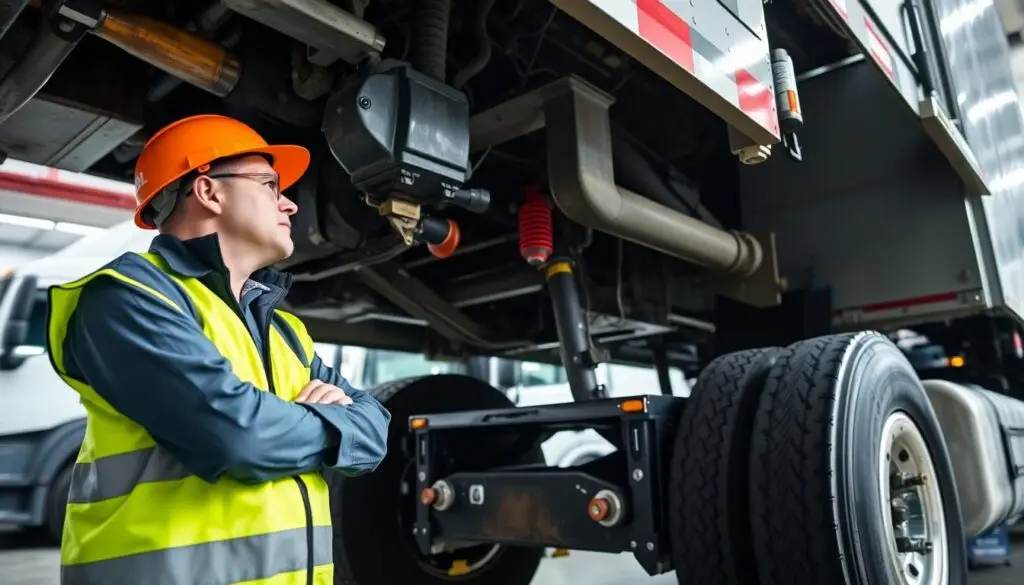
Inspectors can work as federal officers, state law enforcement personnel, or certified third-party professionals. All must complete specialized training and certification under standards established by the FMCSA and CVSA.
Daily Responsibilities in Commercial Vehicle Safety
A typical workday for certified inspectors involves conducting thorough vehicle examinations at weigh stations, roadside locations, and fleet facilities. They check brake systems, lighting equipment, steering mechanisms, and tire conditions. Inspectors also review driver logs, medical certificates, and commercial driver’s licenses.
When they discover serious safety violations, inspectors have authority to issue out-of-service orders. This power immediately removes dangerous vehicles or non-compliant drivers from the road until corrections are made. According to FMCSA data, these enforcement actions have contributed to significant reductions in commercial vehicle crash rates over the past decade.
The Federal Regulatory Framework
Federal motor carrier safety regulations are codified primarily in 49 CFR Part 396. These comprehensive rules establish minimum maintenance standards for commercial vehicles. The FMCSA continuously updates these regulations to address emerging safety concerns and technological advances.
Understanding DOT inspector requirements means mastering this complex regulatory framework. Certified inspectors must interpret and enforce dozens of specific standards covering everything from brake adjustment to cargo securement.
The Critical Impact on Transportation Safety
Certified inspectors prevent accidents before they happen. Their thorough examinations identify mechanical defects that could cause brake failures, tire blowouts, or steering malfunctions. FMCSA’s Analysis and Information Online database shows that rigorous inspection programs significantly reduce commercial vehicle crash rates—vehicles placed out of of-service for brake violations, for example, are 50% more likely to be involved in a crash if returned to service without proper repairs.
The transportation industry depends on these professionals to maintain system integrity. Without qualified inspectors enforcing federal motor carrier safety standards, dangerous vehicles would compromise everyone’s safety on American highways.
Eligibility Requirements for DOT Inspector Certification
Federal Motor Carrier Safety Administration standards define clear prerequisites that candidates must fulfill before entering DOT inspector training. These requirements ensure that only individuals with appropriate backgrounds perform critical safety inspections on commercial vehicles. Meeting these eligibility criteria protects public safety and maintains the integrity of federal inspection programs.

Minimum Mechanic Experience and Background
Candidates must possess at least one year of documented experience in commercial vehicle maintenance, repair, or safety auditing. This hands-on background provides the foundational knowledge necessary to understand vehicle systems before learning inspection protocols. The FMCSA defines a qualified inspector as someone with adequate training to thoroughly inspect, repair, and maintain vehicle components.
Acceptable experience includes working as a commercial vehicle mechanic, fleet maintenance technician, or safety compliance specialist. This requirement ensures inspectors can identify defects and safety violations with confidence. Without this foundation, individuals cannot effectively apply the complex regulations found in 49 CFR Part 396.
ASE Certification Prerequisites
Automotive Service Excellence certification strengthens applications for vehicle inspection certification significantly. While not always mandatory, ASE credentials demonstrate technical competency in critical vehicle systems. Certifications in areas like brakes (T4), suspension and steering (T5), and electrical systems (T6) prove mastery of components frequently examined during inspections.
Many training programs prefer candidates with ASE certifications because these professionals already understand vehicle diagnostics. This background accelerates learning during DOT inspector training programs. Candidates without ASE credentials may still qualify but should expect more rigorous technical assessments.
Physical and Technical Skill Requirements
The role demands specific physical capabilities that enable thorough vehicle examinations. Inspectors must crawl under commercial vehicles, climb into cabs, and access hard-to-reach components. These tasks require reasonable mobility, strength, and stamina throughout long inspection shifts.
Technical skills include operating specialized diagnostic equipment, interpreting technical service manuals, and applying detailed federal regulations in field conditions. Candidates need strong analytical abilities to identify safety violations quickly. The combination of physical capability and technical expertise ensures qualified inspector candidates can perform comprehensive examinations under various conditions.
Industry Reality Check
Fleet operators increasingly hire in-house certified inspectors to reduce outsourcing costs and minimize vehicle downtime. According to the American Transportation Research Institute, unscheduled maintenance costs fleets an average of $448-$760 per vehicle per day in lost productivity—making proactive inspection programs a sound investment.
Understanding the Six Levels of DOT Vehicle Inspections
Before pursuing DOT inspector certification, mechanics must learn the six-level inspection system that governs roadside inspections nationwide. The Commercial Vehicle Safety Alliance established these standardized inspection levels to ensure consistent safety enforcement across all jurisdictions. Each level serves a specific purpose, ranging from comprehensive vehicle examinations to targeted compliance checks.
Mastering these inspection protocols is essential for anyone enrolled in CVSA training courses. Understanding when and how to apply each level demonstrates professional competency during certification evaluations.
The Most Comprehensive North American Standard Inspection
Level I represents the gold standard of commercial vehicle inspections. This comprehensive examination takes 45 to 60 minutes and covers both driver credentials and complete vehicle components.

Inspectors examine extensive driver requirements during Level I inspections. These include commercial driver’s license validation, medical certificate verification, hours-of-service records, electronic logging device data, and driver vehicle inspection reports.
The vehicle examination is equally thorough. Inspectors check brake systems and coupling devices, exhaust systems and frame integrity, fuel systems and all lighting equipment, cargo securement and steering mechanisms, suspension systems, tires, wheels, windshield condition, and emergency equipment.
Vehicles passing Level I inspections receive a CVSA decal valid for three months. This decal demonstrates compliance with federal safety standards and may reduce future inspection frequency.
Walk-Around Driver and Vehicle Examination
Level II inspections require 30 to 45 minutes and share similarities with Level I protocols. The primary difference involves the exclusion of undercarriage examination.
Inspectors still verify driver credentials and documentation thoroughly. They examine all visible vehicle components from ground level during this annual DOT inspection alternative. This level provides efficient roadside inspection training scenarios while maintaining safety oversight.
Driver-Only Roadside Verification
Level III focuses exclusively on driver compliance without vehicle examination. These inspections take 15 to 30 minutes and concentrate on credential verification.
Inspectors review commercial driver’s licenses, medical certificates, and hours-of-service documentation. Electronic logging device compliance and driver vehicle inspection reports receive careful scrutiny. This level proves valuable for targeted enforcement operations.
Specialized Inspection Categories
The remaining three levels address specific inspection scenarios. Level IV inspections target particular compliance issues identified through intelligence or previous violations.
Level V examinations focus on vehicle-only inspections lasting 30 to 60 minutes. These occur at terminals or inspection facilities without driver presence, making them suitable for annual DOT inspection requirements.
Level VI represents the most intensive category, requiring 60-plus minutes for enhanced inspections. Transportation of radioactive materials or hazardous cargo necessitates this specialized protocol. Understanding these distinctions prepares candidates for comprehensive roadside inspection training during certification programs.
| Inspection Level | Duration | Scope | Key Focus |
|---|---|---|---|
| Level I – North American Standard | 45-60 minutes | Full driver + vehicle | Comprehensive examination including undercarriage |
| Level II – Walk-Around | 30-45 minutes | Driver + visible vehicle | Ground-level inspection, no undercarriage |
| Level III – Driver-Only | 15-30 minutes | Driver credentials only | CDL, medical cert, HOS compliance |
| Level IV – Special | Varies | Targeted compliance | Specific violation follow-up |
| Level V – Vehicle-Only | 30-60 minutes | Vehicle without driver | Terminal/facility inspections |
| Level VI – Enhanced | 60+ minutes | Hazmat/radioactive | Specialized cargo requirements |
The DOT Inspector Certification Process Step-by-Step
Achieving DOT inspector certification involves meeting precise requirements through an organized, step-by-step approach. The process typically costs between $500 and $2,000 total and remains accessible to experienced mechanics who meet the fundamental qualifications. Understanding each phase helps candidates prepare effectively and avoid unnecessary delays.
Finding and Joining an Approved Training Program
The first critical step requires identifying a training program that meets FMCSA certification standards. Candidates should verify program accreditation through the Federal Motor Carrier Safety Administration website or contact their state’s commercial vehicle enforcement division.
Most approved programs offer flexible scheduling options for working mechanics. The enrollment process typically requires proof of mechanical experience, ASE certifications, and completion of a basic application form. Preparation before training begins should include reviewing federal motor carrier safety regulations and familiarizing yourself with inspection terminology.
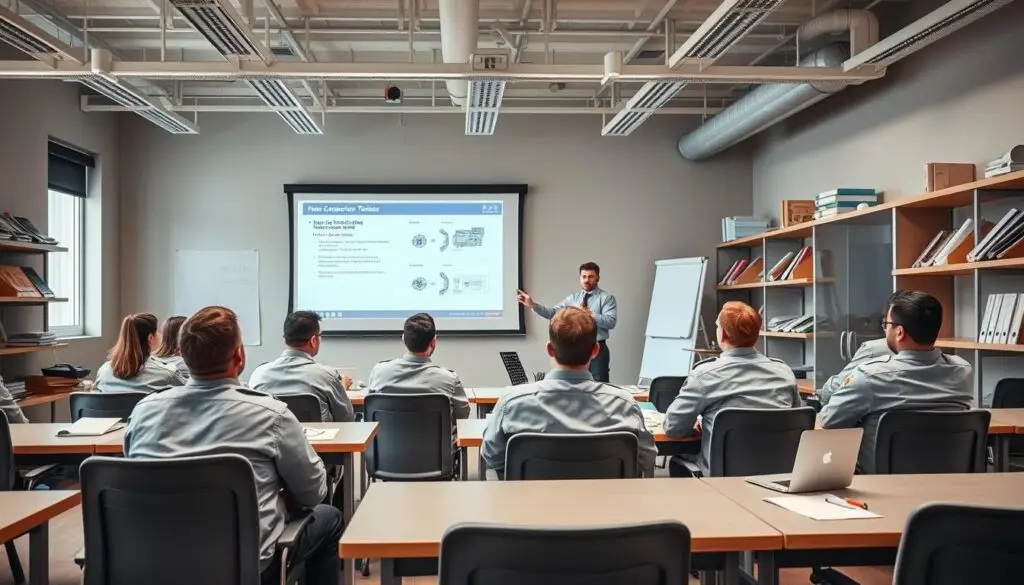
Demonstrating Knowledge and Skills for Federal Standards
The FMCSA certification process evaluates specific competencies that every inspector must possess. Candidates must demonstrate thorough knowledge of the Federal Motor Carrier Safety Regulations, including Parts 393 through 396.
Practical skill assessments test your ability to identify vehicle defects and properly document inspection findings. The “qualified inspector” designation confirms you can perform comprehensive vehicle examinations according to federal protocols. These standards ensure consistent inspection quality across all jurisdictions.
Understanding Your State’s Additional Requirements
While federal standards provide the foundation, individual states may impose supplementary requirements for certified DOT inspector credentials. Some states require additional examinations, background checks, or continuing education hours beyond federal minimums.
Research your state’s specific regulations through the state transportation department or motor carrier services division. Certain states maintain their own inspector registries with separate application processes. Compliance with both federal and state requirements ensures you can legally perform inspections in your jurisdiction.
| Requirement Type | Federal Standards | State Variations | Typical Timeline |
|---|---|---|---|
| Training Program | FMCSA-approved course completion | May require state-specific modules | 1-2 weeks |
| Written Examination | Federal regulations knowledge test | Additional state law components | Same day as training |
| Practical Assessment | Hands-on vehicle inspection demonstration | State-specific evaluation criteria | 1-3 days after written test |
| Background Check | Not federally mandated | Required in 23 states | 1-4 weeks processing |
The complete DOT inspector certification journey from enrollment to credential issuance typically spans four to eight weeks. Experienced mechanics with current ASE certifications often complete the process faster than those entering the field. Proper planning and understanding of all requirements streamlines your path to becoming a certified DOT inspector.
Accredited Training Programs for DOT Inspector Certification
Multiple accredited training pathways exist for mechanics pursuing DOT inspector certification. Each program type offers distinct advantages depending on your career goals, location, and budget. Understanding these options helps you choose the most effective route to certification while meeting all federal requirements.
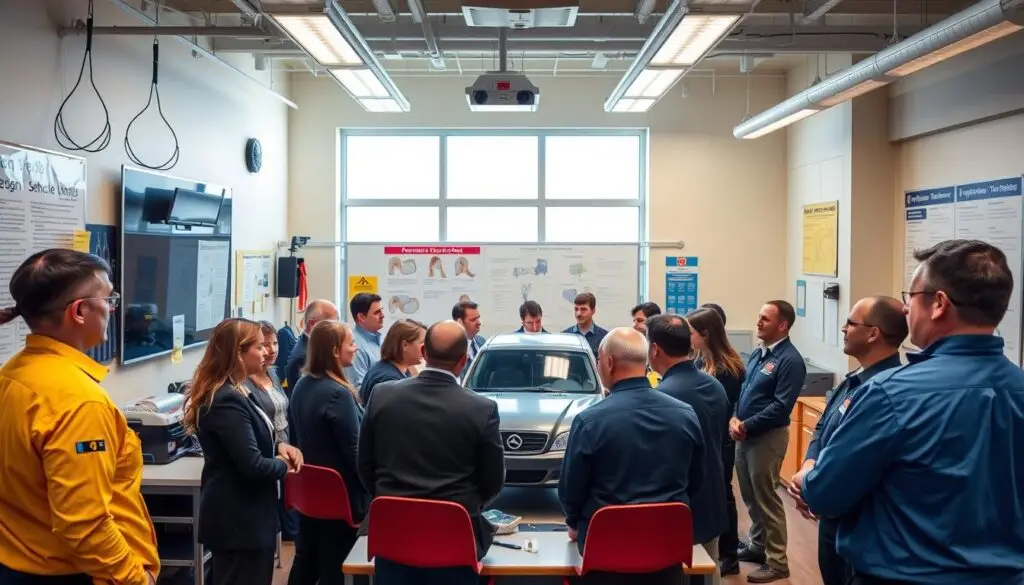
Commercial Vehicle Safety Alliance Training Courses
CVSA training courses represent the gold standard for inspector education across North America. These programs deliver standardized curriculum that ensures consistency across all jurisdictions. The training methodology follows strict federal guidelines established by FMCSA.
CVSA certification provides nationwide recognition that makes your credentials portable across state lines. This flexibility proves valuable for inspectors who may relocate or work in multiple states throughout their careers.
State-Sponsored Inspector Training Programs
State departments of transportation and motor carrier safety divisions frequently offer DOT inspector training programs directly. These courses often feature reduced tuition for state residents and direct connections to enforcement agencies. Enrolling in programs offered through state channels provides an effective pathway to certification.
State-sponsored programs incorporate both federal standards and state-specific regulations that supplement FMCSA requirements. This dual focus prepares you for real-world inspection scenarios in your jurisdiction.
Private Training Provider Options
Technical schools, community colleges, and specialized commercial vehicle training companies provide FMCSA-approved vehicle inspection certification courses. Private providers often offer flexible scheduling options including evening and weekend classes. Some certified inspection shops and mobile technicians also deliver approved DOT inspector training.
All private programs must meet both FMCSA and CVSA standards to maintain accreditation status.
Typical Course Duration and Curriculum Content
DOT inspector training programs typically range from several days to several weeks depending on format and intensity. Most comprehensive courses require 40 to 80 hours of combined instruction. The curriculum balances classroom theory with hands-on vehicle inspection practice.
Course content covers Federal Motor Carrier Safety Regulations, inspection procedures, defect identification, and documentation requirements. Expect intensive daily sessions that demand full attention and active participation.
| Training Program Type | Average Cost | Duration | Key Advantages |
|---|---|---|---|
| CVSA Training Courses | $800-$1,500 | 5-10 days | Nationwide recognition and standardized curriculum |
| State-Sponsored Programs | $400-$1,000 | 1-3 weeks | Lower cost for residents and state-specific training |
| Private Training Providers | $600-$1,800 | 2-6 weeks | Flexible scheduling and diverse location options |
Passing the DOT Inspector Certification Exam
The certification exam represents the final hurdle between your training and becoming a fully authorized DOT inspector. This comprehensive assessment evaluates both your theoretical understanding and practical application abilities. Candidates must demonstrate mastery in multiple areas to earn their credentials and begin conducting official vehicle inspections.
Written Knowledge Test Components
The written examination assesses your understanding of federal regulations and technical knowledge. You’ll encounter questions covering FMCSA certification standards, particularly regulations found in 49 CFR Part 396. The test evaluates your grasp of inspection procedures and violation classifications.
Key content areas include Federal Motor Carrier Safety Regulations and compliance requirements, commercial vehicle systems including brakes, steering, and lighting, out-of-service criteria and defect identification protocols, proper documentation methods and reporting procedures, and safety equipment standards and emergency exit requirements.
Hands-On Practical Skills Evaluation
The practical component requires you to demonstrate actual inspection competency on a commercial vehicle. Evaluators observe your systematic approach to conducting inspections according to established protocols. You must identify defects accurately, document findings properly, and explain regulatory violations clearly.
This assessment proves you can function as a certified DOT inspector in real-world scenarios. Candidates typically inspect an actual truck or bus while explaining their methodology to examiners.

Minimum Passing Scores and Retesting Procedures
Most programs require a minimum score of 80% on the written examination and satisfactory performance on all practical evaluation criteria. If you don’t pass initially, retesting opportunities are available after additional study time. Some jurisdictions require a waiting period between attempts or charge additional examination fees.
Candidates who understand DOT inspector certification requirements typically succeed on their first attempt. Experienced mechanics often find the practical assessment more intuitive than the regulatory knowledge portions.
Career Advantages of DOT Inspector Certification
Certified DOT inspectors enjoy substantial career benefits that extend far beyond initial certification requirements. This credential transforms experienced mechanics into essential safety professionals while opening doors to diverse employment opportunities across the transportation industry. The decision to become a DOT inspector represents a strategic investment in long-term career stability and professional advancement.
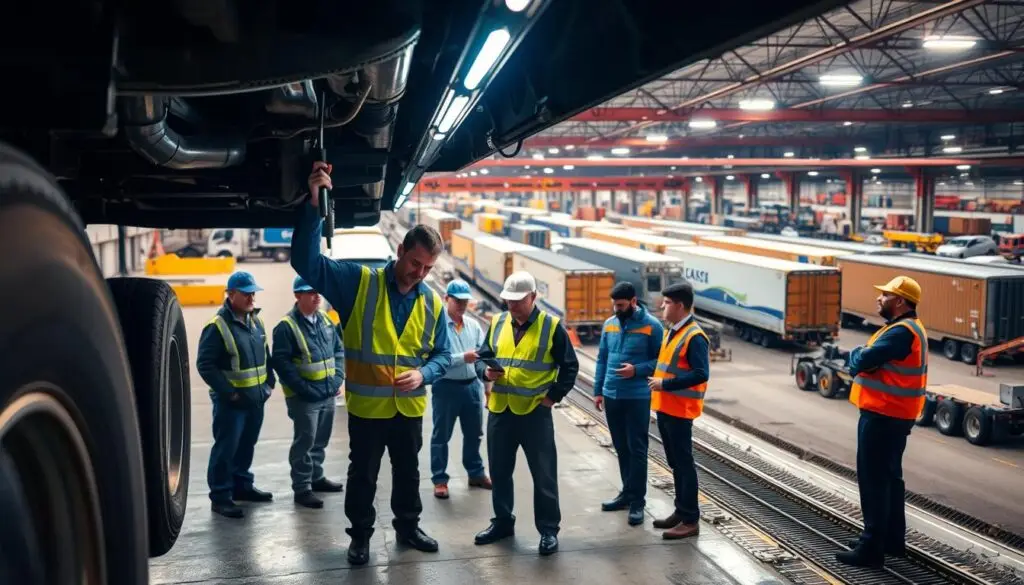
Compensation Expectations for Certified Professionals
DOT inspector salaries typically range from $45,000 to $75,000 annually, depending on experience level, geographic location, and employer type. Entry-level inspectors with fresh certification generally start near the lower range, while experienced professionals in metropolitan areas often command higher compensation.
Senior inspectors and those in supervisory positions frequently earn $80,000 or more per year. Specialized inspectors focusing on hazardous materials or complex vehicle systems may negotiate premium rates. Independent consultants who serve multiple clients can potentially exceed these ranges through strategic positioning.
Diverse Employment Settings and Opportunities
A certified DOT inspector can pursue positions across multiple sectors within the transportation industry. State departments of transportation and federal motor carrier safety offices regularly hire qualified inspectors for enforcement and compliance roles. These government positions typically offer strong benefits packages and pension plans.
Large trucking companies and fleet operators increasingly employ in-house inspectors to reduce outsourcing costs and minimize vehicle downtime. This approach ensures better maintenance oversight and quicker issue resolution. Third-party inspection service providers also need qualified professionals to serve their client base.
Advancement Trajectories and Specialized Roles
Professional growth pathways for DOT inspectors include specialization in hazardous materials inspections, which requires additional training but commands higher compensation. Many inspectors progress to senior inspector or supervisor positions, overseeing inspection teams and quality control processes.
Experienced professionals often transition into compliance management roles, directing entire safety programs for major carriers. Consulting opportunities allow seasoned inspectors to leverage their expertise across multiple organizations while maintaining schedule flexibility.
Career Security in Transportation Compliance
Commercial vehicle safety will always require qualified inspectors regardless of economic conditions. This fundamental need creates exceptional job stability for certified professionals. The aging inspector workforce and upcoming retirements generate ongoing demand for newly certified individuals entering the field.
Regulatory requirements continue expanding, further increasing the need for knowledgeable safety professionals. This combination of factors positions DOT inspector certification as a career choice with lasting security in the transportation compliance sector.
The HDJ Perspective
For diesel technicians evaluating their next career move, DOT inspector certification offers something increasingly rare in this industry: a credential that actually appreciates in value over time. As electronic logging devices, advanced driver assistance systems, and alternative fuel powertrains add complexity to commercial vehicles, the inspectors who understand both legacy mechanical systems and emerging technologies will command premium compensation. The technicians who pursue certification now position themselves at the intersection of regulatory expertise and technical knowledge—exactly where the industry needs them most.
Investment Requirements: Time and Money
Becoming a certified DOT inspector involves specific financial costs and time commitments that vary based on training path and location. Mechanics considering this career advancement need realistic expectations about both the monetary investment and the schedule required to complete certification. Understanding these requirements upfront enables proper planning without disrupting current employment or creating financial strain.
Training Course Tuition and Materials
The inspector certification cost for training programs ranges considerably depending on depth and format. Basic introductory courses may cost under $200, making entry-level knowledge accessible to most mechanics. However, comprehensive CVSA-approved certification programs typically range from $500 to $1,500.
Additional expenses include study materials, federal regulation manuals, and inspection reference guides. These supplementary resources usually add $100 to $250 to the total investment. Many training providers bundle materials into course tuition, which simplifies budgeting.
Examination Fees and Certification Costs
Beyond DOT inspector training expenses, candidates must budget for examination and credential fees. Initial certification testing typically costs between $100 and $300, varying by state jurisdiction. Some states charge separately for written knowledge tests and practical skills evaluations.
State processing fees for credential issuance add another $50 to $150 to the total cost. Background check requirements in certain jurisdictions may increase expenses by an additional $25 to $75. These upfront costs represent a one-time investment that opens doors to higher earning potential.
“The investment in DOT inspector certification typically pays for itself within the first three to six months through increased salary and additional inspection opportunities.”
Timeline from Enrollment to Full Certification
The complete DOT inspector certification process typically spans two to six months from initial enrollment through final credential issuance. Intensive week-long training programs accelerate this timeline, while part-time evening courses extend it to accommodate working mechanics. Individual study time requirements vary based on prior experience with federal motor carrier regulations.
Examination scheduling availability affects overall duration, with some testing centers offering monthly sessions while others test quarterly. State processing times for credential issuance range from two to six weeks after successful exam completion. Once certified, inspectors can complete Level I comprehensive inspections in 45 to 60 minutes, demonstrating the practical efficiency gained through training.
For mechanics balancing certification with full-time employment, planning a realistic timeline prevents rushed preparation and ensures thorough mastery of inspection standards. The time investment translates directly into professional competence and career advancement.
Free Professional Fleet Tools
Cost calculators, fault code lookup, maintenance planners, and more—built for owner-operators, fleet managers, and diesel techs. No signup required.
Maintaining and Renewing Your DOT Inspector Credentials
The transportation compliance field evolves constantly, making ongoing education essential for every certified DOT inspector. Achieving initial certification represents just the first step in a career-long commitment to professional excellence. Federal and state agencies require inspectors to demonstrate continued competency through regular training and formal renewal processes.
The FMCSA and state authorities recognize that vehicle technology, safety standards, and regulations change frequently. Inspectors must adapt their knowledge and skills to remain effective in protecting public safety. Maintaining active certification status involves meeting specific continuing education requirements and adhering to established renewal timelines.
Annual Continuing Education Units
Most jurisdictions require certified DOT inspectors to complete a specified number of continuing education units annually. These educational requirements typically range from 8 to 16 hours per year, depending on state regulations and certification level.
Continuing education coursework covers several critical areas. Regulatory updates provide instruction on new FMCSA rules and amendments to existing standards. Refresher training reinforces proper inspection techniques and documentation procedures.
Specialized training modules address emerging technologies in commercial vehicles. Topics include alternative fuel systems, advanced braking technologies, and electronic logging device compliance. Many training providers offer online courses that allow inspectors to fulfill requirements while maintaining work schedules.
Recertification Timeline and Process
DOT certification renewal occurs on a regular cycle that varies by jurisdiction. Most states require formal recertification every one to three years. The process involves submitting documentation that proves completion of continuing education requirements.
Inspectors must track their training hours carefully and maintain certificates of completion. Many states require submission of renewal applications 30 to 60 days before certification expiration. Late renewals may result in inactive status or require additional testing.
| Jurisdiction Type | Renewal Cycle | Required CEUs | Additional Testing |
|---|---|---|---|
| Federal FMCSA | Every 3 years | 24 hours minimum | Not typically required |
| State DOT Programs | Every 1-2 years | 8-16 hours annually | Varies by state |
| CVSA Certification | Every 2 years | 16 hours minimum | Practical reassessment optional |
| Private Sector | Every 1-3 years | 12-20 hours annually | Company-specific requirements |
Some jurisdictions require periodic competency testing as part of DOT certification renewal. These assessments verify that inspectors maintain proficiency in both knowledge and practical skills. Failing to meet renewal requirements results in credential suspension until all conditions are satisfied.
Keeping Up with Updated Federal Regulations
Federal motor carrier regulations undergo frequent revisions. Certified inspectors must monitor these changes to ensure their inspection practices reflect current standards. The FMCSA publishes regulatory updates through official notices and bulletin services.
Professional associations provide valuable resources for staying informed. Organizations like the Commercial Vehicle Safety Alliance and American Trucking Associations offer newsletters, webinars, and conferences focused on regulatory developments. Subscribing to industry publications ensures inspectors receive timely information about compliance changes.
Many successful inspectors establish routines for regulatory monitoring. Monthly reviews of FMCSA bulletins and quarterly participation in professional development workshops help maintain expertise. This proactive approach to FMCSA certification maintenance distinguishes exceptional inspectors from those who merely meet minimum requirements.
Overcoming Common Certification Challenges
While the certification process is rigorous by design, understanding common barriers helps mechanics prepare effectively for success. The standards exist to ensure only a qualified inspector conducts vehicle inspections, which carry significant safety risks if performed improperly. Many candidates face similar obstacles during their journey, but strategic approaches can transform these challenges into manageable steps.
The certification is designed with high standards because federal motor carrier safety depends on thorough, accurate inspections. Most mechanics who fail to complete certification cite three main difficulties: mastering complex regulations, balancing training with work commitments, and passing the hands-on assessment. Recognizing these challenges early allows you to develop targeted strategies that increase your success rate.
Mastering Federal Regulations and Technical Standards
The extensive federal motor carrier safety regulations, particularly 49 CFR Part 396, can initially overwhelm certification candidates with their technical detail and legal language. These comprehensive standards govern maintenance, inspection, and repair requirements for commercial motor vehicles. Breaking down this material into digestible segments makes the learning process far more manageable.
Successful candidates use several proven study strategies. Create quick-reference guides for field use that summarize key regulation sections. Join study groups with other certification candidates to discuss real-world applications of abstract rules. Use actual vehicle scenarios to contextualize regulations rather than memorizing text. This approach transforms complex legal language into practical knowledge you can apply during inspections.
Balancing Certification with Full-Time Employment
Most mechanics pursuing DOT inspector training face the practical challenge of completing coursework while maintaining their regular job and personal responsibilities. This logistical hurdle causes many candidates to delay or abandon their certification goals. Flexible training formats and strategic planning make this balance achievable.
Evening and weekend training programs accommodate working professionals without requiring extended time away from employment. Many training providers now offer hybrid or online options that let you complete theoretical components at your own pace. Consider negotiating flexible scheduling with your employer, especially if your certification benefits the company. Plan your certification timeline during slower work periods when you can dedicate more focus to studying and practical preparation.
Excelling in Hands-On Inspection Assessments
The practical skills evaluation proves more challenging than written tests for many certification candidates. This assessment requires you to demonstrate proficient inspection techniques on actual vehicles under timed conditions. Systematic preparation and repeated practice build the confidence and competence needed to pass.
Develop a consistent inspection routine that ensures you check every required component without overlooking critical items. Practice on various vehicle types to become comfortable with different configurations. Work with a mentor or experienced qualified inspector who can provide feedback on your technique. Video your practice inspections to identify areas for improvement. This structured approach transforms nervous anticipation into confident execution.
| Challenge | Impact on Candidates | Proven Solution Strategy |
|---|---|---|
| Complex regulations understanding | Overwhelm and study confusion | Segment material into daily study blocks with real scenarios |
| Work-training time conflict | Course incompletion or delays | Select flexible evening/weekend or online training formats |
| Practical exam anxiety | Skills assessment failures | Practice systematic routines on multiple vehicle types |
| Study isolation difficulties | Motivation loss and gaps in knowledge | Join peer study groups and find experienced mentors |
Frequently Asked Questions
How long does it take to become a certified DOT inspector?
The complete DOT inspector certification process typically spans four to eight weeks from initial enrollment through final credential issuance. Intensive week-long training programs can accelerate this timeline, while part-time evening courses extend the duration to accommodate working mechanics. Factors affecting timeline include examination scheduling availability, state processing times for credential issuance, and individual study time requirements based on prior experience with federal motor carrier regulations.
What are the minimum requirements to become a DOT inspector?
Candidates must possess at least one year of documented experience in commercial vehicle maintenance, repair, or safety auditing. The FMCSA defines a qualified inspector as someone with adequate training to thoroughly inspect, repair, and maintain vehicle components. Acceptable experience includes working as a commercial vehicle mechanic, fleet maintenance technician, or safety compliance specialist. While not always mandatory, ASE certifications in brakes, suspension, and electrical systems strengthen applications. Physical requirements include the ability to crawl under vehicles, climb into cabs, and access hard-to-reach components during thorough inspections.
How much does DOT inspector certification cost?
The total investment for DOT inspector certification ranges from approximately $500 to $2,000 depending on training program type and location. Basic introductory courses may cost under $200, while comprehensive CVSA-approved certification programs typically range from $500 to $1,500. Additional expenses include study materials and federal regulation manuals ($100-$250), examination fees ($100-$300), state credential processing fees ($50-$150), and background check fees in some states ($25-$75). This investment typically pays for itself within three to six months through increased salary and inspection opportunities.
What is the average salary for a DOT inspector?
DOT inspector salaries typically range from $45,000 to $75,000 annually, depending on experience level, geographic location, and employer type. Entry-level inspectors with fresh certification generally start near the lower range, while experienced professionals in metropolitan areas often command higher compensation. Senior inspectors and those in supervisory positions frequently earn $80,000 or more per year. Specialized inspectors focusing on hazardous materials or complex vehicle systems may negotiate premium rates, and independent consultants serving multiple clients can potentially exceed these ranges.
How often must DOT inspectors renew their certification?
DOT certification renewal occurs on a regular cycle that varies by jurisdiction, with most states requiring formal recertification every one to three years. Federal FMCSA standards typically require renewal every three years with a minimum of 24 continuing education hours. Most jurisdictions require 8-16 hours of continuing education annually covering regulatory updates, refresher training, and specialized modules on emerging technologies. Inspectors must track their training hours carefully and maintain certificates of completion, submitting renewal applications 30-60 days before certification expiration.
What are the six levels of DOT vehicle inspections?
The CVSA established six standardized inspection levels. Level I is the comprehensive North American Standard Inspection covering both driver credentials and complete vehicle systems (45-60 minutes). Level II is a walk-around inspection excluding undercarriage examination (30-45 minutes). Level III focuses exclusively on driver compliance without vehicle examination (15-30 minutes). Level IV targets specific compliance issues identified through intelligence or previous violations. Level V is a vehicle-only inspection performed at terminals without driver presence (30-60 minutes). Level VI is the most intensive enhanced inspection for hazardous materials and radioactive cargo (60+ minutes).
Moving Forward with Your DOT Inspector Career
The path to DOT inspector certification represents a natural progression for experienced mechanics who value safety and precision. This specialized credential opens doors to rewarding career opportunities while serving a vital role in commercial vehicle safety.
Becoming a certified DOT inspector requires genuine commitment. The training demands mastery of Federal Motor Carrier Safety Regulations and hands-on inspection techniques. The financial investment in courses and exams is real. The time spent studying complex requirements is significant.
Yet qualified mechanics already possess the technical foundation needed for success. Your existing skills in vehicle systems and repair provide the perfect springboard. The certification process builds on this expertise rather than starting from scratch.
The rewards justify the effort. Certified DOT inspectors enjoy competitive salaries, diverse employment options, and long-term job stability. The transportation industry continues evolving, creating consistent demand for qualified inspectors who ensure compliance and safety standards.
Your next step is straightforward. Research approved training programs in your state. Verify that you meet the eligibility requirements. Contact the Commercial Vehicle Safety Alliance or your state’s transportation department for program details. The journey to become a certified DOT inspector begins with a single action—and experienced mechanics who take this step join a profession that combines technical expertise with meaningful contribution to public safety.
Share This Guide With Your Shop
Know a diesel technician considering DOT inspector certification? This guide covers everything they need to plan their path to certification.