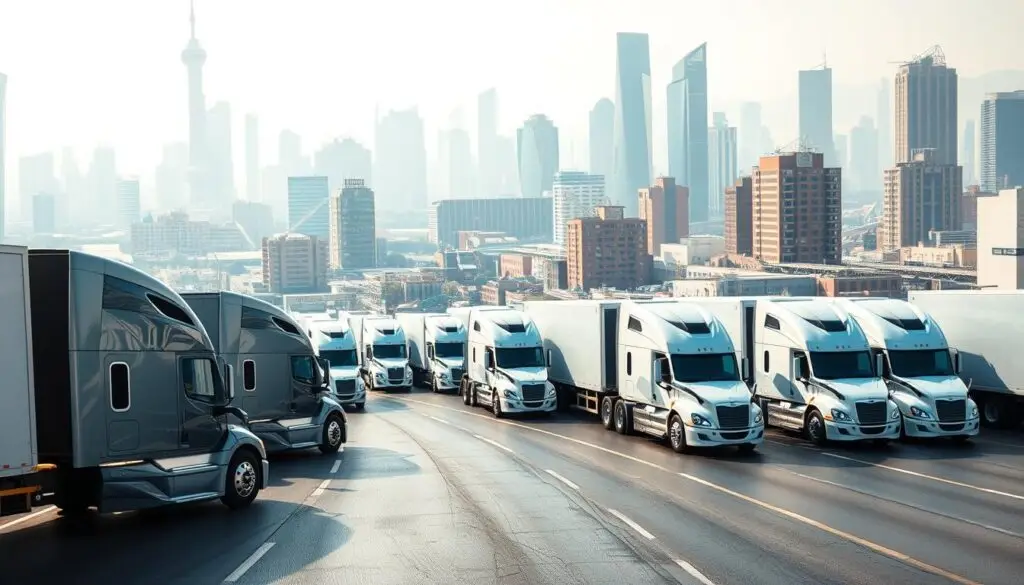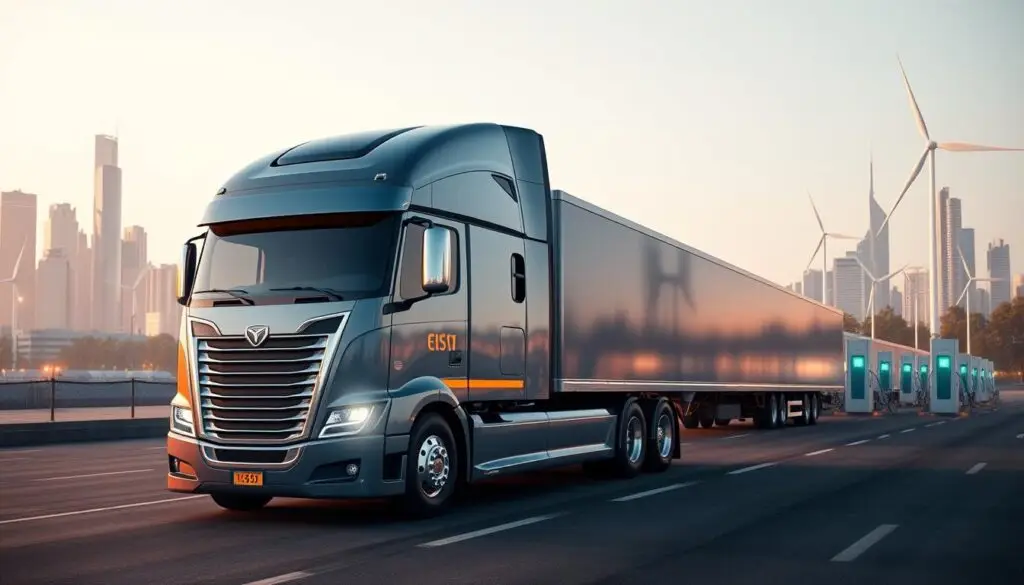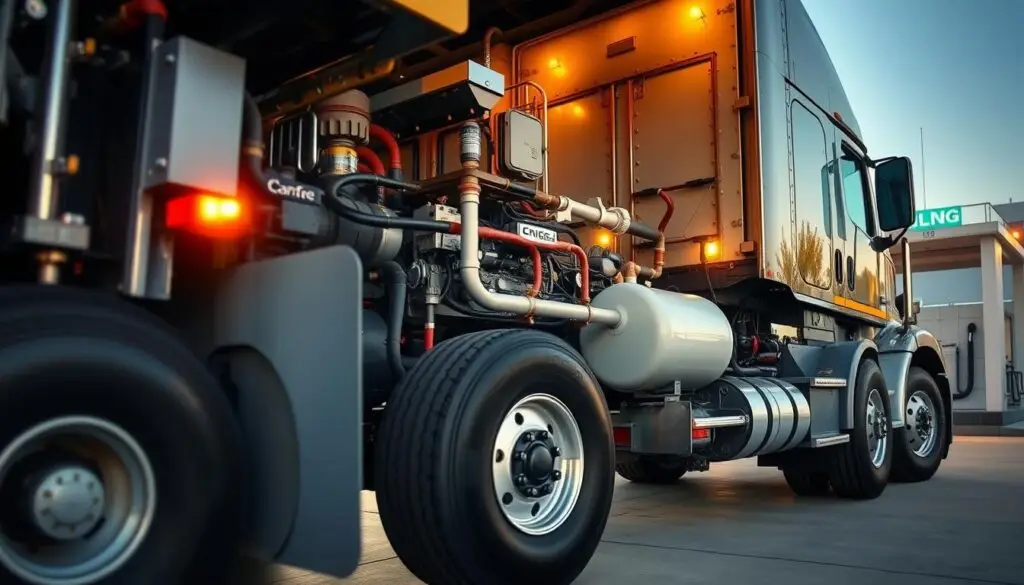
Converting heavy-duty trucks to compressed natural gas (CNG) costs $30,000 to $50,000 per vehicle for equipment and installation. Fleet fueling infrastructure adds $2-5 million for medium-sized facilities serving 30-50 vehicles.
These upfront investments deliver 30-50% fuel cost savings for high-mileage commercial operations. Companies like UPS operate over 1,000 CNG vehicles nationwide, demonstrating the technology’s viability at scale across diverse operational environments.
Fleets running over 70,000 miles annually typically achieve positive ROI within 3-5 years through sustained fuel cost reductions. The $1.50 per gallon price advantage over diesel offsets the 10-15% lower fuel economy inherent to natural gas operations.
Last Updated: October 2025
Key Takeaways
- Conversion Investment: Equipment and installation costs range $30,000-$50,000 per heavy-duty vehicle with additional infrastructure requirements
- Fuel Cost Reduction: Natural gas delivers 30-50% lower fuel expenses compared to diesel in high-mileage applications
- Infrastructure Capital: Medium fleet fueling stations require $2-5 million investment for complete facility buildout
- ROI Threshold: Vehicles need minimum 70,000 annual miles at $1.50 per gallon price differential for positive returns
- Environmental Impact: CNG reduces NOx emissions by 90%, cuts carbon monoxide by 75%, and virtually eliminates particulate matter
- Market Expansion: Growing infrastructure network and improved engine technology continue reducing adoption barriers
Understanding Natural Gas Truck Technology
Compressed natural gas operates fundamentally differently from diesel fuel. Natural gas consists primarily of methane (90%+ purity), requiring compression to 3,600 PSI for practical vehicle storage and delivery.
According to the U.S. Energy Information Administration, natural gas provides a domestically abundant fuel alternative with price stability advantages over petroleum products. This domestic production shields fleet operators from international fuel price volatility while supporting energy independence.
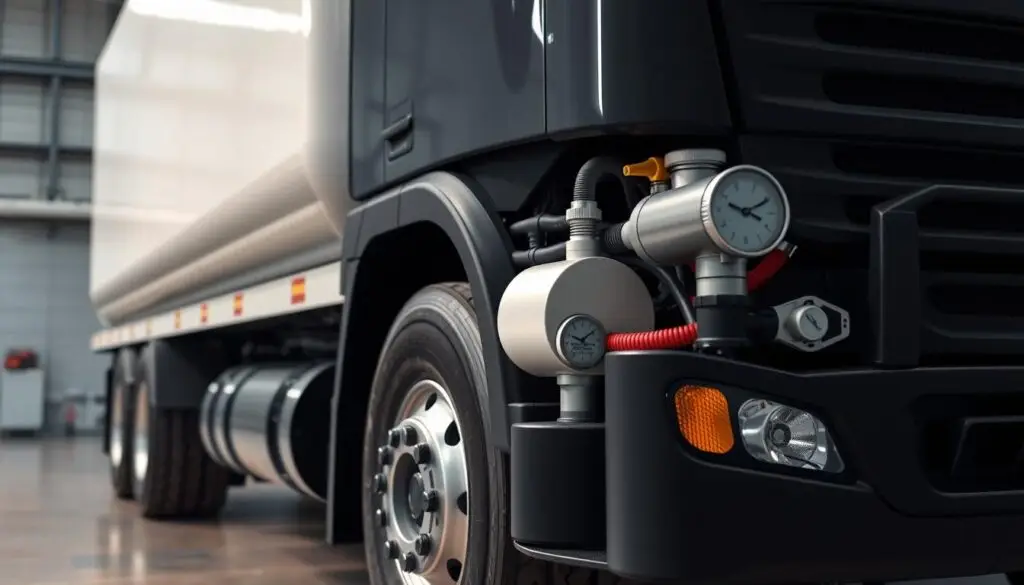
The technology requires specialized storage systems and delivery components. High-pressure composite tanks replace traditional diesel fuel tanks, adding 500-800 pounds to vehicle weight. Electronic control systems manage fuel delivery and engine operation.
Energy Density Comparison
CNG contains less energy per volume equivalent than diesel fuel. Diesel provides 129,500 BTU per gallon, while CNG delivers 112,000 BTU per gasoline gallon equivalent (GGE).
This creates an energy penalty of approximately 10-15% lower fuel economy on an energy-equivalent basis. A diesel truck achieving 6 MPG typically delivers 5.1-5.4 miles per diesel gallon equivalent on CNG.
However, the typical price advantage of $1.50 or more per gallon offsets this efficiency loss in high-mileage applications. Fleet managers must account for slightly reduced range when scheduling deliveries and establishing backup fueling protocols.
Storage System Requirements
| Component | Specification | Weight Impact | Cost Range |
|---|---|---|---|
| Type 4 Composite Tanks | 3,600 PSI rated | 500-800 lbs | $8,000-15,000 |
| Mounting Brackets | DOT certified | 100-150 lbs | $1,500-3,000 |
| Pressure Relief Devices | Automatic release | 20-30 lbs | $300-600 |
| High-Pressure Lines | Stainless steel | 50-75 lbs | $400-800 |
Type 4 composite tanks offer the best weight-to-storage ratio. DOT-certified mounting systems ensure structural integrity during vehicle operation. Pressure relief devices provide automatic safety protection in thermal events.
CNG Truck Conversion Cost Breakdown
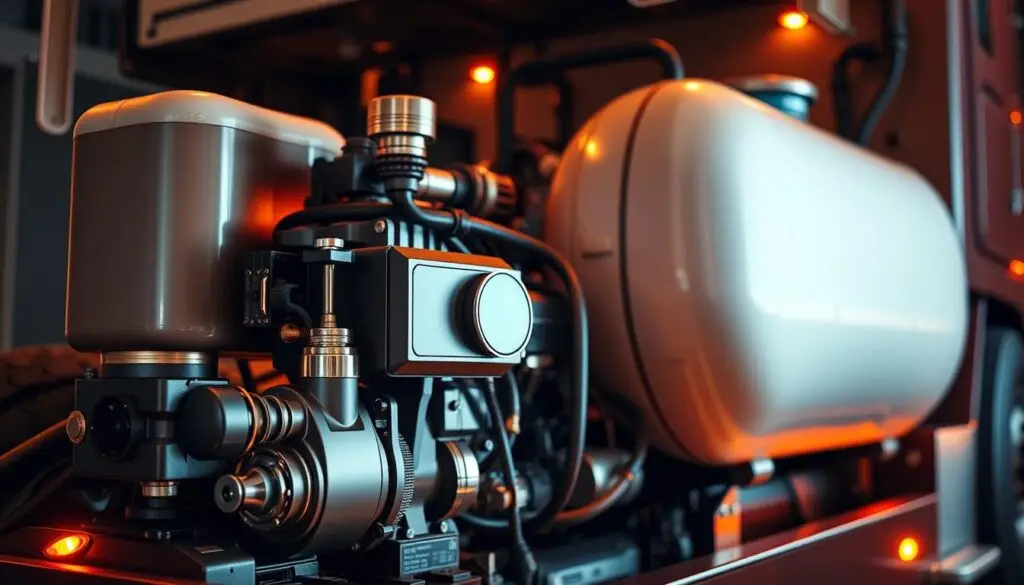
Conversion expenses divide into three primary categories: equipment procurement, professional installation labor, and mandatory safety certification. Regional variations affect total project costs significantly.
California installations typically run 20-30% higher than Midwest locations due to increased labor rates and stricter regulatory compliance requirements. Urban areas with higher prevailing wages also command premium pricing for installation services.
Conversion System Options
| System Type | Description | Best Application | Cost Range |
|---|---|---|---|
| Dedicated CNG | Complete diesel replacement | Return-to-base fleets | $30,000-40,000 |
| Bi-Fuel System | Diesel + CNG capability | Long-haul operations | $35,000-45,000 |
| Dual-Fuel System | Blended operation mode | Mixed-use fleets | $40,000-50,000 |
Dedicated CNG systems eliminate diesel entirely, offering the lowest conversion cost. These work best for return-to-base operations with reliable access to fueling infrastructure.
Bi-fuel systems maintain separate diesel and CNG capabilities. The vehicle can operate on either fuel independently, providing flexibility for routes with limited CNG access.
Dual-fuel systems blend both fuels during operation. These typically use diesel for ignition while CNG provides primary combustion energy, maximizing fuel cost savings while maintaining operational flexibility.
Component Pricing Details
Essential conversion equipment includes the electronic control module ($1,000-$2,500), air-fuel mixer assembly ($800-$1,500), and pressure regulator system ($600-$1,200). Safety valves and gauges add another $300-$600.
Professional installation labor typically requires 40-80 hours of technician time. Labor costs range from $3,000-$8,000 depending on vehicle configuration and system complexity.
DOT safety certification adds a final $500-$800 to complete the conversion process. This mandatory inspection verifies proper installation and system integrity before the vehicle enters service.
Infrastructure Investment Analysis
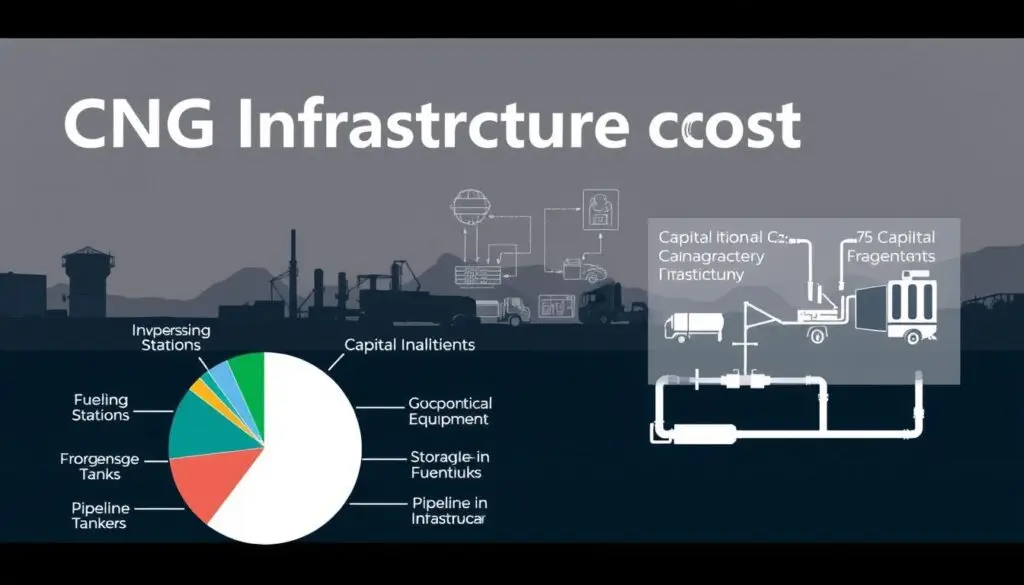
CNG fueling stations represent the largest single capital expense in fleet conversion projects. A medium-sized facility serving 30-50 vehicles costs $2-5 million complete, according to Department of Energy infrastructure data.
Station design decisions significantly impact long-term operational costs and fleet efficiency. The choice between fast-fill and slow-fill configurations fundamentally affects both capital requirements and operational workflows.
Station Design Comparison
| Station Type | Fill Time | Infrastructure Cost | Operating Cost |
|---|---|---|---|
| Fast-Fill Station | 3-5 minutes | $3-5 million | $12,000/month |
| Slow-Fill Station | 4-8 hours | $2-3 million | $7,000/month |
| Combination Station | Both options | $4-6 million | $15,000/month |
Fast-fill configurations provide diesel-comparable fueling speeds. Vehicles complete refueling in 3-5 minutes, matching conventional diesel operations. However, this convenience requires substantially higher capital investment and operating costs.
Time-fill systems cost less upfront yet demand longer vehicle dwell times. These work well for overnight charging of return-to-base fleets. Vehicles connect to slow-fill posts during off-shift hours, eliminating operational disruption.
Combination stations offer both fast-fill and slow-fill capabilities. This flexibility accommodates varying operational needs but represents the highest total investment.
Critical Infrastructure Components
The compressor system represents the heart of any CNG facility. These units typically account for 40-50% of total station costs at $150,000-$500,000 depending on capacity requirements.
Cascade storage tanks add $300-400 per gallon of storage capacity. A typical 50-vehicle fleet requires 15,000-25,000 gallons of storage to maintain adequate supply during peak demand periods.
Fuel dispensers run $50,000-$100,000 per unit. Gas dryer systems prevent moisture contamination at $30,000-$60,000. Site preparation with concrete work typically adds 25-35% to base equipment costs.
Operating Cost and Maintenance Requirements
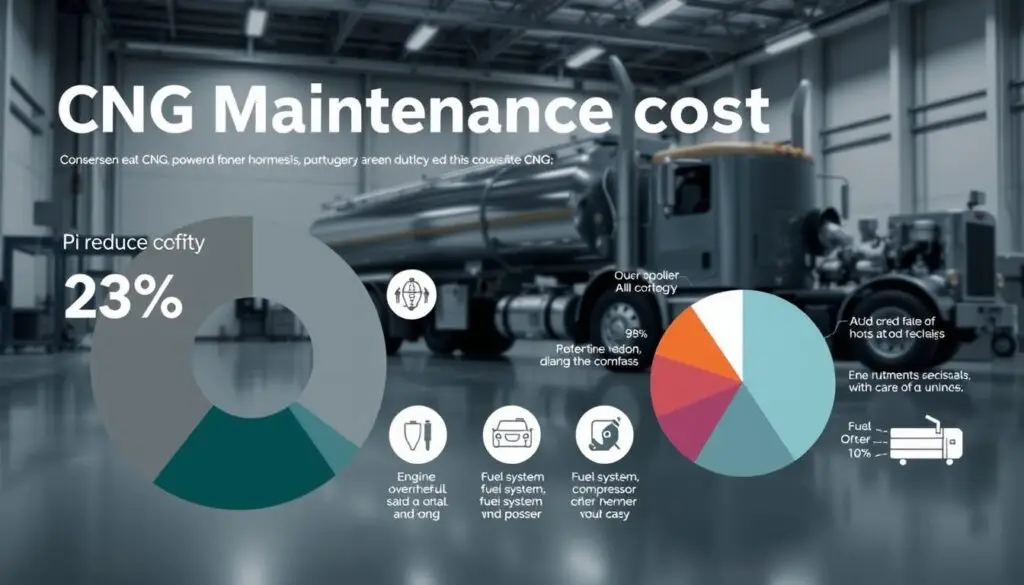
Ongoing operational expenses determine long-term financial viability. Natural gas operations require specialized maintenance procedures and consistent energy costs for compression.
Station electricity consumption represents the largest recurring expense. Compressor systems demand substantial power for gas compression. A 50-vehicle fleet typically incurs $8,000-$12,000 monthly in electricity costs alone.
Utility rate negotiations during planning phases prove critical. Time-of-use rates and demand charges significantly impact total operating costs. Some fleets negotiate special industrial rates to reduce compression expenses.
Station Operating Expenses
| Maintenance Category | Service Frequency | Per-Event Cost | Annual Total |
|---|---|---|---|
| Compressor maintenance | Every 2,000-3,000 hours | $500-1,000 | $6,000-8,000 |
| Electricity (50-vehicle fleet) | Monthly utility bill | $8,000-12,000 | $96,000-144,000 |
| Filter replacement | Monthly inspection | $200-400 | $2,400-4,800 |
| Cylinder recertification | 3 years/36k miles | $500-800/vehicle | Varies by fleet size |
Compressor maintenance follows manufacturer-specified intervals. Most systems require service every 2,000-3,000 operating hours. Regular maintenance prevents costly breakdowns and maintains compression efficiency.
Filter replacement protects compressor components from contamination. Monthly inspections identify filters requiring replacement. Neglecting filter maintenance accelerates compressor wear and reduces system reliability.
Vehicle cylinder recertification represents a significant ongoing expense. DOT regulations mandate inspection every 3 years or 36,000 miles at $500-800 per vehicle. Fleets must budget accordingly for this mandatory compliance requirement.
Performance Metrics and Fuel Economy
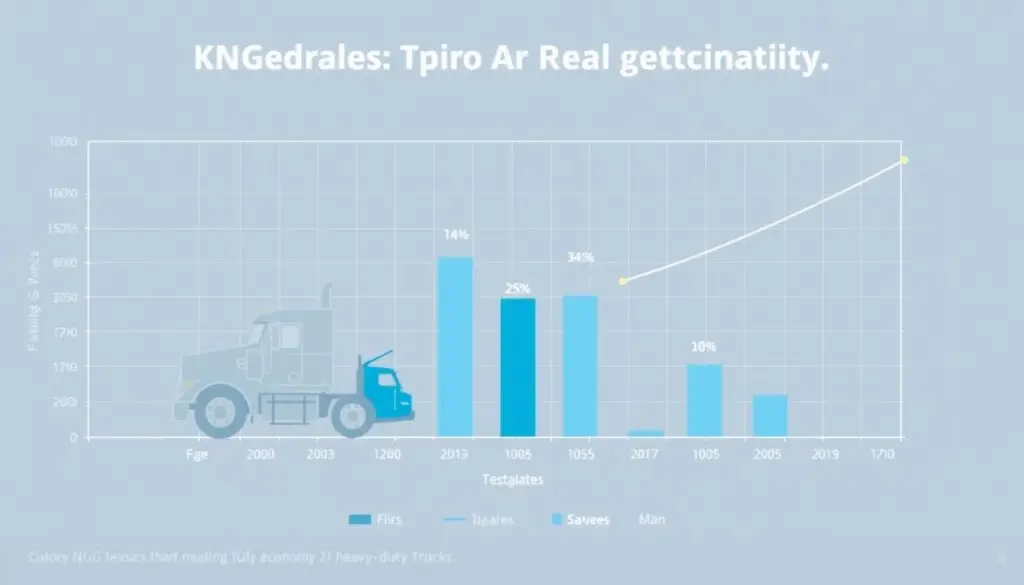
Real-world fleet data reveals consistent operational patterns. CNG vehicles typically average 10-15% lower fuel economy than diesel equivalents but deliver substantial net cost savings through lower fuel prices.
Understanding these performance characteristics proves essential for accurate route planning and operational forecasting. Fleet managers must account for slightly reduced range when scheduling deliveries and establishing backup fueling protocols.
Fleet Performance Data
Major fleet operators report actual results across diverse applications. UPS urban delivery routes achieve 5.5 miles per diesel gallon equivalent (DGE). FedEx Ground highway operations reach 6.2 miles per DGE.
Waste Management refuse collection averages 2.8 miles per DGE. School bus fleet operations typically deliver 4.5 miles per DGE. These metrics reflect real-world performance under varying load and duty cycle conditions.
Engine Power Comparison
| Engine Model | Horsepower | Torque | Primary Application |
|---|---|---|---|
| Cummins ISX12N | 400 hp | 1,450 lb-ft | Regional haul |
| Westport 15L | 450 hp | 1,650 lb-ft | Long haul |
| Cummins B6.7N | 260 hp | 660 lb-ft | Medium duty |
| PSI 8.8L | 350 hp | 1,000 lb-ft | Vocational |
Current CNG engines deliver substantial power for most commercial applications. The Cummins ISX12N provides 400 horsepower and 1,450 lb-ft torque for regional haul operations. The Westport 15L offers 450 horsepower for long-haul applications.
Medium-duty applications benefit from the Cummins B6.7N with 260 horsepower. Vocational trucks utilize the PSI 8.8L engine delivering 350 horsepower and 1,000 lb-ft torque.
Stay Ahead of Industry Trends
Get expert insights, equipment reviews, and operational strategies delivered to your inbox weekly.
Subscribe to Our NewsletterROI Calculations and Breakeven Analysis
Financial viability depends on specific operational characteristics. Industry case studies reveal precise breakeven thresholds based on annual mileage and fuel price differentials.
Successful CNG implementations share common attributes: high annual mileage, predictable routing patterns, and sustained fuel price differentials. Fleets operating below minimum mileage thresholds struggle to recover conversion investments within acceptable timeframes.
The fundamental equation compares fuel savings against total conversion and infrastructure costs. Annual fuel savings equal total miles driven divided by fuel economy, multiplied by the price differential per gallon.
ROI Quick Calculator
Formula: Annual Fuel Savings = (Annual Miles ÷ MPG) × Price Differential per Gallon
Example Calculation: 70,000 miles ÷ 5.5 MPG × $1.50 price difference = $19,090 annual fuel savings
Payback Period: $40,000 conversion cost ÷ $19,090 annual savings = 2.1 years to breakeven
Breakeven Requirements by Engine Type
| Engine Type | Annual Miles Required | Price Spread Needed | Typical ROI |
|---|---|---|---|
| Spark-Ignited | 70,000 miles | $1.50/DGE | 20-25% |
| HPDI | 140,000 miles | $1.50/DGE | 18-22% |
| Pick-up/Delivery | 60,000 miles | $1.50/DGE | 22-28% |
| Refuse Collection | 45,000 miles | $1.75/DGE | 25-30% |
Spark-ignited engines offer the lowest conversion costs and quickest payback periods. These systems require 70,000 annual miles at $1.50 price differential for 20-25% ROI.
High-pressure direct injection (HPDI) engines cost more upfront but deliver better fuel economy. These require 140,000 annual miles for comparable returns due to higher conversion costs.
Pick-up and delivery operations can justify conversion at 60,000 miles due to lower weight sensitivity. Refuse collection achieves positive ROI at just 45,000 annual miles when price differentials reach $1.75 per gallon.
Environmental Benefits and Regulatory Compliance
Emission reductions provide regulatory compliance advantages for many fleets. According to EPA testing protocols, natural gas engines produce substantially lower criteria pollutants compared to diesel equivalents.
These environmental benefits often translate into operational advantages in regions with strict air quality standards. California’s Low Carbon Fuel Standard and other state-level programs provide additional financial incentives for CNG adoption.
Credit generation mechanisms reward fleets for reduced carbon intensity. These programs create additional revenue streams beyond direct fuel cost savings, improving overall project economics.
Verified Emission Reductions
EPA testing confirms CNG reduces nitrogen oxides by 49-90% depending on engine technology. Carbon monoxide decreases approximately 75% compared to diesel equivalents.
Particulate matter emissions are virtually eliminated, achieving near-zero levels in most applications. This addresses one of diesel’s most problematic environmental challenges.
Greenhouse gas emissions decrease 7-20% on a lifecycle basis depending on engine technology. Methane slip remains properly controlled through three-way catalytic systems, ensuring these environmental benefits translate into real air quality improvements.
Fleet Implementation Case Studies
Major commercial operators demonstrate proven operational success. Real-world implementations provide valuable insights for conversion planning and deployment strategies.
Learning from established CNG fleets accelerates deployment timelines and reduces implementation risks. These operators have refined best practices through years of operational experience across varying duty cycles and geographic regions.
UPS Natural Gas Fleet Program
UPS operates the largest private CNG fleet deployment in North America. The company has deployed over 1,000 CNG vehicles across 16 states, displacing more than 1 million gallons of petroleum-based fuel annually.
The program delivers approximately 12-16 cents per mile in fuel cost reduction. Total investment exceeds $100 million in vehicles and infrastructure across multiple deployment phases.
The Department of Energy’s Alternative Fuels Data Center provides comprehensive resources on natural gas vehicle economics and infrastructure development for fleet operators considering conversion.
Success Factors Analysis
| Fleet Type | Key Success Factor | Common Challenge | Solution Strategy |
|---|---|---|---|
| Urban Delivery | Predictable routes | Limited range | Strategic fueling points |
| Refuse Collection | Return-to-base operations | Weight penalty | Route optimization |
| School Bus | Fixed daily schedules | High initial cost | Grant funding programs |
| Regional Haul | Significant fuel savings | Infrastructure gaps | Partner station network |
Urban delivery operations benefit from predictable routes and frequent stops. Strategic fueling point placement addresses range limitations effectively.
Refuse collection represents an ideal application with return-to-base operations. Route optimization mitigates weight penalty concerns while maximizing operational efficiency.
School bus fleets leverage fixed daily schedules for slow-fill overnight fueling. Grant funding programs help offset high initial conversion costs for public sector operators.
Safety Requirements and Facility Upgrades
CNG operations mandate specialized safety systems and facility modifications. Complete facility upgrades typically cost $75,000-$250,000 depending on building size and existing infrastructure.
According to NFPA 52 standards for natural gas vehicle fueling, specific safety requirements ensure worker protection and regulatory compliance. These investments protect personnel while meeting insurance underwriting requirements.
Mandatory Safety Equipment
Facilities require ceiling-mounted methane detection systems calibrated to 20% Lower Explosive Limit (LEL). These sensors provide continuous monitoring and automatic alerts when gas concentrations approach dangerous levels.
Forced-air ventilation must provide a minimum of 12 complete air changes per hour during occupied periods. This ensures any gas leaks dissipate quickly before reaching explosive concentrations.
Electrical systems need Class 1, Division 2 rated explosion-proof fixtures and switches. Multiple strategically located emergency shutoff stations provide immediate access during incidents. Gas-tight barriers physically separate maintenance areas from office and administrative spaces.
Certification and Inspection Requirements
| Component | Inspection Frequency | Typical Cost | Vehicle Downtime |
|---|---|---|---|
| CNG Storage Cylinders | Every 3 years or 36,000 miles | $150-200 per tank | 4-6 hours |
| Pressure Relief Devices | Every 5 years | $300-600 | 2-3 hours |
| Fuel Line Inspection | Annual visual examination | $50-100 | 1 hour |
| Complete System Check | Every 5 years | $500-800 | 8-10 hours |
DOT regulations mandate cylinder inspection every 3 years or 36,000 miles. Operating with expired certification results in immediate vehicle grounding and potential regulatory fines.
Budget approximately $300-500 annually per vehicle for compliance. This includes routine inspections, cylinder recertification, and pressure relief device testing. Proper planning prevents unexpected downtime and compliance violations.
Making the CNG Conversion Decision
Converting to compressed natural gas delivers proven benefits for fleets with appropriate operational profiles. The technology provides substantial fuel cost savings when applied to suitable applications with adequate infrastructure support.
Ideal conversion candidates share specific characteristics. Vehicles need annual mileage exceeding 70,000 miles for spark-ignited engines. Return-to-base operations with predictable, consistent routing patterns maximize ROI potential.
Existing access to CNG infrastructure or capital availability to build private facilities enables practical implementation. Vehicle retention strategies of 5-7 years minimum ensure full ROI realization.
Current Market Advantages
Fuel price differentials consistently exceed $1.50 per diesel gallon equivalent in most markets, supporting strong conversion economics. Natural gas prices remain relatively stable compared to volatile petroleum markets.
Expanding public and private fueling networks nationwide reduce infrastructure barriers. According to Department of Energy data, over 1,600 CNG fueling stations now operate across the United States.
Improved engine technology delivers better reliability and performance than earlier generations. Growing OEM support provides factory-built CNG vehicle options, simplifying deployment for some operators.
Available grant funding and tax incentives in many jurisdictions offset upfront capital requirements. The Alternative Fuel Vehicle Refueling Property Credit and various state programs provide financial assistance.
Implementation Challenges
Significant upfront capital requirements remain for vehicles and infrastructure investments. Most fleets need $2-5 million for complete facility development before seeing operational returns.
Limited commercial fueling locations on some interstate corridors restrict long-haul applications. This infrastructure gap continues narrowing but remains a barrier for certain operations.
Specialized technician training and maintenance procedures add operational complexity. Facilities must develop expertise in high-pressure gas systems and safety protocols.
Vehicle weight penalties affect payload capacity in some applications. The 500-800 pound tank weight reduces available cargo capacity, requiring careful route planning.
Longer fueling times compared to diesel refueling operations impact fleet scheduling. Fast-fill systems address this but require higher capital investment.
The adoption trajectory accelerates as diesel trucks reach natural replacement cycles and infrastructure networks expand. Technology improvements and operational experience continue reducing traditional barriers to entry.
Smart fleet operators calculate comprehensive total cost of ownership over complete vehicle lifecycles. This approach captures the full economic value of compressed natural gas investments beyond simple fuel price comparisons.
Share Your Expertise
Join Heavy Duty Journal as a guest author and reach thousands of industry decision-makers.
Become a Guest AuthorFrequently Asked Questions
How much does natural gas truck conversion cost per vehicle?
Complete conversion costs range from $30,000-$50,000 per heavy-duty vehicle, including equipment and professional installation. Dedicated CNG systems ($30,000-40,000) cost less than dual-fuel configurations ($40,000-50,000). Fleet fueling infrastructure requires additional $2-5 million capital investment for medium-sized facilities serving 30-50 vehicles.
What annual mileage is needed for positive ROI on CNG conversion?
Fleets require minimum 70,000 annual miles per vehicle for spark-ignited engines to achieve 20% ROI with typical $1.50 per gallon price differential. High-pressure direct injection engines require 140,000 annual miles for comparable returns. Pick-up and delivery operations can justify conversion at 60,000 miles due to lower weight sensitivity and urban duty cycles.
How much can I save on fuel costs with natural gas?
Natural gas typically costs $1.50 less per diesel gallon equivalent, delivering 30-50% reduction in fuel expenses. A vehicle traveling 70,000 miles annually saves approximately $19,000 in fuel costs, achieving conversion payback in 2-3 years on typical $40,000 equipment investment. Actual savings vary by regional fuel pricing and operational efficiency.
What’s the fuel economy difference between CNG and diesel?
CNG vehicles average 10-15% lower fuel economy than diesel on an energy-equivalent basis due to lower energy density. A diesel truck achieving 6 MPG typically delivers 5.1-5.4 miles per diesel gallon equivalent on CNG. The substantial price differential ($1.50+ per gallon) more than compensates for this efficiency reduction in high-mileage applications.
Which commercial trucks work best for CNG conversion?
Return-to-base operations with predictable routing patterns show highest success rates. Urban delivery, refuse collection, school buses, and regional haul applications prove most economical. Popular platforms include Freightliner Custom Chassis with Cummins B5.9G engines and Kenworth T680 tractors with Westport 15L engines for varying duty cycles.
What infrastructure is required for fleet CNG operations?
Private fueling stations require compressor systems ($150,000-500,000), cascade storage banks ($300-400 per gallon capacity), and dispenser units ($50,000-100,000 each). Fast-fill stations cost 30-40% more than slow-fill configurations but offer 3-5 minute fueling versus 4-8 hour overnight charging cycles.
How often do CNG fuel tanks need inspection and recertification?
DOT regulations mandate cylinder inspection every 3 years or 36,000 miles, costing $150-200 per tank. Complete system recertification runs $500-800 per vehicle every 5 years. Operating with expired certification results in immediate vehicle grounding and potential regulatory fines. Budget approximately $300-500 annually per vehicle for compliance.
What are the verified emission benefits of natural gas trucks?
EPA testing confirms CNG reduces nitrogen oxides by 49-90%, carbon monoxide by 75%, and virtually eliminates particulate matter emissions. Greenhouse gas emissions decrease 7-20% on a lifecycle basis depending on engine technology. These reductions help fleets meet increasingly stringent regional air quality standards.
Are there government incentives available for CNG conversion?
Federal alternative fuel tax credits, state-level grants, and regional air quality improvement programs provide financial support in many jurisdictions. The Alternative Fuel Vehicle Refueling Property Credit offers tax incentives for infrastructure. Many states offer additional grants for school buses and refuse trucks. Contact your state energy office for specific program availability.
Share This Article
Share this post with your network and help other industry professionals stay informed.