The American commercial transportation sector stands at a pivotal moment as the hydrogen fuel cell truck market experiences unprecedented expansion. Current projections show growth from 5,000 units in 2024 to 75,000 units by 2030—a remarkable 1,400% increase signaling a fundamental shift in freight transportation.
Hydrogen fuel cell trucks deliver 500-750 mile range on a single fill with 15-20 minute refueling times, matching diesel’s operational flexibility while eliminating emissions. Fleet operators retain 95% of diesel payload capacity, addressing cargo concerns that plague battery-electric alternatives.
The business case extends beyond performance metrics. A $54 billion infrastructure investment pipeline is building the nationwide refueling network, while federal and state incentives provide up to $480,000 per vehicle in combined support. Real-world deployments demonstrate 99.3% uptime matching diesel reliability, with total cost of ownership showing $105,000 advantages over diesel across ten-year lifecycles.
Last Updated: November 2025
Key Takeaways
- Market Growth: U.S. hydrogen truck market projected to expand from 5,000 units (2024) to 75,000 units (2030), representing 1,400% growth
- Operational Range: 500-750 miles per fill matches long-haul diesel requirements with 15-20 minute refueling maintaining fleet uptime
- Payload Capacity: Hydrogen trucks retain 95% of diesel equivalents versus battery-electric’s 82%, maximizing revenue-generating cargo
- Total Cost Advantage: $105,000 TCO savings over diesel across ten years, with 30% lower maintenance costs ($85,000 vs $120,000)
- Financial Incentives: Combined federal and state programs provide up to $480,000 per vehicle, potentially exceeding purchase prices
- Infrastructure Investment: $54 billion pipeline expanding network from 54 stations to 200+ facilities by 2026
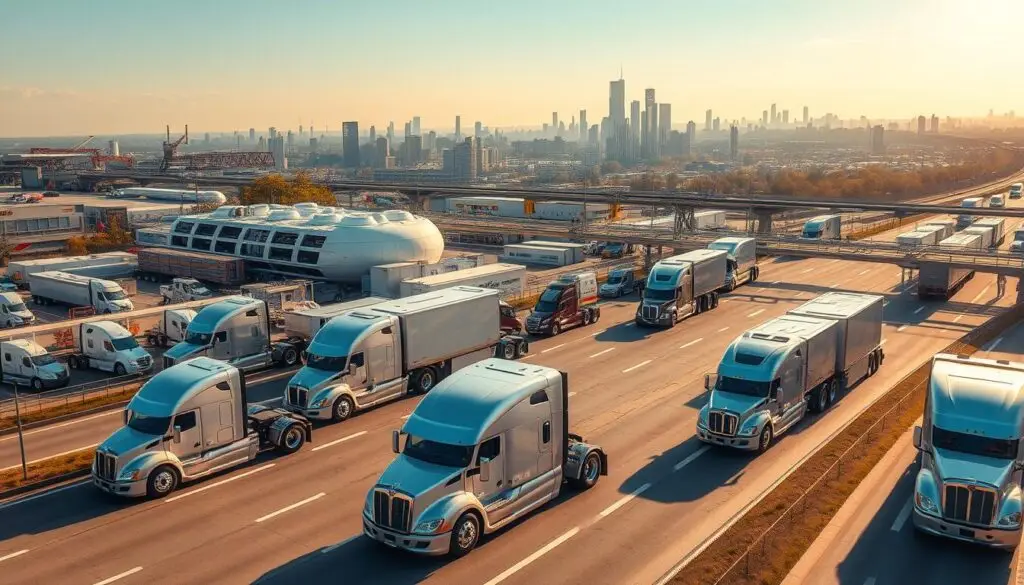
Hydrogen fuel cell trucks are transitioning from pilot programs to commercial-scale deployments across port drayage and regional distribution operations.
The Current State of Hydrogen Fuel Cell Trucks in 2025
The hydrogen trucking industry has evolved beyond pilot programs into legitimate commercial operations, with hundreds of fuel cell vehicles now serving real-world logistics applications. Major fleet operators are transitioning from cautious experimentation to committed deployments across demanding environments ranging from port drayage to long-haul freight corridors.
This market maturation reflects converging factors including expanded manufacturing capacity, accelerating infrastructure investments in key transportation corridors, and federal and state incentive programs creating financial viability for early adopters. The commercial FCEV availability landscape now includes multiple manufacturers offering production-ready vehicles with comprehensive warranty coverage and established service networks.
Commercial Deployment Momentum and Adoption Patterns
Hydrogen truck adoption rates have reached meaningful commercial scale in specific geographic markets and operational segments. Nikola Corporation has delivered 235 wholesale units through the end of 2024, establishing the company as the volume leader in North American fuel cell truck deployments.
California represents the epicenter of this activity, hosting approximately 80% of current hydrogen truck operations due to aggressive zero-emission mandates and established refueling infrastructure. The largest single-customer deployment belongs to IMC Logistics, which operates 50 fuel cell trucks in Southern California port drayage operations.
This concentration demonstrates a critical adoption pattern: return-to-base operations with predictable daily mileage provide the ideal initial application for hydrogen technology. Centralized refueling eliminates the infrastructure challenges that complicate over-the-road applications.
Port drayage has emerged as the breakthrough segment for commercial FCEV availability. The operational profile aligns perfectly with hydrogen’s strengths—heavy payloads requiring significant power, predictable routes enabling infrastructure planning, and regulatory pressure from port authorities implementing zero-emission requirements. Short-haul regional distribution and beverage delivery operations represent the second wave of adoption, with companies like Anheuser-Busch integrating fuel cell trucks into existing logistics networks.
Current adoption remains concentrated among large enterprises with sustainability commitments and capital resources to absorb technology premiums. However, the customer base is diversifying beyond Fortune 500 companies to include regional carriers and specialized logistics providers, signaling growing confidence in the technology’s commercial viability.
“We’ve moved from ‘Can this technology work?’ to ‘How fast can we scale deployment?’ The reliability data from current operations has fundamentally changed the conversation with fleet operators.”
— Industry analyst statement on 2025 hydrogen truck market maturity
Manufacturer Landscape and Available Models
Seven commercially available or near-production hydrogen truck models now compete for fleet orders, representing a dramatic expansion from the limited options available just two years ago. The Nikola Tre hydrogen truck leads in deployment numbers, but established OEMs are bringing decades of manufacturing expertise and dealer networks to the competition.
| Manufacturer & Model | Range / Power | Availability | Price Range |
|---|---|---|---|
| Nikola Tre FCEV | 500 miles / 750 hp | Production | $375,000-$425,000 |
| Hyzon HyMax-450 | 600 miles / 670 hp | Production | $350,000-$400,000 |
| Kenworth T680 FCEV | 450 miles / 536 hp | 2025 Delivery | $400,000-$450,000 |
| Daimler GenH2 | 750 miles / 600 hp | 2026 Production | $450,000-$500,000 |
Each manufacturer brings distinct strategic advantages. Nikola’s vertically integrated approach combines vehicle manufacturing with hydrogen infrastructure development through the Hyla brand, creating a complete ecosystem for fleet customers. This strategy addresses the infrastructure challenge that has historically limited alternative fuel adoption.
Traditional OEMs like Kenworth and Peterbilt leverage existing Class 8 platforms, adapting proven chassis and cab designs with fuel cell powertrains. This approach offers fleet operators familiar vehicle dynamics and access to established service networks spanning North America.
Daimler Truck’s GenH2 platform represents the most ambitious technical approach, utilizing liquid hydrogen storage at -253°C to achieve 750-mile range targets. This technology requires specialized refueling infrastructure but delivers energy density approaching diesel equivalents.
Proven Performance in Demanding Operations
Real-world reliability data has eliminated the primary concern fleet operators expressed about hydrogen technology: operational uptime. Amazon-Plus partnership operations have documented 99.3% uptime across their hydrogen truck fleet—a figure that matches or exceeds diesel truck reliability in comparable applications.
Walmart’s green fleet initiative reports driver satisfaction improvements of 40% when transitioning from diesel to hydrogen powertrains. Drivers consistently cite superior acceleration, quieter operation, and elimination of diesel exhaust as primary advantages.
Fuel consumption data from TTSI’s California operations shows hydrogen trucks achieving 7-9 kg per 100 miles in typical port drayage duty cycles. This translates to predictable operating costs once hydrogen fuel pricing stabilizes. Fleet managers report that energy consumption remains remarkably consistent across drivers and operating conditions.
Cold-weather performance has proven better than initially projected. Testing in Colorado mountain passes and northern tier states demonstrates reliable operation down to -20°F ambient temperatures. The fuel cell stack generates sufficient waste heat to maintain optimal operating temperatures without auxiliary heating systems that would reduce efficiency.
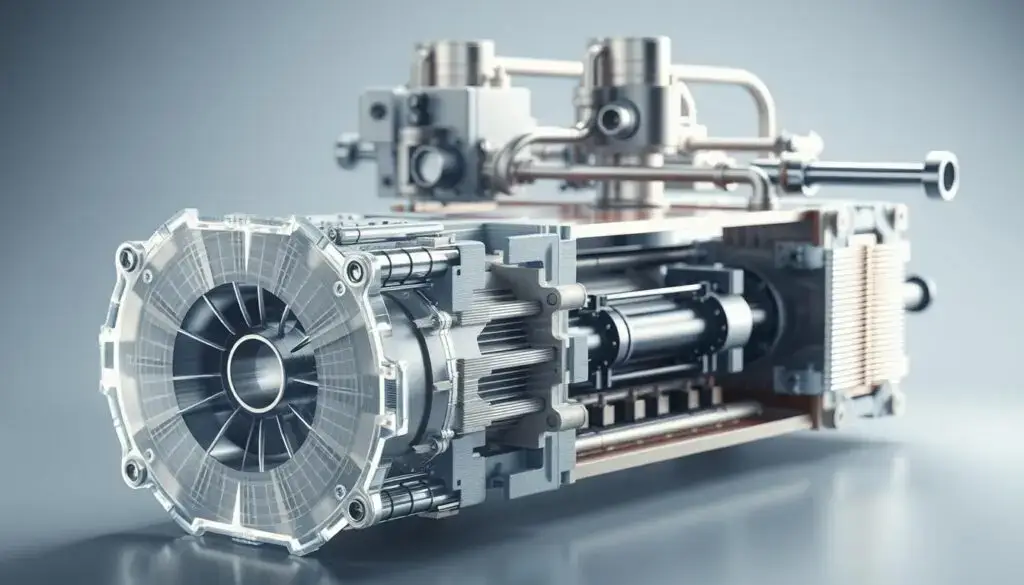
Fuel cell stacks convert hydrogen into electricity through electrochemical reactions, achieving 60-65% efficiency while powering electric drivetrains.
How Hydrogen Fuel Cell Technology Works in Commercial Trucks
Fleet decision-makers considering hydrogen trucks must grasp how these vehicles convert hydrogen gas into propulsion through a precise electrochemical process. Unlike combustion engines that burn fuel, hydrogen fuel cell trucks generate electricity through a chemical reaction between hydrogen and oxygen, creating zero tailpipe emissions while delivering the power and range commercial operations demand.
The fuel cell drivetrain architecture mirrors battery-electric trucks in many ways, with electric motors providing propulsion. However, instead of drawing power exclusively from large battery packs, hydrogen trucks generate electricity on-demand from the fuel cell stack, eliminating range anxiety and enabling rapid refueling that matches traditional diesel operations.
Fuel Cell Stack and Electric Drivetrain Components
The fuel cell stack serves as the heart of hydrogen-powered commercial trucks, converting hydrogen into electricity through an electrochemical reaction. Each stack contains hundreds of individual cells layered together, with hydrogen passing through an anode and oxygen from ambient air entering through a cathode. A proton exchange membrane separates these elements, allowing only hydrogen protons to pass through while electrons travel an external circuit, creating electric current.
Current-generation fuel cell stacks achieve approximately 60% efficiency in converting hydrogen’s chemical energy into electrical power. Next-generation systems entering production in 2025 target 65% efficiency, surpassing diesel engines’ typical 40-45% thermal efficiency. This efficiency advantage translates directly into lower fuel consumption and reduced operating costs per mile.
Power electronics manage the electricity generated by the fuel cell stack, conditioning it for the electric drivetrain. These systems integrate with battery buffer packs that capture regenerative braking energy and provide additional power during acceleration. The batteries in hydrogen trucks are significantly smaller than those in battery-electric vehicles, typically ranging from 50-100 kWh compared to 500-900 kWh in pure electric Class 8 tractors.
Component durability represents a critical consideration for fleet operators evaluating long-term reliability. Modern fuel cell stacks are designed for 25,000-30,000 operating hours before requiring major service or replacement. For a truck logging 100,000 miles annually at an average speed of 50 mph, this translates to approximately 12-15 years of operation before stack replacement becomes necessary.
Hydrogen Storage Systems and Tank Capacity
Hydrogen storage systems determine the practical range and operational flexibility of fuel cell trucks. Current technology employs compressed gas storage at either 350-bar (5,000 psi) or 700-bar (10,000 psi) pressure levels. The industry is rapidly standardizing on 700-bar systems as the optimal balance between energy density, refueling speed, and infrastructure compatibility.
Storage tanks utilize carbon fiber composite construction wrapped around an aluminum or polymer liner. This multi-layer design provides exceptional strength while minimizing weight, a crucial consideration for commercial vehicles operating under strict gross vehicle weight regulations. A typical Class 8 hydrogen tractor carries 50-80 kg of compressed hydrogen across multiple tanks positioned behind the cab or beneath the trailer.
Safety systems integrated into hydrogen storage include automatic shutoff valves, pressure relief devices, and thermal management systems. These components meet rigorous SAE J2579 safety standards specifically developed for hydrogen vehicle applications. Crash testing demonstrates that hydrogen tanks withstand impacts that would rupture conventional diesel fuel tanks.
Emerging liquid hydrogen storage technology, exemplified by Daimler Truck’s GenH2 approach, promises to revolutionize range capabilities. Liquid hydrogen stored at -253°C (cryogenic temperatures) offers significantly higher energy density than compressed gas, enabling the 750-mile range target that positions hydrogen trucks competitively with diesel for long-haul applications.
Range Capabilities and Refueling Times
Hydrogen truck range currently spans 500-750 miles depending on vehicle configuration, load weight, and operating conditions. This performance positions fuel cell trucks as the only zero-emission technology capable of matching diesel operational patterns for long-haul and high-utilization fleets. Battery-electric trucks, by comparison, typically deliver 200-350 miles of range under similar conditions.
Real-world range varies based on multiple factors that fleet operators must consider during route planning. Payload weight significantly impacts consumption, with fully loaded vehicles consuming approximately 20-30% more hydrogen than empty or lightly loaded configurations. Terrain also affects efficiency, with mountainous routes increasing fuel consumption while regenerative braking on descents recovers some energy.
Weather conditions influence hydrogen truck range less dramatically than battery-electric vehicles. Cold temperatures that can reduce battery-electric range by 30-40% have minimal impact on fuel cell performance once the system reaches operating temperature. The electrochemical reaction in fuel cells generates heat as a byproduct, naturally warming the vehicle’s cabin without drawing power from the propulsion system.
FCEV refueling time represents a fundamental advantage over battery-electric alternatives. Current hydrogen stations complete a full tank fill in 15-20 minutes, comparable to diesel refueling and orders of magnitude faster than the 2-8 hours required for battery charging. This capability maintains fleet productivity and eliminates the need for mid-shift charging breaks or overnight downtime.
Stay Ahead of Industry Trends
Get expert insights, equipment reviews, and operational strategies delivered to your inbox weekly.
Hydrogen Fuel Cell Truck Purchase Costs and Pricing Models
Hydrogen fuel cell trucks command premium pricing compared to diesel alternatives, yet flexible acquisition strategies are reshaping affordability. Current market conditions show purchase prices ranging from $325,000 to $500,000 depending on manufacturer specifications and truck class. This represents a significant premium over conventional diesel trucks, which typically cost around $150,000 for comparable Class 8 tractors.
However, the gap is narrowing as production volumes increase and component costs decline. Industry projections target $250,000 pricing by 2027, which would dramatically improve the business case for fleet adoption. Fleet operators can access multiple acquisition pathways beyond outright purchase, including traditional leasing arrangements, subscription services with bundled maintenance, and pilot programs that reduce initial commitment risk.
Class 8 Tractor Pricing Analysis
The heavy-duty segment represents the most developed market for hydrogen fuel cell trucks. Class 8 FCEV pricing varies by manufacturer, with established models now available for commercial deployment. The Nikola Tre FCEV leads North American availability with pricing between $375,000 and $425,000 depending on configuration and battery pack size.
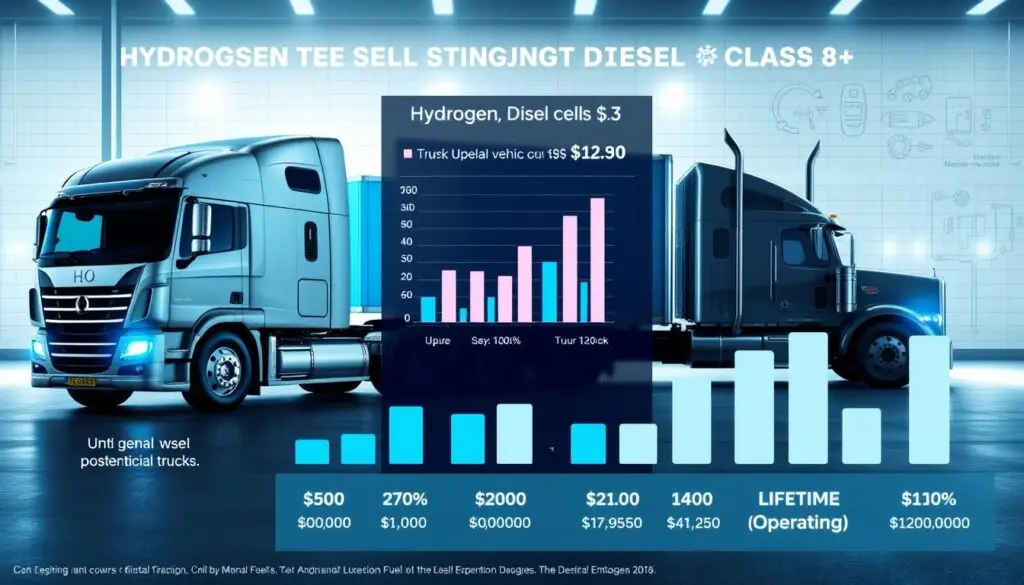
Federal and state incentives can reduce hydrogen truck net costs by up to $280,000, narrowing the price gap with diesel alternatives significantly.
Hyzon’s HyMax-450 model targets similar applications with a slightly lower entry point, ranging from $350,000 to $400,000. Traditional truck manufacturers have also entered the market with fuel cell variants of proven platforms. Kenworth’s T680 FCEV and Peterbilt’s 579 FCEV both command $400,000 to $450,000.
European manufacturers target the premium segment with advanced specifications. Daimler’s GenH2 truck, featuring liquid hydrogen storage for extended range, carries a purchase price between $450,000 and $500,000. The Toyota and Hino partnership offers the most accessible Class 8 pricing at $325,000 to $375,000, representing the lowest entry point for heavy-duty hydrogen trucks.
Several factors drive the cost differential between models:
- Fuel cell stack power output determines component costs significantly
- Hydrogen storage capacity for 500+ mile range adds $40,000-60,000
- Battery pack size in hybrid configurations improves performance but increases price
- Extended warranty coverage (10 years/500,000 miles) justifies premium pricing
- Lower production volumes result in higher per-unit costs currently
Current fuel cell stacks cost between $150 and $200 per kilowatt of capacity. A typical 300-kilowatt system therefore represents $45,000-60,000 of the total vehicle cost. As production scales, stack costs are projected to decline to $80-100 per kilowatt by 2027, directly supporting overall price reductions.
Leasing Programs and Subscription Services
Alternative acquisition models are reshaping how fleets access hydrogen fuel cell technology. Hydrogen truck leasing options reduce upfront capital requirements while providing operational flexibility. These programs typically structure payments over 5-7 year terms with options to purchase at lease end.
Monthly lease payments for Class 8 FCEVs range from $5,500 to $7,500 depending on term length, mileage allowances, and included services. This compares to $2,000-3,000 monthly payments for diesel tractors. However, operational savings from lower fuel and maintenance costs help offset the payment differential.
Subscription services bundle vehicle lease, maintenance agreements, and sometimes hydrogen supply into single monthly fees. This comprehensive approach simplifies financial planning and eliminates unexpected repair costs. Hyzon Motors pioneered this model with subscription packages starting at $6,800 monthly for their HyMax-450 Class 8 tractor.
The Toyota and Hino collaboration brings decades of fuel cell expertise to commercial trucking. Their XL8 FCEV benefits from Toyota’s extensive hydrogen development for passenger vehicles, resulting in proven reliability and competitive pricing. Standard lease terms span 84 months with mileage allowances of 100,000 miles annually, with monthly payments starting at $5,200 for qualified government fleet customers.
Operating Costs: Fuel, Maintenance, and Total Cost of Ownership
The economic equation for hydrogen fuel cell trucks extends far beyond purchase price, encompassing fuel costs, maintenance requirements, and long-term ownership expenses. Operating expense analysis determines whether hydrogen trucks deliver competitive value against established diesel technology.
Hydrogen Fuel Pricing Per Kilogram in 2025
Current retail hydrogen pricing averages between $10 and $12 per kilogram at commercial fueling stations across the United States. California markets documented by the California Fuel Cell Partnership show hydrogen reaching $12 to $15 per kilogram at certain stations. This hydrogen fuel cost per kg represents approximately three times the energy-equivalent expense of diesel fuel.
The premium reflects limited production capacity, distribution costs for small volumes, and early-stage infrastructure cost recovery. However, the trajectory for hydrogen pricing shows dramatic improvement over the next three years. Industry projections indicate costs will decline to $5 to $6 per kilogram by 2028 as production scales significantly.
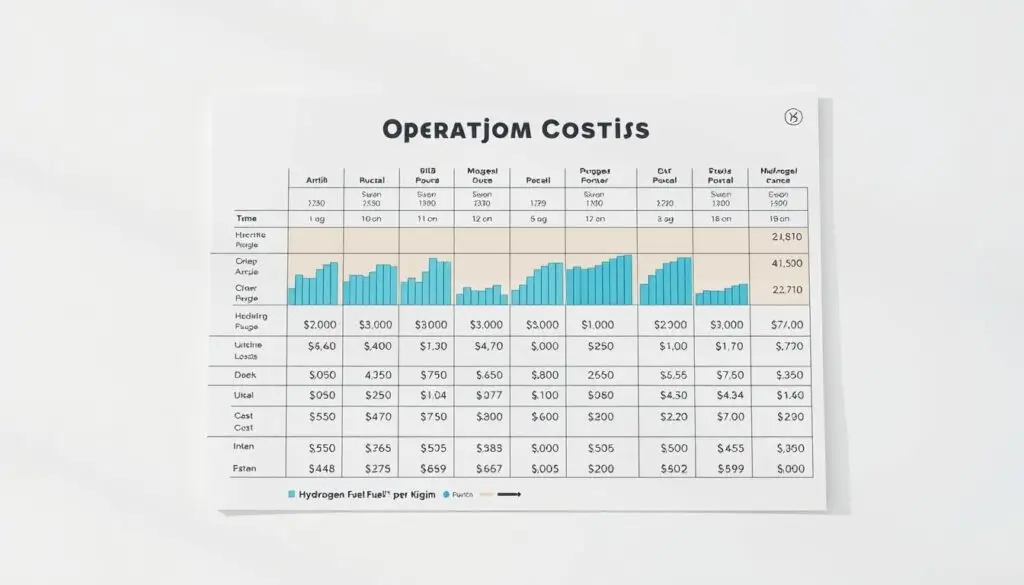
Hydrogen fuel pricing is projected to decline from current $10-15/kg levels to $5-6/kg by 2028 through production scaling and IRA tax credits.
The Inflation Reduction Act provides $3 per kilogram production tax credits for green hydrogen manufactured using renewable energy. This federal incentive accelerates the transition from grey hydrogen (produced from natural gas) to green hydrogen. The $9.5 billion hydrogen hub investments further support infrastructure development that will reduce delivered fuel costs.
Low Carbon Fuel Standard credits in California and other participating states provide additional economic benefits. Fleet operators receive $0.30 to $0.50 per kilogram in LCFS credit revenue, effectively reducing net fuel expenses for qualifying operations.
Regional Price Variations Across the United States
Geographic location significantly impacts hydrogen fuel expenses for commercial fleets. California’s established infrastructure network offers the most competitive pricing despite current premium levels. The state’s 60+ retail stations create supply competition that moderates costs.
Emerging markets in Texas, the Pacific Northwest, and the Northeast corridor show higher prices reflecting infrastructure development costs. Limited station availability requires longer distribution distances and smaller delivery volumes, adding $2 to $4 per kilogram to retail pricing in developing regions.
| Region | Current Price ($/kg) | 2028 Projection ($/kg) | Infrastructure Status |
|---|---|---|---|
| California | $12-15 | $5-6 | Established Network |
| Texas | $13-16 | $6-7 | Rapid Development |
| Northeast Corridor | $14-17 | $6-8 | Early Stage |
| Pacific Northwest | $13-16 | $5-7 | Emerging Market |
Fuel Consumption Rates by Load and Route
Understanding fuel cell truck fuel consumption patterns enables accurate operating cost projections for specific fleet applications. Class 8 hydrogen trucks typically consume between 8 and 12 kilograms per 100 miles depending on multiple operational factors. Payload weight, terrain characteristics, and driving patterns all influence hydrogen usage rates.
Heavily loaded trucks operating in mountainous terrain consume hydrogen at the higher end of the range. A fully loaded 80,000-pound combination traveling through significant elevation changes may require 11 to 12 kilograms per 100 miles. Flat highway routes with moderate loads achieve consumption rates closer to 8 kilograms per 100 miles.
Maintenance Requirements Compared to Diesel
Hydrogen fuel cell trucks deliver 30% lower maintenance costs compared to diesel equivalents over a ten-year operational life. This translates to $85,000 in maintenance expenses versus $120,000 for diesel trucks. The simpler powertrain design eliminates numerous service requirements that burden conventional vehicles.
FCEV maintenance costs benefit from the absence of oil changes, which diesel trucks require every 25,000 to 40,000 miles. Fuel cell trucks eliminate diesel particulate filter servicing, diesel exhaust fluid system maintenance, and exhaust gas recirculation valve cleaning. These eliminated procedures account for significant labor hours and parts expenses in diesel operations.
Regenerative braking systems substantially reduce brake wear in hydrogen trucks. Friction brake components last two to three times longer than in diesel vehicles, reducing both parts costs and the labor associated with brake system maintenance.
The fuel cell stack represents the primary maintenance consideration unique to hydrogen vehicles. Stack performance gradually decreases over time but typically maintains 90% efficiency beyond 20,000 operating hours. Manufacturers design stacks for replacement rather than rebuild, simplifying service procedures when end-of-life replacement becomes necessary.
Warranty Coverage and Service Agreements
Manufacturers typically provide 5-year or 500,000-mile powertrain warranties for hydrogen fuel cell trucks. This coverage protects fleet operators against unexpected repair expenses during the critical early ownership period. Fuel cell stack warranties receive separate coverage terms, with most manufacturers offering dedicated stack warranties extending to 10 years or specific operating hours.
Extended service agreements provide cost predictability beyond factory warranty periods. These programs bundle scheduled maintenance, component replacement, and repair services into fixed monthly payments. Fleet operators can budget maintenance expenses with certainty rather than managing variable repair costs.
Total ten-year fuel costs for hydrogen trucks project to approximately $420,000 compared to $450,000 for diesel equivalents. This calculation assumes future hydrogen pricing declining to $6 per kilogram and reflects typical Class 8 duty cycles. Combined with lower FCEV maintenance costs, hydrogen trucks deliver compelling hydrogen TCO advantages that overcome higher purchase prices over the vehicle lifecycle.
Hydrogen Refueling Infrastructure Requirements
The hydrogen refueling infrastructure gap between diesel’s ubiquity and hydrogen’s nascent network is narrowing through coordinated public-private partnerships targeting 200+ heavy-duty hydrogen stations by 2026. Currently, only 54 heavy-duty stations exist nationwide, but a $12 billion investment pipeline is transforming the landscape across major freight corridors.
Infrastructure availability directly determines fleet deployment feasibility, making station development the critical enabler for commercial hydrogen truck adoption. Fleet operators must understand that hydrogen refueling infrastructure presents both higher capital requirements and longer development timelines than alternative fuel systems.
Heavy-Duty Refueling Station Installation Costs
Building permanent hydrogen refueling infrastructure requires substantially greater investment than competing technologies. Heavy-duty hydrogen stations cost $2-3 million to install compared to $350,000 per megawatt for electric charging infrastructure. This sevenfold cost differential reflects the technical complexity of high-pressure compression, specialized storage systems, and 700-bar dispensing equipment required for commercial truck fueling.
Equipment and Construction Expenses
H2 station costs break down into four major component categories:
- Compression Systems: High-pressure compressors capable of 700-bar fueling represent $500,000-800,000 of station capital
- Storage Tanks: Cascade storage systems required for rapid sequential refueling cost $400,000-600,000
- Dispensing Equipment: Specialized heavy-duty dispensers with cooling systems account for $200,000-300,000 per fueling position
- Site Preparation: Civil work, utilities, electrical infrastructure, and safety systems require $400,000-600,000

Heavy-duty hydrogen stations require specialized compression, storage, and dispensing systems representing $2-3 million in capital investment.
Multi-station deployments achieve meaningful cost reductions through shared engineering, bulk equipment procurement, and standardized designs. Fleet operators building three or more stations typically realize 15-20% per-station savings compared to standalone installations.
Regulatory approval processes for hydrogen station installation vary dramatically by jurisdiction, creating significant timeline uncertainty. Some localities require extensive safety studies and environmental reviews that extend permitting to 12-18 months. Other jurisdictions have streamlined approval processes, reducing timelines to 4-6 months.
On-Site Hydrogen Generation vs. Delivered Supply
Fleet operators face a fundamental business model decision between producing hydrogen on-site or relying on delivered fuel supply. Each approach presents distinct capital, operational, and strategic trade-offs that significantly impact total infrastructure investment and long-term fuel costs.
| Factor | On-Site Generation | Delivered Supply |
|---|---|---|
| Capital Investment | $3-5 million including electrolyzer and integration | $2-3 million for station equipment only |
| Operational Costs | $4-7 per kg based on electricity rates | $8-12 per kg including delivery |
| Supply Reliability | Dependent on equipment uptime | Relies on supplier logistics |
| Scalability | Requires capacity expansion planning | Flexible through supplier contracts |
On-site electrolysis eliminates distribution costs and provides price stability when paired with renewable electricity sources. However, the higher capital requirement and need for reliable renewable power access make this model most suitable for large fleet operators with predictable daily consumption exceeding 1,000 kg.
Public Fueling Network Coverage
Strategic corridor development is concentrating hydrogen fueling network expansion along high-volume freight routes where truck density justifies infrastructure investment. Seven major corridors are advancing through coordinated public-private funding that addresses the classic chicken-and-egg challenge of vehicle deployment and fuel availability.
Strategic corridor development is concentrating hydrogen fueling network expansion along high-volume freight routes where truck density justifies infrastructure investment. Seven major corridors are advancing through coordinated public-private funding that addresses the classic chicken-and-egg challenge of vehicle deployment and fuel availability.
California leads national deployment with the most comprehensive heavy-duty hydrogen stations network. The California Hydrogen Highway initiative targets 50 stations by 2025, with the ARCHES hydrogen hub incorporating 13 renewable electrolysis systems and 2 biomass production sites.
Regional corridor development is creating interconnected networks:
- I-10 Corridor (LA to Phoenix): 8 stations planned by 2026
- Northeast Corridor (Boston to DC): 25 stations by 2027
- Texas Triangle (Dallas-Houston-San Antonio): 15 stations by 2026
- Midwest Hub (Chicago region): 20 stations by 2028
- Pacific Northwest (Seattle-Portland): 12 stations by 2026
Modular station solutions like Nikola’s Hyla brand provide interim fueling capacity while permanent infrastructure develops. These transportable systems deploy in 90-120 days compared to 12-18 months for conventional stations, enabling early fleet operations in markets without established hydrogen fueling network coverage.
Fleet ROI Analysis: Break-Even Points and Financial Projections
Making the business case for hydrogen fuel cell trucks demands rigorous financial modeling that accounts for both immediate costs and decade-long operational benefits. Fleet operators need comprehensive hydrogen fleet ROI calculations that incorporate capital expenditures, available incentives, fuel pricing trends, and maintenance differentials.
The financial analysis reveals that hydrogen trucks can achieve positive returns within 4-5 years under current market conditions when fleets access available incentives and operate vehicles at high utilization rates. With federal and state programs providing up to $280,000 in combined incentives per vehicle, the net capital investment gap between hydrogen and diesel trucks narrows considerably.
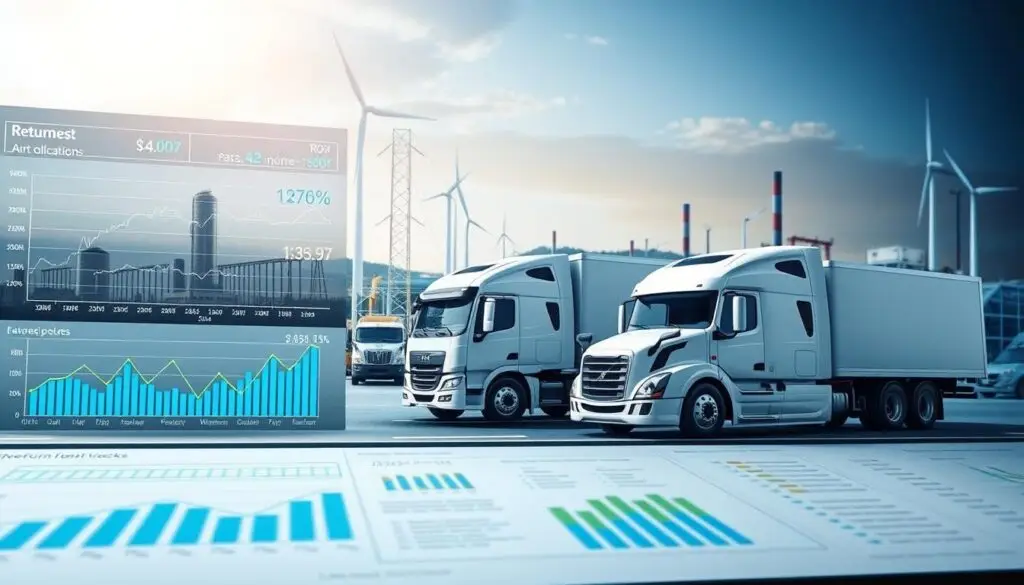
Comprehensive ROI modeling demonstrates hydrogen trucks achieve break-even in 4-5 years when combining incentives with operational cost advantages.
ROI Calculation Framework for Hydrogen Fleets
A comprehensive hydrogen truck break-even analysis must account for multiple cost categories across the vehicle lifecycle. The ROI calculation framework evaluates capital costs, operational expenses, revenue impacts, and risk factors to generate accurate financial projections.
The baseline methodology compares total cost of ownership over a 10-year operational period between hydrogen fuel cell trucks and diesel equivalents. This timeframe aligns with typical fleet replacement cycles and allows sufficient time for operational efficiencies to offset higher initial investments.
The initial vehicle acquisition represents the largest financial hurdle for hydrogen fleet adoption. Class 8 hydrogen fuel cell trucks carry a baseline price of $400,000 per unit before incentives, compared to $150,000 for diesel equivalents. However, this $250,000 price gap reduces dramatically when fleet operators access available federal and state programs.
The federal clean commercial vehicle credit under IRS Section 45W provides $40,000 per qualified truck. California’s HVIP program offers vouchers up to $240,000 for heavy-duty fuel cell trucks. When combining these incentives, the net capital cost for a hydrogen truck in California drops to approximately $120,000, creating near-parity with diesel alternatives.
Operational Savings and Revenue Impacts
Hydrogen fuel cell trucks generate substantial operational cost advantages that accumulate throughout the vehicle lifecycle. Maintenance costs for hydrogen trucks total approximately $85,000 over 10 years compared to $120,000 for diesel, yielding a $35,000 maintenance advantage.
Based on projected 2025-2028 pricing trends, hydrogen fuel costs over a 10-year period total $420,000 versus $450,000 for diesel, generating $30,000 in fuel savings. Additional savings include elimination of diesel exhaust fluid and emissions system maintenance valued at $35,000.
Carbon credit programs create new revenue opportunities for zero-emission fleets. Low Carbon Fuel Standard credits in California generate approximately $25,000 in value per truck over 10 years. Forward-thinking fleets also capture premium pricing for certified green freight services, commanding 15-20% rate increases from environmentally conscious shippers.
Payback Periods for Different Fleet Sizes
The FCEV payback period varies significantly based on fleet size due to operational efficiencies, infrastructure investments, and volume fuel contracts. Small pilot deployments face longer return timelines while large-scale implementations achieve faster break-even points.
A 10-truck pilot program typically achieves payback in 5.8 years when accessing full incentive packages. Mid-scale fleets deploying 50 hydrogen trucks reach break-even in approximately 4.9 years. Large fleets operating 100+ hydrogen trucks achieve the fastest payback periods at 4.2 years, as demonstrated by the Amazon-Plus partnership deployment.
| Fleet Size | Payback Period | Net Capital Cost | 10-Year TCO Savings |
|---|---|---|---|
| 10 Trucks | 5.8 years | $130,000 | $85,000 |
| 50 Trucks | 4.9 years | $120,000 | $95,000 |
| 100 Trucks | 4.2 years | $115,000 | $105,000 |
Sensitivity Analysis: Fuel Price and Utilization Variables
Financial projections for hydrogen fleets must account for variable factors that significantly impact returns. The two most influential variables are hydrogen fuel pricing and annual vehicle utilization rates, which can shift payback periods by 2-3 years depending on scenarios.
Fuel price sensitivity modeling demonstrates dramatic ROI impacts across pricing scenarios. At $8 per kilogram, hydrogen trucks require 6.5 years to break even. At the current industry target of $6 per kilogram, hydrogen achieves cost parity with diesel and delivers break-even in 4.8 years. If hydrogen prices decline to $4 per kilogram, payback periods compress to 3.2 years.
Vehicle utilization rates equally influence financial outcomes. Trucks operating at 100,000 miles annually reach break-even in approximately 6.1 years. Increasing utilization to 125,000 miles per year reduces payback to 4.8 years. High-utilization fleets achieving 150,000 annual miles break even in just 3.9 years.
The ten-year total cost of ownership comparison shows hydrogen FCEVs at $685,000 versus diesel at $790,000, representing $105,000 in lifetime savings per truck. These savings compound across large fleets, creating substantial financial advantages for early adopters who position themselves ahead of regulatory mandates.
Comparing Hydrogen Fuel Cell Trucks to Diesel and Battery Electric Alternatives
The transition to sustainable commercial trucking demands detailed comparison of hydrogen vs diesel trucks and hydrogen vs battery electric alternatives to match technology capabilities with operational requirements. Each powertrain option delivers distinct economic profiles, performance characteristics, and infrastructure needs that directly impact fleet profitability.
Ten-Year Total Cost of Ownership Comparison
Comprehensive economic analysis over a ten-year operational period reveals how initial purchase prices translate into long-term financial performance. Battery-electric trucks deliver the lowest total cost of ownership at $590,000, followed by hydrogen fuel cell vehicles at $685,000, and diesel trucks at $790,000.
The FCEV vs BEV comparison shifts favorably toward hydrogen as operational intensity increases. High-mileage routes, heavy payload requirements, and time-sensitive delivery schedules reduce battery-electric’s cost advantage. Hydrogen maintains productivity levels that battery limitations cannot match in demanding applications.
| Cost Category | Hydrogen FCEV | Battery Electric | Diesel |
|---|---|---|---|
| 10-Year Total Cost | $685,000 | $590,000 | $790,000 |
| Fuel Cost Per Mile | $0.70-$0.90 | $0.40-$0.60 | $0.65-$0.85 |
| Maintenance vs Diesel | 30% Lower | 40% Lower | Baseline |
| Infrastructure Investment | $2-3M per station | $350K per MW | Minimal |
Hydrogen trucks deliver 2x the range and 18x faster refueling compared to battery-electric alternatives while maintaining superior payload capacity.
Range, Payload, and Uptime Performance Differences
Operational capabilities determine technology suitability for specific applications beyond pure cost analysis. Range capacity creates the most visible performance distinction among powertrain options. Hydrogen fuel cell trucks achieve 500-750 miles per fill, battery-electric vehicles deliver 200-350 miles per charge, and diesel trucks exceed 1,000 miles per tank.
Payload capacity directly impacts revenue generation potential for commercial carriers. Hydrogen trucks maintain 95% of diesel payload capacity, while battery-electric vehicles reach only 82% due to heavy battery weight. On an 80,000-pound GVWR Class 8 truck, this difference translates to 2,600 pounds more revenue-generating cargo for hydrogen versus battery-electric configurations.
Refueling and recharging times affect fleet productivity and operational flexibility. Hydrogen refueling completes in 15-20 minutes, diesel in 10 minutes, and battery-electric charging requires 4-8 hours. This 18x speed advantage enables hydrogen trucks to maintain diesel-like utilization rates without extended downtime.
Optimal Use Cases for Each Powertrain Technology
Technology selection should align with specific operational profiles rather than generalized assumptions about powertrain superiority. Approximately 35% of Class 8 truck operations suit hydrogen fuel cells best, while 45% align with battery-electric capabilities.
Long-Haul Routes Over 500 Miles
Hydrogen fuel cell trucks represent the clear choice for interstate freight operations and regional distribution beyond battery range. Routes exceeding 500 miles daily demand the extended range and rapid refueling that hydrogen provides. These applications include cross-country freight, regional distribution networks, and any operation where refueling speed and payload capacity create competitive differentiation.
Regional Delivery and Return-to-Base Operations
Battery-electric trucks deliver optimal performance for urban delivery, short-haul distribution, and predictable routes under 200 miles. Operations with overnight charging opportunities and consistent daily mileage maximize battery-electric’s cost advantages. These applications include metropolitan delivery services, dedicated regional routes, and any operation returning to a central depot daily.
Federal and State Incentives for Hydrogen Truck Adoption
The convergence of federal tax credits, state voucher programs, and infrastructure grants has established a limited-time window of exceptional value for hydrogen truck buyers. Fleet operators who strategically combine hydrogen truck incentives can access up to $480,000 in total financial support per Class 8 fuel cell vehicle.
Production Tax Credits Transform Hydrogen Pricing
The IRS Section 45V tax credit provides up to $3 per kilogram for clean hydrogen production under the Inflation Reduction Act. This production incentive operates on a tiered structure based on lifecycle carbon intensity, with green hydrogen from renewable electrolysis qualifying for the full $3/kg credit.
The federal government allocated $9.5 billion for seven regional hydrogen hubs across the United States. These hubs will create integrated production and distribution networks with combined capacity of 50,000 tons per day by 2030.
California Leads with Direct Vehicle Support
California’s Hybrid and Zero-Emission Truck and Bus Voucher Incentive Project provides $240,000 per Class 8 hydrogen fuel cell truck. HVIP vouchers operate on a first-come, first-served basis until the $2.6 billion program budget exhausts.
Additional CARB programs supplement HVIP support. The Carl Moyer Program provides up to $200,000 for replacing diesel trucks with zero-emission alternatives. California’s Low Carbon Fuel Standard generates ongoing hydrogen truck rebates worth $0.30-$0.50 per kilogram of hydrogen fuel consumed.
- HVIP vouchers: $240,000 direct vehicle purchase support
- Carl Moyer Program: $200,000 for diesel replacement
- LCFS credits: $0.30-$0.50/kg ongoing fuel incentives
- Sales tax exemption: 7.25% savings on vehicle purchase
Port Operations Receive Dedicated Federal Support
The EPA Clean Ports Initiative targets the nation’s highest-emission freight gateways with $3 billion in dedicated funding. This program offers grants for zero-emission trucks and infrastructure at port facilities. Port drayage operations represent ideal applications for hydrogen technology given heavy-duty requirements and high-utilization patterns.
Federal Clean Commercial Vehicle Credit under Section 45W provides an additional $40,000 per hydrogen truck through tax credits. This incentive applies to vehicles placed in service through 2032.
Regional Programs Expand National Coverage
Fifteen states currently offer sales tax exemptions for zero-emission commercial vehicles. New York’s Truck Voucher Incentive Program provides $185,000 for Class 8 hydrogen trucks. Washington State’s Commercial Vehicle Tax Credit offers up to $150,000 per vehicle.
| Incentive Program | Maximum Amount | Geographic Coverage |
|---|---|---|
| Federal Section 45W Credit | $40,000 | Nationwide |
| California HVIP | $240,000 | California only |
| Carl Moyer Program | $200,000 | California only |
| New York TVIP | $185,000 | New York State |
The cumulative impact of layered hydrogen truck incentives creates exceptional value propositions. A California fleet operator purchasing a Nikola Tre FCEV can combine federal Section 45W credit ($40,000), California HVIP vouchers ($240,000), and Carl Moyer Program funding ($200,000) for $480,000 in total support.
This combined incentive total exceeds the typical $375,000-$425,000 purchase price for Class 8 hydrogen trucks from major manufacturers. The time-sensitive nature of these programs demands immediate action, as HVIP funding allocates on a first-come basis with high demand potentially exhausting available funds.
Real-World Fleet Deployments and Case Studies
Across port operations, regional distribution, and long-haul corridors, hydrogen fuel cell trucks are delivering results that validate early adopter investments. These hydrogen truck deployments have accumulated millions of operational miles while generating performance data that transforms theoretical projections into documented business outcomes.
Port Drayage Operations and Container Transport
Anheuser-Busch has deployed Nikola Tre fuel cell trucks in port drayage operations serving the Port of Long Beach. These vehicles transport containers from port facilities to inland distribution centers along predictable routes, combining heavy payload requirements with return-to-base operations that suit early hydrogen adoption patterns.
The broader Port of Los Angeles and Long Beach program involves ten original equipment manufacturers participating in zero-emission technology validation. This initiative has achieved 85% emission reduction through an $82 million infrastructure investment.
Regional Hauling and California Technology Validation
Total Transportation Services Inc. operates Hyundai Xcient fuel cell trucks in California regional hauling applications as part of a comprehensive pilot program. This deployment focuses on validating truck performance across varied terrain and testing refueling infrastructure accessibility.
These hydrogen truck case studies document operational range capabilities, refueling frequency patterns, and maintenance requirements compared to displaced diesel trucks. Performance data collected through telematics systems provides detailed insights into energy consumption across different load conditions.
Regional Distribution and Retail Logistics Success
Walmart’s Green Fleet Initiative deployed 30 Hyzon fuel cell trucks for regional distribution operations. The program demonstrates FCEV commercial success in retail logistics applications requiring consistent delivery schedules. Performance monitoring reveals a 15-minute average refuel time that maintains operational tempo comparable to diesel operations.
Driver satisfaction surveys indicate a 40% improvement attributed to superior vehicle performance and environmental benefits. Based on successful pilot results, Walmart plans to expand the program to 200 units by 2026.
Long-Haul Corridor Performance and Economic Validation
The Amazon-Plus partnership operates 50 Nikola Tre FCEVs on the Los Angeles to Phoenix daily route, representing the most significant long-haul hydrogen truck deployment in North America. This operation has achieved 99.3% uptime that matches or exceeds diesel fleet reliability standards.
Documented operational costs show 35% lower expenses compared to diesel operations. The fleet has accumulated 2.5 million zero-emission miles while maintaining consistent delivery schedules. Financial modeling projects a 4.2-year return on investment for this deployment.
| Fleet Operator | Truck Model | Application | Key Metrics |
|---|---|---|---|
| Amazon-Plus | Nikola Tre FCEV | Long-haul (LA-Phoenix) | 99.3% uptime, 4.2yr ROI |
| Walmart | Hyzon Fuel Cell | Regional distribution | 40% driver satisfaction gain |
| Anheuser-Busch | Nikola Tre FCEV | Port drayage | Zero-emission container transport |
These documented deployments demonstrate that hydrogen trucks have transitioned from experimental technology to proven commercial solutions. The performance metrics validate both operational reliability and economic viability. Fleet operators now have access to concrete case studies that support hydrogen adoption decisions.
Infrastructure Development Strategies for Fleet Operators
The path to hydrogen fleet implementation demands comprehensive infrastructure strategies tailored to operational needs and market conditions. Fleet operators must evaluate whether to build dedicated fueling facilities, partner with public station networks, or pursue hybrid approaches that balance capital investment against operational flexibility.
Private Station Development for Centralized Operations
Building dedicated fleet fueling facilities represents the most capital-intensive infrastructure option, with private hydrogen stations costing $2-3 million for installation. This investment delivers superior economics for larger fleets operating from centralized locations with predictable fueling demand. The breakeven threshold typically occurs at 25+ hydrogen trucks consuming more than 200 kilograms of hydrogen daily.
Site selection criteria significantly impact both installation costs and long-term operational efficiency. Proximity to hydrogen supply pipelines or production facilities reduces delivery expenses. Adequate utility infrastructure supports on-site electrolysis systems for fleets pursuing green hydrogen strategies.
Nikola’s Hyla modular station approach offers an intermediate solution for fleets not ready for permanent infrastructure investment. These mobile liquid hydrogen refueling systems provide temporary fueling capacity during pilot phases while permanent stations undergo development and permitting.
Energy Company Partnerships for Network Access
Partnering with Shell, BP, and FirstElement Fuel provides fleet access to developing public hydrogen networks without capital investment in private hydrogen stations. Major energy companies are building corridor infrastructure along freight routes, creating alternatives to dedicated fleet facilities for operators with diverse route structures.
FirstElement Fuel operates California’s most developed hydrogen network, with stations strategically located along Interstate 5, Interstate 15, and coastal corridors connecting Los Angeles, San Francisco, and San Diego freight markets.
“Partnership structures typically require volume commitments that secure station access and potentially preferential pricing in exchange for demand certainty that justifies infrastructure investment.”
— Infrastructure development analyst
Risk Mitigation Through Pilot Deployments
Phased conversion plans represent the most prudent fleet hydrogen strategy for operators new to the technology. Starting with 2-5 truck pilots on return-to-base routes or repeatable point-to-point corridors allows fleets to build operational expertise before committing to larger deployments.
Initial pilot programs should focus on use cases with the highest probability of success. Transit fleets with centralized fueling and predictable daily ranges represent ideal starting points. Port drayage operations with repetitive shuttle patterns between terminals and nearby distribution centers offer similar advantages.
| Deployment Phase | Fleet Size | Infrastructure Approach |
|---|---|---|
| Pilot Program | 2-5 trucks | Public stations or mobile units |
| Initial Scale | 10-20 trucks | Partnership agreements |
| Production Deployment | 25-50 trucks | Dedicated fleet facility |
| Full Conversion | 50+ trucks | Multiple dedicated facilities |
Fuel Cost Management and Contract Structures
Hydrogen supply contracts address the fuel cost volatility that fleet operators consistently identify as a primary concern. Emerging contract structures provide cost certainty that simplifies financial planning and protects fleets from hydrogen price fluctuations during the market development phase.
Fixed-price agreements lock in hydrogen costs for 3-5 year terms, eliminating fuel price risk during the critical fleet deployment period. These contracts typically price hydrogen at $8-12 per kilogram with annual escalators tied to inflation indices.
Nikola’s integrated truck-and-fuel business model through its Hyla brand provides bundled solutions where hydrogen supply is contractually linked to vehicle purchase. Fleets acquiring Nikola trucks can negotiate combined packages that include guaranteed fuel access at predetermined prices, typically structured as seven-year agreements aligned with warranty periods.
Risk Factors and Implementation Challenges
Understanding the hydrogen truck challenges and FCEV adoption barriers is essential for fleet operators to develop realistic implementation timelines and risk mitigation strategies. The transition to hydrogen-powered commercial vehicles requires navigating supply chain uncertainties, production constraints, regulatory dynamics, and technology evolution.
Supply Chain Constraints and Fuel Availability
Current hydrogen supply reliability faces significant constraints that directly impact fleet operations and fuel costs. Retail hydrogen pricing has reached $12-15 per kilogram in 2025, approximately three times higher than the diesel energy equivalent, largely due to supply chain limitations and production capacity bottlenecks.
A documented supply chain disruption in the early 2020s illustrated these risks when an incident occurred while filling high-pressure tube trailers at the sole supplier of gaseous high-pressure hydrogen in a major market. This disruption caused temporary retail price increases and refueling delays that affected California fleet operations.
Current hydrogen production concentrates heavily on grey hydrogen from natural gas reforming, representing approximately 95% of supply. Green hydrogen from renewable electrolysis receives substantial policy support but accounts for only 2% of current production.
The positive outlook includes $9.5 billion in federal hydrogen hub investments creating seven regional production networks designed to dramatically expand capacity. Industry projections suggest supply capacity will grow from current levels to 50,000 tons per day by 2030.
Limited Vehicle Production and Extended Lead Times
Vehicle availability represents one of the most significant FCEV adoption barriers facing fleet operators in 2025. Current hydrogen truck production capacity operates at limited scale, with vehicles available only through allocation systems that prioritize early reservation holders.
Lead times for hydrogen truck delivery range from 6 to 18 months depending on manufacturer, specification, and order position in the queue. This extended timeline complicates fleet replacement planning, particularly for operators needing to meet regulatory compliance deadlines.
The limited service network compounds vehicle availability concerns. Hydrogen trucks require specialized maintenance capabilities that traditional truck service centers lack. Fleet operators must either develop in-house expertise or establish relationships with manufacturer-authorized service providers.
Evolving Regulatory Landscape and Compliance Uncertainty
The regulatory environment driving zero-emission truck adoption creates both momentum and uncertainty for hydrogen truck investments. California’s Advanced Clean Fleets regulation mandates that 40% of new truck purchases must be zero-emission vehicles by 2035, with 15 states adopting similar Advanced Clean Trucks rules.
Fleet operators face decisions about hydrogen versus battery-electric technology without clear regulatory guidance on which solution will receive preferential treatment in future policy updates. Changes in incentive programs, modifications to hydrogen production carbon intensity requirements, or shifts in zero-emission vehicle mandates represent potential hydrogen truck risks.
Technology Evolution and Asset Value Concerns
Rapid advancement in fuel cell technology maturity creates concerns about technological obsolescence for current-generation hydrogen trucks. Next-generation vehicles targeting 65% fuel cell efficiency, 1,000-mile range, and $250,000 pricing by 2027 could render 2025-2026 vintage trucks less competitive in the used truck market.
Residual value estimates for hydrogen trucks currently project 30% value retention after 10 years, compared to diesel’s 20% retention. While this percentage appears favorable, the absolute depreciation differs significantly due to higher initial costs.
| Risk Category | Current Impact Level | Mitigation Strategy |
|---|---|---|
| Hydrogen Supply Constraints | High | Long-term supply contracts |
| Vehicle Availability | High | Early reservations, phased planning |
| Regulatory Uncertainty | Medium | Flexible compliance strategies |
| Technology Obsolescence | Medium | Shorter ownership cycles |
Fleet operators should contextualize these hydrogen truck challenges within the broader zero-emission transition framework. The risks associated with hydrogen adoption represent implementation timing and cost trajectory uncertainties rather than fundamental technology viability concerns.
Share Your Expertise
Join Heavy Duty Journal as a guest author and reach thousands of industry decision-makers.
Conclusion
The hydrogen truck investment landscape has reached commercial viability in 2025. Fleet operators now face a decisive moment where technology maturity, infrastructure expansion, and financial incentives converge to create unprecedented opportunities in zero-emission logistics.
Market projections show growth from 5,000 hydrogen trucks in 2024 to 75,000 units by 2030. This expansion reflects proven economic performance, with high-utilization fleets achieving payback periods under five years. The $105,000 total cost of ownership advantage over diesel validates FCEV fleet adoption as financially sound strategy.
Infrastructure development accelerates with networks expanding from 54 stations to 200+ facilities by 2026. Shell, BP, and FirstElement Fuel are building the refueling ecosystem that supports nationwide sustainable freight transportation operations. Seven regional hydrogen hubs will create complete coverage by 2030.
The 2024-2026 window represents optimal entry timing. Federal incentives provide up to $120,000 per truck while California HVIP vouchers remain fully funded. Fuel costs are projected to decline from $12-15 per kilogram to $5-6 by 2028, improving operating economics significantly.
Fleet operators should conduct route analysis to identify applications where 500-750 mile range and 15-minute refueling deliver competitive advantages. Pilot programs through manufacturers and dealers offer low-risk evaluation opportunities.
The transition to zero-emission trucking is mandatory under California’s 2035 requirements adopted by 15 states. Hydrogen fuel cell technology provides the proven solution for long-haul and high-payload operations where battery-electric alternatives face operational limitations.
Frequently Asked Questions
What is the current purchase price of a hydrogen fuel cell Class 8 truck in 2025?
Hydrogen fuel cell Class 8 trucks currently range from $375,000 to $425,000 for models like the Nikola Tre FCEV, while the Hyzon HyMax-450 is priced at $350,000 to $400,000. However, federal and state incentives can reduce net costs significantly. The federal $40,000 clean commercial vehicle credit (Section 45W), California’s $240,000 HVIP voucher, and Carl Moyer Program’s up to $200,000 can provide $480,000 in total support, potentially exceeding the purchase price. Manufacturers are targeting a $250,000 price point by 2027 as production scales and component costs decline.
How much does hydrogen fuel cost per kilogram, and how does this compare to diesel?
Hydrogen fuel currently costs $10-12 per kilogram nationally, with California markets reaching $12-15 per kilogram. This represents approximately three times the energy-equivalent cost of diesel fuel. A typical Class 8 hydrogen truck consumes 8-12 kg per 100 miles depending on payload and terrain. However, the IRA’s $3/kg production tax credit for green hydrogen is projected to reduce retail pricing to $5-6/kg by 2028 as production scales. At this lower price point, combined with 30% lower maintenance costs ($85,000 versus $120,000 over ten years compared to diesel), hydrogen trucks deliver compelling total operating cost advantages.
What is the driving range of hydrogen fuel cell trucks compared to battery-electric alternatives?
Hydrogen fuel cell trucks offer 500-750 mile range on a single fill, significantly exceeding battery-electric trucks’ 200-350 mile range. This 2:1 range advantage positions hydrogen as the only zero-emission technology currently capable of matching diesel operational patterns for long-haul applications. Additionally, hydrogen trucks refuel in 15-20 minutes compared to 4-8 hours for battery-electric charging, delivering 18x faster turnaround that maintains fleet productivity. Hydrogen trucks also retain 95% of diesel payload capacity versus battery-electric’s 82%, translating to 2,600 pounds more revenue-generating cargo on an 80,000-pound GVWR truck.
How many hydrogen refueling stations are currently available for heavy-duty trucks?
There are currently 54 heavy-duty hydrogen refueling stations in the United States as of 2025, with the corridor development strategy targeting 200+ stations by 2026. California leads with a 50-station network, while the I-10 corridor features 8 stations connecting Los Angeles to Phoenix. This expansion is supported by a $12 billion infrastructure investment pipeline through public-private partnerships and seven regional hydrogen hubs, including California’s ARCHES hub with 13 renewable electrolysis systems. Major energy companies including Shell, BP, and FirstElement Fuel are developing hydrogen networks along freight corridors.
What is the installation cost for a private hydrogen refueling station?
Installing a permanent heavy-duty hydrogen refueling station requires $2-3 million in capital investment, compared to $350,000 per megawatt for electric charging infrastructure. This cost includes compression units ($500,000-800,000), storage tanks ($400,000-600,000), dispensers ($200,000-300,000), and site preparation ($400,000-600,000). The business case for private stations typically makes sense for fleets operating 25+ hydrogen trucks from a central location with predictable fueling demand exceeding 200 kg daily. Alternative approaches include Nikola’s Hyla modular station system or partnerships with public infrastructure providers that eliminate infrastructure capital requirements.
What is the return on investment timeline for hydrogen truck adoption?
ROI timelines for hydrogen trucks vary by fleet size and operational intensity. A 10-truck pilot deployment achieves approximately 5.8-year payback, a 50-truck mid-scale fleet reaches 4.9-year payback through operational optimization, and a 100-truck large fleet achieves 4.2-year payback (as demonstrated by the Amazon-Plus partnership operating 50 Nikola Tre FCEVs with 99.3% uptime). These projections incorporate the $375,000-425,000 purchase price reduced by available incentives to $120,000-160,000 net capital cost, combined with $145,000 in operational benefits over diesel including maintenance advantages, projected fuel savings, and carbon credit value.
What are the maintenance requirements and costs for hydrogen fuel cell trucks?
Hydrogen fuel cell trucks deliver a compelling 30% maintenance cost advantage over diesel, quantified at approximately $85,000 versus $120,000 over ten years. This advantage results from the absence of oil changes, diesel particulate filter servicing, diesel exhaust fluid systems, and reduced brake wear from regenerative braking. Current-generation fuel cell stacks are designed for 25,000-30,000 operating hours before requiring service. Manufacturers typically offer 5-year/500,000-mile powertrain warranties with separate fuel cell stack coverage, with real-world deployments achieving 99.3% uptime that matches or exceeds diesel fleet reliability.
Which companies currently manufacture commercially available hydrogen fuel cell trucks?
Seven major manufacturers offer commercially available or imminent hydrogen fuel cell truck models. Nikola has delivered 235 wholesale units predominantly in California, with the Nikola Tre FCEV representing the most established commercial deployment. Hyzon Motors offers Class 8 tractors with comprehensive fleet service packages. Kenworth and Peterbilt (both Paccar brands) are developing fuel cell variants of their popular platforms. Daimler Truck is advancing its GenH2 liquid hydrogen storage system targeting 750-mile range. Volvo Trucks is developing fuel cell models for the North American market. The Toyota-Hino partnership offers the XL8 FCEV at $325,000-375,000.
How does the total cost of ownership compare between hydrogen, battery-electric, and diesel trucks?
Ten-year total cost of ownership analysis shows battery-electric trucks at $590,000 delivering the lowest TCO for applications where range and charging limitations don’t create operational penalties, followed by hydrogen at $685,000, and diesel at $790,000. This ranking shifts based on operational variables. For long-haul routes over 500 miles, hydrogen’s 500-750 mile range, 15-20 minute refueling, and 95% payload capacity deliver operational capabilities that battery-electric’s 200-350 mile range, 4-8 hour charging, and 82% payload capacity cannot match. Hydrogen trucks show $105,000 total cost of ownership advantage over diesel when environmental costs and maintenance expenses are fully accounted for.
What federal and state incentives are available for hydrogen truck purchases in 2025?
Multiple incentive programs substantially reduce hydrogen truck net costs. The federal Section 45W clean commercial vehicle credit provides $40,000 per truck. The IRA’s Section 45V hydrogen production tax credit offers $3 per kilogram for clean hydrogen. California leads state programs with the HVIP providing $240,000 per Class 8 fuel cell truck, the Carl Moyer Program offering up to $200,000 for diesel truck replacement, and the Low Carbon Fuel Standard generating $0.30-0.50 per kg ongoing hydrogen credits. The EPA Clean Ports Initiative provides $3 billion for zero-emission trucks and infrastructure at port locations. Additional state programs include New York’s Truck Voucher Incentive Program ($185,000), Washington’s Commercial Vehicle Tax Credit ($150,000), and 15 states offering sales tax exemptions. Cumulative incentives can reach $480,000, exceeding the purchase price of current models.
Share This Article
Share this post with your network and help other industry professionals stay informed.