By Michael Nielsen, Publisher | 15+ Years in Diesel Repair
Last Updated: September 2026
⏱ Estimated reading time: 15+ minutes
Managing a fleet of trucks, delivery vans, and specialized equipment demands precision and efficiency. Fleet maintenance software integration connects multiple systems to create a unified platform for comprehensive vehicle management — linking GPS tracking, telematics data, parts inventory, and work order systems into one solution instead of the disconnected point tools most shops start out with.
Michael Nielsen and Heavy Duty Journal's editorial team built this guide because integration is where a lot of the real value in fleet maintenance software actually lives — not in any single feature, but in what happens when GPS data, telematics diagnostics, parts inventory, and work orders stop living in separate systems a manager has to reconcile by hand.
Key Takeaways
- ✓Lower operating costs: Automated scheduling and predictive analytics can meaningfully cut waste, though the actual percentage depends heavily on your current baseline — verify any vendor's savings claim against your own numbers.
- ✓Breakdowns caught earlier: Real-time telematics can flag developing engine issues before they cause a roadside failure, shifting reactive repair toward planned maintenance.
- ✓Better warranty capture: Automated claim tracking catches warranty-eligible repairs that manual processes routinely miss — a real but shop-specific gain, not a fixed industry percentage.
- ✓Leaner inventory: AI-assisted demand forecasting helps optimize parts stock levels against actual usage patterns rather than guesswork.
- ✓Higher technician throughput: Mobile access and skill-based scheduling reduce the administrative drag on technician time, freeing more of the day for billable repair work.
In This Guide
- Understanding Fleet Maintenance Software Integration
- Essential Integration Components
- Telematics Integration for Vehicle Health Monitoring
- Connecting Parts Systems with Maintenance Platforms
- Streamlining Work Orders Through Automation
- Benefits of Fleet Maintenance Software Integration
- Real-Time Data Synchronization
- Financial Integration with Fleet Operations
- Implementation Best Practices
- Future Trends in Fleet Technology
- Frequently Asked Questions
Understanding Fleet Maintenance Software Integration
Fleet management has evolved beyond spreadsheets and manual tracking. Today's operations depend on sophisticated platforms that create a unified fleet system with comprehensive capabilities — an interconnected approach that transforms how companies monitor vehicles, manage parts, and schedule maintenance.
Why Integration Matters
Disconnected systems create data silos that slow operations and inflate costs. When GPS tracking, telematics, and maintenance software operate separately, fleet managers waste time switching between programs and manually transferring information. Fleet management system integration eliminates these barriers, creating streamlined workflows that boost efficiency — the same efficiency gains the Technology & Maintenance Council's Recommended Practices have documented for structured, systematic maintenance programs generally.
Integration delivers immediate operational benefits. Real-time vehicle location data flows directly into maintenance scheduling without manual entry. Telematics alerts about engine issues automatically generate work orders. Parts inventory updates instantly when technicians complete repairs. This seamless data flow reduces errors and accelerates decision-making. HDJ's own shop management software comparison covers the platform side of this equation in more depth — this guide focuses specifically on how the pieces connect.
The elimination of duplicate data entry saves administrative staff real hours weekly. Maintenance coordinators no longer manually input mileage readings from GPS reports. Service advisors access complete vehicle histories instantly without searching multiple databases. This automation frees staff for strategic tasks rather than routine data management.
Core Components of Integrated Systems
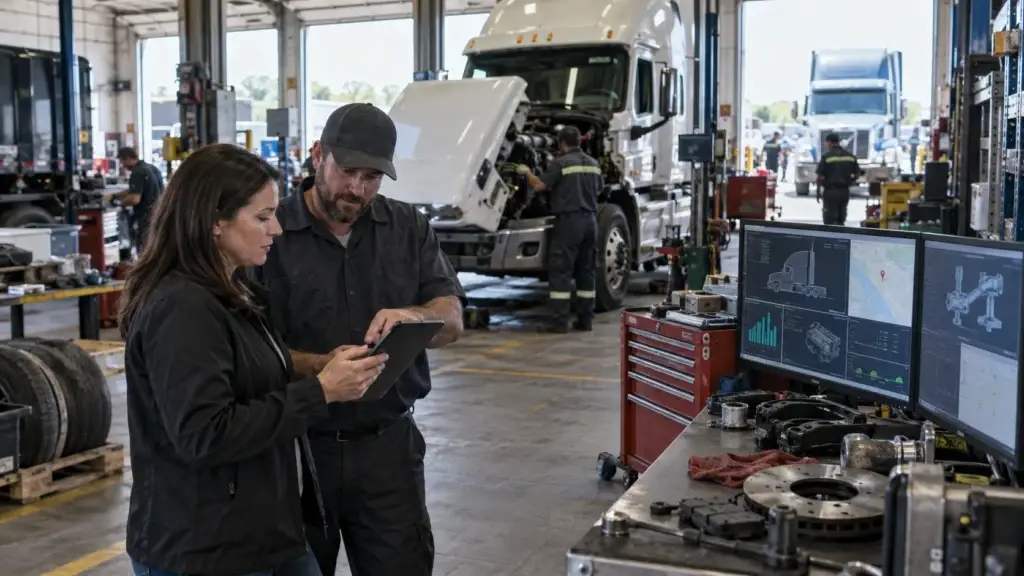
A comprehensive unified fleet platform connects essential components into a cohesive ecosystem. GPS tracking provides real-time location monitoring and accurate mileage data for maintenance triggers. Telematics systems deliver continuous vehicle diagnostics and driver behavior analysis. Parts inventory management controls stock levels and automates reordering. Work order systems coordinate maintenance scheduling and technician assignments. Accounting software integration enables cost tracking and budget management.
The power comes from connecting these elements so data flows automatically. When a vehicle reaches a mileage threshold, the maintenance system can generate an oil change work order, check parts inventory for filters, and flag an available technician — without a person driving each of those steps by hand.
Essential Integration Components
Fleet maintenance software integration relies on multiple components working together to deliver real-time insight and operational efficiency. The right combination creates a unified platform that eliminates data silos and automates critical processes.
GPS Tracking System Connectivity
GPS integration forms the backbone of modern fleet management by providing accurate location data and automated mileage tracking. Platforms that pull GPS data directly can monitor usage patterns and trigger maintenance alerts based on actual miles driven rather than estimates.
When a vehicle reaches a predetermined mileage threshold, an integrated system can automatically schedule service without manual intervention, helping ensure no vehicle misses critical preventive maintenance due to oversight. GPS data also enables route optimization, geofencing alerts, and detailed usage reporting for better asset utilization.
Telematics Platform Integration
Telematics platforms connect directly with vehicle diagnostic systems to monitor engine performance, fuel consumption, and fault codes continuously. This connectivity enables predictive maintenance by surfacing issues before they cause breakdowns rather than after.
Fleet managers can receive instant notifications about critical conditions like engine temperature spikes, low tire pressure, or transmission problems. These early warnings enable proactive maintenance scheduling during planned downtime rather than reactive emergency repairs. Telematics data also tracks driver behavior patterns including harsh braking and rapid acceleration that impact vehicle wear over time.
Parts Inventory Management
Parts management automation transforms inventory control by tracking component usage in real time. When technicians complete repairs, an integrated system can automatically deduct parts from inventory and generate reorder alerts for low-stock items — reducing both stockouts that delay repairs and the carrying cost of excess inventory sitting on a shelf.
More advanced systems use historical usage data to forecast future parts demand, factoring in seasonal patterns, vehicle age, and mileage trends. Fleet managers can maintain leaner, more accurate stock levels without the manual tracking or frequent physical counts a disconnected system requires.
Work Order Management Solutions
Work order systems integrate with GPS and telematics data to create service tickets automatically when maintenance becomes due. Platform integration breadth varies significantly by vendor — some connect with dozens of third-party systems (ERP platforms, OEM databases, telematics providers), a genuine differentiator worth asking about directly during vendor evaluation rather than assuming based on marketing copy.
This connectivity streamlines the entire maintenance process from problem detection to repair completion. When sensors detect low brake pad thickness, a well-integrated system can generate a work order, check parts availability, and flag the repair for scheduling during the vehicle's next planned downtime — without a coordinator manually connecting those dots. HDJ's heavy-duty repair shop software guide covers platform selection for shops evaluating this from the repair-order side specifically.
Stay Current on Fleet Management Technology
Get HDJ's coverage of fleet software, telematics, and shop technology delivered weekly — built for working diesel professionals.
Telematics Integration for Vehicle Health Monitoring
Modern fleet management relies on telematics integration platforms to keep vehicles running smoothly and prevent costly breakdowns. These systems connect directly to vehicle computers and sensor networks, creating a comprehensive picture of fleet health across every asset.
Real-Time Vehicle Diagnostics and Alerts
Today's vehicle diagnostics systems function like comprehensive health monitoring for commercial fleets. Sensors track engine performance, fuel efficiency, and brake wear continuously, and when anomalies occur, an integrated system sends alerts to managers and mechanics through multiple channels.
Federal inspection requirements add another layer worth building into any integration plan: 49 CFR Part 396 requires motor carriers to maintain vehicles in safe operating condition through systematic inspection and timely repair — documentation an integrated system captures automatically as a byproduct of normal operation, rather than as a separate compliance exercise; HDJ's fleet compliance software guide covers the DOT-specific side of this in more depth.
If an engine runs hot or oil pressure drops below safe levels, the system can notify designated personnel via SMS, email, and dashboard alerts. This rapid response helps prevent small issues from escalating into expensive repairs that sideline vehicles for extended periods.
Real-time monitoring extends beyond critical failures to track performance degradation over time. Gradual declines in fuel efficiency or increases in exhaust temperatures can signal developing issues before a diagnostic code even appears — early detection that enables proactive scheduling during planned downtime rather than emergency roadside repairs.
Predictive Maintenance Through Sensor Data
Predictive maintenance approaches analyze patterns in sensor data across an entire fleet, effectively learning normal operating parameters for each vehicle and flagging unusual changes that indicate a developing problem. Historical repair data provides baseline failure patterns; current operating conditions like ambient temperature, load weight, and terrain factor into the analysis; manufacturer recommendations establish service-interval guardrails; and real-time sensor readings confirm actual component condition against predicted wear rates.
By scheduling repairs before breakdowns happen, fleets can reduce emergency service calls and keep vehicles operational longer. Predictive maintenance also supports better parts inventory planning, since upcoming repairs are known in advance rather than discovered at the moment of failure.
$448–$760
Average daily cost per vehicle of unplanned fleet downtime, per ATRI's Operational Costs of Trucking research — the backdrop against which any integration investment should be measured.
Driver Behavior Analysis and Safety
Driver habits directly impact vehicle health and maintenance costs. Hard braking, rapid acceleration, and excessive speeding put extra stress on engines, brakes, and tires that accelerates wear. Telematics systems track these behaviors continuously and help managers coach drivers toward operating vehicles more gently — smoother acceleration reduces engine strain and improves fuel economy, gradual braking extends brake pad life, and consistent speed control reduces transmission wear and tire degradation.
Connecting Parts Systems with Maintenance Platforms
Modern fleet operations depend on seamless integration between parts tracking systems and maintenance software platforms. When parts systems connect with maintenance platforms, fleets gain real-time visibility into inventory levels, usage patterns, and reorder requirements — data that automatically updates as repairs are completed, rather than requiring manual entry after the fact.
| Integration Feature | Manual Process | Integrated System |
|---|---|---|
| Inventory Updates | Manual entry after repairs | Automatic at job completion |
| Parts Ordering | Based on visual shelf checks | Triggered by usage-pattern forecasting |
| Stock Accuracy | Prone to drift without regular counts | Continuously reconciled in real time |
| Time per Transaction | Several minutes of manual lookup | Near-instant, logged automatically |
Predictive analytics applied to parts tracking helps fleet managers maintain optimal stock levels without tying up excessive capital in slow-moving inventory. Automated reordering triggers when inventory falls below preset thresholds based on usage velocity and lead times, and integration with supplier systems can enable electronic purchase orders and automated invoice reconciliation that streamline procurement workflows considerably compared to a phone-and-spreadsheet process.
Streamlining Work Orders Through Automation
Integrated fleet data systems can transform manual maintenance processes into efficient digital workflows. Modern platforms pull multiple data sources together to create intelligent maintenance schedules that keep vehicles operational while reducing administrative burden.
Automated Work Order Generation
Work order automation triggers service requests based on specific parameters without human intervention. Systems can monitor mileage accumulation, engine hours, and vehicle performance data continuously to generate work orders automatically when thresholds are reached.
When a truck reaches a mileage threshold or diagnostic systems flag a trouble code, integrated maintenance software can create a detailed service request without manual entry — often including vehicle history, a likely parts list, and an estimated labor time for scheduling. The system can also prioritize work orders based on vehicle criticality and safety requirements, letting emergency repairs jump the queue while routine maintenance fills available shop capacity during slower periods.
Labor Management and Scheduling Optimization
Smart scheduling features aim to maximize technician productivity by assigning tasks based on skill level, certification, and current availability. An integrated system balances workload distribution to reduce bottlenecks and vehicle downtime — matching the right technician to the right job rather than working strictly first-in-first-out, which matters given how tight technician labor markets remain industry-wide, per Bureau of Labor Statistics occupational data.
Automated scheduling considers multiple factors simultaneously, including technician certifications, equipment availability, parts inventory status, and vehicle priority level. The system can redistribute workloads dynamically when urgent repairs arise or when technicians call in sick, something a paper schedule handles far less gracefully.
Mobile Access for Field Teams
Mobile capabilities let technicians access work orders from smartphones and tablets anywhere in the shop or field, cutting the paperwork delays and communication gaps that slow down a purely paper- or desktop-based process. Field teams can update repair status, order additional parts, and document service completion in real time from their devices — viewing complete vehicle history, accessing digital repair manuals, and capturing photos directly through a mobile app without returning to an office workstation.
Benefits of Fleet Maintenance Software Integration
When companies invest in fleet management system integration, they unlock benefits that touch both operational capability and financial performance. Modern integration platforms connect critical systems to deliver improvements in efficiency, cost control, and asset management — though the specific magnitude of any given benefit is shop-specific, and vendor-published percentages should be treated as a starting hypothesis, not a guarantee.
Reducing Downtime and Operating Costs
Integrated maintenance management drives cost reductions through several distinct mechanisms. Automated scheduling eliminates manual tracking errors that cause missed maintenance intervals. Fuel consumption monitoring identifies inefficient vehicles requiring tuning or replacement. Route optimization algorithms cut unnecessary mileage and associated fuel costs. Predictive maintenance alerts reduce emergency repair expenses, which reliably cost more than the equivalent planned repair once towing, expedited parts, and lost bay opportunity are factored in.
Vehicle downtime represents lost revenue opportunity for commercial fleets — every hour a truck sits idle for repairs is an hour it isn't generating revenue, which is the core financial argument for integration regardless of which specific percentage a vendor attaches to it.
Improving Asset Lifespan and Performance
Proactive maintenance through integrated systems can meaningfully extend vehicle life. Connected platforms monitor engine hours, mileage accumulation, and component wear patterns to schedule service at intervals based on actual usage rather than an arbitrary calendar date.
This data-driven approach helps prevent small issues from becoming major repairs while maximizing the useful life of each asset. Regular oil changes at precise mileage intervals protect engines from accelerated wear. Timely brake inspections prevent rotor damage from worn pads. Scheduled transmission services help avoid costly rebuilds down the line.
Enhanced Warranty Management
Warranty management is one of the more underrated gains from integration — automated claim tracking catches warranty-eligible repairs that a purely manual process routinely misses, simply because no one remembered to check eligibility before the claim window closed. Proper documentation systems capture the information a claim actually needs, and timely, automated submission ensures claims get filed before expiration dates rather than after.
Editorial note: Vendor case studies in this category sometimes cite warranty-recovery improvements in the hundreds of percent. HDJ was unable to independently verify a methodology behind figures that extreme, and a number that large typically reflects a shop recovering from an almost entirely manual baseline rather than a realistic ongoing improvement rate — treat any such claim as a question for the vendor ("recovered from what baseline, over what period"), not a number to plan around.
Real-Time Data Synchronization
Real-time data integration reshapes fleet operations by creating a unified information flow where data moves instantly between systems. When synchronization works well across platforms, managers gain immediate visibility into vehicle status, parts availability, and maintenance schedules without the lag of manual reporting.
This instant access enables faster response to operational challenges and supports decisions based on current information rather than outdated reports. Fleet coordinators can spot developing problems immediately and deploy resources before a minor issue escalates into a major one.
| Integration Type | Data Synchronized | Typical Update Frequency |
|---|---|---|
| Telematics to Maintenance | Engine diagnostics, mileage, fault codes | Continuous / near real-time |
| Parts to Work Orders | Inventory levels, pricing, availability | Real-time on transaction |
| Accounting to Fleet | Cost data, invoices, budgets | Hourly to daily, platform-dependent |
Good synchronization turns raw data streams into actionable information through dashboards and automated reporting, reducing manual entry errors while keeping consistency across connected platforms and departments. Fleet managers can trust that every department is working from the same current, accurate information when making operational decisions — service coordinators see the same vehicle health data as parts managers and accounting staff, at the same time.
Financial Integration with Fleet Operations
Modern fleet operations benefit from seamless connections between maintenance activity and financial management systems. When telematics and maintenance platforms link with accounting software, fleet managers gain visibility into every dollar spent on vehicle maintenance, fuel consumption, and operations — without waiting on a month-end report to find out.
Automated Cost Tracking and Reporting
Every maintenance event can trigger automatic updates to accounting systems without human intervention. Parts costs, labor hours, and service fees flow directly into financial records, cutting down on manual entry errors and the administrative time they cost. That typically means instant expense categorization by vehicle or department, real-time cost visibility across the fleet, accurate invoice matching against purchase orders, and automated vendor payment processing that reduces late fees.
Budget Management and Financial Analytics
Cost management becomes proactive rather than reactive when maintenance data connects with budgeting systems in real time. Fleet managers can set spending limits by vehicle, department, or maintenance category, with the system tracking variances against budget continuously and generating alerts before spending exceeds an established threshold.
Financial analytics tools turn raw transaction data into insight about spending patterns. Trend analysis can identify vehicles with escalating repair costs that may be nearing replacement age, and comparative reporting shows cost differences between similar vehicles that can point toward maintenance inefficiencies worth investigating.
ROI Measurement and Performance Metrics
Integrated systems can calculate return on investment for each vehicle and maintenance strategy directly from the data already flowing through the platform — performance dashboards showing cost per mile, maintenance ratios, and profitability by vehicle or fleet segment, without a separate manual analysis project.
Total cost of ownership calculations compare acquisition cost against ongoing operating expense to identify the most economical vehicle models for a given application, and lifecycle cost analysis helps determine optimal replacement timing before maintenance expense starts to exceed the vehicle's remaining value.
Implementation Best Practices
Successfully integrating fleet data management systems requires careful planning and systematic execution. The right approach makes the difference between a smooth transition and a costly disruption to operations.
Choosing Compatible Solutions
Selecting the right integration solution starts with a comprehensive evaluation of your current technology stack and operational requirements. Modern systems need to connect with existing GPS units, telematics devices, and accounting platforms without requiring a wholesale technology replacement.
Before committing to any solution, verify that the platform supports open APIs and industry-standard data formats — a proprietary system with limited integration capability creates a bottleneck down the road as business needs evolve. Cross-referencing vendor claims against independent user feedback on a site like G2's fleet management category is worth the time before signing a multi-year contract.
Worth confirming directly: data exchange protocols that enable smooth information flow, real-time synchronization capability, support for multiple hardware brands to avoid vendor lock-in, scalability that doesn't require a system replacement to grow, and cloud-based architecture that reduces the need for in-house IT infrastructure.
Data Migration and System Setup
A well-executed migration strategy prioritizes accurate data transfer from legacy systems to the new platform. Start with a thorough audit of existing records — vehicle histories, maintenance schedules, parts inventories, service documentation — removing duplicates and outdated entries before migration begins, and standardizing formats and naming conventions across everything being imported.
A phased migration plan minimizes operational downtime and risk. Test data transfers in small batches first to catch issues early, and validate data accuracy after each phase before moving to the next — critical fields like VIN numbers, mileage readings, and parts descriptions are worth double-checking specifically, since errors there propagate into every downstream report.
Training Teams for Seamless Adoption
Successful adoption depends on user engagement and competency across every department that touches the system. Hands-on training focused on daily workflows tends to land better than abstract feature walkthroughs — technicians need practical guidance on mobile app usage for work order updates, while managers need dashboard navigation and reporting skills.
Designating internal champions — technicians who adapt quickly, paired with colleagues still learning the system — builds proficiency faster than formal training alone, since it addresses a shop's own specific workflows and vehicle mix directly. Regular follow-up sessions catch the questions that only surface once people are actually using the system day to day.
Future Trends in Fleet Technology
The landscape of fleet technology continues evolving, with AI-powered predictive analytics increasingly able to analyze data across an entire fleet to forecast likely part failures well before they occur — enabling proactive scheduling during planned downtime rather than reacting to a breakdown.
Leading platforms increasingly support connectivity with a wide range of third-party business tools — dispatch systems, fuel card providers, toll management services, financial software — creating a more comprehensive digital ecosystem than any single vendor's native feature set alone.
Enhanced mobile capability continues to expand what technicians can do from a phone alone — accessing complete vehicle history, ordering parts from suppliers, and completing detailed inspections without returning to a desktop terminal. Fleet managers are also increasingly connecting maintenance data directly to procurement systems, automatically triggering parts orders when inventory drops below optimal thresholds, and using real-time cost analysis to see the financial impact of a maintenance decision as it's being made rather than after the fact.
Editorial Insight
The HDJ Perspective
HDJ's editorial team has reviewed enough integration case studies to develop a healthy skepticism toward any single headline percentage. The real, durable value of integration isn't any one number — it's the elimination of the manual reconciliation work that eats a coordinator's day when GPS, telematics, parts, and accounting all live in separate systems. Ask a vendor to walk through exactly how their platform connects those systems for a shop like yours, not just what percentage improvement their best customer saw.
Frequently Asked Questions
What are fleet data management systems and how do they improve efficiency?
They're integrated platforms that collect and synchronize information from GPS tracking, telematics, maintenance records, and accounting software into one workflow. They improve efficiency by automating scheduling from real-time vehicle data and eliminating the manual entry errors that come with disconnected systems.
How do telematics integration platforms enhance preventive maintenance?
They continuously monitor vehicle sensors for engine performance, fuel efficiency, brake usage, and tire pressure, automatically triggering alerts when issues develop. Maintenance gets scheduled from actual usage patterns rather than arbitrary time-based intervals, which tends to catch problems earlier.
What does integration do for parts inventory management?
It automates stock-level tracking as parts get used in repairs, without manual data entry, and can apply predictive analytics to forecast demand from historical usage, vehicle age, and maintenance schedules — reducing both stockouts and excess carrying cost.
How does integrated software improve warranty management?
By automatically tracking warranty-eligible repairs, capturing the documentation a claim needs, and submitting before expiration deadlines. Be skeptical of extreme vendor-reported improvement percentages in this category — ask what baseline they're measured against before taking them at face value.
What role does integration play in reducing fleet downtime?
It enables real-time communication between GPS, telematics diagnostics, and work order systems, so a mileage threshold or a flagged sensor reading can generate a work order and schedule service before a breakdown happens — combined with better technician scheduling and mobile field access.
How many integration options should I expect from a modern fleet platform?
It varies significantly by vendor. Ask for a specific list of the ERP, telematics, GPS, and accounting systems a platform actually connects with today, rather than relying on a headline integration count — real-world connectivity is what determines whether data silos actually go away.
Conclusion
Fleet maintenance software integration represents a genuine operational upgrade for managing modern commercial vehicle fleets. By connecting GPS tracking, telematics monitoring, parts management, and accounting systems, fleets create a comprehensive picture that a set of disconnected point tools never can — real-time telematics alerts that keep vehicles operational, data-driven insight that guides asset replacement decisions, and automated workflows that eliminate redundant data entry across departments.
Comprehensive integration is increasingly a baseline operational requirement rather than a competitive edge, the same discipline Michael Nielsen and Heavy Duty Journal's editorial team apply across every technology guide on heavydutyjournal.com. Evaluate any vendor's specific savings or ROI claim against your own shop's numbers before you plan around it — that's the difference between a real investment case and a marketing slide.