
By Michael Nielsen, Editor & Publisher | 15+ Years in Diesel Repair
Last Updated: January 2026
📖 Estimated reading time: 37 minutes
Transportation companies face increasingly complex regulatory requirements from federal, state, and local authorities. Manual paper-based processes create significant risk exposure, leading to costly violations, fines, and out-of-service orders. Fleet compliance management software transforms this burden into a competitive advantage through intelligent automation that keeps your operation inspection-ready every day.
Modern digital solutions centralize driver qualification files, ELD data, vehicle maintenance records, and drug testing documentation into unified platforms. This shift from reactive to proactive oversight prevents violations before they occur. Real-time monitoring capabilities give fleet managers unprecedented visibility into their regulatory status across every vehicle and driver.
Leading platforms like Fleetworthy, Samsara, Geotab, Motive, and Verizon Connect deliver specialized DOT compliance software and FMCSA compliance solutions designed specifically for commercial motor carriers. These systems integrate telematics, electronic logging, and automated reporting to streamline regulatory obligations while strengthening safety performance and audit readiness.
Key Takeaways
- Regulatory complexity requires digital solutions: Federal, state, and local jurisdiction requirements demand centralized platforms to maintain compliance efficiently and avoid costly violations.
- Automated tracking prevents violations: Platforms reduce risk by consolidating driver files, ELD data, maintenance records, and drug testing with proactive expiration alerts.
- ROI typically achieved in 3-6 months: Administrative time savings and violation reduction deliver measurable returns on compliance software investments.
- CSA score improvements of 15-25 points: Systematic compliance management addresses all seven BASIC categories simultaneously for demonstrable safety improvements.
- Integration capabilities multiply value: Connections with telematics, fuel management, and accounting systems eliminate data silos and enable comprehensive fleet intelligence.
Understanding Fleet Compliance Management Software
Managing a compliant fleet operation requires more than good intentions—it demands robust technological infrastructure designed specifically for transportation regulations. Compliance management has become increasingly complex as federal and state agencies continue expanding oversight requirements. Fleet operators now face a labyrinth of documentation demands, deadline tracking, and audit preparation that can overwhelm even experienced compliance teams.
The stakes for non-compliance have never been higher. A single violation can result in substantial fines, operational shutdowns, or damage to safety ratings that affect insurance premiums and customer relationships. Modern compliance software addresses these challenges by transforming reactive paperwork processes into proactive management systems that prevent violations before they occur.
Core Definition and Purpose
Fleet compliance software encompasses digital platforms that automate the tracking, documentation, and reporting of regulatory requirements imposed by federal and state transportation authorities. These systems function as centralized repositories for all compliance-related data, creating a single source of truth for fleet operations.
At its core, compliance software manages several critical functions. Driver Qualification Files (DQFs) contain all necessary documentation proving drivers meet federal standards, including licenses, medical certificates, employment history, and training records. The software automatically tracks expiration dates and generates alerts well before credentials lapse.
Electronic Logging Device (ELD) integration captures Hours of Service (HOS) data in real-time, ensuring drivers comply with federal rest requirements per 49 CFR Part 395. The system monitors driving hours, rest periods, and violations automatically, eliminating the manual log auditing that consumed countless administrative hours.
Vehicle inspection and maintenance tracking represents another fundamental capability. The software schedules preventive maintenance, manages Driver Vehicle Inspection Reports (DVIRs), and ensures annual inspections occur on time. This creates an auditable trail proving vehicles meet safety standards outlined in 49 CFR Part 396.
Drug and alcohol testing documentation remains a particularly sensitive compliance area. The software manages random selection pools, tracks testing schedules, stores results securely, and maintains the confidentiality required by federal regulations. This automated approach eliminates the risk of selection bias while ensuring testing frequency meets FMCSA requirements.
Beyond record-keeping, modern platforms provide real-time alerts for expiring certificates, upcoming inspections, and potential violations. These proactive notifications shift compliance from reactive firefighting to strategic planning. Fleet managers receive advance warning of issues, allowing time to address problems before they become violations.
25% Average Fleet Cost Reduction
Fleet managers implementing comprehensive compliance platforms report significant cost reductions within the first year of implementation.
Evolution of Compliance Technology
The compliance technology evolution mirrors broader digital transformation trends across the transportation industry. Understanding this progression reveals why modern platforms deliver such dramatic improvements over previous methods.
The paper-based era dominated fleet compliance for decades. Drivers maintained handwritten logbooks, tracking hours with pen and paper. Fleet managers stored physical files in cabinets, manually calculating expiration dates and scheduling renewals. This approach proved labor-intensive, error-prone, and nearly impossible to audit efficiently.
First-generation digital solutions emerged in the early 2000s, offering basic database functionality. These systems digitized records but required extensive manual data entry. They represented incremental improvements but still demanded significant administrative resources and lacked integration capabilities.
The GPS tracking revolution in the 2010s introduced automated location and movement data. Fleet managers could finally verify driver activities without relying solely on self-reported information. However, these systems operated in isolation, requiring data transfers between disconnected platforms.
Today’s integrated platforms represent the third generation of compliance technology. They combine multiple data sources into unified ecosystems. ELD devices automatically feed HOS data to compliance platforms. Telematics systems report vehicle diagnostics and maintenance needs. Background check services integrate directly with driver qualification modules.
Artificial intelligence and predictive analytics now power the most advanced systems. Machine learning algorithms identify patterns that predict compliance risks before violations occur. These systems analyze historical data to forecast when drivers might approach HOS limits, which vehicles require attention, and where operational changes could improve safety scores.
Who Needs Fleet Compliance Solutions
Fleet compliance software serves as essential infrastructure for specific organization types operating under DOT oversight. Understanding which businesses require these solutions helps clarify the scope and importance of compliance technology.
Long-haul trucking companies represent the primary user segment. Any operation running commercial motor vehicles across state lines falls under FMCSA Hours of Service regulations. These companies manage complex driver schedules, multiple vehicle types, and constant regulatory scrutiny. Compliance software becomes the operational backbone ensuring legal operation.
Delivery fleets constitute another major category requiring robust compliance solutions. Whether operating box trucks, cargo vans, or specialized delivery vehicles, companies must maintain DOT vehicle inspection records and driver qualifications. The high vehicle counts and frequent driver turnover in delivery operations make manual compliance management impractical.
Industries Requiring Fleet Compliance Management
- Construction firms: Must track operator certifications, vehicle inspections, and safety training for dump trucks, concrete mixers, and specialized hauling equipment
- Waste management companies: Operate demanding fleet schedules with complex route planning and strict vehicle maintenance requirements
- Passenger transportation services: Charter buses, shuttles, and medical transport fall under rigorous safety oversight requiring comprehensive documentation
- Food and beverage distributors: Combine refrigerated equipment maintenance with standard DOT requirements, creating layered compliance obligations
The regulatory threshold deserves special attention. Any organization operating commercial motor vehicles exceeding 10,000 pounds gross vehicle weight rating (GVWR) enters DOT jurisdiction. Many businesses don’t realize their operations require compliance management until violations occur.
Small fleets often assume compliance software targets large enterprises exclusively. However, organizations with even 5-10 vehicles benefit significantly from automated tracking. The proportional administrative burden actually falls heavier on smaller operations lacking dedicated compliance staff.
The DOT Regulatory Landscape in 2025
Understanding DOT regulations is essential for maintaining operational legitimacy and avoiding costly penalties. The regulatory environment has evolved to emphasize technology-driven compliance verification and real-time monitoring capabilities. Fleet operators must stay current with federal requirements to protect their business operations and maintain competitive advantages.
The Department of Transportation enforces stringent standards designed to improve highway safety and reduce accidents involving commercial vehicles. These regulations create a comprehensive framework that touches every aspect of fleet management. Compliance failures can result in financial penalties, operational shutdowns, and permanent damage to carrier safety ratings.

Federal Motor Carrier Safety Administration Standards
The Federal Motor Carrier Safety Administration establishes the foundational regulatory framework for interstate commerce operations. FMCSA requirements govern carrier registration, operating authority, insurance minimums, and ongoing safety fitness evaluations. These standards apply to all commercial motor vehicles weighing over 10,001 pounds or transporting hazardous materials.
The Compliance, Safety, Accountability (CSA) program represents the cornerstone of modern enforcement methodology. This data-driven system evaluates carrier performance across seven Behavior Analysis and Safety Improvement Categories (BASICs). Each category measures specific safety-related violations that impact a carrier’s overall safety score according to FMCSA’s Safety Measurement System.
| BASIC Category | Description | Common Violations |
|---|---|---|
| Unsafe Driving | Operation of CMVs in a dangerous manner | Speeding, reckless driving, texting |
| HOS Compliance | Operating when fatigued per 49 CFR 395 | Logbook errors, exceeding drive time |
| Driver Fitness | Unqualified drivers operating CMVs | Expired CDL, medical certificate issues |
| Controlled Substances | Drug and alcohol program compliance | Testing failures, program deficiencies |
| Vehicle Maintenance | Failure to maintain safe vehicles | Brake violations, lighting defects |
| Hazmat Compliance | Hazardous materials handling | Placarding, documentation errors |
| Crash Indicator | History of reportable crashes | Frequency and severity patterns |
Carriers must maintain minimum insurance coverage ranging from $750,000 to $5 million depending on cargo type and vehicle classification. Operating authority documentation must remain current, and any changes to business structure require immediate FMCSA notification. Failure to maintain proper registration can result in immediate out-of-service orders.
Driver Work Period Limitations
Hours of service rules represent the most frequently violated DOT regulations, making them a primary focus for compliance management systems. The FMCSA established the current framework to reduce driver fatigue and improve highway safety. These regulations dictate precisely how long commercial drivers can operate vehicles before mandatory rest periods.
| Regulation Type | Time Limit | Key Requirements |
|---|---|---|
| Driving Window | 11 Hours Maximum | Total driving time after 10 consecutive hours off duty |
| On-Duty Period | 14 Hours Maximum | All work-related activities including non-driving tasks |
| Rest Break | 30 Minutes Required | Mandatory break after 8 cumulative hours of driving |
| Weekly Limit | 60/70 Hours | 60 hours in 7 days or 70 hours in 8 days |
The Electronic Logging Device mandate, effective December 2017, fundamentally transformed hours of service compliance verification. This technology requirement replaced paper logbooks with automated digital tracking systems. ELDs automatically record driving time by monitoring vehicle engine hours, movement, miles driven, and location information.
Violations of hours of service rules carry significant consequences. Individual drivers face fines up to $2,750 per violation, while carriers can incur penalties reaching $15,000 for pattern violations. Out-of-service orders immediately ground drivers until they complete mandatory rest periods. These violations also negatively impact CSA scores, potentially triggering increased roadside inspection frequency.
Substance Screening Protocols
DOT drug testing programs establish comprehensive protocols for identifying and removing impaired drivers from commercial vehicle operations. These regulations mandate specific testing procedures, frequency requirements, and documentation standards. The FMCSA requires carriers to implement systematic testing programs covering all safety-sensitive employees.
Testing categories include five distinct scenarios: pre-employment testing required before first commercial driving assignment, random testing conducted at 50% rate annually for drugs and 10% for alcohol, post-accident testing within specified timeframes after qualifying accidents, reasonable suspicion testing based on documented observations, and return-to-duty and follow-up testing required after violations before resuming safety-sensitive functions.
The testing panel screens for marijuana, cocaine, amphetamines, opioids, and phencyclidine (PCP). Alcohol testing measures blood alcohol concentration with a 0.04% threshold for commercial drivers—significantly lower than the 0.08% limit for non-commercial operators.
Medical Review Officers (MROs) play a critical role in the DOT drug testing process. These licensed physicians review laboratory results, interview drivers about legitimate medical explanations, and make final determinations on test outcomes. All testing documentation must be maintained in confidential files separate from general personnel records for a minimum of five years.
Equipment Safety Verification
Vehicle inspection standards establish a three-tier verification system ensuring commercial vehicles meet minimum safety requirements. These protocols range from daily driver-conducted checks to comprehensive annual inspections by qualified mechanics. The regulatory framework mandates specific inspection intervals and documentation procedures.
Driver Vehicle Inspection Reports (DVIR) form the foundation of daily safety verification. Drivers must complete pre-trip and post-trip inspections examining critical safety components. Required inspection points include brakes, steering mechanisms, lighting devices, tires, windshield wipers, mirrors, and coupling devices. Any defects discovered must be documented, and vehicles with serious safety issues cannot operate until repairs are completed.
⚠️ Inspection Documentation Warning
Vehicle inspection documentation must be retained for a minimum of 14 months following the inspection per 49 CFR Part 396. Missing records constitute violations during DOT audits regardless of actual vehicle condition.
Annual inspections represent the most comprehensive vehicle safety verification. Qualified inspectors must examine all safety-related components according to standards outlined in 49 CFR Part 396, Appendix G. Vehicles passing annual inspections receive documentation that must be carried in the vehicle and made available during roadside inspections. This inspection must occur within 12 months of the previous annual inspection.
Essential Features of Fleet Compliance Management Software
The right compliance platform does more than track deadlines—it transforms fragmented compliance processes into an integrated system. Fleet managers need solutions that centralize every regulatory requirement into one accessible interface. The most effective compliance software features work together to create a safety net that catches potential violations before they become costly penalties.
Modern platforms consolidate driver qualification files, electronic logging device data, vehicle maintenance records, and drug testing documentation into unified systems. This integration eliminates the chaos of managing compliance across multiple spreadsheets and file cabinets. Real-time monitoring and automated alerts ensure nothing falls through the cracks, even as fleet operations scale.
Driver Qualification File Management
Digital driver qualification files represent the foundation of regulatory compliance for every commercial fleet. These comprehensive records must contain specific federally mandated documentation for each driver. The system maintains commercial driver’s licenses, medical examiner’s certificates, road test certifications, annual motor vehicle record reviews, previous employment verification, drug and alcohol testing records, and training certifications.
Automated tracking systems monitor expiration dates for every required document within driver qualification files. The software sends progressive alerts as renewal deadlines approach, typically at 90, 60, and 30-day intervals. This proactive notification system prevents drivers from operating vehicles with expired credentials, which would constitute serious violations during roadside inspections or DOT audits.
The shift from paper-based filing systems to digital management eliminates common compliance failures. Traditional file cabinets often contain incomplete records with missing signatures or outdated documents. Digital platforms enforce completeness by flagging gaps in required documentation and preventing files from being marked “compliant” until all elements are present.
Instant audit access represents another critical advantage of electronic driver qualification files. When auditors request specific documentation, fleet managers can retrieve complete driver files within seconds rather than searching through physical storage. This rapid response demonstrates organizational competence and significantly reduces audit duration.
Electronic Logging Device Integration
Seamless ELD integration connects FMCSA-registered electronic logging devices directly with compliance management platforms. This connection automatically captures Hours of Service data without manual entry or duplicate record-keeping. The integration eliminates transcription errors that frequently occurred with paper logbooks, where drivers might incorrectly record driving times or duty status changes.
Real-time HOS status visibility gives dispatchers immediate insight into available driving hours for each driver. The system displays remaining drive time, on-duty hours, and required rest periods before drivers reach violation thresholds. This visibility enables smarter dispatch decisions that keep operations moving while maintaining full regulatory compliance.
| Integration Capability | Manual Process | Automated Solution |
|---|---|---|
| Hours of Service Tracking | Paper logbooks with hand-written entries | Automatic ELD data capture with real-time sync |
| Violation Detection | Post-shift review identifies past violations | Predictive alerts prevent violations proactively |
| Roadside Inspections | Printed logs may be incomplete or illegible | Electronic transfer of certified ELD records |
| Dispatcher Visibility | Phone calls to check driver availability | Dashboard showing all driver HOS status |
Automated HOS violation warnings provide both drivers and fleet managers with advance notice of potential infractions. The software calculates projected violations based on current duty status and planned routes. Alerts notify drivers when continuing would result in exceeding allowable driving limits, giving them time to find safe parking locations before violations occur.
Automated Compliance Tracking
Comprehensive automated compliance tracking monitors regulatory requirements across all operational areas simultaneously. The system tracks driver qualification document expirations, vehicle inspection due dates, maintenance schedule compliance, drug testing program requirements, and safety training completion. This parallel monitoring replaces the fragmented approach of managing each compliance area separately.
Automation eliminates the reliability problems inherent in manual spreadsheet tracking. Human-maintained compliance calendars frequently miss renewal deadlines due to data entry errors, vacation schedules, or simple oversight. Software-based systems never forget to check expiration dates and consistently apply the same monitoring standards across the entire fleet.
The platform creates hierarchical alert systems that escalate notifications as deadlines approach. Initial reminders go to drivers or maintenance personnel responsible for renewal actions. If tasks remain incomplete, secondary alerts notify supervisors and fleet managers. This escalation ensures accountability and prevents compliance items from being overlooked.
Document Management and Storage
Cloud-based document management systems provide secure, centralized storage for all compliance records with enterprise-grade protection. The platform implements encryption for data in transit and at rest, protecting sensitive driver information and proprietary fleet data. Multi-factor authentication ensures only authorized personnel access compliance documents, creating clear accountability for information security.
Version control features track every change made to compliance documents over time. The system records who uploaded each document, when modifications occurred, and what changes were made. This audit trail proves invaluable during investigations by demonstrating the timeline of compliance actions and showing good-faith efforts to maintain regulatory adherence.
Retention schedules align with DOT requirements, which typically mandate three-year record preservation for most compliance documents. The document management system automatically maintains records for required periods while flagging documents eligible for deletion. This automated retention management prevents premature document destruction that could create compliance gaps.
The HDJ Perspective
Having worked with fleet managers implementing compliance software for over a decade, the pattern is consistent: operations that treat compliance technology as strategic infrastructure—not just regulatory overhead—see dramatically better results. The best implementations integrate compliance monitoring into daily dispatch decisions and driver communications rather than treating it as a back-office function. When drivers understand their compliance status affects load assignments and dispatchers can see HOS availability in real-time, the entire operation runs more efficiently while maintaining bulletproof documentation.
How Fleet Compliance Software Streamlines DOT Audits
DOT audits no longer need to trigger panic across your fleet operations when comprehensive compliance software maintains continuous readiness. Traditional audit preparation often involves weeks of frantic document gathering, spreadsheet compilation, and late-night verification sessions. Modern FMCSA audit software eliminates this chaos by organizing all regulatory documentation in instantly accessible digital formats that auditors can review immediately.
Fleet managers who implement proper compliance technology transform audits from adversarial inspections into opportunities to demonstrate systematic regulatory excellence. The software maintains complete records across all compliance areas, reducing the business disruption that audits traditionally caused.
Maintaining Continuous Audit-Ready Status
The most significant advantage of DOT audit preparation software is the elimination of traditional preparation periods. Instead of scrambling when audit notices arrive, fleet operations maintain perpetual readiness through automated documentation systems. The platform organizes all required records by regulatory category, ensuring nothing gets overlooked during inspector reviews.
Driver qualification files remain instantly accessible with complete documentation of licenses, medical certificates, road tests, and employment history. Vehicle maintenance records demonstrate systematic preventive maintenance programs with detailed service histories and inspection reports. Drug and alcohol testing program documentation proves compliant random selection processes and proper testing procedures.
Compliance management systems compile summary reports showing performance metrics across all monitored areas. These comprehensive overviews provide auditors with clear evidence of systematic compliance efforts. Fleet managers can generate these reports within minutes rather than spending days assembling scattered records from multiple sources.
Proactive Notification Systems
Real-time violation alerts represent the preventive approach that separates modern compliance software from traditional record-keeping methods. These automated monitoring systems track approaching deadlines across all regulatory requirements, preventing violations before they occur. The platform continuously monitors driver license expirations, medical certificate renewals, vehicle inspection due dates, and training certification deadlines.
Configurable alert systems notify multiple stakeholders at appropriate intervals, typically 30 days, 15 days, and 7 days before expiration dates. Safety managers receive dashboard notifications while drivers get direct alerts about their personal compliance items. This multi-level communication ensures nobody misses critical deadlines that could trigger violations.
Escalation protocols activate when initial alerts go unaddressed, routing notifications to supervisors and management. Some advanced systems prevent non-compliant drivers or vehicles from being dispatched until compliance issues are resolved. This protective measure eliminates the possibility of operating with expired credentials or overdue inspections.
Comprehensive Dashboard and Report Generation
Modern compliance reporting capabilities provide unprecedented visibility into fleet regulatory performance. Compliance dashboards display fleet-wide status across all regulatory areas in single-screen overviews. Managers can instantly assess which drivers need attention, which vehicles require inspections, and which compliance areas show improvement trends.
| Audit Process Element | Traditional Approach | Software-Enabled Approach |
|---|---|---|
| Document Gathering | 3-5 days searching files and systems | Instant access to centralized records |
| Driver File Compilation | 2-4 hours per driver | Complete files in seconds with one click |
| Compliance Report Creation | 6-8 hours manual formatting | Automated reports in under 5 minutes |
| Violation Identification | Discovered during audit | Prevented proactively before occurrence |
Driver-specific compliance reports compile all qualification elements for individual performance reviews. These detailed profiles include license status, medical certificate validity, violation history, training completion, and hours of service compliance. Vehicle compliance reports track inspection schedules, maintenance history, and DVIR documentation for each unit in the fleet.
Exception reports highlight current violations or approaching deadlines requiring immediate attention. These focused views help safety managers prioritize daily compliance tasks effectively. The system filters thousands of data points to surface only the items requiring action, preventing important deadlines from being buried in information overload.
Driver Qualification and Credentialing Management
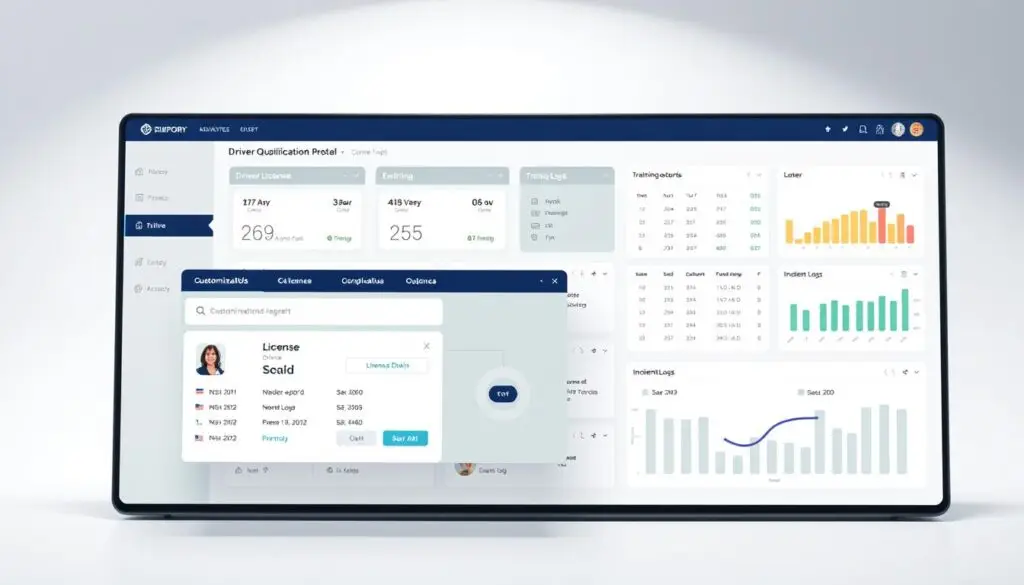
Fleet compliance software transforms the complex task of driver credentialing into an automated, systematic process that protects carriers from serious violations. Modern driver qualification management platforms maintain comprehensive Driver Qualification Files (DQFs) that contain all required documentation for each commercial driver. These digital systems replace cumbersome paper filing systems with centralized databases that provide instant access to critical driver information.
The software continuously monitors license status, medical certifications, and training records to ensure every driver meets federal safety standards. Automated alerts notify safety managers when any credential approaches expiration, preventing the costly mistake of allowing unqualified drivers to operate commercial vehicles.
License Verification and Monitoring
License verification begins during the hiring process when carriers must confirm that applicants hold valid commercial driver’s licenses with appropriate endorsements. Compliance platforms integrate with state licensing databases to perform real-time verification of CDL status, restrictions, and classifications. This initial verification establishes the baseline for ongoing CDL monitoring throughout the driver’s employment.
The software continuously tracks license expiration dates and sends automated alerts to both drivers and fleet managers well before renewal deadlines. These reminders typically begin 60 to 90 days prior to expiration, providing ample time for drivers to complete renewal requirements. Early notification prevents the serious violation of allowing drivers with expired licenses to operate commercial vehicles.
Integration with Motor Vehicle Record (MVR) services enables automated monitoring of driver license status changes. When state agencies suspend or revoke a driver’s license, the compliance system receives immediate notification and can automatically flag the driver as ineligible for dispatch. This real-time monitoring protects carriers from unknowingly violating federal regulations.
Medical Certificate Tracking
DOT regulations require interstate commercial drivers to maintain current medical examiner’s certificates issued by healthcare providers listed on the National Registry of Certified Medical Examiners. Medical certificate tracking within compliance software prevents drivers from operating with expired certifications, which constitutes a serious violation with immediate consequences.
Certification periods vary from three months to two years depending on the driver’s health status and any medical conditions requiring ongoing monitoring. Compliance platforms track these individualized expiration dates and generate alerts before certificates expire. Multiple notification levels ensure that both drivers and safety managers receive adequate warning to schedule required medical examinations.
The software can integrate with medical clinics and examination services to streamline the certification renewal process. When drivers complete their medical examinations, results can be uploaded directly to the compliance system, automatically updating the driver’s qualification file.
Background Check Integration
Federal regulations require carriers to verify employment history, conduct pre-employment drug screening, and check for disqualifying criminal offenses before hiring commercial drivers. Background check integration within driver credentialing systems connects compliance platforms with third-party screening services to automate these verification processes.
Employment verification includes contacting previous employers to obtain safety performance history as required by DOT regulations. Carriers must document their attempts to contact previous employers and maintain records of responses received. Compliance software tracks verification status and stores all correspondence related to employment history checks.
Training and Certification Records
Driver qualification management extends beyond licenses and medical certificates to encompass all required and recommended training programs. Compliance software maintains detailed records of initial driver orientation, ongoing safety training, and specialized certifications for hazardous materials or other special operations.
The system tracks completion dates for required training modules and schedules periodic refresher courses based on company policies and regulatory requirements. Automated training assignment ensures drivers complete mandatory safety training within specified timeframes. Fleet managers can configure training curricula that align with operational needs and compliance obligations.
Free Professional Fleet Tools
Cost calculators, fault code lookup, maintenance planners, and more—built for owner-operators, fleet managers, and diesel techs. No signup required.
Vehicle Compliance and Maintenance Tracking
Modern fleet compliance extends far beyond driver qualifications to encompass comprehensive vehicle maintenance and inspection management. While qualified drivers are essential, operating well-maintained vehicles that meet regulatory standards is equally critical for DOT compliance. Vehicle compliance tracking creates a systematic approach to managing inspection schedules, maintenance records, and repair documentation that auditors expect to see.
Compliance software transforms vehicle management from reactive repairs to proactive maintenance programs. Fleet managers gain complete visibility into every vehicle’s condition, maintenance history, and compliance status through centralized digital platforms.
Systematic Maintenance Program Implementation
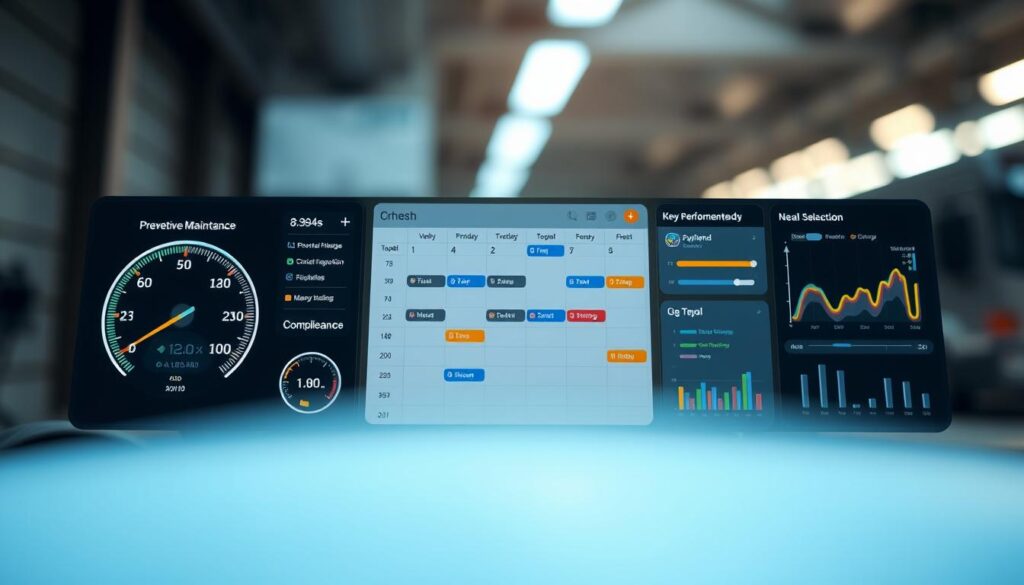
Preventive maintenance scheduling represents one of the most powerful features of modern compliance platforms. DOT regulations require carriers to systematically inspect, repair, and maintain their commercial vehicles. Software solutions automate this requirement by tracking maintenance schedules based on multiple parameters including mileage, engine hours, and calendar intervals.
The system generates work orders automatically when maintenance becomes due. This eliminates the manual tracking burden that often leads to missed services. Maintenance scheduling software prevents vehicles from being dispatched when critical maintenance items are overdue, ensuring regulatory compliance and operational safety.
Complete maintenance histories for each vehicle are stored digitally with full documentation of parts replacement and service performed. During audits, these comprehensive records demonstrate your commitment to preventive maintenance programs. Auditors can quickly verify that vehicles receive timely service according to manufacturer specifications and regulatory requirements.
Integration with telematics systems enhances accuracy by automatically capturing mileage and engine hours. This eliminates manual data entry errors and ensures maintenance scheduling reflects actual vehicle usage patterns. Fleet managers receive alerts before maintenance deadlines, allowing them to schedule service without disrupting operations.
Digital Driver Vehicle Inspection Reporting
Federal regulations mandate that drivers conduct pre-trip and post-trip vehicle inspections, documenting any defects discovered. DVIR management systems digitize this critical compliance requirement through mobile applications that transform inspection processes. Drivers access systematic inspection checklists directly from smartphones or tablets, ensuring consistent and thorough vehicle examinations.
Digital DVIR platforms offer significant advantages over paper-based systems. Drivers can capture photographs of discovered defects, creating visual documentation that clarifies issues for maintenance teams. Defect reports route automatically to maintenance personnel for immediate action, eliminating delays caused by lost or misdirected paperwork.
The software tracks repair completion before vehicles return to service, creating an auditable chain of documentation. This ensures that known defects are corrected before vehicles continue operations. DVIR management systems maintain complete inspection records as required by regulations, providing defensible documentation during audits or investigations.
Periodic Inspection Compliance Management
Commercial vehicles require annual vehicle inspection certifications conducted by qualified inspectors. Compliance software tracks inspection due dates for each vehicle in your fleet, providing proactive management of this critical requirement. The system alerts maintenance managers before inspections expire, allowing adequate time to schedule appointments without rushing.
Digital storage of inspection reports and certification documents ensures immediate access during audits. Fleet managers can instantly retrieve any vehicle’s current inspection status, historical inspection records, and certification documentation. The software prevents dispatch of vehicles with expired inspections, eliminating a common source of compliance violations.
Compliance platforms track inspector qualifications, ensuring only authorized personnel conduct official inspections. The system maintains complete inspection histories, documenting each examination’s results and any deficiencies corrected. This comprehensive record-keeping demonstrates your systematic approach to vehicle compliance during DOT audits.
Benefits of Implementing Fleet Compliance Management Software
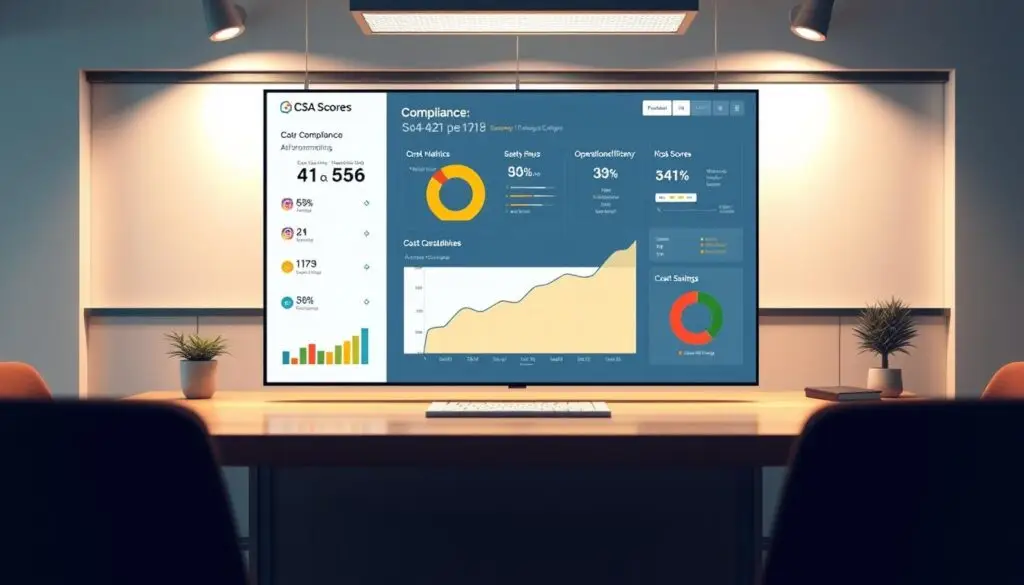
The financial impact of implementing compliance management software typically exceeds initial expectations across multiple operational dimensions. Fleet managers who adopt comprehensive compliance platforms report significant cost reductions within the first year of implementation. More importantly, these systems demonstrate proven return on investment within 3-6 months, making them among the fastest-payback technology investments available to transportation companies.
The benefits extend well beyond avoiding regulatory penalties. These platforms transform how fleets manage risk, allocate resources, and compete for business. By automating manual processes and preventing costly violations before they occur, modern compliance solutions serve as profit-generating assets rather than mere regulatory expense items.
Reduced Compliance Violations and Fines
Proactive compliance monitoring through dedicated software dramatically decreases violation rates across all regulatory categories. The system prevents expired licenses and medical certificates through automated tracking and multi-level alert systems. Integration with Electronic Logging Devices eliminates Hours of Service violations that plague manual logbook operations.
Systematic maintenance and inspection programs reduce vehicle condition violations significantly. Comprehensive Driver Qualification File management prevents documentation gaps that trigger citations during roadside inspections and audits. The cumulative effect creates substantial violation reduction across all FMCSA enforcement categories.
| Violation Type | Fine Range | Indirect Consequences |
|---|---|---|
| Expired Medical Certificate | $1,000 – $2,750 | Driver out-of-service, CSA points, insurance impact |
| Hours of Service Violations | $1,000 – $15,000 | Severe CSA penalties, potential criminal charges |
| Inadequate Driver Qualification Files | $1,000+ per driver | Multiplies across fleet, audit findings |
| Vehicle Maintenance Violations | $1,000 – $5,000 | Vehicle out-of-service, BASIC deterioration |
Even modest-sized fleets operating 20-30 vehicles can accumulate tens of thousands in annual fines without systematic compliance management. A single comprehensive audit revealing multiple driver file deficiencies might generate $15,000-$30,000 in citations. Preventing just two or three major violations annually often covers the entire cost of compliance software.
Improved Safety Scores and CSA Ratings
The FMCSA’s Compliance, Safety, Accountability program publicly rates carriers across seven Behavior Analysis and Safety Improvement Categories. These CSA scores directly affect insurance costs, customer contract eligibility, and the frequency of regulatory interventions. Fleet compliance software drives CSA score improvement through systematic violation prevention.
Software platforms address all critical BASIC categories simultaneously. Unsafe Driving scores improve through driver training tracking and performance monitoring. Hours of Service Compliance benefits from ELD integration and automated violation detection. Driver Fitness categories strengthen through comprehensive credential and medical certificate management.
Industry data confirms the correlation between compliance software adoption and improved safety ratings. Fleets implementing comprehensive platforms experience average BASIC percentile improvements of 15-25 points within the first 12 months. This improvement translates directly to reduced insurance premiums, expanded business opportunities, and decreased enforcement attention.
Time and Cost Savings
Administrative efficiency gains from compliance automation create immediate and ongoing fleet cost savings. Manual paperwork and physical filing systems consume hours of staff time weekly. Compliance software eliminates redundant data entry by maintaining centralized records accessible across departments and locations.
Automated alert generation replaces manual calendar tracking for hundreds of compliance deadlines. Rather than reviewing spreadsheets daily to identify upcoming expirations, managers receive proactive notifications with sufficient lead time for renewal actions. Document retrieval transforms from file cabinet searching to instant digital access through keyword search and filtering.
Key Recommendation
Calculate your current compliance costs before evaluating software solutions. Document violation fines, administrative labor hours, and time spent on manual processes. This baseline enables accurate ROI projections and helps justify the investment to stakeholders.
Enhanced Operational Efficiency
Operational improvements from compliance software extend throughout fleet operations beyond regulatory documentation. Better fleet utilization results from reduced out-of-service incidents that sideline drivers and vehicles. When credentials remain current and maintenance schedules stay on track, assets remain productive and revenue-generating.
Customer service improves through reliable on-time delivery performance. Compliance issues create unpredictable delays that damage shipper relationships. Preventing roadside violations and equipment failures enhances delivery consistency and builds customer confidence.
Driver satisfaction increases through streamlined processes and mobile accessibility. Professional drivers appreciate efficient systems that respect their time. Digital document submission, automated reminders, and transparent communication reduce frustration and support retention efforts in competitive labor markets.
Integration Capabilities with Fleet Management Systems
Integration architecture transforms compliance platforms from isolated tools into connected ecosystems that drive comprehensive business intelligence. Modern compliance solutions must function as central hubs that connect regulatory requirements with operational data, financial systems, and fleet performance metrics. The most effective platforms offer extensive integration capabilities with over 200 pre-built connections to popular business systems.
Fleet management integration eliminates data silos that previously forced managers to toggle between multiple software platforms. This connectivity ensures information flows seamlessly between compliance tracking, operational management, and financial reporting systems. Organizations gain unified visibility across all fleet activities while maintaining regulatory oversight.
Connecting Telematics and GPS Systems
Telematics integration represents the most critical connection point for compliance platforms. These systems automatically capture operational data that directly supports regulatory requirements and safety monitoring. GPS tracking integration enables continuous verification of Hours of Service compliance by tracking vehicle movement and location data.
Major telematics providers including Geotab, Samsara, and Verizon Connect offer standardized APIs that enable seamless connectivity with compliance platforms. This integration captures essential data points including vehicle location coordinates, engine diagnostics, mileage accumulation, harsh driving events, and fuel consumption patterns.
Safety monitoring gains new dimensions through connected telematics data. Harsh braking events, rapid acceleration, and excessive speeding trigger immediate alerts while building comprehensive driver performance profiles. This information supports targeted coaching programs that improve safety scores and reduce accident rates.
Fuel Management Connectivity
Integration with fuel management systems creates comprehensive visibility into one of the largest operational expenses. These connections automatically track fuel purchases, consumption rates, and efficiency metrics across the fleet. The data supports both compliance requirements and cost optimization initiatives.
IFTA compliance represents the primary regulatory benefit of fuel management connectivity. The International Fuel Tax Agreement requires detailed quarterly reporting of miles traveled and fuel purchased by jurisdiction. Connected fuel management systems eliminate this burden through automated data collection.
The platform tracks miles traveled in each jurisdiction using GPS data while capturing fuel purchase information from fleet cards and fuel management providers. Quarterly IFTA reports generate automatically with accurate calculations of tax obligations by state or province.
Financial System Integration
Accounting system connectivity bridges the gap between operational compliance and financial management. Integration with platforms including QuickBooks, SAP, and Oracle enables comprehensive financial tracking of compliance program costs and regulatory expenses. This connection provides critical visibility into return on investment for compliance initiatives.
Driver payroll calculations benefit significantly from integrated systems. The platform automatically transfers mileage data, hours worked, and trip information to payroll systems for accurate compensation processing. This automation eliminates manual data entry while ensuring drivers receive correct payment based on actual performance metrics.
| Integration Type | Primary Benefits | Major Providers |
|---|---|---|
| Telematics Systems | Automated HOS tracking, maintenance scheduling, safety monitoring | Geotab, Samsara, Verizon Connect, Omnitracs |
| Fuel Management | IFTA compliance, cost optimization, theft detection | WEX, Comdata, Fleet One, Pacific Pride |
| Accounting Systems | Financial visibility, automated payroll, expense tracking | QuickBooks, SAP, Oracle, Microsoft Dynamics |
| ELD Devices | Real-time HOS compliance, automated record-keeping | KeepTruckin, Rand McNally, Garmin, EROAD |
Selecting the Right Fleet Compliance Management Software
Choosing compliance software that aligns with your operational requirements demands careful analysis of both current needs and future expansion plans. The marketplace offers numerous solutions, but not every platform serves every fleet effectively. Your selection process should balance immediate compliance challenges with long-term strategic goals.
The best software for your fleet depends on multiple factors including fleet size, industry sector, and existing technology infrastructure. When evaluating compliance solutions, you must assess how each platform addresses your specific pain points. A systematic evaluation process prevents costly mistakes and ensures you invest in technology that delivers measurable value.
Understanding Your Fleet Profile and Requirements
Accurate needs assessment forms the foundation of successful software selection. Fleet size dramatically influences which solutions provide appropriate functionality without unnecessary complexity. Small fleets under 50 vehicles typically prioritize ease of use and affordable entry points over enterprise-level features.
Mid-sized fleets operating 50 to 500 vehicles require more robust capabilities. These organizations need solutions that balance sophistication with manageable implementation timelines. Large enterprise fleets exceeding 500 vehicles demand advanced analytics, customization options, and dedicated support resources.
Operation type significantly impacts software requirements. Long-haul trucking operations face different compliance challenges than local delivery fleets or service vehicle operations. Interstate carriers must navigate FMCSA regulations while intrastate operations follow state-specific requirements.
“The biggest mistake fleet managers make is purchasing software based on features they think they need rather than analyzing their actual compliance gaps and operational workflows.”
— Industry Best Practice
Growth Capacity and Configuration Flexibility
Scalability prevents the need to replace software as your organization expands. Solutions should accommodate additional vehicles and drivers without system limitations or performance degradation. Flexible pricing structures that scale appropriately with fleet size protect against budget surprises during growth phases.
Customizable workflows adapt to your specific operational procedures rather than forcing process changes. The ability to configure alert thresholds and notification routing ensures relevant stakeholders receive timely information. Modular architecture allows you to add capabilities as needs evolve without replacing core systems.
Leading compliance software vendors like Fleetworthy, Samsara, Geotab, Motive, and Verizon Connect offer different approaches to scalability. Fleetworthy emphasizes compliance-first design with extensive DOT audit support. Samsara provides comprehensive fleet management with integrated compliance modules. Geotab specializes in telematics integration with compliance tracking capabilities. Motive combines ELD functionality with driver safety features. Verizon Connect delivers enterprise-grade solutions with extensive customization options.
Support Infrastructure and Educational Resources
Vendor support quality directly impacts successful software adoption and ongoing value realization. Implementation support during initial deployment prevents common configuration mistakes that compromise system effectiveness. Comprehensive training programs for both administrators and end users accelerate adoption and reduce resistance to change.
Ongoing technical support availability determines how quickly you resolve issues that affect compliance. Twenty-four-seven support matters for fleets operating outside standard business hours. Response time commitments should align with your operational urgency levels.
Regular product updates and enhancements ensure your software keeps pace with regulatory changes. Compliance software vendors must monitor FMCSA rule modifications and deploy updates automatically. Platforms that require manual regulation updates create compliance gaps during transition periods.
Financial Analysis and Value Measurement
Understanding software pricing models enables accurate cost comparison across vendors. Per-vehicle monthly subscriptions offer predictable expenses that scale with fleet size. Per-user licensing works better for organizations where multiple staff members manage smaller vehicle counts.
| Cost Component | Typical Range | Payment Structure |
|---|---|---|
| Per-Vehicle Subscription | $15-$50/month | Monthly/Annual |
| Implementation Fees | $2,000-$25,000 | One-time |
| Hardware Devices | $100-$500/unit | One-time or Leased |
| Training Programs | $500-$5,000 | One-time or Annual |
Compliance ROI calculation requires quantifying current compliance costs. Document your violation fines, administrative labor expenses, and time spent on manual processes. Project cost reductions from software implementation based on automation and improved compliance rates. Industry benchmarks show typical ROI timelines of 3-6 months for compliance software investments.
Implementation Best Practices for Compliance Software
A well-executed compliance software implementation typically spans 2-8 weeks depending on fleet size, data complexity, and integration requirements. Streamlined processes can get most operations running within two weeks. Strategic planning during this critical period determines whether your investment delivers maximum value or creates operational disruption.
The difference between successful deployments and failed projects often comes down to systematic approaches to data migration, comprehensive staff training, and commitment to continuous improvement. Organizations that treat implementation as a strategic initiative rather than a technical installation achieve significantly higher adoption rates and compliance performance improvements.
Data Migration and System Setup
The foundation of successful compliance software implementation begins with thorough preparation of existing compliance records. Start by conducting a comprehensive audit of all current data sources including spreadsheets, paper files, and legacy systems. This inventory reveals the scope of information that needs transfer to the new platform.
Data cleaning represents the most critical pre-migration activity. Identify and correct errors, inconsistencies, and outdated information before loading data into your new system. Moving dirty data simply transfers problems from old systems to new ones, undermining the value of modern compliance technology.
Configuration of organizational hierarchy establishes the structural framework for your compliance program. Define company divisions, terminal locations, and reporting relationships. Set up user roles and permissions that control system access based on job responsibilities and security requirements.
Integration setup connects your compliance platform with Electronic Logging Devices, telematics systems, and other data sources. These connections enable automated data flow that eliminates manual entry and ensures real-time compliance monitoring. Work closely with vendors to establish secure API connections and data synchronization protocols.
Staff Training and Change Management
Technology implementation represents organizational change that requires active change management rather than simple software installation. Human factors determine whether your compliance platform becomes an operational asset or an underutilized expense. Comprehensive staff training builds the competence and confidence needed for successful adoption.
Administrator training focuses on system configuration, user management, and troubleshooting capabilities. These power users need deep understanding of platform functionality to support end users and optimize system performance. Invest extra time developing administrator expertise since these individuals become internal resources for ongoing support.
End-user training addresses the specific needs of drivers, dispatchers, maintenance personnel, and other operational staff. Each group interacts with different system features and requires role-specific instruction. Drivers need mobile app training for vehicle inspections and document uploads. Dispatchers require instruction on compliance monitoring dashboards and violation alerts.
Quick reference guides provide just-in-time support for common tasks. Create laminated cards, desk references, or mobile-accessible documents that users can consult when questions arise. Video training resources enable self-paced learning that accommodates different learning styles and schedules.
Ongoing Monitoring and Optimization
Implementation does not end at go-live but continues through continuous improvement cycles that progressively enhance compliance performance. System optimization transforms initial deployments into finely-tuned compliance engines that deliver increasing value over time.
Regular compliance dashboard reviews monitor performance trends and identify emerging issues before they become serious problems. Establish weekly reviews during the first month after implementation, transitioning to monthly analysis as operations stabilize. Track key metrics including violation rates, document completion timeliness, and user engagement levels.
User feedback collection identifies training gaps and usability issues that inhibit effective system use. Conduct structured interviews with representatives from each user group at 30, 60, and 90 days post-implementation. Anonymous surveys encourage honest feedback about frustrations and suggestions for improvement.
Document lessons learned throughout the implementation and optimization journey. These insights prove valuable when expanding to additional terminals, upgrading to new platform versions, or implementing complementary technologies. Institutional knowledge prevents repeating mistakes and accelerates future initiatives.
Frequently Asked Questions
What is fleet compliance management software?
Fleet compliance management software is a digital platform that automates tracking, documentation, and reporting of DOT and FMCSA regulatory requirements. These systems centralize driver qualification files, ELD data, vehicle maintenance records, and drug testing documentation into unified platforms. The software provides real-time monitoring, automated expiration alerts, and instant audit-ready report generation, replacing manual paper-based processes with proactive compliance systems that prevent violations before they occur.
How much does fleet compliance software cost?
Fleet compliance software typically costs between $15-50 per vehicle per month, depending on features and fleet size. Implementation fees range from $2,000-25,000 for enterprise deployments, while hardware devices cost $100-500 per unit. Most fleets achieve ROI within 3-6 months through reduced violations, administrative savings, and lower insurance premiums. Many vendors offer tiered pricing with volume discounts for larger fleets. Total cost of ownership should be evaluated over 3-5 years for accurate comparison.
What features should I look for in DOT compliance software?
Essential features include driver qualification file management with expiration tracking, ELD integration for automated HOS compliance, vehicle maintenance scheduling with DVIR tracking, drug testing program management, and real-time violation alerts. Look for audit-ready reporting, mobile access for drivers and inspections, integration with existing telematics and accounting systems, and cloud-based architecture for accessibility. Scalability, vendor support quality, and regulatory update automation are also critical evaluation criteria.
How does compliance software improve CSA scores?
Compliance software improves CSA scores by preventing violations across all seven BASIC categories through automated monitoring and proactive alerts. The software tracks driver credential expirations to prevent Driver Fitness violations, integrates with ELDs to eliminate HOS violations, schedules preventive maintenance to reduce Vehicle Maintenance issues, and manages drug testing programs for Controlled Substances compliance. Fleets implementing comprehensive compliance platforms typically see 15-25 point BASIC percentile improvements within 12 months.
Can small fleets benefit from compliance management software?
Yes, small fleets with 5-10 vehicles benefit significantly from compliance software. The proportional administrative burden actually falls heavier on smaller operations lacking dedicated compliance staff. Any organization operating commercial vehicles exceeding 10,000 pounds GVWR enters DOT jurisdiction and requires systematic compliance tracking. Modern cloud-based solutions offer scalable pricing that makes compliance automation accessible for fleets of all sizes, with per-vehicle subscription models starting around $15-20 monthly.
How long does compliance software implementation take?
Most fleet compliance software implementations span 2-8 weeks depending on fleet size, data complexity, and integration requirements. Streamlined deployments can get smaller operations running within two weeks. The process includes data migration, system configuration, integration setup, and staff training. Planning cutover timing to avoid peak business periods minimizes operational disruption. Parallel operations during transition allow verification before complete system changeover.
Transforming Fleet Compliance Into Competitive Advantage
Fleet compliance management software has evolved from optional technology to essential business infrastructure for DOT-regulated operations. The platforms available today transform manual documentation burdens into automated, audit-ready systems that prevent violations before they occur while delivering measurable ROI within months of implementation.
Leading solutions like Samsara, Geotab, Fleetworthy Solutions, Motive, and Verizon Connect each bring distinct strengths to compliance management. The right choice depends on your specific operational requirements, fleet size, existing technology infrastructure, and growth plans. Prioritize platforms that offer seamless integration with your current systems and demonstrate commitment to regulatory update automation.
A compliance management investment delivers value far beyond regulatory obligation. Automated tracking reduces violation risk and administrative costs. Real-time alerts enable immediate corrective action. Centralized documentation streamlines audit preparation. Improved safety scores lower insurance premiums. Enhanced operational visibility drives better business decisions across every aspect of fleet management.
Evaluate your current compliance processes honestly, identify specific pain points, and compare leading platforms against your requirements. Your choice should deliver automatic compliance monitoring, complete auditability, and actionable insights that keep your fleet inspection-ready every day.
Found This Guide Valuable?
Share it with colleagues managing fleet compliance challenges. Help other fleet managers and safety directors discover the solutions that keep operations running smoothly.