
By Michael Nielsen, Editor & Publisher | 15+ Years in Diesel Repair
Last Updated: January 2026
📖 Estimated reading time: 26 minutes
Fleet asset management software ROI calculations have become critical for operations managers facing mounting cost pressures in 2025. According to Verizon Connect research, 79% of fleet managers identify rising costs as their top operational challenge, making data-driven technology investment decisions essential for survival. This comprehensive guide walks you through calculating accurate ROI projections for your fleet management software investment.
Whether you operate a 25-vehicle delivery fleet or manage 500+ Class 8 trucks across multiple terminals, understanding the true financial impact of telematics and fleet tracking technology requires systematic analysis. You need to account for direct costs, hidden savings opportunities, and realistic implementation timelines that match your operational reality.
This ROI calculator framework helps you quantify savings across fuel optimization, maintenance efficiency, labor productivity, and compliance risk reduction. You’ll learn industry benchmarks for payback periods, discover common calculation mistakes that undermine projections, and understand which 2025 technology trends will affect your returns.
Key Takeaways
- Most fleets achieve positive ROI within 6-14 months, with enterprise operations exceeding 200 vehicles often seeing 50-75% first-year returns.
- Hidden costs of not using fleet software—including manual process inefficiencies, compliance violations, and reactive maintenance—typically exceed $100,000 annually for mid-size fleets.
- Four primary savings categories drive ROI: fuel optimization (8-25% reduction), maintenance efficiency (10-28% cost reduction), labor productivity (20-60 minutes saved per driver daily), and fleet right-sizing (5-15% vehicle reduction potential).
- Total cost of ownership extends beyond licensing to include hardware installation ($100-500 per vehicle), training (4-8 hours per user), and ongoing support ($30-250 annually per vehicle).
- AI-powered predictive maintenance and video telematics are amplifying ROI potential in 2025, with 77% of dashcam adopters reporting improved false claims protection.
- Conservative ROI projections that account for gradual adoption curves and ongoing costs build credibility and avoid disappointment when actual results emerge.
Understanding ROI in Fleet Management Context
Return on investment calculations transform fleet technology from an expense line item into a strategic business advantage. Fleet managers must justify every expenditure with concrete financial evidence demonstrating value creation. The ROI framework provides a standardized method to compare costs against benefits across different fleet technology investment options.
Modern fleet operations involve complex interconnected systems requiring sophisticated measurement approaches. Unlike simple purchase decisions, fleet technology investments affect multiple departments and operational areas simultaneously. This complexity makes accurate ROI calculation both challenging and essential for organizational success.
What ROI Means for Fleet Operations
ROI in fleet operations measures the financial return generated from technology investments relative to total implementation costs. This calculation extends far beyond the initial software purchase price to encompass the complete lifecycle of your vehicle management system deployment.
Fleet-specific ROI accounting must consider multiple cost centers that interact with each other. Fuel consumption patterns directly influence maintenance schedules. Driver productivity affects asset utilization rates. Each component creates ripple effects throughout your entire operation.
The calculation framework divides returns into two distinct categories: hard savings and soft savings. Hard savings represent measurable cost reductions appearing directly on financial statements. Soft savings encompass efficiency improvements and risk mitigation creating indirect financial value.
| Savings Category | Examples | Measurement Method | Typical Impact Range |
|---|---|---|---|
| Hard Savings | Fuel cost reduction, maintenance expense decrease, insurance premium reduction | Direct financial tracking through accounting systems | 15-25% of total benefits |
| Soft Savings | Administrative time reduction, improved compliance, enhanced safety records | Time studies, incident reports, audit results | 35-45% of total benefits |
| Operational Improvements | Extended asset life, better utilization rates, reduced downtime | Asset performance metrics and utilization reports | 25-35% of total benefits |
| Risk Mitigation | Fewer accidents, compliance violation avoidance, reduced liability exposure | Incident tracking and legal cost analysis | 10-15% of total benefits |
Fleet managers must track performance across seven critical cost centers: fuel consumption represents the most visible expense category; maintenance schedules determine asset longevity and replacement timing; driver productivity directly impacts service delivery capacity; asset utilization metrics reveal whether fleet size matches operational requirements; compliance adherence prevents costly penalties; and insurance premiums fluctuate based on safety performance and claims history.
Why ROI Calculation Matters in 2025
The 2025 business environment presents unique challenges amplifying the importance of accurate ROI projections. Inflation continues pressuring operating budgets across all expense categories. Regulatory changes under FMCSA electronic logging device mandates demand new compliance capabilities and reporting systems. Driver shortages force organizations to maximize productivity from existing workforce capacity.
Aging vehicle fleets require more frequent repairs and generate higher maintenance costs. These factors combine to create significant financial pressure. Fleet managers need sophisticated technology to remain competitive, but executive teams demand concrete justification for capital expenditures.
79%
of fleet managers report increasing costs as one of their top operational challenges in 2025 — Verizon Connect Fleet Technology Trends Report
Comprehensive ROI analysis serves multiple strategic purposes within your organization. Before purchase, it enables informed vendor selection and feature prioritization. The calculation helps establish realistic implementation timelines based on projected payback periods. You can secure executive buy-in by demonstrating clear financial returns. After implementation, the ROI framework transforms into a performance measurement system comparing actual results against initial projections.
Key Cost Components of Fleet Asset Management Software
The true cost of fleet asset management software extends far beyond the initial price tag. Understanding every expense category helps you build an accurate telematics ROI calculation and avoid budget surprises during implementation. Fleet managers often underestimate total investment requirements, making comprehensive cost analysis essential for realistic projections.
Total cost of ownership spans multiple years and impacts your bottom line significantly. Breaking down each component ensures realistic budget planning and accurate ROI projections for your heavy-duty fleet operations.
Software Licensing and Subscription Fees
Subscription fees represent the most visible cost category for fleet management technology. Most providers charge per-vehicle monthly fees varying based on fleet composition and required capabilities. Pricing models differ substantially across vendors, with per-vehicle rates typically ranging from $15 to $75 monthly depending on feature sophistication.
Basic GPS tracking solutions cost less than comprehensive platforms with fleet analytics and predictive maintenance capabilities. Light-duty vehicles typically run $20-$40 per vehicle monthly for standard tracking, while heavy-duty Class 8 trucks and specialized equipment require $45-$75 per vehicle monthly for advanced telematics. Enterprise licensing with volume discounts becomes available for fleets exceeding 200 vehicles, and feature add-ons for dashcams, fuel cards, or driver behavior monitoring add $5-$25 per vehicle monthly.
Tiered pricing structures reward fleet size. Organizations with larger deployments negotiate better per-unit rates through enterprise agreements.
Implementation and Integration Costs
Implementation expenses frequently catch fleet managers off guard. These one-time charges cover hardware installation, system configuration, and professional services ensuring successful deployment.
Hardware installation represents a significant upfront investment. GPS devices, telematics units, dashcams, and IoT sensors require professional installation in each vehicle. Installation costs range from $100 to $500 per vehicle based on equipment complexity. Heavy-duty trucks with multiple sensor types demand more installation time than light-duty delivery vans.
Data migration from legacy systems adds complexity to implementation. Transferring historical maintenance records, vehicle specifications, and driver information requires careful planning and technical expertise. API integrations connecting fleet management software with existing enterprise systems enhance fleet analytics capabilities but increase implementation costs.
Professional services fees vary by project scope: system configuration and customization runs $2,000-$15,000; data migration services cost $1,500-$8,000; API integration development ranges from $3,000-$20,000 per system; and project management and consulting adds $5,000-$25,000.
Training and Change Management Expenses
User adoption determines software ROI more than any technical feature. Comprehensive training programs ensure drivers, dispatchers, and administrators leverage system capabilities effectively.
End-user training addresses different stakeholder groups. Drivers need mobile app instruction and privacy policy education, while dispatchers require route planning and communication tools training. Administrator certification equips your team with deep system knowledge for report building, alert configuration, and fleet analytics interpretation.
Training costs break down across multiple categories: on-site training sessions run $1,500-$5,000 per day; virtual training programs cost $500-$2,000 per session; administrator certification costs $800-$2,500 per person; and custom training material development adds $2,000-$8,000.
Change management addresses organizational resistance to new technology. Budget 10-15% of total software costs for comprehensive change management initiatives. This investment pays dividends through higher user engagement and faster time-to-value.
Ongoing Maintenance and Support
Recurring maintenance expenses continue throughout the software lifecycle. These costs ensure system reliability, security, and access to vendor support resources.
Hardware replacement cycles create predictable ongoing costs. GPS devices and telematics units typically last 5-7 years before requiring replacement due to technological obsolescence or physical wear.
| Support Tier | Response Time | Annual Cost Per Vehicle | Included Services |
|---|---|---|---|
| Basic | 24-48 hours | $30-$60 | Email support, knowledge base access |
| Premium | 4-8 hours | $75-$120 | Phone support, priority ticketing, quarterly reviews |
| Enterprise | 1-2 hours | $150-$250 | Dedicated account manager, 24/7 support, custom SLAs |
System administration resources require internal staffing. Depending on fleet size, organizations need 0.25 to 2.0 FTE positions managing software, generating reports, and supporting end users. Small fleets under 50 vehicles typically invest $50,000-$150,000 in year one, mid-size fleets spend $150,000-$500,000, and enterprise operations exceed $500,000 for comprehensive implementations.
Hidden Costs of Not Using Fleet Asset Management Software
The absence of fleet management technology creates financial bleeding points that rarely appear on traditional expense reports. These hidden costs accumulate silently across operations, affecting everything from daily administrative tasks to long-term asset value. Understanding these expenses establishes the true baseline for calculating ROI and reveals the genuine opportunity cost of delaying technology adoption.
Fleet operators without modern management systems typically underestimate their actual operational costs by 15-25%. This gap exists because manual processes, compliance risks, and reactive maintenance create expenses distributed across multiple budget categories.
Manual Process Inefficiencies
Administrative staff managing fleets manually spend 15-20 hours per week on tasks that automated systems complete in minutes. These labor-intensive activities include paperwork processing, manual dispatch coordination, spreadsheet-based reporting, phone-based driver communication, and paper maintenance logs. The opportunity cost extends beyond direct labor expenses to include higher-value work these employees could perform instead.
Manual data entry introduces error rates between 2-5% across most fleet operations. These mistakes cascade into operational disruptions including incorrect fuel tax reporting, missed maintenance schedules, inaccurate billing, and poor route planning.
Organizations operating without fleet optimization technology face quantifiable manual process costs: administrative labor consuming 60-80 hours monthly at $25-35 per hour loaded cost; dispatch inefficiencies adding 5-8% to fuel expenses through suboptimal routing; manual reporting requiring 10-15 hours monthly for basic compliance documentation; communication delays causing 3-5 hours of driver idle time weekly; and data reconciliation consuming 8-12 hours monthly to resolve discrepancies.
Compliance Violations and Penalties
Regulatory compliance represents substantial financial exposure for fleets lacking automated tracking and reporting systems. Hours of Service violations alone can cost $1,000-$16,000 per citation depending on severity. Per 49 CFR Part 395, HOS regulations require precise record-keeping that manual systems struggle to maintain consistently.
Department of Transportation inspection failures create multiple cost layers. The immediate fine typically ranges from $100-$1,000 per violation under inspection requirements outlined in 49 CFR Part 396. However, indirect costs prove far more damaging through increased insurance premiums, deteriorating CSA scores, and potential loss of operating authority.
IFTA reporting errors generate penalties plus interest charges on underpaid taxes. Manual fuel tracking systems commonly produce 3-7% error rates in mileage reporting, leading to audit exposures averaging $5,000-$15,000 when discrepancies are discovered.
| Violation Category | Annual Incidents (50-Vehicle Fleet) | Average Cost Per Incident | Total Annual Exposure |
|---|---|---|---|
| HOS Violations | 8-12 citations | $2,500 | $20,000-$30,000 |
| DOT Inspection Failures | 15-25 violations | $400 | $6,000-$10,000 |
| IFTA Reporting Errors | 1-2 audit issues | $8,000 | $8,000-$16,000 |
| Driver Qualification Issues | 5-10 file problems | $750 | $3,750-$7,500 |
| Insurance Premium Increases | Annual adjustment | Varies | $15,000-$25,000 |
Unplanned Downtime and Repairs
Reactive maintenance approaches cost fleets 30-40% more than predictive maintenance strategies enabled by modern asset management software. This premium stems from emergency repair pricing, expedited parts shipping, after-hours labor rates, and cascading operational disruptions from unplanned downtime. A single unexpected Class 8 truck breakdown can trigger costs exceeding $3,000 beyond the actual repair expense.
Emergency repairs command premium pricing from service providers. Standard maintenance performed during scheduled appointments costs $85-$110 per hour for labor. The same work performed as an emergency repair jumps to $125-$175 per hour. Parts procurement adds another cost layer, with expedited shipping fees ranging from $50-$200 per order.
Vehicle unavailability generates multiple revenue-impacting costs. Missed customer commitments damage relationships and create service recovery expenses. Rental vehicle fees typically run $75-$150 per day for commercial vehicles, and availability during peak seasons may require premium rates.
The cumulative downtime and repair cost differential provides compelling ROI justification. A 50-vehicle fleet operating reactively typically spends $350,000-$450,000 annually on maintenance and downtime-related expenses. The same fleet using predictive maintenance reduces these costs to $250,000-$320,000, generating $100,000-$130,000 in annual savings from this single category alone.
Primary Savings Categories from Fleet Management Technology
The financial benefits of fleet asset management software manifest through several key areas where technology transforms operational costs into competitive advantages. These savings categories form the benefit side of your ROI equation and represent measurable returns you can track from implementation day one.
Four primary savings categories consistently deliver substantial returns across all fleet types: fuel cost optimization, maintenance efficiency gains, labor productivity improvements, and vehicle utilization enhancements. The magnitude of savings within each category depends on your current operational baseline and implementation effectiveness.
Fuel Efficiency Through Advanced Route Planning
Fuel expenses represent one of the largest controllable costs in fleet operations. Modern route optimization software addresses this expense through two primary mechanisms: reducing total miles driven and eliminating wasteful idling time.
GPS-enabled routing algorithms analyze traffic patterns, delivery windows, and vehicle capacity to create the most efficient travel sequences. This optimization typically reduces overall distance traveled by 10-20% compared to manually planned routes. For a fleet driving 50,000 miles annually per vehicle, a 15% reduction saves 7,500 miles and approximately $2,250 in fuel costs per vehicle at current diesel prices.
Idle time monitoring addresses an even more significant waste factor for heavy-duty diesel operations. Light and medium-duty vehicles idle an average of 1.5 to 2.5 hours daily, while heavy-duty Class 8 trucks can idle 4 to 5 hours per day. This idling burns fuel without generating productive work.
Fleet management systems with idle alert functionality enable managers to identify excessive idling patterns and coach drivers on reduction techniques. Organizations implementing idle reduction programs typically achieve 30-40% decreases in idle time within the first six months. For a heavy-duty vehicle idling 4.5 hours daily at 0.8 gallons per hour, a 35% reduction saves approximately 460 gallons annually—roughly $1,600 in fuel savings per vehicle.
Extended Asset Longevity Through Proactive Service
Maintenance represents the second-largest controllable expense for most fleet operations. Traditional calendar-based maintenance schedules either service vehicles too frequently, wasting resources, or too infrequently, risking breakdowns. Predictive maintenance capabilities change this dynamic entirely.
Fleet management systems monitor actual vehicle usage, engine diagnostics, and operational conditions to trigger service alerts based on real needs rather than arbitrary schedules. This data-driven approach prevents costly emergency repairs by identifying potential failures before they occur. Organizations implementing predictive maintenance typically reduce unplanned downtime by 40-60%.
Historical failure pattern analysis enables fleet managers to identify recurring issues across specific vehicle models or usage profiles. This insight supports proactive parts replacement and preventive interventions extending component life by 15-25%. The financial impact of maintenance optimization extends beyond direct repair costs—proper scheduling reduces overall maintenance spending by 12-18% annually through efficient service timing, bulk parts purchasing, and reduced labor waste.
Administrative Productivity and Time Savings
Manual fleet management processes consume enormous amounts of administrative time that could be redirected to strategic activities. Digital workflow automation, mobile communication tools, and automated dispatch capabilities eliminate these inefficiencies while improving operational accuracy.
Traditional dispatch operations require phone calls, radio communication, and constant status updates from drivers. Modern fleet systems provide real-time vehicle location data and automated status notifications eliminating most communication overhead. Verizon Connect data shows 55% of GPS fleet tracking adopters reported improved productivity following implementation.
Driver time savings compound these administrative efficiencies. Automated route delivery to mobile devices, digital inspection forms, and electronic proof of delivery eliminate paperwork handling. Most organizations achieve 30-45 minutes of productive time savings per driver per day through digital workflow improvements.
For a 25-vehicle fleet with drivers earning $22 per hour, saving 35 minutes daily per driver generates approximately $80,000 in annual labor value. This recovered time either reduces overtime expenses or enables drivers to complete additional stops without adding headcount.
Strategic Fleet Sizing and Asset Optimization
Many organizations operate more vehicles than necessary because they lack visibility into actual utilization patterns. Fleet management systems reveal exactly how each asset is used, exposing underutilized vehicles representing unnecessary capital investment and ongoing operational expense.
Detailed utilization reporting shows which vehicles sit idle frequently, operate below capacity, or could be consolidated with other assets. Organizations conducting comprehensive utilization analyses typically discover they can eliminate 5-15% of their fleet through better utilization of remaining assets.
Fleet right-sizing generates multiple financial benefits. Eliminating unnecessary vehicles removes depreciation, insurance, registration, and maintenance expenses. A Class 8 tractor costs approximately $25,000-$35,000 annually in fixed expenses before considering fuel and operational costs. Removing just five unnecessary trucks from a 50-vehicle fleet saves $125,000-$175,000 annually.
| Savings Category | Conservative Estimate | Moderate Estimate | Aggressive Estimate |
|---|---|---|---|
| Fuel Cost Reduction | 8-12% annual savings | 12-18% annual savings | 18-25% annual savings |
| Maintenance Optimization | 10-15% cost reduction | 15-20% cost reduction | 20-28% cost reduction |
| Labor Efficiency Gains | 20-30 minutes saved per driver daily | 30-45 minutes saved per driver daily | 45-60 minutes saved per driver daily |
| Fleet Right-Sizing Potential | 3-7% vehicle reduction | 7-12% vehicle reduction | 12-18% vehicle reduction |
How to Calculate Your Fleet Asset Management Software ROI
Fleet managers need a clear framework to quantify the financial impact of asset management technology on their operations. The process requires gathering accurate data from multiple sources and applying proven calculation methods. This systematic approach transforms operational data into concrete financial justifications resonating with decision-makers.
The calculation process involves four distinct steps building upon each other. Each step captures critical financial information that ultimately determines whether your technology investment delivers meaningful returns.
Step 1: Establish Your Baseline Costs
Your current operational expenses form the foundation for measuring improvement. Start by auditing all fleet-related expenditures over the past 12 months to account for seasonal variations. This historical data provides the most accurate picture of your spending patterns.
Collect detailed records across these essential categories: fuel costs should include total monthly expenditure per vehicle with average price per gallon; maintenance and repair expenses need both scheduled service costs and unplanned emergency repairs broken down per vehicle; labor and administrative costs encompass driver wages, overtime pay, and back-office staff time spent on fleet management tasks; insurance premiums require monthly costs per vehicle including any mid-term adjustments; accident-related expenses must capture claims, deductibles, legal fees, and vehicle downtime costs; and compliance expenses include violation fines, penalties, audit costs, and administrative time addressing regulatory issues.
Step 2: Identify Total Software Investment
Calculate every dollar you’ll spend implementing and maintaining your fleet technology. Software subscription fees typically charge monthly or annually per vehicle, so multiply your fleet size by the per-unit cost. Request detailed pricing from vendors including all licensing tiers and feature packages.
Hardware expenses for vehicle telematics include GPS tracking units, dashcams, sensors, and installation labor. Implementation costs cover system integration with existing software, data migration from legacy systems, and professional services for configuration. Training expenses include both initial onboarding sessions for administrators and ongoing education for drivers and dispatchers.
Step 3: Project Annual Savings and Benefits
Estimate realistic improvements across operational categories based on industry benchmarks and vendor data. Fuel reduction savings come from decreased idle time, optimized routing, and improved driver behavior. If your baseline shows 2 hours daily idle time per vehicle and you expect 40% reduction, calculate the fuel savings using your cost per gallon.
Maintenance cost reductions stem from preventive scheduling extending service intervals and catching problems before breakdowns. Fleet performance metrics from vehicle telematics enable predictive maintenance reducing emergency repairs by 20-30%. Labor productivity gains include administrative time savings from automated reporting, reduced paperwork, and streamlined dispatch operations.
Step 4: Apply the ROI Formula
Use the standard ROI calculation to express your return as a percentage: ROI equals total annual benefits minus total annual costs, divided by total investment, multiplied by 100. This percentage tells stakeholders how much return they receive for every dollar invested.
Calculate your payback period showing how quickly the investment recovers its costs: payback period equals total investment divided by annual net savings. Express this in months or years depending on your timeline.
| Cost Category | Current Annual Cost | Projected Annual Cost | Annual Savings |
|---|---|---|---|
| Fuel Expenses | $450,000 | $382,500 | $67,500 |
| Maintenance & Repairs | $285,000 | $228,000 | $57,000 |
| Labor & Administration | $625,000 | $575,000 | $50,000 |
| Insurance Premiums | $175,000 | $158,000 | $17,000 |
| Compliance & Violations | $42,000 | $16,800 | $25,200 |
This example shows a 100-vehicle fleet with $1,577,000 in current annual costs reducing to $1,360,300 after software implementation. The total annual savings of $216,700 against a $125,000 total software investment yields an ROI of 73% with a payback period of 6.9 months.
Industry Benchmarks and Expected ROI Timelines
Industry data reveals clear patterns in how organizations of different sizes realize value from GPS fleet tracking technology. The scale of your operation significantly impacts both the timeline for achieving positive returns and the magnitude of savings you can expect. According to Verizon Connect, 70% of fleets using GPS fleet tracking software found it very or extremely beneficial, demonstrating widespread value across all fleet sizes.
Small Fleet ROI Expectations (Under 50 Vehicles)
Organizations operating fewer than 50 vehicles typically achieve payback periods between 8 and 14 months after implementing asset tracking solutions. While per-vehicle software costs may be higher due to less favorable pricing tiers, these fleets often experience faster operational improvements.
Small fleets generally realize 15-25% ROI in the first year. Implementation complexity remains manageable, allowing teams to adopt new processes quickly. User adoption is easier to coordinate with smaller driver groups, and operational changes become visible almost immediately. Primary benefits include fuel savings through improved route planning, decreased administrative burden with automated reporting, enhanced customer service through accurate arrival estimates, and reduced insurance premiums from documented safe driving behaviors.
Mid-Size Fleet ROI Expectations (50-200 Vehicles)
Mid-size fleets represent the optimal zone for GPS fleet tracking ROI. These organizations achieve typical payback periods of 6-12 months with first-year returns ranging from 25-40%.
This fleet segment has sufficient scale to justify comprehensive software features while maintaining manageable implementation complexity. Organizations at this size can negotiate better pricing tiers while avoiding extended implementation timelines enterprise fleets face. Benefits distribute across multiple categories including fuel optimization, preventive maintenance scheduling, compliance management, and driver safety improvements creating additional value through lower accident rates and insurance costs.
Enterprise Fleet ROI Expectations (200+ Vehicles)
Large organizations with 200 or more vehicles experience the most dramatic ROI outcomes from asset tracking solutions. Despite more complex implementations requiring 3-6 months, enterprise fleets achieve payback periods of just 4-9 months with first-year ROI frequently exceeding 50-75%.
Scale advantages generate exceptional per-vehicle cost efficiency. Comprehensive data analytics enable sophisticated optimization strategies smaller fleets cannot access. Dedicated fleet management teams can analyze patterns across hundreds of vehicles, identifying optimization opportunities generating compounding benefits.
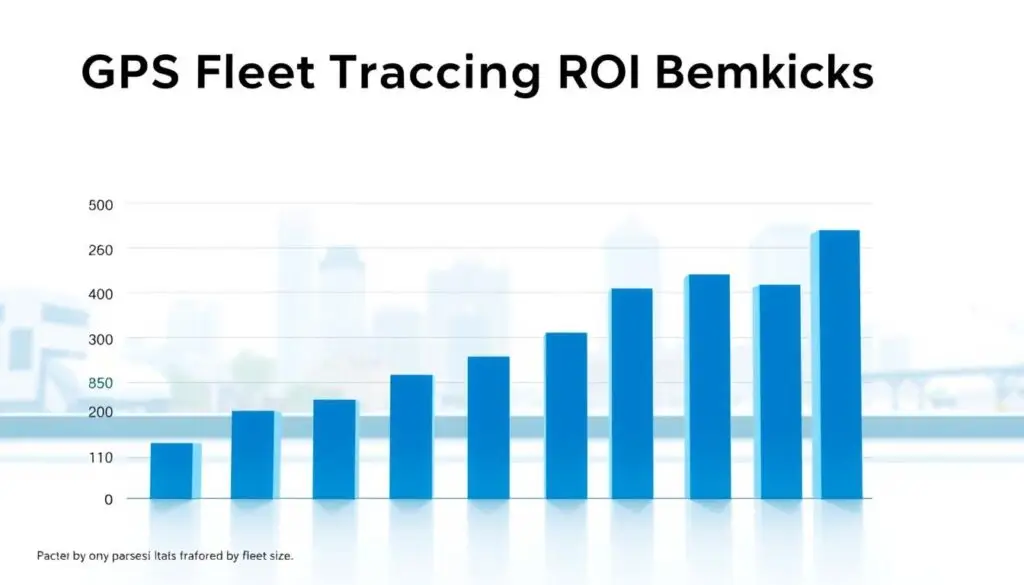
| Fleet Size Category | Typical Payback Period | First-Year ROI Range | Primary Benefit Drivers |
|---|---|---|---|
| Small Fleet (Under 50 vehicles) | 8-14 months | 15-25% | Fuel savings, reduced admin burden, customer service improvements |
| Mid-Size Fleet (50-200 vehicles) | 6-12 months | 25-40% | Route optimization, preventive maintenance, compliance, driver safety |
| Enterprise Fleet (200+ vehicles) | 4-9 months | 50-75%+ | Scale efficiency, advanced analytics, predictive maintenance, utilization optimization |
The HDJ Perspective
After 15 years working in diesel repair shops before transitioning to fleet journalism, I’ve watched fleet management technology evolve from luxury to necessity. The operations still running paper logs and reactive maintenance schedules aren’t just leaving money on the table—they’re making themselves uncompetitive against fleets leveraging real-time data. The ROI calculations in this guide are conservative. What the numbers don’t fully capture is the cumulative competitive advantage: fleets with visibility make better decisions every day, and those advantages compound. If you’re still evaluating whether fleet management software makes financial sense, the real question is how much longer you can afford to operate without it.
Real-World ROI Examples from 2024-2025
Concrete examples from delivery services, construction companies, and government agencies reveal how fleet technology investments translate into measurable returns. These documented case studies demonstrate the diversity of benefits across different operational models and fleet sizes, providing benchmarks you can use to validate your own projections.
Regional Delivery Service Fleet
A mid-sized last-mile delivery operation managing 125 vehicles faced mounting pressure from fuel expenses and inconsistent delivery performance. The company invested $78,000 in fleet management software implementation including licensing, hardware installation, and driver training.
Within the first year, the delivery service documented: 18% fuel cost reduction through intelligent route optimization and idle time monitoring; 22% improvement in on-time delivery performance leading to higher customer satisfaction; 30 minutes per driver per day in productivity gains from automated dispatch and navigation; and $127,000 in annual savings from combined fuel, overtime, and customer retention benefits. The company achieved a 12-month payback period with 38% first-year ROI.
Construction Equipment Fleet
A construction company managing 85 pieces of heavy equipment across multiple job sites lacked visibility into asset location and utilization patterns. The firm implemented comprehensive asset tracking and telematics technology at a total cost of $52,000.
Results within eight months included: 23% of equipment identified as underutilized, enabling redeployment and eliminating unnecessary rental costs; 67% reduction in unexpected breakdowns through predictive maintenance scheduling; two equipment thefts prevented through real-time alerts and GPS recovery valued at $140,000; and $182,000 in first-year savings from improved utilization, maintenance optimization, and theft prevention. This case achieved an 8-month payback period with 58% first-year ROI.
Municipal Government Fleet
A city government managing over 200 diverse vehicles faced unique accountability challenges inherent to public sector operations. The municipality invested $95,000 in comprehensive fleet technology prioritizing compliance documentation, video evidence capabilities, and public-facing utilization reporting.
The municipal deployment achieved: 77% improvement in protection from false claims through dashcam video evidence; 15% operational cost reduction across fuel, maintenance, and administrative expenses; complete compliance audit trail for vehicle inspections, driver certifications, and maintenance records; and $143,000 in annual savings while improving citizen confidence in resource stewardship. The technology generated a 10-month payback period.
Critical Factors That Impact Your ROI
The difference between achieving 200% ROI and barely breaking even often comes down to specific factors within your organization’s control. While fleet management software delivers proven benefits across industries, your actual results depend on how well the technology aligns with your operational context.
Fleet Size and Vehicle Composition
The number and types of vehicles you operate fundamentally shape your vehicle management system economics. Larger fleets typically achieve better per-unit ROI through volume pricing advantages on software subscriptions and hardware purchases. A 500-vehicle fleet might pay 40-60% less per vehicle than a 25-vehicle operation for the same technology platform.
Mixed fleets with light-duty trucks, medium-duty delivery vehicles, and heavy-duty Class 8 equipment require more sophisticated software configurations but generate multiple benefit streams across different vehicle categories. Specialized vehicles create opportunities for premium returns—refrigerated trailers benefit from temperature monitoring preventing cargo spoilage, while construction machinery with high hourly operating costs sees substantial savings from utilization optimization.
Current Technology Infrastructure
Your existing technology foundation significantly influences implementation speed and ultimate returns. Organizations with modern ERP systems, existing telematics hardware, and digital workflows achieve faster deployment and earlier value realization.
Companies starting from paper-based processes face longer implementation timelines but often experience the most dramatic improvements because baseline inefficiencies are substantial. Data maturity determines how quickly you can establish credible ROI baselines—organizations currently tracking key performance indicators possess historical benchmarks enabling accurate before-and-after comparisons.
Industry-Specific Requirements
Your industry’s regulatory environment creates both compliance-driven ROI and operational efficiency opportunities. Transportation and logistics companies operating under Hours of Service regulations gain immediate value from ELD compliance features preventing costly violations while streamlining driver workflow.
Construction fleets face equipment certification requirements and operator qualification mandates. Vehicle management systems with built-in compliance tracking prevent regulatory penalties while automating documentation. According to TMC Recommended Practices, standardized maintenance procedures and documentation significantly reduce audit exposure while improving operational consistency.
User Adoption and Organizational Culture
Even the most sophisticated vehicle management system delivers minimal ROI without organizational buy-in. User adoption represents the single most critical success factor separating high-performing implementations from disappointing investments. Organizations with strong adoption achieve 2-3 times higher ROI than those with resistance or inconsistent usage.
Leadership commitment sets the tone for technology acceptance. When executives actively champion the system and hold managers accountable for utilization, adoption rates exceed 90%. Driver engagement directly impacts data quality and feature utilization—fleets involving drivers in the selection process and clearly communicating benefits see better cooperation.
Free Professional Fleet Tools
Cost calculators, fault code lookup, maintenance planners, and more—built for owner-operators, fleet managers, and diesel techs. No signup required.
Maximizing ROI Through Proper Implementation
Proper implementation transforms fleet asset management software from a simple tracking tool into a comprehensive optimization platform delivering measurable financial returns. Organizations treating deployment as merely a technology project rather than a business transformation typically achieve only 40-60% of their potential ROI.
Selecting the Right Software Features
Feature selection represents the foundation of successful fleet optimization and directly impacts both initial investment costs and long-term value realization. Rather than selecting bloated feature sets increasing expenses without proportional benefits, match specific capabilities to your organizational priorities.
GPS tracking delivers the highest satisfaction ratings, with 70% of users finding it very or extremely beneficial for operations—making it the logical starting point for delivery and distribution operations focused on fuel efficiency. For fleets with significant insurance and liability exposure, video telematics deserves priority attention with 77% reporting improved false claims protection. Field service management capabilities show strong performance for maintenance fleets, with 64% of users finding these features extremely or very beneficial.
Ensuring Data Accuracy and Integration
ROI projections depend entirely on reliable data flowing seamlessly between systems. Poor data quality or disconnected platforms undermine even the most sophisticated fleet management software. Hardware installation quality establishes the foundation for data accuracy—rushed or improper installations create ongoing reliability problems requiring expensive troubleshooting.
System integration requirements extend beyond the fleet management platform itself. Effective fleet optimization requires connections to fuel card systems for accurate consumption tracking, maintenance management systems for work order management, and accounting platforms enabling financial analysis tying fleet performance directly to business outcomes.
Establishing Clear KPIs and Measurement Systems
Organizations establishing clear success metrics before implementation and tracking them consistently throughout deployment achieve substantially higher ROI than those retrofitting measurement frameworks after launch.
Define specific, measurable targets for each ROI category identified in your business case. Rather than vague goals like “reduce fuel costs,” establish precise objectives such as “reduce fuel cost per mile by 12% within 12 months of full deployment.” Establish baseline measurements before implementation begins—many organizations skip this critical step and later struggle to quantify improvements.
2025 Technology Trends Affecting Fleet Software ROI
Advanced technologies are revolutionizing fleet management software capabilities, introducing powerful new tools significantly amplifying potential returns on investment. The vehicle telematics landscape has expanded dramatically, with artificial intelligence, electric vehicle support, and sensor networks creating unprecedented visibility into fleet operations.
AI and Predictive Analytics Integration
Artificial intelligence has transformed fleet management from a reactive discipline to a proactive operation. Modern platforms incorporate advanced AI processors and computer vision analyzing continuous data streams from vehicles to identify patterns invisible to human operators. This capability enables managers to take real-time action and proactively address problems before they escalate.
Predictive maintenance represents one of the most valuable AI applications for fleet ROI. Machine learning algorithms examine historical repair data, current operating conditions, and sensor readings to forecast component failures weeks before they occur. AI-powered dashcam systems detect following too closely, distracted driving, and harsh braking events, providing immediate driver coaching through in-cab alerts.
Electric Vehicle Fleet Management Capabilities
Electric vehicle adoption is accelerating rapidly across fleet operations, creating urgent demand for specialized management capabilities. Battery health monitoring, charging infrastructure management, and range-aware routing are becoming essential as fleets transition to electric propulsion.
Advanced platforms track battery degradation patterns, predict remaining useful life, and optimize charging schedules to extend battery longevity. Route planning for electric fleets requires sophisticated algorithms accounting for battery state of charge, charging station locations, and weather impacts on range.
IoT Sensors and Advanced Telematics
The Internet of Things revolution has created richer data environments that sophisticated fleet management platforms leverage for deeper insights. Tire pressure monitoring systems prevent catastrophic blowouts while extending tire life by ensuring proper inflation—delivering 10-15% improvements in fuel economy and extending tire life by 20,000 miles per set.
Temperature and humidity sensors prove essential for cold chain compliance in refrigerated transport operations. Engine performance sensors provide granular diagnostic data enhancing predictive maintenance accuracy beyond what standard OBD-II ports alone deliver.
Common ROI Calculation Mistakes to Avoid
Accurate ROI calculation requires avoiding several common mistakes that frequently undermine fleet technology investment outcomes. Even with the right software solution, flawed analysis methods lead to disappointing results and lost organizational confidence.
Underestimating Implementation Time and Resources
The assumption that fleet management software deploys quickly represents one of the most damaging miscalculations. Reality typically involves 2-6 months for full implementation depending on fleet size and complexity. IT staff time requirements alone frequently catch managers off guard—system configuration and integration typically demands 40-80 hours for mid-sized implementations.
Hardware installation creates additional demands on operations. Comprehensive sensor and camera systems require 2-4 hours per vehicle for proper installation. Training investments represent another commonly underestimated expense, with effective adoption requiring 4-8 hours per user for drivers, dispatchers, and maintenance staff.
Ignoring Soft Costs and Intangible Benefits
ROI calculations often focus exclusively on hard-dollar savings while overlooking significant intangible value. Customer satisfaction improvements deliver measurable business impact even when difficult to calculate precisely. Employee satisfaction reduces driver turnover—in tight labor markets, enhanced retention saves significant recruitment and training costs.
Regulatory audit outcomes improve substantially with comprehensive fleet performance metrics and documentation systems. Competitive positioning strengthens when operational capabilities enable new service offerings and premium pricing.
Using Unrealistic Savings Projections
Overly optimistic assumptions undermine credibility and lead to disappointment when actual results fall short. Feature utilization rates rarely reach 100% in early implementation stages—typical adoption achieves only 60-80% in the first year as users gradually learn system capabilities.
Learning curves significantly impact benefit realization timelines. Most fleets achieve only 40-50% of total benefits in months 1-6 as drivers adapt to new workflows and managers learn to leverage data effectively. Ongoing costs accumulate over analysis periods in ways initial calculations often miss—software subscription increases, hardware replacement cycles, and expanded training needs reduce net savings over time.
Frequently Asked Questions
How long does it take to see ROI from fleet management software?
Most fleet operations achieve positive ROI within 6-14 months depending on fleet size and operational complexity. Small fleets under 50 vehicles typically see payback in 8-14 months with 15-25% first-year ROI. Mid-size fleets of 50-200 vehicles achieve faster payback of 6-12 months with 25-40% returns due to better pricing tiers and optimization opportunities. Enterprise fleets exceeding 200 vehicles often realize payback in just 4-9 months with ROI exceeding 50-75% through scale advantages and comprehensive data analytics enabling sophisticated optimization strategies.
What are the main cost components of fleet asset management software?
Total cost of ownership includes four main categories that fleet managers must account for in ROI calculations. Software licensing fees range from $15-75 per vehicle monthly depending on features and fleet size discounts. Implementation costs include hardware installation at $100-500 per vehicle, data migration, system integration, and professional services totaling $10,000-50,000 for mid-size deployments. Training expenses for drivers, dispatchers, and administrators typically require 4-8 hours per user at $500-2,500 per session. Ongoing maintenance includes software updates, hardware replacement cycles, and technical support subscriptions ranging from $30-250 annually per vehicle depending on service tier.
What savings can fleet managers expect from telematics systems?
Fleet management technology delivers measurable savings across multiple operational categories. Fuel reduction through route optimization and idle time monitoring typically yields 8-25% annual savings depending on current operational efficiency. Maintenance optimization through predictive scheduling reduces costs by 10-28% while extending asset life by 2-3 years. Labor efficiency gains save 20-60 minutes per driver daily through automated dispatch, digital workflows, and electronic documentation. Insurance premium reductions of 5-10% are common with telematics and dashcam implementation. Fleet right-sizing through utilization analysis can eliminate 5-15% of unnecessary vehicles, removing $15,000-35,000 in annual fixed costs per vehicle.
How do you calculate fleet management software ROI?
Calculate ROI using the standard formula: ROI equals total annual benefits minus total annual costs, divided by total investment, multiplied by 100. First establish baseline costs by auditing 12 months of expenses across fuel, maintenance, labor, insurance, and compliance categories. Then calculate total software investment including licensing, hardware, implementation, training, and ongoing support costs. Project annual savings based on industry benchmarks: 8-25% fuel reduction, 10-28% maintenance savings, 20-60 minutes daily labor savings per driver. Finally, calculate payback period by dividing total investment by annual net savings to determine months until breakeven.
What hidden costs exist when not using fleet management software?
Fleets without management software face significant hidden costs distributed across multiple budget categories. Manual processes consume 15-20 administrative hours weekly on tasks automation handles in minutes—costing $30,000-50,000 annually for mid-size fleets. Compliance violations including HOS citations cost $1,000-16,000 per incident, with IFTA reporting errors generating audit penalties averaging $5,000-15,000. Reactive maintenance costs 30-40% more than predictive approaches through emergency repairs, expedited parts, and rental vehicles. Component failures that telematics could predict cascade into catastrophic damage—an overheating engine detected early needs a $200 thermostat versus $8,000-15,000 for complete engine replacement.
What technology trends are affecting fleet software ROI in 2025?
Three major trends are amplifying ROI potential in 2025. AI and predictive analytics enable proactive maintenance and real-time driver coaching through computer vision dashcams—77% of video adopters report improved false claims protection translating directly to reduced insurance and legal costs. Electric vehicle management capabilities including battery health monitoring, charging optimization, and range-aware routing are becoming essential as fleets transition to electric propulsion, with proper management extending battery life and reducing charging costs by 15-30%. Expanded IoT sensors for tire pressure, temperature monitoring, and engine diagnostics enable deeper insights that compound savings year over year as analytical capabilities improve.
Making Data-Driven Fleet Technology Decisions
Calculating fleet asset management software ROI requires systematic analysis of costs and benefits tailored to your specific operational context. The methodology presented throughout this guide provides a framework for developing credible projections based on your actual baseline data rather than generic industry promises.
Most implementations deliver positive returns within 6-14 months, with first-year gains typically ranging from 20-75% depending on fleet size and operational maturity. Begin with conservative estimates as you evaluate vendors, and request demonstrations showcasing user experience and feature capabilities relevant to your heavy-duty operations.
The ROI calculator approach outlined here transforms complex investment decisions into clear, data-driven choices. Fleet management technology has evolved from competitive advantage to operational necessity in 2025. Organizations delaying implementation sacrifice quantifiable savings across fuel consumption, maintenance optimization, labor efficiency, and compliance risk mitigation. Start your evaluation process today using your baseline data to develop initial projections—your analysis will enable confident decisions positioning your fleet operation for sustained success.
Found This ROI Guide Useful?
Share it with fleet managers and owner-operators in your network who are evaluating fleet management technology investments. Practical insights help the entire industry make smarter decisions.