
By Michael Nielsen, Editor & Publisher, Heavy Duty Journal
Last Updated: July 2026
📖 Estimated reading time: 18 minutes
Diesel engine overheating represents one of the most common yet preventable threats to commercial vehicle reliability. Cooling system failures contribute to approximately 40% of catastrophic mechanical breakdowns in heavy-duty diesel applications, according to Cummins. Many of these failures are preventable through proper maintenance and early intervention. Understanding what causes diesel engines to overheat saves both time and money for fleet operations. This guide from Heavy Duty Journal walks through systematic diagnostic techniques used by professional technicians to identify cooling system problems before they escalate into major repairs. Whether you operate highway trucks, agricultural equipment, industrial generators, or marine vessels, these troubleshooting methods help protect your equipment investment and minimize costly downtime.Key Takeaways
- Primary threat: Cooling system failures account for roughly 40% of catastrophic diesel engine breakdowns across commercial applications, per Cummins.
- Prevention potential: A large share of heat-related mechanical failures are preventable through proper maintenance and early detection.
- Lifespan extension: Well-maintained cooling systems can extend engine service life by 30-50% compared to neglected equipment.
- Systematic approach: Professional diagnostic techniques identify problems before expensive component replacement becomes necessary.
- Universal application: These troubleshooting methods apply across highway trucks, off-road equipment, generators, and marine vessels.
Understanding Diesel Engine Overheating
Recognizing overheating symptoms early protects your diesel engine from expensive repairs and total failure. The difference between normal heat generation and dangerous overheating often comes down to understanding how these engines work and what temperature readings actually indicate.Diesel engines produce substantially more heat than gasoline engines due to their compression ignition process. This fundamental difference makes cooling system maintenance absolutely critical for longevity and performance. When cooling systems fail, consequences range from minor inconvenience to complete engine destruction.Heat Generation Through Compression Ignition
Diesel engines create power through compression ignition rather than spark plugs. The engine compresses air to extremely high pressures—typically between 400 and 600 PSI—which raises the air temperature dramatically. When fuel enters this superheated compressed air, it ignites spontaneously without requiring an external ignition source.This combustion process generates temperatures exceeding 1,000°F inside the cylinder during peak combustion events. The intense heat from both compression and combustion must be managed constantly to prevent component damage. Without effective cooling, cylinder heads, pistons, and valves quickly reach destructive temperature levels.The compression ratio in diesel engines runs much higher than gasoline engines, typically 14:1 to 25:1 compared to 8:1 to 12:1. This design difference explains why diesel engines require robust cooling systems capable of handling sustained high heat loads.Normal Temperature Parameters
Most diesel engines maintain optimal performance within a temperature range of 160°F to 195°F (71°C to 90°C). This range represents the sweet spot where the engine runs efficiently while components remain protected from thermal stress. Your engine temperature gauge should consistently read within this zone during normal operation.Several factors influence where your engine sits within this range. Ambient temperature, load conditions, and engine design all play roles in determining exact operating temperature. A heavily loaded truck climbing a steep grade naturally runs hotter than one cruising on flat highway, though both should remain within acceptable parameters.Modern diesel engines incorporate thermostats that maintain tighter temperature control than older mechanical systems. These thermostats typically open between 180°F and 195°F to allow coolant flow through the radiator. Understanding your specific engine's designed operating range helps you recognize deviations requiring investigation.Recognizing Critical Warning Indicators
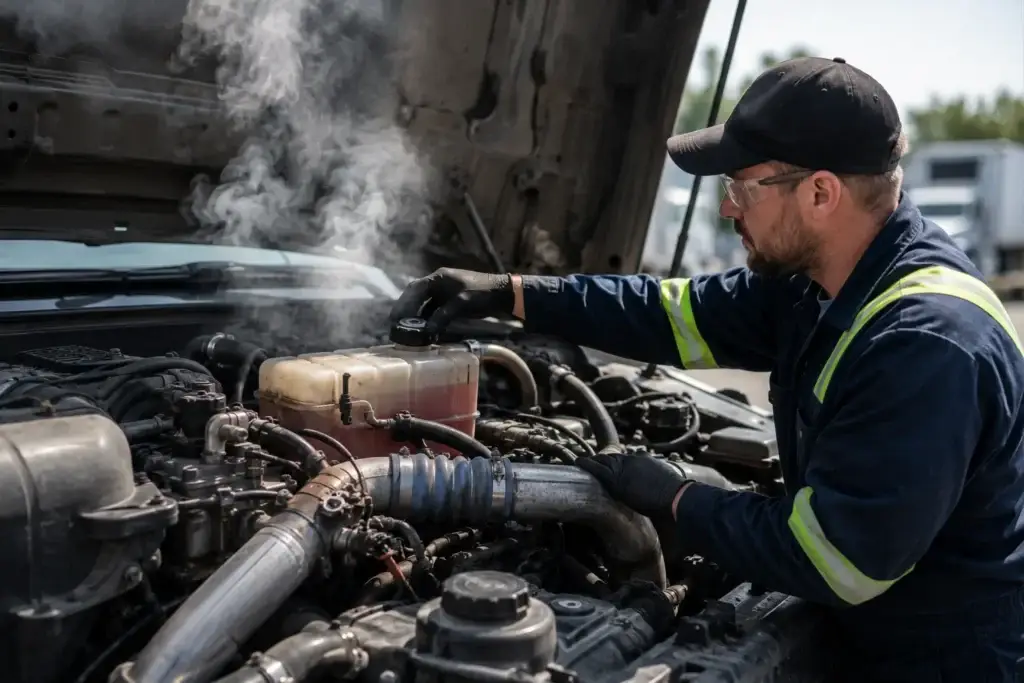
Early detection of overheating symptoms can save thousands in diesel engine repair costs. Your engine provides multiple warning signs when temperatures climb into dangerous territory. The most obvious sign appears on your temperature gauge—when the needle moves into the red zone, immediate action is required.Watch for these critical overheating symptoms demanding immediate attention:- Steam or smoke rising from the engine compartment indicates coolant boiling or leaking onto hot components
- Sudden loss of power during acceleration occurs when the engine computer reduces performance to prevent damage
- Unusual knocking or banging noises signal internal components experiencing thermal stress
- Burning smells come from overheated gaskets, hoses, or other rubber components degrading
- Coolant level dropping rapidly suggests leaks or coolant boiling off due to excessive temperatures
- White exhaust smoke may indicate coolant entering the combustion chamber through a blown head gasket
Common Diesel Engine Overheating Causes
Identifying the root cause of overheating requires understanding four distinct failure categories. These diesel engine overheating causes range from simple fluid issues to complex mechanical breakdowns. Technicians who recognize these patterns diagnose problems faster and implement lasting solutions.Coolant System Failures
Coolant leaks represent the most frequent cause of diesel engine overheating problems across all applications. When engine components expand from excessive heat, gaskets lose their sealing capability, allowing coolant to escape from various connection points throughout the engine bay.Low coolant levels introduce air into the cooling system, which drastically reduces cooling efficiency. Air pockets prevent proper circulation and diminish heat transfer capacity because air conducts heat far less effectively than liquid coolant. Coolant-related issues are consistently identified as the leading cause of diesel engine overheating incidents in commercial vehicles, a pattern reflected in the Technology & Maintenance Council's recommended practices for coolant maintenance.Airflow Restriction Problems
Blocked radiators prevent heat dissipation even when coolant circulates properly. External debris like leaves, dirt, and insects accumulate between radiator fins over time. This buildup creates an insulating barrier that traps heat and prevents effective transfer to surrounding air.Cooling fan failures cause rapid temperature increases, particularly during low-speed operation or stationary idling. Electrical problems commonly disable electric fans, leaving the radiator without forced airflow when needed most. Missing or damaged fan shrouds redirect airflow away from the radiator core, reducing cooling efficiency by up to 30%.Mechanical Component Failures
Thermostat malfunctions prevent engines from regulating temperature correctly. A stuck-closed thermostat blocks coolant flow to the radiator completely, causing rapid overheating. Water pump failures stop coolant circulation throughout the engine block and cylinder head entirely.| Component | Failure Symptom | Temperature Impact | Diagnosis Method |
|---|---|---|---|
| Thermostat | Stuck closed position | Rapid overheating | Temperature cycling test |
| Water Pump | No coolant circulation | Gradual temperature rise | Visual leak inspection |
| Radiator Cap | Pressure loss | Early coolant boiling | Pressure testing tool |
| Fan Clutch | No engagement at high temps | Overheating at idle | Spin resistance check |
External Load Factors
Heavy towing and steep grades push cooling systems beyond their design capacity. The engine produces maximum power for extended periods, generating intense heat loads. Even properly functioning cooling systems struggle under extreme conditions, particularly when combined with high ambient temperatures exceeding 95°F.Prolonged idling creates unique overheating challenges for diesel engines. The engine generates substantial heat without adequate airflow through the radiator. Natural convection cannot match the cooling provided by vehicle movement at highway speeds, making fan operation critical during stationary periods.Initial Diagnostic Steps for Cooling System Troubleshooting
Before diving into complex diesel engine repair procedures, conducting preliminary assessments often reveals the root cause. These initial steps establish a baseline understanding of your engine's condition and help identify obvious problems without expensive diagnostic equipment. For a broader diagnostic framework that applies beyond just cooling issues, see our complete guide to diesel engine diagnostics.External Component Examination
Start your diagnostic process by conducting a thorough visual inspection of all external cooling system components. This examination should occur when the engine is completely cold to ensure safety and accuracy. Walk around the vehicle and look carefully at the ground beneath the engine bay for coolant puddles or wet spots indicating active leaks.Check each component systematically using this comprehensive checklist:- Coolant puddles under the vehicle indicate active leaks requiring immediate attention
- Hose condition assessment reveals cracks, soft spots, bulges, or brittleness
- Belt integrity verification ensures proper tension without fraying or glazing
- Radiator damage inspection identifies bent fins, punctures, or debris blocking airflow
- Fan operation confirmation checks that the cooling fan spins freely
- Gasket areas examination searches for white residue or steam marks
Confirming Gauge Accuracy
Your engine temperature gauge provides vital information, but faulty instrumentation can lead to incorrect diagnosis. Use an infrared thermometer to measure surface temperatures at multiple engine locations. Point the device at the upper radiator hose, thermostat housing, and cylinder head to collect baseline readings and compare with dashboard readings.Evaluating Coolant Status
Checking coolant level and condition provides essential diagnostic information. This assessment must occur when the engine is completely cold to avoid burns from pressurized hot coolant. Never remove radiator caps from hot engines, as escaping steam can cause serious injuries.| Coolant Appearance | Indication | Likely Problem |
|---|---|---|
| Clear and proper color | Normal condition | No contamination present |
| Rusty or brown | Corrosion contamination | Internal rust from old coolant |
| Milky or foamy | Oil contamination | Head gasket or oil cooler failure |
| Oily film on surface | Petroleum presence | Compromised engine seals |
Coolant System Inspection and Testing
Beyond basic inspection, comprehensive coolant system diagnostics uncover issues before they cause catastrophic engine damage. Professional technicians use specialized equipment to evaluate system integrity, revealing pressure losses, chemical imbalances, and contamination that visual inspections cannot detect.Detecting External and Internal Leakage
Finding coolant leaks requires a systematic approach covering both visible and hidden failure points. Pressurize the system using a pressure tester and watch for pressure drops over a 15-minute period. A pressure loss of more than 2 PSI indicates a leak somewhere requiring investigation.UV dye provides an effective solution for finding elusive leaks. Add fluorescent dye to the coolant, run the engine through several heat cycles, then use a blacklight to scan all components. The dye glows brightly at leak locations, making even tiny seepage visible.Measuring Antifreeze Protection and Chemical Balance
Proper coolant concentration protects against freezing while preventing corrosion. The ideal antifreeze-to-water ratio sits at 50/50 for most diesel applications, providing freeze protection down to -34°F while maintaining excellent heat transfer properties.pH testing reveals the coolant's ability to prevent corrosion. ASTM D6210 specifications for heavy-duty coolants recommend maintaining pH levels between 7.5 and 11.0, with heavy-duty diesel coolants typically targeting 8.3 to 10.0 for optimal protection. Values below 8.0 indicate acidic conditions accelerating metal corrosion.Get Cooling System Diagnostics in Your Inbox
Practical maintenance techniques, diagnostic strategies, and fleet management insights — delivered weekly by Heavy Duty Journal.
Radiator Problems and Solutions
Between external debris and internal deposits, radiators face constant challenges that compromise your diesel engine cooling system. These heat exchangers must maintain optimal performance to prevent overheating, but various factors work against them daily.External Blockage and Debris Buildup
Dirt, leaves, bugs, and mud accumulate on radiator fins over time, creating an insulating barrier that blocks airflow. Agricultural and construction equipment face particularly severe buildup due to dusty operating environments. Always work from the engine side outward when cleaning to push debris away from the core.Internal Clogging and Scale Deposits
Inside the radiator core, mineral deposits and corrosion products gradually restrict coolant passages. Scale formation occurs when coolant breaks down or becomes contaminated with hard water minerals. Chemical flushing procedures restore internal cleanliness when performed according to manufacturer instructions.Radiator Cap Failure Symptoms
The radiator cap maintains system pressure, which raises coolant boiling point and prevents vapor formation. A cap rated at 15 PSI increases boiling point by approximately 45°F above atmospheric pressure. Failed caps lose their ability to hold pressure due to worn seals or weakened springs, causing coolant overflow without actual overheating.Thermostat and Water Pump Troubleshooting
When coolant circulation fails in a diesel engine, the thermostat and water pump are typically primary suspects. These components work as partners—the thermostat controls when coolant flows and the water pump maintains that flow. Understanding proper thermostat testing and water pump diagnosis becomes essential for effective repair.Verifying Thermostat Function
The thermostat acts as a temperature-controlled valve opening at a specific temperature, typically between 180 and 195 degrees Fahrenheit. Bench testing provides the most reliable verification method—remove the thermostat and submerge it in heated water with a thermometer, observing valve movement.A properly functioning thermostat begins opening at its rated temperature and fully opens within 10-15 degrees above that point. Thermostats fail in two distinct ways: stuck closed causes rapid overheating, while stuck open allows constant coolant flow preventing proper warm-up.Identifying Pump Circulation Problems
The water pump circulates coolant throughout the engine block, cylinder head, and radiator. Several clear indicators point to water pump failure:- Coolant leaks from the weep hole designed to show internal seal failure
- Bearing noise including growling, squealing, or grinding sounds
- Visible shaft play with wobbling detected when moving the pulley by hand
- Cavitation sounds creating high-pitched whining indicating bubble formation
Cooling Fan and Airflow System Diagnosis
When airflow restriction problems occur, diesel engines overheat rapidly even with a fully functional radiator. The cooling fan pulls air through the radiator core to dissipate heat, especially during idle conditions or heavy loads at low speeds.Mechanical Fan Clutch Testing
The thermostatic fan clutch engages based on temperature using a temperature-sensitive bimetallic spring or viscous fluid. Begin testing with a spin resistance check when the engine is warm—an engaged clutch should provide noticeable resistance and not freewheel more than one or two rotations.Electric Fan Motor and Relay Problems
Modern diesel engines frequently use electric fan motors operating independently of engine speed. Test the motor directly by applying power from the battery using jumper wires. A motor that fails to operate with direct power requires replacement. Check relay function using a multimeter or jumper wire bypass method.| Fan System Type | Activation Method | Common Failure Modes |
|---|---|---|
| Mechanical Fan Clutch | Thermostatic/viscous coupling | Fluid loss, bearing wear, spring failure |
| Electric Fan Motor | Temperature sensor/ECM control | Motor burnout, relay failure, sensor malfunction |
| Hydraulic Fan Drive | Engine oil pressure activation | Solenoid failure, pressure loss, valve stuck |
Head Gasket and Engine Block Issues
Head gasket failure and engine block damage represent the most serious consequences of engine overheating damage. These structural problems often require expensive repairs or complete engine replacement. Diesel engines face particular vulnerability due to their high compression ratios.Recognizing Head Gasket Damage
Multiple warning signs indicate head gasket failure. White exhaust smoke represents one of the most visible symptoms, occurring when coolant burns inside combustion chambers. Bubbles appearing in the coolant reservoir signal combustion gases entering the cooling system. Oil contamination creates a milky appearance indicating coolant has mixed with lubricant.Testing for Combustion Gas Contamination
Chemical testing provides reliable confirmation of combustion gases in the cooling system. Test fluid changes color when exposed to combustion byproducts in the coolant. Technicians place test fluid in a special tool positioned over the radiator opening while the engine runs and draws vapors through. A color change from blue to yellow confirms head gasket failure or cylinder head cracks.Pressure testing offers another diagnostic method for detecting combustion leaks. A gauge adapter connects to the cooling system, and technicians monitor pressure readings with the engine running. Rapid pressure buildup beyond normal cooling system pressure indicates combustion gases entering the coolant passages requiring immediate attention.Cylinder Head Warping and Crack Formation
Aluminum cylinder heads show particular susceptibility to warping when subjected to extreme temperatures. The metal expands unevenly during overheating, creating permanent distortion even after cooling. This warpage prevents proper gasket sealing and leads to repeated head gasket failure.Professional measurement uses precision straightedges and feeler gauges to detect warpage. Most diesel engines specify maximum warpage tolerances between 0.003 and 0.005 inches. Measurements exceeding these limits require cylinder head resurfacing or replacement depending on how much material removal the head can tolerate.Common crack locations include areas between valve seats where metal thickness is minimal. Cracks also form from combustion chambers to water passages, allowing coolant to enter cylinders. Magnaflux testing uses magnetic particles for ferrous metals, while dye penetrant testing works for aluminum heads by highlighting cracks under UV light.The HDJ Perspective
The 40% failure statistic Cummins reports isn't just a number—it represents millions of dollars in preventable repairs and downtime across the commercial trucking industry annually. What separates successful fleet operations from those constantly fighting cooling system failures typically comes down to one factor: systematic preventive maintenance. As Michael Nielsen, Heavy Duty Journal's Editor & Publisher, has seen across fleets achieving 500,000+ mile engine life cycles, the common thread is that they treat cooling system care as a scheduled discipline rather than reactive repair.
Preventive Maintenance for Cooling Systems
Your diesel engine's cooling system demands consistent attention to avoid costly failures. A well-maintained diesel engine cooling system can extend engine service life by 30-50% compared to neglected systems. Proactive preventive maintenance prevents unexpected breakdowns and reduces repair expenses significantly.Regular Coolant Flush Intervals
Different coolant types require specific replacement schedules. Conventional green coolant needs replacement every 2-3 years or 30,000 miles. Extended-life coolants meeting ASTM D6210 specifications last 5 years or 150,000 miles with proper maintenance.Heavy-duty diesel coolants with Supplemental Coolant Additives require more frequent testing but provide longer service life. These specialized formulations protect wet-sleeve engines from cavitation damage. Test strips verify additive concentrations every 25,000 miles.Component Inspection Schedule
A tiered maintenance calendar catches problems before they cause overheating. Federal Motor Carrier Safety Regulations under 49 CFR 396 require systematic inspection, repair, and maintenance of all commercial motor vehicles, including cooling system components.| Interval | Inspection Tasks | Key Components |
|---|---|---|
| Daily | Temperature gauge monitoring, visual coolant check | Gauge readings, expansion tank |
| Weekly | Belt tension, hose condition, leak detection | Drive belts, radiator hoses |
| Monthly | Pressure cap testing, coolant condition | Radiator cap, coolant appearance |
| Annually | Complete flush, pump inspection, radiator service | All cooling system components |
Using Correct Coolant Specifications
Following manufacturer recommendations ensures optimal cooling system protection. Never substitute automotive coolant in heavy-duty diesel applications. Heavy-duty formulations contain higher concentrations of corrosion inhibitors needed for diesel operating temperatures and provide protection against cavitation erosion in wet-sleeve engines.Supplemental Coolant Additives play a vital role in older engines, particularly Detroit Diesel models with wet cylinder liners. These additives form protective films on metal surfaces that prevent cavitation damage. Test SCA concentration with chemical test strips according to manufacturer specifications at every preventive maintenance interval.Compatibility issues arise when mixing different coolant types. Green conventional coolant should never mix with orange extended-life formulations. Chemical reactions between different inhibitor packages reduce protection levels and can create gel-like deposits that clog passages. Always drain and flush completely when changing coolant types to prevent these problems.Seasonal Preparation Tips
Summer operation demands maximum cooling system capacity for high-temperature conditions. Verify the system holds adequate pressure without leaks before hot weather arrives. Test cooling fan operation at various temperature ranges and clean radiator exteriors thoroughly to maximize airflow.Winter preparation prevents freeze damage and ensures cold-weather starting. Test freeze protection levels in autumn before first frost arrives—most diesel engines require protection to at least -20°F in northern climates. Inspect block heater operation and connections, as a working block heater reduces cold-start wear and improves fuel economy.Free Professional Fleet Tools
Cost calculators, fault code lookup, maintenance planners, and more—built for owner-operators, fleet managers, and diesel techs. No signup required.
Frequently Asked Questions
What causes diesel engine overheating most frequently?
Coolant leaks are the most frequent cause, followed by blocked radiators, thermostat malfunctions, and water pump failures. Low coolant levels introduce air into the system, drastically reducing cooling efficiency because air conducts heat far less effectively than liquid coolant. External factors like heavy towing, steep grades, and high ambient temperatures can push even properly functioning cooling systems beyond their design capacity, especially on extended climbs or in extreme heat. Prolonged idling adds another layer of risk, since the engine generates substantial heat without the airflow that highway speeds normally provide, making fan operation and radiator condition especially critical during stationary periods.
What is the normal operating temperature range for diesel engines?
Most diesel engines maintain optimal performance between 160°F and 195°F (71°C to 90°C). This range represents the sweet spot where the engine runs efficiently while components remain protected from thermal stress. Understanding your specific engine's baseline temperature helps identify when readings deviate from normal and require investigation. Temperature fluctuations that swing wildly between hot and cold typically indicate thermostat failure or air pockets in the cooling system. Ambient temperature, load conditions, and engine design all influence exactly where a given engine sits within this range, so it's worth knowing your specific truck's typical baseline rather than relying on generic assumptions.
How often should cooling system coolant be flushed?
Conventional green coolant requires replacement every 2-3 years or 30,000 miles, whichever comes first. Extended-life coolants meeting ASTM D6210 specifications last 5 years or 150,000 miles with proper maintenance. Heavy-duty diesel coolants with Supplemental Coolant Additives require testing every 25,000 miles using test strips to verify additive concentrations remain within specification, particularly in older wet-sleeve engine designs. Skipping these intervals doesn't just risk overheating — degraded coolant loses its corrosion-inhibiting properties well before it visibly changes color, so relying on appearance alone to judge coolant condition is a common and costly mistake.
What symptoms indicate a failing head gasket in a diesel engine?
Key symptoms include white exhaust smoke from coolant burning in combustion chambers, bubbles in the coolant reservoir from combustion gases entering the cooling system, milky or foamy engine oil from coolant contamination, and rapid coolant consumption without visible external leaks. Diesel engines face particular vulnerability due to their high compression ratios—the intense pressures combined with overheating can cause cylinder heads to lift slightly, compromising the gasket seal. Once any of these symptoms appear, continuing to run the engine risks turning a gasket replacement into a full cylinder head repair, so prompt diagnosis matters more than waiting to see if the symptoms worsen.
Why does my diesel engine overheat at idle but not at highway speeds?
This pattern typically indicates a cooling fan problem—either a failed fan clutch that doesn't engage properly, a malfunctioning electric fan motor or relay, or a missing or damaged fan shroud. At highway speeds, ram air provides adequate cooling through the radiator. At idle or low speeds, the fan must actively pull air through the radiator core instead. A missing shroud can reduce cooling efficiency by 30% or more even with a fully functioning fan. This is exactly the kind of pattern that's easy to overlook during a quick test drive, since the truck can appear to run perfectly fine right up until it sits at a loading dock or in stop-and-go traffic.
Can I use plain water instead of coolant in my diesel engine?
No — never use plain water as a permanent cooling solution. Water lacks corrosion inhibitors essential for protecting internal engine components, and it provides no freeze protection in cold weather. Water also boils at a lower temperature than properly mixed coolant under pressure. Always use manufacturer-recommended coolant at a 50/50 mixture with distilled water. Heavy-duty diesel engines often require specific coolants with Supplemental Coolant Additives, particularly wet-sleeve engines that need cavitation protection. Even a short-term water top-off in an emergency should be treated as temporary and corrected with proper coolant at the earliest opportunity, since extended use accelerates internal corrosion.
What does milky or contaminated coolant indicate?
Milky coolant indicates oil contamination, typically from head gasket failure, a cracked cylinder head, or an oil cooler breach. Reddish-brown coolant suggests rust and corrosion from depleted additives or plain water use. Excessive bubbles or a rapid pressure increase indicates combustion gas contamination — another sign of head gasket failure. Each contamination type requires different corrective action. Never simply add fresh coolant to contaminated fluid, since this dilutes the problem without solving the underlying cause.
Protecting Your Fleet from Diesel Engine Overheating
A reliable diesel engine depends on a properly functioning cooling system. Understanding diesel engine overheating causes and applying systematic cooling system troubleshooting can save thousands in repair costs while extending equipment service life.The diagnostic methods and inspection procedures outlined in this guide provide a framework for identifying problems before they escalate. From checking coolant levels to testing thermostats and water pumps, each step plays a role in keeping your engine running at optimal temperatures. Preventive maintenance remains the most cost-effective approach—regular coolant flushes, component inspections, and timely replacement of wear items deliver significant returns through reduced downtime, lower repair expenses, and extended equipment lifespan.Help Fellow Fleet Professionals Stay Running Cool
Share this comprehensive guide with your network of fleet managers, technicians, and owner-operators who could benefit from these diagnostic techniques and prevention strategies.