
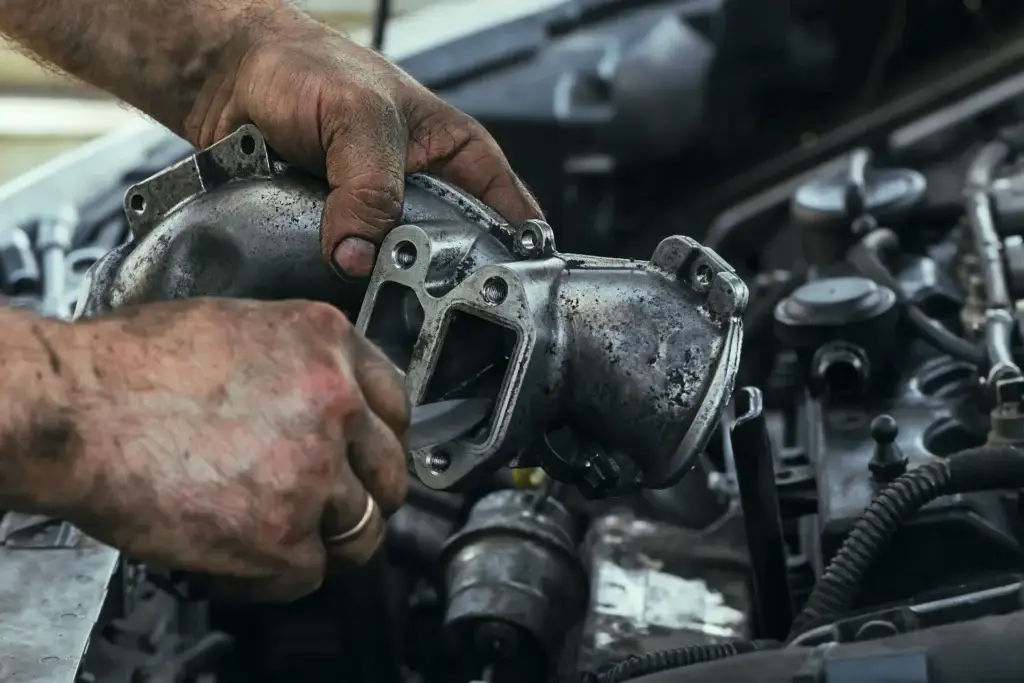
Diesel EGR valve problems rank among the most common emission system failures affecting heavy-duty trucks, causing check engine lights, reduced power, and costly downtime for fleet operations. The exhaust gas recirculation system plays a critical role in reducing harmful nitrogen oxide emissions while maintaining engine efficiency, but carbon buildup and mechanical wear cause these valves to fail between 50,000 and 100,000 miles under normal operating conditions.
When your diesel engine’s EGR valve malfunctions, symptoms appear quickly: rough idling, black exhaust smoke, reduced power during acceleration, and declining fuel economy. The valve recirculates precisely measured quantities of exhaust gas back into the intake system, lowering combustion temperatures by approximately 150°C to reduce NOx formation. Without proper function, your engine produces excessive emissions that violate environmental standards and compromise performance.
This guide examines the root causes of EGR valve deterioration, walks through systematic diagnostic procedures, and provides proven solutions for restoring your emission control system. Whether you’re a fleet manager responsible for maintaining multiple trucks or an owner-operator managing your own equipment, recognizing early warning signs and implementing proper maintenance strategies extends component life and reduces unexpected downtime.
Last Updated: December 2025
Key Takeaways
- Emissions Impact: EGR systems lower combustion temperatures by 150°C, reducing harmful NOx emissions by 40-60% in diesel engines
- Primary Failure Cause: Carbon buildup from soot accumulation accounts for most diesel EGR valve problems, typically requiring attention between 50,000-100,000 miles
- Diagnostic Approach: Effective diagnosis requires visual inspection, OBD-II scan tool analysis, and component testing to identify root causes before replacing parts
- Prevention Priority: Regular oil changes, premium diesel fuel, proper driving habits, and periodic inspections significantly extend EGR system longevity
- Repair Options: Many EGR valve issues can be resolved through cleaning rather than replacement, saving significant repair costs when addressed early
How the EGR System Works in Diesel Engines
The exhaust gas recirculation system serves as one of the most important emission control technologies in modern diesel vehicles. This system works by carefully redirecting a portion of exhaust gases back into the engine’s intake system, where they mix with fresh air before entering the combustion chamber.
The EGR valve sits between the exhaust manifold and the intake system, acting as a gatekeeper that determines how much exhaust gas flows back into the engine. This valve doesn’t maintain a fixed position but instead adjusts continuously based on signals from the engine control unit.
Valve Operation Throughout the Driving Cycle
During engine startup, the EGR valve remains completely closed. Cold engines require maximum oxygen content for efficient combustion and quick warming. As the engine reaches operating temperature and settles into idle, the valve begins opening gradually.
At idle and low-speed operation, the EGR valve can open up to 90 percent of its maximum position. This wide opening occurs because minimal power output is required, allowing for maximum exhaust gas recirculation without affecting performance. When acceleration demands increase and the driver requests full power, the valve closes progressively, eventually reaching a fully closed position during maximum acceleration.
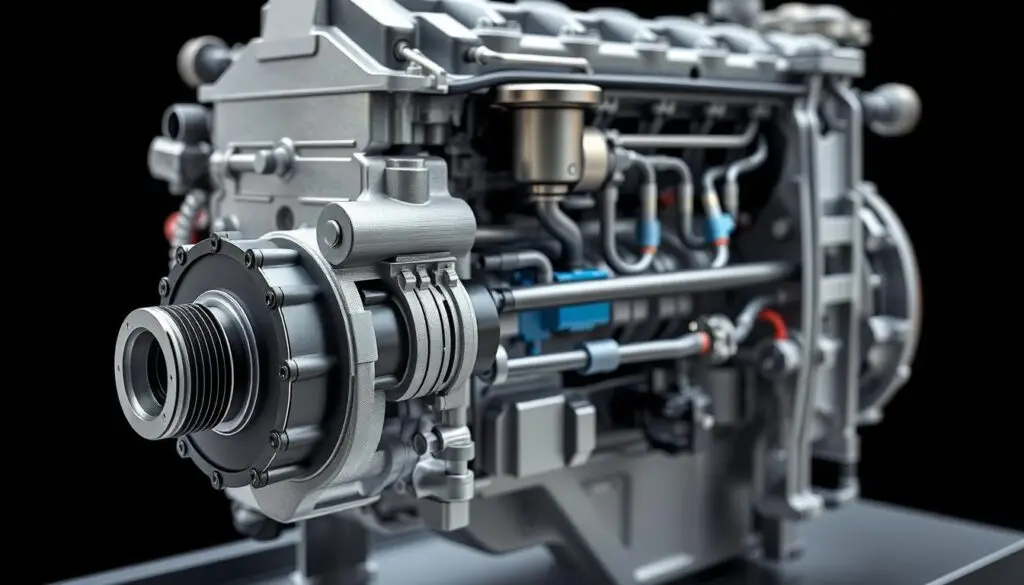
Modern diesel EGR systems use electronic controls to precisely regulate exhaust gas recirculation rates based on engine operating conditions.
Temperature Reduction and Emissions Control
The fundamental purpose of EGR valve emission control centers on reducing nitrogen oxide compounds. These harmful pollutants form when combustion temperatures exceed approximately 2500°F (1370°C). At these extreme temperatures, normally inert nitrogen molecules become reactive and combine with oxygen to create various nitrogen oxide compounds.
Exhaust gases contain substantially less oxygen than fresh air because much of the oxygen was already consumed during the previous combustion cycle. When these oxygen-depleted gases mix with incoming fresh air, the overall oxygen concentration in the combustion chamber decreases, producing a slower, cooler burning combustion process.
40-60%
NOx reduction achieved through proper EGR operation compared to engines without recirculation systems
Emissions testing requirements mandate that diesel vehicles maintain NOx output below specific thresholds. The EPA has progressively tightened heavy-duty diesel emissions standards since the 1970s, with current regulations requiring increasingly stringent NOx limits. A malfunctioning EGR system directly leads to test failures because nitrogen oxide levels quickly exceed allowable limits when the recirculation process doesn’t function properly.
Common Diesel EGR Valve Problems and Failure Modes
Diesel EGR systems operate in extremely harsh conditions, constantly exposed to hot exhaust gases filled with carbon particles and corrosive byproducts. This hostile environment creates multiple failure points that can compromise engine performance and emissions control.
Carbon Deposits and Soot Accumulation
Carbon buildup represents the single most common EGR valve problem affecting diesel engines. Diesel exhaust naturally contains significant amounts of carbon particles and soot, especially when engines have worn fuel injectors or experience incomplete combustion. These microscopic particles travel through the entire EGR system, gradually accumulating on every surface they contact.
The carbon doesn’t just collect in one location. It coats the valve body, settles on the valve seat, and clogs the valve stem mechanism. The connecting pipes and intake manifold passages also develop thick carbon deposits over time. Soot accumulation becomes particularly problematic when combined with oil vapor from the crankcase ventilation system, creating a thick, tar-like sludge that adheres tenaciously to metal surfaces.
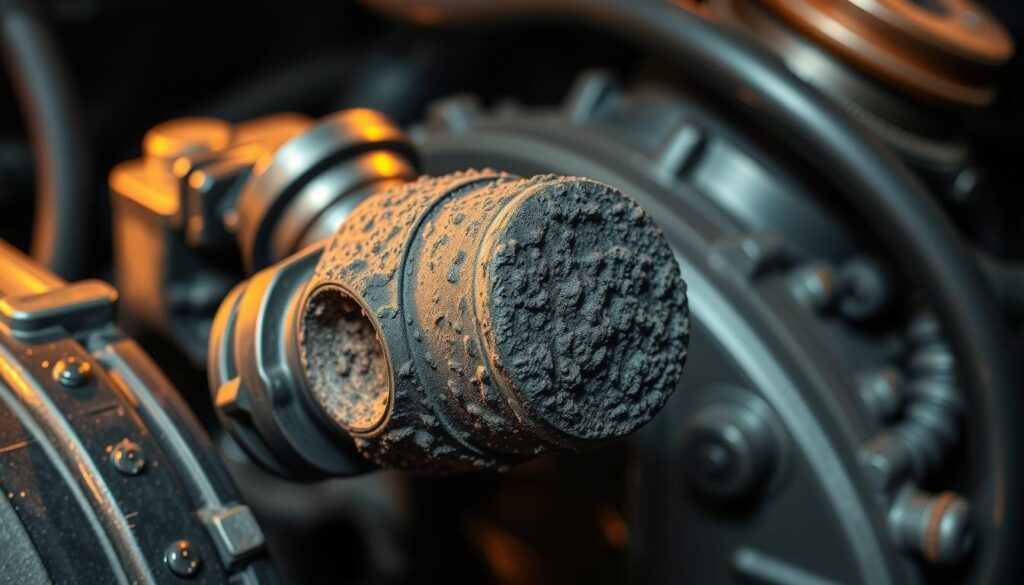
Severe carbon and soot accumulation restricts EGR valve movement and disrupts proper exhaust gas flow patterns.
Mechanical Wear and Valve Sticking
A stuck EGR valve creates immediate performance issues. Carbon accumulation causes the valve mechanism to stick in either the fully open or fully closed position. Sometimes the valve moves sluggishly between positions, unable to respond quickly to control commands.
The mechanical components inside the valve wear down from constant use and exposure to extreme temperatures. Valve stems develop grooves and rough spots that increase friction. The valve seat may warp or develop pits that prevent proper sealing. Vacuum-operated EGR valves face an additional failure point through diaphragm ruptures, where the thin rubber diaphragm that controls valve movement can tear or develop holes.
Electronic Control System Failures
Modern diesel engines use sophisticated electronic controls for EGR operation. Position sensor failures rank among the most common electrical problems affecting these systems. The position sensor mounted on the valve tells the engine control unit exactly how far the valve has opened. When this sensor malfunctions, the computer loses its ability to verify valve position.
Digital EGR valves incorporate stepper motors or solenoids controlled by pulse-width modulated signals from the engine computer. These electronic actuators can fail internally, burning out windings or developing short circuits. Wiring harness corrosion presents another common issue, with connectors and wires near the EGR valve enduring constant heat cycling and exposure to engine bay contaminants.
EGR Cooler Problems
Diesel engines equipped with cooled exhaust gas recirculation systems face additional failure points. EGR coolers reduce exhaust gas temperature before it enters the intake manifold, but internal leaks can develop when the passages separating hot exhaust gases from engine coolant crack or corrode.
These leaks allow coolant to enter the intake system, where it gets drawn into the combustion chambers. The result is white exhaust smoke, coolant loss without visible external leaks, and potential engine damage from coolant contamination of the oil. Carbon buildup affects EGR coolers just as it impacts valves, with exhaust gas passages inside the cooler gradually clogging with soot and carbon deposits.
| Problem Type | Primary Cause | Typical Timeline |
|---|---|---|
| Carbon Buildup | Soot and oil vapor accumulation | 50,000-100,000 miles |
| Stuck Valve | Mechanical wear and carbon deposits | 75,000-150,000 miles |
| Sensor Malfunction | Electronic component failure | 60,000-120,000 miles |
| Cooler Leaks | Thermal stress and corrosion | 80,000-150,000 miles |
Recognizing EGR Valve Failure Symptoms
Understanding the warning signs of EGR valve failure can save diesel vehicle owners from costly repairs and prevent further engine damage. Modern diesel engines provide multiple indicators when the exhaust gas recirculation system experiences problems.
Dashboard Warnings and Diagnostic Codes
The most obvious sign of a faulty EGR valve is the check engine light appearing on your dashboard. Modern vehicles are equipped with sophisticated sensors that continuously monitor the emissions system for irregularities. When the engine control unit detects EGR flow that doesn’t match commanded values, it illuminates the malfunction indicator lamp and stores specific codes in memory.
Common diagnostic trouble codes related to EGR valve failure symptoms include P0400 (EGR flow malfunction), P0401 (insufficient flow), P0402 (excessive flow), and P0403 (circuit malfunction). The P0400-series codes provide valuable information about the nature of the problem, helping narrow diagnosis to specific failure modes.
Engine Performance Issues
A rough idle often indicates a stuck-open EGR valve that continuously introduces exhaust gas into the intake manifold. During idle conditions, the valve should remain closed to allow maximum oxygen availability for combustion. When it fails in the open position, exhaust gas excessively dilutes the air-fuel mixture, causing unstable combustion patterns.
This dilution creates noticeable problems including erratic RPM fluctuations, hesitation during acceleration, and potential stalling when coming to a stop. Drivers experiencing EGR valve problems often notice reduced power during acceleration as the engine struggles to compensate for the oxygen-depleted intake charge.
Fuel Economy and Exhaust Symptoms
Drivers experiencing EGR valve problems often notice declining fuel economy. A malfunctioning valve causes the engine to compensate for improper EGR operation by adjusting fuel delivery strategies, directly impacting fuel consumption during normal operation. Vehicle owners typically notice a measurable decrease in miles per gallon, sometimes dropping by 10-20% depending on the severity of the malfunction.
Black smoke from the exhaust provides visible confirmation of combustion problems related to EGR valve failure. This dark smoke indicates incomplete combustion, typically associated with a stuck-open valve that excessively dilutes the intake charge. Without sufficient oxygen, the diesel fuel cannot burn completely, producing carbon particles that exit through the tailpipe.
Stay Current on Diesel Diagnostics
Get weekly insights on emission system troubleshooting, maintenance best practices, and regulatory updates delivered directly to your inbox.
Diagnosing EGR Valve Issues
When your diesel engine shows signs of EGR trouble, proper diagnostic techniques help pinpoint the exact problem before expensive repairs. Accurate diagnosis combines visual inspection, electronic scanning, and component testing to identify mechanical, electrical, and carbon-related issues.
Visual Inspection Procedures
The visual inspection process begins with safely accessing the valve and examining its physical condition. This hands-on assessment often reveals obvious problems like severe carbon buildup, cracked components, or disconnected lines. Before starting any inspection, ensure the engine is completely cool to avoid burns from hot components.
Finding the EGR valve location depends on your specific diesel engine design. Most diesel engines position the valve on or near the intake manifold, connected to the exhaust system through a metal tube or integrated passage. The component appears as a cylindrical or oval metal housing roughly the size of a softball, with electrical connectors or vacuum lines attached to the top.
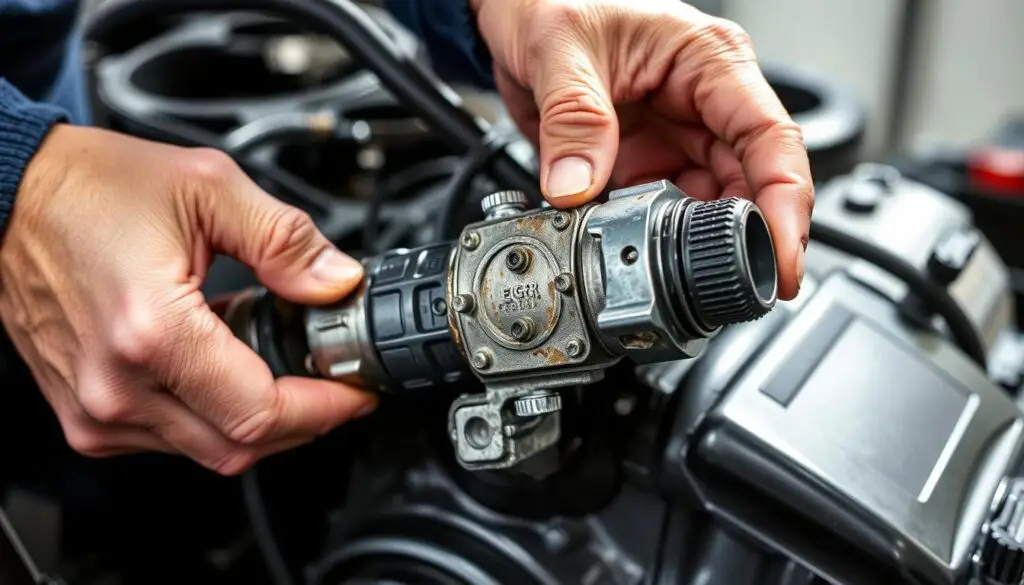
Systematic visual inspection combined with diagnostic scan tools provides comprehensive EGR system assessment.
Examine the exterior housing for excessive carbon accumulation around sealing surfaces. A small amount of dark residue is normal, but thick, crusty deposits indicate significant buildup affecting valve operation. Use a flashlight to inspect the EGR intake passage leading into the intake manifold, as heavy carbon blockage in this passage restricts exhaust gas flow even if the valve itself functions correctly.
Using OBD-II Scanners for Diagnosis
Electronic diagnostics provide precise information about EGR problems through stored fault codes. An OBD-II scanner connects to your vehicle’s diagnostic port, typically located under the dashboard near the steering column. Professional-grade scanners offer live data viewing that shows real-time EGR valve position and commanded position, helping identify intermittent problems that don’t always trigger stored codes.
Understanding code patterns helps prioritize diagnostic steps. Flow-related codes (P0400-P0402) suggest starting with physical inspection and cleaning. Circuit codes (P0403-P0409) indicate electrical testing should come first. Many diesel engines display multiple codes simultaneously, but addressing the root cause typically clears all related codes.
Component Testing Procedures
Manual testing reveals mechanical problems that electronic diagnostics might not detect. On accessible valve designs, you can manually move the valve stem to check for binding or excessive resistance. A properly functioning valve moves smoothly without excessive force and returns to its resting position when released.
For vacuum-operated valves, connect a handheld vacuum pump to the valve’s vacuum port and apply 15 to 20 inches of vacuum while watching the valve stem. The valve should open smoothly and hold vacuum without dropping for at least 30 seconds. For electronically-controlled valves, use a multimeter to test position sensor operation and solenoid resistance, comparing measured values against manufacturer specifications.
| Component Type | Normal Resistance | Voltage Range |
|---|---|---|
| Vacuum Solenoid | 20-80 ohms | 12V battery power |
| Electronic Actuator | 10-50 ohms | 5-12V PWM signal |
| Position Sensor | 500-5000 ohms | 0.5-4.5V reference |
Repair Solutions for EGR Valve Failure
Effective solutions for EGR valve failure range from simple cleaning procedures to complete component replacement. The right repair method depends on the severity of carbon buildup, the extent of mechanical damage, and the overall condition of related components.
Cleaning the EGR Valve
Regular cleaning can extend the life of your EGR valve and prevent more serious problems. This maintenance procedure removes carbon deposits that restrict valve movement and disrupt exhaust gas flow. Effective cleaning requires gathering proper tools including socket sets, wire brushes, and dedicated EGR cleaning solutions or carburetor cleaners.
Begin by removing the valve with the engine completely cool. Disconnect the electrical connector and any vacuum lines, taking photos for reference during reassembly. Submerge the valve body in cleaning solution for 15 to 30 minutes, then use brass or soft wire brushes to scrub away loosened carbon deposits. Pay special attention to the valve seat where the pintle closes against the valve body, as this surface must be smooth and clean for proper sealing.
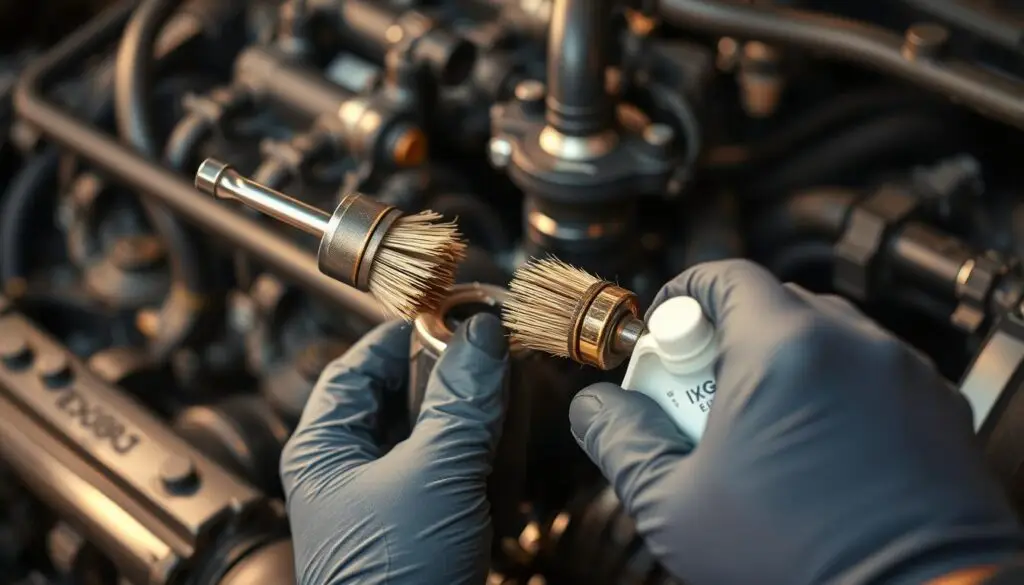
Professional cleaning removes carbon buildup using specialized solutions and brass brushes without damaging valve components.
Reinstallation requires using a new gasket every time. Torque mounting bolts to manufacturer specifications using a crisscross pattern to distribute clamping force evenly. After reconnecting electrical connectors and vacuum lines, start the engine and test valve operation.
EGR Valve Replacement
Complete valve replacement becomes necessary when cleaning fails to restore proper function. Severely corroded valves, damaged electronic components, or worn mechanical parts require new components for reliable operation.
When selecting replacement parts, consider both OEM and quality aftermarket options. OEM parts guarantee exact fitment and meet original specifications, typically backed by comprehensive warranties. Quality aftermarket valves from reputable manufacturers like Dorman, Standard Motor Products, or ACDelco offer significant cost savings while providing reliable performance. DieselNet provides comprehensive information on heavy-duty diesel emission standards that help technicians understand the performance requirements these components must meet.
Verify that the new valve matches your old valve’s configuration exactly before installation. Check the electrical connector type, mounting bolt pattern, and vacuum port locations. Clean all gasket surfaces thoroughly before installing the new valve, removing any old material or debris that could prevent proper sealing.
Intake Manifold and Cooler Service
Simply replacing or cleaning the EGR valve doesn’t address carbon deposits accumulated throughout the intake system. These deposits restrict airflow and can cause the new or cleaned valve to fail prematurely. For moderate carbon buildup, spray intake system cleaner into passages while the manifold remains installed. Severe accumulation requires intake manifold removal for thorough cleaning.
EGR cooler problems require different repair approaches than valve issues. Cracked or leaking coolers cannot be repaired and must be replaced completely. Signs of cooler failure include white exhaust smoke, coolant loss without visible leaks, and overheating issues. When replacing coolers, always use fresh gaskets on all sealing surfaces and refill the cooling system with the correct coolant type specified for your engine.
The HDJ Perspective
As emission regulations continue tightening under EPA Phase 3 standards taking effect for model years 2027 and beyond, properly functioning EGR systems become even more critical for fleet compliance. The trend toward lower NOx limits means technicians must master EGR diagnostics and preventive maintenance to keep heavy-duty trucks operating within regulatory thresholds. Fleets that invest in proactive EGR system care today will face fewer compliance headaches and lower total cost of ownership as emission enforcement intensifies.
Preventing Future EGR Valve Problems
Prevention stands as the most powerful weapon against EGR valve failure, saving diesel owners thousands of dollars in repair costs over their vehicle’s lifetime. The key to preventing carbon buildup lies in combining regular maintenance with smart operating practices.
Establishing a Maintenance Schedule
Creating and following a diesel maintenance schedule represents the foundation of EGR system care. Regular oil changes using the correct specification oil prevent the deposit formation that clogs EGR valves and passages. Modern diesel engines with EGR systems require low-ash oils specifically formulated to minimize carbon accumulation.
Diesel engines typically need oil changes every 5,000-7,500 miles depending on operating conditions, with severe service conditions requiring more frequent intervals. The Technology & Maintenance Council (TMC) provides industry-standard recommended practices for heavy-duty diesel maintenance intervals that help fleet managers optimize service schedules.
Your maintenance schedule should include air filter replacement to prevent dust ingestion that increases particulate emissions, fuel filter changes to stop contamination from reaching injectors, and periodic coolant system service for engines equipped with EGR coolers.
Fuel Quality and Additives
Fuel quality directly impacts how quickly carbon deposits accumulate in your EGR system. Purchasing diesel from high-volume stations ensures fresh fuel with minimal water contamination. Premium diesel formulations contain detergents and cetane improvers that promote cleaner combustion and reduce deposit formation.
Quality diesel fuel additives provide an additional layer of protection. Select additives specifically formulated for diesel EGR systems rather than generic products, following manufacturer-recommended dosing ratios. Consistency matters more than frequency when using additives for long-term prevention.
Driving Habits That Protect the EGR System
Diesel engines perform best with regular sustained operation at normal operating temperature rather than frequent cold starts and short trips. Short-trip driving prevents the engine from reaching temperatures high enough to burn off carbon deposits naturally. EPA regulations for heavy-duty vehicle emissions continue evolving, making proper EGR function increasingly important for compliance.
Proper driving habits include allowing 2-3 minutes warm-up before driving in cold weather, avoiding excessive idling, and periodically driving on highways for 20-30 minutes. This sustained high-temperature operation naturally burns off carbon deposits before they harden. Avoid lugging the engine at low RPM under heavy load, which creates incomplete combustion and excessive soot production.
Share Your EGR Diagnostic Expertise
Have hands-on experience troubleshooting diesel emission systems? Join Heavy Duty Journal as a guest author and help fellow technicians solve complex diagnostic challenges.
Frequently Asked Questions
What are the most common signs of diesel EGR valve problems?
The most common symptoms include check engine light illumination with P0400-series diagnostic codes, rough or unstable idling, noticeable power loss during acceleration, increased fuel consumption, and black smoke from the exhaust. You may also experience hesitation during acceleration or stalling, particularly if the valve is stuck in the open position. These symptoms often develop gradually as carbon deposits accumulate, though sudden failures can occur with electrical component malfunctions.
How often should I clean or replace my diesel EGR valve?
Under normal operating conditions with proper maintenance, EGR valves typically last between 50,000 and 100,000 miles before requiring attention. Vehicles operated primarily in short-trip, low-temperature conditions or with poor fuel quality may require service as early as 30,000-50,000 miles. Periodic inspection during routine maintenance allows you to identify carbon buildup early, enabling preventive cleaning before the valve fails completely. Once severe mechanical wear or electrical component failure occurs, complete replacement becomes necessary.
Can I clean my EGR valve myself, or do I need a professional?
Many diesel vehicle owners with basic mechanical skills can successfully clean their EGR valves using common tools including socket sets, wire brushes, and dedicated cleaning solutions. The procedure involves safely removing the valve, soaking it in cleaner, scrubbing away deposits with brass brushes, and reinstalling with a new gasket. However, if you’re uncomfortable working on your vehicle, lack proper tools, or encounter a heavily carboned valve that doesn’t respond to cleaning, professional diesel technicians have specialized equipment and expertise to perform thorough service or determine if replacement is necessary.
What’s the difference between high-pressure and low-pressure EGR systems?
High-pressure EGR systems divert exhaust gases before the diesel particulate filter, recirculating hot, soot-laden exhaust directly back into the intake. These systems operate under high differential pressure and experience rapid carbon accumulation but respond quickly to engine control commands. Low-pressure systems recirculate exhaust after it passes through the DPF and exhaust treatment systems, resulting in cleaner exhaust with less particulate matter being recirculated. This reduces carbon buildup but requires larger valves and piping due to lower pressure differential.
Why does my diesel EGR valve keep getting clogged with carbon?
Carbon buildup occurs due to the nature of diesel combustion, which produces significant particulate matter and soot. Several factors accelerate accumulation: poor fuel quality with high sulfur content increases particulate emissions; infrequent oil changes allow oil vapor to mix with exhaust gas creating sticky sludge; short-trip driving prevents the engine from reaching optimal temperature where deposits would burn off; and worn fuel injectors cause incomplete combustion producing excessive soot. Even with perfect maintenance, carbon accumulation is inevitable, though proper care significantly extends the interval between required service.
Addressing Diesel EGR Valve Problems for Long-Term Reliability
A faulty EGR valve can cause reduced fuel efficiency, engine performance issues, and emissions compliance problems in diesel engines. Following the diagnostic and repair steps outlined in this guide ensures optimal operation, leading to better performance, improved fuel economy, and regulatory compliance.
Understanding diesel EGR valve problems and their symptoms protects your investment in heavy-duty equipment. The EGR system operates under harsh conditions where carbon buildup and component wear happen naturally over time, but recognizing early warning signs prevents minor issues from becoming expensive repairs that sideline your vehicle.
Vehicle owners lacking technical expertise or proper tools should consult qualified diesel technicians for professional diagnosis and repair. Expert service prevents additional damage and ensures safety during repairs. Knowledge about EGR operation, failure modes, and repair options empowers you to make informed decisions that maintain your diesel vehicle in optimal condition for reliable, efficient, and environmentally responsible operation.
Share This EGR Diagnostic Guide
Help fellow fleet managers and diesel technicians solve EGR valve problems faster. Share this comprehensive troubleshooting resource with your professional network.