
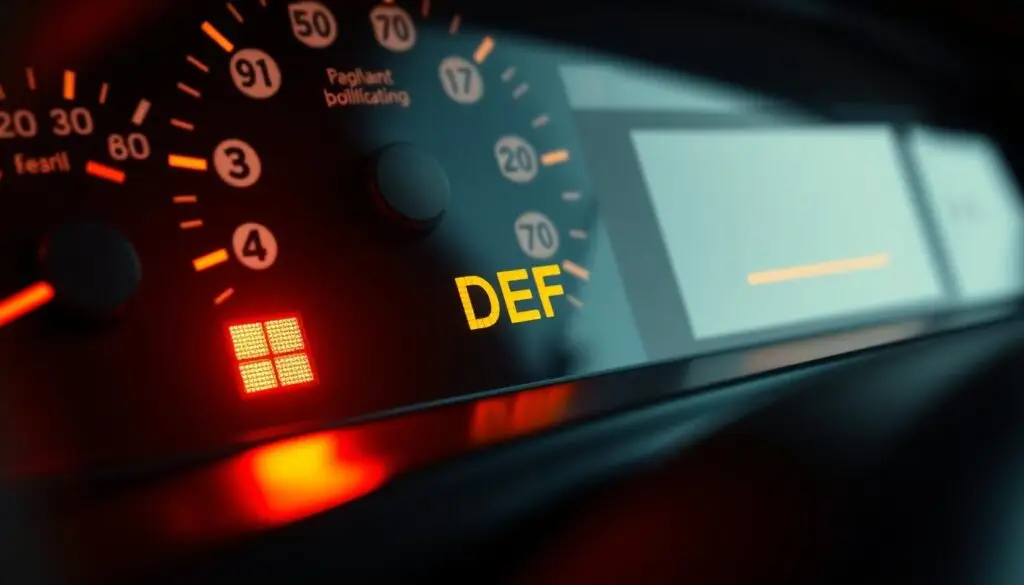
When a DEF warning light illuminates on your dashboard, it signals a critical issue that demands immediate attention from fleet managers and diesel technicians alike. This warning indicator communicates vital information about your emission control system’s health and requires prompt action to prevent serious operational consequences. Modern diesel engines equipped with Selective Catalytic Reduction technology depend on diesel exhaust fluid to meet stringent EPA environmental standards and maintain optimal performance.
The DEF warning light system operates on a progressive scale designed to give drivers multiple opportunities to address problems before they escalate. Amber lights signal early warnings when fluid levels drop below approximately 10 percent capacity. Red lights indicate critical situations requiring immediate refilling. Flashing warnings combined with reduced vehicle speed mean the system has entered enforcement mode to ensure emissions compliance.
Last Updated: December 2024
Key Takeaways
- Warning progression matters: DEF alerts escalate from amber courtesy warnings to red critical alerts, with each stage carrying specific operational consequences including speed limitations.
- Speed restrictions are automatic: Ignoring warnings triggers progressive speed restrictions of 55 mph, then 5 mph after engine restart when the tank empties completely.
- Most issues are preventable: Regular DEF level checks and using quality fluid that meets ISO 22241 standards prevents the majority of system problems.
- Contamination causes expensive damage: Using improper fluids or allowing dirt into the system damages sensors, injectors, and pumps requiring repairs costing hundreds to thousands of dollars.
- Cold weather requires preparation: DEF freezes at 12°F, making heater element maintenance critical for reliable winter operation in northern climates.
Understanding DEF Systems and How They Trigger Warning Lights
Every diesel truck owner should understand the fundamental technology that keeps their vehicle compliant with emission standards. The diesel emission system has evolved significantly over the past decade to meet strict environmental regulations. Modern diesel engines incorporate advanced Selective Catalytic Reduction technology to reduce harmful pollutants before they exit the exhaust pipe.
What Is Diesel Exhaust Fluid
Diesel exhaust fluid is a carefully engineered solution consisting of precisely 32.5 percent high-purity urea and 67.5 percent deionized water. This exact ratio is scientifically determined for optimal nitrogen oxide reduction performance in SCR catalysts. The solution must meet ISO 22241 international standards to ensure proper operation.
Many people mistakenly believe DEF is a fuel additive. In reality, it operates as an emission treatment fluid stored in a completely separate tank from diesel fuel. The two systems never mix during normal operation, and combining them causes severe system damage. In European markets, you might see this product labeled as AdBlue, which functions identically to DEF.
How SCR Technology Reduces Emissions
The DEF system operates alongside your engine’s combustion process to reduce harmful emissions. As your diesel engine runs, it produces exhaust gases containing nitrogen oxides that must be neutralized before entering the atmosphere. The SCR technology transforms these harmful compounds into harmless nitrogen gas and water vapor.
Your vehicle’s onboard computer continuously monitors engine operation and exhaust conditions through multiple sensors. Based on these readings, it calculates the precise amount of DEF needed for optimal emission reduction. The system then injects fluid into the exhaust stream at the optimal moment and temperature.
DEF consumption typically ranges from two to three percent of your diesel fuel usage. If you burn 100 gallons of diesel, you’ll use approximately two to three gallons of DEF. This ratio varies based on driving conditions, engine load, ambient temperature, and how aggressively you operate the vehicle.
Key Components That Affect DEF Warning Lights
A complete DEF system includes multiple interconnected components working together seamlessly. Understanding these components helps you identify potential problem areas during troubleshooting when warning lights appear.
| Component | Primary Function | Common Issues |
|---|---|---|
| DEF Tank | Stores fluid supply with capacity monitoring | Sensor failures, cap seal leaks, crystallization |
| Pump Module | Pressurizes and delivers DEF to injector | Motor failure, line blockages, electrical faults |
| DEF Injector | Sprays measured fluid into exhaust stream | Clogging, crystallization, poor atomization |
| Quality Sensor | Monitors fluid concentration and purity | Contamination detection, sensor drift, calibration |
The sending unit sits inside the tank and houses critical sensors including the level sensor that tracks remaining DEF quantity. The quality sensor verifies that the fluid meets required concentration standards and alerts the system to contamination issues. Heated supply lines connect the tank to the injector assembly throughout the vehicle’s undercarriage, preventing DEF from freezing in cold climates.
Complete Guide to DEF Warning Light Colors and Meanings
Your dashboard’s DEF warning lights serve as your vehicle’s communication system, telling you exactly when attention is needed. These indicators use a progressive alert mechanism that gives you multiple chances to address problems before they escalate into serious operational restrictions.
Amber DEF Warning Light: Early Alert Stage
The amber or yellow DEF warning light represents your first notification that attention is needed soon. This solid light typically illuminates when your DEF tank drops below approximately 10 percent capacity. For most vehicles, this translates to roughly 2.5 gallons remaining in the tank.
At this stage, you have adequate time to refill your DEF tank without immediate consequences or operational limitations. Most drivers can continue operating their vehicles normally for several days or hundreds of miles after this warning appears. The amber light serves as a courtesy warning, similar to a fuel gauge approaching empty.
Different vehicle manufacturers display this warning in slightly different ways based on their instrument cluster design. Some use a dedicated DEF symbol showing a liquid droplet or fuel pump icon with distinctive coloring. Others integrate a digital message that reads “DEF Low” or “Diesel Exhaust Fluid Low.”
Red DEF Warning Light: Critical Action Required
The red DEF warning light signals a critical situation requiring immediate attention and action. This warning activates when DEF levels drop to critically low levels or when the system detects contaminated or incorrect fluid in the tank. Unlike the amber warning, the red light carries immediate operational consequences.
A flashing DEF warning light indicates your tank is nearly empty or contains improper fluid that the quality sensor rejected. At this point, the vehicle’s computer implements the first level of speed limitation. Most manufacturers restrict maximum vehicle speed to 55 miles per hour when this warning appears, regardless of driver input.
If you continue driving without addressing the issue, the warnings escalate further. A flashing DEF lamp combined with a red stop lamp indicates a completely empty tank or system failure. At this critical stage, vehicle speed becomes limited to just five miles per hour after the next engine restart, essentially immobilizing the vehicle.
| Warning Level | Visual Indicator | Speed Limitation | Action Required |
|---|---|---|---|
| Early Warning | Solid amber DEF light | No limitation | Refill within several days |
| Low Level | Flashing amber DEF light | 55 mph maximum | Refill immediately |
| Critical Empty | Flashing DEF plus red stop lamp | 5 mph after restart | Cannot drive until refilled |
| System Malfunction | Check engine light plus DEF warning | Varies by issue | Professional diagnosis needed |
Check Engine Light Codes Related to DEF Systems
The Malfunction Indicator Lamp, commonly called the check engine light, illuminates for DEF system malfunctions beyond simple low fluid levels. This warning indicates the onboard diagnostic system detected an emissions-related problem requiring technician attention.
Common DEF-related diagnostic trouble codes include P203F for reductant level too low, P20EE for SCR catalyst efficiency below threshold, P204F for system performance problems, and P20B9 for reductant pressure too low. Reading these codes requires an OBD-II scanner compatible with heavy-duty diesel systems.
Stay Current on Diesel Emission Standards
DEF system regulations and best practices continue evolving. Get expert technical updates, maintenance insights, and compliance guidance delivered to your inbox weekly.
Common Causes of DEF System Problems and Warning Lights
Understanding the most frequent DEF system problems helps drivers identify issues before they escalate into costly repairs. Several factors contribute to malfunctions that affect daily operations, ranging from fluid quality issues to mechanical component failures and environmental factors.
Contaminated or Expired Diesel Exhaust Fluid
DEF quality problems represent one of the most common causes of system warnings and malfunctions. The fluid has a limited shelf life that varies significantly based on storage conditions. When stored properly at moderate temperatures between 15 and 75 degrees Fahrenheit, DEF remains effective for approximately one year from manufacture.
Cool, consistent storage temperatures can extend shelf life to two years under ideal conditions. However, exposure to extreme heat, direct sunlight, or temperature fluctuations degrades the fluid more quickly. Expired DEF loses its effectiveness at reducing nitrogen oxide emissions and triggers quality sensor alerts.
Using any fluid other than proper DEF causes immediate system problems. Adding water, antifreeze, or diesel fuel to the DEF tank triggers severe component damage requiring expensive repairs. The system cannot function with incorrect fluids under any circumstances.
Frozen DEF Issues in Cold Climates
Cold weather presents unique challenges for DEF systems in northern regions. The fluid freezes at 12 degrees Fahrenheit, making this a significant concern for winter operations. Modern DEF systems include heater elements and heated supply lines designed specifically for cold weather, but heater failures can occur.
Extended parking in freezing temperatures causes DEF to solidify in the tank and supply lines. The system typically thaws during engine warm-up through integrated heating elements. However, severe cold may delay this process significantly, affecting vehicle startability.
Freezing and thawing does not damage DEF quality when it occurs in a properly sealed container. The fluid separates during freezing but remixes completely when thawed. However, repeated freeze-thaw cycles can damage system components like pumps, injectors, and sensors through thermal stress.
Sensor Malfunctions and Component Failures
Level sensors monitor fluid quantity and alert drivers when refilling becomes necessary. These sensors use float mechanisms or ultrasonic measurement technology to determine tank contents accurately. When they malfunction, drivers receive inaccurate information about DEF levels.
Crystallized DEF buildup on sensor components interferes with movement or signal transmission over time. Electrical connection corrosion disrupts sensor communication with the vehicle computer. Physical damage from road debris or improper tank installation affects sensor accuracy.
Quality sensor failures trigger warning lights unnecessarily even when proper fluid is present. The system may initiate engine derate even with correct fluid in the tank. Visual inspection cannot determine if DEF concentration meets specifications, making these failures particularly challenging to diagnose without equipment.
DEF Injector and Pump System Failures
Beyond fluid quality and sensor problems, the physical delivery system contains multiple components vulnerable to failure. The mechanical and electrical parts responsible for moving diesel exhaust fluid experience unique wear patterns and malfunctions that require attention.
DEF Injector Crystallization Problems
The DEF injector sits directly in the hot exhaust system and sprays fluid into the exhaust stream. This location exposes it to temperatures exceeding 500 degrees Fahrenheit during normal operation. When DEF dries on injector components, it forms hard crystalline deposits that gradually restrict the spray pattern.
Short trips that don’t allow the system to reach full operating temperature contribute to buildup. Infrequent vehicle use allows DEF to dry inside the injector between operating cycles. Symptoms include rough engine idling, white crystalline deposits visible near the injector location, and lower than expected DEF consumption rates.
Pump Module and Supply Line Problems
The pump assembly draws diesel exhaust fluid from the tank and pressurizes it for delivery to the injector. Electrical problems include burned-out motors, damaged wiring harnesses, or failed control modules. Mechanical failures involve seized pump mechanisms from crystallization or worn internal seals.
Supply line blockages develop when crystallization occurs inside the lines during vehicle operation. Leaks present immediate concerns requiring prompt attention. Physical damage from road debris, corrosion from DEF exposure, failed compression fittings, or frost damage all create leak pathways that affect system operation.
90%
Nitrogen oxide emission reduction achieved by properly functioning SCR systems according to EPA heavy-duty emissions standards
How to Diagnose DEF Warning Light Problems
Diagnosing DEF system problems requires a systematic approach combining modern scanning tools with hands-on inspection techniques. Understanding what triggers the warning starts with gathering accurate information about the specific cause.
Reading Diagnostic Trouble Codes
The first step involves using an OBD-II scanner to read fault codes stored in your vehicle’s computer. Modern diesel vehicles continuously monitor the DEF system and log specific diagnostic trouble codes when problems occur. These codes provide valuable clues about which component or system area is malfunctioning.
Locate the OBD-II port in your vehicle, typically found under the dashboard near the steering column. Turn the ignition to the “on” position without starting the engine for initial communication. Navigate through the scanner menu to access the diagnostic trouble codes section.
Remember that multiple codes may appear for a single underlying problem. The vehicle’s computer detects various symptoms of the same failure, generating several related codes simultaneously. Focus on the primary or most specific code to guide your diagnosis effectively.
Performing Visual System Inspections
A thorough visual inspection can identify many common DEF problems without specialized equipment. Start at the DEF tank and work through each component methodically. Check for physical damage, leaks around tank seams, corrosion on metal components, and damaged or cracked tank caps.
Pay special attention to electrical connections. Corrosion at sensor plugs frequently causes false readings that trigger warning lights unnecessarily. Disconnect electrical connectors carefully and inspect pins for green or white corrosion buildup. Look underneath the vehicle for DEF puddles or wet areas indicating active leaks.
Testing DEF Fluid Quality
DEF fluid quality directly impacts system performance and component longevity. A DEF refractometer provides the most accurate way to measure fluid concentration. Proper DEF should measure exactly 32.5 percent urea concentration. Values outside the 31.8 to 33.2 percent range indicate contaminated or improper fluid.
Visual inspection also reveals quality issues. Proper DEF appears as a clear, colorless liquid with a slight ammonia odor. Yellow, brown, or any tinted color indicates breakdown or contamination. Visible particles, sediment, or oily film suggests serious quality problems requiring tank draining.
The HDJ Perspective
The August 2025 EPA guidance on DEF system inducements represents a significant shift in how regulators view the balance between emissions compliance and operational practicality. While these systems remain mandatory, fleet managers should anticipate manufacturer software updates that extend response times before speed restrictions activate. This regulatory evolution acknowledges what the industry has long argued: overly aggressive derate strategies create safety hazards when vehicles suddenly lose power in traffic or at inopportune moments.
Solutions for DEF System Problems
Resolving DEF system issues requires following proven repair procedures that address the root cause while preventing future complications. Most problems have straightforward fixes when addressed promptly before they escalate. Understanding typical repair costs helps fleet managers budget appropriately.
Typical DEF Repair Costs
DEF refilling represents the most basic and affordable service. You’ll pay three to five dollars per gallon for DEF fluid at truck stops or auto parts stores. A complete tank refill ranges from 15 to 100 dollars depending on tank size. Tank cap replacement costs 20 to 60 dollars for the part itself, with minimal labor charges if needed.
Sensor replacements for level or quality monitoring typically run 150 to 400 dollars including parts and labor. Line repairs for leaks or blockages cost 200 to 600 dollars depending on accessibility. DEF injector replacement costs 400 to 1,200 dollars, while pump module replacement generally costs 600 to 2,000 dollars for complete service.
System flushing for contamination costs 300 to 800 dollars depending on severity and whether tank removal is necessary. Full diagnostic services typically cost 100 to 200 dollars using professional scan tools. Component failures often affect multiple parts simultaneously, so complete DEF system replacements can exceed 3,000 to 5,000 dollars on some vehicles.
Proper DEF Refilling Procedures
Correct refill procedures form the foundation of proper system operation and prevent contamination. Park on level ground to ensure accurate fluid level readings. Locate the DEF fill port, typically found near the diesel fuel filler with a distinctive blue cap. Clean around the cap before opening to prevent dirt from entering.
Use only dedicated DEF dispensing equipment—never reuse fuel containers or water jugs. Fill slowly to prevent splashing and allow air to escape. Stop before the tank is completely full, leaving approximately five percent space for expansion. DEF expands by approximately seven percent when it freezes.
Resetting DEF Warning Lights After Repairs
Modern vehicles typically reset DEF warning lights automatically once repairs are completed and the system verifies proper operation. This verification process usually requires several drive cycles as the computer monitors sensor readings. The automatic reset may take 15 to 30 minutes of driving under normal conditions.
For immediate reset after completing maintenance, you can use a diagnostic scanner to clear stored codes. Simply clearing codes without fixing the underlying problem will cause lights to return quickly. The system may also escalate to more severe warnings faster during subsequent failures.
Cleaning Crystallized DEF Components
For minor to moderate crystallization, warm water dissolution works effectively. Soaking crystallized components in warm distilled water dissolves urea deposits over several hours. Specialized DEF system cleaners provide faster, more thorough cleaning. Professional shops use ultrasonic equipment that vibrates deposits loose without damaging delicate components.
Severely crystallized or physically damaged injectors cannot be effectively cleaned and require replacement. When contamination has occurred throughout the system, the entire system may need flushing, including draining and cleaning the tank internals, replacing filters, and flushing all supply lines.
Share Your DEF System Expertise
Have you developed effective DEF system maintenance protocols or troubleshooting techniques? Share your knowledge with thousands of fleet professionals and diesel technicians.
Maintaining Your DEF System to Prevent Warning Lights
Building a solid maintenance routine eliminates most common problems before they start. Preventative care protects your investment and keeps your diesel vehicle running efficiently without unexpected breakdowns.
DEF Storage Guidelines and Shelf Life
Temperature control stands as the most critical factor in DEF storage. The ideal storage range falls between 15 and 80 degrees Fahrenheit for maximum shelf life. Higher temperatures significantly accelerate DEF degradation. Ultraviolet light exposure damages DEF’s chemical composition over time, so always store containers away from direct sunlight.
Use only high-density polyethylene plastic or stainless steel containers for DEF storage. Never use aluminum or carbon steel containers, as these metals react chemically with DEF. Purchase from reputable suppliers with high product turnover to ensure freshness.
Recommended Maintenance Schedule
Check your DEF level at every fuel stop without exception. This simple habit takes seconds but prevents running low, which triggers warning lights. Visual inspections during regular vehicle servicing catch problems early before they escalate.
Monitor your DEF consumption rate to identify problems before warning lights appear. Typical consumption equals two to three percent of diesel fuel consumption. Significant deviation from this ratio often indicates developing issues. Address any warning lights immediately rather than postponing action.
Cold Weather Preparation
Keep your DEF tank at least half full throughout winter months. Fuller tanks create more thermal mass that resists freezing longer. Verify that all system heaters function correctly before winter arrives through testing. Address any heater-related diagnostic codes immediately, as non-functioning heaters become critical failures when temperatures drop.
Park in heated spaces whenever possible during extreme cold spells. Even unheated garages provide temperature benefits compared to outdoor parking in wind and precipitation. Use engine block heaters that warm the entire engine compartment, including nearby DEF components. Plan for extended warm-up times of 30 to 40 minutes in extreme cold before expecting full system functionality.
Carry a small emergency supply of DEF in your vehicle’s heated cab during winter travel. This backup prevents getting stranded if your system develops an unexpected issue. Never apply external heat sources like torches or heat guns to frozen DEF components, as this damages plastic parts and creates safety hazards.
Avoiding DEF Contamination During Refilling
Contamination during refilling ranks among the most common causes of DEF system failures. Even microscopic particles or chemical traces cause sensor malfunctions and injector clogging. Use only dedicated DEF containers and dispensing equipment that have never contained other substances.
Clean the fill port area before opening the cap to prevent dirt entry into the tank. Wipe away dust, road grime, and debris from the cap and surrounding surfaces. Avoid refilling in dusty or dirty conditions when possible. Wind-blown dirt and construction dust easily contaminate fluid during transfer.
Inspect DEF visually before adding it to your tank. Proper DEF appears completely clear with no discoloration, cloudiness, or floating particles. Any visible contamination means the fluid should be discarded regardless of its source or claimed quality. Seal containers immediately after use to prevent evaporation and airborne contamination.
Frequently Asked Questions
What should I do immediately when my DEF warning light comes on?
When an amber DEF warning light appears, check your DEF level gauge as this typically indicates fluid is below 10 percent capacity. Plan to refill within the next several days or few hundred miles. If the warning light is red, this is a critical alert requiring immediate attention to avoid engine derate and speed limitations. After refilling with proper DEF meeting ISO 22241 standards, the warning light should reset automatically after the vehicle’s computer verifies adequate fluid level through several drive cycles.
Can I use water instead of DEF in an emergency?
No, you should never use water, diesel fuel, antifreeze, or any other fluid in place of proper diesel exhaust fluid. DEF is a precisely formulated solution of 32.5 percent urea and 67.5 percent deionized water. Using substitutes will immediately trigger quality sensor warnings and can cause thousands of dollars in damage to DEF system components including the pump, injector, and sensors. If you’ve accidentally added wrong fluid to your DEF tank, do not operate the vehicle and have the system professionally flushed immediately.
How much does DEF cost and where can I buy it?
DEF typically costs between three and five dollars per gallon depending on purchase location and quantity. It’s available at most truck stops, auto parts stores, many gas stations, and big-box retailers. Common brands include BlueDef, Peak BlueDEF, and manufacturer-specific products. Always verify the product is certified to ISO 22241 standards and check the manufacturing or expiration date. Truck stops with bulk DEF pumps often offer the lowest per-gallon price.
What happens if I completely run out of DEF while driving?
If you completely run out of DEF, your vehicle enters a progressive derate mode designed to ensure emissions compliance. Initially, you’ll receive warnings and may experience reduced engine power. Continuing without refilling limits maximum speed to 55 mph, then eventually to just 5 mph after the next engine restart. These limitations cannot be overridden and remain until you properly refill the DEF tank with fluid meeting ISO 22241 standards. After refilling, you may need several drive cycles or a diagnostic scanner to fully restore normal operation.
Is it normal for DEF to freeze, and will it damage my system?
Yes, DEF freezing is completely normal and will not damage fluid quality or system components when it occurs properly. DEF freezes at 12 degrees Fahrenheit. Modern DEF systems include integrated heater elements in the tank, pump module, and supply lines that thaw fluid during engine operation, typically within 30 to 40 minutes. Problems occur if heater elements fail or if you force system operation before DEF has thawed. To minimize freezing issues, keep your tank at least half full in winter and ensure all system heaters function properly before cold weather arrives.
Responding to DEF Warning Lights: Final Recommendations
Understanding your vehicle’s DEF warning light system and responding appropriately prevents costly repairs and operational disruptions. The progressive warning structure gives fleet managers and owner-operators multiple opportunities to address problems before speed limitations take effect. Regular monitoring of fluid levels, quality fluid selection meeting ISO 22241 standards, and prompt attention to any warning indicators keeps diesel vehicles compliant and operational.
Most DEF system problems stem from preventable issues like low fluid levels, contaminated DEF, or deferred maintenance. Building consistent checking habits, using quality fluid from reputable suppliers, and addressing warnings immediately rather than postponing action saves significant money compared to emergency repairs. Keep this guidance accessible for reference whenever warning lights appear on your dashboard.
Share This DEF Troubleshooting Guide
Help fellow fleet managers and diesel technicians prevent DEF system problems. Share this comprehensive troubleshooting guide with your professional network.