
By Michael Nielsen, Editor & Publisher | 15+ Years in Diesel Repair
Last Updated: December 2025
📖 Estimated reading time: 22 minutes
Recognizing blown head gasket diesel symptoms early can mean the difference between a manageable repair and catastrophic engine failure. This critical seal between the cylinder head and engine block withstands compression ratios of 17:1 to 25:1—far exceeding gasoline engines—while containing cylinder pressures that regularly exceed 2,000 psi. When this barrier fails, coolant contamination, overheating, and complete engine destruction follow quickly.
Fleet managers and owner-operators who understand these warning signs avoid costly breakdowns that can sideline equipment for weeks. White exhaust smoke, mysterious coolant loss, and milky oil residue all point toward head gasket compromise. This guide covers complete diagnostic procedures, repair processes, and prevention strategies specifically for heavy-duty diesel applications.
Key Takeaways
- Early detection saves thousands: Catching head gasket failure symptoms before coolant enters the crankcase prevents bearing damage and reduces repair costs by 40-60%.
- Compression is king: Diesel engines operate at 17:1 to 25:1 compression ratios, creating 2,000+ psi cylinder pressures that stress head gaskets far beyond gasoline applications.
- Multiple symptoms confirm diagnosis: White smoke, coolant loss without visible leaks, temperature fluctuations, and milky oil appearing together indicate head gasket failure.
- Proper torque prevents recurrence: Many “blown” gaskets actually result from stretched head bolts reducing clamping force—ARP studs eliminate this common failure point.
- Repair costs range from $2,500-$6,000: Labor accounts for 70-80% of total cost due to extensive disassembly requirements on commercial diesel engines.
- Prevention centers on cooling system maintenance: Regular coolant service, proper mixture ratios, and temperature monitoring extend head gasket life significantly.
Understanding Diesel Head Gasket Function and Failure
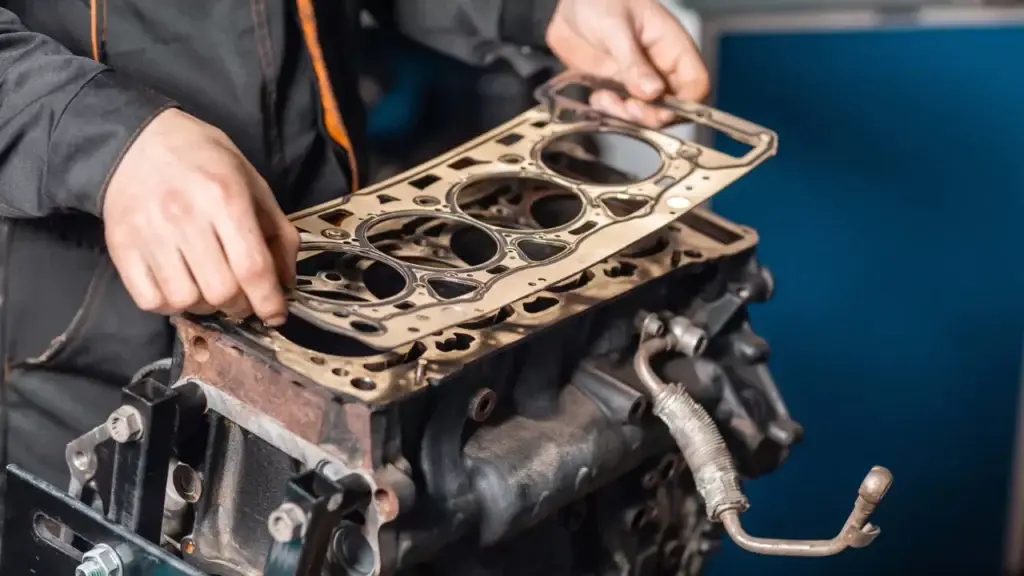
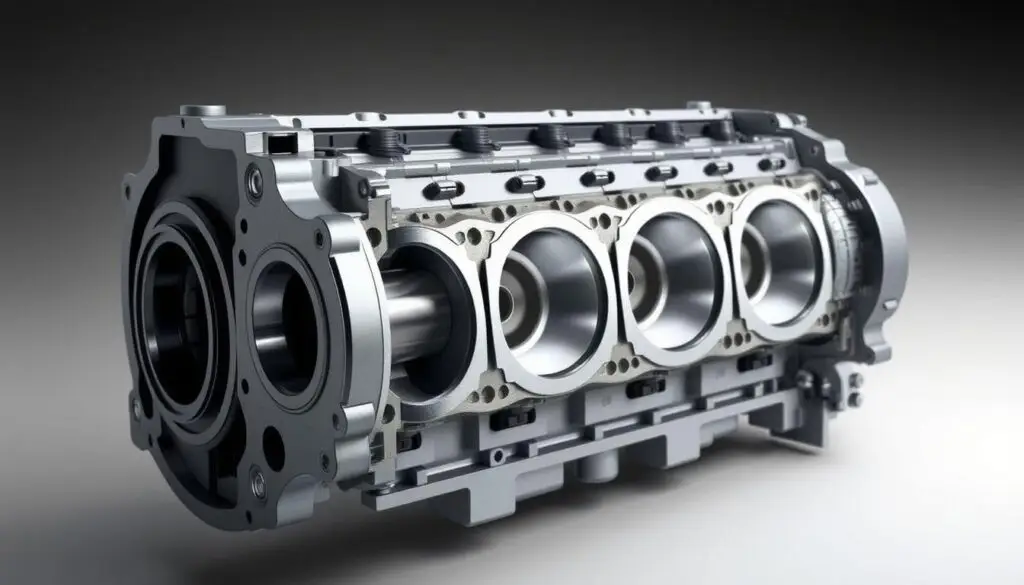
Every diesel engine relies on a precisely engineered head gasket to maintain combustion chamber sealing while separating coolant passages from oil galleries. This multi-layer component sits between the cylinder head and engine block, forming a barrier that must contain extreme pressures and temperatures throughout millions of combustion cycles.
Modern diesel head gaskets typically use multi-layer steel (MLS) construction featuring several thin steel layers with specialized coatings. These designs provide excellent heat resistance and durability under the demanding conditions found in engines like the Cummins ISX, Detroit Diesel DD15, PACCAR MX-13, Volvo D13, and Mack MP8. Each layer serves a specific purpose—fire rings concentrate clamping force around cylinder bores while elastomer coatings seal coolant passages.
Why Diesel Engines Stress Head Gaskets More Than Gasoline
Compression ignition fundamentally changes the demands placed on head gasket materials. Diesel engines compress air to ratios between 17:1 and 25:1, creating cylinder pressures that routinely exceed 2,000 psi during combustion. Gasoline engines typically operate at 9:1 to 11:1 compression with peak pressures around 800-1,200 psi.
Turbocharging compounds these stresses. Heavy-duty commercial diesels often run 25-40 psi of boost pressure, directly increasing cylinder pressure beyond naturally aspirated levels. Performance modifications that raise boost further can push head gaskets beyond their design limits, which is why trucks with aggressive tunes often experience premature gasket failures.
Thermal cycling presents another challenge unique to diesel applications. The engine block and cylinder head expand at different rates during warm-up and cool-down cycles. This differential movement creates shearing forces across the gasket surface that eventually compromise sealing integrity, particularly in engines that experience frequent cold starts followed by immediate heavy loading.
| Engine Type | Compression Ratio | Peak Cylinder Pressure | Primary Stress Factor |
|---|---|---|---|
| Gasoline Engine | 9:1 to 11:1 | 800-1,200 psi | Moderate thermal cycling |
| Naturally Aspirated Diesel | 17:1 to 20:1 | 1,500-1,800 psi | High compression loads |
| Turbocharged Diesel | 16:1 to 25:1 | 2,000-2,500 psi | Extreme pressure and heat |
| Heavy-Duty Commercial | 18:1 to 23:1 | 2,200-2,800 psi | Continuous high-load operation |
Recognizing Blown Head Gasket Diesel Symptoms
A failing head gasket produces distinctive warning signs that experienced operators learn to recognize. Early detection prevents minor seal breaches from escalating into complete engine failure. Most diesel engines display multiple symptoms simultaneously when head gasket integrity begins deteriorating.
White Smoke from the Exhaust
Persistent white smoke streaming from the exhaust after engine warm-up represents one of the most visible indicators of head gasket compromise. While all diesel engines produce some white vapor during cold starts, this normal condensation clears within minutes as operating temperature stabilizes. Continuous white smoke signals coolant entering the combustion chamber.
When coolant passes through a breached gasket into the cylinder, it vaporizes during combustion and exits as thick, billowing white clouds. This smoke often carries a sweet smell characteristic of antifreeze and becomes more pronounced under acceleration or heavy load. The exhaust may appear similar to steam but persists regardless of ambient temperature.
Coolant Loss Without Visible External Leaks
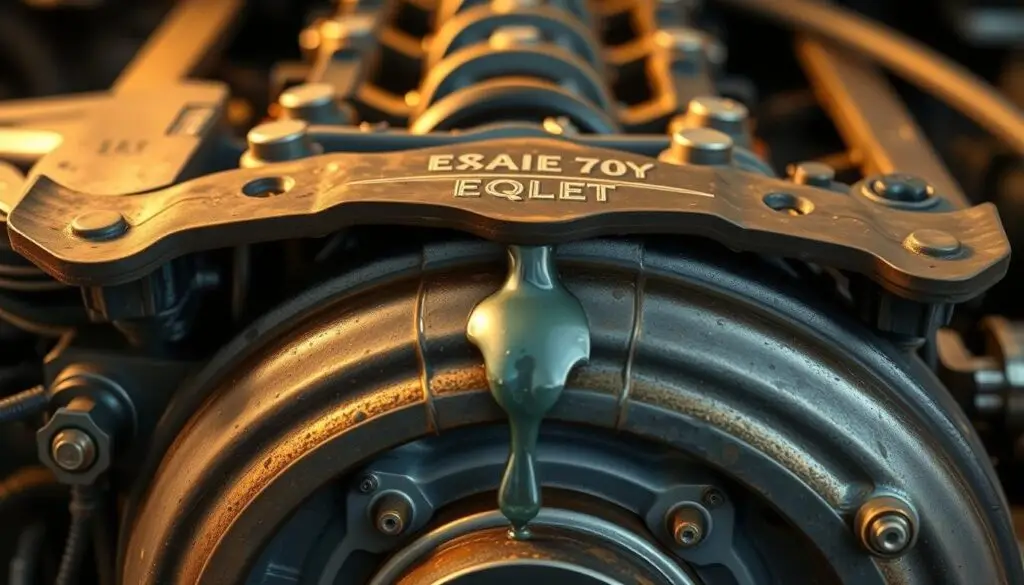
Mysteriously disappearing coolant from the overflow reservoir puzzles many operators who find no puddles beneath their equipment. This phenomenon occurs when coolant burns away in the combustion chamber or leaks internally into the crankcase—both scenarios indicating head gasket failure.
Regular coolant level checks reveal gradual decline despite no external drips or stains. The cooling system may require frequent topping off, sometimes weekly in severe cases. Fleet managers tracking coolant consumption across their vehicles can identify problematic units before complete failure occurs.
Engine Overheating and Temperature Fluctuations
Head gasket failure disrupts the cooling system’s ability to regulate engine temperature effectively. The temperature gauge begins showing erratic readings, swinging between normal and dangerously high levels during operation. These fluctuations occur because combustion gases entering the cooling passages create air pockets that impede coolant circulation.
Overheating episodes become more frequent and severe as gasket deterioration advances. The engine may run fine for periods then suddenly spike into the danger zone without apparent cause. You might hear gurgling sounds from the radiator or notice the heater blowing cold air intermittently even when the engine shows high temperatures.
⚠️ Safety Warning
Never remove a radiator cap from an overheated engine. The cooling system may be pressurized beyond normal levels due to combustion gas intrusion. Allow the engine to cool completely before inspection. Sudden pressure release can cause severe burns.
Milky Oil and Coolant Contamination
The appearance of milky, caramel-colored substance on your dipstick or under the oil filler cap provides unmistakable evidence of coolant entering the crankcase. This chocolate-milk appearance results from coolant mixing with engine oil through breached passages in the failed head gasket.
Coolant contamination represents one of the most damaging consequences of head gasket failure. The emulsified mixture lacks proper lubricating properties and accelerates bearing damage, scored cylinder walls, and internal wear. Even small amounts of coolant contamination warrant immediate attention before bearing surfaces are compromised.
Compression Loss and Reduced Power
Declining compression from escaping combustion gases creates noticeable performance problems. Hard starting, especially when cold, becomes increasingly common as compression ratios drop below optimal levels. The engine cranks longer before firing and may require multiple attempts to start.
Power output diminishes across the operating range as cylinder pressure escapes past the compromised gasket. You’ll notice reduced acceleration, difficulty maintaining highway speeds, and inability to pull loads that previously posed no challenge. Fuel economy typically worsens simultaneously as the engine compensates for lost efficiency.
What Causes Head Gasket Failure in Diesel Engines
Identifying root causes enables operators to implement effective prevention strategies. Understanding these failure mechanisms helps recognize warning signs before minor issues escalate into major repairs requiring weeks of downtime.
Overheating and Thermal Damage
Diesel engine overheating represents the most common cause of head gasket failure across all applications. When temperatures exceed normal operating ranges, the cylinder head expands at a different rate than the engine block. This differential thermal expansion compresses and distorts the head gasket beyond design limits.
Coolant system neglect frequently triggers overheating scenarios. Low coolant levels, deteriorated hoses, malfunctioning thermostats, or clogged radiators prevent adequate heat dissipation. Sustained high-load operation without proper cooling pushes temperatures into the danger zone, particularly in turbocharged applications where combustion heat already runs higher.
Improper Installation and Torque Specifications
Previous repair work often sets the stage for premature gasket failure when proper procedures aren’t followed. Incorrect torque sequences or improper bolt tightening creates uneven clamping pressure across the gasket surface—some areas experience excessive compression while others remain too loose to maintain effective seals.
Following manufacturer-specified torque sequences remains absolutely critical during installation. Under-torquing head bolts allows combustion gases to escape past the gasket, quickly burning through material. Over-torquing crushes the gasket excessively or stretches bolts beyond their elastic limit, preventing proper clamping force.
80%
of head gasket installation success depends on following correct torque sequence and specifications — Engine Rebuilding Standards Manual
Head Bolt Stretch and Clamping Force Loss
Many gasket failures actually result from fastener problems rather than gasket material failure. The Ford 6.0L Power Stroke gained notoriety for head gasket issues, but the underlying problem was head bolts stretching under load and reducing clamping force. Stock engines often failed between 70,000 and 150,000 miles, while performance-tuned trucks saw failures as early as 20,000-80,000 miles.
Torque-to-yield (TTY) bolts used in many diesel applications stretch permanently during initial installation. These fasteners cannot be safely reused—they lose their ability to provide correct clamping force after the first torque cycle. Ram Cummins and GMC Duramax diesels typically use six head bolts per cylinder, helping spread clamping force more evenly. The Duramax V8 employs 18 head bolts per cylinder bank, while Cummins inline sixes use 24 head bolts.
High Cylinder Pressure in Modified Engines
Modified or heavily loaded turbocharged diesel engines generate cylinder pressures exceeding original design specifications. Increased boost pressure directly translates to higher combustion pressure, overwhelming the head gasket’s sealing capacity. Factory head gaskets seal effectively at stock boost levels but struggle when operators increase turbocharger pressure for more power.
Commercial operators pushing engines beyond rated capacity face similar risks. Construction equipment running maximum loads continuously, or trucks hauling overweight payloads, subject head gaskets to sustained excessive cylinder pressure that accelerates wear and eventual failure.
Stay Ahead of Diesel Maintenance Challenges
Get weekly insights on diesel diagnostics, fleet maintenance strategies, and regulatory updates delivered to fleet managers and technicians who take equipment reliability seriously.
Diagnosing Diesel Head Gasket Failure
Accurate diagnosis combines several testing methods to confirm head gasket failure before committing to expensive repairs. Each technique reveals different aspects of gasket condition, creating a complete picture of engine health.
Visual Inspection Techniques
A thorough visual examination often reveals the first clues of head gasket failure. Inspect the cylinder head exterior where it meets the engine block, looking for coolant residue or oil film along the head-block joint. These wet spots or crusty deposits indicate fluids escaping from the gasket seal.
Check inside the coolant reservoir for oil droplets floating on the surface or a milky appearance indicating cross-contamination. Open the oil fill cap and examine the underside for creamy, tan-colored substance signaling coolant mixing with engine oil. Remove the radiator cap when cold and look for an oily film on the coolant surface.
Compression Testing Procedures
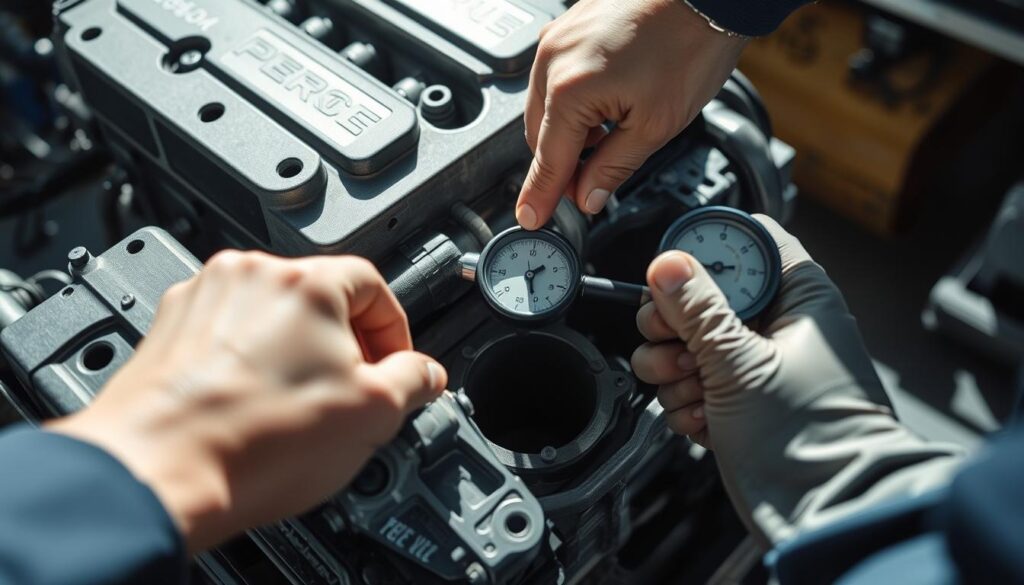
A diesel engine compression test measures sealing ability of each cylinder and reveals problems with the head gasket or other components. This procedure requires a diesel compression gauge rated for higher pressures than gasoline engine testers—typically reading up to 600 psi or more.
Remove all glow plugs or injectors to access each cylinder and disable the fuel system. Thread the compression gauge into the first cylinder and crank the engine for approximately five seconds. Record maximum pressure readings, which should typically fall between 350-500 psi for healthy diesel cylinders. Compare values between cylinders—a difference exceeding 10% suggests sealing problems. When adjacent cylinders both show low compression, this pattern strongly indicates head gasket failure between those cylinders.
Cylinder Leak-Down Testing
The cylinder leak-down test provides more detailed information than basic compression testing by showing exactly where air escapes from each cylinder. This diagnostic introduces compressed air into each cylinder while positioned at top dead center on the compression stroke.
Set up the leak-down tester and introduce air pressure (typically 100 psi) into the first cylinder after positioning the piston at TDC. The gauge displays what percentage of air pressure escapes, with readings below 10% considered excellent and above 20% indicating problems. Listen for where air escapes: bubbling in the cooling system or radiator indicates gasket failure between cylinder and coolant passages, while air hissing from an adjacent cylinder means the gasket has failed between combustion chambers.
Cooling System Pressure Testing
A cooling system pressure test determines whether combustion gases are entering the coolant or if coolant is leaking under pressure. This procedure uses a specialized pressure tester attaching to the radiator or coolant reservoir opening.
Start with a cold engine and fill the cooling system to proper level. Attach the pressure tester and pump to the system’s rated pressure, typically 15-18 psi as indicated on the radiator cap. Watch the gauge for several minutes to see if pressure drops, indicating a leak. Observe the coolant reservoir for bubbles rising to the surface, which shows combustion gases entering through a breached head gasket.
Chemical Block Testing
Chemical block test kits provide definitive proof of combustion gases in the coolant. These kits contain special blue or green fluid that changes color when exposed to exhaust gases. Remove the radiator cap from a cold engine and draw a sample of vapor from above the coolant using the test kit’s chamber. If combustion gases are present, the fluid changes to yellow or green within minutes—a positive result confirms head gasket failure.
The HDJ Perspective
In our experience working with fleet operators across the industry, we’ve seen a concerning trend: shops diagnosing head gasket failure based on single symptoms and proceeding directly to expensive repairs. The reality is that white smoke could indicate injector problems, coolant loss might stem from external leaks, and milky oil sometimes results from condensation in engines that don’t reach operating temperature. Combining multiple diagnostic methods—compression testing, leak-down analysis, and chemical block tests—before committing to repair prevents costly misdiagnosis. We’ve seen operations save thousands by confirming diagnosis before tearing into an engine that actually had a simple thermostat failure.
Advanced Diagnostic Methods
Advanced detection methods bring laboratory-grade precision to diesel head gasket diagnosis, eliminating guesswork from critical repair decisions. These sophisticated techniques prove especially valuable for high-value equipment where repair costs justify comprehensive testing.
Electronic Combustion Gas Detection
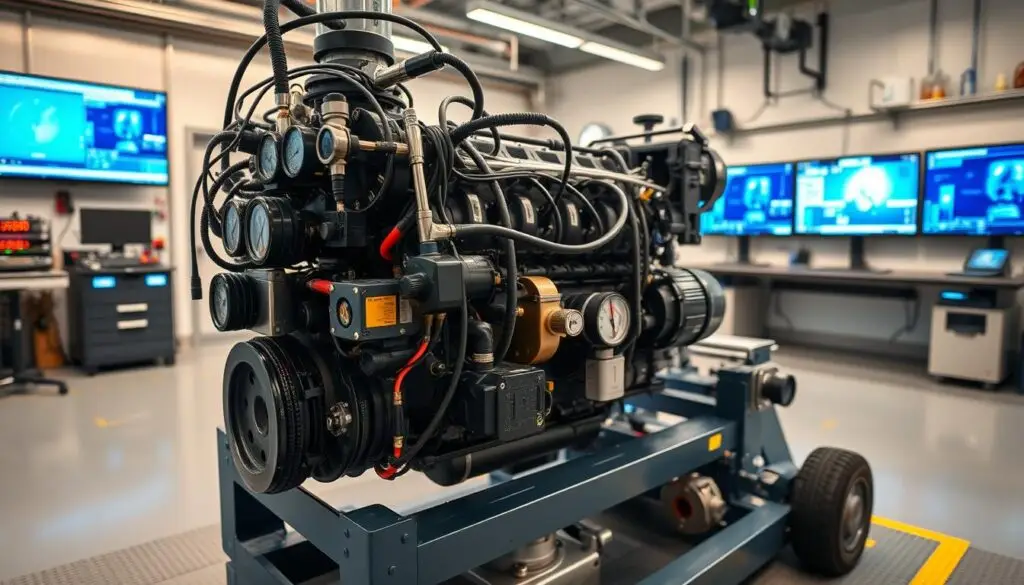
Professional-grade electronic analyzers use sensitive chemical sensors that detect hydrocarbon molecules in cooling system vapors. Even trace amounts of combustion gases in the coolant definitively indicate a breach between combustion chamber and coolant passages. This method catches problems before they cause severe damage, often detecting failures before white smoke or obvious coolant loss appears.
Extended Pressure Hold Testing
Extended pressure hold testing monitors cooling system pressure over 30-60 minutes or overnight rather than brief checks. A rapid pressure drop within the first few minutes usually indicates external leaks from hoses or connections. Gradual pressure loss over several hours points toward internal head gasket leakage into combustion chambers.
Laboratory Oil Analysis
Laboratory analysis of engine oil samples detects coolant contamination long before it becomes visible. Spectrographic analysis identifies glycol molecules in oil at concentrations as low as 0.5 percent, enabling intervention before catastrophic bearing damage occurs. Fleet operations implementing regular oil sampling catch developing problems early, often saving complete engine rebuilds.
| Testing Method | Detection Capability | Time Required | Best Application |
|---|---|---|---|
| Combustion Gas Detector | Detects trace combustion gases in coolant | 5-10 minutes | Confirming suspected gasket failure |
| Pressure Hold Testing | Reveals slow internal leaks through pressure decay | 30 min to overnight | Intermittent problems |
| Oil Sample Analysis | Identifies glycol contamination to 0.5% | 24-48 hours for lab results | Early detection before visible contamination |
| Infrared Scanning | Maps temperature variations to pinpoint failure location | 15-20 minutes | Locating specific failure areas |
Diesel Head Gasket Repair Process
Replacing a diesel engine head gasket requires careful planning, specialized tools, and precise execution. Understanding the complete process helps you estimate costs accurately and ensures quality workmanship whether performing the repair yourself or hiring professionals.
Essential Tools and Preparation
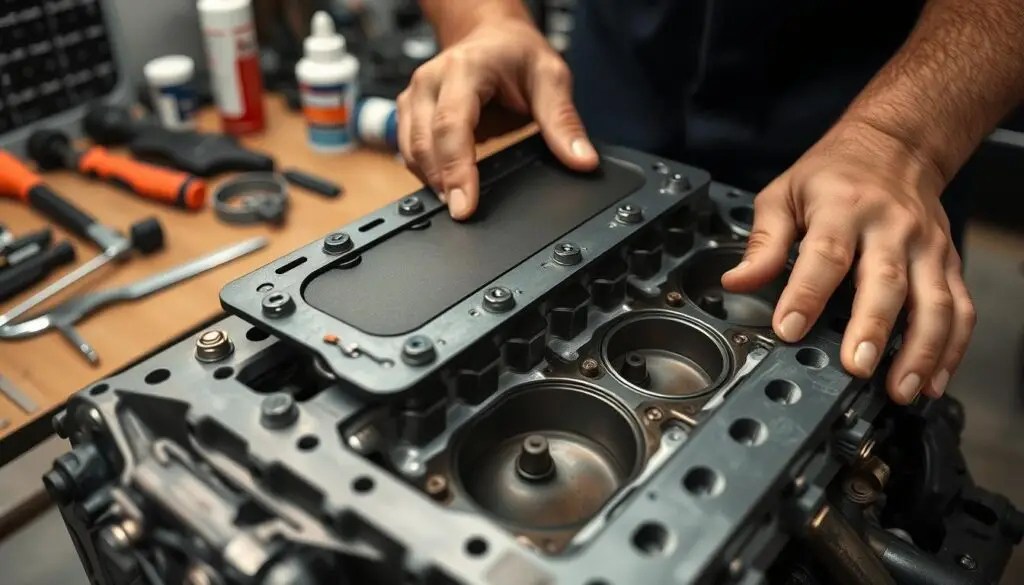
A quality torque wrench with angle measurement capability is essential for accurate head bolt installation. Many modern diesel engines use torque-to-yield bolts requiring precise angle torquing after initial torque application. Your tool collection should include deep sockets for head bolts, an engine hoist or cylinder head support fixture, precision straightedge, feeler gauge set, gasket scrapers, and chemical gasket remover solution.
Surface Preparation and Inspection
Thorough surface preparation is critical for successful installation and long-term sealing. All traces of old gasket material must be completely removed from both cylinder head and engine block surfaces using plastic razor blades and gasket scrapers to avoid gouging aluminum surfaces. Apply chemical gasket remover to stubborn residue and allow penetration time before scrubbing with non-metallic abrasive pads.
Check both surfaces for warpage using a precision straightedge and feeler gauges. Most diesel engine specifications allow maximum warpage of 0.002-0.004 inches across the entire surface. Any measurement exceeding manufacturer specifications requires professional machining to restore flatness before proceeding with gasket installation.
Proper Torque Sequence and Specifications
Correct bolt torquing is absolutely essential for proper gasket compression and sealing. Torque patterns typically spiral outward from center bolts to distribute clamping force evenly. Most diesel engines require multiple torque passes with increasing values—initial torque might be 40 ft-lbs, followed by 70 ft-lbs, then final torque to 90 ft-lbs plus angle tightening.
Torque-to-yield bolts stretch permanently during installation and must never be reused. These specialized fasteners provide consistent clamping force but lose their properties after initial torquing. Many experienced shops upgrade to ARP head studs during repairs, which can be reused and provide more consistent clamping force across the gasket surface—particularly valuable for turbocharged applications or engines that will see performance modifications.
Share Your Diesel Expertise with the Industry
Experienced technicians and fleet managers have insights that can help others avoid costly mistakes. Heavy Duty Journal welcomes contributions from diesel professionals on maintenance best practices, diagnostic techniques, and real-world repair experiences.
Head Gasket Replacement Costs
Before committing to repair, evaluating both time and financial considerations ensures you choose the best approach. Diesel engine head gasket replacement ranks among the most substantial mechanical repairs, with labor representing the largest portion of total cost.
Parts and Materials Breakdown
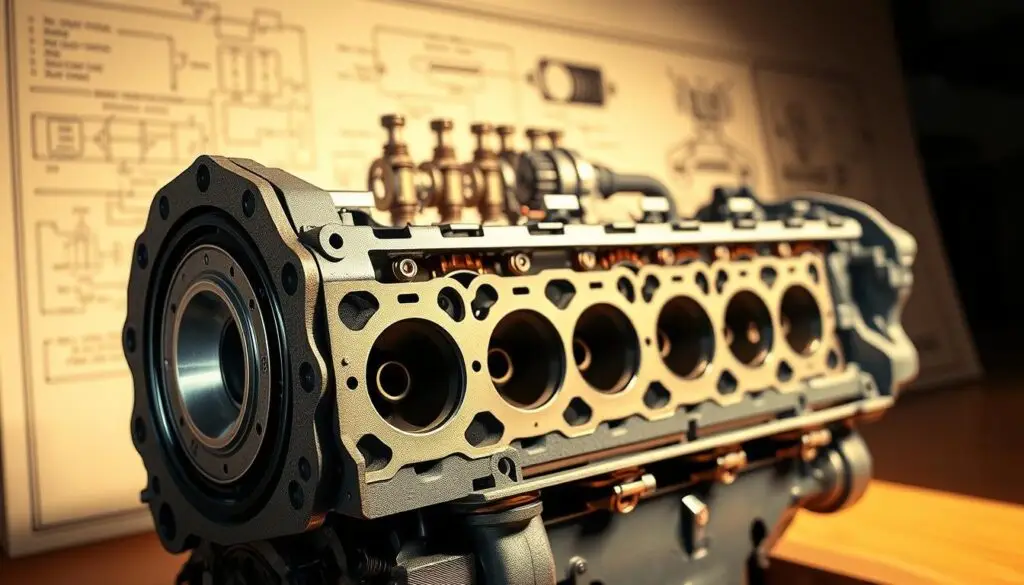
A complete head gasket set typically ranges from $150-$500 depending on your specific diesel engine model, with larger displacement engines and heavy-duty commercial applications falling toward the higher end. Head bolts represent another critical expense—TTY fasteners that cannot be reused cost between $100-$300 for a complete set. Upgrade to ARP studs and expect $500-$1,400 depending on your application.
Additional materials add up during comprehensive repair. Engine coolant runs $50-$100 for diesel-capacity cooling systems, engine oil and filter costs $80-$150 for typical diesel oil capacities, and miscellaneous gaskets and seals for valve covers, intake, and exhaust add $100-$200. Sealants and cleaning chemicals add another $30-$60.
Labor Costs and Time Requirements
Professional diesel repair shops charge between $100-$175 per hour, with rates varying by geographic region and shop specialization. Inline diesel engines generally require 8-16 hours of shop time, while V-configuration engines demand considerably more effort—typically 16-30 hours to complete both cylinder banks properly.
This time commitment translates to labor costs ranging from $800-$5,000 depending on engine complexity and regional rates. Total head gasket replacement cost for most diesel engines falls between $2,500-$6,000, with heavy-duty commercial applications or engines requiring additional repairs reaching $10,000 or more. According to recent industry data, average head gasket replacement costs range from $3,456 to $5,459 for common vehicle types.
Additional Repairs to Anticipate
Head gasket failure rarely occurs in isolation. Cylinder head machining becomes necessary when warpage exceeds specifications, adding $150-$400 per head. Valve jobs including grinding, lapping, and seal replacement add $300-$800. Fuel injectors exposed to coolant contamination often require replacement, adding $800-$3,000 depending on system type. Cooling system components including thermostats, water pumps, and radiator hoses should typically be replaced during the repair to prevent repeat failures.
Preventing Diesel Head Gasket Failure
Your diesel engine’s head gasket will last significantly longer when you follow proven preventative maintenance strategies. The cost difference between prevention and repair makes this one of the most important aspects of diesel ownership—a $200 annual cooling system maintenance program prevents $3,000-$6,000 in head gasket repairs plus potential lost revenue for commercial operations.
Cooling System Maintenance
The cooling system serves as your primary defense against overheating and subsequent head gasket damage. Regular coolant changes form the foundation of this defense, with most manufacturers recommending replacement every 2-5 years depending on coolant type. The Technology & Maintenance Council (TMC) of the American Trucking Associations has developed comprehensive recommended practices including RP-329 for coolant maintenance, providing fleet-tested guidelines that help prevent the cooling system failures responsible for 40% of all engine problems. Neglecting these maintenance tasks allows corrosion products and scale to accumulate, reducing heat transfer efficiency and creating hot spots that stress gasket materials.
Federal regulations under 49 CFR Part 396 require motor carriers to systematically inspect, repair, and maintain all commercial motor vehicles—a mandate that should include comprehensive cooling system checks as part of regular maintenance programs.
Proper Coolant Selection and Mixture
Diesel engines require specific coolant formulations that differ significantly from automotive applications. Heavy-duty diesel coolants contain supplemental coolant additives (SCAs) that protect against cavitation and liner pitting—a critical requirement outlined in the ASTM D6210 specification for fully-formulated glycol base engine coolant. This industry standard ensures coolants provide protection against corrosion, cavitation, freezing, and boiling in heavy-duty applications. The proper antifreeze concentration typically sits at a 50/50 mixture with distilled water, providing freeze protection to -34°F while maintaining optimal heat transfer properties. Too much antifreeze actually reduces cooling efficiency, while too little leaves your engine vulnerable to freezing damage and corrosion.
Temperature Monitoring and Response
Temperature gauges provide your first warning of potential problems threatening head gasket integrity. Diesel engines typically operate between 180-200°F under normal conditions. Any reading consistently above this range signals cooling system issues requiring immediate investigation. Watch for gradual temperature increases over time, even within normal ranges—this pattern often indicates developing problems.
Modified or high-performance diesels benefit tremendously from enhanced monitoring including digital temperature displays, cylinder head temperature sensors, and data logging systems. A $100 gauge installation can prevent a $5,000 head gasket replacement by catching problems early.
Boost Pressure Management for Modified Engines
Every modification increasing power output reduces your head gasket safety margin. Factory boost pressure typically ranges from 15-25 psi, carefully calibrated to stay within head gasket capabilities. Modified applications reaching 35-50 psi require upgraded gaskets and fasteners to maintain seal integrity. Safe boost pressure management requires MLS head gaskets designed for high-boost applications, ARP head studs replacing factory bolts, boost controllers limiting maximum pressure, upgraded intercoolers reducing intake air temperature, and professional tuning balancing power with reliability.
Frequently Asked Questions
How long can I drive with a blown head gasket?
Operating a diesel engine with a confirmed head gasket failure risks catastrophic damage within miles, not hundreds of miles. Once coolant enters the crankcase, bearing damage begins immediately. White smoke and overheating indicate active failure requiring immediate shutdown. The only safe option is transporting the vehicle to a repair facility without running the engine. Every mile driven increases repair costs and risks complete engine replacement.
Can head gasket sealer products fix a diesel head gasket?
Chemical sealant products marketed as head gasket repairs are not recommended for diesel engines. The high compression ratios and cylinder pressures in diesel applications quickly overcome any temporary seal these products might create. Additionally, sealant particles can clog radiator passages, damage water pumps, and create additional problems. These products may mask symptoms temporarily while internal damage continues. Proper mechanical repair remains the only reliable solution for diesel head gasket failure.
Why do Ford 6.0L Power Stroke engines have head gasket problems?
The 6.0L Power Stroke’s head gasket issues stem primarily from head bolt design rather than gasket material failure. These engines used four torque-to-yield head bolts per cylinder, which proved insufficient to maintain clamping force under the engine’s operating pressures. When combined with EGR cooler failures that introduced additional heat and stress, head bolts stretched and gaskets failed. The proven solution involves replacing factory TTY bolts with ARP head studs during repair, which dramatically improves reliability. Later Ford diesels addressed this with six bolts per cylinder.
What’s the difference between head gasket failure and EGR cooler failure?
EGR cooler failures and head gasket failures produce similar symptoms—white smoke, coolant loss, and overheating—but require different repairs. EGR cooler failure allows coolant to enter the intake manifold and combustion chamber through cracked internal passages, while head gasket failure allows coolant directly into the cylinder through the gasket interface. Diagnostic testing can differentiate between them: EGR cooler failure typically shows coolant in the intake manifold, while head gasket failure produces bubbles in the cooling system during leak-down testing.
Should I upgrade to head studs during gasket replacement?
For turbocharged diesel engines, especially those with performance modifications or towing heavy loads regularly, upgrading to ARP head studs during gasket replacement is highly recommended. Studs provide more consistent clamping force than bolts and can be reused during future repairs. The additional cost of $500-$1,400 for quality studs provides insurance against repeat failure and is particularly worthwhile if the engine will see increased boost pressure or sustained high-load operation.
Protecting Your Diesel Investment
Recognizing blown head gasket diesel symptoms early—white smoke, coolant loss, temperature fluctuations, and milky oil—enables intervention before minor seal breaches become major engine failures. Understanding that diesel engines operate under compression ratios and cylinder pressures far exceeding gasoline applications explains why these seals face such demanding conditions.
Prevention remains the most cost-effective strategy for protecting your diesel investment. Regular cooling system maintenance, proper coolant selection, and temperature monitoring extend head gasket life significantly. For operators who push their engines through performance modifications or sustained heavy loads, upgrading to head studs during any repair provides insurance against the most common failure mechanism.
When head gasket failure does occur, proper diagnosis using multiple testing methods confirms the problem before committing to expensive repairs. Following correct torque specifications and procedures during replacement ensures the repair lasts. The investment in doing it right—whether through professional service or careful DIY work—pays dividends through years of reliable operation.
Found This Guide Helpful?
Share this comprehensive diesel head gasket resource with other fleet managers and technicians who could benefit from early detection strategies and proven repair procedures.