
By Michael Nielsen, Editor & Publisher | 15+ Years in Diesel Repair
Last Updated: December 2025
📖 Estimated reading time: 22 minutes
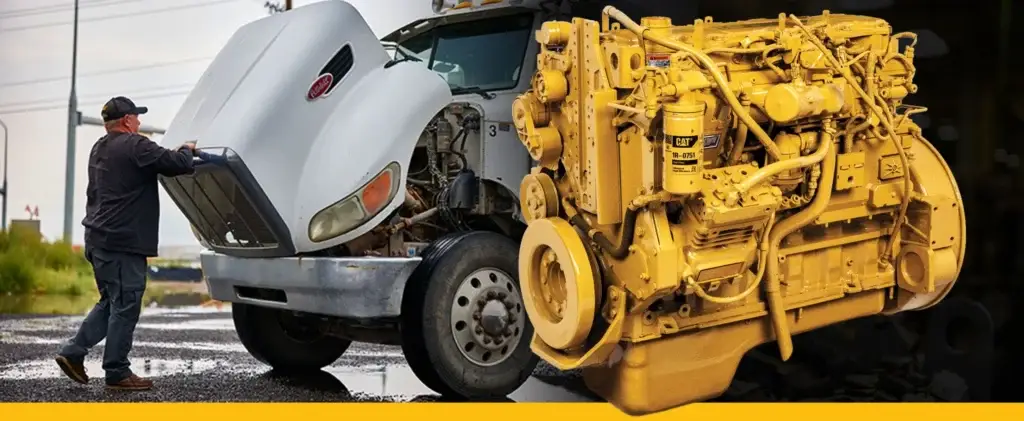
The Caterpillar C15 stands as one of the most reliable heavy-duty diesel engines in commercial trucking history. Operators across North America have pushed these 15.2-liter inline-6 powerplants beyond one million miles with proper care. Yet even this legendary workhorse experiences specific mechanical challenges that require immediate attention to prevent costly downtime.
Built from 1999 to 2007, the C15 delivers between 435 and 625 horsepower with torque ranging from 1,550 to 2,050 lb-ft. Understanding common Caterpillar C15 problems helps you diagnose failures faster and implement effective repairs. This diagnostic guide covers both HEUI and common rail fuel system configurations with real-world solutions based on official service documentation and field experience.
Proper troubleshooting extends engine life well beyond the typical 800,000-mile service interval. Armed with the right knowledge, you can tackle fuel system malfunctions, oil consumption, turbocharger failures, and electronic sensor errors with confidence.
Key Takeaways
- Million-mile capability: The C15 delivers 435-625 horsepower and typically runs 800,000 to 1.2 million miles with proper maintenance.
- Two fuel system types: HEUI and common rail configurations require different diagnostic approaches for accurate troubleshooting.
- Common failure patterns: Fuel injector issues, oil consumption, turbocharger problems, and electronic sensor malfunctions account for most repair needs.
- Early detection saves money: Recognizing warning signs prevents catastrophic damage and significantly reduces repair costs.
- Preventive maintenance is essential: Following recommended service intervals can extend engine life beyond one million miles.
Understanding Caterpillar C15 Engine Design and Common Failure Points
A deep understanding of the C15’s construction reveals why certain components fail more frequently than others in demanding trucking environments. The relationship between design features and failure patterns becomes clear once you understand how this powerplant was engineered. Recognizing these connections transforms troubleshooting from guesswork into systematic problem-solving.
The C15 represents Caterpillar’s answer to escalating power requirements and tightening emissions standards in commercial trucking. Every design choice made during development created both strengths and potential vulnerabilities.
Core Specifications and Engine Variants
The C15’s specifications tell the story of a powerhouse built for extreme durability. With a bore of 5.4 inches and stroke of 6.75 inches, this diesel engine delivers 15.2 liters of displacement. The compression ratio sits at 18:1, providing the high cylinder pressures needed for efficient combustion.
Weight considerations matter for installation and handling—the dry engine weighs approximately 3,090 pounds. Oil capacity reaches 10.5 gallons, while coolant capacity holds 11.5 gallons. The operating range spans from 1,200 to 2,100 RPM, with peak torque available at the lower end of this spectrum.
The engine block construction uses gray iron with a deep skirt design that handles high stress loads exceptionally well. This robust foundation prevents block flexing under extreme cylinder pressures. The cylinder head employs a four-valve design per cylinder, optimizing airflow for superior breathing and combustion efficiency.
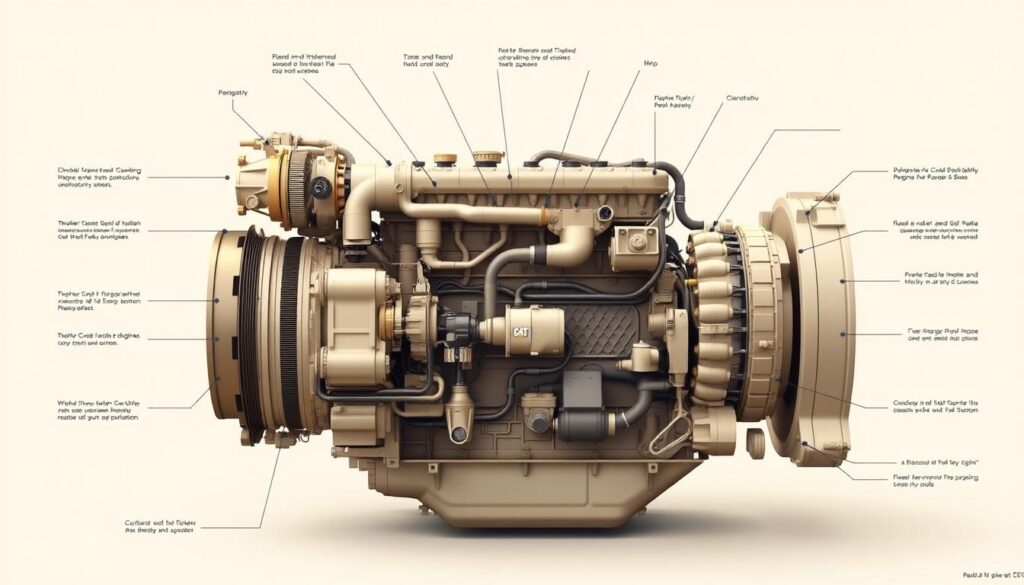
Multiple variants exist across the C15 platform, each with distinct characteristics. Early models differ significantly from later versions in fuel delivery systems and emissions control strategies. Identifying your specific variant determines which diagnostic procedures and replacement parts you’ll need.
ACERT Technology and Its Vulnerabilities
Caterpillar introduced C15 ACERT technology in 2003 as an innovative approach to emissions reduction. This system uses advanced combustion timing and variable valve actuation to meet EPA heavy-duty engine emissions standards without diesel exhaust fluid or diesel particulate filters. The technology represented a bold departure from competitors’ aftertreatment-focused solutions.
ACERT relies on precise fuel injection timing coordinated with intake valve actuation to control combustion temperatures. By managing when fuel ignites and how much air enters cylinders, the system reduces nitrogen oxide formation during combustion.
However, ACERT technology introduced several vulnerability points that didn’t exist in pre-ACERT engines. The intake valve actuator system adds mechanical complexity and creates new failure modes. High-pressure fuel injectors face more demanding operating conditions due to precise timing requirements. Technicians working on ACERT engines must understand these system-specific challenges because diagnostic strategies differ from conventional diesel troubleshooting.
High-Pressure Fuel System Components
The C15 fuel system evolved significantly across production years, with two primary architectures requiring different diagnostic approaches. Early models use HEUI (Hydraulically-actuated Electronic Unit Injector) technology, while later versions employ common rail fuel injection.
HEUI systems create a unique dependency on engine oil pressure to actuate fuel injectors. High-pressure oil serves as the hydraulic medium that forces fuel into cylinders. This design makes oil quality and pressure absolutely critical—contaminated oil or pressure loss causes immediate injection problems. The HEUI injection oil pump pressurizes engine oil to 3,000-3,600 PSI.
Common rail systems take a different approach, using electronically controlled high-pressure fuel delivery independent of engine oil. A fuel rail maintains constant high pressure, with individual injector solenoids controlling when fuel enters cylinders. This eliminates the oil pressure dependency but introduces different failure patterns related to electrical solenoid problems.
C15 Fuel Injector Failures and Performance Issues
When C15 engines begin showing performance issues, technicians first investigate the fuel injection system—and for good reason. The fuel delivery system operates under extreme conditions that create the perfect environment for component failure. The C15 platform uses sophisticated high-pressure injection technology that delivers fuel at pressures reaching 25,000 psi.
Most C15 injector problems surface between 300,000 and 500,000 miles of operation. ACERT-equipped models tend to experience failures earlier in this range due to the additional complexity of their injection timing systems. Individual injector replacement costs range from $400 to $600 per unit, not including labor and calibration services.
Symptoms of Failed Injectors
Failed injectors announce their presence through several distinctive performance symptoms. Excessive white smoke indicates unburned fuel passing through the combustion chamber, occurring when an injector cannot properly atomize fuel due to worn spray tips or weak solenoid response.
Black smoke signals a different problem—over-fueling from a stuck-open injector. When the injector fails to close properly, excess fuel floods the cylinder and creates rich combustion conditions. This wastes fuel and can damage the turbocharger with unburned diesel.
Rough idling represents one of the earliest detectable symptoms of C15 fuel injector failure. The engine shakes or vibrates inconsistently because one or more cylinders receive improper fuel delivery. Dramatic fuel economy losses occur as injectors lose calibration precision—even slightly degraded performance can increase fuel consumption by 10-15 percent.
Diagnostic Procedures for Injector Problems
Proper diagnosis begins with electronic scanning using Caterpillar Electronic Technician (ET) software. This specialized diagnostic tool communicates directly with the engine control module to retrieve both active and logged diagnostic trouble codes.
The cylinder contribution test isolates failing injectors with remarkable precision. This procedure disables individual cylinders while monitoring engine RPM changes. A healthy cylinder shows a consistent RPM drop when disabled, while a cylinder with a failed injector produces minimal RPM change.
⚠️ Safety Warning
The C15 fuel system operates at extremely high pressures up to 25,000 PSI. Never loosen fuel lines while the engine is running or immediately after shutdown. Allow the system to depressurize completely and follow all manufacturer lockout procedures before performing any fuel system service.
Fuel pressure testing confirms whether the fuel rail maintains proper operating pressure. Common rail systems should maintain 2,500-3,000 psi at idle conditions. HEUI systems require checking injection actuation pressure, which operates between 3,000-5,000 psi.
Common C15 Injector Diagnostic Codes
| Diagnostic Code | Description | Primary Cause |
|---|---|---|
| 251 | Injector Solenoid Circuit | Electrical fault in wiring or solenoid coil failure |
| 253 | Injector Metering Rail Pressure | Fuel rail pressure outside acceptable range |
| 344 | Injector Timing Calibration | Missing or incorrect injector calibration codes |
| 1347 | Cylinder Misfire Detected | Injector not delivering adequate fuel to cylinder |
Each replacement injector carries unique calibration codes stamped on the injector body. These codes must be programmed into the ECM using diagnostic software. Skipping calibration programming causes poor engine performance, increased emissions, and potential engine damage.
Oil Consumption and Leakage Problems
Among the most persistent challenges facing C15 engine operators, oil consumption and leakage problems require systematic diagnosis to prevent minor issues from escalating into major failures. The C15 holds 10.5 gallons of oil and requires 15W-40 oil meeting CAT ECF-1-a specification for optimal performance.
Understanding the difference between external leaks and internal consumption proves essential for accurate diagnosis. External C15 oil leaks create visible puddles and stains, while internal consumption burns oil during combustion without obvious external evidence.
Identifying Oil Leak Sources
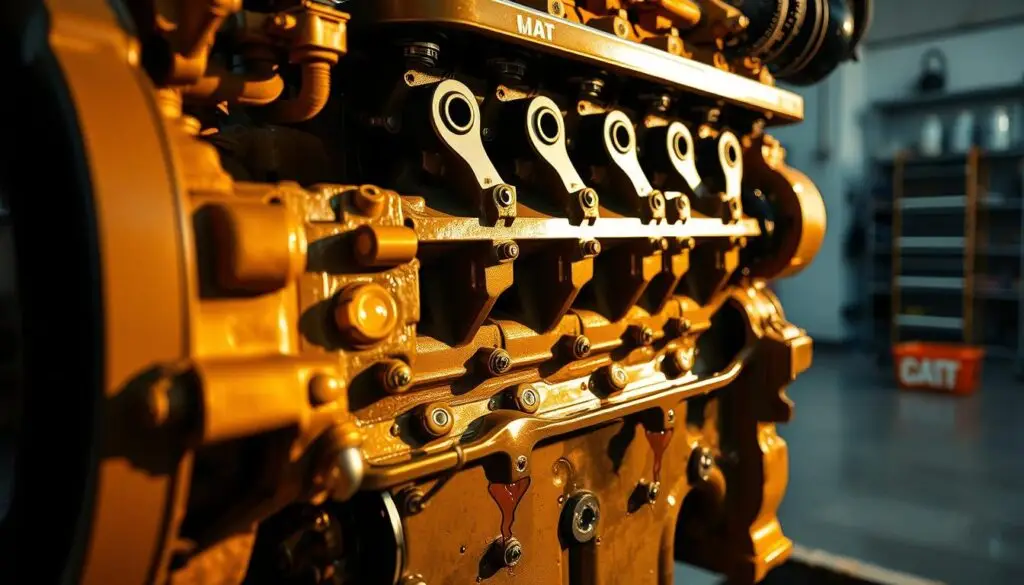
Locating the source of C15 oil leaks requires a methodical approach beginning with thorough engine cleaning. Steam cleaning removes accumulated oil and dirt that mask the actual leak location. Once the engine surface is clean, run the engine at operating temperature while carefully observing for fresh oil seepage.
Common external leak points follow predictable patterns based on gasket age and engine design. Valve cover gaskets fail most frequently at corners where heat cycles cause gasket material to harden and crack. Turbocharger oil supply and return lines develop leaks at connection points due to constant vibration and thermal expansion.
| Leak Location | Primary Symptoms | Typical Cause |
|---|---|---|
| Valve Cover Gaskets | Oil residue on cylinder head sides | Gasket hardening at corners |
| Front Main Seal | Oil near harmonic balancer | High mileage seal wear |
| Rear Main Seal | Oil dripping from bell housing | Crankshaft surface wear |
| Turbo Oil Lines | Oil spray on engine side panels | Vibration loosening fittings |
Excessive Oil Consumption Causes
When C15 oil consumption occurs without visible external leaks, internal engine problems require investigation. Worn piston rings represent the most common cause, failing to maintain proper cylinder sealing and allowing combustion gases to pressurize the crankcase while permitting oil to enter combustion chambers.
Blue smoke from the exhaust stack indicates oil burning during combustion. This symptom becomes especially noticeable during acceleration when cylinder pressure increases. Worn valve guides and seals cause oil consumption during deceleration when manifold vacuum pulls oil into cylinders.
Diagnostic procedures include blow-by testing using a calibrated flow meter at the crankcase breather. Excessive blow-by measuring more than 10 CFM at rated RPM indicates ring wear requiring engine overhaul. Oil consumption rates exceeding one gallon per 1,000 miles warrant immediate investigation.
Turbocharger Malfunctions and Boost Issues
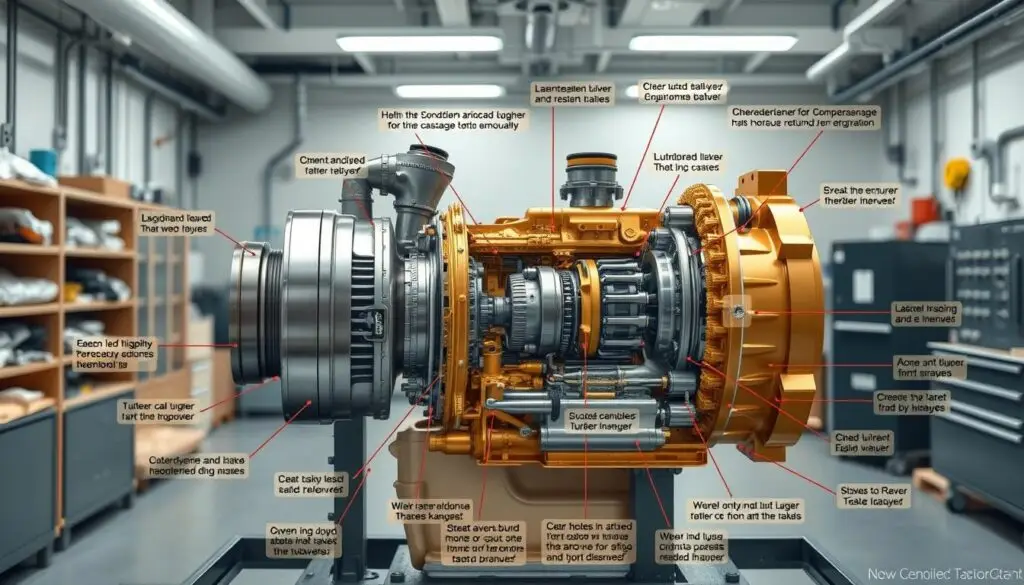
Power loss and unusual noises often signal developing turbocharger problems in C15 engines. The turbocharger forces pressurized air into the combustion chambers, directly affecting performance and fuel economy. Most C15 models use a single turbocharger with wastegate control, though some configurations feature twin turbo setups.
When C15 turbo problems develop, they rarely improve on their own. The engine’s compression release brake can provide up to 600 braking horsepower, but this capability depends on proper turbo function.
Recognizing Turbo Failure Symptoms
Loss of power becomes most noticeable under load or at higher RPMs when boost demand increases. The engine may struggle on hills or during acceleration that previously felt normal. Black smoke indicates insufficient boost causing rich fuel combustion, while blue smoke signals oil entering the intake system through failed turbo seals.
Unusual sounds from the turbocharger area warrant investigation. Whistling noises suggest air leaks in the intake system, while grinding sounds indicate internal bearing damage. With the engine off, check for shaft play by attempting to move the turbo shaft both radially and axially—excessive movement confirms worn bearings.
⚠️ Safety Warning
Turbocharger components reach extreme temperatures during operation and remain hot long after engine shutdown. Allow adequate cooling time before inspection. Hot coolant under pressure can cause severe burns—never remove the radiator cap while the engine is hot.
Wastegate and Actuator Problems
The wastegate controls maximum boost by bypassing exhaust gas around the turbine wheel. A wastegate stuck closed creates an overboost condition that can damage pistons, head gaskets, and other engine components. Conversely, a wastegate stuck open causes underboost and significant power loss.
Testing wastegate operation requires checking actuator movement at specific boost pressures. The actuator should respond smoothly to pressure changes. Carbon buildup frequently causes wastegate sticking—regular maintenance and quality diesel fuel help prevent carbon accumulation.
Stay Current on C15 Diagnostics
Get the latest diesel engine troubleshooting tips, maintenance strategies, and industry updates delivered to your inbox.
Cooling System Failures and Overheating
Cooling system failures represent a serious threat to Caterpillar C15 engines, often causing damage that extends far beyond the original problem. When C15 overheating occurs, the consequences can include warped cylinder heads, blown head gaskets, and cracked engine blocks. The C15 cooling system holds 11.5 gallons of coolant and operates under significant pressure at operating temperature.
Water Pump Failures and Cavitation
The water pump circulates coolant throughout the engine to maintain proper temperature control. C15 water pump failure occurs through several distinct mechanisms. Cavitation damage happens when air bubbles form in the coolant and collapse against metal surfaces, creating tiny pits in the impeller and pump housing.
Bearing failures create grinding or roughness when rotating the pump pulley by hand. Seal leaks appear at the weep hole on the pump body. Prevention involves maintaining the correct coolant mixture of 50% coolant and 50% water for optimal heat transfer, along with proper supplemental coolant additive levels.
EGR Cooler Problems
The EGR cooler in ACERT-equipped C15 engines uses coolant to reduce exhaust gas temperature before reintroducing it into the intake manifold. C15 EGR cooler failure creates unique symptoms including coolant contamination in the exhaust system, producing white steam from the exhaust pipe.
Rapid coolant loss without visible external leaks points directly to internal EGR cooler failure. Exhaust gases pressurizing the cooling system cause overflow tank bubbling and hose swelling. Pressure testing the cooling system while monitoring for exhaust odors helps confirm diagnosis.
| Symptom | Likely Cause | Severity |
|---|---|---|
| White exhaust steam | EGR cooler internal leak | High – immediate repair needed |
| Coolant at weep hole | Water pump seal failure | Medium – replace pump soon |
| Engine won’t reach temperature | Thermostat stuck open | Medium – affects efficiency |
| Rapid overheating | Thermostat stuck closed or restriction | Critical – stop engine immediately |
Head Gasket and Cylinder Head Complications
The C15 engine’s four-valve cylinder head design, while efficient, creates specific vulnerabilities that can lead to expensive repairs. Head gasket issues typically surface on engines with over 750,000 miles of operation, though engines subjected to severe duty cycles or repeated overheating may develop problems earlier.
Signs of Head Gasket Failure
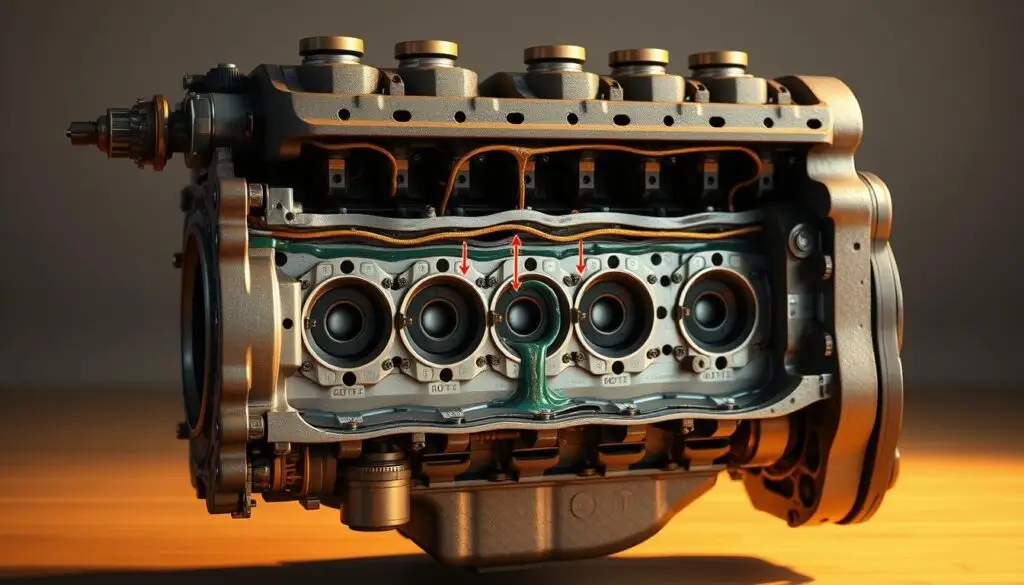
Recognizing C15 head gasket symptoms early saves significant repair expenses. The most common indicator is coolant contamination in the engine oil, appearing as a milky or chocolate-colored substance on the dipstick. White smoke billowing from the exhaust indicates coolant entering the combustion chambers.
External coolant leaks between the cylinder head and engine block provide visible evidence of failure. Unlike gasoline engines where failures occur suddenly, C15 head gaskets frequently develop slow leaks that damage components gradually. Caterpillar recommends pressure testing the cooling system every 100,000 miles to catch developing problems.
Compression Testing Procedures
Performing a C15 compression test provides critical diagnostic information about engine condition. The test must be conducted with the engine at normal operating temperature for accurate results. Remove all fuel injectors to ensure consistent cranking speed across cylinders.
Normal compression readings for C15 engines range between 350 and 450 psi depending on specific configuration. Variation between cylinders should not exceed 10 percent of the highest reading. Low compression in adjacent cylinders strongly suggests head gasket failure between those specific cylinders.
The HDJ Perspective
The C15’s reputation for reaching one million miles isn’t marketing hype—it’s documented reality for operators who follow maintenance protocols religiously. What separates engines that fail at 400,000 miles from those reaching seven figures almost always comes down to oil quality, coolant maintenance, and catching small problems before they cascade into catastrophic failures. In our experience covering fleet operations, the most successful C15 operators treat their maintenance schedule as non-negotiable and invest in proper diagnostic tools. The upfront cost of quality maintenance programs pays dividends in extended engine life and reduced emergency repair expenses.
Electronics and Sensor Problems
Beyond mechanical components, the C15 relies on an intricate network of sensors and electronic modules that demand specialized troubleshooting knowledge. The electronic control system monitors dozens of parameters every second, adjusting fuel delivery, timing, and emissions controls.
Position Sensor Failures
The camshaft and crankshaft position sensors provide critical timing information that the ECM uses to control fuel injection and valve actuation. Camshaft position sensor failures typically produce hard starting, rough idle, and power loss under load.
Crankshaft position sensor failures create more severe symptoms. The ECM cannot determine engine speed or position without this sensor, causing immediate engine shutdown or prevention of starting. C15 diagnostic codes 331 through 334 relate to crankshaft position sensor problems, while codes 341 through 344 indicate camshaft position sensor issues.
| Component | Failure Symptoms | Diagnostic Codes |
|---|---|---|
| Camshaft Position Sensor | Hard starting, rough idle, power loss | 341-344 |
| Crankshaft Position Sensor | No start, immediate shutdown | 331-334 |
| Atmospheric Pressure Sensor | Low power at altitude, excessive smoke | Boost pressure codes |
| Engine Control Module | Random shutdowns, multiple codes | Various or no codes |
Before replacing an ECM, verify all power and ground connections. Loose or corroded connections cause many symptoms that mimic ECM failure. Inspect the ECM housing for water intrusion, and test the charging system thoroughly since voltage irregularities can damage electronic components.
Preventive Maintenance to Avoid Major C15 Failures
Consistent attention to C15 service intervals separates engines that reach one million miles from those that fail prematurely. Proper maintenance protects your investment and prevents the majority of common problems. Engines receiving regular care routinely exceed expectations, while neglected units often fail at 400,000 to 600,000 miles.
Recommended Service Intervals
Oil changes form the foundation of any C15 preventive maintenance program. Highway applications require changes every 15,000 miles under normal conditions, though many experienced operators perform changes at 12,000 miles as additional protection. Severe service conditions demand more frequent attention.
Fuel filter replacement prevents injector damage and maintains system performance. Change both primary and secondary filters simultaneously every 15,000 to 25,000 miles. Weekly water draining from fuel separators prevents moisture from reaching injection equipment.
Overhead valve adjustments every 100,000 miles maintain proper timing and prevent accelerated wear. Caterpillar recommends this service can improve fuel economy by up to half a mile per gallon by ensuring valves open and close at precise timing points. Following TMC recommended maintenance practices provides additional guidance developed through decades of fleet experience.
| Service Item | Standard Interval | Severe Service |
|---|---|---|
| Engine Oil Change | 15,000 miles | 10,000-12,000 miles |
| Fuel Filters | 15,000-25,000 miles | 15,000 miles |
| Overhead Adjustment | 100,000 miles | 80,000 miles |
| Coolant Replacement | 300,000 miles / 2 years | 250,000 miles / 2 years |
Share Your C15 Expertise
Are you a diesel technician or fleet manager with hands-on C15 experience? Heavy Duty Journal welcomes technical articles from industry professionals.
When to Rebuild vs. Replace Your C15 Engine
When your C15 shows signs of serious internal wear, understanding rebuild vs. replace economics becomes essential for smart decision-making. Most C15 engines deliver 800,000 to 1.2 million miles before requiring major overhaul when properly maintained.
Cost-Benefit Analysis
An in-frame overhaul addresses reciprocating assembly wear without removing the engine from the chassis, typically costing $12,000 to $18,000. This approach works when lower engine components show wear but the cylinder head, camshaft, and timing system remain serviceable.
A complete out-of-frame overhaul provides more comprehensive restoration, costing $20,000 to $30,000 but essentially creating a rebuilt engine with expected service life approaching 800,000-plus miles. Used C15 engines with 400,000-600,000 miles typically run $8,000 to $15,000, while remanufactured engines cost $25,000 to $35,000 with comprehensive warranties.
Signs Indicating Complete Rebuild Need
Excessive oil consumption despite external leak repairs signals internal problems. Low compression across multiple cylinders indicates widespread internal wear. Severe blow-by exceeding 10 CFM at rated RPM, bearing knock or rumbling noises, and metal particles consistently appearing in oil analysis all point to the need for comprehensive overhaul.
The vehicle’s overall condition influences whether engine replacement makes sense. Investing $25,000 in engine overhaul for a $40,000 truck with a good frame and transmission provides excellent value. The same repair on a worn truck worth $15,000 may not be justified economically.
Frequently Asked Questions
What are the most common problems with Caterpillar C15 engines?
The most common Caterpillar C15 engine problems include fuel injector failures (particularly in ACERT models), excessive oil consumption and leakage, turbocharger malfunctions, cooling system failures including EGR cooler issues, head gasket failures, and electronic sensor problems. Fuel injector failures represent the most frequent and costly issue, especially in high-pressure common rail systems operating at up to 25,000 psi. These problems manifest through symptoms like excessive smoke, rough idling, power loss, oil leaks, overheating, and diagnostic trouble codes.
How long should a properly maintained Caterpillar C15 engine last?
A properly maintained Caterpillar C15 engine regularly exceeds one million miles of service life, with many operators reporting 1.2-1.5 million miles before requiring major overhaul. Key factors determining longevity include consistent adherence to maintenance schedules (oil changes every 10,000-15,000 miles, fuel filter changes every 15,000 miles, valve adjustments every 100,000 miles), using proper specification fluids meeting Caterpillar requirements, maintaining cooling system with proper coolant mixture, and addressing problems immediately when warning signs appear.
What oil should I use in my Caterpillar C15 engine?
Caterpillar C15 engines require diesel engine oil meeting Caterpillar ECF-1-a specification, with 15W-40 viscosity grade providing optimal protection across normal operating temperature ranges. For extreme cold conditions below 0°F, 10W-30 viscosity may be appropriate. The ECF-1-a specification ensures adequate protection for high-pressure fuel injection systems, particularly critical in HEUI systems where engine oil actuates injectors. API CJ-4 or CK-4 ratings meet current diesel engine requirements and provide backward compatibility. Use only ultra-low sulfur diesel fuel meeting ASTM D975 specifications for optimal injector life and emissions system compatibility.
How do I diagnose a failing fuel injector in my C15 engine?
Diagnosing a failing C15 fuel injector begins with retrieving diagnostic trouble codes using Caterpillar Electronic Technician software—common codes include 251 for injector solenoid circuit faults and 344 for timing calibration issues. Perform a cylinder contribution test to isolate the specific failing injector by monitoring RPM drop when individual cylinders are disabled. Symptoms include excessive white smoke from poor atomization, black smoke from over-fueling, rough idling, and dramatic fuel economy losses. Test fuel rail pressure to confirm proper operating pressure of 2,500-3,000 psi at idle for common rail systems.
What causes excessive oil consumption in Caterpillar C15 engines?
Excessive oil consumption in C15 engines without visible external leaks indicates internal problems. Worn piston rings allow combustion gases to pressurize the crankcase while permitting oil to enter combustion chambers, evidenced by blue smoke from the exhaust. Worn valve guides and seals cause oil consumption during deceleration when manifold vacuum pulls oil into cylinders. Turbocharger seal failures allow oil to enter either the intake or exhaust system. Perform blow-by testing at the crankcase breather—excessive blow-by exceeding 10 CFM at rated RPM indicates ring wear requiring overhaul.
Keeping Your C15 Running Strong
The Caterpillar C15 earned legendary status by being tough, powerful, and dependable. When properly maintained, these engines routinely exceed one million miles without major rebuilds. Caterpillar stopped producing on-highway engines in 2010, yet the C15 remains one of the most sought-after powerplants in the used truck market because every qualified diesel mechanic knows how to work on them and parts are readily available nationwide.
The importance of C15 maintenance cannot be overstated. Regular oil changes, timely filter replacements, and scheduled valve adjustments prevent most common problems. Operators who treat maintenance as an investment rather than an expense consistently achieve exceptional service life. Early attention to warning signs stops minor issues from becoming catastrophic failures.
Understanding the failure points covered in this guide empowers owners and operators to make informed decisions. Systematic diagnosis leads to effective repairs that address root causes. With the right maintenance approach, your C15 will deliver the power and dependability that built Caterpillar’s reputation across millions of highway miles.
Found This Guide Helpful?
Share this C15 troubleshooting resource with fellow fleet managers, owner-operators, and diesel technicians who could benefit from these diagnostic insights.