By Michael Nielsen, Editor & Publisher | 15+ Years in Diesel Repair
Last Updated: December 2025
📖 Estimated reading time: 22 minutes
Modern common rail diesel fuel injectors operate at pressures exceeding 23,000 psi while maintaining tolerances as tight as 1-3 microns—roughly one-fiftieth the diameter of a human hair. When these precision components begin to fail, the warning signs are unmistakable: rough idling, engine misfires, black or white exhaust smoke, declining fuel economy, and hard starting. Catching diesel fuel injector failure early prevents minor issues from cascading into catastrophic engine damage.
This guide covers everything fleet managers and diesel technicians need to identify injector problems quickly, diagnose them accurately, and make cost-effective repair decisions. You’ll learn the specific symptoms that distinguish injector failure from other fuel system issues, professional diagnostic procedures including cylinder balance testing and return flow analysis, and when repair makes sense versus complete replacement.
Key Takeaways
- Recognize the warning signs: Rough idle, misfires, 10-20% fuel economy drop, excessive smoke, and hard starting indicate injector problems requiring immediate attention.
- Understand root causes: Fuel contamination and normal high-pressure wear account for most failures—quality fuel and timely filter changes prevent 80% of premature failures.
- Use systematic diagnostics: Progress from visual inspection to OBD-II codes to cylinder balance testing (±4.0 mm³/stroke threshold) to pinpoint failing injectors accurately.
- Make informed repair decisions: With labor running 8-10 hours at $100-150/hour, quality parts selection matters more than initial price—cheap injectors mean paying labor twice.
- Implement preventive maintenance: Replace fuel filters every 10,000-15,000 miles and schedule injector inspections at 100,000 miles to maximize service life.
Understanding Diesel Fuel Injector Function and Failure Points
At the heart of every diesel engine’s performance lies a component that demands microscopic precision under extreme conditions. Diesel fuel injectors serve as the gateway between the fuel delivery system and combustion chamber, controlling exactly when, how much, and how finely fuel enters the engine. Unlike gasoline engines that rely on spark plugs, diesel engines depend entirely on compression ignition—making injector function absolutely essential for proper operation.
Modern common rail systems store pressurized fuel in a shared rail feeding all cylinders simultaneously. A high-pressure fuel pump maintains constant pressure while individual injectors draw fuel as needed. This design enables multiple injection events per combustion cycle—a pilot injection to reduce noise, main injection for power, and post-injections to manage emissions. Each event must be controlled with pinpoint accuracy measured in microseconds.
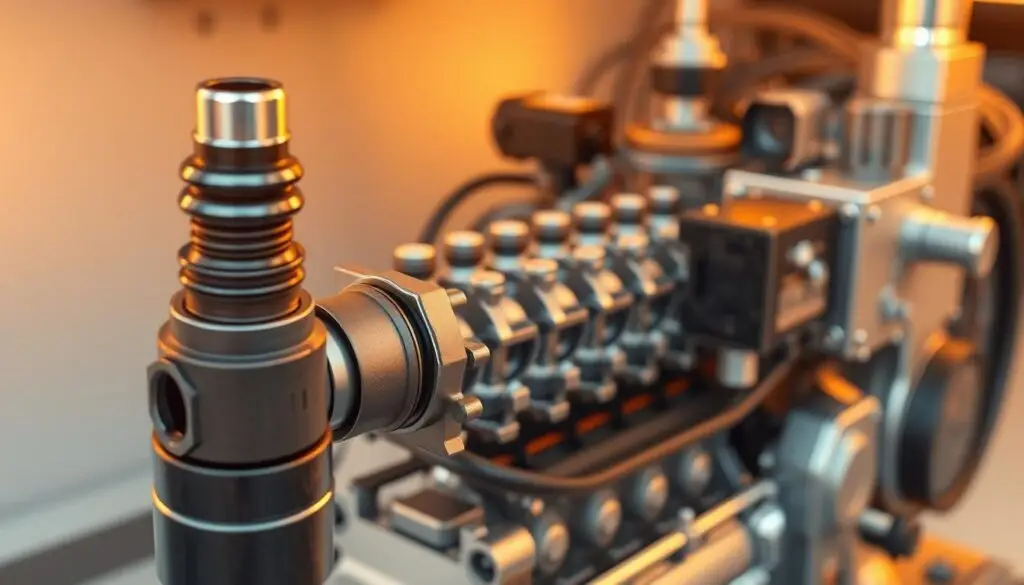
The tolerances involved are staggering. Modern injector components are machined to specifications of 1-3 microns. At this microscopic level, even the smallest particle of contamination can cause catastrophic damage or performance degradation. Modern common rail systems like Cummins XPI offer fuel injectors ranging from 1600 to 2600 bar (23,200-37,700 psi), with pressure-assisted designs providing resistance to fuel-borne debris.
Critical Components and Common Failure Modes
Every fuel injector contains multiple precision components working in harmony under extreme conditions. The injector body houses all internal components and connects to the fuel rail and cylinder head. Cracks in the body or seal failures lead to external fuel leaks and pressure loss.
The injector nozzle represents the business end of the system, featuring microscopic spray holes drilled at specific angles—sometimes as small as 0.006 inches in diameter. Carbon deposits from combustion gases or varnish from degraded fuel can partially block these tiny openings, disrupting spray pattern and reducing performance.
Inside the nozzle, a needle valve opens and closes to control fuel flow, moving with lightning speed and seating perfectly to prevent fuel dribble. The needle valve surface is hardened and polished to exacting standards. Deposits, corrosion, or wear on the needle or its seat cause leakage affecting spray timing and quantity.
⚠️ Safety Warning
High-pressure diesel fuel systems operate at pressures exceeding 30,000 psi. Fuel spray at these pressures can penetrate skin and cause serious injury. Always relieve system pressure before servicing and wear appropriate PPE including safety glasses and fuel-resistant gloves.
Recognizing the Warning Signs of Diesel Fuel Injector Failure
When diesel fuel injectors begin to fail, they produce distinctive symptoms that alert drivers to potential trouble. Most injector problems develop gradually, giving you multiple opportunities to identify and address them before complete breakdown occurs. Learning to recognize these warning signs empowers fleet managers and owner-operators to take action before facing roadside breakdowns or costly towing bills.
Rough Idle and Engine Misfires
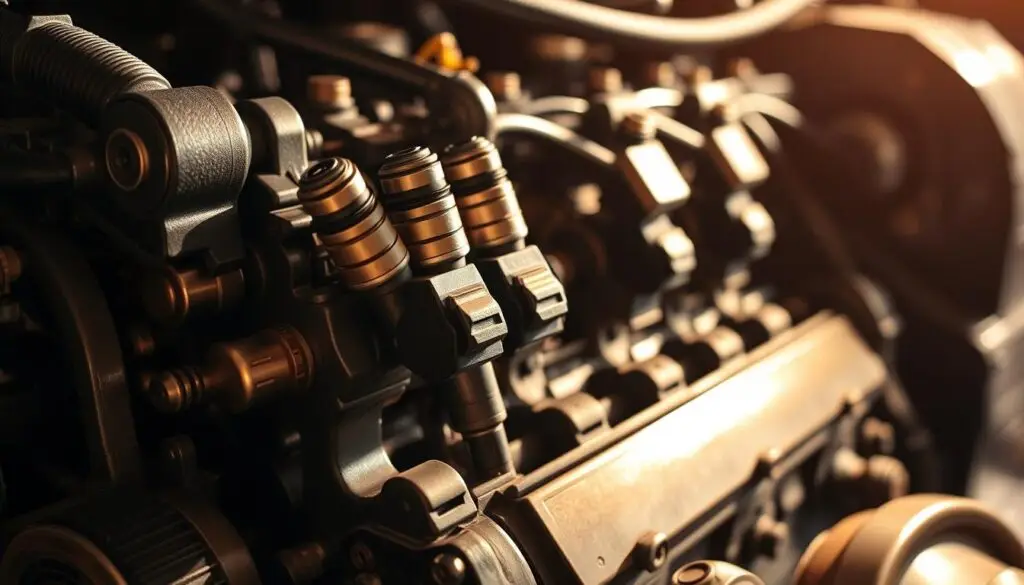
A healthy diesel engine maintains a steady, characteristic rhythm when idling—a consistent hum with minimal vibration through the steering wheel or driver’s seat. When injectors fail, this smooth operation disappears. The engine feels like it’s “missing” or running on fewer cylinders than it should, creating an imbalance in combustion timing.
You might feel vibrations through the steering column, pedals, or seat that weren’t present before. The tachometer needle may bounce or fluctuate instead of holding steady. In severe cases, the entire vehicle shakes at stoplights. Engine misfires occur when cylinders fail to fire properly due to inadequate or improperly timed fuel delivery, directly impacting power and acceleration.
Decreased Fuel Economy
One of the earliest measurable indicators of injector trouble is a sudden drop in fuel efficiency. If you’re tracking miles per gallon and notice a decline of 10-20% or more, faulty injectors are a likely culprit. Malfunctioning injectors either deliver too much fuel or fail to atomize it properly—when injectors stick open or lose spray pressure, they dump excess fuel into cylinders, creating a rich mixture that wastes diesel and produces incomplete combustion.
You’ll find yourself filling up more frequently despite driving the same routes and distances. This symptom often appears before you notice any drivability problems, making it a valuable early warning sign for fleet managers monitoring fuel costs across multiple vehicles.
Exhaust Smoke Diagnosis
Exhaust smoke color provides critical diagnostic information about injector health. Different smoke colors indicate specific types of injector malfunction:
| Smoke Color | Indicates | Likely Cause |
|---|---|---|
| Thick black smoke | Excessive fuel delivery | Injectors stuck open, lost spray pattern integrity, or failing to close completely |
| White or gray smoke | Unburned fuel passing through exhaust | Weak injection pressure, incorrect timing, or poor atomization |
| Blue-tinged smoke | Oil burning | Fuel wash damaging cylinder walls (severe injector failure) |
Continuous smoke of any color warrants immediate diagnostic attention. Smoke accompanied by fuel smell indicates external leaks or seal failures requiring urgent repair.
Starting Difficulties and Stalling
Hard starting diesel engines often point directly to injector problems. When injectors cannot deliver sufficient fuel for reliable ignition, you’ll experience extended cranking times before the engine catches. Cold weather amplifies these difficulties dramatically—the engine may require 10-15 seconds of cranking instead of the normal 2-3 seconds.
Frequent stalling presents another frustrating symptom. The engine may start successfully but die unexpectedly at idle or low speeds when injectors cannot maintain consistent fuel delivery at lower RPMs. You might experience stalling when coming to a stop at intersections, with the engine running roughly for a few seconds before quitting entirely.
Root Causes of Diesel Fuel Injector Failure
While diesel injectors are engineered for durability, specific conditions accelerate their failure and compromise engine performance. Understanding the primary failure mechanisms helps vehicle owners implement preventive measures that significantly extend injector lifespan. Most failures result from preventable causes rather than design defects.
Fuel Contamination and Water Intrusion
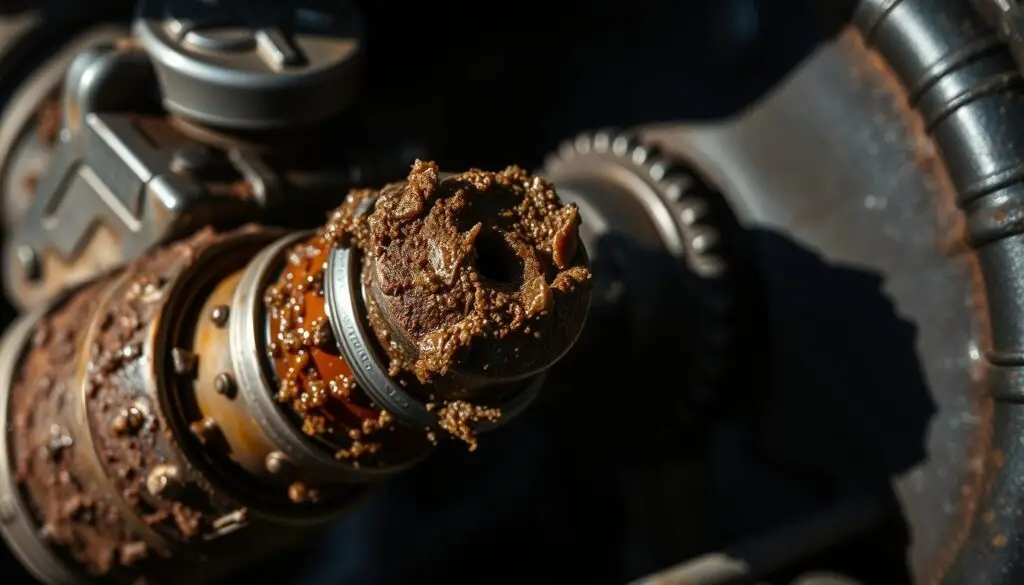
Diesel fuel quality stands as the single most critical factor affecting injector longevity. Modern common rail injectors feature tolerances between 1 and 3 microns—even microscopic particles can score precision surfaces, jam needle valves, and obstruct spray holes. Contamination occurs through multiple pathways: dirt and rust particles from deteriorating fuel tanks, inadequate filtration, or contaminated fuel station storage tanks.
Water in diesel fuel creates particularly destructive conditions. Condensation forms inside fuel tanks when temperatures fluctuate, especially in partially filled tanks. Water causes rust and corrosion on steel injector components and provides the perfect environment for microbial growth—commonly called “diesel bug”—which creates thick sludge that clogs filters and injectors.
Ultra-low sulfur diesel (ULSD), while environmentally beneficial, has reduced natural lubricity compared to older diesel formulations. EPA regulations requiring ULSD with maximum sulfur concentration of 15 parts per million necessitate quality fuel additives to restore proper lubrication and prevent accelerated wear.
Carbon Deposits and Internal Clogging
Incomplete combustion generates carbon particles that accumulate on injector tips and internal components. Several operating conditions accelerate carbon formation: excessive idling allows combustion temperatures to drop below optimal levels, while short trips that never reach full operating temperature produce similar results.
Internal Injector Deposit Induced Damage (IDID) represents a specific failure mode where varnish-like deposits form on moving parts from fuel residue that bakes onto hot surfaces during engine shutdown. The sticky varnish causes needle valves to stick, creating high internal leakage and poor spray atomization.
Normal Wear from High-Pressure Operation
All mechanical components have finite lifespans, and diesel injectors endure extraordinary stress during normal operation. Modern systems firing multiple injection events per combustion cycle multiply mechanical stress compared to older single-injection systems. Ball seats and needle valves experience the highest wear rates, sealing against tremendous pressures thousands of times per minute.
Most diesel injectors warrant inspection around 100,000 miles, with failure commonly occurring between 100,000 and 150,000 miles depending on operating conditions. Vehicles operating under ideal conditions with excellent maintenance may exceed 200,000 miles on original injectors.
Stay Ahead of Injector Problems
Get weekly maintenance insights, diagnostic tips, and industry updates delivered to your inbox. Join thousands of fleet managers and technicians who rely on Heavy Duty Journal for actionable diesel expertise.
Diagnostic Procedures for Identifying Faulty Injectors
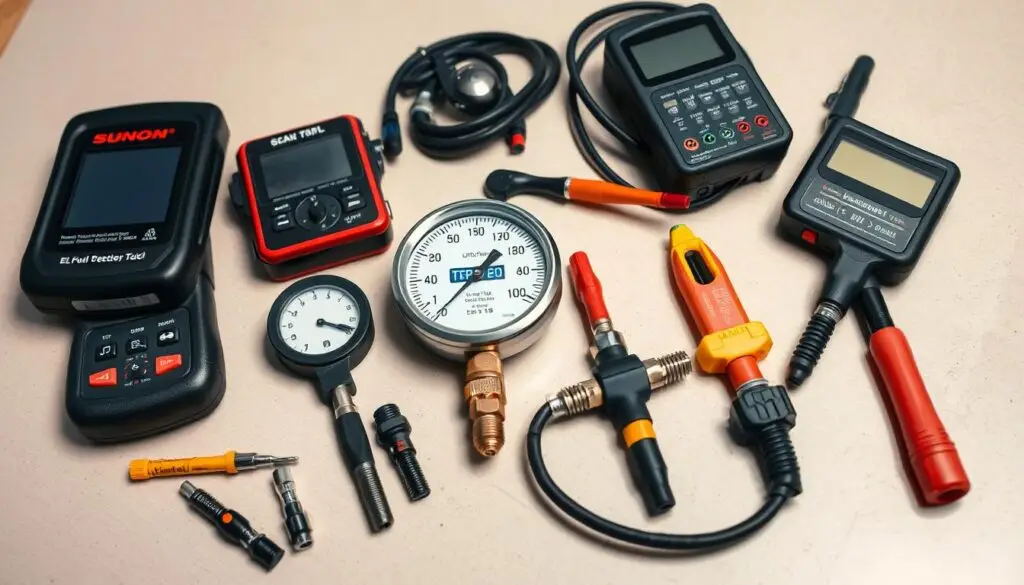
Proper diagnostic procedures separate guesswork from precision, allowing technicians to identify failing injectors with confidence and accuracy. Effective injector diagnosis demands a methodical approach that starts with basic observations and advances through specialized testing protocols. Each diagnostic step builds upon previous findings to create a complete picture of fuel system health.
Visual Inspection and Initial Assessment
A thorough visual inspection forms the foundation of accurate diagnosis. Walk around the vehicle and examine the engine compartment with the hood open, looking for telltale signs of fuel system problems: fuel stains or wet spots around injector bodies indicating external leaks from failed O-rings or copper crush washers, fuel line deterioration at connections and clamps, and fuel filter contamination showing unusual discoloration or water accumulation.
Auditory inspection provides equally valuable diagnostic clues. Start the engine and listen carefully to operational characteristics. A healthy diesel produces a consistent, rhythmic combustion sound. Listen for irregular firing patterns suggesting inconsistent fuel delivery, metallic knocking from premature detonation, and high-pitched clicking from mechanically failing components.
Extracting and Interpreting Trouble Codes
Diagnostic trouble codes provide electronic insight into fuel system malfunctions. Connect your OBD-II scan tool to the vehicle’s diagnostic port and retrieve both stored and pending codes. Stored codes represent confirmed faults that triggered the check engine light, while pending codes indicate intermittent issues the system has detected but not yet confirmed.
Common diagnostic trouble codes related to injector failure include P0087 for low fuel rail pressure, P0088 for excessive pressure, and P0200-series codes indicating injector circuit electrical problems. The P0300-series codes reveal cylinder misfire conditions. However, treat codes as starting points rather than final conclusions—a code pointing to cylinder 3 misfire might result from a faulty injector but could also stem from wiring issues, low compression, or contaminated fuel.
Fuel Pressure Testing
The fuel pressure test reveals whether your high-pressure fuel system maintains proper operating parameters. Connect a diesel fuel pressure gauge rated for high-pressure systems to the test port on the fuel rail. Most common rail systems operate between 20,000 and 26,000 psi at idle, though specifications vary by manufacturer.
Perform pressure measurements under multiple conditions: key-on engine-off for initial system pressurization, idle for baseline measurement, under acceleration for maximum pressure, and a pressure hold test after shutdown for system integrity verification. Low pressure at idle suggests fuel pump deterioration or excessive return flow through damaged injector seals.
Cylinder Balance Testing
The cylinder balance test represents one of the most valuable diagnostic procedures for identifying problematic injectors. This test measures each cylinder’s contribution to total engine power by selectively disabling injectors one at a time using your scan tool’s injector balance function.
A properly functioning cylinder causes a noticeable RPM drop when its injector disables—because it was contributing significant power. A cylinder with a faulty injector shows little or no RPM change because it wasn’t producing adequate combustion in the first place. Perform this test with the engine fully warmed to operating temperature and running at normal idle speed.
Balance rates exceeding ±4.0 mm³/stroke from the mean generally indicate injector problems requiring attention. However, interpret results carefully—one weak injector can force the engine control module to compensate by altering fuel delivery in other cylinders, creating a cascade effect where the cylinder showing the largest deviation isn’t always the root cause.
Return Flow and Leak-Off Testing
Diesel fuel injectors continuously recirculate a small amount of fuel back to the tank during normal operation. Return flow analysis involves collecting and measuring fuel returning from each injector over a specific time period. Most diesel engines should return less than 20-30 milliliters per injector during a 30-second test period at idle.
An injector returning significantly more fuel than its counterparts indicates internal leakage from worn seals or damaged components. The critical factor isn’t absolute volume but rather comparison between cylinders—an injector showing 2-3 times the leak-off volume of its siblings has definitively failed and requires replacement. This testing method effectively identifies problematic injectors without removing components from the engine.
Electrical Circuit Verification
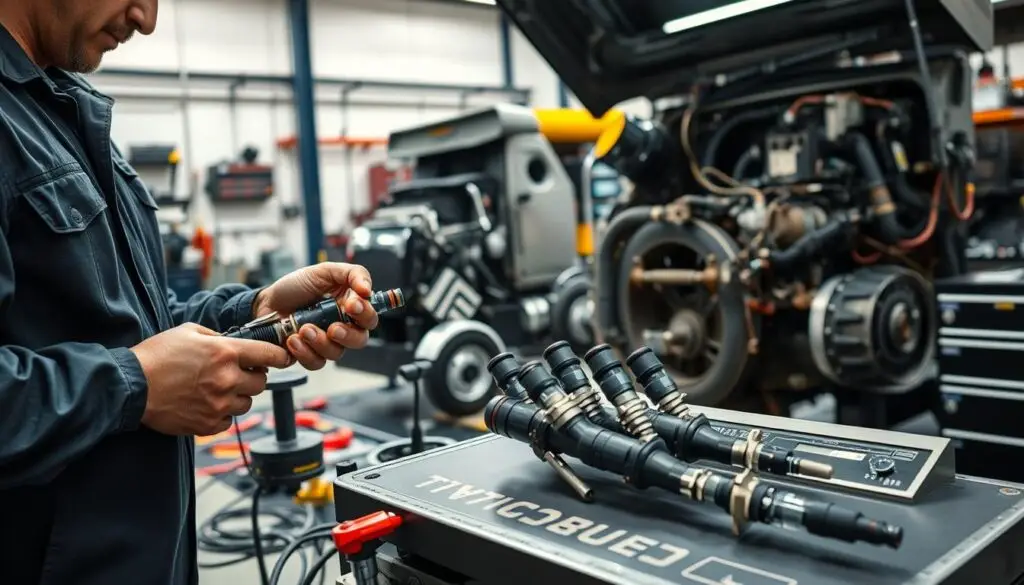
Electrical testing confirms whether injector control circuits function properly. Disconnect the electrical connector from each injector and measure coil resistance using a digital multimeter set to ohms. Compare resistance readings to manufacturer specifications, which typically range between 0.3 and 3.0 ohms depending on injector design.
Test additional electrical parameters including supply voltage verification, ground circuit integrity (should show less than 0.1-ohm resistance), connector condition for corrosion or bent pins, and wiring harness insulation for damage or chafing. Electrical faults often create intermittent symptoms that confuse diagnosis—a corroded connector might work when dry but fail when moisture penetrates.
The HDJ Perspective
In our experience working with fleets across the country, the biggest diagnostic mistake we see is jumping straight to injector replacement based on a single trouble code. The cylinder balance test takes 15 minutes and costs nothing—yet it prevents thousands of dollars in unnecessary parts replacement every year. We’ve seen technicians condemn entire injector sets when the actual problem was a $40 wiring harness connector. Systematic diagnosis isn’t just good practice; it’s the difference between profitable shops and those bleeding money on comebacks.
Repair Options and Replacement Strategies
Determining the most cost-effective approach to failed injectors requires understanding repair capabilities and replacement quality options. The repair versus replace decision significantly impacts both immediate expenses and long-term vehicle reliability.
Professional Cleaning vs. Replacement
Professional injector cleaning can successfully restore function when carbon deposits and soft contaminants cause performance issues. Ultrasonic cleaning equipment uses high-frequency sound waves to remove buildup from internal passages and external nozzle surfaces. This approach works best for early-stage problems before significant wear develops.
However, cleaning cannot repair mechanical wear or electrical failures. Worn needle valves, scored internal surfaces, and damaged seals require component replacement. Cleaning makes economic sense when diagnostics show marginal performance degradation without mechanical damage—costs typically range from $75 to $150 per injector for professional service.
Certain failure modes mandate complete replacement: worn internal components producing excessive return flow, cracked injector bodies, electrical failures including burned solenoid coils, and high-mileage injectors beyond their service life regardless of current symptoms.
OEM, Remanufactured, and Aftermarket Options
Selecting quality replacement components critically impacts repair longevity and overall value. Original Equipment Manufacturer (OEM) injectors represent the highest quality standard, guaranteeing exact fit and performance at $300-$800 per unit with comprehensive warranties.
Remanufactured injectors from reputable rebuilders offer excellent middle-ground value at 30-50% below OEM pricing. Quality remanufacturers use OEM cores and replace all critical wear components to meet or exceed original specifications. However, quality varies dramatically between rebuilders—reputable specialists stand behind their products with warranties matching or exceeding OEM coverage.
| Injector Type | Price Per Unit | Six-Cylinder Set | Expected Service Life |
|---|---|---|---|
| OEM New | $350-$600 | $2,100-$3,600 | 100,000+ miles |
| Premium Remanufactured | $200-$450 | $1,200-$2,700 | 80,000-100,000+ miles |
| Budget Aftermarket | $100-$250 | $600-$1,500 | 20,000-50,000 miles |
Generic aftermarket injectors present the highest risk despite attractive pricing. These components often use inferior materials and loose manufacturing tolerances, with poor atomization characteristics and premature failures commonly occurring within 20,000-30,000 miles. The apparent savings evaporate when considering total job costs—with labor typically requiring 8-10 hours at $100-150 per hour, installing an injector that fails prematurely means paying the entire labor cost again.
Single Unit vs. Complete Set Replacement
The decision regarding replacement scope significantly impacts both immediate expenses and future reliability. Consider this scenario: paying $1,200 in labor to replace one failed injector, then repeating the process six months later for another failure—this approach costs substantially more than replacing all injectors during a single service interval.
Full set replacement makes economic sense for vehicles exceeding 100,000 miles, when diagnostics reveal multiple injectors showing marginal performance, or when engines have experienced severe contamination events. Individual replacement remains appropriate when one unit has clearly failed due to isolated damage while others test within specifications, or for relatively low-mileage vehicles with documented excellent maintenance history.
Understanding Repair Costs and Budget Planning
Professional injector replacement typically involves significant investment in both parts and labor. Complete replacement jobs commonly range from $3,000 to $8,000 when all components are considered. Smart budgeting requires understanding where money goes during the repair process.
Parts and Labor Breakdown
Light-duty diesel trucks—Ram 2500/3500 Cummins, Ford Super Duty Power Stroke, and GM Duramax models—typically see OEM injector prices ranging $350-$600 per unit. With six-cylinder engines requiring full set replacement, parts costs alone total $2,100-$3,600. Heavy-duty commercial engines from Volvo, Mack, Paccar, and Kenworth often use injectors priced between $400-$800 each.
Additional components required for complete replacement add to total costs: O-ring and seal kits ($50-$150), copper crush washers ($5-$15 each), return line seals and gaskets ($20-$100), and fresh fuel filters ($30-$100). Total ancillary parts typically add $150-$400 beyond the injectors themselves.
Labor represents a substantial portion of total repair costs. Engine layout dramatically affects time requirements—some engines provide easy injector access requiring only valve cover removal, while others demand removing turbochargers, intake manifolds, and numerous ancillary components. Most jobs fall in the 8-10 hour range for experienced technicians. Geographic location influences rates significantly: metropolitan areas and dealerships charge $120-$175 per hour, independent diesel specialists $90-$130, and rural shops $80-$110.
$3,000 – $6,000
Typical total cost for professional injector replacement using quality parts on light-duty diesel trucks
Warranty Considerations
Warranty coverage significantly impacts long-term value and should influence parts selection decisions. Quality manufacturers stand behind their products with comprehensive warranties—reputable OEM and remanufactured injectors typically include coverage ranging from one to three years. Understanding warranty terms prevents disputes: clarify whether coverage includes just parts or both parts and labor, whether return of failed components is required, and whether coverage prorates based on time or mileage.
Budget aftermarket injectors often carry limited or no warranty coverage, adding to their poor value proposition since savings evaporate if early failure requires complete reinstallation.
Share Your Injector Diagnostic Experience
Have you developed effective diagnostic techniques or discovered cost-saving repair strategies? Heavy Duty Journal welcomes contributions from experienced technicians and fleet managers. Share your expertise with thousands of industry professionals.
Installation Essentials and Programming Requirements
Successfully completing injector replacement begins with comprehensive preparation and systematic adherence to repair procedures. Shortcuts during any phase can result in fuel leaks, poor performance, or catastrophic engine damage.
Preparation and Removal
Allow the engine to cool completely before beginning work—hot components cause burns and thermal expansion complicates removal. Disconnect both battery terminals to prevent electrical shorts, relieve fuel system pressure according to manufacturer specifications, and clean the engine exterior thoroughly around injector locations using brake cleaner or degreaser. Any contamination entering the fuel system during service can cause immediate injector failure.
Extract injectors from their bores using appropriate techniques for your engine design. Many injectors pull straight out, but seized units may require special slide-hammer extractors. Never pry against injector bodies as precision components damage easily. Immediately cap all open fuel passages and injector ports after removal.
Installation and Torque Specifications
Install new O-rings and seals on each replacement injector, lubricating seals with clean diesel fuel or manufacturer-recommended assembly lubricant. Never reuse old O-rings or copper washers—these single-use components must be replaced during every injector service.
Apply torque specifications precisely according to manufacturer guidelines using a calibrated torque wrench and following the specified tightening sequence. Most procedures require multiple stages with increasing torque values. Under-torquing allows fuel leaks and injector movement, while over-torquing can crack injector bodies or strip threads—both scenarios result in immediate failure requiring complete disassembly.
Programming New Injectors
Modern common-rail diesel engines require injector programming for proper operation. Each injector contains unique calibration data accounting for manufacturing variations—this programming ensures precise fuel delivery across all cylinders. Locate the calibration codes printed on each new injector body or included with replacement parts.
Access your vehicle’s injector coding function through the scan tool’s special functions menu and enter each injector’s unique code into the corresponding cylinder position. Entering incorrect codes or mismatched cylinder positions causes poor performance and excessive smoke. Basic code readers cannot perform injector programming—manufacturer-specific or professional-grade scan tools are required.
Preventive Maintenance to Maximize Injector Life
The best repair is the one you never have to make. A systematic approach to preventive maintenance can save thousands of dollars in repair costs while preventing unexpected breakdowns. By focusing on fuel quality, proper filtration, and early symptom recognition, diesel owners can extend injector life beyond 150,000 miles. Fleet managers can find detailed guidance in TMC’s Recommended Practices Manual, which includes fuel filtration standards and maintenance intervals developed through peer-reviewed industry research.
Fuel Quality and Additives
Fuel quality stands as the single most important factor determining injector lifespan. Purchase diesel from reputable, high-volume stations where fuel turnover prevents degradation and water accumulation. Avoid discount or low-volume stations where fuel may sit in underground tanks for extended periods—stagnant fuel accumulates water, breeds microbial growth, and loses protective properties.
Quality fuel additives serve specific protective functions when selected properly. Additives with detergents help clean existing injector deposits and prevent new accumulation. Lubricity improvers protect injectors and pumps from premature wear. Use additives consistently rather than only when problems appear—regular treatment maintains cleanliness and protection. Fuel quality must meet ASTM D975 specifications for proper injector protection.
Filter Replacement Schedules
Fuel filtration creates the critical barrier preventing contaminants from reaching sensitive injector components. Most manufacturers recommend replacement every 10,000-15,000 miles under normal operating conditions, with annual replacement serving as a minimum schedule even if mileage intervals haven’t been reached. Fleet operators must ensure their maintenance programs comply with 49 CFR Part 396 requirements for systematic vehicle inspection and maintenance.
Severe service conditions demand more frequent filter changes—dusty environments, suspected fuel contamination, high-idle service, and extreme temperature variations. Under these circumstances, reduce intervals to every 5,000-7,500 miles. Replace filters immediately if water contamination is detected or performance symptoms suggest restricted fuel flow. Use quality filters meeting manufacturer specifications—bargain filters with inferior media may not provide adequate protection.
Early Warning Recognition
Early symptom recognition enables preventive intervention before minor issues become major repairs. Slight increases in fuel consumption warrant investigation rather than dismissal. Barely perceptible roughness in idle quality signals developing problems. Occasional light smoke indicates combustion inefficiency requiring diagnosis.
The “wait and see” approach often transforms manageable issues into expensive failures. Early-stage injector problems respond well to cleaning and minor repairs, while advanced failures require complete replacement and may contaminate other system components. Treating the fuel system with the same importance as engine oil maintains reliability—both are lifeblood systems where neglect leads to expensive failures.
Frequently Asked Questions
How do I know if my diesel injector is bad or if another fuel system component is failing?
The cylinder balance test provides definitive answers. Using a professional scan tool, disable each injector individually while monitoring engine RPM drop. A healthy injector causes a noticeable RPM decrease when disabled; a failing injector shows little to no change. This test, combined with return flow measurement showing whether individual injectors leak internally, isolates injector problems from fuel pump, regulator, or sensor issues that produce similar symptoms.
Can I drive with a bad diesel fuel injector?
Driving with a faulty injector is risky and inadvisable. A failing injector causes poor performance, terrible fuel economy, and increased emissions that can damage the DPF system. More critically, severe injector failure can wash protective oil from cylinder walls with raw fuel, dilute engine oil, and damage pistons. Your truck may enter “limp mode,” drastically reducing power to protect the engine. Have faulty injectors diagnosed and repaired promptly to prevent secondary damage that costs far more than injector replacement.
What causes diesel injectors to fail prematurely?
Fuel contamination and inadequate filtration cause the majority of premature failures. Water in fuel creates corrosion and promotes microbial growth. Dirt particles as small as 1-3 microns score precision internal surfaces. Low-quality fuel lacking proper lubricity accelerates wear on needle valves and seats. Excessive idling promotes carbon buildup on nozzle tips. Preventing these conditions through quality fuel sourcing, timely filter replacement, and proper fuel additives extends injector life dramatically.
How much does it cost to replace diesel fuel injectors?
Professional replacement typically costs $3,000-$6,000 for light-duty diesel trucks when using quality parts. This includes OEM or premium remanufactured injectors ($1,500-$3,600 for a six-cylinder set), ancillary parts like seals and filters ($150-$400), and labor ($800-$1,500 for 8-10 hours at typical shop rates). Heavy-duty commercial applications cost more due to higher injector prices. Budget aftermarket parts reduce initial cost but frequently fail within 20,000-30,000 miles, requiring the entire labor investment again.
How often should diesel injectors be replaced?
Most diesel injectors warrant inspection around 100,000 miles, with replacement typically needed between 100,000-150,000 miles depending on operating conditions and maintenance history. Vehicles operating with excellent fuel quality, timely filter changes, and minimal idling can exceed 200,000 miles on original injectors. Fleet managers should schedule diagnostic testing—including cylinder balance and return flow analysis—at 100,000-mile intervals to identify marginal injectors before complete failure occurs.
Taking Action on Diesel Fuel Injector Problems
Protecting your diesel engine from injector failure starts with understanding that these precision components demand consistent attention. Quality fuel, regular filter changes every 10,000-15,000 miles, and early symptom recognition prevent most problems before they escalate into expensive repairs costing $3,000-$8,000 or more.
Ignoring diesel fuel injector failure creates devastating consequences. A single faulty injector can wash protective oil from cylinder walls, dilute engine oil, and damage pistons—turning a $600 part replacement into a $15,000 engine rebuild. The labor investment of 8-10 hours makes quality parts selection critical: cheap injectors that fail within 30,000 miles mean paying that entire labor cost twice.
Systematic diagnosis separates effective repairs from costly guesswork. Moving from basic code reading through cylinder balance tests and return flow analysis identifies problems accurately, ensuring you replace the right components the first time. Whether addressing current symptoms or planning ahead, proper injector maintenance ensures your diesel engine delivers reliable performance well beyond 100,000 miles.
Help Fellow Diesel Professionals
Know a fleet manager or technician who could benefit from this injector diagnostic guide? Share this article to help others avoid costly misdiagnosis and make informed repair decisions.