
Diesel diagnostic codes are standardized five-character alerts generated by your vehicle’s electronic control modules when malfunctions occur. These codes—formally known as Diagnostic Trouble Codes (DTCs)—provide specific information about which system failed and where the problem is located. When your check engine light illuminates, your diesel truck has stored at least one code identifying the exact issue, from minor sensor malfunctions to serious mechanical failures.
The Society of Automotive Engineers developed these standardized codes to help vehicle owners and technicians quickly identify problems across all diesel engines, regardless of manufacturer. Each code follows a precise format: the first character identifies the affected system (powertrain, chassis, body, or network), while the remaining four characters pinpoint the specific component and fault type.
Understanding diesel diagnostic codes empowers fleet managers and technicians to make informed maintenance decisions and avoid unnecessary repairs. Heavy-duty trucks generate unique codes related to diesel particulate filters, selective catalytic reduction systems, exhaust gas recirculation valves, and high-pressure fuel injection—components not found in gasoline vehicles.
Last Updated: December 2025
Key Takeaways
- Code Structure: Diesel diagnostic codes use a five-character format where the first letter identifies the system (P=Powertrain, B=Body, C=Chassis, U=Network) and remaining digits specify the exact malfunction.
- OBD-II Compatibility: All diesel trucks manufactured since 1996 use standardized OBD-II protocols, though diesel-specific systems require enhanced scan tools for complete diagnostics.
- Diesel-Specific Monitoring: Modern diesel engines monitor DPF regeneration, SCR efficiency, DEF quality, EGR flow, and turbocharger boost—systems generating specialized trouble codes.
- Early Detection Value: Reading codes before the check engine light appears catches developing problems while repairs remain affordable—a failing sensor at $150 can prevent injector damage exceeding $3,000.
- Tool Selection: Entry-level scanners ($50-$150) read basic codes, while mid-range tools ($200-$600) access diesel-specific functions like forced DPF regeneration essential for proper diagnosis.
Understanding Diesel Check Engine Light Systems
Modern diesel vehicles communicate potential problems through a sophisticated warning system centered on the check engine light. This amber indicator connects directly to your engine control module, which constantly monitors dozens of sensors throughout the engine, exhaust, and emission control systems. When sensor readings fall outside predetermined parameters, the system stores a diagnostic code and illuminates the warning light.
The complexity of diesel monitoring far exceeds what most operators realize. A typical heavy-duty diesel engine contains 50 to 100 individual sensors feeding information to multiple control modules. These modules track everything from fuel injection timing to turbocharger boost pressure, processing data hundreds of times per second to maintain optimal performance and emissions compliance.
Diesel engines trigger warning lights for issues not found in gasoline vehicles due to their fundamentally different combustion process. Diesel emission control requirements from the Environmental Protection Agency mandate sophisticated aftertreatment systems requiring constant monitoring and occasional intervention.
Modern diesel engines employ extensive sensor networks monitored by electronic control modules to track performance and emissions compliance.
Common Triggers for Diesel Warning Lights
Diesel particulate filter regeneration problems represent the most frequent trigger for check engine lights in modern diesel trucks. The DPF captures soot from exhaust gases, requiring periodic regeneration cycles that burn off accumulated material at temperatures exceeding 1,100°F. When regeneration fails or becomes incomplete due to short-trip driving patterns, the system stores fault codes and may eventually enter reduced power mode.
Other common triggers include exhaust gas recirculation valve malfunctions affecting emission levels, turbocharger boost pressure deviations from expected values, fuel injection system problems affecting combustion quality, and diesel exhaust fluid quality or level concerns. Each trigger requires different diagnostic approaches based on the specific code displayed.
Diesel Versus Gasoline Diagnostic Differences
While both diesel and gasoline vehicles follow OBD-II standards, diesel systems monitor additional components that don’t exist in gasoline powertrains. Diesel vehicles often display multiple warning lights specific to emission control systems—separate indicators for DPF status, DEF level, or SCR system malfunctions reflect the sophisticated technology required for modern diesel emissions compliance.
The diagnostic information stored with diesel codes includes more detailed freeze frame data than gasoline vehicles. Parameters like exhaust temperature, soot loading levels, regeneration cycle counts, and NOx sensor readings help technicians diagnose intermittent problems that might not trigger constant warning lights.
Decoding Diesel Diagnostic Codes: The Five-Character Structure
Diagnostic trouble codes act like digital fingerprints for engine malfunctions. Each five-character code provides specific information about system failures and component locations. The standardized format creates a universal language between different diagnostic equipment and vehicle computers, whether you run Ford Power Stroke, RAM Cummins, or Chevrolet Duramax trucks in your fleet.
The five-character code structure provides layers of diagnostic information from system identification to specific component faults.
The OBD-II Standard for Diesel Engines
The OBD-II standard represents the second generation of onboard diagnostic systems mandated for all vehicles sold in the United States since 1996. Originally developed for gasoline engines, the protocols expanded to accommodate diesel-specific monitoring requirements including particulate filters, selective catalytic reduction, and high-pressure fuel injection systems. Read the On-Board Diagnostic II (OBD II) Systems Fact Sheet from CARB to learn more about standardization requirements.
This standardization benefits diesel fleet operators by ensuring consistent fault reporting across manufacturers. The basic diagnostic code format remains uniform, allowing technicians to quickly identify problems regardless of specific diesel engine brand.
Understanding Each Character Position
Every diagnostic code follows a precise pattern conveying multiple information layers. The first character always appears as a letter (P, B, C, or U), while the remaining four characters are numbers creating over 40,000 possible unique combinations.
The first letter identifies which primary system contains the fault. P codes indicate powertrain issues covering engine, transmission, and fuel delivery. C codes identify chassis problems involving steering, suspension, and braking systems. B codes point to body system malfunctions including climate control and interior electronics. U codes indicate network communication problems between control modules.
The second digit reveals whether the code follows generic standards or manufacturer-specific protocols. A zero indicates universal application across all brands, while numbers 1, 2, or 3 identify manufacturer-specific codes unique to particular diesel engine families.
| Character Position | Information Provided | Possible Values | Diesel Example |
|---|---|---|---|
| First Character | Primary System Affected | P, B, C, U | P = Powertrain |
| Second Character | Code Type | 0 (Generic), 1-3 (Manufacturer) | 0 = Universal Standard |
| Third Character | Subsystem Category | 0-9 (System Groups) | 2 = Fuel/Air Metering |
| Fourth & Fifth | Specific Fault Index | 00-99 (Exact Component) | 87 = Fuel Rail Pressure Low |
Generic vs Manufacturer-Specific Codes
Generic codes provide universal troubleshooting information applicable to all OBD-II vehicles. Starting with zero in the second position, these codes offer baseline diagnostic data interpretable by any technician with standard equipment regardless of vehicle brand.
Manufacturer-specific codes deliver detailed information about proprietary systems unique to particular diesel engines. Ford, RAM, and Chevrolet each maintain specialized code sets providing more precise diagnostics but often requiring brand-specific scan tools for complete interpretation. A generic code might indicate “turbocharger boost pressure too low,” while a manufacturer-specific code could identify “variable geometry turbocharger actuator position sensor circuit malfunction.”
Types of Diesel Code Readers and Scanners
The diagnostic tool market spans a wide range from basic code readers to sophisticated professional systems. Understanding available options helps fleet managers select equipment matching diagnostic needs and technical abilities.
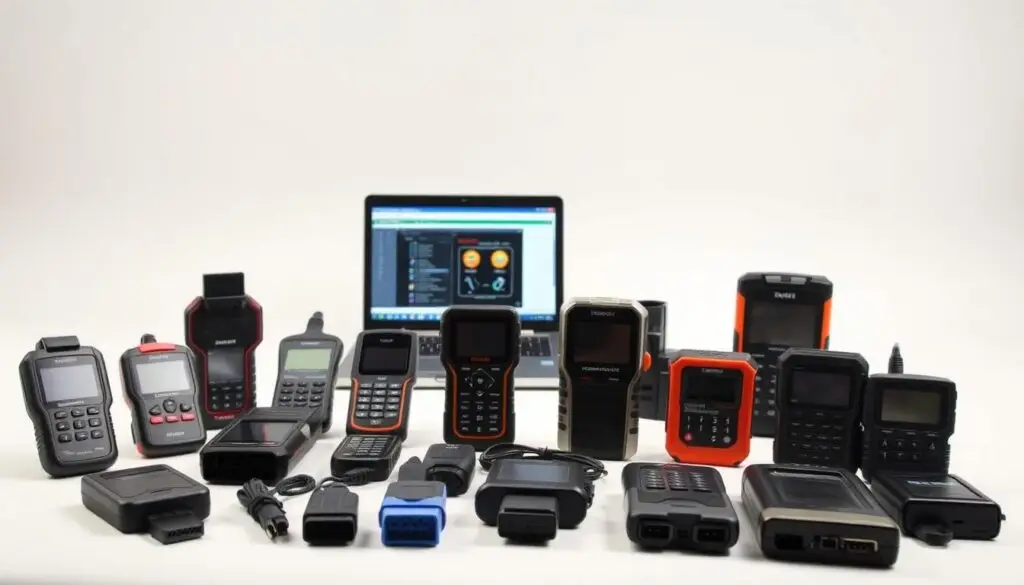
Diagnostic tools range from basic OBD-II readers to professional-grade systems with comprehensive diesel-specific capabilities.
Entry-Level Code Reading Devices
Basic OBD-II code readers represent the most affordable entry point for diesel diagnostics. These straightforward devices connect to your diagnostic port and retrieve trouble codes stored in engine control modules, displaying code numbers with brief descriptions.
Entry-level tools typically cost between $50 and $150. They work well for identifying simple issues before visiting mechanics. However, these readers have significant limitations with diesel vehicles—they only access generic codes and cannot read manufacturer-specific information or diesel-specific parameters like DPF regeneration status or DEF levels.
Mid-Range Scanners With Enhanced Diesel Functions
Advanced scan tools with diesel-specific capabilities offer substantially more functionality than basic readers. These mid-range devices access both generic and manufacturer-specific codes, provide detailed definitions, and often include repair suggestions based on detected problems.
These scanners display live data streams from multiple sensors simultaneously, allowing you to monitor fuel pressure, turbo boost, exhaust temperatures, and emission system parameters in real-time. Many perform diesel-specific functions like initiating DPF regeneration cycles, resetting service intervals, and clearing codes after repairs. Price ranges typically fall between $200 and $600, representing excellent value for fleets performing regular maintenance.
Professional Workshop Diagnostic Systems
Professional-grade equipment provides comprehensive diagnostic capabilities relied upon by diesel repair shops. These sophisticated platforms offer bi-directional control functionality allowing technicians to command specific components for testing—cycling injectors, testing glow plugs, operating EGR valves, or activating fuel pumps to verify proper operation.
Costs range from $3,000 to $10,000 or more, making them impractical for most vehicle owners. However, understanding professional capabilities helps fleet managers appreciate what specialized shops offer when facing complex diesel problems requiring dealer-level diagnostics. Specialized diesel diagnostic equipment retailers maintain comprehensive compatibility databases for popular truck models.
Stay Current on Diesel Diagnostics
Diagnostic technology and troubleshooting techniques evolve constantly. Get expert insights on code interpretation, scanner reviews, and repair strategies delivered to your inbox.
How to Read Diesel Check Engine Light Codes
Reading diagnostic codes requires a systematic approach that any fleet operator can master. The process transforms dashboard warnings into specific, actionable information about engine condition, taking only minutes to complete but providing invaluable insight into vehicle health.
Locate Your Vehicle’s OBD-II Diagnostic Port
The standardized OBD-II connector is typically positioned under the dashboard on the driver’s side, within arm’s reach of the driver’s seat. Most manufacturers place it near the steering column, above the brake pedal area, or behind small removable panels on lower dash trim.
In Ford Super Duty trucks with Power Stroke engines, look beneath the dashboard near the steering column. RAM trucks equipped with Cummins engines often position the port to the left of the steering column, sometimes hidden behind plastic covers. Chevrolet Silverado and GMC Sierra trucks with Duramax engines typically feature the port under the driver’s side dash close to the fuse box panel.
Connect and Retrieve Trouble Codes
Turn your ignition to the “on” position without starting the engine to power electronic systems. Align the code reader’s connector with the OBD-II port and firmly push until it seats completely. Most diagnostic tools power on automatically when properly connected.
Navigate to the main menu and select the code reading option, typically labeled “Read Codes,” “Scan for DTCs,” or “Retrieve Trouble Codes.” The tool communicates with your engine control module for 15 to 30 seconds, retrieving all stored information. Record every code displayed, including both active codes (current problems) and pending codes (intermittent issues).
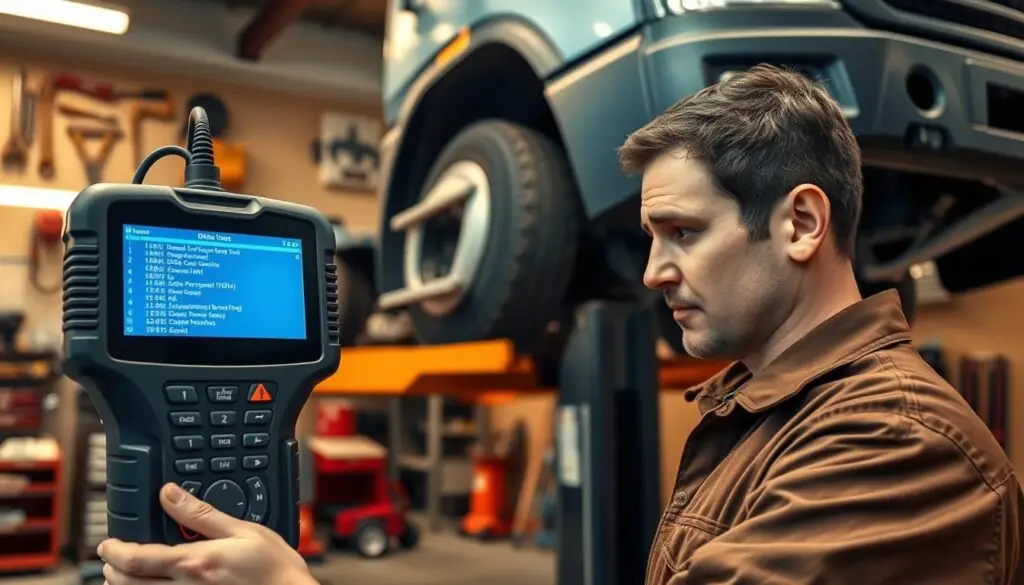
Connecting a diagnostic scanner to the OBD-II port initiates communication with engine control modules to retrieve stored codes.
Interpret Code Information and Severity
After retrieval, understanding what alphanumeric codes mean requires consulting built-in code libraries or online databases. Modern diagnostic tools often categorize codes by urgency, helping prioritize repairs appropriately.
Critical codes require immediate attention to prevent engine damage or ensure safe operation, often relating to emission control systems, fuel delivery problems, or sensor failures affecting engine performance. Understanding the difference between active and pending codes determines repair urgency. Active codes mean problems exist currently and keep check engine lights illuminated. Pending codes indicate systems detected issues but haven’t confirmed them as persistent problems yet.
The HDJ Perspective
The diagnostic landscape has shifted dramatically as emission systems grow more complex. Fleet managers who invest in proper diagnostic capabilities today position themselves to avoid the cascading repair costs that plague operators who ignore early warning codes. We’re seeing shops that master diesel diagnostics gain significant competitive advantage—they catch problems at the sensor-failure stage rather than the $3,000 injector-replacement stage. The trend toward integrated telematics and remote diagnostics will only accelerate this advantage.
Common Diesel Engine Codes and What They Mean
Common diagnostic codes fall into distinct categories corresponding to specific systems like exhaust treatment, fuel delivery, and turbocharger operation. Understanding which system codes relate to helps prioritize repairs and determine whether issues require immediate attention.
Exhaust Gas Recirculation System Codes (P0401-P0409)
EGR system codes are among the most common in modern diesel engines. The exhaust gas recirculation system reduces nitrogen oxide emissions by routing exhaust gases back into combustion chambers. P0401 indicates insufficient EGR flow, often caused by carbon buildup in valves or passages. P0402 signals excessive EGR flow occurring when valves fail to close properly.
Codes P0403 through P0409 relate to EGR valve circuit malfunctions and position sensor issues, indicating electrical problems rather than mechanical flow concerns. These include control circuit malfunctions, range/performance problems, and sensor circuit faults.
Turbocharger and Boost Control Codes (P0234-P0238)
Turbocharger codes are particularly important because turbos are essential to diesel performance and efficiency. P0234 indicates overboost conditions where turbocharger pressure exceeds safe limits—a dangerous condition that can cause engine damage if wastegates fail to control boost pressure properly.
Codes P0235 through P0238 indicate various turbocharger boost sensor circuit malfunctions, typically resulting from sensor failures, damaged wiring, or vacuum line leaks rather than actual turbocharger mechanical problems.
Fuel Rail Pressure Codes (P0087-P0094)
Fuel rail pressure codes address problems with high-pressure fuel systems critical to diesel operation. Modern diesel engines operate at extremely high fuel pressures, often exceeding 25,000 PSI. P0087 signals fuel rail pressure is too low, preventing proper fuel injection. Common causes include failing high-pressure fuel pumps, restricted fuel filters, or internal injector leakage. P0088 indicates fuel rail pressure is too high, typically resulting from fuel pressure regulator failures.
Diesel Particulate Filter Codes (P2002-P2004)
DPF codes indicate problems with particulate filters capturing soot from exhaust gases. P2002 signals DPF efficiency has fallen below acceptable thresholds, appearing when filters become excessively loaded with soot or develop internal damage. Ignored DPF codes can lead to complete filter failure requiring replacement costs often exceeding $2,000.
$2,000+
Average cost of DPF replacement when filter codes are ignored until complete failure
Diesel Exhaust Fluid System Codes (P20E8-P20EE)
DEF system codes address problems with diesel exhaust fluid that SCR systems use to reduce NOx emissions. P20E8 indicates DEF quality issues, signaling fluid has become contaminated or diluted. Codes P20E9 through P20EB relate to DEF level sensor problems, while P20EC through P20EE indicate temperature sensor and heater circuit malfunctions. Understanding these codes helps prevent vehicles from entering limp mode, which restricts vehicle operation until repairs are completed as required by federal transportation regulations.
Troubleshooting and Resolving Code Issues
Effective troubleshooting involves more than just reading codes—it requires strategic problem-solving and proper documentation. After diagnostic readers display trouble codes, you need to determine root causes, decide on appropriate repair approaches, and document everything for future reference.

Systematic troubleshooting workflows ensure accurate diagnosis and lasting repairs for diesel engine problems.
When to Clear Codes and Reset Modules
Understanding when to clear trouble codes is critical for successful repairs. When fault codes are active, you cannot simply reset them—they will return immediately. You need to find root causes and correct problems first before clearing stored codes.
Some diesel-specific systems require special reset procedures beyond simple code clearing, including DPF regeneration counters, DEF system quality sensors, injector adaptation values after replacement, turbocharger actuator position learning, and EGR valve position calibration procedures.
DIY Repairs Versus Professional Service
Deciding between DIY repairs and professional service depends on skill level, available tools, and problem complexity. Capable DIY technicians can typically handle tasks like replacing fuel caps, cleaning mass airflow sensors, or addressing obvious vacuum leaks.
However, complex diesel repairs present significant challenges. High-pressure fuel systems operate at pressures exceeding 30,000 PSI, creating serious safety concerns. Turbocharger replacement requires precise alignment and torque specifications. DPF or SCR catalyst replacement involves expensive components and exhaust system integration.
| Repair Category | DIY Suitable | Professional Recommended |
|---|---|---|
| Sensor Replacement | MAF, IAT, coolant sensors | Pressure sensors, NOx sensors |
| Fuel System Work | Fuel filter changes, cap replacement | Injector replacement, HP pump repair |
| Emissions Components | Air filter replacement, basic cleaning | DPF replacement, SCR catalyst, EGR cooler |
| ECM Programming | Code reading and clearing | Software updates, injector coding |
Using Freeze Frame and Live Data
Freeze frame data provides valuable diagnostic context by capturing snapshots of all sensor readings at exact moments diagnostic codes were triggered. This shows critical parameters including engine RPM, coolant temperature, vehicle speed, calculated load, fuel pressure, and intake air temperature.
Live data monitoring complements freeze frame analysis by showing real-time sensor readings. You can watch parameters change as you operate engines under specific conditions, helping verify repairs have resolved issues and sensors are reading correctly.
Selecting the Right Diagnostic Tool for Your Fleet
Investing in quality diagnostic equipment transforms how you maintain and troubleshoot diesel vehicles. Making informed decisions requires understanding which features matter most for diesel diagnostics and how different tools match your technical abilities and budget.
Essential Capabilities for Diesel Diagnostics
At minimum, any diesel-capable scanner should read and clear generic OBD-II codes, display code definitions, and access basic engine parameters. However, serious diesel diagnostics demand more advanced capabilities including manufacturer-specific code access, diesel system monitoring for DPF status and DEF quality, live data streaming, freeze frame capability, and bi-directional testing.
Comparing Investment Levels
Understanding the relationship between cost and capability helps identify which price tier delivers best value for your diagnostic needs.
| Price Range | Typical Capabilities | Best For |
|---|---|---|
| $50-$150 Entry Level | Basic code reading and clearing, simple definitions | Occasional diagnostics, code verification |
| $200-$600 Mid-Range | Diesel system access, DPF monitoring, live graphing | Regular DIY maintenance, small fleet owners |
| $1,000-$5,000+ Professional | Comprehensive diagnostics, bi-directional control | Professional technicians, repair shops |
For fleet operators performing regular maintenance and repairs, investing in quality mid-range tools often pays for itself quickly. Diagnostic fees at repair shops typically range from $100 to $150 per visit. A capable scanner eliminates these charges while enabling you to diagnose issues before they become expensive failures.
Software Updates and Long-Term Support
Software updates and manufacturer support determine whether your diagnostic investment remains useful as vehicle technology evolves. New diesel truck models appear annually with updated engine management systems requiring corresponding software updates.
Different manufacturers implement various update models including free lifetime updates, subscription-based updates requiring annual payments, or one-time purchases for major revisions. Understanding total cost of ownership beyond initial purchase prices prevents surprises.
Share Your Diagnostic Expertise
Have real-world experience troubleshooting diesel codes or selecting diagnostic equipment? Join Heavy Duty Journal as a guest author and help fellow fleet professionals master these critical skills.
Frequently Asked Questions About Diesel Diagnostic Codes
What is the difference between a check engine light in diesel versus gasoline vehicles?
While both diesel and gasoline vehicles use OBD-II standards and illuminate check engine lights when problems are detected, diesel engines monitor additional systems not found in gasoline powertrains. Diesel vehicles track diesel particulate filter regeneration status, selective catalytic reduction functionality, diesel exhaust fluid levels and quality, and exhaust gas recirculation performance. Diesel check engine lights often indicate more complex and costly repairs due to sophisticated emission control technology including DPF systems and SCR catalysts that can exceed $2,000 to replace.
Can I use a basic OBD-II code reader on my diesel truck?
Yes, basic OBD-II code readers work on diesel trucks for reading generic diagnostic trouble codes since all vehicles follow standardized OBD-II protocols. However, basic readers have significant limitations with diesel-specific systems. They typically cannot access manufacturer-specific codes, view diesel particulate filter regeneration status, check diesel exhaust fluid levels, monitor selective catalytic reduction parameters, or perform specialized procedures like initiating DPF regeneration cycles. For comprehensive diesel diagnostics, advanced scan tools with diesel-specific capabilities are recommended.
How serious are diesel particulate filter codes, and should I address them immediately?
Diesel particulate filter codes vary in severity but should generally be addressed promptly to prevent more serious problems. Codes like P2002 indicate the filter is becoming clogged and may initially be resolved through forced regeneration cycles. However, if DPF codes are ignored, filters can become completely blocked, leading to severe engine performance loss, potential engine damage from excessive exhaust backpressure, and eventually requiring complete DPF replacement which often costs over $2,000. If your vehicle displays DPF warning lights or enters reduced power mode, address issues as soon as possible.
What should I do first when my diesel check engine light comes on?
First note whether the light is steady or flashing. Flashing check engine lights indicate severe problems such as active misfires that can cause catalytic converter damage and require immediate attention—reduce speed and seek service right away. Steady lights indicate problems that should be diagnosed soon but typically don’t require stopping immediately. Next, pay attention to any performance changes such as reduced power, unusual noises, or excessive smoke. As soon as practical, use diagnostic code readers to retrieve and document all stored trouble codes including both active and pending codes.
Why does my diesel truck show multiple diagnostic codes at once?
Multiple simultaneous diagnostic trouble codes can indicate either single root problems affecting multiple systems or several independent issues occurring together. When diagnosing multiple codes, the key is identifying which code represents primary failure and which codes are consequential—triggered because primary problems caused secondary effects. For example, failed diesel particulate filter differential pressure sensors might trigger not only pressure sensor circuit codes but also DPF efficiency codes and turbocharger boost codes because engine control modules make incorrect decisions based on false pressure readings. Address the most basic codes first before moving to complex system efficiency codes.
Mastering Diesel Diagnostic Codes for Fleet Success
Understanding diesel diagnostic codes transforms check engine lights from sources of worry into valuable maintenance tools. Small issues caught early prevent expensive breakdowns and extend vehicle lifespans. The knowledge covered here empowers fleet managers and technicians to make informed maintenance decisions and catch problems before they escalate.
Your diesel engine diagnostics capability starts with selecting appropriate equipment for your needs and understanding the five-character code structure that identifies every malfunction. Regular diagnostic checks catch DPF problems, EGR failures, and DEF system issues before they become major repairs. Keep your diagnostic tools current, document all codes, and address underlying problems before clearing them—your diesel fleet will reward this attention with reliable performance for years to come.
Share This Diagnostic Resource
Help fellow fleet managers and diesel technicians master diagnostic code interpretation. Share this comprehensive guide with your professional network.