
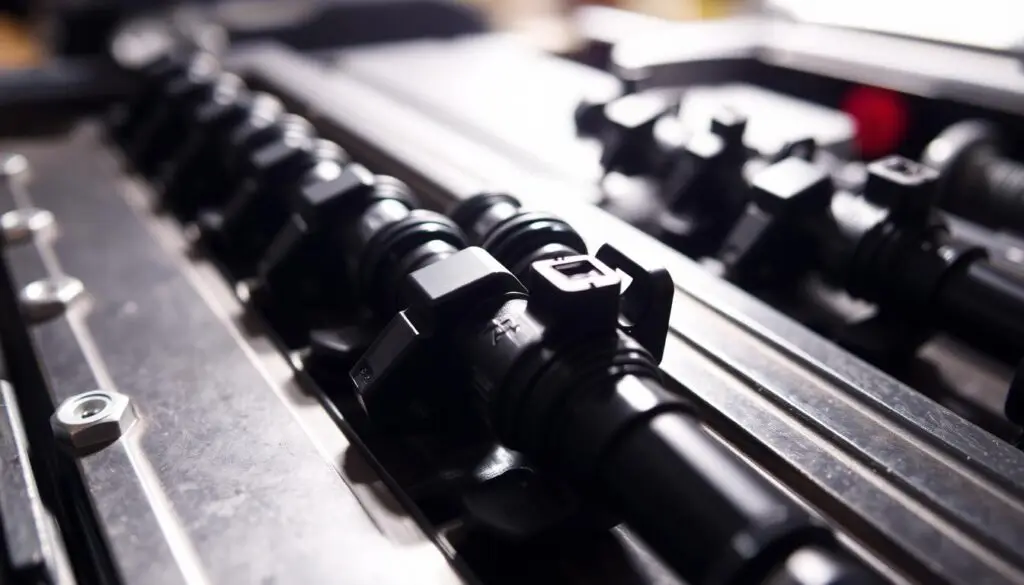
Diesel injector problems are among the most costly and disruptive issues facing fleet managers, diesel technicians, and owner-operators today. When these precision-engineered components fail, the symptoms cascade quickly—rough idling, engine misfires, plummeting fuel economy, and excessive exhaust smoke all signal that immediate attention is required. Modern common rail diesel injectors operate at pressures exceeding 23,000 psi with internal tolerances as tight as 1-3 microns, making them extraordinarily sensitive to fuel contamination and wear.
Understanding how to recognize, diagnose, and resolve diesel fuel injector symptoms protects your investment and prevents costly roadside breakdowns. This guide covers everything you need to know—from identifying early warning signs to performing diagnostic tests, understanding replacement costs, and implementing preventive maintenance strategies that can extend injector lifespan beyond 200,000 miles.
Last Updated: December 2025
Key Takeaways
- Operating Extremes: Modern common rail diesel injectors operate at pressures exceeding 23,000 psi with tolerances between 1-3 microns, making them highly sensitive to fuel contamination and component wear.
- Warning Signs: Rough idling, misfires, 2-5% decrease in fuel economy, black or white exhaust smoke, and hard starting indicate failing injectors requiring immediate diagnosis.
- Primary Failure Cause: Low-grade or contaminated diesel fuel accounts for the majority of injector failures, making fuel quality the most critical preventive factor.
- Replacement Costs: Complete diesel injector replacement typically ranges from $2,500-$6,000 including parts and labor, with individual injectors costing $200-$600 depending on vehicle type.
- Prevention Strategy: Using premium diesel fuel, replacing filters every 10,000-20,000 miles, and adding quality fuel additives significantly extends injector lifespan.
Understanding Diesel Fuel Injectors and Their Function
Diesel fuel injectors represent some of the most precisely engineered components in modern commercial vehicles. These critical parts control how fuel enters the engine, determining everything from power output to fuel economy and emissions compliance. Understanding what these components do and how they operate under extreme conditions provides the foundation for effective diagnosis and maintenance.
Each injector contains incredibly tight tolerances, typically between 1 and 3 microns. For perspective, a human hair measures about 75 microns in diameter. These microscopic clearances allow injectors to control fuel delivery with extreme accuracy, but they also make the components vulnerable to contamination and wear from even the smallest particles in your fuel system.
How Common Rail Diesel Injection Systems Work
The fuel injection system begins at the fuel tank, where diesel passes through multiple filters to remove contaminants. A low-pressure lift pump moves fuel toward the high-pressure fuel pump, which increases fuel pressure dramatically before sending it to the injectors through a shared fuel rail.
In modern common rail diesel systems, fuel reaches pressures exceeding 23,000 psi—with some advanced systems operating above 40,000 psi. These extreme pressures atomize fuel into droplets small enough for efficient combustion. Higher pressure creates a finer mist, which burns more completely and produces fewer emissions.
The Engine Control Unit (ECU) manages injection timing with millisecond precision. It monitors dozens of sensors throughout the engine, including crankshaft position, camshaft position, air temperature, and fuel pressure. Based on this data, the ECU determines exactly when and how long to open each injector, often firing multiple times per combustion cycle.
Types of Diesel Injection Systems
Diesel engines use several distinct injection system designs, each with different advantages in terms of performance, efficiency, and complexity. Common rail systems represent the current standard for most modern diesel engines, using a shared high-pressure fuel rail that feeds all injectors simultaneously with electronic control for each cylinder independently.
Direct injection describes any system where fuel sprays directly into the main combustion chamber rather than a pre-combustion chamber. This approach has become virtually universal because it delivers superior fuel economy and power output. By injecting fuel directly where combustion occurs, these systems achieve better thermal efficiency.
Older mechanical injectors used engine-driven pumps with mechanical timing. While simpler and more robust than electronic versions, they cannot match the precision, efficiency, or emissions performance of modern electronic systems. The tradeoff for electronic precision is increased complexity—electronic injectors require sophisticated wiring, sensors, and computer control.
| Injection System Type | Operating Pressure | Control Method |
|---|---|---|
| Common Rail Diesel | 23,000-40,000+ psi | Electronic (ECU controlled) |
| Direct Injection | 15,000-30,000 psi | Electronic or mechanical |
| Mechanical Injectors | 3,000-15,000 psi | Mechanical pump and governor |
| Electronic Unit Injectors | 25,000+ psi | Electronic solenoid or piezoelectric |
Common Diesel Injector Problems and Failure Modes
Several distinct problems plague diesel fuel injectors throughout their service life. These issues range from simple contamination to complex mechanical failures requiring professional intervention. Recognizing common injector problems helps fleet managers and technicians understand what might be affecting engine performance and plan appropriate repairs.
Contamination and Clogged Injectors
Dirt, debris, and carbon deposits accumulate on injector nozzles and inside fuel passages over time. Clogged injectors cannot deliver the precise spray pattern needed for complete combustion. The result is poor engine performance, increased emissions, and reduced fuel economy that compounds over time.
Poor fuel quality accelerates the formation of dirty injectors. Microscopic particles in low-grade diesel gradually build up on critical surfaces. Even with proper filtration, some contaminants slip through and create restrictions in the narrow passages. Carbon deposits form when fuel doesn’t burn completely, attaching to injector tips and internal components.
Seal Deterioration and Fuel Leakage
O-rings and sealing washers protect against fuel leaks at injector mounting points. These injector seals face constant exposure to high temperatures and chemical stress from diesel fuel. Over time, they harden, crack, or lose their ability to maintain proper compression.
Failed injector seals create visible fuel leaks around the injector body. This condition poses safety risks and creates strong fuel odors in the engine compartment. External leaks also allow air into the fuel system, causing additional performance issues that compound the original problem.
Internal Component Wear
Internal leaks occur when high-pressure fuel bypasses worn seating surfaces inside the injector. Ball seat erosion represents the most common form of this problem. The extremely high pressures gradually wear away precision-machined surfaces where the injector needle contacts its seat.
When internal leaks develop, injectors deliver incorrect fuel quantities. The engine control module detects these irregularities through balance rate monitoring. High balance rates indicate one or more injectors aren’t performing to specification, producing symptoms like rough idle, poor fuel economy, and difficulty starting.
Electronic and Solenoid Failures
Modern diesel injectors rely on electromagnetic solenoids or piezoelectric actuators for precise control. Solenoid failure prevents the injector from opening or closing at the correct time. Electrical shorts, open circuits, or mechanical wear within the solenoid assembly cause these malfunctions.
Contamination inside the injector body can affect solenoid operation. Even tiny particles interfere with the precise movements required for proper fuel delivery. Voltage problems in the vehicle’s electrical system—including corroded connectors or damaged wiring harnesses—contribute to premature solenoid wear and often trigger diagnostic trouble codes.
Recognizing Symptoms of Failing Diesel Fuel Injectors
Your diesel engine communicates problems through specific symptoms that point to injector failures. Learning to recognize these warning signs early allows you to address issues before they cause extensive damage or leave drivers stranded. Most injector symptoms develop gradually, giving fleet managers time to schedule repairs.
Engine Misfires and Rough Idle
When fuel injectors deliver inconsistent fuel amounts, your engine loses its smooth rhythm. The result is a noticeable rough idle that makes the entire vehicle shake or vibrate while stopped. An engine misfire occurs when one or more cylinders fail to fire properly due to insufficient or excessive fuel delivery.
These symptoms often worsen when the engine is cold and may improve slightly as it warms up. However, the problem typically returns and becomes more persistent over time without proper repair. The steering wheel, seats, and dashboard may vibrate more than normal, especially at idle.
Decreased Fuel Economy
Faulty injectors that don’t atomize fuel properly create rich or lean fuel mixtures that waste diesel. This inefficiency shows up clearly when you notice poor fuel economy despite normal driving habits. The decrease typically ranges from 2% to 5% initially but can worsen significantly as injector problems progress.
A truck that previously averaged 8 miles per gallon might drop to 7.5 or lower. This adds up to substantial costs over time, especially for commercial vehicles with high annual mileage. Tracking fuel consumption through multiple tank fills helps identify this problem early before it becomes severe.
Power Loss and Poor Acceleration
Insufficient or improperly timed fuel delivery prevents your diesel engine from producing its designed power output. The loss of power becomes especially noticeable when climbing grades, merging onto highways, or pulling heavy loads. Vehicles feel sluggish and unresponsive compared to normal performance.
Poor acceleration accompanies this power deficit. When drivers press the accelerator, the engine responds slowly or hesitates before building speed. This throttle lag creates dangerous situations when quick acceleration is needed for safety on the road.
Abnormal Exhaust Smoke
The color of exhaust smoke provides valuable diagnostic information. Black smoke indicates excessive fuel entering the cylinders from leaking or stuck-open injectors. This rich condition wastes fuel and creates visible pollution.
White smoke suggests unburned fuel passing through the exhaust system. This occurs when weak injectors fail to atomize fuel properly or when fuel delivery timing is incorrect. Blue smoke typically indicates oil burning rather than direct injector failure, but excessive fuel from faulty injectors can wash lubricating oil from cylinder walls.
Hard Starting and Check Engine Light
Worn injectors that don’t maintain proper fuel pressure make diesel engines difficult to start. Hard starting becomes especially problematic in cold weather when fuel viscosity increases. Extended cranking times stress the battery and starter motor unnecessarily.
Modern diesel engines feature sophisticated computer systems that monitor fuel delivery constantly. When the ECU detects problems, it illuminates the check engine light. Common codes related to injector problems include P0087 (low fuel rail pressure), P0201-P0208 (injector circuit malfunctions), and P0300-P0308 (misfire codes).
90%+ of injector failures
are linked to fuel quality issues according to diesel fuel system manufacturers
What Causes Diesel Injector Failure
Diesel fuel injectors don’t fail randomly—specific conditions and factors accelerate their deterioration. Understanding these root causes helps fleet managers protect their investment and avoid expensive repairs. Most injector failures stem from preventable issues related to fuel quality, contamination, and operating conditions.
Low-Grade Fuel and Contamination
Poor fuel quality stands as the single most significant threat to diesel injector longevity. Fuel from questionable sources may contain impurities, fail to meet ASTM D975 specifications for diesel fuel, or lack adequate lubricity additives. These deficiencies create an environment where accelerated wear occurs rapidly.
Modern common rail systems operate with tolerances between 1 and 3 microns. Even microscopic particles in contaminated fuel can damage precision components. Dirt, debris, and metal particles act like sandpaper inside the injector, scoring surfaces and disrupting fuel delivery mechanisms.
Water Contamination
Water enters diesel fuel systems through multiple pathways. Condensation forms inside fuel tanks during temperature changes, especially in humid climates. Contaminated fuel from suppliers or damaged tank seals also introduce moisture into the system.
The presence of water creates several destructive conditions. Corrosion attacks precision injector components made from hardened steel. Surface pitting and rust compromise the tight tolerances required for proper operation. Perhaps most concerning is microbial growth—bacteria and fungi thrive at the water-fuel interface, producing acidic byproducts and sludge.
Carbon Deposit Accumulation
Carbon deposits form naturally during combustion but become problematic when they accumulate on critical injector components. Incomplete combustion produces soot that gradually builds up on injector tips and internal surfaces. This process accelerates when engines run at lower temperatures or with poor-quality fuel.
Internal Diesel Injector Deposits (IDID) represent a particularly troublesome condition. Carbon buildup on injector needles causes them to stick or move sluggishly. When needles don’t operate smoothly, fuel spray patterns become distorted and delivery timing suffers.
Operating Condition Stress
Extreme operating conditions push injectors beyond their normal stress levels. Extended idling ranks among the most damaging habits—idle periods allow combustion chambers to cool, promoting incomplete combustion and carbon buildup on injector tips.
Overheating poses serious risks to injector integrity. When coolant temperatures exceed normal limits or exhaust gas temperatures spike, injector components can warp or lose their precise calibration. Frequent heavy loads and aggressive driving patterns also accelerate injector fatigue in commercial applications.
Stay Current on Diesel Technology
Get expert insights on diesel maintenance, diagnostics, and fleet management strategies delivered to your inbox weekly.
How to Diagnose Diesel Fuel Injector Issues
Accurate injector diagnosis starts with understanding which tools and techniques will pinpoint the exact source of engine troubles. Proper testing saves time and money by identifying failing components before you invest in unnecessary repairs. A methodical approach combines visual observations with electronic diagnostics to confirm injector problems.
Visual Inspection Techniques
A thorough visual inspection should always be your first diagnostic step. External clues often reveal injector problems without requiring specialized equipment. Start by examining each injector body for fuel staining or wetness around the seals—dark residue or diesel smell indicates external leaks.
Check all fuel lines connected to the injectors for cracks, wear, or loose fittings. Inspect electrical connectors on each injector for corrosion, damage, or loose pins. Green corrosion or white powder buildup interferes with proper electrical signals and can cause intermittent faults.
OBD-II Diagnostic Scanning
Modern diesel engines continuously monitor fuel system performance through numerous sensors. An OBD-II scanner retrieves diagnostic trouble codes that identify specific problems. Professional-grade scanners display live data including fuel pressure readings, injector pulse width, and balance rates.
Many diesel vehicles allow injector balance rate viewing through the scanner. This data shows relative fuel delivery for each cylinder. Balance rates outside normal parameters indicate which injectors deliver incorrect fuel amounts. Common codes include P0087 for low fuel rail pressure and P0201-P0208 for individual injector circuit malfunctions.
Cylinder Balance Testing
The cylinder balance test identifies which cylinder contains a problematic injector. This procedure electronically disables each injector in sequence while monitoring engine rpm drop. Cylinders with failing injectors show significantly different rpm changes compared to healthy ones.
During the test, a properly functioning cylinder causes noticeable rpm drop when its injector shuts off. Weak or failed injectors already contribute less power, so disabling them produces minimal rpm change. Balance rate tests measure relative fuel delivery in cubic millimeters per stroke—deviations of 4.0 mm³/stroke or higher indicate problems.
Injector Return Flow Testing
The return flow test (leak-off testing) measures how much fuel each injector returns to the tank. This hands-on method reveals internal wear or leakage that compromises injection efficiency. Excessive return flow indicates failing seals or worn internal components.
To perform this test, disconnect return fuel lines from each injector and route individual lines into graduated containers. Run the engine at idle and measure fuel return from each injector over a specific time period. Normal return flow typically ranges from 10-30 ml per minute—excessive flow over 60 ml per minute suggests internal leakage requiring replacement.
Compression Testing
A compression test rules out mechanical problems that mimic injector symptoms. Worn piston rings, damaged valves, or blown head gaskets produce similar performance issues. Testing compression ensures you’re addressing the actual problem rather than replacing injectors unnecessarily.
Healthy diesel engines typically show compression between 350-450 psi, though specifications vary by design. Cylinder-to-cylinder variation should remain within 10% of the highest reading. If compression tests normal but symptoms persist, injector problems become the likely culprit.
Diesel Fuel Injector Replacement: Costs and Considerations
Replacing diesel fuel injectors is a major service decision requiring understanding of costs, benefits, and technical requirements. The choice between cleaning existing injectors and complete replacement depends on failure severity, vehicle age, and long-term reliability goals.
Parts Costs by Vehicle Type
Diesel injector prices span a broad range depending on vehicle application. For the Ford F-250 with 6.7L Power Stroke engine, OEM injectors typically cost $300-500 each, with complete sets of eight ranging from $2,400 to $4,000. The Chevrolet Silverado 2500 with 6.6L Duramax uses injectors priced at $250-450 each.
For the Ram 2500/3500 with 6.7L Cummins engine, individual injector costs run $300-600 each, with complete replacement sets ranging from $2,400 to $4,800. European diesel passenger vehicles like Volkswagen TDI models use injectors priced at $200-400 each, with four-cylinder engines requiring only four units.
| Vehicle Application | Cost Per Injector | Complete Set Cost |
|---|---|---|
| Ford F-250/350 (6.7L Power Stroke) | $300-500 | $2,400-4,000 |
| Chevrolet/GMC (6.6L Duramax) | $250-450 | $2,000-3,600 |
| Ram 2500/3500 (6.7L Cummins) | $300-600 | $2,400-4,800 |
| Volkswagen TDI (2.0L) | $200-400 | $800-1,600 |
Labor Costs and Time Requirements
Labor represents a substantial portion of total injector replacement cost. Most diesel engines require 6-12 hours depending on design and accessibility. Typical shop rates of $100-150 per hour translate to labor costs of $800-1,500 for most applications.
Some engines present exceptional challenges. Certain Ford Power Stroke applications may require cab removal for proper injector access. The early LB7 Duramax demands extensive disassembly to reach injectors beneath valve covers. These complex jobs can extend to 12-15 hours of shop time.
The HDJ Perspective
The evolution of diesel injection technology over the past two decades has been remarkable—but it has also raised the stakes for maintenance and fuel quality. Fleet managers who view injector care as an operational investment rather than an expense consistently see lower total cost of ownership and fewer unplanned downtime events. The $200-500 annual cost of premium fuel, quality filters, and additive programs is a fraction of a single injector replacement job, making prevention the clear economic choice for any serious commercial operation.
Single Injector vs. Complete Set Replacement
Installing all new injectors simultaneously ensures balanced fuel delivery across all cylinders. Matched flow characteristics prevent driveability issues that sometimes occur with mixed old and new components. This approach also eliminates the risk of additional failures shortly after repair.
The labor involved typically represents 60-70% of total service costs. Replacing a complete set during one service visit avoids paying labor charges repeatedly as individual injectors fail over time. Single injector replacement makes sense primarily for low-mileage vehicles under 75,000 miles with isolated failures.
OEM vs. Aftermarket vs. Remanufactured
OEM injectors from manufacturers like Ford, GM, Bosch, or Delphi offer guaranteed quality and proper specifications. These factory-grade components include comprehensive warranty coverage but command premium prices.
Aftermarket injectors from reputable manufacturers can deliver quality approaching OEM standards at lower cost. However, quality varies significantly between manufacturers—careful brand selection is essential. Remanufactured injectors represent the least expensive option but carry the highest risk, with many failing to meet original specifications.
Preventing Diesel Injector Problems
The most effective way to avoid expensive injector repairs is implementing a comprehensive prevention strategy. Proactive maintenance extends injector lifespan well beyond 200,000 miles while maximizing engine performance and reliability throughout the service interval.
Use Premium Quality Diesel Fuel
Fuel quality stands as the single most important factor in injector longevity. Premium diesel from reputable, high-volume stations contains superior detergent packages and lubricity additives that actively protect injector components. These formulations prevent deposit formation while lubricating precision parts.
Purchase fuel from branded truck stops or major retailers where inventory turnover is high. The fuel should meet or exceed EPA ultra-low sulfur diesel requirements and industry specifications. Avoid purchasing from low-volume stations or facilities with questionable maintenance practices.
Maintain Fuel Filtration Systems
Fuel filters serve as the first line of defense against contamination. Modern diesel injectors require extremely clean fuel due to tolerances as tight as 1-3 microns. Replace filters according to manufacturer intervals—typically every 10,000-20,000 miles depending on operating conditions.
Always use quality filters meeting or exceeding OEM specifications. Premium filters provide better filtration efficiency and water separation capabilities. Check water separator drains regularly, especially in humid climates, and drain accumulated water at each oil change.
Implement Fuel Additive Programs
Quality fuel additives complement premium fuel by providing additional protection. Modern ultra-low sulfur diesel lacks natural lubricity that older formulations provided. Additives restore this property while offering multiple benefits for injection system health.
Detergent additives clean existing deposits from injector nozzles while preventing new carbon buildup. Lubricity improvers reduce friction between moving injector components. Cetane boosters improve fuel ignition quality, reducing combustion stress on injectors. Use reputable additive brands at recommended dosages throughout the year.
Schedule Regular Inspections
Have injectors inspected by qualified diesel technicians every 100,000 miles using balance rate tests or flow bench analysis. These diagnostic procedures identify injectors beginning to fail before symptoms become obvious. Early detection allows planned replacement rather than emergency repairs.
Monitor engine performance continuously for early warning signs. Address symptoms promptly rather than waiting for complete failure. Maintain cooling system health to prevent overheating, which accelerates injector wear. Document all maintenance activities to track performance trends.
| Maintenance Task | Interval | Prevention Benefit |
|---|---|---|
| Premium Fuel Usage | Every Fill-Up | Prevents deposits, provides lubrication |
| Fuel Filter Replacement | 10,000-20,000 miles | Blocks contaminants from injectors |
| Fuel Additive Treatment | Every tank or monthly | Cleans deposits, enhances fuel properties |
| Injector Inspection | Every 100,000 miles | Identifies problems before failure |
When to Seek Professional Diesel Service
Understanding when to seek professional help saves time, money, and prevents further engine damage. While basic maintenance and simple diagnostic checks are accessible to many, diesel fuel injection systems present unique challenges requiring specialized expertise and equipment.
Limitations of DIY Diagnosis
Home mechanics face significant barriers when diagnosing modern diesel fuel injection problems. Professional-grade scan tools with diesel-specific capabilities cost thousands of dollars and require regular software updates. Flow bench testing—which measures precise fuel delivery rates under controlled conditions—requires equipment most shops don’t possess.
Modern common rail systems operate at pressures exceeding 23,000 psi, requiring extensive technical knowledge and specialized safety procedures. Many diesel injectors also require programming or adaptation procedures after installation using factory-level diagnostic software.
Signs Professional Service Is Needed
Persistent problems after basic maintenance indicate the need for professional diagnosis. If replacing fuel filters, using quality fuel, and adding fuel system cleaners hasn’t improved performance, the issue likely requires advanced diagnostics.
Check engine lights accompanied by multiple or complex diagnostic codes often require professional interpretation. Vehicle-specific complications—like engines requiring cab removal for injector access—demand specialized tools and experience. Safety concerns with high-pressure fuel systems should always trigger a call to qualified professionals.
Selecting a Qualified Diesel Technician
Seek shops or technicians with specific diesel experience rather than general automotive repair backgrounds. ASE certifications provide objective evidence of technical competency—the A9 certification specifically covers diesel engine repair. Manufacturer-specific training credentials add another layer of qualification.
Verify the shop has proper diagnostic equipment and injector testing capabilities. Request detailed written estimates before authorizing work. A qualified mechanic will explain what testing is needed, what the diagnostic fee covers, and provide comprehensive estimates once problems are identified.
Share Your Diesel Expertise
Have specialized knowledge in diesel diagnostics, fuel systems, or fleet maintenance? Join Heavy Duty Journal as a guest author and share your expertise with thousands of industry professionals.
Frequently Asked Questions
What are the most common symptoms of diesel injector problems?
The most common symptoms include rough idling or engine misfires, noticeable decrease in fuel economy (typically 2-5% loss), loss of power during acceleration, black or white exhaust smoke, difficulty starting (especially in cold weather), unusual knocking or ticking noises, illuminated check engine light with codes like P0087 or P0201-P0208, and raw diesel fuel smell around the engine bay from external seal leaks.
How much does diesel fuel injector replacement cost?
Complete diesel injector replacement typically costs $2,500-$6,000 including parts and labor. Individual injectors range from $200-$600 depending on vehicle type. For popular diesel trucks like Ford Power Stroke, Duramax, or Cummins applications, complete sets of eight injectors cost $2,000-$4,800 in parts alone. Labor adds $800-$1,500 for most applications (6-12 hours at shop rates of $100-$150 per hour).
Can diesel fuel injectors be cleaned instead of replaced?
Minor carbon deposits and surface contamination often respond well to professional cleaning using ultrasonic baths or specialized solutions, potentially saving significant cost. However, severe internal wear, ball seat erosion, damaged nozzles, or failed solenoids require replacement. Professional flow bench testing provides definitive data about whether cleaning is viable or if replacement is necessary for reliable operation.
What causes diesel injector failure?
Poor fuel quality and contamination cause the majority of diesel injector failures. Low-grade diesel may contain impurities, lack adequate lubricity additives, or fail to meet ASTM D975 specifications. Water contamination accelerates corrosion and promotes microbial growth. Carbon deposits from incomplete combustion restrict fuel passages. Normal wear from operating pressures exceeding 23,000 psi and millions of injection cycles also contributes to eventual failure.
How long do diesel fuel injectors typically last?
Diesel fuel injector lifespan varies based on fuel quality, maintenance practices, and operating conditions. Most manufacturers recommend inspection around 100,000 miles, though actual lifespan can range from 75,000 miles to over 200,000 miles with proper care. Using premium fuel, maintaining clean filters, and using quality additives significantly extends service life. High-mileage commercial vehicles with original injectors typically require closer monitoring after 150,000 miles.
Should I replace one diesel injector or all of them?
Complete set replacement is generally recommended for high-mileage vehicles (over 100,000 miles) because remaining injectors typically approach similar wear levels. This ensures balanced fuel delivery, avoids repeated labor costs, and often provides better parts pricing. Single injector replacement makes sense for low-mileage vehicles under 75,000 miles with isolated mechanical damage or when budget constraints require staged repairs.
Addressing Diesel Injector Problems: Key Action Steps
Recognizing diesel injector problems early saves money and prevents extensive engine damage. These precision components operate under extreme conditions—pressures exceeding 23,000 psi with micron-level tolerances—and require careful attention to perform reliably throughout their service life.
Start with quality fuel from reputable sources and maintain your filtration system religiously. When symptoms appear—rough idle, decreased fuel economy, abnormal smoke, or hard starting—prompt diagnosis identifies the root cause before minor issues become major repairs. Professional testing confirms whether cleaning, repair, or replacement provides the best solution for your specific situation.
View injector care as an investment in operational reliability rather than an expense. The fuel system powers your diesel engine’s performance, and keeping injectors in optimal condition reduces downtime, lowers operating costs, and extends engine life across your entire fleet.
Share This With Your Network
Help fellow fleet managers and diesel technicians understand injector diagnosis, costs, and prevention strategies. Share this guide with your professional network.


