
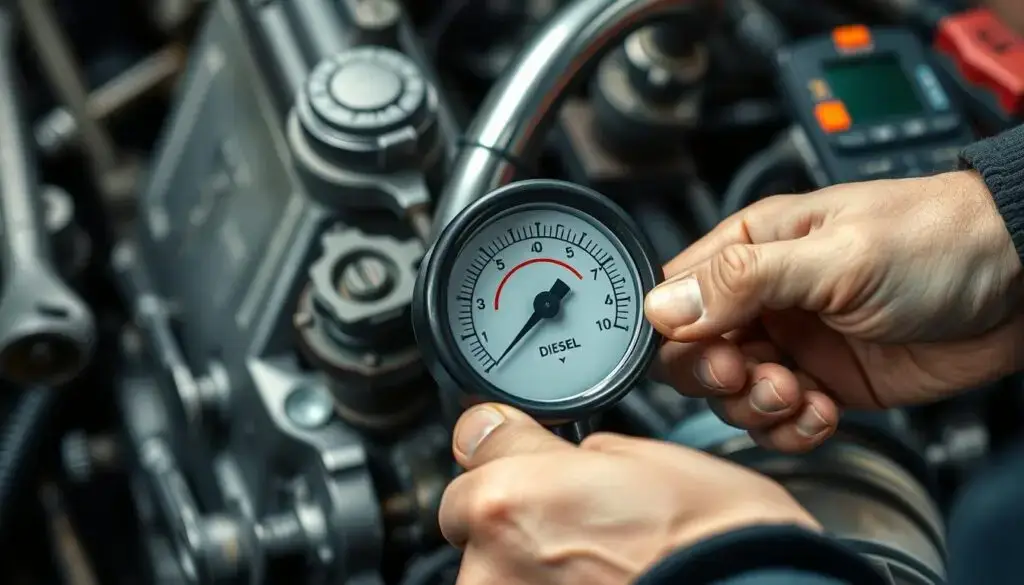
Diesel low fuel pressure causes immediate performance problems that range from hard starting to complete power loss under load. When fuel delivery drops below manufacturer specifications, your engine triggers fault codes, runs rough, and risks expensive damage to high-pressure injection components. Recognizing the warning signs and understanding diagnostic procedures helps fleet managers and diesel technicians address these issues before minor problems become major repairs.
Modern diesel engines rely on precise fuel pressure to achieve proper combustion. The low-pressure circuit typically operates between 40 and 80 psi, with ideal idle pressure at 60-70 psi. When readings fall below 38 psi, the engine control module triggers diagnostic trouble codes like P0087. This guide covers the complete diagnostic and repair process for resolving fuel pressure problems, from initial symptom recognition through pump testing and component replacement.
Last Updated: December 2025
Key Takeaways
- Normal pressure range: Low-pressure fuel circuits operate at 40-80 psi, with 60-70 psi at idle; pressure below 38 psi triggers fault codes and limits engine performance.
- Primary symptoms: Extended cranking beyond 5 seconds, power loss under load, rough idle with misfires, and P0087 diagnostic codes indicate fuel delivery problems.
- Common causes: Clogged filters, worn lift pump components, and air infiltration through compromised seals account for most pressure loss conditions.
- Diagnostic approach: Accurate diagnosis requires both mechanical pressure gauges and electronic scan tools to compare actual versus commanded pressure values.
- Prevention focus: Filter replacement every 10,000-15,000 miles and quality fuel sourcing prevent costly pump failures and injector damage.
Understanding Diesel Fuel System Pressure Requirements
Modern diesel engines use dual-stage pressure architecture that differs fundamentally from gasoline fuel systems. The complexity of this design demands precise operation across both low-pressure supply and high-pressure injection circuits to achieve optimal combustion and performance.
Professional diesel technicians recognize that fuel pressure issues rarely appear as sudden failures. Instead, symptoms develop gradually as components wear and contamination accumulates. Early detection prevents minor issues from cascading into major repairs that sideline equipment and drain maintenance budgets.
Two-Stage Fuel Delivery Architecture
Diesel engines employ coordinated low-pressure and high-pressure stages working in sequence. The first stage uses a lift pump (also called transfer pump or supply pump) that draws fuel from the tank and delivers it to the high-pressure pump inlet. This low-pressure circuit maintains pressure between 40 and 80 psi, ensuring steady fuel supply to downstream components.
The second stage dramatically increases pressure through the high-pressure pump—commonly a CP3 or CP4 design in modern applications. This pump elevates fuel delivery pressure to levels exceeding 20,000 psi before sending it to the common rail accumulator. According to SAE International fuel system standards, failure at any point in this pathway disrupts combustion efficiency and triggers diagnostic fault codes.
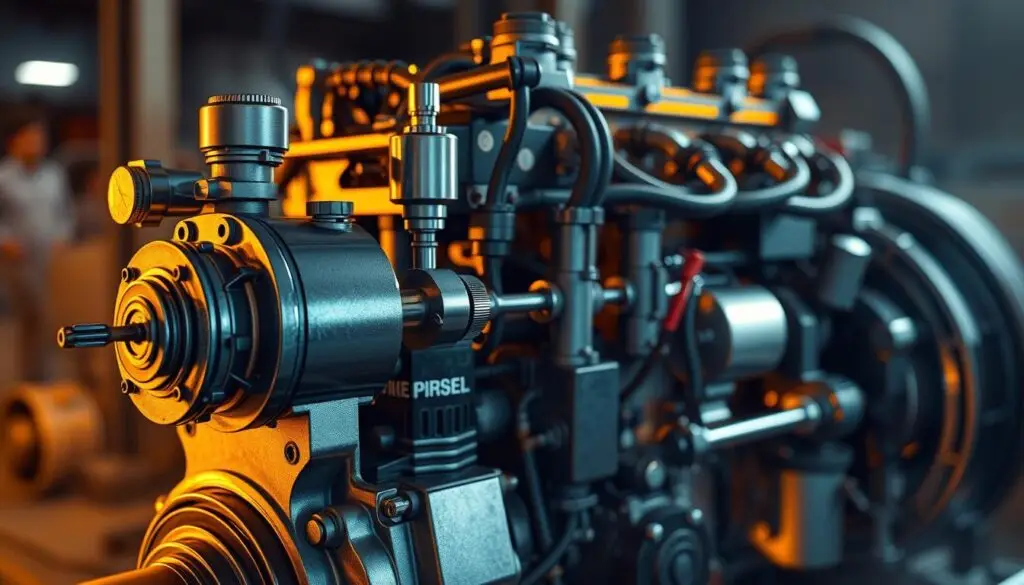
Modern diesel fuel systems use two-stage pressure architecture with lift pumps supplying high-pressure injection pumps
Optimal Pressure Specifications for Commercial Diesel Engines
The low-pressure supply circuit requires specific pressure ranges to feed the high-pressure pump adequately. Fuel delivery pressure should remain between 40 and 80 psi during normal operation, with ideal idle pressure narrowing to 60-70 psi for most diesel engines.
Consistency matters as much as absolute pressure values. The system must maintain minimum pressure of 60 psi under all circumstances to prevent air entry and ensure proper high-pressure pump operation. The American Transportation Research Institute notes that fuel system failures rank among the top causes of roadside breakdowns for commercial fleets.
Recognizing Warning Signs of Diesel Low Fuel Pressure
Fuel pressure problems reveal themselves through distinct symptoms that owners and technicians should recognize immediately. Understanding these warning signs helps address issues before they progress to expensive repairs or roadside breakdowns.
Most fuel pressure issues develop gradually rather than suddenly. Operators might notice one symptom initially, then others appear as the problem worsens. Paying attention to changes in engine behavior, especially during cold starts or under heavy loads, prevents minor inconveniences from becoming major failures.
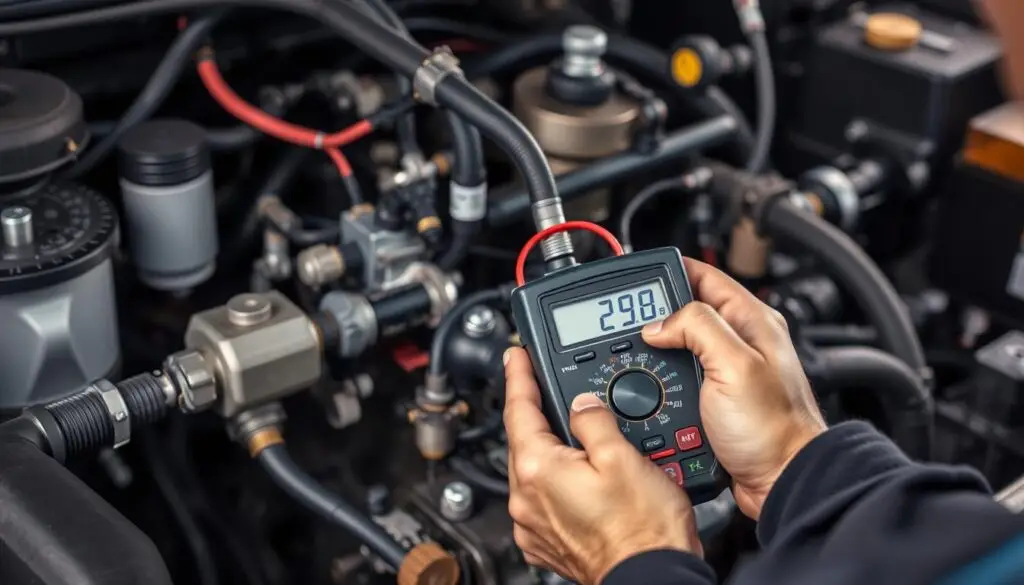
Extended cranking time serves as the primary early warning sign of developing fuel pressure problems
Hard Starting and Extended Cranking
Healthy diesel engines fire up within three to five seconds of cranking under normal conditions. When fuel pressure drops, operators experience hard starting that requires extended cranking periods of 10 to 15 seconds or longer. The engine may crank repeatedly without catching, or it might start briefly then stall immediately.
Cold weather makes starting problems more noticeable because low fuel pressure prevents proper fuel atomization. Operators might also smell raw diesel from the exhaust during prolonged cranking, indicating incomplete combustion and fuel waste.
Performance Loss and Throttle Response Issues
Inadequate fuel delivery creates noticeable power loss during acceleration and under load. Engines feel sluggish when merging onto highways or climbing grades. Throttle response becomes delayed, and engines struggle to maintain speed when pulling trailers or carrying heavy cargo.
This performance drop occurs because the fuel system cannot meet combustion demands. The high-pressure pump fails to deliver sufficient fuel volume to injectors when called upon, creating frustrating power deficits during situations that previously felt effortless.
Rough Idle and Cylinder Misfires
Inconsistent fuel pressure causes rough idle with noticeable vibration through the steering wheel and floor. Engines may shake or shudder at idle as cylinders receive uneven fuel amounts. Scan tools might display cylinder balance fault codes or misfire indicators pointing to specific cylinders.
36%
of fleet breakdowns involve fuel system issues, according to American Transportation Research Institute data
Primary Causes of Fuel Pressure Problems in Diesel Engines
Understanding what causes fuel pressure to drop helps mechanics diagnose problems faster and more accurately. Three main issues create most low pressure situations: restricted fuel flow through filtration systems, mechanical wear inside pump assemblies, and air entering the system through compromised seals.

Visual inspection of fuel filters often reveals contamination patterns that explain pressure loss
Fuel Filter Blockages and Contamination
Clogged fuel filters rank among the most frequent causes of pressure loss in diesel engines. Filters trap particles, water droplets, and debris before they reach sensitive injection components. Over time, these contaminants accumulate and restrict fuel flow, creating back pressure that limits delivery volume.
Water contamination presents particular problems because it promotes microbial growth inside fuel tanks and filter housings. This biological contamination creates dark, gel-like substance that mechanics commonly call diesel bug. The sludge blocks filter media and starves engines of fuel even when pumps generate adequate pressure.
Worn Lift Pump and Injection Pump Components
Internal wear transforms healthy fuel pumps into underperforming components that cannot maintain system pressure under load. Both lift pumps and high-pressure injection pumps contain seals, diaphragms, and roller assemblies that degrade with age and mileage.
Worn pump components lose their ability to generate adequate pressure, especially under heavy load conditions. Internal bypass routes open up as seals deteriorate, allowing fuel to recirculate inside the pump instead of building pressure in delivery lines. High-mileage diesel engines frequently experience pump degradation after 150,000 miles of operation.
Air Infiltration Through Supply Lines
Air infiltration on the suction side of diesel fuel systems creates pressure problems that confuse many diagnosticians. Low-pressure supply lines operate under vacuum during normal operation, meaning even tiny leaks draw air inward rather than pushing fuel outward.
Common entry points include deteriorated O-rings at filter housings, cracked fuel lines exposed to heat or road debris, and loose connection fittings. These leaks remain invisible during casual inspection because they don’t drip fuel—instead, they silently admit air that disrupts fuel delivery and causes intermittent symptoms.
Stay Current on Diesel Diagnostics
Get technical insights, diagnostic procedures, and maintenance strategies delivered to your inbox weekly.
Essential Fuel Pressure Testing Equipment
Proper diagnostic equipment makes the difference between guessing and knowing the exact cause of fuel pressure issues. Accurate diagnosis requires both mechanical instruments and electronic devices to verify fuel system performance across different operating conditions.
Mechanical Pressure Gauge Selection and Use
Quality fuel pressure gauges connect directly to test ports on fuel filter housings or fuel rails to provide visual feedback during engine operation. These instruments show actual pressure readings independent of electronic sensors, making them invaluable for verifying sensor accuracy and identifying false fault codes.
Proper installation requires careful attention to prevent air infiltration during testing. Most professional-grade gauges read from 0 to 100 psi for low-pressure systems and up to 30,000 psi for high-pressure common rail systems, covering the full diagnostic range.
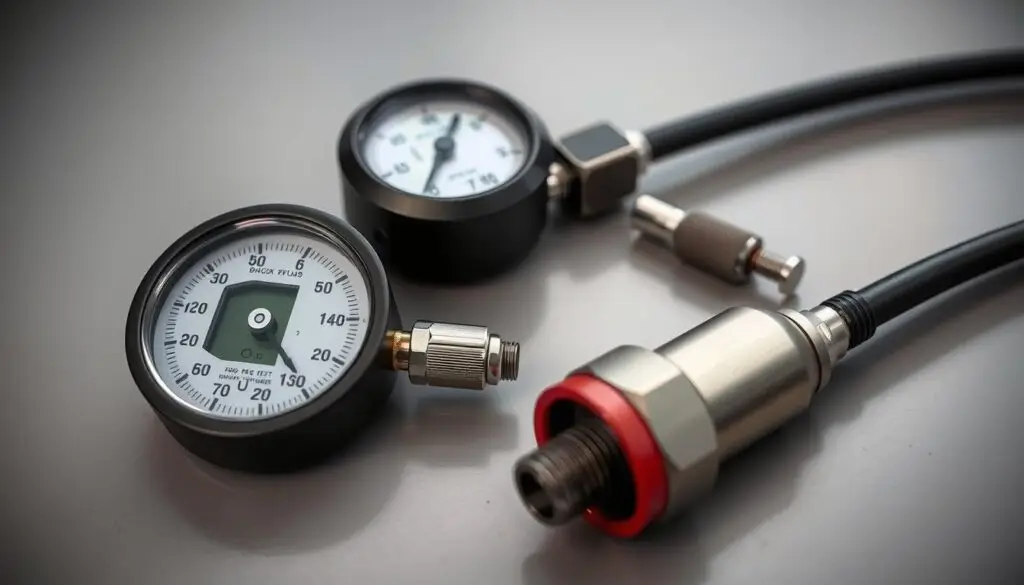
Mechanical gauges provide real-time visual feedback that confirms or questions electronic sensor readings
Diagnostic Scanner Capabilities for Fuel System Analysis
OBD-II scanners or manufacturer-specific diagnostic tools provide access to engine control module data stored during operation. These scan tools display live data streams showing fuel pressure sensor readings, injector pulse width, and commanded versus actual pressure comparisons.
Common fault codes related to low fuel pressure include P0087 (fuel rail pressure too low), P0201 through P0206 (injector circuit malfunctions), and P0299 (turbocharger underboost condition often caused by insufficient fueling). Modern scan tools also record freeze frame data that captures engine conditions when faults occur.
| Gauge Type | Pressure Range | Primary Application |
|---|---|---|
| Low-Pressure Gauge | 0-100 psi | Lift pump testing at filter housing |
| High-Pressure Gauge | 0-30,000 psi | Common rail and injector testing |
| Dual-Range Gauge | 0-15,000 psi | Multi-system diagnosis |
Complete Fuel Pressure Diagnostic Procedure
Identifying diesel low fuel pressure causes demands thorough step-by-step processes that begin with simple observations and progress to advanced testing. Complete diagnostic procedures eliminate guesswork and help mechanics locate exact sources of pressure problems efficiently.
Visual Inspection and Preliminary Assessment
Every fuel system diagnosis begins with careful visual inspection of all accessible components. Technicians examine fuel filter housings for cracks, damage, or signs of fuel seepage around the base and connection points. Checking fuel strainers for cleanliness often indicates recent service work or reveals contamination.
Examining all fuel lines for chafing, cracks, or deterioration that could allow air into the system ranks among the most productive diagnostic steps. Looking for visible fuel leaks at any junction helps identify immediate problems requiring attention.
Pressure Measurement and Recording
Connecting mechanical fuel pressure gauges to test ports provides direct access to the fuel system for pressure testing. Technicians ensure all connections are tight to prevent air leaks during measurement that would compromise reading accuracy.
Starting engines and establishing baseline pressure at idle should read between 60 and 70 psi for most diesel engines when operating correctly. Revving engines and observing pressure under load conditions reveals how systems respond to increased fuel demand. Comparing mechanical gauge readings to scan tool data verifies sensor accuracy.
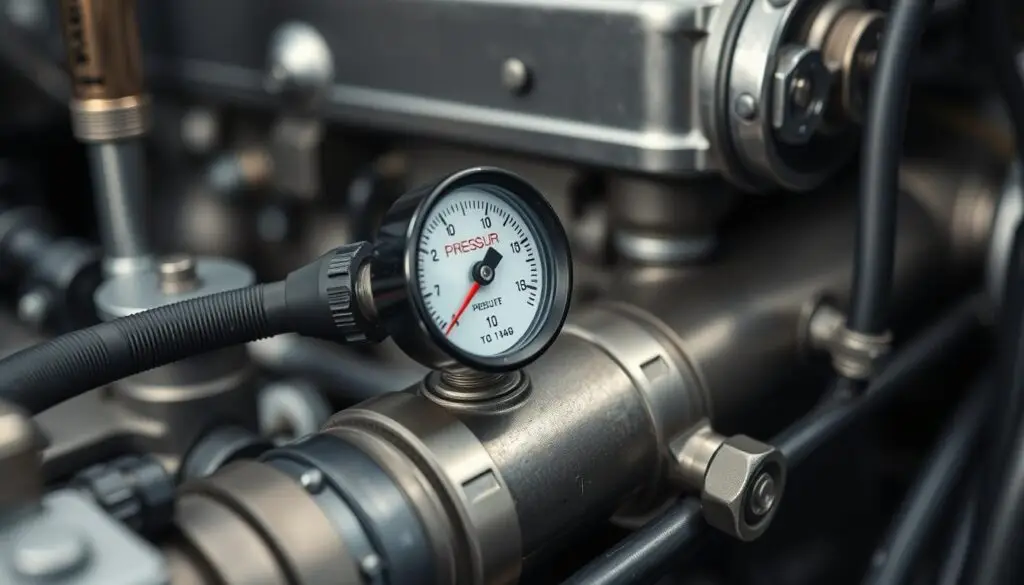
Test ports on filter housings provide convenient access points for measuring actual fuel delivery pressure
Air Leak Detection Methods
Air infiltration causes major fuel delivery problems that mimic other issues. Start air leak detection by examining all connections and O-rings for visible damage. Performing bubble tests on suspected leak areas while systems operate reveals breaches invisible to naked eyes.
Checking fuel return systems for excessive flow might indicate internal leakage allowing pressure bypass. Pay attention to hard starting after sitting overnight—this classic sign indicates air leaks that allow systems to lose prime while equipment sits idle.
Fault Code Analysis and Live Data Interpretation
Using diagnostic scanners to retrieve fault codes from engine control modules provides electronic perspective on system performance. Look specifically for P0087 codes that directly indicate low fuel pressure conditions. Review related codes that might impact fuel delivery performance to build complete diagnostic pictures.
Compare live data readings with factory specifications to understand how systems perform under actual driving conditions. Monitoring fuel pressure, rail pressure, and injector pulse width during operation reveals whether problems stem from mechanical failures or electronic control issues.
Lift Pump and High-Pressure Pump Testing
Accurate pump performance assessment starts with understanding differences between pressure capability and volume delivery capacity. Fuel pumps might generate adequate pressure readings while failing to supply sufficient fuel volume under load conditions.
Lift Pump Volume and Pressure Testing
Lift pump testing requires measuring both pressure and volume to get accurate diagnostic results. Many technicians only check pressure, but pumps can maintain adequate pressure while delivering insufficient fuel volume that causes problems under load.
Start volume tests by disconnecting fuel lines at filter housings or high-pressure pump inlets. Direct fuel flow into clean, graduated containers and crank engines for 15 to 30 seconds while collecting fuel. Most diesel lift pumps should deliver between 0.5 and 1.5 gallons per minute depending on engine specifications.
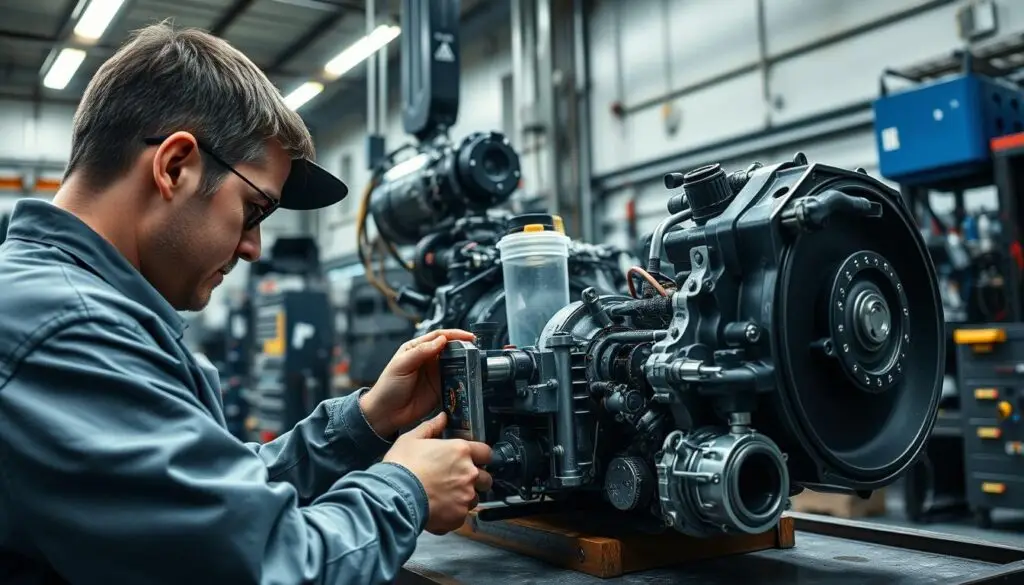
Volume testing reveals pump capacity issues that pressure testing alone might miss
High-Pressure Pump Performance Evaluation
High-pressure pump performance requires specialized diagnostic equipment due to extreme operating pressures. Digital scan tools provide effective methods for evaluating CP3 and similar pumps without system disassembly. These tools display real-time parameters that reveal pump condition through operational analysis.
Monitor differences between desired and actual rail pressure during various engine loads. Healthy high-pressure pumps maintain rail pressure within 500 to 1,000 psi of commanded values across operating ranges. Larger pressure gaps reveal internal pump wear requiring replacement. Inspect returned fuel for metal contamination—metallic particles confirm pump components are wearing and releasing debris.
Filter Replacement and Supply Line Repairs
Common fuel supply system issues like clogged filters and leaking connections demand immediate attention to prevent engine performance problems from worsening. Systematic approaches to filter changes and connection repairs ensure reliable engine operation while minimizing downtime.
Proper Filter Change and System Priming Procedure
Fuel filter replacement begins with proper preparation to prevent contamination during service. Gather all necessary tools including filter wrenches, drain pans, clean rags, and correct replacement filters with new O-rings. Relieve fuel system pressure according to manufacturer specifications before loosening connections.
Install new filters with proper attention to O-ring lubrication and housing torque specifications. Fill new filter housings with clean diesel before installation when design allows. Use manual priming pumps to circulate fuel through systems until resistance increases. Run engines at elevated idle between 1,200 and 1,500 RPM for 10 to 15 minutes to purge remaining air from injectors and high-pressure components.
Leak Repair and Connection Restoration
Identifying leak points requires careful visual inspection of entire fuel supply systems from tanks through injection components. Look for fuel weeping, staining, or wetness around connection points and line routing areas. Small air leaks on suction sides cause pressure problems without visible fuel leakage.
Tighten loose fittings to proper torque specifications—over-tightening damages threads and crushes sealing surfaces. Replace damaged O-rings and seals at all connection points. Use only diesel-rated fuel line materials that resist deterioration from diesel fuel and biodiesel blends. Standard automotive gasoline line breaks down quickly when exposed to diesel, causing system failures.
| Component | Difficulty | Time Required | Special Tools |
|---|---|---|---|
| Fuel Filter | Basic | 30-45 minutes | Filter wrench, drain pan |
| Lift Pump | Moderate | 1-2 hours | Fuel line wrenches |
| High-Pressure Pump | Advanced | 4-6 hours | Timing tools, torque wrench |
| Pressure Regulator | Moderate | 30-60 minutes | Screwdrivers, spring kit |
Fuel Pump and Regulator Replacement Procedures
When diagnostic testing confirms component failure beyond repair, fuel pump replacement becomes necessary to restore proper fuel delivery. These repairs range from straightforward lift pump swaps to complex high-pressure pump installations requiring specialized skills.
Lift Pump Removal and Installation
Lift pump installation begins with locating pumps, which may be frame-mounted, tank-mounted, or engine-mounted depending on vehicle design. Disconnect batteries and relieve all fuel system pressure before starting work. Use proper fuel line wrenches to disconnect both inlet and outlet fuel lines.
During installation, ensure proper pump orientation according to manufacturer specifications. Install new mounting gaskets or O-rings to prevent air leaks. Connect fuel lines with proper routing to avoid chafing against sharp edges or hot components. After completing installation, prime new pumps by cycling ignition keys several times without starting engines.
High-Pressure Pump Replacement Considerations
High-pressure pump replacement represents more complex work that often requires significant engine disassembly for access. CP3 and similar pumps typically mount directly to engine blocks and connect to camshafts for mechanical drive, requiring precise timing during installation.
Drain fuel systems completely before disassembly. Use extreme caution when disconnecting high-pressure fuel lines—residual pressure can cause injection injuries at pressures exceeding 20,000 psi. Install new pumps with precise alignment and timing according to manufacturer specifications, as improper timing causes severe engine damage.
The HDJ Perspective
Fuel pressure diagnostics represent a fundamental skill that separates competent diesel technicians from those who simply replace parts. As high-pressure common rail systems become more sophisticated and injection pressures continue to climb, the margin for error shrinks. Fleet operations that invest in proper diagnostic equipment and technician training consistently report lower repair costs and improved uptime. The trend toward telematics-based fuel system monitoring will continue reshaping how fleets approach preventive maintenance—but hands-on diagnostic skills remain essential for accurate troubleshooting when problems occur.
Preventive Maintenance for Fuel System Longevity
Smart diesel operators understand that preventive maintenance proves far more cost-effective than emergency repairs caused by neglected fuel systems. Well-planned maintenance schedules address potential fuel pressure issues before they leave operators stranded or cause expensive component damage.
Filter Service Intervals and Inspection
Establishing proper fuel filter intervals forms the foundation of diesel fuel system health. Most manufacturers recommend changing filters every 10,000 to 15,000 miles for highway driving with quality fuel. Always replace both primary and secondary filters together during service.
Inspect old filters for contamination types that reveal underlying problems—excessive water indicates tank issues, while dark sludge suggests microbial growth needing treatment. Never extend service intervals beyond manufacturer recommendations, as filter costs pale compared to pump and injector damage. The Federal Motor Carrier Safety Administration vehicle inspection requirements under 49 CFR 393.67 mandate proper fuel system maintenance for commercial vehicles.
Fuel Quality and Additive Programs
Purchasing from reputable suppliers with high-volume turnover ensures fresh fuel with minimal contamination. Quality fuel additives provide protective benefits when used appropriately—lubricity enhancers protect pumps and injectors from wear in ultra-low sulfur diesel, while water dispersants prevent free water accumulation.
Biocides eliminate diesel bug before it clogs filters. Follow additive manufacturer instructions carefully to avoid over-treatment. The American Trucking Associations recommends structured fuel quality programs as part of comprehensive fleet maintenance.
Cold Weather Preparation
Seasonal cold weather preparation prevents fuel gelling that blocks filters and starves engines. Switch to winter-blend diesel or add anti-gel treatments before temperatures drop below 20°F. Pre-winter service should include fresh filter installation, complete water separator draining, and glow plug testing.
Keep fuel tanks full during winter months to minimize condensation formation. According to EPA diesel fuel standards, ultra-low sulfur diesel requires proper additive packages to maintain cold-weather operability comparable to higher-sulfur fuels.
Share Your Fuel System Expertise
Have diagnostic techniques or maintenance strategies that have worked for your fleet? Join Heavy Duty Journal as a guest author and share your experience with thousands of industry professionals.
Frequently Asked Questions
What causes diesel low fuel pressure in commercial trucks?
The three primary causes of diesel low fuel pressure are clogged or contaminated fuel filters that restrict fuel flow, worn fuel pump components including lift pumps and high-pressure pumps with deteriorated seals or drive mechanisms, and air infiltration through compromised O-rings, cracked lines, or loose fittings on the suction side of the fuel system. Failed fuel pressure regulators and leaking injectors can also contribute to pressure loss throughout the system.
What is the normal fuel pressure range for diesel engines?
Diesel engines operate with dual-stage pressure systems. The low-pressure side, managed by lift pumps, typically operates between 40-80 psi, with ideal idle pressure at 60-70 psi. The high-pressure side, handled by CP3 or CP4 pumps, delivers fuel to common rails at pressures exceeding 20,000 psi. Pressure below 38 psi on the low-pressure side typically triggers diagnostic trouble codes and limits engine performance.
How do I diagnose fuel pressure problems in my diesel truck?
Follow a systematic approach: Start with visual inspection of fuel system components for leaks and filter condition. Measure fuel pressure at test ports using mechanical gauges, establishing baseline pressure at idle (60-70 psi) and observing under load. Check for air leaks using bubble tests on supply line connections. Finally, read diagnostic trouble codes with scan tools to identify specific system faults. Compare mechanical gauge readings to scan tool data to verify sensor accuracy.
How often should diesel fuel filters be replaced?
For highway use with quality fuel, replace fuel filters every 10,000-15,000 miles. Severe-duty applications, lower-quality fuel sources, or contaminated fuel require more frequent changes. Commercial applications should drain water separators weekly. Always replace both primary and secondary filters simultaneously, and inspect removed filters for contamination patterns that might indicate underlying fuel quality or tank issues.
Can I drive my diesel with low fuel pressure symptoms?
Driving with low fuel pressure is not recommended as it causes progressive damage to expensive fuel system components. Insufficient pressure forces high-pressure pumps to work excessively hard, accelerating wear. It can damage injectors, cause incomplete combustion leading to carbon buildup, and potentially result in complete engine shutdown. Address fuel pressure issues promptly to prevent minor problems from escalating into major repairs.
What diagnostic codes indicate diesel fuel pressure problems?
The primary code is P0087 (fuel rail/system pressure too low), which directly indicates insufficient fuel pressure. Related codes include P0201-P0206 (injector circuit malfunctions for cylinders 1-6), P0299 (turbocharger underboost condition related to insufficient fueling), and various fuel pressure sensor codes. When diagnosing, check for multiple codes and understand their relationships to identify root causes rather than simply replacing components indicated by individual codes.
Maintaining Diesel Low Fuel Pressure Prevention Standards
Proper diesel low fuel pressure prevention and diagnosis forms the foundation for reliable engine performance and operational longevity. Throughout this guide, you’ve learned to recognize warning signs like hard starting and power loss, explored common causes from clogged filters to worn pumps, and mastered diagnostic procedures using pressure gauges and scan tools.
Early detection protects your investment in diesel equipment and prevents minor problems from escalating into expensive failures. Quality fuel selection, timely filter changes, and attention to symptoms preserve fuel system health throughout engine life. Apply these diagnostic techniques and maintenance practices to keep your diesel equipment running at peak efficiency while avoiding costly downtime.
Share This Diesel Diagnostic Guide
Help fellow fleet managers and diesel technicians master fuel pressure diagnostics. Share this comprehensive guide with your professional network.