By Michael Nielsen, Editor & Publisher | 15+ Years in Diesel Repair
Last Updated: February 2026
📖 Estimated reading time: 30 minutes
More women owner-operators are building successful trucking businesses than at any point in the industry’s history. These aren’t simply driving jobs—they’re full-scale commercial enterprises where professionals control operations, manage equipment, build client relationships, and create lasting wealth. The shift from traditional employment to entrepreneurship represents a fundamental change in how women participate in commercial transportation.
Real success stories illustrate this transformation. Deb LaBree, who co-owns Castle Transport LLC, earned recognition as one of the 2024 Drivers of the Year by Women in Trucking. Since leasing to Landstar in 2014, she has achieved bronze and silver Star of Quality awards while setting high safety standards and mentoring fellow operators. Debbie Desiderato exemplifies versatility across 27 years in the business. Operating Walkabout Transport from Virginia, she spent 20 years as an independent operator spanning wrecker operations, car hauling, dry van, logging, and hotshot services. Overdrive named her Trucker of the Month for June 2023.
This guide covers everything aspiring and current women owner-operators need to know—from licensing requirements and financing options to business models, equipment decisions, client acquisition strategies, and the support networks that accelerate success.
Key Takeaways
- Growing participation: Women now represent approximately 8% of all truck drivers, up from 5% a decade ago, with Class A CDL holders increasing 68% since 2010.
- Income advantage: Owner-operators earn 30-50% more in net income than company drivers while building business equity and tax advantages.
- Three business models: Leased carrier partnerships, independent authority operations, and specialized niche markets each offer distinct paths to profitability.
- Startup costs: Expect $50,000-$100,000 in startup capital, with SBA loans, grants, and equipment financing available specifically for women entrepreneurs.
- Proven success strategies: Direct shipper relationships, diversified service offerings, and strong safety records build sustainable competitive advantages.
- Support networks matter: Organizations like Women in Trucking Association and Real Women in Trucking provide advocacy, mentorship, and business development resources.
The Rising Presence of Women in the Trucking Industry
A quiet revolution is unfolding across America’s highways as more women enter trucking and establish thriving owner-operator businesses. The transportation sector is experiencing a demographic shift that challenges decades of tradition. Women are building profitable businesses, setting safety standards, and reshaping industry culture in ways that benefit the entire supply chain.
Demographics and Growth Statistics
Women now represent approximately 8% of all truck drivers in the United States, up from just 5% a decade ago. That 60% growth rate significantly outpaces overall industry expansion. According to Bureau of Labor Statistics employment data and the Women in Trucking Association’s WIT Index, female commercial drivers holding Class A CDL licenses have increased by 68% since 2010, indicating serious professional commitment to long-haul opportunities. Women-owned trucking businesses are growing at nearly twice the rate of male-owned counterparts.
68% increase in female Class A CDL holders since 2010
Women in Trucking Association industry data
The 2024 Driver of the Year award program exemplifies this expansion. Out of 60 nominations received, three finalists were ultimately named winners—marking the first year more than one driver received the award. Regional variations exist within national trends, with states like Texas, California, and Illinois showing higher concentrations of female commercial drivers. Women entering trucking today span all age groups, from recent CDL graduates in their twenties to career changers in their fifties.
Changing Industry Perceptions
Outdated stereotypes about physical capabilities and technical aptitude once created substantial barriers. These misconceptions are crumbling under documented performance and safety records. Modern trucking relies more on skill, judgment, and professionalism than raw physical strength.
Organizations like the Women in Trucking Association actively shift cultural perceptions through education and visibility campaigns. Industry conferences now regularly feature women speakers sharing expertise on equipment maintenance, load negotiation, and business strategy. Major carriers have implemented targeted recruitment programs specifically designed to attract qualified women drivers, signaling genuine institutional commitment to diversification.
Technology improvements have also leveled the playing field. Power steering, automated transmissions, ergonomic cab designs, hydraulic lift gates, and modern load securing systems make equipment operation accessible to drivers of all physical builds. Social media platforms have created networking opportunities where women owner-operators share experiences, advice, and encouragement that previous generations lacked.
Economic Contributions
Women-owned logistics companies generate substantial economic value across multiple dimensions. Federal procurement data shows these companies securing increasing contract volumes, as many shippers actively seek diverse carrier bases to meet corporate supplier diversity goals. The Small Business Administration reports that women-owned logistics companies maintain higher retention rates and lower accident frequencies than industry averages, translating into lower insurance costs and stronger profitability margins.
Successful women-owned trucking businesses frequently expand to multi-truck operations, creating employment for drivers and administrative staff. These businesses typically maintain stronger local ties, purchasing fuel, maintenance services, and supplies from regional vendors. Banking institutions have begun recognizing the growth potential of women-owned transportation businesses, with lending programs specifically targeting women entrepreneurs now including trucking-focused options.
Why Women Choose Owner-Operator Status
Women truckers increasingly choose independent operations over traditional employment for reasons extending beyond financial considerations. The transition from company driver to business owner represents a fundamental shift in professional identity and economic opportunity.

Schedule and Operational Control
Complete control over when, where, and how much you work ranks among the most significant owner-operator benefits. Unlike company drivers following dispatcher assignments and mandatory schedules, owner-operators design their own business calendars. This flexibility proves particularly valuable for women balancing family responsibilities, health needs, or lifestyle preferences alongside trucking careers.
Debbie Desiderato exemplifies this principle. After gaining experience with a car-hauling company, she obtained her operating authority in 2003 to achieve complete control over her business decisions. For over 20 years, she has maintained independence, deliberately choosing to remain a single-truck operation. Route selection, vacation planning, and family priorities happen on her terms—without requesting supervisor permission.
Income Potential Comparison
The financial advantages of independent operations significantly exceed company driver compensation structures. Owner-operators negotiate directly with shippers and brokers, eliminating the company middleman and capturing the full value of their services.
| Income Component | Company Driver | Owner-Operator | Advantage |
|---|---|---|---|
| Gross Revenue per Mile | $0.45 – $0.60 | $1.50 – $2.50 | Full freight rate captured |
| Annual Gross Income | $45,000 – $65,000 | $120,000 – $200,000 | 2-3x higher revenue potential |
| Net Annual Income | $45,000 – $65,000 | $60,000 – $100,000 | 30-50% higher after expenses |
| Income Control | Fixed by employer | Business-driven decisions | Direct influence on earnings |
Strategic load selection amplifies these advantages. Experienced owner-operators identify high-value lanes, build relationships with premium shippers, and negotiate rates that reflect reliability and service quality. Tax advantages further enhance net income through deductions for fuel, maintenance, insurance, equipment depreciation, and home office costs.
Building Business Assets
Perhaps the most compelling reason women choose trucking business ownership involves building tangible assets. Company drivers earn wages but accumulate no business equity. Owner-operators create multiple asset categories generating long-term wealth: truck ownership with positive cash flow, operating authority with established safety ratings, direct client relationships producing predictable revenue, and business credit profiles facilitating future growth. The combination of these factors explains why women increasingly view the owner-operator model as the foundation for building genuine business enterprises.
Women Owner-Operators Trucking Business Models
Understanding the structural differences between leased partnerships, independent authority operations, and specialized niche markets empowers women owner-operators to build sustainable trucking businesses. Each model presents distinct advantages and financial implications that directly impact profitability and lifestyle.
Leased Operator Partnerships
Leased operator arrangements create a middle ground between company driving and complete independence. Owner-operators maintain their own equipment while contracting services exclusively to an established carrier. Deb LaBree exemplifies this approach through her successful partnership with Landstar, established in 2014 when launching Castle Transport LLC. Leased arrangements provide access to extensive freight networks without the burden of building shipper relationships from scratch.
Benefits include immediate credibility through the carrier’s reputation, back-office support for billing and compliance, group insurance coverage, fuel discount programs, and 24/7 dispatch support. However, carriers typically retain 10-25% of gross revenue. Operators face restrictions on accepting external freight and reduced decision-making autonomy compared to independent operations.
| Evaluation Factor | Key Considerations | Red Flags |
|---|---|---|
| Compensation | Base percentage, fuel surcharge policy, settlement frequency | Hidden deductions, payments delayed beyond 7 days |
| Freight Network | Customer diversity, geographic coverage, seasonal stability | Single-customer dependence, excessive deadhead |
| Support Services | Dispatch availability, maintenance network, technology | Limited dispatch hours, poor communication |
| Contract Terms | Length, termination clauses, equipment requirements | Punitive termination fees, restrictive non-competes |
Fully Independent Operations
Independent authority trucking represents the highest level of business autonomy. This model requires obtaining your own motor carrier authority from the Federal Motor Carrier Safety Administration (FMCSA), establishing direct shipper relationships, and assuming complete responsibility for all operations.
Debbie Desiderato has operated under her own authority since 2003, initially as Classic Auto Transport and later as Walkabout Transport. Her two-decade success demonstrates that women can build thriving independent businesses while maintaining complete operational control. Independent authority eliminates percentage fees paid to carriers, allowing operators to retain all revenue minus direct operating expenses. However, this model demands comprehensive business management—regulatory compliance, insurance procurement, marketing, invoicing, collections, and cash flow management all fall on the operator.
Specialized Niche Markets
Specialized freight services offer women owner-operators opportunities to differentiate and command premium rates. Desiderato’s diverse experience illustrates niche viability: hauling luxury vehicles for Jaguar, Porsche, and Mercedes dealerships; transporting temperature-controlled MREs to military bases; operating expedited hot shot services; and handling logging operations.
Refrigerated freight provides year-round stability since food distributors, pharmaceutical companies, and government contractors require temperature-controlled transportation regardless of economic conditions. Rates typically run 15-25% higher than comparable dry van loads. Expedited and hot shot services command premium rates for time-sensitive deliveries, with smaller Class 3-5 trucks offering lower-cost entry points. Each specialization reduces direct competition while building expertise that attracts quality customers willing to pay for specialized capabilities.
Overcoming Challenges Facing Women Owner-Operators
Women entering the owner-operator space encounter real barriers, yet established industry leaders demonstrate these obstacles can be systematically overcome. The journey involves confronting issues ranging from subtle bias to tangible financial hurdles, requiring both mental resilience and practical strategies.

Addressing Gender Bias and Building Respect
Gender bias remains a reality women operators must navigate with confidence. Skepticism about capabilities often surfaces in initial interactions with customers, mechanics, and industry professionals—reflecting outdated assumptions rather than actual skills or qualifications.
Desiderato’s experience illustrates this challenge. When approaching a potential client, it took her three full days to gather the courage to make the initial phone call. The decision-maker’s response was dismissive. Rather than accepting rejection, she documented her credentials and safety record, requested a face-to-face meeting, demonstrated local availability, and maintained professional persistence. Not only did she secure the account, but Applied Felts became her primary customer—a relationship so strong the company waited eight months for her return while she cared for her husband during illness.
Deb LaBree has become recognized for mentoring fellow owner-operators, particularly women entering the field, creating support systems that help others navigate bias effectively. Building respect requires consistent demonstration of competence: impeccable safety records, on-time deliveries, and professional communication earn credibility that transcends gender.
Securing Financing and Capital
Women entrepreneurs face higher barriers to capital access than male counterparts. Shorter credit histories, lack of established business credit, and unconscious lender biases about women in male-dominated industries create financing obstacles. Overcoming these barriers requires strategic preparation: developing comprehensive business plans with detailed financial projections, building personal credit scores above 700, researching women-focused lending programs, exploring SBA loans, and investigating grant programs designed for women-owned transportation businesses.
Alternative financing options including equipment financing companies, lease-to-purchase programs, and specialized trucking lenders may offer more accessible pathways when traditional banks prove difficult. Some women successfully bootstrap operations by starting with older equipment and reinvesting profits into newer trucks as businesses grow.
Building Credibility with Brokers and Shippers
Establishing trust with freight brokers and direct shippers determines business viability. Desiderato’s success with Applied Felts provides a replicable blueprint: professional persistence after initial rejection, insisting on in-person meetings to demonstrate competence, presenting documented qualifications and safety records, emphasizing value propositions like local availability, and exceeding expectations on initial loads.
Digital platforms have created new pathways for establishing credibility. Load boards with rating systems allow operators to build visible track records. Positive broker ratings create portable credibility that opens doors with new clients. Direct shipper relationships—which eliminate middleman fees and create stable revenue streams—require the strongest credibility-building efforts but yield the greatest long-term returns.
Navigating Industry Networks
Traditional networking venues may not provide comfortable spaces for women to build professional connections, creating a disadvantage in an industry where relationships drive significant business opportunities. Women-focused organizations address this gap directly. Real Women in Trucking provides dedicated networking spaces, with Desiderato serving as a board member. Her position on the FMCSA Motor Carrier Safety Advisory Committee Driver Subcommittee exemplifies how official industry involvement builds credibility while creating networking opportunities.
Effective strategies include joining women-specific trucking organizations, participating in formal industry committees, leveraging social media for professional connections, and seeking mentorship from established women operators. Digital networking has expanded opportunities significantly, with online communities providing spaces for questions, resources, and partnerships that translate into real-world business growth.
Essential Requirements for Starting Your Trucking Business
Building a trucking business demands careful attention to foundational requirements ensuring legal operation and long-term success. Understanding these essentials before investing significant capital prevents costly mistakes and regulatory violations.

CDL and Professional Certifications
A Commercial Driver’s License represents the most fundamental credential. CDL requirements are identical regardless of gender, requiring written knowledge exams and practical driving tests covering pre-trip inspection, basic control skills (straight-line backing, offset backing, parallel parking), and on-road driving evaluation.
“I obtained my Class A CDL in 1999 when my car-hauling company was kind enough to let me use one of their trucks, and I just taught myself.”
— Debbie Desiderato, Independent Owner-Operator, 27+ Years
Beyond the basic CDL, specialized endorsements expand operational opportunities. The hazardous materials (H) endorsement opens access to premium-rate dangerous goods freight. The tanker (N) endorsement qualifies operators for liquid cargo. The doubles/triples (T) endorsement authorizes multiple-trailer operations. Each additional endorsement represents another revenue stream and competitive advantage.
Business Structure and Legal Registration
A sole proprietorship requires minimal paperwork but provides no separation between business and personal assets. A Limited Liability Company (LLC) offers substantial liability protection while maintaining pass-through taxation—formation typically costs $100-$800 depending on jurisdiction. A corporation (S-Corp or C-Corp) provides the strongest liability protection and potential tax advantages for higher-earning operations but requires more extensive record-keeping. Most women starting their first venture choose LLC formation for its balance of protection, simplicity, and credibility.
Insurance Coverage Requirements
| Insurance Type | Coverage Purpose | Typical Cost | Required By |
|---|---|---|---|
| Liability | Damage to others/property | $4,000-$12,000/yr | Federal law, brokers |
| Physical Damage | Your truck protection | $2,000-$8,000/yr | Lenders (if financed) |
| Cargo | Freight value protection | $800-$3,000/yr | Shippers, brokers |
| Occupational Accident | Medical/disability | $1,500-$4,000/yr | Optional (recommended) |
Federal regulations require minimum liability coverage of $750,000 for most general freight, though many brokers and shippers demand $1 million policies. Desiderato’s annual insurance through the National Association of Small Trucking Companies costs just $4,850 due to her extensive authority history and spotless safety record—demonstrating how operational excellence reduces insurance expenses over time.
Operating Authority and DOT Compliance
The USDOT Number serves as your unique identifier within the federal transportation system, required for all commercial vehicles exceeding 10,000 pounds operating in interstate commerce. The MC Number represents your operating authority to independently haul freight for compensation. Registration occurs through the FMCSA Unified Registration System and includes BOC-3 filing for process agent designation across all states.
Additional compliance requirements include IFTA registration for fuel tax reporting across multiple states, UCR annual registration for interstate operators, Heavy Vehicle Use Tax for trucks exceeding 55,000 pounds, and IRP registration for multi-state operations. The biennial USDOT update must be completed every two years to maintain active operating status. While these requirements may seem extensive, numerous services assist owner-operators with compliance management for reasonable fees.
Financing Your Owner-Operator Venture
Startup costs typically range from $50,000 to $100,000 depending on equipment choices, insurance, permits, and initial operating capital. According to the American Transportation Research Institute’s operational costs analysis, fuel, insurance, and equipment represent the three largest expense categories for owner-operators. Understanding your financing options enables informed decisions aligned with long-term business goals.

Debbie Desiderato demonstrates that disciplined financial management leads to complete debt freedom. She purchased a 2017 Western Star 4900EX in early 2021 and paid it off by doubling payments during strong earning years. Her current debt-free status on both equipment and property illustrates the wealth-building potential of smart financing strategies.
Equipment Acquisition Strategies
Three primary pathways exist for obtaining equipment. New trucks offer manufacturer warranties and fuel-efficient technology but require larger down payments with immediate 20%+ first-year depreciation. Used trucks reduce initial capital requirements—a well-maintained truck aged 3-5 years offers reliability without the premium price tag. Lease-purchase programs allow payments toward eventual ownership with minimal down payment, but frequently contain unfavorable terms including high interest rates and restricted freight options. Careful contract review by a transportation attorney is essential before signing any lease-purchase agreement.
SBA Loans and Grant Programs
| Loan Type | Maximum Amount | Repayment Term | Best Used For |
|---|---|---|---|
| SBA 7(a) Standard | $5,000,000 | 10 years (equipment) | Working capital, equipment, acquisition |
| SBA 504 | $5,500,000 | 10, 20, or 25 years | Major equipment, real estate |
| SBA Microloan | $50,000 | 6 years maximum | Startup costs, permits, small equipment |
| SBA Express | $500,000 | Up to 10 years | Fast funding, smaller purchases |
Women-owned businesses receive priority consideration through various SBA initiatives and Community Advantage lender partnerships. SBA 504 loans provide long-term fixed-rate financing with down payments as low as 10%. Expect the approval process to take 60-90 days from initial application.
Grant programs provide capital that never requires repayment. The Amber Grant Foundation awards $10,000 monthly to women-owned businesses with an additional $25,000 year-end grant. The National Association for the Self-Employed provides growth grants up to $4,000. The Women in Trucking Accelerate! Fund supports women pursuing trucking careers. Success rates for grants typically range from 5-15%, making them supplementary rather than primary funding sources.
Building Business Credit
Building robust business credit begins with obtaining a federal EIN from the IRS, then registering with Dun & Bradstreet, Experian Business, and Equifax Business. Establish trade lines with vendors who report payment history—fuel card companies, tire suppliers, and maintenance providers often extend credit to new businesses. Maintain business credit card utilization below 30% and pay balances monthly.
“I doubled up on truck payments whenever possible during the strong earning years. That discipline allowed me to eliminate debt completely.”
— Debbie Desiderato, Owner-Operator, Walkabout Transport
Monitor business credit reports quarterly to identify errors and track improvements. Strong scores above 80 on the 0-100 business scale qualify you for premium financing terms. Maintain strict separation between business and personal expenses to protect your credit profile and simplify accounting.
The HDJ Perspective
The women owner-operators profiled in this guide share a common trait that matters more than any business model or financing strategy: they treat trucking as a business, not just a driving job. Deb LaBree’s systematic approach to safety and quality within a leased partnership, and Debbie Desiderato’s 20-year track record of independent profitability working just 25-26 weeks annually, prove that sustainable success comes from disciplined financial management, strategic customer relationships, and the confidence to define success on your own terms. The industry’s ongoing driver shortage creates favorable conditions for women entering this space, but the real competitive advantage comes from business acumen applied to every decision—from load selection to equipment maintenance to knowing when to say no.
Equipment Selection and Technology for Women Owner-Operators
Your trucking equipment and technology choices shape every aspect of daily operations and profitability. Smart investments align with your intended freight types, routes, and growth plans.
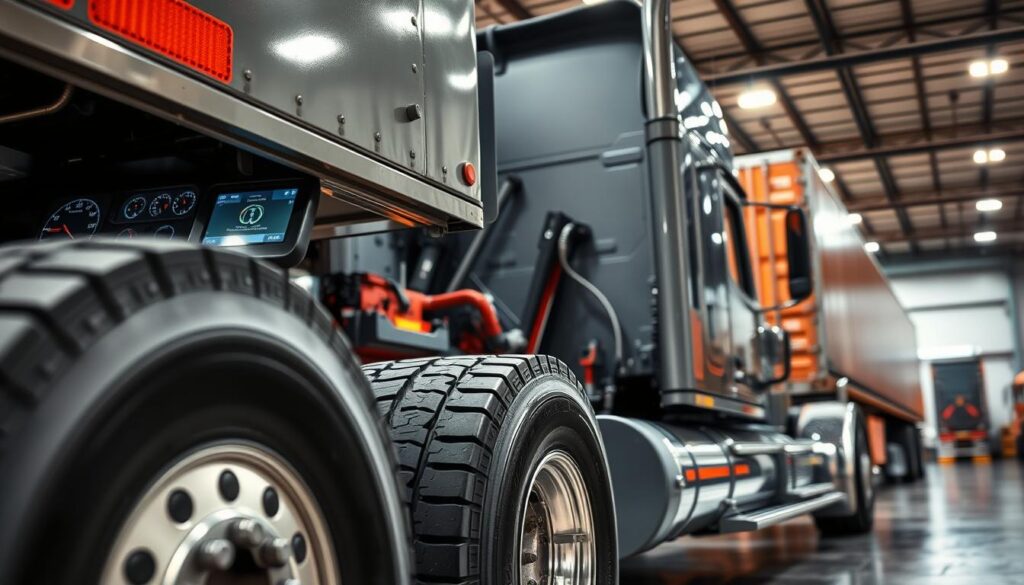
Desiderato’s progression through various truck types demonstrates strategic flexibility. Her career has included operating a wrecker in New York City, car-hauling trucks for luxury brands, a Kenworth T660 with dry van, a Class 3 truck for hotshot operations, and her current 2017 Western Star 4900EX with dry van and logging trailers. Each equipment choice aligned with specific freight opportunities.
Truck and Trailer Selection Factors
Equipment decisions must match your freight specialization. Primary considerations include freight type (dry van, refrigerated, flatbed, specialized), typical load weights affecting engine and chassis specifications, geographic territory influencing sleeper cab and fuel tank needs, and growth strategy determining whether you invest in multiple trailer types. Desiderato’s ability to switch between dry van and logging trailer demonstrates how maintaining diverse equipment creates access to varied freight opportunities.
Fuel costs represent one of your largest ongoing expenses. Modern aerodynamic features including side skirts, trailer tails, and optimized cab designs can improve efficiency by 5-10%. Regular maintenance—proper tire inflation, clean air filters, timely oil changes—preserves fuel efficiency throughout your equipment’s service life.
Essential Technology and Safety Equipment
ELD compliance is mandatory for most commercial operations, automatically recording driving time and Hours of Service. Fleet management software extends beyond basic ELD functions to track expenses, maintenance schedules, fuel consumption, and profitability metrics. Even single-truck operators benefit from centralized data revealing operational patterns.
Truck-specific GPS navigation prevents costly mistakes that standard automotive GPS systems miss—bridge heights, weight restrictions, hazardous material routes, and truck-prohibited roads. Route optimization tools minimize empty miles by analyzing distance, fuel costs, tolls, and Hours of Service limitations.
Desiderato maintains substantial parts inventory to minimize operational disruptions, storing spare starters, alternators, and critical components both at home and in her truck. This proactive approach prevents costly roadside breakdowns. Essential items include diagnostic tools (OBD-II scanner, multimeter), spare components (belts, hoses, fuses, filters), basic tool sets, DOT-required safety equipment, and tire maintenance tools.
Free Professional Fleet Tools
Cost calculators, fault code lookup, maintenance planners, and more—built for owner-operators, fleet managers, and diesel techs. No signup required.
Building a Client Base and Securing Profitable Loads
The difference between struggling to find freight and maintaining consistent revenue lies in developing a strategic mix of freight sources. Women owner-operators who master customer acquisition create businesses built on stability rather than uncertainty.
Load Boards as a Starting Point
Freight load boards like DAT and Truckstop.com provide immediate access to thousands of available loads. For new owner-operators, they offer a quick entry point without established industry connections. However, Desiderato’s assessment that “broker board freight is just terrible” reflects the reality that competitive bidding drives rates to minimal profitability. The most successful approach treats load boards as supplementary tools for filling empty return miles rather than primary freight sources.
Direct Shipper Contracts: The Optimal Strategy
Direct shipper contracts represent the highest-return strategy for long-term profitability. Eliminating broker intermediaries means keeping the full transportation rate while building loyalty that transcends rate shopping.
Desiderato’s Applied Felts relationship demonstrates this power. After building courage for three days, she made a direct call to the company located five minutes from her home. She positioned her immediate availability and local presence as competitive advantages that distant carriers couldn’t match. Applied Felts now keeps her “comfortably busy” hauling felt products nationally, and the relationship proved extraordinary when the company waited eight months for her return during a family medical crisis.
Her load-by-load pricing strategy—building current fuel costs into each quote rather than working under fixed-rate contracts—protects against fuel price volatility while maintaining transparency. When customers value reliability and service quality, they accept fair pricing reflecting current market conditions.
Rate Negotiation Essentials
Effective rate negotiation starts with knowing your actual operating costs and break-even point. Consider total compensation beyond per-mile rates: detention time, accessorial charges, and payment terms. A slightly lower rate with quick payment and minimal delays often proves more profitable than higher rates with extended payment cycles. Document all agreed terms clearly, even in informal arrangements.
Geographic rate variations reflect supply and demand imbalances—lanes with more outbound freight offer higher rates but lower returns. Building relationships in balanced lanes or developing backhaul customers creates more consistent profitability. The most successful operators combine direct shipper relationships as their foundation, cultivated broker partnerships for supplementary freight, and load boards used tactically to fill gaps.
Managing Operations and Financial Health
Tracking every dollar, planning for taxes, and controlling costs transforms an owner-operator from simply driving trucks to running a profitable business. Many experienced drivers enter owner-operator status with excellent road skills but limited business management knowledge—developing these competencies is essential.
Accounting and Tax Planning
Systematic financial tracking by load, customer, and time period reveals which relationships provide the best margins and which routes generate the highest returns. Desiderato handles her own road taxes, permits, and invoicing, demonstrating that administrative functions can be managed internally with proper systems. Specialized trucking accounting software tracks per-load profitability, manages IFTA fuel tax calculations, and categorizes expenses for industry-specific needs.
Owner-operators face complex tax obligations requiring quarterly estimated payments, self-employment tax calculations, and documentation of numerous deduction categories. Setting aside 25-30% of net income provides a reasonable tax cushion. Deductible expenses include fuel and oil (100%), maintenance and repairs (100%), insurance (100%), permits and licenses (100%), communication costs (business portion), and equipment depreciation or Section 179 expensing.
Cash Flow Management and Emergency Reserves
Desiderato’s experience caring for her terminally ill husband demonstrates both vulnerability and resilience. During the eight-month absence, she lost approximately $25,000 in personal savings. Her strategic response—putting insurance on minimum-payment hold through NASTC, canceling load board subscriptions and PrePass, and eliminating every possible expense—preserved her business authority and enabled her to resume operations when circumstances permitted.
Key Recommendation
Maintain emergency reserves covering 3-6 months of fixed expenses. Fixed costs like insurance minimums, permit renewals, and equipment storage continue during non-operational periods. Understanding which expenses can be paused versus which require continuation is essential to surviving temporary business interruptions.
Desiderato’s approach to profitability demonstrates sophisticated financial management despite working only 25-26 weeks annually. She maintains earnings through direct customer relationships, builds fuel costs into each quote rather than accepting fixed-rate contracts, keeps annual insurance at $4,850 through spotless records, and operates completely debt-free. Financial discipline—systematic tracking, proactive tax planning, and constant cost monitoring—proves as critical to success as driving skill.
Safety, Health, and Work-Life Balance for Women Truckers
Protecting physical safety, maintaining wellness, and establishing work-life boundaries form the foundation of sustainable trucking success. Deb LaBree earned bronze Star of Quality awards in 2018 and silver recognition in 2020 for leadership in safety standards. Desiderato maintains a spotless DOT and license record throughout her career.
Personal Safety Protocols
Comprehensive safety systems include multiple protection layers. Trust your instincts when evaluating situations—remove yourself immediately if a location or interaction feels unsafe. Maintain regular communication schedules with family, sharing planned routes and overnight locations. Keep phones charged with emergency contacts programmed for one-touch dialing, and consider dash cameras recording interior and exterior views.
| Parking Environment | Security Level | Best Practice |
|---|---|---|
| Major Truck Stop Chains | Low Risk | First choice; park near buildings with security patrols |
| Highway Rest Areas | Medium-High Risk | Short breaks only; stay in well-lit sections |
| Customer Facilities | Low-Medium Risk | Confirm permission; assess environment first |
| Isolated Roadside | Very High Risk | Avoid entirely for overnight parking |
Health and Work-Life Boundaries
Long-term success requires active health maintenance addressing both physical and mental wellness. Incorporate movement at rest stops, plan nutrition to avoid convenience food reliance, establish consistent sleep schedules, and invest in quality sleeper berth conditions. Combat isolation through regular contact with family and fellow women truckers. Recognize burnout warning signs including persistent fatigue, irritability, and difficulty concentrating.
Desiderato’s career evolution demonstrates the importance of boundaries. After burning out from intensive schedules by 2010, she restructured her business to work only 25-26 weeks annually while maintaining profitability. She established a Virginia mountain home where she develops agricultural interests including fencing, raising cows, and growing vegetables—creating fulfilling life completely separate from trucking.
The owner-operator model’s flexibility enables addressing family responsibilities without employer permission. Desiderato’s eight-month absence to care for her husband was possible because business ownership provided that option. This flexibility reinforces the importance of emergency savings built during profitable periods—targeting six to twelve months of operating expenses in readily accessible reserves.
Resources and Support Networks for Women Owner-Operators
Women who actively participate in industry support groups and professional networks report higher satisfaction and better business outcomes than those operating in isolation.
Professional Organizations and Mentorship
The Women in Trucking Association provides advocacy, educational resources, scholarship opportunities, industry research, and networking connections. In 2024, the organization received 60 nominations for its Driver of the Year award, ultimately honoring three winners including Deb LaBree. WIT’s annual conference brings together hundreds of women professionals for education and relationship building.
LaBree exemplifies the mentorship culture within women trucker networks, actively mentoring fellow owner-operators in the Landstar network. Formal mentorship programs match new operators with experienced mentors based on operational specialties and business goals. These relationships provide practical guidance on financing, rate negotiation, and customer management that women uniquely understand from shared experience.
Digital Communities and Industry Events
Real Women in Trucking leverages digital platforms to build community and amplify women’s voices. Board member Desiderato describes the organization as “going places” with advocacy work that creates systemic change. Online communities provide 24/7 accessibility, immediate feedback, diverse perspectives, shared resources, and emotional support that combats long-haul isolation.
Industry conferences like the Mid-America Trucking Show offer face-to-face networking that strengthens professional relationships. Educational sessions cover regulatory changes, technology advancements, and business management. Women-focused sessions address specific challenges including overcoming bias, accessing capital, and balancing family responsibilities. The Owner-Operator Independent Drivers Association (OOIDA) provides additional resources for all independent operators, including regulatory advocacy on issues affecting small trucking businesses.
Growth Strategies for Women Owner-Operators
Women owner-operators define business growth on their own terms. The path forward after establishing a solid single-truck operation varies based on personal goals, market opportunities, and lifestyle priorities.
Fleet Expansion Considerations
Desiderato’s experience with fleet expansion offers critical insights. During her car-hauling period, she received so much work she leased on another owner-operator. The decision backfired—”he let me down” and “made me look bad in front of customers.” Her conclusion: “I kind of just like being small and independent, and only having to worry about myself.”
This perspective represents a valid strategic philosophy. Fleet expansion challenges center on driver recruitment and retention, quality control when your reputation depends on others’ performance, increased insurance and liability exposure, and the fundamental shift from operator to manager—a transition that doesn’t suit every successful business owner.
Service Diversification and Brand Building
Desiderato’s career demonstrates that diversified services offer powerful growth without fleet expansion complications. Her work across car hauling, dry van, refrigerated, hotshot, and logging freight provides revenue diversification protecting against market fluctuations in any single segment. Seasonal adaptation becomes possible—she follows a pattern of dry van work on the road combined with logging work when home.
Professional brand identity creates competitive advantages even for single-truck operations. Desiderato’s “Walkabout Transport” name reflects her Australian heritage while evoking independent spirit—creating conversation opportunities and market differentiation. Strategic social media engagement builds professional visibility and attracts business opportunities through authentic industry expertise sharing. Her recognition as Overdrive’s Trucker of the Month demonstrates the credibility that comes from active industry engagement.
Success in owner-operator businesses ultimately reflects personal definitions rather than industry stereotypes. Growth may mean expanding revenue per mile rather than adding trucks, deepening niche expertise rather than broadening services, or maximizing lifestyle flexibility rather than income. The most successful women owner-operators define success according to their own goals.
Frequently Asked Questions
How much do women owner-operators earn compared to company drivers?
Women owner-operators typically earn significantly more than company drivers. Company drivers generally earn $45,000 to $65,000 annually, while owner-operators generate gross revenue of $120,000 to $200,000 per year. After accounting for business expenses—fuel, maintenance, insurance, and permits—net annual income typically ranges from $60,000 to $100,000, representing a 30-50% increase over company driver wages. Strategic load selection, direct shipper relationships, and tax deductions for business expenses further enhance the financial advantage. Operators like Debbie Desiderato demonstrate that profitability is achievable even while working only 25-26 weeks annually through disciplined financial management and strong customer relationships.
What licenses and permits do women need to start a trucking business?
Starting a trucking business requires a Commercial Driver’s License (CDL) with appropriate endorsements, a USDOT Number for interstate commercial operations, and an MC Number for independent operating authority. Additional requirements include BOC-3 filing for process agent designation, IFTA registration for multi-state fuel tax reporting, UCR annual registration, Heavy Vehicle Use Tax payment for trucks over 55,000 pounds, and IRP registration for multi-state operations. You’ll also need to form a business entity (LLC recommended), obtain commercial insurance meeting federal minimums, and secure an EIN from the IRS. All CDL requirements are identical regardless of gender.
Should I lease to a carrier or get my own operating authority?
The choice depends on experience level, available capital, and risk tolerance. Leasing to an established carrier provides immediate freight access, back-office support, group insurance rates, and reduced administrative burden—ideal for newer owner-operators. Carriers typically retain 10-25% of gross revenue. Independent authority offers maximum earning potential and complete operational control but requires securing your own insurance, building customer relationships, and handling all compliance, invoicing, and cash flow management. Many successful women operators, like Deb LaBree with Landstar, thrive in leased partnerships, while others like Debbie Desiderato build profitable independent operations. Consider starting leased and transitioning to independence after building experience.
What financing options are available for women starting trucking businesses?
Several financing pathways support women entering trucking. SBA 7(a) loans offer up to $5 million with competitive interest rates of 11-13% and extended repayment terms. SBA 504 loans provide long-term fixed-rate financing with down payments as low as 10%. SBA Microloans offer up to $50,000 for startup costs. Grant programs include the Amber Grant Foundation ($10,000 monthly awards), NASE growth grants (up to $4,000), and the Women in Trucking Accelerate! Fund. Equipment financing companies and lease-to-purchase programs provide additional pathways. Building personal credit above 700 and preparing comprehensive business plans significantly improves approval likelihood across all financing sources.
What are the biggest challenges women face as owner-operators?
Women owner-operators navigate gender bias from customers and industry contacts, higher barriers to financing compared to male counterparts, difficulty building initial credibility with brokers and shippers, and challenges networking in male-dominated professional settings. Successful women overcome these obstacles through thorough credential documentation, professional persistence, impeccable safety records, and engagement with women-focused organizations like the Women in Trucking Association and Real Women in Trucking. Desiderato’s experience converting a dismissive prospect into her primary customer demonstrates that preparation and professionalism overcome initial skepticism. Building strong direct customer relationships and maintaining consistent performance gradually establishes reputations that transcend gender-based assumptions.
What support organizations exist for women in the trucking industry?
The Women in Trucking Association provides advocacy, education, scholarship opportunities, and industry networking, hosting an annual conference and recognition programs including the Driver of the Year award. Real Women in Trucking offers grassroots advocacy and digital community support. OOIDA (Owner-Operator Independent Drivers Association) provides resources for all independent operators, including regulatory advocacy. Industry conferences like the Mid-America Trucking Show offer networking and continuing education. Online communities on social media platforms connect geographically dispersed women operators for real-time support. Formal and informal mentorship programs through these organizations help newcomers navigate business challenges and accelerate their learning curve.
Building Your Independent Trucking Future
Women owner-operators are building sustainable trucking businesses that deliver both profitability and lifestyle flexibility. The path requires comprehensive preparation across licensing, financing, equipment selection, and customer development—but the rewards in autonomy, income potential, and wealth building justify the investment. Deb LaBree’s industry recognition and Debbie Desiderato’s 20-year independent track record prove that excellence in this field knows no gender limitations.
Start by treating your venture as a serious business rather than a driving job. Build financial discipline from day one, prioritize safety and operational excellence, develop direct shipper relationships, and engage with the support networks that accelerate success. Whether you choose a leased partnership, independent authority, or specialized niche, your trucking business future starts with informed decisions and commitment to professional excellence.
Share This Guide with Women in Trucking
Know a woman considering an owner-operator career? Share this comprehensive guide to help her navigate the path to independent trucking success.