
By Michael Nielsen, Editor & Publisher | 15+ Years in Diesel Repair
Last Updated: February 2026
📖 Estimated reading time: 18 minutes
Women in fleet telematics are reshaping how transportation companies leverage data to improve safety, reduce costs, and optimize operations. From executive suites to engineering teams, women professionals now lead critical functions at major telematics providers, developing predictive maintenance algorithms, designing route optimization systems, and building the analytical frameworks that modern fleet management depends on.
This shift reflects a broader transformation in the trucking industry. As fleet management evolved from manual oversight to sophisticated data-driven operations, the skills that matter most changed dramatically. Technical competency in data science, software development, and systems integration now drives career advancement, creating pathways for professionals who bring analytical rigor and strategic thinking to complex operational challenges.
The numbers tell part of the story. According to Bureau of Labor Statistics data, three-quarters of transportation and warehousing workers are men, making the gains women have achieved in technology-focused roles all the more significant. This guide examines how women are advancing fleet telematics, the leadership roles they hold, the business case for diversity, and what the future holds for this rapidly evolving field.
Key Takeaways
- Technology transformation opens doors: The shift from hardware-focused fleet management to software-driven telematics created unprecedented career pathways for women with data science, analytics, and systems integration expertise.
- Women lead at every level: From VP of Product Management to solutions engineering, women now hold strategic positions shaping telematics platforms used by hundreds of thousands of fleets worldwide.
- Diversity drives measurable results: Gender-diverse teams demonstrate stronger innovation cycles, more comprehensive risk assessment, and improved customer satisfaction in fleet technology companies.
- Barriers persist but are declining: Implicit bias, limited sponsorship networks, and work-life integration challenges remain obstacles, but industry initiatives and professional organizations are creating structured support systems.
- AI and autonomy expand opportunities: Emerging technologies including predictive AI, autonomous vehicle management, and advanced IoT connectivity are creating new specialized roles where women technologists lead development efforts.
The Rising Influence of Women in Transportation Technology
The transportation technology sector has witnessed measurable demographic shifts as organizations recognize that gender diversity initiatives directly contribute to competitive advantages. This transformation extends beyond representation numbers to fundamental changes in how companies approach innovation, customer engagement, and strategic problem-solving.
The evolution from hardware-focused systems to software-driven solutions created unprecedented opportunities for women to demonstrate expertise in disciplines central to modern fleet operations. Data science, software development, and systems integration welcome professionals based on technical competency rather than traditional industry background or physical capabilities. This shift fundamentally challenged assumptions the transportation industry had maintained for decades.

Sabina Martin, Vice President of Product Management at Geotab, captured this momentum when she noted that gender diversification brings refreshing new perspectives to the industry. Her observation reflects what many fleet technology companies have discovered firsthand: diverse teams identify customer needs more accurately and develop features that serve broader market segments.
The Women in Trucking Association’s 2024-25 WIT Index survey of approximately 350 transportation organizations documented workforce gender diversity across the industry. While professional driver roles remain predominantly male, technology-focused positions show accelerating female hiring patterns. Women have increasingly joined teams in traditionally male-dominated departments including solutions engineering, data analytics, and product development.
The evidence demonstrates that women technology leaders are not simply filling organizational positions. They are fundamentally reshaping how transportation technology companies identify problems, develop solutions, and serve customers. Their contributions span the entire value chain from initial concept development through implementation and ongoing optimization.
Understanding Fleet Telematics: The Technology Driving This Transformation
Modern fleet telematics integrates telecommunications and informatics to create platforms that monitor, analyze, and optimize every aspect of fleet performance. These systems enable real-time tracking of vehicles, driver behavior, and fuel consumption through interconnected hardware, wireless networks, cloud infrastructure, and analytics engines.

GPS satellites communicate with vehicle-mounted receivers to determine precise geographic coordinates, enabling route optimization, geofencing alerts, and asset utilization analysis. Advanced sensors throughout vehicles capture engine performance, transmission function, brake condition, tire pressure, and hundreds of other parameters indicating vehicle health. Telematics data analytics transforms these sensor readings into predictive maintenance strategies that prevent breakdowns and extend vehicle lifespan.
The sophistication of these platforms is why the gender diversity conversation matters so much in fleet telematics. Managing these systems requires professionals who understand both technical architecture and strategic applications of data. The analytical rigor, systems thinking, and communication skills needed to leverage these complex technologies effectively are precisely the capabilities that a diverse workforce delivers.
The business intelligence generated through telematics data analytics supports decisions across multiple organizational functions. Financial planning benefits from accurate forecasts of fuel costs, maintenance expenses, and asset replacement timing. Operations management uses performance data to optimize routing, scheduling, and resource allocation. Safety programs leverage driver behavior analytics to reduce accidents and insurance costs. Environmental compliance monitoring ensures adherence to emissions standards and sustainability goals. Each of these functions demands professionals who can bridge the gap between raw data and strategic decision-making.
$9.87 billion → $17.24 billion
Projected growth of the global fleet telematics market from 2024 to 2030 (9.84% CAGR), reflecting accelerating demand for data-driven fleet management capabilities.
Breaking Barriers: From Exclusion to Essential Participation
Fleet management’s historical identity as a male-oriented profession stemmed from its emphasis on vehicle maintenance, warehouse operations, and field logistics. Cultural expectations positioned fleet operations as incompatible with female career trajectories, resulting in minimal recruitment efforts targeting women and sparse representation across all organizational levels.
The integration of telematics technology fundamentally altered these dynamics. As fleet management transitioned to emphasize data interpretation, route optimization algorithms, and predictive maintenance analytics, the skillset requirements shifted dramatically. Women brought precisely the analytical and communication competencies the modernized industry demanded.
Early pioneers faced isolation that tested their resolve. Megan Allen, a fleet telematics professional, described the experience that defined first-generation women in the field: being the only woman in the room, or the only woman presenting on a panel. This reality of tokenism created both challenges and opportunities. Women who demonstrated exceptional competence in these environments gradually shifted perceptions about gender capabilities in technical transportation roles.
Operational roles that once saw negligible female participation now demonstrate more balanced representation in progressive organizations. Technical positions including telematics systems management, fleet analytics, and connected vehicle technology development show consistent growth in female hiring. Trisha Ramlogan, a Program Manager at Geotab, reflected on this shift, noting that it has been encouraging to see the industry grow and to see women in positions of management.
| Representation Category | Early 2010s Baseline | Current Estimates |
|---|---|---|
| Entry-Level Technical Roles | 12-15% | 28-32% |
| Mid-Level Management | 8-10% | 22-26% |
| Senior Leadership Positions | 3-5% | 15-18% |
| Data Science and Analytics | 18-22% | 35-40% |
Educational pipeline developments suggest continued growth. Engineering and data science programs report increasing female enrollment, creating larger talent pools for fleet technology recruitment. Advancement trajectories show that women entering fleet telematics roles achieve promotion rates comparable to male counterparts when organizational structures support equitable evaluation.
The broader industry context reinforces these trends. BLS data confirms that truck transportation has the highest share of male workers among major transportation and warehousing industries at 88%, making gains in technology-adjacent roles particularly significant. The contrast between the heavily male driver workforce and the growing female presence in telematics technology positions illustrates how the digital transformation of fleet management is reshaping the industry’s talent landscape from the inside out.
Leadership Roles Women Hold in Fleet Telematics Companies
Women hold critical positions that shape product strategy, data analytics, and technological advancement at leading fleet telematics companies. These roles extend far beyond token representation, encompassing executive decision-making, technical architecture, and customer-facing innovation.

Executive and Product Leadership
Sabina Martin serves as Vice President of Product Management at Geotab, one of the world’s leading telematics providers. She oversees product roadmaps that determine which features reach hundreds of thousands of connected vehicles worldwide. Executive women in fleet telematics make decisions affecting multi-million dollar technology investments, strategic partnerships, and market expansion initiatives.
Lori Olson brings a decade of fleet industry experience to her role as Team Lead for Signature Accounts at Geotab. Beyond her corporate responsibilities, she chairs the Women in Fleet Management task force for the Automotive Fleet Leasing Association (AFLA). This dual role exemplifies how women leaders shape both individual companies and broader industry standards.
Data Science and Analytics Direction
Women data science leaders direct analytical teams that transform raw telematics data into actionable intelligence. They establish data governance frameworks ensuring accuracy, privacy compliance, and security across massive datasets. Analytics directors develop algorithms powering predictive maintenance systems that save fleet operators millions in unexpected repair costs, and they design route optimization models that reduce fuel consumption and carbon emissions.
The mentorship dimension of these roles carries long-term industry significance. Women data science leaders build teams capable of handling increasingly complex data challenges, advocating for investments in machine learning infrastructure and advanced analytics tools. Their technical expertise combined with strategic vision positions telematics companies to compete effectively in data-driven markets where the quality of analytical talent determines competitive positioning.
Technical Implementation and Engineering
Claire Barker-Sharp works as a Solutions Engineer at Geotab, designing custom telematics implementations for complex fleet operations. Her observation captures the changing landscape: she has seen more women take leadership roles and join teams in solutions engineering, a traditionally male-dominated department and industry.
Trisha Ramlogan coordinates complex technology initiatives as a Program Manager at Geotab, ensuring development efforts align with strategic objectives and delivery timelines. Her perspective captures an important reality about representation: seeing women in management and upper-level positions serves as genuine inspiration for the next generation.
How Women Are Advancing Data-Driven Fleet Solutions
Women professionals are deploying sophisticated data analytics that transform raw telematics information into strategic competitive advantages. Their contributions extend beyond basic reporting to encompass advanced modeling techniques that predict outcomes and optimize complex operational variables.

Predictive Maintenance and Cost Reduction
Predictive maintenance models developed by women analysts identify component failure probabilities before breakdowns occur. These systems examine sensor data patterns, usage metrics, and environmental conditions to calculate optimal service intervals. According to ATRI research, fleets implementing predictive maintenance programs can lower maintenance costs by approximately 20% on average by avoiding expensive emergency repairs. Women professionals design these systems to balance preventive action with operational availability, incorporating variables such as vehicle age, mileage accumulation, operating conditions, and historical failure rates.
Route Optimization and Efficiency
Fleet optimization algorithms created by women technologists consider multiple variables simultaneously: fuel consumption, delivery timeframes, traffic patterns, driver hours-of-service compliance, and customer preferences. Modern route optimization incorporates dynamic adjustments responding to changing conditions throughout the day. Research indicates that implementing route optimization technology can lead to a 10-15% reduction in fuel expenses for mid-size carriers, per American Transportation Research Institute analysis.
Enhanced Safety Through Data Insights
Women professionals translate raw telematics information into comprehensive safety programs that protect drivers and reduce liability exposure. Driver scoring systems evaluate multiple behavioral dimensions to create holistic safety profiles, emphasizing coaching opportunities and skill development rather than punitive measures.
| Safety Metric | Data Source | Typical Improvement |
|---|---|---|
| Hard braking events | Accelerometer sensors | 30-45% reduction |
| Speeding incidents | GPS and speed monitoring | 40-55% reduction |
| Harsh cornering | Gyroscope data | 25-35% reduction |
| Distracted driving | Camera systems with AI | 50-65% reduction |
Real-time monitoring technology enables immediate response to dangerous driving patterns. Alert systems notify supervisors when critical thresholds are exceeded, allowing timely intervention. Fleet managers implementing these comprehensive safety frameworks report not only fewer accidents but also improved driver satisfaction and retention when programs recognize drivers as partners in operational excellence.
Sustainability and Environmental Monitoring
Women in fleet telematics champion environmental responsibility through sophisticated sustainability monitoring systems that measure carbon footprint, fuel efficiency, and emissions across entire fleets. Eco-friendly route selection algorithms prioritize fuel efficiency without compromising service quality, identifying opportunities to reduce idling time, optimize speed profiles, and select favorable traffic routes. Organizations implementing these monitoring systems report fuel consumption reductions of 10-20% within the first year. As the EPA’s greenhouse gas standards for heavy-duty vehicles continue tightening, this analytical capability becomes increasingly critical for compliance.
The HDJ Perspective
Here at Heavy Duty Journal, we see the women-in-telematics story as inseparable from the broader technology transformation reshaping trucking. The fleets gaining competitive advantage today are the ones that hire based on analytical capability rather than tradition. When your maintenance forecasting model prevents a roadside breakdown or your route optimization saves 15% on fuel, nobody asks about the gender of the analyst who built it. They ask how to get more of that capability. The business case and the inclusion case are the same case, and the industry is better for recognizing it.
The Business Case for Gender Diversity in Fleet Telematics
Companies investing in gender-diverse teams within fleet telematics discover substantial business advantages that translate directly to their bottom line. The evidence supporting diversity’s business benefits extends beyond ethical considerations to document measurable improvements in financial performance, innovation capacity, and competitive positioning.
Organizations in the fleet telematics sector report that diverse teams generate more innovations than homogeneous counterparts. The creativity advantage stems from cognitive diversity that challenges conventional assumptions and explores unconventional solution pathways. Teams combining different professional backgrounds identify market opportunities that single-perspective groups overlook.
“This diversification is refreshing in terms of different perspectives.”
— Sabina Martin, Vice President Product Management, Geotab
Diverse teams conduct more thorough risk analysis by questioning assumptions that homogeneous groups accept without critical examination. This enhanced risk detection stems from team members raising concerns based on different professional experiences and technical backgrounds. Implementation success rates for new telematics systems improve when diverse teams conduct pre-deployment risk assessments, anticipating user experience challenges and integration complexities that narrow technical perspectives miss.
Understanding heterogeneous customer bases requires teams that reflect market diversity. Fleet management customers range from small owner-operators to enterprise logistics directors, each with distinct priorities and operational constraints. Diverse teams develop solutions addressing this wide spectrum rather than designing for narrow user profiles. Telematics platforms that incorporate diverse input during development achieve higher user engagement than products designed by homogeneous teams, directly improving customer satisfaction and retention.
Communication strengths also translate to superior customer service outcomes. Clear explanation of technical concepts to non-technical users reduces confusion and accelerates problem resolution. Client retention rates improve when fleet management companies employ gender-diverse account management teams that build stronger relationships through consistent communication, proactive issue identification, and personalized service approaches. The trust established through these interactions creates customer loyalty that withstands competitive pressures.
The Bureau of Transportation Statistics documents that the transportation and warehousing workforce continues to evolve in composition as the industry embraces technology-driven operations. Companies measuring return on investment for diversity initiatives in fleet telematics consistently document positive financial returns, stemming from combined improvements across innovation output, operational efficiency, risk management, and customer satisfaction.
Free Professional Fleet Tools
Cost calculators, fault code lookup, maintenance planners, and more—built for owner-operators, fleet managers, and diesel techs. No signup required.
Overcoming Challenges and Building Career Pathways
Despite significant progress, women navigating fleet technology careers continue to encounter barriers that demand comprehensive solutions. These obstacles range from subtle biases to systemic structural limitations. Understanding these challenges represents the first step toward creating meaningful change.
Gender bias in technology environments creates unique pressures. Women often face attribution errors where male colleagues receive credit for their innovations, and the experience of token status adds psychological burden beyond normal job requirements. Workplace culture in male-dominated environments sometimes lacks inclusive practices around meeting schedules, social activities, and informal networking opportunities that drive career advancement.
Work-life integration presents distinct challenges as caregiving responsibilities disproportionately affect women professionals. The demanding nature of fleet technology positions, with potential emergency calls and system monitoring requirements, complicates family obligations. Progressive companies implement policies supporting retention through remote work options, flexible scheduling, and results-focused evaluation rather than rigid presence requirements. These accommodations benefit all employees while removing specific barriers to women’s advancement.
Lack of sponsorship represents a critical gap. Sponsors actively advocate for protégés in succession planning and high-visibility assignments, but women frequently receive mentorship without the active promotion that sponsorship provides for career acceleration. Exclusion from informal decision-making networks restricts access to opportunities before they become official. Organizations addressing these barriers implement transparent promotion criteria and structured leadership development programs with diversity considerations built into succession planning processes.
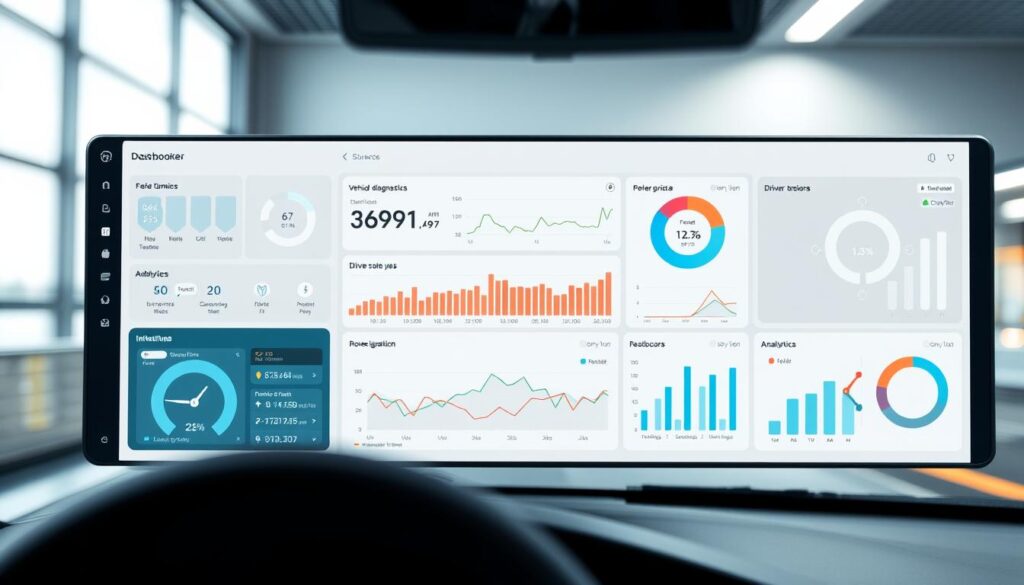
Professional organizations provide essential support systems. The Women in Fleet Management task force within the Automotive Fleet Leasing Association (AFLA), chaired by Lori Olson, offers mentorship connections, skill development, and collective advocacy. The Women In Trucking Association conducts biennial workforce surveys and advocates for increased participation across all transportation roles. These communities combat isolation, create spaces for sharing strategies, and facilitate relationship building across companies and specializations.
Building Technical Skills for Fleet Telematics
Career success in fleet telematics rests on mastering both quantitative analysis and strategic thinking. Core technical competencies include Python and SQL proficiency for data manipulation, statistical modeling for predictive analytics, and database management across both relational (PostgreSQL, MySQL) and NoSQL (MongoDB, Cassandra) systems.
Business intelligence capabilities translate technical findings into executive-level recommendations. KPI development, dashboard design, and strategic planning connect telematics insights to organizational goals and financial performance. Cross-functional collaboration skills prove essential when implementing telematics solutions affecting multiple stakeholders across IT, operations, safety, and finance departments.
Educational pathways include computer science, data analytics, and transportation management degrees, supplemented by industry certifications from telematics platform providers and professional associations like ATA’s Technology & Maintenance Council. Online learning platforms offer flexible skill development in artificial intelligence, machine learning, and predictive analytics without career interruptions.
The rapid evolution of fleet technology requires ongoing professional development investments throughout careers. Electric vehicle systems, autonomous technologies, and advanced connectivity solutions represent areas where continuous learning proves essential. Cross-functional training in cybersecurity, data privacy, and regulatory compliance enhances career versatility as connected vehicle technologies expand and intersect with increasingly complex regulatory requirements under FMCSA’s electronic logging device mandates and evolving data protection standards.

Future Trends: Women Shaping Next-Generation Fleet Technology
Tomorrow’s fleet management systems will look dramatically different from today’s platforms, and women technologists are pioneering many of these advances. The convergence of sustainability requirements, artificial intelligence, and autonomous vehicle technology creates new specialized roles where women occupy strategic positions at the intersection of emerging technologies and practical transportation challenges.
Artificial Intelligence and Machine Learning
Women data scientists are developing sophisticated AI algorithms that predict equipment failures before they occur, analyzing thousands of data points from vehicle sensors to identify patterns invisible to human observers. Intelligent routing systems adapt instantly to changing traffic conditions, weather events, and delivery requirements, optimizing not just for distance but for fuel efficiency, driver safety, and delivery timing simultaneously. Automated decision-making frameworks handle vehicle assignments, maintenance scheduling, and resource allocation with increasing sophistication.
Autonomous Vehicle Fleet Management
Self-driving vehicles demand entirely new technological frameworks for remote monitoring, fleet orchestration, and safety validation. Women engineers lead development teams creating oversight platforms that allow human operators to supervise multiple autonomous vehicles simultaneously. Safety validation frameworks examine thousands of driving scenarios, assessing vehicle responses to edge cases before deployment. Electric autonomous fleets represent the ultimate convergence of sustainability and technological advancement, and as these technologies mature, the professionals building the management infrastructure will shape how commercial transportation operates for decades.
IoT and Advanced Connectivity
Expanded sensor networks provide unprecedented visibility into fleet operations, and women systems architects address device interoperability through standardized communication protocols ensuring sensors from different manufacturers share data seamlessly. The deployment of 5G networks enables real-time vehicle control applications with ultra-low latency, while edge computing frameworks analyze telematics data locally on vehicles, reducing latency and enabling real-time decision-making even when cloud connectivity is limited. Blockchain technology offers additional promise for supply chain transparency, with distributed ledger systems ensuring maintenance records and delivery confirmations remain tamper-proof and verifiable across fleet ecosystems.
| Technology Area | Current Capability | Emerging Application |
|---|---|---|
| Predictive Analytics | Component failure forecasting | System-wide performance optimization |
| Intelligent Routing | Real-time traffic adaptation | Multi-variable optimization engines |
| Autonomous Fleet Ops | Basic task automation | Comprehensive fleet orchestration |
| IoT Connectivity | Individual sensor monitoring | Vehicle-to-infrastructure ecosystems |
Frequently Asked Questions
What roles do women hold in fleet telematics companies?
Women hold positions across all levels of fleet telematics organizations, from C-suite executive roles and product management to data science leadership, solutions engineering, program management, and UX design. At major telematics providers like Geotab, women lead product strategy affecting hundreds of thousands of connected vehicles, develop predictive maintenance algorithms, design custom implementations for enterprise customers, and coordinate cross-functional technology initiatives. Industry representation has expanded from primarily administrative functions into core technical and strategic leadership positions over the past decade.
How does gender diversity improve fleet management outcomes?
Gender-diverse fleet management teams demonstrate measurable advantages in problem-solving, innovation, and customer service. Diverse teams approach operational challenges from multiple perspectives, identifying risks and solutions that homogeneous groups may overlook. Organizations with diverse leadership report stronger collaboration, more comprehensive customer needs analysis, and improved retention rates. The cognitive diversity that results from varied professional backgrounds and analytical approaches leads to more robust predictive models, better user interface design, and safety protocols that account for diverse driver populations across fleet operations.
What skills do women need to enter fleet telematics careers?
Fleet telematics careers require a combination of technical competencies and business acumen. Core technical skills include data analysis proficiency, programming languages like Python and SQL for manipulating telematics datasets, statistical modeling for predictive analytics, and database management across relational and NoSQL systems. Equally important are business intelligence capabilities including KPI development, dashboard design, and strategic planning. Communication and cross-functional collaboration skills prove essential for translating complex data into actionable recommendations for diverse stakeholders across operations, safety, and finance departments.
What barriers do women face in transportation technology careers?
Women in fleet technology face several persistent challenges including implicit bias in male-dominated work environments, limited access to sponsorship networks that drive career advancement, and work-life integration pressures in demanding technology roles. Token status in technical settings creates additional performance pressure. Exclusion from informal decision-making networks restricts access to leadership opportunities. Progressive organizations address these barriers through transparent promotion criteria, structured mentorship programs, flexible work arrangements, and diversity-focused recruitment initiatives supported by industry organizations like the Women In Trucking Association and AFLA.
How is telematics technology creating new opportunities for women in trucking?
The shift from hardware-focused systems to software-driven fleet management has fundamentally expanded career pathways for women in trucking. Modern fleet telematics emphasizes data science, software development, predictive analytics, and systems integration where technical competency matters more than traditional industry experience. Emerging technologies including artificial intelligence, autonomous vehicle management, IoT connectivity, and sustainability monitoring continue creating new specialized roles. These technology-driven positions value analytical capabilities and strategic thinking, attracting women from diverse educational backgrounds including computer science, data analytics, and transportation management.
Advancing Women in Fleet Telematics: The Road Ahead
The transformation within fleet telematics demonstrates how gender diversity initiatives create lasting, measurable impact on the transportation industry. Women professionals have established themselves as essential drivers of data-driven fleet innovation, leading product strategy, building predictive algorithms, designing safety systems, and championing sustainability monitoring across the sector.
The path forward requires sustained commitment from industry stakeholders. Mentorship programs, equitable advancement practices, and cultural transformation enable talented professionals to contribute fully. Organizations that embrace diverse perspectives position themselves for competitive advantages in innovation, customer satisfaction, and operational efficiency. For fleet managers and technicians evaluating telematics partnerships, the diversity of a provider’s team is a meaningful signal about the quality and comprehensiveness of their solutions.
Emerging technologies including artificial intelligence and autonomous systems present unprecedented opportunities. Women professionals stand positioned to architect these next-generation solutions. The industry’s future depends on embracing diverse perspectives that drive innovation, improve efficiency, and advance sustainable fleet management practices for decades ahead.
Share This With Your Network
Know a fleet manager or technician who should see this? Share this guide to help spread awareness about the professionals driving innovation in fleet telematics.