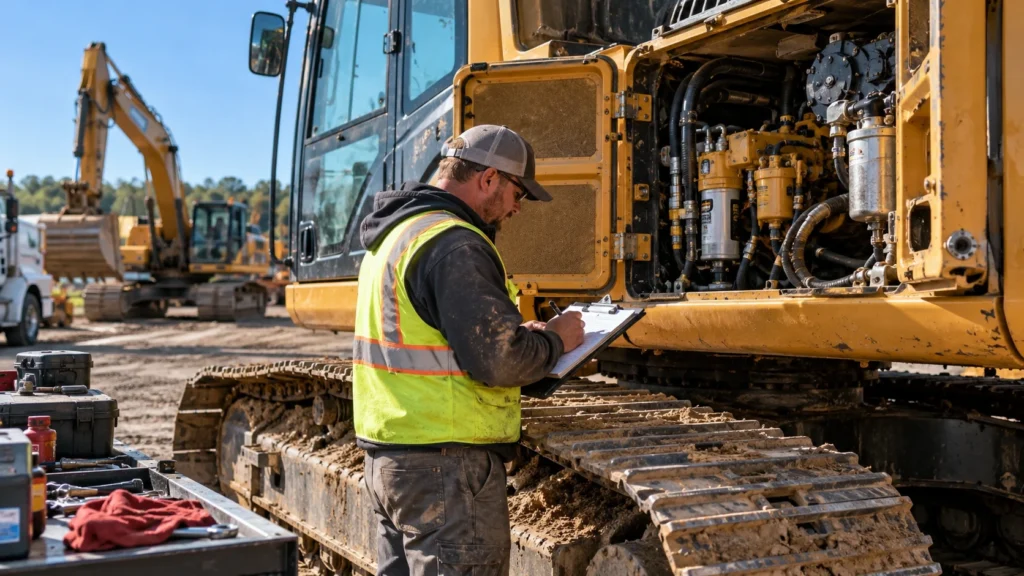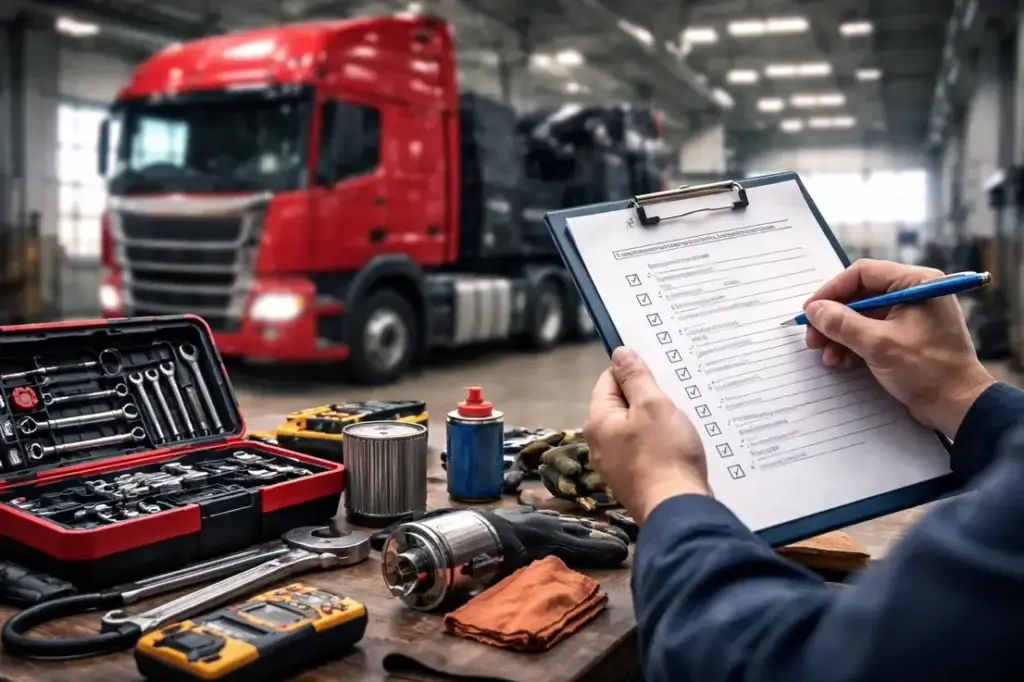
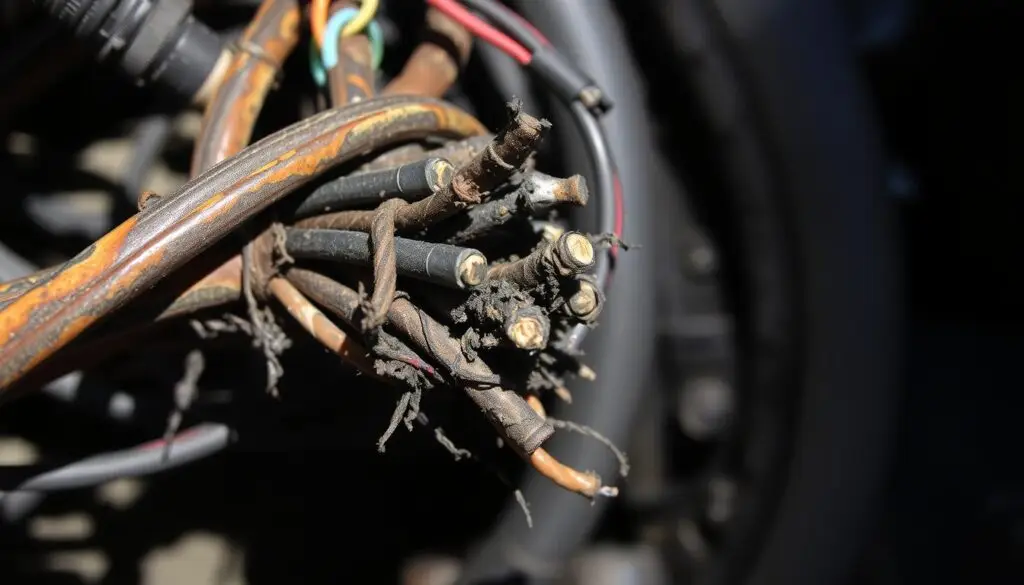
Every commercial vehicle depends on a complex network of cables and connectors to power its electrical system. When these critical components fail, fleet operators face anything from minor service interruptions to complete roadside breakdowns that cost thousands in towing fees and lost revenue. Understanding wiring harness repair represents an essential skill for diesel technicians and fleet maintenance professionals who need to keep trucks running safely and profitably.
Cables deteriorate through multiple pathways. Environmental exposure causes corrosion on connectors and terminals. Mechanical stress from engine vibration creates breaks in individual wires. Heat cycles crack protective insulation over time. Each of these factors can trigger harness failure that compromises vehicle reliability and safety compliance.
Professional diagnosis and repair of wire damage saves thousands of dollars compared to complete replacement. This comprehensive guide covers failure modes, diagnostic techniques, and proven repair methods used in heavy-duty applications. You will learn to identify problem areas, select appropriate materials, and execute repairs that restore full electrical integrity. The expertise shared here comes from years of hands-on experience with real-world automotive wiring challenges in fleet maintenance environments.
Last Updated: December 2025
Key Takeaways
- Professional repairs save money: Targeted wiring harness repair typically costs 60-80% less than complete harness replacement while restoring full system integrity.
- Crimping beats soldering: Modern industry standards favor crimped connections over soldered joints for heavy-duty applications due to superior vibration resistance and flexibility.
- Systematic diagnosis matters: Visual inspection combined with multimeter testing and voltage drop analysis identifies exact failure locations before repair begins.
- Environmental protection extends life: Proper sleeving, routing, and dielectric grease application prevents repeat failures at repaired harness sections.
- Safety circuits require OEM standards: Airbag, ABS, and fuel pump circuits demand professional repairs or complete replacement to maintain compliance and protect occupants.
- Documentation supports future service: Recording repair locations, techniques used, and protective materials applied simplifies troubleshooting years later.
Understanding Wiring Harness Construction and Function
Understanding the architecture of automotive wiring harnesses provides essential knowledge for diagnosing and repairing electrical failures effectively. These complex assemblies function as the vehicle’s electrical distribution network, carrying power and signals to every system from the engine to the tail lights. Knowledge of harness construction allows technicians to identify vulnerable points and execute repairs that restore factory reliability.
Wires serve as the lifeline of the harness, carrying power and signals throughout the vehicle. Quality automotive-grade wire proves crucial for any lasting repair effort. The entire system relies on precise integration of multiple components working together as a unified electrical pathway.
Core Elements of Automotive Harness Systems
Modern wiring harnesses consist of several integrated components that work together to create reliable electrical pathways. Conductor wires form the foundation, transmitting electrical current between power sources and loads. Each wire features protective insulation layers that prevent short circuits and shield against environmental damage.
Protective outer sheaths encase wire bundles, providing an additional barrier against heat, moisture, and physical abrasion. These sheaths typically use materials like corrugated plastic tubing or braided fabric that can withstand harsh underhood conditions.
Connector housings secure multiple wire terminals in precise positions, ensuring proper mating between harness sections and components. These housings incorporate sealing grommets that prevent moisture intrusion at connection points. Without proper sealing, corrosion rapidly degrades electrical performance.
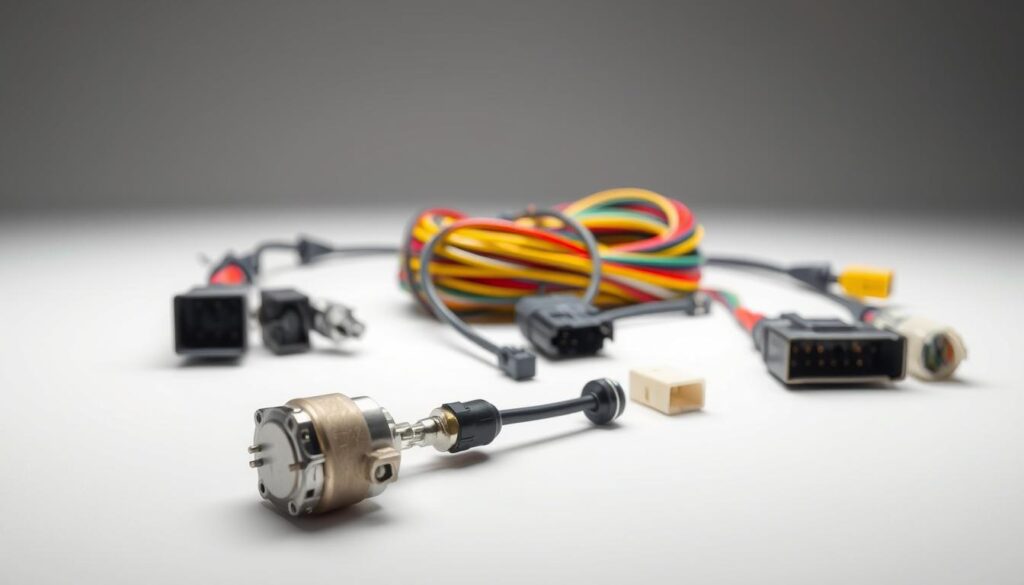
Circuit protection devices integrate directly into harness assemblies at strategic locations. Fuses and fusible links protect circuits from overcurrent conditions that could damage components or create fire hazards. Tie-down points anchor the harness to vehicle structure, preventing excessive movement that leads to fatigue failures.
Terminal pins and sockets provide the actual electrical contact within connector assemblies. Damaged connector terminals create poor connections that generate heat and cause intermittent operation. Precise replacement of these terminals requires specialized tools and proper crimping techniques.
Wire Sizing Standards and Insulation Properties
The American Wire Gauge system establishes standardized wire sizing that determines current-carrying capacity. Understanding wire gauge selection proves essential for proper repair work. Smaller gauge numbers indicate larger wire diameters with higher current capacity.
A 14-gauge wire typically handles 15-20 amperes in automotive applications, while 10-gauge wire supports 30-40 amperes. Using incorrect wire gauge during repairs creates voltage drop problems or overheating conditions. Matching the original wire size maintains circuit performance and safety margins.
Cross-linked polyethylene (XLPE) represents one of the most common wire insulation materials in modern vehicles. This material offers excellent temperature resistance up to 257°F and maintains flexibility in cold conditions. XLPE insulation resists chemicals, making it ideal for underhood applications where exposure to oils and coolants occurs.
Polyvinyl chloride (PVC) provides cost-effective insulation for lower-temperature applications in passenger compartments. PVC-insulated wire typically rates for temperatures up to 176°F and offers good abrasion resistance. However, PVC becomes brittle in extreme cold and degrades faster than XLPE when exposed to petroleum products.
Teflon insulation delivers superior performance in high-temperature zones near exhaust components. This premium wire insulation material withstands temperatures exceeding 392°F without degradation. Teflon also provides exceptional chemical resistance, though its higher cost limits use to critical applications.
Voltage drop considerations influence wire sizing decisions beyond simple current capacity. Long wire runs require larger conductors to minimize resistance losses. A properly sized wire maintains voltage within 3% of source voltage under full load conditions. Federal regulations under 49 CFR 393.28 require commercial vehicle electrical wiring to conform to SAE J1292 standards for installation and maintenance.
Connection System Architecture and Contact Engineering
Weather Pack connectors dominate automotive applications requiring environmental protection. These sealed electrical connectors incorporate rubber seals that prevent moisture and dirt intrusion. Weather Pack assemblies use blade-type terminals with spring contacts that maintain connection force through vibration and thermal cycling.
Metri-Pack connector families offer compact designs for applications with space constraints. These connectors feature smaller terminal spacing while maintaining sealed protection. Metri-Pack 150, 280, and 480 series designations indicate the maximum current capacity in milliamps per circuit.
Packard 56 and 59 series connectors represent traditional designs still used in many vehicles. These unsealed connectors work well in protected interior locations but fail rapidly when exposed to moisture. Understanding when sealed versus unsealed connectors are appropriate prevents premature repair failure.
Deutsch connectors provide heavy-duty connections for high-vibration and high-current applications. Their robust construction and positive locking mechanisms make them popular in commercial vehicle and off-road applications. The stamped and formed contacts resist corrosion better than economy alternatives.
| Connector Type | Sealing | Current Rating | Common Applications |
|---|---|---|---|
| Weather Pack | Fully Sealed | 10-20 Amps | Engine sensors, exterior lighting |
| Metri-Pack 280 | Sealed | 7-13 Amps | Interior controls, dashboard circuits |
| Packard 56 | Unsealed | 15-25 Amps | Protected interior connections |
| Deutsch | Fully Sealed | 20-60 Amps | Heavy-duty power circuits |
Terminal designs directly affect connection reliability and electrical performance. Blade terminals create spring pressure contact, while pin and socket terminals use interference fit principles. The contact area and pressure determine resistance and heat generation at the connection point.
Crimp-style terminals dominate automotive applications due to manufacturing efficiency and reliability. Proper crimping creates a gas-tight connection that resists corrosion better than mechanical screw terminals. The crimp must compress both the wire conductor and insulation sleeve for optimal performance.
Connectors and automotive pigtails facilitate removable connections between harness sections and components. Proper matching of electrical connectors ensures compatibility and reliable function. Mismatched connectors compromise sealing and create loose connections that fail under vibration.
Gold plating on terminal contacts reduces contact resistance and prevents corrosion in critical low-current signal circuits. Tin plating provides adequate protection for power circuits at lower cost. Understanding these material differences helps technicians select appropriate replacement terminals for specific applications.
Replacing compromised protective sleeves proves vital for protecting repaired harness sections. Split loom tubing, heat-shrink tubing, and braided sleeving all serve different protection needs. Proper sleeve selection based on temperature exposure, abrasion risk, and flexibility requirements ensures long-term repair durability.
Environmental Factors That Accelerate Wiring Harness Failure
Automotive wiring harnesses operate in one of the most hostile environments imaginable, where heat, moisture, and chemicals work together to break down critical electrical systems. Unlike mechanical components that show visible wear patterns, environmental damage often progresses silently beneath protective coverings until complete system failure occurs. Several engine wiring harness chafing conditions may be found on some vehicles, but environmental exposure remains the primary cause of damage over time.
Wiring harnesses age quite poorly compared to other automotive systems. Wires get brittle and crack, connectors corrode, and relays stop functioning as protective materials degrade under constant environmental assault. Understanding these degradation mechanisms helps technicians identify vulnerable areas and implement effective repair strategies.
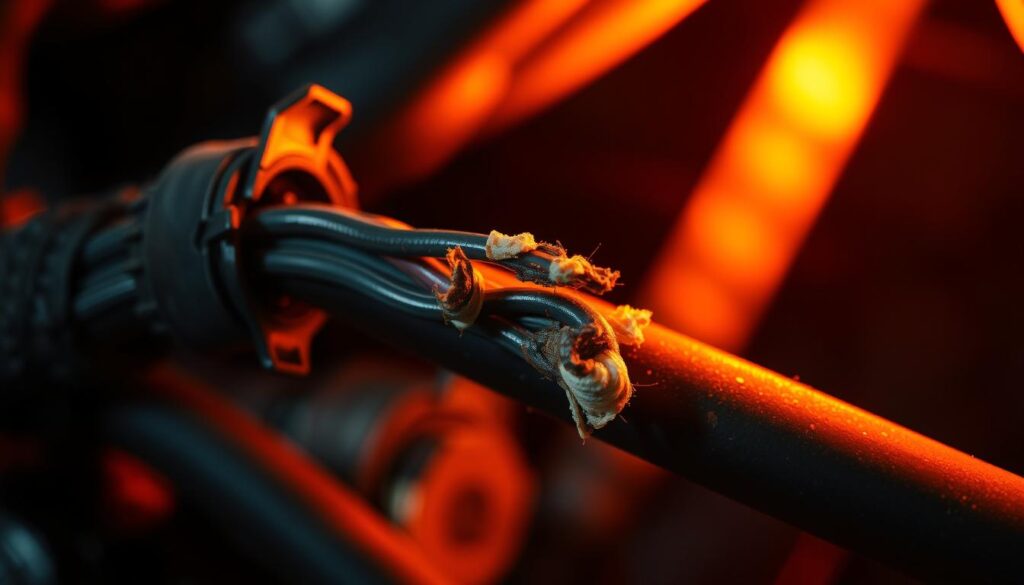
High Temperature Effects and Expansion Cycles
Engine compartments create extreme thermal conditions that directly attack wiring insulation materials. Temperatures near exhaust manifolds regularly exceed 300°F during normal operation, with turbocharger proximity zones reaching even higher levels. This intense heat degradation causes insulation polymers to undergo chemical breakdown at the molecular level.
The insulation becomes progressively more brittle as plasticizers evaporate from the material. Cracks develop along the wire surface, exposing copper conductors to moisture and contaminants. The thermal damage accelerates when heat combines with mechanical stress from vibration.
Thermal cycling presents an equally destructive challenge to harness integrity. Each heating and cooling cycle causes insulation materials to expand and contract at different rates than the copper conductors inside. This differential expansion creates microscopic separation between the wire and its protective covering.
After thousands of heating cycles, these repeated expansions fatigue the insulation structure. Areas closest to heat sources—such as exhaust manifold zones and engine block mounting points—experience the most severe degradation. Terminal connections also suffer as thermal expansion loosens crimped joints over time.
Water Penetration and Electrical Corrosion
Moisture intrusion represents one of the most destructive forces affecting automotive electrical systems. Water enters harness assemblies through compromised connector seals, cracked insulation, or inadequate weatherproofing at splice locations. Once inside the harness, moisture creates an environment for aggressive corrosion development.
The electrochemical corrosion process begins when moisture combines with electrical current flow. This creates galvanic reactions between dissimilar metals in terminals and conductors. Copper oxidizes to form green corrosion products that steadily increase electrical resistance.
Moisture damage intensifies in areas where water collects rather than draining away. Low points in harness routing become corrosion hotspots as condensation accumulates inside protective sheathing. Connector housings with inadequate drain provisions trap water against terminal contacts.
The resulting corrosion increases circuit resistance dramatically. Voltage drop across corroded connections causes reduced component performance and intermittent operation. Advanced corrosion creates complete open circuits as conductive material converts entirely to non-conductive oxide. Effective corrosion prevention requires addressing both moisture exclusion and proper drainage design.
Fluid Contamination and Salt Attack
Automotive fluids pose significant threats to wiring harness integrity through direct chemical exposure. Engine oil, transmission fluid, coolant, brake fluid, and power steering fluid all contain additives that attack common insulation materials. Each fluid type causes specific degradation patterns based on its chemical composition.
Petroleum-based fluids cause rubber and certain plastic insulators to swell and soften. The chemical exposure breaks down polymer chains, reducing mechanical strength and electrical insulation properties. Leaked fluids dripping onto harnesses create concentrated exposure areas that deteriorate rapidly.
Coolant leaks present particularly aggressive chemical exposure conditions. Ethylene glycol-based coolants combined with corrosion inhibitors penetrate insulation and accelerate copper conductor oxidation. The hygroscopic nature of coolant means it attracts and retains moisture, compounding corrosion problems.
Road salt and de-icing chemicals create another category of chemical threats to underbody harnesses. These ionic compounds dramatically accelerate electrochemical corrosion when dissolved in road spray. Sodium chloride from road salt creates highly conductive solutions that promote galvanic reactions.
Certain insulation types prove particularly vulnerable to specific chemical classes. For example, PVC insulation softens when exposed to petroleum products, while cross-linked polyethylene resists oil but degrades under prolonged coolant exposure. Technicians must recognize these material-specific vulnerabilities when assessing harness damage and selecting repair materials.
The combined effects of heat, moisture, and chemical exposure make wiring harness degradation inevitable over vehicle service life. Modern vehicles typically experience their first significant environmental damage between 80,000 and 120,000 miles, though severe operating conditions accelerate this timeline. Recognizing environmental damage patterns allows technicians to predict failure points and implement preventive measures before complete system failure occurs.
Mechanical Stress and Physical Damage Patterns
Beyond environmental degradation, wiring harnesses face constant mechanical challenges that progressively weaken conductors and insulation materials. The mechanical stress imposed by vehicle operation creates distinct failure patterns that technicians can identify and address. Understanding these physical forces helps predict where damage will occur and guides effective repair strategies.
Under normal driving conditions, the engine rocks back and forth in its mounts, which may result in harness contact with components. This constant movement subjects electrical connections to forces that gradually compromise their integrity. The cumulative effect of these mechanical forces accounts for a significant percentage of harness failures in vehicles with over 100,000 miles.
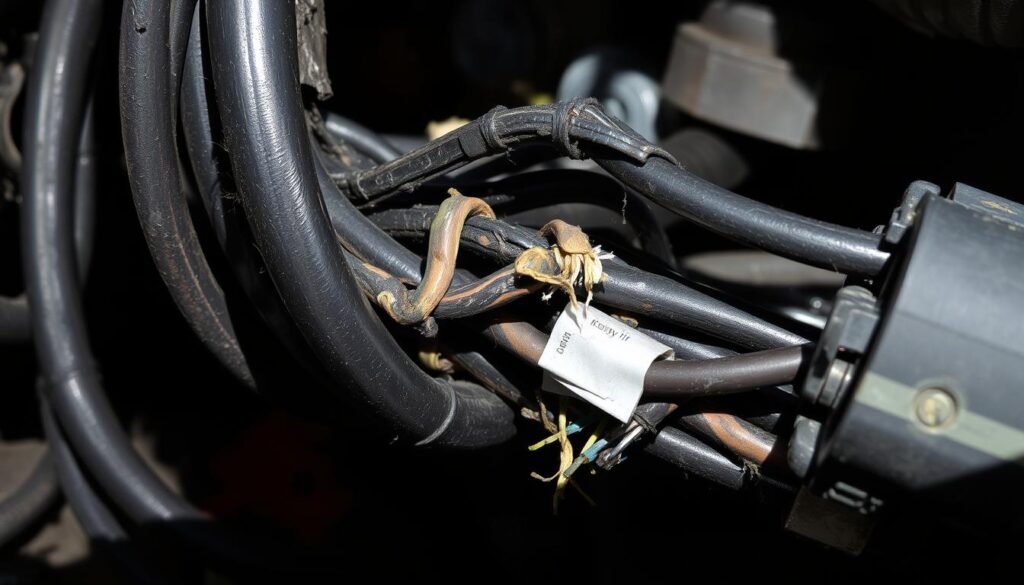
Constant Movement Creates Conductor Fatigue
Cars vibrate significantly during operation, and over time that vibration can fatigue and eventually break a soldered connection. Vibration damage occurs at the microscopic level as individual wire strands flex repeatedly against each other. This flexing causes work-hardening of the copper conductors, making them progressively more brittle until they fracture.
The most vulnerable points are transition zones where wires change from constrained to free-moving sections. These stress concentration points experience maximum flexing with each vibration cycle. A wire secured firmly on one end but loose on the other creates a pivot point where fatigue damage accumulates fastest.
Intermittent electrical problems often signal developing vibration-induced wire damage before complete failure occurs. The broken strands may still make contact under certain conditions but separate when the vehicle hits bumps or accelerates. Technicians should recognize these symptoms as indicators of advancing conductor fatigue rather than dismissing them as random glitches.
Engine wiring harnesses face particularly severe challenges because they experience vibration from both the powertrain and road surface. The engine wiring harness may contact several underhood components as the engine moves in its mounts. This combination of vibration and intermittent contact accelerates wire damage in critical circuits.
Surface Contact Wears Through Protection
Repeated rubbing against sharp edges, brackets, bolt heads, or body panels creates abrasion points that gradually compromise harness integrity. The protective outer sleeving wears through first, followed by individual wire insulation layers. Eventually, bare conductors become exposed and create short-circuit risks.
Abrasion protection becomes critical wherever harnesses route near metal edges or rotating components. Common wear locations include areas where harnesses pass through firewall grommets, rest on subframe rails, or cross near exhaust heat shields. The damage progresses slowly but inevitably without proper routing and protection.
Visual inspection often reveals characteristic wear patterns before electrical failures develop. Shiny spots on wire insulation indicate contact points where abrasion has polished the surface. Frayed outer sleeves expose the individual wires beneath. These warning signs allow preventive intervention before shorts or open circuits occur.
Body panel vibration amplifies abrasion damage at contact points. A harness that barely touches a bracket during static inspection may experience significant rubbing forces during vehicle operation. Technicians must consider dynamic movement when assessing potential physical damage locations.
Repetitive Bending Breaks Conductors
High-cycle flex zones such as door jambs, hood hinges, tailgate pivots, and sliding door tracks subject harnesses to thousands of bending cycles annually. Each opening and closing operation flexes the wires, creating stress concentrations that lead to conductor strand breakage and insulation cracking. This wire damage manifests differently than vibration fatigue because it involves larger displacement angles.
The outer radius of a bend experiences tension forces that pull strands apart, while the inner radius undergoes compression. Modern vehicles with complex door modules and power accessories run dozens of circuits through these flex areas. Each circuit represents a potential failure point as the vehicle ages.
Flexing damage typically begins with intermittent operation of affected circuits. Door speakers may cut in and out, power window operation becomes erratic, or lighting circuits flicker. These symptoms worsen gradually as more conductor strands break within the flex zone. Complete circuit failure occurs when the last conducting strand separates.
Insulation materials also suffer from repeated flexing. Cracks develop perpendicular to the bend axis, allowing moisture intrusion that accelerates corrosion. The combination of mechanical and environmental damage makes flex areas particularly vulnerable to progressive deterioration. Engineers attempt to mitigate this through specialized flex-rated wire specifications and protective conduit, but high-cycle movement areas remain inherent weak points.
Trapped Wires Create Hidden Failures
Harnesses sometimes become trapped between body panels, crushed by improperly routed components, or damaged during service work when technicians fail to protect wire routing. This mechanical stress may not produce immediately visible damage but creates compression points that lead to delayed failures. The insulation becomes permanently deformed, and conductors may partially fracture without completely separating.
Pinch damage often occurs during reassembly procedures when panels are installed without verifying proper harness clearance. A single bolt tightened through a wire bundle can damage multiple circuits simultaneously. The damage may not manifest as electrical problems until vibration or thermal cycling completes the conductor separation initiated by the pinch event.
Common pinch point locations include door hinge areas during hinge replacement, fender mounting points during body work, and engine component brackets during service procedures. Technicians performing repairs must consciously route harnesses away from potential trap points. Taking photos before disassembly provides reference for correct routing during reassembly.
Crush damage differs from pinch damage in that it involves broader contact area but similar compression forces. A harness resting against a sharp edge experiences localized damage, while a harness compressed between two flat surfaces suffers distributed deformation. Both create hidden failures that emerge unpredictably, making diagnosis challenging without knowledge of recent service history.
| Damage Mechanism | Primary Locations | Visual Indicators | Prevention Methods |
|---|---|---|---|
| Vibration Fatigue | Engine harness transition points, unsecured chassis sections | Wire discoloration, broken solder joints, loose terminals | Proper securing, vibration dampening, strain relief loops |
| Abrasion Wear | Firewall passages, subframe contact areas, near rotating parts | Polished insulation, frayed sleeving, exposed conductors | Protective sleeving, edge grommets, proper routing clearance |
| Flex Fatigue | Door jambs, hood hinges, tailgate pivots, sliding mechanisms | Insulation cracks, conductor strand breaks, wire stiffness | Flex-rated wire, service loops, reinforced conduit |
| Pinch/Crush Damage | Panel joints, mounting brackets, service access areas | Flattened wire sections, insulation deformation, hidden breaks | Routing verification, protective clips, assembly procedures |
Recognizing these mechanical damage patterns enables proactive maintenance and accurate diagnosis. Each type produces characteristic symptoms that guide technicians toward specific inspection areas. The interaction between different damage mechanisms can compound problems, making comprehensive harness evaluation essential for reliable repairs.
Documentation of harness routing and protection methods during initial installation or repair prevents future physical damage. Professional technicians photograph harness paths, note protection materials used, and record any areas requiring periodic inspection. This systematic approach reduces the likelihood of repeated failures from the same mechanical stress factors.
Critical Failure Points in Engine Compartment Harnesses
Critical wiring failures cluster predictably around specific engine compartment zones where conditions exceed design tolerances. The confined space under the hood creates a perfect storm of destructive forces. Heat exposure, vibration, chemical contamination, and physical contact combine to accelerate harness deterioration.
Understanding these concentrated failure zones allows technicians to diagnose problems faster and implement targeted repairs. Engine wiring faces conditions that body and chassis harnesses never encounter. Temperatures fluctuate from sub-zero cold starts to operational peaks exceeding 300°F within minutes.
The following subsections identify the three primary vulnerability zones where most engine compartment harness failures originate. Each zone presents unique challenges requiring specific diagnostic approaches and repair techniques.
Thermal Degradation Near Exhaust Components
The area surrounding the exhaust manifold represents the single most thermally aggressive zone in the entire vehicle. Surface temperatures at the manifold itself can reach 1200°F during sustained highway operation. Even several inches away from direct contact, ambient temperatures frequently exceed 400°F.
Wire insulation materials begin thermal degradation at temperatures well below these extremes. Standard PVC insulation starts softening around 200°F and becomes brittle after repeated exposure above 250°F. Cross-linked polyethylene insulation offers better heat resistance but still degrades when subjected to prolonged exposure near exhaust components.
Technicians commonly find melted, charred, or completely disintegrated insulation where harnesses route too close to manifolds, turbochargers, or exhaust pipes. The damage pattern typically shows progressive deterioration starting with discoloration, advancing to surface cracking, then culminating in complete insulation failure. Once bare copper becomes exposed, short circuits to ground become inevitable.
Vehicles with turbocharged engines face additional challenges. The turbocharger housing can reach even higher temperatures than the exhaust manifold. Harnesses routing near the turbo must incorporate specialized high-temperature sleeves and maintain greater clearance distances.
High-Current Circuit Connection Degradation
The alternator circuit and starter motor circuits carry the highest current loads in the vehicle’s electrical system. Starter motors demand 100 to 300 amps during cranking, while modern high-output alternators supply 80 to 150 amps continuously. These extreme current levels make connection quality absolutely critical.
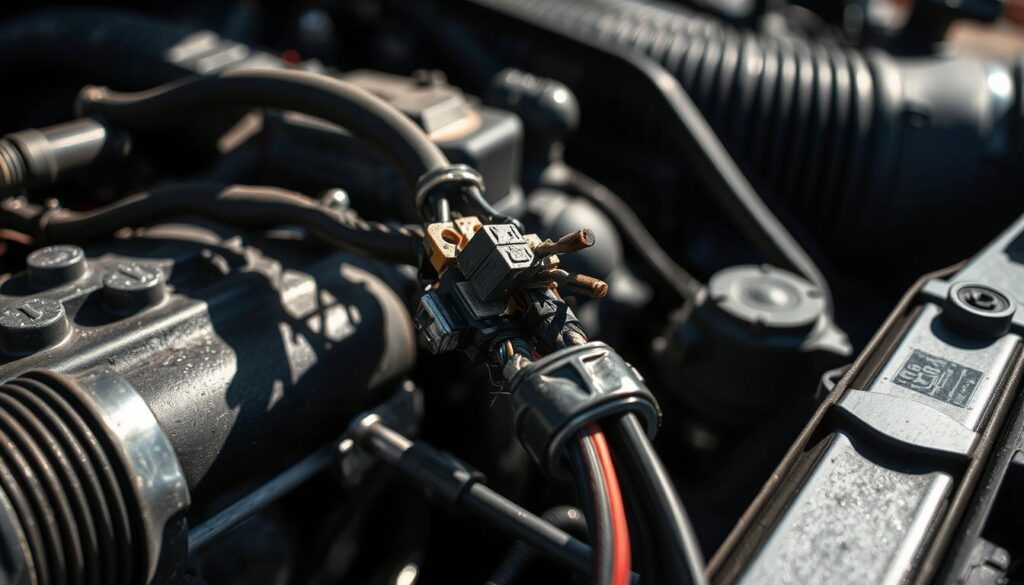
When connection resistance increases even slightly through corrosion or terminal damage, the resulting heat generation accelerates failure exponentially. A connection with just 0.1 ohms of resistance carrying 100 amps generates 10 watts of heat continuously. This thermal buildup melts solder, degrades crimp connections, and carbonizes insulation.
Common failure modes include corroded battery cable terminals, damaged alternator B+ output terminals, and deteriorated starter solenoid connections. Visual inspection reveals discolored terminals, melted connector bodies, and burned wire insulation near high-current connection points.
Several GM models exhibit specific engine wiring contact problems affecting charging system performance. The 2019-2021 Silverado and Sierra 2.7L engines show harness contact at the generator bracket and camshaft carrier cover. The 4.3L engines experience rubbing on the drive belt idler bracket causing intermittent grounds. The 3.0L diesel engines develop pinched harnesses approximately 18 inches from ECM connectors affecting multiple circuits. Harness chafing on generator top surfaces creates charging system faults on multiple platforms.
These contact points create progressive damage that begins with insulation wear and advances to conductor exposure and circuit faults. Early detection through systematic inspection prevents complete circuit failure and potential fire hazards.
Sensor Circuit Pigtail Vulnerabilities
Modern engines incorporate dozens of sensors monitoring temperature, pressure, position, and composition parameters. Each sensor harness connection represents a potential failure point. Unlike high-current circuits, sensor circuits operate at low voltages, typically using 5-volt reference signals from the engine control module.
This low-voltage operation makes sensor circuits extremely sensitive to connection resistance. A corroded terminal adding just 5 ohms of resistance can completely disrupt signal accuracy. The ECM interprets incorrect sensor readings as genuine conditions, leading to improper fuel delivery, ignition timing errors, and emissions failures.
Oxygen sensor pigtails face particularly harsh conditions. Mounted in the exhaust stream, these connections endure extreme thermal cycling and exposure to corrosive exhaust gases. The O2 sensor ground circuit is especially vulnerable, as ground path degradation skews sensor voltage readings.
Engine coolant temperature sensors provide another common failure scenario. Connector terminal corrosion causes resistance increases that the ECM reads as colder coolant temperatures. This triggers enriched fuel mixture commands, reduced heater performance, and diagnostic trouble codes.
On GM 3.0L diesel engines, specific diagnostic patterns emerge. Connector X160 at the crankcase pressure regulator shows vulnerability to pinching and chafing. This damage affects multiple sensor circuits simultaneously, creating complex diagnostic scenarios with multiple fault codes.
Temperature sensor accuracy directly impacts engine performance and emissions control. Even minor connection degradation produces measurable effects on fuel economy and drivability. Systematic inspection of sensor harness pigtail connections should be standard practice during routine maintenance intervals.
The proliferation of sensors in modern engines—knock sensors, camshaft position sensors, throttle position sensors, manifold pressure sensors—means technicians must inspect dozens of connection points. Each represents a vulnerability where corrosion, vibration, or thermal stress can disrupt critical engine management functions.
Chassis and Body Wiring Harness Weak Points
Beyond the engine bay, vehicle body wiring harnesses encounter repetitive flexing and physical impacts that create predictable failure patterns. The chassis wiring systems distribute electrical power throughout the vehicle structure, connecting doors, cargo areas, and underbody components. These body wiring networks operate in environments where constant mechanical movement combines with harsh external conditions.
Unlike stationary engine compartment connections, body harnesses must accommodate thousands of movement cycles while maintaining electrical continuity. This creates specific vulnerability zones that require targeted inspection and preventive maintenance strategies.
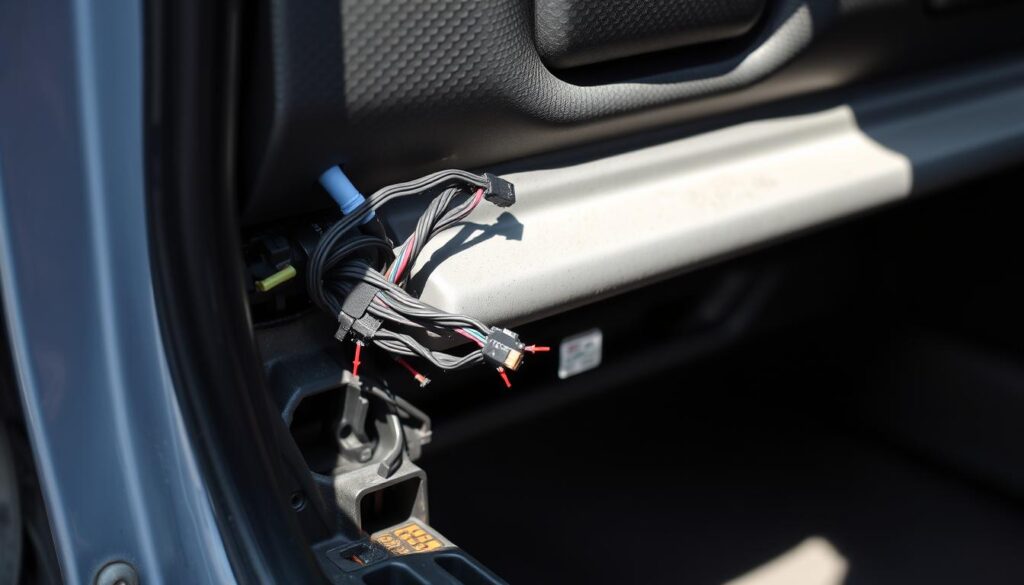
High-Cycle Fatigue in Movable Door Connections
The door jamb represents one of the most demanding environments for automotive wiring. Passenger doors cycle more than 20,000 times during typical vehicle service life, creating severe flexing stress on wire bundles passing between the body and door structures. Each opening and closing event bends the harness through its full range of motion.
Common failure symptoms include inoperative power windows, door locks, mirrors, and speakers. These problems typically manifest as intermittent malfunctions in specific door positions before complete circuit failure occurs. The electrical connection may work perfectly when the door is closed but fail when opened to certain angles.
Proper inspection of door jamb harnesses requires careful examination inside protective conduits where damage often hides from immediate view. Technicians should flex the harness through its full range while monitoring electrical continuity. Visible cracking in the rubber boot covering the door jamb passage indicates internal wire damage has likely occurred.
Wire strands typically break one at a time inside the insulation, making early detection difficult. The remaining intact strands carry increased current load, accelerating their deterioration. By the time symptoms appear, multiple wires within the door jamb bundle may have sustained partial damage.
Rear Cargo Door Electrical Failures
The tailgate harness encounters similar flex-fatigue issues with added complexity from multiple electrical systems. Modern vehicles route license plate lights, backup cameras, power liftgate motors, and tailgate release mechanisms through this vulnerable connection point. Failure of any single circuit within the bundle can trigger multiple diagnostic trouble codes.
Tailgate and liftgate harnesses prove particularly vulnerable because they route through hinge mechanisms with limited protective looming. The tailgate harness must accommodate both vertical lifting motion and horizontal opening movement, depending on vehicle design. This multi-directional flexing creates complex stress patterns that accelerate wire fatigue.
General Motors technical bulletins specifically address tailgate harness routing concerns on vehicles equipped with 2.7L, 3.0L diesel, 4.3L, 5.3L, and 6.2L engines. The engine wiring harness on these platforms may contact the ECM/TCM bracket, driver-side upper control arm, or shock tower bolt due to engine vibration. This contact creates abrasion that leads to blown fuses and multiple diagnostic trouble codes depending on chafing extent.
Proper securing techniques prevent harness movement that causes contact with sharp edges or vibrating components. Factory routing specifications include specific standoff locations and protective sleeve applications that must be maintained during repair procedures.
Ground-Level Physical Impact Zones
The hostile environment beneath vehicles exposes chassis wiring to impacts from rocks, road debris, and ground contact during off-road use or steep driveway angles. Underbody damage typically results from sudden impact events rather than gradual wear, creating immediate circuit failures rather than progressive symptoms.
Fuel pump harnesses, ABS sensor wiring, and rear lighting circuits represent particularly vulnerable underbody systems. These circuits carry critical safety functions, making underbody damage a high-priority concern. Fuel pump circuit failure strands vehicles immediately, while ABS sensor damage compromises braking system performance.
Proper underbody harness installation requires robust protective sleeving materials that resist abrasion and impact. Split loom tubing and corrugated conduit provide baseline protection, but high-exposure areas benefit from additional shielding using heat-resistant sleeve or braided wrap materials.
Standoff mounting techniques keep harnesses separated from the chassis structure, preventing contact wear during normal vehicle operation. Factory designs include specific attachment points that maintain proper clearance above vulnerable surfaces. Replacement harnesses must follow original routing paths to avoid creating new contact points that accelerate wear.
Regular underbody inspection should include harness condition assessment, particularly after off-road use or winter driving in salt-treated areas. Early detection of protective sleeve damage allows repair before wire exposure occurs, preventing costly circuit failures.
Stay Current on Electrical System Diagnostics
Get practical wiring repair techniques, diagnostic procedures, and maintenance insights delivered to your inbox. Our newsletter keeps fleet professionals informed on the latest electrical troubleshooting methods.
Systematic Diagnostic Approach for Harness Damage
Proper electrical diagnosis begins with establishing a clear diagnostic workflow to isolate wiring problems efficiently. The first step in harness repair involves identifying the specific type and location of damage. Common problems include rusted connectors, damaged terminals, and faulty protective sleeves that compromise the electrical system’s integrity.
Each of these issues can result in malfunctioning components or complete system failure. Depending on the extent of harness chafing or damage, you may encounter a Check Engine light illumination, no start or no crank conditions, multiple blown fuses, or numerous diagnostic trouble codes. A methodical approach saves time and prevents misdiagnosis.
Several disconnected engine harness connections may be necessary to reposition the harness for thorough inspection. Under normal driving conditions, the engine rocks back and forth in its mounts. This movement can cause harness contact that will not be visible with the engine off, making dynamic testing essential for accurate results.
Recognizing Damage Through Careful Examination
Visual inspection forms the foundation of any diagnostic process for wiring harness problems. Start your examination with obvious damage indicators such as melted insulation, abraded wire covering, corroded connector bodies, and damaged terminal seals. These visible signs often point directly to the failure location.
Proper inspection techniques require using specialized tools to view hidden areas. An inspection mirror helps you examine tight spaces behind engine components where harnesses route through confined pathways. Gently manipulate harnesses while observing for cracks or breaks that appear only when the wire flexes.
Subtle warning signs deserve equal attention during your examination. Discolored insulation indicates prolonged heat exposure from nearby exhaust components. White corrosion powder at connector interfaces suggests moisture intrusion. Brittle or hardened wire covering that cracks when bent slightly signals thermal degradation. Green copper oxidation visible through damaged insulation areas confirms conductor exposure. Oil-soaked sections indicate areas where protective sleeving has deteriorated.
Inspect harnesses with the vehicle running under normal operating conditions. Engine movement reveals contact points and vibration damage that remain hidden during static inspection. This dynamic visual inspection technique identifies intermittent failures that plague technicians attempting diagnosis with the engine off.
Electronic Testing for Circuit Integrity
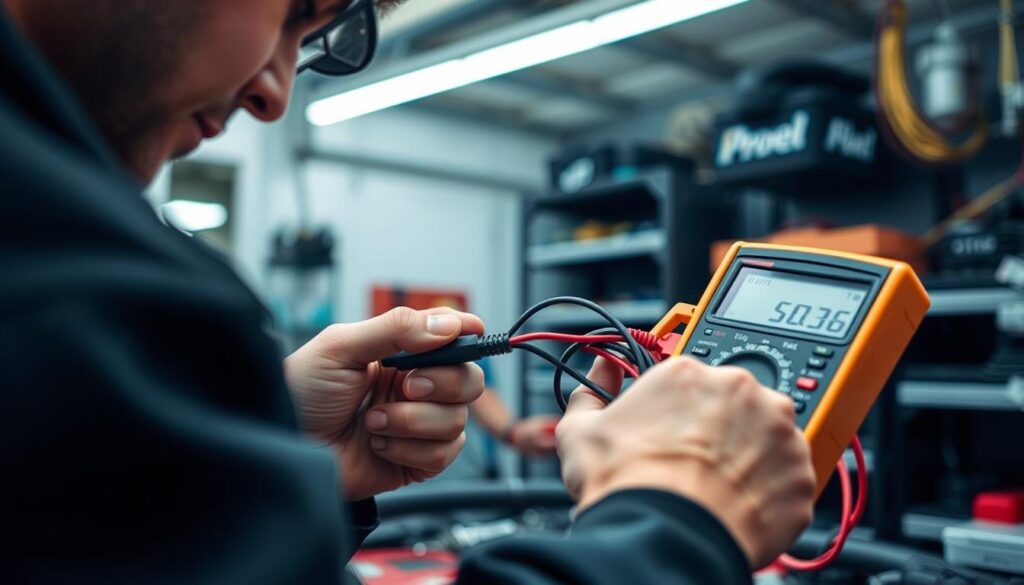
Multimeter testing provides objective data about circuit condition beyond what visual inspection reveals. Digital multimeters verify circuit integrity through several measurement types that identify different failure modes. Understanding proper testing procedures ensures accurate diagnosis.
Continuity testing identifies open circuits where wire conductors have broken completely. Set your multimeter to the continuity or ohms function and probe both ends of the circuit. A good circuit produces a beep or reads near zero ohms. An open circuit shows infinite resistance or no continuity signal.
Resistance measurement detects high-resistance connections caused by corrosion or partial conductor breakage. Power circuits should typically measure less than 0.1 ohms of resistance. Ground circuits require even lower resistance values for proper operation. Higher readings indicate problems requiring repair.
Test circuits with connectors both connected and disconnected to isolate terminal contact problems from wire issues. A circuit showing good continuity when disconnected but high resistance when connected points to terminal corrosion or damaged pin contacts. This diagnostic distinction guides your repair approach effectively.
Partial conductor breakage creates intermittent failures that challenge diagnosis. These damaged wires may show acceptable resistance during static testing but fail under vibration or movement. Wiggle the harness while monitoring your multimeter to reveal these elusive problems during continuity testing.
Evaluating Circuits Under Operating Loads
Circuit load testing advances beyond static measurements to evaluate performance under actual operating conditions. Voltage drop analysis measures the voltage difference between two points in an energized circuit carrying current. This technique reveals resistance problems invisible to simple continuity checks.
Proper voltage drop testing requires the circuit to operate under normal load conditions. Connect your meter’s positive lead to the power source side and the negative lead to the load side. The meter displays voltage lost to resistance in the circuit between measurement points.
Acceptable voltage drop values vary by circuit type and application. Power circuits should show less than 0.2 volts for proper operation. Ground circuits should measure less than 0.1 volts to prevent performance issues. Signal circuits require less than 0.05 volts to maintain data integrity. High-current circuits may show slightly higher drops acceptable based on current flow.
Excessive voltage drop indicates unwanted resistance from corrosion, damaged terminals, or undersized conductors. A power circuit showing 0.5 volts drop wastes electrical energy as heat and starves the component of needed voltage. This testing method pinpoints the exact location of resistance problems.
Test both the power side and ground side separately to isolate which path contains excessive resistance. Many technicians focus only on power circuits while overlooking ground-side problems that create identical symptoms. Complete circuit analysis requires testing both paths thoroughly.
Advanced Detection Using Temperature Analysis
Thermal imaging technology identifies resistance heating in connections before catastrophic failure occurs. Infrared cameras detect temperature differences invisible to human senses, revealing problem areas immediately. This diagnostic tool has become increasingly affordable and accessible for professional repair facilities.
High-resistance connections generate heat proportional to current flow through them. A corroded terminal or damaged wire creates resistance that converts electrical energy into thermal energy. The infrared camera displays these hot spots as bright areas on its screen, even through protective sleeving.
Perform thermal imaging scans with circuits operating under normal load conditions. Observe connector bodies, splice locations, and tight routing areas for temperature elevation above ambient levels. Temperature differences of 10 degrees or more indicate problems requiring attention.
This diagnostic technique excels at finding intermittent problems that traditional testing misses. A connection may test acceptable with a multimeter but still generate excess heat during operation. Thermal imaging reveals these developing failures before they cause breakdowns or create fire hazards.
Compare temperatures across similar circuits to establish baseline expectations. A connector on one headlight circuit running 15 degrees hotter than its counterpart signals a problem requiring investigation. This comparative approach helps identify abnormal conditions quickly during systematic diagnosis.
Professional Wire Repair and Splicing Methods
Proper wire splicing separates amateur fixes from professional repairs that withstand years of vehicle operation. The automotive industry has witnessed a significant shift in accepted wire repair methodologies over the past decade. What once served as standard practice now faces scrutiny under modern reliability standards.
Professional technicians must master multiple techniques to address various harness damage scenarios effectively. Each method offers distinct advantages and limitations that impact long-term connection integrity. Understanding when to apply specific wire repair approaches ensures repairs meet both immediate functional needs and extended durability requirements.
Solder and Heat Shrink Splice Technique
Soldering used to be the go-to method for repairing wire connections. The wiring industry has changed its tune over the last 10 to 15 years, now emphasizing crimping connections instead. When executed correctly, a soldered wire joint will last for years, but it takes practice and patience to do it properly.
The main issue with soldered joints is vibration. Soldering eliminates the flexibility of the joint, and cars vibrate constantly during operation. Over time, that vibration can fatigue and eventually break a soldered connection that seemed solid initially.
Proper soldering techniques require precise temperature control and methodical execution. Electrical solder (60/40 tin-lead composition) melts at 370°F, but the soldering iron should be set at 750°F for proper work. This temperature differential ensures adequate heat transfer to the wire without excessive exposure time.
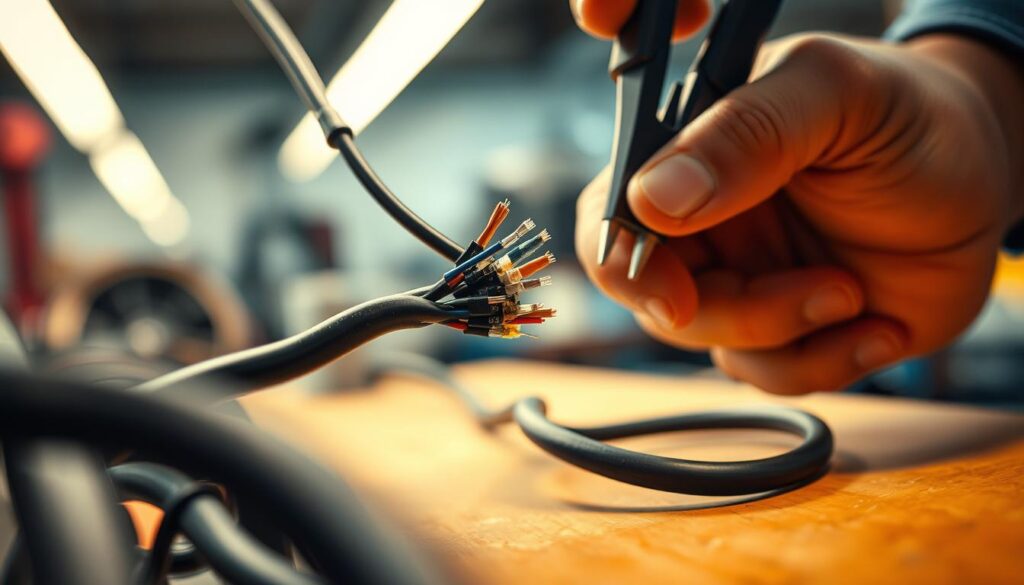
The best method involves laying the wire on the tip of the soldering iron once it reaches full temperature. Add the solder to the leading edge of the tip and joint so the iron heats the solder. The wire then pulls the solder through the connection via capillary action rather than having melted solder simply coat the surface.
The lineman’s splice method provides maximum mechanical strength before soldering. This technique involves mechanically twisting conductors together, creating a joint that maintains integrity even if solder fails. Technicians can recognize proper solder penetration by seeing individual wire strands through the translucent solder coating.
Soldering tends to increase the resistance of a joint slightly. The process also pushes considerable heat into the wire, making it vulnerable to moisture penetration along heat-damaged insulation. NASA and the FAA no longer allow soldering on spacecraft and aircraft electrical systems due to these reliability concerns.
Heat shrink tubing provides essential insulation for completed solder joints. Quality adhesive-lined heat shrink creates a moisture barrier while mechanically protecting the repair zone. The tubing should extend at least one inch beyond each side of the splice for adequate coverage.
Crimp Splice Connector Installation
For most applications, crimp connections prove more reliable than hand-soldered ones. A proper crimp does not damage the wire, add heat, or limit flexibility. This method has become the industry standard for professional wire repair across automotive manufacturing and service operations.
The IPC/WHMA-A-620 standard establishes quality requirements for cable and wire harness assembly workmanship, including crimping procedures used in professional repair environments. The biggest problem with soldering is heat. Proper crimping cold-forms the connector barrel around the wire, creating a gas-tight connection that maintains wire flexibility.
Crimp splice connectors fall into two primary categories: insulated and non-insulated. Insulated connectors feature a vinyl sleeve that provides basic protection, while non-insulated barrel connectors require separate insulation after installation. Most OEM vehicle manufacturers do not allow dealership technicians to use solder, mandating crimped connections instead.
Proper wire strip length typically measures 1/4 inch for standard crimp connectors. Stripping too much wire leaves exposed conductors beyond the connector barrel. Insufficient stripping prevents adequate wire insertion, resulting in weak connections prone to pullout failures.
Quality crimping tools with proper dies make the critical difference between reliable and problematic connections. Ratcheting crimpers ensure complete compression before releasing, preventing partial crimps that create high-resistance joints. Generic pliers-style tools cannot achieve the consistent barrel deformation required for gas-tight seals.
| Characteristic | Crimping Method | Soldering Method |
|---|---|---|
| Joint Flexibility | Maintains wire flexibility throughout connection zone | Creates rigid joint susceptible to vibration fatigue |
| Heat Exposure | Cold forming process with no thermal damage | 750°F iron creates heat-affected zones in wire |
| Installation Time | 15-30 seconds per connection with proper tools | 2-3 minutes per joint including cooling time |
| Skill Requirement | Moderate skill with quality ratcheting crimper | High skill level for consistent quality joints |
Self-soldering heat shrink butt connectors represent a hybrid solution combining benefits of both methods. These specialized connectors contain solder rings that melt during heat shrink activation, creating soldered connections without requiring separate soldering irons. The approach works well for low-vibration applications where convenience outweighs traditional crimping advantages.
NASA Standard Wire Repair Procedures
The IPC/WHMA-A-620 standard and NASA-STD-8739.4 wire and cable workmanship standards represent the gold standard for critical repair work. These specifications evolved from decades of aerospace engineering experience where electrical failures carry catastrophic consequences. Automotive technicians benefit from adopting these proven methodologies for high-reliability repairs.
NASA requirements include minimum conductor overlap specifications that ensure adequate mechanical and electrical connection. Crimp compression ratios must fall within defined ranges—too little compression creates loose connections while excessive compression damages conductor strands. The standards explicitly prohibit solder-only repairs for any application subject to vibration or thermal cycling.
Key NASA wire splicing principles include minimum seven wire diameters of overlap for spliced conductors. Crimp compression should fall between 70-80% of original barrel diameter. Visual inspection requirements verify conductor exposure and insulation damage. Pull-test specifications confirm mechanical integrity before energizing circuits. Documentation requirements track repair locations and methods.
These standards emphasize that electrical connections must maintain both mechanical strength and electrical conductivity throughout their service life. A connection that tests perfectly when installed but fails after 50,000 miles of thermal cycling does not meet professional quality benchmarks.
Sealing and Waterproofing Repaired Sections
Even perfect electrical repairs will fail if moisture intrudes into the connection zone. Water creates corrosion that increases resistance, eventually causing complete circuit failure. Professional wiring harness repair demands attention to environmental sealing equal to the electrical work itself.
Adhesive-lined heat shrink tubing provides the most reliable moisture barrier for repaired sections. The inner adhesive layer melts during heating, flowing into gaps between wire insulation and connector. Upon cooling, this adhesive creates a waterproof seal that prevents moisture wicking along wire strands.
Quality products like 3M Super 33+ vinyl electrical tape represent the minimum standard for insulating repairs. This tape maintains elasticity and adhesion through temperature extremes from -18°F to 221°F. Cheap electrical tape deteriorates rapidly, leaving connections exposed within months of installation.
Self-fusing silicone tape offers superior protection for exposed harness sections. This unique material bonds to itself without adhesive, creating a unified rubber layer resistant to chemicals, moisture, and temperature extremes. The tape works particularly well for protecting repairs in engine compartment environments.
Liquid electrical tape applications provide conformal coating that reaches into connection crevices standard tape cannot seal. These brush-on or spray products cure into flexible, waterproof insulation suitable for irregularly-shaped repairs. The material resists oil, gasoline, and common automotive chemicals.
Proper sealing technique requires several essential steps. Clean all surfaces thoroughly, removing oil, dirt, and corrosion before sealing. Apply adhesive-lined heat shrink extending one inch minimum beyond splice on each side. Heat shrink from center outward, ensuring adhesive flows from both ends. Wrap quality electrical tape in half-overlapping layers for additional protection. Apply dielectric grease to connector interfaces before reconnection.
Dielectric grease serves a dual purpose in sealed connections. The waterproof grease excludes moisture from terminal interfaces while improving electrical contact. Technicians should apply grease sparingly—excessive amounts can trap contaminants or interfere with connector locking mechanisms.
Testing sealed repairs requires verification under simulated operating conditions. Spray repaired sections with water while monitoring circuit voltage and resistance. Connections should show no voltage drop increase or resistance change when wet compared to dry baseline measurements.
Connector Terminal Repair and Replacement
Professional terminal service requires understanding the intricate locking mechanisms within modern automotive connectors. Wire replacement scenarios extend beyond simple splicing when dealing with burned sections, routing changes, or complete circuit overhauls. These situations demand removing connector terminals from both ends of the wire and installing new terminals onto replacement wire.
The complexity of connector terminals varies significantly across automotive applications. Basic connections utilize common ring or spade terminals that attach with standard crimping tools. However, modern molded connectors present greater challenges through specialized designs.
Packard 56 series, Deutsch connectors, and GM’s Weather Pack and Metri-Pack families each require dedicated terminals and purpose-built crimping tools. These sealed connector systems dominate contemporary automotive electrical systems and demand specialized repair knowledge.
Terminal Removal Using Proper Release Tools
Modern automotive connectors incorporate terminal position assurance (TPA) locking mechanisms that prevent accidental terminal extraction during vehicle operation. These safety features also complicate repair procedures without proper tools. Each connector family requires matched release tools designed specifically for its locking tang configuration.
The terminal removal process follows a precise sequence. First, identify the correct release tool for the specific connector type being serviced. Insert the tool into the designated access point to depress the internal locking tang while simultaneously pulling the wire and terminal from the rear of the connector housing.
Forcing terminals without appropriate tools damages both the terminal retention features and the connector housing locking mechanisms. This damage creates unreliable connections that may fail intermittently or separate completely during vehicle operation. The compromised connector housing cannot properly retain terminals even after replacement.
Terminal release tools represent inexpensive insurance against connector damage. These specialized picks and extractors are available for all common connector families through automotive electrical suppliers. Professional technicians maintain comprehensive sets covering Weatherpack, Metri-Pack, Packard, and Deutsch connector systems.
Pin and Socket Terminal Crimping Standards
Understanding the distinction between pin (male) and socket (female) terminals proves critical for successful repairs. These connector terminals require exacting standards during installation to ensure reliable electrical connections. Proper terminal crimping involves precise technique rather than simply squeezing wire into metal housings.
Each terminal features two distinct crimp zones serving different functions. The conductor crimp secures directly to the wire strands, creating a gas-tight electrical connection. The insulation crimp provides strain relief by gripping the wire jacket without penetrating through to the conductor.
The conductor crimp creates permanent connections through cold-working processes. This compression permanently deforms the terminal barrel around the wire strands, eliminating air gaps that cause resistance and corrosion. The metal-to-metal contact area must be maximized without over-compressing and breaking conductor strands.
Proper insulation crimps secure the wire jacket firmly without cutting through the insulation material. This crimp zone prevents the wire from pulling out of the terminal under tension while maintaining the integrity of the conductor’s insulation. The balance between secure retention and insulation preservation requires calibrated crimping tools.
Purpose-built crimping tools with matched dies for specific terminal types and wire gauges ensure consistent results. Generic pliers or adjustable crimpers produce unreliable connections prone to high resistance and premature failure. Professional-grade ratcheting crimpers prevent release until proper compression is achieved, eliminating under-crimped connections.
| Connector Type | Terminal Style | Wire Gauge Range | Strip Length |
|---|---|---|---|
| Weatherpack | Sealed barrel terminals | 12-20 AWG | 5-6mm |
| Metri-Pack 150 | Micro sealed terminals | 16-22 AWG | 5mm |
| Packard 56 | Open barrel terminals | 14-18 AWG | 6-7mm |
| Deutsch DT Series | Solid contact pins | 12-20 AWG | 6mm |
Weatherpack and Metri-Pack Connector Service
GM’s sealed connector families dominate modern automotive electrical systems across multiple manufacturers. Weatherpack connectors feature comprehensive sealing through silicone boots on individual terminals, positive terminal locks, and secondary connector position assurance (CPA) devices. These design elements create moisture-resistant connections suitable for underhood and underbody applications.
Metri-Pack connectors serve as smaller, higher-density alternatives for sensor and control circuits. Also called Micro-Pack in some applications, these connectors accommodate more circuits in compact housings. The reduced terminal size requires greater precision during service procedures.
Servicing sealed connectors follows specific sequences to ensure proper assembly. Begin by selecting the correct replacement terminal matched to the connector family and wire gauge. Strip the wire to the exact length specified for that terminal type, typically 5-6mm of exposed conductor for Weather Pack applications.
The most common assembly error involves forgetting the sealing boot before crimping. Slide the silicone sealing boot onto the wire immediately after stripping and before any crimping operations. This boot cannot be installed after terminal crimping without cutting off the terminal and starting over.
Crimp the terminal using the proper Weather Pack or Metri-Pack crimping tool with dies matched to the wire gauge being installed. These specialized tools create the correct conductor and insulation crimp profiles for sealed terminals. Generic crimpers damage the terminal geometry and compromise sealing integrity.
Insert the crimped terminal into the connector housing until the locking tang audibly clicks into position. This click indicates the terminal has passed through the retention spring and locked properly. Verify proper seating by attempting to gently withdraw the terminal from the rear of the housing.
A properly installed terminal resists removal with firm pressure. Terminals that withdraw easily indicate incomplete insertion or damaged retention features. Replace any connector housings with damaged terminal locks, as these cannot provide reliable connections regardless of terminal quality.
Packard 56 series connectors remain prevalent in classic and vintage vehicle restoration. These open-barrel terminals follow similar service principles but lack the sealing features of modern Weather Pack systems. Proper crimping tools specific to Packard terminals ensure reliable connections in older vehicle electrical systems.
After terminal installation, slide sealing boots into position against the connector housing. Install any secondary locks or CPA devices to complete the assembly. Test the completed connection for proper continuity and resistance before reinstalling protective sleeving or returning components to service.
Wiring Harness Protection and Preventive Maintenance
Beyond repair techniques, proper protection strategies form the foundation of long-term harness reliability. Preventive maintenance extends the service life of wiring systems and prevents the costly failures that result from environmental exposure. Implementing protective measures immediately after repairs ensures your investment in time and materials delivers lasting results.
A comprehensive approach to preventive maintenance addresses three critical areas: physical protection through sleeving materials, proper installation techniques, and chemical barriers against corrosion. Each element works together to shield vulnerable wiring from the harsh conditions found in automotive environments.
Physical Barriers Through Sleeving Materials
Protective sleeving creates the first line of defense against environmental hazards and mechanical damage. Split loom tubing represents the most common solution for general wire protection. This corrugated plastic conduit opens along one side, allowing easy installation without disconnecting terminals or connectors.
Split loom works well for organizing multiple wires and providing basic abrasion protection. The corrugated design adds flexibility while maintaining structural support.
Braided expandable sleeving offers superior performance in high-wear applications. Woven from nylon or polyester filaments, this material expands to accommodate connectors during installation then contracts around the harness. The braided construction delivers excellent abrasion protection while allowing some flexibility for wire movement.
This sleeving type provides a professional appearance and resists fraying better than split loom. It excels in applications where wires pass through tight spaces or experience frequent flexing.
Heat shrink sleeving creates sealed protection against moisture intrusion. When heated with a heat gun, this material shrinks to roughly half its original diameter, conforming tightly to the wire bundle. Heat shrink provides the best environmental sealing but requires disconnecting wires for installation since it cannot be opened after application.
Adhesive-lined heat shrink adds waterproofing capability. The internal adhesive melts during heating, creating a waterproof seal that bonds to wire insulation.
Kevlar abrasion-resistant sleeves handle extreme wear locations where standard materials fail. These sleeves use aramid fiber construction that resists cutting and abrasion from sharp edges. Apply Kevlar sleeving at contact points with metal brackets, frame rails, and suspension components.
Self-fusing silicone tape provides protection for irregular shapes and tight spaces. This tape bonds to itself without adhesive, creating a seamless rubber layer. It conforms to complex geometries and offers excellent heat resistance up to 500°F.
Material selection depends on specific application requirements. Use split loom for general wire organization, braided sleeving for moving applications, heat shrink for sealed connections, and Kevlar for high-wear contact points. Replacing compromised protective sleeving during inspections prevents future damage to the underlying wires.
Strategic Installation and Securing Methods
Proper wire routing prevents damage regardless of how well wires are protected. Following fundamental routing principles ensures harnesses avoid hazardous conditions throughout their service life. Maintain minimum clearance of four inches from exhaust manifolds and catalytic converters to prevent heat degradation.
Route harnesses away from sharp edges that could cut through protective sleeving over time. Avoid pinch points where body panels, brackets, or moving components could compress wires. Use existing wire channels molded into body panels and frame rails whenever possible.
These factory-designed passages provide optimal routing paths with built-in protection. At the ECM/TCM bracket location, wrap the harness using appropriate sleeving and secure with zip ties to prevent movement from engine vibration.
Securing harnesses at regular intervals prevents vibration-induced fatigue. Space attachment points every 8 to 12 inches along horizontal runs. Vertical sections require more frequent securing to prevent sagging under their own weight.
OEM-style fir tree clips offer the best mounting solution for body panel attachment. These plastic fasteners insert into existing holes, holding harnesses securely without requiring additional hardware. The expanding design grips panel holes firmly while allowing quick installation.
Adhesive-backed cable tie mounts work for locations without mounting holes. Clean the mounting surface thoroughly before applying these mounts. Allow adhesive to cure for 24 hours before subjecting the installation to full loads.
Adjustable P-clips provide secure mounting to studs and threaded locations. These metal clamps accommodate various harness diameters and prevent crushing wires through their curved design. For upper control arm contact areas, wrap the wiring harness in protective sleeving and secure with anti-abrasion tape before routing.
At shock tower locations, utilize the factory wire harness canal. Insert the harness into the sleeving first, then position it within the canal. Secure the assembly using zip ties at multiple points to eliminate movement.
Proper wire routing delivers benefits equal to the repair quality itself. A perfectly executed splice fails quickly when routed incorrectly through high-heat or high-wear areas.
Chemical Protection and Corrosion Prevention
Dielectric grease provides essential moisture protection for electrical connections. This silicone-based compound remains non-conductive, preventing short circuits while displacing water from connector interfaces. Apply dielectric grease inside connector bodies before terminal insertion to create a moisture barrier.
The grease displaces from metal-to-metal contact points during connector mating. Insertion force pushes the compound aside, allowing proper electrical contact while sealing the connection perimeter. This property makes dielectric grease safe for use in power and signal circuits.
Proper application technique prevents problems from over-application. Use a small amount inside the connector body, coating the cavity where terminals insert. Apply additional compound to weather seals and O-rings to maintain their flexibility and sealing capability.
Avoid excessive application that attracts dirt and contaminants. A thin, even coating provides optimal protection without creating maintenance issues.
Specialized contact enhancers improve connection reliability in severe-duty applications. These products combine corrosion inhibitors with conductive particles that maintain low-resistance connections. Apply contact enhancer to terminal surfaces before assembly in marine environments or areas with heavy salt exposure.
Anti-corrosion spray treatments protect exposed harness sections from road salt and chemicals. These aerosol products create a protective film that repels moisture and prevents oxidation. Reapply treatments annually or after underbody washing to maintain protection.
Combining physical protection through sleeving, proper routing techniques, and chemical barriers creates comprehensive preventive maintenance. This layered approach addresses all common failure mechanisms, extending harness service life and reducing unexpected electrical problems. Regular inspection of protective measures during routine maintenance identifies degraded sleeving or loose securing points before they cause wire damage.
HDJ Perspective
The transition from soldering to crimping as the industry standard reflects a broader shift toward reliability-focused repair practices in commercial fleet operations. As vehicle electrical systems grow more complex with multiplexed networks and sensor arrays, the consequences of a single failed connection multiply across multiple systems. Fleet managers who invest in proper diagnostic equipment and technician training for wiring harness repair will see returns in reduced downtime and avoided roadside failures—problems that cost far more than the repair itself when a loaded trailer sits waiting for a tow truck.
Repair vs. Replacement Decision Matrix
Making informed decisions about wiring harness repair versus replacement protects both your budget and vehicle reliability. This choice requires evaluating the extent of damage, calculating true costs, and weighing safety factors. A systematic approach prevents costly mistakes and ensures lasting results.
Many technicians face this dilemma when diagnosing electrical issues. One option involves purchasing a complete harness from manufacturers like Painless Performance, Ron Francis Wiring, or American Auto Wire. However, if the basic harness remains sound, targeted repairs often provide better value than full harness replacement.
General Motors technical bulletins emphasize an important principle: do not replace ECM modules for electrical concerns without thoroughly inspecting the engine wiring harness. This guidance prevents unnecessary parts replacement and focuses attention on the actual problem source.
Assessing Damage Severity and Repairability
Effective damage assessment starts with categorizing the problem into severity levels. This evaluation determines whether repair makes practical sense or replacement becomes necessary.
Minor damage includes single wire breaks, isolated connector corrosion, and limited abrasion affecting one to three wires. These conditions clearly favor repair approaches. The damage remains localized and accessible for correction.
Moderate damage presents a middle ground. This category includes multiple wire failures in one area, connector housing damage, and extensive abrasion affecting 25 to 50 percent of the harness bundle. Repair remains viable but requires more extensive work and materials.
Severe damage makes harness replacement the better option. Fire damage affecting multiple circuits, widespread corrosion, crushed harness sections, and damage exceeding 50 percent of circuits fall into this category. The labor required for comprehensive repairs often exceeds replacement costs.
Location factors significantly into repairability decisions. Easily accessible harness sections in the engine compartment or under-hood areas allow straightforward repairs. Sections buried behind dashboards, inside door pillars, or under carpeting increase labor time substantially.
Documentation helps track damage patterns. Photograph affected areas, note which circuits show problems, and record any environmental factors contributing to failure. This information guides the repair versus replacement decision and prevents future issues.
Calculating True Repair and Replacement Costs
Economic analysis requires honest assessment of all costs involved. Professional shop labor typically runs $100 to $150 per hour. Complete replacement harnesses range from $200 for simple circuits to over $2,000 for complete vehicle main harnesses.
Calculate repair cost by estimating total time requirements. Include diagnostic time, accessing damaged sections, performing repairs, testing circuits, and reassembly. Multiply total hours by shop labor rates and add materials costs for terminals, connectors, sleeving, and sealant.
Compare this repair cost against replacement options. New harnesses often require less skilled labor to install than complex repairs demand. However, routing new harnesses and matching all connectors adds significant installation time.
| Damage Level | Repair Time | Repair Cost | Replacement Cost |
|---|---|---|---|
| Minor (1-3 wires) | 2-4 hours | $250-$600 | $800-$1,500 |
| Moderate (25-50%) | 6-10 hours | $700-$1,500 | $1,200-$2,500 |
| Severe (>50%) | 12-20 hours | $1,500-$3,000 | $1,500-$2,500 |
Hidden costs deserve consideration in labor analysis. Cheap repairs done incorrectly will fail and require rework. This ultimately costs more than proper repair or replacement done correctly the first time.
Parts availability affects timing and costs. Replacement harnesses for older vehicles may require custom fabrication or prolonged ordering periods. Standard repairs using universal components often proceed faster than waiting for vehicle-specific replacement parts.
Prioritizing Safety and Long-Term Reliability
Certain circuits demand absolute reliability regardless of cost considerations. Airbag circuits, anti-lock brake systems, engine management systems, and fuel pump power circuits create safety hazards when they fail. These systems require either OEM-standard repairs or complete replacement.
Safety considerations override economic factors in critical applications. No middle ground exists for circuits that protect occupants or control essential vehicle functions. Professional repairs or replacements provide liability protection that DIY approaches cannot match.
Warranty coverage adds another dimension to the decision. Professional shops typically guarantee their harness replacement work for 12 to 24 months. Extensive repairs may carry shorter warranty periods due to the complexity involved.
Future serviceability matters for long-term vehicle ownership. Extensively repaired harnesses, even when electrically sound, may challenge future technicians during diagnostics. Multiple splice points and modified routing can complicate troubleshooting years later.
Documentation becomes critical for repaired harnesses. Maintain detailed records showing which circuits received repairs, what techniques were used, and where modifications exist. This information proves invaluable during future electrical work.
Vehicle value influences the replacement versus repair decision. High-value vehicles or those you plan to keep long-term justify investment in quality harness replacement. Older vehicles with limited remaining service life may warrant targeted repairs instead of expensive new harnesses.
The decision matrix balances multiple factors: damage severity, economic realities, safety requirements, and long-term reliability goals. Objective assessment using these criteria leads to sound choices that protect both your investment and vehicle performance.
Essential Tools and Materials for Quality Harness Repair
The foundation of successful wiring harness repair lies in assembling the right combination of tools and materials before starting any project. Professional-grade equipment delivers consistent results that amateur tools cannot match. Having the proper arsenal eliminates guesswork and ensures repairs meet factory standards.
Quality harness work requires investment in specialized equipment designed specifically for automotive electrical systems. Generic hardware store tools often lack the precision needed for modern connector systems. The difference between a reliable repair and a roadside failure often comes down to tool selection.
Crimping Tools and Terminal Kits
Professional crimping tools represent the cornerstone of quality harness repair work. Basic ratcheting crimpers with interchangeable dies handle most common terminals and represent the minimum professional standard. These tools typically cost between $50 and $150 from manufacturers like Astro Pneumatic, Wirefy, and Engineer Inc.
The key to achieving proper crimps lies in using tools compatible with the specific terminals you are installing. Most common crimp tools feature a non-insulated die with a half-moon and tooth configuration. They also include an insulated die with two shallow half-moons for sealed connections.
Specialized applications demand purpose-built crimping tools that deliver consistent results. Weather Pack and Metri-Pack crimpers feature proper die geometry and ratcheting action for GM sealed connectors. Deutsch crimpers handle heavy-duty sealed connectors in commercial and off-road applications.
For crimping large-gauge wires like battery cables, you need specialty impact die tools. Hydraulic or hammer impact crimpers provide the crushing force necessary for terminals on 4-gauge and larger conductors. Advanced crimping tools with replaceable dies can handle virtually any connector type you encounter.
A comprehensive terminal kits inventory keeps repairs moving without delays. Essential components include insulated butt splice connectors in 16-14, 12-10, and 10-8 gauge ranges. Ring and spade terminals in common sizes address ground and power connections. Weather Pack terminal assortments for both 12-14 gauge and 16-20 gauge applications cover GM vehicles. Metri-Pack and Micro-Pack terminal sets serve modern GM vehicles. Packard 56 terminal kits support vintage restoration projects.
Finding the right supplies for harness repair can be difficult, especially when working with older or less popular automobiles. FindPigtails.com makes this procedure easier with a large selection of OEM automotive pigtail connectors and repair tools. The platform enables professionals to easily discover the specific parts they require, ensuring repairs are completed correctly and effectively.
Summit Racing carries Packard connectors from American Autowire along with Packard 56-specific crimping tools. These specialized sources provide OEM-quality components that general auto parts stores cannot stock. If you are repairing or restoring wiring harnesses in GM vehicles made from the 1950s through the early 1980s, these resources become invaluable.
Soldering Equipment and Supplies
Quality soldering equipment remains essential despite the automotive industry’s shift toward crimped connections. You need a temperature-controlled soldering station capable of maintaining 750°F, not a simple soldering iron. The biggest problem with soldering is heat management, which adjustable temperature control solves.
Professional soldering stations from manufacturers like Weller and Hakko provide consistent temperature regulation. These units prevent overheating that damages wire insulation and creates brittle solder joints. Budget soldering irons lack the thermal mass to maintain stable temperatures when working with larger conductors.
Essential soldering equipment and supplies include several critical components. Quality 60/40 rosin-core electrical solder works properly—never plumbing solder with acid flux. Liquid flux helps with difficult joints on oxidized or corroded connections. Brass tip cleaner maintains proper heat transfer. Helping hands or vise secure work during soldering. Heat shrink tube assortments with adhesive lining provide moisture sealing.
A heat gun with temperature control applies heat shrink tubing without damaging wire insulation. Self-soldering heat shrink connectors offer a hybrid solution that combines both techniques. Quality electrical tape like 3M Super 33+ represents the professional standard for final protection layers.
The right soldering equipment transforms challenging repairs into manageable tasks. Professional-grade tools deliver consistent results that amateur equipment cannot match. Investment in proper equipment pays dividends through reduced callback rates and customer satisfaction.
Diagnostic Instruments and Test Equipment
Accurate diagnosis requires proper diagnostic instruments that identify problems without causing additional damage. Digital multimeters with minimum 10-megohm input impedance protect sensitive automotive electronics during testing. Harbor Freight units work for basic diagnostics, but Fluke represents the professional standard.
Essential test equipment includes both basic and advanced tools for comprehensive diagnosis. Test lights with powered and unpowered modes verify circuit operation quickly. Back-probe pin kits allow testing circuits without damaging connector seals or terminal locks.
Visual inspection tools extend your diagnostic capabilities into hidden areas. Inspection mirrors reveal damage along frame rails and behind engine components. Borescopes with flexible cables access completely blocked areas that mirrors cannot reach.
Comprehensive diagnostic instruments and test equipment collections should include a digital multimeter with automotive-specific voltage, resistance, and continuity functions. Terminal release tool sets covering most domestic and import connector types prove essential. Wire strippers with gauge-specific holes prevent conductor damage. Infrared thermometer or thermal imaging camera identifies hot spots. Circuit load testers verify amperage capacity under operating conditions.
Wire strippers deserve special attention because automatic strippers risk nicking conductors. Manual strippers with gauge-specific holes provide controlled cutting that preserves conductor integrity. Damaged strands create resistance points that generate heat and eventual failure.
Professional test equipment represents significant investment but pays for itself through reduced diagnostic time. Thermal imaging cameras quickly identify overheating connections that visual inspection misses. These tools transform hours of trial-and-error diagnosis into minutes of targeted testing.
Terminal release tool sets available as comprehensive kits save time and prevent connector damage. Different manufacturers use proprietary terminal locking mechanisms that require specific release tools. Having the complete set eliminates the frustration of improvising with the wrong tools.
Quality diagnostic instruments improve repair accuracy by providing precise measurements instead of guesswork. Voltage drop testing identifies high-resistance connections before they cause system failures. Continuity testing verifies repair quality immediately after completing the work.
Share Your Electrical Diagnostic Expertise
Heavy Duty Journal welcomes contributions from diesel technicians and fleet maintenance professionals with hands-on experience in wiring harness repair and electrical system diagnostics.
Frequently Asked Questions
What causes wiring harness failure in commercial vehicles?
Wiring harness failure results from three primary factors: environmental exposure, mechanical stress, and chemical contamination. Heat from exhaust components degrades insulation over time, causing brittleness and cracking. Engine vibration creates fatigue in conductor strands at transition points between secured and unsecured sections. Moisture intrusion through compromised seals triggers corrosion that increases resistance until circuits fail completely. Road salt accelerates underbody harness deterioration, while fluid leaks from engine components attack insulation materials. Fleet vehicles operating in extreme conditions typically show first significant harness damage between 80,000 and 120,000 miles.
Should I crimp or solder automotive wire connections?
Crimping has become the industry-preferred method for automotive wire repair based on superior long-term reliability. Proper crimping creates a gas-tight connection without heat exposure, maintaining wire flexibility that resists vibration fatigue. The SAE J1292 standard for vehicle wiring and IPC/WHMA-A-620 workmanship requirements both support crimped connections for applications subject to vibration. Most OEM manufacturers prohibit dealership technicians from using solder, mandating crimped connections instead. Soldering remains acceptable for stationary connections in low-vibration areas, but requires proper technique to avoid creating brittle joints that fail under thermal cycling.
How do I identify high-resistance connections in a wiring harness?
Voltage drop testing provides the most accurate method for identifying high-resistance connections. Connect your digital multimeter leads across the suspect connection with the circuit energized and under load. Power circuits should show less than 0.2 volts drop, while ground circuits should measure below 0.1 volts. Any reading exceeding these thresholds indicates unwanted resistance from corrosion, damaged terminals, or partial conductor breakage. Thermal imaging offers another effective approach—high-resistance connections generate heat proportional to current flow. Temperature elevations of 10 degrees or more above surrounding components indicate problems requiring attention.
When should I replace a wiring harness instead of repairing it?
Harness replacement becomes the better option when damage affects more than 50 percent of circuits, involves fire damage, or includes widespread corrosion throughout the harness length. Calculate total repair time including diagnosis, access, repair execution, testing, and reassembly, then multiply by shop labor rates. When repair costs approach or exceed replacement costs, new harnesses typically provide better long-term value. Safety-critical circuits including airbags, ABS, and fuel systems require either OEM-standard repairs or complete replacement—no compromises. Vehicles with high remaining service value justify investment in quality replacement harnesses.
What tools are essential for professional wiring harness repair?
Professional harness repair requires ratcheting crimping tools with proper dies for specific terminal types, starting around $50-$150 for quality equipment. Digital multimeters with 10-megohm input impedance protect sensitive electronics during testing. Terminal release tool sets prevent connector damage during terminal extraction. Wire strippers with gauge-specific holes ensure clean cuts without nicking conductors. Heat shrink tubing with adhesive lining creates sealed moisture barriers. For high-current connections, hydraulic or impact crimpers handle 4-gauge and larger conductors. Quality electrical tape like 3M Super 33+ and dielectric grease complete the essential toolkit.
How can I prevent wiring harness damage during vehicle service?
Document harness routing with photographs before disassembly to ensure correct reinstallation. Route harnesses away from sharp edges, exhaust components, and moving parts. Maintain minimum four-inch clearance from exhaust manifolds and catalytic converters. Secure harnesses every 8-12 inches along horizontal runs using proper clips and tie-downs. Verify no pinch points exist before tightening body panels or brackets. Apply protective sleeving at any contact points with metal surfaces. Use dielectric grease on connector terminals during reassembly to prevent corrosion. Inspect existing protective materials and replace any damaged sleeving before returning the vehicle to service.
Conclusion
Wiring harness repair stands as a specialized skill that separates competent technicians from exceptional ones. Vehicle electrical system integrity depends on accurate diagnosis combined with proper repair execution. The techniques outlined throughout this guide provide the foundation for addressing common failure points effectively in commercial vehicle applications.
Successful harness repair begins with understanding damage causes and locations. Environmental factors, mechanical stress, and material degradation create predictable failure patterns. Recognizing these patterns enables faster diagnosis and more targeted repairs that minimize vehicle downtime.
The choice between crimped connections and soldered joints matters significantly for long-term reliability. Modern automotive repair standards favor crimping for most applications due to superior vibration resistance and flexibility retention. Quality tools and materials prove essential for achieving professional-grade results that meet 49 CFR Part 393 requirements for commercial vehicle electrical systems.
The repair versus replacement decision requires careful evaluation of damage extent, cost factors, and safety considerations. Extensive damage often justifies full harness replacement, while isolated failures respond well to targeted repairs using professional techniques. ASE-certified technicians with electrical system credentials bring the expertise needed for complex diagnostic scenarios.
Protection and prevention extend repair longevity substantially. Proper sleeving, routing, and securing techniques prevent repeat failures at repaired locations. Regular inspection catches developing problems before they cause vehicle downtime that costs fleets far more than preventive maintenance.
Resources like FindPigtails.com provide access to quality connectors and terminals needed for proper repairs. Combined with the right tools and knowledge, these components enable technicians to restore vehicle electrical systems to reliable operation. Mastering these automotive repair skills delivers lasting value through improved vehicle performance and reduced fleet maintenance costs.
Found This Wiring Repair Guide Helpful?
Share it with fellow technicians and fleet professionals who need reliable electrical diagnostic and repair information for their commercial vehicles.