

Diesel Exhaust Fluid system problems cost fleet operators thousands of dollars annually in unexpected downtime, emergency repairs, and regulatory compliance violations. Modern diesel engines equipped with Selective Catalytic Reduction technology depend on precisely formulated DEF—a 32.5% high-purity urea and 67.5% deionized water solution—to convert harmful nitrogen oxide emissions into harmless nitrogen and water vapor. When this sophisticated emission control system malfunctions, vehicles enter reduced power modes that can strand drivers and disrupt operations.
Understanding common DEF system problems is essential for fleet managers, diesel technicians, and owner-operators who need to maintain compliance and avoid costly breakdowns. This comprehensive guide provides practical troubleshooting methods for the most frequent SCR-related challenges, from contamination issues to sensor failures and delivery system malfunctions.
Last Updated: December 2025
Key Takeaways
- DEF composition is critical: Only API-certified DEF meeting ISO 22241 standards (32.5% urea concentration) should be used to prevent system damage and maintain warranty coverage.
- Warning lights demand immediate attention: Ignoring DEF system alerts leads to progressive engine derate, potentially limiting speeds to 5 mph or preventing vehicle restart.
- Contamination is the leading cause of failure: Diesel fuel cross-contamination, water intrusion, and substandard DEF products cause 60-70% of SCR system repairs.
- Sensor diagnostics require systematic approach: Quality, level, temperature, and NOx sensors each produce distinct failure patterns requiring targeted troubleshooting.
- Preventative maintenance reduces costs dramatically: Regular filter replacement, proper storage practices, and quality DEF purchasing prevent most system failures.
- EPA guidance allows extended derate periods: The 2025 regulatory changes give operators more time to address SCR faults before severe power limitations.
Understanding DEF and SCR Systems in Modern Diesel Engines
Comprehending DEF system problems requires understanding the sophisticated chemistry and mechanics behind emission reduction in today’s diesel engines. The selective catalytic reduction system represents a critical advancement in clean diesel technology, working continuously to reduce harmful pollutants during engine operation.
Modern diesel engines face a unique challenge: delivering powerful performance while meeting strict environmental regulations. The solution involves a carefully orchestrated system of fluid injection, chemical reactions, and electronic monitoring that transforms dangerous emissions into harmless elements.
What is Diesel Exhaust Fluid and Its Purpose
Diesel Exhaust Fluid is not simply any chemical mixture. The DEF composition consists of precisely 32.5% high-purity urea and 67.5% deionized water. This exact formulation is essential for proper system function, and any deviation from this precise formula can compromise the entire emission control system.
The urea solution must meet strict purity standards set by the American Petroleum Institute’s DEF Certification Program. The deionized water component prevents mineral buildup and corrosion within the delivery system. DEF serves multiple critical purposes beyond regulatory compliance, enabling modern diesel engines to achieve both high performance and low emissions simultaneously.
The primary function focuses on NOx emissions reduction. Nitrogen oxides contribute significantly to smog formation and respiratory health problems. DEF provides the chemical agent necessary to neutralize these harmful compounds before they exit the exhaust system.
How Selective Catalytic Reduction Technology Works
Selective catalytic reduction technology operates through a precisely controlled chemical process. When the engine runs, the DEF injector sprays the urea solution into the hot exhaust stream, where high temperatures cause the fluid to vaporize instantly.
This vaporization triggers a chemical transformation. The heated urea solution decomposes into ammonia and carbon dioxide. The ammonia becomes the active agent that eliminates nitrogen oxides from the exhaust gases.
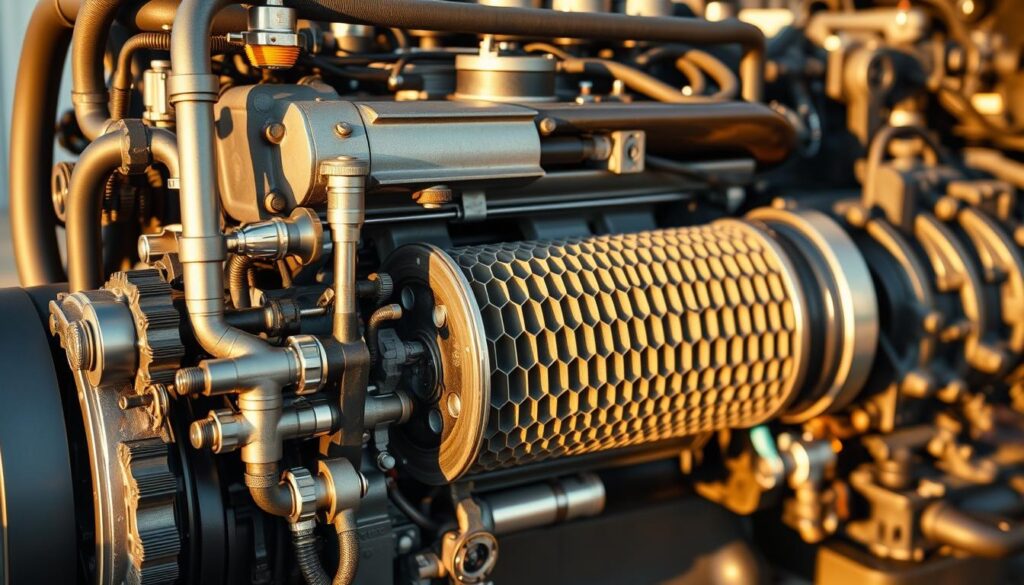
Inside the SCR catalyst, the chemical conversion occurs. The ammonia reacts with nitrogen oxides in the presence of catalyst material, converting harmful NOx into harmless atmospheric nitrogen and water vapor. The process can reduce NOx emissions by up to 90%.
The SCR system works as part of a broader aftertreatment strategy. Other components first reduce particulate matter through high-temperature combustion. However, these elevated combustion temperatures actually increase NOx production—which is precisely where selective catalytic reduction becomes essential.
The dosing module controls the precise amount of DEF injected based on engine operating conditions. Sensors continuously monitor exhaust temperature, NOx levels, and DEF quality. This real-time data ensures optimal injection rates for maximum emission reduction.
Key Components of the DEF Delivery System
The DEF delivery system comprises several interconnected components working in harmony. Each part plays a vital role in ensuring proper NOx emissions reduction. Understanding these components helps diagnose problems when they occur.
The system operates under strict tolerances. Temperature fluctuations, contamination, or mechanical failures in any single component can compromise the entire emission control process. Modern diesel vehicles monitor these components constantly through sophisticated onboard diagnostics.
DEF Tank and Heating Elements
The DEF tank stores the urea solution until the engine needs it. These tanks typically hold between 5 and 22 gallons, depending on vehicle size. The tank design prevents contamination while allowing for thermal expansion of the fluid.
Heating elements integrated into the tank prevent freezing in cold climates. DEF freezes at 12°F (-11°C), which would halt system operation without proper heating. These elements activate automatically when temperatures drop, ensuring fluid remains available for injection.
The tank also includes level sensors and quality sensors. These monitors track fluid quantity and detect contamination. Warning systems alert operators when DEF levels run low or when fluid quality falls below acceptable standards.
Dosing Module and Injector
The dosing module serves as the system’s control center, calculating the precise amount of DEF needed based on engine load, exhaust temperature, and NOx sensor readings. This component contains pumps, valves, and control electronics that regulate fluid flow.
The DEF injector sprays the urea solution into the exhaust stream at exactly the right moment. This component must withstand extreme temperatures while maintaining precise spray patterns. The injector nozzle atomizes the fluid into fine droplets for optimal vaporization and mixing.
Dosing accuracy directly impacts emission control effectiveness. Too little DEF results in insufficient NOx reduction and potential engine derating. Excessive dosing wastes fluid and can cause ammonia slip—releasing unreacted ammonia into the atmosphere.
SCR Catalyst and Sensors
The SCR catalyst contains specialized materials that facilitate the chemical reaction between ammonia and nitrogen oxides. Most catalysts use vanadium, zeolite, or iron-based substrates. These materials provide surface area for reactions while resisting degradation from heat and chemical exposure.
The catalyst housing positions the substrate directly in the exhaust flow. As gases pass through the honeycomb structure, the chemical conversion occurs. The catalyst operates most efficiently within specific temperature ranges, typically between 480°F and 800°F.
Multiple sensors monitor system performance throughout the process. NOx sensors measure nitrogen oxide levels before and after the SCR catalyst, verifying that the system achieves required emission reductions. Temperature sensors ensure the catalyst operates within optimal ranges. All sensor data feeds into the engine control module, which adjusts dosing rates and alerts operators through dashboard warnings.
Most Common DEF System Problems in Diesel Vehicles
DEF system problems manifest through distinct patterns that diesel vehicle operators should recognize immediately. These issues range from minor inconveniences to serious malfunctions that can severely limit vehicle operation. Recognizing early warning signs allows owners to address problems before they escalate into expensive repairs or operational shutdowns.
The modern diesel engine relies on sophisticated emission control systems that monitor DEF quality and system performance constantly. When something goes wrong, the vehicle communicates through multiple channels. Understanding these communication methods helps operators respond appropriately.
Dashboard Warning Lights and Messages
Modern diesel vehicles employ comprehensive onboard diagnostics that provide early notification of SCR system issues. DEF warning lights appear on the dashboard when the system detects problems requiring attention. These indicators serve as the first line of defense against more serious complications.
The warning system typically operates in stages. Initial alerts inform drivers about low DEF levels or quality concerns. As problems persist, warnings become more urgent with countdown timers showing remaining distance before performance reduction occurs.
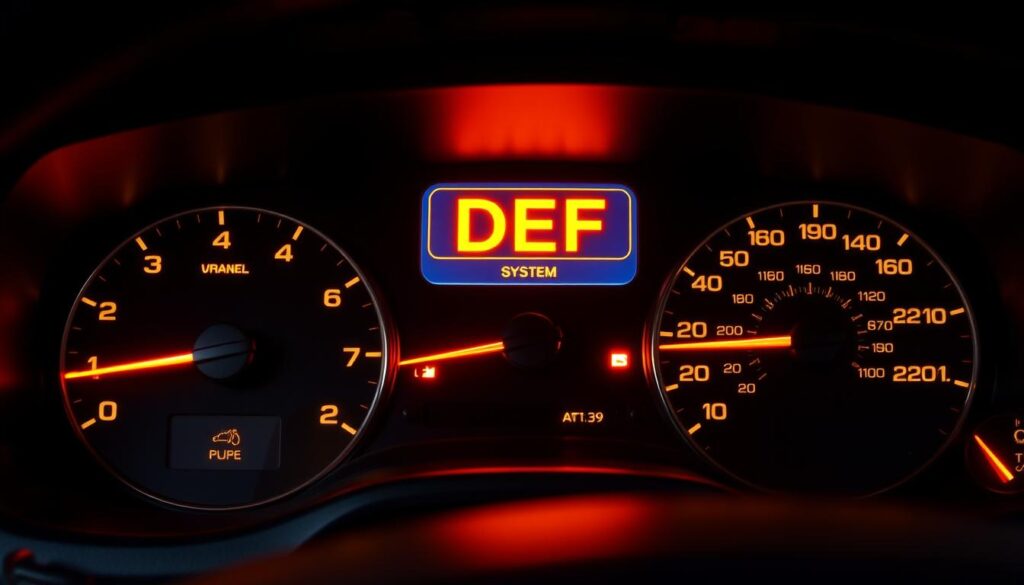
Common warning messages include DEF Level Low (indicating the tank needs refilling), DEF Quality Poor (suggesting contaminated or degraded fluid), SCR System Malfunction (signaling component failures requiring diagnosis), Speed Reduction countdown warnings, and Refill DEF to Restart alerts that prevent vehicle restart.
Never ignore these warnings. They represent the vehicle’s attempt to prevent serious damage and maintain regulatory compliance. Delayed response can result in unexpected breakdowns or costly emergency repairs.
Reduced Engine Performance and Derated Power
When DEF system problems persist, vehicles activate protective measures to limit emission violations. The first level involves engine derate, where the engine control unit deliberately reduces power output. This protective measure is built into emission control systems to ensure regulatory compliance.
Derate typically occurs in progressive stages. Initial power reduction might limit engine output by 25 percent, allowing continued operation at reduced capability. If the problem remains unresolved, additional limitations activate until the vehicle enters limp mode.
Limp mode represents the final protective measure. The engine operates at minimal power, usually sufficient only to reach a service facility. Some vehicles will not restart once shut down in this condition until the DEF system issue is resolved.
According to the EPA’s DEF guidance issued in 2025, manufacturers are now implementing extended inducement strategies that provide operators more time to address SCR-related issues before severe derate occurs.
DEF Consumption Irregularities
Normal DEF consumption follows predictable patterns based on engine load and operating conditions—typically 2-3% of diesel fuel consumption. DEF consumption issues signal underlying system problems requiring investigation. Recognizing abnormal consumption patterns helps identify specific malfunctions.
Unusually high consumption indicates several possible problems: DEF leaks in the tank, lines, or connections; over-dosing caused by faulty injector or control module; system inefficiency requiring excessive fluid to meet emission standards; or sensor malfunctions providing incorrect data to the control unit.
Conversely, abnormally low consumption suggests different concerns. Dosing module failures can prevent proper DEF injection. Sensor problems might incorrectly report system status, causing under-dosing that fails to reduce NOx emissions adequately. Track your DEF refill frequency, as significant deviations from normal patterns warrant professional diagnosis.
System Malfunction Symptoms
Beyond dashboard warnings and consumption changes, physical symptoms indicate SCR system problems. Observable malfunction indicators provide valuable diagnostic clues about the nature and severity of issues.
Unusual exhaust smoke represents a common symptom. Ineffective NOx reduction can produce denser smoke that appears differently colored than normal, often with a bluish or grayish tint indicating incomplete combustion or catalytic conversion failures.
Ammonia odor from the exhaust signals improper DEF conversion. The SCR system should completely convert ammonia into harmless nitrogen and water. A noticeable ammonia smell indicates dosing problems or catalytic converter degradation allowing unconverted ammonia to escape.
DEF crystallization around tank caps, filler necks, or exhaust components indicates leaks or overflow conditions. White crystalline deposits form when DEF evaporates, leaving behind urea crystals. These deposits can block vents and damage sensors if not addressed promptly.
SCR System Failures and Diagnostic Error Codes
When SCR components fail, diesel engines quickly shift from optimal performance to restricted operation through protective derate modes. The Selective Catalytic Reduction system relies on multiple interconnected components working in precise harmony. Any breakdown in this chain triggers immediate responses from the engine control module, generating specific error codes that identify problem areas.
Modern diesel vehicles employ sophisticated onboard diagnostics that monitor every aspect of SCR performance continuously. These systems detect everything from minor efficiency reductions to complete component failures. Understanding the relationship between physical component problems and their corresponding diagnostic trouble codes empowers operators to address issues before they escalate.
SCR Catalytic Converter Degradation
The catalytic converter serves as the heart of the emission reduction process, converting harmful nitrogen oxides into harmless nitrogen and water vapor. Over time, this critical component experiences catalyst degradation that diminishes its chemical conversion efficiency.
Thermal stress represents one of the primary causes of catalyst deterioration. The SCR catalyst operates in extremely high exhaust temperatures, often exceeding 1,000 degrees Fahrenheit during regeneration cycles. Repeated thermal cycling causes microscopic structural changes in the catalyst substrate that reduce its active surface area.
Chemical contamination from poor-quality DEF accelerates catalyst degradation significantly. When substandard fluid contains excessive metals, biuret, or other impurities, these substances deposit on the catalyst surface and block active sites, preventing the chemical reactions necessary for NOx conversion.
Catalyst poisoning occurs when engine oil consumption or fuel additives introduce incompatible substances into the exhaust stream. Phosphorus, zinc, calcium, and sulfur compounds permanently bind to catalyst sites, rendering them inactive. This damage proves irreversible and necessitates complete catalyst replacement.
Dosing Module and Injector Failures
The DEF injector must atomize fluid into an extremely fine spray within the hot exhaust stream, making it one of the most failure-prone components in the entire system. Injector failure disrupts the precise dosing required for optimal NOx reduction. The harsh operating environment—with temperatures ranging from freezing to over 900 degrees Fahrenheit—creates constant stress on injector components.
Crystallized urea buildup represents the most common cause of dosing module problems. When DEF evaporates prematurely or the injector fails to fully retract after spraying, residual fluid crystallizes into hard deposits. These deposits gradually restrict the injector orifice, reducing spray pattern quality and flow rate.
Dosing module failures produce two distinct operational problems. Under-dosing occurs when clogged injectors or weak pump pressure deliver insufficient DEF to the exhaust stream, resulting in excessive NOx emissions and triggering system warnings. Over-dosing happens when stuck-open injectors or faulty control valves allow excess DEF into the exhaust, wasting expensive fluid and potentially damaging the catalyst.
DEF Heater Element Malfunctions
Cold climate operation presents unique challenges for DEF systems because the fluid freezes solid at 12 degrees Fahrenheit. Integrated heater elements in the tank, supply lines, and dosing module prevent freezing during winter conditions. DEF heater malfunction can completely disable the SCR system in cold weather, triggering immediate vehicle derate.
The DEF tank contains multiple heating elements strategically positioned to thaw frozen fluid quickly after cold starts. Supply line heaters prevent freeze-ups in the thin tubes carrying DEF from the tank to the dosing module. The dosing module itself incorporates heating elements to maintain fluid temperature at the injection point.
Electrical failures represent the most common cause of heater element problems. Corroded connectors, damaged wiring, or blown fuses interrupt power delivery to heating circuits. Diagnostic scanning tools identify specific heater circuits experiencing electrical faults through dedicated trouble codes.
Understanding Common SCR Diagnostic Trouble Codes
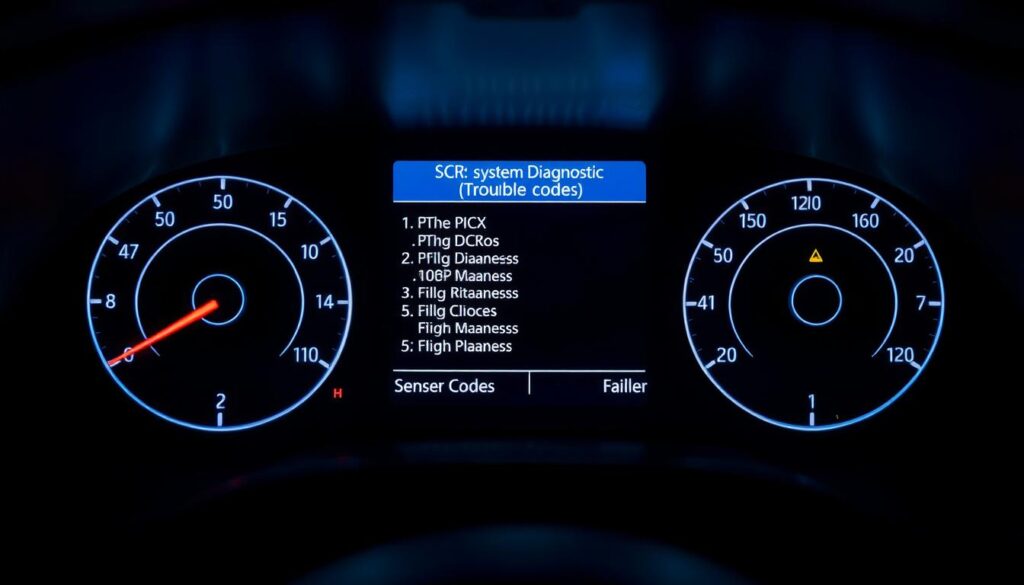
Modern engine control modules generate specific diagnostic trouble codes when they detect SCR system irregularities. These standardized codes provide technicians with precise information about fault locations and system conditions. Codes follow the Society of Automotive Engineers format, with the first character identifying the system (P for powertrain), followed by a four-digit number indicating the specific fault.
P20XX Series Codes
The P20XX codes primarily address NOx sensor circuits, DEF dosing control systems, and reductant delivery performance. These codes indicate problems with the physical components that inject and monitor DEF within the exhaust system.
| Code | Description | Primary Cause | Typical Resolution |
|---|---|---|---|
| P2000 | NOx Sensor Circuit Bank 1 | Sensor wiring damage or connector corrosion | Repair wiring harness or replace sensor |
| P204F | Reductant System Performance | Insufficient DEF injection or poor quality fluid | Service injector and verify DEF concentration |
| P2031 | Exhaust Temperature Sensor Circuit | Failed temperature sensor or open circuit | Replace temperature sensor assembly |
| P2080 | Exhaust Temperature Too High | Injector malfunction causing over-dosing | Clean or replace DEF injector assembly |
P22XX Series Codes
The P22XX codes focus on NOx sensor performance characteristics, SCR catalyst efficiency monitoring, and overall aftertreatment system effectiveness. These codes typically indicate functional problems rather than simple electrical faults.
| Code | Description | Primary Cause | Typical Resolution |
|---|---|---|---|
| P2200 | NOx Sensor Circuit Bank 1 Sensor 1 | Sensor contamination or internal failure | Replace upstream NOx sensor |
| P229F | SCR NOx Catalyst Efficiency Below Threshold | Catalyst degradation or contaminated DEF | Replace catalyst or drain and refill DEF system |
| P2203 | NOx Sensor Heater Control Circuit | Heater element failure or relay malfunction | Replace sensor or repair heater circuit |
Addressing diagnostic trouble codes promptly prevents minor issues from escalating into major system failures. Early intervention based on code interpretation reduces repair costs and minimizes vehicle downtime significantly.
Stay Ahead of DEF System Issues
Get weekly insights on diesel maintenance, emissions compliance updates, and troubleshooting guides delivered to your inbox. Join thousands of fleet managers and technicians who rely on Heavy Duty Journal for practical, field-tested information.
DEF Quality Issues and Contamination
DEF quality issues and contamination can transform a minor oversight into thousands of dollars in repair costs. The purity of diesel exhaust fluid directly impacts every component in the SCR system. Even small amounts of contaminants can cause widespread damage that requires extensive repairs or complete system replacement.
Contamination occurs through various channels including improper storage, handling mistakes, and exposure to incompatible materials. Understanding how to identify contaminated fluid and prevent quality problems protects your investment in emission control systems.
Identifying Contaminated or Degraded DEF
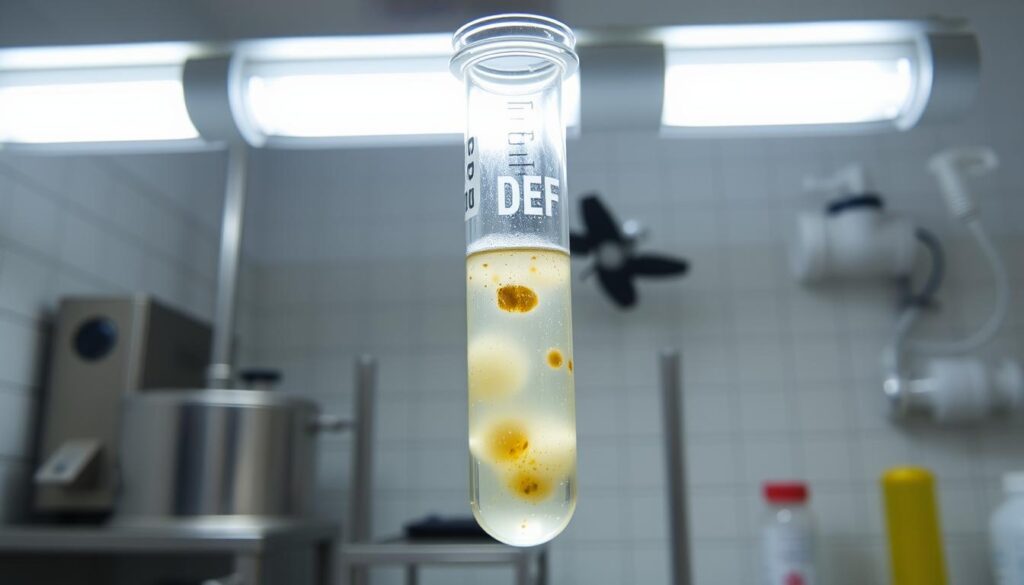
Recognizing contaminated DEF early prevents catastrophic system damage. Fresh, quality diesel exhaust fluid appears completely clear and colorless, similar to water. Any deviation from this appearance signals potential problems that require immediate attention.
Visual indicators of contamination include unusual cloudiness or haziness in the fluid. Discoloration ranging from yellow to brown suggests chemical degradation or foreign substance introduction. Visible particles, sediment, or crystallization in supposedly fresh DEF indicates serious quality issues.
Testing with a refractometer provides definitive confirmation of fluid quality. Proper DEF that meets ISO 22241 standards referenced in federal emissions regulations should measure exactly 32.5% urea concentration. Readings outside the 31.8% to 33.2% range indicate degraded DEF that should not be used.
Effects of Substandard DEF on Engine Performance
Using substandard DEF triggers a destructive cascade throughout the entire emission control system. Poor-quality fluid forms deposits throughout the injection system that restrict flow and reduce efficiency. These deposits accumulate rapidly and prove difficult to remove without complete system disassembly.
Injectors become clogged with crystallized urea and impurities from contaminated fluid. This clogging reduces the precise spray pattern required for proper SCR operation. The SCR catalyst itself can be poisoned by metallic contaminants or impurities that permanently damage its chemical structure.
Sensors provide false readings when exposed to substandard DEF containing incorrect urea concentrations. Quality sensors measure specific fluid properties to verify system operation. Contaminated fluid causes these sensors to trigger false warnings or fail to detect actual problems.
Diesel Fuel Cross-Contamination Problems
Accidentally filling the DEF tank with diesel fuel or introducing diesel into the DEF system represents one of the most catastrophic contamination scenarios. Even small amounts of diesel fuel in the DEF tank can cause complete system failure requiring extensive repairs.
Diesel fuel chemically reacts with components designed exclusively for urea-based DEF. This cross-contamination damages seals, corrodes metal parts, and leaves residues that standard cleaning cannot remove. The entire DEF delivery system becomes compromised including the tank, supply lines, pump assembly, and dosing injector.
Repair costs for diesel fuel in DEF tank contamination often exceed $8,000 to $10,000 or more. Complete system replacement typically proves necessary because diesel residues cannot be fully eliminated through flushing alone. Prevention requires clearly labeled fill points and careful attention during fueling.
Water Intrusion and Foreign Material Contamination
Water and foreign materials enter DEF systems through multiple pathways that compromise fluid purity. Understanding contamination sources and resulting damage helps implement effective prevention strategies.
Improper storage containers represent the primary contamination source. DEF must be stored only in sealed, UV-resistant, high-density polyethylene (HDPE) containers. Metal containers made of copper, zinc, aluminum, or brass react chemically with DEF and introduce metallic contaminants.
Temperature exposure outside the recommended 12°F to 77°F range accelerates DEF degradation. Hot storage environments above 77°F cause urea to decompose and lose effectiveness. Ultraviolet light exposure breaks down urea molecules and reduces fluid concentration over time.
Foreign materials in contaminated DEF accelerate wear throughout the delivery system. Particulates act as abrasives that damage pump seals, scoring cylinder walls and causing premature failure. These particles accumulate in filters and restrict flow, reducing system pressure and causing injector starvation.
DEF Sensor and Level Indicator Problems
DEF sensor failure stands among the most frequently misdiagnosed problems in SCR systems, creating frustration for operators and technicians alike. Modern diesel vehicles depend on a sophisticated array of sensors to monitor every aspect of the emissions control process. When these sensors malfunction, they generate confusing symptoms that often lead to unnecessary parts replacement and extended downtime.
The sensor network in the DEF system serves multiple critical functions simultaneously. These electronic components constantly measure fluid concentration, tank levels, system temperatures, and exhaust gas composition. A single faulty sensor can trigger warning lights, reduce engine power, or shut down the vehicle completely even when all other components function perfectly.
Quality Sensor Failures and Inaccurate Readings
The DEF quality sensor monitors the concentration and condition of fluid in the tank, ensuring it meets the required 32.5% urea solution standard. When quality sensor problems develop, the vehicle may reject perfectly good DEF or fail to detect contaminated fluid.
Quality sensors fail for several distinct reasons. Contamination buildup on the sensor element changes its electrical resistance, producing false readings that confuse the control module. Electrical connection issues at the sensor harness create intermittent signals that appear and disappear unpredictably.
Over time, the sensor element itself degrades from constant exposure to urea solution. Calibration drift occurs gradually, causing the sensor to report increasingly inaccurate concentration values. These failures often manifest as intermittent warnings that technicians struggle to reproduce during testing.
Level Sensor Malfunctions and System Warnings
Level sensor malfunction creates one of the most common and frustrating DEF system complaints. Operators report vehicles that display low or empty tank warnings when the reservoir is actually full. Conversely, some systems fail to warn when DEF levels actually drop to critical levels, leading to unexpected derate situations.
Most DEF tanks use float-type sensors similar to traditional fuel level indicators. The float mechanism can stick due to DEF crystallization, preventing accurate position reporting. Mechanical wear on the float arm or pivot point causes erratic readings that fluctuate with vehicle movement.
Electrical circuit problems affect level sensors more frequently than other sensor types. The longer wiring runs to the tank location expose connections to moisture, road salt, and vibration. Connector corrosion creates high resistance that the control module interprets as incorrect level readings.
Temperature Monitoring in Cold Weather Conditions
Temperature sensor issues become critical in northern climates where DEF freezes at 12°F (-11°C). The SCR system relies on multiple temperature sensors to manage heater operation and determine fluid state. These sensors monitor both DEF temperature inside the tank and exhaust temperature entering the catalyst.
DEF temperature sensors control the heating elements that thaw frozen fluid during cold starts. When these sensors fail in winter conditions, the system cannot recognize that DEF has melted and remains available for injection. The vehicle stays in derate mode despite having fully functional fluid ready for use.
| Sensor Type | Primary Function | Common Failure Symptoms | Cold Weather Impact |
|---|---|---|---|
| DEF Tank Temperature | Controls heater activation | Heater runs constantly or never activates | High – affects cold start operation |
| Exhaust Temperature (Upstream) | Verifies catalyst warm-up | DEF injection delayed or prevented | Moderate – extended warm-up periods |
| Exhaust Temperature (Downstream) | Monitors catalyst efficiency | Poor NOx reduction, regeneration issues | Low – operates at elevated temps |
NOx Sensors and Emissions Monitoring
NOx sensor failure represents the most technically complex sensor problem in DEF systems. These sophisticated devices measure nitrogen oxide levels both before and after the SCR catalyst, providing critical feedback that controls DEF injection rates. Without accurate NOx measurements, the system cannot optimize emissions reduction or verify catalyst efficiency.
The upstream NOx sensor measures raw engine-out emissions, establishing the baseline NOx level that requires treatment. The downstream sensor verifies actual NOx reduction achieved by the catalyst. The control module compares these readings to calculate required DEF dosing in real-time.
NOx sensors operate in extremely harsh conditions, exposed to exhaust gas temperatures exceeding 1000°F and corrosive combustion byproducts. The sensor element gradually degrades from this exposure, producing reading drift that worsens over time.
DEF Tank and Delivery System Failures
When the physical pathway that moves DEF from storage to injection point fails, even perfect fluid quality and functioning sensors cannot maintain proper emissions control. The mechanical components responsible for storing and transporting diesel exhaust fluid face constant challenges from crystallization, contamination, and environmental stress.
Tank Crystallization and Buildup
Urea crystallization represents one of the most common and problematic issues affecting DEF tanks across all diesel vehicle types. These white, chalky deposits form when the fluid is exposed to air at tank openings, when excessive heat causes evaporation, or when contaminated DEF begins to break down chemically.
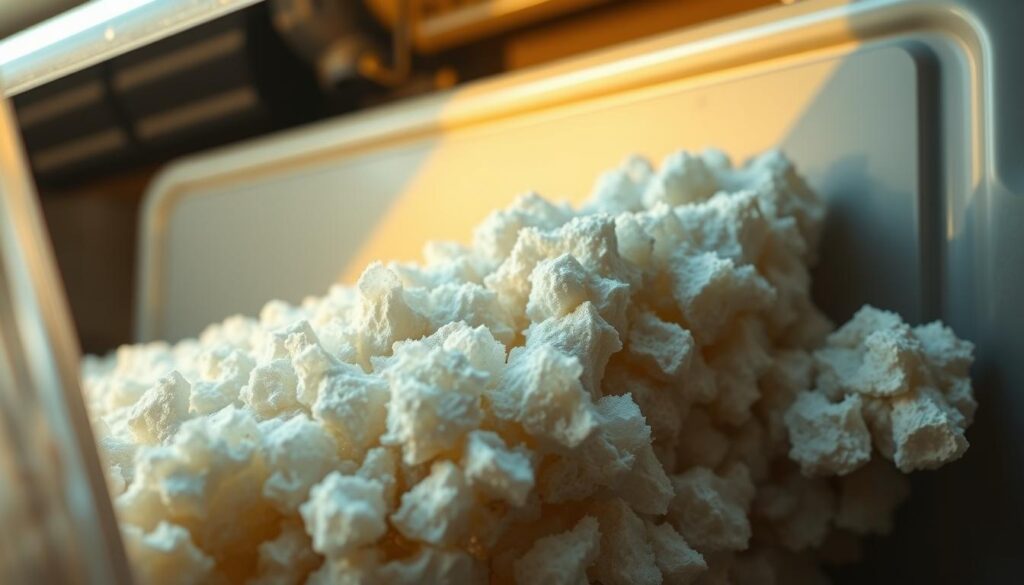
The deposits typically accumulate around fill cap threads and sealing surfaces, on tank sending units and level sensors, and on internal tank surfaces when DEF quality deteriorates. While minor surface crystallization around the fill cap is relatively normal, extensive buildup indicates an underlying problem requiring immediate attention.
Pump Motor and Module Failures
The electric DEF pump serves as the heart of the delivery system, pressurizing fluid for precise injection into the exhaust stream. DEF pump failure stems from multiple sources affecting both electrical and mechanical components.
Electrical problems account for a significant percentage of pump failures. Blown fuses interrupt power supply to the pump motor entirely. Corroded electrical connections create resistance that reduces available voltage. Control module failures prevent proper pump activation signals from reaching the motor.
Mechanical wear becomes increasingly common in high-mileage vehicles where pumps have operated through hundreds of thousands of cycles. Internal components develop clearance issues that reduce pumping efficiency. Seals deteriorate and allow DEF to leak internally or externally.
Line Blockages and Filter Clogs
Supply line blockage prevents DEF from reaching the dosing injector even when the tank contains adequate fluid and the pump operates correctly. The delivery system includes lines running from tank to pump to injector, with filters protecting sensitive components from contamination.
Crystallized urea forms the most common blockage material within DEF supply lines. Connection points where lines attach to components provide locations where fluid can evaporate and leave solid deposits. Filter saturation develops as the protective element traps particles and crystalline material until flow capacity diminishes significantly.
Preventative maintenance significantly reduces the likelihood of supply line blockage and filter problems. Filter replacement every 200,000 miles or 6,500 engine hours represents the manufacturer-recommended interval for most diesel vehicles.
The HDJ Perspective
The EPA’s 2025 guidance represents a significant shift in how regulators balance emissions compliance with operational practicality. Fleet operators who have invested in proper maintenance programs and quality DEF practices will see fewer disruptions under the extended inducement timelines, while those relying on reactive repairs will continue facing costly breakdowns. As OEMs release software updates implementing the new guidance, proactive fleets should coordinate with dealerships to prioritize their vehicles—turning a regulatory change into a competitive maintenance advantage.
Diagnosing DEF System Problems Step-by-Step
A structured diagnostic approach saves time and money when addressing DEF system failures in modern diesel vehicles. Effective DEF diagnostics begins with simple observations before progressing to advanced electronic testing. This systematic method prevents unnecessary parts replacement and identifies the actual root cause of system malfunctions.
Performing a Visual Inspection
Every diagnostic procedure should start with careful visual examination before connecting any electronic tools. A thorough visual inspection reveals obvious problems that electronic diagnostics might miss.
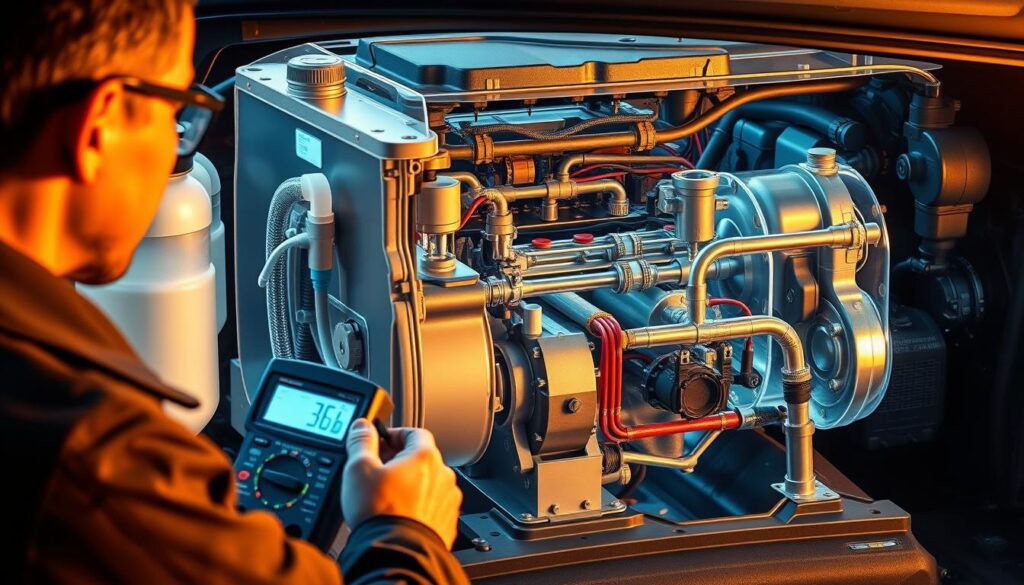
Start by examining the overall condition of visible DEF system components. Look for signs of physical damage, corrosion, or environmental contamination. Pay attention to connection points where problems frequently develop. Inspect the DEF fill cap and tank opening for damage or crystallization buildup.
Visual evaluation of DEF quality provides immediate insight into potential contamination issues. Proper DEF should appear completely clear and colorless. Cloudiness, discoloration, or visible particles indicate contamination affecting system performance.
Using OBD-II Scanners and Diagnostic Tools
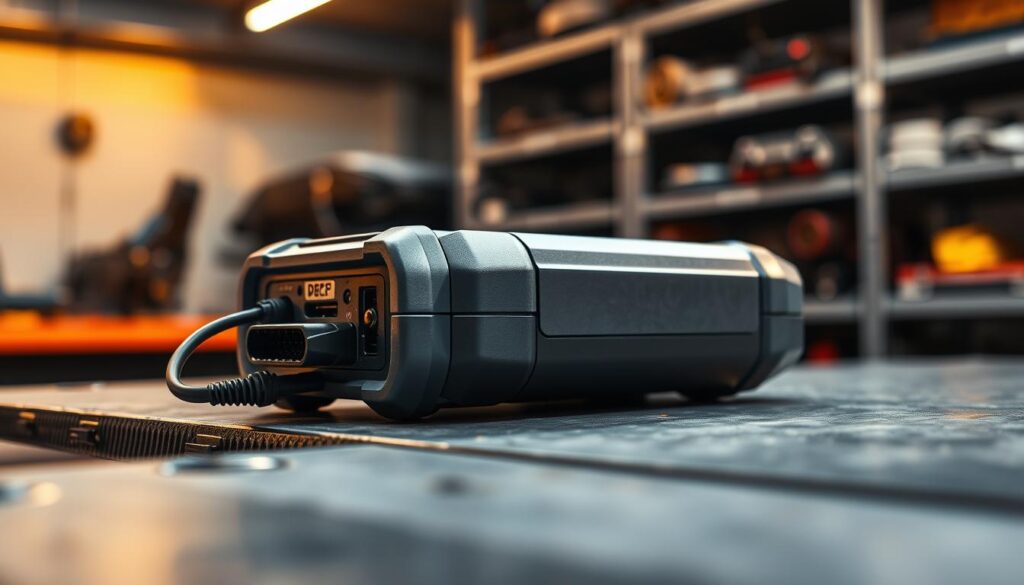
Electronic diagnosis through OBD-II scanners provides essential information about system operation and failures. Reading diagnostic trouble codes represents the first step in identifying specific faults. However, codes indicate symptoms rather than definitive root causes requiring interpretation.
Access SCR-specific data streams to monitor real-time system operation. Key parameters include DEF tank level readings, DEF temperature measurements, DEF quality sensor values, and NOx sensor readings from both upstream and downstream locations.
Advanced scan tools access manufacturer-specific codes and data beyond generic OBD-II information. These tools perform bidirectional testing that activates components for functional verification. Use this capability to test DEF pump operation, injector function, and heater element activation.
Testing DEF Quality with Refractometers
Refractometer testing provides the most accurate method for verifying DEF concentration and quality. This specialized tool measures the refractive index of fluid to determine its urea concentration. Proper DEF should measure exactly 32.5% concentration according to ISO standards.
Readings outside the acceptable 31.8% to 33.2% range indicate degraded or contaminated fluid requiring immediate replacement. Perform refractometer testing on fluid samples from multiple system locations when possible to identify where quality degradation occurs.
Determining When Professional Diagnosis is Required
Recognizing the limits of basic troubleshooting prevents wasted time and potential damage from incorrect repairs. Persistent codes after completing basic repairs indicate deeper issues requiring advanced diagnosis. Intermittent problems that cannot be isolated through standard testing need specialized monitoring equipment.
Catalyst efficiency testing requires specialized equipment to measure conversion rates accurately. Flow measurement equipment verifies proper DEF delivery rates that cannot be assessed through visual inspection alone. Consider professional help when repairs involve warranty coverage or require certification documentation.
Preventing DEF System Problems Through Maintenance Best Practices
Maintaining a healthy DEF system requires understanding storage requirements, maintenance schedules, and quality standards that keep diesel engines running at peak efficiency. Prevention proves far more cost-effective than repairs. System failures often trace back to contamination, improper DEF storage, or neglected maintenance routines.
Proper DEF Storage and Handling Guidelines
Correct DEF handling begins long before the fluid enters the vehicle’s tank. Contamination prevention starts with dedicated storage practices. Store DEF in clean, sealed containers made specifically for this purpose—never use metal containers made of copper, zinc, aluminum, or brass.
High-density polyethylene (HDPE) containers provide the ideal storage solution. These UV-resistant containers prevent degradation from sunlight exposure. Establish dedicated “DEF Only” dispensing equipment in your facility to prevent cross-contamination with diesel fuel or other fluids.
DEF must be stored between 12°F and 77°F to maintain chemical stability and effectiveness. Temperatures above 77°F accelerate urea degradation, reducing shelf life and potentially lowering concentration below acceptable standards. Properly stored DEF maintains quality for approximately one year when kept at 77°F, or up to two years at optimal temperatures around 60°F.
Recommended Maintenance Schedule for DEF Systems
Systematic maintenance prevents most DEF system failures before they cause operational problems. Perform visual inspections of DEF system components during routine service appointments. Check for leaks, crystallization around fittings, and damaged hoses.
Replace DEF filters every 200,000 miles or 6,500 engine hours, whichever milestone arrives first. Inspect the DEF tank interior periodically for contamination or crystallization buildup. Keep DEF tanks adequately filled at all times—running completely out of DEF forces the engine into limp mode.
Using Only API Certified DEF Products
API certified DEF is not an optional consideration but an essential requirement for system protection. The American Petroleum Institute certification guarantees fluid meets ISO 22241 standards for purity and concentration.
Certified DEF contains precisely 32.5% urea concentration with a tolerance of only ±0.7%. This exact formulation ensures optimal chemical reactions in the SCR catalyst. API certification verifies that DEF is free from harmful metals and contaminants through rigorous testing.
Bargain or non-certified DEF products pose serious risks to the system. The money saved on cheaper fluid becomes insignificant compared to repair costs when contaminated or improperly concentrated fluid damages sensors, injectors, and catalytic converters.
Cold Weather Protection and Winter Preparations
Cold weather protection requires specific preparations before freezing temperatures arrive. DEF freezes at 12°F, which is normal and expected. Modern systems are designed to handle frozen DEF through integrated heating elements that thaw frozen fluid automatically when the engine starts.
Verify that DEF tank heaters function properly before winter begins. Avoid parking vehicles with nearly empty DEF tanks during winter months. Understand that brief system delays in extreme cold are normal—the engine control module waits for DEF to thaw before enabling full power.
Share Your DEF Troubleshooting Expertise
Are you a fleet maintenance manager or diesel technician with hard-won insights on SCR system diagnostics? Heavy Duty Journal’s contributor network connects industry experts with professionals seeking practical, field-tested solutions.
Frequently Asked Questions
What causes DEF system warning lights to illuminate even when the tank is full?
Full tank warnings typically result from DEF quality sensor problems, contaminated fluid that the system has rejected, or crystallization buildup interfering with level sensors. The quality sensor may detect urea concentration outside the acceptable 31.8-33.2% range, triggering warnings despite adequate fluid volume. Electrical connection issues and corroded sensor harnesses also produce false readings. Diagnosis requires OBD-II scanning to identify whether quality or level sensors are reporting the fault, followed by refractometer testing to verify actual fluid concentration.
Can I use water or agricultural urea instead of certified DEF in an emergency?
Never substitute water, agricultural urea, or homemade solutions for API-certified DEF. Agricultural-grade urea contains impurities and metals that poison the SCR catalyst, causing permanent damage requiring replacement costing thousands of dollars. Water alone provides no NOx reduction and triggers immediate system faults. Even one contaminated tank can damage injectors, sensors, and catalysts beyond repair. The only acceptable alternative is to cease operation and obtain proper DEF rather than risk catastrophic system damage and voided warranties.
How long can DEF be stored, and what affects its shelf life?
Properly stored DEF maintains quality for approximately one year at 77°F and up to two years at optimal temperatures around 60°F. Storage temperature is the primary factor affecting shelf life—temperatures above 77°F accelerate urea decomposition, while freezing (below 12°F) does not damage the fluid when containers accommodate expansion. UV light exposure also degrades DEF, requiring opaque or UV-resistant containers. Always date containers upon receipt, rotate stock using first-in-first-out practices, and discard fluid that appears cloudy, discolored, or past its expiration date.
What are the symptoms of diesel fuel accidentally added to the DEF tank?
Diesel fuel in the DEF tank causes immediate and severe symptoms including strong fuel odor near the tank, oily film on fluid surface, rapid system fault codes, injector failure, and complete SCR system shutdown. Do not start or continue operating the vehicle if diesel contamination is suspected. The entire DEF system—tank, lines, pump, injector, and filters—requires complete flushing or replacement, with repair costs typically exceeding $8,000-$10,000. Prevention through clearly labeled fill points and dedicated fueling procedures is essential.
Why does my vehicle experience power derate in cold weather even with a full DEF tank?
Cold weather derate with full tanks typically indicates DEF heater element failures preventing frozen fluid from thawing after cold starts. The system cannot inject frozen DEF, so it initiates protective derate until sensors confirm liquid fluid is available. Check for blown fuses in heater circuits, corroded heater element connections, and failed heating elements in the tank, supply lines, or dosing module. Temperature sensor failures may also prevent the system from recognizing that DEF has thawed. Test heater operation during fall maintenance to prevent winter breakdown situations.
How do the 2025 EPA DEF guidance changes affect fleet operations?
The 2025 EPA guidance allows manufacturers to implement extended inducement strategies that provide operators significantly more time to address SCR-related issues before severe power limitations occur. For heavy-duty trucks, inducement strategies now phase in over three intervals with modest initial reductions, with the final 25 mph limit beginning after 8,400 miles or 160 hours. Starting with model year 2027, new trucks must be engineered to avoid sudden, severe power loss after running out of DEF. Fleets should coordinate with OEM dealers to obtain software updates implementing these changes for existing vehicles.
Conclusion
DEF system problems represent a significant operational challenge for modern diesel fleets, but systematic maintenance and quality practices dramatically reduce failure rates. The information presented throughout this guide demonstrates that most failures stem from preventable causes—contaminated fluid, ignored warning signs, and deferred maintenance create expensive problems that interrupt operations.
SCR maintenance importance cannot be overstated in today’s regulatory environment. Meeting emission compliance standards protects businesses from penalties and keeps vehicles operating at peak efficiency. The interconnected nature of system components means a single failure point can cascade into multiple problems. Poor fluid quality damages injectors and catalysts. Sensor malfunctions create incorrect dosing patterns. Delivery system blockages trigger performance limitations and power derate.
Preventative maintenance represents the most cost-effective approach to managing DEF system problems. Using only API-certified products, following proper storage protocols, and addressing warning lights promptly prevents major system failures. Fleet operators and maintenance professionals who apply the troubleshooting methods detailed in this guide will maintain reliable emission control systems that remain productive, compliant, and profitable for years to come.
Help Fellow Fleet Professionals Master DEF Troubleshooting
This guide represents hundreds of hours of real-world diagnostic experience compiled for your benefit. Share it with your maintenance team, fellow owner-operators, or industry colleagues facing SCR system challenges.