

By Michael Nielsen, Editor & Publisher | 15+ Years in Diesel Repair
Last Updated: December 2025
📖 Estimated reading time: 22 minutes
When temperatures drop below 20°F, mobile service truck winter operations face challenges that can sideline your fleet at the worst possible time. Diesel fuel begins to gel, battery capacity drops by up to 60%, and tire pressure falls consistently. For businesses running field service operations, proper cold weather preparation separates reliable operations from costly breakdowns.
Mobile service vehicles face unique vulnerabilities because they spend extended periods outdoors at remote customer sites—often with limited access to heated facilities or immediate repair support. The financial impact is substantial: proactive winterizing service vehicles costs a fraction of emergency towing, repairs, and lost revenue from delayed appointments during peak demand periods.
This comprehensive guide covers systematic winter truck preparation across all critical systems. You’ll learn how to protect mechanical components, fluids, electrical systems, and onboard equipment based on industry best practices and manufacturer specifications. We’ll also cover emergency protocols that keep technicians safe when harsh conditions create roadside challenges.
Key Takeaways
- Start winterization 4-6 weeks before first freeze: Early preparation avoids premium service pricing and parts shortages during seasonal demand surges.
- Diesel fuel gels between 10°F and 15°F: Use winter-blend fuel and anti-gel additives at every fill-up when temperatures drop below 20°F.
- Battery capacity drops 60% at 0°F: Heavy-duty diesel trucks require 750-1000+ CCA batteries for reliable cold-weather starting.
- DEF freezes at 12°F: Never add anti-freeze to DEF—vehicle heating systems thaw frozen fluid during operation.
- Never let mobile service trucks sit idle more than 24 hours: Extended cold soaks create hard-start conditions and accelerate engine wear.
- Preventive winterization costs significantly less than reactive repairs: Emergency winter breakdowns can exceed $1,500 in towing and repair costs alone.
1. Pre-Winter Inspection and Assessment for Mobile Service Fleets
Comprehensive pre-winter inspection protocols separate reliable mobile service fleets from those experiencing costly cold-weather breakdowns. Industry best practices recommend beginning mobile service winterization before temperatures consistently drop below freezing—typically 4-6 weeks ahead of expected first freeze conditions in your service territory.
Mobile service trucks face challenges distinct from standard fleet vehicles because they spend extended periods exposed to elements at service sites while carrying temperature-sensitive tools, diagnostic equipment, and fluids. A systematic approach to preparation prevents common winter failures including fuel gelling, frozen brake lines, and starting issues that sideline trucks during peak demand periods.
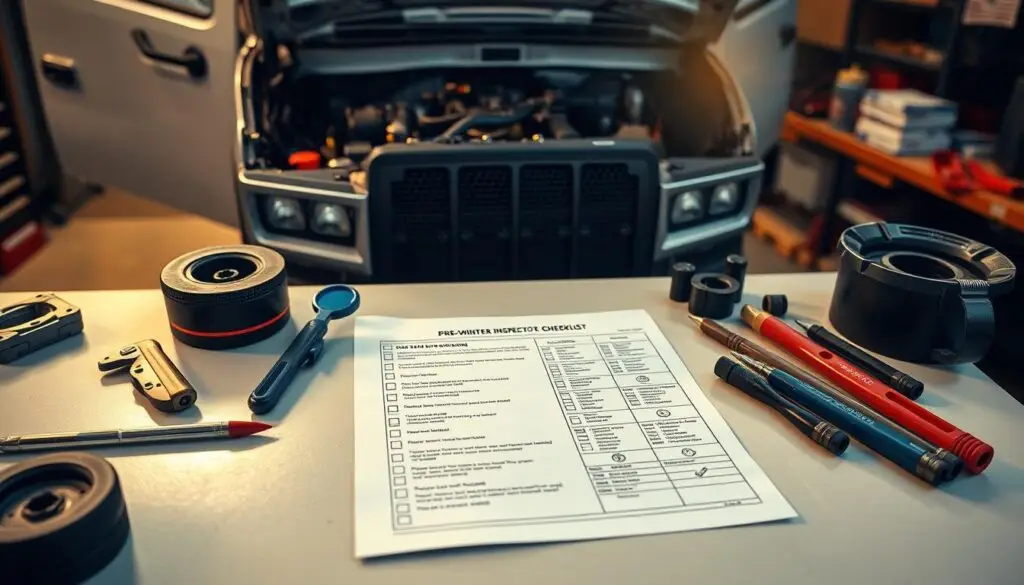
Critical Systems to Evaluate Before Cold Weather Arrives
A thorough pre-winter truck inspection must cover multiple interconnected systems. Engine components require detailed examination including block heaters, glow plugs, and cold start mechanisms. Fuel delivery systems need assessment for proper winterization to prevent gelling and filter blockage.
Battery and electrical infrastructure demand special attention because cold temperatures dramatically reduce cranking power. According to battery industry standards, CCA (cold cranking amps) measures a battery’s ability to deliver power at 0°F for 30 seconds while maintaining at least 7.2 volts. Hydraulic systems, heating and defrost capabilities, and onboard service equipment all require baseline condition documentation for accurate comparison and tracking throughout the season.
Tire condition, suspension components, and steering systems also need evaluation. The cold weather assessment should examine wipers, all fluid levels, cooling and air systems, and gladhand seals to ensure complete operational readiness.
Creating a Comprehensive Winterization Checklist
A customized fleet winterization checklist must reflect specific equipment configurations and service territories. Standard commercial vehicle checklists prove inadequate for mobile service applications. Your checklist should document baseline conditions of all critical systems before winter begins.
Organize inspection items by system category for efficient completion. Include specific acceptance criteria for each item rather than simple pass-fail designations. This approach creates accountability and ensures consistency across multiple technicians or fleet locations. Digital checklists enable better tracking and historical comparison, allowing fleet managers to identify recurring issues and make data-driven maintenance decisions throughout the winter season.
Timing Your Preparation for Maximum Effectiveness
Begin your mobile service winterization process 4-6 weeks before expected first freeze conditions. This timeline provides adequate opportunity to address discovered issues before cold weather emergencies create service appointment bottlenecks. Geographic location and historical weather patterns should guide your specific start date.
Delayed preparation carries significant consequences. Service shops experience overwhelming demand as temperatures drop, resulting in extended wait times and premium pricing. Early cold snaps can catch unprepared fleets off-guard, causing immediate operational disruptions.
| Preparation Timeline | Service Availability | Typical Cost Impact | Operational Risk |
|---|---|---|---|
| ✓ 6+ weeks before freeze | High availability | Standard pricing | Minimal risk |
| 3-4 weeks before freeze | Moderate availability | 10-15% premium | Low risk |
| 1-2 weeks before freeze | Limited availability | 20-30% premium | Moderate risk |
| After freeze begins | Emergency service only | 50%+ premium | High operational risk |
2. Engine and Mechanical System Winterization
The engine and mechanical systems of your mobile service truck require specialized diesel winterization to withstand harsh cold weather operations. Diesel engines face greater cold start challenges than gasoline vehicles because they rely on compression ignition rather than spark plugs—requiring higher cylinder temperatures for combustion.
When trucks experience cold soaks—extended periods of inactivity where components drop to ambient temperatures—starting becomes significantly more difficult and engine wear accelerates dramatically. For mobile service operations, avoid letting your engine sit inactive for more than 24 hours during winter months to prevent severe temperature drops that create hard-start conditions.
Installing Engine Block Heater and Warming Systems
An engine block heater provides essential winter engine protection by maintaining critical temperature thresholds in freezing conditions. Plug in your block heater when temperatures reach 5°F or below while your truck sits idle—plan for at least 2-4 hours of heating time before starting in extreme cold conditions.
For trucks without factory-installed heaters, aftermarket 110V electric block heaters offer reliable solutions for overnight parking at service facilities. Portable heating solutions provide flexibility for remote service locations where electrical access may be limited. When using a thermostat with your block heater, you can leave it plugged in continuously—the thermostat activates heating only when temperatures drop into the target range, saving energy and preventing unnecessary wear.

Maintaining Glow Plugs and Starting Systems
Glow plugs serve as the foundation of effective truck cold start systems in diesel engines. These components preheat combustion chambers to facilitate ignition in cold temperatures. Test glow plugs before winter arrives using a multimeter to verify proper resistance levels according to manufacturer specifications.
Compromised glow plugs exponentially increase starting difficulty when temperatures drop. Replace any faulty units immediately to prevent being stranded at remote service sites with a non-starting vehicle. A complete glow plug system check should include verifying the glow plug controller operation and timing sequences.
Protecting Fuel Systems with Anti-Gel Solutions
Diesel fuel gelling represents one of the most operationally devastating winter problems for mobile service trucks. According to ASTM D975 diesel fuel specifications, No. 2 diesel has a cloud point (when wax crystals first appear) that varies by region and seasonal formulation. Standard No. 2 diesel typically begins forming wax crystals around 32°F, with the gel point—where fuel becomes too thick to flow—occurring between 10°F and 15°F.
$1,000-$1,500+
Typical cost of towing and repairs when diesel fuel gels—far exceeding the annual cost of anti-gel additives
Use winter-blend diesel with a high cetane rating as your primary defense. Truck stops in colder climates typically switch to winterized fuel blends starting in November. Add anti-gel additives at every fill-up when temperatures drop below 20°F for comprehensive protection against paraffin crystallization. Maintain fuel tanks above half-full to minimize condensation that contributes to fuel system complications.
Inspecting Belts and Hoses for Winter Durability
Freezing temperatures cause rubber components to harden and lose flexibility, dramatically increasing failure risk. Inspect all belts and hoses for bulges, wear, cracks, hardening, or softening before winter driving begins.
A catastrophic belt or hose failure at a remote service location can strand your truck and technician in dangerous conditions. Replace any questionable components before cold weather arrives to ensure reliable cold weather operations throughout the season.
3. Fluid Management for Freezing Temperatures
Managing freezing temperature fluids properly prevents thousands of dollars in winter-related engine damage. Cold weather fluid management requires selecting specifications that maintain proper flow characteristics and protective properties when temperatures drop below freezing. Mobile service trucks face unique challenges because engines experience frequent cold starts at customer locations rather than warming up once daily like traditional fleet vehicles.
Every fluid system in your service truck requires evaluation and adjustment before winter conditions arrive. The consequences of incorrect fluid specifications range from hard starting and reduced performance to catastrophic engine block cracks and complete system failures.
Choosing Low-Viscosity Engine Lubricants
Winter-grade engine oil selection directly impacts cold-start protection and engine longevity. Multi-grade oils with lower cold-temperature viscosity ratings such as 5W-40 or 0W-40 flow significantly better than conventional oils when temperatures plummet.
The “W” designation indicates winter performance, with lower numbers representing better cold-flow characteristics. During cold starts, the majority of engine wear occurs in the first 30 seconds when oil circulation is compromised. Selecting the appropriate viscosity ensures critical engine components receive lubrication immediately upon startup. Check your manufacturer’s specifications for approved cold-weather oil grades—modern synthetic oils offer superior performance across wider temperature ranges compared to conventional petroleum-based products.

Testing Antifreeze Strength and Concentration
Coolant freeze protection testing should verify that antifreeze concentration provides adequate protection for expected minimum temperatures in your service area. Most applications require protection to at least -34°F to prevent engine block damage.
Use refractometers or test strips to measure glycol concentration accurately. Insufficient antifreeze concentration allows coolant to freeze, expanding and cracking engine blocks or radiators. Conversely, excessive concentration reduces heat transfer efficiency and provides no additional freeze protection. The optimal coolant mixture typically consists of 50-60% antifreeze to 40-50% distilled water. Pressure test the cooling system at 15-18 PSI after turning on heater control valves, and verify the radiator cap holds minimum 5 PSI pressure.
Managing DEF in Cold Conditions
Diesel Exhaust Fluid storage and handling requires special protocols because DEF freezes at 12°F (-11°C). While vehicle DEF systems include heating elements that thaw frozen fluid during operation, storage containers need protection from repeated freeze-thaw cycles that can cause contamination.
⚠️ Critical DEF Warning
Never add anti-freeze or other additives to DEF. The 32.5% urea and 67.5% deionized water ratio is precisely calibrated for optimal SCR system function. Contamination triggers expensive emissions system repairs and can result in complete SCR failure.
Store DEF containers in heated areas when possible. Plan DEF refills to minimize the amount carried in the vehicle during extreme cold periods. When frozen, DEF expands by approximately 7%, so avoid filling tanks completely to prevent cracking.
Addressing Hydraulic System Performance
Hydraulic fluid viscosity considerations become critical when operating service truck equipment such as lifts, cranes, and compressors in freezing conditions. Increased viscosity at low temperatures reduces system responsiveness and increases component wear.
Cold-weather hydraulic fluids maintain proper flow characteristics at lower temperatures. Allow hydraulic systems to warm up gradually before operating equipment under load. Consult equipment manufacturers for recommended cold-weather fluid specifications and warm-up procedures that protect expensive hydraulic components.
Stay Ahead of Fleet Maintenance Challenges
Get proven winterization strategies, diagnostic tips, and fleet management insights delivered to your inbox. Join thousands of fleet managers and diesel technicians who rely on HDJ for actionable industry knowledge.
4. Battery and Electrical System Preparation
Battery failures represent the leading cause of winter breakdowns for mobile service trucks nationwide. Cold weather batteries face extreme stress that can leave your truck stranded at the worst possible moment. Understanding how to prepare your electrical system prevents costly downtime and keeps your mobile operation running smoothly.
The typical truck battery lasts three to five years under normal conditions. However, freezing temperatures drain battery lifespan much faster and reduce performance dramatically during cold months.
Understanding CCA Ratings and Testing Methods
Battery cold cranking amps measure your battery’s ability to start an engine in freezing conditions. The industry-standard CCA test measures how many amps a 12-volt battery can deliver at 0°F for 30 seconds while maintaining at least 7.2 volts. At zero degrees Fahrenheit, batteries lose up to 60% of their cranking power while engine oil becomes 200-300% thicker—creating the perfect conditions for no-start situations.
Mobile service trucks need higher CCA ratings than standard fleet vehicles due to additional electrical loads from service equipment and auxiliary power systems. Heavy-duty diesel trucks typically require batteries rated at minimum 750 CCA, with many mobile service applications needing 1000 CCA or higher for reliable cold-weather starting.
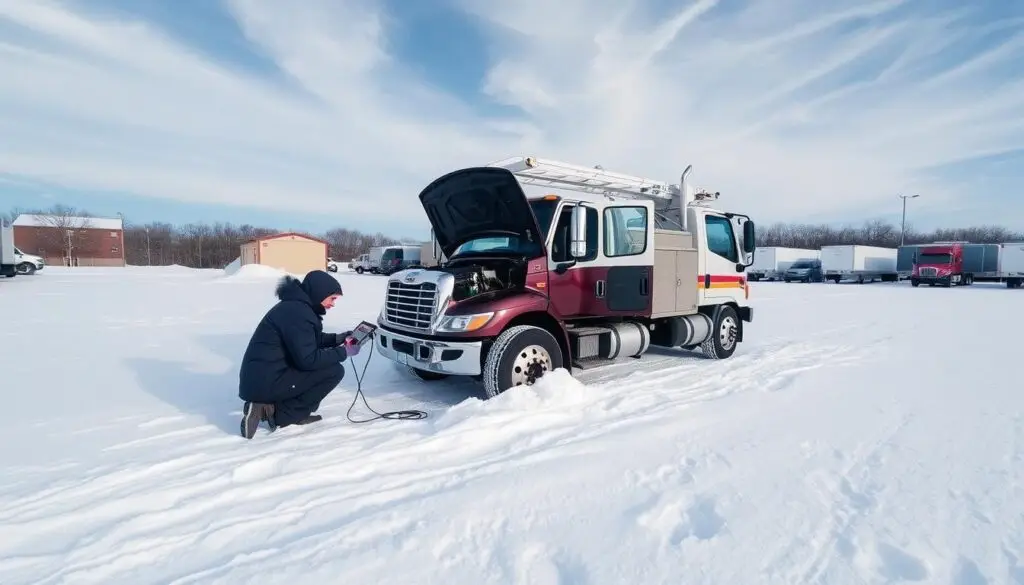
Use battery testing procedures with digital testers that measure voltage, CCA capacity, and internal resistance. A handheld volt tester provides basic voltage readings, but professional-grade testers reveal the true health of your battery. Replace any battery that fails to meet manufacturer specifications or shows signs of weakness—batteries older than 3-4 years should be replaced proactively before winter.
Alternator Output and Belt Condition
Your truck electrical system winter performance depends on proper charging between service calls. Test alternator output to ensure it delivers full charging capacity. Mobile service trucks often make short trips between job sites, giving limited time for battery replenishment.
Check belt tension and condition carefully. Cold weather makes belts brittle and prone to cracking. Inspect for fraying, glazing, or damage that could cause belt failure during cold weather operations.
Remote Location Power Backup
Mobile service trucks frequently operate in isolated areas where roadside assistance takes hours to arrive. Install accessible jump start terminals in an easy-to-reach location. Keep jumper cables and portable jump start power packs in your emergency kit at all times.
Modern lithium-ion jump starters provide compact, reliable backup power. These units deliver sufficient amperage to start diesel engines and maintain charge for months between uses—making them ideal for emergency situations at remote service locations.
Connection Protection Strategies
Road salt, moisture, and temperature cycling create corrosion on electrical connections throughout winter. Clean battery terminals and connections thoroughly, removing all corrosion buildup. Tighten all connections to manufacturer specifications.
Apply dielectric grease to terminals, alternator connections, and starter wiring. This protective coating blocks moisture and prevents voltage drops. Inspect wiring harnesses for damage, paying special attention to areas exposed to road spray and salt. Check that batteries are properly mounted with secure hold-downs—vibration from loose batteries damages internal components and shortens lifespan significantly.
5. Tire Selection and Traction Management
The rubber meeting the road becomes your most important safety component when winter weather transforms driving conditions. Effective winter tire management ensures your mobile service truck maintains reliable traction across highways, customer sites, and unpaved access roads that may not receive regular snow removal.
Mobile service applications require more than standard fleet vehicle tire considerations. The unique operational requirements include navigating construction sites, industrial facilities, and remote locations where road maintenance may be minimal during severe weather events.
Winter Tire Options for Mobile Service Applications
Commercial tire selection for winter traction control involves choosing between all-season commercial tires, winter-specific tires with aggressive tread patterns, and studded tire options where legally permitted. Winter-specific tires feature rubber compounds engineered to remain flexible in freezing temperatures, providing superior grip compared to all-season alternatives that harden in extreme cold.
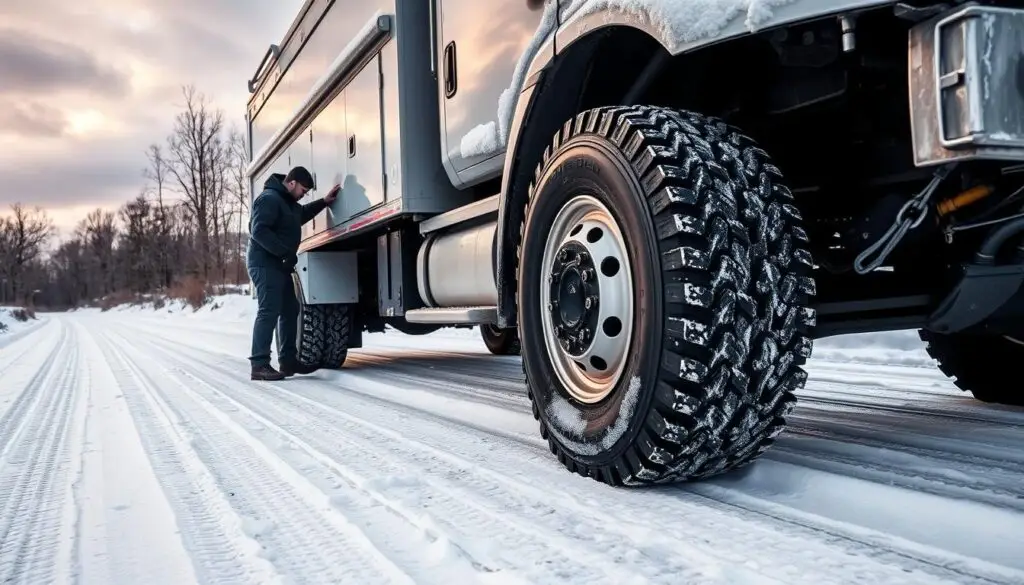
Tread depth requirements for mobile service trucks should exceed standard replacement thresholds. While legal minimums may permit 2/32-inch tread depth, mobile service operations should replace tires at 6/32-inch or greater to maintain adequate traction on slick roads when accessing critical service locations.
Tire Pressure Monitoring in Cold Conditions
Air contracts as temperatures drop, creating significant tire pressure cold weather challenges. The physics of thermal contraction causes approximately 1 PSI loss for every 10°F temperature drop—a tire properly inflated at 70°F will lose 4-5 PSI when temperatures plunge to 20°F.
Check tire pressure at the start of winter and measure regularly during the coldest part of the day before operation begins. Under-inflated tires in cold weather accelerate wear, reduce fuel economy, and compromise handling precisely when road conditions demand optimal performance. Replace valve caps if worn to prevent moisture from causing ice buildup in valve cores.
Tire Chains, Traction Aids, and Proper Weight Distribution
Keep snow tire chains in the cab where easily accessible rather than buried in tool compartments. Inspect chains at the beginning of the season for damage, worn links, or broken cross-members that could fail during installation or use. Many states have chain laws that go into effect from early September to late May requiring chains to be carried onboard—verify requirements for all regions in your service territory.
| Traction Solution | Best Conditions | Installation Time |
|---|---|---|
| Traditional Tire Chains | Deep snow, unpaved roads, steep grades | 10-15 minutes |
| Automatic Tire Chains | Highway travel with intermittent snow | Instant activation |
| Traction Mats | Recovery from stuck situations | 2-5 minutes |
| Ballast Weight | Rear-wheel drive in all winter conditions | Permanent installation |
Proper weight distribution matters significantly for rear-wheel-drive service trucks operating in snow and ice conditions. Adding ballast over the rear axle improves traction by increasing tire contact pressure, but the weight must be secured properly to prevent load shift during hard braking or emergency maneuvers.
6. Protecting On-Board Tools and Service Equipment
Protecting onboard tools and service equipment represents a critical winterization priority that many fleet operators overlook until performance problems emerge. Mobile service trucks carry thousands of dollars worth of specialized tools, diagnostic equipment, and temperature-sensitive fluids that can suffer permanent damage or temporary failure when exposed to freezing conditions.
Insulating and Heating Tool Compartments
Tool compartments in mobile service trucks typically lack adequate insulation for winter operations. Adding closed-cell foam insulation to compartment walls and doors creates a thermal barrier that slows heat loss overnight. This upgrade can maintain temperatures 15-20 degrees warmer than ambient conditions.
Auxiliary heating systems provide active temperature control for critical compartments. Electric heating mats powered by the truck’s auxiliary battery system can maintain above-freezing temperatures in designated storage areas. Heat trace cables wrapped around fluid storage racks prevent thickening of hydraulic oils and lubricants. Some operations install thermostatic controls that activate compartment heaters when temperatures drop below 40°F.
Safeguarding Temperature-Sensitive Equipment and Fluids
Certain categories of service equipment require special cold weather equipment protection protocols. Diagnostic electronics containing LCD screens can suffer permanent damage when powered on in sub-freezing temperatures—these devices should warm to at least 50°F before activation.

Temperature-sensitive tools and materials demand careful storage planning. Hydraulic tools and power units experience significantly increased viscosity below 32°F, reducing performance. Aerosol products see pressure drops in cold temperatures, affecting spray patterns and coverage. Many adhesives and sealants become unusable when frozen or difficult to apply below 50°F. Electronic diagnostic equipment batteries, screens, and circuit boards remain vulnerable to cold damage.
Temperature monitoring systems with wireless alerts notify operators when compartment temperatures fall into danger zones. This early warning system allows intervention before expensive equipment suffers cold-related damage.
Preventing Moisture Damage and Condensation
Temperature cycling creates condensation inside tool compartments as warm, humid air contacts cold metal surfaces. This moisture accumulation causes rust on hand tools, corrosion on electrical connections, and degradation of packaging materials.
Desiccant packets placed throughout compartments absorb ambient moisture before it condenses on equipment. Rechargeable silica gel canisters provide ongoing protection and can be dried and reused throughout the winter season. Improved ventilation with one-way breather vents allows moisture-laden air to escape without admitting cold outside air. Sealing compartment gaps with weather stripping reduces moisture infiltration from road spray and snow.
Battery-Powered Tool Storage in Freezing Conditions
Lithium-ion batteries experience dramatic capacity reduction in cold temperatures. A fully-charged battery stored overnight at 0°F may deliver only 50% of its normal runtime when immediately placed under load. This performance degradation affects impact wrenches, diagnostic scanners, and portable lighting that technicians depend on for remote service calls.
Optimal storage protocols for battery-powered tools include removing battery packs from trucks overnight and storing them in heated facilities. When overnight removal isn’t practical, pre-warming procedures become essential—allowing batteries to warm gradually for 30-60 minutes before use restores much of their capacity. Some operations maintain additional battery inventory specifically to compensate for reduced cold-weather runtime.
“Winter battery performance isn’t just about starting the truck—it’s about ensuring every tool in your mobile workshop delivers full power when your technician needs it most.”
— Heavy Duty Journal Editorial
7. Mobile Service Truck Winter Emergency Preparedness
Mobile service technicians face unique challenges during winter emergencies, requiring specialized preparation beyond standard roadside kits. Working alone in remote locations during severe weather demands comprehensive planning. A breakdown that might be a minor inconvenience in summer can become life-threatening in freezing temperatures.
Proper emergency preparedness protects both technicians and equipment when unexpected situations arise. Mobile service safety depends on having the right supplies, communication tools, and protocols in place before winter weather strikes.
Essential Cold Weather Emergency Supplies
A comprehensive winter emergency kit should include items organized into specific categories for maximum effectiveness. Survival and warmth supplies form the foundation of any emergency preparation strategy.
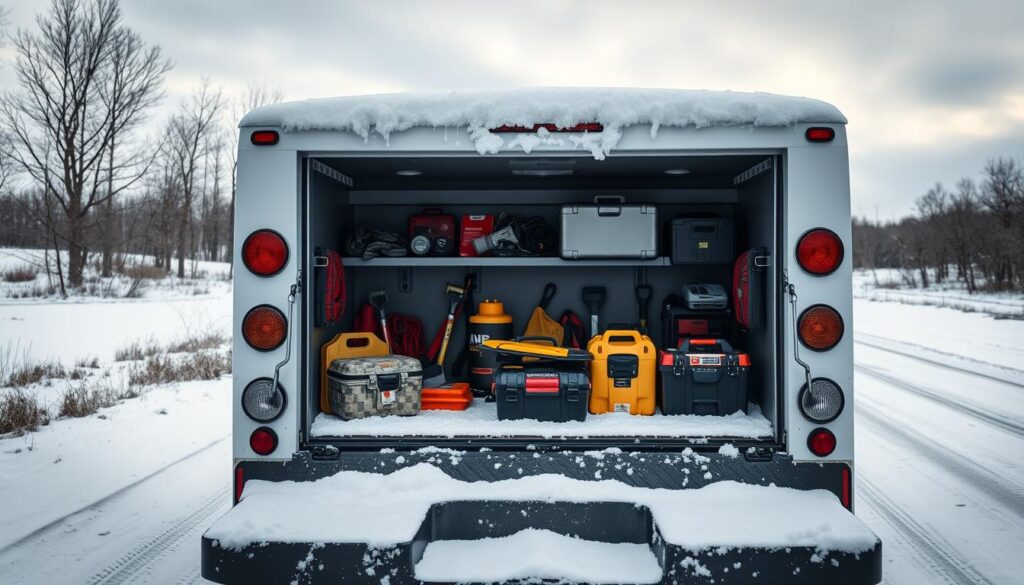
Keep fuel tanks at least half full throughout winter operations. This practice ensures you have adequate fuel to run the engine for heat if stranded due to breakdown, roadblock, or severe weather conditions.
| Supply Category | Essential Items | Purpose |
|---|---|---|
| Survival & Warmth | Insulated blanket, sleeping bag, hand warmers, extra winter clothing | Maintain body temperature during extended waits |
| Sustenance | Bottled water, high-calorie non-perishable food | Energy and hydration during emergencies |
| Signaling & Visibility | LED flares, reflective triangles, high-visibility vest, flashlight | Alert other drivers and emergency responders |
| Vehicle Recovery | Tow straps, sand or kitty litter, snow shovel, ice scraper | Self-rescue from snow or ice situations |
| Tools & Repair | Portable jump starter, tire repair kit, basic hand tools | Address minor issues without external assistance |
Communication and GPS Backup Systems
Reliable communication becomes critical when operating in remote areas during winter. Cell phone coverage may be limited or unavailable in many service locations.
Maintain multiple communication methods for redundancy. Satellite communicators provide connectivity where cellular networks fail, enabling emergency messaging and GPS tracking regardless of location. External battery packs keep communication devices operational during extended emergencies. Establish regular check-in protocols with dispatch to ensure someone monitors your location and status throughout the workday.
Roadside Emergency Protocols and Safety Procedures
Clear roadside emergency procedures prepare technicians for various winter scenarios. The fundamental principle remains: stay with the vehicle unless you can see a safe shelter within walking distance.
⚠️ Carbon Monoxide Warning
When running the engine for heat while stranded, always ensure the exhaust pipe remains clear of snow accumulation. Carbon monoxide buildup inside the cab can be fatal. Limit engine operation to 10-15 minutes per hour to conserve fuel and check exhaust clearance regularly.
Deploy reflective triangles or LED flares to maintain visibility to other drivers. In whiteout conditions, remain with the truck and wait for conditions to improve rather than attempting to navigate dangerous roads. FMCSA commercial vehicle driving tips emphasize that driver safety always takes priority over delivery schedules.
The HDJ Perspective
Winter preparedness isn’t just about protecting equipment—it’s fundamentally about protecting people. The mobile service technician working alone at a remote customer site faces risks that traditional fleet operations don’t encounter. A comprehensive winterization program must address both mechanical reliability and human safety protocols. The best-prepared fleets treat winter readiness as a continuous process rather than a one-time checklist, with regular monitoring and adjustments throughout the cold season. Investment in proper equipment, training, and emergency supplies represents one of the highest-ROI decisions a fleet manager can make.
8. Cab Comfort and Operator Safety Systems
The cab environment represents your first line of defense against harsh winter conditions, making cab comfort systems critical to operational success. Technicians spending hours in freezing temperatures need reliable heating and visibility equipment to maintain alertness and safety.
HVAC System Inspection and Maintenance
Comprehensive HVAC winter maintenance begins with testing your blower motor at all speed settings to ensure consistent airflow. The heater core requires inspection for leaks and verification of proper coolant flow, as restricted circulation dramatically reduces truck cab heating effectiveness. Cabin air filters often get overlooked but directly impact airflow volume and defrost performance.
Temperature control systems and blend doors must operate smoothly without binding or hesitation. Mobile service technicians working outdoors in cold conditions particularly need robust heating systems to restore core body temperature between service calls.
Windshield Defrosting and Visibility Enhancement
Your windshield defroster system must deliver clear visibility within minutes of startup. Clean interior glass surfaces thoroughly, as film buildup significantly reduces defrost effectiveness and creates dangerous visibility limitations. Test rear window defrost grid continuity to ensure all heating elements function properly.
Replace windshield wipers at least annually, with winter being the optimal replacement time. Install heavy-duty winter wiper blades specifically designed to handle snow and ice accumulation. Inspect blades throughout winter and replace immediately when you notice streaking, smearing, or squeaking during operation.
Auxiliary Cab Heating Solutions
Extreme cold climates may require supplemental heating beyond standard factory systems. Diesel-fired auxiliary heaters like Webasto or Espar units provide efficient cab heating without idling the main engine. Electric cab heaters work effectively when connected to auxiliary power units or shore power at service locations.
Heated seat installations offer targeted warmth with minimal electrical draw. These supplemental systems allow technicians to maintain comfortable operating temperatures during extended service calls in freezing conditions.
9. Daily Mobile Service Truck Winter Operating Procedures
Establishing consistent cold weather routines transforms winter challenges into manageable daily practices for mobile service operations. These winter operating procedures protect your investment while ensuring reliable performance throughout the coldest months.
Mobile service trucks should never remain inactive for more than 24 hours during winter. Extended cold soaks lead to fuel gelling, compromised starting ability, and reduced charging system efficiency that compounds with each passing day.
Morning Warm-Up Protocols
Proper engine warm-up begins before you turn the key. Block heaters dramatically reduce necessary idle time and should run for at least two hours before starting in temperatures below 20°F. This pre-warming minimizes engine wear and fuel consumption during the critical startup phase.
After starting, allow the engine to idle until oil pressure stabilizes and coolant temperature begins rising. In extreme cold, this typically requires 5-10 minutes of stationary idle time. Watch for diesel exhaust fluid systems to complete their thaw cycles before placing loads on the engine. Avoid aggressive acceleration or heavy loads until the engine reaches operating temperature.
Pre-Trip Inspection Modifications
Your daily winter inspection requires additional checkpoints beyond standard procedures. Begin by verifying that fuel has not gelled overnight and water separators show no ice formation. Drain water separators daily during winter months, especially when they appear full.
Daily Winter Fluid Check Points
- Engine oil: Verify cold-weather viscosity specification
- Windshield washer fluid: Winter-grade only (-20°F minimum)
- Coolant: Check antifreeze concentration levels
- Fuel additives: Verify anti-gel treatment added
- Brake fluid: Check for moisture contamination
- DEF level: Confirm adequate supply
Inspect brake components for ice accumulation that restricts movement. Verify all lights are clean and functional, as reduced winter visibility makes lighting systems critical for safety. Check tire pressure after overnight temperature drops, as cold air contracts and reduces inflation.
Drain air tanks at the beginning of winter and at least every three months thereafter. High air demand applications require monthly draining. When temperature shifts exceed 30°F within 24 hours, inspect the air system for moisture accumulation immediately. Examine trailer gladhand seals daily to confirm they remain clean and free from cracks or damage.
Idle Management and Fuel Conservation
Winter idle management balances fuel conservation against the need to maintain engine and cab temperature during extended service calls. The decision to idle or shut down depends on expected service duration and ambient temperature conditions.
For service calls lasting less than 20 minutes in temperatures below 20°F, maintain idle to preserve engine heat and avoid difficult restarts. Longer service appointments in moderate cold allow shutdown to conserve fuel while block heaters keep systems warm. Auxiliary power units provide cab comfort without running the main engine, offering significant fuel savings on extended calls.
End-of-Day Parking and Shutdown
Strategic parking protects your mobile service truck overnight. Choose sheltered locations when available and position the vehicle to minimize wind exposure on the engine compartment. Face the truck away from prevailing winds to reduce heat loss.
Apply fuel additives at the end of each day so they mix thoroughly with fuel during the final drive. This timing ensures complete dispersion and maximum anti-gel protection overnight when temperatures drop lowest. Complete your shutdown sequence methodically—allow turbochargers to cool at idle for 3-5 minutes after highway driving, then engage block heaters when overnight temperatures will drop below 20°F.
Share Your Winter Fleet Expertise
Have you developed effective winterization protocols for your mobile service fleet? We welcome contributions from fleet managers, diesel technicians, and industry professionals who want to share practical knowledge with the HDJ community.
10. Troubleshooting and Winter Maintenance Management
Even the most thoroughly winterized mobile service trucks will encounter cold weather issues that demand quick diagnosis and resolution. Establishing systematic cold weather troubleshooting protocols combined with structured maintenance management ensures your fleet maintains operational readiness throughout winter months.
Systematic Diagnosis of Starting Problems
Hard starting and no-start conditions represent the most common winter operational challenges. A methodical diagnostic approach saves time and prevents unnecessary part replacement.
Begin your troubleshooting sequence with battery voltage testing—verify at least 12.4 volts at rest and adequate cold cranking amps for your engine requirements. Test glow plug system operation and verify individual glow plugs show proper resistance. Confirm fuel delivery with adequate pressure and flow at injectors. Inspect air intake for ice blockage in air filter housings and measure starter motor amperage draw to identify internal resistance issues.
Emergency Response to Fuel Gelling
When diesel fuel gelling occurs despite preventive measures, immediate action restores operation quickly. If diesel fuel gels from freezing temperatures, adding anti-gel additive and bringing the truck indoors where it can heat above the gel point will allow fuel to return to normal.
Complete diesel fuel gelling repair procedures should follow this sequence: move the vehicle to a heated environment above 40°F, add emergency de-gel additive at double the normal concentration, replace fuel filters after thawing completes, bleed the fuel system to remove air pockets, and test fuel delivery before attempting restart.
Water in fuel systems presents another serious winter threat. Keeping fuel tanks at least half full reduces condensation buildup that adds unwanted water to your system. The ASTM D975 diesel fuel specification establishes industry standards for water and sediment content in diesel fuel.
Addressing Hydraulic Equipment Failures
Cold-thickened hydraulic fluid causes service equipment malfunctions in lifts, cranes, and aerial platforms. Symptoms include sluggish operation, inability to lift loads, and relief valve activation.
Never force hydraulic equipment to operate in freezing conditions. Allow proper warm-up time before applying loads, and consider auxiliary heating systems for hydraulic reservoirs in extreme climates. Moisture in air tanks can freeze and affect braking systems, increasing likelihood of component malfunctions. The air dryer prevents water from entering brake lines—filters should be replaced at the beginning of winter.
Modified Maintenance Intervals for Winter
Winter conditions accelerate wear and contamination, requiring adjusted maintenance schedules. Your winter maintenance schedule should include more frequent inspections than standard intervals.
Implement these schedule modifications: inspect purge valves for corrosion or grit accumulation monthly, sample and analyze fluids at half the normal intervals, replace air and fuel filters 25% more frequently, check battery condition every two weeks, and verify heating systems before each cold snap. Following 49 CFR Part 396 inspection requirements ensures regulatory compliance while protecting equipment.
Performance Data Collection Systems
Effective fleet performance tracking identifies patterns and optimizes preparation for subsequent winters. Document every winter-related issue, maintenance action, and performance metric systematically.
Your documentation protocol should capture vehicle identification, date, temperature conditions, symptoms observed, diagnostic findings, and corrective actions taken. Review this information quarterly to identify recurring issues that warrant design improvements or enhanced preventive protocols.
Frequently Asked Questions
What temperature does diesel fuel start to gel?
Standard No. 2 diesel fuel begins forming wax crystals (cloud point) around 32°F and typically gels at temperatures between 10°F and 15°F. The exact gelling point varies based on fuel quality, regional formulation, and additive treatment. Winter-blend diesel available at truck stops in colder regions contains additives that lower the cold filter plugging point significantly, allowing operation in temperatures well below 0°F. Always treat fuel with anti-gel additives when temperatures drop below 20°F, and consider using No. 1 diesel blends for extreme cold operations—though this affects fuel economy and lubricity.
How many cold cranking amps do diesel trucks need in winter?
Heavy-duty diesel trucks typically require batteries rated at 750-1000+ CCA for reliable cold-weather starting. At 0°F, batteries lose approximately 60% of their cranking power while engine oil becomes significantly thicker, requiring more power to turn the engine over. Mobile service trucks with auxiliary electrical loads from diagnostic equipment, inverters, and tool charging systems may need even higher CCA ratings—consult your vehicle manufacturer’s specifications and consider upgrading if you operate in extreme cold climates or experience slow cranking.
At what temperature does DEF freeze?
Diesel Exhaust Fluid (DEF) freezes at 12°F (-11°C). When frozen, DEF expands by approximately 7%, so tanks should never be filled completely to prevent cracking. Vehicle SCR systems include heating elements that thaw frozen DEF during operation—there’s no need to do anything special when starting a vehicle with frozen DEF. However, never add anti-freeze, de-icing agents, or other additives to DEF. The precise 32.5% urea and 67.5% deionized water formulation is critical for proper SCR function, and contamination triggers expensive emissions system repairs.
When should you start winterizing your service truck?
Begin winterization 4-6 weeks before expected first freeze conditions in your service area. This timeline provides adequate opportunity to address discovered issues, source parts, and schedule service appointments before cold weather creates demand surges. Starting early also ensures access to standard service pricing rather than the premium rates that develop as winter approaches. Geographic location and historical weather patterns should guide your specific start date—fleets operating in northern regions may need to begin as early as September.
How often should you drain air tanks in winter?
Drain air tanks at the beginning of winter and at least every three months during cold weather operation. High air demand applications—such as trucks with frequent brake cycling or air-powered auxiliary equipment—require monthly draining. When temperature shifts exceed 30°F within 24 hours, inspect the air system for moisture accumulation immediately. Frozen moisture in air lines can disable brake systems entirely, creating serious safety hazards. Replace air dryer filters at the beginning of winter to ensure maximum moisture removal efficiency.
Ensuring Year-Round Mobile Service Truck Success
Proper mobile service truck winter preparation represents far more than routine maintenance—it’s a critical business decision that directly impacts profitability, safety, and service reliability. The investment required for comprehensive winterization is minimal compared to the substantial costs of emergency breakdowns, towing services, and lost revenue from missed appointments during peak demand periods.
Cold weather fleet readiness separates successful operations from those facing costly downtime. Mobile service technicians often work in remote locations under challenging conditions, making comprehensive preparation both an economic necessity and a safety obligation to your team.
Professional winterization should begin before the first cold snap arrives. Waiting until winter weather hits creates scheduling conflicts with service providers and leaves your fleet vulnerable. Early preparation ensures qualified technicians have time to address issues properly with the right parts and equipment. View winterization as an ongoing process rather than a one-time event—regular monitoring throughout the cold season keeps trucks operating at peak performance.
Start your winterization process now using this guide as your foundation. Develop customized protocols specific to your equipment, service territory, and operational needs. Your business depends on reliable transportation, and proper winter preparation ensures your mobile service operations continue smoothly regardless of weather conditions.
Found This Guide Useful?
Help other fleet managers and diesel technicians prepare for winter by sharing this comprehensive winterization guide with your professional network.