

By Michael Nielsen, Editor & Publisher | 15+ Years in Diesel Repair
Last Updated: December 2025
📖 Estimated reading time: 19 minutes
Mobile truck repair marketing determines whether your business thrives or struggles to find customers. Every hour a commercial vehicle sits idle costs fleet operators between $448 and $760 in lost productivity, creating urgent demand for technicians who can reach breakdowns fast. The mobile repair businesses capturing this market share aren’t just skilled mechanics—they’ve mastered the digital strategies that put them in front of decision-makers when emergencies strike.
Fleet managers and owner-operators don’t browse through pages of search results during breakdowns. They contact the first qualified provider that appears—making visibility your most valuable business asset. This guide delivers the proven strategies that generate consistent service calls: dominating local search, building websites that convert, implementing paid advertising that targets high-intent prospects, and managing the online reputation that closes deals.
The trucking industry operates on razor-thin margins, and downtime destroys profitability. Mobile repair businesses that position themselves as the immediate solution to this problem build sustainable operations with recurring fleet contracts and emergency call revenue.
Key Takeaways
- Local search dominates: 87% of consumers use Google to find local businesses, making Google Business Profile optimization your highest-ROI marketing investment.
- Downtime drives urgency: Fleet operators lose $448-$760 per vehicle daily during breakdowns, creating immediate demand for mobile services.
- Reviews close deals: 88% of consumers prefer businesses that respond to all reviews—your reputation directly impacts customer acquisition.
- Dual audience strategy: Fleet managers require professional networking and data-driven proposals while owner-operators respond to peer recommendations and transparent pricing.
- Conversion requires speed: 76% of people who search for nearby services visit a business within 24 hours—response time determines whether you capture emergency calls.
Understanding Your Mobile Truck Repair Target Market
Profitable mobile truck repair marketing begins with comprehensive knowledge of your customers—their operational challenges, decision-making processes, and geographic patterns. Without detailed target market analysis, even expensive advertising campaigns miss the mark and waste resources. The trucking industry’s tight margins make precise positioning essential for capturing demand where opportunity meets capability.
Before launching marketing efforts, assess market viability honestly. Is your target area saturated with competing mobile repair shops or traditional brick-and-mortar facilities? Does the location support mobile service advantages? Your coverage extends beyond city limits—consider including nearby towns and cities demonstrating greater demand for on-site repairs. This geographic flexibility gives mobile businesses distinct competitive advantages over stationary shops.
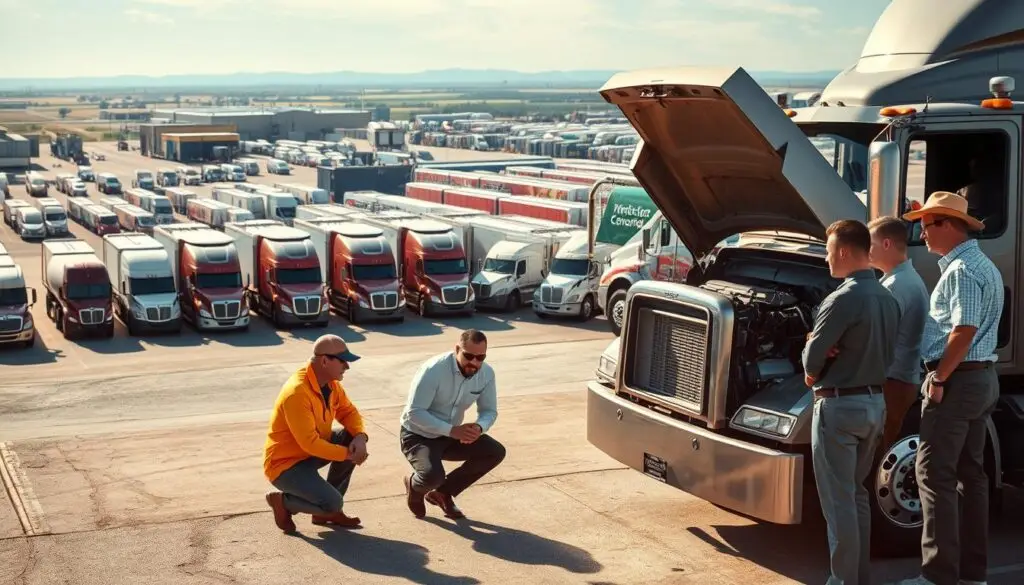
Fleet Decision-Makers vs. Independent Truckers
Your mobile truck repair business serves two fundamentally different customer segments requiring distinct marketing approaches. Understanding these differences allows you to craft messages resonating with each group’s specific priorities.
Fleet managers oversee multiple vehicles and make centralized maintenance decisions. They prioritize cost-efficiency through negotiated service agreements, preventive maintenance schedules minimizing unexpected breakdowns, and established vendor relationships with documented performance histories. These decision-makers require detailed service records, compliance documentation, and consistent quality across all repairs. Their primary concern centers on minimizing total fleet downtime and operating costs.
Owner-operators manage their own trucks and make individual service decisions based on immediate circumstances. They focus on transparent pricing without hidden fees, flexible payment options accommodating cash flow challenges, and quick response times when breakdowns threaten delivery commitments. These customers value personal relationships and direct communication with the technician performing the work.
$448–$760/day
Average fleet downtime cost per vehicle — Element Fleet Management research
The distinction between these customer types affects every aspect of your marketing strategy. Fleet managers respond to professional networking, industry publications, and data-driven case studies demonstrating measurable results. Owner-operators engage more with peer recommendations, social media groups, and visible roadside presence during emergencies.
Regional Transportation Routes and Service Territory
Successful marketing requires detailed knowledge of where trucks actually operate within your potential service territory. High-traffic trucking corridors generate proportionally more breakdowns and maintenance needs, making these areas prime targets for marketing investments.
Start by identifying major interstate highways passing through or near your location. These routes carry the highest commercial traffic volumes and generate consistent demand for emergency repairs. Map the locations of truck stops, weigh stations, and rest areas where disabled vehicles frequently pull over. Distribution centers, logistics hubs, and manufacturing facilities with shipping operations create clusters of trucking activity—ideal prospects for establishing regular service relationships.
Seasonal demand fluctuations significantly impact service needs in specific regions. Agricultural areas experience increased trucking activity during harvest seasons, while retail distribution routes intensify before major holidays. Understanding these patterns allows strategic marketing emphasis adjustments throughout the year.
Emergency roadside breakdowns typically require 60 to 90-minute response times to meet customer expectations. Calculate how far your mobile units can travel within this window during different traffic conditions. This emergency response radius forms your primary service area where you can effectively compete for breakdown calls. Non-emergency services like scheduled maintenance allow longer travel times—consider a secondary service area with two to three-hour response windows for appointments generating revenue during slower periods.
Building a High-Converting Mobile Repair Website
For mobile truck repair services, a professionally designed website functions as your 24/7 sales representative, capturing leads when breakdowns happen at any hour. Your website serves as the digital equivalent of a business card and storefront combined—telling potential customers about your capabilities, showcasing expertise, and providing multiple ways to contact you immediately.
The most effective truck repair website design goes beyond listing services. It must facilitate instant action from distressed fleet managers or stranded drivers needing emergency assistance right now. Every element should guide visitors toward one primary goal: contacting your business to request service.
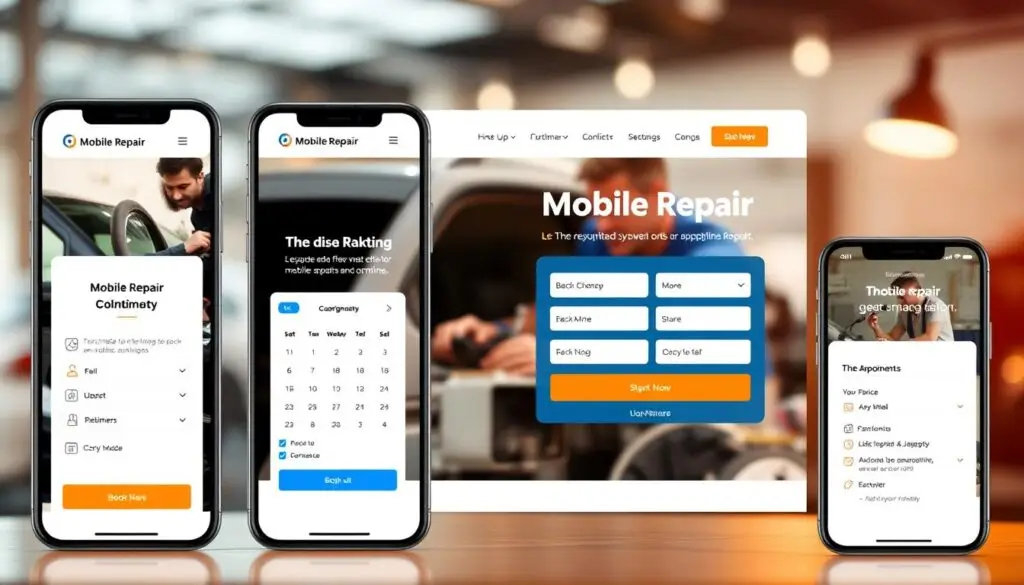
Essential Website Features That Generate Service Calls
Your website must include specific elements designed to convert visitors into paying customers. These features work together to eliminate friction in the decision-making process, transforming your site into a lead-generation machine working continuously.
The most critical element is a “Request Service” button placed prominently where visitors can’t miss it. This button should use contrasting colors standing out from your site’s design. Connecting this button to a simple contact form or integrating it with shop management software delivers requests straight to the manager’s screen immediately.
Click-to-call functionality must work flawlessly on mobile devices, allowing prospects to connect with your business instantly. When a driver experiences a highway breakdown, every minute counts. Tap-to-call buttons eliminate the need for users to manually dial phone numbers, reducing abandonment rates significantly. Place your primary phone number in high-visibility areas above the fold on every page.
Fleet managers and drivers need immediate confirmation about whether you service their location. Interactive service area maps provide instant visual confirmation of your coverage zones, eliminating uncertainty and reducing time-wasting phone calls about service availability. Display coverage areas with precise boundaries showing different service zones with varying response times.
Website Conversion Essentials
- Prominently displayed phone numbers in the header of every page
- Emergency contact sections with after-hours availability clearly communicated
- Multiple contact methods including phone, text, and email options
- Trust signals such as years in business and customer testimonials
- Clear service descriptions addressing specific truck repair needs
- Mobile-responsive design loading quickly on cellular connections
Mobile-Responsive Design for Drivers on the Road
Most emergency truck repair searches happen on smartphones from roadsides or truck cabs. Your mobile-responsive design must deliver an exceptional user experience on small screens. Sites loading slowly or displaying incorrectly on mobile devices lose potential customers immediately.
Fast-loading pages optimized for cellular connections are non-negotiable in the mobile repair industry. Drivers in remote areas often deal with weak signal strength—your website must load quickly even on 3G connections. Compress images, minimize code, and use efficient hosting to achieve fast load times.
Easy navigation with thumb-friendly buttons makes interaction effortless on touchscreens. Buttons should be large enough to tap accurately without zooming. Simplified forms work seamlessly on small screens with vertical layouts and single-column designs adapting better to mobile viewports.
Professional credentialing displays strengthen trust. Create dedicated sections highlighting ASE certifications, manufacturer-specific training credentials, and years of experience. Equipment photos showing your mobile service truck’s capabilities—fully-equipped service vehicles with organized tool storage and diagnostic computers—prove you arrive prepared to handle complex repairs on-site.
Mastering Local SEO for Mobile Truck Repair Services
Emergency truck repair searches happen with intense urgency, making local search optimization your highest-return marketing investment. When a diesel engine fails or a trailer needs immediate attention, drivers don’t browse through pages of results—they contact the first qualified provider appearing in their local search results.
Mobile truck repair businesses face unique local SEO challenges compared to traditional shops. Your service area spans highways, truck stops, and multiple counties rather than a single fixed location. This geographic complexity requires specialized optimization strategies capturing searches across your entire coverage territory.
“76% of people who search for something nearby visit a business within a day.”
Optimizing Your Google Business Profile
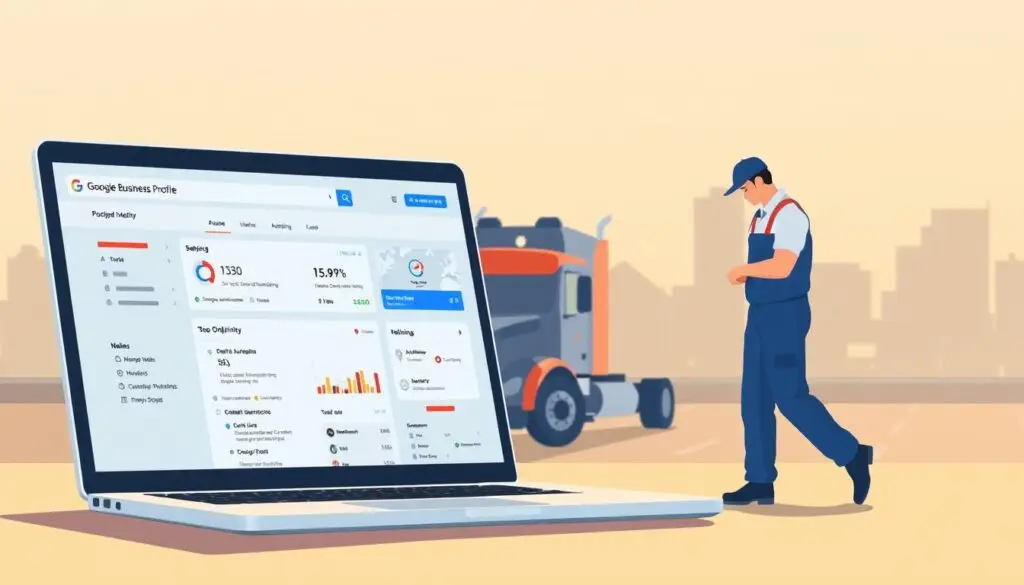
Your Google Business Profile serves as the foundation for all local search optimization efforts. This free tool determines whether your business appears in the map pack, knowledge panel, and location-based searches drivers rely on during emergencies.
Claim and verify your business listing through the Google Business Profile platform. Complete every section with detailed, accurate information. Your business description should emphasize mobile capabilities, emergency availability, and specialized equipment. Include specific details about response time, service radius, and after-hours availability differentiating you from competitors.
Upload high-quality photos showcasing your mobile service trucks, specialized diagnostic equipment, and technicians performing repairs. Visual content significantly increases engagement and helps potential customers understand your capabilities before calling. Set your business hours accurately, paying special attention to emergency service availability—if you offer 24/7 roadside assistance, make this a prominent selling point.
Your primary category should be “Truck Repair Shop” as this aligns with the highest-volume search terms. Add secondary categories reflecting actual service capabilities: Mobile Mechanic, Diesel Engine Repair Service, Trailer Repair Shop, and Brake Shop if you specialize in air brake systems.
For mobile businesses, hide your street address in profile settings and enable service area configuration. This tells Google you travel to customer locations rather than receiving customers at a fixed shop. Add specific cities, zip codes, and counties within your service radius. Google allows service areas up to approximately 100 miles from your base location.
Creating Location-Specific Landing Pages
Dedicated landing pages targeting high-value geographic keywords capture search traffic that general pages miss. These pages rank for location-specific queries representing your most valuable prospects.
Build individual pages for major highways running through your service area. A page optimized for “mobile truck repair I-80” or “emergency diesel service Highway 95” targets drivers searching from specific routes. Include mile markers, nearby exits, and landmark truck stops in your content.
Structure each landing page with location-specific elements: headlines containing location keywords, references to local landmarks and truck stops drivers recognize, specific response time estimates for that corridor, and regional service details addressing weather considerations or common issues on that route.
Create separate landing pages for major cities and truck stop clusters in your service territory. Incorporate schema markup on these pages to enhance search visibility—LocalBusiness schema combined with Service schema tells search engines exactly what you offer and where you operate.
Building Citations in Trucking Directories
Citations represent mentions of your business name, address, and phone number across the web. Consistent citations across authoritative directories strengthen local search optimization and establish credibility with both search engines and potential customers.
Prioritize trucking-specific directories where target customers actively search: NTTRDirectory.com provides comprehensive service provider listings connecting mobile repair shops with truckers and fleet managers nationwide. FleetNet America connects with enterprise fleet maintenance networks serving large-scale operations.
Maintain absolute consistency in your NAP (name, address, phone) information across all directories. Even minor variations like “Street” versus “St.” or inconsistent phone number formatting confuse search engines and weaken local search signals. Beyond trucking directories, establish presence in Google Business Profile, Yelp for Business, Better Business Bureau, and your local Chamber of Commerce.
Content Marketing That Attracts Fleet Clients
Fleet managers conduct extensive research before selecting service providers, making strategic content marketing your gateway to their decision-making process. Transportation directors spend weeks evaluating potential maintenance partners, reviewing expertise and approaches to vehicle care. Creating valuable educational resources positions your mobile truck repair business as the authority they seek during this critical research phase.
Search engines reward websites regularly publishing fresh, relevant content. A consistent blogging schedule gradually improves search rankings, making your business more visible when fleet managers search for maintenance solutions.

Educational Blog Posts and Preventive Maintenance Guides
Educational blog posts establish technical credibility by addressing specific challenges fleet managers face daily. Focus on creating content solving real problems rather than simply promoting services. Articles addressing common diesel engine failures, DPF regeneration issues, DEF system problems, and emission control challenges capture searches from fleet personnel researching specific solutions.
Structure each blog post with clear headers breaking information into digestible sections. Fleet managers often skim content during busy workdays, so scannable formatting helps them quickly find relevant information. Include specific symptoms, root causes, and actionable prevention steps demonstrating deep understanding of diesel systems.
Comprehensive preventive maintenance guides position your business as a strategic partner rather than just an emergency service provider. Create downloadable resources like seasonal maintenance checklists tailored to different climate conditions—a “Winter Fleet Preparation Checklist” or “Summer Heat Protection Guide” demonstrates understanding of regional challenges fleet operators face throughout the year.
Include cost-benefit analyses showing how preventive maintenance reduces total ownership costs. Specific calculations comparing preventive service investments against emergency breakdown expenses—including driver downtime and missed delivery penalties—help fleet managers advocate for proper maintenance budgets with company executives.
Video Content Demonstrating Mobile Capabilities
Video marketing showcases mobile repair capabilities in ways written content cannot match. Time-lapse videos of common repairs performed at customer locations demonstrate efficiency and professionalism in real-world conditions. A three-minute video showing complete brake system replacement at a distribution center proves competence better than any written description.
Create walkaround tours of fully-equipped mobile service vehicles highlighting specialized diagnostic equipment and tools. Fleet managers want assurance you arrive prepared to handle complex repairs without multiple trips. Technician spotlight videos humanize your brand and build trust—short interviews where mechanics explain certifications, experience, and commitment to quality service create personal connections.
Quick-tip videos addressing common questions generate significant engagement on social media platforms. Record 60-90 second clips answering practical questions about check engine light responses or air brake system identification. High-quality smartphone videos work perfectly—good lighting, clear audio, and authentic presentation matter more than expensive production.
The HDJ Perspective
The mobile truck repair landscape has fundamentally shifted toward digital-first marketing over the past decade. Operators who built businesses on word-of-mouth referrals alone now compete against savvy newcomers dominating local search results. The most successful mobile repair businesses we’ve observed treat marketing as a core operational function—not an afterthought. They invest consistently in Google Business Profile optimization, respond to every review within 24 hours, and create content demonstrating genuine expertise. The fleet managers and owner-operators making purchasing decisions increasingly research online before calling anyone, making visibility the prerequisite for every other business strength you possess.
Paid Advertising for Immediate Lead Generation
For mobile truck repair businesses seeking rapid growth, paid advertising campaigns provide unmatched targeting precision and measurable return on investment. While organic marketing strategies require months to build momentum, paid advertising delivers qualified leads within days of launching your first campaign.
Industry standards recommend allocating approximately 5% of targeted gross sales toward marketing efforts. This financial framework helps determine which advertising channels to test and how long to evaluate campaign performance before making optimization decisions.
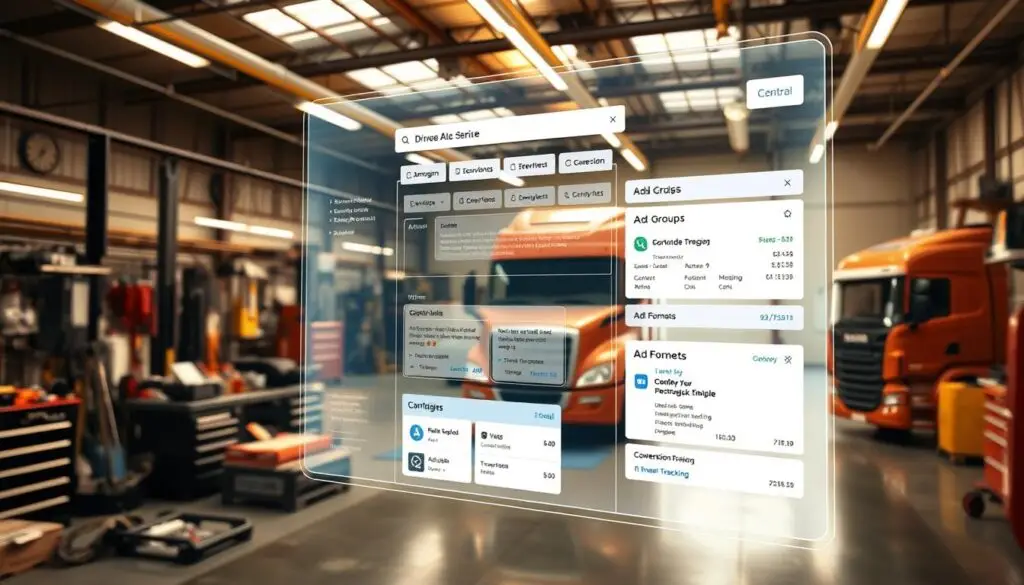
Google Ads for Emergency Breakdown Searches
Google Ads represents the most powerful channel for capturing high-intent prospects actively searching for immediate mobile truck repair services. When a fleet manager types “emergency truck repair near me” into Google, your ad can appear within seconds, connecting desperate customers with available technicians.
Structure your Google Ads account with separate campaigns for emergency services versus scheduled maintenance. Emergency campaigns deserve higher daily budgets and more aggressive bidding because these searches convert at significantly higher rates. Create dedicated ad groups organized by specific service types: engine repair, transmission service, electrical diagnostics, brake systems, and cooling system repairs.
Focus on high-intent keywords revealing immediate commercial need. Emergency modifiers like “emergency truck repair near me,” “24 hour truck mechanic,” and “roadside truck service” indicate prospects with urgent needs and willingness to pay for immediate solutions. Location-specific keywords like “mobile truck repair [city name]” capture searchers within your geographic coverage zone.
Ad extensions dramatically improve campaign performance. Implement call extensions with mobile-preferred settings so drivers can reach you with a single tap. Location extensions show your proximity to searchers. Structured snippet extensions list certifications, equipment capabilities, and brands serviced—building credibility before prospects even click.
Facebook Ads for Fleet Decision-Makers
Facebook ads serve a different purpose than Google Ads. While Google captures emergency demand, Facebook builds awareness and reaches fleet decision-makers during their research phase—positioning your business before emergencies occur and establishing relationships generating recurring maintenance contracts.
Audience targeting on Facebook offers remarkable precision for B2B services. Job title targeting reaches professionals like “fleet manager,” “transportation director,” “logistics manager,” and “operations manager.” Industry targeting filters for companies in trucking, transportation, logistics, and distribution sectors. Geographic targeting narrows your audience to companies within your service area.
Video content showcasing mobile capabilities generates higher engagement than static images. Case study-style ads demonstrating tangible fleet cost savings resonate with budget-conscious fleet managers. Testimonial ads featuring recognizable local companies build credibility through social proof—video testimonials from fleet managers carry exceptional weight because decision-makers trust peer recommendations more than vendor marketing.
Retargeting Website Visitors
Retargeting campaigns capture high-value opportunities to re-engage website visitors who didn’t convert during their first visit. Most prospects require multiple exposures before making purchasing decisions—retargeting keeps your business top-of-mind as prospects compare options and secure internal approval for new service vendors.
Install the Facebook Pixel and Google Ads remarketing tag on every page of your website. Create audience segments based on specific behaviors indicating purchase intent: visitors who viewed contact pages but didn’t call, users who started but didn’t complete quote request forms, and prospects who spent significant time on service description pages.
Design retargeting ads with special offers or urgency messaging encouraging conversion. Exclusive promotions like “First Service Call 20% Off” or “Free Fleet Vehicle Inspection” provide compelling reasons to choose your business over competitors.
Free Professional Fleet Tools
Cost calculators, fault code lookup, maintenance planners, and more—built for owner-operators, fleet managers, and diesel techs. No signup required.
Building Credibility Through Reputation Management
When a commercial truck breaks down on the highway, fleet managers search for mobile repair services they can trust—making your online reputation the deciding factor in their choice. For mobile truck repair operations, online credibility becomes even more critical since customers must allow technicians to service expensive equipment, often in remote locations without direct supervision.
Your digital presence serves as the modern equivalent of word-of-mouth recommendations. Fleet managers and owner-operators research service providers extensively before making contact, especially for emergency breakdowns.
Systematic Review Collection
Collecting customer testimonials requires a repeatable system requesting feedback from every satisfied customer. The timing of your request dramatically impacts response rates—ask for reviews immediately after service completion while satisfaction levels are highest and positive experiences remain fresh.
Implement multiple request methods to maximize participation. Send text messages with direct review links allowing customers to leave feedback with a few taps on mobile devices. Follow up with email messages including step-by-step instructions and direct links to your review profiles on Google, Facebook, and industry-specific platforms.
Make in-person requests during the payment process when rapport is strongest. Train technicians to express genuine gratitude and explain how customer feedback helps other fleet managers discover quality service providers. Prioritize Google reviews because they appear directly in search results and significantly influence local SEO rankings.
According to BrightLocal’s Local Consumer Review Survey, 88% of consumers would use a business that replies to all of its reviews, compared to just 47% who would use a business that doesn’t respond. This statistic underscores the importance of active reputation management.
Professional Response Strategies
Responding to every review demonstrates commitment to customer service and provides opportunities to showcase professionalism to future customers. For positive reviews, thank customers by name and acknowledge specific details they mentioned—personalized responses demonstrate genuine appreciation rather than automated replies.
Structure positive review responses with three elements: express gratitude, reference specific service details, and extend an invitation for future needs. Negative review responses require careful crafting because they serve dual purposes—addressing the dissatisfied customer while demonstrating to prospective customers how you handle problems.
Apologize for shortcomings without making excuses or deflecting blame. Offer to discuss issues privately to reach resolution, providing direct contact information. Professional responses to criticism can actually enhance your reputation by demonstrating accountability—potential customers evaluate businesses based on how they respond to problems, not whether problems exist.
Tracking Marketing Performance
Most mobile truck repair businesses waste money on marketing tactics without knowing which strategies actually generate profitable customers. Modern technology has transformed marketing from guesswork into precise science—today’s digital tools provide detailed insights into exactly which channels deliver results and which drain budgets without producing service calls.
For mobile truck repair operators working with limited marketing budgets, implementing proper tracking systems isn’t optional—it’s essential for survival. Without measurement infrastructure, you’re navigating blindfolded, hoping to reach your destination.
Call Tracking and Conversion Monitoring
Phone calls remain the primary conversion method for emergency mobile truck repair services. When a diesel truck breaks down on the highway, drivers don’t fill out contact forms—they call immediately for help. This makes call tracking absolutely critical for measuring which marketing channels generate actual business.
Call tracking systems work by assigning unique phone numbers to different marketing channels, all forwarding to your main business line while recording the source. Platforms like CallRail and CallTrackingMetrics track far more than call volume—they record call duration, time of day, caller location, and conversation outcomes when integrated with CRM systems.
Set up dedicated tracking numbers for each major marketing channel: Google Ads campaigns, your website, Facebook advertising, directory listings, and different service area landing pages. Beyond phone calls, implement conversion tracking for form submissions and online bookings. Install conversion tracking pixels that fire when prospects complete desired actions.
Cost Per Acquisition Analysis
Calculate cost per acquisition by dividing total ad spend by the number of new customers generated. If you spend $2,000 on Google Ads and acquire 10 new customers, your cost per acquisition equals $200. Compare this figure against average customer lifetime value to determine profitability.
Define acceptable CPA thresholds based on specific business economics. Consider average service ticket value, customer retention rate, and profit margins when establishing what you can afford to spend acquiring new customers. A mobile repair operator with $500 average service tickets and 40% profit margins might determine any cost per acquisition below $100 produces acceptable returns.
Return on ad spend represents the ultimate performance metric. If average new customers generate $5,000 in lifetime revenue and cost per acquisition equals $200, each advertising dollar returns $25 in revenue. This 25:1 ratio indicates an exceptionally profitable campaign worthy of increased investment.
| Marketing Channel | Monthly Budget | Typical Cost Per Lead | Conversion Rate |
|---|---|---|---|
| Google Search Ads | $2,000-$5,000 | $50-$100 | 15-25% |
| Local SEO (Organic) | $500-$1,500 | $20-$50 | 20-35% |
| Facebook Ads | $1,000-$2,500 | $40-$80 | 10-18% |
| Retargeting Campaigns | $500-$1,000 | $30-$60 | 25-35% |
Give campaigns sufficient time and data before making optimization decisions. Service businesses with longer sales cycles typically require 30-60 days of performance data to identify reliable patterns. Monitor performance weekly but implement major changes monthly—this cadence provides enough data for confident decision-making while maintaining agility to address significant problems.
Frequently Asked Questions
How much should a mobile truck repair business spend on marketing?
Industry benchmarks recommend allocating 5-7% of targeted gross revenue toward marketing. A new mobile truck repair business generating $200,000 annually should budget $10,000-$14,000 for marketing across Google Ads, local SEO, reputation management, and content creation. Start with Google Business Profile optimization (free) and local SEO before expanding to paid advertising. Track return on investment carefully and adjust spending toward channels generating the most profitable leads.
What is the most effective marketing channel for mobile truck repair services?
Google Business Profile optimization combined with local SEO delivers the highest ROI for mobile truck repair businesses. Research shows 87% of consumers use Google to find local businesses, and 76% who search for services nearby visit within a day. Emergency breakdown searches generate immediate, high-intent leads converting at significantly higher rates than other channels. Paid Google Ads complement organic strategies by capturing demand immediately while SEO builds over time.
How do I get more reviews for my mobile truck repair business?
Request reviews immediately after completing service while satisfaction is highest. Send text messages with direct Google review links, follow up with email requests including step-by-step instructions, and train technicians to make personal requests during payment. Respond to all reviews within 24-48 hours, as 88% of consumers prefer businesses that reply to feedback. Consider implementing review management software to automate requests and monitor your reputation across multiple platforms.
Should mobile truck repair businesses use Google Ads or Facebook Ads?
Use both strategically for different purposes. Google Ads captures high-intent emergency searches from drivers experiencing breakdowns right now, delivering immediate leads with strong conversion rates. Facebook Ads builds awareness among fleet managers during their research phase, generating preventive maintenance contracts and establishing relationships before emergencies occur. Allocate more budget to Google Ads initially, then expand Facebook campaigns as your business grows.
How long does it take to see results from mobile truck repair marketing?
Paid advertising through Google Ads can generate leads within days of launching campaigns. Google Business Profile optimization shows improvements within 2-4 weeks as your profile gains visibility in local searches. Local SEO and content marketing require 3-6 months to build significant organic traffic and establish topical authority. Most mobile repair businesses see meaningful customer acquisition improvements within 90 days when implementing multiple strategies simultaneously.
Building Your Marketing Foundation
The mobile truck repair businesses dominating their markets share one characteristic: they treat marketing as a core operational function rather than an afterthought. Visibility in local search results, professional online reputation, and strategic paid advertising determine which technicians get the call when breakdowns happen.
Start with foundational elements today. Claim and optimize your Google Business Profile, implement basic call tracking, and launch a simple website converting visitors into service calls. Build from there—master one or two channels before expanding. Sustainable growth comes through consistent effort across multiple quarters, not overnight miracles.
The operators committing to these strategies will capture market share, build strong reputations with fleet clients, and create profitable businesses serving the trucking industry’s ongoing need for reliable mobile maintenance. Your next service call could come from the marketing work you start today.
Share This Guide With Fellow Mobile Repair Operators
Know a mobile truck repair business owner who could benefit from these marketing strategies? Help them grow their operation.


