By Michael Nielsen, Editor & Publisher | 15+ Years in Diesel Repair
Last Updated: January 2026
📖 Estimated reading time: 20 minutes
Mobile service trucks have transformed how diesel repair operations reach customers across America’s construction sites, mining operations, and transportation fleets. These mobile workshops eliminate the costly downtime of transporting broken equipment back to central shops—a capability that saves fleet operations thousands of hours annually and keeps revenue-generating assets working.
Choosing the right service truck requires balancing crane capacity against CDL requirements, matching storage configurations to daily workflows, and selecting a chassis that handles your payload demands. Whether you’re building your first mobile service operation or expanding an existing fleet, the decision impacts productivity for years to come. This guide examines how leading manufacturers stack up and provides the specification framework fleet managers need to make informed purchasing decisions.
Key Takeaways
- CDL threshold planning: Spec your truck under 26,001 pounds GVWR to avoid CDL requirements and expand your qualified driver pool.
- Crane selection by workload: Electric cranes suit occasional lifting under 6,000 pounds; hydraulic systems handle 10,000+ pound loads for engine and transmission work.
- Body-chassis matching: Cab-to-axle measurements determine body compatibility—measure twice before ordering to avoid costly mistakes.
- Total cost analysis: Factor in 15-25% higher annual maintenance costs for used trucks when comparing new versus pre-owned options.
- Manufacturer specializations: Knapheide excels in modular configurations, Stellar Industries leads in integrated crane systems, and Maintainer specializes in custom builds.
Understanding Mobile Service Trucks and Their Role in Field Operations
Mobile service trucks function as complete workshops that technicians drive directly to equipment breakdowns, construction sites, and fleet yards. Unlike basic utility vehicles, these specialized trucks integrate cranes, compressors, welding equipment, and organized storage systems into a single platform designed for performing complex repairs wherever equipment sits disabled.
The design philosophy prioritizes reducing technician movement and search time. Every compartment placement reflects actual repair workflows—frequently used tools positioned at ergonomic heights, heavy equipment secured near crane access points, and consumables organized for rapid inventory checks. When a truck arrives at a job site, experienced technicians can begin diagnostic work within minutes rather than spending valuable time hunting for scattered equipment.
Core Components That Define Modern Service Trucks
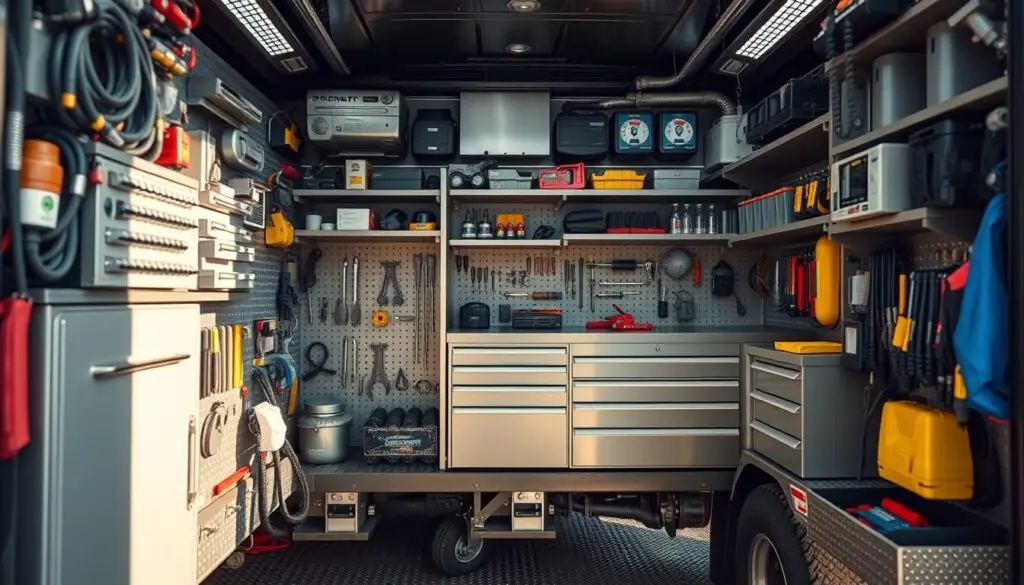
A properly configured service truck combines several integrated systems. The body itself provides organized storage through multi-drawer units for small parts and fasteners, adjustable shelving systems sized for power tools, overhead racks for pipes and long materials, and lockable compartments protecting valuable diagnostic equipment. Side-access doors enable quick tool retrieval without climbing into the cargo area—a detail that saves hundreds of small time increments across a working day.
The open cargo bed serves as the primary workspace, positioned for crane operations and larger equipment staging. This area accommodates everything from transmission jacks to portable work benches. Body construction materials vary by application: steel bodies offer maximum strength for heavy-duty abuse, while aluminum options reduce weight by up to 40% for operations where payload capacity matters more than impact resistance.
Service Trucks Versus Mechanics Trucks: Understanding the Distinction
The terms often get used interchangeably, but meaningful differences exist. Standard service trucks handle general maintenance, preventive service calls, and lighter repairs. Their compartments organize hand tools, portable diagnostic equipment, and common consumables. Mechanics trucks step up significantly in structural capability—these vehicles feature reinforced bodies engineered to support cranes capable of lifting engines, transmissions, and other major components weighing several tons.
The structural differences extend beyond visible features. A mechanics truck’s frame reinforcement, outrigger mounting points, and body understructure must handle the dynamic loads and torsional forces that crane operations generate. Mining operations, heavy construction sites, and major fleet service facilities typically specify mechanics trucks because their work routinely involves component replacements that smaller service trucks cannot support. The Technology & Maintenance Council provides recommended practices for specifying commercial vehicle service equipment, including mobile repair platforms.
Leading Mobile Service Truck Manufacturers Compared
Selecting the right manufacturer affects everything from resale value to parts availability for the decade or more your truck serves your operation. The market includes established companies with extensive dealer networks alongside specialists serving niche applications.
Knapheide: Industry Standard Since 1848
Knapheide has manufactured truck bodies for over 175 years, building the kind of institutional knowledge that shows in product refinement. Their service body lineup spans steel and aluminum construction in open, enclosed, and crane configurations. The company’s 12-step electrodeposition priming process creates corrosion resistance that holds up in demanding environments, backed by a 6-year warranty on steel bodies and 10 years on aluminum.
What distinguishes Knapheide in daily use is their modular design approach. Compartment configurations adapt to specific trades—HVAC technicians, electricians, and diesel mechanics each find standard packages matching their typical tool inventories. The adjustable shelving handles 250 pounds per shelf with removable dividers every four inches, accommodating both current needs and evolving workflows as your service offerings expand.
Stellar Industries: Innovation in Integrated Systems
Since 1990, Stellar Industries has focused on mechanic trucks where integrated crane and body systems create efficiency advantages. Their TMAX series features proprietary crane designs that maximize lifting capacity while minimizing deck space consumption—a critical optimization when every square foot of the cargo bed matters for workspace.
Stellar’s technology integration sets them apart for operations prioritizing operator safety. Wireless remote controls allow crane operation from optimal vantage points, while load-moment indicators provide real-time feedback preventing dangerous overloading situations. Their 2025 TMAX models incorporate upgraded features addressing the durability concerns that field service environments create.
Maintainer: Custom Solutions for Complex Applications
Maintainer has built its reputation over four decades on customization capabilities that standard manufacturers struggle to match. Their engineering team collaborates directly with fleet managers during specification development, creating configurations tailored to specific workflow requirements rather than forcing operations to adapt around standard offerings.
This approach particularly benefits operations with unique needs—specialized crane placements, non-standard compartment layouts, or integration requirements for proprietary equipment. The tradeoff involves longer lead times and potentially higher costs compared to off-the-shelf configurations, but operations with genuinely distinct requirements often find the investment worthwhile.
Reading Truck Body: Durability Through Traditional Craftsmanship
Reading Truck Body combines traditional manufacturing approaches with modern finishing technologies. Their service bodies feature fully welded compartments—a construction method that eliminates the potential failure points that bolted or riveted assemblies create over years of vibration and stress. Automotive-grade primer systems followed by powder coating create exterior finishes that resist the scratches and chips that field service environments constantly inflict.
Their Master Mechanic series provides pre-configured packages that reduce lead times while maintaining customization flexibility for specific requirements. For fleet managers balancing urgency against custom needs, these packages offer middle-ground solutions.
Wilcox Bodies: Aluminum Specialists for Heavy Applications
Wilcox Bodies focuses on heavy-duty applications where weight savings translate directly into increased payload capacity or fuel efficiency gains. Their aluminum construction reduces body weight by up to 40% compared to equivalent steel designs without sacrificing structural capability.
Mining operations, petroleum field service, and utility contractors working with weight-sensitive equipment particularly benefit from Wilcox’s approach. When your payload calculations run tight against GVWR limits, the weight differential between aluminum and steel bodies can determine whether a job is feasible or requires multiple trips.
| Manufacturer | Specialty | Warranty | Best For |
|---|---|---|---|
| Knapheide | Modular configurations | 6-10 years | General fleet service |
| Stellar Industries | Integrated crane systems | Varies by component | Heavy lifting applications |
| Maintainer | Custom engineering | Varies by build | Unique workflow requirements |
| Reading Truck Body | Welded construction | Comprehensive | Durability-focused operations |
| Wilcox Bodies | Aluminum construction | Varies | Weight-sensitive applications |
Crane Selection: Matching Capacity to Your Work Requirements
The crane transforms a service truck from a tool carrier into a true mobile workshop capable of handling major repairs. Getting crane specifications right determines what jobs your truck can handle—and which ones require calling in heavier equipment or arranging alternative lifting solutions.
Hydraulic Versus Electric: Application-Based Selection
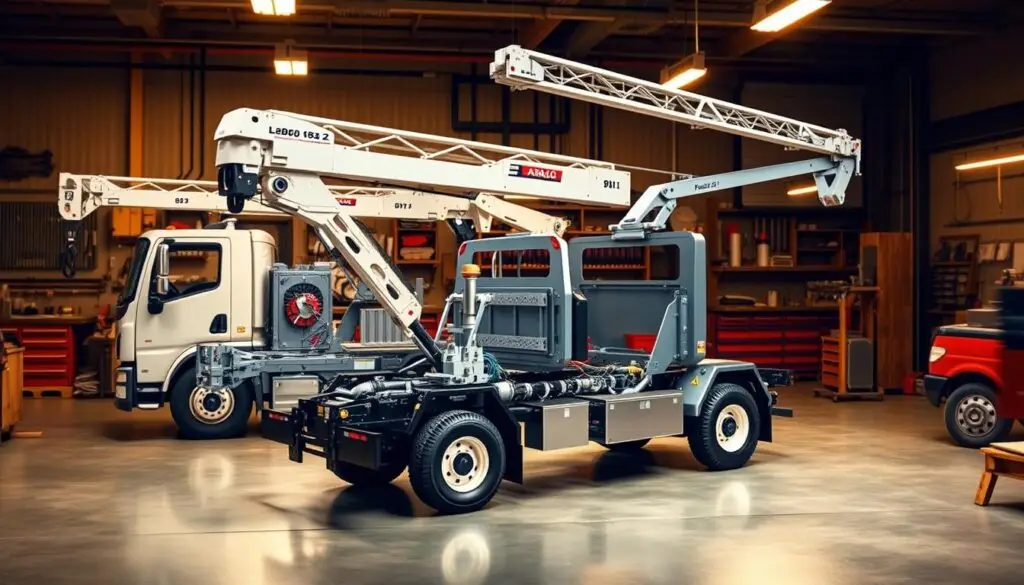
Electric cranes handle loads up to approximately 6,000 pounds effectively while offering lower operating costs and minimal maintenance requirements. These systems run quietly—an advantage when working in residential areas or facilities with noise restrictions. For operations focused on lighter component replacement, tire service, or diagnostic work requiring occasional lifting, electric cranes provide appropriate capability without the complexity of hydraulic systems.
Hydraulic cranes deliver the serious lifting power that engine and transmission work demands. Capacities ranging from 6,000 to 14,000 pounds or more handle the heaviest components Class 8 trucks contain. Hydraulic systems provide smoother operation under load and maintain consistent power delivery throughout extended lifting operations—important when positioning heavy components precisely. Popular models like the Stellar TMAX deliver 4,000-pound capacity at 16,000 ft-lbs of torque moment, giving technicians the controlled power needed for demanding jobs.
⚠️ Safety Warning
Crane operations require proper training and adherence to load capacity ratings. Never exceed rated capacity, always verify outrigger deployment on uneven ground, and ensure all personnel maintain safe distances during lifting operations. Overloading or improper setup causes crane failures resulting in serious injuries and equipment damage. OSHA’s crane operator qualification standards establish minimum training requirements for personnel operating lifting equipment.
Capacity Ratings and Boom Reach Considerations
Crane capacity directly affects your truck body requirements. A 12,000-pound hydraulic crane typically requires at least an 11-foot service body with reinforced understructure to distribute the forces crane operations generate. Smaller 900-pound electric cranes fit comfortably on eight-foot bodies. Understanding this relationship prevents discovering too late that your preferred crane cannot safely mount on the body you’ve ordered.
Boom reach ranges from five feet for compact electric models to over thirty feet in fully telescopic hydraulic designs. Longer reach means proportionally reduced lifting capacity at maximum extension—crane specifications typically show capacity curves rather than single numbers for this reason. Most diesel field mechanics find 10 to 15-foot reach handles 90% of typical jobs effectively, balancing capability against the weight and cost of larger boom systems.
Calculating Your ROI Based on Usage Patterns
Daily crane users see faster payback on hydraulic systems despite higher initial costs. The durability and capacity advantages justify the investment when crane operations represent a significant portion of billable work. Operations lifting only occasionally—a few times weekly rather than multiple times daily—often find electric cranes provide adequate capability at lower total cost of ownership.
Calculate your weekly lifting hours and average load weights honestly. Operations that expect to “grow into” heavy crane capacity often find they’ve paid for capability sitting unused while the associated weight consumes payload capacity for parts and tools they actually need daily.
Service Body Types and Storage Configurations
Body configuration decisions affect daily efficiency more than many fleet managers initially realize. The wrong layout means technicians climbing over equipment, hunting through disorganized compartments, and wasting cumulative hours that could generate revenue.
Open Body Versus Enclosed Configurations
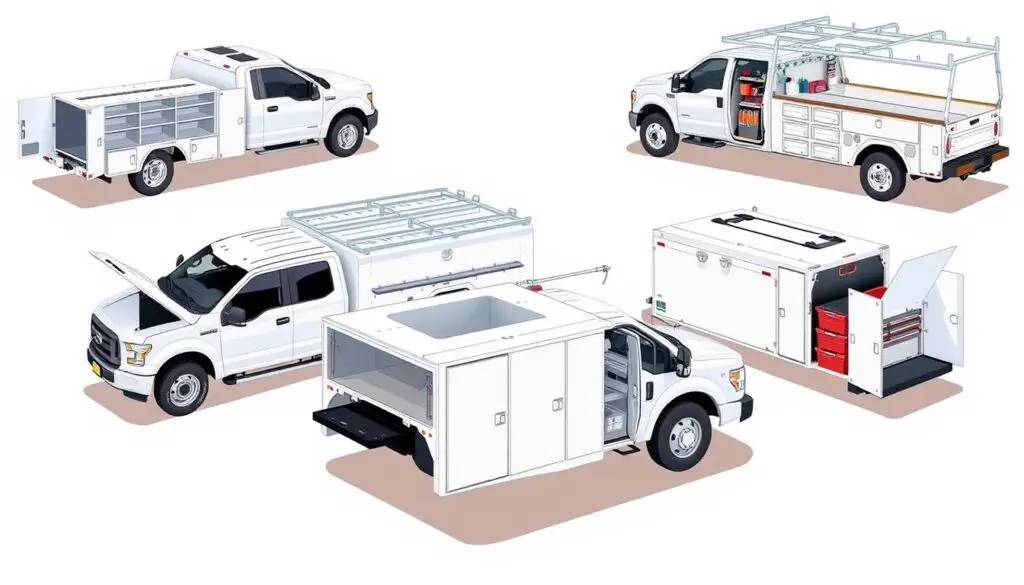
Open body designs remain popular among utility contractors and diesel mechanics who prioritize rapid tool access. External compartments provide organized storage while the exposed cargo area accommodates oversized equipment, materials, and work surfaces. Technicians can grab equipment without climbing into enclosed spaces—a small efficiency that compounds across hundreds of service calls annually.
Enclosed bodies protect sensitive equipment from weather exposure and theft. Operations carrying expensive diagnostic equipment, calibration tools, or working in high-crime areas benefit from the security enclosed configurations provide. The tradeoff involves slightly slower access times and reduced cargo bed flexibility for oversized loads.
Compartment Layouts for Trade-Specific Workflows
Modern service body manufacturers offer compartment configurations tailored to specific trades. The 500, 600, and 700 series designations common across manufacturers indicate different compartment arrangements optimized for various tool inventories and access patterns.
Drawer units organize small parts, fasteners, and hand tools where bins would create disorganized piles. Vertical compartments accommodate power tools and frequently accessed equipment at ergonomic heights. Horizontal compartments spanning above wheel wells store larger items that don’t require constant access. The specific arrangement should match your technicians’ actual workflows—observing how they currently work often reveals inefficiencies that thoughtful compartment design can eliminate.
| Body Type | GVWR Range | Best Applications |
|---|---|---|
| Light-Duty Open Body | Under 10,000 lbs | Landscaping, minor repairs, PM service |
| Medium-Duty Enclosed | 10,001-26,000 lbs | Construction, utilities, fleet service |
| Heavy-Duty Crane Body | Over 26,000 lbs | Mining, heavy equipment, major repairs |
Chassis Selection: The Foundation of Your Service Truck Build
Chassis selection establishes the fundamental parameters every other decision must work within. The wrong choice creates constraints you’ll struggle against for the truck’s entire service life—payload limitations that force multiple trips, CDL requirements that shrink your qualified driver pool, or frame ratings that prevent mounting the crane your work requires.
GVWR and CDL Requirement Planning
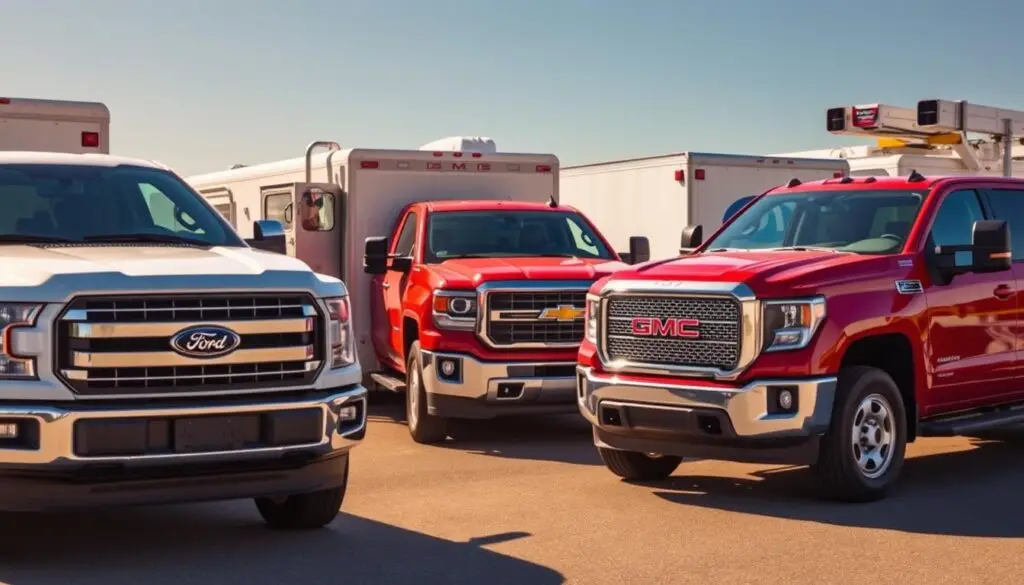
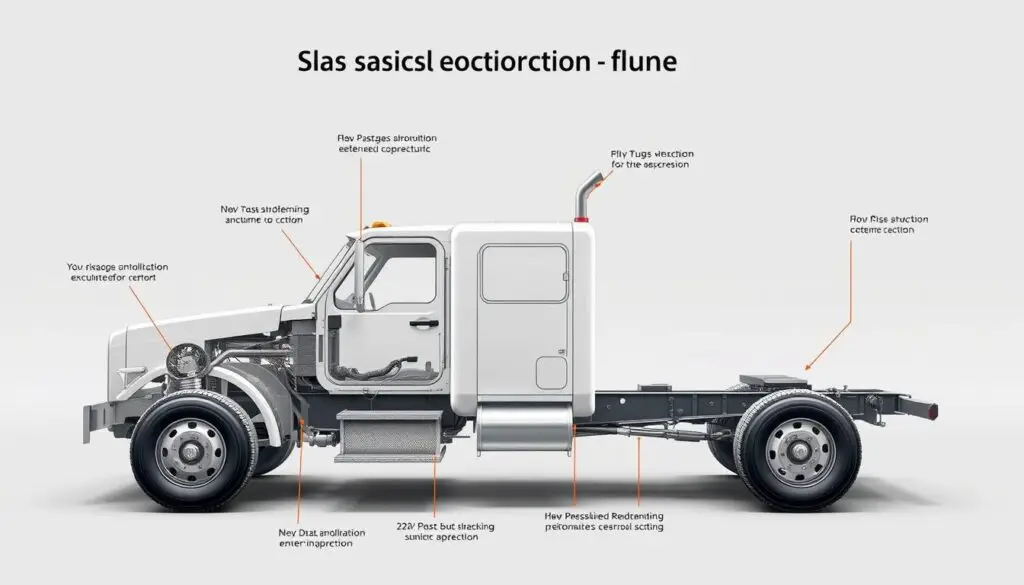
The 26,001-pound threshold represents the dividing line between commercial and non-CDL operation under FMCSA commercial driver’s license regulations. Fleet managers often specifically target vehicles under this limit—a Ford F-550 at 19,500 pounds GVWR or Ram 5500 configurations that stay below the CDL threshold—to maintain operational flexibility. When any qualified driver can operate your service trucks rather than only CDL holders, scheduling becomes simpler and labor costs potentially decrease.
However, payload requirements sometimes make CDL operation unavoidable. A 12,000-pound crane plus a 14-foot service body consumes significant capacity before adding tools, equipment, and materials. Calculate your actual weight needs honestly: chassis curb weight plus full fuel, passengers, body weight, crane, all mounted equipment, and typical tool and parts inventory. Operations that underestimate payload requirements find themselves overloaded or forced into compromises that reduce job capability.
Frame Strength and Crane Mounting Requirements
Frame RBM (Resisting Bending Moment) ratings indicate a chassis’s ability to handle the forces crane operations generate. Ram publishes RBM specifications around 3,016,000 inch-pounds for their 5500 chassis, while International’s HV Series reaches approximately 3,500,000 inch-pounds. These numbers matter significantly when mounting heavy cranes that create substantial stress points during lifting operations.
Professional upfitters verify RBM compatibility before beginning installations. Insufficient frame strength leads to cracking, sagging, and premature failure—expensive problems that proper specification prevents. Match your crane’s weight and rated capacity to appropriate frame specifications, leaving margin for the dynamic loads crane operations create rather than relying purely on static calculations.
Cab-to-Axle Measurements and Body Compatibility
Cab-to-axle dimensions determine which service bodies fit your chassis. The relationship follows general guidelines: 8-foot bodies require approximately 60-inch CA, 11-foot bodies need roughly 84-inch CA, and 14-foot configurations require around 108-inch CA. Deviations exist across manufacturers and specific models, making verification essential before ordering.
Key Recommendation
Measure cab-to-axle dimensions yourself and confirm with both chassis manufacturer and body supplier before placing orders. Mismatched dimensions create expensive problems—bodies that don’t fit properly require modifications or complete reordering, delaying your truck’s deployment and adding unplanned costs.
Engine, Transmission, and Drivetrain Options
Cab configurations range from regular two-door setups maximizing payload to four-door crew cabs accommodating work teams. The tradeoff involves bed length and payload capacity against passenger space—most single-technician operations find regular cabs sufficient, while teams benefit from crew cab configurations despite the compromises.
Two-wheel drive suffices for operations primarily traveling paved roads between service calls. Four-wheel drive becomes essential for utility contractors accessing remote sites, construction operations navigating unpaved job sites, or agricultural service work. The capability adds cost, weight, and maintenance requirements that highway-focused operations may not need.
Automatic transmissions simplify driver training and reduce fatigue in stop-and-go service work. Manual transmissions offer better PTO control for hydraulic crane operations in some configurations. Diesel engines provide torque advantages for loaded operation and potentially better fuel economy under sustained highway driving, while gasoline engines reduce initial costs and simplify maintenance for operations that don’t accumulate high annual mileage.
Essential Equipment Integration: Compressors, Welders, and Power Systems
Integrated equipment transforms basic service trucks into complete mobile workshops. The systems you mount determine what repairs become feasible in the field versus requiring shop facilities—a distinction that directly affects customer service capability and revenue potential.
Air Compressor Selection: Rotary Screw Versus Reciprocating
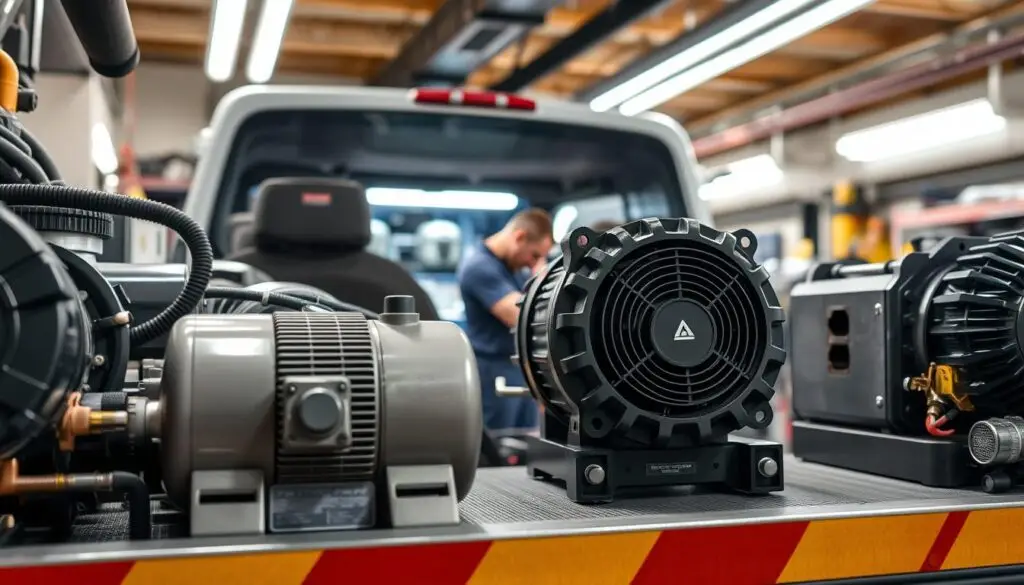
Air compressor choice significantly impacts field repair capability. Rotary screw compressors deliver continuous airflow during extended operations—essential when technicians run impact wrenches, grinders, and pneumatic drills throughout the workday. These systems handle sustained demand without the duty cycle limitations that force reciprocating compressors into cool-down periods.
Reciprocating compressors cost less upfront and handle intermittent use adequately. Operations focused on tire inflation, occasional impact wrench work, and lighter pneumatic tool use often find reciprocating systems provide sufficient capability. Most mount on the truck body’s topside opposite the crane, with roller fairleads at the rear providing convenient hose access.
All-in-One Systems: Space and Weight Optimization
Integrated systems combining compressor, generator, and welding capability into single units address the space constraints service trucks face. Systems like the Miller EnPak and Vanair Reliant reduce vehicle weight by up to 500 pounds compared to separate components while eliminating the need for engine idling during equipment operation.
The weight savings translate into additional payload capacity for tools and parts. The idle reduction decreases fuel consumption and engine wear during extended jobs. For operations where space is tight and every pound of payload matters, integrated systems often justify their premium pricing through these operational advantages.
CFM Requirements for Pneumatic Tool Operation
Proper CFM selection ensures your air system meets actual tool demands without expensive oversizing. Standard half-inch air lines handle most mechanics’ tools, including 1-inch impact wrenches typically requiring 8-10 CFM at 90 PSI. Multiple technicians working simultaneously need higher capacity—typically 25-30 CFM for two mechanics running pneumatic tools concurrently.
Undersized compressors create bottlenecks where technicians wait for air pressure recovery between tool operations. Oversized systems waste payload capacity and fuel on capability sitting unused. Match your compressor to realistic simultaneous tool usage scenarios rather than theoretical maximum demands you’ll rarely encounter.
The HDJ Perspective
Fleet managers often focus heavily on chassis selection and crane capacity while treating body configuration as an afterthought. In practice, compartment layout and storage organization affect daily productivity more visibly than any other specification decision. Technicians who can locate tools quickly, maintain organized inventory, and work efficiently from well-designed storage systems generate measurably more billable hours. Before finalizing any truck specification, spend time with your technicians understanding their actual workflow frustrations—the insights often reveal optimization opportunities that generic configurations miss.
Industry-Specific Applications and Configuration Requirements
Different industries impose distinct demands on service truck configurations. Understanding these requirements prevents specification mistakes that limit your truck’s effectiveness in actual working conditions.
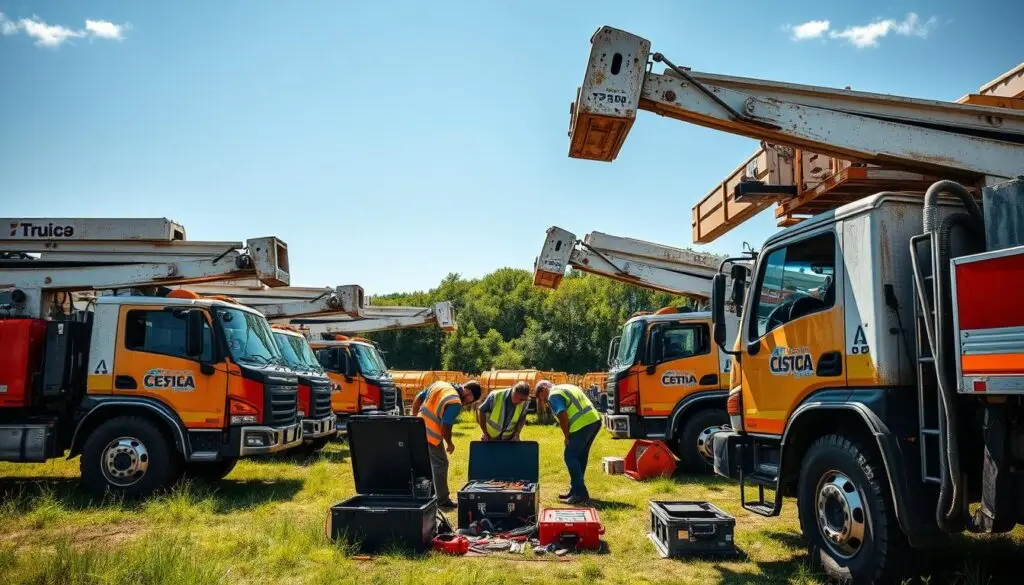
Construction and Heavy Equipment Service
Construction service trucks keep excavators, bulldozers, and other heavy equipment operational when breakdowns threaten project timelines. Every hour of equipment downtime costs thousands in delayed work and idle crews. Trucks serving this market typically require hydraulic cranes in the 10,000-14,000 pound range for engine and transmission work, robust air compressor systems for pneumatic tools, and extensive parts inventory for common failure components.
Terrain capability matters significantly. Four-wheel drive handles the unpaved conditions typical at construction sites. Ground clearance accommodates rough approaches without damaging undercarriage components. Suspension systems must handle the additional stresses that off-road operation creates when trucks carry full equipment loads.
Mining Operations: Extreme Environment Requirements
Mining service trucks operate in some of the harshest conditions any equipment faces. Remote locations, extreme temperatures, and massive equipment create unique demands. Crane capacities at the upper end of available ranges—14,000 pounds or more—handle the oversized components mining equipment contains. Extended parts inventory addresses the impossibility of quick resupply when sites sit hours from suppliers.
Environmental protection matters more in mining than most applications. Enclosed compartments protect tools and electronics from dust infiltration. Climate control systems maintain equipment functionality in temperature extremes. Reliability becomes paramount when the nearest backup sits hours away.
Fleet Service and Transportation Applications
Fleet service operations balance rapid response capability against comprehensive repair equipment. These trucks often respond to roadside emergencies where getting vehicles moving quickly matters more than completing every possible repair on-site. Diagnostic capability, common replacement parts, and jump-start equipment enable the quick fixes that restore operations fastest.
Highway-oriented operations typically don’t need off-road capability, allowing specification of two-wheel drive trucks that offer better fuel economy and lower maintenance costs. Staying under CDL weight thresholds maximizes driver flexibility for operations dispatching trucks across multiple shifts with varying personnel.
Utility and Municipal Applications
Utility service trucks support power line maintenance, water system repairs, and municipal infrastructure work. These applications often combine service body features with specialized equipment like aerial lifts or digger derricks. Line service body configurations from manufacturers like Knapheide’s H-Series and BH-Series accommodate the specific compartment arrangements utility work requires.
Urban maneuverability often constrains utility truck sizing more than payload requirements. Navigating residential streets, parking in tight spaces, and accessing restricted areas may make smaller configurations necessary despite reduced capability compared to larger trucks.
Free Professional Fleet Tools
Cost calculators, fault code lookup, maintenance planners, and more—built for owner-operators, fleet managers, and diesel techs. No signup required.
Safety Features and Technology Systems
Modern service trucks incorporate safety and technology systems that protect operators, improve efficiency, and provide operational visibility that fleet managers need for effective oversight.
Crane Safety Electronics and Load Monitoring
Advanced safety electronics monitor crane operations in real-time, providing warnings before dangerous conditions develop. Load-moment indicators display current load percentages, warning operators as weight limits approach. Automatic shutoff mechanisms prevent lifting attempts that would exceed safe capacity, protecting both equipment and personnel from the consequences of overloading.
These systems particularly benefit operations with varying operator experience levels. Consistent safety enforcement regardless of individual operator judgment reduces accident rates and the liability exposure that crane incidents create.
Lighting Systems for Extended Operations
Service calls frequently occur during low-light conditions—early morning emergencies, evening breakdowns, or work extending past daylight hours. Interior compartment LEDs help technicians locate tools quickly. Exterior floodlights illuminate work areas, enabling safe and efficient repair work regardless of ambient lighting conditions.
Strategic lighting placement matters as much as raw output. Lights positioned to illuminate typical work areas without creating glare or shadows serve technicians better than higher-output systems poorly aimed. Adjustable work lights that technicians can redirect based on specific job requirements provide versatility that fixed installations lack.
Security Features for Tool Protection
Service trucks carry tens of thousands of dollars in tools and equipment, making them attractive theft targets. Lockable compartments provide basic security, but master locking systems that secure all compartments with single-key operation add convenience without sacrificing protection. GPS tracking systems enable recovery of stolen vehicles and create deterrent effects that reduce theft attempts.
Operational security extends beyond theft prevention. Silent alarm systems alert fleet managers to unauthorized access attempts. Camera systems record activity around trucks during off-hours. These investments protect valuable assets while providing documentation useful for insurance claims if theft does occur.
Cost Analysis: New Versus Used and Purchasing Options
Financial decisions around service truck acquisition affect cash flow and total cost of ownership for years. Understanding the tradeoffs between new and used trucks, purchasing and leasing, helps optimize the financial performance of your equipment investment.
New Truck Economics
New service trucks from major manufacturers typically cost between $150,000 and $250,000 depending on chassis selection, body configuration, crane capacity, and integrated equipment. These prices include warranty coverage, latest safety features, and the reliability that comes with zero accumulated operating hours.
Depreciation represents the major cost factor for new trucks—expect 20-30% value reduction in the first year alone. This depreciation curve makes new trucks most appropriate for operations planning long-term ownership where the early depreciation amortizes across many years of service, or for applications where reliability and warranty coverage justify premium pricing. Research from the American Transportation Research Institute indicates that equipment depreciation remains among the top operational costs for commercial vehicle operations.
Used Truck Considerations
Used service trucks generally cost between $75,000 and $125,000, providing immediate acquisition savings. Depreciation curves flatten after the first few years, meaning used trucks lose value more slowly in percentage terms than new purchases. For operations confident in their ability to evaluate mechanical condition, used trucks offer genuine value.
The tradeoff involves higher maintenance costs—typically 15-25% more annually than new trucks—and the risk of hidden problems that inspection doesn’t reveal. Diesel engines that receive proper maintenance can exceed 500,000 miles, but condition varies enormously based on previous owner practices. Insurance costs run 10-20% lower on used vehicles, partially offsetting maintenance cost increases.
Leasing Versus Purchase Analysis
Monthly lease payments typically range from $2,500 to $4,500, preserving capital while providing access to newer equipment. Leasing works well for operations prioritizing cash flow flexibility or expecting their requirements to evolve significantly—lease terms provide natural equipment refresh opportunities without the disposal complications ownership creates.
Purchasing builds equity and ultimately costs less over extended ownership periods. Operations with stable requirements and available capital often find purchasing makes more financial sense despite higher initial outlays. The decision depends significantly on tax implications, capital availability, and projected equipment needs over the relevant time horizon.
Frequently Asked Questions
What is the difference between a service truck and a mechanics truck?
Service trucks handle general maintenance and light repairs with organized compartments for hand tools and portable equipment. Mechanics trucks feature reinforced bodies specifically designed to support heavy-duty cranes capable of lifting engines and transmissions. The structural differences reflect intended applications—mechanics trucks in mining and heavy construction handle major component replacements requiring crane capacities of 10,000 pounds or more, while standard service trucks focus on PM service, diagnostics, and lighter repairs where such capability isn’t necessary.
Do I need a CDL to drive a service truck?
CDL requirements depend on the vehicle’s Gross Vehicle Weight Rating. Under federal FMCSA regulations, single vehicles exceeding 26,000 pounds GVWR require a Class B CDL. Many fleet managers specifically spec trucks under this threshold—such as Ford F-550s at 19,500 pounds GVWR—to expand their qualified driver pool. However, if your service truck tows equipment exceeding 10,000 pounds and the combined rating exceeds 26,000 pounds, you’ll need a Class A CDL regardless of the truck’s standalone rating.
How much does a fully equipped service truck cost?
New service trucks from major manufacturers typically range from $150,000 to $250,000 depending on chassis selection, body configuration, and integrated equipment. Used service trucks generally cost between $75,000 and $125,000. Monthly lease payments average $2,500 to $4,500. The total cost of ownership should factor in maintenance costs, which run 15-25% higher annually for used trucks compared to new vehicles, plus insurance differentials and financing costs where applicable.
What crane capacity do I need for mobile diesel repair?
Crane capacity requirements depend on your typical workload. Electric cranes handling loads up to 6,000 pounds work well for occasional lifting of smaller components. For shops regularly removing engines and transmissions from Class 8 trucks, hydraulic cranes in the 10,000 to 14,000-pound range provide necessary capacity. Most diesel field mechanics find 10 to 15-foot boom reach handles 90% of typical jobs effectively. Mining and heavy construction applications often require crane capacities at 14,000+ pounds to handle oversized components.
Which service truck body manufacturers have the best warranty?
Knapheide offers a 6-year limited warranty on steel service bodies and a 10-year warranty on aluminum bodies, covering rust-through, shelving integrity, and door hardware. Stellar Industries provides competitive warranty coverage on their TMAX mechanic truck series. Reading Truck Body includes automotive-grade finishing with comprehensive warranty protection. When evaluating warranties, confirm coverage includes structural components, corrosion protection, and crane mounting points—the elements most likely to experience stress-related issues over time.
How do I determine the right cab-to-axle measurement for my service body?
Cab-to-axle measurements must match your intended body length. Generally, 8-foot bodies require approximately 60-inch CA measurements, 11-foot bodies need 84-inch CA, and 14-foot bodies require 108-inch CA. These are guidelines rather than absolute rules—variations exist across chassis manufacturers and specific body models. Measure your intended chassis yourself and confirm compatibility with both chassis manufacturer specifications and your body supplier before placing orders to prevent expensive compatibility problems.
Building the Right Service Truck for Your Operation
Service truck selection involves balancing competing priorities across chassis capability, body configuration, crane capacity, and integrated equipment. The decisions you make determine operational capability for a decade or more of daily service.
Start with clear understanding of your actual requirements—the jobs you perform most frequently, the components you lift regularly, the environments you operate in, and the payload demands your work creates. Build specifications around these real-world needs rather than theoretical capabilities you might someday want. Work with experienced upfitters who understand both the equipment options and the operational realities of field service work.
The investment in proper specification pays dividends through improved technician productivity, expanded job capability, and reliable equipment that performs consistently across years of demanding use. Take the time to get specifications right, and your service trucks become competitive advantages that strengthen your operation’s market position.
Found This Guide Useful?
Share it with fleet managers and service operations professionals who could benefit from comprehensive service truck specification guidance.