By Michael Nielsen, Editor & Publisher | 15+ Years in Diesel Repair
Last Updated: December 2025
📖 Estimated reading time: 22 minutes
If you own a vehicle in the United States, federal law protects you from costly repairs related to your car’s exhaust and emission control systems. Since 1972, manufacturers have been required to provide specific coverage for these critical components under the Clean Air Act. These emission control warranty protections ensure your vehicle meets environmental standards without placing financial burdens on you as the owner.
The Environmental Protection Agency mandates two distinct types of coverage. The Performance Warranty addresses vehicles that fail federal emission standards during testing. The Design and Defect Warranty covers repairs resulting from manufacturer defects in materials or workmanship. Understanding your rights under these EPA mandates can save you thousands of dollars in unexpected repair costs.
This guide covers everything fleet managers, diesel technicians, and vehicle owners need to know about federal emission control warranty requirements—from covered components and claim procedures to dispute resolution and California’s enhanced CARB standards.
Key Takeaways
- Two warranty types exist: Performance Warranty (2 years/24,000 miles) covers emission test failures; Design and Defect Warranty covers manufacturing defects for up to 8 years/80,000 miles on major components.
- Three major components get extended coverage: Catalytic converters, electronic control units (ECU), and onboard diagnostic (OBD) systems qualify for 8-year/80,000-mile protection.
- California-certified vehicles receive enhanced protection: CARB standards provide 3 years/50,000 miles basic coverage and 7 years/70,000 miles for high-cost parts.
- No-cost repairs are guaranteed: Manufacturers cannot charge for diagnosis, parts, labor, or any related components when warranty claims are valid.
- Aftermarket parts don’t void coverage: The Magnuson-Moss Act protects your right to use quality aftermarket parts for maintenance without losing warranty protection.
What Is an Emission Control Warranty?
Your vehicle comes equipped with a powerful yet often overlooked protection: a federally mandated emission control warranty. This mandatory coverage ensures that the systems designed to reduce your vehicle’s pollution operate correctly throughout specific timeframes. Unlike optional extended warranties you might purchase, this protection exists by law and costs you nothing extra.
Every manufacturer selling vehicles in the United States must provide this coverage. The warranty represents a legal commitment that emission control systems will perform as designed and meet federal standards throughout the coverage period.
Federal Requirements Under the Clean Air Act
Congress established manufacturer obligations for emission warranties back in 1972 as part of efforts under the Clean Air Act to combat rising pollution levels across American cities. Lawmakers recognized that vehicle owners shouldn’t bear financial responsibility for defective pollution control systems.
These requirements aren’t voluntary programs that automakers can choose to offer. Federal law mandates that every new vehicle sold must include emission system coverage meeting minimum standards. According to the EPA’s transportation FAQ, manufacturers face penalties if they fail to honor these obligations or attempt to avoid their legal responsibilities.
Under this framework, the EPA establishes emission limits for various pollutants including carbon monoxide, nitrogen oxides, and hydrocarbons. Manufacturers must certify that their vehicles comply with these standards before selling them to consumers. The warranty requirements ensure that emission control systems continue functioning properly to maintain compliance long after purchase.
How This Warranty Protects Vehicle Owners
The warranty shields you from expensive repair costs when emission components fail due to defects in materials or workmanship. If a covered part breaks down during the warranty period, the manufacturer must fix or replace it at no charge to you. This protection includes both parts and labor costs.
Your coverage also extends to emission test failures caused by defective components. When your vehicle can’t pass required emissions testing because of faulty emission control parts, the warranty ensures you won’t pay for repairs. This provision prevents you from being financially penalized for problems the manufacturer created.
The protection applies regardless of whether you purchased your vehicle new or used. As long as the warranty period remains active, you benefit from these federal protections. Transfer of ownership doesn’t void this coverage, making it valuable for second and third owners too.
The Financial Impact for Fleet Operations
Emission warranties serve dual purposes that benefit both individual vehicle owners and fleet operations. From an environmental perspective, these guarantees ensure that pollution control systems continue functioning properly throughout their warranty coverage. Vehicles can’t gradually increase their emissions as components wear out or fail without consequence.
The financial protection can be substantial for fleet managers tracking maintenance budgets. A catalytic converter replacement often exceeds $1,000 in parts and labor. Oxygen sensors, evaporative emission canisters, and engine control modules add hundreds or thousands more to potential repair bills. Without warranty protection, these costs fall entirely on vehicle owners for defects they didn’t cause.
$1,000+
Average catalytic converter replacement cost covered under the 8-year/80,000-mile major component warranty
Two Types of Federal Emission Control Warranty Coverage
Federal emission control warranties come in two forms, each serving a different protective purpose for drivers. The EPA requires manufacturers to offer both a Performance Warranty and a Design and Defect Warranty to ensure comprehensive protection against emission-related problems. These warranties work together but cover different situations and timeframes throughout your vehicle’s life.
Performance Warranty: 2 Years or 24,000 Miles
The Performance Warranty provides coverage during the first 2 years or 24,000 miles of vehicle ownership, whichever milestone arrives first. This warranty specifically targets situations where your vehicle cannot meet emission standards during official testing.
Several specific conditions must align for the Performance Warranty to activate. Your vehicle must fail an approved emissions test in an area with an Inspection and Maintenance program that meets federal guidelines. The test failure cannot result from vehicle misuse or failure to follow maintenance instructions outlined in your owner’s manual.
When an emission test failure occurs within this period, the manufacturer covers all necessary repairs or adjustments to make your vehicle pass the locally-required emission test. The warranty includes both parts and labor costs at no charge to you.
Design and Defect Warranty: Extended Protection
The Design and Defect Warranty extends protection significantly further into your vehicle’s lifespan. For emission control and emission-related parts, coverage lasts for 2 years or 24,000 miles. However, specified major emission control components receive enhanced protection for 8 years or 80,000 miles, whichever occurs first.
According to 40 CFR 85.2103, the extended warranty addresses manufacturing defects that may not appear immediately. Some emission components develop problems only after years of use, and the longer coverage period protects you against these delayed failures in critical emission systems.
| Warranty Type | Coverage Duration | Triggering Event |
|---|---|---|
| Performance Warranty | 2 years / 24,000 miles | Official emission test failure in I/M program area |
| Design and Defect (Standard Parts) | 2 years / 24,000 miles | Component defect causing excess emissions |
| Design and Defect (Major Components) | 8 years / 80,000 miles | Defect in catalytic converter, ECU, or OBD systems |
Components Covered Under Federal Emission Control Warranty
Knowing exactly which emission control parts receive federal warranty coverage empowers vehicle owners to protect their investment. Federal regulations establish clear categories for covered parts, and manufacturers must warranty all emission control parts that play a direct role in reducing pollutants.
The Three Specified Major Components (8-Year Coverage)
Federal law identifies three specified major emission control components that receive the extended 8-year or 80,000-mile warranty protection:
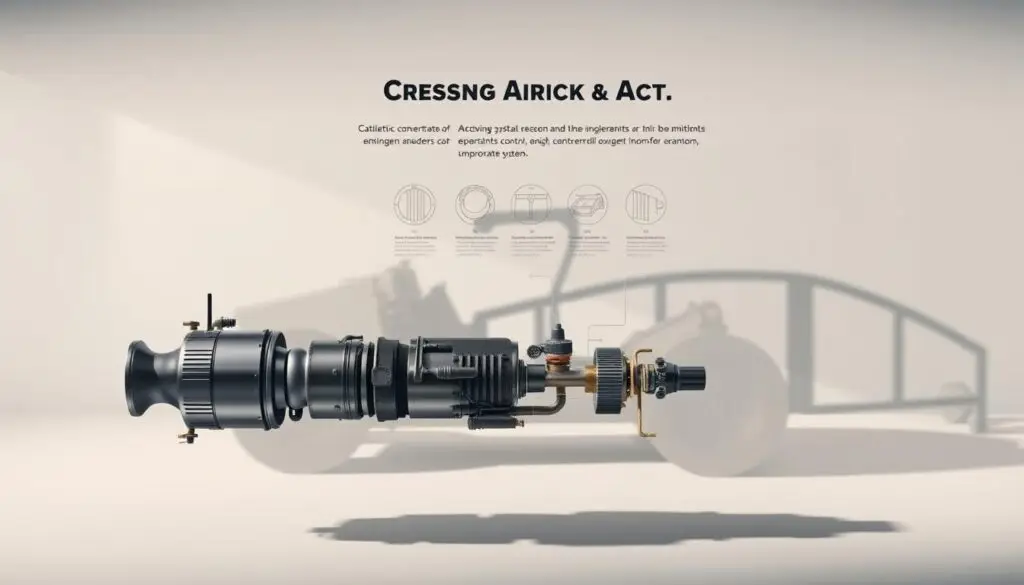
Catalytic Converters: These devices use precious metals like platinum, palladium, and rhodium to chemically convert harmful pollutants. Three-way converters simultaneously reduce carbon monoxide, unburned hydrocarbons, and nitrogen oxides. Replacement costs frequently exceed $1,000 for these sophisticated devices.
Electronic Emissions Control Unit (ECU): This powerful computer processes data from dozens of sensors and controls actuators throughout the emission control system. The ECU also often integrates with the onboard diagnostic system. A new ECU can cost $1,500 or more.
Onboard Diagnostic Device (OBD): This system continuously monitors emission control components for malfunctions. When problems occur, the OBD system illuminates your dashboard check engine light and stores diagnostic trouble codes for technicians to retrieve.
Exhaust System Components
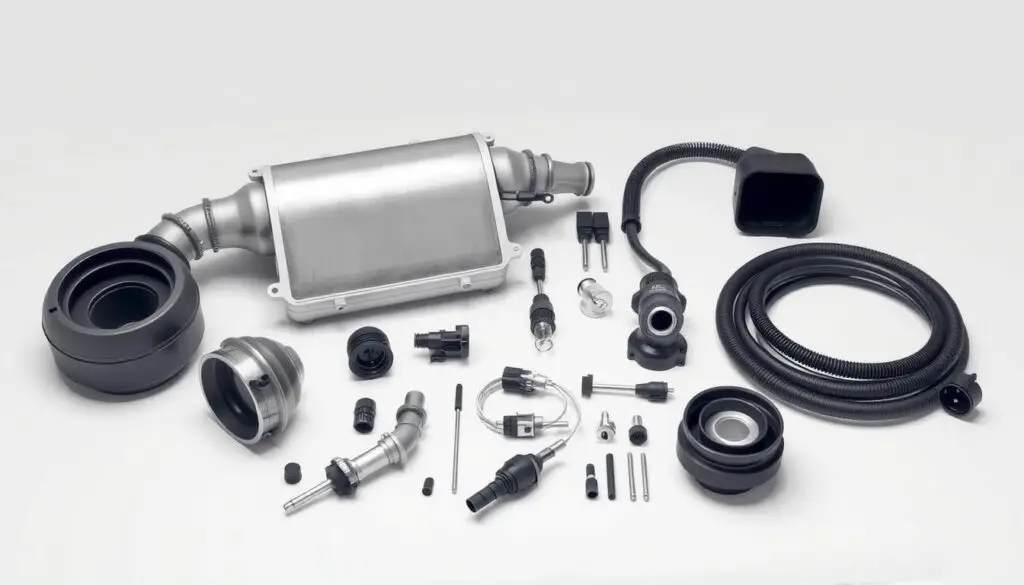
The exhaust system contains several critical components that transform dangerous gases into safer emissions. Exhaust manifolds collect gases from engine cylinders and direct them toward the catalytic converter. While classified as emission-related parts rather than primary emission control devices, they still receive basic warranty coverage.
Dual-walled exhaust pipes maintain proper temperatures for emission control equipment and prevent heat loss that could reduce catalytic converter efficiency.
Engine Sensors and Fuel System Parts
Modern vehicles rely on electronic systems to constantly monitor and adjust engine performance for optimal emission control. Oxygen sensors serve as the eyes of your emission control system, continuously measuring oxygen levels in exhaust gases. Most vehicles contain multiple oxygen sensors positioned before and after the catalytic converter.
Mass airflow sensors measure the exact amount of air entering your engine, allowing the fuel metering system to deliver precisely the right amount of fuel. Throttle position sensors inform the engine control unit about driver demands and engine load.
Evaporative Emission Control Systems
Fuel doesn’t only create emissions through combustion—gasoline naturally evaporates, releasing harmful hydrocarbon vapors into the atmosphere. The evaporative emission control system captures these vapors and prevents their escape.
Vapor storage canisters (charcoal canisters) contain activated carbon that absorbs fuel vapors. When engine conditions allow, the system releases these captured vapors into the engine for combustion. Purge valves and purge solenoids control when captured vapors flow from the canister to the engine.
Even fuel filler caps qualify as covered emission control parts. A loose, damaged, or missing gas cap allows fuel vapors to escape directly into the atmosphere and can cause your vehicle to fail emissions testing.
Stay Current on Fleet Compliance Requirements
Emission regulations and warranty requirements evolve constantly. Get practical guidance on fleet maintenance compliance, cost management strategies, and regulatory updates delivered to your inbox.
California and CARB-Compliant States: Enhanced Protection
California holds unique authority under the Clean Air Act to establish emission standards more stringent than federal requirements. The California Air Resources Board (CARB) exercises this authority, creating requirements that often exceed EPA minimums. Vehicles certified to meet California emission standards typically come with extended warranty coverage beyond what federal law requires.
According to the CARB warranty periods fact sheet, California-certified vehicles receive 3 years or 50,000 miles of basic defects and performance warranty coverage. High-cost emission-related parts receive 7 years or 70,000 miles of protection.
Currently, more than a dozen states have adopted California emission standards, including Connecticut, Delaware, Maine, Maryland, Massachusetts, New Jersey, New York, Oregon, Pennsylvania, Rhode Island, Vermont, and Washington. Vehicle owners in these states may benefit from enhanced warranty protection.
| Coverage Type | Federal Standards | California CARB Standards |
|---|---|---|
| Basic Warranty | 2 years / 24,000 miles | 3 years / 50,000 miles |
| High-Cost Parts | 8 years / 80,000 miles | 7 years / 70,000 miles |
| PZEV Vehicles | Not applicable | 15 years / 150,000 miles |
Vehicle owners should check whether their vehicle carries federal or California certification. This information typically appears on the emission control label under the hood. California-certified vehicles display “This vehicle conforms to California regulations” or similar language.
Some manufacturers sell only California-certified vehicles nationwide to simplify their production and inventory management. This practice means vehicle owners in federal-only states may still receive California-level warranty protection.
Your Rights as a Consumer Under EPA Protections
When emission control components fail, federal law guarantees specific consumer rights that prevent unfair warranty denial and ensure no-cost repairs. The EPA has established clear protections that empower vehicle owners to demand proper warranty coverage without fear of unreasonable charges or unjust claim rejections.
Comprehensive No-Cost Repair Guarantees
The most important protection under federal emission control warranty is the absolute guarantee of no-cost repairs for all covered components. When you have a valid warranty claim, you cannot be charged for any aspect of the repair process. This includes diagnosis costs, replacement parts, labor charges, and any miscellaneous items needed to complete the work properly.
Additional items required to complete the repair are also covered at no charge, including all pipes, flanges, and exhaust system connections; mounting brackets, clamps, and hardware; gaskets, seals, and heat shields; and labor for removal, installation, and testing.
Manufacturers cannot attempt to charge you for peripheral items they claim fall outside warranty coverage. When the repair involves replacing a covered component, everything necessary to complete that repair properly must be provided at no cost.
Protection Against Unjustified Claim Denials
Federal regulations provide robust protection against unreasonable warranty denial by strictly limiting the grounds on which manufacturers can reject claims. Manufacturers have only one legitimate basis for denying warranty coverage: documented evidence showing that you failed to properly maintain your vehicle or misused it in ways that directly caused the emission system failure.
The burden of proof rests entirely with the manufacturer. They cannot simply deny claims without providing clear evidence that maintenance was neglected or that the vehicle was abused. You are not required to provide maintenance receipts unless there is reasonable evidence that lack of maintenance caused the specific failure.

Access to Documentation and Appeals
Federal law requires manufacturers to provide comprehensive warranty information to all vehicle owners. You have the right to receive clear documentation explaining what components are covered, how long the coverage lasts, and what procedures you need to follow to obtain warranty repairs.
If your warranty claim is denied, you have the right to receive a written explanation detailing the reasons for rejection. This explanation must include the names of individuals involved in the denial decision and information about how to appeal the decision through the manufacturer and, if necessary, through EPA intervention.
The HDJ Perspective
After 15 years in diesel repair and fleet management, we’ve seen too many vehicle owners—and even experienced fleet managers—unknowingly pay for repairs that should have been covered under federal emission warranties. The 8-year/80,000-mile coverage on catalytic converters alone represents thousands of dollars in potential savings. Yet the most common reason these claims go unclaimed isn’t manufacturer resistance—it’s simply that owners don’t know these protections exist. The single best thing you can do right now? Pull your fleet’s warranty documentation and verify coverage status for every vehicle approaching the 80,000-mile mark. That one action consistently prevents the most expensive missed warranty opportunities we see.
How to File an Emission Control Warranty Claim
When emission control components fail, knowing how to properly file a warranty claim can save you thousands in repair costs. Most emission warranty claims get approved when owners provide complete information and follow established procedures.
Step 1: Identify the Problem
The check engine light serves as your vehicle’s primary warning system for emission control problems. This light connects directly to the onboard diagnostic system, and when it illuminates, the OBD system has detected a malfunction in the emission control system.
Have diagnostic trouble codes read as soon as the check engine light appears. Many auto parts stores offer free code reading services. These codes identify which emission control component or system is malfunctioning and help determine whether your problem falls under warranty coverage.
For Performance Warranty claims, emission test failures provide clear evidence that warranty coverage may apply. Retain the emission test failure report and present it to the dealer or manufacturer representative.
Step 2: Document Everything
Proper documentation strengthens your warranty claim and makes denial more difficult for manufacturers. Collect all service records from your vehicle’s history, including oil change receipts, tune-up records, air filter replacements, and any previous emission system work.
Create a written log documenting when problems began, specific symptoms, how vehicle performance has been affected, and the current odometer reading. These details create a timeline showing the problem developed during the warranty coverage period.
Step 3: Submit Your Claim
Present your vehicle to a warranty-authorized manufacturer representative—typically a franchised dealership. Independent repair shops generally cannot process federal emission warranty claims.
Bring all relevant documentation when submitting your claim. Request written acknowledgment of your claim submission date. After you present your vehicle, the manufacturer has 30 days to either repair the vehicle or notify you in writing that the claim has been denied.
Step 4: Appeal If Denied
If your initial attempt is denied, take these actions immediately:
Ask for a detailed written explanation of why coverage was denied. Request the names of all persons involved in the denial decision. Contact the manufacturer’s appeals representative and submit your request for coverage with supporting documentation.
Repeat and continue the appeal process until you are satisfied or have exhausted all means of appeal. Many manufacturers approve claims during the appeal process when vehicle owners provide additional documentation or escalate to higher-level decision makers.
If manufacturer appeals don’t resolve your dispute, contact your state environmental agency or the EPA for assistance. These agencies can investigate manufacturers who improperly deny valid emission warranty claims.
Share Your Emission Warranty Experience
Have you navigated a successful emission warranty claim—or dealt with an unfair denial? Fleet managers, diesel technicians, and shop owners can help the industry by sharing real-world insights on warranty processes.
Common Issues and Solutions with Warranty Claims
Understanding common roadblocks in the emission warranty process empowers vehicle owners to protect their rights and secure proper repairs. Many vehicle owners face similar obstacles when seeking warranty coverage.
Incomplete Maintenance Records
One of the most frequent reasons for warranty denial involves incomplete or missing maintenance records. However, federal law places specific limits on when manufacturers can request these documents.
For defect-based warranty claims, proof of maintenance is not required when an emission control component is found defective in materials or workmanship. The manufacturer bears the burden of proving that lack of maintenance caused the failure. They cannot simply deny your claim because records are unavailable.
To protect yourself, maintain detailed logs if performing self-maintenance, keep all receipts for parts and services, and create digital backups of all documentation.
Aftermarket Parts Concerns
Federal law explicitly protects your right to use aftermarket parts for vehicle maintenance. The Magnuson-Moss Warranty Act prohibits manufacturers from voiding warranties simply because you used aftermarket parts. Manufacturers cannot require the use of specific brands of parts to maintain your emission control warranty.
The only requirement is that aftermarket parts must be of equal quality to original equipment manufacturer parts. If a manufacturer claims an aftermarket part caused an emission system failure, they carry the burden of proof.
However, modifications that alter emission control systems can void coverage. Removing or disabling emission control components, installing performance tuners that alter emission parameters, or tampering with onboard diagnostic systems can eliminate warranty protection for affected components.
State Lemon Law Protection
State lemon laws provide additional protection when vehicles experience repeated emission-related problems that cannot be fixed despite multiple repair attempts. These laws vary by state but generally offer stronger remedies than federal emission warranties alone.
If a manufacturer cannot repair a defect within a reasonable number of attempts (typically three to four for the same issue), you may qualify for vehicle replacement or buyback. State consumer protection offices provide valuable resources for understanding your rights.
Manufacturer Warranties vs. Federal Emission Control Warranty
The relationship between manufacturer warranties and EPA-mandated emission coverage creates a safety net that many vehicle owners don’t fully understand. These two types of protection work together to ensure your vehicle’s emission system receives proper care.
During the first two years or 24,000 miles, you receive protection from both federal emission control warranties and comprehensive manufacturer warranties. This period represents the strongest warranty protection you’ll have. When coverage overlaps, the warranty most favorable to you should apply.
Many manufacturers offer powertrain warranty coverage that typically lasts five years or 60,000 miles. Since some powertrain components also function as emission-related parts, this creates beneficial overlap with federal emission warranty coverage.
Coverage Gaps and Solutions
Coverage gaps can occur after the basic two-year or 24,000-mile period ends but before specified major components reach their eight-year or 80,000-mile limit. During this middle period, non-major emission components lose federal warranty protection.
Several strategies can help you address coverage gaps: evaluate extended warranty purchases that cover emission components; maintain detailed service records to support goodwill claims; follow manufacturer maintenance schedules meticulously; and research brand reliability records for emission system components.
Manufacturer certified pre-owned programs often include emission system coverage extending beyond remaining federal warranty protection. These CPO programs provide additional years or miles of coverage from the purchase date, representing significant value for used vehicle buyers.
Frequently Asked Questions
What is the difference between the Performance Warranty and the Design and Defect Warranty?
The Performance Warranty covers the first 2 years or 24,000 miles and is specifically triggered when your vehicle fails a required emission test in an area with an Inspection and Maintenance program. The Design and Defect Warranty covers repair of emission control parts that become defective during the warranty period—most components are covered for 2 years or 24,000 miles, while specified major emission control components (catalytic converters, electronic control units, and onboard diagnostic systems) receive extended coverage for 8 years or 80,000 miles.
Which emission control components receive the extended 8-year warranty coverage?
Three specified major emission control components receive extended coverage for 8 years or 80,000 miles: catalytic converters (including oxidation catalysts and three-way converters), electronic emissions control units (ECU), and onboard diagnostic devices or computers (OBD systems). These components are considered critical for emission control and can be extremely expensive to replace, making the extended warranty coverage particularly valuable.
Do I need to keep all my maintenance records to file a warranty claim?
Federal law does not automatically require owners to provide maintenance proof for Design and Defect Warranty claims. The burden of proof is on the manufacturer to demonstrate that lack of maintenance caused the specific failure—they cannot simply deny claims because records are unavailable. However, maintaining detailed records is recommended as it can expedite the claims process and help counter any manufacturer suggestions that poor maintenance caused the failure.
Will using aftermarket parts void my emission control warranty?
Federal law explicitly prohibits manufacturers from requiring specific brands of parts for vehicle maintenance. You can use aftermarket parts as long as they are of equal quality to original parts, and manufacturers cannot void emission warranties simply because aftermarket parts were used. However, modifications that alter or disable emission control components can void warranty protection for affected systems.
Does the emission control warranty transfer to subsequent vehicle owners?
Yes, federal emission control warranties stay with the vehicle, not the original owner, so they transfer to subsequent owners as long as the vehicle remains within the warranty time and mileage limits. If you purchase a used vehicle that is less than 8 years old with fewer than 80,000 miles, the three specified major emission control components are still covered. When buying used, determine the in-service date and current mileage to calculate remaining coverage.
Taking Action on Your Emission Warranty Rights
Federal emission control warranty protections have safeguarded vehicle owners since 1972. These EPA protections remain one of the most valuable consumer safeguards in automotive ownership. Understanding your rights under these federal mandates can save thousands of dollars in potential repair costs.
Your warranty coverage extends beyond typical manufacturer guarantees. The Performance Warranty addresses emission test failures during the first two years or 24,000 miles. The Design and Defect Warranty protects against faulty components for up to eight years or 80,000 miles on major emission systems.
Taking action strengthens your protection. Review your owner’s manual to identify covered components. Maintain your vehicle according to manufacturer specifications. Address check engine lights promptly while within warranty periods. Keep detailed service records to support any future claims.
You paid for these protections when you purchased your vehicle. Exercise your rights confidently when emission-related problems arise. Contact your dealer or manufacturer immediately if covered components fail. The EPA backs your warranty coverage through federal law.
Found This Guide Useful?
Help other fleet managers and diesel technicians understand their emission warranty rights. Share this guide with your network—someone in your shop or fleet could save thousands on their next emission system repair.