

By Michael Nielsen, Editor & Publisher | 15+ Years in Diesel Repair
Last Updated: December 2025
📖 Estimated reading time: 22 minutes
Vehicle idling burns money, wears engines, and generates emissions that accomplish nothing productive. For commercial fleets, idle reduction programs represent what industry veterans call the “low-hanging fruit of fuel economy”—achievable savings that require more discipline than capital. Understanding fleet idle reduction strategies starts with recognizing the distinction between regulatory clean idle certification requirements and voluntary operational programs that deliver measurable fuel savings and emission reductions.
Heavy-duty diesel trucks consume approximately one gallon of fuel per hour during idle periods. At current diesel prices, a fleet of 25 trucks idling just two hours daily wastes roughly $73,000 annually on fuel alone. That calculation excludes accelerated maintenance intervals, premature engine wear, and the environmental impact on surrounding communities.
The solution involves a combination of driver training, documented policies, technology investments, and participation in structured certification programs. Organizations like the EPA SmartWay Partnership and regional Clean Cities coalitions provide frameworks that transform idle reduction from an abstract goal into measurable operational standards. As of September 2025, 96 entities have adopted the DFW Clean Fleet Policy in the Dallas-Fort Worth region alone—demonstrating that fleet operators across the country recognize idle reduction as essential to competitive operations.
Key Takeaways
- Financial impact: Heavy-duty trucks burn approximately 0.8–1.0 gallons of diesel per hour while idling, costing fleets $3,000–$5,000 per vehicle annually.
- Certification types: “Clean idle certification” refers to CARB engine certification allowing extended idling, while “clean fleet policies” are voluntary operational programs for emission reduction.
- Implementation framework: Effective programs combine driver training, written policies, telematics monitoring, and technology like APUs or automatic shutdown systems.
- Regulatory landscape: Most states with idling laws set limits of 3–5 minutes, with penalties ranging from $100–$500 per violation.
- ROI timeline: Policy-based programs achieve positive ROI within 3–6 months; APU investments typically pay back in 18–36 months.
- Funding availability: Federal DERA grants, state programs like TERP, and utility rebates can offset 25–80% of implementation costs.
Understanding Clean Idle Certification vs. Fleet Idle Reduction Programs
The term “clean idle certification” creates confusion because it describes two distinct concepts in the commercial trucking industry. Fleet managers must understand both to navigate regulatory compliance and operational improvement opportunities effectively.
CARB Clean Idle Engine Certification
The California Air Resources Board established clean idle certification as an engine-level standard in 2008. Manufacturers can certify engines to a nitrogen oxide (NOx) idling emission standard of 30 grams per hour. Vehicles with engines meeting this standard receive a “Certified Clean Idle” label affixed to the driver’s side door, exempting them from mandatory engine shutdown requirements in California and states honoring CARB certification.
This certification applies to heavy-duty diesel engines in vehicles over 10,000 pounds GVWR. Without the certification, California law requires automatic engine shutdown systems that turn off engines after five minutes of continuous idling. The clean idle sticker essentially permits extended idling because the engine produces fewer emissions at idle than standard engines.
Federal regulations under 40 CFR 1036.136 require engine manufacturers to provide Clean Idle stickers with each certified engine. Manufacturers shipping engines for others to install must supply exactly one sticker per shipped engine and maintain written documentation and tracking records for at least five years.
Voluntary Fleet Idle Reduction Programs
Fleet idle reduction programs operate at the organizational level rather than the engine certification level. These voluntary initiatives establish policies, training requirements, and monitoring systems to minimize unnecessary idling across all vehicles regardless of their engine certification status.
The EPA SmartWay program serves as the primary federal framework for voluntary fleet sustainability commitments. SmartWay partners commit to measuring, benchmarking, and improving their environmental performance annually. The program provides tools, technical guidance, and recognition for fleets that demonstrate leadership in fuel efficiency and emission reduction—including idle reduction strategies.
Regional programs like the DFW Clean Fleet Policy administered by the North Central Texas Council of Governments provide local implementation frameworks. Participating fleets adopt formal idle reduction policies, complete annual reporting, and gain eligibility for clean vehicle funding made available by regional transportation councils.
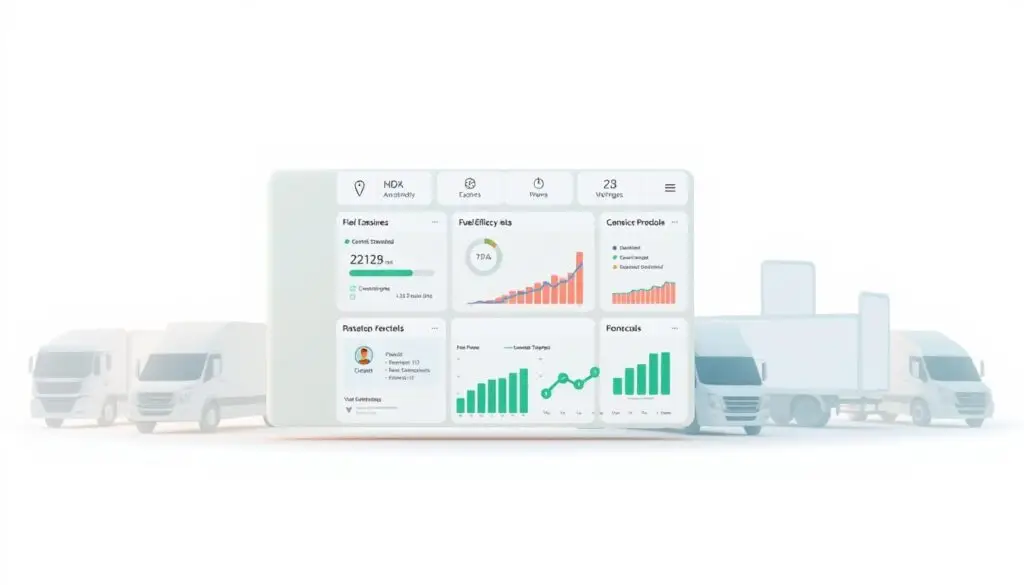
The True Cost of Vehicle Idling for Commercial Fleets
Understanding the full financial impact of idling requires examining direct fuel costs, maintenance acceleration, regulatory exposure, and opportunity costs that compound across fleet operations.
Direct Fuel Consumption and Financial Losses
According to the U.S. Department of Energy, heavy-duty trucks consume approximately 0.8 gallons of diesel per hour while idling. Fleet Owner reports that with accessory loads like air conditioning, consumption can reach one gallon per hour. The EPA states that a typical long-haul truck eliminating unnecessary idling could save over 900 gallons of fuel annually.
$720,000
Annual idling fuel cost for a 100-truck fleet idling 6 hours daily at $4/gallon (North American Council for Freight Efficiency)
For a moderate fleet of 50 trucks where each vehicle idles three hours daily, the math is straightforward: 50 vehicles × 3 hours × 0.8 gallons × $4.00/gallon = $480 daily in pure waste. Over 250 operating days annually, that represents $120,000 in fuel costs generating zero productive return.
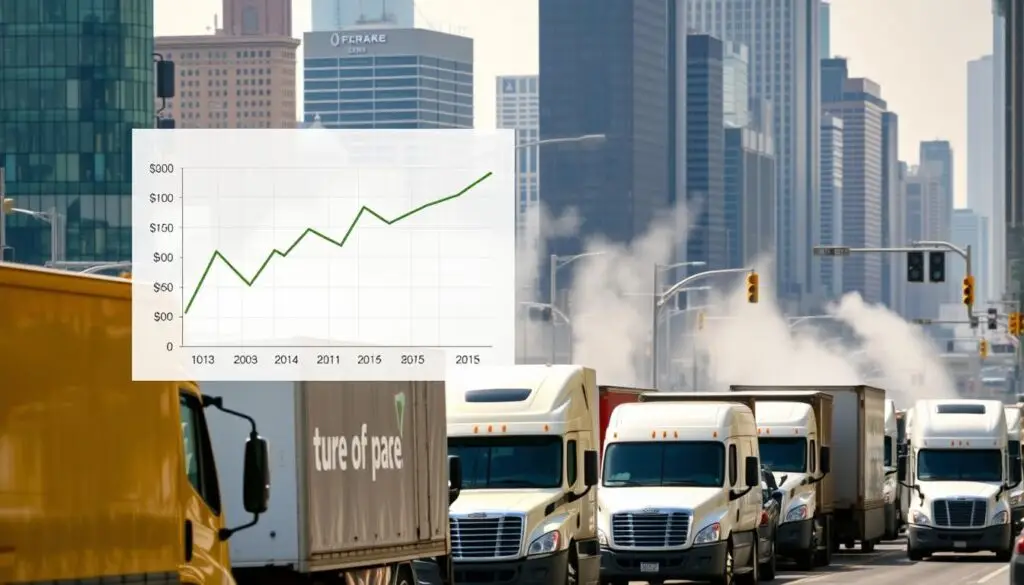
Long-haul operations face even more significant exposure. Sleeper cab drivers who idle overnight for climate control can accumulate 8–10 hours of idling per day. At 1,800 annual idle hours—a figure cited by DOE as typical for long-haul operations—each truck consumes approximately 1,500 gallons of diesel without moving freight.
Accelerated Maintenance and Engine Wear
Idling creates disproportionate engine wear compared to highway operation. The American Trucking Associations reports that one hour of idling equates to three to six hours of highway driving in terms of engine wear. This accelerated wear stems from incomplete fuel combustion at low RPM, inadequate oil circulation, and thermal cycling that stresses components.
Fleet studies document maintenance cost increases of $1,500–$2,000 per vehicle annually when excessive idling persists. Oil change intervals advance because contamination accumulates faster during extended idle periods. Diesel particulate filters require more frequent regeneration cycles when engines spend excessive time at low operating temperatures.
Engine hour accumulation during idling advances service schedules without corresponding revenue miles. A truck idling 2,000 hours annually—equivalent to eight weeks of continuous idling—reaches major service intervals months earlier than necessary, compressing capital utilization and increasing lifetime maintenance expenses.
Regulatory Penalties and Compliance Exposure
Federal, state, and local jurisdictions increasingly enforce idle time restrictions. California’s five-minute limit applies statewide, with municipalities sometimes imposing stricter requirements near schools and hospitals. States including Connecticut, Massachusetts, New York, New Jersey, and Texas have implemented similar restrictions with varying time limits and enforcement mechanisms.
Initial violation penalties typically range from $100–$500 per incident. Repeat offenders face escalating fines that can reach thousands of dollars per violation. Some jurisdictions implement progressive penalty structures where subsequent violations within defined timeframes trigger substantially higher penalties.
Beyond direct fines, regulatory violations can jeopardize contract eligibility. Many government agencies and large private sector customers require documented idle reduction programs as vendor qualification criteria. Fleet operators without certified compliance programs find themselves excluded from competitive bidding processes worth millions in potential revenue.
Environmental and Health Impact of Fleet Idling
Idling vehicles produce concentrated emissions without the benefit of catalytic converter efficiency that occurs during active driving at operating temperature. The pollution output during idle periods includes several compounds with documented health impacts.
Carbon dioxide emissions during idling contribute directly to greenhouse gas accumulation. Each gallon of diesel burned produces approximately 22.4 pounds of CO2. A fleet eliminating 1,500 gallons of annual idle consumption per truck prevents roughly 16.8 tons of CO2 per vehicle from entering the atmosphere.

Nitrogen oxides (NOx) and particulate matter (PM2.5) create localized air quality impacts in freight terminals, distribution centers, and high-traffic corridors. Research documents elevated respiratory condition rates in communities near areas with sustained heavy vehicle idling. Children attending schools near truck routes show particular vulnerability to idle emissions during developmental periods.
| Pollutant | Health Impact | Annual Reduction per Truck (Est.) |
|---|---|---|
| Carbon Dioxide (CO2) | Greenhouse gas, climate impact | 15–20 tons |
| Nitrogen Oxides (NOx) | Ground-level ozone, respiratory issues | 30–50 pounds |
| Particulate Matter (PM2.5) | Respiratory penetration, cardiovascular | 2–4 pounds |
| Carbon Monoxide (CO) | Oxygen delivery reduction | 100–150 pounds |
Regional air quality programs leverage fleet idle reduction as a strategy for ozone non-attainment compliance. The DFW Clean Fleet Policy explicitly aims to help the region work toward attainment of federal ozone standards. Certified fleets contribute directly to these regional environmental objectives while positioning themselves as responsible community partners.
State-by-State Anti-Idling Regulations
Fleet operators must navigate a patchwork of state and local regulations that vary significantly by jurisdiction. The variation in idle time limits, exemptions, and enforcement mechanisms requires careful compliance planning for fleets operating across multiple states.

States with Five-Minute Idle Limits
California maintains the most comprehensive idle reduction regulations, imposing a five-minute limit for commercial vehicles in most circumstances with additional restrictions near schools and residential areas. Model Year 2008 and newer heavy-duty diesel engines must incorporate automatic shutdown systems unless certified to the optional NOx idling standard.
Other states with five-minute limits include Maine, Maryland, Massachusetts, New Hampshire, New York, Oregon, Pennsylvania, Rhode Island, Texas, and Utah. Each state implements specific exemptions and enforcement variations that require review of local requirements.
States with Three-Minute Limits
Connecticut enforces a three-minute general idling limit for most vehicles, applying statewide to commercial trucks, buses, and passenger vehicles. This stricter standard requires fleet operators to adjust policies and driver training when operating in Connecticut versus neighboring states with five-minute limits.
Common Exemptions Across Jurisdictions
Most anti-idling regulations include standard exemptions recognizing legitimate operational needs. Traffic conditions requiring stops at traffic control devices typically qualify as exempt. Engine operation required for vehicle inspection, repair, or maintenance also falls outside idle restrictions in most jurisdictions.
Adverse weather conditions allowing limited idling for heating or cooling when temperatures reach extreme levels represent another common exemption. Power take-off operations where idling is necessary for auxiliary equipment like refrigeration units or lift gates generally qualify for exemption as well.
Understanding exemptions is crucial for determining when idling remains legitimately necessary. However, exemptions should not become justifications for excessive idling that proper planning or technology investment could eliminate.
Stay Current on Fleet Regulations
Anti-idling regulations evolve as states strengthen air quality standards. Heavy Duty Journal covers regulatory changes that impact fleet operations across all jurisdictions.
Implementing an Effective Fleet Idle Reduction Program
Transforming idling behavior across fleet operations requires a systematic approach combining baseline measurement, policy development, driver engagement, and technology deployment. The most successful programs address all four elements simultaneously rather than relying on any single intervention.

Establishing Baseline Measurements and Targets
Effective idle reduction programs begin with comprehensive baseline data collection over 30–90 days before implementing changes. This timeframe accounts for seasonal variations and operational cycles that affect idling patterns. Track current idle time per vehicle, fuel consumption attributable to idling, and associated maintenance impacts.
Argonne National Laboratory provides an Idle Reduction Savings Calculator that helps fleet managers quantify potential savings based on specific operational parameters. Input baseline data to generate customized projections aligned with actual fleet characteristics.
Set specific, measurable goals rather than vague intentions. Target objectives might include reducing average idle time by 50% within 12 months, achieving fleet-wide idle time below 5% of total engine hours, or decreasing fuel costs by $500 per vehicle annually through idle reduction.
Developing Written Policies and Standard Operating Procedures
Written policies eliminate ambiguity about acceptable idling behavior. The NCTCOG Clean Fleet Policy program provides templates that address essential policy elements. Effective documentation specifies maximum allowable idle times for different scenarios, defines legitimate exemptions, establishes enforcement mechanisms, and outlines recognition programs for exemplary compliance.
Comprehensive idle reduction policies should address maximum allowable idle time (typically five minutes for vehicle warm-up and three minutes for non-operational idling), defined exceptions including extreme weather conditions and safety requirements, violation consequences following progressive discipline procedures, and recognition programs that reward consistent compliance.
Policy communication determines adoption rates. Distribute policies through multiple channels including employee handbooks, posted notices, and safety meeting discussions. Require formal acknowledgment through driver signatures documenting understanding and commitment.
Driver Training and Behavioral Change
Driver behavior represents the most critical factor in achieving meaningful idle reduction. Initial training establishes the foundation by educating operators about both financial implications and environmental impact. Most drivers remain unaware that each hour of idling consumes approximately one gallon of fuel and generates unnecessary component wear.
The EPA SmartWay program offers SmartDriver for Highway Trucking, a free driver training program proven to improve fuel efficiency by up to 35%. The course addresses idling along with other energy-management factors within driver control.
Ongoing reinforcement maintains behavioral changes over time. Regular safety meetings provide opportunities to revisit idle reduction principles and share success stories. Performance feedback through one-on-one coaching helps drivers understand individual impact. Recognition programs celebrating top performers create positive motivation throughout the organization.
Technology Integration and Monitoring
Telematics systems transform idle reduction from subjective observation to objective measurement. Modern fleet management platforms capture comprehensive data about engine operation, vehicle location, and driver behavior. These systems identify specific locations where excessive idling occurs most frequently, revealing operational inefficiencies that training alone might never uncover.
Automated reporting dashboards compile raw data into actionable insights. Weekly or monthly reports showing trends over time enable comparison across different drivers, routes, or vehicle types. Real-time alerts notify supervisors when vehicles exceed established idling thresholds, enabling rapid response while incidents remain fresh.
The transformation from punitive enforcement to developmental coaching represents the most valuable benefit of technology integration. Detailed data enables understanding of circumstances leading to excessive idling rather than simply citing violations. This context allows targeted training addressing root causes rather than symptoms.
Idle Reduction Technologies and Equipment Options
Fleet operators have access to multiple technology categories designed to reduce or eliminate vehicle idling while maintaining driver comfort and operational capability.
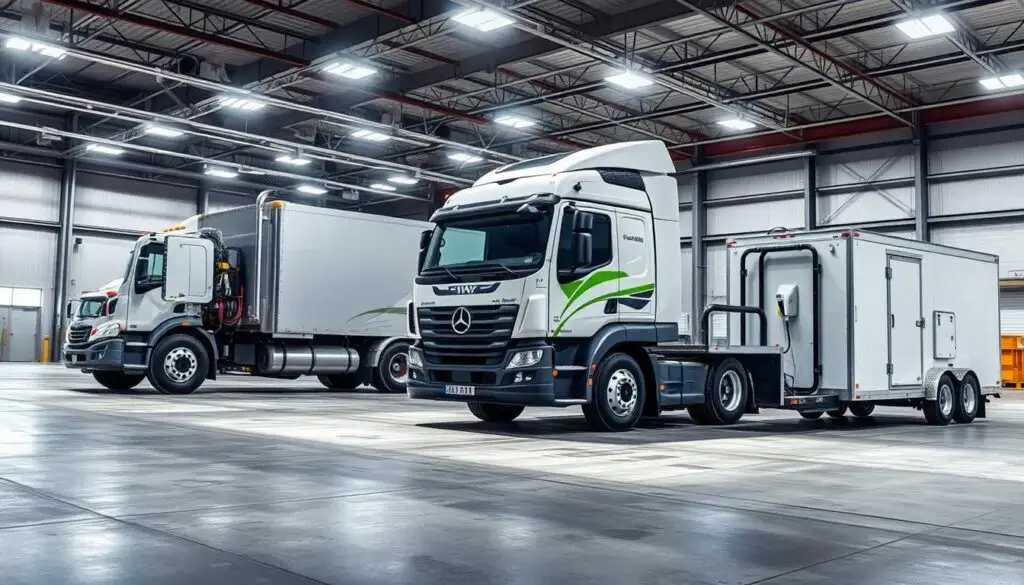
Auxiliary Power Units (APUs)
Diesel-powered auxiliary power units provide independent power for heating, cooling, and electrical needs without main engine operation. APUs consume approximately 0.2 gallons per hour compared to 0.8–1.0 gallons when idling the main engine. For long-haul sleeper cab operations, this 75–80% fuel reduction during rest periods delivers substantial annual savings.
Battery-based APU systems eliminate fuel consumption entirely during operation, recharging through shore power connections at terminals or through vehicle charging systems during highway operation. While requiring higher initial investment, electric APUs provide extended runtime with zero idle-period fuel expense.
APU payback periods typically range from 18–36 months for long-haul applications depending on annual idle hours eliminated. The technology proves most valuable for operations involving extended overnight idling where climate control requirements would otherwise necessitate main engine operation for 6–10 hours daily.
Automatic Engine Shutdown Systems
Programmable engine shutdown systems eliminate human discretion from idle management decisions. These systems automatically shut down engines after preset idle periods—typically 3–5 minutes depending on operational requirements and environmental conditions. Override capabilities address legitimate needs such as extreme weather, PTO operation, or specific customer requirements.
Automatic shutdown proves particularly valuable in mixed fleets where driver compliance varies significantly. The equipment enforces idle reduction policies consistently across all vehicles and operators regardless of individual attitudes toward idling restrictions.
Implementation costs ranging from $300–$800 per vehicle typically pay back within 6–12 months through fuel savings alone. Integration with telematics platforms provides documentation for certification programs without manual data compilation.
Battery HVAC and Climate Control Systems
Standalone battery systems provide several hours of climate control during extended stops without engine operation. These systems integrate with high-capacity battery banks recharging through shore power connections at company terminals or customer locations.
Applications extend beyond sleeper cabs to include delivery vehicles, service trucks, and municipal fleet vehicles where operators spend extended periods in cabs. Urban delivery fleets operating in jurisdictions with strict idling restrictions find battery HVAC systems essential for maintaining comfortable working conditions while achieving full regulatory compliance.
| Technology | Typical Cost | Fuel Savings | Payback Period |
|---|---|---|---|
| Diesel APU | $8,000–$12,000 | 75–80% reduction | 18–36 months |
| Battery HVAC | $2,000–$5,000 | 100% idle elimination | 12–24 months |
| Auto Shutdown System | $300–$800 | 60–70% reduction | 6–12 months |
| Telematics Monitoring | $200–$500 + monthly | 40–50% reduction | 12–24 months |
The HDJ Perspective
Idle reduction represents rare territory in fleet management—an operational improvement where environmental benefits and financial returns align perfectly. The technology has matured to the point where APU payback periods compete favorably with other capital investments, while behavioral programs requiring minimal capital deliver immediate returns. Fleet operators still debating whether to implement idle reduction programs are effectively choosing to burn money while generating emissions that accomplish nothing. The question isn’t whether to pursue idle reduction but which combination of policy, training, and technology delivers optimal results for your specific operation.
Financial Benefits and ROI Analysis
Calculating return on investment for idle reduction requires examining both immediate fuel savings and longer-term benefits including maintenance cost reductions, insurance advantages, and incentive program eligibility.

Direct Fuel Cost Savings
A long-haul truck reducing idling by 1,000 hours annually saves approximately 800–1,000 gallons of diesel fuel. At $4.00 per gallon, this translates to $3,200–$4,000 in direct annual fuel savings per vehicle. Fleets achieving 50–60% idle time reductions consistently report savings within these ranges.
The EPA SmartWay Idle Reduction page confirms that typical long-haul combination trucks eliminating unnecessary idling save over 900 gallons annually. For fleet-wide calculations, multiply per-vehicle savings across the operation. A 50-truck fleet achieving average idle reductions could realize $160,000–$200,000 in annual fuel savings.
Maintenance and Longevity Benefits
Reduced idling directly decreases engine hours without productive work, creating maintenance cost advantages. Industry data suggests maintenance cost reductions of 2–3% following implementation of comprehensive idle reduction programs. For heavy-duty trucks with annual maintenance budgets of $15,000–$20,000, this represents $300–$600 per vehicle annually.
Extended oil change intervals, reduced turbocharger wear from minimized low-load operation, and decreased DPF regeneration frequency contribute to these savings. Vehicle service life extends when idle time decreases significantly, delaying capital replacement expenses and improving asset utilization metrics.
Insurance and Incentive Program Benefits
Insurance providers increasingly recognize that systematic idle reduction indicates professional fleet operations and proactive risk management culture. Certified clean fleet programs can qualify operators for premium reductions through demonstrated commitment to operational discipline and environmental responsibility.
Government incentive programs provide additional financial benefits for certified operators. The DFW Clean Fleet Policy explicitly includes eligibility to apply for clean vehicle funding made available by the Regional Transportation Council. State and federal programs offer various incentive structures including direct rebates, tax credits, and expedited permitting for certified operators.
Investment Payback Timeline
Policy-based programs with minimal technology investment typically achieve positive ROI within 3–6 months. The relatively low cost of developing written policies and conducting driver training combined with immediate fuel savings creates rapid investment recovery. These quick returns make behavioral change initiatives highly attractive for immediate cost reduction.
Moderate technology investments like automatic shutdown systems generally pay back within 6–12 months. The $300–$800 equipment cost combines with immediate fuel savings to create affordable implementation with reasonable recovery periods.
APU investments for long-haul sleeper cab operations require 18–36 months for payback depending on annual idle hours eliminated. While requiring longer recovery periods, APUs deliver the highest per-vehicle savings and provide driver comfort benefits supporting retention in competitive labor markets.
Share Your Idle Reduction Experience
Fleet managers and technicians implementing idle reduction programs develop valuable operational insights. HDJ welcomes contributions from industry practitioners sharing real-world implementation experience.
Grants and Funding Opportunities for Idle Reduction
Multiple funding sources can offset implementation costs by 25–80% depending on fleet type, geographic location, and technology selection. Strategic combination of federal, state, and utility programs maximizes available support.
Federal Funding Programs
The EPA administers the Diesel Emissions Reduction Act (DERA) program, providing competitive grants and rebates for idle reduction technology installation. DERA funding typically covers 25–45% of eligible project costs for private fleets, with public and nonprofit fleets potentially receiving up to 80% cost coverage.
Clean Cities coalitions operating under the U.S. Department of Energy framework offer cost-share opportunities for efficiency improvements including idle reduction systems. Regional coordinators help fleets navigate application processes and identify complementary funding sources that can be combined for maximum cost offset.
State and Regional Programs
California’s Carl Moyer Program and Proposition 1B funding support emission reduction projects including idle reduction technology in designated air quality management districts. The Texas Emissions Reduction Plan (TERP) offers significant funding for fleets operating in designated counties, having supported thousands of idle reduction installations across the state.
Regional programs like NCTCOG’s clean vehicle funding provide eligibility advantages for policy adopters. The Clean Fleet Policy participation directly creates qualification for regional transportation funding that non-participating fleets cannot access.
Utility and Private Sector Support
Electric utilities provide electrification incentives supporting truck stop electrification infrastructure and shore power systems. These programs enable connection systems that eliminate idling needs entirely at equipped facilities. Utility rebates can cover substantial portions of infrastructure installation costs at fleet terminals.
Corporate sustainability funds from major shippers and retailers increasingly support carrier idle reduction programs. Large companies recognize that supply chain emissions impact their environmental footprints and offer financial assistance to transportation partners implementing emission reduction technologies.
Frequently Asked Questions
How much fuel does a semi-truck burn while idling?
Heavy-duty diesel trucks typically consume 0.8–1.0 gallons of diesel fuel per hour while idling, depending on engine size, accessory loads, and ambient conditions. With air conditioning running in summer months, consumption trends toward the higher end of this range. The U.S. Department of Energy reports that typical long-haul trucks idle approximately 1,800 hours annually, consuming about 1,500 gallons of diesel without productive movement. At current diesel prices, this represents $5,000–$6,000 in annual fuel costs per vehicle for idling alone.
What is a clean idle certification sticker?
The “Certified Clean Idle” sticker indicates that a heavy-duty diesel engine has been certified to California Air Resources Board optional NOx idling emission standards of 30 grams per hour. Vehicles displaying this certification are exempt from mandatory engine shutdown requirements in California and other states honoring CARB certification. The sticker must be permanently affixed to the driver’s side door and cannot be transferred between vehicles. Engine manufacturers provide these stickers with qualifying engines as required by federal regulations in 40 CFR 1036.136.
Which states have anti-idling laws for commercial trucks?
Most states with anti-idling regulations impose limits of 3–5 minutes for commercial vehicles. California, Maine, Maryland, Massachusetts, New Hampshire, New York, Oregon, Pennsylvania, Rhode Island, Texas, and Utah maintain five-minute limits. Connecticut enforces a stricter three-minute limit statewide. Many municipalities impose additional restrictions, particularly near schools, hospitals, and residential areas. Fleet operators should consult the American Transportation Research Institute’s Idling Compendium for comprehensive jurisdiction-by-jurisdiction requirements.
How long does it take for APU investments to pay back?
Diesel auxiliary power units typically achieve payback within 18–36 months for long-haul operations where overnight idling would otherwise occur. The calculation depends on annual idle hours eliminated, fuel prices, and equipment costs. A driver idling 1,800 hours annually would consume approximately 1,500 gallons of diesel. An APU consuming 0.2 gallons per hour for the same period uses only 360 gallons—saving 1,140 gallons annually. At $4.00 per gallon, annual savings of $4,560 recover an $8,000–$10,000 APU investment within two years.
Can idle reduction programs qualify for government grants?
Yes, multiple federal and state programs provide funding for idle reduction technology installation. The EPA’s Diesel Emissions Reduction Act (DERA) program offers grants covering 25–45% of costs for private fleets and up to 80% for public fleets. State programs like the Texas Emissions Reduction Plan (TERP) and California’s Carl Moyer Program provide additional support. Regional Clean Cities coalitions offer cost-sharing opportunities, and utilities often provide rebates for electrification infrastructure. Strategic combination of multiple funding sources can reduce net implementation costs by 50–80%.
Taking Action on Fleet Idle Reduction
Fleet idle reduction programs deliver measurable financial returns while advancing environmental responsibility and regulatory compliance. The convergence of fuel savings, maintenance benefits, and incentive eligibility creates compelling economics that justify implementation regardless of fleet size or operating profile.
The implementation path is clear: establish baseline measurements, develop written policies, train drivers on behavioral expectations, deploy appropriate technology, and participate in certification programs providing recognition and funding access. Resources including EPA SmartWay, regional Clean Cities coalitions, and organizations like NCTCOG offer proven frameworks, templates, and technical assistance that eliminate the need for fleets to develop programs from scratch.
Fleet operators who embrace idle reduction gain competitive advantages through lower operating costs, enhanced environmental credentials, and stronger positioning for contracts requiring demonstrated sustainability commitments. The technology has matured, the funding is available, and the return on investment is documented. The only remaining question is when you begin.
Share This Guide With Your Team
Fleet managers, maintenance supervisors, and operations teams all play roles in successful idle reduction implementation. Share this resource with colleagues responsible for fuel costs, compliance, and driver performance.


