
By Michael Nielsen, Editor & Publisher | 15+ Years in Diesel Repair
Last Updated: December 2025
📖 Estimated reading time: 22 minutes
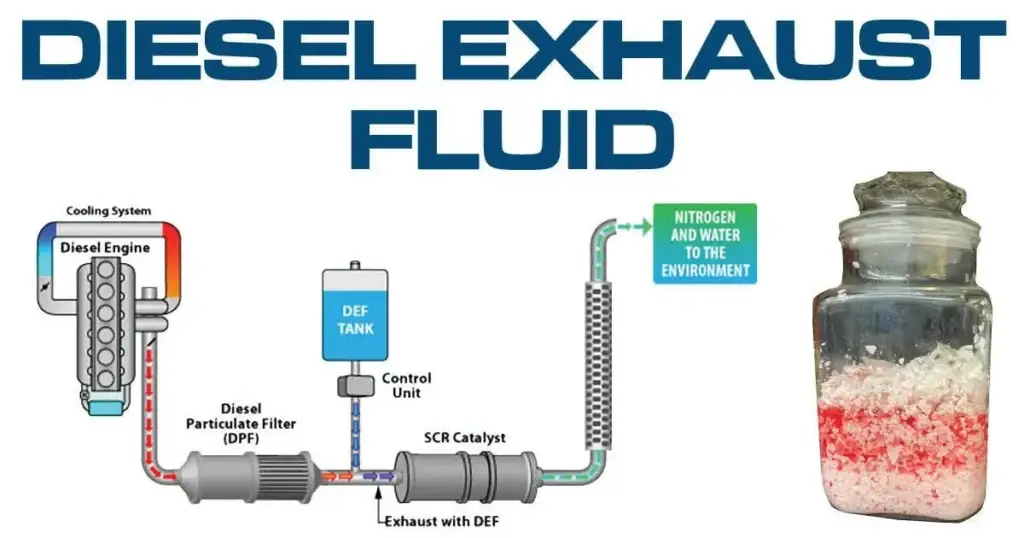
Modern diesel engines equipped with Tier 4 emission standards depend on a precise chemical solution to meet environmental regulations. Diesel exhaust fluid—a carefully blended mixture of 32.5% high-purity urea and 67.5% deionized water—works with selective catalytic reduction technology to slash harmful nitrogen oxide emissions by up to 90%.
When DEF contamination occurs, the consequences hit fleet operations hard and fast. SCR system damage from poor-quality diesel exhaust fluid ranks among the most expensive and preventable failures in construction equipment, commercial trucks, and agricultural machinery. Even minor contamination can trigger equipment failures costing $10,000 or more in repairs, void manufacturer warranties, and create extended downtime that compounds productivity losses.
The solution quality matters because contaminated DEF doesn’t just reduce emission control effectiveness—it actively destroys precision components that your equipment depends on. Understanding how contamination occurs, recognizing early warning signs, and implementing proper handling procedures protects your investment and keeps your fleet operational.
Key Takeaways
- DEF purity is non-negotiable: The 32.5% urea and 67.5% deionized water formula must meet ISO 22241 standards for proper SCR function—even small deviations cause system failures.
- Repair costs escalate quickly: Contaminated DEF can destroy SCR catalysts ($3,000-$15,000+), damage injectors and pumps ($500-$2,100 each), and void warranties entirely.
- Prevention pays dividends: A $2,000-$6,500 contamination prevention program can prevent a single incident that costs $20,000-$50,000 when DEF enters the fuel system.
- API certification matters: Always purchase API-certified DEF from reputable suppliers and request Certificates of Analysis for every shipment.
- Storage conditions are critical: Use only approved stainless steel or HDPE containers, maintain temperatures between 12°F and 86°F, and never reuse containers from other fluids.
- Early detection saves money: Dashboard warnings, diagnostic codes, and visual inspections can identify contamination before catastrophic damage occurs.
Understanding DEF and Its Role in SCR Emission Control
To understand contamination problems, you need to grasp how diesel exhaust fluid functions within emission control systems. Modern diesel engines depend on this specialized solution to reduce harmful emissions and comply with EPA regulations. The relationship between fluid quality and system performance creates a delicate balance that contamination easily disrupts.
Diesel exhaust fluid works alongside selective catalytic reduction technology to transform dangerous pollutants into harmless substances. This partnership has become essential for heavy-duty vehicles operating across the United States since EPA mandated SCR systems starting with the 2010 model year. Any compromise in fluid purity triggers a cascade of mechanical failures and emission violations.
Chemical Composition and the NOx Reduction Process
DEF consists of a precisely measured blend of 32.5% high-purity urea and 67.5% deionized water. This exact formulation isn’t arbitrary—the chemical balance ensures optimal reaction efficiency when the solution enters the exhaust stream.
The fluid gets injected directly into the exhaust system upstream of the SCR catalyst. As hot exhaust gases contact the DEF spray, the solution undergoes thermal decomposition, breaking down the urea into ammonia and carbon dioxide. The ammonia then reacts with nitrogen oxides in the presence of the SCR catalyst, converting harmful NOx emissions into harmless nitrogen gas and water vapor.
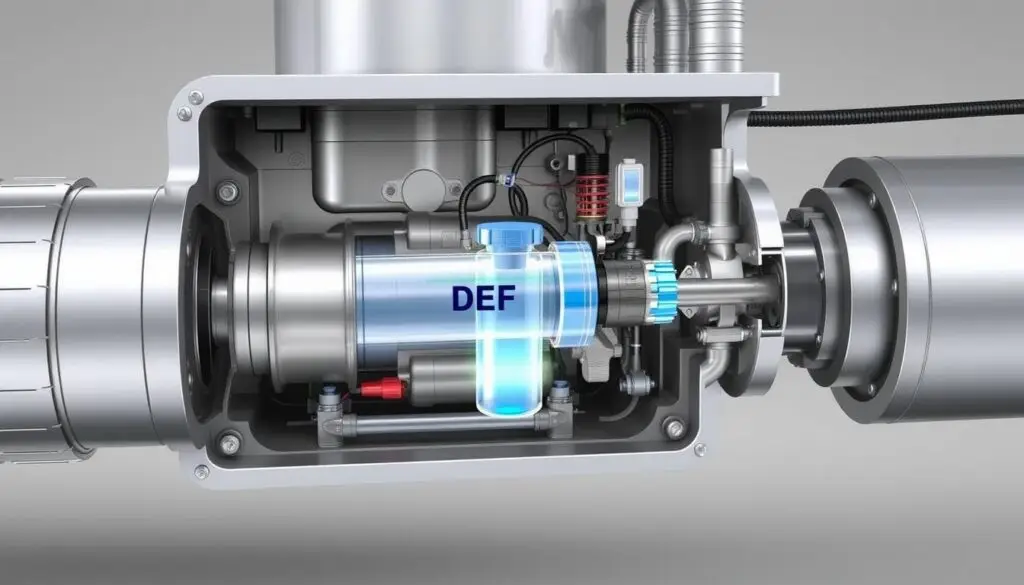
The DEF urea concentration must remain within tight tolerances for this process to work effectively. Even small deviations from the 32.5% target reduce conversion efficiency. Too little urea means insufficient ammonia for complete NOx reduction, while excess urea causes ammonia slip through the catalyst—both scenarios trigger warning systems and potential derate conditions.
ISO 22241 Quality Standards and Purity Specifications
The ISO 22241 standards governing diesel exhaust fluid quality establish strict guidelines for DEF purity worldwide. These international specifications ensure consistent performance across all emission control systems. Manufacturers design SCR components to function only with fluid meeting these precise requirements.
The acceptable DEF urea concentration range spans from 31.8% to 33.2%, with a target of exactly 32.5%. This narrow window maintains the stoichiometric ratio needed for optimal NOx conversion. Quality testing laboratories use refractometers to verify concentration levels in fluid samples.
Cleanliness standards form another critical aspect of ISO 22241. The specification limits insoluble matter to less than 20 parts per million and requires ISO particle count ratings of 18/16/13 or lower. Additional parameters include alkalinity, metals content, aldehydes, and biuret levels—each element affects system performance if present above specified limits.
Common Types of DEF Contamination
DEF quality can be compromised by four primary contamination categories that systematically damage emission control components. Each contamination type affects the SCR system differently and requires specific identification methods. Understanding these categories helps operators recognize problems before expensive repairs become necessary.
DEF tank contamination occurs more frequently than many fleet managers realize. The clear, odorless fluid can hide multiple contamination sources until symptoms appear. Recognizing the warning signs early prevents catastrophic system failures.
Chemical Contaminants: Fuel, Oil, and Coolant
Chemical adulterants represent the most devastating form of contamination. Diesel fuel contamination happens when operators mistakenly add fuel to the DEF tank due to proximity of fill ports. Even small amounts create immediate problems—as little as 1% diesel fuel concentration can trigger system malfunctions.
The molecular structure of diesel fuel prevents proper atomization in the DEF injector, leading to incomplete reaction in the SCR catalyst and eventual component failure. Coolant contamination enters through leaks in DEF cooler systems or cross-contamination during maintenance. Glycol-based coolants contain additives that poison the SCR catalyst permanently—the chemical reaction between coolant and the catalyst substrate creates irreversible damage.
Engine oil or hydraulic fluid contamination typically occurs when shared equipment transfers fluids. Oil forms a separate layer on top of the DEF due to density differences. When the DEF pump draws this contaminated mixture, oil coats injector components and prevents proper spray patterns.
⚠️ Safety Warning
Never attempt to dilute or “fix” contaminated DEF by adding fresh fluid. Contamination spreads throughout the entire system and must be completely drained and flushed. Operating with contaminated DEF accelerates damage exponentially.
Particulate Matter and Sediment Contamination
Particulate contamination includes dirt, dust, and debris that enters during refueling operations. These solid particles act as abrasives throughout the DEF system. The DEF pump contains precision-machined components with tight tolerances that abrasive particles quickly damage.
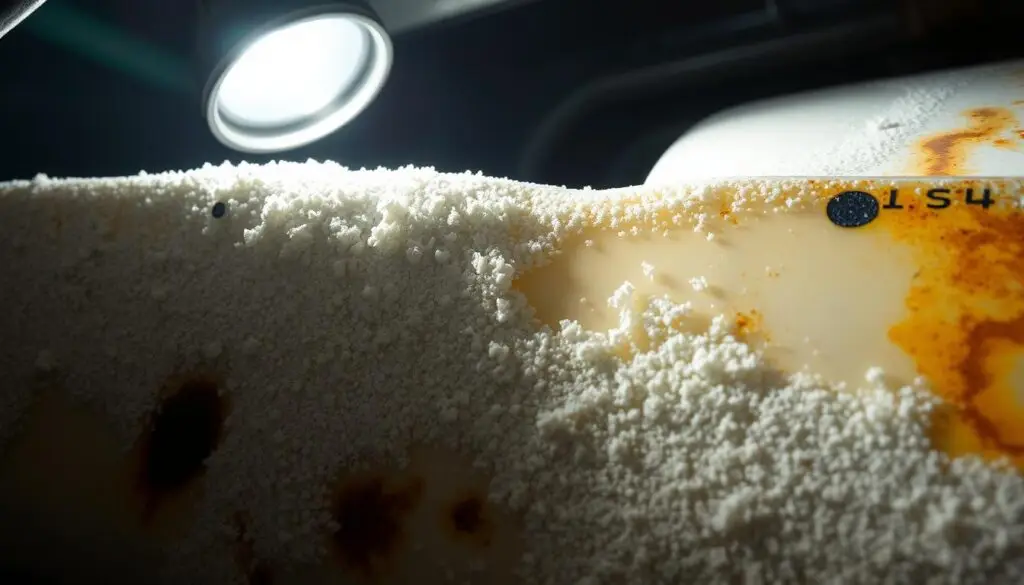
Sediment accumulation begins when the fill cap area isn’t cleaned before opening. Wind-blown dirt settles into the tank opening within seconds. A single contaminated refueling event can introduce enough particles to damage system components. Tank scale from improper storage represents another sediment source—when DEF crystallizes from temperature extremes, dissolved solids precipitate out and remain as suspended particles.
Metallic Contamination from Storage Equipment
Metallic contaminants originate from inappropriate storage container materials. DEF’s corrosive nature requires specific storage materials to maintain purity. Non-approved metals react with urea and introduce dissolved metal ions into the fluid.
Rust contamination occurs when carbon steel containers store DEF for extended periods. Iron oxide particles create a reddish-brown discoloration and abrasive sediment. Zinc, copper, and brass containers introduce metallic contaminants that poison the SCR catalyst—these metals bind to active catalyst sites and prevent NOx reduction reactions. Even trace amounts measured in parts per million cause permanent catalyst degradation.
Biological Growth and Algae Formation
Biological contamination develops when microorganisms colonize DEF storage tanks. Algae formation occurs when water contamination combines with warm temperatures and sunlight exposure. Bacterial growth thrives in DEF tanks with moisture contamination, metabolizing urea and producing ammonia gas and organic byproducts that alter DEF chemistry and clog filters.
Fresh DEF remains crystal clear without any odor. Cloudy fluid with musty or ammonia-like smells indicates bacterial activity. Visible stringy material or colored particles confirm biological growth requiring immediate attention.
| Contamination Type | Primary Sources | Visual Indicators | System Damage |
|---|---|---|---|
| Chemical (Fuel/Oil/Coolant) | Misfueling, leaks, cross-contamination | Rainbow sheen, coloring, petroleum odor | Catalyst poisoning, injector failure |
| Particulate Matter | Dirty fill areas, improper storage | Cloudiness, visible particles, settling | Pump abrasion, injector clogging |
| Metallic Contaminants | Non-approved containers, rust, tank scale | Brown/gray discoloration, metallic particles | Catalyst deactivation, pump wear |
| Biological Growth | Water contamination, warm temperatures | Green/brown color, cloudiness, musty smell | Filter clogging, chemical degradation |
How DEF Gets Contaminated During Storage and Handling
The path from pure DEF to contaminated product often begins long before the fluid reaches your vehicle’s SCR system. Understanding where and how contamination occurs helps fleet managers implement effective prevention strategies. Most DEF storage problems result from inadequate protocols rather than product defects.
Storage Container Materials and Location Requirements
The container holding your diesel exhaust fluid matters more than most people realize. DEF reacts chemically with certain metals and materials, creating contamination that damages SCR systems. Only specific materials maintain fluid purity over time.
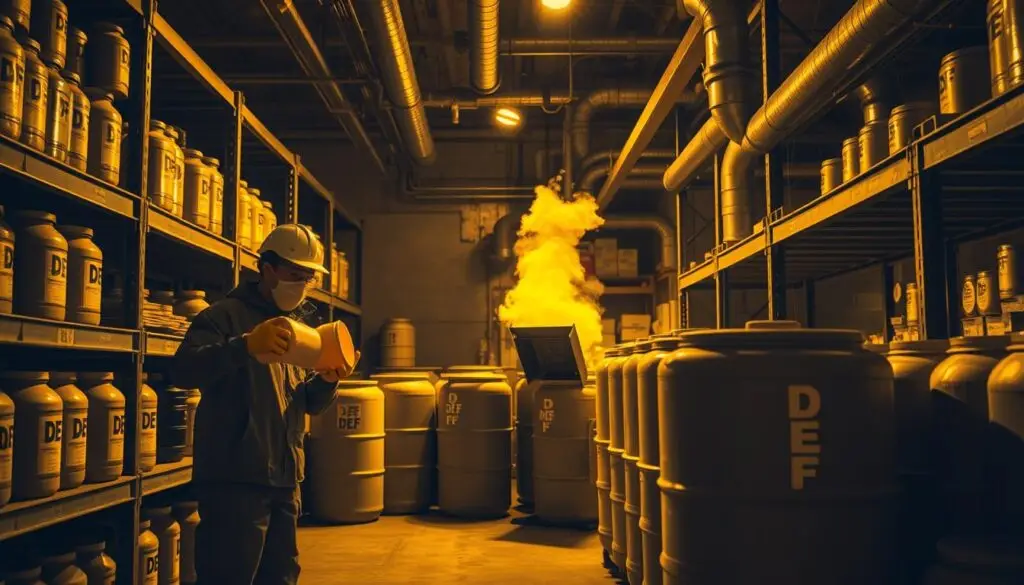
Approved storage containers include stainless steel and dedicated high-density polyethylene (HDPE) plastic totes. These materials resist chemical reactions with the urea solution. Never store DEF in aluminum, copper, brass, galvanized steel, or carbon steel containers—each introduces harmful contamination. Reusing containers from other fluids poses serious risks even after thorough cleaning, as residual chemicals can react with DEF.
Temperature Extremes and Crystallization Issues
Temperature control plays a critical role in maintaining DEF quality during storage. The ideal storage range spans between 12°F and 86°F. Store DEF in a cool, dry location away from direct sunlight.
DEF freezes at temperatures below 12°F (-11°C). When freezing occurs, the solution expands by approximately 7%, potentially rupturing rigid containers. The freezing process itself doesn’t necessarily damage DEF quality—the fluid returns to normal composition after thawing. However, repeated freeze-thaw cycles stress containers and degrade seals.
High temperature exposure above 86°F creates different problems. Heat accelerates urea breakdown and water evaporation, altering the chemical balance and leading to crystallization when concentration becomes unbalanced. These crystals clog injectors and pumps, creating system failures.
Cross-Contamination at Refueling Stations
Refueling operations introduce numerous contamination opportunities. Dirt around the fill cap area easily enters the tank during refueling—clean the surrounding area before opening. Use dedicated DEF dispensing nozzles that have never contacted diesel fuel, and inspect nozzles for contamination before each use.
Shared equipment between diesel fuel and DEF creates disaster. Even trace amounts of diesel fuel contaminate entire DEF tanks. Color-coded systems help prevent mistakes—blue dispensing equipment universally indicates DEF in the United States.
Stay Ahead of DEF System Issues
Get expert insights on diesel maintenance, emission system care, and fleet management best practices delivered to your inbox. Join thousands of fleet professionals who rely on HDJ for actionable technical guidance.
The Science Behind SCR System Damage from Contaminated DEF
Understanding the technical mechanisms behind SCR system damage requires examining how contaminants interact with catalysts, sensors, and injection components. When contaminated DEF enters the emission control system, it doesn’t simply reduce efficiency—it initiates specific degradation processes that can permanently destroy expensive components.
Catalyst Poisoning from Chemical Contaminants
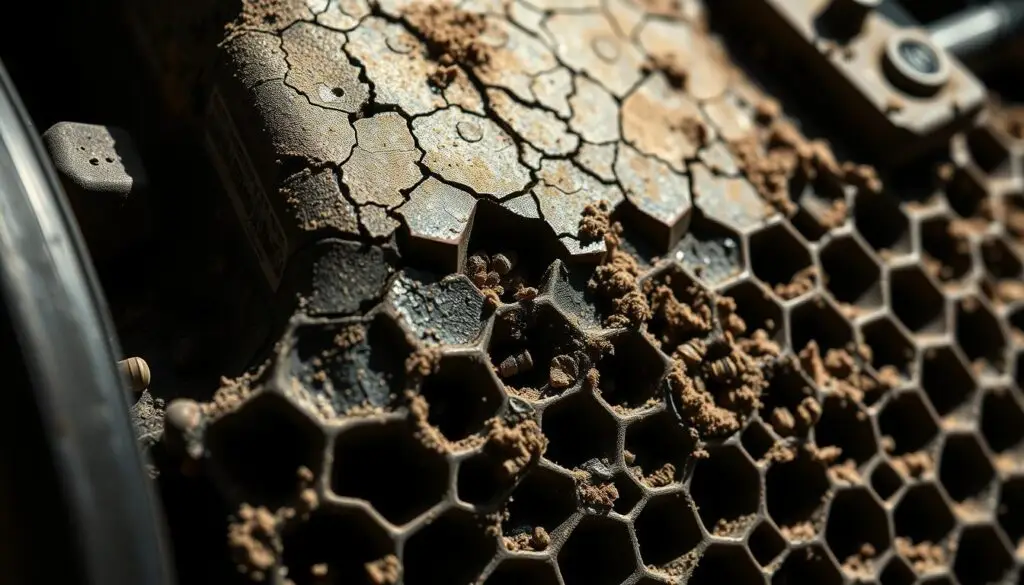
SCR catalyst failure occurs when chemical contaminants coat the catalyst surface and block critical reaction sites. The catalyst relies on precise chemical reactions between ammonia and nitrogen oxides to reduce harmful emissions. When contaminants interfere, the catalyst loses its ability to convert NOx effectively.
Metallic contaminants represent one of the most destructive forms of catalyst poisoning. Metals like sodium, potassium, calcium, and zinc deposit on the catalyst surface, permanently altering its chemical structure. Phosphorus compounds from engine oils create another severe poisoning mechanism—even small amounts bond with catalyst material in an irreversible process that progressively reduces efficiency.
Injection System Failures and Mechanical Wear
DEF injector clogging represents one of the most common failure modes in contaminated systems. The DEF injector operates with extremely tight tolerances, typically measured in microns. Particulate contamination quickly compromises these precision components.
Abrasive particles suspended in contaminated DEF act like sandpaper on pump components. The DEF pump moves fluid at high pressure through narrow passages—when particles enter these passages, they create wear patterns that reduce pump pressure and flow rate. Crystallized deposits accumulate at the injector nozzle, gradually restricting flow until complete blockage occurs.
Sensor Malfunctions and Control System Errors
NOx sensor damage disrupts the entire emission control strategy. The NOx sensors measure nitrogen oxide levels both upstream and downstream of the SCR catalyst, and the engine control module uses these measurements to calculate proper DEF dosing rates.
Contaminants coat sensor elements and interfere with accurate readings. Inaccurate sensor data creates a cascade of problems—the control module may inject too much or too little DEF. Under-dosing leads to excessive NOx emissions, while over-dosing accelerates crystallization problems. Prolonged exposure to contaminants can permanently damage sensor elements, requiring replacement.
Crystallization Processes and Flow Restrictions
Urea crystallization occurs through several distinct mechanisms that block critical system passages. Over-dosing creates the most common scenario—when too much DEF enters the exhaust system, not all of it fully hydrolyzes into ammonia, forming crystallized deposits.
Hard water contamination leads to scale formation. Topping up your DEF system with hard water introduces minerals that precipitate as solid deposits. Water evaporation shifts the urea-to-water ratio, triggering crystal formation when the concentrated solution contacts heat. Complete blockages can occur in exhaust passages, injector nozzles, and DEF supply lines.
| Contaminant Type | Primary Damage Mechanism | Affected Components | Reversibility |
|---|---|---|---|
| Metallic Elements | Catalyst surface poisoning | SCR catalyst substrate | Permanent—replacement required |
| Particulate Matter | Abrasive wear on precision surfaces | DEF pump, injectors, supply lines | Component replacement needed |
| Fuel/Oil/Coolant | Chemical corrosion and seal degradation | Injection system, tank, sensors | Flushing may help; often requires parts |
| Improper Urea Ratio | Crystal formation and flow restriction | Injector nozzles, exhaust passages | Cleaning possible if caught early |
Warning Signs Your Vehicle Has Contaminated DEF
Recognizing contamination symptoms before catastrophic failure is critical for fleet managers and owner-operators. Modern diesel engines provide several warning mechanisms that alert drivers when DEF quality becomes compromised. Understanding these signals allows immediate action to prevent expensive repairs.
Dashboard Warning Indicators and Alert Systems
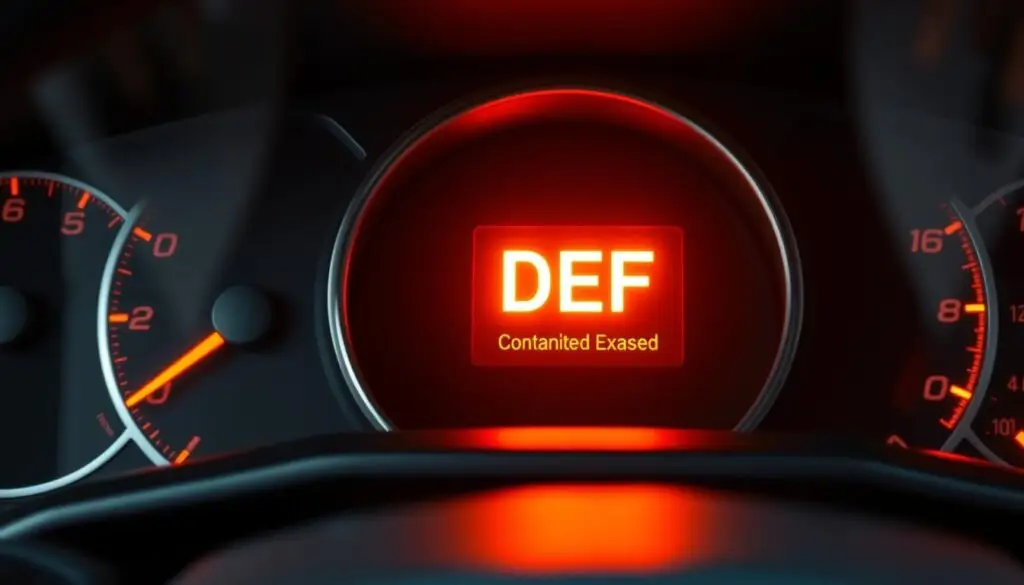
The DEF warning light typically appears as an amber or yellow indicator on your dashboard. This light generally signals low fluid levels, but it can also indicate quality problems or system malfunctions. When contaminated DEF enters the system, this warning often illuminates alongside other indicators.
The check engine light represents a more serious concern, activating when the engine control module detects emissions-related problems. Many modern trucks feature a dedicated SCR warning light separate from the standard check engine light, specifically addressing selective catalytic reduction system issues.
Progressive warning systems escalate in severity as contamination worsens. Initial warnings may appear as informational messages like “DEF Quality Poor” or “Service SCR System Soon.” Addressing problems at this stage prevents more serious consequences.
Diagnostic Trouble Codes Indicating DEF Quality Problems
Professional diagnostic scanners reveal specific trouble codes that pinpoint contamination issues. Common codes related to contaminated DEF include P20EE (SCR NOx Catalyst Efficiency Below Threshold), P204F (Reductant System Performance), P20B9 (Reductant Quality Performance suggesting fluid doesn’t meet ISO 22241 standards), and P2201 (NOx Sensor Circuit Range/Performance showing sensor degradation).
Multiple codes appearing simultaneously suggest widespread contamination throughout the SCR system, typically requiring complete system flushing and component replacement. Single isolated codes may indicate early-stage problems that respond to fluid replacement and minor cleaning.
Power Reduction and Engine Derate Conditions
Engine derate represents the most noticeable symptom of DEF contamination for operators. This protective feature progressively reduces engine power when the SCR system fails to maintain emissions compliance. According to the EPA’s diesel exhaust fluid guidance, these inducement strategies ensure vehicles don’t operate with malfunctioning emission controls.
The derate system follows a predictable escalation: first stage provides warnings without power reduction; second stage implements approximately 25% power reduction with speed limits around 55-65 mph; third stage triggers severe limp mode restrictions limiting speed to just 5 mph; final stage prevents engine restart until service is completed.
Understanding that engine derate functions as a protective feature rather than a malfunction helps operators respond appropriately. The system deliberately restricts performance to prevent environmental harm and equipment destruction. Attempting to bypass or disable these protections violates federal regulations under the Clean Air Act and voids manufacturer warranties.
Physical Inspection Methods for DEF Quality
Visual examination provides the simplest method for detecting contaminated DEF. Pure diesel exhaust fluid should appear completely clear and colorless, similar to water. Any deviation indicates potential contamination requiring investigation.
Color changes signal specific contamination types: yellow or amber tint indicates diesel fuel contamination; dark brown or black suggests oil or coolant; green or blue points to antifreeze; reddish tint may indicate rust or metallic contamination from storage equipment corrosion.
The smell test provides another simple field inspection technique. Pure DEF has virtually no odor or a very faint ammonia scent. A strong diesel fuel smell immediately confirms fuel contamination. Sweet odors suggest coolant contamination, while foul or rotten smells indicate biological growth.
The HDJ Perspective
After covering diesel technology for over 15 years, we’ve watched DEF contamination evolve from an occasional nuisance to a fleet-wide operational concern. The irony isn’t lost on us—a system designed to clean emissions can create some of the dirtiest repair bills in trucking. What separates successful fleet operations from those constantly fighting contamination issues isn’t luck—it’s discipline. The fleets that invest in proper storage equipment, train their people, and never cut corners on DEF quality simply don’t have these problems. The EPA’s recent guidance easing derate restrictions acknowledges real-world operational challenges, but it doesn’t change the fundamental reality: contaminated DEF still destroys expensive components. Prevention remains far cheaper than any repair.
Diagnosing DEF Contamination in Your SCR System
Early detection of DEF contamination can save thousands in repair costs and prevent catastrophic system failures. Implementing systematic DEF testing procedures protects your investment and ensures emission compliance. A comprehensive diagnostic approach combines visual inspection, laboratory analysis, and professional SCR diagnostics.
Visual Inspection Techniques
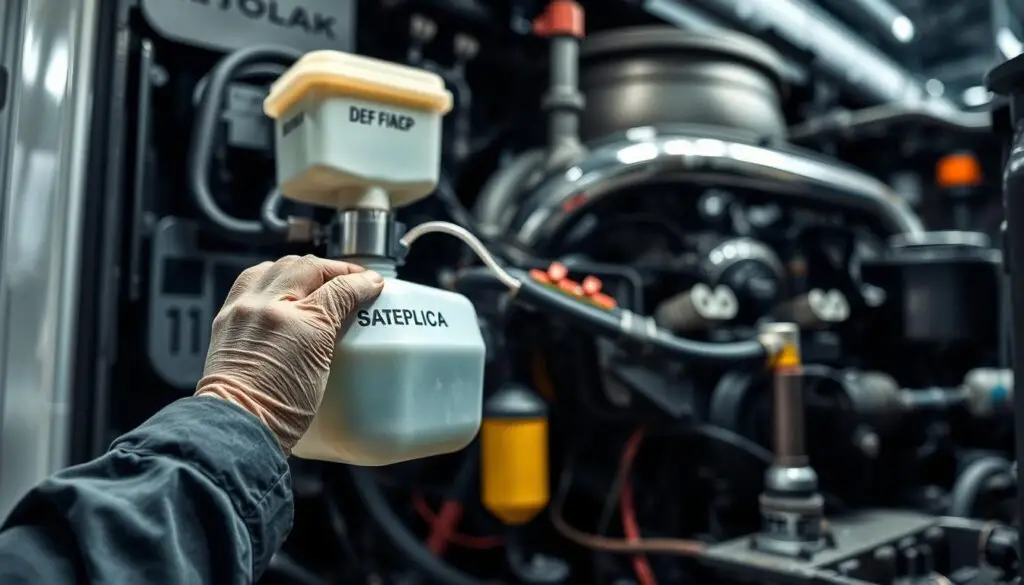
Start your visual inspection by examining the fluid in a clean, transparent container under good lighting. Hold the container against a white background to detect subtle color changes. Check for visible particles floating in the fluid or settled at the bottom. Examine storage containers, fill caps, and transfer equipment for signs of deterioration.
Laboratory Testing and Refractometer Measurements
Digital refractometer testing provides the most accurate field measurement of urea concentration. These handheld devices deliver instant results, confirming whether your DEF meets the required 32.5% urea concentration specification. The acceptable range falls between 31.8% and 33.2%—values outside this range indicate dilution, improper mixing, or degradation.
For comprehensive quality analysis, submit samples to certified laboratories following ISO 22241-1 standards. Laboratory testing measures insoluble matter (must remain below 20 ppm) and provides ISO Particle Count analysis. Always request a Certificate of Analysis from your DEF supplier when receiving bulk deliveries.
Professional Diagnostic Scans and System Tests
Professional SCR diagnostics begin with OBD-II scanner analysis to read stored and pending trouble codes. Modern scan tools access real-time data streams showing DEF injection rates, tank temperatures, and NOx sensor readings. Pressure testing identifies leaks, blockages, and pump degradation. Flow testing individual injectors reveals restriction patterns consistent with particulate or crystalline contamination.
Long-Term Consequences of Using Contaminated DEF
Contaminated diesel exhaust fluid doesn’t just cause temporary problems—it creates lasting consequences that threaten your vehicle’s functionality and legal standing. The damage compounds over time, transforming minor issues into expensive system failures.
Complete SCR Catalyst Replacement Requirements
The SCR catalyst represents the most expensive component in your emission control system. When contaminated DEF enters the system, metallic particles and chemical pollutants permanently coat the catalyst’s reaction sites, creating an irreversible barrier. Cleaning procedures cannot restore a poisoned catalyst—complete replacement becomes the only solution.
Catalyst replacement typically costs between $3,000 and $10,000 for light-duty vehicles, with heavy equipment replacements reaching $15,000 or more. The process requires flushing the entire DEF system, replacing contaminated lines, and verifying all components meet specifications. Labor costs add substantially, often requiring 8-12 hours of professional service time.
Permanent Engine Power Limitations
The engine control module may lock performance limitations into its programming when it detects repeated or severe SCR system failures. This protective measure prevents operation outside emissions compliance parameters. Even after replacing damaged components, the ECM might require reprogramming or replacement to restore full power capability.
Equipment resale value suffers dramatically. Buyers avoid vehicles with documented derate history, knowing these problems indicate poor maintenance practices. Equipment appraisers typically reduce valuations by 30-50% when contamination damage appears in service records.
EPA Compliance Failures and Legal Consequences
Operating equipment with malfunctioning SCR systems violates federal Clean Air Act regulations. The EPA maintains strict enforcement policies regarding emission control failures. Commercial operators face particularly serious consequences—federal law prohibits operating any diesel vehicle with disabled or malfunctioning emission controls on public roads.
Financial penalties for emissions compliance failures escalate quickly: individual vehicle violations range from $2,500-$10,000; commercial fleet violations can reach $25,000-$100,000+; tampering evidence triggers $25,000 minimum penalties with potential criminal prosecution.
Warranty exclusions create additional financial exposure. Manufacturers universally exclude contamination-related damage from coverage because it results from improper maintenance rather than manufacturing defects. Documentation of DEF contamination in service records can also trigger insurance complications.
Share Your DEF Contamination Experience
Have you dealt with DEF contamination issues in your fleet? We’re always looking for firsthand accounts from diesel technicians, fleet managers, and owner-operators who can share lessons learned and practical solutions.
Preventing DEF Contamination in Fleet Operations
Preventing DEF contamination requires a comprehensive approach that combines proper storage, supplier selection, and employee education. Fleet managers who implement structured prevention programs significantly reduce the risk of costly SCR system damage.
Storage Container Materials and Location Requirements
Following DEF storage guidelines starts with selecting appropriate container materials. Use only dedicated stainless steel, high-density polyethylene (HDPE), or polypropylene containers. Never repurpose containers that previously held other fluids. Store DEF in a cool, dry location away from direct sunlight, maintaining temperatures between 12°F and 86°F.
Many fleet operations prefer 2.5-gallon containers over bulk storage systems. Smaller containers reduce waste and limit exposure time to potential contamination sources. Always clean around the cap before opening DEF containers or vehicle tanks.
Verifying Supplier Credentials and Documentation
Selecting DEF that meets EPA diesel exhaust fluid requirements and ISO 22241 quality standards provides assurance that products will perform correctly in your SCR system. Look for certification marks verifying DEF quality through rigorous testing protocols and aftermarket monitoring for ongoing compliance. Request and review Certificates of Analysis for every shipment.
Red flags indicating questionable suppliers include prices significantly below market average, inability to provide certification documentation, lack of batch traceability systems, and missing API certification marks on packaging.
Implementing Systematic Quality Verification
Establish DEF quality protocols including initial testing upon delivery, monthly sampling of bulk storage tanks, quarterly filter inspections across the fleet, and laboratory analysis when contamination is suspected. Document all testing results to establish quality trends and support warranty claims if problems develop.
Developing Personnel Education Programs
Operator training represents the most critical contamination prevention measure. Training curriculum should cover visual differences between diesel and DEF fill ports, proper cleaning procedures, recognizing warning signs, understanding financial consequences, and following standard operating procedures consistently.
Emphasize that DEF tanks can build condensation overnight—top off DEF tanks at the end of each workday to minimize condensation buildup. Never use funnels, containers, or tools for DEF that have contacted other fluids. Conduct annual refresher training to reinforce proper handling techniques.
Repair Options and Cleaning Contaminated SCR Systems
Contaminated DEF repair presents equipment owners with critical decisions about flushing procedures, component replacement, and catalyst restoration options. Acting quickly when contamination is detected can prevent minor issues from escalating into complete system failures.
If you have machines where the DEF and diesel tanks are near each other, confusion at the fill point creates serious risks. If you’re ever in doubt whether the correct fill hole was used, drain and flush the tank with deionized water or clean DEF fluid immediately. Contact your dealer—they can walk you through steps to avoid unnecessary damage.
System Flushing and Drainage Protocols
A complete SCR system flush represents the first line of defense against contamination damage. Begin by completely draining the DEF tank and disposing of contaminated fluid properly—never reuse contaminated DEF or attempt to dilute it.
Flush the entire system with deionized water or fresh DEF multiple times. Most technicians recommend at least three complete flush cycles. The DEF filter must be replaced as part of any flushing procedure—this component cannot be cleaned effectively.
Component Assessment and Replacement Guidelines
DEF component replacement decisions require careful evaluation. DEF pumps with abrasive damage from particulate contamination typically cannot be salvaged—precision tolerances make them vulnerable to scoring. Injectors with severe clogging often require complete replacement. NOx sensors with contamination-related degradation usually need replacement.
| Component | Parts Cost Range | Labor Hours | Total Typical Cost |
|---|---|---|---|
| DEF Pump Assembly | $500-$1,500 | 2-4 hours | $700-$2,100 |
| DEF Injector | $400-$1,200 | 2-3 hours | $600-$1,800 |
| NOx Sensor | $300-$800 | 1-2 hours | $400-$1,200 |
| SCR Catalyst | $3,000-$10,000+ | 4-8 hours | $3,500-$12,000+ |
Catalyst Restoration Versus Replacement
Catalyst cleaning offers potential cost savings when contamination type responds to treatment. Crystalline deposits and some particulate matter respond well to specialized cleaning services using chemical treatments or thermal regeneration. Success rates reach 70-80% for appropriate contamination types, costing 40-60% less than replacement.
However, catalyst poisoning from metallic contaminants or sulfur compounds requires complete replacement—the damage is permanent. Laboratory analysis of catalyst samples provides definitive answers about contamination type and cleaning feasibility before investing in restoration attempts.
Cost Implications of DEF Contamination Damage
DEF contamination damage transforms minor quality oversights into major budget challenges. Understanding these costs helps decision-makers recognize the critical importance of prevention programs.
Standard component repairs range from $400-$2,100 for individual items. The catastrophic scenario occurs when operators accidentally add DEF to the diesel fuel tank—repair bills for fuel system contamination typically range from $20,000 to $50,000 or more, including fuel injector replacement ($8,000-$15,000 for a complete set), fuel pump replacement, common rail system components, and potential engine internal damage.
Prevention Program Cost-Benefit Analysis
Structured prevention programs require modest upfront investment but deliver exceptional returns. Basic prevention costs include proper storage equipment ($500-$2,000), refractometer testing equipment ($200-$500), employee training ($1,000-$3,000), and annual ongoing expenses ($500-$1,500).
Total first-year implementation costs range from $2,000-$6,500. Preventing a single DEF pump failure saves $700-$2,100. Avoiding one SCR catalyst replacement saves $3,500-$12,000+. A single prevented fuel system contamination event saves $20,000-$50,000. The $20 savings from discount DEF becomes insignificant compared to the $15,000+ catalyst replacement it might trigger.
Frequently Asked Questions
What happens if I accidentally put DEF in my diesel fuel tank?
Adding DEF to the diesel fuel tank creates one of the most expensive contamination scenarios in trucking. If caught before starting the engine, the tank can be drained and flushed with potential damage limited to a few hundred dollars. However, if the engine runs with DEF in the fuel system, the urea solution damages fuel injectors, the high-pressure fuel pump, and potentially internal engine components. Repair costs typically range from $20,000 to $50,000 depending on how long the engine operated. Contact your dealer immediately—they can walk you through steps to minimize damage.
How can I tell if my DEF has been contaminated?
Pure DEF should be completely clear and colorless with virtually no odor. Warning signs include any color change (yellow indicates fuel, green or pink suggests coolant, brown points to rust), cloudiness or haziness, visible particles or sediment, strong ammonia or petroleum smells, and crystalline deposits around container openings. If you observe any of these indicators, do not use the fluid—test with a refractometer or submit a sample for laboratory analysis before risking your SCR system.
Does contaminated DEF void my vehicle warranty?
Yes, virtually all manufacturers explicitly exclude contamination-related damage from standard warranty protection. This exclusion applies regardless of whether other powertrain components remain under warranty. Manufacturers design warranties to cover defects in materials and workmanship, not consequences of improper fluid use. Service departments routinely test DEF quality during warranty claim investigations—evidence of contamination immediately voids warranty consideration for affected components.
How long does DEF last in storage?
Properly stored DEF maintains quality for approximately 12-24 months. The actual shelf life varies based on storage temperature and environmental exposure. DEF stored within the recommended 12-86°F range lasts longest. Direct sunlight exposure dramatically accelerates degradation—ultraviolet radiation breaks down the urea solution. Always check expiration dates before purchasing and implement first-in, first-out inventory rotation. Signs of degraded DEF include slight yellow discoloration, crystalline deposits on container walls, and stronger-than-normal ammonia odor.
Can I make my own DEF by mixing urea and water?
Never attempt to create your own DEF by mixing agricultural-grade urea and water. Agricultural urea does not meet the minimum quality requirements specified in ISO 22241 standards. The DEF formula requires technical-grade urea with specific purity levels and deionized water meeting strict conductivity specifications. Homemade mixtures contain impurities that poison SCR catalysts and damage injection components. Using non-compliant DEF is illegal under federal regulations and will damage your emission control system.
Protect Your Fleet from DEF Contamination Damage
DEF contamination prevention starts with understanding that most diesel exhaust fluid quality problems are completely avoidable. Simple changes to handling procedures save thousands in repair costs and prevent equipment downtime that disrupts your operations.
Regular SCR system maintenance should include changing DEF filters according to manufacturer service intervals. Purchase only DEF that meets EPA requirements for diesel exhaust fluid quality and SCR system compliance. Store your diesel exhaust fluid in approved containers away from temperature extremes and direct sunlight. Clean fill caps before each refueling to prevent dirt and debris from entering the system.
Implement a quality testing routine using refractometers to verify DEF concentration. Train your operators and maintenance staff on proper handling procedures. The cost of prevention programs remains minimal compared to SCR catalyst replacement, warranty denials, and regulatory compliance failures.
Review your current DEF handling practices today. Identify gaps in your procedures and address them before contamination occurs. Your equipment’s performance, longevity, and compliance depend on the quality of every gallon of diesel exhaust fluid you use.
Found This DEF Contamination Guide Useful?
Share this resource with other fleet managers and diesel technicians who could benefit from understanding how to prevent costly SCR system damage. Help spread the word about proper DEF handling practices.


