

By Michael Nielsen, Editor & Publisher | 15+ Years in Diesel Repair
Last Updated: January 2026
📖 Estimated reading time: 22 minutes
Every day a commercial vehicle sits idle costs fleet operators between $448 and $760 in lost revenue, according to Element Fleet Management research. Unplanned mechanical failures trigger these expensive disruptions, threatening delivery schedules and damaging customer relationships. While preventive maintenance reduces these risks, even well-maintained fleets experience component breakdowns requiring costly repairs.Most operations overlook a significant opportunity: effective truck parts warranty management can recover 8 to 20 percent of total repair costs. Industry analysis suggests that five minutes of warranty paperwork generates approximately $110 in recovery on average, delivering a potential return on investment approaching 20 to 1. This transforms what many view as administrative overhead into a revenue recovery operation that directly impacts profitability.This guide provides actionable strategies for fleet managers, maintenance directors, and owner-operators across the commercial trucking industry. You’ll discover how to implement systematic documentation practices, understand different coverage types, leverage technology solutions, and develop a warranty strategy that turns reactive problems into proactive profit centers.Key Takeaways
- Downtime impact: Vehicle downtime costs $448-$760 daily per truck, making warranty recovery essential for protecting margins
- Recovery potential: Systematic warranty management recovers 8-20% of repair costs with ROI approaching 20:1
- Documentation discipline: Warranty administrators operate on the principle that undocumented maintenance never occurred
- Commercial vehicle distinction: Unlike consumer vehicles, the Magnuson-Moss Warranty Act does not protect commercial fleets
- Technology advantage: Fleet management software can improve claim success rates from 40-60% to 85-95%
- Negotiation leverage: Volume purchasing creates opportunities for extended coverage and enhanced claim processing
Understanding Commercial Truck Warranty Types and Coverage
Fleet managers must distinguish between warranty types to maximize protection and minimize out-of-pocket repair costs. The truck parts warranty landscape includes multiple coverage categories, each with distinct terms, limitations, and claim procedures. Recognizing these differences enables strategic planning for maintenance budgets and replacement part decisions.Warranties function as manufacturer or third-party guarantees covering repair or replacement costs for specific vehicle components within defined periods or mileage limits. These agreements protect against defects in materials and workmanship, though coverage scope varies dramatically by category. Understanding what each warranty type covers—and excludes—directly impacts your bottom line.Original Equipment Manufacturer Warranties
OEM warranties represent the manufacturer’s direct pledge embedded in your truck’s purchase price. These factory-backed guarantees provide straightforward coverage terms with minimal ambiguity. Manufacturers stand behind their products because warranty performance directly affects brand reputation and future sales.OEM warranties cover defects in materials or workmanship for specific durations or mileage thresholds. Coverage begins on the vehicle’s in-service date and typically requires registration with the manufacturer. This direct relationship between manufacturer and vehicle owner simplifies the claims process compared to third-party arrangements.Current OEM factory warranty terms vary by manufacturer. According to Rush Truck Centers, representative coverage includes:| Manufacturer/Model | Basic Warranty | Powertrain/Engine Warranty |
|---|---|---|
| Peterbilt Heavy-Duty | 1 Year/100,000 Miles | 2 Years/250,000 Miles |
| International LT/RH Series | 1 Year/100,000 Miles | 2 Years/Unlimited Miles (S13 Engine) |
| Hino L Series | 2 Years/Unlimited Miles | 3 Years/Unlimited Miles |
| Ford F-650/F-750 Diesel | 2 Years/Unlimited Miles | 5 Years/250,000 Miles |
| International CV Series | 3 Years/36,000 Miles | 5 Years/100,000 Miles |
Powertrain Coverage Specifications
Powertrain warranty coverage protects your truck’s most critical and expensive components. This coverage typically includes the engine, transmission, driveshaft, axles, and differential assemblies. Heavy-duty trucks commonly receive 2 to 5 years of powertrain protection, though terms vary significantly by manufacturer and vehicle class.Powertrain coverage excludes wear items and components not directly involved in power generation and transfer. Items like clutches, gaskets, seals, and filters typically fall outside this protection unless they fail due to a covered component defect. Understanding these boundaries prevents surprise expenses when non-covered parts require replacement.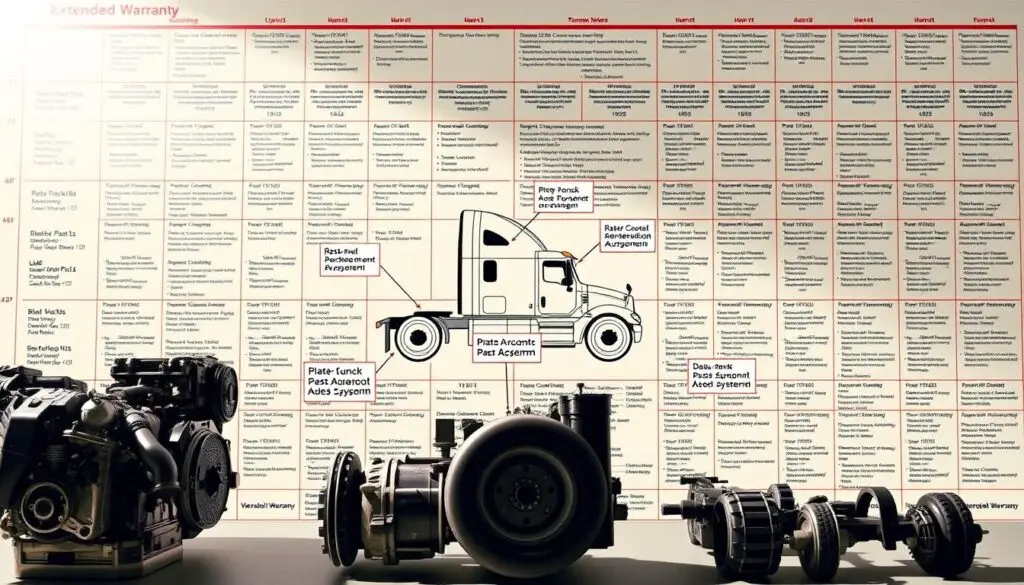
Bumper-to-Bumper Protection Terms
Comprehensive bumper-to-bumper coverage protects nearly all vehicle systems except routine wear items. This warranty typically covers electrical systems, air conditioning, steering components, suspension parts, and interior elements. The trade-off for broader coverage is shorter duration—usually 1 to 3 years or 36,000 to 100,000 miles for commercial trucks.Exclusions under bumper-to-bumper terms include tires, brake pads, wiper blades, light bulbs, and other consumables. Damage from accidents, misuse, or environmental factors also falls outside coverage scope. These limitations make regular maintenance and proper operation essential for preserving warranty validity.Extended Warranty Programs
Coverage beyond factory terms becomes available through extended warranty programs purchased at additional cost. These agreements continue protection after OEM warranties expire, helping fleet operators manage repair expenses during later vehicle years when component failures become more frequent.Given that Class 8 trucks can travel up to one million miles during their operational lifetime, extended coverage addresses the reality that OEM warranties cover only a small portion of a vehicle’s potential service life. However, the quality and value of these programs vary significantly by provider.Third-Party Extended Service Contracts
Third-party warranty contracts are sold by independent companies unaffiliated with vehicle manufacturers. These contracts can carry profit margins as high as 80 percent, creating inherent conflicts between profitability and claims approval. Coverage limitations often appear in fine print that buyers overlook during purchase.The complexity of third-party contracts lies in their exclusionary language. These agreements frequently specify covered components rather than excluded ones, creating narrow coverage windows. Pre-existing conditions, lack of maintenance documentation, and unauthorized repair facilities commonly trigger claim denials.Payment structures also differ from OEM warranties. Some third-party providers require upfront payment for repairs, then reimburse approved claims weeks later. This cash flow impact can strain smaller fleet operations that depend on immediate warranty coverage.Dealer-Sponsored Extended Coverage
Dealer-sponsored programs typically offer more transparent terms and easier claims processing than independent third-party options. These warranties often maintain closer alignment with manufacturer standards since dealers risk damaging relationships with both customers and OEMs. Service authorization happens faster, and covered repairs can often begin immediately.While dealer programs may carry higher premiums, they typically include better customer support, broader service network access, and fewer claim disputes. This reliability justifies the additional investment for fleet operators prioritizing operational continuity.8-20% of repair costs
Recoverable through effective warranty management according to industry experts
Aftermarket Parts Warranties
Replacement components carry their own warranty terms separate from vehicle coverage. Aftermarket warranties provided by part manufacturers protect against defects in that specific component. Coverage quality varies dramatically based on manufacturer reputation and part category.Premium aftermarket brands often match or exceed OEM warranty terms to demonstrate product confidence. Budget alternatives may offer minimal coverage periods with restrictive conditions. Aftermarket warranties become your primary protection once OEM vehicle coverage expires, making part brand selection strategically important.A critical distinction exists between part replacement and labor coverage. Many component suppliers will replace defective parts but refuse to pay associated labor costs. This limitation can leave fleet operators covering diagnostic time, removal, installation, and system testing expenses even when the part itself is replaced at no charge.Remanufactured Components Coverage
Rebuilt parts typically offer shorter warranty periods than new components. Remanufactured engines might carry 2-year coverage compared to 5-year terms for new powertrains. This reduced protection reflects the inherent uncertainties in component rebuilding processes and the mixed quality of cores used in remanufacturing.Core charges add complexity to remanufactured component warranties. These deposits ensure return of the old part for rebuilding, but warranty claims on remanufactured units may require navigating both the core charge refund and the defective part replacement. Understanding these financial mechanics prevents unexpected costs during warranty exchanges.The labor coverage question becomes even more pronounced with remanufactured parts. Budget-conscious fleet operators choosing rebuilt components to save money may face full labor bills if warranty claims arise. Calculating total cost of ownership—including potential warranty claim expenses—provides more accurate comparisons between new and remanufactured options.Essential Documentation Requirements for Warranty Protection
The difference between approved and denied warranty claims often hinges on documentation quality and completeness. Manufacturers and warranty providers require specific records to validate claims, and missing even one critical document can result in immediate rejection. Fleet operators must establish comprehensive systems for capturing, organizing, and preserving warranty documentation throughout the entire lifecycle of each truck component.Building robust documentation infrastructure protects your investment and ensures you can leverage warranty coverage when component failures occur. The foundation rests on four critical documentation categories that warranty providers consistently scrutinize during claims review.Purchase Receipts and Invoice Management
Every parts transaction must be captured with complete vendor information, detailed part numbers, exact purchase dates, and specific warranty terms. Purchase receipts serve as the primary proof of coverage eligibility and establish the warranty period start date. Without original receipts, warranty providers will deny claims regardless of legitimate failure circumstances.Fleet operations should implement a zero-tolerance policy for missing purchase documentation. Each invoice must include the vendor name, contact information, itemized part descriptions with manufacturer part numbers, unit prices, and total amounts paid. This information becomes critical when cross-referencing warranty coverage terms months or years after the initial purchase.Maintain copies of warranty certificates that accompany parts purchases. These documents outline specific coverage limitations, exclusion clauses, and claim submission procedures that differ between manufacturers. Store warranty certificates alongside corresponding purchase receipts to create complete documentation packages for each component.
Digital Documentation Best Practices
Paper receipts fade, tear, and disappear—digital documentation provides permanence and accessibility. Implement scanning protocols that convert all paper receipts into high-resolution digital files immediately upon receipt. Use PDF format with optical character recognition to enable text searching across your entire documentation database.Cloud-based storage systems with automatic backup protect against data loss from hardware failures, natural disasters, or human error. Establish redundancy protocols maintaining documentation copies in at least two geographically separate locations. This approach ensures warranty documentation remains accessible even during facility disruptions.Create standardized file naming conventions enabling quick retrieval during claims submission. Effective naming structures include purchase date, vendor name, part number, and vehicle identification number. Consistent naming eliminates time-consuming searches when technicians need specific documentation during failure investigations.Organizing Multi-Vendor Purchase Records
Fleet operations source components from multiple suppliers, creating documentation complexity requiring centralized database management. Fleet record keeping systems must accommodate varying warranty terms, coverage periods, and claim procedures across different vendors. Standardized data fields enable efficient information capture regardless of vendor-specific documentation formats.Design your database with fields for vendor contact information, warranty provider details, coverage duration, transferability terms, and claim submission deadlines. Include fields for prorated coverage formulas that determine reimbursement amounts based on component usage. This comprehensive approach prevents information gaps that trigger claim denials.Maintenance Records and Service Logs
Warranty providers require proof of proper maintenance to validate coverage when failures occur. Maintenance records must document every service event with dates, odometer readings, work descriptions, technician identifications, and parts installed. Gaps in service documentation create reasonable doubt about maintenance compliance, providing warranty administrators justification for claim denial.Federal regulations under 49 CFR 396.3 require motor carriers to maintain records for each vehicle including inspection schedules, maintenance operations, and repair records indicating date and nature. These regulatory requirements align with warranty documentation needs, creating synergy between compliance and warranty protection efforts.Implement service documentation protocols capturing comprehensive information during every maintenance event. Service logs should detail specific maintenance procedures performed, not just general descriptions like “preventive maintenance completed.” Specify oil changes with fluid types and quantities, filter replacements with part numbers, and inspection results with measured values.Required Service Log Documentation
- Service Date: Calendar date and odometer reading at service
- Work Description: Detailed procedures, measurements, and adjustments performed
- Parts Used: Manufacturer, part number, and warranty status of components installed
- Technician Identity: Name, employee ID, and relevant certifications
- Fluid Specifications: Brand, viscosity, and quantity for all fluids replaced
Installation Documentation Standards
Warranty providers increasingly demand technical evidence that components were installed according to manufacturer specifications. Installation documentation must capture adherence to prescribed procedures, use of required tools, and compliance with environmental conditions. This detailed approach protects against warranty denials based on improper installation allegations.Create installation checklists mirroring manufacturer installation instructions step-by-step. Technicians should initial or sign each completed step, creating an audit trail demonstrating procedure compliance. These checklists become invaluable evidence when warranty administrators question installation quality during claims review.Torque Specifications and Procedure Compliance
Manufacturers specify precise torque values for fasteners securing warranty-covered components. Recording actual applied torque values demonstrates compliance with these critical specifications. Use calibrated torque wrenches and document calibration dates to establish measurement accuracy.Installation procedures often require specific sequences for tightening multiple fasteners. Document the tightening sequence followed during installation, particularly for components like cylinder heads, wheel assemblies, and drivetrain connections. Sequential compliance prevents stress concentrations causing premature failures and subsequent warranty disputes.Photographic Evidence Requirements
Visual documentation provides compelling evidence strengthening warranty claims when failures occur. Capture timestamped photographs showing component condition upon receipt, proper installation technique, and vehicle identification. These images create irrefutable records supporting claims narratives when warranty administrators request additional information.Photograph serial numbers, date codes, and identifying markings on components before installation. This documentation proves the installed component matches purchase records and falls within warranty coverage periods. Clear images of identification markings eliminate disputes about component authenticity or coverage eligibility.Document failure conditions with comprehensive photography before disassembly or repair attempts. Capture multiple angles showing failure modes, adjacent component conditions, and overall installation context. These images help warranty administrators understand failure circumstances and validate that damage patterns align with manufacturing defects rather than abuse or neglect.Implementing Effective Warranty Management Systems
Fleet operators who implement structured warranty tracking systems consistently recover more costs and reduce administrative burden. A warranty management system transforms warranty handling from reactive paperwork chasing into proactive asset protection. The difference between fleets recovering substantial warranty claims versus those leaving money unclaimed comes down to systematic implementation.Organizations must move beyond scattered filing cabinets and individual technician notebooks. Creating formal systems ensures warranty opportunities never slip through operational cracks. Every replacement part represents potential cost recovery, but only when proper infrastructure supports identification and documentation.Creating a Centralized Warranty Database
A centralized repository consolidates warranty information previously scattered across multiple locations and departments. This single source of truth eliminates the common scenario where warranty details exist on paper invoices in accounting, service records in the shop, and part numbers in inventory systems. Bringing everything together creates visibility and accountability.The warranty database serves as the operational foundation for all warranty activities. Whether digital or physical, this centralized system must be accessible to everyone who needs warranty information. Fleet managers gain oversight capabilities, technicians access coverage details during repairs, and administrative staff can quickly retrieve documentation during claim submissions. Comprehensive data capture determines whether warranty opportunities can be identified and claimed successfully. Each warranty entry requires specific information elements supporting both daily operations and claim processes. Missing even one critical field can derail an otherwise valid claim. Essential database fields include complete part descriptions with manufacturer numbers, purchase dates and invoice numbers, warranty start dates and coverage terms, vehicle identification numbers and installation locations, calculated expiration dates, and claim filing procedures with authorization contacts.
Cloud-Based Versus On-Premise Solutions
Technology decisions significantly impact warranty management effectiveness and operational flexibility. Cloud-based solutions offer access from any location with internet connection, making them ideal for multi-location fleets. Monthly subscription fees provide predictable costs, and provider-managed security includes regular updates and professional monitoring.On-premise solutions require higher upfront investment but offer complete internal control over security protocols and data storage. They work best for single-location operations with dedicated IT resources. The decision should align with broader technology strategy and available resources.Tracking Expiration Dates and Coverage Terms
Time-sensitive warranty claims require proactive monitoring rather than reactive discovery. Warranties expire based on installation dates, calendar time, or mileage thresholds. Warranty tracking systems must monitor all three parameters simultaneously to prevent missed opportunities.Automated alert systems provide essential protection against expiration losses. Notifications should trigger at 60 days, 30 days, and 15 days before warranty coverage ends. This multi-stage warning system allows sufficient time for thorough component inspections before coverage lapses.Fleet managers can schedule preventive inspections based on these alerts. If a component shows wear or developing issues within the warranty period, claims can be filed while coverage remains valid. Proactive inspection before expiration recovers far more value than discovering failures after coverage ends.Assigning Warranty Management Responsibilities
Clear warranty responsibilities eliminate accountability gaps causing missed claims and administrative confusion. When everyone assumes someone else handles warranties, opportunities disappear. Formal responsibility assignments create ownership and ensure consistent execution.Fleet Manager Oversight Duties
Fleet managers provide strategic oversight and administrative coordination for warranty programs. Their responsibilities encompass maintaining the warranty database with current information and ensuring data accuracy. They coordinate claim submission processes, compile required documentation, and track claims through resolution.Vendor relationship management falls within fleet manager duties. Regular communication with suppliers maintains awareness of coverage terms, claim procedures, and policy changes. Performance metrics tracking identifies which parts generate frequent claims and which suppliers provide superior warranty support.Technician Documentation Obligations
Technicians serve as frontline warranty identifiers during daily maintenance and repair activities. Their documentation creates the foundation for successful claims. When technicians inspect vehicles or diagnose failures, they must recognize potential warranty situations and act accordingly.The three C’s documentation framework—Complaint, Cause, and Correction—provides the structure for warranty claims. Technicians record the customer complaint or observed symptom, diagnose and document the root cause, and detail the corrective action taken. Complete documentation supports claim approval.Failed components must be tagged, preserved, and communicated to management immediately. Suppliers often require physical inspection of failed parts before authorizing warranty coverage. Technicians who dispose of components eliminate claim possibilities. Proper tagging with vehicle number, date, mileage, and failure description protects warranty opportunities.The HDJ Perspective
In our experience working with fleets across the industry, warranty management success ultimately comes down to organizational culture. The operations recovering the most money aren’t necessarily those with the most sophisticated software—they’re the ones where technicians understand that tagging and documenting a failed part is just as important as replacing it. When your shop culture treats warranty recovery as everyone’s responsibility rather than an administrative afterthought, the dollars follow.
Integrating Warranty Data with Fleet Management Software
Standalone warranty databases create inefficient double-entry and information silos. Fleet management software integration connects warranty information with maintenance schedules, parts inventory, and work order processes. This integration transforms warranty management from separate administrative function into seamless operational capability.Integrated systems automatically flag warranty-eligible repairs when technicians create work orders. The maintenance management platform checks part installation dates and warranty terms, then alerts users to coverage status. This automatic checking prevents missed opportunities during routine repairs.Parts inventory systems display warranty coverage alongside availability information. When ordering replacement components, purchasing agents see which parts remain under warranty. This visibility prevents unnecessary purchases when warranty replacements are available.Maximizing Warranty Coverage Through Preventive Maintenance
Warranty coverage and preventive maintenance operate as interconnected systems where compliance with one directly preserves the validity of the other. Fleet managers who treat these as separate concerns expose their operations to significant financial risk. When component failures occur, warranty administrators scrutinize maintenance records with extreme precision, searching for any deviation from required service protocols.Understanding this relationship transforms maintenance from a cost center into a warranty protection strategy. Every properly documented oil change, filter replacement, and fluid service creates evidence supporting future warranty claims. Conversely, each skipped service or undocumented maintenance task weakens your position when expensive component failures demand warranty coverage.⚠️ Critical Warranty Principle
Warranty administrators operate on a fundamental principle: if maintenance is not documented, it didn’t happen. This applies regardless of whether service was actually performed. Undocumented maintenance provides grounds for claim denial even when proper procedures were followed.
Adhering to Manufacturer Service Schedules
Manufacturer service schedules represent legally binding requirements embedded within warranty agreements rather than optional recommendations. These schedules specify precise maintenance intervals based on mileage, engine hours, or calendar time. Warranty administrators reference these schedules when evaluating claims, and even minor deviations provide grounds for coverage denial.The manufacturer service schedule typically differentiates between normal and severe service conditions. Severe service classifications include frequent idling, stop-and-go traffic, extreme temperatures, dusty environments, or heavy loads. Trucks operating under severe conditions require more frequent maintenance intervals. Misclassifying operational conditions and following inappropriate maintenance schedules constitutes a warranty compliance violation. Oil change interval compliance represents the most scrutinized aspect of warranty claim evaluations. Engine oil serves as the lifeblood of powertrain components, and manufacturers design warranty coverage around strict oil change protocols. Extended oil change intervals—even by a few hundred miles—expose engines to accelerated wear that warranty providers classify as maintenance-related damage.Manufacturers specify oil change intervals based on oil type, with conventional, synthetic blend, and full synthetic oils supporting different service intervals. Using lower-grade oil while following extended intervals approved only for premium synthetic oil violates warranty terms. Every oil change record must document the specific oil grade, viscosity specification, and quantity used to demonstrate compliance.
Filter Replacement Tracking
Filter replacement tracking extends beyond oil filters to encompass air filters, fuel filters, coolant filters, and transmission filters. Each filtration system protects expensive components from contamination-related damage. Delayed filter replacements allow contaminants to circulate, causing wear patterns that warranty providers categorize as maintenance failures rather than manufacturing defects.Fuel filter maintenance prevents contamination from reaching injection systems where tolerances measure in microns. Modern high-pressure fuel injection systems cost tens of thousands of dollars to replace. Fuel system failures caused by contamination resulting from neglected filter maintenance fall outside warranty coverage. Fleet managers must track fuel filter replacement according to manufacturer specifications and document both the filter part number and the fuel quality conditions.Using Approved Fluids and Replacement Parts
Warranty agreements explicitly require approved fluids and replacement parts meeting or exceeding manufacturer specifications. This requirement exists because manufacturers engineer components around specific fluid properties and part tolerances. Using non-approved alternatives—even those claiming equivalent or superior performance—can void warranty coverage when failures occur.The approved fluids requirement encompasses engine oil, transmission fluid, coolant, brake fluid, power steering fluid, and differential oil. Each fluid specification includes viscosity grades, performance standards, and additive packages designed for specific operating conditions. Substituting fluids to reduce costs represents a false economy when it eliminates warranty protection on components valued at thousands or tens of thousands of dollars.Fleet managers must maintain detailed records of every fluid used in warranty-covered vehicles. These records should include brand names, specification numbers, and purchase receipts proving that fluids met manufacturer requirements. Generic documentation stating “oil change performed” provides insufficient evidence during warranty claim evaluations.Key Recommendation
Maintain a master list of manufacturer-approved products for each vehicle model and component system. Establish purchasing controls preventing unauthorized substitutions even when approved products face temporary shortages. The warranty protection lost from using non-approved alternatives far exceeds any short-term cost savings.
Digital Service History Integration
Digital service history integration represents the evolution of warranty compliance documentation from paper-based systems to cloud-based platforms accessible anywhere, anytime. Modern fleet management systems automatically capture service completion data, store electronic technician signatures, and generate comprehensive maintenance histories instantly available during warranty claims.Integrated digital systems eliminate documentation gaps that commonly occur with paper records. When service completion triggers automatic data capture, there’s no opportunity for forgotten entries or lost paperwork. Warranty compliance documentation becomes a byproduct of normal maintenance operations rather than an additional administrative burden.Advanced digital platforms incorporate warranty compliance alerts that notify fleet managers when upcoming services are required to maintain coverage. These proactive notifications prevent inadvertent maintenance deadline violations that could compromise warranty protection.Navigating the Warranty Claims Process Successfully
The warranty claims process delivers exceptional return on investment when executed with precision and proper documentation. Industry analysis suggests approximately five minutes of paperwork generates $110 in warranty recovery on average. Applied consistently across warranty-eligible repairs, this demonstrates extraordinary returns on administrative investment.Understanding the complete claims process from failure identification through final resolution ensures maximum approval rates. Each stage requires specific actions and documentation to support your claim effectively.Initial Failure Assessment and Documentation
The moment a truck component malfunctions, your warranty claims process begins with immediate failure assessment. Technicians must evaluate whether the failure potentially falls within warranty coverage based on component age, vehicle mileage, and failure characteristics. This initial evaluation determines the entire direction of your response.Proper failure documentation starts within minutes of discovering the problem. Your team should establish protocols triggering automatic documentation procedures whenever components fail. Time-sensitive information captured immediately proves far more valuable than retrospective assessments.
Capturing Failure Symptoms and Conditions
Comprehensive symptom documentation separates successful claims from denied ones. Technicians must record the exact failure description using specific technical language rather than general observations. Document the precise operating conditions when failure occurred, including vehicle load, speed, ambient temperature, and road conditions.Warning signs or progressive symptoms appearing before complete failure provide critical context for warranty providers. Record any related error messages, dashboard warnings, or unusual performance indicators. Environmental factors such as extreme weather, road conditions, or hauling circumstances add important supporting details.Modern warranty providers increasingly require electronic diagnostic evidence for component failures. Capturing all diagnostic codes before clearing them protects your claim from potential disputes about failure causes. Diagnostic trouble codes provide objective technical evidence supporting your warranty claim submission.Contacting Warranty Providers and Submitting Claims
Each warranty provider maintains specific procedures for claim initiation and submission. Understanding manufacturer-specific protocols prevents delays and improves approval rates. Contact warranty administrators through their preferred communication channels, whether phone hotlines, online portals, or email systems.Claim number assignment systems vary by provider, but securing your unique identifier early tracks your case through the entire process. Initial authorization requirements may include pre-approval before beginning certain repairs. Verify these requirements before authorizing work to avoid coverage disputes.| Information Category | Required Details | Purpose |
|---|---|---|
| Vehicle Identification | VIN, make, model, year, current mileage | Verifies warranty eligibility and coverage period |
| Component Information | Part number, serial number, purchase date, installation date and mileage | Confirms component within warranty terms |
| Failure Documentation | Failure date and mileage, detailed description, diagnostic results, photos | Establishes failure characteristics for claim validation |
| Maintenance History | Service records, maintenance logs, fluid change documentation | Demonstrates compliance with maintenance requirements |
| Financial Information | Purchase invoice, repair estimate or final invoice, labor rates | Determines reimbursement amounts and validates costs |
Timelines and Response Expectations
Realistic timeline expectations help fleet managers plan vehicle downtime and budget projections. Most warranty providers issue initial responses within 5 to 15 business days after receiving complete claim packages. Full claim resolution typically requires 30 to 45 days from submission to final payment.Expedited procedures exist for vehicles in critical service roles. Many providers offer accelerated processing when you document operational urgency. Understanding these options allows strategic prioritization of high-impact claims.Working with Authorized Service Centers
Many warranty programs require repairs at certified facilities to maintain coverage validity. Authorized service centers have established relationships with warranty providers and understand specific documentation requirements. These facilities often handle claim submission directly, reducing your administrative burden.The authorization process before beginning repairs protects both parties from coverage disputes. Confirm repair approval in writing before authorizing work that exceeds diagnostic fees. Building relationships with multiple authorized facilities provides flexibility when warranty issues arise across your service territory.Following Up on Pending Claims
Warranty claim follow-up transforms passive waiting into active claim management. Claims frequently require additional information or experience processing delays without notification. Implementing scheduled follow-up intervals at 7, 14, and 21 days maintains momentum toward resolution.Each follow-up contact should reference your claim number and provide any newly available information. Ask specific questions about claim status, outstanding documentation needs, and expected resolution dates. This proactive approach demonstrates your commitment to resolution.Free Professional Fleet Tools
Cost calculators, fault code lookup, maintenance planners, and more—built for owner-operators, fleet managers, and diesel techs. No signup required.
Common Warranty Denial Reasons and How to Avoid Them
Warranty claim denials cost trucking operations thousands of dollars annually, yet most rejections stem from preventable documentation and compliance failures. Understanding why warranty providers reject claims transforms your approach from reactive submission to proactive protection. Most warranty exclusions follow predictable patterns that fleet managers can address through systematic preventive measures.Improper Installation and Unauthorized Modifications
Warranty providers frequently cite installation errors and vehicle modifications as primary denial reasons. Even when modifications appear unrelated to the failed component, administrators often assert that alterations changed stress patterns or operating conditions. This denial category represents one of the most frustrating situations for fleet managers who believe their modifications had no connection to the failure.Documentation becomes your strongest defense against modification-related denials. Before making any vehicle alterations, consult your warranty provider about potential coverage impacts. Obtain written confirmation that planned modifications will not affect warranty protection, and maintain this correspondence with your vehicle records.ECU Tuning and Performance Modifications
Electronic engine modifications represent perhaps the most definitive unauthorized modifications that void powertrain warranties. ECU tuning that increases horsepower, alters fuel mapping, or modifies emission controls almost universally eliminates coverage. Modern engine control modules log modification attempts with timestamps that manufacturers detect during warranty investigations.Removing tuning devices after failures occur provides no protection. The engine computer maintains permanent records of operating parameters outside factory specifications. Warranty administrators review these logs as standard procedure when evaluating powertrain claims. The warranty preservation strategy is straightforward: avoid all electronic engine modifications on vehicles with active powertrain coverage.
Lack of Maintenance Documentation
Perhaps the easiest warranty claim denial to prevent remains pervasive across the trucking industry. Maintenance documentation gaps create legal grounds for rejection even when fleet operations maintain exemplary actual service practices. In warranty disputes, maintenance not documented is maintenance that never occurred.Warranty providers require proof of compliance with manufacturer service schedules. Without documentation showing timely oil changes, filter replacements, and inspections, administrators deny claims asserting that lack of maintenance caused the failure. The burden of proof falls on vehicle owners to demonstrate compliance.Using Non-Approved Parts or Fluids
Warranty administrators cite non-approved parts or fluids as straightforward denial justification even when aftermarket products meet or exceed OEM specifications. This denial reason creates ongoing debate about whether quality alternative components should void warranties on unrelated systems. The legal reality favors warranty providers in most disputes.The Magnuson-Moss Distinction for Commercial Vehicles
Unlike consumer vehicles, commercial trucks do not receive protection under the Magnuson-Moss Warranty Act. This federal law, which prevents manufacturers from voiding consumer product warranties simply because aftermarket parts were used, explicitly applies only to consumer products—not commercial vehicles.As noted by the Commercial Vehicle Solutions Network, warranties offered by vehicle manufacturers may be arbitrarily denied if the truck owner did not source repair or maintenance parts from authorized dealers. This distinction makes proper parts sourcing and documentation particularly critical for fleet warranty protection.Specification Compliance Verification
Confirming that fluids and components meet manufacturer specifications requires proactive verification. Don’t assume that products marketed as “equivalent” or “exceeds OEM standards” actually comply with warranty requirements. Obtain written confirmation from suppliers that specific products meet the exact specifications your manufacturer requires.Maintain this compliance documentation with your service records. When purchasing fluids, verify that labels display the precise specification numbers your warranty requires. Create a reference guide listing approved products for your fleet, helping technicians and purchasing staff avoid accidentally using non-approved items that could jeopardize coverage.Missing or Expired Coverage Deadlines
Time-sensitive claim filing requirements create procedural denial opportunities that cost fleet managers valid claims. Most warranties impose specific deadlines requiring claim submission within 30 to 90 days of failure discovery or before coverage expiration. Missing these timeframes by even a single day provides administrators with straightforward rejection justification.Failed parts should be kept in designated storage locations for 45 to 60 days before disposal. Manufacturers may require physical inspection of failed components before approving claims. Disposing of parts prematurely eliminates this inspection possibility and typically results in automatic denial.Leveraging Technology for Warranty Management Efficiency
Fleet managers who rely on spreadsheets and paper files miss significant warranty recovery opportunities that technology can capture automatically. Modern fleet management technology transforms warranty tracking from reactive, manual processes into proactive, systematic operations identifying every eligible claim before coverage expires.The transition from manual tracking to integrated systems delivers measurable results. Fleets implementing comprehensive warranty management software report claim success rates increasing from 40-60% to 85-95% within the first year of deployment. These improvements stem from better documentation, timely claim submission, and systematic identification of warranty-eligible failures.Comprehensive Platforms with Warranty Modules
Integrated platforms connect warranty tracking directly to maintenance operations, parts inventory, and vehicle history systems. When technicians create work orders, the system automatically flags components still under warranty coverage. This real-time visibility ensures warranty status influences repair decisions at the moment of service.Fleet management software solutions like Decisiv’s Service Relationship Management platform include warranty management capabilities that streamline access to coverage information at the point of service. These systems help reduce triage time and lower downtime by identifying warranty opportunities before repairs begin rather than after.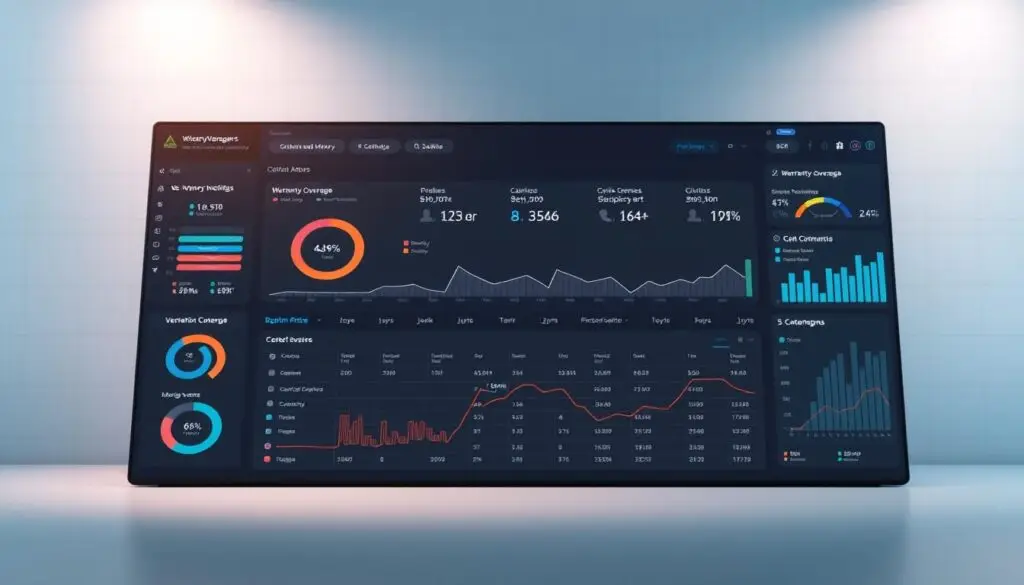
Samsara Fleet Management Platform
Samsara integrates warranty management capabilities with broader fleet operations through several key features. The platform’s parts inventory module automatically identifies warranty-eligible components during work order creation, preventing technicians from overlooking coverage opportunities. Maintenance tracking links service history directly to warranty requirements, documenting compliance with manufacturer service schedules.Fleetio Maintenance and Warranty Tracking
Fleetio focuses specifically on maintenance operations with robust warranty features designed for daily shop floor use. The platform delivers automated warranty expiration alerts notifying managers before coverage ends. Customizable warranty terms accommodate different component types, from powertrain warranties extending hundreds of thousands of miles to aftermarket parts covering just 12 months.The mobile app enables technicians to check warranty status directly from service bays without returning to office computers. Integration with parts vendors allows automatic warranty data import when components are purchased, eliminating manual data entry and reducing errors.Mobile Solutions for Field Documentation
Many truck repairs occur at roadside locations, customer sites, or remote terminals rather than main facilities. Traditional documentation processes fail in these environments because technicians cannot access filing systems or desktop computers. Mobile applications solve this challenge by enabling complete documentation from smartphones or tablets.Field technicians use warranty tracking apps to photograph failed components, record diagnostic information, and capture electronic signatures from drivers or supervisors. The applications upload documentation directly to centralized warranty databases in real time. This immediate capture ensures documentation quality regardless of service location.Automated Alert Systems for Expiration Tracking
The primary cause of missed warranty recovery opportunities is failing to identify and inspect components before coverage expires. Automated warranty alerts eliminate this problem by systematically notifying fleet managers when coverage nears expiration. These systems monitor every warranted component and trigger notifications based on both time and mileage parameters.Industry best practices recommend 60, 30, and 15-day advance alerts for major components like engines and transmissions. For comprehensive fleet warranty audits covering all components, 90-day advance notifications allow time for systematic inspection scheduling.Negotiating Better Warranty Terms with Suppliers
Fleet purchasing power opens doors to warranty terms that individual operators rarely access. Suppliers recognize the long-term value of high-volume customers and often provide enhanced coverage beyond standard offerings. Understanding how to leverage your fleet’s purchasing position transforms warranty negotiation from a take-it-or-leave-it transaction into a strategic advantage.Volume Purchase Considerations
Consolidated purchasing represents substantial leverage with parts suppliers and manufacturers. When you purchase truck components in significant quantities, you bring value justifying preferential treatment. Volume purchase benefits often extend beyond pricing to include enhanced warranty coverage protecting your investment more comprehensively than standard terms.High-volume buyers should negotiate warranty improvements alongside price concessions. Extended coverage periods, reduced deductibles, and expedited claims processing become realistic expectations rather than premium add-ons.Fleet Account Advantages
Fleet account status unlocks specific benefits that streamline warranty management significantly. Dedicated account representatives with authorization to approve warranty claims eliminate bureaucratic delays plaguing standard customers. These representatives understand your operation and can expedite decisions otherwise requiring multiple approval layers.Priority parts availability for warranty replacements reduces vehicle downtime substantially. When standard customers wait days or weeks for warranty replacement components, fleet accounts receive preferential treatment. This advantage translates directly into operational uptime and revenue protection.Annual Commitment Incentives
Suppliers reward purchase commitments with warranty enhancements benefiting both parties. When you commit to minimum annual purchase volumes, manufacturers gain revenue predictability. In exchange, you receive extended warranty periods, expanded coverage scope, or reduced labor rate caps on warranty repairs.Extended Coverage Options and Pricing
Extended warranty pricing requires careful analysis beyond surface-level costs. Manufacturers and third-party providers market extended coverage aggressively, but these programs often carry substantial profit margins. Understanding true value requires systematic evaluation.Conduct total cost of ownership analysis comparing extended warranty pricing against historical repair costs. Review maintenance records to identify actual failure rates and repair expenses over comparable periods. This data reveals whether extended coverage provides genuine protection or primarily benefits warranty sellers.Transferable Warranty Benefits
Fleets that regularly cycle vehicles gain substantial advantages from transferable warranties. Standard warranty coverage typically expires when ownership changes, leaving subsequent owners without protection. Transferable warranties remain with vehicles through ownership transitions, enhancing resale values significantly.Negotiating transferable warranties differentiates your fleet vehicles in competitive resale markets. Buyers pay premium prices for trucks with remaining warranty protection because it reduces post-purchase repair cost uncertainty.Measuring Warranty Management Performance and ROI
Tracking warranty ROI transforms documentation efforts from administrative burden into strategic profit centers. Fleet operators who establish measurement frameworks gain visibility into program effectiveness while identifying opportunities to improve recovery rates.The mathematics of warranty ROI demonstrate exceptional returns. When 45 hours of warranty administration labor costing $2,800 recovers $60,000 in warranty claims, the investment pays out 20:1. Even the five-minute documentation investment yielding $110 recovery represents extraordinary return when systematically applied across all warranty-eligible repairs.Key Performance Indicators to Track
Effective warranty performance metrics provide actionable intelligence for continuous improvement. Every fleet should monitor foundational measurements regardless of organizational size or operational complexity. Essential KPIs include total warranty dollars recovered annually, warranty recovery as percentage of total parts expenditure, and percentage of warranty-eligible failures actually claimed.Claim Success Rate Percentage
Claim success rate measures approved claims divided by total claims submitted, expressed as a percentage. This single metric reveals program quality more effectively than any other measurement. Well-managed programs typically achieve 75-85% approval rates, demonstrating thorough documentation and proper failure analysis.Programs with poor documentation or inadequate failure assessment often see approval rates below 50%. This performance gap directly translates to substantial lost recovery annually. The difference between a 50% and 80% approval rate on $100,000 in submitted claims represents $30,000 in forfeited reimbursement.Average Processing Time Metrics
Processing time measurements track elapsed duration through each claim lifecycle stage. Industry leaders typically submit claims within 72 hours of failure identification, receive approval decisions within 10-15 business days, and payment within 30 days of approval. Fleets exceeding these benchmarks should investigate process constraints limiting efficiency.Identifying Problematic Parts and Suppliers
Warranty data functions as quality management intelligence beyond its financial recovery purpose. Systematic analysis of failed parts reveals operational improvement opportunities including preventative maintenance intervals, vehicle inspection protocols, and training requirements.Tracking warranty claim frequency, approval rates, and processing efficiency by parts supplier creates objective quality metrics for purchasing decisions. Suppliers with high failure rates and difficult warranty processes should be replaced regardless of purchase price advantages. Total cost of ownership calculations must include warranty recovery friction and failure-related downtime.Benchmarking Against Industry Standards
Industry benchmarking provides comparative context for performance evaluation and improvement prioritization. Well-managed fleets typically recover 8-15% of parts costs through warranties. This benchmark establishes reasonable expectations for mature warranty programs. Fleets recovering less than 5% likely miss substantial claim opportunities through inadequate identification systems or poor documentation practices.Top-performing fleets achieve claim success rates above 80% while maintaining average processing times under two weeks from submission to decision. They recover warranties on component types often overlooked by competitors, including small parts where significant dollars are frequently wasted due to lack of attention.Frequently Asked Questions
How long should fleet operations retain warranty documentation?
Fleet operations should retain warranty documentation for the entire component lifecycle plus at least one additional year. Federal regulations under 49 CFR 396.3 require maintenance records be kept for one year after the vehicle leaves the carrier’s control. For warranty purposes, retain all purchase receipts, installation records, and maintenance logs until well after coverage expiration to support any appeals or delayed disputes that may arise months after initial claim submission.What percentage of repair costs can fleets recover through effective warranty management?
Effective warranty management can recover 8 to 20 percent of total repair costs according to industry experts. This represents a controllable maintenance expense that directly impacts profitability. Well-organized fleets with dedicated warranty tracking systems consistently recover more than operations relying on manual processes or informal tracking methods. The difference often amounts to tens of thousands of dollars annually for medium-sized fleets.Does the Magnuson-Moss Warranty Act protect commercial truck fleets?
The Magnuson-Moss Warranty Act applies specifically to consumer products, not commercial vehicles. Unlike consumers who cannot have warranties voided simply for using aftermarket parts, commercial fleet operators may face warranty denials if they do not source parts through authorized dealers as specified in their warranty agreements. This distinction makes proper parts sourcing and documentation particularly critical for fleet warranty protection.What are the most common reasons warranty claims get denied?
The most common warranty denial reasons include incomplete or missing documentation, failure to maintain proper service records, use of non-approved parts or fluids, unauthorized vehicle modifications, and missed claim filing deadlines. Warranty administrators scrutinize maintenance compliance carefully, operating on the principle that undocumented maintenance never occurred regardless of actual service performed.What technology solutions help maximize warranty recovery?
Fleet management software platforms like Trimble TMT Fleet Maintenance, Samsara, and Fleetio include warranty tracking modules that automate expiration monitoring, flag warranty-eligible repairs during work order creation, and maintain comprehensive documentation. These systems can improve claim success rates from 40-60% to 85-95% by eliminating data silos and ensuring timely claim submission with complete documentation.How can fleet managers negotiate better warranty terms with suppliers?
Fleet purchasing volume creates significant leverage for warranty negotiations. Request extended coverage periods, expanded component coverage, enhanced labor rate caps, and transferable warranty provisions as part of volume purchase agreements. Building fleet account relationships can also unlock dedicated warranty representatives, priority parts availability, and streamlined claims processes that standard customers do not receive.Building Your Warranty Recovery Strategy
Effective truck parts warranty management transforms from administrative burden into measurable profit center when fleet operators implement systematic processes. The financial impact is clear: fleets leave tens of thousands of dollars unclaimed annually through inadequate warranty tracking. This represents accessible money that directly affects your bottom line without requiring additional revenue generation.Success requires commitment across your organization. Technicians must embrace documentation discipline. Managers need to prioritize warranty tracking alongside daily operational demands. Your fleet needs appropriate technology infrastructure to automate tracking and alert functions. The initial investment in warranty program implementation generates exceptional returns through recovered costs and reduced vehicle downtime.Smart operators use warranty data as business intelligence informing purchasing decisions and identifying supplier quality issues. This proactive approach to warranty cost recovery improves fleet reliability while capturing substantial financial value currently forfeited through inadequate processes. In an industry where operational margins face constant pressure, maximizing warranty recovery represents one of the most accessible profit improvements available to fleet operations today.Found This Guide Useful?
Share it with fellow fleet managers and maintenance professionals who could benefit from these warranty recovery strategies.