

By Michael Nielsen, Editor & Publisher | 15+ Years in Diesel Repair
Last Updated: January 2026
📖 Estimated reading time: 18 minutes
Counterfeit heavy duty parts pose one of the most serious threats to fleet safety and operational reliability today. Global trade in counterfeit goods reached $467 billion in 2021 according to the OECD, with automotive and truck components among the fastest-growing categories. For commercial fleets, these fraudulent components create immediate safety hazards for drivers and long-term financial losses that dwarf any initial purchase savings.
The sophistication of modern counterfeiters makes detection increasingly challenging. Advanced manufacturing techniques allow fraudulent producers to replicate packaging, labeling, and even surface finishes with remarkable accuracy. Distinguishing authentic components from dangerous fakes requires systematic verification across multiple checkpoints—from supplier qualification through final installation.
This guide provides fleet managers, diesel technicians, and owner-operators with a comprehensive framework for counterfeit parts detection. You’ll learn visual inspection techniques, documentation verification methods, advanced authentication technologies, and procurement strategies that protect your equipment and drivers from substandard components.
Key Takeaways
- Brake components and filtration products are the most commonly counterfeited heavy duty parts due to high replacement frequency and significant price differentials.
- Visual inspection alone is insufficient—effective detection requires packaging verification, documentation review, material testing, and supplier qualification working together.
- Price is a primary indicator: Parts offered 30% or more below market rates should trigger immediate verification protocols.
- Authorized distributors are your first defense—purchasing exclusively through OEM-verified channels eliminates most counterfeit entry points.
- SAE AS5553 and AS6174 standards provide comprehensive frameworks for counterfeit detection applicable to heavy duty fleet operations.
The Growing Threat of Counterfeit Heavy Duty Parts
The counterfeit parts industry has evolved from isolated incidents into a sophisticated global network. What began as substandard components appearing sporadically in aftermarket channels has transformed into organized criminal enterprises producing convincing replicas of critical heavy duty parts. These fraudulent products now infiltrate legitimate distribution channels with alarming frequency.
The heavy-duty truck parts aftermarket market grew from $89.06 billion in 2024 to $92.73 billion in 2025, according to industry research. This expanding market creates lucrative targets for counterfeiters who exploit complex supply chains and high component values. The anti-counterfeit packaging market for automotive parts alone reached $5 billion in 2025, reflecting the industry’s response to this escalating threat.
23% Vehicle Out-of-Service Rate
CVSA 2024 International Roadcheck—brake system defects were the top violation, affecting 3,093 vehicles. Counterfeit brake components contribute significantly to these failures.
Financial Consequences Beyond Purchase Price
The perceived savings from purchasing a counterfeit part evaporate rapidly when total cost of ownership is calculated. A faulty component leads to premature failure, creating unexpected equipment downtime that cascades through every aspect of fleet operations. The initial discount of 20-30% on a fraudulent part becomes meaningless against the true cost of failure.
For commercial fleets, every hour a truck sits idle translates to lost revenue, potential penalties for delivery delays, and driver wages paid for non-productive time. Emergency repairs to address counterfeit component failures typically cost three to five times more than planned maintenance, demanding immediate response, premium labor rates, and expedited parts procurement.
A single failing component can trigger cascading damage throughout vehicle systems. A counterfeit air flow sensor made from substandard materials provides incorrect readings to the engine management system, causing improper fuel delivery that leads to incomplete combustion. This damages the catalytic converter, fouls injectors, and accelerates engine wear. What began as a $200 counterfeit sensor ultimately requires $15,000 in repairs to interconnected systems.
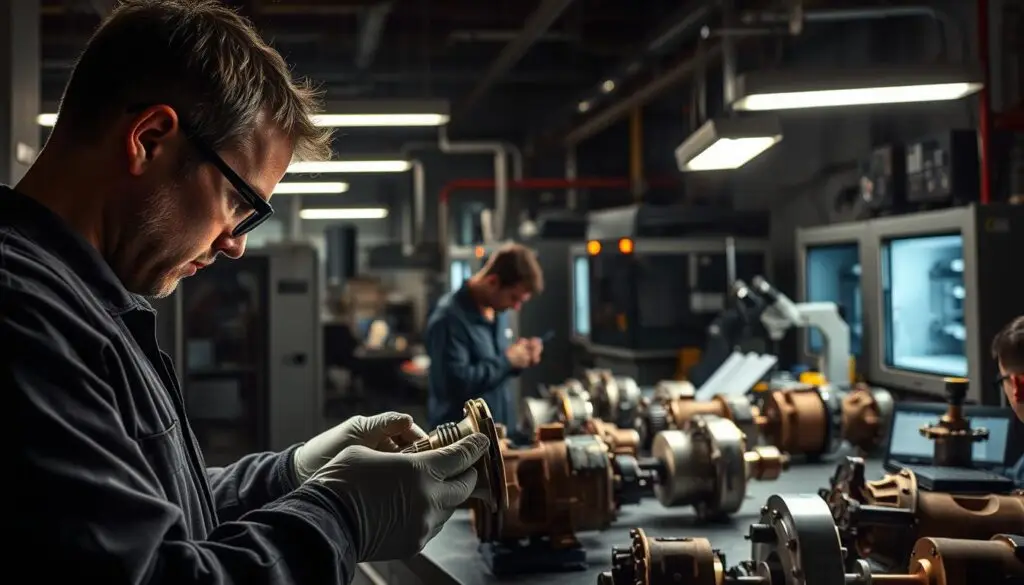
| Cost Category | Genuine OEM Part | Counterfeit Part | Impact Difference |
|---|---|---|---|
| Initial Purchase Price | $500 | $350 (30% discount) | $150 savings |
| Average Service Life | 100,000 miles | 8,000 miles | 92% reduction |
| Emergency Repair Costs | $0 | $2,400 | $2,400 additional |
| Downtime Revenue Loss | $0 | $3,600 (48 hours) | $3,600 additional |
| Collateral System Damage | $0 | $4,200 | $4,200 additional |
| Total Cost of Ownership | $500 | $10,550 | 21x higher cost |
Safety-Critical Component Failures
Beyond financial consequences, counterfeit heavy duty parts create catastrophic safety risks. Critical systems that protect human life—brakes, steering, suspension, and structural components—represent prime targets for counterfeiters because of their high replacement frequency and market demand.
⚠️ Safety Warning
Brake system components manufactured from inferior materials can fail suddenly during highway operation. Never install parts from unverified sources on safety-critical systems. A single counterfeit slack adjuster or brake chamber can result in complete loss of braking capacity.
Structural fasteners represent another category where counterfeiting creates existential danger. Wheel studs manufactured from inadequate steel alloys or with improper heat treatment lack the tensile strength to withstand operational loads. These fraudulent fasteners can fracture suddenly, allowing wheels to separate from vehicles at highway speeds—with predictably devastating consequences.
High-Risk Components Targeted by Counterfeiters
Understanding which components counterfeiters target most frequently enables maintenance teams to focus verification efforts on the highest-risk categories. Fraudulent producers concentrate on parts with specific characteristics: high replacement frequency, significant price differentials between genuine and aftermarket options, and relatively simple visual appearance that’s easy to replicate.
Brake system components consistently rank as the most counterfeited category in heavy duty applications—including brake pads with inadequate friction material, rotors from substandard cast iron, air brake valves with inferior seals, slack adjusters with improper metallurgy, and brake chamber diaphragms from low-quality rubber. Filtration products rank second, followed by electrical components and sensors, wear items (belts, hoses, seals), and transmission/turbocharger components.
Understanding the Counterfeit Supply Chain
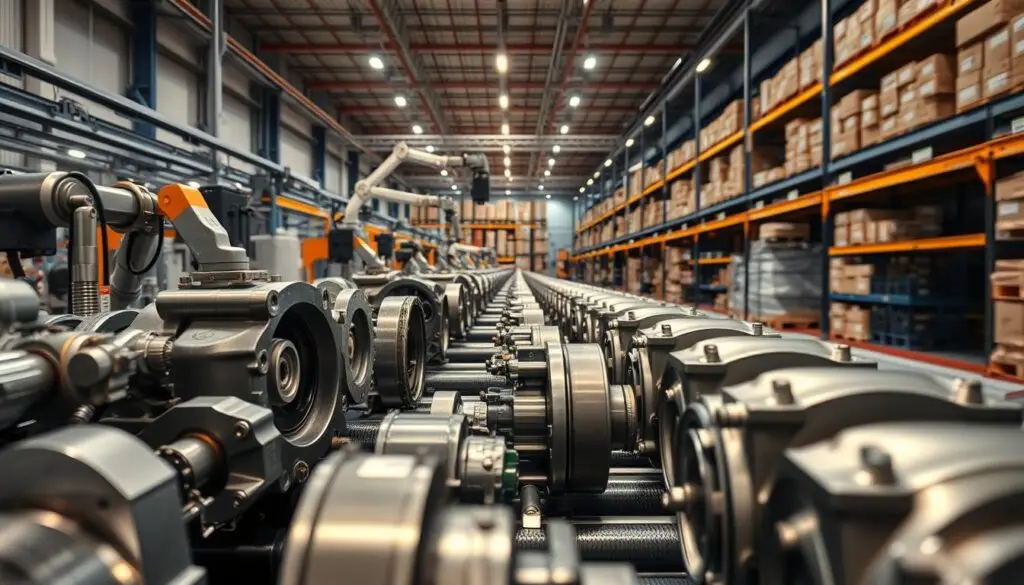
Counterfeit heavy duty parts don’t simply appear in the market—they follow intricate routes through networks of suppliers, distributors, and resellers designed to mask their illegitimate origins. These fraudulent components travel through sophisticated distribution channels that exploit vulnerabilities in procurement systems. Understanding these pathways is essential for protecting fleet operations.
How Counterfeit Parts Enter Legitimate Channels
Criminal organizations that specialize in counterfeiting obtain authentic heavy duty parts through various means—theft, bulk purchases, or salvage operations—then create molds and manufacturing processes that replicate appearance without maintaining quality standards. Counterfeiters particularly exploit situations where original parts become scarce or obsolete. When OEM manufacturers discontinue certain components, demand remains high among fleet operators maintaining older equipment, creating opportunities for fakes to fill the supply gap.
The sophistication of counterfeit documentation has reached alarming levels. Criminal networks create elaborate paperwork including certificates of conformity, quality test reports, and shipping documents that appear legitimate. These fake documents help counterfeit parts pass initial screening at receiving facilities.
| Supplier Type | Risk Level | Key Characteristics | Verification Required |
|---|---|---|---|
| OEM Direct Purchase | Lowest | Factory-direct with full traceability | Standard documentation |
| Authorized Distributors | Low | Contractual OEM relationships | Authorization verification |
| Independent Distributors | Elevated | No manufacturer oversight | Enhanced verification, facility audit |
| Online Marketplaces | High | Minimal seller verification | Maximum verification including lab testing |
| Brokers/Unknown Sources | Highest | Unclear sourcing and storage | Avoid entirely or require full authentication |
Warning Signs of Suspicious Suppliers
Identifying problematic suppliers before placing orders prevents costly mistakes and safety hazards. Documentation issues provide the clearest early warning signals—suppliers who cannot or will not provide OEM certification documents raise immediate concerns. Physical facility access represents another critical factor: legitimate suppliers welcome facility inspections, while vendors who refuse site visits likely have something to hide.
Quick Reference: Supplier Red Flags
- Pricing inconsistencies: Parts offered 30%+ below market rates without explanation
- Sudden availability: Scarce or obsolete components claimed in stock when authorized dealers report shortages
- Inconsistent lot numbers: Date codes that don’t align with stated manufacturing periods
- Poor communication: Evasive responses about sourcing or supply chain history
- Limited business history: Recently established companies without verifiable track records
- Unusual payment requests: Wire transfers, cryptocurrency, or untraceable payment demands
- Generic packaging: Parts arriving in plain boxes without manufacturer branding
Visual Inspection Techniques for Counterfeit Detection
The first barrier between your fleet and dangerous counterfeit parts is thorough visual examination. Before any component reaches your equipment, trained personnel must conduct systematic inspection to catch fraudulent products. Effective inspection combines multiple evaluation techniques examining packaging, physical construction, branding elements, and material characteristics.
Packaging Verification
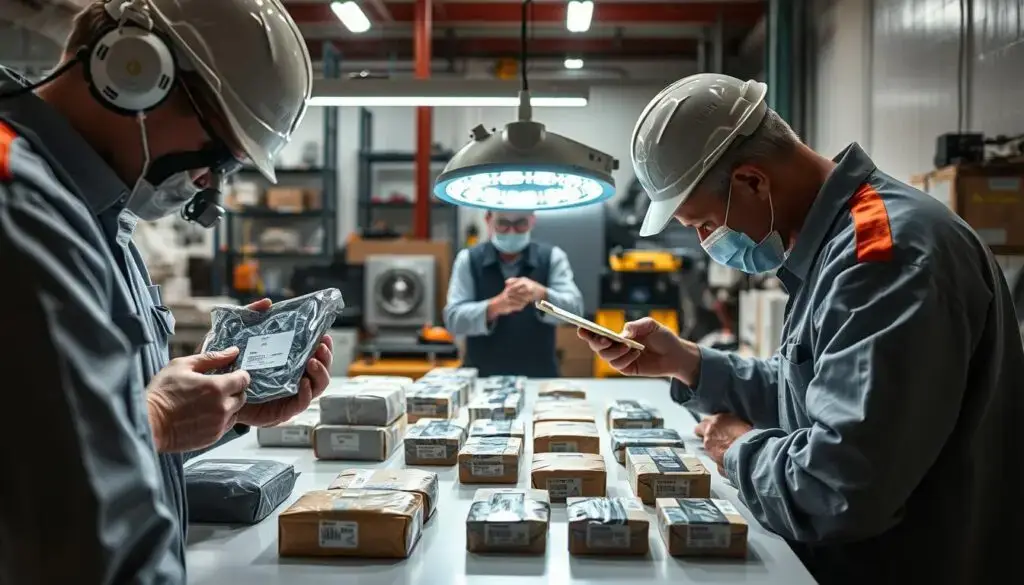
Authentic spare parts arrive with specific packaging indicators that counterfeiters struggle to replicate perfectly. Genuine OEM and reputable aftermarket brands invest heavily in packaging with sharp printing, consistent branding, and sophisticated security features. Packaging verification starts the moment a shipment arrives at your facility.
Examine box construction quality first—legitimate manufacturers use sturdy corrugated materials with precise dimensions and clean edges. Counterfeit packaging often uses flimsy materials that feel thin or weak. Print quality reveals significant clues: run your fingers across logos and text to feel printing depth and consistency. Blurry logos, pixelated images, or spelling errors indicate counterfeit products.
Security features distinguish professional packaging from fraudulent attempts: high-quality holograms that shift color when tilted, tamper-evident seals showing clear evidence if removed, unique serial numbers printed with specialized inks, QR codes that scan correctly through manufacturer verification portals, and metallic threads or watermarks embedded in packaging materials. Missing information represents another red flag—complete packaging includes batch numbers, manufacturing dates, part numbers, regulatory compliance markings, and documentation.
Physical Quality Indicators
Once packaging is opened, physical examination of the component provides the most reliable identification method. Manufacturing quality separates professional production from counterfeit operations that cut corners on processes and materials.
Casting and molding quality offers immediate visual cues. Examine metal castings for porosity, incomplete fills, or rough surfaces indicating poor foundry practices. Authentic parts display smooth, consistent casting with uniform wall thickness and proper detail reproduction. Look for excessive flash—the thin material ridge where mold halves meet. Heavy or irregular flash suggests worn molds or inadequate quality control.
Weld quality assessment reveals manufacturing expertise levels. Quality welds are uniform, consistent, and clean with proper penetration depth. Sloppy, uneven, or porous welds are weak points likely to crack under operational stress. Machined surface evaluation checks precision manufacturing—run fingers systematically over all surfaces noting texture consistency, smoothness, and finish quality.
Brand Marking Authentication
Brand identifiers provide powerful tools for genuine parts identification. Original equipment manufacturers use sophisticated marking techniques that counterfeiters find difficult to duplicate accurately. Permanent marking methods include laser etching that creates precise, indelible characters; casting integration where markings form during manufacturing; and precision stamping that indents metal surfaces.
Counterfeit parts often use stick-on labels, paint stamps, or low-quality etching that wears quickly or removes easily. Check whether markings can be scratched off with a fingernail or show signs of being applied after manufacturing. Serial number verification provides direct authentication through manufacturer databases—many OEMs maintain online portals where you can enter serial numbers to confirm authenticity, manufacturing date, and original distribution channel.
Material Quality and Weight Comparison
Tactile and visual assessment of materials provides crucial information about component authenticity. Genuine heavy duty parts use specified alloy grades, heat treatments, and polymer formulations resulting in characteristic weight, hardness, and finish.
Weight comparison offers a simple but effective test. When picking up a part, pay attention to weight relative to size—counterfeit parts made from cheaper materials frequently feel noticeably lighter than genuine components. Comparative weighing using a precision scale confirms suspicions. Reference OEM specifications for component weight or weigh a known-genuine part for comparison.
The HDJ Perspective
After two decades observing this industry, we’ve seen counterfeit detection evolve from a occasional concern to a daily necessity. The most successful fleets we work with have moved beyond reactive inspection to proactive supplier qualification. They’ve learned that the 20 minutes spent verifying a new supplier’s authorization saves 20 hours of dealing with counterfeit-related failures. The single most effective strategy remains simple: build relationships with a small number of verified suppliers and resist the temptation of too-good-to-be-true pricing from unknown sources.
Documentation and Certification Verification
Every legitimate heavy duty component arrives with a detailed paper trail proving its origin and quality. This documentation serves as your first line of defense against counterfeit parts. The chain of custody for genuine parts includes specific documents that trace each component from manufacturing to your facility—any gaps represent potential entry points for counterfeit products.
Validating Certificates of Conformity
Certificates of conformity represent the most critical documentation for establishing parts authenticity. These official documents certify that a component meets specific industry standards and manufacturer specifications. Genuine certificates contain multiple security features and detailed information that counterfeiters struggle to replicate accurately.
A legitimate certificate must include the exact part number, manufacturing batch or lot number, and production date. It must reference specific compliance standards such as ISO, SAE, or DOT regulations. Look for authorized signatory information with actual names and titles. Security features like watermarks, unique document serial numbers, or holographic elements indicate authenticity.
Contact the issuing authority directly to verify certificates. Most manufacturers maintain databases of issued certificates that you can cross-reference. Watch for red flags: unprofessional formatting with inconsistent fonts, vague compliance statements without specific standard references, missing contact information, document dates conflicting with manufacturing dates, or certificates issued by unknown third-party organizations.

Using OEM Database Systems
Serial number verification through manufacturer databases provides definitive proof of authenticity. Most major OEMs offer online portals or customer service support for checking part validity. These systems match serial numbers against production records to confirm genuine manufacturing.
Locate the serial number on your component—heavy duty parts typically display serial numbers on metal plates, stamped into castings, or laser-etched on surfaces. Access the OEM verification portal through the manufacturer’s official website and enter the complete serial number exactly as it appears. The system returns detailed information about genuine parts including manufacturing location, production date, original equipment specifications, and applicable warranty information. Mismatches between database results and your physical part indicate counterfeit components.
Decoding Production Information
Manufacturing dates and production batch information provide critical clues about parts authenticity. Genuine components display consistent date codes matching documentation and expected production timelines. Counterfeiters often overlook these details or apply incorrect date stamps.
Learn to locate date codes on different component types. Manufacturers stamp or etch dates directly onto metal parts, mold them into plastic components, or print them on labels. Some manufacturers use Julian date systems with year and day number; others employ month-year formats or coded systems requiring decoder charts. Compare date codes against packaging and certificates of conformity—all dates should align logically within normal supply chain timelines.
Free Professional Fleet Tools
Cost calculators, fault code lookup, maintenance planners, and more—built for owner-operators, fleet managers, and diesel techs. No signup required.
Advanced Testing and Authentication Technologies
Beyond visual inspection and documentation review, sophisticated technological solutions offer definitive proof of parts authenticity. Modern verification systems create multiple authentication layers working together to confirm component legitimacy. Investment in authentication technology delivers measurable returns through reduced equipment failures and enhanced operational safety.
Metallurgical Analysis
Laboratory testing provides scientific certainty about material authenticity through chemical composition and physical property analysis. X-ray fluorescence spectroscopy (XRF) determines the precise elemental makeup of metal components within seconds, revealing whether alloys match specified grades. This non-destructive technique identifies counterfeit parts using recycled or substandard materials with incorrect chemical compositions.
Hardness testing validates proper heat treatment and material processing. Rockwell testing measures resistance to indentation, Brinell testing provides readings for softer metals and castings, Vickers microhardness evaluates small parts and surface treatments, and Shore durometer testing verifies elastomer and rubber specifications. Microstructure analysis through metallography reveals grain structure patterns indicating manufacturing quality—counterfeit parts often display irregular grain structures, inclusions, or porosity compromising mechanical properties.

Digital Authentication Systems
Modern authentication technology incorporates sophisticated security features counterfeiters struggle to replicate accurately. Multi-layer holograms display specific viewing angle effects, color shifts, and three-dimensional images changing as observers move the part or packaging. Genuine holograms exhibit crisp, clear transitions while counterfeit versions appear blurry or distorted.
QR code technology enables instant authentication through smartphone scanning and database verification. Legitimate manufacturers implement unique serialization where each part receives a distinct identifier linked to secure verification portals. The verification process works through several steps: scan the QR code using a smartphone, connect automatically to the manufacturer’s secure portal, review displayed information including manufacturing date and distribution history, confirm the part’s current location matches expected supply chain custody, and report any discrepancies.
RFID tag technology provides automated tracking capabilities eliminating manual scanning requirements. These radio frequency identification chips contain unique serial numbers readable by handheld scanners throughout facilities. The system automatically logs part movements, creating comprehensive custody documentation supporting authentication efforts.
Third-Party Laboratory Testing
Accredited testing laboratories offer specialized analytical services when internal verification capabilities prove insufficient. These independent facilities provide unbiased assessment of component authenticity through comprehensive testing meeting international standards. Engaging professional testing services proves particularly valuable for high-value components, safety-critical parts, or batch verification following suspected counterfeiting incidents.
Non-destructive testing options preserve parts for subsequent use: radiographic inspection reveals internal defects, ultrasonic testing detects subsurface flaws, magnetic particle inspection identifies surface and near-surface cracks, and eddy current testing evaluates conductivity and coating thickness. Selecting qualified laboratories requires verification of accreditation status—look for facilities certified under ISO/IEC 17025, which establishes competence requirements for testing laboratories.
Supplier Qualification and Procurement Best Practices
Effective procurement strategies serve as the first line of defense against counterfeit infiltration. Establishing comprehensive supplier qualification protocols protects your fleet from substandard components while ensuring long-term operational reliability. The relationship between buyer and supplier forms the foundation of parts authenticity.
Building OEM Distribution Partnerships
Working with authorized OEM distributors provides multiple protection layers beyond simple parts authenticity. These partnerships deliver access to technical support, warranty coverage, and priority allocation during supply shortages. Identifying legitimate authorized dealers requires systematic verification—start by checking manufacturer websites for official distributor lists, then verify authorization certificates directly with the OEM rather than relying solely on distributor claims.
Understanding the distinction between authorized and independent distributors is critical. Authorized distributors maintain formal contractual relationships with manufacturers, source inventory through official channels, and adhere to specific storage, handling, and quality control standards. Independent distributors often procure parts through secondary markets where provenance becomes difficult to verify.

Implementing Supplier Evaluation Programs
Comprehensive supplier audits and background checks form the cornerstone of effective qualification. Desktop due diligence provides initial screening—verify business registration through state corporate databases, assess financial stability through credit reports, and research litigation history for quality-related lawsuits or fraud allegations.
On-site facility audits deliver direct observation of supplier operations. These visits should evaluate warehouse conditions including cleanliness, organization, and environmental controls. Examine quality control processes to ensure systematic inspection procedures exist. Assess staff training programs to verify employees understand counterfeit risks and authentication protocols. Documentation systems deserve particular attention—suppliers should maintain complete traceability records showing chain of custody from manufacturer to delivery.
Price Intelligence for Risk Detection
Price analysis serves as a powerful diagnostic tool for identifying potential counterfeit risks. Establishing baseline pricing through historical data and comparisons across multiple authorized sources creates the foundation for recognizing anomalies. Prices significantly below market rates—typically 20-40% lower than authorized dealers—represent strong counterfeit indicators.
These pricing gaps exist because counterfeiters compete on cost rather than quality, avoiding investments in materials, manufacturing processes, and quality control that legitimate manufacturers must make. When prices seem too good to be true, they usually are. Calculate total cost of ownership including potential failure costs, equipment downtime, and safety incidents—this comprehensive analysis typically reveals that “bargain” parts carry unacceptable risk.
Industry Standards and Regulatory Compliance
Regulatory compliance requirements and established industry standards serve as critical tools in the fight against counterfeit heavy duty parts. These frameworks provide measurable benchmarks for quality control and create legal accountability throughout the supply chain.
ISO 9001 and Quality Management
ISO 9001 certification represents the gold standard for quality management systems worldwide. This internationally recognized standard establishes comprehensive requirements for maintaining consistent product quality and authenticity. Parts suppliers with valid ISO 9001 certification demonstrate commitment to rigorous quality control.
The ISO 9001 framework requires documented procedures at every stage of operations—detailed records of incoming materials, production processes, inspection protocols, and corrective actions. These documentation requirements create transparency making counterfeit infiltration significantly more difficult. Verify a supplier’s certification by confirming it comes from an accredited body recognized by the International Accreditation Forum, and review the certification scope to ensure it covers the specific parts categories you’re purchasing.
SAE Standards for Counterfeit Prevention
SAE AS5553 titled “Counterfeit Electronic Parts; Avoidance, Detection, Mitigation, and Disposition” provides comprehensive guidance originally designed for aerospace applications, with principles now extending across heavy duty equipment industries. The standard establishes a risk-based approach categorizing suppliers and parts by risk level, then prescribing appropriate inspection intensity. High-risk scenarios—such as unfamiliar suppliers or critical safety components—require extensive testing and verification.
SAE AS6174 complements AS5553 by focusing on material authenticity throughout acquisition processes, outlining specific testing methodologies and documentation requirements while emphasizing the importance of maintaining chain of custody records. The current AS5553E revision, updated in November 2025, includes enhanced definitions, expanded guidance for supplier management and risk assessment, and extended flow-down requirements to all tiers of the supply chain.

FMCSA Regulations and DOT Requirements
The Department of Transportation and Federal Motor Carrier Safety Administration enforce strict standards governing commercial vehicle parts and maintenance. FMCSA regulations under 49 CFR Parts 393 and 396 require commercial vehicle parts to meet OEM specifications or certified equivalent standards. Counterfeit parts typically fail these requirements even if they appear superficially similar.
DOT standards cover critical safety components with particular scrutiny—brake systems, steering mechanisms, lighting equipment, and structural elements all require parts meeting specific performance criteria. Using substandard components creates immediate safety hazards and regulatory violations. Vehicles found with counterfeit or substandard components can receive immediate out-of-service orders, removing them from operation until proper repairs are completed using genuine, compliant parts.
| Regulation Area | Key Requirements | Non-Compliance Consequences |
|---|---|---|
| Brake Systems (FMVSS 121) | Parts must maintain original stopping performance | OOS order, penalties up to $15,000/violation |
| Lighting Equipment | DOT certification markings, photometric standards | Equipment violations, safety rating impact |
| Structural Components | Engineering certification for modifications | OOS order, fleet safety rating downgrade |
| Documentation | Records proving OEM or equivalent standards | Inspection failures, increased audit scrutiny |
Building an Internal Quality Verification Program
Establishing a comprehensive internal framework transforms counterfeit prevention from sporadic efforts into systematic protection. A well-structured quality assurance program institutionalizes verification practices across every touchpoint where parts enter or move through your organization.
Staff Training and Awareness
Effective staff training forms the foundation of any successful counterfeit prevention initiative. Personnel across procurement, receiving, inspection, and maintenance departments need targeted education addressing their specific responsibilities. Comprehensive programs should cover visual identification techniques, documentation verification methods, authentication technology usage, escalation procedures, and legal and safety implications of counterfeit infiltration.
Training frequency matters as much as content quality. Initial certification should be followed by annual refresher sessions incorporating emerging counterfeit techniques and lessons from recent incidents. Assessment mechanisms help verify that training translates into practical skills and appropriate vigilance.
Standard Operating Procedures
Documented inspection procedures eliminate inconsistency and ensure verification standards apply uniformly across all incoming parts. These SOPs provide step-by-step guidance removing guesswork from the inspection process. Effective procedures incorporate risk-based categorization allocating inspection resources proportionally to threat levels—safety-critical components like brake systems receive the most rigorous scrutiny, while high-value items and parts from unfamiliar suppliers warrant enhanced verification protocols.
Inspection procedures must include decision trees guiding inspectors when anomalies appear. Clear quarantine protocols prevent suspect parts from entering inventory or installation workflows, specifying exactly who has authority to release quarantined items and under what conditions. Living documents require regular updates—as counterfeiters develop new techniques, inspection procedures should evolve accordingly through quarterly reviews.
Incident Response and Reporting
Rapid, coordinated response to suspected counterfeits limits potential damage and supports investigation efforts. Formal incident protocols eliminate confusion about roles, responsibilities, and timelines when suspect parts are discovered. Effective response follows a structured approach: immediate quarantine of all suspect parts including installed components; notification cascade to procurement, legal counsel, and quality assurance; scope investigation to identify all potentially affected equipment; external reporting to OEMs and industry databases; evidence preservation for potential legal proceedings; and corrective action implementation.
Industry reporting systems amplify individual efforts. The Government Industry Data Exchange Program (GIDEP) allows organizations to share counterfeit intelligence across defense and industrial sectors. The Electronic Resellers Association International (ERAI) provides similar information sharing for electronic components. Participation demonstrates commitment to industry-wide prevention and provides access to valuable threat intelligence.
Frequently Asked Questions
What are the most commonly counterfeited heavy duty truck parts?
Brake system components rank as the most counterfeited category, including brake pads, rotors, air brake valves, and slack adjusters. Filtration products are second most targeted—oil filters with premature bypass valves, fuel filters with inadequate micron ratings, and air filters with insufficient pleating. Electrical components and sensors follow, particularly those providing data to engine management systems. These parts attract counterfeiters due to high replacement frequency, significant price differentials between genuine and aftermarket options, and relatively simple visual appearance that’s easy to replicate.
How can I verify if a heavy duty part is genuine or counterfeit?
Use a multi-layered verification approach combining several methods. Examine packaging for print quality, security features like holograms, and tamper-evident seals. Inspect the physical part for casting quality, weld consistency, and proper machining. Verify serial numbers through OEM database portals—most major manufacturers offer online verification systems. Check documentation including certificates of conformity and batch codes. Compare weight and material characteristics against OEM specifications. Prices 30% or more below market rates without logical explanation are immediate red flags warranting enhanced scrutiny.
What regulations apply to counterfeit commercial vehicle parts?
FMCSA regulations under 49 CFR Parts 393 and 396 require commercial vehicle parts to meet OEM specifications or certified equivalent standards. The Lanham Act prohibits false designation of origin with criminal penalties reaching $2 million for individuals. DOT and FMVSS standards govern safety-critical components including brakes, steering, and lighting. Non-compliant parts can result in immediate out-of-service orders during roadside inspections and civil penalties up to $15,000 per violation. Installing counterfeit parts can void manufacturer warranties and expose carriers to substantial liability in accident investigations.
Where should I purchase heavy duty parts to avoid counterfeits?
Purchase from OEM direct channels or authorized distributors with documented manufacturer relationships. Verify distributor authorization through official OEM websites—most manufacturers publish lists of authorized dealers by region. Avoid online marketplaces with unverified sellers, brokers with unclear sourcing, and any supplier offering prices significantly below market rates. Request complete traceability documentation including certificates of conformity, batch numbers, and chain of custody records for every purchase. Establish relationships with a small number of verified suppliers rather than constantly seeking the lowest price from unknown sources.
What should I do if I suspect a part is counterfeit?
Immediately quarantine the suspect part and any similar inventory from the same shipment—do not install it under any circumstances. Document findings with photographs and detailed written notes describing specific concerns. Contact the OEM’s anti-counterfeiting team for authentication assistance. Report confirmed counterfeits to GIDEP (Government Industry Data Exchange Program) or ERAI for electronics. File reports with CBP (Customs and Border Protection) for imported goods. Notify your insurance carrier if counterfeit parts were installed before discovery. Preserve all documentation and the physical parts as evidence for potential legal proceedings or warranty claims.
Protecting Your Fleet from Counterfeit Parts
Counterfeit heavy duty parts represent a critical threat to operational safety and financial stability that no fleet can afford to ignore. Sourcing from Original Equipment Manufacturers and their authorized distributors remains the most effective defense against counterfeit infiltration. Parts authenticity verification demands a comprehensive approach—visual inspection, documentation review, and advanced testing methods work together to create multiple protective barriers.
Leadership commitment drives successful counterfeit prevention programs. Investing in staff training, verification technologies, and supplier relationships pays dividends through reduced failures and extended equipment life. Every department from procurement to maintenance plays a vital role in protecting the supply chain.
When suspect parts surface, immediate action protects operations: quarantine the components, document thoroughly, notify relevant parties, and implement corrective measures. Swift response limits potential damage and demonstrates due diligence. Assess your current quality verification capabilities against the best practices outlined in this guide, identify gaps in procedures or training, and develop implementation plans strengthening defenses at every supply chain stage.
The cost of prevention pales compared to equipment failure, safety incidents, or regulatory penalties. Prioritize quality over short-term savings, build partnerships with trusted suppliers, and maintain robust inspection protocols. These actions safeguard personnel, equipment, and reputation against an evolving threat.
Share This Guide With Your Team
Help your colleagues protect your fleet from counterfeit parts. Share this comprehensive guide with maintenance supervisors, procurement teams, and technicians.


