By Michael Nielsen, Editor & Publisher | 15+ Years in Diesel Repair
Last Updated: January 2026
📖 Estimated reading time: 18 minutes
The pandemic exposed critical weaknesses in how commercial trucking operations source essential parts and components. Fleet managers experienced unprecedented shortages, delayed deliveries, and disrupted operations that highlighted dangerous dependencies on single-source vendors. These supply chain disruptions translated directly into vehicle downtime, maintenance backlogs, and escalating costs that threatened operational continuity.
Traditional parts supplier evaluation based solely on price and delivery speed no longer provides adequate protection in today’s volatile environment. Modern fleet parts supplier risk assessment must examine financial stability, technological capabilities, geographic vulnerabilities, and operational resilience across your entire vendor network. This comprehensive approach to supplier evaluation separates fleets that maintain uptime from those scrambling during the next disruption.
This guide provides a systematic framework for evaluating global versus local sourcing strategies that balance cost efficiency with supply reliability. Fleet managers will discover how comprehensive procurement strategy development protects vehicle availability while controlling total cost of ownership. Whether you’re managing a 50-truck regional operation or a 500-unit national fleet, understanding the complete risk landscape is essential before making procurement decisions that directly impact your bottom line.
Key Takeaways
- Traditional evaluation focusing only on price and delivery fails to address modern supply chain vulnerabilities including geopolitical risks, semiconductor dependencies, and single-source exposure
- Vehicle downtime costs $448-$760 per day according to Element Fleet Management—making parts availability decisions directly tied to profitability, not just procurement efficiency
- Hybrid sourcing strategies outperform single-approach models by matching supplier type to parts criticality: local for mission-critical components, global for predictable maintenance items
- Systematic risk assessment frameworks must evaluate supplier financial health, operational capacity, geographic concentration, and contingency capabilities quarterly
- Dual-sourcing critical components with 70/30 volume splits between primary and backup suppliers maintains competitive relationships while ensuring supply continuity during disruptions
Understanding the Heavy-Duty Parts Supply Chain Landscape
The landscape of commercial truck parts supply chains represents a complex web of interconnected suppliers, distributors, and logistics providers spanning multiple continents. What once functioned as straightforward business relationships between fleet operators and nearby parts distributors has evolved into sophisticated global networks. Fleet managers today must understand this intricate ecosystem to maintain operational continuity and control costs effectively.
Risk management has been among the top priorities for procurement departments for years. Yet even experienced operations found themselves unprepared for pandemic-driven increases in supplier risks and resulting disruptions. From semiconductor shortages affecting engine control modules to shipping container delays impacting brake component availability, the vulnerabilities in modern fleet parts procurement systems became impossible to ignore.
From Local Transactions to Global Dependencies
Fleet managers historically relied on established local distributors and OEM dealer networks for their parts needs. These relationships provided predictability and personal accountability. The procurement process remained relatively straightforward, with face-to-face negotiations and same-day delivery common for many components.
Globalization and competitive cost pressures fundamentally changed this approach. Fleet operators began sourcing components internationally to reduce expenses and access specialized parts unavailable domestically. This shift transformed fleet maintenance operations from regional activities into globally coordinated functions with supply chains stretching from Shenzhen to Cincinnati.

The transition brought significant advantages including lower per-unit costs and broader product selection. However, it also introduced dependencies on distant suppliers, extended logistics chains, and coordination challenges across time zones and languages that many fleets weren’t prepared to manage.
Navigating Today’s Volatile Market Conditions
Contemporary fleet managers face unprecedented volatility in automotive and heavy-duty supply chains. Semiconductor shortages have disrupted vehicle electronics availability across the industry, affecting everything from engine control units to telematics systems. Raw material price fluctuations create budget uncertainty, while shipping container shortages and port congestion extend lead times unpredictably.
Just-in-time parts inventory strategies that once optimized working capital by minimizing on-hand stock now create critical vulnerabilities when supply chain disruptions occur. A single delayed shipment of turbochargers or DPF sensors can cascade into vehicle downtime and service interruptions that cost fleets thousands daily.
$448-$760 per vehicle per day
Average fleet vehicle downtime cost according to Element Fleet Management research
Labor availability issues compound these challenges throughout the supply network. From manufacturing facilities to distribution centers and freight carriers, workforce constraints affect every stage of parts delivery. Technician shortages at both suppliers and fleet maintenance operations create additional bottlenecks that extend repair timelines.
| Supply Chain Element | Traditional Model | Current Challenges | Fleet Impact |
|---|---|---|---|
| Lead Times | 2-5 days local delivery | 6-12 weeks international | Extended vehicle downtime |
| Inventory Strategy | Stock on demand | JIT vulnerabilities exposed | Emergency premium purchases |
| Supplier Relationships | Direct local partnerships | Multi-tier global networks | Reduced visibility |
| Cost Predictability | Stable regional pricing | Currency and freight volatility | Budget forecasting difficulties |
Why Proactive Assessment Is Now Mandatory
Recent supply chain disruption events provide compelling evidence that reactive approaches no longer suffice. The pandemic exposed dangerous single-source dependencies across industries. Personal protective equipment shortages, delayed consumer goods, and unavailable manufacturing components demonstrated system-wide fragility that extended directly into commercial vehicle operations.
Geopolitical events created cascading failures throughout automotive supply chains. The Ukraine conflict disrupted neon gas supplies essential for semiconductor manufacturing, which rippled into widespread parts shortages affecting ECM modules, sensor systems, and electronic components critical for modern diesel engines. Fleet managers who relied on single suppliers faced extended vehicle downtime measured in weeks, not days.
Reactive problem-solving results in costly emergency measures. Premium-priced expedited shipping, substitute parts purchases at inflated costs, and customer service failures become inevitable consequences. Fleet operators lose competitive advantage when vehicles sit idle awaiting components that could have been sourced through backup channels.
Risk Assessment Framework for Fleet Parts Suppliers
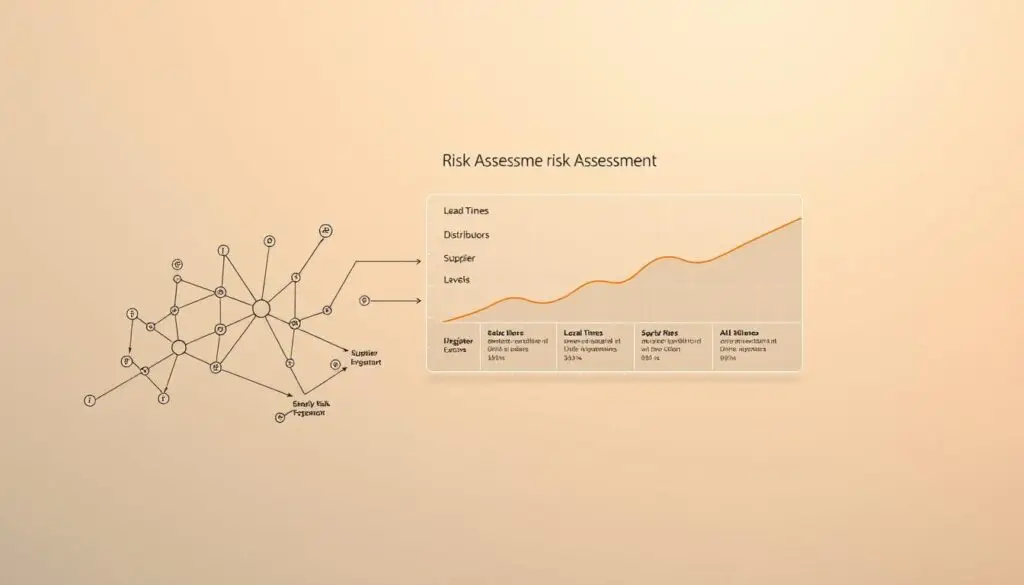
Fleet managers need a comprehensive risk assessment framework to identify and mitigate supply chain vulnerabilities before they disrupt operations. The risk management cycle involves five critical stages: identifying potential threats, assessing their likelihood and impact, developing response strategies, communicating with stakeholders, and continuously monitoring supplier performance. This systematic approach to supplier risk management ensures your fleet supply chain remains resilient against unexpected disruptions.
Building an effective vendor risk evaluation process requires segmenting suppliers into distinct categories. Critical suppliers include those with long lead times, sole-source vendors, and providers of essential components like engine parts, brake systems, and emissions equipment. These high-priority relationships demand intensive oversight and contingency planning that goes beyond standard procurement practices.
Key Risk Categories in Fleet Supply Chains
Understanding the primary risk domains helps fleet managers develop targeted mitigation strategies. Each category presents unique challenges that require specialized assessment techniques and monitoring protocols tailored to heavy-duty operations.

Operational risks directly threaten parts availability and service continuity. Supplier capacity constraints can limit your ability to scale fleet operations during peak demand periods. Quality control failures lead to increased warranty claims, vehicle downtime, and safety concerns that impact your bottom line and CSA scores.
Delivery performance issues create scheduling challenges and inventory gaps. Manufacturing disruptions from equipment failures, natural disasters, or labor disputes can halt production unexpectedly. Logistics challenges including carrier capacity constraints, port congestion, and transportation delays add further complexity to operational risk management for fleet procurement teams.
Financial Risks
Financial instability at supplier organizations poses significant threats to supply continuity. Bankruptcy potential becomes evident through deteriorating credit ratings, declining cash reserves, and mounting debt obligations. Liquidity problems may force suppliers to accept unfavorable terms from larger customers or prioritize major accounts over smaller fleet operations.
Currency exchange volatility affects international suppliers, creating pricing unpredictability that can swing 10-15% in months. Sudden cost increases from financial stress can strain your procurement budget and force emergency sourcing decisions at premium prices.
Strategic Risks
Strategic risks emerge from fundamental changes in supplier business models or market positioning. Technology obsolescence threatens suppliers who fail to invest in innovation or adapt to evolving fleet requirements including telematics integration, electric vehicle components, and advanced emissions systems.
Mergers and acquisitions can shift supplier priorities, redirect resources, or alter service level commitments to existing customers. The heavy-duty aftermarket has seen significant consolidation, with implications for parts availability and pricing that fleet managers must monitor continuously.
Building a Comprehensive Risk Matrix
A structured risk matrix provides visual clarity for prioritizing supplier oversight efforts. This tool plots each supplier across two dimensions: likelihood of risk occurrence and potential impact severity. The resulting grid reveals which suppliers require intensive monitoring versus those with acceptable risk profiles.
Risk assessment methodologies fall into three types: quantitative assessments using numerical criteria, qualitative assessments based on descriptive evaluations, and semi-quantitative approaches combining both methods. Fleet managers should apply specific criteria to rate risks as high, medium, or low based on probability and consequence factors relevant to their operations.
| Risk Level | Probability Criteria | Impact Criteria | Recommended Action |
|---|---|---|---|
| High Risk | Monthly or more frequent | Fleet operations stop, safety concerns, costs exceed $100K | Immediate alternative sourcing, weekly monitoring |
| Medium Risk | Quarterly to annually | Partial service disruption, costs $25K-$100K | Develop contingency plans, monthly reviews |
| Low Risk | Less than annually | Minimal disruption, costs under $25K | Standard monitoring, quarterly assessments |
Quantifying Supply Chain Vulnerabilities
Measuring supply chain vulnerabilities requires combining multiple assessment approaches. Quantitative methods track financial ratios, on-time delivery percentages, defect rates, and lead time metrics. These numerical indicators provide objective benchmarks for supplier performance comparison that can be tracked over time.
Qualitative methods evaluate relationship strength, communication effectiveness, and management stability. These subjective factors often predict supplier reliability when combined with quantitative data. Calculate risk scores by weighting different factors based on their importance to your specific fleet operations and service requirements.
Establish threshold triggers that signal when supplier risk reaches unacceptable levels. These predetermined limits indicate when immediate intervention or alternative sourcing strategies become necessary to protect your fleet supply chain continuity and avoid costly downtime events.
Global Fleet Parts Suppliers: Strategic Advantages
Large-scale global suppliers transform fleet procurement by delivering measurable cost savings and expanded product access. International sourcing provides fleet managers with distinctive operational benefits that smaller regional vendors often cannot match. Understanding these strategic advantages helps organizations make informed decisions about their supply chain structure.
The competitive edge of global parts suppliers stems from their manufacturing scale, technological investments, and international market presence. These factors combine to create value propositions that significantly impact fleet total cost of ownership and operational efficiency when managed properly.
Manufacturing Scale Drives Significant Savings
Economies of scale represent the most compelling financial advantage of partnering with global parts suppliers. Large international manufacturers achieve 20-40% cost savings on commodity parts through high-volume production runs and automated manufacturing processes. This cost efficiency translates directly to fleet cost reduction across brake components, filters, electrical parts, and other consumables purchased in volume.
Bulk raw material purchasing power further amplifies these savings. Global suppliers negotiate favorable terms with material providers that local vendors simply cannot access given their purchasing volumes. The per-unit cost advantages become particularly significant for fleet operations managing hundreds or thousands of vehicles with predictable parts consumption patterns.

Technology Access and Specialized Components
Global suppliers invest heavily in research and development, creating access to advanced technologies unavailable through local channels. OEMs and Tier 1 automotive suppliers maintain exclusive rights to proprietary diagnostic tools, telematics components, and emission control systems essential for modern commercial vehicles.
These supplier capabilities extend to electric vehicle parts and next-generation powertrain components. International manufacturers often operate the only production facilities for specialized parts required by newer equipment. Fleet managers gain technological advantages that support vehicle performance and regulatory compliance through these relationships.
Quality Management and Certification Standards
Established quality standards and certifications provide assurance of consistent parts performance. Major global suppliers typically maintain ISO 9001 and IATF 16949 certifications along with rigorous quality management systems. These internationally recognized standards demonstrate commitment to manufacturing excellence that benefits fleet operations.
Global suppliers face greater reputational consequences for quality failures, creating strong incentives for consistent performance. This accountability often results in more reliable parts quality compared to uncertified alternatives, though fleet managers should still verify certifications and audit results before committing to major purchasing agreements.
Global Supplier Risk Factors and Vulnerabilities
The geographical distance separating fleet managers from global suppliers creates exposure to disruptions that can paralyze vehicle maintenance operations. While international sourcing delivers cost advantages, it simultaneously introduces vulnerabilities that demand careful evaluation. Understanding these risk factors helps fleet managers build contingency plans and make informed procurement decisions.
International supply chains expose fleets to challenges that domestic suppliers rarely encounter. These vulnerabilities range from political instability to natural disasters affecting production facilities thousands of miles from your shop floor.
Geopolitical Uncertainties and Trade Policy Shifts
Political tensions between nations create immediate geopolitical risk for fleet operations. The conflict in Ukraine demonstrated this vulnerability when neon gas production—essential for semiconductor manufacturing—stopped abruptly. This single disruption cascaded through automotive supply chains, delaying vehicle repairs for months as ECM modules and sensors became unavailable.
Trade policy shifts can eliminate cost advantages overnight. Tariff increases can add 25% or more to parts costs without warning. Export restrictions may completely sever supplier relationships that took years to establish. The 2025 tariff measures have already prompted many distributors and fleet operators to reassess procurement strategies and diversify supplier bases.
⚠️ Concentration Risk Warning
Fleet operations relying on suppliers concentrated in geopolitically volatile regions face elevated risk. The Federal Reserve’s Sourcing Risk Index research found motor vehicle parts generally sourced domestically or from low-risk locations, but some electronic components remain concentrated in high-risk regions requiring careful monitoring.
Extended Lead Times and Logistics Complexity
Global sourcing typically requires 30 to 90 days for parts delivery compared to 1 to 7 days from local suppliers. This extended timeline creates inventory management challenges and limits flexibility when unexpected demand arises. Fleet managers must predict parts needs months in advance or face vehicle downtime waiting for internationally sourced components.
Long lead times force companies to carry larger safety stock. This ties up working capital and increases warehouse space requirements. The financial burden often negates the per-unit savings from global purchasing when all carrying costs are calculated into total cost of ownership.

The pandemic revealed critical weaknesses in ocean freight systems. Container shortages delayed critical parts shipments by months in some cases. Port labor disputes and capacity constraints created bottlenecks that expedited shipping couldn’t resolve quickly—you can’t expedite when there’s no capacity available at any price.
Multi-Modal Transportation Challenges
Coordinating international logistics involves ocean freight, customs clearance, inland transportation, and final delivery. Each transfer point introduces potential failure modes. A problem at any stage can halt the entire shipment, leaving your trucks waiting and your customers unhappy.
Different carriers and jurisdictions complicate tracking and accountability. When parts go missing or arrive damaged, determining responsibility becomes a time-consuming process that leaves vehicles out of service while paperwork gets sorted. This complexity adds hidden administrative costs that rarely appear in supplier quotes.
Quality Control and Compliance Challenges
Verifying parts authenticity proves difficult across international distances. Counterfeit components enter supply chains more easily when manufacturers operate thousands of miles away. Fleet managers struggle to maintain quality oversight without physical proximity to production facilities—a particular concern for safety-critical components like brake parts and steering components.
Compliance with safety and environmental regulations varies by country. Parts that meet standards in the supplier’s nation may fail to comply with EPA emissions requirements or FMCSA vehicle safety standards. Discovering these gaps after shipment arrival creates costly returns and replacement cycles that extend downtime beyond initial estimates.
Currency Fluctuations and Hidden Costs
Exchange rate volatility erodes anticipated savings from global sourcing. A parts order that looks cost-effective today may become expensive when payment occurs months later. Currency movements of 10-15% can eliminate entire profit margins on parts procurement decisions made without hedging strategies.
Additional expenses beyond quoted prices significantly increase total landed costs. These hidden charges include import duties and tariffs that vary by product classification, freight insurance to protect against loss during transit, customs brokerage fees for processing international shipments, inventory carrying costs from extended lead times, and documentation and compliance expenses for international trade requirements.
Local Fleet Parts Suppliers: Competitive Benefits
Fleet operations that leverage local parts suppliers gain operational flexibility and responsiveness that global alternatives struggle to match. Geographic proximity creates fundamental advantages in delivery speed, communication effectiveness, and supply chain control. These benefits translate directly into reduced vehicle downtime, stronger partnerships, and improved operational predictability for fleet managers.
The value proposition of regional sourcing extends beyond simple convenience. Local partnerships address critical fleet management challenges including emergency repairs, inventory optimization, and supply chain risk mitigation in ways that distant suppliers cannot replicate.
Immediate Availability and Rapid Response
Local parts suppliers deliver same-day or next-day service that dramatically reduces vehicle downtime. When a fleet vehicle breaks down, every hour of inactivity represents lost revenue and diminished service capacity. Regional suppliers like FleetPride with over 300 locations across 46 states maintain inventory within driving distance, enabling multiple daily deliveries.
This rapid delivery capability supports lean inventory strategies that reduce working capital requirements. Fleet managers can maintain smaller on-site parts inventories while still ensuring fast access to critical components. Emergency situations receive immediate attention, with many local suppliers offering after-hours service and rush deliveries that global suppliers simply cannot match.

The impact on operational efficiency proves substantial. Reducing vehicle downtime from five days to one day can generate thousands of dollars in savings per incident for commercial fleets, according to Element Fleet Management research on downtime costs.
Partnership Development and Direct Communication
Geographic proximity enables face-to-face meetings and facility visits that strengthen supplier relationships. Local suppliers often assign dedicated account representatives who understand specific fleet requirements, operational patterns, and maintenance schedules. These personal connections improve problem resolution speed and supplier commitment to customer priorities.
Direct communication channels eliminate layers of intermediaries common with global suppliers. Fleet managers can speak directly with decision-makers, negotiate flexible payment terms, and secure customized service levels. These partnerships transform transactional exchanges into collaborative relationships where suppliers willingly accommodate urgent requests and provide technical support.
Enhanced Oversight and Parts Traceability
Shorter supply chains with fewer intermediaries provide greater supply chain visibility. Fleet managers can verify parts authenticity, trace components to original manufacturers, and conduct on-site audits of supplier facilities. This transparency ensures compliance with quality standards and reduces counterfeit parts risks.
The ability to physically inspect warehouse operations, review inventory management practices, and verify quality control processes creates confidence impossible to achieve with distant suppliers. Traceability improves dramatically when only one or two entities separate your fleet operation from the parts manufacturer.
| Delivery Metric | Local Suppliers | Global Suppliers | Advantage |
|---|---|---|---|
| Standard Delivery | Same-day to 24 hours | 5-14 business days | 90% faster |
| Emergency Response | 2-4 hours | 3-7 days expedited | Critical for uptime |
| Daily Deliveries | Multiple possible | Single scheduled | Greater flexibility |
| Minimum Orders | Low or none | $500-$1,000 typical | Better cash flow |
Local Supplier Limitations and Considerations
Every sourcing strategy involves tradeoffs, and local suppliers come with specific limitations that impact pricing, capacity, and technological capabilities. Fleet managers need objective assessments of these constraints to make informed decisions. Understanding local supplier limitations helps balance proximity benefits against operational requirements and cost considerations.
These constraints don’t eliminate local suppliers from consideration. However, they do require careful evaluation within your specific fleet context and operational parameters.
Cost Premiums and Pricing Structure Challenges
Local suppliers typically operate with higher parts pricing due to reduced economies of scale. Smaller purchasing volumes mean they pay more to manufacturers and distributors. This cost differential gets passed directly to fleet customers in the form of higher per-unit pricing.
Industry analysis indicates local suppliers charge 15-35% price premiums on commodity parts compared to global suppliers. Filters, fluids, brake components, and other high-volume items show the largest gaps. These differences add up quickly for fleets purchasing hundreds or thousands of parts monthly across routine maintenance cycles.

Pricing flexibility represents another challenge. Local distributors often have limited volume discount tiers with higher thresholds, restricted promotional programs and rebate opportunities, higher minimum order quantities relative to inventory depth, and less negotiating leverage with upstream manufacturers. Fleet managers must calculate whether convenience and speed offset these cost disadvantages for each parts category.
Infrastructure and Fulfillment Capacity Issues
Local suppliers may lack the infrastructure to support large fleet operations effectively. Supplier capacity constraints become apparent when fleets need high-volume replenishment or operate across multiple geographic locations requiring coordinated parts supply.
Smaller distributors face several operational limitations. Their warehouse space restricts inventory depth on fast-moving parts. Distribution networks rarely extend beyond regional boundaries. Staffing levels limit fulfillment speed during demand spikes when multiple customers need the same components simultaneously.
Large emergency orders frequently exceed local supplier capabilities. A fleet requiring 50 air filters immediately may find local inventory depleted. Stockouts on common parts create unexpected downtime and force expensive expedited shipping from alternative sources at premium prices.
Coverage Gaps and Specialization Boundaries
Product availability through local channels typically focuses on mainstream applications. Distributors stock parts for popular vehicle makes and models with predictable demand patterns. Specialized equipment, older vehicles, and proprietary components fall outside their core inventory strategies.
Fleets operating diverse vehicle populations encounter coverage challenges. Heavy-duty commercial truck parts may require specialized distributors focused on Class 6-8 vehicles. Equipment manufacturer-specific components need direct OEM relationships with Cummins, Detroit Diesel, or PACCAR service networks. Older vehicle parts demand aftermarket specialists or salvage sources. Performance or modification parts require niche suppliers outside mainstream distribution.
Managing relationships with multiple local suppliers increases administrative complexity. Each vendor requires separate accounts, ordering systems, payment terms, and reconciliation processes. This fragmentation reduces the efficiency gains local sourcing promises.
The HDJ Perspective
After covering fleet operations for 15 years, we’ve seen the pendulum swing from aggressive global sourcing in pursuit of cost savings to desperate reshoring when those supply chains collapsed during the pandemic. The fleets that weathered disruptions best weren’t committed to either extreme—they had diversified supplier networks with local relationships for emergencies and global channels for planned procurement. The lesson is clear: procurement strategy must match operational reality, not theoretical cost models. Your cheapest supplier is worthless if they can’t deliver when you need parts.
Comparative Analysis: Evaluating Fleet Parts Suppliers
Objective supplier comparison demands systematic analysis of multiple cost factors and operational impacts. Fleet managers must look beyond initial purchase prices to understand the complete financial picture. A comprehensive evaluation framework incorporates direct expenses, hidden costs, reliability data, and risk factors into procurement decisions that protect both uptime and profitability.
Effective supplier comparison requires standardized metrics that enable apples-to-apples assessments between global and local providers. This analytical approach reveals true value propositions that simple price comparisons often obscure.
Total Cost of Ownership Calculations
Understanding total cost of ownership transforms how fleet managers evaluate supplier proposals. This methodology captures all expenses associated with parts procurement throughout the entire lifecycle. Organizations that implement comprehensive fleet cost analysis discover that the lowest-priced supplier frequently delivers the highest actual cost when all factors are considered.

The complete cost picture includes numerous financial elements beyond the quoted unit price. Direct components encompass purchase price, freight and logistics expenses, customs and duties for international shipments, and payment processing fees. Indirect costs add inventory carrying expenses, warehousing requirements, order processing labor, returns handling, warranty claim administration, and quality failure impacts that ripple through maintenance operations.
A local supplier with 20% higher unit costs might actually provide lower total cost of ownership through operational advantages. Shorter lead times enable 40% inventory reduction, decreasing carrying costs substantially. Faster delivery reduces vehicle downtime expenses, creating additional savings that offset higher purchase prices in the total calculation.
Downtime Impact Assessment
Parts availability directly affects vehicle utilization and revenue generation. Fleet managers must quantify the financial consequences of equipment sitting idle waiting for components. Fleet cost analysis should capture revenue loss from unavailable vehicles, customer service failures, expedited shipping costs for emergency parts, and technician idle time when work stops for lack of components.
The formula for calculating downtime costs considers daily revenue per vehicle, utilization rates, and delay duration. When a commercial vehicle generates $500 daily revenue and sits idle for three days awaiting parts, the business loses $1,500 plus additional costs. Paying premium prices for same-day local delivery often generates positive ROI compared to waiting for cheaper international shipments.
Reliability Metrics and Performance Indicators
Risk assessment based on on-time performance and quality represents the most basic monitoring approach. Companies should capture on-time delivery information, order completeness, and quality test results using standardized methods. TMC Recommended Practice RP 806A provides a framework for service vendor performance evaluation that fleet managers can adapt for parts suppliers.
Critical indicators include on-time delivery percentage, order fill rate, parts quality defect rates, order accuracy, lead time consistency, stock availability, and responsiveness to emergency requests. Fleet managers should weight these supplier performance metrics based on operational priorities and establish performance benchmarks appropriate for their service requirements.
| Performance Metric | Global Benchmark | Local Benchmark | Weight |
|---|---|---|---|
| On-Time Delivery | 85-90% | 95-98% | 25% |
| Order Fill Rate | 92-95% | 88-92% | 20% |
| Quality Defect Rate | 0.5-1.0% | 0.8-1.5% | 30% |
| Emergency Response | 48-72 hours | 4-8 hours | 15% |
Risk-Adjusted Value Assessment
Financial assessment evaluates gross and net profit margin, debt-to-equity ratio, accounts receivable ratio, and cash flow indicators. Monitoring should track changes and trends in these ratios while watching for red flags that signal supplier instability. The likelihood and impact of disruptive events form significant components of assessment, as organizations must consider both impact probability and consequence severity.
Incorporating risk factors into supplier selection requires adjusting expected value calculations for probability of supply disruptions, financial instability, or quality failures. A value assessment methodology multiplies expected benefits by probability of successful delivery. This approach reveals when apparently attractive supplier proposals carry unacceptable risk levels.
Fleet managers apply risk-adjusted value assessment by calculating expected value minus probability-weighted risk costs. A global supplier offering 30% cost savings with 15% disruption probability may deliver less value than a local provider with 10% higher costs but only 2% disruption risk when downtime costs are factored into the equation.
Free Professional Fleet Tools
Cost calculators, fault code lookup, maintenance planners, and more—built for owner-operators, fleet managers, and diesel techs. No signup required.
Strategic Procurement Models for Fleet Managers
Developing a resilient fleet parts supply chain requires implementing procurement strategies that balance cost efficiency with supply reliability through intelligent supplier diversification. The most successful operations move beyond exclusive reliance on either global or local suppliers. Instead, they create hybrid sourcing frameworks that optimize supplier selection based on parts characteristics and operational priorities.
Fleet managers who apply sophisticated procurement models reduce supply disruptions significantly compared to single-source approaches. These strategies segment suppliers into multiple risk categories and apply tailored management techniques to each group based on criticality and supply market dynamics.
Hybrid Sourcing Strategies
A well-designed hybrid sourcing approach combines the cost advantages of global suppliers with the responsiveness of local partners. This procurement strategy requires systematic analysis of parts inventory to determine optimal sourcing channels for each component category based on criticality, lead time tolerance, and cost sensitivity.
Fleet managers must evaluate several factors when developing their sourcing mix: component cost relative to total spend, availability requirements based on vehicle criticality, lead time sensitivity for maintenance scheduling, and potential downtime impact when parts are unavailable. The goal is matching each parts category with the supplier type that delivers maximum value while minimizing operational risk.
Critical vs Non-Critical Parts Segmentation
Effective parts categorization forms the foundation of strategic procurement. Fleet managers should classify inventory using ABC analysis combined with criticality assessment. Category A parts represent high-value components with significant cost impact. Category B includes moderate-value items with balanced importance. Category C covers low-cost, high-volume commodities that represent minimal financial risk per unit.
The criticality dimension adds another layer by evaluating failure consequences. Mission-critical components that cause immediate vehicle downtime—starters, alternators, brake parts, turbochargers—warrant local sourcing despite higher unit costs. Non-critical parts with flexible replacement timelines—shop supplies, minor hardware, non-urgent maintenance items—suit cost-effective global procurement channels.
Key Recommendation
Apply the 80-20 rule to prioritize management attention: approximately 20% of suppliers typically account for 80% of supply chain risk exposure. These critical suppliers require intensive monitoring and relationship management regardless of sourcing location. Focus qualification and audit resources on high-impact vendors first.
Strategic Stock Positioning
Optimizing inventory placement balances availability requirements against carrying costs. High-turnover critical components should maintain local stock levels for immediate access. Fleet managers calculate optimal reorder points using historical usage data and lead time variability from their fleet management systems.
Strategic inventory positioning involves setting appropriate safety stock buffers based on supply uncertainty. Critical parts with unpredictable demand patterns require higher safety stock levels. Commodity items with stable consumption and multiple supply sources need minimal buffer inventory since alternatives exist if primary suppliers experience stockouts.
Dual-Sourcing and Diversification Approaches
Maintaining multiple qualified suppliers for critical parts categories creates supply redundancy that protects against disruptions. Dual sourcing strategies split purchase volumes between primary and secondary suppliers to sustain competitive relationships while ensuring backup capacity exists when problems arise.
Fleet managers structure these arrangements with clear qualification requirements for alternate suppliers. Primary suppliers typically receive 60-70% of purchase volume with remaining volume allocated to maintain secondary supplier capabilities and competitive pricing pressure. Trigger events for activating backup sources include quality issues, delivery failures, or capacity constraints at primary suppliers.
Diversification reduces dependency on single suppliers and mitigates geographic concentration risk. Fleet operations serving multiple regions benefit from regional supplier networks that provide localized support while maintaining centralized quality standards and parts availability across the organization.
| Procurement Model | Best Application | Risk Approach | Cost Structure |
|---|---|---|---|
| Single Global | Low-cost commodities, flexible lead times | Safety stock buffers | Lowest unit cost, higher carrying |
| Single Local | Mission-critical parts, immediate need | Relationship management | Higher unit cost, minimal safety stock |
| Dual Sourcing | Critical parts, moderate volume | 70/30 volume split | Balanced cost and risk |
| ✓ Hybrid Multi-Source | Complex fleets, diverse requirements | Category-specific strategies | Optimized TCO |
Implementation: Building a Resilient Fleet Supply Chain
Effective supply chain resilience emerges from rigorous supplier qualification processes and continuous performance oversight. Fleet managers must transform strategic insights into actionable protocols that protect operations from disruption. This implementation framework provides the structure needed to build lasting supplier relationships while minimizing risk exposure across your parts procurement network.
The transition from assessment to action requires systematic procedures that evaluate suppliers before commitment and monitor performance after contracts begin. A structured approach ensures consistency across procurement decisions and creates measurable standards for vendor performance.
Supplier Qualification and Audit Processes
Comprehensive supplier qualification establishes the foundation for reliable fleet parts procurement. Fleet managers should develop standardized evaluation procedures that assess both financial health and operational capabilities before awarding contracts or committing significant purchasing volume.
Documentation requirements form the first barrier to entry. Potential suppliers must provide proof of business registration, insurance certificates meeting your requirements, quality certifications, and references from current customers operating similar fleet types. Supplier audits verify these credentials through independent validation and site inspections when feasible.
Financial analysis reveals supplier viability and long-term partnership potential. Fleet managers should request financial statements to calculate critical ratios indicating business health: gross and net profit margins demonstrating operational efficiency, debt-to-equity ratios showing capital structure stability, accounts receivable turnover indicating cash collection effectiveness, cash flow statements revealing liquidity positions, and current ratios measuring ability to meet short-term financial obligations.
Monitor these metrics quarterly to identify trends and red flags. Declining profitability, increasing debt loads, or deteriorating working capital signal potential supply disruptions before they impact your operations. Establish minimum thresholds for qualification and create triggers for existing supplier reviews when metrics fall below acceptable levels.
Contract Structuring and Risk Allocation
Strategic contract management allocates risks appropriately between parties and establishes clear performance expectations. Protective provisions should include performance guarantees with financial remedies for service failures that impact your operations.
Price adjustment mechanisms address market volatility while maintaining budget predictability. Force majeure definitions must specify qualifying events and notification requirements. Business continuity clauses mandate disaster recovery plans that minimize disruption duration. Include audit rights allowing periodic review of supplier operations and financial status.
Technology Integration for Supply Chain Visibility
Supply chain technology reduces threats by detecting risks before they escalate into disruptions. Electronic ordering systems, automated inventory replenishment, and shipment tracking provide real-time visibility into parts availability and delivery timelines that manual processes cannot match.
Integration with fleet maintenance management systems triggers automatic parts ordering based on maintenance schedules and work order generation. Performance dashboards consolidate supplier metrics, enabling proactive intervention when deviations occur. Supplier portals facilitate communication and document sharing that strengthen collaborative relationships and reduce administrative burden.
Performance Monitoring and Continuous Improvement
Performance monitoring represents an ongoing process rather than a periodic event. Regular review of risk information and mitigation plans keeps supply chains aligned with business objectives as market conditions evolve.
Establish quarterly business reviews that examine supplier performance against key metrics defined during qualification. Address deficiencies through structured corrective action plans with defined timelines and success criteria. Refresh measurement categories every 6 to 12 months to reflect changing business conditions, new regulatory requirements, and evolving fleet technology needs.
Cross-functional teams deliver superior results in supplier management. Include procurement specialists, fleet maintenance managers, finance analysts, and operations personnel in supplier management activities. This diverse perspective identifies risks that single-function teams might overlook and creates comprehensive mitigation strategies reflecting actual operational requirements.
Frequently Asked Questions
How do I evaluate whether a fleet parts supplier is financially stable?
Assess supplier financial stability by reviewing gross and net profit margins, debt-to-equity ratios, accounts receivable turnover, and cash flow statements. Request financial statements during qualification and monitor these metrics quarterly. Warning signs include declining profitability, increasing debt loads, payment delays to their own suppliers, and deteriorating working capital. TMC’s RP 806A provides a framework for service vendor performance evaluation that includes financial health indicators.
What is the best sourcing strategy for critical vs. non-critical fleet parts?
Implement hybrid sourcing that matches parts criticality to supplier type. For mission-critical components that cause immediate vehicle downtime—starters, alternators, brake parts—source locally despite higher costs to ensure same-day availability. For routine maintenance items like filters and fluids with predictable demand, global sourcing offers 20-40% cost savings. Use dual sourcing for critical parts, splitting volume 70/30 between primary and backup suppliers to maintain competitive relationships while ensuring supply continuity.
How much does fleet vehicle downtime actually cost per day?
Fleet vehicle downtime costs between $448 and $760 per vehicle per day according to Element Fleet Management research. Heavy-duty commercial vehicles often exceed $850-$1,000 daily when factoring in lost revenue, driver wages, emergency repairs, and customer service impacts. For a 100-vehicle fleet experiencing average downtime, annual costs can exceed $17.5 million. These figures make parts availability decisions directly tied to profitability.
What are the main risks of sourcing fleet parts from overseas suppliers?
Global sourcing introduces geopolitical risks, extended lead times of 30-90 days versus 1-7 days locally, currency fluctuation exposure, quality control challenges across distance, and hidden costs including duties, freight insurance, and customs fees. The Ukraine conflict demonstrated these vulnerabilities when neon gas shortages disrupted semiconductor production, cascading into widespread parts shortages. Counterfeit parts also enter supply chains more easily with distant suppliers.
How can fleet managers build supply chain resilience for parts procurement?
Build resilience through supplier diversification, strategic inventory positioning, and systematic risk assessment. Maintain qualified backup suppliers for critical components. Use ABC analysis combined with criticality assessment to categorize inventory. Implement technology for supply chain visibility including real-time inventory tracking and supplier performance dashboards. Conduct quarterly business reviews with key suppliers and establish clear escalation triggers when risk thresholds are breached.
Should fleet operations use OEM or aftermarket parts from suppliers?
The OEM versus aftermarket decision depends on component criticality, warranty implications, and total cost of ownership. Safety-critical systems like brakes and steering benefit from OEM parts with full traceability. Quality aftermarket parts from reputable suppliers work well for routine maintenance items. Consider that some emissions components require OEM parts to maintain EPA compliance. Evaluate suppliers on their quality certifications—ISO 9001 and IATF 16949 indicate robust quality management systems regardless of OEM or aftermarket designation.
Building Procurement Resilience for the Road Ahead
Supply chain disruptions continue to threaten fleet operations with increasing frequency and severity. Fleet managers who implement systematic supplier risk assessment frameworks protect their operations from costly downtime while maintaining competitive cost structures. The choice between global and local parts suppliers is not binary—effective procurement strategy requires matching sourcing approaches to parts criticality, operational requirements, and risk tolerance.
Hybrid sourcing approaches that leverage both global cost advantages and local responsiveness deliver superior results compared to single-strategy models. Critical components warrant local sourcing and dual-supplier arrangements despite higher unit costs, while routine maintenance items benefit from global procurement channels. Regular supplier evaluation, financial monitoring, and performance tracking provide the visibility needed to identify risks before they impact your fleet.
Fleet managers who invest in strategic supplier relationships, technology-enabled supply chain visibility, and systematic risk management gain competitive advantage through reliable operations and controlled costs. Start by categorizing your current parts spend, identifying single-source dependencies, and qualifying backup suppliers for your most critical components. The time invested in proactive risk management pays dividends when the next disruption inevitably arrives.
Share This Guide With Your Team
Help other fleet managers and maintenance professionals build more resilient supply chains. Share this guide with colleagues who manage parts procurement or vendor relationships.