
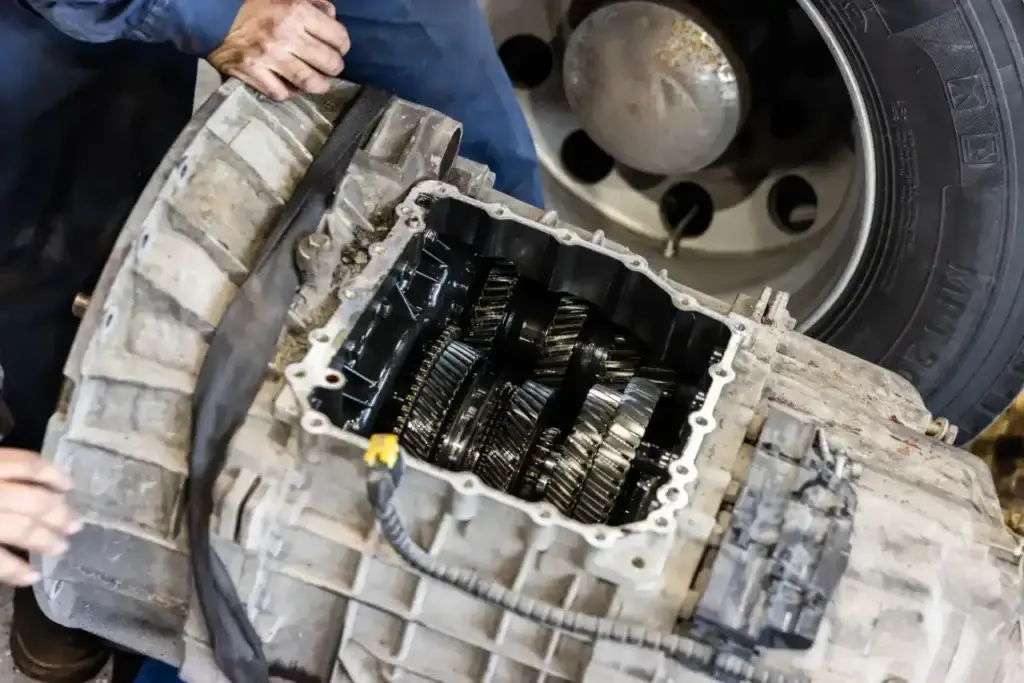
By Michael Nielsen, Publisher | 15+ Years in Diesel Repair
Last Updated: September 2026
⏱ Estimated reading time: 15+ minutes
Your heavy duty truck transmission represents a substantial investment that demands proper lubrication to survive the demands of long-haul operations, construction sites, and daily fleet routes. Without regular transmission fluid maintenance, this critical system faces premature wear, costly breakdowns, and unexpected downtime that disrupts your business and erodes profitability.
Michael Nielsen and Heavy Duty Journal's editorial team built this guide for truck transmission service professionals, owner-operators, and fleet managers — specifications, inspection procedures, and service intervals tailored to commercial truck maintenance, from understanding lubricant types to implementing preventive care schedules that protect the investment.
Key Takeaways
- ✓Fluid specifications matter: Using non-approved fluids voids warranties and causes progressive damage — always verify OEM standards like Allison TES-389 or Eaton Fuller PS-164 before service.
- ✓Service intervals vary dramatically: Automatic transmissions typically need service every 25,000–50,000 miles; manuals can extend to 100,000–500,000 miles depending on fluid type and operating conditions.
- ✓Synthetic pays dividends: Despite higher upfront cost, synthetic fluids extend intervals, improve cold-weather performance, and typically lower total cost of ownership over the fluid's service life.
- ✓Condition monitoring prevents failures: Regular fluid checks catching color changes, burnt odors, or metal particles identify problems before they become catastrophic.
- ✓Maintenance ROI is real: A few hundred dollars in annual fluid service is a rounding error against a $4,000–$12,000 rebuild or an $8,000–$15,000 replacement.
In This Guide
- Understanding Transmission Fluid Function in Heavy Duty Trucks
- Types of Transmission Fluids for Commercial Trucks
- Transmission Fluid Specifications and OEM Requirements
- Recommended Transmission Fluid Maintenance Intervals
- How to Check Transmission Fluid Properly
- Warning Signs of Transmission Fluid Problems
- Complete Transmission Fluid Maintenance Procedures
- Transmission Filter Service Requirements
- Critical Maintenance Mistakes to Avoid
- Best Practices for Maximizing Transmission Longevity
- Frequently Asked Questions
Understanding Transmission Fluid Function in Heavy Duty Trucks
The transmission fluid in heavy duty trucks performs several vital roles that directly impact operational efficiency and component longevity. This specialized fluid must withstand extreme pressure, temperature, and mechanical stress while maintaining consistent performance across hundreds of thousands of miles.
Modern commercial truck transmissions place extraordinary demands on their fluid — adapting to everything from stop-and-go urban delivery to sustained highway cruising with heavy loads, each requiring the fluid to hold its protective qualities without breaking down.
Primary Roles of Transmission Fluid
Transmission fluid serves four essential functions working together. Lubrication protects gears, bearings, clutch packs, and synchronizers from metal-on-metal contact by creating a thin barrier between moving surfaces — without it, components deteriorate rapidly under constant power transmission stress.
Heat dissipation through the transmission cooling system prevents the thermal breakdown that degrades fluid properties. Heavy duty transmissions generate real heat during operation, especially under load or severe duty cycles — the fluid absorbs this heat and carries it to external coolers before returning to the transmission.
Hydraulic pressure transmission enables automatic and automated manual transmissions to execute smooth, precise gear changes, with the fluid acting as an incompressible medium transferring force from control valves to clutch packs and shift actuators. Protection against corrosion, oxidation, and contaminant accumulation extends component life — modern fluids contain additive packages that neutralize acids, prevent rust, and suspend particles that would otherwise settle on sensitive surfaces.
How Fluid Properties Affect Performance
Fluid viscosity directly influences transmission operation across temperatures — thicker fluid provides better protection but may impede cold-weather operation, while thinner fluid flows easily but may not maintain adequate film strength under high temperature and pressure.
Temperature stability determines whether hydraulic fluid properties stay consistent throughout the operating range. Synthetic formulations generally offer better thermal stability than conventional petroleum-based fluid, which tends to translate into more predictable shift quality and better protection under extreme operating conditions. Friction modifiers within the fluid formulation control how clutch packs engage and disengage — fine-tuning the coefficient of friction to achieve smooth shifts without excessive slippage or harsh engagement, with the precise characteristics varying by transmission design and manufacturer specification.
The Cost of Neglecting Fluid Maintenance
Deferred transmission fluid maintenance creates cascading failures that escalate repair costs — what begins as degraded fluid performance quickly progresses to component damage requiring extensive repair or complete transmission replacement.
$448–$760 per day
Average cost of unplanned fleet vehicle downtime, per ATRI's Operational Costs of Trucking research — the backdrop against which every fluid-service dollar below should be weighed.
Accelerated wear occurs when fluid loses its lubricating properties and can no longer prevent metal-on-metal contact. Gears develop pitting and scoring, bearings fail prematurely, and clutch packs burn from excessive friction — wear that typically appears gradually but reaches a critical failure point suddenly.
Degraded fluid also increases internal friction, which can measurably reduce fuel economy in highway operation — a real, if hard-to-pin-to-an-exact-percentage, cost that compounds on top of any eventual repair bill.
| Damage Level | Description | Repair Cost Range |
|---|---|---|
| Minor | Early fluid-related issues, seal replacement | $800–$2,500 |
| Moderate | Partial rebuild — clutch packs and seals | $3,500–$7,000 |
| Severe | Complete transmission rebuild | $8,000–$15,000 |
| Critical | Full transmission replacement | $12,000–$25,000 |
Types of Transmission Fluids for Commercial Trucks
Commercial trucks use different transmission fluid formulations depending on whether they run automatic, manual, or automated manual transmissions. Each architecture demands specific lubricant properties — using the wrong type leads to premature wear, shifting problems, and potential transmission failure. HDJ's Eaton Fuller transmission problems guide and Allison troubleshooting guide both cover what happens once the wrong fluid has already caused damage.
Specialized Fluids for Allison Automatic Systems
Allison transmission fluid represents the standard for heavy duty automatic transmissions, which dominate the commercial trucking market for their reliability and smooth shifting. The fluid must meet stringent performance criteria across multiple operational demands — enabling smooth torque converter operation and precise hydraulic control while acting as both lubricant and hydraulic medium. Allison-specified formulations maintain consistent viscosity across wide temperature ranges, from summer heat to winter cold.
Heavy-Duty Lubricants for Eaton Fuller Manual Systems
Eaton Fuller manual transmissions need a different approach than automatic counterparts — higher-viscosity gear oil to handle direct mechanical forces, since the denser lubricant withstands the intense pressures generated during manual gear engagement. Gear oil for Eaton Fuller transmissions typically calls for SAE 50 or a multi-grade like 75W-90, per the viscosity grades defined in SAE J306, providing the extreme-pressure protection both synchronized and non-synchronized designs need.
Manual transmissions generate higher localized pressure at gear mesh points than automatic systems do. The thicker consistency creates a protective barrier cushioning impact forces, preventing pitting, scoring, and premature wear of gear teeth and synchronizer assemblies.
Advanced Fluids for Automated Manual Systems
Automated manual transmissions like the Volvo I-Shift and Detroit DT12 bridge traditional manual and automatic designs, combining electronic control precision with manual mechanical architecture. Fluid requirements reflect that dual nature — supporting both automated shifting accuracy and mechanical durability. The electronic control unit relies on consistent fluid behavior to calculate shift points and clutch engagement timing, which is why temperature stability matters so much here: even a minor viscosity shift affects shift quality.
Comparing Synthetic and Conventional Fluid Technologies
Synthetic transmission fluid offers performance advantages conventional fluid can't match — better thermal stability that resists breakdown at extreme operating temperature. Fleet operators choosing synthetic often see real long-term cost savings despite the higher initial price.
| Characteristic | Synthetic Fluid | Conventional Fluid |
|---|---|---|
| Thermal Stability | Excellent — sustained high temperature tolerance | Adequate — degrades faster at sustained high heat |
| Service Intervals | Up to 500,000 miles possible | Typically 250,000 miles or less |
| Cold Weather Performance | Maintains fluidity in extreme cold | Thickens noticeably below freezing |
| Initial Cost | $150–$300 for full service (industry estimate) | $75–$150 for full service (industry estimate) |
| Oxidation Resistance | Superior — reduces sludge formation | Moderate — requires more frequent changes |
Modern commercial trucks with advanced transmission designs increasingly require synthetic formulations to meet warranty requirements — the engineering tolerances in current transmissions demand the consistent viscosity and enhanced protection synthetics provide.
Transmission Fluid Specifications and OEM Requirements
The owner's manual is the definitive guide to fluid specification, containing manufacturer-approved standards that prevent costly failures and maintain warranty protection. Every manufacturer, make, and model has different requirements — this eliminates guesswork.
Using fluid that doesn't meet OEM requirements can void a warranty within days of installation. Manufacturers invest heavily in research to develop specifications protecting their transmission designs, and following those standards is what makes reliable long-term operation possible in the first place.
Understanding Allison TES-295 and TES-389 Standards
Allison Transmission established TES-295 as an early benchmark for automatic transmission fluid performance. TES-389 is the current generation, demanding higher performance including more rigorous testing for oxidation resistance, wear protection, and extended drain intervals. Modern Allison transmissions require TES-389 approved fluid to maintain warranty coverage — using older TES-295 fluid in a newer transmission causes shifting problems and premature component wear.
Eaton Fuller PS-164 Specifications
Eaton Fuller manual and automated manual transmissions run under demanding conditions requiring lubricant meeting PS-164 — precise viscosity grades ensuring proper lubrication across temperature ranges, with specific additive packages protecting synchronizers and gear teeth.
Synchronizer compatibility is a critical PS-164 component. Manual transmissions rely on synchronizers for smooth gear engagement, and fluid lacking proper friction modifiers causes hard shifting, gear clash, and accelerated synchronizer wear.
Additional Manufacturer Requirements
Mack developed proprietary TO-A Plus requirements for their transmission and drivetrain systems, demanding exceptional thermal stability and oxidation resistance for mountain grades, heavy payloads, and sustained high-speed operation. The Detroit DT12 automated manual requires fluid meeting Detroit-specific standards, emphasizing low-temperature fluidity and precise friction characteristics the automated shifting system depends on for smooth gear changes.
| Manufacturer | Specification | Transmission Type | Typical Drain Interval |
|---|---|---|---|
| Allison | TES-389 | Automatic | Up to 300,000 mi (synthetics) |
| Eaton Fuller | PS-164 | Manual/AMT | 250,000–500,000 mi |
| Mack | TO-A Plus | Various | Per maintenance schedule |
| Detroit | DT12 Approved | Automated Manual | Up to 500,000 mi |
Recommended Transmission Fluid Maintenance Intervals
Knowing when to service transmission fluid separates successful fleet operations from those facing unexpected downtime. Different transmission types and operating conditions call for different approaches — manufacturer specification, duty cycle intensity, and fluid type selection all factor in.
Manufacturer Service Schedules by Brand
Each manufacturer sets intervals based on extensive testing and field data — always consult the owner's manual for exact specification on your particular model. As a general range: Allison automatics typically call for service every 25,000–50,000 miles with conventional fluid in normal duty, Eaton Fuller manuals often specify 100,000–500,000 miles depending on model and lubricant, and Detroit DT12 automated manuals generally recommend 30,000–60,000 miles under standard conditions.
Severe Duty vs. Normal Operating Conditions
Operating environment dramatically affects how quickly fluid degrades. Severe duty conditions — frequent stop-and-start city driving, mountainous terrain with continuous grade work, extreme temperature environments, heavy load hauling at maximum GVWR, continuous trailer towing, or excessive idle time — accelerate breakdown and call for shorter intervals. Most fleet managers should cut standard intervals roughly in half under consistently severe duty conditions.
Quick Reference
- Allison Automatic (Normal): 25,000–50,000 miles
- Allison Automatic (Severe): 12,500–25,000 miles
- Eaton Fuller Manual (Normal): 100,000–500,000 miles
- Eaton Fuller Manual (Severe): 50,000–250,000 miles
- Detroit DT12 (Normal): 30,000–60,000 miles
- Detroit DT12 (Severe): 15,000–30,000 miles
Extended Service Intervals with Synthetics
Premium synthetic fluid's superior thermal stability and oxidation resistance can safely extend service intervals when properly managed — though extended intervals require manufacturer approval before implementation, not just a technician's judgment call. Some synthetics enable intervals of 100,000 miles or more in appropriate applications; Allison TES-389 approved synthetics can roughly double standard intervals in favorable highway applications, and Eaton Fuller synthetic lubricant may extend manual transmission service to 500,000 miles or beyond in long-haul operation.
Extended intervals require three things together: explicit manufacturer approval for the specific transmission model, consistent normal-duty operating conditions without severe service factors, and a regular fluid analysis program to verify the fluid is still doing its job. Missing any one of those voids the extended-interval benefit and risks real transmission damage.
How to Check Transmission Fluid Properly
Proper fluid level checks are the first line of defense against transmission failure. The procedure varies by transmission type and manufacturer specification — learning the correct technique prevents misdiagnosis and ensures an accurate reading, since most transmission problems show early warning signs through fluid condition changes that regular inspection catches before they escalate.
Locating the Dipstick or Check Port
Access point location varies significantly across models. Automatic transmissions like Allison units typically feature a dipstick accessible from the engine compartment. Manual transmissions such as Eaton Fuller models generally lack a traditional dipstick — instead using a check plug or fill port on the transmission housing side, requiring a lift or ramps to reach safely. Automated manual transmissions like the Volvo I-Shift and Detroit DT12 often use sealed systems without a conventional dipstick at all, requiring a designated check port or electronic diagnostic connection.
Cold vs. Hot Checking Procedures
Temperature dramatically affects fluid volume and viscosity, making checking temperature critical for an accurate reading. Most manufacturers specify checking at operating temperature, typically 180–200°F, after the transmission has cycled through all gear ranges.
To perform a hot check correctly: drive the truck 15–20 minutes to reach normal operating temperature, park on level ground with the parking brake engaged, shift through all gear positions at idle, return to park or neutral as specified, and let the engine idle another 2–3 minutes before checking the level.
⚠️ Safety Warning
Transmission fluid at operating temperature can exceed 200°F and cause severe burns. Never check fluid immediately after sustained heavy operation. Allow adequate cooling time and wear appropriate protective gloves when handling hot components or fluid.
Interpreting Fluid Level and Condition
Most dipsticks feature two mark sets — cold and hot, with the hot range sitting higher. During a hot check, fluid should register between the "add" and "full" marks in the hot range; fluid slightly below full is acceptable, but at or below "add" needs immediate attention.
Fluid condition tells its own story. Fresh fluid shows a reddish or amber hue, indicating intact additive packages and oxidation resistance. As it ages and degrades, it turns brownish and may develop a burnt smell — signaling oxidation and thermal breakdown.
| Fluid Condition | Appearance | Required Action |
|---|---|---|
| Excellent | Bright red/amber, no odor | Continue normal intervals |
| Good | Light brown, faint odor | Plan service within 5,000 mi |
| Fair | Medium brown, burnt smell | Schedule immediate service |
| Poor | Dark brown/black, strong burnt | Change immediately, inspect |
| Critical | Black with particles or milky | Stop operation — professional diagnosis |
Sealed Transmission Checking Methods
Modern heavy duty trucks increasingly feature sealed, "lifetime fill" transmissions without a traditional dipstick. Locate the check plug on the transmission housing side panel — it sits at a precisely engineered height corresponding to correct fill level.
With the truck level and the engine at operating temperature, remove the plug carefully; proper level produces a slight trickle from the opening. No fluid means the transmission needs more through the fill port higher on the housing. Some sealed transmissions require an electronic diagnostic tool to monitor temperature and confirm proper checking conditions before the reading is trustworthy.
Warning Signs of Transmission Fluid Problems
Early detection separates preventable maintenance from catastrophic failure. Heavy duty transmissions show specific warning signs when fluid deteriorates or drops below safe operating range — understanding these lets an operator act before problems escalate into costly repair.
Changes in Fluid Appearance and Smell
Fresh fluid maintains a bright red or amber color with a mild petroleum odor — a regular visual check gives immediate diagnostic information with no special equipment. Dark brown or black fluid signals oxidation and thermal breakdown from extended service, indicating lost protective properties. HDJ's heavy duty preventive maintenance guide covers this same condition-based logic across other drivetrain fluids, not just the transmission.
A burnt smell resembling scorched toast is the most critical warning sign of transmission overheating, developing as friction materials deteriorate under excessive heat — continued operation with burnt fluid accelerates damage and can lead to failure within days. Metallic particles visible in the fluid indicate internal component wear from gears, bearings, or clutch plates grinding against each other, and demand immediate professional inspection to determine the extent.
Performance Problems During Operation
Shifting issues are the most noticeable symptom of fluid-related problems, typically indicating hydraulic pressure irregularities or lubrication deficiencies. Gear slipping happens when the transmission unexpectedly loses power or struggles to maintain engagement — the truck may rev higher without corresponding acceleration, or suddenly feel like it dropped into neutral; low fluid or worn clutch plates usually cause this dangerous condition.
Delayed engagement creates a noticeable lag between selecting a gear and the transmission responding, sometimes with harsh engagement once it finally catches. Grinding or clunking during gear changes suggests inadequate lubrication or contaminated fluid damaging internal components.
Temperature Monitoring and Overheat Warnings
Modern heavy duty trucks feature transmission temperature monitoring that alerts drivers to overheating — a warning that should never be ignored, since continued operation can destroy a transmission within minutes.
Normal operating temperature runs roughly 175–225°F during highway cruising; sustained temperatures meaningfully above that range indicate abnormal conditions needing attention.
The rule of thumb in lubrication engineering — that fluid life drops sharply for every step up in sustained operating temperature — applies here as much as anywhere, which is the real argument for fixing a cooling or overheating issue immediately rather than waiting for the next scheduled service. Transmission overheating develops from low fluid levels, blocked coolers, or extreme operating conditions — towing heavy loads in mountainous terrain or stop-and-go traffic creates real thermal stress, and adequate fluid level is what provides the cooling capacity to manage it.
Complete Transmission Fluid Maintenance Procedures
Heavy duty transmission service demands systematic procedure protecting both the transmission and the technician performing the work. A proper fluid change involves more than draining old fluid and adding new — following established steps ensures complete service and prevents costly mistakes.
Essential Equipment and Safety Gear
Gathering the right tools before starting prevents delays and keeps the job safe: floor jacks and jack stands rated for the vehicle's weight, drain pans sized for the transmission type, torque wrenches calibrated for pan bolt specification, new fluid meeting exact OEM specification, replacement filters, a new pan gasket or appropriate RTV sealant, a digital thermometer, and petroleum-resistant gloves and eye protection.
Safe and Complete Fluid Removal
Position the truck on level ground for accurate readings later. Raise it on properly rated jacks and secure with jack stands — never work under a vehicle supported only by hydraulic jacks. If the transmission has a drain plug, remove it fully and let fluid drain into the collection pan; for transmissions without one, loosen pan bolts gradually from one corner for controlled draining. Allow 15–20 minutes for complete removal.
Filter System Service and Pan Cleaning
After draining, remove the pan completely. Inspect the bottom for metal particles or sludge — small amounts of fine material are normal, but large metal pieces or excessive debris indicate serious wear. Clean the pan with solvent and let it dry fully. Remove the internal filter, inspect the mounting area, and install the new one with the provided seals. For external spin-on filters, coat the new gasket lightly with clean fluid and install hand-tight plus roughly three-quarters of a turn.
Correct Filling Methods and Level Setting
Consult the service manual for exact fluid capacity — automatic transmissions typically hold considerably more than manual units. Use a fluid pump or long funnel through the dipstick tube and add gradually in stages rather than all at once — roughly 80% of specified capacity, then start the engine to check the level. Never overfill: excess fluid causes foaming, which reduces lubrication effectiveness and creates shifting problems.
Free Diesel Maintenance Checklist
Get HDJ's free, field-tested diesel maintenance checklist delivered instantly to your inbox — print it, laminate it, keep it in the shop.
Instant PDF • 100% Free • No Spam
Transmission Filter Service Requirements
The transmission filter is the truck's first line of defense against internal contamination — non-negotiable for fleet operators. Once a filter reaches capacity, contaminated fluid circulates freely, accelerating wear on clutch packs, bearings, and valve bodies.
Internal Filter Replacement Guidelines
The internal filter sits inside the pan and requires full pan removal for access, capturing fine particles from normal transmission wear. Most manufacturers recommend replacing it every time you do a complete fluid change — typically every 30,000–60,000 miles for heavy duty applications, more often for severe duty. Skipping internal filter replacement lets metal particles, clutch material, and other debris keep recirculating through the system.
External Spin-On Filter Maintenance
Many heavy duty transmissions, particularly Allison automatics, use an external cartridge-style filter for easier routine access, typically following an interval similar to engine oil filters — quick service with no pan removal needed. Never over-tighten a spin-on filter, since excessive torque damages the gasket seal and causes leaks; most need only about three-quarters to one full turn past the point the gasket contacts the mounting surface.
Magnetic Plug Debris Inspection
The magnetic drain plug provides real diagnostic information at every fluid service, attracting ferrous particles from normal gear and bearing wear. A thin coating of fine metallic paste is normal; excessive accumulation signals a potential problem worth investigating further, and large fragments or brass-colored particles indicate abnormal wear that may progress toward complete transmission failure.
Critical Maintenance Mistakes to Avoid
Many transmission failures come not from age or mileage but from preventable maintenance mistakes that compromise fluid performance — errors that can void a warranty, cause thousands in repair cost, and lead to unexpected downtime.
Using Incompatible Fluid Specifications
Using the wrong fluid is one of the most damaging mistakes in heavy-duty maintenance. Every manufacturer specifies exact requirements for a reason — ensuring proper viscosity, friction characteristics, and additive package matching internal component design. Incorrect viscosity causes shifting difficulty as hydraulic pressure fails to build properly; missing friction modifiers lead to clutch slippage or harsh engagement; and the additive package in a non-approved fluid can attack seals and gaskets, causing leaks and contamination.
Most critically, using incompatible fluid voids a manufacturer warranty entirely — when a transmission fails and analysis reveals non-approved fluid, the claim gets denied regardless of other factors. Always verify fluid meets exact OEM specification before service; this is a manufacturer warranty matter, not something federal vehicle-maintenance regulation addresses directly.
Overfilling and Underfilling Consequences
Fluid level matters as much as fluid type. An overfilled transmission causes foaming as rotating components churn the excess, reducing lubrication effectiveness and creating inconsistent hydraulic pressure — the result is erratic shifting, overheating, and potential seal damage from excess internal pressure.
Underfilling creates equally serious problems through a different mechanism: insufficient fluid causes inadequate lubrication and lets the pump draw air, damaging the pump through cavitation while circulating air bubbles that reduce hydraulic efficiency. Low fluid also causes overheating, since less fluid has to absorb and dissipate the same amount of heat.
Mixing Different Fluid Brands and Types
Combining fluid from different manufacturers creates unpredictable results even when both meet the same specification, since each brand uses a proprietary additive package that may interact unexpectedly when combined — altering viscosity, reducing friction modifier effectiveness, or degrading fluid properties outright.
The safest approach is a complete fluid replacement when changing brands or upgrading to synthetic — drain the system fully rather than mixing conventional and synthetic formulations, to get the full benefit without a compatibility risk.
Best Practices for Maximizing Transmission Longevity
Getting genuinely long transmission life demands a proactive approach built on a few pillars beyond basic maintenance — fleets that combine all of them routinely see transmissions well past what a maintenance-minimum schedule alone delivers.
Laboratory Analysis for Early Problem Detection
A fluid analysis program gives the most accurate window into transmission health before a problem becomes visible. Periodic sampling sent to a specialized lab examines wear metals — iron, copper, aluminum, chromium — revealing which internal components are experiencing abnormal friction, along with viscosity changes, oxidation level, and any coolant or fuel contamination that would point to a seal failure or system breach.
Typical analysis cost runs modest per sample, a small price against the thousands a missed early warning can cost. Establishing a program generally means sampling every 25,000–50,000 miles depending on duty cycle severity.
Thermal Management Systems and Practices
Temperature monitoring is a critical factor in maximizing component life — durability drops sharply once sustained high temperature stresses internal components. Many trucks lack a factory transmission temperature gauge, making an aftermarket gauge a worthwhile addition for serious operators; a digital or analog display connected to a sensor in the pan or cooler line gives real-time visibility that lets a driver modify operating practice before damage actually occurs, rather than after.
Severe duty applications benefit from cooler upgrades and auxiliary cooling — a larger cooler with more surface area dissipates more heat under sustained heavy load, and auxiliary electric fans add cooling capacity beyond what engine-driven airflow alone provides.
Driving Techniques That Extend Component Life
Strategic operating habits reduce transmission wear more effectively than any single maintenance procedure. Proper warm-up lets fluid reach operating temperature before full power applications — cold fluid flows poorly and lubricates inadequately during the first few miles.
Avoiding unnecessary gear hunting reduces component cycling; modern automated transmissions sometimes search between gears on undulating terrain, and manual mode can hold a stable gear selection instead. Engine braking on descents preserves transmission health too — relying on service brakes alone for speed control on grades forces the transmission to work against resistance, while proper use of engine or exhaust brakes keeps it operating within its designed power flow.
Comprehensive Record Systems and Documentation
Detailed documentation is the foundation for optimizing a service program and proving proper care — every fluid service, filter change, analysis result, and transmission-related repair, dated and recorded, becomes invaluable for warranty claims, diagnostic help, and lifecycle cost analysis down the road.
Warranty compliance requires proof of proper maintenance to manufacturer specification — complete records with date, mileage, fluid specification, and service provider support a claim; without documentation, a manufacturer can deny coverage even when the maintenance was actually done correctly. Resale value benefits too: buyers pay a real premium for a documented maintenance history, since it reduces their uncertainty about component condition.
Frequently Asked Questions
How often should I change transmission fluid in a heavy duty truck?
It depends on transmission and fluid type. Allison automatics typically want service every 25,000–50,000 miles with conventional fluid; Eaton Fuller manuals may extend to 100,000–500,000 miles. Severe duty conditions call for cutting standard intervals roughly in half. Always check your specific OEM specification — the wrong interval can void warranty coverage.
What happens if I use the wrong transmission fluid?
Immediate and progressive damage. Wrong viscosity causes shifting problems; missing friction modifiers cause clutch slippage or harsh engagement; non-approved additives can attack seals. Most critically, it voids the manufacturer warranty — a claim gets denied once analysis reveals non-approved fluid, regardless of other factors. Always verify fluid meets exact OEM specification before service.
How do I check transmission fluid in a sealed transmission?
Sealed transmissions like the Volvo I-Shift and Detroit DT12 use a check plug on the housing side rather than a dipstick. With the truck level and transmission at the manufacturer's specified check temperature, remove the plug — a slight trickle means proper level, no fluid means it needs topping off through the upper fill port. Some sealed systems need an electronic diagnostic tool to confirm proper checking conditions first.
What are the signs of transmission fluid problems?
Dark brown or black fluid, a burnt smell, and visible metal particles are the clearest condition-based signs. Performance symptoms include gear slipping, delayed engagement, harsh shifts, and grinding during gear changes. A red puddle under the truck means an active leak. Any of these warrant professional inspection before a small problem becomes a transmission failure.
Is synthetic transmission fluid worth the extra cost?
For most heavy duty applications, generally yes. Extended service intervals, better cold-weather performance, superior thermal stability, and better oxidation resistance combine to lower total cost of ownership over the fluid's life even against a higher sticker price. Modern transmissions with tighter tolerances increasingly require synthetics for warranty compliance anyway.
How much does transmission fluid service cost?
DIY service typically runs a few hundred dollars depending on fluid type and transmission size; professional service runs higher at an independent shop and higher still at a dealership. Whatever the exact number, it's a rounding error against a $4,000–$12,000 rebuild or an $8,000–$15,000 replacement — the math on regular maintenance isn't close.
Protect Your Transmission Investment
Proper transmission fluid maintenance matters in heavy duty trucking because the transmission is a substantial investment that directly impacts daily profitability. Systematic fluid service is the single most effective strategy for extending component life and preventing catastrophic failure.
The benefit extends beyond avoiding repairs — regular fluid and filter service reduces fuel consumption, improves shift performance, and maximizes uptime. Review current maintenance practice against the standards in this guide, establish documented service schedules for your specific operating conditions, and track maintenance history to identify patterns and optimize intervals — the same discipline Michael Nielsen and Heavy Duty Journal's editorial team hold every guide on heavydutyjournal.com to.
Found This Guide Helpful?
Share this transmission maintenance resource with fellow fleet managers and diesel technicians who could benefit from these service strategies.


