By Michael Nielsen, Editor & Publisher | 15+ Years in Diesel Repair
Last Updated: January 2026
📖 Estimated reading time: 24 minutes
Trailer hub assembly rebuilds represent one of the most critical maintenance procedures in commercial fleet operations. Statistics from marine insurance data indicate that bearing failures account for nearly 25% of all roadside emergency calls from stranded drivers. This sobering figure underscores why professional technicians and fleet managers must master proper bearing service techniques to prevent costly breakdowns and ensure trailer safety.
Most trailers on the road today rely on grease-packed bearing systems that demand precise service techniques and thorough understanding of component interaction. A complete hub assembly overhaul requires specialized knowledge of torque specifications, bearing preload adjustment, and quality control measures that separate professional results from amateur attempts. This comprehensive guide provides diesel technicians, fleet maintenance personnel, and serious owner-operators with complete procedures for trailer wheel hub repair and rebuilding.
Key Takeaways
- Service interval standard: Bearings require repacking every 12 months or 12,000 miles per major axle manufacturers like Dexter.
- Failure prevention: Water contamination and improper preload adjustment cause most premature bearing failures.
- Grease specification: Use only NLGI Grade 2 grease meeting GC-LB certification for wheel bearing applications.
- Critical adjustment: Proper bearing preload (0.001-0.005 inches endplay) determines whether a hub lasts 50,000 miles or fails at 15,000.
- Complete replacement rule: If any bearing component shows wear, replace the complete bearing set and both races together.
- Time and cost: Professional service takes approximately one hour per wheel with parts costing $30-$40 per hub assembly.
Understanding Trailer Hub Assembly Components and Function
Every trailer hub assembly consists of multiple interdependent parts that must function harmoniously to provide reliable wheel performance. The hub serves as the central mounting point where the wheel attaches to the trailer axle, creating a rotating interface that must withstand constant stress while maintaining smooth operation. Mastering the relationship between hub assembly components enables technicians to diagnose problems accurately and execute rebuilds that restore factory-level performance.
The distinction between different hub types determines the complexity of rebuild procedures and the specific trailer hub parts required for service. Professional mechanics encounter two fundamental categories during routine maintenance work: idler hubs and brake hubs. Each type presents unique challenges that affect disassembly sequences and component inspection protocols.
Essential Hub Assembly Elements
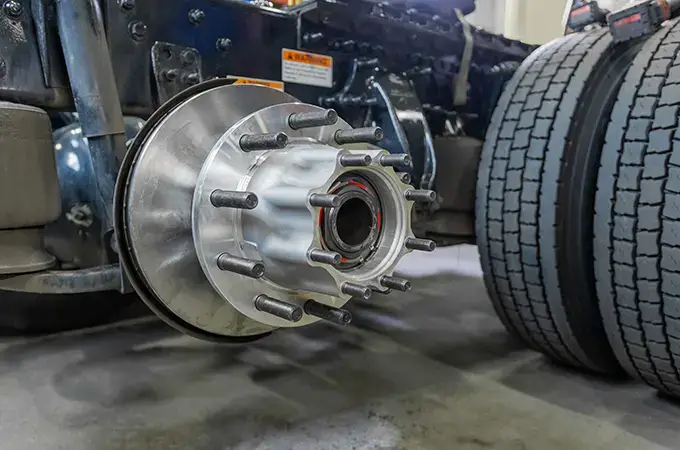
The hub casting itself forms the foundation of the entire assembly, providing structural integrity and mounting surfaces for all other components. This heavy-duty metal component houses the bearing races and provides the attachment points for lug studs. Material quality and casting precision directly impact the longevity of the entire wheel assembly.
Lug studs represent the critical connection between hub and wheel, with configurations ranging from four to eight studs depending on trailer load ratings. These threaded fasteners must maintain proper torque specifications to prevent wheel separation while allowing for routine removal during service intervals. The number of studs corresponds directly to the gross vehicle weight rating and expected load conditions.
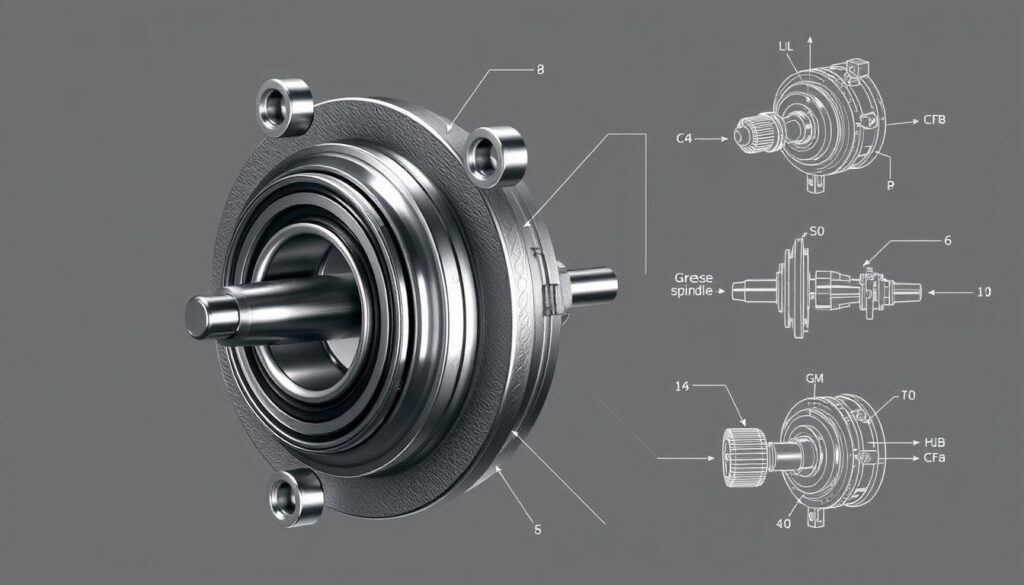
The dust cap protects internal components from environmental contamination while retaining grease within the hub cavity. This seemingly simple component prevents water intrusion, road debris, and dirt from compromising bearing lubrication. Professional rebuilders recognize that a properly sealed dust cap extends service intervals significantly and prevents premature bearing failure.
The spindle extends from the trailer axle tube, providing the precisely machined mounting surface for the bearing assembly. This conical component features specific taper angles that match bearing geometry, ensuring proper load distribution across rolling elements. Thread quality at the spindle end determines how effectively the castle nut secures the entire assembly.
Inner and outer tapered roller bearings allow the hub to rotate freely while supporting radial and thrust loads simultaneously. These precision-manufactured components consist of cones, rollers, and cages that work together to minimize friction. The bearing races press into the hub casting, creating the hardened surfaces against which rollers travel during operation.
The grease seal prevents lubricant loss while blocking contaminants from entering the bearing cavity. This dual-purpose component mounts on the inner side of the hub, maintaining constant contact with the spindle surface. Seal integrity directly affects bearing longevity, making proper installation critical during rebuild procedures.
| Component | Idler Hub Configuration | Brake Hub Configuration | Primary Function |
|---|---|---|---|
| Hub Casting | Solid design without brake provisions | Includes brake shoe mounting surface | Structural foundation and wheel mounting |
| Internal Hardware | Bearings, seals, and dust cap only | Brake shoes, magnets, springs, adjusters | Rotation support or braking capability |
| Lug Stud Pattern | 4-8 studs based on load rating | 5-8 studs with brake clearance design | Wheel attachment and retention |
| Service Complexity | Standard bearing service procedures | Requires brake adjustment and inspection | Maintenance accessibility |
Operational Mechanics in Trailer Systems
The bearing assembly distributes trailer weight across multiple contact points, converting sliding friction into rolling friction for efficient operation. Tapered roller bearings handle both radial loads from trailer weight and thrust loads generated during cornering. This dual-load capability makes them ideal for trailer applications where forces act in multiple directions simultaneously.
Proper bearing preload eliminates endplay that would cause components to shift during operation while avoiding excessive tightness that generates heat and accelerates wear. The relationship between spindle design and bearing geometry creates a self-centering effect when adjusted correctly. Professional technicians understand that this precise adjustment represents the difference between a hub lasting 50,000 miles versus failing prematurely at 15,000 miles.
The grease seal maintains a controlled environment within the hub cavity by retaining lubricant under pressure while preventing water and debris from entering. The seal lip maintains constant contact with the spindle, creating a dynamic barrier that flexes with hub rotation. This continuous sealing action depends on proper seal installation and adequate grease fill levels.
Standard Hub System Variations
Traditional grease-packed systems represent the most common configuration, using high-temperature wheel bearing grease to lubricate components. These assemblies require periodic disassembly for bearing inspection and regreasing per manufacturer specifications. The manual packing process ensures complete lubricant coverage when performed correctly.
Oil-bath configurations submerge bearings in gear oil, providing continuous lubrication through a sealed system with transparent sight glasses for level monitoring. These setups reduce maintenance frequency but require careful attention to seal integrity and oil quality. Professional shops appreciate oil-bath systems for fleet applications where minimizing downtime justifies the higher initial equipment cost.
Bearing buddy systems add a spring-loaded grease fitting that maintains constant pressure on hub lubricant, automatically compensating for grease loss during operation. These aftermarket additions allow roadside greasing without disassembly, extending service intervals in demanding applications. However, over-greasing can damage seals, making proper technique essential.
The fundamental difference between idler hub and brake hub assemblies extends beyond internal components to affect rebuild complexity and parts inventory requirements. Electric brake hubs incorporate electromagnetic actuators that engage brake shoes against the drum surface when the tow vehicle applies trailer brakes. Hydraulic brake systems use fluid pressure to achieve the same result but require different service procedures and bleeding protocols.
Signs Your Trailer Hub Assembly Needs Rebuilding
Professional technicians rely on systematic inspection protocols to identify hub assembly deterioration before complete failure occurs. Recognizing hub failure symptoms early prevents dangerous roadside breakdowns and protects valuable cargo during transport. The ability to distinguish between minor maintenance needs and complete rebuild requirements separates experienced professionals from novice operators.
Trailer hub assemblies provide clear warning signals when internal components begin failing. These indicators range from obvious visual cues to subtle performance changes that require trained observation. Understanding these signs allows service professionals to schedule preventive rebuilds rather than responding to emergency failures.
Observable Damage and Leakage Patterns
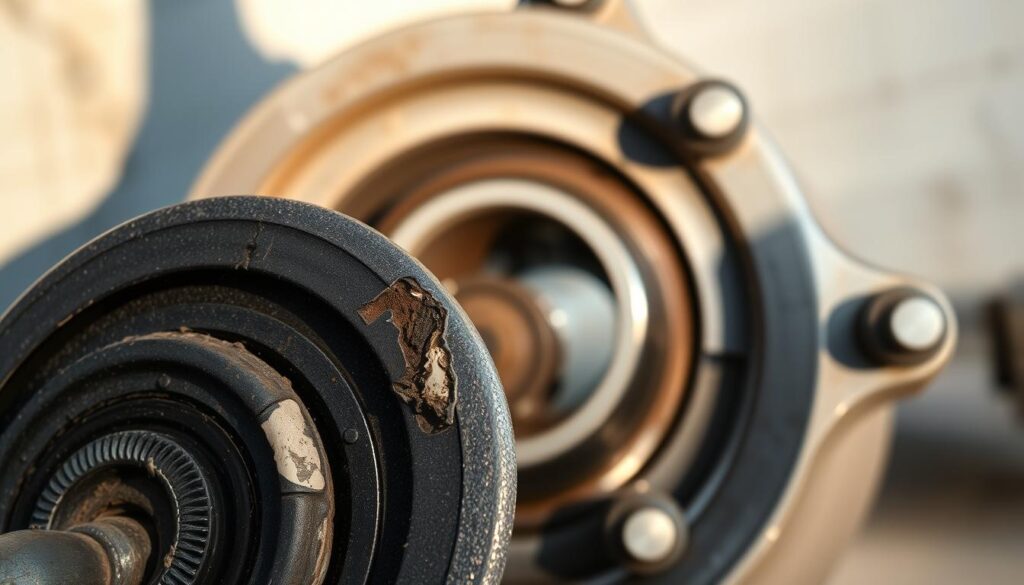
Visual assessment forms the foundation of professional bearing inspection protocols. Grease leakage represents one of the most common and definitive indicators that seals have failed and internal components face imminent damage. When grease appears on the bottom of a boat hull near trailer wheels or along the trailer frame, seal integrity has been compromised.
Grease contamination takes several distinct forms that reveal different failure modes. Milky or cloudy grease indicates water has penetrated the bearing assembly, creating an immediate rebuild requirement since moisture destroys bearing surfaces rapidly. This condition appears frequently in boat trailers subjected to regular water immersion during launching operations.
~25%
Percentage of roadside emergency calls attributed to bearing-related failures according to marine insurance industry data
Different colored grease within the same hub assembly suggests maintenance inconsistency. When newer grease mixes with older lubricant, technicians should investigate whether proper cleaning occurred during previous service. More critically, examine expelled grease for metal particles, shavings, or glittering flakes that definitively indicate bearing or race failure.
Dust cap condition provides important diagnostic information about internal hub pressure and temperature. Sudden dust cap loss or bearing buddy ejection signals excessive heat buildup and internal pressure that has likely damaged seals and bearings. This condition demands immediate attention before catastrophic failure occurs during operation.
Hub exterior discoloration reveals thermal events that compromise bearing integrity. Gold or blue tinting on hub surfaces indicates overheating episodes that have altered metal properties and damaged temperature-sensitive components. These visual bearing wear signs require thorough internal inspection regardless of other symptoms.
⚠️ Safety Warning
A smoking hub assembly indicates imminent bearing failure. Pull off the road immediately and do not continue driving. Catastrophic wheel separation can occur within minutes once a hub begins smoking. Allow the hub to cool before inspection—bearings at this stage may exceed 500°F.
Operational Symptoms During Use
Performance-based indicators often appear before visible damage becomes obvious to casual observers. Hub overheating represents the most common operational warning sign that professionals check during travel stops. When the hub feels uncomfortably hot to touch during refueling stops, internal friction has increased beyond normal parameters.
Temperature assessment requires context since some heat generation occurs normally during operation. Hubs that cannot be touched for more than two seconds, or that show significantly different temperatures between left and right sides, indicate problems. Note that brake shoes rubbing can also generate excessive heat, requiring differential diagnosis.
Bearing noise provides unmistakable evidence of advanced deterioration when detected properly. Jack the trailer wheel off the ground and spin it by hand while listening carefully. Grinding, clicking, or rumbling sounds indicate bearing damage that requires immediate attention. Smooth, quiet rotation represents normal condition.
Wheel movement assessment reveals bearing wear that has progressed to dangerous levels. Grasp the wheel at top and bottom, then attempt to rock it inward and outward. Any detectable play or movement indicates excessive bearing clearance requiring rebuild. Similarly, check for side-to-side wobble while spinning the wheel.
| Visual Indicator | What It Reveals | Urgency Level | Required Action |
|---|---|---|---|
| Milky grease appearance | Water contamination present | Critical | Immediate rebuild required |
| Metal particles in grease | Bearing or race failure | Critical | Complete component replacement |
| Gold/blue hub discoloration | Overheating damage occurred | High | Full inspection and likely rebuild |
| Grease on hull or frame | Seal failure and leakage | Moderate to High | Rebuild with seal replacement |
| Lost dust cap or buddy | Excessive internal pressure | High | Immediate service inspection |
Service Timing and Interval Guidelines
Establishing a comprehensive trailer maintenance schedule prevents most catastrophic bearing failures through proactive service. Professional operations implement time-based and usage-based service intervals rather than waiting for symptoms to appear. Major axle manufacturers like Dexter recommend bearings be lubricated every 12 months or 12,000 miles, establishing the industry standard for preventive maintenance.
Recreational trailers used occasionally require annual bearing inspection and repacking at minimum. This interval assumes the trailer remains in service with periodic use throughout the year. Trailers stored for extended periods should receive inspection before returning to service regardless of time since last maintenance.
Boat trailers demand more aggressive maintenance schedules due to water immersion exposure. Marine environment operation requires inspection every six months or after every 20 launches, whichever comes first. Salt water exposure necessitates even more frequent service since corrosion accelerates dramatically in marine conditions.
Utility and cargo trailers benefit from mileage-based service intervals combined with time limits. Standard recommendations specify bearing inspection and repacking every 12,000 miles or annually, whichever occurs first. Heavy-duty applications or harsh operating conditions may require service at 6,000-mile intervals.
Essential Tools and Equipment for Professional Rebuilds
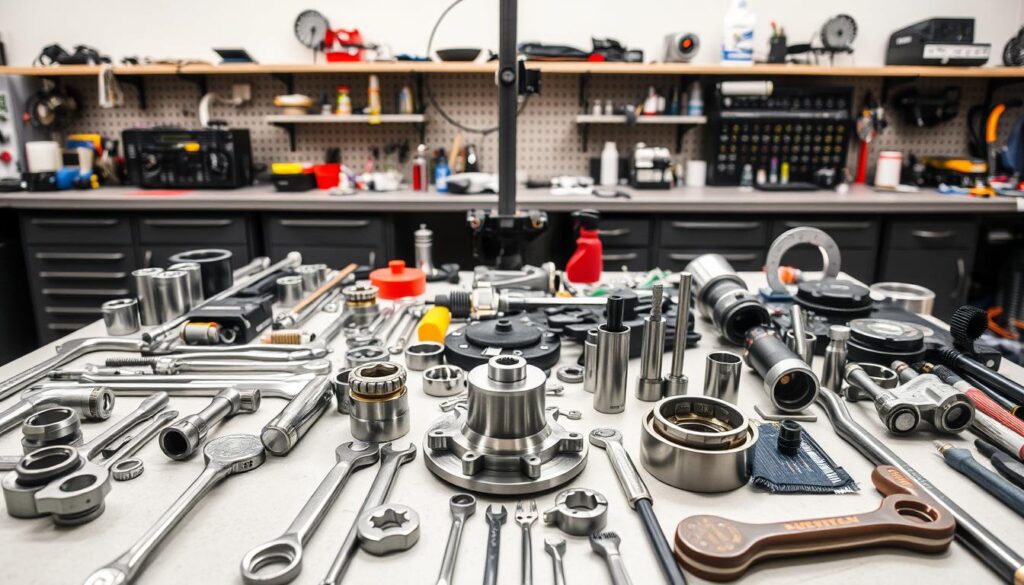
Equipping your workspace with the right hub service tools transforms complex bearing work into manageable procedures. Professional technicians understand that quality tools prevent component damage during disassembly and ensure proper installation during reassembly. The investment in specialized equipment pays dividends through faster service times and reduced comebacks.
A complete hub rebuild requires three distinct categories of equipment: basic hand tools for general disassembly tasks, specialized hub service tools for bearing-specific challenges, and precision measurement instruments for verifying component specifications and installation accuracy.
Specialized Hub Service Tools
The bearing packer stands as perhaps the most critical specialized tool in hub service. This device forces grease completely through bearing rollers, eliminating air pockets that cause premature failure. Automotive parts stores stock manual bearing packers for under $30, making this essential tool remarkably affordable.
A bearing packer consists of a grease reservoir and cone-shaped adapter that fits over the bearing. The mechanic presses the bearing downward while pumping the handle, forcing lubricant through the rollers until grease appears around the entire circumference. This method proves far superior to hand-packing techniques for ensuring complete saturation.
Seal removal requires either dedicated seal puller tools or quality channel lock pliers. A seal puller features a hook-shaped end that slides behind the seal lip, allowing extraction without damaging the hub bore. Channel locks work effectively when carefully positioned, though they require more skill to prevent bore scratching.
Race installation tools eliminate the guesswork from bearing race installation. These drivers feature bearing-specific diameters that contact only the race’s outer edge, preventing cocking during installation. Sets covering common trailer bearing sizes typically cost between $40 and $80 at automotive suppliers.
Measurement and Diagnostic Equipment
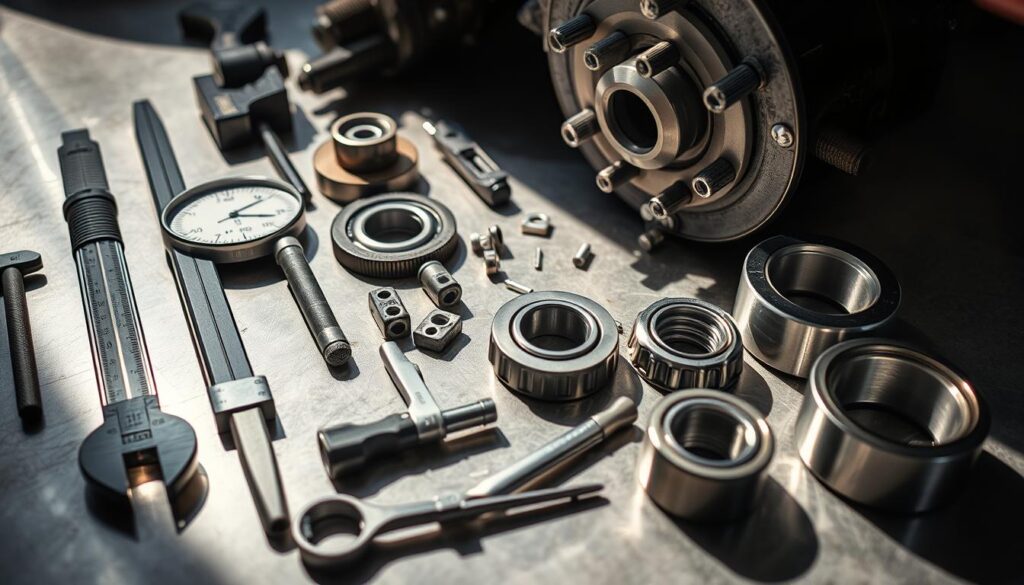
Precision measurement separates professional rebuilds from amateur attempts. A digital caliper measuring to 0.001-inch accuracy proves essential when spindle diameters are non-standard or bearing sizes are unknown. These instruments verify spindle condition and confirm replacement bearing specifications.
The torque wrench represents non-negotiable equipment for hub assembly work. Proper bearing preload depends entirely on accurate spindle nut torque. Professional-grade torque wrenches with 0-150 ft-lb ranges handle all trailer hub applications while maintaining calibration accuracy.
Dial indicators measure bearing endplay and preload with precision impossible through feel alone. These gauges attach to magnetic bases positioned on the spindle, with the plunger contacting the hub face. Endplay measurements between 0.001 and 0.005 inches indicate proper adjustment for most applications.
Infrared thermometers verify post-installation bearing temperatures. Excessive heat generation signals over-tightening, inadequate lubrication, or defective components. Temperature readings taken immediately after test drives should not exceed 20 degrees Fahrenheit above ambient conditions.
| Tool Category | Essential Items | Typical Cost Range | Primary Function |
|---|---|---|---|
| Specialized Hub Tools | Bearing packer, seal puller, race driver set | $75-$200 | Component removal and installation |
| Measurement Equipment | Digital caliper, torque wrench, dial indicator | $150-$400 | Precision verification and torque application |
| Cleaning Supplies | Brake cleaner, mineral spirits, lint-free rags | $30-$75 | Contaminant removal and surface prep |
| Basic Hand Tools | Socket sets, pliers, screwdrivers, punches | $100-$300 | General disassembly and hardware removal |
Pre-Rebuild Inspection and Assessment
Proper assessment before touching a wrench to the hub assembly ensures you order the right parts and avoid mid-job delays. A thorough hub inspection reveals exactly which components need replacement and helps establish a realistic timeline for the rebuild. This systematic evaluation process separates professional rebuilders from amateurs who discover problems halfway through disassembly.
Professional technicians approach every rebuild with a diagnostic mindset. They gather information about operational symptoms, perform hands-on tests, and document findings before ordering parts. This methodical approach prevents costly mistakes and ensures the rebuilt hub will perform reliably.
Documenting Initial Conditions
Component documentation starts the moment you begin working on a trailer hub assembly. Take multiple photographs of the hub exterior from different angles, capturing any visible grease streaks, rust patterns, or damage to surrounding components. These images create a visual record that proves invaluable when reassembling or explaining findings to customers.
Examine tire wear patterns before removing the wheel. Uneven tread wear often indicates bearing problems or alignment issues that go beyond simple hub maintenance. Photograph unusual wear patterns as evidence of underlying mechanical problems that should be addressed during the rebuild.
Perform the wheel shake test with the trailer safely lifted and supported on jack stands. Grasp the tire firmly at the 12 o’clock and 6 o’clock positions, then push and pull to check for vertical movement. Any detectable play signals bearing wear or improper preload adjustment. Repeat the test at the 3 o’clock and 9 o’clock positions to assess horizontal play.
Measuring Bearing and Race Wear
Once you expose the hub components during initial disassembly, bearing measurement becomes critical for determining replacement needs. Inspect each bearing carefully under good lighting, looking for telltale signs of wear that indicate service life has ended.
Check for heat discoloration on bearing rollers and races. Gold or straw-colored tinting indicates temperatures between 400-500°F, which degrades bearing steel and reduces load capacity. Blue discoloration signals even higher temperatures that have destroyed the bearing’s metallurgical properties.
Examine bearing surfaces for pitting, which appears as small craters or rough spots on rollers and races. Even minor pitting creates stress points that rapidly expand under load. Scoring—linear scratches across bearing surfaces—indicates contamination damage from dirt or metal particles in the grease.
Key Recommendation
If any bearing component shows wear, replace the complete bearing set and both races together. Mixing old and new components guarantees premature failure because wear patterns don’t match. This applies even when races appear fine but bearings show damage.
Identifying Replacement Parts Needed
Accurate parts identification prevents ordering delays and ensures you have everything needed before starting the rebuild. Bearing kits typically come in five standard sizes based on spindle diameter: 3/4″, 1″, 1-3/8″, 1-1/4″, and 11/16″. Measuring the spindle diameter at the bearing contact area confirms which kit you need.
If you’re unsure about sizing, locate the part numbers stamped directly on each bearing and race. These numbers provide definitive specification information that eliminates guesswork. Cross-reference these numbers with manufacturer catalogs or online databases for exact matches.
Consider bearing kit selection carefully when ordering parts. Complete bearing kits include inner and outer bearings, both races, grease seal, cotter pin, and sometimes the spindle nut. These kits ensure component compatibility and typically cost less than buying individual parts separately. Specify double-lip grease seals for superior water exclusion, especially for trailers used in wet conditions or boat launching.
Trailer Hub Assembly Rebuild: Step-by-Step Disassembly Process
Professional trailer hub rebuilds begin with systematic disassembly techniques designed to preserve critical components while ensuring workplace safety. The hub disassembly phase requires careful attention to detail, proper tool selection, and adherence to established safety protocols. Each step in the disassembly sequence builds upon the previous one, creating a logical workflow that prevents component damage and maintains organized part tracking.
Safe Trailer Lifting and Wheel Removal
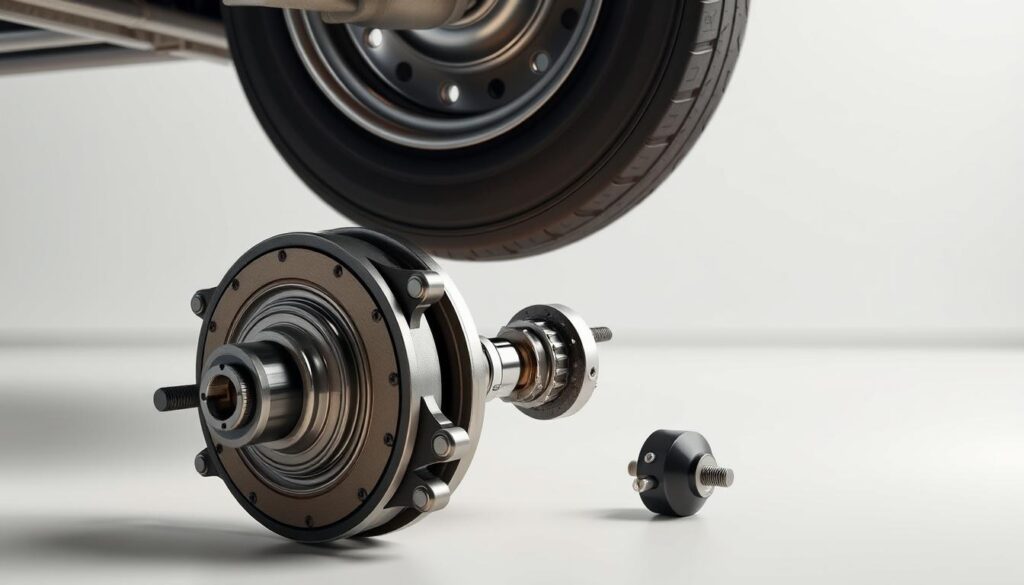
Establishing a secure work environment begins with proper trailer positioning and lifting procedures. Position the floor jack under trailer frame members rather than axles or suspension components to prevent structural damage. Never place jacks directly beneath axle tubes, as this can cause deformation or compromise trailer integrity.
Raise the trailer until the target wheel clears the ground with adequate clearance for hub removal operations. The tire should spin freely without any contact with the ground surface. Once elevated to the appropriate height, immediately place rated jack stands as primary support beneath the frame. The floor jack should remain in place as secondary support rather than being removed entirely.
Chock the wheels on the opposite side of the trailer to prevent any rolling movement during the wheel removal procedure. Many professionals prefer leaving the trailer connected to the tow vehicle for additional stability, though standalone trailers require wheel chocks at multiple contact points.
Hub and Drum Removal Techniques
The first step in accessing internal hub components involves dust cap removal using flat screwdrivers worked carefully around the cap’s circumference. Apply even pressure to prevent cap distortion, as dust caps may be reused if removed without damage. Bearing Buddy systems require different removal approaches compared to standard press-fit dust caps.
After exposing the spindle nut assembly, wipe away excess grease to clearly see the hardware configuration. Locate the cotter pin securing the castle nut or spindle nut in place. Cotter pin extraction requires straightening the bent legs with needle-nose pliers before carefully pulling the pin through its hole.
The spindle nut removal process requires appropriate six-point sockets to prevent nut damage. Spindle nuts may be extremely tight from years of service or conversely loose from bearing wear. Apply steady pressure rather than impact force when possible to assess nut tightness before applying maximum force.
Bearing Extraction and Race Removal
With the hub removed from the spindle, place it with the inner sidewall facing upward on a clean work surface. The inner bearing remains secured by the grease seal at this stage. Before bearing extraction can occur, the seal must be removed to access the bearing.
The race removal technique requires precision to avoid damaging the hub bore. Pressed-in bearing races sit tightly in machined recesses within the hub. Place a round punch against the inside edge of the race at approximately the 12 o’clock position. Deliver light hammer taps to the punch while progressively moving around the race circumference. This walking technique prevents the race from cocking in its bore, which can cause binding or hub damage.
⚠️ Safety Warning
Always wear eye protection during race removal, as metal fragments can dislodge unexpectedly and cause serious injury. Use brass punches or hardwood dowels when possible to minimize metal-on-metal impact hazards.
Professional Cleaning and Component Inspection
After disassembly, cleaning and inspection determine which components can be reused and which require replacement. This critical phase reveals hidden damage that affects hub reliability. Professional technicians understand that shortcuts during component inspection lead to premature failures and costly comebacks.
Removing Grease and Contaminants Safely
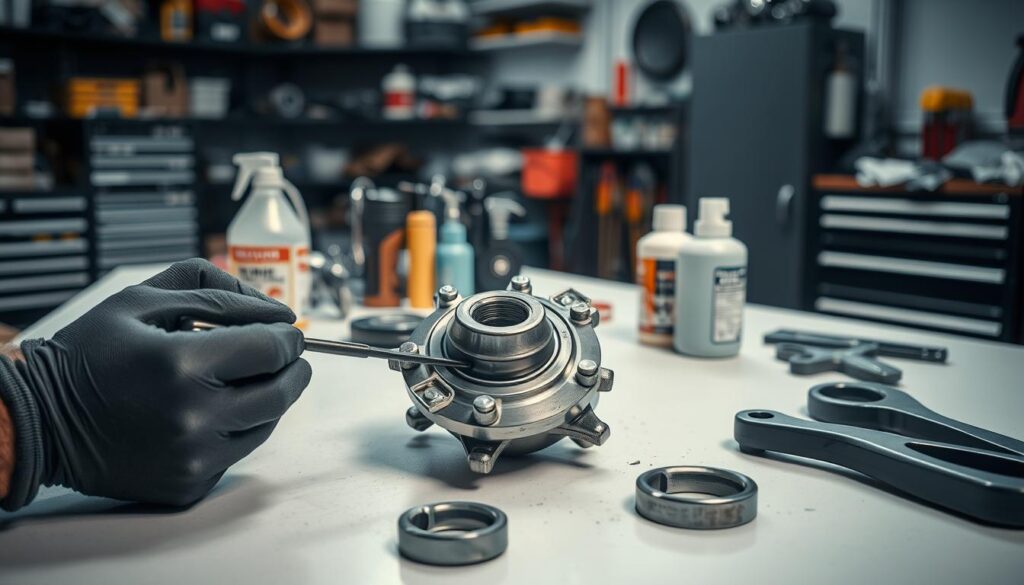
Start your hub cleaning process by removing bulk grease with shop towels and clean rags. Never use gasoline for cleaning bearings or races, as this petroleum product damages internal seals and leaves dangerous flammable residues. Paper towels work effectively for initial grease removal without introducing lint contamination.
Professional bearing cleaning procedure requires mineral spirits or commercial bearing cleaners in parts washing tanks. Spray-on cleaners combined with stiff-bristled brushes remove stubborn grease from bearing cages and rollers. The solvent cleaning method ensures complete contamination removal from all surfaces. Dry all components immediately after solvent cleaning to prevent flash rusting on bare metal surfaces.
Check for milky or discolored grease during the cleaning process. This appearance indicates water has entered the bearing assembly and caused internal damage. Components exposed to water contamination typically require replacement regardless of visual appearance.
Evaluating Bearing Condition and Serviceability
Professional bearing quality check standards require systematic visual and tactile inspection of every component. Examine bearing rollers for discoloration patterns that reveal heat damage. Gold or blue tinting indicates excessive temperatures that have compromised bearing metallurgy and load capacity.
Inspect bearing surfaces for pitting, spalling, scoring, or dents using adequate lighting and magnification when needed. Run your fingers across roller surfaces to detect roughness not visible to the naked eye. Surface defects create stress concentration points that accelerate bearing failure under load.
Check bearing cages for cracks, deformation, or excessive wear at roller contact points. Damaged cages allow improper roller spacing and cause rapid bearing destruction. Any cage showing structural damage requires complete bearing replacement. Examine inner and outer races for identical defects—races and bearings must be replaced as matched sets even if only one component shows damage.
Examining Foundation Components for Damage
Spindle inspection begins with visual examination for scoring, rust pitting, or physical damage from previous service work. Clean the spindle completely with a lint-free rag so grease doesn’t hide surface defects. The spindle surface must be perfectly smooth for proper bearing operation.
Perform tactile spindle inspection by running your clean hands along the entire bearing surface. This hands-on technique detects roughness and imperfections not visible during visual inspection. Any roughness you can feel will cause accelerated bearing wear and generate excessive heat.
Hub bore assessment requires checking for scoring, out-of-round conditions, or damage from previous race installation and removal. Inspect seal seat surfaces carefully for corrosion or damage that prevents proper seal contact. Professional rebuilders use dial indicators to verify spindle straightness and runout when wear patterns suggest problems. Bent or damaged spindles cause rapid bearing failure regardless of component quality and require complete spindle replacement.
The HDJ Perspective
After decades of observing trailer maintenance practices across the industry, the single most common cause of premature bearing failure remains improper preload adjustment—technicians either over-tighten spindle nuts generating friction heat, or leave them too loose allowing impact damage. The few extra minutes required for proper dial indicator measurement pays dividends in extended bearing life. Fleet operations that implement documented torque procedures and verification testing consistently achieve 40,000+ mile bearing service intervals, while shops relying on “feel” often see failures before 20,000 miles. The investment in a quality torque wrench and dial indicator represents the best ROI in trailer bearing maintenance equipment.
Race Installation and Bearing Preparation Techniques
After thorough cleaning and inspection, the rebuild process advances to the most technique-sensitive procedures that will determine whether your hub assembly delivers years of reliable service or premature failure. Bearing preparation and component reinstallation require precision methods that prevent damage while ensuring proper seating and alignment.
Professional Methods for Bearing Race Installation
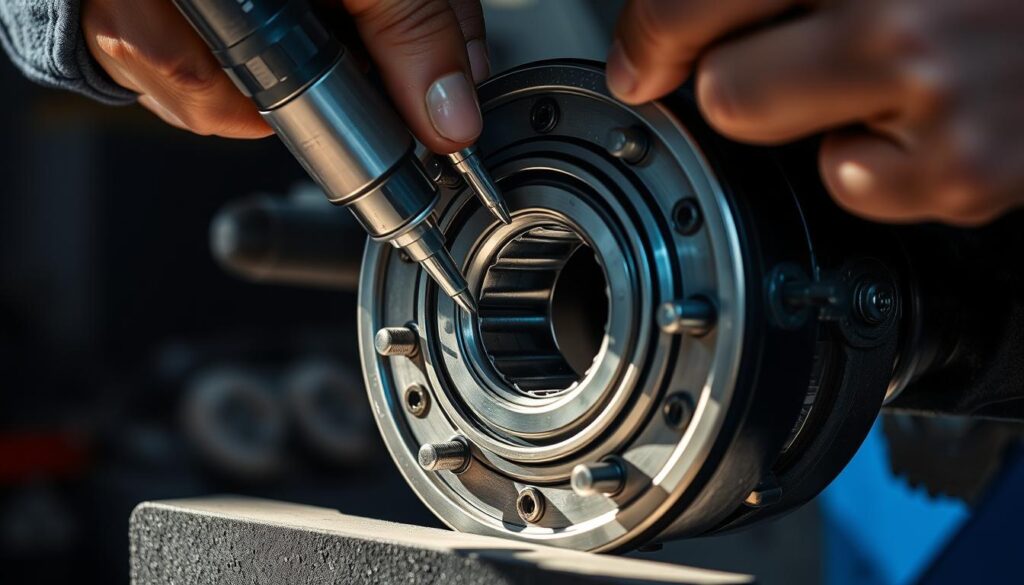
Race installation demands careful technique to avoid damaging the precisely machined bearing race or hub bore. Start by ensuring both the new race and hub bore are completely clean and dry, with no residual cleaning solvent, oil, or debris. Any contamination between the race and bore prevents proper seating and creates stress points that cause premature failure.
Position the new race squarely over the hub bore opening with the chamfered edge facing outward. The race must enter the bore perfectly straight to prevent cocking, which damages both components. Professional race driver tools provide the most reliable installation method, featuring stepped surfaces sized to contact only the race outer diameter, distributing force evenly around the entire circumference.
When dedicated race driver tools are unavailable, position the old race above the new one as a driving surface. This method distributes hammer blows evenly across the new race diameter, preventing edge damage and ensuring straight entry. Tap lightly and progressively around the circumference using a soft-face hammer or regular hammer with a wooden block buffer.
Proper race seating produces distinct indicators that confirm successful installation: the tapping sound transitions from hollow to solid when the race bottoms against the bore shoulder, the race outer edge sits perfectly flush with the hub bore opening, and no rocking or tilting occurs when pressing different points around the race perimeter.
Grease Packing Methods for Extended Service Life
Complete bearing saturation with quality grease is essential for preventing moisture intrusion and ensuring proper lubrication. Inadequate bearing packing leaves voids where water accumulates, causing rapid corrosion and premature failure. Professional methods guarantee complete grease penetration through all bearing rollers.
The National Lubricating Grease Institute recommends NLGI Grade 2 grease meeting GC-LB specifications per ASTM D4950 Standard Classification and Specification for Automotive Service Greases for wheel bearing applications. This designation certifies the grease meets demanding test standards for both wheel bearings (GC) and chassis parts (LB). Using grease that meets these specifications ensures proper high-temperature performance and water resistance required for trailer applications.
Dedicated bearing packer tools available at most auto parts stores for under thirty dollars provide the most thorough saturation. These simple devices force grease through bearing rollers under pressure, ensuring complete penetration from the inside out. Place grease in the packer reservoir, insert the bearing with the larger cage opening downward, and pump the handle to force grease through the rollers until it appears completely around all roller surfaces.
The manual grease packing method works effectively when bearing packers are unavailable. Place a generous amount of quality bearing grease in your palm, creating a thick layer. Insert two fingers of your opposite hand through the bearing’s large end from the cage side. Press the bearing rollers firmly into the grease-filled palm while rotating the bearing continuously. This motion forces grease through the rollers from the inside outward. Continue rotating and pressing until grease appears around the entire circumference of all roller surfaces, indicating complete saturation.
⚠️ Critical Lubrication Warning
Never mix different grease types or thickener bases. Per Dexter Axle specifications, mixing incompatible greases such as lithium complex with barium, calcium, clay, or polyurea soap-based thickeners causes adverse effects including hardening, separation, or becoming acidic. When changing grease brands, thoroughly clean all old grease from components before repacking with new lubricant.
Seal Placement for Water Exclusion
Proper seal installation creates the primary defense against water and contaminant intrusion that destroys bearings. Double-lip seals offer superior protection compared to single-lip designs and should be specified for all trailer applications, particularly those involving water immersion during boat launching.
Begin by coating the seal outer diameter and hub bore with a thin layer of grease to ease installation and improve sealing. Inspect the grease seal for any damage to the sealing lips or outer casing that would compromise performance. Position the seal squarely over the hub bore with the lip side facing inward toward the bearing.
Professional installers use flat seal installation tools or clean boards to distribute hammer blows evenly across the seal face. Place the board or tool against the seal outer surface and tap progressively around the circumference with light, consistent blows. This circular progression advances the seal evenly into the bore without tilting or cocking. Continue tapping until the seal seats firmly at its designed depth within the hub bore.
Hub Assembly Reassembly and Torque Specifications
Proper hub reassembly combines systematic component installation with accurate torque application to ensure reliable performance. The precision with which technicians execute these final procedures directly impacts bearing longevity and trailer safety. Following manufacturer-specified sequences prevents costly mistakes and guarantees optimal wheel assembly function.
Proper Bearing Installation Sequence
Begin the hub reassembly process by positioning the outer bearing race into the hub if not completed during earlier preparation steps. Verify that the race sits flush against its shoulder with no gaps or misalignment. This foundation ensures proper bearing support throughout the assembly.
Carefully lift the wheel assembly onto the spindle while protecting the inner grease seal from damage. The spindle’s outer edge can easily catch and tear the seal lip if approached directly. Professional technique involves angling the hub slightly during initial positioning, then straightening as the seal slides over the spindle.
Apply a generous coating of fresh bearing grease to the outer race before installing the packed outer bearing. Position the bearing with its smaller diameter facing inward toward the hub. The tapered configuration must align correctly to distribute loads properly during trailer operation. Place the spindle washer over the bearing, followed by the castle nut or spindle nut.
Adjusting Bearing Preload Correctly
The bearing preload adjustment represents the most critical phase of the entire rebuild process. This procedure eliminates endplay while preventing bearing overload that generates excessive heat. Proper bearing adjustment balances these competing requirements through precise torque application and controlled backing-off techniques.
Start by tightening the spindle nut to the specified initial torque value while rotating the hub continuously. Common specifications call for 50-70 ft-lbs for standard trailer axles, though values vary by manufacturer and hub size. This rotation seats the bearings and races into their final positions.
After reaching the initial spindle nut torque, back the nut off completely. This step might seem counterintuitive, but it allows components to settle properly. Retighten the nut by hand until snug with slight rotational drag felt when turning the hub.
The final bearing adjustment requires backing off the hand-snugged nut just enough to align castle nut slots with the spindle’s cotter pin hole. Typically, this amounts to one-sixth to one-quarter turn. Properly adjusted bearings show minimal endplay between 0.001 and 0.005 inches while spinning freely without binding.
| Hub Capacity | Initial Torque Value | Final Adjustment Method | Typical Endplay Range |
|---|---|---|---|
| 3,500 lb axles | 50-55 ft-lbs | Back off, hand-snug, align slots | 0.001-0.005 inches |
| 5,000-7,000 lb axles | 55-70 ft-lbs | Back off, hand-snug, align slots | 0.001-0.005 inches |
| 8,000-10,000 lb axles | 70-90 ft-lbs | Back off, hand-snug, align slots | 0.001-0.005 inches |
| 12,000+ lb axles | 90-120 ft-lbs | Back off, hand-snug, align slots | 0.001-0.005 inches |
Torque Settings and Lock Nut Procedures
The castle nut procedure requires inserting a new cotter pin through the aligned slots and spindle hole. Never reuse old cotter pins, as metal fatigue compromises their locking ability. Insert the pin fully, then bend both legs in the same direction around the castle nut to prevent loosening from vibration.
Tap the dust cap or bearing buddy into position using progressive circular taps around its perimeter. This technique ensures even seating without cocking the cap at an angle. A properly installed dust cap sits flush against the hub with no gaps or misalignment visible.
Install the wheel and hand-thread all lug nuts before applying torque. Tighten lug nuts in a star pattern to ensure even wheel seating against the hub face. Use a calibrated torque wrench to achieve manufacturer-specified values, typically ranging from 90 to 120 ft-lbs depending on stud size. The retorque schedule represents a critical but often overlooked final step: retorque lug nuts after 10, 25, and 50 miles of travel as initial settling occurs.
Free Professional Fleet Tools
Cost calculators, fault code lookup, maintenance planners, and more—built for owner-operators, fleet managers, and diesel techs. No signup required.
Quality Control Testing and Verification
Professional hub rebuilds require systematic verification to confirm proper installation and safe operation before returning trailers to service. Quality verification separates professional workmanship from incomplete repairs that risk component failure during operation. Every hub testing procedure serves a specific diagnostic purpose that validates bearing adjustment, lubrication effectiveness, and overall assembly integrity.
Spin Test and Temperature Monitoring
The spin test procedure begins immediately after hub installation while the trailer remains elevated on jack stands. Grasp the tire firmly and rotate the wheel by hand in both directions. A properly assembled hub spins freely with smooth, consistent resistance throughout the rotation. Listen carefully for any abnormal sounds during rotation—grinding, clicking, or metallic scraping indicates improper bearing installation or contaminated components.
Temperature check procedures validate bearing adjustment during initial operation. After completing the spin test and lowering the trailer, drive 5 to 10 miles at moderate speeds on local roads. Stop immediately and check hub temperature using an infrared thermometer pointed at the hub center. Properly functioning hubs show moderate warmth between 100°F and 150°F above ambient temperature. The hub should remain touchable for several seconds when carefully contacted with the back of your hand.
End Play and Preload Verification
Endplay measurement determines whether bearing adjustment falls within specifications. With the trailer still elevated, grasp the tire at the 12 and 6 o’clock positions. Push and pull vigorously to detect any vertical movement in the bearing assembly. Properly adjusted bearings show minimal detectable movement between 0.001 and 0.005 inches that feels solid without clunking or free play.
Professional verification employs dial indicators for quantitative measurements. Mount the magnetic base against a stable spindle surface with the indicator plunger contacting the hub face. Apply measured force to the tire while reading deflection on the dial indicator. This method provides precise endplay measurement that eliminates subjective interpretation.
Final Safety Inspection Checklist
Comprehensive safety inspection validates every aspect of the hub assembly before returning the trailer to regular service. Per CVSA Out-of-Service Criteria, vehicles with smoking hub assemblies due to bearing failure, missing or broken hub caps affording view of the hub assembly, or lubricant leaking from the hub onto wheel surfaces are declared out of service until repairs are completed. Verify that your rebuilt hub meets all inspection standards before returning to operation.
Road test evaluation confirms hub assembly performance under actual operating conditions. Drive the trailer at various speeds while monitoring for unusual noises, vibrations, or handling characteristics. The trailer should track straight without pulling and produce no audible bearing noise. Brake performance should feel consistent and proportional to pedal application without any grabbing or uneven response.
Follow-up inspection schedules prevent problems from developing during the critical break-in period. Check and retorque lug nuts after 10 miles of operation as wheels settle against mounting surfaces. Repeat this verification at 25 and 50 miles while also performing temperature checks and visual inspection for grease leakage.
Common Mistakes and Professional Troubleshooting
The difference between successful and failed hub rebuilds often comes down to avoiding critical mistakes and knowing how to troubleshoot hub problems effectively. Even small errors during the rebuild process can lead to premature bearing failure, safety hazards, and costly repeat repairs. Understanding these common pitfalls and their solutions helps technicians deliver reliable, long-lasting results.
Incorrect Bearing Preload and Adjustment
Bearing adjustment errors represent the leading cause of post-rebuild failures in trailer hub assemblies. Over-tightening the spindle nut creates excessive bearing preload that exceeds design specifications. This generates friction-induced heat as trailer tires travel down the road, rapidly degrading bearing steel and breaking down lubricant. When the nut is too tight, the assembly can be damaged within hundreds of miles rather than lasting the expected thousands.
Conversely, under-tightened assemblies create equally serious problems. If the adjustment is too loose, the wheel will wobble visibly during operation. Insufficient preload allows excessive bearing endplay, causing impact loading as bearings slam between races during rotation. This creates characteristic clicking or clunking sounds and accelerates wear patterns dramatically.
Maintaining Cleanliness During Assembly
Contamination prevention strategies form the foundation of successful hub rebuilds. Even microscopic amounts of water, dirt, or incompatible substances cause rapid bearing failure. Professional practice demands maintaining clean work environments throughout the entire rebuild process.
Grease contamination issues frequently arise from mixing different lubricant brands or types, which causes chemical incompatibility and grease breakdown. Water entering the bearing assembly turns grease milky white, indicating immediate replacement necessity. Prevent moisture intrusion by covering open hubs during work breaks and storing components in clean, dry locations.
Critical separation between greased bearing components and brake parts prevents dangerous installation errors. Brake components must be kept absolutely free of grease at all times. Even trace amounts of lubricant on brake rotors, pads, or shoes creates severe braking performance loss requiring complete component cleaning or replacement.
| Mistake Type | Symptoms | Failure Cause | Correction Required |
|---|---|---|---|
| Over-tightened spindle nut | Excessive heat, drag, grease breakdown | Friction damage from excess preload | Disassemble, inspect, readjust properly |
| Under-tightened adjustment | Wheel wobble, clicking sounds | Impact loading between bearings/races | Disassemble, check damage, readjust |
| Mixed grease types | Grease separation, rapid breakdown | Chemical incompatibility | Remove all grease, clean, repack properly |
| Water contamination | Milky grease, corrosion | Moisture destroying surfaces | Replace all bearings, races, and seals |
| Grease on brake components | Reduced braking performance | Contaminated friction surfaces | Replace pads/shoes, clean rotors/drums |
Maintenance Recommendations for Extended Hub Life
A comprehensive maintenance strategy extends hub assembly service life while preventing costly roadside failures. Professional technicians recognize that structured preventive maintenance programs deliver superior reliability compared to reactive repair approaches. Proper hub maintenance requires approximately one hour of service time per wheel with complete bearing and seal sets typically costing $30 to $40 per hub assembly.
Establishing Professional Service Schedules
Determining appropriate bearing service intervals depends on usage patterns and operating conditions. Recreational trailers benefit from annual bearing inspection and repacking as the minimum maintenance standard regardless of accumulated mileage. Calendar-based deterioration occurs through seal aging, grease oxidation, and moisture accumulation even when trailers sit unused.
Professional hub maintenance schedules for utility and cargo trailers follow the standard 12,000-mile service interval. Service should occur at this mileage threshold or annually, whichever comes first. Fleet operators maintain detailed service records tracking hub assembly maintenance history, bearing condition observations, and component replacement dates.
Boat trailers subjected to regular water immersion during launching operations require more aggressive maintenance planning. These trailers need bearing inspection and repacking every 6 months or 6,000 miles due to accelerated seal deterioration and water intrusion risks. Marine environment maintenance demands increased vigilance compared to standard road use.
Per 49 CFR Part 396, motor carriers must systematically inspect, repair, and maintain all commercial motor vehicles under their control, including parts and accessories that may affect safety of operation such as wheels, rims, and axle assemblies. Implementing documented maintenance schedules helps ensure regulatory compliance while maximizing equipment reliability.
| Trailer Type | Service Interval | Inspection Frequency | Special Requirements |
|---|---|---|---|
| Recreational Trailers | 12,000 miles or annually | Monthly visual checks | Annual bearing repacking minimum |
| Boat Trailers (Water Immersion) | 6,000 miles or 6 months | Pre-launch and post-launch | Marine-grade grease and seals |
| Commercial/Fleet Trailers | 12,000 miles or annually | Pre-trip inspections | Detailed service record maintenance |
| Heavy Commercial | 6,000 miles or 6 months | Monthly inspection recommended | Document all service per 49 CFR 396 |
Between-Service Inspection Protocols
Regular trailer inspection between scheduled maintenance intervals identifies developing problems before catastrophic failures occur. Monthly visual inspection should check for grease leakage around hubs and wheels, dust cap security, and visible damage. These simple checks take only minutes but provide early warning of seal failure or bearing problems.
Pre-trip inspections before extended travel include specific verification steps. Perform hand temperature checks of hubs after the first 30 to 50 miles of operation to detect developing heat issues. Listen carefully for unusual noises during travel that might indicate bearing wear or inadequate lubrication.
Environmental Impact on Service Requirements
Operating conditions dramatically influence appropriate hub service frequency and maintenance procedures. Marine environments with salt water exposure and regular submersion during boat launching create the most demanding service requirements. Salt accelerates seal degradation and promotes corrosion of bearing surfaces and hub components.
Professional recommendations for marine use include several protective upgrades: install premium double-lip seals that provide superior water exclusion compared to standard single-lip designs, use marine-grade bearing grease formulated specifically for water resistance and corrosion protection, and implement bearing buddy systems that maintain positive grease pressure actively excluding water intrusion.
Long-term storage considerations require specific maintenance protocols. Trailers stored for extended periods without operation often experience accelerated deterioration from seal aging and corrosion. Implement pre-storage bearing service and conduct annual storage inspection even without operation to address moisture accumulation and lubricant degradation.
Frequently Asked Questions
How often should trailer wheel bearings be repacked?
Standard trailer wheel bearings should be repacked every 12 months or 12,000 miles, whichever comes first. Boat trailers used in freshwater require service every 6 months or after 20 launches. Salt water exposure demands even more frequent attention at 3-4 month intervals. Commercial and heavy-duty trailers operating under harsh conditions may need service at 6,000-mile intervals. Always inspect bearings before extended trips and after extended storage periods regardless of elapsed time since last service.
What are the signs of a failing trailer wheel bearing?
Key warning signs include excessive heat at the hub during travel stops, grinding or rumbling noises when spinning the wheel, visible grease leakage around seals, milky or contaminated grease indicating water intrusion, wheel wobble or play when shaken, and gold or blue discoloration on hub surfaces indicating overheating. A smoking hub requires immediate attention as bearing failure is imminent. Any detectable movement when rocking the wheel at 12 and 6 o’clock positions indicates excessive bearing wear requiring service.
What type of grease should I use for trailer wheel bearings?
Use NLGI Grade 2 grease meeting the GC-LB specification as defined by ASTM D4950 for wheel bearing applications. This ensures proper high-temperature performance and water resistance. Marine-grade or waterproof bearing grease is recommended for boat trailers. Never mix different grease types or thickener bases, as incompatible formulations can separate, harden, or become acidic. When changing grease brands, thoroughly clean all old grease from components before repacking with new lubricant.
How do I properly adjust trailer bearing preload?
Start by tightening the spindle nut to manufacturer specifications (typically 50-70 ft-lbs for standard axles) while rotating the hub to seat the bearings. Back off the nut completely, then retighten by hand until snug with slight rotational drag. Finally, back off just enough to align the castle nut slots with the cotter pin hole, usually one-sixth to one-quarter turn. Properly adjusted bearings show 0.001 to 0.005 inches of endplay while spinning freely without binding. Use a dial indicator for precise measurement.
Can I reuse old bearings and races during a hub rebuild?
If bearings and races pass inspection showing no pitting, scoring, discoloration, or surface damage, they can be reused. However, if any bearing component shows wear, replace the complete bearing set and both races together. Mixing old and new components causes rapid failure because wear patterns don’t match. Seals should always be replaced during rebuilds as they cannot be reliably reinstalled. When in doubt about component condition, replacement is the safer and more cost-effective choice.
What tools are essential for a professional trailer hub rebuild?
Essential tools include a bearing packer for complete grease saturation, seal puller or quality channel lock pliers, race driver set for proper installation, torque wrench (0-150 ft-lb range), soft-face hammers in brass or rubber, digital caliper for spindle measurement, and quality brake cleaner for component cleaning. A dial indicator provides precise endplay measurement for professional verification. Basic equipment includes floor jack, jack stands, socket sets, and lint-free shop towels. Expect to invest $150-400 in quality measurement equipment.
Implement Professional Trailer Hub Maintenance Today
Professional trailer hub assembly rebuild techniques form the foundation of reliable trailer operation and fleet safety. With bearing failures causing approximately one-quarter of roadside emergency calls, proper maintenance represents essential rather than optional practice for fleet managers, diesel technicians, and owner-operators alike.
The hub assembly best practices outlined in this guide provide a complete framework for safe, effective service. Each step from disassembly through final testing serves a critical purpose in delivering professional-grade results. A complete hub rebuild requires approximately $30-40 in parts per wheel with labor time averaging one hour per wheel for experienced technicians—a modest investment that delivers substantial returns through enhanced safety and extended component life.
Bearing preload adjustment stands among the most critical skills in trailer maintenance, while contamination prevention during assembly protects components for thousands of miles. Documentation and systematic testing ensure work quality before trailers return to service. Implementing regular service intervals appropriate to your operating conditions prevents catastrophic failures and keeps your fleet rolling safely and profitably.
Share This Technical Guide
Know a fleet manager or diesel tech who could benefit from this trailer hub rebuild guide? Share it with your professional network to help prevent bearing failures across the industry.