
By Michael Nielsen, Editor & Publisher | 15+ Years in Diesel Repair
Last Updated: January 2026
📖 Estimated reading time: 21 minutes
Effective reefer trailer maintenance protects cargo worth far more than the equipment carrying it. A single refrigeration failure can destroy shipments valued at tens of thousands of dollars while damaging your company’s reputation with shippers who depend on reliable cold chain performance.
Professional fleet maintenance programs separate operations plagued by emergency breakdowns from those delivering consistent, profitable temperature-controlled transportation. This guide provides diesel technicians and fleet managers with the technical foundation for establishing comprehensive preventive service schedules—from daily inspections through major component overhauls.
Whether you operate a single refrigerated trailer or manage a fleet of hundreds, systematic service protocols reduce operational costs, extend equipment life, and maintain the temperature control accuracy that food safety regulations and customer contracts demand.
Key Takeaways
- Service intervals matter: Perform inspections every 750 hours, service at 1,500 hours, and oil changes at 3,000 hours to prevent costly failures
- Daily checks prevent disasters: Pre-trip inspections take 15-20 minutes but catch issues before they destroy cargo
- DOT compliance is mandatory: Annual inspections under 49 CFR 396.17 with 14-month record retention requirements
- EPA certification required: Section 608 Type II certification mandatory for all refrigerant handling work
- Temperature documentation protects you: Continuous monitoring records support regulatory compliance and cargo claims
- Systematic troubleshooting saves time: Follow manufacturer diagnostic trees rather than replacing parts randomly
Understanding Reefer Trailer Refrigeration Systems
Modern transport refrigeration units operate as closed-loop mechanical systems where precise coordination between refrigeration, electrical, and structural elements determines whether your cargo arrives in perfect condition or becomes an expensive insurance claim. Understanding how each subsystem functions forms the foundation for effective maintenance and troubleshooting.
The refrigeration cycle begins with the compressor—the system’s mechanical heart. This component draws low-pressure refrigerant vapor from the evaporator and compresses it into high-pressure, high-temperature gas. The condenser then facilitates heat exchange with ambient air through large-volume airflow across coil surfaces, converting superheated gas into high-pressure subcooled liquid.
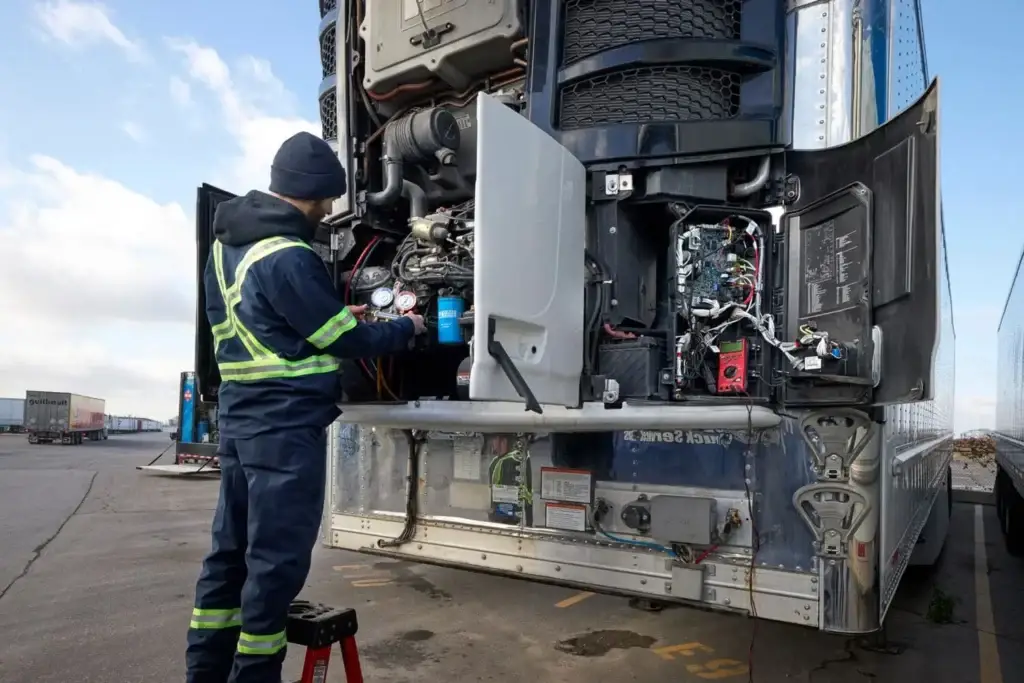
The expansion valve meters refrigerant flow between the condenser and evaporator, converting high-pressure liquid into a low-pressure vapor mixture through a precisely sized orifice. This pressure drop causes refrigerant temperature to plummet before entering the evaporator coils, where it absorbs heat from the cargo space.
Diesel-Powered vs. Electric Standby Operation
Most trailer refrigeration units incorporate dedicated diesel engines with specialized fuel delivery and cooling mechanisms designed for continuous operation. These power plants run independently from the tractor, consuming between 0.5 and 1.5 gallons per hour depending on ambient conditions, setpoint temperature, and cargo heat load.
Electric standby capabilities allow units to operate from shore power during loading, unloading, and overnight staging. This dual-power design reduces fuel consumption, minimizes emissions at distribution centers, and provides redundancy when diesel engines require service. Understanding both power modes proves essential for comprehensive system maintenance.
Temperature Control Systems and Sensors
Microprocessor-based controllers function as the unit’s intelligence layer, continuously monitoring return air temperature, discharge air temperature, ambient conditions, and refrigerant pressures. These controllers adjust compressor operation, fan speeds, and defrost cycles based on real-time data to maintain precise setpoints—typically within ±2°F of target temperature.
Advanced controllers store temperature data logs required for FDA food safety compliance and customer quality assurance programs. Many units feature remote telemetry capabilities transmitting performance data to fleet managers, enabling proactive maintenance scheduling based on actual operating conditions rather than calendar intervals.
41°F or Below
FDA Food Code maximum cold-holding temperature requirement—exceeding this threshold creates conditions for rapid bacterial growth
Insulation and Structural Integrity
Insulation panels form the thermal envelope separating the controlled cargo environment from outside conditions. Quality reefer trailers achieve R-values exceeding R-30 using polyurethane foam or polystyrene cores sandwiched between aluminum or fiberglass skins—maintaining temperature differentials of 100°F or more between interior and exterior.
Critical vulnerable points include panel joints, floor-to-wall transitions, and door assemblies where insulation effectiveness can degrade. Physical damage from forklifts, moisture intrusion through compromised seals, or aging adhesives create thermal bridges that force refrigeration systems to work harder, increasing fuel consumption while reducing cooling capacity.
Essential Diagnostic Tools and Safety Equipment
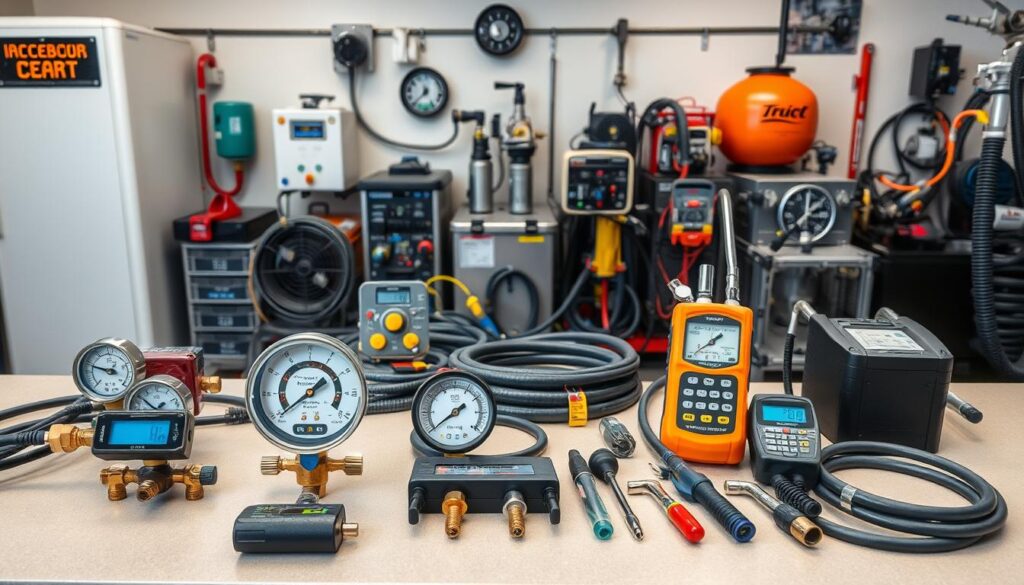
Professional reefer diagnostics require specialized equipment designed specifically for refrigeration system complexities. The difference between efficient repairs and costly misdiagnosis often comes down to having proper tools readily available—and knowing how to interpret what they reveal.
Refrigerant Handling Equipment
EPA-certified refrigerant recovery machines represent the foundation of compliant service operations. Under EPA Section 608 regulations, technicians must recover refrigerant before opening any system for service—atmospheric venting is prohibited and subject to significant penalties.
Essential refrigerant tools include vacuum pumps capable of achieving 500-micron vacuum levels for proper system evacuation, manifold gauge sets displaying both high and low-pressure readings simultaneously, and electronic scales providing precise charging measurements. Overcharging or undercharging by even a few ounces compromises cooling efficiency and can damage compressors.
| Detection Method | Sensitivity | Best Application | Cost Range |
|---|---|---|---|
| Soap Solution | Large leaks only | Visible connection points | $5-$15 |
| Electronic Heated Diode | 0.1 oz/year | General system scanning | $200-$500 |
| Infrared Sensor | 0.05 oz/year | Precise pinpointing | $800-$2,000 |
| Ultrasonic Detector | Pressure-dependent | Noisy environments | $1,500-$4,000 |
Electrical and Mechanical Testing
Digital multimeters diagnose control board failures, sensor malfunctions, and wiring problems by measuring voltage, amperage, and resistance across system components. Data loggers provide continuous temperature monitoring during transit, creating permanent records for quality assurance documentation.
Manufacturer-specific diagnostic software interfaces with Thermo King and Carrier Transicold control modules to retrieve error codes and operational parameters. These digital tools transform diagnostics from guesswork into data-driven system verification—essential for fleets managing dozens or hundreds of refrigerated trailers.
⚠️ Safety Warning
Always wear ANSI-approved safety glasses and chemical-resistant gloves when handling refrigerants. Before performing any maintenance requiring vehicle raising, ensure proper support with jack stands of sufficient capacity—never rely on hydraulic jacks alone.
Pre-Trip and Post-Trip Inspection Protocols
Systematic inspections establish critical checkpoints maintaining temperature control reliability while satisfying DOT compliance requirements under 49 CFR Part 396. These procedures protect cargo value, prevent equipment breakdowns, and create legal documentation demonstrating proper maintenance practices.
External Unit and Trailer Body Examination
Begin external inspections at the refrigeration unit mounting points. Check all bolts securing the unit to the trailer structure for proper torque specifications, looking for cracked welds, bent brackets, or metal fatigue that could cause unit separation during highway transport.
Examine the fuel system thoroughly for leakage or damage signs. Verify fuel tank mounting remains secure, check fuel lines for cracks or abrasion, and confirm adequate fuel supply exists for the planned trip duration plus 20% reserve. Diesel-powered reefer units consuming 0.5-1.5 gallons per hour can drain tanks quickly during extended runs.
Inspect the entire trailer body for structural integrity issues—dents, punctures, or panel delamination compromise insulation effectiveness. Even small damage allows warm air infiltration that forces the refrigeration system to work harder and may prevent maintaining required temperatures during hot weather operation.
Door Seals and Temperature Verification
Door systems require careful attention during every inspection. Test hinges for smooth operation without binding or excessive play. Verify latches engage completely and locking mechanisms function properly. Inspect door gaskets along the entire perimeter for tears, compression set, or hardening that prevents effective sealing.
Temperature verification requires calibrated thermometers confirming actual cargo space conditions match controller setpoint readings. Place thermometers in multiple locations—front, center, and rear positions at different heights. Temperature variations exceeding 3°F indicate air circulation problems or inadequate insulation requiring correction before loading.
| Inspection Item | Frequency | Acceptance Criteria | Failure Indicators |
|---|---|---|---|
| Unit Mounting | Before Each Trip | All bolts tight, no weld cracks | Loose hardware, metal fatigue |
| Fuel System | Before Each Trip | No leaks, adequate level, secure tanks | Fuel odor, wet spots, insufficient fuel |
| Door Seals | Before Each Trip | Gaskets intact, complete seal, latches secure | Torn gaskets, gaps, broken latches |
| Exterior Lighting | Before Each Trip | All lights operational, lenses intact | Burned bulbs, cracked lenses |
| Temperature Accuracy | Before Each Trip | Readings within ±2°F of setpoint | Variations >3°F between locations |
Refrigeration Unit Function Testing
Start the refrigeration unit and allow 15-30 minutes to reach operating temperature before departure—rushing prevents identifying problems that only appear during sustained operation. Listen carefully for unusual noises: grinding suggests bearing wear, squealing indicates belt issues, and rattling points to loose components.
Monitor refrigerant pressures using manifold gauges to verify readings fall within manufacturer specifications. Typical operating values show 30-40 psi on the low side and 200-250 psi on the high side at 70°F ambient temperature. Readings outside normal ranges indicate overcharge, undercharge, system restriction, or component failure requiring further investigation.
Daily and Weekly Maintenance Schedules
A structured preventive maintenance schedule separates professional fleets from those plagued by unexpected failures and cargo losses. Daily and weekly service routines catch developing problems before they escalate into expensive repairs or compromised loads.
Daily Operational Checks
Daily service creates the first defense against equipment failures threatening cargo integrity. These checks take 15-20 minutes but prevent problems that could result in thousands of dollars in losses. Complete inspections at shift start, documenting findings in maintenance logs.
Temperature monitoring forms the core of daily procedures. Check cargo space temperatures at shift start, mid-shift, and shift end using calibrated thermometers. Monitor the controller display for error codes or alarm conditions requiring immediate attention. Verify return air temperature differential across the evaporator coil measures 15-20°F under normal operation—smaller differentials indicate airflow restrictions or refrigerant problems.
Check fuel levels to prevent mid-route shutdowns. Inspect engine oil using the dipstick, maintaining oil between minimum and maximum marks. Verify battery voltage shows adequate charge for reliable starting and examine battery terminals for corrosion that causes connection resistance.
Weekly Service Intervals
Weekly maintenance addresses components requiring more frequent attention than monthly schedules. These tasks take 1-2 hours but significantly extend equipment life when performed consistently.
Coil cleaning maintains efficient heat transfer and proper airflow throughout the cargo space. Remove debris from condenser coils using compressed air or soft brushes, working from inside outward to avoid embedding contaminants deeper into the fins. Verify evaporator and condenser fan operation during each weekly check—listen for bearing noise indicating impending failure.
Drain system service prevents water accumulation leading to ice formation and corrosion damage. Complete drainage, flush with clean water, and verify proper slope. Obstructed drain tubes cause water backup damaging insulation and electrical components.
Door seal inspection identifies gaskets showing compression set where they no longer return to original shape. This condition allows air infiltration increasing refrigeration load and fuel consumption. Gaps exceeding 1/8 inch require immediate adjustment or replacement. Apply petroleum jelly to gaskets showing early hardening to restore flexibility temporarily while scheduling replacement.
Monthly and Quarterly Service Programs
Extended service intervals address critical components determining long-term reefer unit reliability. Monthly and quarterly maintenance aligns with component wear rates and manufacturer specifications, preventing cascading failures from neglected service.
Monthly Comprehensive Inspections
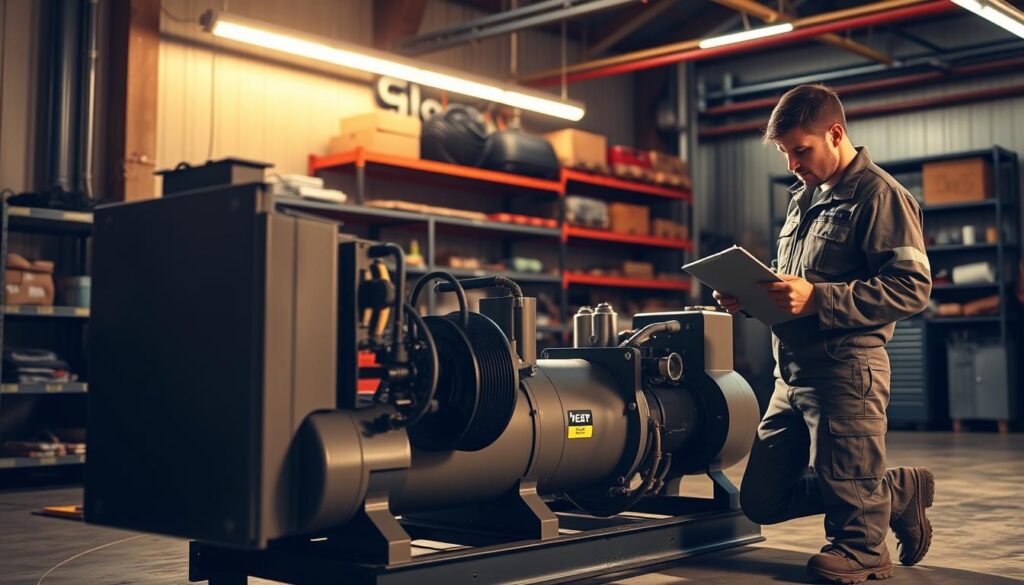
Monthly service extends beyond routine operational checks to examine components with longer service intervals. Drive belt inspection examines belt condition for visible damage indicators—cracks, glazing, fraying, or chunking signaling replacement necessity.
Measure belt tension using a gauge to verify proper adjustment. Correct tension typically allows one-half inch deflection under moderate thumb pressure at the belt’s longest span. Insufficient tension causes slippage and undercharging; excessive tension damages bearings in belt-driven components.
Refrigerant pressure testing verifies system charge levels and identifies developing problems. Connect manifold gauges to service ports with the engine running and unit in cooling mode. Record both high-side and low-side pressures for comparison against Carrier Transicold or Thermo King specifications. Subcooling and superheat measurements offer additional diagnostic information about refrigerant charge accuracy.
Electrical connection inspection addresses failure modes common in vibration-intensive trailer environments. Inspect all wire terminations at control modules, relays, sensors, and motors. Tighten connections to proper torque specifications and apply dielectric grease to weather-exposed connections preventing moisture intrusion.
Quarterly Major Service Items
Quarterly maintenance represents significant service events maintaining critical operating systems. These intervals typically correspond with seasonal changes and accumulated operating hours.
Recommended Service Intervals
- Every 750 hours: Comprehensive inspections of all mechanical and electrical systems
- Every 1,500 hours or annually: Complete service including oil change, filter replacement, belt inspection
- Every 3,000 hours or 2 years: Oil filter change, thermostat calibration verification
- Every 15,000 miles or twice yearly: Brake adjustment, wheel bearing inspection
- Every 100,000 miles or annually: Complete wheel bearing lubricant replacement, brake reline assessment
Engine oil and filter changes follow manufacturer intervals—typically every 500 to 1,000 operating hours for diesel engines powering refrigeration units. Use specified oil viscosity and API service classification. Check oil condition during changes for signs of coolant contamination, fuel dilution, or metal particles revealing developing engine problems.
Coolant system maintenance includes testing concentration with a refractometer for accuracy. Target a 50/50 glycol mixture providing freeze protection to -34°F and boil-over protection to 265°F. Inspect all hoses for deterioration, cracking, and soft spots. Flush and replace coolant every two years regardless of appearance—corrosion inhibitors deplete over time.
Thermostat calibration verification ensures accurate temperature control throughout the cargo space. Test actual temperatures against controller setpoints across the complete operating range using calibrated reference thermometers at multiple locations. Temperature variance exceeding ±2°F indicates sensor drift requiring recalibration or replacement.
The HDJ Perspective
Fleet managers who track maintenance costs per trailer consistently report that every dollar invested in preventive maintenance saves $4-6 in emergency repairs and cargo claims. The math is straightforward: a $500 quarterly service prevents a $15,000 compressor replacement or a $30,000 spoiled load. The fleets winning in refrigerated transportation aren’t cutting maintenance budgets—they’re documenting every service interval, trending operating data, and replacing components before they fail rather than after.
Diagnosing Common Reefer Unit Failures
Successful troubleshooting demands systematic problem-solving that eliminates variables and pinpoints actual failure causes. Rather than treating symptoms or randomly replacing parts, effective diagnostics identify root problems preventing recurring breakdowns.

Temperature Control Problems
When units cannot pull down cargo space temperatures or maintain setpoints during normal operation, begin troubleshooting by verifying proper refrigerant charge through pressure testing and subcooling measurements.
Low refrigerant charge from leaks causes inadequate cooling capacity, showing low suction pressure, warm suction line, and continuous compressor operation without reaching temperature. Check piping connections with soapy water—bubbles indicate leak presence requiring immediate repair.
Dirty condenser coils restrict heat rejection causing high head pressure, elevated discharge temperatures, reduced cooling capacity, and increased power consumption. Clean coils weekly during heavy use periods.
Temperature swings around setpoint indicate control system problems. Excessive short cycling suggests oversized capacity, refrigerant overcharge, or faulty temperature sensors. Wide variations signal improper control differential settings, failing defrost termination switches, blocked return air, or malfunctioning thermostats.
Mechanical Component Failures
Diesel-powered reefer units depend on reliable engine starting. Starting problems stem from fuel system issues, electrical failures, or mechanical damage. Verify fuel supply first—check tank level, inspect fuel lines for blockages, and test fuel pump operation. Air in the fuel system requires bleeding procedures to restore proper delivery.
Compressor problems range from complete failure to start, immediate stopping after starting, or running without pumping refrigerant. Mechanical seizure from lack of lubrication prevents rotation entirely—this catastrophic failure requires complete replacement. Electrical problems cause failures without mechanical damage; megohm meter testing identifies winding problems.
Loss of compression from failed valves or worn rings allows compressors to run without building pressure. The motor operates normally but no refrigerant pumping occurs—pressure testing reveals this condition through abnormal readings during operation.
Interpreting Alarm Codes
Both Thermo King and Carrier Transicold units display alphanumeric error codes identifying specific faults. These codes provide valuable diagnostic information when interpreted correctly through service manuals and technical documentation.
Common Thermo King codes include: 10 (high discharge pressure/temperature), 18 (low engine oil pressure), 19 (high engine coolant temperature), 21 (cooling cycle check), and 26 (check refrigeration capacity). Each code corresponds to specific component testing procedures guiding repairs.
Common Carrier Transicold codes include: 11 (low engine oil pressure), 13 (high discharge pressure), 17 (high compressor discharge temperature), 18 (low refrigerant pressure), and 28 (check refrigeration system). The DataLINK system provides detailed alarm information including fault descriptions and occurrence frequency.
Record codes before clearing them—controller memory stores historical codes revealing intermittent problems. Analyzing alarm patterns helps identify chronic issues requiring comprehensive repairs rather than temporary fixes.
Free Professional Fleet Tools
Cost calculators, fault code lookup, maintenance planners, and more—built for owner-operators, fleet managers, and diesel techs. No signup required.
Major Component Overhaul Procedures
When refrigerated trailers experience major component failures, technicians must follow precise overhaul and replacement procedures. These advanced operations require specialized technical skills and EPA-certified equipment for compliant service.
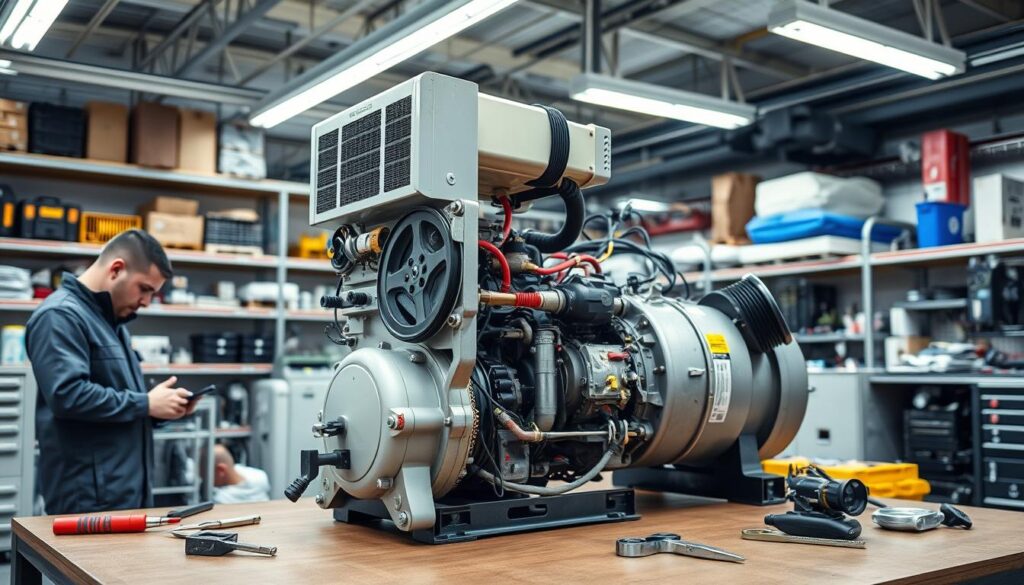
Compressor Replacement
Proper compressor service begins with complete refrigerant recovery. EPA regulations mandate certified recovery equipment usage before any compressor work—residual refrigerant and oil remain inside housings even after system shutdown.
Disconnect all electrical connections systematically and document wire routing with photographs. This documentation proves invaluable during reinstallation when multiple wire harnesses converge at the compressor terminal box. Compressor units weigh between 50 and 150 pounds—support weight with proper lifting equipment before removing mounting bolts.
Install replacement compressors with new vibration isolators preventing resonance transmission through the mounting frame. Torque all mounting bolts to manufacturer specifications. Replace refrigerant line gaskets at every connection point and add specified oil charge to the new compressor before system recharge.
Refrigerant Recovery and System Recharging
Connect certified recovery machines to system service ports following manufacturer procedures. Operate recovery equipment until system pressure reaches 0 psig or lower. Isolate recovered refrigerant in DOT-approved cylinders marked with proper refrigerant type identification—never mix different refrigerant types.
Evacuate the system using a vacuum pump for minimum 30 minutes, achieving 500 microns vacuum level. This deep vacuum removes moisture and air compromising system performance. Leak test using nitrogen pressure testing to 150 psi before refrigerant recharging—hold pressure for 24 hours while monitoring gauge readings.
⚠️ EPA Compliance Required
Section 608 Type II certification is mandatory for all refrigerant handling work on transport refrigeration units. Venting refrigerant to atmosphere violates federal law with penalties up to $44,539 per day per violation. Always use certified recovery equipment and maintain proper documentation.
Recharge the system with specified refrigerant type and weight using electronic scales for accuracy. Wear eye protection and heavy-duty gloves when handling refrigerant cylinders. Disconnect charging hose after proper pressure is reached and test all connections for leakage using an electronic leak detector.
Documentation and Regulatory Compliance
Comprehensive record-keeping separates professional reefer operations from those facing regulatory violations and liability exposure. Strong documentation systems provide legal protection, support operational efficiency, and demonstrate compliance essential for modern refrigerated transport.

DOT Maintenance Record Requirements
Under 49 CFR 396.17, every commercial motor vehicle must receive annual inspections covering parts and accessories specified in Appendix A. Motor carriers must retain inspection reports for 14 months and ensure documentation remains on the vehicle for driver and enforcement review.
Service records must document preventive maintenance performed, repairs completed, parts replaced, and technician identification. Each entry should include date, odometer reading or operating hours, and detailed description of work performed. Digital maintenance management systems enable comprehensive tracking by vehicle identification number while generating automated service reminders.
FMCSA regulations under 49 CFR 396.11 require drivers to submit Driver Vehicle Inspection Reports (DVIRs) at the end of each day documenting any defects discovered during operation. Any deficiencies must be corrected before the vehicle operates again. This documentation demonstrates due diligence when accidents occur or cargo claims arise.
Temperature Data and Quality Assurance
Temperature monitoring logs represent critical quality assurance documentation for food safety compliance. Continuous temperature recorders create time-stamped records throughout transit, documenting that cargo space remained within specified ranges required for perishable goods.
Download and archive temperature data after each trip. Retention periods range from two to seven years depending on cargo type and customer requirements. Temperature excursions outside acceptable ranges require immediate documentation including duration, corrective actions, and cargo disposition decisions.
Modern telematics systems provide real-time temperature monitoring with automated alerts when temperatures deviate from programmed setpoints. GPS location tracking, door opening events, and refrigeration unit operational status create comprehensive trip records supporting cold chain quality assurance programs.
EPA Refrigerant Management Documentation
EPA refrigerant handling compliance mandates technician certification under Section 608 requirements. Service records must document refrigerant type and quantity recovered from each unit, disposal or recycling method, and recovery equipment certification numbers.
Leak repair requirements apply when systems lose refrigerant exceeding specified thresholds. Regulations mandate repair verification testing within prescribed timeframes. Records proving timely repairs protect operators from EPA enforcement actions carrying substantial financial penalties.
Frequently Asked Questions
How often should a reefer unit be serviced?
Reefer units require service at specific operating hour intervals. Perform comprehensive inspections every 750 hours, complete service at 1,500 hours or annually (whichever comes first), and oil filter changes at 3,000 hours or every two years. Daily pre-trip inspections, weekly coil cleaning, and monthly comprehensive checks supplement these intervals. Fleets operating in extreme temperatures or running continuous loads should increase service frequency to prevent accelerated wear.
What causes a reefer trailer to not hold temperature?
Temperature control failures typically stem from refrigerant leaks causing low suction pressure, dirty condenser or evaporator coils restricting heat transfer, worn door gaskets allowing warm air infiltration, blocked airflow from improper cargo loading, or malfunctioning sensors providing incorrect readings. Systematically check refrigerant pressures first, then inspect coils for debris, verify door seals compress properly, and confirm cargo allows adequate air circulation before investigating control system issues.
What are the DOT inspection requirements for refrigerated trailers?
Under 49 CFR 396.17, all commercial refrigerated trailers over 10,001 pounds GVWR require annual inspections covering brakes, coupling devices, lighting, tires, wheels, and frame condition. Motor carriers must maintain inspection records for 14 months minimum and ensure documentation remains on the vehicle. Drivers must complete pre-trip inspections before each trip per 49 CFR 392.7 and submit Driver Vehicle Inspection Reports at the end of each day documenting any defects discovered.
How do I troubleshoot Thermo King and Carrier Transicold alarm codes?
Both manufacturers display alphanumeric codes identifying specific faults. For Thermo King, common codes include 10 (high discharge pressure), 18 (low oil pressure), 21 (cooling cycle check), and 26 (refrigeration capacity check). Carrier Transicold codes include 11 (low engine oil pressure), 13 (high discharge pressure), 18 (low refrigerant pressure), and 28 (check refrigeration system). Always record codes before clearing, then follow manufacturer troubleshooting trees in the service manual to systematically test each potential cause.
What EPA certifications are required for reefer refrigerant work?
EPA Section 608 certification is mandatory for anyone who maintains, services, repairs, or disposes of equipment containing refrigerants. Type II certification covers high-pressure appliances including transport refrigeration units. Technicians must pass an EPA-approved exam administered by certified organizations like ESCO Institute. Recovery of refrigerant before any system opening is required under federal law, and Section 608 credentials do not expire once obtained.
What temperature must refrigerated trailers maintain for food safety?
The FDA Food Code requires cold foods to be held at 41°F (5°C) or below to prevent bacterial growth. Frozen products must maintain temperatures at or below 0°F (-18°C). The temperature danger zone between 41°F and 135°F allows harmful pathogens like Salmonella and E. coli to double every 20 minutes. Document temperature readings throughout transit for regulatory compliance and cargo claims protection—many shippers specify exact requirements stricter than minimum FDA standards.
Building a Maintenance Program That Protects Your Investment
Effective reefer trailer maintenance isn’t an expense—it’s the foundation of profitable refrigerated transportation operations. The systematic service schedules and diagnostic procedures outlined in this guide create reliable temperature control performance that protects cargo value, satisfies regulatory requirements, and builds the reputation that wins premium freight contracts.
Fleet managers implementing comprehensive preventive maintenance programs consistently report lower total cost of ownership, fewer emergency breakdowns, and extended equipment service life. The technicians who master these diagnostic and repair procedures become invaluable assets, solving problems efficiently rather than replacing parts randomly until something works.
Start with daily pre-trip inspections that catch small problems before they become expensive failures. Maintain rigorous service intervals at 750, 1,500, and 3,000 hours. Document everything—temperature logs, service records, and inspection reports create the paper trail that protects you when cargo claims arise or DOT auditors appear.
Share This Guide With Your Team
Know a fleet manager or diesel tech who could benefit from these maintenance protocols? Help them protect their equipment investment.


