
By Michael Nielsen, Editor & Publisher | 15+ Years in Diesel Repair
Last Updated: January 2026
📖 Estimated reading time: 20 minutes
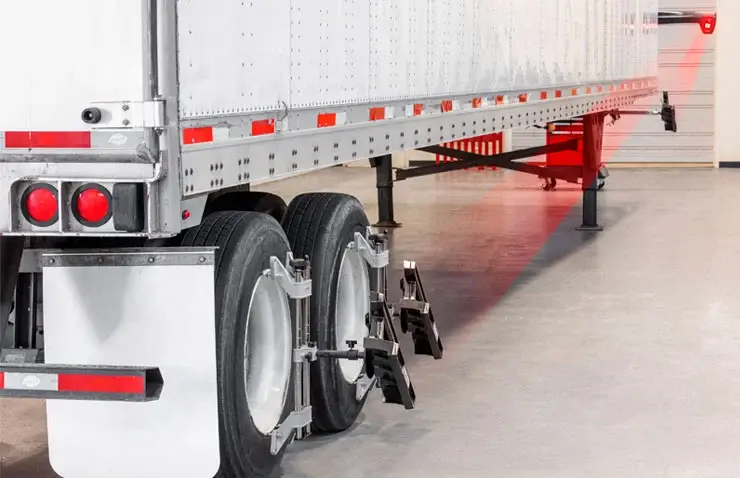
Misaligned trailer axles silently drain fleet profitability through three costly channels: premature tire replacement, increased fuel consumption, and accelerated suspension component failure. Proper trailer suspension alignment corrects axle angles relative to the frame and kingpin, ensuring all wheels track harmoniously without deviation or dog-tracking behavior. Industry research confirms correct alignment procedures can improve fuel economy by up to 2%—substantial savings when multiplied across hundreds of vehicles and thousands of miles.
This comprehensive guide details the step-by-step alignment procedures, tolerance specifications, and diagnostic techniques that fleet maintenance teams need to perform professional-quality suspension alignment work in-house. Whether you’re addressing tracking complaints, preventing premature tire wear, or establishing preventive maintenance protocols, these procedures will help protect your operational budgets and keep your trailers rolling safely.
Key Takeaways
- Fuel economy improvement: Correct axle positioning reduces rolling resistance and can improve fuel economy by up to 2% across your fleet.
- Tire lifespan protection: Misalignment creates distinctive wear patterns that cut tire life by 25-40%, representing thousands in premature replacement costs.
- Critical tolerances: Thrust angle must be within 1/8 inch side-to-side; scrub angle within 1/16 inch for tandem axles.
- Safety compliance: DOT inspections specifically examine tire condition and tracking behavior—alignment neglect creates regulatory and liability exposure.
- Inspection intervals: Check alignment every 6-12 months, after significant impacts, new tire installation, or whenever tracking problems develop.
- Component inspection first: Worn bushings are the primary cause of alignment drift—verify suspension component condition before adjusting axle positions.
1. Why Proper Suspension Alignment Is Critical for Trailer Safety
The hidden costs of misaligned trailer suspension extend far beyond visible tire wear, impacting fuel consumption, safety records, and legal compliance. Fleet operators who neglect suspension alignment face mounting expenses that erode profitability while simultaneously increasing safety risks on the road. Understanding these consequences is essential for maintaining efficient operations and meeting trailer safety compliance standards.
How Alignment Ensures Even Weight Distribution
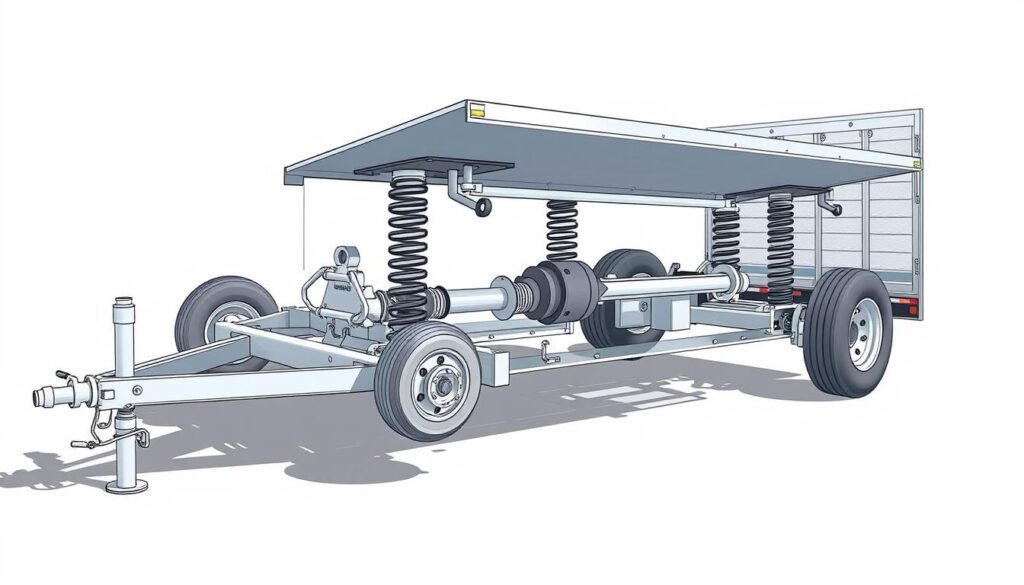
Properly aligned axles create uniform load distribution across all tire contact patches. This balance prevents individual tires from bearing excessive weight, which would accelerate wear and stress the trailer frame. When axles shift out of alignment, weight forces concentrate unevenly, creating dangerous conditions during emergency maneuvers or adverse weather. Structural components experience accelerated deterioration, and the risk of catastrophic failure increases significantly.
Economic Impact on Tires and Fuel Consumption
Misalignment dramatically reduces tire lifespan through distinctive wear patterns. Feathering, cupping, and one-sided wear can cut tire life by 25-40%, representing thousands of dollars in premature replacement costs for commercial fleets. The fuel efficiency penalty proves equally substantial—misalignment increases rolling resistance significantly, forcing the engine to work harder to move the same load.
Up to 2%
Potential fuel economy improvement from proper trailer alignment—ATRI research shows fuel accounts for roughly 29% of fleet operating costs, making alignment a significant profit lever.
According to the American Transportation Research Institute’s operational costs analysis, fuel represents approximately 29 cents per mile of total motor carrier costs. For high-mileage operations logging 100,000+ miles annually per trailer, a 2% fuel improvement translates to meaningful savings that compound across the fleet. Beyond economics, misalignment forces drivers to constantly correct steering—this compensation increases driver fatigue, directly affecting retention rates in an already challenging labor market.
Regulatory Standards and Liability Concerns
DOT inspections specifically examine tire condition and vehicle tracking behavior. FMCSA regulations under 49 CFR Part 396 mandate proper maintenance practices, making alignment part of trailer safety compliance requirements. Alignment-related tire wear or tracking issues can result in violations and out-of-service orders during roadside inspections.
During accident investigations, maintenance records receive scrutiny, and documented alignment neglect creates serious liability exposure for fleet operators. The Commercial Vehicle Safety Alliance’s out-of-service criteria specifically address tire and suspension conditions that indicate maintenance deficiencies. Professional tire wear prevention through proper alignment protects both operational budgets and legal standing.
2. Identifying Suspension Alignment Problems
Your trailer’s suspension system communicates problems through specific warning signs that trained technicians can identify during routine inspections. Recognizing misalignment symptoms early prevents expensive repairs and dangerous operating conditions. A systematic approach to diagnosis combines visual inspection with operational observations.
Tire Wear Patterns That Indicate Misalignment
Tire wear patterns provide the most visible evidence of alignment issues. Feathering occurs when tread ribs wear at angles, creating a sawtooth pattern that indicates toe misalignment. One-sided wear shows significantly more degradation on either the inner or outer edge, pointing to camber problems. Cupping creates scalloped dips around the tire circumference and suggests suspension component failure.
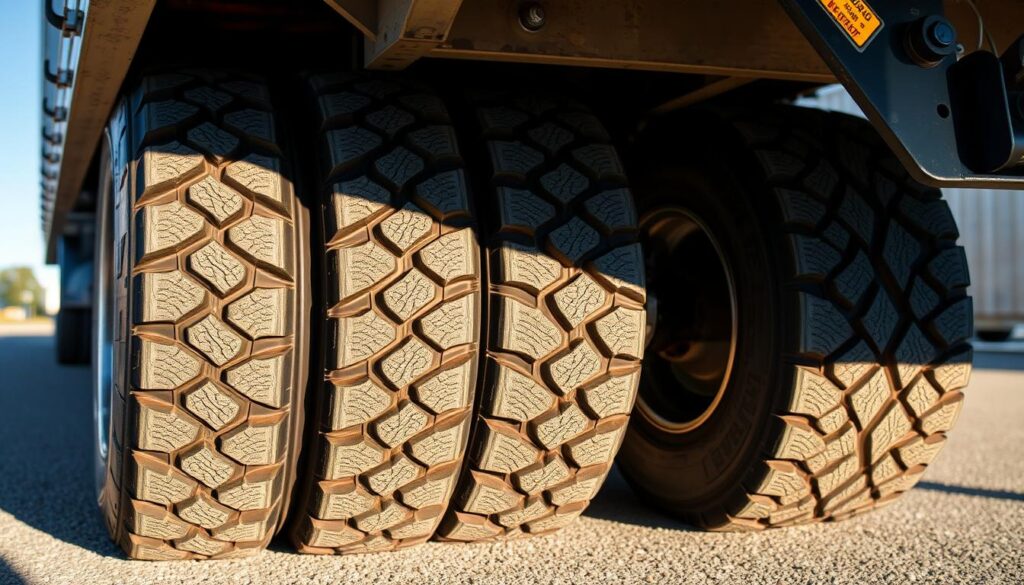
Rapid center or edge wear on dual assemblies indicates thrust angle problems. Distinguishing these wear patterns from inflation-related damage requires careful measurement and comparison across all wheel positions.
| Wear Pattern | Visual Description | Likely Cause |
|---|---|---|
| Feathering | Sawtooth pattern across tread ribs | Toe misalignment |
| One-sided wear | Inner or outer edge worn excessively | Camber deviation |
| Cupping/scalloping | Dipped spots around circumference | Suspension component wear |
| Center/edge wear on duals | Rapid degradation on inside edges | Thrust angle deviation |
Trailer Wandering and Poor Tracking Symptoms
Operational indicators reveal trailer tracking problems that drivers experience on the road. Dog-tracking occurs when the trailer doesn’t follow directly behind the tractor, creating an angled path visible from following vehicles. Constant steering correction requirements signal alignment drift that increases driver fatigue over long hauls.
Pulling to one side or instability at highway speeds are serious safety concerns requiring immediate attention. Many drivers unconsciously compensate for these conditions, reducing their reaction time during emergencies. These symptoms often appear gradually as alignment deteriorates over time.
Suspension Component Wear and Damage Signs
Physical inspection reveals suspension damage indicators that both cause and result from misalignment. Worn bushings allow excessive axle movement and create alignment instability. Bent torque rods, cracked spring hangers, and loose U-bolts indicate impact damage or maintenance neglect requiring correction before alignment work.
During diagnostic inspection, technicians should examine air ride components for leaks or structural damage. Corrosion on suspension fasteners—particularly common in coastal regions or areas using road salt—can allow mounting shifts over time. Documenting component condition helps identify whether misalignment caused the damage or resulted from it.
3. Pre-Alignment Safety and Workspace Preparation
Proper workspace setup and safety measures are non-negotiable requirements that must be completed before beginning any alignment adjustments on trailer suspension systems. These alignment safety procedures protect technicians from serious injury or death while ensuring measurement accuracy throughout the process.
⚠️ Safety Warning
Failure to follow proper lifting and support protocols can result in trailer collapse, crushing injuries, or fatalities. Never work under a trailer supported only by hydraulic jacks—always use appropriately-rated jack stands as the primary support system.
Protective Gear and Equipment Standards
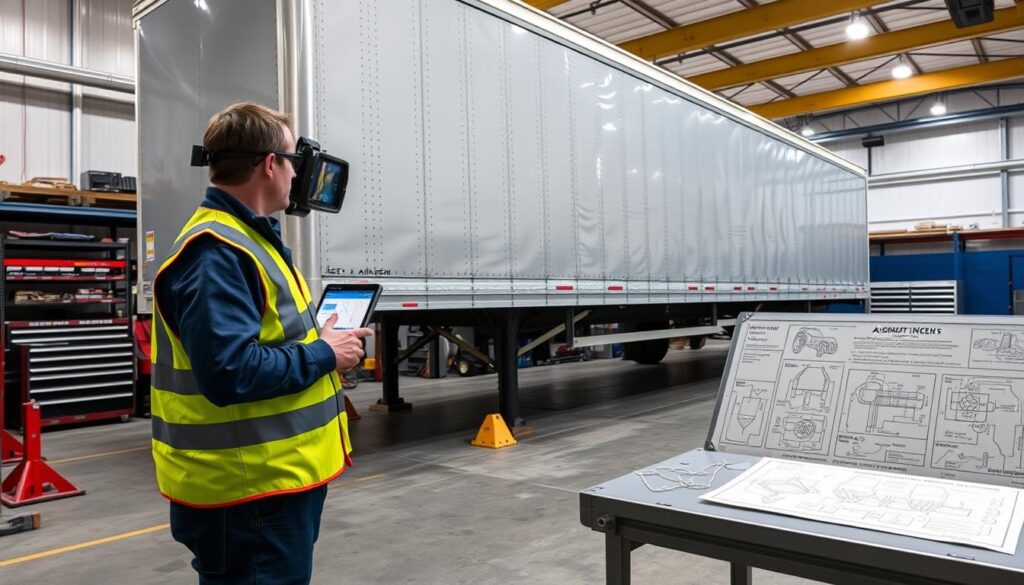
Every technician must wear appropriate personal protective equipment during alignment work. These PPE requirements are mandatory, protecting against specific hazards present in the alignment environment.
| Equipment Type | Specification | Protection Against |
|---|---|---|
| Safety Glasses | ANSI Z87.1-rated with side shields | Flying debris, spring tension release |
| Work Boots | Steel-toed, ASTM F2413 rated | Falling components, crushing hazards |
| Hand Protection | ANSI/ISEA 105 cut-resistant gloves | Sharp edges, hot surfaces, fasteners |
| Hearing Protection | OSHA 1910.95 compliant plugs/muffs | Impact tool noise exposure |
Secure Support and Jack Stand Protocols
Trailer lifting safety begins with positioning heavy-duty floor jacks only at designated frame lift points. Never place jacks under axles, spring hangers, or suspension components—these parts cannot support concentrated lifting loads. Once raised to working height, immediately install appropriately-rated jack stands at manufacturer-specified locations.
Hydraulic jacks can fail without warning due to seal leaks or valve malfunctions. Jack stand protocols require using stands as the primary support system, not backup devices. Perform a stability test by gently rocking the trailer before working underneath to verify secure positioning.
Level Foundation Verification
Accurate alignment demands level surface requirements measured to within 1/8 inch per 10 feet. Work only on solid concrete or asphalt surfaces—never on gravel, dirt, or uneven pavement. Use precision levels to verify both lateral and longitudinal levelness before beginning work.
Uneven surfaces introduce measurement errors that compromise alignment accuracy. Check the working area in multiple directions before beginning any adjustments. This foundation verification ensures all measurements remain true throughout the alignment process.
4. Tools and Equipment Required for Alignment Work
Professional-grade alignment work requires a comprehensive toolkit that goes beyond standard hand tools. Having the proper measuring equipment and alignment tools before beginning ensures accurate adjustments within manufacturer tolerances. The investment in quality instruments pays dividends through faster completion times and reliable results that prevent costly comebacks.
Precision Measuring Instruments
Accurate measurements form the foundation of successful alignment procedures. High-precision instruments eliminate guesswork and ensure axles achieve proper positioning relative to the trailer frame and kingpin.
Tape Measures and Trammel Bars
A 50-foot steel tape measure remains essential for diagonal and straight-line measurements from kingpin to axle ends. Steel tapes resist stretching unlike fiberglass or cloth varieties that introduce measurement errors. Apply consistent tension using a spring scale when taking comparative measurements between sides.
A trammel bar provides superior accuracy for axle-to-axle spacing verification on tandem configurations. These adjustable devices span between reference points without the sag issues common with long tape measurements. They’re particularly valuable when checking triple axle spacing requirements.
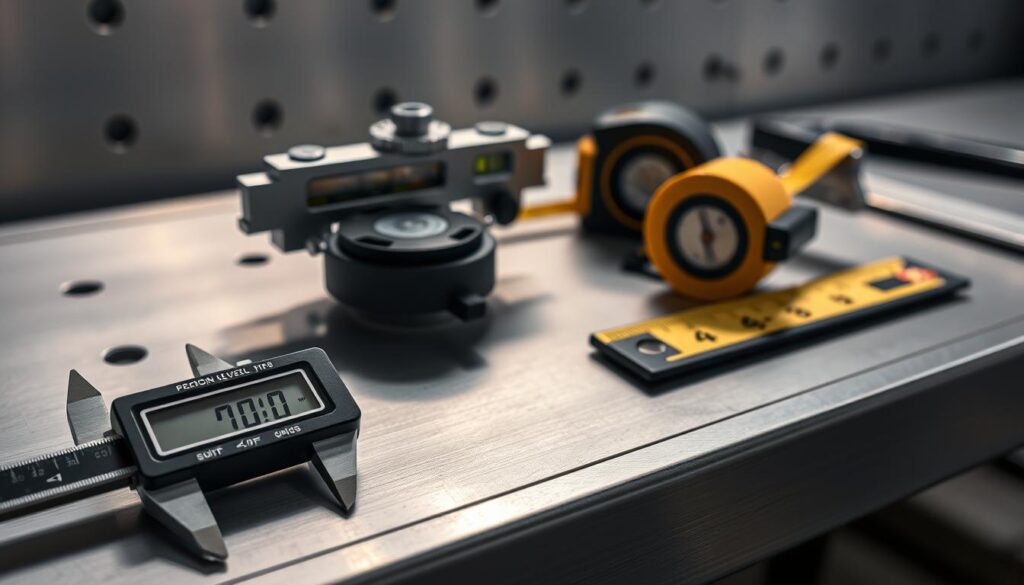
Electronic angle measurement tools deliver precise readings of axle orientation relative to the frame. Digital levels with 0.1-degree accuracy verify both frame levelness and working surface preparation. Modern laser alignment tools project reference lines for visual verification of axle positioning, though the traditional string line method remains reliable when laser equipment isn’t available.
Wrenches, Sockets, and Torque Tools
Suspension hardware typically requires socket sizes from 3/4-inch to 1-1/8-inch for U-bolts and hanger components. Quality six-point sockets prevent fastener rounding during removal and installation. A 3/4-inch drive impact wrench speeds hardware removal without damaging threads.
Calibrated torque wrenches capable of 300-800 lb-ft range are absolutely essential for proper suspension fastener tightening. Following torque specifications prevents hardware loosening and ensures structural integrity. The Technology & Maintenance Council’s recommended practices specify torque values for common suspension configurations—annual calibration verification maintains accuracy.
String Line Method Equipment
The string line method remains a reliable technique when modern equipment isn’t available. This traditional approach uses mason’s line or non-stretch cord with adjustable supports to create reference lines parallel to the trailer centerline. Measurements from string to axle reference points reveal alignment deviations. String line setups require careful tensioning to eliminate sag—this method works effectively for single and tandem axle configurations when performed correctly.
5. Comprehensive Pre-Alignment Inspection
A thorough pre-alignment inspection separates temporary fixes from lasting solutions by identifying underlying problems that prevent alignment from holding. Even perfectly executed alignment procedures will fail if the trailer’s foundation components are compromised. The trailer must be unloaded and positioned on level ground, with the suspension freed of binds by pushing backward then pulling forward.
Before measuring anything, apply and release the brakes while pulling forward to ensure the adjustable undercarriage sits in its rearmost locked position. The kingpin or coupler must be at correct height, with the trailer level side-to-side and front-to-rear. Neither service nor parking brakes should be applied during measurement, as this introduces false load conditions.
Checking the Frame for Damage
Frame integrity determines whether accurate alignment is even possible. Use string lines or laser measurement tools along the frame length to detect bent main rails. Check cross-member attachment to main rails for square positioning and secure fastening.
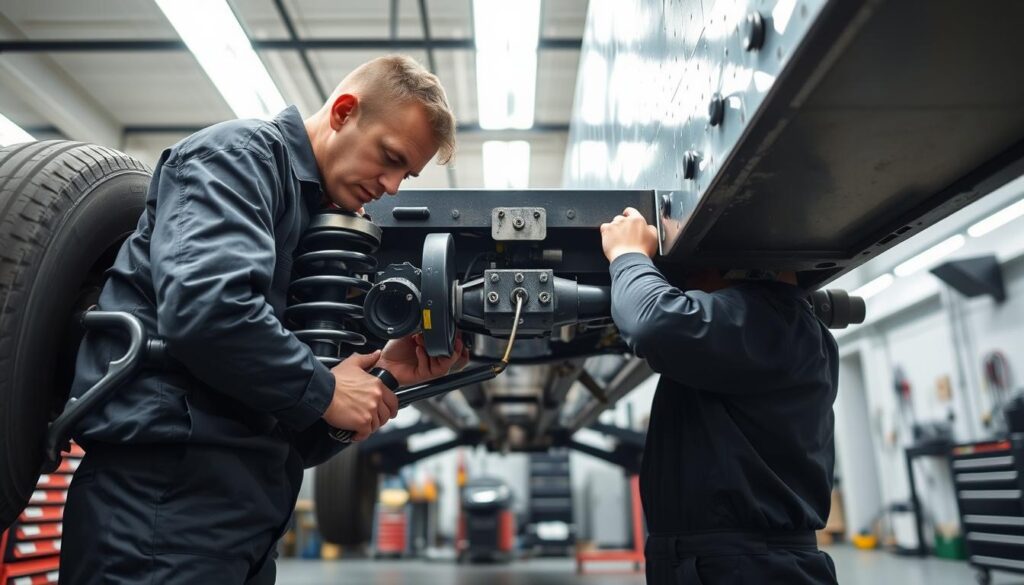
Inspect stress concentration points including spring hangers, fifth wheel mounting areas, and suspension brackets for cracks. Measure frame height at multiple points to identify sag or twist. Frame damage from accidents, overloading, or metal fatigue must be repaired before attempting alignment work.
Evaluating Suspension Mounting Points
The suspension component inspection focuses on parts that directly affect axle positioning. Examine leaf spring condition by checking for broken leaves, center bolt integrity, and spring eye bushing wear. Spring hangers require close examination for cracks and proper frame attachment.
Verify U-bolt condition and thread integrity on all axle mounting points. Inspect torque rod and radius rod bushings for deterioration, including rubber cracking, metal sleeve separation, or excessive free play. Worn bushings are the primary cause of alignment drift—even perfectly adjusted axles will shift out of specification when bushings have excessive play.
For air ride systems, assess airbag condition, height control valve operation, and control arm bushing condition. The bushing condition directly influences how well alignment holds over time.
Inspecting Bearings and Hubs
Wheel bearing problems create false alignment readings that lead to incorrect adjustments. Check bearing endplay by grasping the tire and rocking it inward and outward. Excessive movement indicates bearing wear that must be corrected before proceeding.
Measure hub runout with a dial indicator to detect bent spindles or damaged hubs. Inspect brake components for even wear patterns that might indicate alignment issues already present.
Documenting Starting Conditions
Recording initial measurements creates both diagnostic information and legal protection. Document tire tread depths at multiple points around each tire to establish wear patterns. Measure and record existing alignment dimensions before making any adjustments.
Note component wear observations in detail, including specific bushing condition and spring condition. Take photographs of suspicious areas for baseline documentation. These initial measurements provide reference points for post-alignment verification and help identify recurring problems in future inspections.
The HDJ Perspective
In our experience consulting with fleet maintenance operations, the most common alignment failure isn’t poor technique—it’s skipping the pre-alignment inspection. Technicians under time pressure often jump straight to adjustments without verifying bushing condition, leading to callbacks when alignment drifts within weeks. The 15-20 minutes spent documenting component condition pays back many times over in reduced rework and better diagnostic data for identifying trailers with systemic suspension issues.
6. Step-by-Step Trailer Suspension Alignment Procedures
Proper alignment work transforms from complex to manageable when broken down into clear, sequential steps. These alignment procedures require patience, precision, and attention to detail throughout every phase. Following the established sequence ensures accurate results and prevents costly mistakes that could compromise trailer safety.
The process typically takes two to four hours for experienced technicians working on single or tandem axle trailers. Triple axle configurations may require additional time due to the complexity of coordinating multiple axle positions.
Step 1: Establish Reference Lines on Level Ground
Creating accurate reference points forms the foundation of successful alignment work. Without reliable baseline measurements, subsequent adjustments lack the precision needed for proper tracking performance. This initial step determines the accuracy of all measurements that follow.
Setting Up String Lines
Reference line setup begins with positioning the trailer on perfectly level ground verified with a precision level. Run two taut string lines parallel to the trailer frame centerline, positioned at equal distances from both frame rails. Most technicians position strings 12 to 18 inches outboard of the frame to clear suspension components.
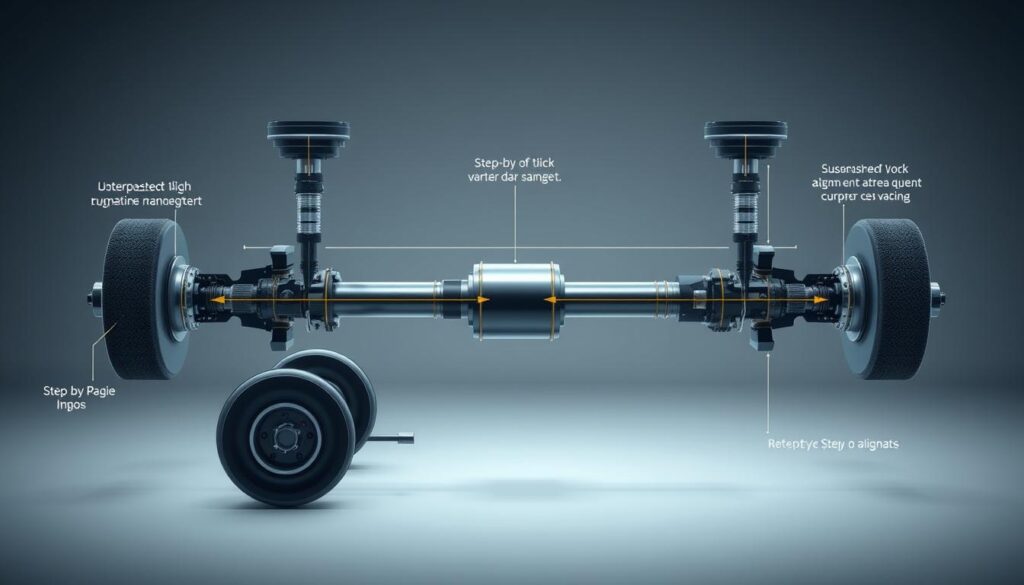
Secure the strings at the front near the kingpin and at the rear of the trailer using adjustable support stands. Pull the strings tight enough to eliminate sag but not so tight that they stretch or bow. Verify that both strings measure exactly the same distance from the frame centerline at multiple points along the trailer length.
Identify permanent reference points on the frame that correspond to ideal axle locations. Use a center punch to create small divots in the frame at measured intervals, ensuring these marks remain visible throughout the adjustment process. Mark points directly above where axle centers should be positioned when alignment is correct. Record the exact distances from the kingpin or coupler to each reference mark—these measurements become your baseline for axle positioning verification.
Step 2: Measure Axle-to-Frame Positioning
Accurate measurement techniques separate professional alignment work from guesswork. These measurements reveal the current state of axle positioning and guide adjustment decisions.
Front-to-Rear Measurement Technique
Thrust angle measurement requires measuring from the kingpin center to each end of the front axle on both left and right sides. Use a quality steel tape measure with consistent tension, preferably maintained with a spring scale at exactly five pounds of pull force. Record measurements to 1/16-inch precision.
The difference between left and right side measurements must not exceed 1/8 inch. If the left side measures 220.00 inches, the right side should fall between 219.875 and 220.125 inches for acceptable alignment.
Side-to-Side Comparison Method
Measure from the trailer centerline to each axle centerline to verify lateral positioning. This scrub angle adjustment check ensures axles are centered under the frame. The axle centerline should be within 1/4 inch of the trailer centerline for optimal tracking performance.
For tandem axle configurations, measure from the front axle centerline to the rear axle centerline on both sides. These measurements must be equal within 1/16 inch to prevent dog tracking and premature tire wear.
Step 3: Loosen Spring Mount or Suspension Hardware
Proper hardware loosening prevents component damage and makes adjustments easier to execute. Different suspension types require specific approaches to hardware loosening.
Identifying Adjustment Points
Spring suspensions adjust by loosening U-bolts and spring mounting hardware, allowing the axle to shift within the spring seats. Air ride suspensions require adjusting control arm lengths by loosening specific mounting bolts. For air ride systems, upper control arm bolts on the adjustment side must be loosened before making lower control arm changes to prevent bushing damage.
Walking beam suspensions may use shims or adjustable pivot points that require different loosening sequences. Consult manufacturer specifications for your specific suspension type.
Proper Loosening Sequence
Loosen hardware gradually in a cross-pattern to prevent binding and uneven stress distribution. Remove tension from fasteners without completely removing them, maintaining component position control. For air suspension systems, ensure the suspension is at proper ride height before loosening any adjustment hardware.
“Always loosen upper control arms first on air ride suspensions before adjusting lower control arms. This simple sequence prevents costly bushing and component damage.”
— TMC Recommended Practice RP 643A
Step 4: Adjust Axle Position to Specifications
Actual axle positioning requires careful manipulation of suspension components combined with continuous measurement verification. These suspension adjustment techniques demand patience and precision.
Shifting Techniques for Spring Suspensions
Use pry bars at designated points to shift the axle forward or rearward within spring seats. Apply force gradually while monitoring movement with repeated measurements. Tap with dead-blow hammers to make fine adjustments of 1/16 inch or less.
Some technicians prefer loosening one side at a time, adjusting it to specification, then moving to the opposite side. This approach maintains better control over axle position throughout the adjustment process.
Shim Installation for Torsion Axles
Precision-ground shims between axle mounting surfaces and frame brackets achieve exact angular positioning. Select shim thickness based on measurement discrepancies, typically available in increments of 1/32 inch. Place shims consistently on the same side of mounting brackets to maintain predictable adjustment effects.
Verify that shims seat flush against mounting surfaces without gaps that could create stress concentrations. Multiple thin shims often work better than single thick shims for achieving precise positioning.
Step 5: Tighten Hardware to Manufacturer Torque Specs
Proper fastener torque ensures secure mounting without overstressing components. Following the correct torque sequence and values is critical for long-term alignment stability.
Proper Torque Sequence
Tighten U-bolts in a cross-pattern, similar to wheel lug nut tightening procedures, to ensure even clamping force distribution. Air ride control arms require tightening lower control arms first to 160-170 lb-ft, then raising the vehicle to access upper control arm nuts for final torque to 450-500 lb-ft.
Heavy duty slipper suspension components have distinct specifications for oiled versus dry fasteners. Oiled fasteners require approximately 25% less torque than dry fasteners due to reduced friction between threads.
Thread Locking Compound Application
Apply medium-strength thread-locking compound (blue Loctite or equivalent) on fasteners that may require future adjustment. Use high-strength compound (red) only on permanent installations that will not need disassembly. Clean and degrease threads thoroughly before applying any thread-locking compound to ensure proper adhesion.
Allow thread-locking compound to cure for the manufacturer-recommended time before placing the trailer back in service. This curing period typically ranges from one to 24 hours depending on the specific product used.
7. Alignment Specifications and Tolerance Standards
The difference between acceptable and unacceptable trailer alignment often measures less than the thickness of a pencil, yet these tiny margins dramatically impact safety and performance. Alignment specifications provide measurable benchmarks that remove guesswork from the adjustment process. Understanding these tolerance standards ensures your work meets industry requirements and manufacturer expectations.
Axle Squareness Tolerances
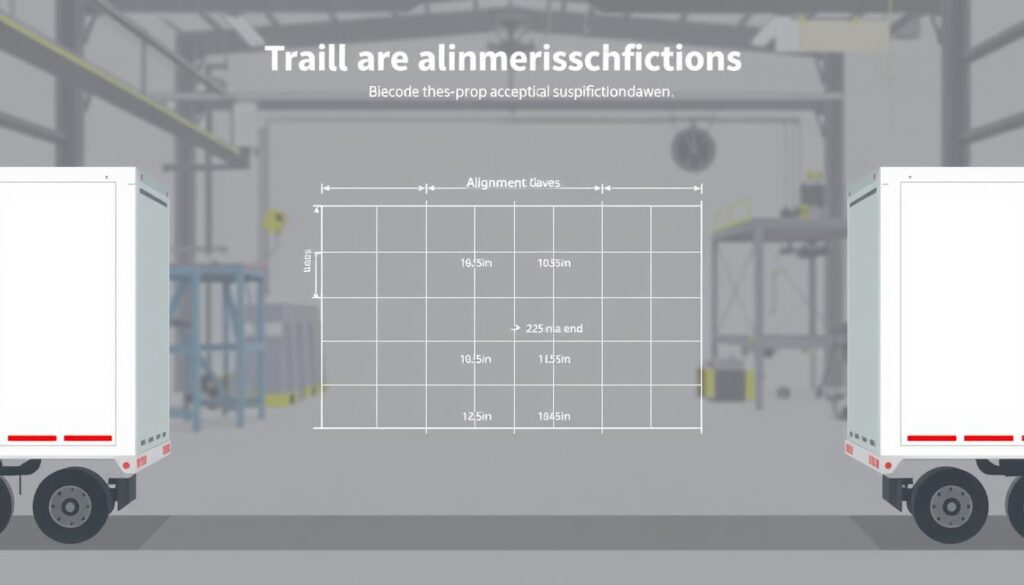
Axle squareness refers to the perpendicular relationship between the axle centerline and the trailer’s direction of travel. The industry-standard thrust angle tolerance is 1/8 inch maximum side-to-side difference when measuring from the kingpin to each axle end. This measurement must achieve A = B ± 1/8″ to maintain proper tracking.
This seemingly small tolerance translates to approximately 0.1 degrees of angular deviation. When thrust angles exceed this specification, the trailer constantly tries to track at an angle, requiring continuous steering correction. Over a 102-inch wide trailer, that 1/8-inch difference represents roughly 0.07 degrees—yet this small amount creates measurable tire wear through constant scrubbing forces.
Toe-In and Toe-Out Settings by Trailer Type
Most trailer axles are specified for zero toe—perfectly parallel wheel orientation when viewed from above. Unlike steering axles on tractors, trailers are pulled rather than driven, making any toe setting increase scrub and rolling resistance. This fundamental difference affects alignment tolerances significantly.
Some specialized applications may specify slight toe-in (0 to 1/16 inch total) to improve stability in tandem configurations or urban environments with frequent turning. However, toe-out is virtually never specified as it degrades both stability and tire life. Always follow manufacturer specifications rather than applying automotive-derived assumptions about beneficial toe settings.
Tandem and Triple Axle Spacing Requirements
The scrub angle specification for multi-axle suspensions demands that axle-to-axle measurements must be equal within 1/16 inch side-to-side (C = D ± 1/16″). Measurements should be taken front-to-front or center-to-center between axles, and this tolerance should be achieved as close to zero offset as possible.
Scrub angle directly increases rolling resistance because tires are forced to scrub sideways while rolling forward. Even small scrub angles accumulate substantial drag over highway distances, measurably impacting fuel economy. For triple axle configurations, the same 1/16-inch tolerance applies between each axle pair, and cumulative tolerances must be monitored carefully.
Quick Reference: Alignment Tolerances
- Thrust angle: 1/8 inch maximum side-to-side (kingpin to axle ends)
- Scrub angle: 1/16 inch maximum side-to-side (axle-to-axle)
- Lateral centerline: 1/4 inch maximum from frame center
- Air ride control arm: ±1/8 inch from neutralized position
- Angular deviation: 0.1 degree or less total
Manufacturer-Specific Alignment Values
While industry standards provide general guidance, specific suspension designs often have unique requirements that supersede generic specifications. Certain air ride systems specify particular ride height relationships during alignment, and specialized suspensions may have proprietary adjustment procedures. Manufacturers may also specify tighter alignment tolerances than industry minimums for premium performance.
The lateral centerline measurement (distance between trailer and axle centerlines) must be 1/4 inch or less for each axle. For air suspension systems specifically, adjustment on the lower control arm from its neutralized position should not exceed ±1/8 inch (3.175 mm). Always consult manufacturer technical bulletins and service manuals for the specific suspension being serviced, as following generic procedures on specialized equipment can result in suboptimal performance or component damage.
Free Professional Fleet Tools
Cost calculators, fault code lookup, maintenance planners, and more—built for owner-operators, fleet managers, and diesel techs. No signup required.
8. Post-Alignment Verification and Testing
Post-alignment verification separates professional-quality work from guesswork by confirming that every dimension meets manufacturer tolerances. This critical phase ensures your alignment work delivers lasting performance improvements under real-world operating conditions. Without proper alignment verification, you risk returning a trailer to service that still exhibits tracking problems or accelerated tire wear.
The validation process involves three distinct evaluation methods that work together. Each technique provides unique insights into alignment accuracy and trailer performance.
Confirming Measurement Accuracy
Measurement verification must be performed immediately after completing all adjustments and torquing hardware. Repeat all initial measurement procedures using the same tools and techniques to eliminate variables.
Check thrust angle from kingpin to both axle ends side-to-side. Verify scrub angle measurements between axles on tandem and triple configurations. Confirm lateral centerline positioning to ensure axles remain centered under the frame. All remeasured dimensions must fall within specified tolerances before returning the trailer to service. Results outside the acceptable range require immediate re-adjustment.
| Alignment Dimension | Maximum Tolerance | Verification Method |
|---|---|---|
| Thrust Angle (Kingpin to Axle Ends) | 1/8 inch side-to-side | Tape measure from kingpin center |
| Scrub Angle (Axle-to-Axle) | 1/16 inch side-to-side | Cross-diagonal measurements |
| Lateral Centerline | 1/4 inch from frame center | Frame rail to axle end measurements |
| Hardware Torque (After Break-In) | Recheck at 1,000 miles | Calibrated torque wrench |
After the initial break-in period of approximately 1,000 miles, all bolts and nuts should be checked to ensure recommended torque values are maintained. Periodic verification at least every four months thereafter prevents gradual alignment degradation.
On-Road Performance Assessment
Road testing provides validation that cannot be achieved through static measurements alone. Test drive procedures should be conducted on smooth, level pavement where irregularities won’t mask alignment-related issues.
The trailer should follow directly behind the tow vehicle without pulling to either side. No constant steering correction should be required to maintain straight-line travel. Evaluate stability through moderate-speed directional changes and highway speeds.
Load the trailer with representative weight for the most accurate performance evaluation. Drivers familiar with pre-alignment behavior provide valuable feedback on tracking improvements. Any continued wandering indicates incomplete correction or underlying mechanical damage that alignment procedures cannot remedy.
For air suspension systems, reattach the height control valve linkage to the axle after alignment is complete. Tighten the mounting bolt to 5 lb-ft as specified by manufacturers.
Visual Tread Contact Analysis
Examining tire contact patterns provides immediate visual confirmation of alignment quality. Apply marking chalk or tire crayon across the entire tread width before conducting the test drive.
After several miles of operation, inspect how the chalk has worn away. Proper alignment validation shows even chalk removal across the full tread width. Heavier wear on one edge indicates continued misalignment requiring further adjustment.
For immediate assessment, examine how tires sit relative to the ground surface. Properly aligned wheels contact evenly across the tread. Misalignment causes visible gaps between the tread edge and ground or makes the tire appear tilted.
This comprehensive verification approach documents alignment accuracy for maintenance records and potential warranty claims. It ensures trailers return to service in optimal condition with maximum tire life and fuel efficiency.
9. Common Alignment Issues and Solutions
Understanding common alignment problems helps maintenance teams distinguish between correctable issues and situations requiring component replacement or specialized services. Effective alignment troubleshooting starts with systematic diagnosis to identify whether alignment problems stem from improper adjustment techniques, worn components, or structural damage.
Identifying and Correcting Dog Tracking
Dog tracking occurs when the trailer travels at an angle rather than following directly behind the tow vehicle. This condition creates a diagonal orientation when viewed from above, with the trailer offset to one side of the centerline. The primary causes include unequal thrust angle, axle-to-axle scrub angle, or frame damage causing misalignment.
Effective dog tracking correction requires remeasuring all critical dimensions to pinpoint which specification exceeds tolerance. Both axles on tandem systems must be properly aligned—correcting only one axle while the other remains askew will not resolve the issue. Never deliberately misalign one axle to compensate for another, as this approach increases tire wear across all positions without addressing the root cause.
Addressing Tandem Axle Configuration Problems
Single axle misalignment on tandem systems often results from aligning each axle independently to the frame rather than to each other. The correct procedure aligns the front axle to the kingpin first, establishing proper thrust angle. Then align the rear axle parallel to the front axle to achieve near-zero scrub angle.
Some trailers feature lead-follow axle configurations where one axle intentionally tracks slightly ahead of the other. This design reduces tire scrub during turns. Technicians must distinguish between engineered lead-follow geometry and actual misalignment before making corrections.
Recognizing Structural Damage That Prevents Alignment
Bent axle diagnosis reveals itself through several indicators: inability to achieve specified tolerances despite proper procedures, visible bowing in the axle tube, and uneven measurements from axle center to frame. Bent axles require replacement rather than repair attempts. Heating and straightening axles compromises metallurgical properties and creates serious safety hazards.
Frame damage assessment identifies twist (unequal diagonal measurements), sag (height variations along frame length), and rail misalignment. Damaged frames need professional straightening or sectional replacement before successful alignment becomes possible. Attempting alignment on damaged equipment wastes time and resources without resolving underlying structural issues.
Key Recommendation
When you cannot achieve alignment tolerances after proper procedures and component verification, stop adjusting and send the trailer for frame measurement. Continuing to compensate with suspension adjustments creates cascading problems that become increasingly expensive to correct.
Determining When Expert Intervention Is Required
Certain situations exceed typical shop capabilities and require professional alignment services. These include frames needing straightening equipment, axles requiring replacement, and persistent issues despite correct procedures. Professional facilities offer laser alignment systems, frame straightening racks, and specialized fixtures for complex multi-axle configurations.
Proper diagnosis should identify whether correction or replacement is necessary before beginning alignment procedures. In coastal and humid regions, corrosion on suspension fasteners contributes to mounting shifts. If suspension components are damaged or worn, alignment will not hold even after adjustment.
10. Ongoing Maintenance and Alignment Monitoring
Once you’ve completed the alignment procedures, establishing a structured maintenance program becomes essential to protect your investment. Alignment maintenance ensures that your careful adjustment work delivers long-term benefits rather than temporary improvements. Regular monitoring catches developing problems before they cause expensive tire damage or safety concerns.
Scheduled Inspection Timing
Trailer alignment should be verified every 6 to 12 months for standard operations. Fleets operating on rugged terrain or in tight urban delivery zones should consider quarterly alignments due to higher exposure to impact-related misalignments. After the initial break-in period of approximately 1,000 miles, all bolts and nuts should be checked to ensure recommended torque values are maintained.
Several trigger events require immediate alignment inspection regardless of your inspection schedule. These include any time new tires are installed, after any major suspension work, following noticeable tire wear or tracking issues, and after major curb or pothole impact.
Proactive Alignment Protection
Preventive maintenance practices extend alignment life and reduce adjustment frequency. Weight distribution checks prevent improper cargo loading from shifting axle loads and throwing off alignment geometry. Torque verification every 90 days catches loose U-bolts, hanger bolts, or shock mounts before axles drift under load.
Replace bushings proactively when worn torque rod or leaf spring bushings show deterioration. Implement regular tire rotation every 25,000 to 50,000 miles to identify developing alignment issues through wear pattern changes. Never use temporary fixes like welding axles into place, as these create additional problems.
Record Systems and Tracking
Maintenance documentation provides critical insights into trailer performance trends. Record baseline alignment measurements when trailers are new or after major suspension work. Document all alignment services with before-and-after measurements to track changes over time.
Track tire wear patterns and replacement mileage to identify trailers requiring more frequent alignment monitoring. Maintain torque verification records with dates and measured values. This comprehensive approach to preventive maintenance maximizes return on your alignment investment through extended tire life and reduced unscheduled repairs.
Frequently Asked Questions
How often should trailer alignment be checked?
Trailer alignment should be verified every 6 to 12 months for standard operations, or quarterly for fleets operating on rugged terrain or in tight urban delivery environments. Additionally, check alignment after any significant impact event such as curb strikes or pothole damage, after new tire installation, following major suspension work, or whenever unusual tire wear patterns or tracking problems develop. After initial alignment, recheck hardware torque at approximately 1,000 miles to ensure fasteners have maintained proper tension.
What are the tolerance specifications for trailer axle alignment?
Industry-standard thrust angle tolerance is 1/8 inch maximum side-to-side difference when measuring from the kingpin to each axle end. Scrub angle for tandem axles requires axle-to-axle measurements equal within 1/16 inch side-to-side. Lateral centerline positioning should be within 1/4 inch of frame center for each axle. These seemingly small tolerances translate to approximately 0.1 degrees of angular deviation—yet exceeding them creates measurable tire wear and increased fuel consumption.
What causes trailer dog tracking and how is it corrected?
Dog tracking occurs when the trailer travels at an angle rather than following directly behind the tow vehicle, creating a diagonal orientation visible from following vehicles. Primary causes include unequal thrust angle, axle-to-axle scrub angle deviation, or frame damage causing structural misalignment. Correction requires remeasuring all critical dimensions to pinpoint which specification exceeds tolerance. Both axles on tandem systems must be properly aligned—never deliberately misalign one axle to compensate for another, as this increases tire wear without addressing the root cause.
What tools are required for professional trailer alignment work?
Professional trailer alignment requires precision measuring instruments including a 50-foot steel tape measure, trammel bar for axle-to-axle spacing, and digital levels with 0.1-degree accuracy. Essential hand tools include quality six-point sockets in 3/4-inch to 1-1/8-inch sizes for suspension hardware, and calibrated torque wrenches capable of 300-800 lb-ft range. The traditional string line method using mason’s line with adjustable supports remains reliable when modern laser equipment isn’t available.
How much can proper trailer alignment save on fuel and tires?
Correct trailer alignment can improve fuel economy by up to 2% across your fleet by reducing rolling resistance. For high-mileage operations, this translates to annual fuel savings of several thousand dollars per trailer. Tire savings are equally significant—misalignment creates distinctive wear patterns including feathering, cupping, and one-sided wear that can reduce tire lifespan by 25-40%. For fleets replacing tires prematurely due to alignment issues, proper maintenance prevents thousands of dollars in unnecessary replacement costs per vehicle annually.
Protect Your Fleet Investment Through Proper Alignment
The alignment benefits outlined in this guide translate directly to your bottom line. Proper fleet maintenance practices that include regular alignment checks deliver measurable operational efficiency gains—up to 2% fuel savings and prevention of 25-40% premature tire wear through systematic alignment management.
Building a preventive maintenance program around trailer suspension alignment protects your investment. Schedule inspections every 50,000 miles or annually, whichever comes first, with more frequent checks for high-mileage operations. Document all measurements and adjustments to track patterns across your fleet and identify trailers with recurring issues.
The step-by-step procedures detailed throughout this guide provide the technical foundation for in-house maintenance capabilities. Train your maintenance personnel in these techniques to reduce downtime and outside service costs while maintaining the expertise to identify situations requiring specialized equipment. Take action now to evaluate your current alignment practices and implement the inspection intervals appropriate for your operational demands.
Share This Guide With Your Team
These alignment procedures can help technicians across your operation improve trailer maintenance. Pass along this resource to your maintenance team.