By Michael Nielsen, Editor & Publisher | 15+ Years in Diesel Repair
Last Updated: January 2026
📖 Estimated reading time: 18 minutes
Trailer brake problems transform routine hauls into life-threatening emergencies faster than almost any other mechanical failure. When air brake systems malfunction, drivers risk losing control of 80,000 pounds traveling at highway speeds—a scenario that demands immediate attention and systematic troubleshooting.
Commercial operators cannot afford guesswork when diagnosing brake system failures. These pneumatic systems differ fundamentally from the hydraulic brakes found in light-duty vehicles, requiring specialized knowledge to identify root causes and implement effective repairs. Understanding how compressed air generates stopping power—and recognizing the warning signs when something goes wrong—separates professional fleet operations from operations waiting for a catastrophic failure.
This guide covers the complete diagnostic process for trailer brake troubleshooting, from air leak detection and pressure testing to electrical system diagnosis and preventive maintenance scheduling. Whether you’re dealing with brakes that refuse to engage, systems that drag continuously, or pressure loss that threatens every trip, the following procedures will help you identify the problem and restore safe braking performance.
Key Takeaways
- Primary failure cause: Dirt contamination accounts for most air valve failures—cleanliness during maintenance prevents the majority of brake system problems.
- Critical pressure threshold: Systems losing more than 3 PSI per minute with brakes released indicate significant leaks requiring immediate repair before operation.
- Moisture protection: Annual air dryer cartridge replacement prevents corrosion and winter freeze-ups that can disable braking systems entirely.
- Adjustment standard: Pushrod travel exceeding 2 inches signals out-of-adjustment brakes requiring correction to maintain stopping power.
- Inspection frequency: Daily pre-trip checks catch developing problems before they become roadside emergencies or compliance violations.
Understanding Trailer Air Brake System Architecture
Air brake systems power commercial trailers through interconnected pneumatic components that must function as a coordinated unit. Unlike hydraulic systems in passenger vehicles, these networks depend entirely on compressed air supplied from the towing vehicle—a design that provides failsafe operation but requires proper understanding for effective troubleshooting.
The architecture follows a logical path from air generation through distribution to mechanical application at each wheel. Mastering this flow enables technicians to isolate problems quickly rather than replacing components blindly.
How Compressed Air Delivers Stopping Power
The trailer receives both air supply and control signals from the tractor unit through glad hand connections. Compressed air travels through reinforced lines to reach the trailer’s relay valve, which serves as the local distribution hub for the entire brake system.
When the driver presses the brake pedal, air pressure signals reach the relay valve almost instantaneously. This valve then distributes pressurized air to each brake chamber proportionally. The entire process completes in milliseconds, providing consistent stopping power regardless of load weight or trailer length.
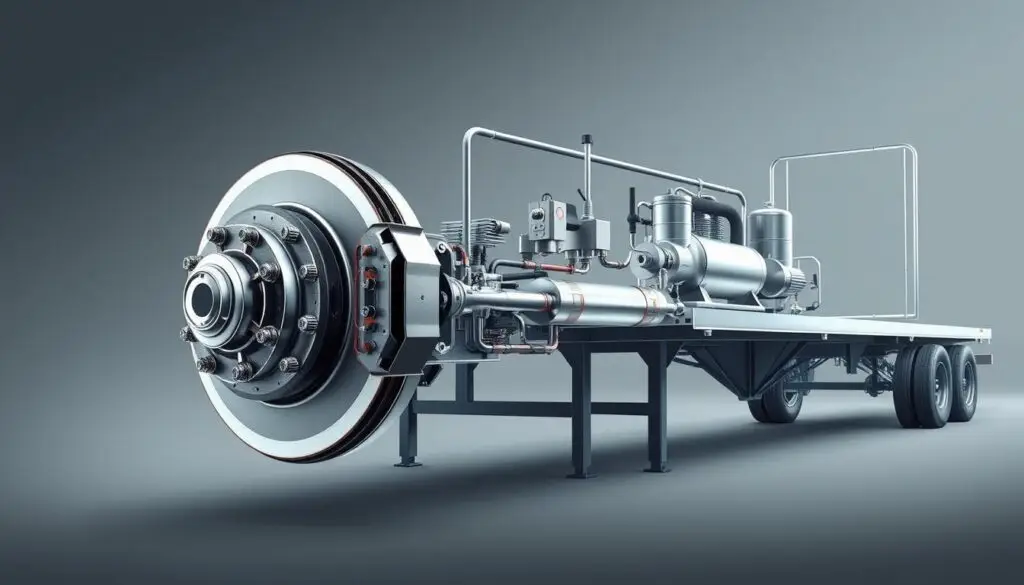
At each wheel, pressurized air enters the service chamber and pushes against a diaphragm. This force travels through the pushrod to the slack adjuster, which converts linear motion into rotational force. The slack adjuster turns the S-cam shaft, spreading the brake shoes outward against the drum interior. Friction between shoes and drums creates the stopping force that brings the trailer to a halt.
Critical System Components and Failure Modes
Several components work together to create a functional braking system, and failure in any one can compromise the entire operation. The air compressor generates pressure while the governor maintains system pressure between 100 and 125 PSI—the operating window specified by 49 CFR 393.50 for air brake system requirements.
Air tanks store compressed air for immediate availability during braking. Relay valves control distribution to brake chambers, which convert air pressure into mechanical force. Each component produces distinctive symptoms when failing:
- Slow pressure build-up failing to reach 60 PSI within normal timeframes indicates compressor wear or governor malfunction
- Maximum pressure plateauing below 90-100 PSI suggests compressor valve problems or excessive system leakage
- Compressor cycling continuously without reaching cutoff pressure points to governor failure or major air leaks
- Excessive oil contamination throughout the air system signals compressor seal failure requiring immediate attention
Moisture Control Through Air Dryer Systems
Air dryers protect brake components from water damage and ice formation that can completely disable braking systems during cold weather. These units remove moisture before it enters storage tanks and distribution lines, using desiccant material that absorbs water vapor from compressed air.
Replace desiccant cartridges annually or every 100,000 miles to maintain effectiveness. Signs of air dryer failure include water draining from tanks during routine purging, ice formation in air lines during cold starts, and foggy discharge from purge valves. These symptoms demand immediate cartridge replacement to prevent system-wide corrosion and freeze-related failures.
⚠️ Safety Warning
Never bypass or disconnect air dryer systems to resolve pressure issues. Moisture accumulation causes corrosion throughout the brake system and creates ice blockages during freezing conditions that can result in complete brake failure without warning.
Detecting Air Leaks and Pressure Loss
Air brake systems require steady pressure to function reliably. When leaks develop, they create safety risks, trigger compliance violations, and lead to component failures throughout the system. Early detection through systematic testing saves money and prevents dangerous situations on the road.
Performing Accurate Leak-Down Tests
A brake leak-down test reveals hidden issues throughout the air system that visual inspection might miss. This standardized procedure measures pressure loss over time to determine whether the system meets operational requirements.
Start by building full pressure with the engine running at governed RPM until the compressor cycles off. Turn off the engine and monitor pressure gauges closely. Apply the service brakes fully and hold for one minute while observing the pressure drop.
Leak-Down Test Procedure
- Build system pressure to 120-125 PSI with engine running
- Shut off the engine completely
- Release parking brakes fully
- Monitor gauges for one full minute—loss should not exceed 3 PSI
- Apply service brakes and hold for one minute—loss should not exceed 4 PSI
- Record all pressure readings for maintenance documentation
Pinpointing Leak Locations with Soapy Water
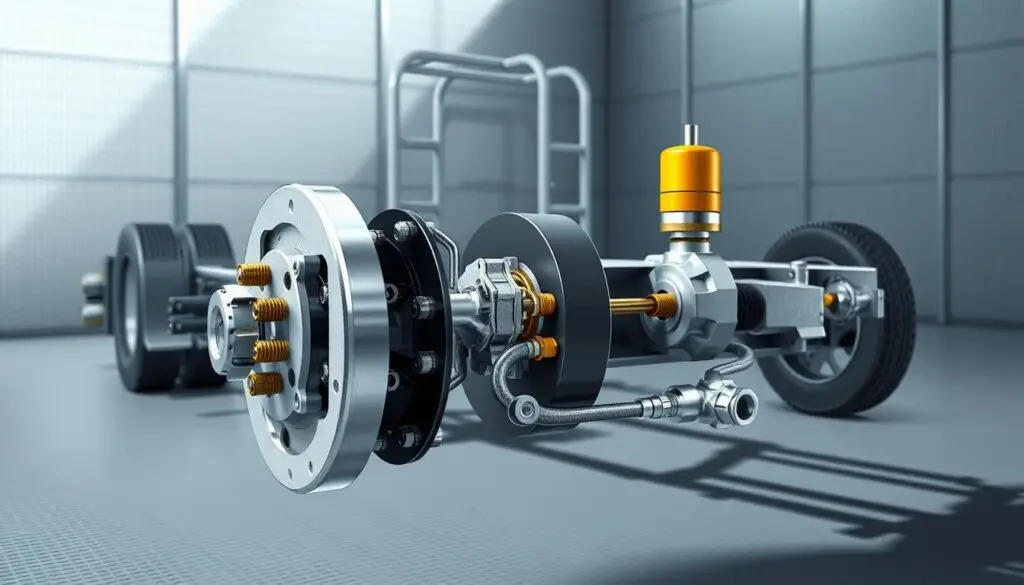
Mix dish soap with water in a spray bottle for effective leak detection. Spray this solution on all connections, fittings, valve stems, and hose junctions. Bubbles form wherever air escapes, pinpointing exact leak locations that require repair.
Pay special attention to push-to-connect fittings, rubber hose connections, and gladhand seals where leaks commonly develop. Check brake chamber diaphragm edges, relay valve exhaust ports, and all tank drain valve threads. Document each leak location for systematic repair.
Interpreting Pressure Loss Patterns
Different pressure drop rates indicate specific system problems. Understanding these patterns helps technicians diagnose issues faster and avoid unnecessary component replacement.
| Test Condition | Pressure Loss Rate | Probable Cause |
|---|---|---|
| Brakes Released | Over 3 PSI/minute | Compressor discharge valves, governor, or tank/line leak |
| Brakes Applied | Over 4 PSI/minute | Brake chamber diaphragm, relay valve, or service line leak |
| Normal System | Under 2 PSI/minute | Minor seepage within acceptable limits |
| Parking Brake Applied | Over 3 PSI/minute | Spring brake chamber or parking brake valve leak |
Listen for hissing sounds near brake components during testing. A constantly cycling compressor when the system should be holding pressure confirms excessive leakage requiring immediate repair attention.
Troubleshooting Brake Controller and Valve Malfunctions
When trailer brakes fail to respond properly, systematic troubleshooting saves time and prevents unnecessary component replacement. Many operators replace expensive controllers and valves when simple cleaning, adjustment, or connection repair would solve the problem.
Dirt contamination causes the majority of air valve failures in commercial brake systems. Maintaining clean air lines and performing regular filter service prevents problems that masquerade as more serious controller malfunctions.
Diagnosing Connection Problems
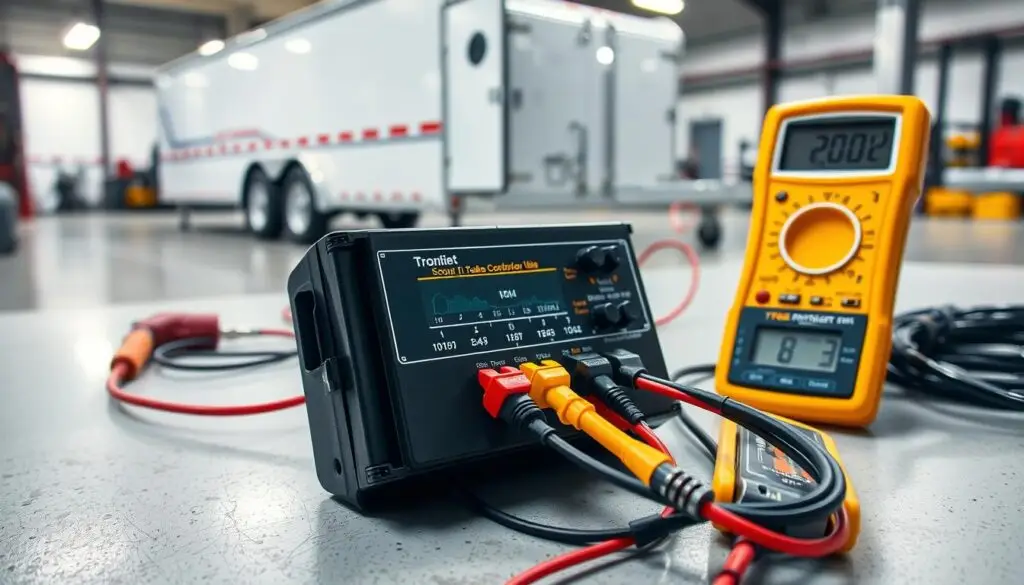
Start by inspecting basic connections when controllers stop working. Examine the 7-way connector between tractor and trailer for corrosion, moisture intrusion, or bent pins that prevent proper electrical contact.
Test each pin with a multimeter to verify proper voltage levels. For electric-over-air systems, the blue wire carries the brake signal and should show 0-12 volts when the brake pedal is pressed. The white wire provides ground connection and must show continuity to the vehicle frame. The black wire supplies 12-volt constant power from the vehicle battery.
Testing Signal Output and Power Supply
Use a circuit tester to verify the controller sends proper signals during brake application. Set a digital multimeter to DC voltage mode and probe the blue wire while applying brakes progressively.
The voltage reading should increase smoothly from 0 to 12 volts as pedal pressure increases. Erratic readings indicate connection problems or internal controller damage. No signal output points to internal controller failure or a blown fuse in the power supply circuit.
Relay Emergency Valve Inspection
Proper relay valve testing requires checking airflow patterns through the unit before assuming valve failure. Disconnect delivery lines and apply shop air to verify the valve responds to pressure signals correctly.
Air escaping from the exhaust port might originate from a leaking spring brake chamber rather than the relay valve itself. Test the check valve function by applying shop air and listening for backflow. Replace the relay emergency valve only after confirming it fails to hold pressure or release properly when commanded.
Diagnosing Non-Engaging Trailer Brakes
Trailer brakes that fail to engage pose an immediate safety risk demanding urgent attention. Quick diagnosis helps identify whether problems stem from crossed hoses, faulty valves, or pressure loss—the three most common causes of complete brake engagement failure.
Understanding these failure modes enables faster repairs and prevents dangerous road situations. Most engagement failures follow predictable patterns that experienced technicians recognize quickly through systematic testing.
Common Mechanical Failures Preventing Engagement
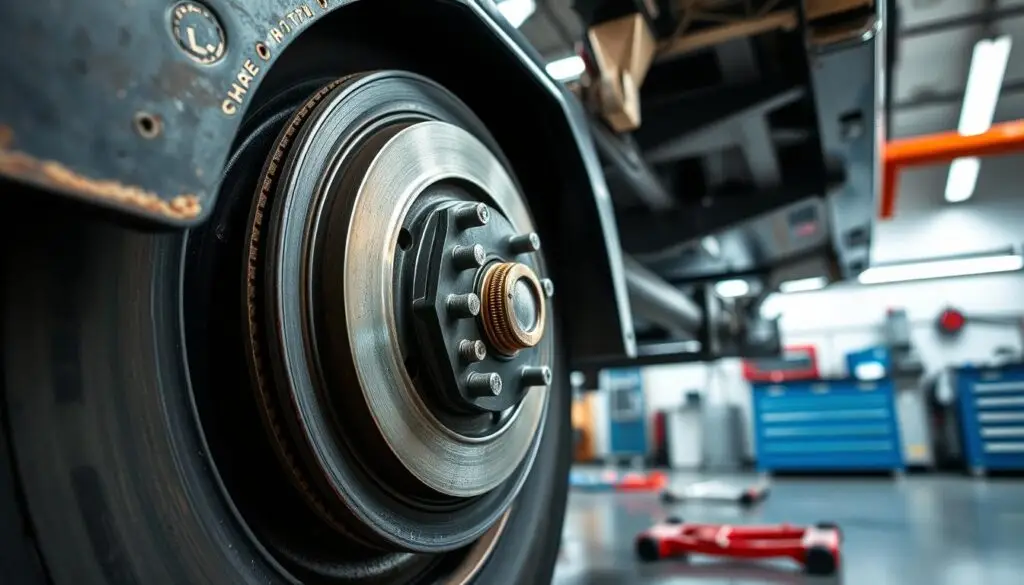
Several mechanical problems cause complete braking system failure. Crossed connection hoses between tractor and trailer create reverse pressure signals that prevent proper brake application—the supply line pressurizes the control side while the control line feeds the supply side.
The relay emergency valve might stick in the exhaust position or fail to respond to control signals. A malfunctioning tractor protection valve can shut off air supply to the trailer entirely, leaving no pressure available for braking regardless of pedal application.
| Symptom | Common Causes | Diagnostic Steps |
|---|---|---|
| Brakes Won’t Apply | Crossed hoses, insufficient pressure, stuck valve | Verify hose connections, test pressure at each wheel |
| Brakes Won’t Release | Stuck relay valve, binding rigging, frozen components | Reset valves manually, check for mechanical binding |
| Intermittent Operation | Marginal air supply, sticking valve, loose connection | Monitor pressure during operation, check all connections |
| Constant Air Loss | Diaphragm failure, valve seat damage, line rupture | Soap test all joints, isolate leak source |
Emergency Response and Diagnostic Sequence
Start troubleshooting by checking basic connections. Verify both glad hands connect properly with correct color coding—red to red for emergency supply lines and blue to blue for service control lines. Reversed connections are among the most common causes of brake engagement failure.
Test the tractor protection valve position. This valve should remain in normal operating mode during standard driving. If pushed in or stuck in the emergency position, it cuts off air supply to the trailer entirely. Listen for air leaks around fittings and valves that indicate pressure loss preventing proper operation.
A constantly cycling air dryer indicates excessive system leakage. This condition prevents adequate pressure buildup and requires immediate repair to restore proper brake function before the vehicle can operate safely.
Electrical System Diagnostics for Trailer Brakes
Electrical issues in trailer braking systems often stem from wiring connections, ground faults, and improper valve configurations. Proper diagnostics can identify these problems before they compromise road safety or trigger roadside inspection failures.
Understanding relationships between air lines, valves, and electrical circuits helps technicians resolve braking issues quickly. Many problems that appear complex have simple solutions once the diagnostic process isolates the true root cause.
Checking Crossed Connection Hoses
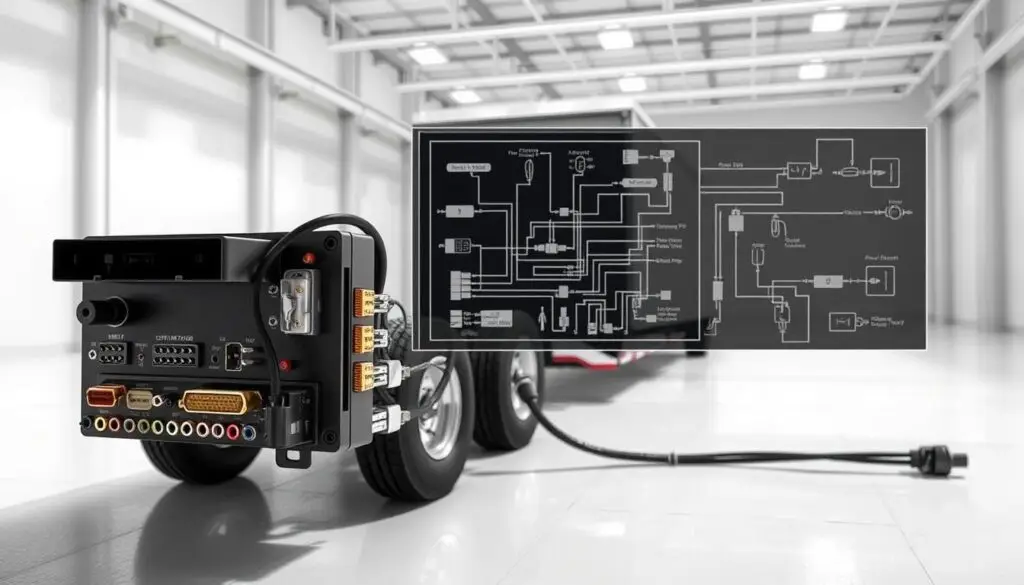
Crossed air hoses between tractor and trailer create serious brake malfunctions that confuse many operators. When supply and control lines occupy the wrong positions, brakes may refuse to apply when needed or fail to release after application.
Visual inspection reveals color-coded gladhands—red indicates emergency supply lines while blue marks service control lines. Verify both connections match before assuming more complex problems exist. This simple check solves a surprising percentage of complete brake failure cases.
Tractor Protection Valve Diagnostics
The tractor protection valve controls air flow between tractor and trailer systems, protecting the tractor’s braking capability if the trailer develops a major leak or separates during operation. This valve must remain in its normal operating position for proper trailer brake function.
Common issues with tractor protection valves include the valve stuck in emergency position blocking normal air flow, air leaks from damaged internal seals, incorrect manual positioning by operators unfamiliar with the system, and frozen valve mechanisms during cold weather operation. Testing involves verifying the valve responds correctly to both manual control and automatic pressure-sensing functions.
Testing Brake Light Circuits
Brake light troubleshooting starts with checking voltage at the trailer connector. Poor ground connections cause dim or non-functioning brake lights that violate federal lighting requirements under 49 CFR 393.25.
| Circuit Component | Testing Method | Common Problems |
|---|---|---|
| Ground Wire (White) | Continuity test to frame | Corrosion, loose connections, broken wire |
| Brake Signal Wire (Blue) | Voltage test during application | Open circuit, controller failure, blown fuse |
| Constant Power (Black) | Voltage test at connector | Fuse failure, wiring damage, relay problem |
| 7-Way Connector | Visual inspection and pin test | Bent pins, moisture damage, corrosion |
Testing procedures include verifying power supply at the controller output, checking continuity through the entire circuit path, and confirming proper ground connections at both tractor and trailer ends of the system.
The HDJ Perspective
Air brake troubleshooting separates reactive maintenance operations from proactive fleet management. The shops that consistently catch problems early share a common trait: they train every technician to understand the complete system rather than just individual components. When a tech knows that a constantly cycling compressor might indicate a leaking brake chamber diaphragm rather than compressor failure, the fleet saves thousands in unnecessary parts and downtime. Invest in systematic diagnostic training—it pays dividends with every repair avoided and every breakdown prevented.
Preventing Brake Lockup and Dragging
Brake lockup occurs when brake components fail to release properly after pressure application. This condition causes excessive wear, dangerous overheating, and potential wheel fires that can destroy equipment and endanger lives. Understanding the mechanical causes enables effective prevention through targeted maintenance.
Slack Adjuster Inspection and Maintenance
Proper slack adjuster maintenance prevents most braking problems before they develop into serious issues. Check pushrod travel by measuring the distance the pushrod moves when brakes engage fully against a solid reference point.
Travel exceeding 2 inches indicates adjustment is needed—a condition that CVSA out-of-service criteria can trigger during roadside inspections. Signs of misalignment include spongy brake feel, uneven shoe wear patterns, and vehicles pulling to one side during braking applications.
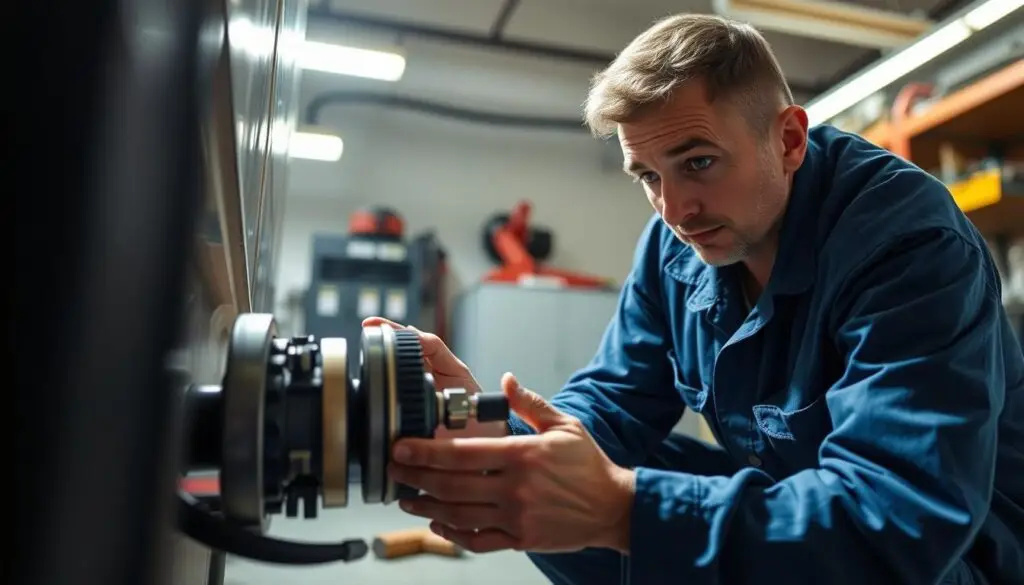
Lubricate slack adjusters every 3,000 miles using high-temperature grease rated for brake components. Manual adjusters require periodic adjustment based on lining wear, while automatic types self-adjust but still need regular inspection to verify proper function. Replace any adjuster showing excessive play, visible damage, or failure to maintain adjustment.
Return Spring and S-Cam Maintenance
Failed return springs create dangerous brake dragging conditions that overheat drums and destroy linings. Inspect springs for stretching, corrosion, or breaks during every routine maintenance interval.
Warning signs of spring or mechanical problems include brakes remaining partially engaged after complete pedal release, overheating brake drums and wheel hubs during normal operation, brake fade occurring during standard braking applications, and unusual tire wear patterns indicating continuous drag.
S-cam bushings wear over time, causing erratic brake application and release. Check for excessive play by grasping the cam shaft and moving it by hand with brakes released. Any significant movement indicates worn bushings requiring replacement to prevent lockup situations. Worn bushings allow cams to bind during operation, creating unpredictable brake behavior.
34%
Percentage of brake-related out-of-service violations during CVSA International Roadcheck attributed to brake adjustment problems, according to Commercial Vehicle Safety Alliance inspection data.
Identifying Oil-Contaminated Brake Linings
Oil contamination severely reduces braking effectiveness and creates dangerous stopping conditions. Inspect brake linings for dark stains, glossy appearance, or unusual odor indicating contamination from leaking wheel seals or hub gaskets.
| Contamination Source | Detection Method | Required Action |
|---|---|---|
| Wheel Seal Leaks | Oil streaks visible on drum interior | Replace seals and inspect bearings |
| Hub Gasket Failure | Oil residue around hub assembly | Install new gasket set completely |
| Axle Lubricant Overfill | Fresh oil smell when hubs are hot | Drain to manufacturer specifications |
| Chamber Diaphragm Leak | Oil weeping from chamber body | Replace brake chamber assembly |
Clean contaminated drums using brake-safe solvent approved for friction materials. Replace oil-soaked linings immediately—cleaning cannot restore their friction properties once oil has penetrated the material. Proper repair requires addressing the contamination source before installing new components to prevent rapid re-contamination.
Free Professional Fleet Tools
Cost calculators, fault code lookup, maintenance planners, and more—built for owner-operators, fleet managers, and diesel techs. No signup required.
Emergency Response and Preventive Maintenance Programs
Recognizing brake failure warning signs early allows drivers to respond safely before conditions worsen. Establishing systematic inspection procedures catches problems when repairs are simple and prevents the catastrophic failures that put drivers and cargo at risk.
Critical Warning Signs Requiring Immediate Attention
Several indicators signal developing brake problems that demand immediate investigation. The Federal Motor Carrier Safety Administration identifies brake-related issues as among the leading causes of commercial vehicle crashes—making early detection essential for safe operations.
Warning signs requiring immediate attention include brake warning light staying illuminated or flashing intermittently, grinding, scraping, or hissing sounds during brake application, air pressure failing to build above 90 PSI within normal timeframes, inconsistent or weak braking response under normal loads, visible smoke emerging from wheel assemblies, and overheated wheel hubs detected by hand or infrared thermometer.
Daily Pre-Trip Inspection Procedures
Daily pre-trip inspections serve as the first line of defense against brake failure. Check air pressure gauges to verify the system reaches proper operating pressure and holds it without continuous compressor cycling.
Drain moisture from air tanks at each location—supply tank, primary tank, and secondary tank. Listen for air leaks around all connections, valves, and fittings with the system pressurized and engine off. TMC Recommended Practices provide standardized inspection procedures that satisfy regulatory requirements while establishing effective maintenance baselines.
Use a temperature gun after driving to identify dragging brakes before they cause damage. A hub running significantly hotter than others needs immediate attention—temperature differentials exceeding 50°F indicate brake drag that will worsen without correction.
Preventive Maintenance Schedule
Scheduled maintenance protects against unexpected breakdowns and reduces long-term repair costs. Industry standards recommend visual brake system inspections at least every three months for commercial vehicles operating under normal conditions.
Key Recommendation
Schedule comprehensive brake inspections every 25,000-30,000 miles including lining thickness measurement, chamber diaphragm condition assessment, and complete air system leak testing. Trucks operating in severe vocational environments—construction, refuse, or mountainous terrain—require inspections at half these intervals due to accelerated component wear.
Replace air dryer cartridges annually, even in dry regions where dust and oil accumulate in desiccant material. This simple maintenance task prevents moisture-related system failures that often occur during the worst possible conditions—cold weather startup or emergency braking situations.
Measure brake stroke quarterly using proper gauge tools to catch slack adjuster issues before they become dangerous. The Commercial Vehicle Safety Alliance provides specific measurement criteria that match roadside enforcement standards.
Always replace brake components in matched sets per axle. Installing just one new shoe or drum creates dangerous imbalances that affect vehicle stability and braking performance—a problem that often manifests only during emergency stops when balanced braking matters most.
Frequently Asked Questions
What causes trailer brake controllers to stop working properly?
Controller problems typically stem from faulty relay emergency valves, crossed connection hoses between tractor and trailer, or tractor protection valves stuck in the wrong position. Verify air pressure reaches at least 80 PSI, inspect for restricted lines, and confirm brake valve delivery pressure is normal in the towing vehicle. Dirt contamination causes most air valve failures, so maintaining clean air lines prevents many controller issues that operators mistakenly diagnose as electrical problems.
How do I perform an air brake leak-down test?
Build system pressure to 120-125 PSI with the engine running at governed RPM. Shut off the engine completely and release parking brakes fully. Monitor gauges for one full minute—a healthy system loses less than 3 PSI per minute with brakes released. With brakes applied, pressure loss should remain under 4 PSI per minute. Losses exceeding these thresholds indicate significant leaks requiring immediate attention before continuing operation.
Why do my trailer brakes fail to engage when I press the pedal?
Non-engaging brakes indicate several possible issues including crossed hoses between tractor and trailer, a faulty relay emergency valve, insufficient air pressure in the brake system, or restricted tubing. Verify the tractor protection valve is in normal position and air pressure exceeds 80 PSI. Check glad hand connections for proper color coding—red to red for emergency lines and blue to blue for service lines. A constantly cycling air compressor signals excessive system leakage requiring repair.
How can I prevent trailer brake lockup during normal driving?
Lockup prevention requires regular slack adjuster inspection and adjustment, maintaining proper pushrod travel under 2 inches, and ensuring brake shoes remain free of oil or grease contamination. Check return springs and S-cam bushings for wear at every service interval, as faulty components cause brakes to drag when the pedal releases. Lubricate slack adjusters every 3,000 miles using high-temperature grease rated for brake components.
How often should I replace the air dryer cartridge?
Replace desiccant cartridges annually or every 100,000 miles, whichever comes first. In dusty environments, more frequent replacement may be necessary. Air dryer failures show symptoms including excessive water drained from tanks, ice formation in air lines during cold starts, and moist foggy discharge from purge valves. Proper moisture control prevents corrosion throughout the brake system and eliminates winter freeze-ups that can disable braking entirely.
What should I do if I experience complete trailer brake failure on the road?
During brake failure, immediately activate hazard lights and reduce speed gradually using engine braking—never pump a failed air brake system. Pull over safely at the first opportunity. Check air pressure gauges for drops below 60 PSI, listen for air leaks, and inspect brake warning lights. Never continue driving with compromised brakes. Federal regulations prohibit operating commercial vehicles with brake system defects, and doing so creates catastrophic risks for the driver and other motorists.
Building a Brake Maintenance Program That Prevents Failures
Trailer brake problems communicate through pressure drops, unusual sounds, and temperature differentials that alert attentive operators to developing issues. The fleets that avoid roadside breakdowns and compliance violations share a common approach: systematic inspection schedules, trained technicians who understand complete brake system function, and zero tolerance for deferred maintenance on safety-critical components.
Measure brake stroke every three months. Replace air dryer cartridges annually regardless of appearance. Schedule complete brake inspections every 25,000-30,000 miles with more frequent service for severe-duty applications. Test brake controllers before every trip and address any warning signs immediately rather than hoping problems resolve themselves.
When professional brake repair becomes necessary, qualified technicians can diagnose complex issues that field troubleshooting might miss. But the goal remains prevention—catching problems early when repairs are simple, costs are minimal, and no one’s safety is at stake. Air brake systems built to move 80,000 pounds demand respect and attention. Give them both, and they provide reliable stopping power for years of safe operation.
Help Fellow Operators Stay Safe
Share this guide with your network—proper brake maintenance knowledge saves equipment, prevents violations, and protects lives on the road.