
By Michael Nielsen, Editor & Publisher | 15+ Years in Diesel Repair
Last Updated: December 2025
📖 Estimated reading time: 18 minutes
Excavator hydraulic problems bring construction projects to an immediate halt. When a Caterpillar 336F, Komatsu PC360, or John Deere 350G LC experiences hydraulic failure, productivity drops and repair costs climb rapidly. Construction sites across the United States face these challenges daily, making systematic diagnosis and repair essential for minimizing downtime.
This guide tackles the most common hydraulic system failures that certified technicians encounter on construction equipment. From faulty pumps to cylinder leaks, each problem requires specific diagnostic approaches and proven repair techniques. Professional hydraulic specialists have developed methods to diagnose and fix these systems efficiently, whether dealing with pressure loss, overheating, or slow response times.
Key Takeaways
- Contamination drives failure: Industry research confirms 70-80% of all hydraulic system failures trace directly to contaminated or degraded fluid
- Downtime costs add up fast: Hydraulic failures cost construction operations $500-$2,000 daily in lost productivity and equipment rental fees
- Systematic diagnosis saves time: Following manufacturer diagnostic flowcharts helps certified technicians isolate problems within two hours
- Fluid quality extends life: Regular fluid analysis and filter changes at 250-hour intervals prevent most catastrophic failures
- Rebuild economics favor experience: Pumps under 10,000 hours with intact housings restore to 95% performance at 60% of replacement cost
How Hydraulic Systems Power Modern Excavators
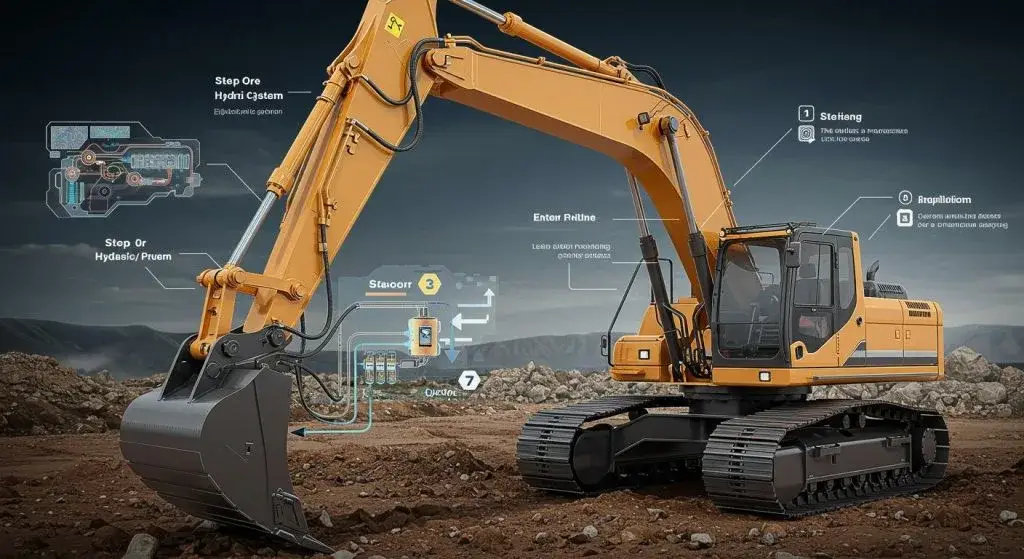
Hydraulic systems in excavators operate based on Pascal’s law, which states that pressure applied to a confined fluid transmits equally in all directions. Modern excavators typically run at operating pressures between 3,000 and 5,000 PSI, converting engine power into the hydraulic force required for digging, lifting, and rotating operations.
The engine drives the hydraulic pump, which pressurizes hydraulic fluid through control valves that direct flow to specific cylinders or motors. Each movement of the operator’s controls adjusts valve positions, allowing fluid to flow and create the desired motion. This closed-loop system delivers the power and precision that make excavators indispensable on construction sites.
Understanding this fundamental operation helps technicians trace problems to their source. When the boom won’t lift or the swing motor hesitates, the issue lies somewhere in this pressure-flow-control chain. Systematic testing at each point reveals where the breakdown occurs.

Economic Impact of Hydraulic Failures on Construction Projects
Hydraulic failure creates significant financial burdens on construction companies. Daily downtime costs typically range from $500 to $2,000, depending on project size and equipment rental rates. These costs extend beyond simple repair bills to include project delays that trigger penalty clauses, idle labor accumulating charges, and rental equipment sitting unused.
| Cost Category | Daily Average | Weekly Impact |
|---|---|---|
| Equipment Rental Loss | $300-800 | $2,100-5,600 |
| Labor Standby Costs | $150-400 | $1,050-2,800 |
| Project Delay Penalties | $50-800 | $350-5,600 |
The financial impact compounds quickly when critical path activities depend on excavator operation. A major hydraulic pump failure on a site-prep project can delay foundation work, which pushes back framing schedules, which affects every subsequent trade. Smart fleet managers factor these cascade effects into their preventive maintenance calculations.
Safety Risks Associated with Faulty Hydraulic Systems
Faulty hydraulic systems pose serious safety hazards to operators and nearby workers. The Occupational Safety and Health Administration requires regular inspections and maintenance of hydraulic equipment to prevent accidents that can result in severe injuries or fatalities.
⚠️ Safety Warning
Hydraulic injection injuries from fluid under pressure can occur at pressures as low as 100 PSI. Never use bare hands to check for leaks. High-pressure fluid can penetrate skin and cause severe tissue damage requiring immediate medical attention.
Common safety risks include sudden pressure releases, unexpected equipment movements from valve failures, and hot fluid sprays from burst hoses. A failed hydraulic cylinder might drop a loaded bucket unexpectedly, while a ruptured high-pressure line can whip violently and strike workers. Regular system checks and immediate repairs prevent these dangerous situations.
Diagnosing Excavator Hydraulic Failure Through Systematic Inspection
Quick and accurate diagnosis of hydraulic failure can save thousands of dollars in downtime and repairs. A systematic approach helps technicians identify problems before they cause major damage. Industry experts at the Fluid Power Journal emphasize that following ISO 4413 guidelines for hydraulic system troubleshooting leads to faster, more reliable results.
Start with a visual inspection of the entire hydraulic system. Look for oil stains around fittings, hoses, and cylinder seals. Check hydraulic lines for cracks, bulges, or worn spots. Inspect the hydraulic tank for proper fluid levels and signs of contamination. These initial observations often point directly to the problem or narrow the diagnostic focus.

Pressure Testing Reveals Internal Problems
Testing hydraulic pressure reveals internal problems that visual checks miss. Parker Serviceman gauges and similar calibrated instruments provide accurate readings at multiple test points. Compare actual pressure against manufacturer specifications for pumps, cylinders, and relief valves to identify components operating outside normal parameters.
Low pressure often indicates worn components or internal leakage. Install gauges at strategic locations throughout the system to isolate problem areas. Document baseline readings for future comparison and trend analysis. Caterpillar’s technical guides recommend checking pressure at the pump outlet, main control valve inlet, and individual cylinder ports when troubleshooting performance issues.
Fluid Analysis Identifies Contamination Issues
Industry research confirms that contaminated hydraulic fluid causes 70-80% of system failures, according to analysis published by Power & Motion. Collect fluid samples in clean containers for analysis. Dark or milky discoloration signals oxidation or water contamination, while metallic particles or sludge indicate component wear.
Look for these warning signs during fluid inspection:
- Water droplets or foam suggesting seal leakage or condensation
- Burnt smell indicating overheating conditions above 180°F
- Bronze particles from bushing or bearing wear
- Steel fragments pointing to gear or pump component failure
Flow meter testing measures actual fluid movement through components. Place inline flow meters at strategic points to check pump output and cylinder speeds. Reduced flow rates point to pump wear or valve restrictions. Major equipment manufacturers including Caterpillar and Komatsu recommend following diagnostic flowcharts for efficient troubleshooting—these step-by-step guides help technicians isolate problems quickly by testing components in logical order.
Excavator Hydraulic Pump Problems: Detection and Repair
The hydraulic pump serves as the heart of your excavator’s power system. When pump issues arise, the entire machine suffers reduced performance or complete failure. Early detection of pump problems can save thousands in repair costs and prevent unexpected downtime on critical projects.
Identifying Worn Pump Components and Internal Damage
Common signs of pump wear include unusual noises, reduced operating speed, and pressure loss during operation. Inside the pump, pistons wear down from constant friction, creating excessive clearances. Valve plates develop scoring marks from contamination, while bearings deteriorate from heat and stress.
Visual inspection reveals external damage like shaft seal leaks or housing cracks. Listen for knocking sounds indicating piston slapper or whining noises suggesting cavitation damage. These acoustic signatures often provide the first indication that internal components are failing before pressure readings drop significantly.
Check hydraulic fluid for metal particles using magnetic drain plugs and filter inspection. Bronze indicates bushing wear, while steel fragments point to gear or bearing failure. Regular fluid analysis catches these problems before complete pump failure occurs. The Caterpillar hydraulics testing guide provides specific inspection procedures for monitoring pump health.

Testing Pump Pressure and Flow Rates
Accurate testing requires proper equipment and safety procedures. Connect a calibrated pressure gauge rated for 6,000 PSI to the pump outlet. Run the excavator at operating temperature and record pressure readings at various engine speeds. Operating temperature should reach 120-140°F for accurate test results.
Compare results to manufacturer specifications for your Rexroth, Kawasaki, or Eaton pump model. Flow testing uses specialized meters to measure output volume. Low flow rates indicate internal bypassing from worn components. Document all test results to track performance degradation over time and establish replacement intervals.
Replacement vs. Rebuild Decision Factors
Cost analysis guides the repair decision. Pump rebuilds typically range from $3,000 to $8,000, while new replacements cost $5,000 to $15,000 depending on size and brand. Consider these factors when making the decision:
- Age and operating hours of current pump
- Availability of rebuild kits for your specific model
- Machine downtime costs during repair period
- Warranty coverage on rebuilt versus new pumps
- Core exchange programs from manufacturers
Rebuilding makes sense for pumps under 10,000 hours with minimal housing damage. Replace pumps with cracked cases, worn splines, or repeated failure history. Quality rebuilds by certified technicians often restore 95% of original performance at 60% of replacement cost.
Stay Current on Equipment Maintenance Best Practices
Get technical insights, diagnostic guides, and maintenance strategies delivered to your inbox. Join fleet managers and technicians who rely on Heavy Duty Journal for actionable industry knowledge.
Troubleshooting Slow Hydraulic Response and Performance Issues
When excavator operators notice sluggish boom movements or delayed bucket responses, the issue often stems from degraded hydraulic performance. Slow hydraulic response can turn a productive workday into costly downtime. Understanding the root causes helps maintenance teams restore optimal performance quickly.

Checking Hydraulic Fluid Viscosity and Temperature
The viscosity of hydraulic oil plays a crucial role in system performance. Most excavators require ISO VG 32-68 hydraulic oils, which maintain proper flow characteristics across operating temperatures. Contaminated fluid changes viscosity, causing slow response times and inefficient operation.
Check fluid temperature using infrared thermometers at the reservoir. Operating temperatures between 120-140°F ensure optimal viscosity. Cold fluid moves slowly through valves and pumps, while overheated oil becomes too thin to maintain pressure. Systems operating above 180°F require immediate attention to prevent seal damage and accelerated component wear.
Inspecting Control Valves and Spool Movement
Control valves from manufacturers like Husco and Walvoil require precise spool clearances. Measure clearances with feeler gauges—acceptable ranges stay between 0.001-0.003 inches. Sticky spools indicate contaminated fluid has created varnish deposits inside valve bodies.
Clean valves thoroughly and replace damaged spools to restore proper function. Check for worn detent springs that affect valve return positions. Pilot pressure systems require additional testing to verify control signals reach the main valves at proper pressure levels. Insufficient pilot pressure causes sluggish response even when main system pressure tests normal.
Analyzing System Pressure Drop Patterns
Pressure drops reveal internal system problems affecting response times. Install pressure gauges at key points and monitor readings during operation. Normal pressure drops across components range from 100-200 PSI. Excessive drops indicate restrictions from contamination or worn components.
Track pressure patterns across filters, valves, and cylinders to pinpoint problem areas. Replace restrictive components to restore system efficiency. Systematic pressure mapping often reveals multiple minor issues that combine to create significant performance degradation.
Fixing Hydraulic Oil Leaks and Preventing Environmental Damage
Hydraulic oil leaks pose serious threats to excavator performance and the environment. Quick detection and repair prevent costly downtime while protecting soil and groundwater from contamination. Understanding where leaks occur helps operators maintain their equipment and comply with environmental regulations.
Common leak points on excavators require regular inspection. Cylinder rod seals wear from constant movement and dirt exposure. Hose connections loosen due to vibration and pressure cycles. Pump shaft seals deteriorate from heat and continuous rotation. Fitting threads strip or crack under stress, creating paths for fluid escape.

Using Quality Replacement Parts
Proper repair starts with quality replacement parts. Gates hydraulic hoses withstand high pressure and temperature fluctuations. Parker O-rings provide reliable sealing in harsh conditions. Hallite seal kits offer complete solutions for cylinder rebuilds. These trusted brands reduce the risk of repeat failures and extend equipment life.
Always match replacement parts to manufacturer specifications for pressure ratings and material compatibility. Generic seals often fail prematurely because they lack the chemical resistance or temperature tolerance required for excavator applications. The small savings on parts costs disappear quickly when premature failure causes additional downtime.
Environmental Compliance and Spill Management
EPA regulations require immediate action when hydraulic oil leaks occur. Operators must contain spills using absorbent materials and dispose of contaminated fluid properly. Certified recycling facilities handle used hydraulic oil safely, processing the fluid for reuse or proper disposal according to federal guidelines.
Keep spill response kits readily available on job sites. These kits should include absorbent pads, containment booms, and disposal bags. Train operators to respond quickly when leaks occur—immediate containment prevents small leaks from becoming environmental incidents that trigger regulatory penalties.
Prevention Through Regular Maintenance
Prevention beats repair every time. Regular maintenance catches small leaks before they become major problems. Daily visual inspections, pressure testing, and scheduled hose replacements keep hydraulic systems running clean. An overheating hydraulic system often signals developing leaks, making temperature monitoring essential for early detection.
The HDJ Perspective
After 15 years of covering heavy equipment maintenance, one pattern emerges clearly: the shops that track hydraulic fluid quality with the same rigor they apply to engine oil analysis consistently see lower repair costs and longer equipment life. Excavator hydraulic problems rarely appear suddenly—they develop over hundreds of hours of operation, leaving clues in fluid samples, filter debris, and temperature trends. Fleet managers who treat hydraulic maintenance as a data-driven process rather than a reactive repair function position themselves to catch problems when they cost hundreds to fix rather than thousands.
Excavator Hydraulic Cylinder Repair Techniques
Proper hydraulic cylinder repair requires precision and attention to detail. When cylinders show signs of wear, leakage, or reduced performance, following established repair procedures ensures reliable operation. The right tools, quality replacement parts, and systematic approach make the difference between a lasting repair and recurring problems.
Disassembly and Inspection Procedures
Start cylinder disassembly with proper tooling from manufacturers like OTC or Enerpac. Clean the exterior thoroughly before removing end caps. Document component positions with photos for reassembly reference—this step prevents costly mistakes during reassembly.
During inspection, check for scoring, pitting, or chrome flaking on the rod surface. Measure bore diameter at multiple points to detect wear patterns. Examine piston seal grooves for damage or excessive wear. Internal bypass often leaves no external evidence, so careful measurement of components against factory specifications is essential.

Seal Replacement and Surface Reconditioning
Quality seals from NOK, SKF, or Garlock ensure long-lasting repairs. Install new seals at specified depths using proper sizing tools. Chrome rod surfaces require reconditioning to 0.0001-inch surface finish when damaged. Polish minor scratches with fine emery cloth. Deep scoring needs professional chrome replating services.
Never reuse old seals, even if they appear undamaged. Seals take a set during operation and cannot be reinstalled to their original position. The minor cost of new seals prevents the major cost of repeat cylinder removal and disassembly.
| Seal Type | Installation Depth | Typical Service Life |
|---|---|---|
| Rod Seal | 0.125 inches | 8,000 hours |
| Piston Seal | 0.250 inches | 10,000 hours |
| Wiper Seal | 0.062 inches | 6,000 hours |
Proper Reassembly and Testing Methods
Lubricate all seals with clean hydraulic oil during assembly. Torque end caps to manufacturer specifications using calibrated torque wrenches. Test repaired cylinders at 1.5 times working pressure following ISO 10100 testing guidelines for hydraulic cylinders.
Monitor for internal leakage and smooth operation through full stroke cycles before reinstalling on the excavator. Allow cylinders to sit pressurized for 24 hours to verify seal integrity. This extended hold test catches slow leaks that short-duration testing misses.
Managing Overheating and Implementing Cooling Solutions
An overheating hydraulic system can cripple excavator performance and lead to catastrophic equipment failure. When hydraulic fluid temperatures exceed safe operating limits, viscosity drops dramatically, causing slow response and reduced lifting capacity. Understanding heat generation sources and implementing proper cooling solutions protects your investment and maintains peak operational efficiency.

Heat Generation Sources in Hydraulic Systems
Heat builds up in excavator hydraulics through several pathways. Inefficient pumps waste energy as heat instead of productive work. Restricted flow through clogged filters or kinked hoses creates friction that raises temperatures. Relief valves that activate too frequently dump excess pressure as heat energy. Each source compounds the problem, pushing fluid temperatures beyond safe limits.
Internal leakage in worn components generates significant heat as fluid bypasses working chambers. A pump operating at 80% volumetric efficiency wastes 20% of its input energy as heat. This waste heat accumulates in the fluid, eventually overwhelming the system’s cooling capacity.
Temperature Thresholds and Component Damage
Hydraulic systems operate best between 120°F and 140°F. Once temperatures climb past 180°F, seal materials begin breaking down and fluid oxidizes rapidly. This degradation causes slow response times and unpredictable cylinder movements. Operators notice sluggish boom swing, jerky bucket action, and reduced digging force.
Prolonged operation at elevated temperatures shortens component life significantly. Seals designed for 10,000-hour service life may fail in half that time when subjected to chronic overheating. Fluid that should last 2,000 hours degrades in 500 hours at elevated temperatures. These accelerated wear patterns multiply repair costs.
Cooling System Upgrades and Maintenance
Upgrading cooling capacity solves persistent heat problems. Leading manufacturers offer heat exchangers sized for excavator applications. Proper sizing requires calculating BTU per hour heat load based on pump horsepower and duty cycle. A 150-horsepower excavator working continuously generates approximately 85,000 BTU/hour of waste heat requiring removal.
Installing auxiliary coolers, cleaning existing radiators, and improving airflow patterns reduces operating temperatures. Regular fluid analysis catches contamination before it restricts flow and generates heat. Maintaining proper fluid levels ensures adequate heat dissipation through reservoir walls.
Share Your Hydraulic Troubleshooting Expertise
Have you developed effective diagnostic techniques or repair solutions for excavator hydraulic systems? Heavy Duty Journal welcomes contributions from experienced technicians and fleet maintenance professionals.
Addressing Pressure Loss and System Optimization
When your excavator starts moving slower or struggles to lift loads, hydraulic pressure loss might be the culprit. This common problem costs construction companies thousands of dollars in lost productivity each day. Understanding how to diagnose and fix pressure drops can save your operation from expensive downtime.
Identifying Internal Bypass and External Leakage
Differential pressure testing helps pinpoint where hydraulic failure originates. Start by installing pressure gauges at key points in the system. Check pressure readings across pumps, valves, and cylinders during operation. A drop of more than 200 PSI between components indicates internal bypass or worn seals.
External leaks are easier to spot through oil puddles under the machine or wet spots on hoses and fittings. Internal bypass requires more detective work. Listen for unusual whining sounds from pumps or notice if cylinders drift under load. These symptoms indicate worn internal components allowing fluid to bypass working chambers.
Adjusting Relief Valve Settings and Pressure Controls
Relief valves protect your system but incorrect settings cause pressure loss. For Sun Hydraulics valves, remove the cap and turn the adjustment screw clockwise to increase pressure. Bosch Rexroth valves need a 5mm Allen key for adjustment. Always install a calibrated gauge before making changes.
Set relief valves 200 PSI above normal working pressure. Test each function while monitoring gauges. Never exceed manufacturer specifications as this damages pumps and cylinders. Document settings after adjustment to establish baseline values for future troubleshooting.
Implementing Preventive Maintenance Schedules
Regular maintenance prevents most hydraulic failures. Check fluid levels and condition every day before operation. Replace hydraulic filters every 250 operating hours to maintain system cleanliness. Change hydraulic fluid completely at 2,000 hours or annually, whichever comes first.
Test system pressure monthly using calibrated gauges. Inspect hoses and connections weekly for wear or damage. Keep detailed maintenance logs to track patterns. Early detection of pressure loss saves repair costs and prevents catastrophic failures. Document all test results and component replacements for trend analysis.
Frequently Asked Questions
What are the most common signs of excavator hydraulic pump failure?
Primary indicators include unusual whining or grinding noises from the pump area, significantly reduced operating speeds, erratic cylinder movements, and excessive heat generation. Metal particles appearing in hydraulic fluid or on filter elements indicate internal pump wear. Pressure testing showing readings below manufacturer specifications confirms pump deterioration requiring attention.
How much does hydraulic cylinder repair typically cost on construction excavators?
Hydraulic cylinder repair costs vary based on cylinder size and damage extent. Standard repairs using quality seal kits range from $800-$2,500, including labor. Chrome rod reconditioning adds $500-$1,500 depending on rod diameter and damage severity. Complete cylinder replacement for major excavators can reach $5,000-$12,000. Most repairs complete within 2-3 days at certified hydraulic shops.
Why is my excavator experiencing slow hydraulic response?
Slow hydraulic response typically results from contaminated hydraulic fluid, worn control valves, or incorrect fluid viscosity. Check your hydraulic oil grade against manufacturer specifications. Inspect control valves for proper spool movement and clearances of 0.001-0.003 inches. System pressure drops exceeding 200 PSI during operation indicate flow restrictions requiring immediate attention.
What causes hydraulic pressure loss in excavators?
Hydraulic pressure loss commonly stems from worn pump components, internal bypass in cylinders, incorrectly adjusted relief valves, or external leakage through damaged hoses and fittings. Differential pressure testing across system components helps isolate the problem area. Relief valves may require adjustment or replacement if they open prematurely below their designated settings.
How often should I change contaminated hydraulic fluid?
Replace hydraulic fluid immediately upon detecting contamination such as water presence, metal particles, or significant discoloration. Under normal operating conditions, follow manufacturer guidelines for complete fluid changes every 2,000-3,000 hours or annually, whichever comes first. Change hydraulic filters every 250-500 hours to prevent contamination buildup.
What temperature indicates an overheating hydraulic system?
Hydraulic systems operate optimally between 120-140°F. Temperatures exceeding 180°F indicate serious overheating requiring immediate shutdown to prevent component damage. Install temperature gauges to monitor system heat. Overheating causes include restricted flow, inefficient pumps operating above 85% capacity, or undersized cooling systems requiring upgrades.
Maintaining Excavator Hydraulic System Performance
Proper diagnosis and repair of excavator hydraulic problems requires a systematic approach. Start with visual inspections, move to pressure testing, and finish with component analysis. This method saves time and prevents unnecessary part replacements that don’t address the underlying problem.
Regular maintenance checks catch issues before they become major failures. Smart maintenance strategies can cut repair costs by up to 40% compared to waiting for breakdowns. Clean work areas, correct tools, and manufacturer specifications make the difference between a lasting fix and repeated failures.
Hydraulic systems power every major excavator function—buckets dig, arms reach, and tracks move through hydraulic force. When these systems fail, productivity stops. Quick identification and repair of issues keeps projects on schedule and workers safe. Invest in proper training for maintenance teams, follow proven repair methods, and maintain detailed service records for long-term equipment reliability.
Share This Guide
Help fellow fleet managers and equipment technicians access these hydraulic troubleshooting techniques. Share this guide with your professional network.


