
Working on diesel engines demands precision, speed, and the right equipment. Professional technicians understand that diesel mechanic tools can make the difference between a two-hour job and an all-day project. Modern diesel repair efficiency depends on smart tool selection and proven techniques that reduce diagnostic time and streamline repairs.
Today’s diesel technicians face complex engine systems that require advanced equipment like heavy duty diagnostic scanners and specialized service tools. The industry has evolved beyond basic wrenches and screwdrivers. Government resources like the National Highway Traffic Safety Administration’s VIN decoder allow technicians to query specific vehicle identification numbers and retrieve critical manufacturing data. These digital resources work alongside physical tools to eliminate guesswork in parts selection and repair procedures.
Smart technicians combine traditional mechanical skills with modern technology to maximize productivity. Free fault code lookups, wiring diagrams, and remove-and-replace procedures are available through mobile apps and desktop platforms. These resources complement your physical toolbox and help you diagnose problems faster than ever before.
The following techniques will transform how you approach diesel repairs. Each method focuses on saving time without sacrificing quality or safety. Whether you work in a shop or provide mobile services, these strategies will help you complete more jobs and satisfy more customers.
Key Takeaways
- Quality tools reduce repair time: Professional-grade diesel mechanic tools can cut service time by up to 50% on common procedures
- Diagnostic scanners save hours: Heavy duty diagnostic scanners provide instant fault code analysis and real-time engine data monitoring
- Digital resources eliminate errors: Free online VIN decoders and parts databases prevent costly ordering mistakes
- Organization drives efficiency: Proper tool organization saves approximately 30 minutes per day in search time
- Mobile access accelerates repairs: Smartphone apps provide instant access to wiring diagrams and repair procedures at the vehicle
- Strategic investment pays off: Investing in specialized equipment improves diesel repair efficiency and customer satisfaction
Essential Diesel Mechanic Tools for Maximizing Shop Efficiency
A well-equipped diesel mechanic saves valuable time on every repair job. Professional technicians understand that having the right tools at their fingertips makes the difference between a quick fix and hours of frustration. Building an efficient workspace starts with selecting the proper equipment and organizing it for maximum productivity.
Building Your Core Tool Collection
Every diesel mechanic needs a foundation of reliable tools. Start with a comprehensive socket set that includes both SAE and metric sizes. Your commercial vehicle tool sets should contain quarter-inch drive sockets ranging from 5/16-inch to 1-inch, plus metric equivalents from 7mm to 20mm. Half-inch drive sockets expand your capabilities to handle larger bolts up to 1¼-inch or 27mm.
Essential hand tools form the backbone of any diesel engine repair kits. A variety of hammers serves different purposes: dead blow hammers prevent damage to components, ball-peen hammers in 16 and 24-ounce weights handle general tasks, and a 4-5 pound sledgehammer tackles stubborn parts. Don’t forget a heavy-duty plastic hammer for delicate work.
Investing in Quality vs. Quantity
Smart mechanics know that buying quality tools pays off in the long run. A premium wrench set might cost more initially, but it won’t strip bolt heads or break during critical repairs. Focus on acquiring professional-grade versions of tools you use daily before expanding your collection.
The time savings from quality equipment add up quickly. Professional diagnostic software can save 120 hours annually compared to budget alternatives. Quality air tools reduce job completion time by approximately 60 hours per year.
| Tool Category | Budget Option | Professional Grade | Time Saved Per Year |
|---|---|---|---|
| Socket Sets | $75-150 | $300-500 | 40 hours |
| Diagnostic Software | $500-1000 | $2000-4000 | 120 hours |
| Torque Wrenches | $50-100 | $200-400 | 25 hours |
| Air Tools | $100-200 | $400-800 | 60 hours |
Tool Organization Systems That Save Time
Efficient tool organization transforms your workflow. A rolling toolbox allows you to bring everything needed directly to the vehicle. Drawer dividers keep sockets sorted by size, while magnetic strips hold frequently used wrenches within easy reach. Label each drawer clearly to eliminate searching time.
Consider these organization strategies that experienced mechanics rely on:
- Color-code socket rails by drive size for instant identification
- Use foam inserts to create custom tool layouts that show missing items
- Install pegboards for hanging specialized tools near work areas
- Keep duplicate sets of common sizes in different locations
- Dedicate specific drawers to diesel engine repair kits by system type
Professional software solutions like JPRO Diagnostic and NextStep Repair integrate seamlessly with physical tools. These programs provide guided diagnostics, connect quickly to all vehicle components, and offer step-by-step repair instructions. Pairing quality hardware with intelligent software creates the ultimate time-saving combination for modern diesel mechanics.
Leveraging Heavy Duty Diagnostic Scanners for Faster Troubleshooting
Modern heavy duty diagnostic scanners transform diesel repair workflows by cutting diagnostic time from hours to minutes. These powerful tools connect directly to a truck’s electronic systems, reading data from every module and sensor. Smart technicians who master these devices complete repairs faster and reduce costly downtime for fleet operators.
Advanced Fault Code Reading Techniques
Electronic diagnostic equipment reads fault codes instantly, but understanding the data requires skill. Each code consists of a Suspect Parameter Number (SPN) and Failure Mode Identifier (FMI). The fault code database contains thousands of codes covering major manufacturers like Freightliner, Peterbilt, and Kenworth.
Effective code reading goes beyond simply recording numbers. Professional technicians follow systematic approaches:

- Reading active and inactive codes separately to prioritize repairs
- Checking freeze frame data for conditions when faults occurred
- Clearing codes and running tests to verify repairs were successful
- Cross-referencing multiple codes to find root causes rather than symptoms
Real-Time Data Monitoring Strategies
Live data streams from heavy duty diagnostic scanners reveal engine performance in real-time. Technicians monitor parameters like boost pressure, fuel rail pressure, and exhaust temperatures while the engine runs. This approach catches intermittent problems that only appear under specific conditions.
Real-time monitoring helps technicians identify issues that don’t always trigger fault codes. Understanding normal parameter ranges allows mechanics to spot anomalies quickly, reducing diagnostic errors and preventing misdiagnosis. The Technology & Maintenance Council develops industry standards for diagnostic best practices used by fleet managers nationwide.
| Parameter | Normal Range | Diagnostic Value |
|---|---|---|
| Boost Pressure | 25-35 PSI | Identifies turbo issues |
| Fuel Rail Pressure | 5,000-26,000 PSI | Reveals injection problems |
| Coolant Temperature | 180-210°F | Shows cooling system faults |
| DPF Differential | 0-5 PSI | Indicates filter condition |
Integrating Scanner Data with Repair Documentation
Electronic diagnostic equipment now saves complete diagnostic sessions automatically. Technicians export fault codes, live data recordings, and test results directly to repair orders. This integration creates detailed service records that help track recurring issues and validate warranty claims.
The fault code database links each code to specific repair procedures, wiring diagrams, and component locations, streamlining the entire repair process. Cloud-based systems allow technicians to access this information from any device, whether in the shop or performing roadside repairs.
Compression Testers and Engine Analysis Time-Savers
Diesel engines demand specialized compression testers that can handle the extreme pressures these powerhouses generate. Unlike gasoline engines, diesel systems operate at compression ratios between 14:1 and 25:1, requiring robust diagnostic tools built to withstand these intense conditions.
Smart technicians save hours by following a systematic approach to diesel engine analysis. Start with a cold engine test to establish baseline readings, then perform a hot engine test for comparison. This dual-testing method quickly reveals issues like worn piston rings, damaged valves, or head gasket failures.
Professional-grade compression testers designed for major diesel brands streamline the diagnostic process. These tools work seamlessly with engines from Caterpillar, Cummins, Detroit Diesel, and International, eliminating the need for multiple adapters or time-consuming modifications.
| Engine Brand | Typical Compression Range (PSI) | Test Time (Minutes) |
|---|---|---|
| Caterpillar C15 | 350-450 | 15-20 |
| Cummins ISX | 400-500 | 20-25 |
| Detroit DD15 | 425-525 | 18-22 |
| Mack MP8 | 375-475 | 20-25 |
Modern diesel engine analysis incorporates electronic diagnostic tools alongside traditional compression testing. This combination approach cuts troubleshooting time by 40% compared to using mechanical gauges alone. Digital compression testers now feature memory storage, allowing technicians to save results for fleet-wide comparisons and trend analysis.
Mastering Torque Wrenches for Precision and Speed
Working with diesel engines demands accuracy at every step. The right torque wrenches make the difference between a reliable repair and costly comebacks. These precision tools help technicians work faster while meeting exact manufacturer specifications for critical components.
Digital vs. Manual Torque Applications
Digital torque wrenches provide instant readings and audible alerts when reaching target values. Manual models offer durability and lower cost but require careful watching of the gauge. Digital units excel for repetitive tasks like head bolt sequences where consistency matters most. Manual wrenches work well for quick jobs and field service where battery life isn’t guaranteed.
The Society of Automotive Engineers establishes torque specifications that manufacturers follow for critical fasteners. Following these standards prevents component damage and ensures proper clamping force on gaskets and seals.
Proper Calibration and Maintenance
Regular checking of calibration equipment keeps readings accurate. Most manufacturers recommend annual calibration for daily-use tools. Store torque wrenches at their lowest setting to preserve spring tension. Clean threads and sockets after each use to prevent false readings from debris.
Quick Reference Charts and Mobile Apps
Modern repair documentation systems provide instant access to torque specifications. Apps like Repair Docs offer over 500,000 service documents covering all major diesel components. Technicians can pull up specs for turbo removal, EGR valve replacement, or water pump installation right at the service bay.
| Common Torque Applications | Typical Range (ft-lbs) | Required Socket Type |
|---|---|---|
| Cylinder Head Bolts | 85-120 | 12-point deep |
| Main Bearing Caps | 95-145 | 6-point standard |
| Connecting Rod Bolts | 45-75 | 12-point shallow |
| Flywheel Bolts | 55-85 | 6-point deep |
Diesel Injection Pump Tools That Cut Repair Time in Half
Working on diesel injection systems demands precision and the right diesel injection pump tools. Smart technicians know that having specialized equipment designed for high-pressure fuel systems can dramatically reduce repair times. The difference between struggling with generic tools and using purpose-built injection pump tools often means completing a job in half the expected time.
Specialized Removal and Installation Equipment
Square drive stud removers are game-changers for injection pump work. These calibration tools grip stubborn studs without damage, saving precious minutes on every removal. Feeler gauge sets with color-coded handles make valve adjustments faster—red handles for exhaust valves and blue for intake valves eliminate confusion.
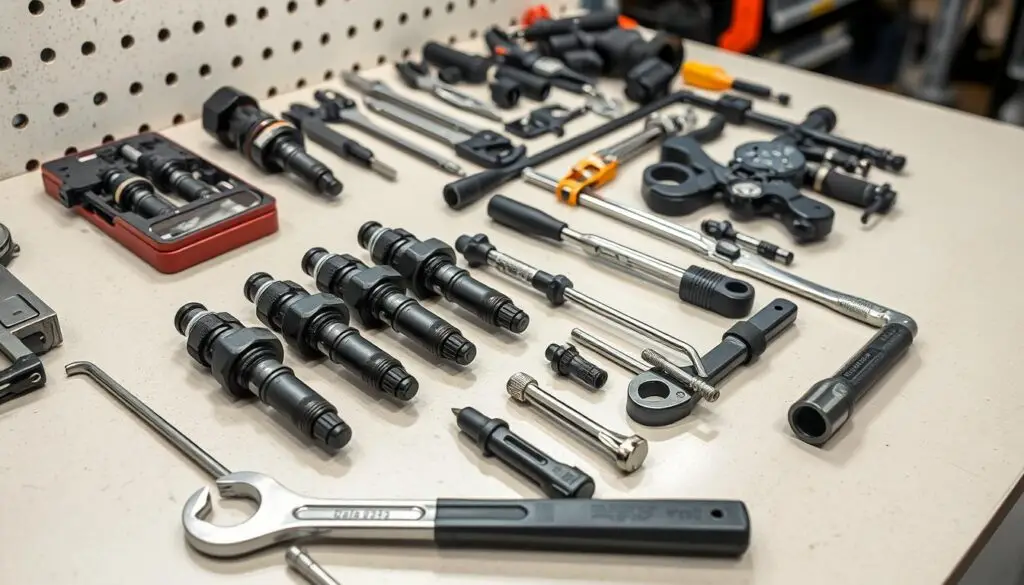
Essential specialized equipment for injection pump work includes:
- High-pressure line wrenches with offset heads for tight clearances
- Injection pump timing pin sets for precise installation alignment
- Brake spring pliers for accessing components in tight spaces
- Battery nut pliers for secure electrical connections
Testing and Calibration Shortcuts
Modern diesel injection pump tools include digital pressure testers that display real-time readings. These calibration tools connect directly to test ports, eliminating guesswork during diagnostics. Component search systems help technicians quickly identify the exact part needed by drilling down through manufacturer catalogs and detailed technical drawings.
Wire management tools speed up electrical diagnostics. A quality crimping tool, wire strippers, and precision cutters paired with a handheld torch handle any wiring repair efficiently. Organizing these specialized equipment items in dedicated tool rolls keeps everything accessible during complex injection pump services.
Air Brake Service Equipment for Rapid System Checks
Professional technicians rely on specialized air brake service equipment to perform rapid diagnostics on commercial vehicles. These tools enable mechanics to identify issues quickly in complex pneumatic systems found in trucks and buses. Proper equipment selection makes the difference between a 30-minute inspection and hours of troubleshooting.
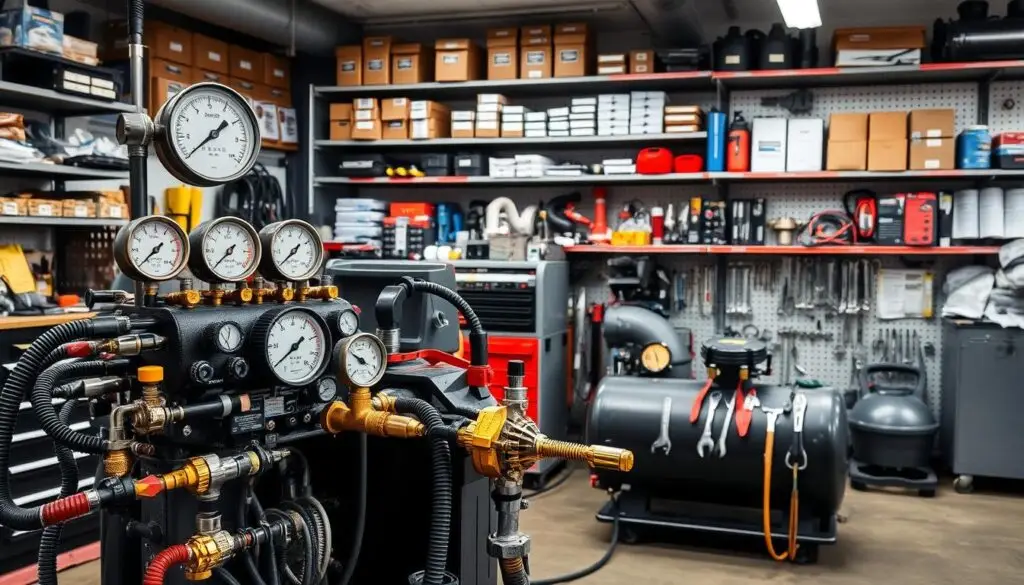
Modern system testing requires specific tools designed for different brake configurations. Digital pressure gauges measure air pressure at multiple points throughout the system. Leak detectors pinpoint small air losses that cause gradual pressure drops. Test couplers connect directly to glad hands for quick system isolation during diagnostics.
Essential air brake service equipment includes:
- Electronic brake testing units for Bendix and Wabco ABS systems
- Pressure test kits with adapters for various fitting sizes
- Timing gauges for slack adjuster measurements
- DOT compliance testing meters
The Federal Motor Carrier Safety Administration establishes specific air brake system requirements under 49 CFR 393.40 that technicians must verify during inspections. Symptom-based troubleshooting tools enhance rapid diagnostics by tracking issues without fault codes. Technicians search databases by manufacturer, model year, and specific symptoms.
Smart technicians organize their system testing procedures around regulatory requirements. Following standardized procedures ensures both safety compliance and efficient service completion. Quality air brake service equipment pays for itself through reduced diagnostic time and accurate first-time repairs.
Maximizing Truck Service Jacks and Lifting Equipment
Smart use of truck service jacks and positioning strategies can cut your repair time by up to 40%. Professional diesel mechanics know that proper equipment placement creates multiple access points, making every job faster and safer. The right approach to lifting equipment transforms a two-hour job into a 45-minute task.
Strategic Positioning for Multiple Access Points
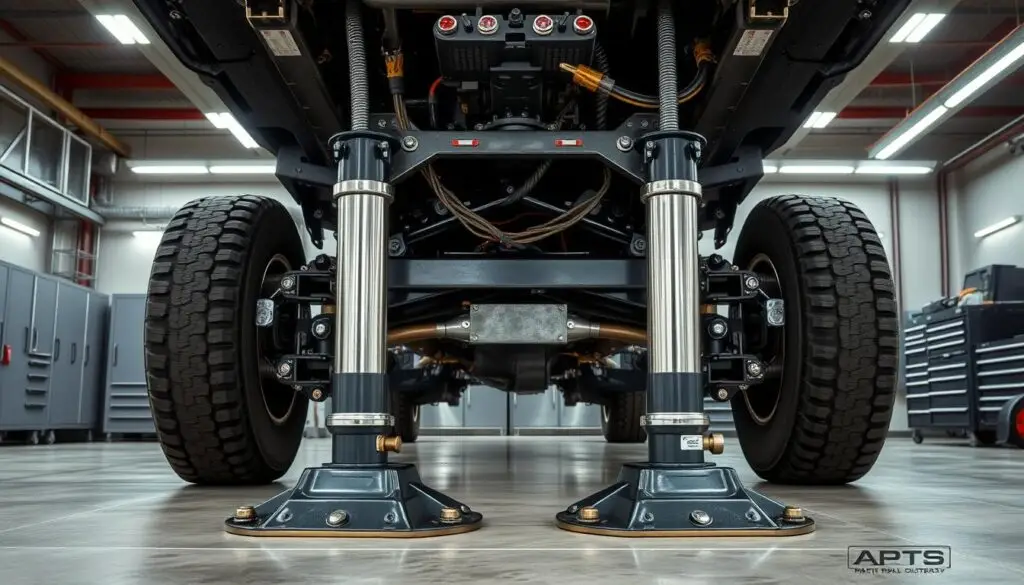
Position your truck service jacks at key structural points to access engine, transmission, and differential components simultaneously. Place the primary jack under the front axle beam, then use secondary jacks at the frame rails. This setup provides:
- Clear access to transmission bellhousing bolts
- Easy reach to exhaust system components
- Open workspace for drivetrain repairs
- Safe entry points for underbody inspections
Safety Protocols That Don’t Slow You Down
Quick safety checks take seconds but prevent hours of downtime from injuries. Keep safety glasses on your head or collar for instant access. Store work gloves in your back pocket between tasks. Position jack stands as you raise the vehicle—not after. Use wheel chocks on both sides of the opposite axle before lifting begins.
The Occupational Safety and Health Administration provides guidelines for safe vehicle lifting practices that protect technicians while maintaining workflow efficiency.
Mobile Jack Systems for Field Service
Mobile service tools must balance portability with power. Air-hydraulic jacks deliver 20-ton capacity while staying compact enough for service trucks. Battery-powered impact wrenches in ½-inch and ⅜-inch drives handle most field repairs. Pack telescoping magnetic pickup tools and flexible retrievers to grab dropped bolts without repositioning lifting equipment.
Commercial Vehicle Tool Sets Organization Strategies
Smart tool organization transforms any diesel shop from chaos to productivity. When technicians waste precious minutes searching for the right wrench or diagnostic cable, profits disappear. Implementing proper efficiency systems for commercial vehicle tool sets can cut service times by up to 30 percent.
Digital inventory management has revolutionized how shops track their equipment. Modern tool organization goes beyond simple pegboards and drawers. Today’s technicians use barcode systems and mobile apps to instantly locate specific tools. These efficiency systems integrate with parts databases containing millions of components and cross-references.
Professional shops implement zone-based organization where tools group by function rather than size. Diagnostic equipment stays near computer terminals. Heavy-duty wrenches cluster around lift bays. This strategic placement minimizes walking time during repairs.
Smart labeling makes all the difference in busy environments. Color-coded systems help technicians quickly identify tool categories:
- Red tags for engine-specific tools
- Blue labels for electrical diagnostic equipment
- Yellow markers for brake service tools
- Green indicators for suspension equipment
Mobile tool carts equipped with power strips and tablet holders bring everything directly to the vehicle. These rolling efficiency systems eliminate multiple trips to stationary toolboxes. Quality commercial vehicle tool sets often include modular storage that adapts to different truck models and service procedures.
Diesel Engine Repair Kits for Common Service Procedures
Smart technicians know that having the right diesel engine repair kits ready saves valuable shop time. A well-organized kit eliminates the frustration of searching for tools during critical service procedures. The difference between a 30-minute job and a two-hour ordeal often comes down to proper kit preparation.
Pre-Assembled Kit Configurations
Professional-grade kits start with essential wrench sets. Your basic configuration needs SAE wrenches from 5/16-inch to 1¼-inch and metric sizes from 8mm to 22mm. Combination wrenches should range from ⅜-inch to 1¼-inch in standard sizes.
Specialty tools make the difference in diesel work. Include these items in pre-assembled kits:
- Flare nut wrenches (⅜-inch to ¾-inch standard, 7mm to 19mm metric)
- Adjustable wrenches in 8-inch and 12-inch sizes
- Torx wrench set from T-15 to T-55
- Filter wrench and 14-inch pipe wrench
Custom Kit Building for Specific Fleet Needs
Fleet managers benefit from tailored diesel engine repair kits matching their equipment. Caterpillar fleets need different tools than Cummins-powered trucks. Build custom kits based on your most frequent service procedures.
Essential punches and chisels prevent damage during repairs. Stock pin punches from 3/16-inch to ⅜-inch, plus a quality 5-inch center punch. Add cold chisels in multiple sizes and a brass punch for delicate work.
Mobile Service Kit Essentials
Field technicians using mobile repair tools face unique challenges. Weight matters when climbing into truck cabs all day. Focus on multi-purpose tools and compact storage solutions. A 20-inch reversing chain wrench handles various filter sizes without carrying multiple tools.
Electronic Diagnostic Equipment Integration Techniques
Modern diesel mechanics rely on electronic diagnostic equipment to streamline repairs and reduce shop time. Today’s advanced tools connect seamlessly with smartphones, tablets, and computers, transforming how technicians approach troubleshooting. Smart integration techniques can cut diagnostic time by up to 70% compared to traditional methods.
Wireless Diagnostic Tool Applications
Wireless diagnostics have revolutionized the diesel repair industry. Technicians no longer need to stay physically connected to vehicles during testing. This freedom allows mechanics to:
- Monitor engine parameters from inside the cab while test driving
- Access fault codes from under the hood without returning to the diagnostic port
- Run multiple vehicle scans simultaneously in busy shops
- Perform safety checks from a distance during brake or exhaust testing
Popular wireless diagnostic systems like Snap-on ZEUS and Autel MaxiSys connect via Bluetooth or Wi-Fi. These tools transmit real-time data to mobile devices, enabling mechanics to move freely around vehicles while monitoring critical engine functions.
Cloud-Based Data Storage and Retrieval
Cloud integration transforms how shops manage diagnostic information. Instead of storing data on individual computers, cloud-based systems provide instant access to:
- Complete vehicle service histories
- Fault code libraries for all major diesel engines
- Wiring diagrams for Cummins, Detroit, and Caterpillar systems
- Repair documentation accessible from any device
Services like Mitchell 1 and ALLDATA offer cloud integration features that sync diagnostic reports automatically. Technicians can pull up previous scan results, compare trending issues, and share findings with team members instantly. This seamless data flow eliminates duplicate work and speeds up repeat repairs.
Time-Saving Maintenance and Tool Care Practices
Proper tool maintenance transforms your workshop efficiency by preventing unexpected breakdowns and extending equipment life. Clean tools work better and last longer, making regular equipment care a smart investment in your productivity.
Start each day with a quick tool inspection routine. Wipe down wrenches, sockets, and diagnostic equipment with shop rags to remove grease and debris. Store tools in organized compartments where air can circulate freely. This prevents rust formation and makes finding the right tool instant.
Essential maintenance tasks include:
- Keep wire brushes and gasket scrapers clean after each use
- Lubricate ratchets and torque wrenches monthly
- Check battery terminals on diagnostic scanners weekly
- Replace worn drill bits before they damage workpieces
- Test tire gauges against calibrated standards quarterly
Smart equipment care means organizing frequently used items within arm’s reach. Mount tire air chucks and valve core tools on pegboards. Keep dial calipers in protective cases. Store O-ring pick sets and cotter key extractors in labeled drawers.
Broken bolt extractors and specialized removal tools need extra attention. Apply penetrating oil to threads after each use. This simple step saves hours when you need these tools for emergency repairs.
Regular tool maintenance pays dividends through faster repairs and fewer callbacks. Technicians who dedicate 10 minutes daily to equipment care report 30% less downtime from tool failures.
Building Your Career with Diesel Mechanic Tools
Mastering diesel mechanic tools and time-saving techniques sets the foundation for a successful career in this demanding field. The strategies covered in this guide help technicians work smarter while maintaining industry standards for quality and safety. From diagnostic scanners to specialized injection pump equipment, each tool plays a vital role in efficient service delivery.
Professional development starts with building the right tool collection. Programs like Universal Technical Institute’s Diesel Technology course prepare students with hands-on experience using industry-standard equipment. The 12-week Peterbilt Technician Institute takes training further by offering manufacturer-specific certifications. These programs connect graduates with over 350 Peterbilt dealerships across North America while providing discounted tool purchase options before entering the workforce.
New diesel mechanics should understand that most employers expect technicians to bring their own basic hand tools to the job. Companies typically provide larger specialized equipment like heavy-duty lifts and advanced diagnostic systems. Many shops offer tool purchase programs or reimbursement plans to help technicians expand their collections.
The techniques and equipment discussed throughout this guide represent current best practices in diesel service. By implementing these time-saving methods and maintaining properly organized tool sets, technicians can increase productivity while delivering exceptional service. Success in this field comes from combining the right diesel mechanic tools with proper training and continuous professional development.
Share Your Expertise
Join Heavy Duty Journal as a guest author and reach thousands of industry decision-makers.
Frequently Asked Questions
What are the must-have heavy duty diagnostic scanners for a diesel mechanic starting out?
For diesel mechanics entering the field, start with a quality multi-brand scanner that covers major manufacturers like Cummins, Detroit Diesel, and PACCAR. The Diesel Repair platform offers free fault code lookup covering all commercial truck DTCs from the first Electronic Control Modules to the latest models, making it an essential companion to any physical scanner. Professional scanners should handle real-time data monitoring, bi-directional controls, and integrate with your mobile devices for accessing repair documentation on the go.
How do compression testers for diesel engines differ from gasoline engine testers?
Diesel engines operate at significantly higher compression ratios and pressure levels than gasoline engines, requiring specialized compression gauging tools built to handle these increased pressures. Diesel compression testers must measure pressures ranging from 300 to 600 PSI or higher, compared to gasoline testers that typically max out around 200 PSI. Professional diagnostic platforms provide step-by-step instructions specific to diesel compression testing, including which tools to use and proper testing sequences for accurate results.
What size torque wrenches do I need for typical diesel engine work?
A comprehensive diesel mechanic toolkit requires multiple torque wrenches covering different ranges. Essential sizes include a ¼-inch drive for 20-200 in-lbs, a ⅜-inch drive for 10-80 ft-lbs, and a ½-inch drive for 50-250 ft-lbs. Repair documentation databases provide access to over 500,000 service documents with specific torque specifications for components like turbo removal, EGR valve replacement, and water pump installation. Having mobile app access to these torque specs ensures accuracy whether you’re in the shop or on a roadside service call.
Which diesel injection pump tools are absolutely essential for fuel system repairs?
Critical diesel injection pump tools include a square drive stud remover tool for pump work, specialized removal and installation tools for high-pressure systems, and proper feeler gauge sets with red handles for exhaust and blue handles for intake measurements. Component search features help identify exact parts and tools needed by narrowing searches through component groups, drilling down by part type and manufacturer with detailed drawings to confirm correct selection before ordering.
What air brake service equipment is required for DOT compliance?
Professional air brake service equipment must meet industry regulations for testing Bendix ABS and Wabco ABS systems. Essential tools include brake chamber tools, gladhand connectors, pressure gauges rated for system pressures, and brake spring pliers for safe component access. Testing procedure databases cover complete brake system diagnostics with manufacturer-specific instructions for Freightliner, Peterbilt, Kenworth, and other major brands, ensuring compliance with DOT requirements.
How do I select the right truck service jacks for commercial vehicle work?
Truck service jacks for commercial vehicles must handle significantly higher weight capacities than automotive jacks. Look for hydraulic jacks rated for at least 20 tons for regular truck service, with 50-ton capacity for heavy-duty applications. Mobile jack systems enhance efficiency for field service work. Always verify the jack’s capacity exceeds the vehicle’s weight by a safety margin, and invest in quality jack stands rated for commercial vehicle weights to ensure safe working conditions.
What should be included in a complete commercial vehicle tool set?
A professional commercial vehicle tool set requires comprehensive socket sets including ¼-inch drive (standard and metric), ⅜-inch drive sockets (5/16-inch to 1-inch SAE, 7mm to 20mm metric), and ½-inch drive sockets (⅜-inch to 1¼-inch standard, 10mm to 27mm metric). Add wrench sets in both SAE (5/16-inch to 1¼-inch) and metric (8mm to 22mm), plus specialized tools like flare nut wrenches, pipe wrenches, and a complete set of Allen drivers in both standard and metric sizes.
Which diesel engine repair kits save the most time on common repairs?
Pre-assembled diesel engine repair kits for frequent services like injector seal replacement, turbocharger rebuilds, and EGR system cleaning significantly reduce repair time. Labor time databases show average repair times from low to high ranges based on actual work required, helping you identify which procedures benefit most from dedicated kits. Custom kits tailored to specific fleet needs, such as Detroit Diesel DD15 or Cummins ISX engines, ensure you have exact components ready without searching through general inventory.
How can electronic diagnostic equipment improve my troubleshooting speed?
Modern electronic diagnostic equipment with wireless capabilities allows technicians to monitor live data while physically inspecting components, eliminating repeated trips between the cab and engine compartment. Symptom-based troubleshooting tools help diagnose issues without fault codes by searching through symptoms across all major manufacturers including Caterpillar, Mack, and Volvo. Cloud-based storage ensures diagnostic history follows the vehicle, providing instant access to previous repairs and recurring issues.
What’s the best way to organize diesel mechanic tools in a mobile service truck?
Efficient mobile tool organization starts with a quality rolling toolbox or cart that separates tools by frequency of use and system type. Group diesel injection pump tools, compression testers, and system-specific equipment in labeled drawers. Mount frequently used items like torque wrenches and diagnostic equipment in easily accessible locations. VIN to part features help minimize parts inventory by linking directly to exact vehicle requirements, reducing the need to stock multiple variations of common parts.
Share This Article
Share this post with your network and help other industry professionals stay informed.


