
By Michael Nielsen, Editor & Publisher | 15+ Years in Diesel Repair
Last Updated: January 2026
📖 Estimated reading time: 22 minutes
The commercial vehicle telematics market reached $24.3 billion in 2024, signaling a fundamental shift in how diesel fleet operators approach maintenance. Preventive maintenance software for diesel fleets has evolved from optional technology to operational necessity as fleet managers seek to reduce unplanned downtime, control maintenance costs, and maintain regulatory compliance across increasingly complex diesel powertrains.
Modern diesel engines equipped with emissions control systems, turbochargers, and sophisticated fuel injection demand precision maintenance that paper-based tracking cannot reliably deliver. The predictive maintenance market alone will surge from $10.93 billion to $70.73 billion by 2032—reflecting massive industry investment in technology that catches failures before they strand trucks roadside.
For fleet managers and maintenance directors evaluating preventive maintenance software, this guide examines the core capabilities, leading platforms, implementation best practices, and ROI metrics that determine success. Whether you’re managing 20 trucks or 2,000, understanding how these systems work and which features matter most for diesel operations will help you make an informed investment decision.
Key Takeaways
- Market momentum: The telematics market is growing at 12.9% annually, with predictive maintenance expanding from $10.93 billion to $70.73 billion by 2032.
- Proven cost savings: Fleet operators implementing preventive maintenance software achieve 20-30% reductions in maintenance costs and up to 45% improvements in vehicle uptime.
- Diesel-specific requirements: Effective platforms must handle DPF monitoring, DEF tracking, engine hour scheduling, and emissions compliance documentation unique to diesel operations.
- Platform options: Solutions range from $4/vehicle/month for basic tracking (Fleetio) to $60+/vehicle/month for enterprise systems with predictive AI (Samsara).
- Implementation timeline: Full adoption typically requires 9-12 months, with most fleets achieving positive ROI within 12-24 months.
- Integration matters: The most successful implementations connect maintenance software with telematics, fuel management, accounting, and parts suppliers for complete operational visibility.
The Diesel Fleet Maintenance Landscape in 2025
Fleet operators managing diesel vehicles face unprecedented challenges as maintenance demands intensify across expanding operations. Commercial vehicle sales jumped 13.3% in 2023, creating larger fleets spanning broader geographical areas. This expansion has amplified the complexity of coordinating maintenance operations while maintaining consistent service quality across multiple locations and varying equipment types.
The pressure to reduce maintenance expenditures while simultaneously improving operational efficiency has never been greater. Traditional approaches to diesel maintenance tracking—paper logs, spreadsheet schedules, and reactive repairs—no longer meet the demands of modern fleet operations. Fleet managers must now balance multiple competing priorities: minimizing vehicle downtime, controlling expenses, ensuring regulatory compliance, and extending asset lifecycles in an environment where a single breakdown can cascade into thousands of dollars in lost revenue.
Operational Pressures Driving Software Adoption
Diesel fleet operators confront a perfect storm of challenges threatening profitability and service delivery. The complexity of modern diesel engines equipped with advanced emissions control systems has transformed maintenance from straightforward mechanical work into sophisticated diagnostic procedures requiring specialized knowledge and equipment that many maintenance facilities struggle to provide consistently.
The shortage of qualified diesel technicians represents one of the industry’s most pressing concerns. As experienced mechanics retire, fewer young professionals enter the field, driving up labor costs and extending repair timelines. Software that maximizes technician efficiency and reduces diagnostic time has become essential for maintaining adequate service capacity.
When a diesel vehicle fails unexpectedly, the consequences extend far beyond immediate repair expenses. Lost revenue from missed deliveries, customer dissatisfaction damaging long-term relationships, emergency repair premiums inflating costs, route disruptions requiring expensive logistics adjustments, and regulatory penalties for failing to meet contractual obligations all compound the initial breakdown impact.
Traditional maintenance approaches following fixed intervals don’t account for actual vehicle usage patterns. This one-size-fits-all methodology leads to unnecessary maintenance on lightly used vehicles while under-serving equipment operating in severe conditions. The result: wasted budget on premature services and unexpected failures that slip through arbitrary schedules.
Technology-Driven Transformation
The maintenance industry is experiencing a fundamental shift from reactive, paper-based operations to proactive, data-driven management. Over 90% of the global workforce is expected to use mobile devices for work-related tasks by 2025, and fleet maintenance operations are no exception. This mobile revolution enables mechanics to access vehicle histories, receive work orders, and update maintenance records in real-time from any location.
Telematics systems have transformed diesel maintenance tracking by providing continuous streams of operational data. Modern commercial vehicles transmit information about engine performance, fuel consumption, diagnostic trouble codes, and component wear directly to maintenance platforms. This connectivity enables maintenance teams to monitor fleet health remotely and identify developing issues before they cause failures.
Cloud-based platforms are replacing localized, siloed maintenance systems that kept information trapped at individual facilities. These solutions provide centralized visibility across entire fleets regardless of geographical distribution. Maintenance managers can now oversee operations at multiple facilities through unified dashboards, standardizing procedures and sharing best practices organization-wide.
20-25% maintenance cost reduction
McKinsey research on predictive maintenance implementation across industries
The most significant transformation involves shifting from time-based to condition-based maintenance scheduling. Instead of servicing vehicles at arbitrary mileage intervals, modern systems trigger maintenance based on actual component condition and usage patterns. This approach eliminates unnecessary services while ensuring critical maintenance occurs precisely when needed—maximizing both cost efficiency and vehicle reliability.
Why Preventive Maintenance Is Non-Negotiable for Diesel Engines
Preventive maintenance for diesel engines represents more than good practice—it’s a business imperative driven by economic, technical, and regulatory realities. Fleet operators who view maintenance as optional rather than essential face consequences extending far beyond repair costs. The sophisticated nature of modern diesel powertrains, combined with increasingly stringent environmental regulations, creates a maintenance landscape where reactive approaches cannot compete with systematic prevention.
The business case becomes clear when examining three critical factors: financial losses from unexpected breakdowns dwarf scheduled maintenance expenses, technical complexity demands specialized attention only structured programs can deliver, and regulatory frameworks impose requirements that random maintenance approaches cannot satisfy.
The True Cost of Unplanned Downtime
When a diesel vehicle breaks down unexpectedly, the financial impact extends far beyond the immediate repair bill. Direct costs include emergency parts procurement at premium prices with expedited shipping, plus overtime labor charges as mechanics work outside standard hours to restore vehicles to service. But lost revenue represents the largest component of downtime expenses—a commercial vehicle sitting in a repair bay generates zero income while fixed costs continue accumulating.
McKinsey research demonstrates that predictive maintenance approaches can reduce maintenance costs by 20-25% while simultaneously increasing equipment uptime by 10-20%. Leading fleets implementing comprehensive preventive maintenance programs achieve even more impressive results—45% increases in vehicle uptime, 30% reductions in maintenance costs, and 25% fewer unscheduled downtimes.
| Cost Category | Reactive Maintenance | Preventive Maintenance | Savings Potential |
|---|---|---|---|
| Parts Procurement | Premium emergency pricing | Standard bulk pricing | 15-30% reduction |
| Labor Expenses | Overtime and rush charges | Scheduled standard rates | 25-40% reduction |
| Vehicle Downtime | 3-7 days average | 4-8 hours planned | 85% reduction |
| Revenue Impact | Lost contracts and penalties | Minimal service disruption | 90% preservation |
Diesel Engine Complexity and Maintenance Demands
Modern diesel engines incorporate sophisticated systems demanding precision maintenance protocols. The fuel injection system operates at pressures exceeding 30,000 PSI, requiring exact specifications and contamination-free conditions. Even microscopic particles in diesel fuel can cause injector failures cascading into expensive repairs involving multiple components.
Emissions control systems add layers of complexity that older diesel engines never faced. The diesel particulate filter captures soot but requires periodic regeneration cycles that must be monitored and maintained to prevent costly plugging. Selective catalytic reduction systems inject diesel exhaust fluid to reduce nitrogen oxide emissions, creating additional maintenance requirements around fluid quality, tank sensors, and catalyst health.
Effective preventive maintenance programs must address multiple interdependent diesel systems: fuel system integrity through regular filter changes and water separator maintenance; lubrication management with diesel-specific oil formulations and condition-based change intervals; cooling system maintenance addressing higher compression ratios generating more heat; turbocharger care demanding clean oil supply and proper shutdown procedures; and emissions equipment servicing including DPF regeneration monitoring, DEF quality verification, and sensor calibration.
EPA Regulations and Emissions Compliance
Federal and state environmental regulations create non-negotiable requirements for diesel fleet operators. The Environmental Protection Agency enforces strict emissions standards applying throughout a vehicle’s operational life. Compliance demands extend beyond initial certification to include ongoing maintenance, regular inspections, and comprehensive documentation proving emission control systems remain functional.
Operators face civil penalties ranging from $2,500 to $25,000 per day per vehicle for violations under the Clean Air Act requirements, with criminal charges possible for intentional non-compliance. Annual emissions inspections verify pollution control systems function properly. Maintenance records must demonstrate required services occurred at specified intervals—documentation that software platforms generate automatically while paper systems struggle to provide.
Preventive maintenance software transforms compliance from an administrative burden into a manageable, systematized process. Digital platforms automatically generate maintenance schedules aligning with regulatory requirements. Electronic documentation provides the audit trail necessary to demonstrate compliance during inspections, with complete service histories compiling instantly when regulators request verification.
Core Capabilities of Diesel Fleet Maintenance Software
Understanding the core capabilities of maintenance management software is essential for fleet operators seeking to maximize diesel engine performance and longevity. Modern platforms deliver specialized features addressing the unique operational demands of diesel fleets. These systems combine automation, real-time monitoring, and data analytics to create a comprehensive maintenance ecosystem that goes far beyond simple calendar reminders.
The most effective diesel maintenance scheduling solutions integrate multiple data sources to provide complete visibility into fleet health. Advanced platforms incorporate engine-specific parameters, manufacturer recommendations, and regulatory requirements. This multidimensional approach ensures no critical maintenance task falls through the cracks while eliminating unnecessary services that waste budget.
Automated Scheduling Based on Hours and Mileage
Automated scheduling represents the cornerstone of preventive maintenance platforms for diesel fleets. These systems eliminate manual tracking by continuously monitoring multiple trigger points determining when maintenance becomes due. Engine hours, odometer readings, calendar intervals, and fuel consumption all serve as scheduling parameters that the software tracks automatically.
Modern diesel maintenance scheduling technology calculates service intervals using sophisticated algorithms accounting for variations in operating conditions, load factors, and duty cycles. Heavy-haul vehicles operating in mountainous terrain receive different maintenance schedules than delivery trucks running urban routes. This intelligent scheduling ensures each vehicle receives appropriate maintenance based on its actual operating environment rather than generic manufacturer recommendations.
The automation extends to notification systems alerting managers and technicians well before services become overdue. Multi-channel alerts via email, SMS, and mobile push notifications ensure scheduling information reaches the right personnel at the right time. This proactive approach prevents vehicles arriving for routine work only to discover additional urgent repairs needed that delay the vehicle further.
Diesel-Specific Maintenance Protocols
Maintenance management software designed for diesel fleets incorporates specialized protocols reflecting unique diesel engine requirements. These protocols differ fundamentally from gasoline engine maintenance schedules. Diesel exhaust fluid quality checks, DPF regeneration monitoring, turbocharger inspection intervals, and high-pressure fuel system maintenance represent diesel-specific categories that generic platforms often handle inadequately.
Leading platforms include comprehensive service order management tailored to diesel applications with access to labor time guides specific to diesel repairs, wiring diagrams for complex diesel electrical systems, and parts cross-reference databases containing millions of diesel components. This specialized knowledge base streamlines the maintenance process and reduces diagnostic time significantly.
Manufacturer-recommended service intervals are programmed into the software for different diesel engine families. Cummins, Detroit Diesel, Caterpillar, and other major manufacturers each have distinct maintenance requirements. The software ensures technicians follow correct protocols for each specific engine model in the fleet, maintaining warranty coverage and optimizing component life.
Real-Time Diagnostics and Fault Code Monitoring
Real-time diagnostic capabilities transform maintenance management software from a scheduling tool into a comprehensive vehicle health monitoring system. Integration with vehicle telematics enables continuous collection of engine performance data, with fault codes triggering immediate alerts when systems detect anomalies that could lead to breakdowns.
Predictive maintenance software analyzes critical parameters including engine oil temperature, oil pressure, coolant temperature, and battery management metrics. The system monitors charging cycles and battery temperatures to predict failures before they occur. Brake diagnostics track pad wear, rotor condition, and air system pressure in real-time across the entire fleet.
Emission control diagnostics receive special attention in diesel fleet applications. DPF blockage detection, SCR catalyst efficiency monitoring, and NOx sensor validation all occur continuously. These real-time checks ensure compliance while preventing the severe engine damage resulting from malfunctioning emission systems operating undetected.
DEF and Fuel System Tracking
Diesel exhaust fluid tracking represents a critical capability unique to diesel fleet maintenance platforms. DEF consumption patterns, fluid quality monitoring, and refill scheduling all require systematic tracking to maintain emission system function. Software platforms monitor DEF tank levels and alert operators before depletion occurs, preventing the derated engine power that results when DEF runs out.
Fuel system monitoring extends beyond simple fuel economy tracking. Advanced platforms monitor fuel filter condition through differential pressure sensors. As filters accumulate contaminants, pressure drop increases, signaling the need for replacement before fuel starvation damages expensive injection system components.
DEF quality verification ensures fluid meets ISO 22241 standards required for proper SCR system operation. Contaminated or diluted DEF can damage selective catalytic reduction systems, leading to expensive repairs and emission compliance failures. Regular quality checks scheduled by the software prevent these issues while optimizing DEF usage.
Comprehensive Reporting and Analytics
Data-driven decision making depends on robust reporting and analytics capabilities built into maintenance management software. Comprehensive platforms provide maintenance cost analysis by vehicle, technician productivity metrics, and parts inventory optimization tools. These analytics transform raw maintenance data into actionable business intelligence that drives strategic decisions.
Comparative performance metrics allow fleet managers to identify underperforming vehicles and investigate root causes. Cost per mile analysis, maintenance frequency comparisons, and reliability rankings help optimize fleet composition. Vehicles with consistently higher maintenance costs become candidates for replacement or reassignment to less demanding duty cycles.
Predictive analytics identify trends indicating developing problems across the fleet. If multiple vehicles of the same model begin showing similar fault codes, the software highlights this pattern. Early detection of fleet-wide issues enables proactive intervention before widespread failures occur, transforming potential crises into planned maintenance events.
| Software Capability | Primary Function | Business Impact |
|---|---|---|
| Automated Scheduling | Trigger maintenance based on hours, miles, and calendar intervals | Eliminates missed services, reduces unplanned downtime 30-40% |
| Real-Time Diagnostics | Monitor fault codes and performance parameters continuously | Enables predictive intervention, reduces catastrophic failures 50% |
| DEF and Fuel Tracking | Monitor diesel exhaust fluid and fuel system health | Maintains emission compliance, prevents injection system damage |
| Analytics and Reporting | Transform maintenance data into business intelligence | Reduces maintenance costs 15-25%, optimizes fleet performance |
How Modern Preventive Maintenance Software Operates
Understanding how preventive maintenance software solutions function reveals the technological leap from reactive repairs to proactive vehicle care. These platforms combine multiple technologies into a unified system monitoring every aspect of diesel engine performance. The operational architecture relies on four interconnected components working together seamlessly to transform raw data into maintenance decisions keeping diesel fleets running efficiently.
Telematics Integration and Data Capture
Telematics-based fleet maintenance begins with sophisticated sensors embedded throughout diesel vehicles. These sensors continuously monitor critical parameters indicating engine health and performance. Modern diesel engines contain dozens of sensors tracking everything from oil pressure to exhaust gas temperature, with data streaming to maintenance platforms in real-time.
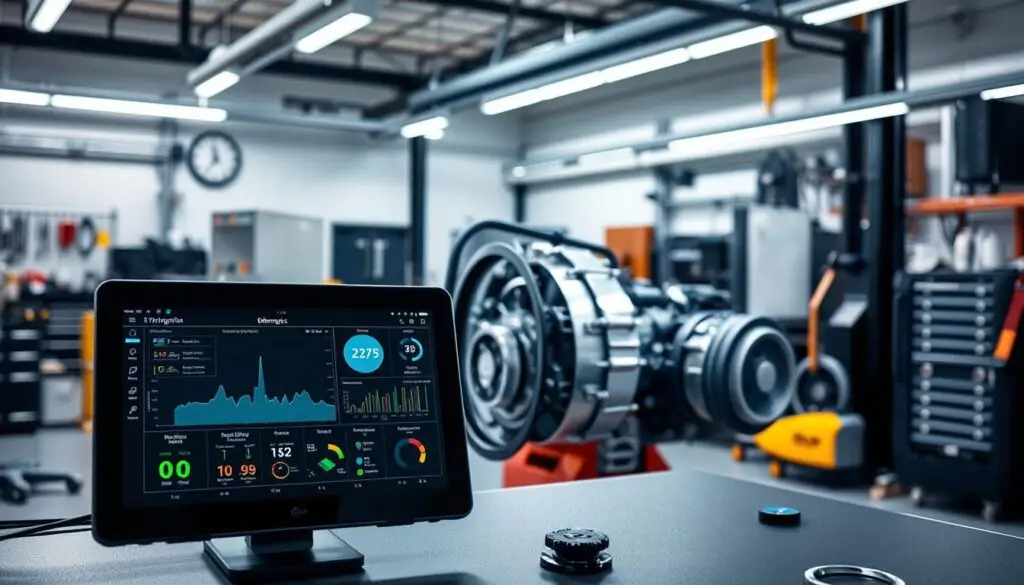
The data capture process happens continuously as vehicles operate. Engine control units collect information from sensors measuring coolant temperature, fuel system pressure, battery voltage, boost pressure, and exhaust gas recirculation valve position. This continuous stream of data transmits to central dashboards through cellular or satellite connections, giving fleet managers visibility into vehicle conditions regardless of where trucks operate.
The system automatically triggers alerts when parameters exceed normal ranges. If diesel particulate filter regeneration cycles become too frequent, indicating potential exhaust system issues, the software creates a maintenance request immediately. This proactive approach prevents minor issues from becoming major failures that strand trucks and drivers.
Predictive Maintenance Algorithms
Machine learning transforms historical maintenance data into predictive diesel maintenance capabilities. These algorithms analyze thousands of data points to identify patterns preceding component failures. The software learns what normal operation looks like for each vehicle in the fleet, then flags deviations indicating developing problems.
When sensor readings deviate from established baselines, the system calculates failure probability. Predictive algorithms can forecast turbocharger failures weeks before symptoms become obvious to drivers, providing advance warning that allows maintenance scheduling during planned downtime rather than forcing emergency roadside repairs.
The accuracy of predictions improves continuously as the system processes more data. Digital twin technology creates virtual models of individual vehicles simulating real-world conditions, allowing fleet managers to test maintenance scenarios digitally before implementing changes. This approach reduces risk and optimizes timing for maximum operational efficiency.
Cloud-Based Accessibility and Mobile Applications
Cloud architecture delivers maintenance management capabilities from any location with internet access. Fleet managers access complete vehicle histories through web browsers on desktop computers or tablets, with mobile applications extending functionality directly to technicians and drivers in the field.
Mechanics receive work orders on smartphones with detailed repair instructions and parts lists. They document completed work with photos, digital signatures, and time stamps that automatically sync to central databases. The cloud platform eliminates manual data entry creating errors and delays—information flows automatically between telematics systems, work order management, and parts inventory modules.
Scalability represents another major advantage of cloud-based solutions. Adding vehicles to the fleet requires no new servers or infrastructure investments. The platform expands automatically to accommodate growth from 10 vehicles to 1,000 vehicles without performance degradation, making these solutions appropriate for fleets of any size.
Work Order Generation and Tracking
Automated work order management creates service requests based on multiple trigger types. The system initiates maintenance tasks when vehicles reach mileage thresholds, engine hours accumulate, fault codes appear, or drivers report issues during inspections. This multi-source triggering ensures comprehensive coverage of maintenance needs.
Work order assignment considers technician skills, current workload, and location. The system matches diesel engine specialists with complex repairs while routing routine services to general mechanics. This intelligent prioritization ensures the most important maintenance happens first while maximizing shop efficiency.
The documentation process closes the maintenance loop automatically. When technicians mark work orders complete, the system updates vehicle maintenance histories and adjusts parts inventory levels. This closed-loop process eliminates documentation gaps plaguing manual tracking systems, creating the complete audit trails required for regulatory compliance and warranty claims.
The HDJ Perspective
After years of watching fleets struggle with preventive maintenance adoption, one pattern stands out: success depends more on implementation discipline than software features. The most sophisticated platform in the world can’t help a fleet that doesn’t commit to accurate data entry, consistent processes, and management follow-through. Before comparing vendors, honestly assess your organization’s readiness to change workflows—that’s where most implementations succeed or fail. The technology is mature enough that most leading platforms deliver adequate functionality; the differentiator is how well your team uses whatever system you choose.
Leading Preventive Maintenance Software for Diesel Fleets
Today’s preventive maintenance software landscape includes multiple established platforms with distinct approaches to diesel fleet management. Each solution brings unique strengths addressing the specialized requirements of heavy-duty operations. Understanding their specific approaches helps organizations select the solution aligning with operational priorities and budget constraints.
Fleetio: User-Friendly Comprehensive Management
Fleetio delivers a comprehensive fleet management software solution designed for fleets of all sizes across multiple industries. The platform emphasizes user-friendly interfaces requiring minimal technical expertise to implement and operate, with cloud-based deployment eliminating on-premises hardware requirements.
For diesel fleets, Fleetio includes DPF monitoring tracking regeneration cycles, DEF consumption tracking correlating fluid usage with mileage and engine hours, fault code integration capturing diagnostic trouble codes, and emissions compliance reporting generating documentation for EPA audits. The platform supports complex maintenance hierarchies including staggered service levels for different diesel components.
Pricing operates on a per-vehicle monthly subscription model. The Starter plan begins around $4 per vehicle monthly for basic maintenance tracking. Mid-tier plans range from $6-8 per vehicle monthly adding fuel management and advanced reporting. Enterprise pricing falls between $10-15 per vehicle monthly for large fleets requiring advanced integrations. Most organizations complete initial setup within 2-4 weeks.
Samsara: Predictive AI with Integrated Hardware
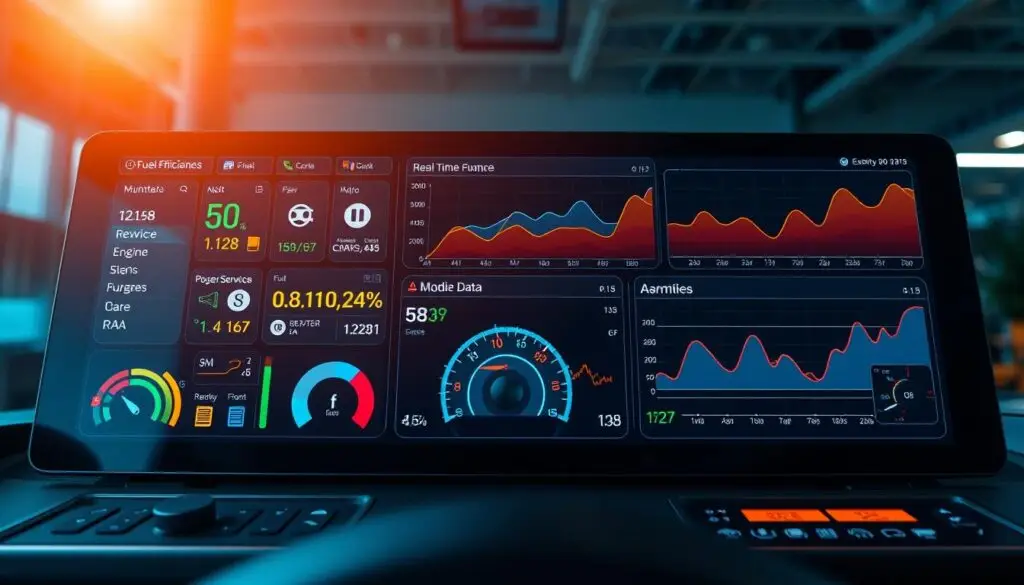
Samsara provides an integrated operations platform combining fleet management software with proprietary telematics hardware. The platform targets medium to large fleets requiring comprehensive visibility across safety, maintenance, and operational efficiency with end-to-end integration between hardware sensors and cloud analytics.
Samsara’s diesel capabilities center on predictive maintenance enabled by continuous engine data streaming. The proprietary vehicle gateway captures over 30 diesel engine parameters including coolant temperature, oil pressure, boost pressure, and exhaust gas recirculation valve position. Machine learning algorithms analyze historical patterns to predict component failures before they occur.
Pricing combines hardware costs ($300-500 per vehicle gateway) with monthly software subscriptions ranging from $30-60 per vehicle depending on features and contract terms. Multi-year contracts reduce monthly costs by 15-25%. Implementation typically requires 4-8 weeks with dedicated support for larger deployments.
Geotab: Open Platform with Extensive Customization
Geotab operates as an open telematics platform emphasizing data accessibility and third-party integration flexibility. With over 3 million connected vehicles globally, the platform serves organizations ranging from small fleets to Fortune 500 enterprises through its GO device capturing extensive engine and vehicle data via direct OBD-II connection.
Geotab captures comprehensive diesel engine data including fuel rate, engine load, and turbocharger parameters. The GO device reads manufacturer-specific engine codes from Cummins, Detroit Diesel, PACCAR, and Navistar. The Geotab Marketplace hosts over 400 third-party solutions extending core platform capabilities for specialized diesel fleet needs.
The GO9 device costs approximately $150-200 per unit with monthly subscription fees ranging from $20-35 per vehicle. Third-party marketplace applications carry separate licensing fees. Organizations with technical capabilities can leverage the open API architecture for extensive customization without additional development costs.
RTA Fleet Management: In-House Maintenance Focus
RTA Fleet Management specializes in maintenance-focused software designed primarily for organizations operating internal maintenance facilities. With over four decades of experience, the platform emphasizes work order management and parts inventory control rather than telematics or driver behavior monitoring.
RTA accommodates diesel fleet requirements through customizable maintenance task templates aligned with manufacturer recommendations for specific diesel engine models. Parts inventory management includes diesel-specific components with minimum/maximum stock level controls and automated purchase order generation. The system supports both cloud-hosted and on-premises deployment options.
RTA employs user-based pricing rather than per-vehicle subscriptions, typically ranging from $100-200 per named user monthly. This structure benefits organizations with large vehicle counts managed by small maintenance teams. Implementation costs range from $10,000-30,000 depending on deployment model and customization requirements.
Whip Around: Inspection-Focused Integration
Whip Around focuses specifically on digital vehicle inspections and compliance management with a mobile-first design philosophy. The platform addresses pre-trip and post-trip inspection requirements mandated by 49 CFR Part 396 for commercial vehicles through intuitive mobile applications guiding drivers through required checkpoints.
Inspection templates include diesel-specific checkpoints for emission control systems, DEF levels, DPF condition indicators, and fuel system components. The platform’s integration with Fullbay heavy-duty repair software demonstrates strong diesel fleet capabilities—defects reported through Whip Around inspections automatically generate service requests in Fullbay, eliminating manual data entry between driver identification and technician repair.
Pricing starts at approximately $6 per vehicle monthly for basic inspection functionality, with mid-tier plans ranging from $8-12 per vehicle adding customizable forms and maintenance integrations. Most organizations complete setup within 1-2 weeks due to the mobile-first design requiring no specialized hardware.
| Platform | Best For | Starting Price | Implementation |
|---|---|---|---|
| Fleetio | Mid-sized fleets seeking user-friendly comprehensive management | $4/vehicle/month | 2-4 weeks |
| Samsara | Large fleets prioritizing predictive maintenance and safety | $30/vehicle/month + hardware | 4-8 weeks |
| Geotab | Technical organizations requiring data flexibility | $20/vehicle/month + hardware | 3-6 weeks |
| RTA Fleet | In-house shops with dedicated technician teams | $100-200/user/month | 4-12 weeks |
| Whip Around | Fleets focused on inspection compliance | $6/vehicle/month | 1-2 weeks |
Best Practices for Implementing Maintenance Software
Successfully implementing CMMS fleet management requires a methodical approach extending far beyond initial software purchase. The gap between acquiring technology and realizing measurable operational improvements often spans nine to twelve months, demanding careful planning, systematic execution, and ongoing refinement. Fleet managers treating implementation as a strategic project rather than a simple technology upgrade consistently achieve better outcomes and faster returns on investment.
Assessing Your Fleet’s Specific Needs
Before evaluating vendors or requesting demos, conduct a comprehensive assessment of current maintenance operations and future requirements. This groundwork ensures selecting fleet maintenance solutions addressing actual pain points rather than paying for unnecessary capabilities that complicate adoption without delivering value.
Start by documenting existing maintenance processes in detail. Walk through a typical maintenance cycle from issue identification through completed repair, noting every manual step, data entry point, and communication handoff. Most fleet managers discover significant inefficiencies they never fully recognized during this documentation process—inefficiencies that software should address.
Quantify baseline performance metrics across key operational areas: current unplanned downtime hours per vehicle monthly, average maintenance cost per mile, compliance violation frequency, and parts inventory carrying costs. These numbers establish the foundation for measuring implementation success and calculating return on investment accurately.
Define clear, measurable goals guiding vendor selection and implementation priorities. Effective goals include specific targets like reducing unplanned maintenance events by 30%, cutting maintenance costs by 20%, or improving vehicle uptime to 95%. Concrete objectives keep implementation focused on delivering business value rather than simply deploying technology.

Data Migration and System Integration
Technical planning for data migration and system integration represents a critical phase where many implementations stumble. Poor data migration creates ongoing problems undermining software effectiveness and user confidence, making thorough planning essential for long-term success.
Develop a strategic approach to historical maintenance records before beginning migration. Not all historical data provides equal value, and attempting to migrate everything often introduces errors while delaying deployment. Focus on migrating the past 12-24 months of maintenance records for active vehicles—this timeframe provides sufficient history for establishing maintenance patterns without overwhelming the new system with outdated information.
Plan integration touchpoints with existing business systems carefully. CMMS fleet management platforms must exchange data with telematics providers for automatic mileage and fault code updates, accounting systems for cost tracking, fuel management platforms for consumption data, and parts suppliers for automated ordering. Verify your chosen software offers robust API capabilities for these integrations before committing.
Staff Training and Change Management
Technology adoption fundamentally represents a people challenge rather than a technical one. Even the most capable fleet maintenance solutions fail when technicians, dispatchers, and managers resist using them consistently. Successful implementation requires deliberate change management addressing both skill development and cultural adaptation.
Begin building buy-in before software selection by involving representatives from each user group in the evaluation process. Technicians who help choose the system become natural advocates during rollout. Their early input also ensures the selected platform addresses real workflow needs rather than just management preferences.
Design training programs accommodating different learning styles and technical comfort levels. Combine hands-on workshops where users practice common tasks, role-specific quick guides showing the five most common tasks for each role, video tutorials demonstrating specific functions, and one-on-one coaching for users struggling with particular aspects.
Set realistic adoption timelines acknowledging the learning curve inherent in process change. Effective adoption typically requires three to six months as users progress from basic task completion to proficient system utilization. Expecting immediate expert-level usage creates frustration undermining confidence in the implementation.
Free Professional Fleet Tools
Cost calculators, fault code lookup, maintenance planners, and more—built for owner-operators, fleet managers, and diesel techs. No signup required.
Measuring ROI and Cost Savings
The true value of preventive maintenance software extends far beyond initial subscription fees, creating measurable improvements across multiple cost centers. Fleet managers need concrete financial data to justify these investments to executive leadership. A comprehensive ROI framework captures both immediate operational savings and long-term strategic benefits that compound over time.
Understanding Your Software Investment
Calculating total investment requires accounting for multiple cost components beyond the advertised subscription price. Software licensing typically ranges from $20 to $100+ per vehicle per month depending on feature depth and vendor, with larger fleets often negotiating volume discounts reducing per-vehicle costs significantly.
Implementation expenses add substantial upfront costs. Configuration services, data migration from legacy systems, and integration development can total $5,000 to $50,000 depending on fleet complexity. Training investments ensuring your team maximizes software capabilities typically cost $1,000 to $5,000 initially, with ongoing training for new hires adding annual expenses.

Quantifying Maintenance Cost Reductions
Industry research demonstrates that predictive maintenance reduces maintenance costs by 20-25% across industries. These savings come from specific, measurable categories fleet managers can track independently. Establishing baseline metrics before implementation allows accurate measurement of improvement and defensible ROI calculations.
Emergency repair costs decrease dramatically when preventive protocols catch issues early. Fleets typically see 40-50% reductions in roadside breakdowns and emergency service calls. A single avoided breakdown saves $500-$2,000 in towing, expedited parts, and after-hours labor—savings that accumulate rapidly across a fleet.
Parts procurement costs drop through planned purchasing versus emergency orders. Scheduled maintenance allows bulk purchasing and vendor negotiation, with fleets reporting 15-25% savings on parts costs by eliminating expedited shipping and premium pricing for urgent needs. Labor efficiency improves when technicians work on scheduled maintenance during regular hours, avoiding the 50-100% premiums charged for after-hours emergency repairs.
Tracking Fleet Uptime Optimization Results
Vehicle availability directly impacts revenue generation and operational capacity. Industry data shows properly implemented systems deliver 10-20% uptime improvements within the first year. For a 100-vehicle fleet, gaining 10% uptime effectively adds 10 vehicles worth of capacity without capital investment in new equipment.
Unscheduled downtime represents the most expensive availability loss. Predictive maintenance reduces these unexpected failures by 25% or more, with each prevented breakdown eliminating lost productivity, customer service disruptions, and expedited repair premiums that compound costs beyond the immediate repair.
Long-Term Engine Life Extension Value
Proper diesel engine maintenance protocols extend service life substantially beyond manufacturer minimums. Systematically maintained engines routinely achieve 20-30% longer operational life than neglected counterparts, translating directly into deferred capital expenditures and reduced total cost of ownership.
Capital cost avoidance represents one of the largest but least visible benefits. A Class 8 truck replacement costs $120,000-$180,000. Extending engine life by 200,000 miles delays this investment by 2-3 years. Across a 100-vehicle fleet, this creates $2-3 million in deferred capital needs that can be deployed elsewhere in the business.
Resale values increase significantly for vehicles with complete digital maintenance histories. Buyers pay premiums for documented care reducing their risk, with well-maintained trucks commanding 15-25% higher resale prices than equivalent vehicles with incomplete documentation.
Future Innovations in Diesel Fleet Maintenance Technology
Emerging technologies are positioning diesel fleet operators for a future where maintenance becomes increasingly automated, intelligent, and cost-effective. The predictive maintenance market’s expansion from $10.93 billion in 2024 to a projected $70.73 billion by 2032 reflects massive investment in next-generation capabilities that will reshape fleet operations over the coming decade.
Advanced artificial intelligence systems are moving beyond simple rule-based algorithms into sophisticated neural networks identifying complex failure patterns across millions of data points that human analysts would never detect. Natural language processing integration will allow conversational queries with maintenance systems—managers simply ask questions in plain English rather than navigating complex dashboards.
Next-generation sensors provide unprecedented visibility into component health. Chemical analysis sensors analyze oil quality in real-time, detecting contamination and degradation at the molecular level to eliminate unnecessary fluid changes while catching problems before they cause damage. Edge computing capabilities process data locally for faster response times, with critical analysis happening on the vehicle itself to enable immediate alerts for urgent conditions.
Fleet diversification requires diesel fleet management software to expand beyond traditional powertrains. Modern platforms must accommodate electric vehicles, hydrogen fuel cells, renewable diesel, and hybrid systems while maintaining diesel expertise. This represents expansion of capabilities rather than replacement—diesel will remain the primary commercial vehicle powertrain for years to come, but software must evolve to support mixed fleets.
Frequently Asked Questions
What is the difference between preventive and predictive maintenance for diesel fleets?
Preventive maintenance follows scheduled intervals based on time, mileage, or engine hours to service diesel vehicles before problems occur. Predictive maintenance uses real-time sensor data and machine learning algorithms to forecast when specific components will fail, enabling repairs based on actual condition rather than fixed schedules. Most modern platforms combine both approaches—preventive scheduling ensures basic maintenance happens systematically while predictive capabilities identify developing issues that scheduled services would miss. Predictive approaches typically reduce maintenance costs by an additional 20-25% compared to preventive-only programs.
How much does fleet maintenance software cost per vehicle?
Fleet maintenance software typically costs between $4 and $100+ per vehicle monthly depending on features and vendor. Entry-level platforms like Fleetio start around $4-8 per vehicle monthly for basic maintenance tracking and scheduling. Mid-tier solutions with telematics integration range from $20-35 per vehicle. Enterprise platforms like Samsara with proprietary hardware and AI-powered analytics run $30-60 per vehicle monthly plus $300-500 for hardware. Implementation costs add $5,000-50,000 depending on fleet complexity, data migration requirements, and integration needs. Annual contracts typically reduce per-vehicle costs by 10-15% compared to month-to-month arrangements.
What ROI can fleet operators expect from preventive maintenance software?
Most diesel fleet operators achieve 20-30% reductions in overall maintenance costs within the first 12-24 months of implementation. Leading fleets report up to 45% increases in vehicle uptime, 40-50% fewer emergency repairs, and 15-25% savings on parts through planned purchasing rather than emergency orders. A 100-vehicle fleet investing $50,000 in software and implementation can realize $200,000+ in annual savings through reduced downtime, lower emergency repair costs, and extended equipment life. Second-year returns typically accelerate as predictive algorithms refine and staff proficiency improves.
What diesel-specific features should fleet maintenance software include?
Essential diesel-specific features include DPF regeneration monitoring to track filter health and regeneration cycles, DEF level and quality tracking to maintain SCR system function, fault code integration with diesel engine manufacturers like Cummins and Detroit Diesel, and emissions compliance documentation for EPA and CARB regulations. Look for platforms supporting scheduling based on engine hours rather than just mileage, including diesel-specific service templates for turbocharger maintenance and fuel system care, and integrating with telematics systems capturing diesel engine parameters like boost pressure, exhaust gas temperature, and fuel injection timing.
How long does it take to implement fleet maintenance software?
Implementation timelines vary by platform complexity and fleet size. Simple inspection-focused tools like Whip Around can be deployed in 1-2 weeks with minimal training requirements. Mid-tier platforms like Fleetio typically require 2-4 weeks for setup, data migration, and initial training. Enterprise solutions with extensive integrations and custom configurations may take 4-12 weeks for full deployment. However, full adoption and staff proficiency typically requires 3-6 months as users adapt to new workflows and processes mature. Most organizations achieve positive ROI within 12-24 months, with returns accelerating as the system accumulates more data and predictive capabilities improve.
Making the Right Decision for Your Fleet
Preventive maintenance software for diesel fleets has transformed from optional technology to operational necessity. The data tells a compelling story: fleets implementing these systems achieve 20-30% reductions in maintenance costs while improving uptime by 10-20%. The predictive maintenance market’s expansion from $10.93 billion to $70.73 billion by 2032 signals widespread industry recognition that digital maintenance management delivers measurable returns.
Fleet managers ready to move forward should start with a structured needs assessment identifying specific operational challenges—whether that’s emissions compliance tracking, fuel system monitoring, work order management, or all of the above. Request demonstrations from vendors whose capabilities align with those requirements. Plan a pilot implementation proving value before expanding fleet-wide, and set clear measurement systems to track progress toward defined goals.
The most successful adoptions treat fleet maintenance software as a strategic initiative requiring executive support and cross-functional collaboration. The competitive advantage compounds over time as your system accumulates data and your team gains proficiency. For diesel fleets facing mounting pressure to reduce costs while maintaining reliability, the question is no longer whether to adopt preventive maintenance software—it’s which solution to select and how quickly implementation can begin.
Help Fellow Fleet Professionals
Know a fleet manager or maintenance director evaluating preventive maintenance software? Share this guide to help them make an informed decision. Your network benefits from practical, independent analysis.