Diesel Fuel Pressure Regulator Failure: Complete Testing Guide

Table of Contents
    Add a header to begin generating the table of contents

    By Michael Nielsen, Editor & Publisher | 15+ Years in Diesel Repair

    Last Updated: December 2025

    📖 Estimated reading time: 22 minutes

    Diagnosing diesel fuel pressure regulator failure accurately can mean the difference between a quick repair and days of costly downtime. With unscheduled breakdowns costing fleets an average of $448 to $760 per day per vehicle, misdiagnosing this critical component leads to unnecessary parts replacement and extended service bay time. Many technicians mistake regulator symptoms for fuel pump failures because both create similar warning signs like power loss and poor fuel economy.

    This comprehensive guide walks you through systematic testing procedures for identifying fuel pressure regulator problems in commercial diesel engines. You’ll learn to recognize the specific symptoms that distinguish regulator failure from other fuel system issues, understand root causes that accelerate component wear, and perform diagnostic tests using professional methods. Whether you’re maintaining a fleet of Class 8 tractors or servicing owner-operator equipment in your shop, these procedures prevent costly misdiagnosis and get trucks back on the road faster.

    Key Takeaways

    • Critical diagnostic distinction: Fuel pressure regulators and fuel pumps share similar failure symptoms—systematic pressure testing is required to avoid replacing the wrong component.
    • Black smoke and misfires signal regulator issues: These symptoms specifically indicate pressure regulation problems rather than general fuel delivery failure.
    • Common rail systems operate differently: Modern high-pressure common rail diesels use electronic pressure control valves requiring specialized diagnostic procedures and equipment.
    • Contaminated fuel is the leading cause: Water, particulates, and biological growth in diesel fuel accelerate regulator wear and cause premature failure.
    • Fleet cost impact is significant: Proper diagnosis prevents unnecessary downtime that costs fleets $448-$760 daily per vehicle in lost revenue and productivity.
    • Preventive maintenance extends service life: Regular fuel filter replacement, quality fuel sourcing, and periodic pressure testing can prevent most regulator failures.

    Understanding Fuel Pressure Regulators in Commercial Diesel Engines

    The fuel pressure regulator maintains consistent fuel delivery pressure to injectors across all operating conditions—from cold morning startups to sustained highway pulls under full load. This seemingly simple function is critical because diesel combustion depends on precise fuel atomization at exact pressures. When regulation fails, the engine runs either too lean or too rich, creating conditions that damage injectors, turbochargers, and even the engine itself over time.

    In fleet operations, understanding how these components function helps technicians diagnose problems faster and maintenance managers plan preventive service intervals effectively. The regulator’s role differs significantly between older mechanical diesel systems and modern common rail architectures, requiring different diagnostic approaches for each.

    Diesel fuel pressure regulator component showing internal valve mechanism and mounting configuration

    How Diesel Fuel Pressure Regulation Works

    A fuel pressure regulator functions as a precision control valve within the fuel delivery system. It monitors incoming fuel pressure from the lift pump and adjusts the return flow to maintain optimal delivery pressure to injectors. When pressure exceeds the target setpoint, the regulator opens to redirect excess fuel back to the tank through the return line.

    Mechanical regulators use spring tension and diaphragm assemblies to manage this balance. The diaphragm separates the fuel chamber from a reference chamber containing atmospheric or manifold vacuum pressure. When fuel pressure pushes against the diaphragm with enough force to overcome spring tension, the return valve opens. This continuous balancing act maintains stable pressure regardless of engine speed or load variations.

    Electronic fuel pressure regulators in modern diesels use solenoid valves controlled by the engine control module. These components receive signals from rail pressure sensors and make rapid adjustments with greater precision than mechanical designs. The ECM can command specific pressure levels based on operating conditions—higher pressure during acceleration, lower pressure at idle—optimizing fuel economy and emissions simultaneously.

    Low-Pressure vs. High-Pressure Fuel Systems

    Commercial diesel fuel systems operate across two distinct pressure ranges that require different regulator designs and diagnostic approaches. Understanding these differences prevents confusion during troubleshooting and ensures you’re testing the correct component.

    The low-pressure supply circuit delivers fuel from the tank to the high-pressure injection pump. This system typically maintains 30 to 80 PSI, depending on the engine manufacturer’s specifications. Traditional return-style regulators control this circuit, similar in operation to gasoline fuel system regulators but built with heavier-duty components to handle diesel fuel properties.

    High-pressure common rail systems represent an entirely different engineering approach. These systems maintain rail pressures between 23,000 and 30,000 PSI—pressures that would instantly destroy low-pressure components. Pressure control valves mounted on the high-pressure pump regulate rail pressure by controlling how much fuel enters the pump’s compression chambers. The engine computer continuously adjusts these valves based on demand.

    System ComponentOperating PressurePrimary FunctionRegulator Type
    Low-Pressure Supply30-80 PSIFeed fuel to injection pumpMechanical return-style
    Common Rail High-Pressure23,000-30,000 PSIDeliver atomized fuel to injectorsElectronic pressure control valve
    Return System5-15 PSIRoute excess fuel to tankIntegrated with main regulator
    Tank Supply Circuit8-15 PSIMaintain positive pressure to lift pumpLift pump or check valve

    Mounting Locations and System Configurations

    Return-style regulators typically mount directly on the fuel rail, where they can sense rail pressure immediately and respond quickly to changes. This configuration provides the fastest response times and simplest installation. In fleet applications, this mounting location makes inspection and replacement straightforward during scheduled maintenance.

    Some diesel systems integrate the regulator within the fuel tank module assembly, creating a returnless design. Only the required fuel volume travels from the tank to the engine, reducing underhood fuel line complexity and minimizing vapor generation. However, this configuration complicates diagnosis because the regulator isn’t visible during routine inspections.

    Common rail diesel engines incorporate pressure control valves as part of the high-pressure pump assembly. Cummins, Detroit Diesel, and PACCAR engines all use variations of this design, though specific configurations and service procedures differ by manufacturer. Technicians familiar with one platform may find different access requirements and test procedures on other makes—consult manufacturer service information for engine-specific guidance.

    Recognizing Fuel Pressure Regulator Failure Symptoms

    Identifying regulator failure symptoms early allows you to address problems before they cause secondary damage to injectors, pumps, or other expensive components. These warning signs often appear gradually, giving attentive drivers and technicians time to schedule repairs rather than respond to roadside breakdowns.

    The challenge lies in distinguishing regulator-specific symptoms from general fuel system problems. Several symptoms overlap with fuel pump failure, clogged filters, or injector issues. Systematic diagnosis prevents replacing the wrong parts—a costly mistake when a regulator costs $150-$350 while fuel pump assemblies can exceed $1,000.

    Diesel engine exhibiting black smoke from exhaust indicating potential fuel pressure regulator issues

    Hard Starting and Extended Cranking

    Extended cranking times before startup—especially after the truck sits overnight—often indicate a leaking regulator check valve. When internal seals fail, fuel pressure bleeds back toward the tank during shutdown. The fuel system loses its residual pressure, and the lift pump must rebuild adequate pressure before the engine fires.

    Drivers describe this as the engine “cranking forever” before catching, particularly noticeable during cold morning startups. The symptom typically worsens gradually as seal deterioration progresses. While hard starting can result from glow plug problems, air leaks, or weak lift pumps, pressure bleedback specifically points toward regulator or check valve issues.

    Black Smoke from the Exhaust

    Excessive black smoke during acceleration signals overly rich fuel mixtures from high fuel pressure. A regulator stuck in the closed position prevents excess fuel from returning to the tank, forcing more fuel through injectors than can combust completely. The unburned diesel exits as dark, sooty emissions.

    This symptom differs from black smoke caused by restricted air filters or turbocharger problems. Regulator-related smoke appears most prominently during throttle application and correlates with reduced fuel economy. Modern emissions-controlled trucks may also trigger DPF regeneration cycles more frequently as the system struggles to manage increased soot loading.

    Rough Idle and Engine Misfires

    Inconsistent fuel pressure creates unstable air-fuel ratios that manifest as rough idling and periodic misfires. Different cylinders receive varying fuel quantities during each combustion cycle, disrupting smooth engine operation. Drivers experience this as a stumbling sensation at idle or irregular engine rhythms.

    These symptoms often fluctuate in severity—sometimes worse when cold, sometimes improving after warmup. As regulator failure progresses, rough idle typically becomes constant regardless of operating temperature. The engine may also hesitate during light throttle applications or exhibit surging at steady speeds.

    Power Loss Under Load

    Inadequate fuel pressure under load conditions prevents injectors from delivering sufficient fuel during acceleration demands. The engine hesitates or responds sluggishly instead of providing expected power. This becomes particularly evident during highway merging, uphill grades, or when pulling loads.

    For fleet operations, this symptom directly impacts productivity. Drivers may report that loaded trucks struggle on grades they previously climbed easily, or that acceleration feels progressively weaker over time. Power loss combined with increased fuel consumption creates a double hit to operating costs.

    Diagnostic Trouble Codes

    Modern diesel engines continuously monitor fuel system performance and store diagnostic codes when parameters fall outside acceptable ranges. Common codes associated with regulator problems include fuel trim and pressure-related faults that indicate the ECM is compensating for abnormal conditions.

    DTC CodeDescriptionPressure ConditionCommon Symptoms
    P0087Fuel Rail Pressure Too LowInsufficient pressureHard starting, power loss, stalling
    P0088Fuel Rail Pressure Too HighExcessive pressureBlack smoke, rough idle, poor economy
    P0089Fuel Pressure Regulator PerformanceRegulation faultVariable symptoms based on failure mode
    P0191Fuel Rail Pressure Sensor CircuitSensor or wiring issueCheck engine light, possible derate

    These codes indicate the ECM has detected fuel system problems beyond its compensation ability. However, codes alone don’t identify the specific failed component—they require correlation with physical testing to confirm whether the regulator, pump, sensor, or wiring causes the fault.

    What Causes Diesel Fuel Pressure Regulators to Fail

    Understanding failure causes helps fleet managers develop preventive maintenance strategies that extend component life. Most regulator failures stem from preventable conditions that proper fuel system maintenance addresses. The average regulator lasts 80,000 to 100,000 miles under normal conditions, but contamination and severe service can cut that lifespan significantly.

    Contaminated diesel fuel sample showing water and particulate contamination that damages fuel system components

    Fuel Contamination

    Contaminated diesel fuel ranks as the leading cause of premature regulator failure in commercial applications. Water infiltration represents the most common contamination source—diesel fuel naturally absorbs moisture from atmospheric humidity, and condensation forms in partially filled tanks during temperature swings. This water causes rust formation on internal metal components and creates conditions for microbial growth.

    Biological contamination, commonly called “diesel bug,” produces sludge that clogs regulator passages and degrades seals. The microorganisms feed on diesel hydrocarbons and produce acidic waste products that accelerate material breakdown. Vehicles sitting for extended periods between use face elevated contamination risk, making this particularly problematic for seasonal equipment or emergency backup trucks.

    Particulate contamination from dirt, rust, or degraded fuel system components scores valve seats and prevents proper sealing. Even microscopic particles cause damage when trapped between precision-machined surfaces. Modern ASTM D975 diesel fuel specifications establish quality standards, but fuel can become contaminated between the refinery and your tank.

    Normal Wear and Component Fatigue

    Every operating cycle stresses regulator components—springs compress and release, valve seats open and close, diaphragms flex repeatedly. Over hundreds of thousands of cycles, springs lose tension, valve seats develop wear patterns, and seals harden. This gradual degradation eventually compromises pressure regulation accuracy.

    Severe duty cycles accelerate wear beyond normal rates. Frequent short trips prevent fuel systems from reaching optimal operating temperatures, promoting condensation and increased wear. Extended idling, common in regional delivery and vocational applications, subjects regulators to thousands of additional cycles without corresponding mileage.

    Diaphragm and Seal Deterioration

    The flexible diaphragm in mechanical regulators represents the most vulnerable component. This thin membrane constantly flexes in response to pressure changes, eventually developing cracks, perforations, or loss of elasticity. Heat cycling, fuel exposure, and simple fatigue all contribute to diaphragm failure.

    When diaphragms rupture in externally-mounted regulators, fuel can leak into vacuum lines connected to the intake manifold. This condition creates extremely rich mixtures that cause black smoke, rough running, and potential engine damage. A simple vacuum line inspection during routine service can catch this failure mode early.

    ⚠️ Safety Warning

    Fuel inside a vacuum line indicates a ruptured regulator diaphragm. This condition allows raw fuel to enter the intake manifold, creating fire risk and potential engine damage. Replace the regulator immediately and inspect the intake system for fuel contamination before returning the vehicle to service.

    Electrical Failures in Electronic Regulators

    Electronic pressure control valves face additional failure modes related to their electrical components. Solenoid coils fail from heat exposure, electrical overload, or insulation breakdown. When the solenoid fails, the regulator cannot respond to ECM commands, causing fixed pressure output regardless of operating requirements.

    Connector corrosion interrupts control signals between the engine computer and regulator. Moisture infiltration causes oxidation that increases resistance or completely blocks signal transmission. These failures often produce intermittent symptoms that worsen in wet weather or high humidity—a pattern that helps distinguish electrical issues from mechanical wear.

    Diesel vs. Gasoline Fuel Pressure Regulator Differences

    Technicians crossing over from gasoline automotive work need to understand fundamental differences between diesel and gasoline fuel pressure systems. Using gasoline-specific test equipment or replacement parts on diesel applications causes immediate problems and potential safety hazards.

    Comparison diagram showing diesel and gasoline fuel system pressure differences and component layouts

    Pressure Range Differences

    Gasoline port injection systems typically maintain 30 to 60 PSI at the fuel rail—pressures easily measured with standard automotive gauges. Diesel low-pressure supply systems operate in similar ranges, but the high-pressure injection circuit operates at entirely different magnitudes.

    Modern common rail diesel systems generate 23,000 to 30,000 PSI or higher in the fuel rail. Standard fuel pressure gauges designed for gasoline systems cannot withstand these forces and will fail catastrophically if connected to high-pressure diesel circuits. Professional diesel diagnostic equipment rated for these pressures is mandatory for accurate assessment.

    Construction and Material Differences

    Diesel regulators require heavier-duty construction to handle higher baseline pressures and the different chemical properties of diesel fuel. Spring tensions, diaphragm materials, and seal compounds all differ from gasoline applications. Installing a gasoline-specific regulator on a diesel system results in immediate failure.

    Material compatibility is critical because diesel and gasoline have different effects on rubber and polymer components. Seals formulated for gasoline exposure may swell, crack, or dissolve when exposed to diesel fuel. Always verify that replacement components are specifically designed for diesel fuel system service.

    Common Rail System Considerations

    Common rail technology fundamentally changed diesel fuel pressure management. Rather than using traditional regulators, these systems employ electronic pressure control valves that meter fuel flow into the high-pressure pump. The ECM precisely commands rail pressure based on operating conditions, enabling optimization strategies impossible with mechanical regulation.

    Testing common rail systems requires manufacturer-specific diagnostic tools that can read actual rail pressure, compare it to commanded pressure, and evaluate pressure control valve response. Generic OBD-II scanners provide limited insight into high-pressure fuel system operation. Investment in proper diagnostic equipment pays for itself through accurate diagnosis and reduced parts-swapping.

    Stay Current on Diesel Fuel System Diagnostics

    Fuel system technology evolves rapidly, and staying informed helps your shop diagnose problems accurately. Get practical technical guidance delivered to your inbox.

    Subscribe to the Newsletter →

    Pre-Testing Diagnostic Procedures

    Systematic preliminary inspection often identifies problems before you reach for pressure testing equipment. These checks take minutes but can pinpoint obvious failures that make further testing unnecessary. They also establish baseline conditions that guide your diagnostic strategy.

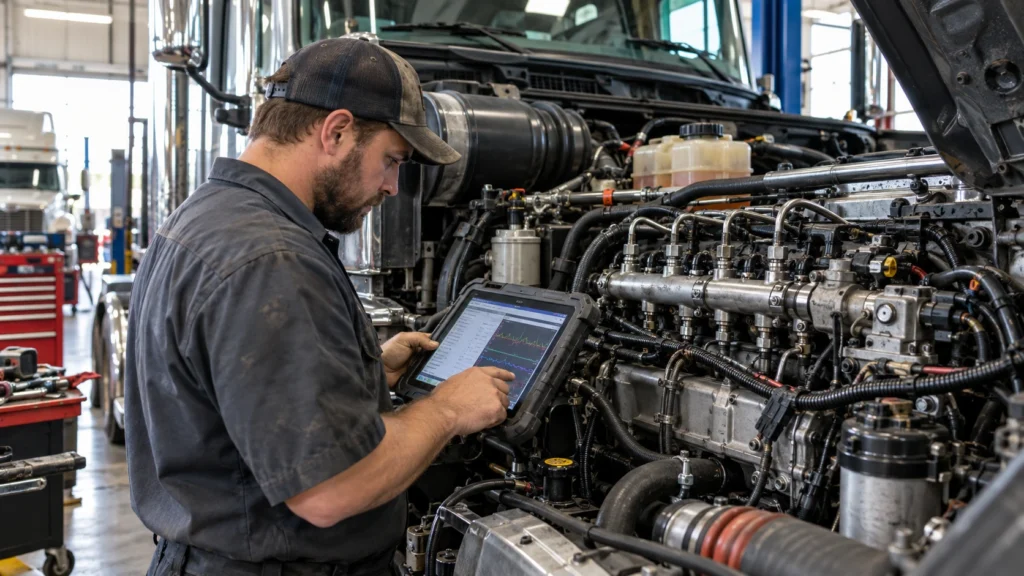
    Technician inspecting diesel fuel system connections and lines for leaks during diagnostic procedure

    Visual Inspection for Leaks and Damage

    Start by examining the regulator body and surrounding components in a well-ventilated area. Look for wet spots, fuel staining, or active dripping around the regulator housing, mounting points, and connection fittings. Fresh fuel appears shiny and reflective; older leaks leave dark stains on metal surfaces.

    Check fuel lines for cracks, hardening, swelling, or deterioration. Heat and fuel exposure degrade rubber hoses over time, and damaged lines can mimic regulator problems by creating pressure drops or air leaks. Replace questionable hoses—they’re inexpensive compared to extended diagnosis time.

    For vacuum-operated regulators, disconnect the vacuum line and check inside for fuel presence. Fuel in the vacuum line provides definitive evidence of diaphragm rupture requiring immediate replacement. This simple test takes seconds but delivers conclusive results.

    Scanning Diagnostic Trouble Codes

    Connect a diagnostic scanner before physical testing to retrieve stored codes and review live data. Modern diesel ECMs monitor fuel system performance continuously and store fault codes when parameters exceed normal compensation ranges. These digital clues guide your diagnostic approach.

    Review fuel trim values if your scanner displays them. Short-term and long-term fuel trim show how the ECM compensates for pressure variations. Significant negative trim values indicate the system is removing fuel to compensate for high pressure, while positive values suggest low pressure requiring additional fuel delivery.

    According to FMCSA inspection requirements under 49 CFR Part 396, motor carriers must systematically inspect and maintain fuel systems. Diagnostic scanning during routine maintenance helps identify developing problems before they cause roadside failures or compliance issues.

    Fuel Filter Inspection

    Examine fuel filters before condemning the regulator—restricted filters create pressure drops that mimic regulator failures. Check service records to determine when filters were last replaced. Diesel fuel filters require more frequent replacement than gasoline filters due to fuel properties and contamination concerns.

    Replace filters every 10,000 to 20,000 miles depending on fuel quality and operating conditions. Fleet vehicles fueling from bulk tanks may encounter more contamination than trucks fueling exclusively at commercial truck stops. When in doubt, install new filters as part of the diagnostic process to eliminate this variable.

    Step-by-Step Fuel Pressure Regulator Testing

    Systematic pressure testing confirms regulator function and identifies specific failure modes. These procedures apply to low-pressure fuel system regulators. High-pressure common rail testing requires specialized equipment and manufacturer-specific procedures beyond the scope of these methods.

    ⚠️ Safety Warning

    Diesel fuel systems operate under significant pressure even when the engine is off. Always relieve fuel system pressure before disconnecting any lines or installing test equipment. Work in well-ventilated areas away from ignition sources, wear safety glasses and fuel-resistant gloves, and keep fire extinguishing equipment nearby. Diesel fuel exposure causes skin irritation—wash exposed areas immediately.

    Fuel pressure gauge installed at Schrader valve test port on diesel fuel rail during diagnostic testing

    Required Tools and Equipment

    Successful fuel pressure testing requires the right equipment before you begin. A fuel pressure gauge kit with diesel-specific adapters forms the foundation—most kits include multiple fittings for different test port configurations across vehicle manufacturers. Verify your gauge range covers at least 0-100 PSI for low-pressure testing.

    Additional diagnostic tools expand testing capabilities. A vacuum pump tests vacuum-referenced mechanical regulators, while a digital multimeter verifies electrical operation in electronic systems. Vehicle service manuals provide essential specifications for comparing test results against manufacturer standards.

    Static Fuel Pressure Test Procedure

    Begin by relieving fuel system pressure to prevent dangerous fuel spray during gauge installation. Locate the fuel system fuse or relay, remove it, and attempt to start the engine until it stalls. This confirms pressure release throughout the system.

    Locate the Schrader valve test port—typically on the fuel rail or filter housing. Remove the protective cap and clean the area around the valve. Select the appropriate adapter from your gauge kit and thread it carefully onto the test port, establishing a secure seal without overtightening.

    Perform a key-on/engine-off test first. Turn the ignition to run without starting the engine. The fuel pump should activate briefly, and gauge pressure should rise rapidly to specification. Diesel low-pressure systems typically maintain 30-80 PSI depending on the application. Pressure should stabilize quickly and hold steady.

    Rapid pressure loss during this test indicates regulator leakage or pump check valve failure. A drop exceeding 5 PSI within two minutes signals component malfunction. Record the rate of pressure decay—this information helps distinguish between regulator and pump problems.

    Start the engine and observe pressure behavior at idle. Pressure should remain stable within the specified range without fluctuation. Pressure consistently below specification indicates a regulator stuck open or upstream restriction. Pressure above specification points to a stuck-closed regulator or blocked return line.

    Dynamic Pressure Testing Under Load

    Static testing establishes baseline values, but dynamic testing reveals problems that only appear under operating stress. With the engine running and gauge connected, perform sharp acceleration from idle. Pressure should remain stable or increase slightly as fuel demand rises. Significant pressure drops during acceleration indicate the regulator cannot maintain control under flow.

    Test during deceleration by releasing the throttle abruptly. The regulator should prevent excessive pressure buildup as fuel demand decreases rapidly. Pressure spikes exceeding 10 PSI above normal suggest delayed regulator response or a partially stuck valve.

    Vacuum Testing for Mechanical Regulators

    Vacuum-referenced regulators adjust fuel pressure based on intake manifold vacuum to maintain consistent injector pressure differential. Testing confirms proper vacuum response and identifies diaphragm failures.

    With the engine idling and pressure gauge connected, carefully disconnect the vacuum hose while observing the gauge. Pressure should increase approximately 8-10 PSI when vacuum is removed. Reconnect the vacuum hose—pressure should return to the previous reading.

    Connect a vacuum pump to the regulator’s vacuum port with the engine off but key on. Apply 15-20 inches of mercury vacuum while monitoring the pressure gauge. Pressure should decrease proportionally as vacuum increases. Lack of any pressure response to vacuum changes confirms regulator malfunction requiring replacement.

    Electrical Testing for Electronic Regulators

    Electronic pressure control valves require electrical diagnostics to verify proper operation. Begin with the engine off and ignition in run position. Locate the regulator electrical connector and carefully disconnect it.

    Set your multimeter to DC voltage mode and check for proper supply voltage at the connector. Most systems provide 12 volts to the regulator solenoid. Voltage significantly below 12V indicates wiring problems or ECM issues affecting the control circuit.

    Switch to resistance mode and test the solenoid coil resistance between the appropriate terminals. Typical specifications range from 5-15 ohms depending on the application. Infinite resistance indicates an open coil winding; zero resistance suggests a short circuit. Either condition requires regulator replacement.

    The HDJ Perspective

    Fuel pressure regulator diagnosis exemplifies why systematic troubleshooting matters in commercial diesel service. The temptation to simply replace suspected components wastes money and time—regulators cost $150-$350, but fuel pumps can exceed $1,000. More importantly, replacing the wrong part means the truck returns with the same complaint, damaging customer confidence and shop reputation. Investing 30 minutes in proper diagnosis prevents hours of rework and parts-swapping. For fleets running tight margins, accurate first-time repair isn’t just good service—it’s essential for maintaining the uptime that keeps operations profitable.

    Replacement and Repair Considerations

    When testing confirms regulator failure, making informed decisions about replacement parts and installation procedures protects your repair investment. Most regulators are sealed units designed for complete replacement rather than internal repair.

    Diesel fuel pressure regulator replacement procedure showing old and new components during service

    Choosing Replacement Components

    Verify replacement regulator compatibility using the vehicle identification number, engine code, and production date. Manufacturers frequently make mid-year changes affecting component specifications. Even vehicles from the same model year may require different regulators depending on build date or engine calibration.

    OEM replacement parts guarantee exact specifications and maintain warranty coverage on newer vehicles. Quality aftermarket alternatives from established manufacturers offer viable options at reduced cost—many reputable aftermarket suppliers actually produce OEM components under different branding.

    Avoid unknown budget regulators that promise significant savings. These components often fail prematurely due to inferior materials or loose tolerances. The cost difference between quality and budget parts is small compared to the expense of repeat failures, tow bills, and customer dissatisfaction.

    Installation Best Practices

    Clean all connection points thoroughly before assembly. Contamination introduced during installation causes premature failure—the same particles that damaged the original regulator will damage the replacement if not removed. Inspect threads and sealing surfaces for damage that might prevent proper sealing.

    Lubricate all O-rings with appropriate grease before installation. Never dry-fit O-ring connections—the friction during assembly can roll or nick seals, creating leak paths. Replace all old O-rings with new components regardless of their apparent condition.

    Torque fasteners to manufacturer specifications. Over-tightening threaded connections damages fittings and causes leaks. Under-tightening allows connections to loosen from vibration. When specifications aren’t available, tighten fittings until snug plus an additional quarter turn.

    Post-Installation Verification

    Perform complete fuel pressure testing after installation using the same procedures as diagnosis. Compare readings against specifications to verify the new regulator maintains proper pressure across all operating conditions.

    Inspect all connections for leaks with the engine running. Look for wet spots, fuel smell, or pressure drops that indicate seepage. Address any leaks immediately—fuel leaks create fire hazards and will only worsen with thermal cycling.

    Clear diagnostic trouble codes and perform a test drive under various conditions. Monitor for new codes and verify that symptoms are resolved. Electronic regulators may require adaptation procedures using manufacturer-specific scan tools to establish proper communication with the ECM.

    Share Your Fuel System Diagnostic Expertise

    Have you developed effective diagnostic procedures or discovered common failure patterns in specific engine platforms? Fleet technicians and shop owners benefit from shared real-world experience.

    Submit Your Expertise →

    Preventive Maintenance Strategies

    Most fuel pressure regulator failures are preventable through consistent maintenance practices. The investment in preventive care pays dividends through improved reliability, reduced emergency repairs, and extended component life. According to the American Transportation Research Institute (ATRI), truck maintenance costs average $0.202 per mile—making prevention more cost-effective than repair.

    Fuel Quality Management

    High-quality diesel fuel from reputable sources contains fewer contaminants and proper additive packages that protect fuel system components. While quality fuel costs slightly more per gallon, the prevention of fuel system damage provides substantial long-term savings. A single regulator replacement costs more than the fuel price difference accumulated over years of service.

    Use fuel conditioners according to manufacturer recommendations, especially for vehicles that sit for extended periods. These additives prevent microbial growth, improve lubricity, and help disperse water that accumulates from condensation. Vehicles sitting more than 30 days benefit from treatment before storage.

    Fuel Filter Service Intervals

    Fuel filters provide primary defense against contamination reaching precision fuel system components. Replace diesel fuel filters every 10,000-20,000 miles depending on fuel quality and operating conditions—more frequently in severe service applications or when fueling from bulk storage tanks.

    Water separator servicing requires particular attention in diesel systems. Drain water separators monthly or every 5,000 miles, whichever comes first. Preventing water from reaching the regulator protects internal seals and extends component life significantly.

    $448-$760

    Average daily cost of unscheduled downtime per commercial vehicle — Source: Platform Science fleet analysis

    Periodic Pressure Testing

    Check fuel pressure during routine service intervals—approximately every 30,000 miles or annually for fleet vehicles. This baseline testing identifies gradual pressure deviations before they cause noticeable symptoms or component damage. Recording readings in service history enables trend analysis that predicts developing problems.

    High-mileage vehicles and those used in severe service conditions benefit from more frequent testing. Monitoring pressure trends over time reveals gradual degradation that wouldn’t trigger diagnostic codes but indicates approaching failure.

    Fleet Maintenance Program Integration

    Integrate fuel system inspection into existing preventive maintenance programs. Include visual inspection for leaks, filter condition assessment, and water separator draining in PM checklists. Federal fuel system requirements under 49 CFR 393.67 establish minimum standards, but proactive maintenance exceeds these requirements to maximize uptime.

    Document fuel system observations in maintenance records. Tracking filter replacement dates, pressure readings, and any symptoms helps identify vehicles experiencing accelerated wear that may require investigation of fuel sources or operating conditions.

    Frequently Asked Questions

    What are the most common signs of a bad fuel pressure regulator in a diesel engine?

    The most distinctive symptoms include hard starting after the vehicle sits overnight, black smoke from the exhaust during acceleration, rough idle and misfires, and reduced power under load. These symptoms often appear gradually and worsen over time as regulator deterioration progresses. Extended cranking specifically indicates pressure bleedback from a leaking regulator check valve, while black smoke points to excessive fuel pressure forcing too much fuel through injectors. Diagnostic trouble codes P0087, P0088, and P0089 frequently accompany these symptoms in electronically-controlled systems.

    Can I test a diesel fuel pressure regulator without special tools?

    Basic visual inspection and vacuum line testing require no specialized equipment. Check for fuel leaks around the regulator body, examine vacuum lines for cracks or fuel presence, and look for obvious damage. However, accurate pressure measurement requires a fuel pressure gauge kit with appropriate adapters for your vehicle’s test port. For electronic regulators, a digital multimeter tests solenoid resistance and supply voltage. Complete diagnosis of common rail high-pressure systems requires manufacturer-specific diagnostic equipment capable of reading rail pressure and evaluating pressure control valve operation.

    How often should fuel pressure regulators be replaced in fleet vehicles?

    Most quality fuel pressure regulators last 80,000 to 100,000 miles under normal operating conditions with proper fuel system maintenance. However, contaminated fuel, extended idling, and severe service cycles can shorten this lifespan significantly. Rather than replacing regulators on a mileage-based schedule, monitor for symptoms and perform periodic pressure testing during routine maintenance. When pressure readings fall outside specifications or symptoms appear, replacement is warranted regardless of mileage. Proactive testing every 30,000 miles helps identify developing problems before they cause failures.

    What’s the difference between fuel pressure regulator failure and fuel pump failure?

    Both components can produce similar symptoms including hard starting, power loss, and rough running, which leads to frequent misdiagnosis. The key distinction lies in pressure behavior: a failing pump produces low pressure that drops further under load, while a stuck-open regulator produces low pressure that remains relatively stable. A stuck-closed regulator produces high pressure causing black smoke and rich running. Pressure testing while operating the vacuum line provides additional diagnostic information—pressure changes with vacuum manipulation confirm regulator function, regardless of pressure level. If pressure doesn’t respond to vacuum changes, the regulator is faulty.

    Are aftermarket diesel fuel pressure regulators reliable?

    Quality aftermarket regulators from established manufacturers provide reliable service comparable to OEM components—many aftermarket suppliers actually manufacture OEM parts under different branding. The key is selecting reputable brands with proven track records rather than unknown budget options. Verify that aftermarket parts meet OEM specifications for pressure range, flow capacity, and material compatibility with diesel fuel. Avoid regulators priced significantly below market norms, as cost savings often come from inferior materials or loose manufacturing tolerances that lead to premature failure.

    How does fuel contamination affect pressure regulator life?

    Contaminated fuel represents the leading cause of premature regulator failure. Water causes internal corrosion and supports microbial growth that produces acidic byproducts attacking seals and metal components. Particulates score precision valve seats, preventing proper sealing and causing erratic pressure regulation. Biological contamination (diesel bug) creates sludge that clogs internal passages. Prevention through quality fuel sourcing, regular filter changes, and water separator maintenance extends regulator life significantly. Vehicles fueling from bulk storage tanks or sitting for extended periods face elevated contamination risk requiring enhanced maintenance attention.

    Maintaining Fuel System Reliability

    Accurate diesel fuel pressure regulator diagnosis prevents costly misdiagnosis while maintaining the fleet uptime that keeps operations profitable. The systematic testing procedures outlined in this guide enable technicians to distinguish regulator failures from similar fuel system problems, avoiding unnecessary parts replacement and reducing diagnostic time.

    Proper maintenance practices—quality fuel, regular filter service, and periodic pressure testing—prevent most regulator failures before they occur. For fleet operations where unscheduled downtime costs $448 to $760 daily per vehicle, this preventive approach delivers measurable returns through improved reliability and reduced emergency repairs.

    Whether you’re maintaining a single owner-operator truck or managing a fleet of hundreds, understanding fuel pressure regulation fundamentals and testing procedures ensures accurate diagnosis and effective repair. Regular monitoring catches developing problems early, while systematic diagnostic procedures confirm failures before committing to replacement. This combination of prevention and precision keeps trucks earning revenue instead of waiting in the service bay.

    Help Fellow Technicians Master Fuel System Diagnostics

    Know a technician or fleet manager who could benefit from this diagnostic guide? Share it to help the industry build stronger diagnostic skills.

    Leave a Comment

    Your email address will not be published. Required fields are marked *

    Sponsored

    Emergency Breakdown?

    Find Certified Repair Shops Near You

    24/7 Mobile Service
    Verified Facilities
    Nationwide Coverage
    Find Repair Shops Now →

    Trusted by thousands of fleet operators