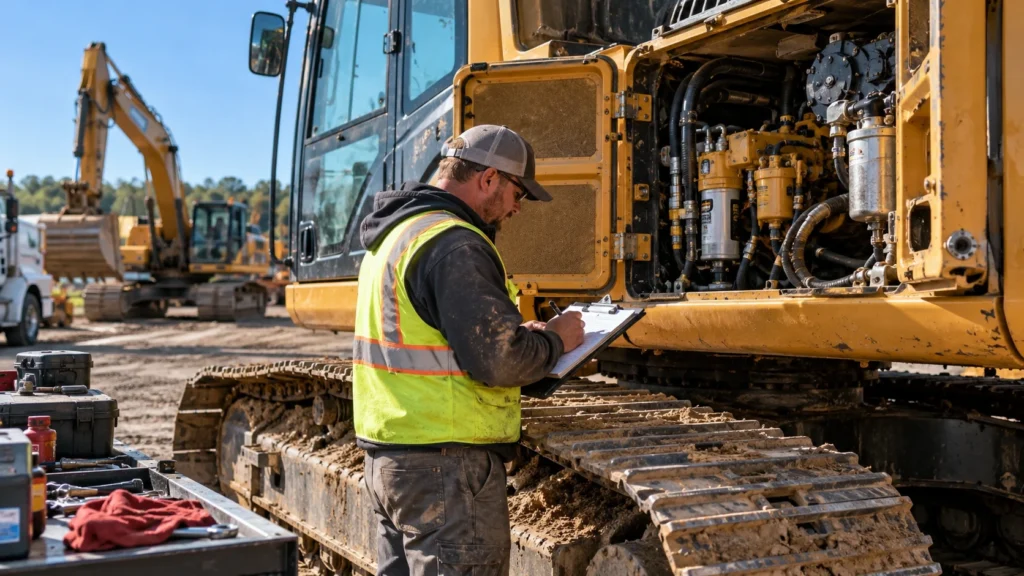
Proper s-cam brake adjustment stands as one of the most critical maintenance procedures for heavy-duty vehicles operating on American roads today. When technicians overlook or improperly perform this task, the consequences range from premature component failure to catastrophic safety incidents that can end careers and lives.
Foundation brake systems in commercial trucks and trailers depend on precise specifications to deliver consistent stopping power. The commercial vehicle brakes found in most heavy-duty applications require regular attention to maintain optimal performance while meeting Federal Motor Carrier Safety Administration regulations that every technician must understand and follow.
This comprehensive guide brings together manufacturer specifications from industry leaders including Meritor, Haldex, and BPW. The step-by-step procedures cover both manual and automatic slack adjusters while addressing the critical misconception that automatic adjusters need routine manual intervention. Technicians will discover that excessive pushrod travel typically signals deeper foundation brake issues rather than simple adjustment needs.
Last Updated: October 2025
Key Takeaways
- Critical Safety: Automatic slack adjusters should rarely need manual adjustment when functioning correctly—repeated adjustments mask foundation brake failures.
- CVSA Compliance: Maximum pushrod stroke varies by chamber type, with 20% exceeded brakes triggering mandatory out-of-service orders.
- Diagnostic Priority: Free stroke measurement (3/8″ to 3/4″ normal) reveals foundation brake condition better than applied stroke alone.
- PPE Requirements: NIOSH/MSHA-approved HEPA respirators are mandatory due to hazardous brake dust containing silica and ceramic fibers.
- Documentation: FMCSR Part 396 mandates detailed brake service records retained for one year plus current period.
Understanding S-Cam Brake System Architecture
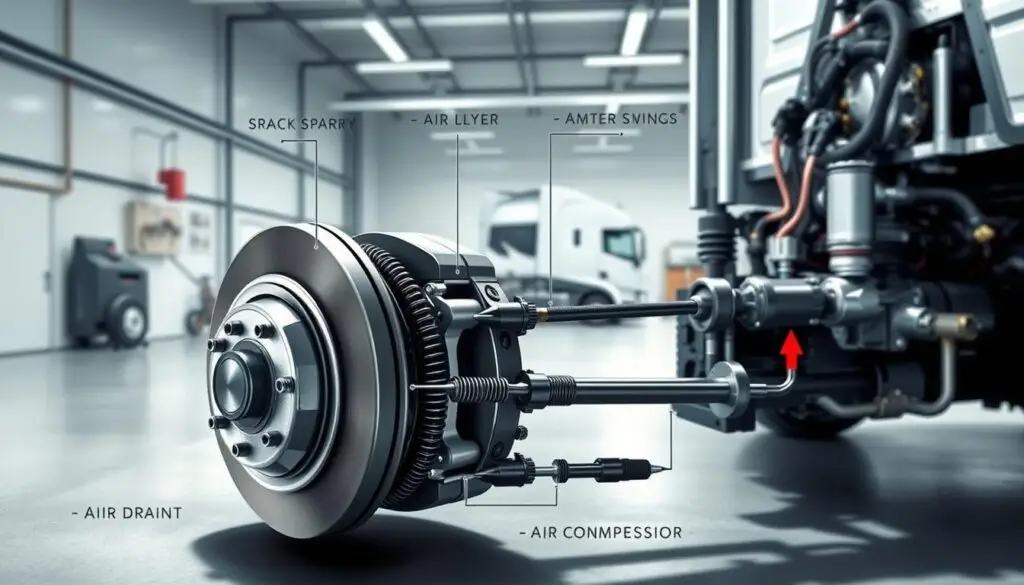
Commercial vehicles rely on s-cam brake systems to convert compressed air into mechanical stopping force. These pneumatically-actuated foundation brakes dominate the heavy-duty market due to proven reliability and straightforward serviceability across millions of service miles.
The distinctive S-shaped camshaft pushes brake shoes outward against the drum when air pressure activates the system. This cam-and-follower mechanism generates consistent performance throughout a vehicle’s operational life. According to CVSA brake safety campaign data, brake-related violations comprise the largest percentage of all out-of-service violations, with 25.2% of vehicle out-of-service violations during roadside inspections being brake-related, emphasizing the critical importance of proper brake system maintenance.
The complete s-cam brake assembly consists of interconnected components working in precise sequence. Air chambers convert compressed air pressure into linear pushrod motion, with chamber types including standard-stroke, long-stroke, and spring brake combinations. Each configuration requires specific pushrod stroke measurement procedures to verify proper operation.
Automatic vs Manual Slack Adjusters
Two primary slack adjuster designs exist in commercial applications, each requiring different maintenance approaches. Manual slack adjusters demand periodic adjustment throughout brake shoe life to maintain proper clearance. These older designs still appear on pre-1994 vehicles and some specialty applications.
Automatic slack adjusters contain self-adjusting mechanisms that compensate for lining wear without manual intervention. Since 1994, FMCSA regulation 49 CFR 393.53(b) requires automatic slack adjusters on all newly manufactured air-braked vehicles. These components should maintain proper adjustment throughout their service life when foundation brakes remain within specifications.
| Manufacturer | Arm Length Settings | Service Interval | Torque Requirement |
|---|---|---|---|
| Meritor ASA | 5″, 5.5″, 6″, 6.5″ | Annual inspection only | 13-15 ft-lbs minimum |
| Haldex ABA | 5″, 6″, 6.5″ | 50,000 miles (pre-1996) | 13 ft-lbs minimum |
| Bendix ASA-5 | 5″, 5.5″, 6″ | No-Lube design | 10-15 ft-lbs |
Critical Safety Protocols Before Brake Service
Every brake adjustment procedure begins with comprehensive safety measures that protect technicians from serious hazards. Working on commercial vehicle brakes exposes personnel to vehicle movement risks, spring brake release forces, and hazardous brake dust containing crystalline silica and ceramic fibers.
NIOSH/MSHA-approved respirators with HEPA filtration are mandatory equipment when servicing brake assemblies. While modern brake linings no longer contain asbestos, they include glass fibers, mineral wool, and silica compounds that cause respiratory diseases including silicosis with prolonged exposure. The Occupational Safety and Health Administration’s silica standard requires specific protective measures during brake service.
Proper vehicle immobilization prevents catastrophic accidents during maintenance operations. Set parking brakes on all axles not being serviced, place transmissions in appropriate gear or park position, and verify the vehicle rests on level ground capable of supporting lifting equipment. System tank pressure must exceed 100 PSI before beginning any brake testing procedures.
Spring Brake Caging Procedures
Spring brake chambers contain powerful compression springs that can cause severe injury if released improperly. Release spring brakes by either applying adequate air pressure to the spring chamber or manually caging the spring mechanism using manufacturer-specified procedures. Never attempt brake component service with spring brakes under tension.
Position jack stands at manufacturer-specified lift points with ratings exceeding the vehicle’s axle weight. Hydraulic jacks alone never provide sufficient support for working under vehicles. Place minimum two wheel chocks per wheel on opposite sides, rated for the vehicle’s gross weight and positioned against both tire surfaces.
Essential Tools and Measurement Equipment
Professional brake service requires precise measurement instruments and specialized tools that prevent component damage while ensuring federal compliance. Using correct equipment differentiates between accurate adjustments and guesswork that leads to premature wear or catastrophic brake failure.
Calibrated torque wrenches ranging from 15 to 500 ft-lbs are essential for meeting manufacturer fastener specifications. The most critical tool is a 7/16-inch combination wrench or socket, which fits the adjustment hex on most automatic slack adjuster mechanisms. According to Haldex technical specifications, adjusting automatic slack adjusters requires minimum 13 ft-lbs torque to overcome internal clutch mechanisms.
Impact wrenches must never contact automatic slack adjuster adjustment hexes. The shock loading immediately destroys internal clutch mechanisms, rendering adjusters completely inoperative and requiring expensive replacements. This common mistake costs fleets thousands in unnecessary parts and compromises vehicle safety.
Pre-Adjustment Inspection Requirements
Comprehensive brake safety inspection reveals true causes of brake performance issues before attempting any adjustments. Modern troubleshooting protocols recognize that automatic slack adjusters rarely need manual intervention when functioning correctly. Excessive pushrod travel typically indicates underlying component failures rather than simple adjustment needs.
Start inspection by examining brake drums for cracks, scoring, or out-of-round conditions exceeding 0.010 inches. Measure internal diameter against manufacturer specifications—drums exceeding maximum diameter limits require immediate replacement regardless of visual appearance.
Inspect brake shoes for proper lining thickness at the thinnest point. According to FMCSA regulation 49 CFR 393.47(d), non-steering axle brakes on air-braked commercial vehicles must not operate with brake lining thickness less than 6.4 mm (1/4 inch) measured at the shoe center. The Technology & Maintenance Council’s Recommended Practices provide comprehensive guidelines for systematic inspection of all foundation brake components before attempting adjustments.
Stay Ahead of Industry Trends
Get expert insights, equipment reviews, and operational strategies delivered weekly.
Pushrod Stroke Measurement Procedures
Accurate pushrod stroke measurement establishes baseline brake performance data for compliance verification. With brakes fully released, measure from the brake chamber face to the clevis pin center using a steel ruler or specialized gauge. Record this reference measurement for comparison.
Apply full service brakes at 90-100 PSI reservoir pressure and re-measure to the same clevis pin center point. Calculate applied stroke by subtracting the released measurement from the applied measurement. Compare results against CVSA out-of-service criteria specific to your chamber type.
| Chamber Type | Standard Stroke Limit | Long-Stroke Limit | Out-of-Service Threshold |
|---|---|---|---|
| Type 20 | 1-3/4″ | 2″ | +1/4″ over limit |
| Type 24 | 1-3/4″ | 2-1/2″ | +1/4″ over limit |
| Type 30 | 2″ | 2-1/2″ | +1/4″ over limit |
Manual Brake Adjustment Step-by-Step Procedure
The manual brake adjustment process requires precise technique and attention to detail for optimal results. This procedure applies to traditional manual slack adjusters during routine service and automatic slack adjusters requiring emergency roadside adjustment. However, manual adjustment of automatic slack adjusters should never constitute permanent repair.
Begin by securing the vehicle on level ground with adequate working clearance around all wheels. Block wheels securely on axles not being serviced and release spring brakes either by applying air or manually caging the mechanism. Confirm all air pressure is exhausted from service brake systems before proceeding.
Most automatic slack adjusters feature a 7/16″ hexagonal adjustment nut located opposite the camshaft connection. Rotate this adjustment hex counterclockwise until brake shoes fully retract, creating maximum clearance between linings and drum. This establishes your starting point for proper adjustment.
Setting Proper Brake Shoe Clearance
Slowly rotate the brake drum while gradually tightening the adjustment hex clockwise. Continue until linings make light contact with the drum and drag is clearly felt. Stop immediately at initial drag without over-tightening, which can cause permanent brake shoe distortion.
Execute the critical backing-off procedure by rotating the adjustment hex counterclockwise exactly 1/2 turn from the point of initial drag. This specific measurement provides optimal brake shoe clearance for most s-cam brake systems. Some manual adjusters specify different backing-off amounts—always consult manufacturer specifications.
Verify the brake drum now rotates freely with no perceptible drag while maintaining minimal clearance. Complete adjustment with validation procedures including full brake application at 90-100 PSI while measuring applied stroke. Free stroke should measure between 3/8″ and 3/4″ for properly adjusted brakes.
Automatic Slack Adjuster Critical Limitations
Understanding automatic slack adjuster operation prevents common maintenance mistakes that compromise vehicle safety. These components are designed to self-adjust continuously throughout brake shoe life, maintaining proper clearance without manual intervention under normal conditions.
Major manufacturers explicitly prohibit routine manual adjustment of automatic slack adjusters during normal service intervals. According to Meritor’s director of brake engineering, “The only times that an automatic brake adjuster needs to be adjusted is during a foundation brake repair or initial setup. Manually adjusting a brake adjuster causes premature wear on internal components and leads to the adjuster becoming inoperable.” The Meritor Maintenance Manual 4 emphasizes that excessive pushrod travel indicates component failure requiring inspection, not adjustment needs.
Manual adjustment should only occur in genuine emergency situations to move vehicles off-road to repair facilities. Any vehicle requiring emergency adjustment must receive comprehensive foundation brake inspection before returning to service. This approach aligns with FMCSA requirements and industry best practices.
Replacement Decision Criteria
If an automatic slack adjuster repeatedly requires manual adjustment to achieve acceptable pushrod stroke, the component has failed internally and requires complete replacement. Continued adjustment only masks mechanical failure while the vehicle remains unsafe for operation.
Several failure modes occur frequently across different applications. Control arm bushing wear creates excessive play preventing adjustment sensing mechanisms from functioning properly. Internal clutch failures often result from previous impact wrench damage or inadequate lubrication on serviceable models. Installing incorrect adjuster specifications creates problems that trigger out-of-service violations.
Advanced Brake Troubleshooting Diagnostics
Effective brake troubleshooting requires identifying root causes rather than simply adjusting brakes to mask symptoms. Start diagnostic processes with comprehensive pushrod stroke and free stroke evaluation to determine actual problem sources.
Free stroke represents slack adjuster arm movement before shoes contact drums, with normal range between 3/8″ and 3/4″. If free stroke falls within normal parameters but applied stroke exceeds limits, foundation brake problems exist including worn drums, damaged camshaft bushings, or brake shoe failures.
When free stroke exceeds 3/4″, additional problems surface including binding camshafts requiring removal and lubrication, weak air chamber return springs, or air systems not exhausting completely. Free stroke below 3/8″ indicates over-adjustment causing brake drag and premature component failure.
Common Foundation Brake Failures
Brake drums exceeding maximum diameter specifications or showing out-of-round conditions beyond 0.010″ require immediate replacement. Camshaft bushings with radial clearance exceeding 0.030″ allow excessive movement preventing proper brake application. These issues cannot be corrected through adjustment alone.
Contaminated brake linings from oil or grease create severe reduction in braking effectiveness. Common contamination sources include leaking wheel seals, overfilled bearing assemblies, and excessive camshaft lubrication. Always identify and repair contamination sources before replacing components.
Share Your Expertise
Join Heavy Duty Journal as a guest author and reach thousands of industry decision-makers.
FMCSA Compliance and Documentation Standards
Federal regulations governing commercial vehicle brakes establish clear limits technicians must follow during every adjustment. FMCSR Part 393.47 defines maximum allowable brake adjustment limits, specifying that pushrod stroke must not exceed established thresholds when measured at 90-100 PSI application pressure.
When 20% or more of a vehicle’s brakes exceed adjustment limits, the entire unit receives mandatory out-of-service designation. The Electronic Code of Federal Regulations Part 393 Subpart C provides complete regulatory requirements for brake system compliance.
FMCSR Part 396 mandates systematic maintenance records for all brake service activities. Required documentation includes service dates, technician identification, specific pushrod stroke measurements for each wheel position, components replaced, and confirmation of regulatory compliance. These records must be retained for one year plus the current period after vehicles leave carrier control.
Maintaining Peak Brake System Performance
Proper s-cam brake adjustment represents fundamental competency every commercial vehicle technician must master. Modern automatic slack adjusters eliminate routine manual adjustment needs—when repeated adjustments become necessary, this signals deeper foundation brake problems requiring comprehensive diagnosis.
Effective brake maintenance extends beyond adjustment procedures to include systematic component evaluation, timely replacement schedules, proper lubrication protocols, and detailed documentation. Professional technicians maintain expertise through ongoing manufacturer training and regulatory updates.
Following these authoritative procedures ensures optimal brake performance, maximizes component longevity, prevents catastrophic failures, and maintains full FMCSA compliance. The responsibility technicians carry directly impacts highway safety for millions of motorists sharing roads with commercial vehicles.
Professional excellence in brake system maintenance protects lives while upholding the highest standards in commercial vehicle service. Every properly adjusted brake system represents a commitment to safety that defines the heavy-duty maintenance profession.
Share This With Your Heavy-Duty Network
Help fleet managers and diesel technicians discover valuable insights by sharing this article.
Frequently Asked Questions
How often should automatic slack adjusters require manual adjustment?
Automatic slack adjusters should never require manual adjustment during routine maintenance when functioning correctly. These self-adjusting mechanisms maintain proper brake shoe clearance throughout lining life. If repeated manual adjustment becomes necessary, the adjuster has failed internally and requires immediate replacement. Manual adjustment masks foundation brake problems including worn drums, damaged bushings, or defective brake shoes, creating dangerous conditions that worsen over time.
What causes brakes to repeatedly go out of adjustment?
Repeated adjustment issues indicate foundation brake failures rather than simple adjustment needs. Common causes include brake drums exceeding maximum diameter specifications, worn camshaft bushings with excessive radial clearance beyond 0.030″, contaminated brake linings from oil or grease, broken return springs failing to retract shoes properly, and failed automatic slack adjuster mechanisms. Comprehensive foundation brake inspection measuring drum diameter, checking bushing clearance, and evaluating all components is essential before attempting further adjustments.
Can impact wrenches be used on automatic slack adjusters?
Never use impact wrenches on automatic slack adjuster adjustment hexes. Impact tools deliver shock loading that immediately destroys internal clutch mechanisms, rendering adjusters completely inoperative. The friction clutch enabling automatic adjustment requires minimum 13 ft-lbs torque applied smoothly with hand tools. Using impact wrenches necessitates complete slack adjuster replacement, costing hundreds of dollars per wheel position.
What’s the difference between applied stroke and free stroke?
Applied stroke measures total pushrod movement from fully released to fully applied at 90-100 PSI, determining CVSA compliance. Free stroke measures slack adjuster movement before brake shoes contact drums, revealing foundation brake condition. Normal free stroke ranges 3/8″ to 3/4″. Excessive applied stroke with normal free stroke indicates significant foundation damage requiring component replacement, while abnormal free stroke identifies specific mechanical problems.
When should brake drums be replaced?
Replace brake drums when diameter exceeds manufacturer maximum specification (typically 0.120″ over nominal), cracks appear in friction surfaces or mounting flanges, out-of-round conditions exceed 0.010″, or severe heat checking and hard spots develop from overheating. Measure diameter at multiple points using drum micrometers. Always replace both drums on an axle simultaneously to maintain balanced braking performance.
What documentation is required for brake adjustments?
FMCSR Part 396 mandates comprehensive brake service documentation including service date and location, technician identification, specific pushrod stroke measurements for each wheel position before and after adjustment, components replaced with part numbers, abnormal findings discovered during inspection, and confirmation of regulatory compliance. Maintain records for one year plus current period after vehicles leave carrier control. This documentation provides legal proof during FMCSA audits and post-accident investigations.