By Michael Nielsen, Editor & Publisher | 15+ Years in Diesel Repair
Last Updated: January 2026
📖 Estimated reading time: 29 minutes
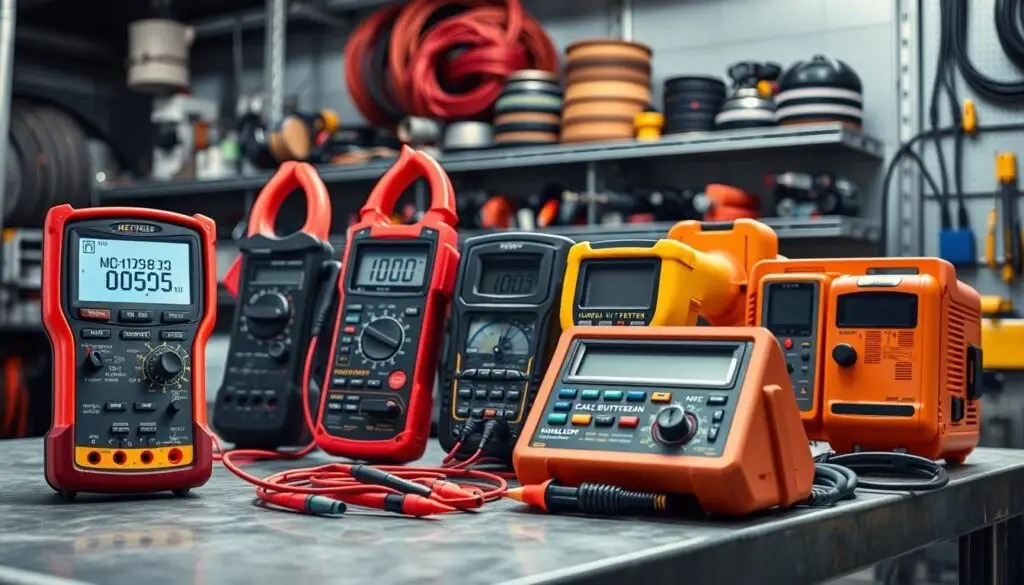
Digital multimeters serve as the cornerstone of heavy-duty electrical diagnostics, enabling fleet technicians and maintenance professionals to measure voltage, current, and resistance with the precision industrial systems demand. Unlike residential work where errors mean inconvenience, mistakes in industrial electrical testing can destroy expensive equipment, halt production lines, or cause life-threatening injuries. The voltages are higher, the current is greater, and the consequences of improper procedures are severe.
Heavy-duty electrical systems present challenges that standard automotive or residential testing can’t address. Three-phase power distribution, 480V circuits, motor control centers, and equipment drawing hundreds of amperes require specialized knowledge, properly rated test equipment, and strict adherence to safety protocols. This guide covers everything fleet maintenance teams need to know about multimeter testing heavy-duty systems—from selecting the right CAT-rated meter to advanced diagnostic procedures for variable frequency drives and industrial power supplies.
Key Takeaways
- CAT III or CAT IV rated multimeters are mandatory for industrial testing—consumer-grade meters lack transient voltage protection that prevents explosive failures.
- True RMS measurement capability is essential because variable frequency drives and non-linear loads create harmonic distortion that causes averaging meters to produce errors exceeding 40%.
- Arc flash protection must match the calculated incident energy at each work location—NFPA 70E compliance isn’t optional in industrial environments.
- Voltage drop testing under load identifies high-resistance connections before they cause thermal failures, equipment damage, or fires.
- Clamp meters provide safe, non-invasive current measurement for circuits exceeding standard multimeter amperage limits.
- Three-phase balance must be verified for voltage and current—imbalances exceeding 2% indicate distribution problems requiring correction.
Understanding Heavy-Duty Electrical Systems and Testing Requirements
Heavy-duty electrical equipment operates where power levels, environmental stresses, and operational demands far exceed typical electrical systems. Manufacturing facilities, fleet maintenance shops, and heavy construction equipment rely on robust electrical infrastructure delivering consistent power under demanding conditions. Before conducting any heavy equipment electrical testing, technicians must understand the fundamental differences distinguishing these systems from residential or light commercial installations.
The complexity of industrial power distribution requires specialized knowledge and diagnostic approaches. These systems integrate multiple voltage levels, sophisticated control circuits, and protection devices working together to maintain safe, reliable operation. Understanding these characteristics determines whether your diagnostic approach succeeds or fails.
Characteristics of Heavy-Duty Electrical Equipment
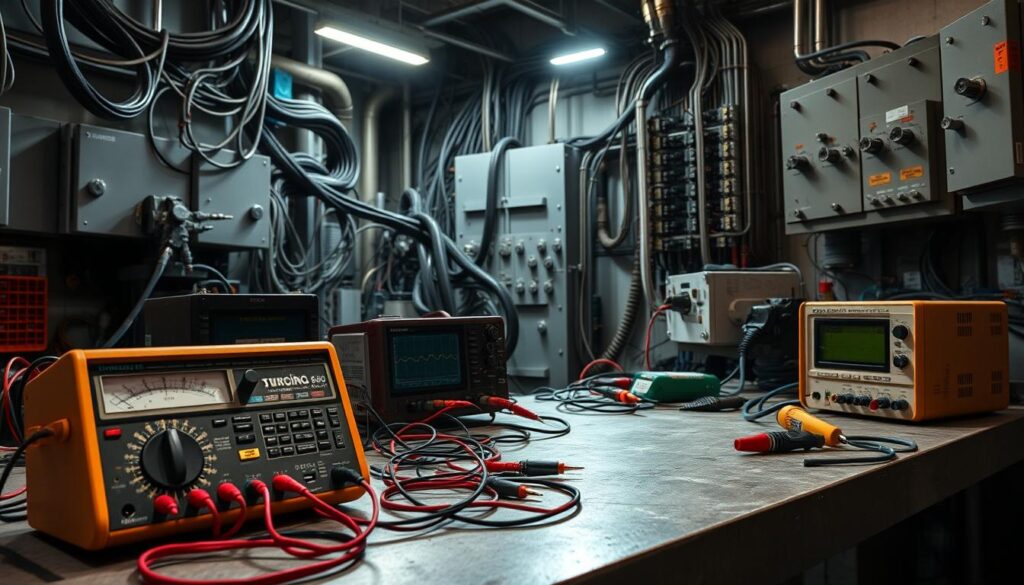
Industrial electrical systems feature construction standards prioritizing durability and continuous operation. Unlike residential equipment designed for intermittent use, heavy-duty components must withstand constant load cycles spanning thousands of hours annually. Motors, transformers, and distribution equipment in these environments operate continuously without the rest periods typical of household appliances.
Environmental protection ratings distinguish industrial equipment from standard alternatives. Most heavy-duty electrical components carry IP (Ingress Protection) ratings specifying resistance to dust, moisture, and physical impact. Manufacturing equipment commonly requires IP54 or higher ratings to function reliably in harsh conditions where dust, chemicals, or temperature extremes are present.
The physical construction of industrial components reflects their demanding applications. Heavy-gauge conductors, reinforced enclosures, and oversized cooling systems handle the thermal loads generated during high-power operation. These design elements create unique testing challenges requiring appropriate measurement techniques and properly rated equipment.
Voltage and Current Ranges in Industrial Applications
Industrial facilities typically operate multi-phase power systems delivering significantly higher voltages than residential installations. The most common configuration in manufacturing environments is the three-phase system, which provides balanced power distribution and enables efficient motor operation. Understanding these voltage levels is critical for proper industrial circuit diagnostics and selecting appropriate test equipment.
Standard industrial voltage configurations vary based on facility requirements and regional electrical codes. The following table outlines common voltage systems encountered during high-voltage testing procedures:
| System Type | Voltage Configuration | Common Applications | Typical Current Range |
|---|---|---|---|
| Low Voltage Three-Phase | 208V/120V | Small machinery, lighting, controls | 15A to 200A |
| Standard Industrial | 480V/277V | Motors, HVAC, production equipment | 100A to 800A |
| High Power Industrial | 600V to 4160V | Large motors, kilns, heavy machinery | 400A to 3000A+ |
| Utility Distribution | 13.8kV and above | Primary distribution, substations | Variable, often 100A+ |
Current demands in industrial settings dwarf those of residential systems. A single industrial motor can draw hundreds of amperes during operation, while main distribution feeders may carry thousands of amperes. These high-amperage measurement requirements necessitate specialized testing equipment with appropriate current handling capabilities.
Control circuits within industrial systems operate at lower voltages, typically 24V DC or 120V AC. However, these circuits connect to high-power equipment, creating situations where low-voltage measurements must be conducted in proximity to dangerous high-voltage components. This proximity demands strict safety protocols during testing procedures.
Why Standard Multimeters Fall Short
Consumer-grade multimeters designed for electronics or automotive diagnostics lack critical features necessary for safe industrial testing. The primary limitation involves safety certification ratings—specifically CAT (Category) ratings indicating a meter’s ability to withstand transient voltage spikes common in industrial environments. Standard multimeters typically carry CAT II or CAT III ratings insufficient for heavy equipment electrical testing near service entrances or distribution equipment.
Voltage measurement capabilities present another significant limitation. Most basic multimeters measure up to 600V AC or 1000V DC, which provides minimal safety margin when testing 480V industrial systems. Higher voltage ranges and overvoltage protection become essential when conducting diagnostics on distribution equipment or motor feeders.
True RMS measurement capability separates industrial-grade instruments from basic models. Industrial power systems frequently contain harmonic distortion from variable frequency drives, switching power supplies, and non-linear loads. Standard averaging multimeters provide inaccurate readings when measuring these distorted waveforms, potentially leading to misdiagnosis of electrical problems that waste time and money.
Essential Safety Protocols for High-Power Circuit Testing
When diagnostic work involves circuits carrying hundreds of amperes, your personal safety framework becomes your most essential tool. High-power electrical systems present hazards that can cause catastrophic injuries in milliseconds. Before any multimeter testing begins, comprehensive electrical safety protocols must be established and followed without exception.
The National Fire Protection Association (NFPA) 70E standard serves as the primary guideline for electrical safety in workplace environments, addressing everything from protective equipment requirements to hazard assessment methodologies. Compliance with NFPA 70E requirements isn’t merely recommended—it represents the minimum acceptable safety threshold for industrial electrical diagnostics.
⚠️ Safety Warning
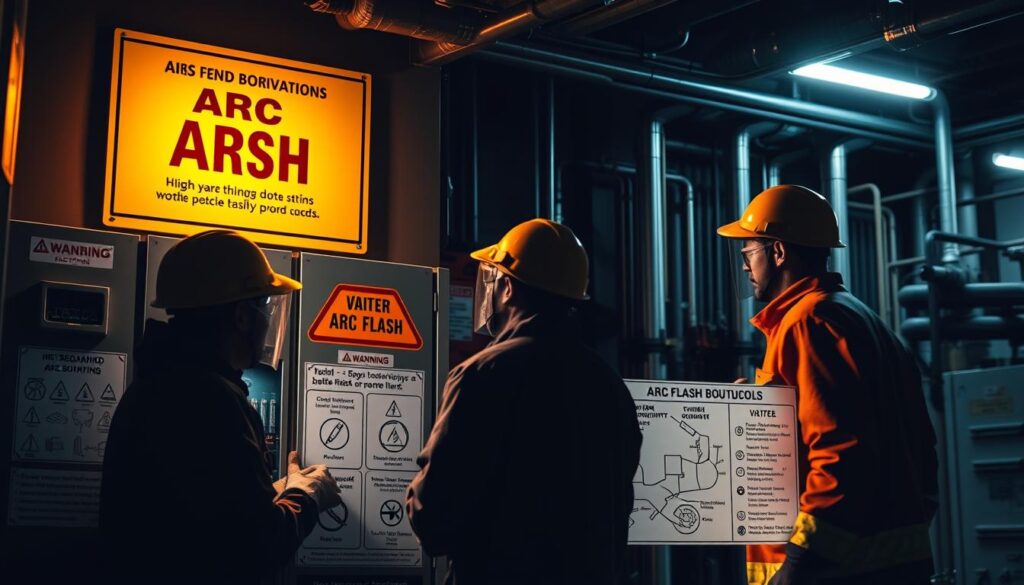
Arc flash incidents reach temperatures of 35,000°F in fractions of a second—four times hotter than the sun’s surface. These events vaporize metal components and cause severe burns several feet from the source. Never approach energized industrial equipment without proper arc-rated PPE matching the calculated incident energy level.
Personal Protective Equipment Requirements
Personal protective equipment forms the first line of defense against electrical hazards during testing procedures. PPE selection depends on the calculated incident energy and potential exposure levels at specific equipment locations. Every technician must wear PPE rated for the maximum anticipated hazard before approaching energized conductors.
Arc-Rated Clothing and Face Protection
Arc-rated clothing provides critical protection from thermal hazards associated with arc flash safety incidents. These garments carry an Arc Thermal Performance Value (ATPV) measured in calories per square centimeter (cal/cm²), indicating the maximum incident energy the fabric can withstand before a second-degree burn occurs.
Selection begins with hazard assessment results. For exposures between 4-8 cal/cm², minimum PPE Category 2 is required, including arc-rated long-sleeve shirts and pants. Higher exposure levels demand Category 3 or 4 protection incorporating arc-rated coveralls, jackets, and full flash suits. Face protection must include an arc-rated face shield with wrap-around coverage, and safety glasses with side shields serve as secondary protection beneath the face shield.
Insulated Gloves and Footwear Standards
Rubber insulating gloves represent critical protection against electrical shock during testing procedures. ASTM D120 classifies these gloves into six categories from Class 00 through Class 4, with each class rated for specific maximum use voltages. Class 00 gloves protect up to 500 volts AC, while Class 4 gloves provide protection up to 36,000 volts AC.
For typical heavy-duty equipment operating at 480 volts three-phase, Class 0 gloves rated to 1,000 volts provide appropriate protection. Leather protector gloves must always cover rubber insulating gloves to prevent punctures and mechanical damage. Glove inspection before each use is mandatory—check for holes, tears, embedded foreign objects, and ozone deterioration. The air inflation test identifies integrity compromises that visual inspection might miss.
Lockout-Tagout Procedures
Lockout-tagout procedures ensure equipment remains de-energized during resistance and continuity testing, preventing accidental energization that could electrocute technicians making low-voltage measurements. OSHA mandates lockout-tagout compliance under 29 CFR 1910.147, and violations carry significant penalties.
Effective procedures follow a systematic approach: identify all energy sources feeding the equipment including primary power, backup systems, and stored energy in capacitors. Notify all affected personnel that equipment will be shut down, then shut down using normal stopping procedures before isolating from energy sources. Apply lockout devices to energy-isolating mechanisms such as circuit breakers and disconnect switches—each technician working on the equipment must apply their own personal lock and tag.
| Lockout-Tagout Step | Action Required | Verification Method |
|---|---|---|
| Preparation | Identify all energy sources and isolation points | Review equipment drawings and disconnect locations |
| Notification | Inform affected personnel of shutdown | Document notifications and obtain acknowledgments |
| Shutdown | De-energize equipment using normal procedures | Confirm equipment has stopped operating |
| Isolation | Open and lock all energy-isolating devices | Apply individual locks and tags to each device |
| Verification | Test for zero energy at all potential points | Multimeter voltage testing and operation attempt |
Arc Flash Hazard Assessment
Arc flash hazard assessment calculates the potential incident energy at specific working distances from electrical equipment, determining appropriate PPE category and establishing safe approach boundaries. IEEE 1584 provides standardized calculation methods for incident energy and arc flash boundary determination.
Incident energy calculations consider system voltage, available fault current, clearing time of protective devices, and working distance. Equipment with incident energy exceeding 1.2 cal/cm² requires arc-rated PPE for any interaction. Arc flash labels affixed to electrical equipment provide critical information at the point of work—always review equipment labels before beginning any testing procedure.
Safe Working Distance Guidelines
Approach boundaries define safe working distances from exposed energized conductors based on voltage levels and qualified worker status. NFPA 70E establishes three primary boundaries: limited approach, restricted approach, and prohibited approach. Each corresponds to specific voltage levels and required qualifications for entry.
For systems between 301-750 volts, the limited approach boundary extends 3 feet 6 inches from the energized conductor. The restricted approach boundary—typically 12 inches for 480-volt systems—requires specialized training and PPE before entry. During live circuit testing, always position yourself to the side of equipment rather than directly in front of potential arc flash sources to reduce exposure if an incident occurs.
Never work alone when testing energized high-power circuits. A second qualified person must be present, positioned outside the arc flash boundary, ready to provide emergency assistance. This person must be trained in CPR and equipped to shut down power if an incident occurs.
Selecting and Preparing Your Multimeter for Heavy-Duty Testing
Proper equipment selection and thorough preparation form the foundation of accurate heavy-duty electrical diagnostics. Choosing the wrong multimeter or failing to inspect it before use leads to inaccurate readings, equipment damage, or serious injury. Professional technicians must understand both safety ratings and technical capabilities when selecting instruments for industrial electrical diagnostics.

CAT Rating Requirements for Industrial Environments
Safety ratings determine whether a multimeter can withstand transient voltage spikes common in industrial settings. The IEC 61010 international safety standard establishes these categories, and using an improperly rated meter puts technicians at serious risk. CAT rating multimeters are designed to handle different electrical environments based on their proximity to the power source.
Understanding CAT III and CAT IV Ratings
CAT III ratings apply to fixed installations within buildings, including distribution panels, motor control centers, and branch circuits. These environments experience transient voltages up to 6,000 volts. CAT III meters provide adequate protection for most industrial facility work, from testing three-phase distribution panels to diagnosing motor circuits.
CAT IV ratings are required for utility-level connections and service entrance equipment, covering outdoor overhead lines, underground service conductors, and the connection point between utility and building electrical systems. CAT IV environments can generate transient voltages exceeding 8,000 volts. Never use a lower-rated meter in a higher-category environment—a CAT III meter used on CAT IV circuits offers insufficient protection and may explode during a transient event.
Quick Reference
- Standard current input: 200mA or 400mA for control circuit testing
- High-current input: 10A or 20A for motor circuits and power distribution
- Above 20A: Use clamp meter attachments for safe, non-invasive measurement
- 600V vs 1000V meters: 1000V provides additional safety margin for 480V systems
True RMS vs. Averaging Multimeters
Modern industrial facilities generate complex, distorted waveforms that standard meters cannot accurately measure. Variable frequency drives, switching power supplies, and electronic motor controls create harmonics deviating significantly from pure sine waves. Understanding the difference between measurement technologies is essential for accurate diagnostics.
Averaging multimeters assume perfectly sinusoidal waveforms when calculating voltage and current values, multiplying the average reading by 1.11 to approximate RMS values. This calculation produces accurate results only with pure sine waves—increasingly rare in industrial environments.
A true RMS multimeter calculates the actual heating effect of electrical current by measuring instantaneous values throughout the waveform cycle. This method provides accurate readings regardless of waveform distortion. The difference between averaging and true RMS readings can exceed 40% in circuits with significant harmonic content—a difference that leads to expensive misdiagnosis.
Pre-Testing Equipment Inspection
Every heavy-duty multimeter testing session must begin with systematic equipment inspection. This critical safety step takes less than five minutes but prevents equipment failure and protects technicians from hazardous situations.
Inspect the entire length of each test lead, paying special attention to areas near connectors where flexing causes insulation breakdown. Look for cracks or cuts exposing internal conductors, discoloration indicating heat damage, stiff or brittle insulation, and damaged connector boots. Replace test leads immediately upon discovering any damage—never attempt to repair with electrical tape.
Verify fuse integrity by attempting a continuity check between appropriate terminals. If the meter fails to indicate continuity on its current ranges, suspect a blown fuse. Replace fuses only with exact manufacturer-specified types rated for the meter’s CAT rating—using incorrect fuses compromises safety protection.
Multimeter Testing Heavy-Duty Voltage Systems
Heavy-duty voltage testing demands precision, proper procedures, and thorough understanding of how industrial electrical systems operate under load. Unlike residential applications where voltages remain relatively constant, industrial environments present complex power distribution networks with multiple phases, high current demands, and voltage levels reaching hundreds or thousands of volts.
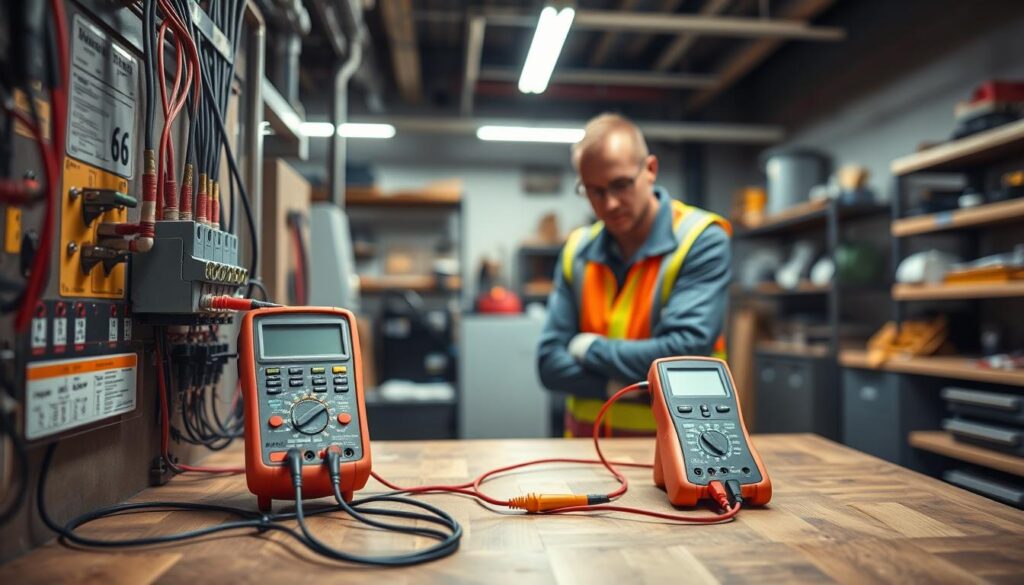
The fundamental principle of voltage measurement involves connecting your multimeter in parallel to the circuit while it remains energized and operational. This approach allows the circuit to function normally while you sample voltage at specific connection points. The meter displays the potential difference between wherever the two probes contact the circuit, regardless of whether those points are ground or powered conductors.
AC Voltage Testing Procedures
AC voltage measurements form the backbone of industrial circuit diagnostics in facilities powered by alternating current. Set your multimeter to the AC voltage function and select a range appropriate for expected voltage level. Most industrial applications operate at 208V, 240V, 277V, 480V, or 600V—choose a range providing adequate safety margin above nominal voltage.
Industrial voltage tolerances typically allow ±10% deviation from nominal values. A 480V system should measure between 432V and 528V under normal conditions. Readings outside this range indicate problems with utility supply, transformer tap settings, or excessive voltage drop in distribution conductors.
Three-phase system testing requires measuring all voltage relationships to fully assess system condition. A complete diagnostic involves six distinct measurements: three line-to-line voltages and three line-to-ground voltages. In a wye-configured system, line-to-line voltage equals line-to-ground voltage multiplied by 1.732. For example, a 277V line-to-ground measurement should correspond to a 480V line-to-line reading.
Document all six voltage measurements systematically: Phase A to Phase B, Phase B to Phase C, Phase C to Phase A (line-to-line), plus Phase A to Ground, Phase B to Ground, and Phase C to Ground (line-to-ground). Voltage imbalance exceeding 2% between phases indicates distribution problems, unbalanced loads, or failing components.
DC Voltage Testing in Heavy Equipment
Heavy equipment electrical testing extends beyond AC power systems to include substantial DC voltage networks. Industrial facilities rely on DC systems for control circuits, backup power, and specialized equipment operation, ranging from 12V automotive-style circuits to 125V utility-grade control power installations.
DC voltage testing follows similar parallel measurement principles as AC testing, but polarity matters significantly—reversing test leads produces negative readings. Always verify proper polarity when connecting to DC systems to avoid confusion and potential equipment damage.
Battery Bank Diagnostics
Battery banks provide critical backup power and starting capability in heavy equipment and industrial facilities. Testing individual cells within series-connected battery banks identifies weak cells before they compromise the entire system. Each cell in a lead-acid battery should measure approximately 2.1V when fully charged.
A weak cell typically measures 0.2V to 0.5V lower than healthy cells. This voltage difference under load indicates reduced capacity that will worsen over time. Charging system verification requires measuring voltage while the charger operates under load—proper charging voltage for lead-acid batteries ranges from 2.25V to 2.35V per cell, depending on battery type and temperature.
Interpreting Voltage Drop Across Connections
Voltage drop testing provides the most valuable diagnostic information for identifying resistance problems in heavy-duty electrical systems. Excessive voltage drop across connections, conductors, or components indicates unwanted resistance that wastes energy, generates heat, and causes equipment malfunction. This testing must be performed while circuits operate under normal load conditions.
The procedure involves placing multimeter probes on either side of the connection or component being tested. With current flowing through the circuit, the meter displays voltage lost across that specific point. Minimal voltage drop indicates good electrical connection, while significant voltage drop reveals problems requiring correction.
Acceptable Voltage Drop Thresholds
- Branch circuits: Maximum 3% voltage drop from panel to load
- Feeder circuits: Maximum 2% voltage drop from service to panel
- Total system: Maximum 5% combined voltage drop from service entrance to final load
- Individual connections: Typically less than 0.1V drop across terminals and contactors
Common locations requiring voltage drop testing include terminal blocks, disconnect switches, contactor connections, motor terminals, and conductor splices. Test these points during equipment operation under typical load conditions—no-load voltage drop measurements provide minimal diagnostic value because resistance problems only manifest when current flows.
Current Measurement Techniques for High-Amperage Circuits
Industrial circuit diagnostics depend heavily on accurate current measurements that traditional in-line methods cannot safely provide. Current testing requires connecting your meter in series with the circuit, physically interrupting the circuit to insert the meter so current flows through it. This approach becomes impractical and dangerous in high-amperage measurement scenarios common throughout heavy-duty electrical systems.
Most multimeters include a fuse protecting the amperage circuit, typically rated for 200mA or 10A maximum. Attempting to measure current beyond the fuse rating blows the fuse instantly, or worse, creates a dangerous arc flash condition. For measurements exceeding these limits, specialized techniques become essential.
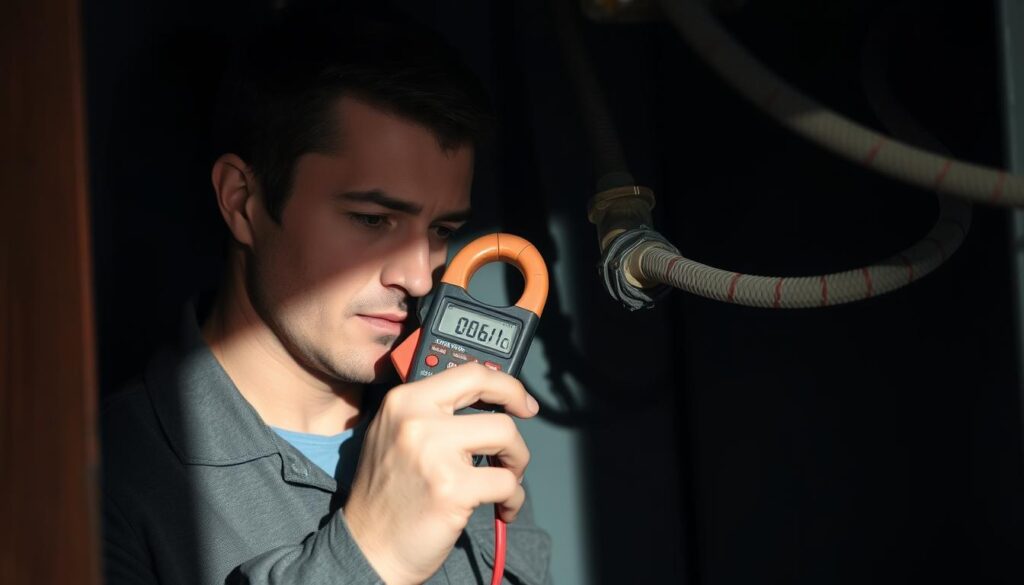
Non-Invasive Testing with Clamp-On Current Probes
Clamp meter testing eliminates the need to break circuits by measuring current through magnetic induction principles. The clamp meter detects the magnetic field surrounding a current-carrying conductor and calculates current from that field strength. This non-invasive approach provides the safest method for high-amperage measurement in operational circuits.
Proper clamping technique ensures accurate readings. The conductor must be centered within the clamp jaw, with only one conductor passing through at a time. Multiple conductors within the jaw will cancel each other’s magnetic fields, resulting in false zero readings or severely inaccurate measurements. Ensure the clamp jaw closes completely with no air gaps, position the conductor perpendicular to the jaw opening, and keep the clamp away from other current-carrying conductors.
Capturing Startup Surge and Maximum Load Data
Heavy-duty loads draw several times their normal operating current during startup. Motors commonly draw six to eight times their running current during startup, creating brief but intense current surges. Standard multimeter readings display average values and may completely miss these peak events that stress conductors and protection devices.
Peak-hold functions capture maximum current values occurring during measurement periods, proving essential for diagnosing nuisance breaker trips, evaluating conductor sizing, and verifying protection devices can handle startup conditions. Position the clamp meter before energizing equipment to capture the complete startup surge—many meters require manual activation of peak-hold mode before the measurement event occurs.
Balancing Loads Across Multiple Phases
Three-phase system testing reveals load distribution problems causing equipment failure and energy waste. Each phase in a balanced three-phase system should carry approximately equal current. Significant imbalances create overheating in motors, transformers, and distribution equipment while reducing overall system efficiency.
Calculate percentage imbalance by finding the average of all three phase currents, determining the maximum deviation from average, then dividing by average and multiplying by 100. According to research from the American Transportation Research Institute, electrical system inefficiencies from imbalanced loads contribute measurably to fleet maintenance costs. Imbalances exceeding 10% demand immediate investigation and correction, while values between 5% and 10% indicate developing problems requiring scheduled attention.
The HDJ Perspective
In fleet maintenance environments, we’ve seen shops struggle with intermittent electrical failures for weeks before discovering a 15% current imbalance slowly cooking motor windings. The diagnostic investment in thorough three-phase testing pays for itself many times over when you catch these problems early. Modern clamp meters with data logging capabilities have become invaluable for capturing the intermittent issues that disappear whenever a technician is watching—set them up, walk away, and let the equipment tell you its story.
Resistance and Continuity Testing in Industrial Equipment
Measuring resistance and verifying continuity in heavy-duty electrical systems requires systematic procedures identifying weaknesses invisible to visual inspection. These tests reveal circuit integrity problems, component degradation, and connection failures before they cause equipment damage or safety hazards. Resistance testing must always occur on de-energized and isolated circuits with proper lockout-tagout procedures in place.
Multimeters possess very high internal resistance—typically 10 megaohms or more—allowing them to detect even minimal conductivity. This makes them excellent for identifying complete opens showing infinite resistance. However, it can be misleading when detecting high-resistance connections that will cause problems under load. Continuity testing procedures provide an audible beep when resistance is very low, allowing quick verification without watching the display.
Ground Resistance Testing Procedures
Ground resistance testing verifies equipment grounding conductors and electrode systems provide the low-resistance path to earth required for safety and proper operation. Grounding systems form the foundation of electrical safety in industrial facilities, protecting personnel and equipment by ensuring fault currents can flow safely to ground.
Equipment grounding conductors should measure near-zero ohms resistance. Any measurable resistance indicates connection problems, corrosion, or inadequate conductor sizing. Grounding electrode systems typically require resistance values less than 25 ohms for adequate performance per OSHA grounding requirements.
Document baseline ground resistance values for comparison during future testing cycles. Ground resistance can increase over time due to soil conditions, corrosion, or disturbed connections. Regular testing identifies degradation before it compromises safety systems.
Motor Winding Resistance Measurements
Motor winding testing provides critical diagnostic information about motor condition, revealing problems before complete failure occurs. Temperature significantly affects winding resistance readings—copper windings increase resistance by approximately 0.4% per degree Celsius. Always record motor temperature when taking measurements and apply temperature correction factors when comparing readings taken at different times.
Phase-to-Phase Resistance Testing
Phase-to-phase resistance testing measures resistance between motor windings in three-phase motors. All three measurements should be equal within 5% for a healthy motor. Record measurements systematically as A-to-B, B-to-C, and C-to-A resistance values, then calculate percentage difference between highest and lowest readings.
Shorted turns within a winding produce lower resistance readings compared to other phases, while open windings show infinite resistance. Imbalanced windings typically result from manufacturing defects or degradation from thermal stress and contamination.
Insulation Resistance Verification
Insulation resistance verification measures resistance between motor windings and the motor frame or ground, identifying insulation breakdown that could cause ground faults, equipment damage, or electrical shock hazards. Standard multimeters can detect complete insulation failures, but proper insulation testing requires megohm meters applying high test voltages of 500V, 1000V, or higher.
Acceptance criteria typically specify minimum 1 megohm per kilovolt of motor rating. Moisture, contamination, and thermal aging all reduce insulation resistance over time. Trending measurements reveals deterioration patterns, warning of impending failure even when measurements still exceed minimum thresholds.
Contact Resistance in High-Current Switches and Relays
Switches, relays, contactors, and circuit breakers used in high-current circuits can develop high resistance at contact points. Contact pitting, contamination, oxidation, and mechanical wear all increase contact resistance, generating heat under load that accelerates degradation and can lead to catastrophic failure.
| Component Type | Acceptable Contact Resistance | Warning Level | Action Required |
|---|---|---|---|
| Motor Contactors | Less than 100 microhms | 100-200 microhms | Monitor closely, plan replacement |
| Circuit Breakers | Less than 50 microhms | 50-100 microhms | Schedule maintenance or replacement |
| Disconnect Switches | Less than 200 microhms | 200-500 microhms | Clean contacts or replace |
| Power Relays | Less than 150 microhms | 150-300 microhms | Replace relay assembly |
High contact resistance generates heat proportional to the square of current flowing through the resistance. A contact with twice the normal resistance carrying 100 amps produces four times the normal heat, rapidly accelerating contact failure.
Free Professional Fleet Tools
Cost calculators, fault code lookup, maintenance planners, and more—built for owner-operators, fleet managers, and diesel techs. No signup required.
Advanced Diagnostic Procedures for Heavy-Duty Systems
Today’s heavy-duty electrical systems incorporate power electronics and specialized equipment requiring diagnostic techniques extending beyond fundamental measurement functions. Modern multimeters offer capabilities specifically designed for industrial circuit diagnostics addressing complex challenges technicians face daily. Understanding how to leverage these sophisticated measurement modes separates competent technicians from true diagnostics experts.
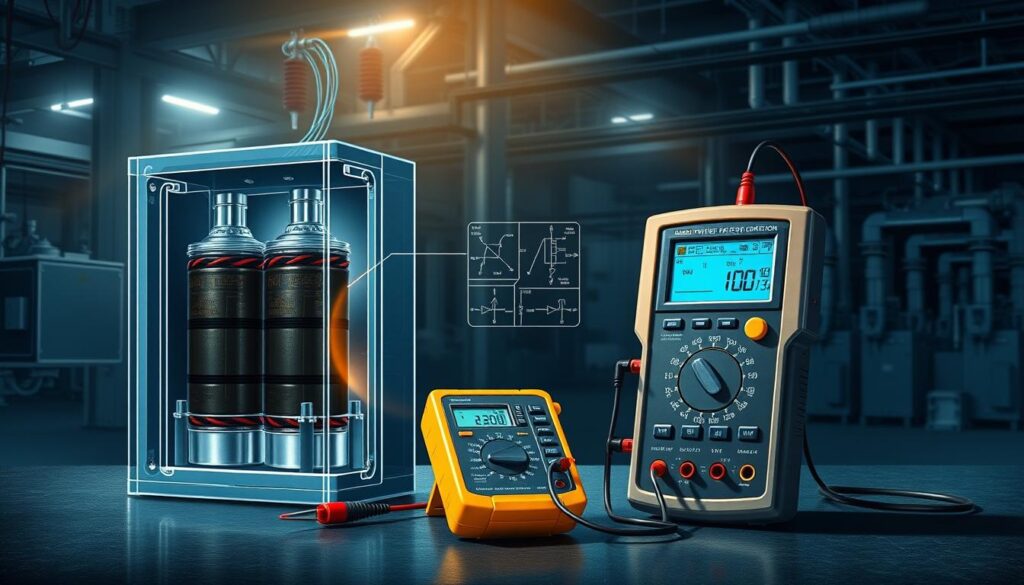
Capacitance Testing for Power Factor Correction
Power factor correction capacitors reduce reactive power consumption and lower utility charges. These capacitors degrade due to thermal stress, voltage transients, and harmonic currents. Regular power factor correction testing identifies failing units before they cause system inefficiency or electrical fires.
⚠️ Safety Warning
Even with power disconnected, capacitors can retain lethal charges for extended periods. Always discharge capacitors through an appropriate resistive load rated for the voltage level before approaching with test equipment. Never assume a capacitor is safe to touch without verification.
To test power factor correction capacitors, first verify complete discharge using your multimeter’s voltage function. Set the meter to capacitance mode and connect test leads across capacitor terminals. Compare measured value against nameplate rating. Capacitors measuring below 80% of rated value should be replaced. Additionally, inspect units for bulging cases, leaking dielectric fluid, or burn marks indicating thermal damage.
Variable Frequency Drive Testing
Variable frequency drives control motor speeds throughout industrial operations by adjusting AC frequency supplied to motor windings. Variable frequency drive testing becomes essential when equipment runs at incorrect speeds or fails to respond to control signals.
Connect your multimeter to drive output terminals using appropriate voltage measurement precautions. Select the frequency measurement function—the reading should match the drive’s setpoint, usually adjustable from zero to 60 Hz or higher. Frequency readings differing significantly from setpoints indicate drive malfunction or control signal problems.
Modern drives use pulse-width modulation to generate variable frequency output. Standard averaging multimeters may display erratic readings on PWM waveforms—true RMS meters provide more accurate measurements, though dedicated drive analyzers offer superior waveform visualization for complex diagnostics.
Harmonic Distortion Detection
Harmonic distortion increasingly affects industrial facilities as electronic loads proliferate. Harmonics represent frequencies that are integer multiples of the fundamental 60 Hz power frequency, causing motor heating, transformer heating, neutral conductor overloading, and premature capacitor failure. According to the Technology & Maintenance Council, power quality issues including harmonics represent a growing concern in modern fleet maintenance facilities.
True RMS multimeters become essential in environments with harmonic distortion—standard averaging meters calculate values based on pure sinusoidal waveforms and display incorrect readings when harmonics are present. Common harmonic-related symptoms include neutral conductors carrying excessive current despite balanced phase loads, transformers running hot without apparent overload, and capacitors failing prematurely.
Troubleshooting Common Heavy-Duty Electrical Issues
Effective electrical troubleshooting combines visual inspection, systematic testing procedures, and logical analysis to pinpoint problems in complex industrial systems. A methodical approach yields faster results than random testing when equipment fails. Heavy equipment electrical testing begins with obvious signs before moving to detailed measurements.
Start every diagnostic process with thorough visual inspection—look for damaged insulation, discolored connections, and burning odors indicating thermal problems. These visible clues often point directly to failure sources. Verify proper power reaches equipment before testing loads, and check connections systematically from source to load.
Identifying Overheating Connection Points
High-resistance connections cause the majority of electrical failures in industrial environments. These problem areas generate excessive heat degrading insulation and damaging equipment over time. Characteristic signs include discoloration around connection points, melted insulation, and distinctive burning odors.
Voltage drop measurements provide the most accurate method for quantifying connection resistance while equipment operates under load. Any measurable voltage drop across a bolted connection indicates excessive resistance requiring immediate correction. Infrared thermography works alongside multimeter testing to identify hot spots—temperature differentials between similar connection points reveal problem areas.
Diagnosing Motor Failure Symptoms
Electric motors represent the most common heavy-duty equipment in industrial facilities. A systematic diagnostic sequence eliminates guesswork when motors fail to operate properly. Begin with supply voltage verification at motor terminals, confirming proper voltage levels and balanced three-phase voltages. Unbalanced supply voltage causes premature motor failure and inefficient operation.
Measure current in all three phases during operation—balanced currents indicate proper motor function while significant current imbalance points to electrical problems within the motor or supply system. Motor winding testing helps differentiate between electrical failures such as open windings, shorted windings, or ground faults, and mechanical failures like bearing problems or shaft misalignment.
Detecting Ground Faults in High-Power Circuits
Ground faults represent one of the most dangerous electrical conditions in industrial settings, creating unintended current paths that can cause fires, equipment damage, and serious injury. Use resistance measurements to find unintended connections between circuit conductors and ground with power disconnected.
Solid ground faults show as hard shorts to ground with resistance readings near zero ohms. Intermittent ground faults present greater diagnostic challenges, appearing only under specific conditions such as vibration, temperature changes, or mechanical stress. Ground fault circuit interrupters and ground fault relays detect these conditions—test GFCI operation regularly to ensure protective systems function properly.
Analyzing Intermittent Electrical Problems
Intermittent failures represent the most frustrating diagnostic challenges—problems that occur sporadically may not be present during testing sessions. Extended monitoring with recording multimeters captures data over time, logging voltage, current, and other parameters to identify patterns. Set trigger levels to record events when abnormal conditions occur.
Thermal cycling replicates temperature-related failures in controlled conditions, while vibration testing identifies loose connections that fail intermittently. Correlate failure patterns with operational cycles, environmental conditions, or specific equipment operations. Intermittent problems often follow predictable patterns once you identify the triggering condition.
Frequently Asked Questions
What CAT rating multimeter do I need for industrial electrical testing?
For industrial electrical testing, you need a minimum CAT III rated multimeter for fixed installations within buildings, including distribution panels, motor control centers, and branch circuits. CAT IV rating is required for utility-level connections and service entrance equipment. Most industrial facilities operating at 480V three-phase should use meters rated at minimum 600V, with 1000V providing additional safety margin. The CAT rating determines the meter’s ability to withstand transient voltage spikes—never use a lower-rated meter in a higher-category environment, as insufficient protection can cause dangerous equipment failure during transient events common in industrial settings.
Why do I need a true RMS multimeter for industrial diagnostics?
True RMS multimeters are essential because modern industrial facilities contain variable frequency drives, switching power supplies, and non-linear loads that create distorted waveforms deviating significantly from pure sine waves. Standard averaging multimeters assume pure sinusoidal waveforms and can produce errors exceeding 40% when measuring these distorted signals. True RMS meters calculate the actual heating effect of electrical current by measuring instantaneous values throughout the waveform cycle, providing accurate readings regardless of waveform distortion. This accuracy is critical for proper troubleshooting and preventing misdiagnosis that wastes time and money.
How do I safely measure current in high-amperage industrial circuits?
For high-amperage circuits exceeding 10-20 amps, use clamp meter testing rather than direct in-line measurement. Clamp meters detect the magnetic field surrounding current-carrying conductors through magnetic induction, allowing measurement of hundreds or thousands of amperes without breaking the circuit. Ensure only one conductor passes through the clamp jaw and center it within the jaw for accurate readings. Keep the clamp away from other current-carrying conductors and verify the jaw closes completely with no air gaps. This non-invasive method protects technicians from the hazards of interrupting high-current circuits while providing accurate measurements.
What voltage drop is acceptable across electrical connections?
Acceptable voltage drop follows established electrical standards: maximum 3% for branch circuits from panel to load, maximum 2% for feeder circuits from service to panel, and maximum 5% total system voltage drop from service entrance to final load. Individual connections across terminals and contactors should show less than 0.1V drop under load. Calculate voltage drop percentage by dividing measured drop by supply voltage and multiplying by 100. Excessive voltage drop indicates high-resistance connections generating heat that wastes energy and leads to equipment failure. Always perform voltage drop testing under normal load conditions—no-load measurements provide minimal diagnostic value.
How do I test three-phase system balance with a multimeter?
Three-phase system testing requires measuring all six voltage relationships: three line-to-line voltages (A-B, B-C, C-A) and three line-to-ground voltages (A-Ground, B-Ground, C-Ground). Document all measurements systematically. Calculate voltage imbalance by finding the average of all three phase voltages, determining maximum deviation from average, then dividing deviation by average and multiplying by 100. Imbalances exceeding 2% indicate distribution problems requiring investigation. For current balance, measure amperage in all three phases using a clamp meter and calculate imbalance similarly—values exceeding 10% demand immediate correction to prevent motor and transformer damage.
What PPE is required for multimeter testing on energized industrial circuits?
PPE requirements depend on calculated arc flash incident energy at the specific work location. Minimum requirements include arc-rated clothing with ATPV rating matching the hazard level (Category 2 minimum for exposures of 4-8 cal/cm²), arc-rated face shield with safety glasses underneath, and rubber insulating gloves appropriate for the voltage level—Class 0 gloves rated to 1000V AC for 480V systems. Leather protector gloves must cover rubber insulating gloves to prevent mechanical damage. Dielectric footwear or insulating floor mats provide additional protection against ground potential. Always review arc flash labels on equipment before beginning work and ensure compliance with NFPA 70E requirements for the specific hazard category.
Mastering Heavy-Duty Electrical Diagnostics
Competent multimeter testing heavy-duty systems separates qualified professionals from those merely connecting probes. The procedures covered in this guide form the foundation of reliable industrial electrical diagnostics, from proper CAT-rated equipment selection through advanced harmonic distortion detection.
Heavy-duty multimeter testing demands more than technical skill—it requires disciplined adherence to electrical safety protocols protecting personnel from arc flash hazards and electrical shock. The investment in proper equipment, thorough training, and systematic diagnostic approaches pays dividends through reduced downtime, prevented equipment failures, and optimized system performance.
Industrial facilities depend on technicians who understand voltage characteristics, current behavior, and resistance patterns in complex circuits. The ability to interpret measurements correctly prevents costly equipment failures. Ground resistance verification, motor winding analysis, and three-phase balance testing become routine when proper procedures are followed consistently. Master these fundamentals, and you’ll be equipped to diagnose whatever electrical challenges your fleet maintenance operations present.
Found This Guide Useful?
Share this comprehensive resource with fellow technicians, fleet maintenance managers, and safety professionals who work with heavy-duty electrical systems.