By Michael Nielsen, Editor & Publisher | 15+ Years in Diesel Repair
Last Updated: January 2026
📖 Estimated reading time: 36 minutes
Every minute a diesel technician spends searching for the right impact socket costs your fleet operation money. In heavy-duty shops where technicians juggle multiple service bays and complex repairs, proper socket organization transforms this common frustration into a competitive advantage that directly improves your bottom line.
A well-organized workspace isn’t just about keeping things tidy—it’s a strategic business decision that affects every aspect of fleet maintenance operations. When mechanics can quickly access the tools they need for engine work, brake jobs, or suspension repairs, project completion times drop significantly. This matters even more in commercial vehicle service where downtime costs fleet operators hundreds of dollars per hour.
Professional shops that implement systematic impact socket organization see measurable improvements in billable hour utilization. Research indicates that technicians waste up to 30 minutes per day looking for misplaced tools. For fleet maintenance facilities handling Class 6-8 vehicles, those lost minutes translate directly to delayed trucks and frustrated customers.
This comprehensive guide explores proven methodologies for maximizing workshop efficiency through smart tool storage solutions tailored for diesel repair environments. Whether you manage a fleet maintenance facility, run an independent heavy-duty shop, or work as a diesel technician wanting to optimize your personal tool collection, these strategies deliver quantifiable returns.
Key Takeaways
- Time recovery: Proper tool storage systems can reduce daily search time by up to 30 minutes per technician, directly increasing billable hours.
- Revenue impact: At $120/hour shop rates, organized workspaces can recover $30+ per technician daily—over $7,000 annually per tech.
- Safety critical: Never store impact sockets with chrome sockets—impact-rated tools have thicker walls to prevent shattering under pneumatic or electric tool use.
- Heavy-duty focus: Fleet shops need dedicated storage for larger 3/4-inch drive sockets used on commercial vehicle suspension, wheel ends, and drivetrain components.
- System sustainability: Daily return protocols and weekly audits are essential—even the best organization systems fail without consistent maintenance habits.
- Growth planning: Purchase storage systems with 20-30% unused capacity to accommodate expanding socket collections as shop capabilities grow.
Why Professional Socket Organization Matters in Fleet Maintenance
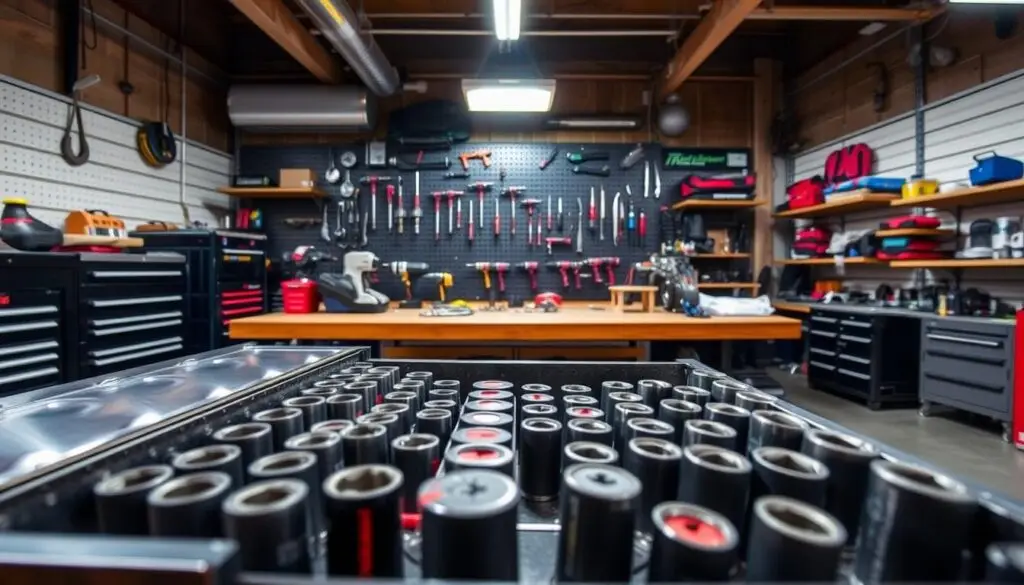
Socket organization isn’t just about tidiness—it’s a strategic business decision that affects profitability, safety, and customer satisfaction. Heavy-duty repair facilities that implement effective tool storage systems consistently outperform competitors who neglect this critical operational element. The difference between systematic organization and chaotic tool management directly influences every aspect of shop performance, from technician morale to fleet uptime.
Professional tool organization serves as the foundation for efficient workflows in diesel service environments. When technicians can immediately locate the correct impact socket for a Detroit Diesel injector replacement or Cummins turbo installation, they spend more time generating revenue and less time searching through cluttered drawers. This fundamental principle separates high-performing fleet maintenance operations from those struggling with operational inefficiencies.
The True Cost of Disorganization
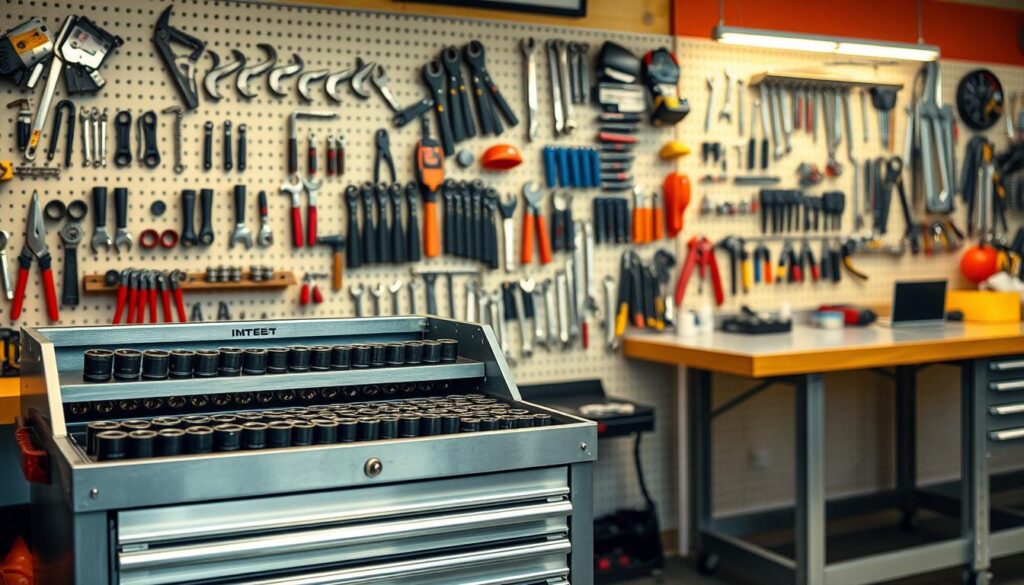
Disorganized socket collections impose substantial financial penalties on fleet maintenance businesses. Industry research reveals that technicians lose between 15 to 30 minutes daily searching for misplaced tools. Over a year, this seemingly minor inconvenience translates to approximately 60 to 120 hours of unproductive time per technician—time that could otherwise be spent completing revenue-generating repairs.
The financial impact extends beyond wasted labor hours. Shops without proper tool storage solutions frequently purchase duplicate sockets to replace items that were misplaced but not actually lost. These unnecessary expenditures accumulate rapidly, particularly for specialty impact sockets that command premium prices. A quality set of 3/4-inch drive deep impact sockets for heavy-duty applications can cost several hundred dollars—purchasing duplicates due to poor organization represents pure waste.
15-30 minutes daily
Time technicians lose searching for misplaced tools—translating to 60-120 hours annually per technician
Reduced shop capacity represents another hidden cost. When technicians cannot quickly access the tools they need, job completion times extend unnecessarily. This bottleneck limits the number of vehicles serviced daily, directly constraining revenue potential. For fleet maintenance operations with service level agreements, delayed completions can trigger penalty clauses that further erode profitability.
| Shop Characteristic | Organized System | Disorganized System | Annual Cost Difference |
|---|---|---|---|
| Tool Search Time | 2-5 minutes daily | 15-30 minutes daily | $3,600-$7,200 per technician |
| Duplicate Purchases | Minimal replacement | $500-$1,500 annually | $500-$1,500 per shop |
| Jobs Completed | 8-10 vehicles daily | 6-8 vehicles daily | $15,000-$30,000 annually |
| Customer Satisfaction | Consistent turnaround | Delayed completions | Lost repeat business |
Impact on Technician Productivity and Billable Hours
Systematic tool storage directly correlates with increased billable hours. When impact sockets are organized logically and accessibly, technicians complete jobs faster without sacrificing quality. This efficiency improvement allows shops to service additional vehicles within the same operational hours—a critical advantage when managing fleet maintenance schedules with tight turnaround requirements.
Customer satisfaction improves measurably when shops implement professional tool organization systems. Reduced turnaround times mean vehicles return to service sooner, minimizing fleet downtime that costs fleet operators an average of $448-$760 per vehicle per day according to American Transportation Research Institute data. This competitive advantage becomes particularly valuable when bidding for fleet maintenance contracts against multiple service providers.
Technician morale receives a significant boost from well-organized workspaces. Professionals take pride in efficient systems that respect their time and expertise. Lower frustration levels contribute to reduced employee turnover, saving shops thousands in recruitment and training costs. In an industry facing persistent technician shortages as documented by the Bureau of Labor Statistics, retention matters more than ever.
The relationship between organization and revenue generation is straightforward. Every minute saved searching for sockets converts directly to productive work time. For a shop billing at $120 per hour, recovering just 15 minutes daily per technician adds approximately $30 in billable time each day—over $7,000 annually per technician.
Safety Considerations in Socket Storage
Workplace safety improves dramatically when shops prioritize proper tool storage solutions. Loose impact sockets left on workbenches or floors create serious trip hazards in busy fleet maintenance environments. These heavy tools can cause significant injury if stepped on or kicked accidentally during fast-paced repair work around Class 8 trucks and trailers.
Dropped sockets pose dual threats—they can injure technicians and damage customer vehicles. A heavy 3/4-inch drive impact socket falling from chest height carries enough force to dent body panels or crack windshields. On commercial vehicles, damage to emissions system components, air tanks, or fuel system parts can create expensive secondary problems. Secure storage systems eliminate this risk entirely.
⚠️ Safety Warning
Never store impact sockets with chrome sockets. Impact sockets feature thicker walls and special heat treatment to withstand shock loads. Chrome sockets used with pneumatic or electric impact tools will crack or shatter, creating dangerous flying metal fragments.
Proper socket organization also prevents strain injuries. When technicians must repeatedly bend, reach, or stretch to access poorly stored tools, repetitive stress injuries develop over time. Ergonomic tool storage positions frequently used sockets at comfortable heights and locations, reducing the physical toll of daily shop work.
Fire safety benefits from organized tool systems as well. Cluttered workspaces with tools scattered across surfaces increase fire hazards and impede emergency evacuations. Clean, organized shops with designated storage locations maintain clear pathways essential for OSHA workplace safety compliance. For fleet operations subject to CVSA inspection standards, maintaining organized facilities reflects the professionalism that carries through to vehicle maintenance quality. Insurance considerations make safety-focused organization financially prudent—shops demonstrating systematic tool management practices may qualify for reduced workers’ compensation premiums.
Understanding Impact Socket Specifications and Storage Needs
The physical characteristics of impact sockets dictate storage requirements more than any other factor in shop organization. Recognizing these specifications allows fleet maintenance professionals to select systems that accommodate their complete inventory while maintaining accessibility. Different drive sizes, socket depths, and measurement standards each demand specific storage considerations that directly affect workspace efficiency.
Professional heavy-duty shops typically maintain comprehensive impact socket sets across multiple drive sizes and measurement systems. Socket organizers must account for these variations while keeping tools readily accessible during repair operations. Understanding these technical requirements prevents common storage mistakes that lead to wasted space and reduced productivity.
Standard Drive Configurations and Storage Capacity
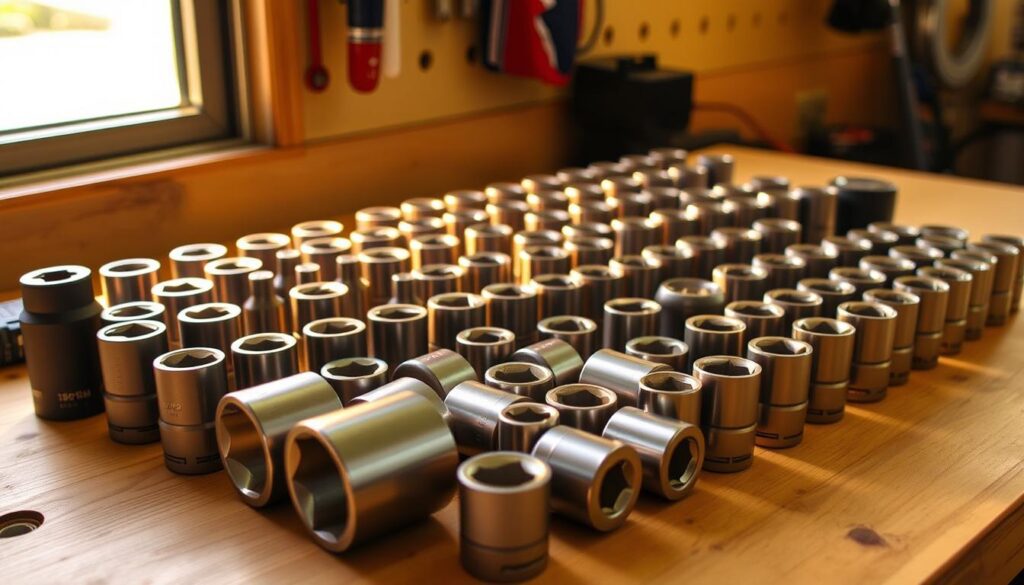
Quarter-inch drive sockets serve light-duty applications and smaller fasteners common in electrical work, dash component removal, and interior trim. These compact sockets typically number around 25 pieces in a complete set. Their small footprint makes them ideal for shallow drawer storage or compact wall-mounted organizers. While less common in heavy-duty drivetrain work, diesel technicians still need these for ancillary systems and accessories.
The 3/8-inch drive size represents the versatile workhorse for general repair tasks. Most professional collections include approximately 25 sockets in this drive size. These sockets handle everyday brake work, fuel system components, turbocharger installations, and many engine bay fasteners with equal efficiency. For diesel technicians, this drive size covers the majority of fasteners under 3/4-inch.
Half-inch drive sockets dominate heavy-duty applications from suspension work to drivetrain repairs. A typical collection contains about 15 sockets in this drive size. Socket organization systems must allocate substantial space for these larger tools that see frequent daily use on commercial vehicles. Wheel end service, king pin work, and many engine mounting fasteners require half-inch drive tools.
The 3/4-inch drive category serves specialized applications critical to heavy truck maintenance and commercial vehicle repair. Unlike general automotive shops, fleet maintenance facilities require dedicated storage for these substantial sockets used on suspension components, fifth wheel assemblies, drivetrain fasteners, and wheel nuts on Class 6-8 vehicles. Their size demands robust mounting systems and generous spacing between positions.
| Drive Size | Heavy-Duty Applications | Typical Socket Count | Storage Space Required |
|---|---|---|---|
| 1/4-inch | Electrical, dash, accessories | 25 pieces | Shallow drawers, 1-1.5 inches |
| 3/8-inch | Brakes, fuel systems, turbo work | 25 pieces | Standard drawers, 2 inches |
| 1/2-inch | Suspension, drivetrain, engine mounts | 15 pieces | Deep drawers, 2.5-3 inches |
| 3/4-inch | Fifth wheel, wheel ends, heavy suspension | 10-12 pieces | Extra-deep storage, 4+ inches |
Dimensional Requirements for Deep and Shallow Sockets
Deep-well sockets extend significantly beyond standard length to accommodate recessed fasteners and threaded studs common on diesel engines and heavy equipment. These sockets require vertical clearance of 3 to 4 inches in storage systems. Tool chest drawer configuration must account for this additional height to prevent interference when closing drawers.
Shallow-well sockets need only 1.5 to 2 inches of vertical space for proper storage. Their compact profile allows for efficient use of drawer space and wall-mounted systems. Many shops dedicate separate storage sections for deep and shallow sockets to maximize capacity and enable quick visual identification during fast-paced repairs.
The dimensional difference between these socket types creates distinct storage challenges. Mixing deep and shallow sockets in the same organizer often wastes vertical space or forces awkward arrangements. Professional systems separate these categories for optimal space utilization—a particularly important consideration when managing the extensive socket collections required for comprehensive commercial vehicle service.
Effective Separation of Measurement Systems
Professional shops maintaining both metric and SAE socket collections face the critical challenge of preventing cross-contamination between measurement systems. Accidentally using the wrong socket damages fasteners and costs valuable repair time. Physical separation provides the most reliable prevention method, especially important when working on mixed fleets containing both domestic and imported commercial vehicles.
Color-coding systems offer immediate visual distinction between metric and SAE storage sections. Many manufacturers produce organizers with contrasting colors specifically for this purpose. Red typically designates metric sockets while blue indicates SAE sizes in common industry practice. This standardization allows technicians to identify the correct measurement system before even reaching for a specific socket.
Complete physical separation in different drawers or wall sections eliminates confusion entirely. This approach works best for shops with extensive socket collections spanning 60 to 80 pieces across both measurement systems. Dedicated storage zones reduce selection errors and speed up tool retrieval during time-critical repairs. For fleet operations maintaining older domestic equipment alongside newer global platforms, this separation becomes essential.
Labeling strategies reinforce visual organization systems with clear text identification. Durable labels withstand shop environments while providing unambiguous socket identification. Combining color-coding with text labels creates redundant safety measures against measurement system confusion—a best practice aligned with TMC Recommended Practices for fleet maintenance operations.
Types of Impact Socket Organization Systems
Selecting the right impact socket organization system depends on your shop’s specific layout, workflow patterns, and storage capacity requirements. Professional heavy-duty environments demand solutions that balance accessibility with space efficiency. The following systems represent proven approaches that address different operational needs and physical constraints common in fleet maintenance facilities.
Each organization method offers distinct advantages for particular shop configurations. Understanding these differences helps technicians and shop managers make informed decisions about their tool management infrastructure. Many successful operations implement hybrid approaches that combine multiple system types based on socket frequency of use and workflow requirements.
Wall-Mounted Socket Organizers
Wall-mounted solutions maximize vertical space while keeping sockets visible and accessible. These socket organizer systems work exceptionally well in shops with limited floor space or when bench surfaces need to remain clear for active work on large commercial vehicle components. Mounting options include direct wall installation, workbench attachment, or integration with existing pegboard frameworks.
The primary benefit of wall-mounted storage lies in its ability to transform unused vertical surfaces into functional tool storage areas. Technicians can quickly scan organized rows of sockets without opening drawers or moving equipment—a significant advantage when working under time pressure during preventive maintenance inspections or emergency roadside service calls.
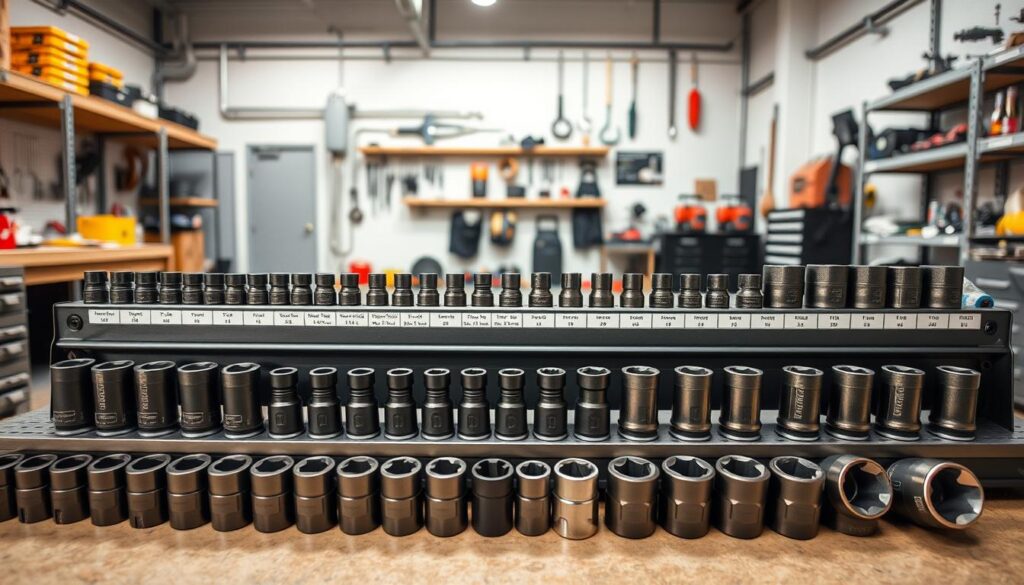
Socket rail systems utilize aluminum or steel bars equipped with spring-loaded ball bearing clips that secure individual sockets firmly in place. Standard rails measure between 12 and 18 inches in length, accommodating 15 to 25 sockets depending on socket sizes and rail configuration. The spring-loaded mechanism provides positive retention that prevents sockets from falling during transport or when subject to shop floor vibration from air compressors and other equipment.
These rails can be mounted horizontally on walls, attached to the sides of tool chests, or positioned on workbench backsplashes. The color-coded plastic clips commonly found on premium rails help differentiate between drive sizes and measurement systems. Rails constructed from anodized aluminum offer superior corrosion resistance in humid shop environments where coolant mist, brake cleaner, and other chemicals create challenging conditions.
Pegboard and Hook Configurations
Pegboard systems provide ultimate flexibility for socket arrangement and reorganization. Specialized socket holder attachments designed for standard pegboard holes accept individual sockets or small socket sets. This approach allows shops to customize their layout based on changing tool inventories and workflow requirements as service capabilities expand.
The modular nature of pegboard configurations enables technicians to group sockets by application, frequency of use, or job type. Rearranging the system requires no tools—simply relocate the holders to different pegboard positions. This adaptability makes pegboard ideal for shops that regularly adjust their tool organization strategies based on seasonal work patterns or evolving fleet customer mix.
Portable Socket Trays and Cases
Portable solutions serve technicians who move between work bays or transport tools to off-site locations for field service calls. Socket tray organizers feature molded compartments with raised measurement markings that identify socket sizes at a glance. Impact-resistant plastic construction withstands shop floor drops and rolling tool cart vibration that would damage lesser organizers.
Many professional-grade trays incorporate color-coded sections that distinguish metric from SAE sockets. The visual differentiation reduces selection time during fast-paced repair work. Trays typically include integrated handles for single-handed carrying and stackable designs for efficient storage when not in active use.
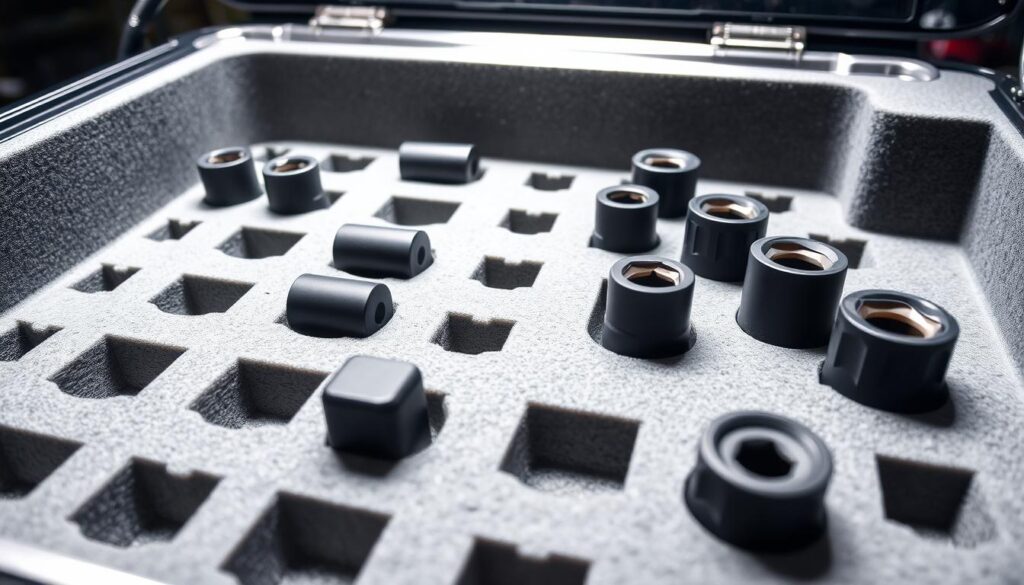
Hard-sided cases with custom foam inserts offer maximum protection for expensive socket sets during transport. The foam cutouts prevent socket-to-socket contact that can cause finish damage and premature wear. For fleet maintenance operations that dispatch technicians to customer locations, these protective cases preserve tool investments while enabling mobile service capabilities.
Drawer Organizer Systems
Drawer-based organization integrates socket storage directly into existing tool chest infrastructure. These systems range from simple divider trays to sophisticated modular inserts with adjustable compartments. The enclosed nature of drawer storage protects sockets from dust, metal shavings, and accidental damage—important considerations in heavy-duty shop environments where grinding, welding, and machining create airborne particulates.
Fixed drawer organizers use permanently positioned compartments sized for specific socket ranges. Modular systems employ removable dividers that allow customization as tool collections expand. Premium organizers feature non-slip rubber bases that prevent sliding when drawers open and close rapidly during busy service periods.
Magnetic Socket Holders
Magnetic socket holders use powerful neodymium or ceramic magnets embedded in impact-resistant plastic trays. The magnetic attraction secures sockets without clips or rails, creating a low-profile storage solution. Rubberized non-slip bases keep magnetic holders stable on smooth metal surfaces like rolling carts or workbench tops.
The strength of the magnetic field determines holding capacity and socket security during movement. Industrial-grade magnetic trays maintain firm grip even when mounted vertically or subjected to vibration from nearby equipment. Some designs incorporate raised walls that provide additional socket retention beyond magnetic force alone.
Magnetic systems excel in mobile applications where traditional rail mounting proves impractical. Technicians can position these holders anywhere on magnetic surfaces, then relocate them as needed throughout the workday. The trays also function effectively for temporary socket staging during complex repair procedures requiring multiple socket sizes in rapid succession.
| Organization System | Best Application | Capacity Range | Primary Advantage |
|---|---|---|---|
| Socket Rail Systems | Wall mounting, permanent installation | 15-25 sockets per rail | Maximum visibility and quick access |
| Pegboard Configurations | Customizable vertical storage | Variable based on board size | Complete layout flexibility |
| Portable Trays | Mobile work, field service | 20-40 sockets per tray | Portability with organization |
| Drawer Organizers | Tool chest integration | 50-100+ sockets per drawer | Protected, dust-free storage |
| Magnetic Holders | Mobile stations, temporary staging | 10-30 sockets per tray | Repositionable without tools |
Tool Chest and Cabinet Integration for Impact Sockets
Strategic tool cabinet storage solutions maximize drawer space while ensuring impact sockets remain accessible and protected. Proper integration transforms standard cabinets into specialized workstations that support efficient workflow patterns essential for fleet maintenance operations. The key lies in selecting organization methods that complement your existing infrastructure while accommodating future collection growth.
Professional shops benefit from dedicated storage systems designed specifically for tool chest environments. These solutions account for drawer dimensions, weight distribution, and accessibility requirements that differ from general-purpose organizers. Tool chests and cabinets are ideal for storing heavy tools and keeping them secure, making them the foundation for comprehensive impact socket organization.
Foam Organizer Inserts and Custom Cutouts
Foam organizer inserts provide the most customizable approach to tool drawer organization. These systems use high-density polyethylene foam, typically ranging from 2 to 4 pounds per cubic foot density. This specification offers the ideal balance between durability and cutting ease while providing adequate cushioning for expensive impact sockets.
Creating custom foam layouts begins with accurate drawer measurements. Measure length, width, and depth to ensure proper fit before purchasing materials. The low-profile tray design fits most standard tool drawers, though deep-well sockets may require deeper drawer configurations to accommodate their extended length.
The cutting process demands precision and the right tools. Hot knife cutters create clean edges without tearing the foam material. Specialized foam cutting tools deliver professional results that resist fraying over time, maintaining organization aesthetics even under heavy daily use.
Socket arrangement patterns should prioritize both visual appeal and functional access. Position frequently used sizes in the front sections where technicians can grab them quickly. Reserve back areas for specialty sockets and less common sizes that see periodic rather than daily use.
Pre-cut universal foam inserts offer immediate solutions at lower costs compared to custom configurations. These standardized layouts accommodate common socket sets without customization time investment. However, fully custom solutions provide superior organization for shops with extensive or specialized collections built around specific fleet types or engine platforms.
Drawer Divider Systems
Adjustable drawer divider systems segment tool chest organization into manageable zones. These modular frameworks allow reconfiguration as socket collections evolve without requiring complete system replacement. Shops avoid permanent commitments while maintaining structured storage that adapts to changing service capabilities.
Material selection impacts both longevity and functionality. Steel dividers offer maximum durability in high-traffic shop environments where drawers open and close hundreds of times weekly. Aluminum provides lightweight strength with corrosion resistance beneficial in humid conditions. Plastic systems deliver cost-effective solutions for lighter duty applications or budget-conscious operations.
Strategic divider placement accommodates current inventory while allowing expansion room. Leave 15-20% open space in each section for new tool purchases. This forward-thinking approach prevents reorganization headaches as your socket collection grows to meet expanding service capabilities.
Vertical vs. Horizontal Storage in Cabinets
Storage orientation significantly impacts accessibility and space efficiency. Vertical storage positions sockets upright on posts or rails, maximizing visibility. Horizontal storage lays sockets flat in trays or foam cutouts, conserving drawer depth. Each method delivers distinct advantages for different shop configurations and drawer depths.
Vertical systems excel in visibility and quick identification. Technicians see socket sizes at a glance without moving other tools. Socket rails and post systems maximize drawer height utilization effectively. However, this approach requires deeper drawers to accommodate socket length plus mounting hardware—typically 4-6 inches minimum for standard impact sockets.
Horizontal arrangements optimize space in standard-depth drawers common in many tool chests. Sockets lay flat in organized rows, creating compact storage footprints. This method works particularly well with foam insert systems that clearly define each socket’s position. The tradeoff involves slightly reduced visibility compared to vertical positioning.
Drawer depth requirements become the deciding factor for many shops. Standard tool chest drawers measure 3-4 inches deep, generally favoring horizontal storage approaches. Deeper 6-8 inch drawers unlock vertical storage benefits without accessibility compromises and accommodate the larger 3/4-inch drive sockets common in heavy-duty applications.
The HDJ Perspective
After spending years in heavy-duty shops, one pattern stands out: the technicians who maintain rigorous tool organization are consistently the most productive and least frustrated. It’s not about buying the most expensive organizers—it’s about establishing systems and habits that prevent the daily “where’s my 15mm?” interruptions that destroy workflow. The shops that treat tool organization as a business system rather than a personal preference see measurable improvements in both efficiency and technician retention. Start with your highest-frequency sockets, make their storage absolutely foolproof, and build from there.
Impact Socket Organization Best Practices for Heavy-Duty Shops
Effective socket management begins with adopting industry-proven methods that enable technicians to locate the correct tool in seconds rather than minutes. Professional tool organization requires systematic approaches that combine visual cues, logical placement, and clear identification protocols. These best practices transform standard storage into high-performance socket management systems that directly impact shop profitability.
The foundation of efficient shop organization rests on four core principles: visual identification, intuitive arrangement, clear labeling, and strategic placement based on usage patterns. When implemented together, these elements create a cohesive system that reduces cognitive load and eliminates wasted motion during time-critical repairs.
Color-Coding Systems for Quick Identification
Color-coding represents the fastest visual identification method available for socket management systems. The human brain processes color 60,000 times faster than text, making color differentiation an essential element of professional tool organization. Many shops implement standardized color schemes that technicians can recognize instantly across the workspace regardless of which service bay they’re working in.
The most effective color-coding approach assigns specific colors to drive sizes. Yellow organizers designate 1/4-inch drive sockets, while green indicates 3/8-inch drive tools. Blue represents the common 1/2-inch drive sockets, and red marks the heavy-duty 3/4-inch drive sets critical for commercial vehicle work. This standardization creates instant recognition that eliminates confusion during high-pressure repair situations.
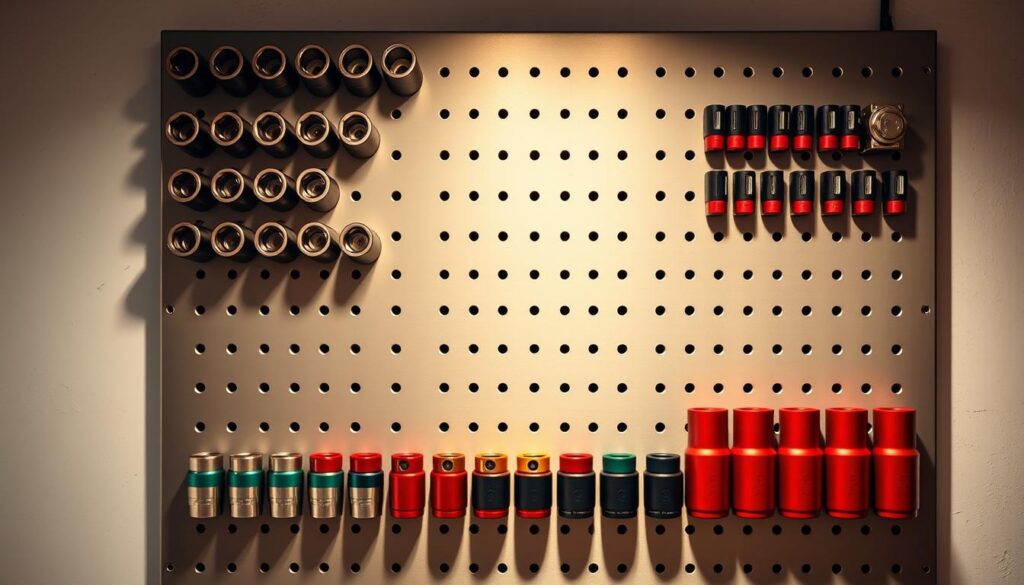
Alternative color-coding strategies separate measurement systems rather than drive sizes. Some shops use red organizers exclusively for SAE sockets and blue or gray for metric sockets. This approach works particularly well for fleet maintenance operations that service mixed fleets containing both domestic equipment with SAE fasteners and imported vehicles with metric specifications.
Size Progression and Logical Arrangement
Sequential size arrangement forms the backbone of intuitive socket management systems. Organizing sockets from smallest to largest within each category creates predictable patterns that technicians navigate without conscious thought. This natural progression mirrors how the human brain expects ordered information, reducing search time to near-zero for experienced users.
The standard progression begins with the smallest socket size on the left and increases incrementally to the largest size on the right. This left-to-right orientation aligns with Western reading patterns and feels instinctive to most technicians. Vertical arrangements should follow the same principle with smallest sizes at the top for consistent visual navigation.
Maintaining consistent progression across all storage locations reinforces muscle memory. When every drawer, wall rack, and portable case follows identical arrangement patterns, technicians develop automatic retrieval behaviors that function even under stress or in low-light conditions. This consistency becomes particularly valuable during emergency roadside repairs or time-critical fleet maintenance situations.
Separation between metric and SAE sockets must be absolute within this progression system. Creating distinct zones prevents the common mistake of grabbing a visually similar but incorrectly sized socket. Physical dividers or spacing between measurement systems adds another layer of error prevention essential for maintaining repair quality.
Labeling Strategies That Work
Professional labeling elevates shop organization from functional to exceptional. Clear, durable labels eliminate ambiguity and maintain organization standards even when staff changes occur or new technicians join the team. The investment in proper labeling pays dividends through reduced training time and consistent tool placement across shifts.
Industrial label makers represent the industry standard for permanent, professional-grade identification. These devices produce high-contrast, laminated labels that withstand oil exposure, solvent contact, and constant handling without fading or peeling. The initial equipment cost is offset by years of reliable identification that maintains shop professionalism.
Engraved labels offer the most permanent solution for fixed installations such as wall-mounted systems and toolbox drawers. Metal or high-impact plastic engraved labels maintain legibility indefinitely and project a professional image that reflects shop quality standards. This approach works best for primary storage locations that rarely change configuration.
| Labeling Method | Durability Rating | Best Application | Cost Level |
|---|---|---|---|
| Engraved Metal Labels | Permanent | Fixed wall systems and primary toolboxes | High |
| Industrial Label Maker | 5-10 years | Drawers, organizers, and portable cases | Medium |
| Pre-printed Organizer Labels | 2-5 years | Socket rails and foam inserts | Low |
| Custom Vinyl Stickers | 1-3 years | Temporary or frequently changed locations | Low |
Frequency-Based Placement for Common Sizes
Strategic placement based on usage frequency represents advanced professional tool organization that separates efficient shops from average ones. Conducting usage analysis reveals which socket sizes technicians reach for most often, enabling placement optimization that reduces cumulative motion over thousands of tool retrievals throughout a service year.
Common metric sizes include 10mm, 12mm, 13mm, 14mm, 17mm, and 19mm sockets across most automotive and commercial vehicle applications. These sizes handle the majority of fasteners found in modern diesel engines and should occupy prime accessibility zones. Positioning these sockets within arm’s reach of primary work areas eliminates unnecessary walking and stretching that accumulates throughout each shift.
SAE socket frequency typically centers on 3/8-inch, 7/16-inch, 1/2-inch, 9/16-inch, 5/8-inch, and 3/4-inch sizes for shops servicing American-made equipment and older commercial vehicles. While metric fasteners dominate newer global platform trucks, many domestic equipment, trailer components, and fifth wheel assemblies still rely on imperial measurements.
The concept of prime accessibility zones defines specific areas where retrieval requires minimal effort. These zones exist between knee and shoulder height, within 24 inches of standing work positions, and in the first third of drawer depth. Reserving these premium locations exclusively for high-frequency sockets maximizes the ergonomic advantage that proper organization provides.
Mobile Workstation Socket Organization Solutions
Socket mobility challenges in professional shops demand specialized organization solutions that balance portability with comprehensive storage capacity. Technicians working across multiple service bays need mobile tool storage systems that deliver instant access to impact sockets without returning to central toolboxes. The right mobile workstation organization eliminates wasted steps and keeps essential tools within arm’s reach during complex repairs on commercial vehicles.
Modern fleet maintenance facilities require flexible storage approaches that adapt to different job types and workspace configurations. Mobility transforms efficiency when technicians can transport organized socket collections directly to each vehicle, whether working on a Class 8 tractor in bay one or a delivery van in bay six.
Service Cart Solutions for Complete Socket Access
Rolling cart socket systems provide comprehensive mobile tool storage that rivals permanent toolbox capacity while maintaining full portability. Professional-grade service carts designed specifically for socket organization feature multi-drawer configurations with integrated socket rails that prevent tools from shifting during transport across shop floors.
These mobile units typically support load capacities between 200 and 500 pounds, accommodating extensive socket collections plus impact tools and accessories. Wheel quality significantly impacts cart performance in busy shop environments—premium polyurethane wheels roll smoothly across painted concrete floors without leaving marks or creating excessive noise that disrupts communication.
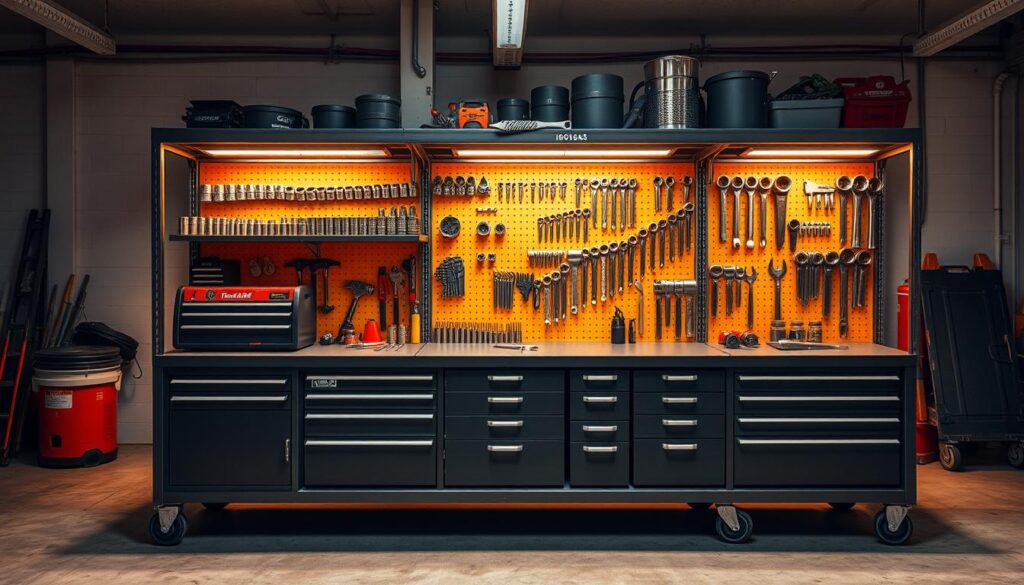
Four-wheel configurations with at least two locking casters provide stability during use while maintaining easy repositioning between service bays. For heavy-duty applications where carts carry substantial weight in sockets and impact tools, look for carts with total caster capacity ratings well above your expected load.
Modular storage systems offer customizable solutions that stack and lock together for organized workstation configurations. These units allow technicians to configure drawer modules, shallow trays for frequently-used sockets, and deeper compartments for impact tools based on their specific workflow requirements.
Task-Optimized Socket Kit Configurations
Job-specific socket kit assembly revolutionizes workstation organization by creating pre-configured sets tailored to common repair procedures. Rather than transporting entire socket collections, technicians assemble dedicated kits containing only the sockets needed for specific job types. This targeted approach maximizes efficiency while minimizing the tools that need organization and transport.
Brake service kits typically include metric sockets in the 10mm to 19mm range plus select SAE sizes for caliper brackets and hardware. These compact sets fit in small portable organizers that technicians can carry directly to the wheel assembly. Suspension work requires different socket selections, focusing on larger sizes like 18mm through 24mm plus 3/4-inch drive sockets for control arms, leaf spring components, and heavy suspension mounts.
Engine service collections demand comprehensive socket ranges in both shallow and deep configurations. These larger kits work best in dedicated portable trays with multiple rails that organize sockets by drive size and depth. Creating job-specific kits involves analyzing the most common repairs your shop performs and identifying the socket sizes those procedures require.
Pre-configured kits reduce the cognitive load on technicians who no longer need to mentally inventory which sockets they need before starting a job. The right tools are already assembled and ready for transport. This organization strategy proves especially valuable for apprentice technicians still learning which tools different repairs require, accelerating their development while maintaining productivity.
Free Professional Fleet Tools
Cost calculators, fault code lookup, maintenance planners, and more—built for owner-operators, fleet managers, and diesel techs. No signup required.
Implementing an Effective Socket Management System
A well-planned socket management approach starts with understanding your current inventory and workspace requirements. The transition from disorganized tool storage to a streamlined system requires methodical planning and consistent execution. Professional socket management systems transform daily operations by reducing search time and improving workshop efficiency across all service operations.
The implementation process involves four critical phases that build upon each other. Each phase addresses specific organizational challenges while creating a foundation for long-term success. Taking shortcuts during implementation often leads to incomplete systems that fail within weeks, wasting both time and money invested in organization infrastructure.
Inventory Assessment and Socket Auditing
The foundation of effective shop organization begins with a comprehensive socket audit. This process documents every socket in your facility, creating a detailed baseline for planning your storage system. Without this critical step, you risk purchasing inadequate storage solutions or overlooking important gaps in your tool collection that affect service capabilities.
Start by gathering all sockets from toolboxes, workbenches, mobile carts, and work areas throughout your shop. Clean each socket to verify size markings and assess condition. Create a spreadsheet with columns for drive size, measurement system, socket depth, size marking, quantity, and current condition. This documentation becomes your planning foundation.
Document every socket systematically by organizing them into groups during the audit process. Separate by drive size first, then subdivide by metric versus SAE, and finally by shallow versus deep configurations. This method reveals patterns in your inventory and highlights missing sizes that complete sets require for comprehensive service capability.
Quick Reference
- Duplicates: Flag for consolidation or identify as backup inventory
- Damaged sockets: Worn drive points, cracked walls, stripped edges—replace immediately
- Missing sizes: Sequential gaps that technicians frequently request
- Specialty sockets: Spark plug, oxygen sensor, axle nut—catalog separately
- Total counts: Calculate by category to determine storage capacity needs
This audit process typically requires 2-4 hours for small shops and a full day for larger operations with multiple technicians and extensive tool inventories. The investment pays immediate dividends by preventing expensive storage system mistakes and ensuring your chosen solution actually fits your needs.
Choosing the Right System for Your Shop Size
Storage capacity is the most crucial consideration when selecting socket management systems for your operation. The right system scales to your current inventory while accommodating reasonable growth. Mismatched systems create frustration and often get abandoned within months of implementation, wasting the initial investment entirely.
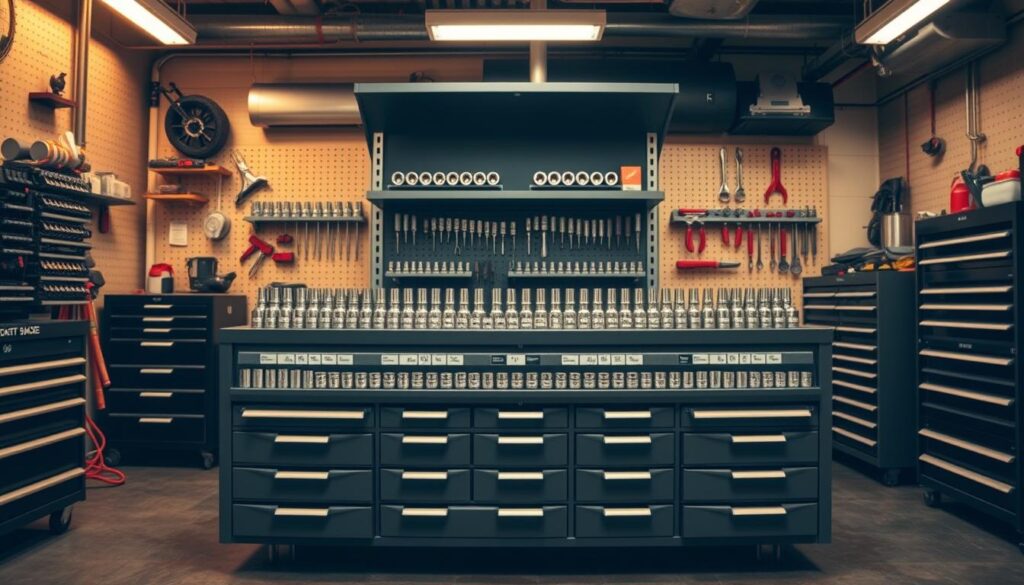
Different shop configurations require tailored approaches based on socket quantity and workspace layout. A single-technician mobile service operation operates differently than a ten-bay dealer service department. Matching your system to your actual needs prevents overspending while ensuring adequate capacity for current and anticipated future requirements.
| Shop Size | Socket Quantity | Recommended System | Approximate Investment |
|---|---|---|---|
| Single-Tech Mobile Service | 50-100 sockets | Wall-mounted rails or portable tray system | $75-$200 |
| Small Independent (2-4 bays) | 200-300 sockets | Tool chest drawer systems plus mobile cart | $300-$800 |
| Medium Fleet Shop (5-10 bays) | 500-800 sockets | Cabinet integration with multiple mobile stations | $1,200-$3,000 |
| Large Dealer/Fleet Service | 1000+ sockets | Centralized tool crib plus distributed point-of-use | $4,000-$8,000 |
Consider your shop’s physical layout when choosing between centralized and distributed storage approaches. Shops with concentrated work areas benefit from centralized systems that keep all sockets in one accessible location. Facilities with separated bays or departments need distributed storage at multiple points of use to minimize technician travel time between storage and work areas.
Training Staff on the New System
Even the best-designed socket management systems fail without proper staff training and buy-in. Technicians must understand the organizational logic and commit to maintaining the system daily. Investing time in thorough training prevents the common problem of beautifully organized systems that collapse within weeks as old habits resurface.
Conduct hands-on training sessions that go beyond simple explanations. Walk each technician through the storage system physically, demonstrating where specific sockets live in the new configuration. Practice return procedures together so proper placement becomes automatic rather than requiring conscious thought during busy service periods.
Create quick-reference guides posted at each storage location showing the organization scheme. These visual aids help during the adjustment period when new habits are forming. Include photographs of properly organized sections so staff can verify correct placement without asking supervisors.
Emphasize how improved organization directly benefits technicians through reduced search time and frustration. When staff understand personal advantages rather than viewing organization as management mandates, adoption rates increase dramatically. The most successful implementations involve technicians in planning decisions from the beginning, building ownership that sustains the system long-term. This collaborative approach aligns with ASE professional development principles that emphasize technician engagement in shop improvement initiatives.
Maintaining Your Socket Organization Over Time
A well-organized socket system is only as effective as the daily habits that sustain it through months of continuous use. Even the most thoughtfully designed tool storage solutions will deteriorate without consistent maintenance protocols. The difference between shops that maintain pristine organization and those that slide back into chaos comes down to establishing routines that become automatic for every team member.
Professional tool organization requires more than initial setup—it demands ongoing commitment from management and technicians alike. Regular upkeep prevents the gradual erosion of organizational systems that costs shops thousands in lost productivity annually through accumulated inefficiencies.
End-of-Shift Tool Return Procedures
Daily discipline in returning sockets to their designated locations represents the single most critical factor in sustaining tool storage systems. Without mandatory end-of-shift protocols, even the best organizational frameworks collapse within weeks. Successful shops implement structured return procedures that eliminate ambiguity about tool accountability.
Every technician should follow a consistent closure routine before clocking out. This includes a designated five-minute cleanup period built into the work schedule, not added as unpaid overtime. Management must recognize this time as essential to maintaining operational efficiency rather than viewing it as wasted labor that reduces billable hours.
Visual management techniques make missing sockets immediately apparent. Shadow boards with tool outlines or foam cutouts in drawers create instant accountability—when a socket’s designated space remains empty, the gap is obvious. Supervisors can identify issues before the next shift begins rather than discovering shortages during critical repairs.
Shops that enforce daily return protocols report up to 90% reduction in lost tool incidents compared to facilities with informal return policies. The investment in five minutes per technician pays dividends in reduced replacement costs and eliminated search time throughout each following workday.
Routine Weekly Inspection Protocols
Weekly organization checks prevent small problems from becoming systemic failures in tool storage systems. Shop supervisors or designated tool managers should conduct structured audits every seven days, following a consistent inspection format. This routine catches organizational drift before it impacts productivity or safety.
A proper weekly audit verifies multiple organizational factors. Inspectors should confirm that sockets remain in their correct storage locations and haven’t migrated to wrong spots. They must check whether labels remain legible or have faded from handling and cleaning chemicals. The inspection should also identify any physical damage to organization systems themselves, such as broken dividers or damaged foam cutouts that need replacement.
Documentation transforms inspections from informal walkthroughs into accountability tools. A simple checklist creates consistency across different inspectors and shifts while building a historical record. This documentation also reveals patterns, showing which storage areas experience recurring problems or which socket sizes disappear most frequently—information valuable for refining your organization approach.
Strategic Socket Replacement Management
Lost and damaged sockets represent inevitable costs in active fleet maintenance facilities. Rather than reacting to shortages with emergency purchases, successful shops establish proactive replacement protocols. A structured approach to tool storage replenishment prevents workflow interruptions while controlling costs through planned purchasing.
Budget allocation forms the foundation of effective replacement management. Most professional shops allocate between two and five percent of total socket inventory value annually for replacements. This budget accounts for normal wear, occasional losses, and technological upgrades to impact socket designs as manufacturers improve materials and heat treatment processes.
Identifying preferred suppliers enables rapid replacement without extensive research during urgent needs. Establishing accounts with two or three quality socket manufacturers ensures availability and competitive pricing. Many suppliers offer loyalty programs or bulk discounts that reduce long-term replacement costs significantly while ensuring consistent quality across your socket inventory.
The decision between replacing individual sockets versus complete sets requires careful analysis. When three or more sizes from a single set are missing, complete set replacement often proves more economical than individual purchases. This approach also ensures matching quality and finish across all sizes, maintaining the professional appearance and consistent performance of your tool storage solutions.
Common Socket Organization Mistakes to Avoid
Many fleet maintenance shops unknowingly sabotage their socket storage efficiency through common organizational errors. These mistakes undermine even the most well-intentioned impact socket organization efforts, wasting money and creating ongoing frustration. Recognizing and avoiding these pitfalls saves time, money, and prevents potentially dangerous situations in professional environments.
The best socket organizers fail when shops overlook fundamental principles of proper storage planning. Quality rail organizers made from aluminum with heavy-duty plastic clips provide excellent durability, but they still require correct implementation to deliver their full benefit. Understanding what not to do is just as valuable as knowing best practices.
Never Store Impact and Chrome Sockets Together
Mixing impact sockets with chrome sockets creates a dangerous situation that can result in tool failure and serious injury. Impact sockets feature thicker walls and special heat treatment to withstand the shock loads from pneumatic and electric impact tools. Chrome sockets are designed exclusively for hand ratchet use and will crack or shatter under impact force, sending metal fragments flying.
When these two socket types share the same storage space, technicians can accidentally grab the wrong socket during fast-paced repairs. This confusion leads to broken tools, damaged fasteners, and potential flying metal fragments that can cause eye injuries or lacerations. Some chrome socket organizers are not designed to hold impact sockets due to their heavier construction and different dimensional requirements.
Effective socket storage solutions require complete physical separation between impact and chrome socket collections. Use distinctly different storage systems for each socket type, place them in separate drawers or cabinets, apply clear labeling that identifies impact-rated storage areas, and train all technicians on the critical importance of proper socket selection for their intended use.
Measure Before You Buy Storage Systems
Inadequate space planning ranks among the most frustrating and costly mistakes in tool chest organization. Shops frequently purchase organization systems without measuring available space first. The result is organizers that don’t fit in drawers, trays that block drawer operation, or wall-mounted systems that interfere with workflow and create awkward reaching situations.
Always measure drawer internal dimensions including width, depth, and height with the drawer fully extended before purchasing any organizer. Deep-well impact sockets require significantly more vertical clearance than shallow sockets—a drawer that appears spacious may not accommodate your tallest socket organizers when accounting for foam insert thickness or rail mounting hardware.
Proper spacing between individual sockets matters for both accessibility and tool longevity. Plan for adequate spacing between sockets for easy grip and removal even when wearing work gloves. Account for drawer slide mechanisms that may reduce usable depth, and test fit organizers before cutting custom foam or making permanent installations that are difficult to reverse.
Don’t Forget Specialty Socket Storage
Shops often focus on organizing standard 6-point sockets while neglecting specialty sockets that serve critical functions in diesel and heavy-duty applications. These specialty sockets include 8-point sockets for square fasteners found on older equipment, 12-point sockets for limited access situations, external Torx sockets for emissions system components, triple-square sockets for European vehicles, and thin-wall sockets for wheel applications.
When specialty sockets lack dedicated storage, they become lost in toolboxes or mixed with incompatible tools where their unique features aren’t visible. This disorganization leads to damaged specialty sockets and wasted time searching for specific tools during repairs that require them. Create designated storage zones for these important tools using labeled dividers to distinguish specialty sockets from standard 6-point designs.
Plan for Future Socket Collection Growth
Failing to account for shop growth represents a shortsighted approach to impact socket organization. Many shops select organization systems sized exactly to their current socket inventory, leaving zero capacity for additional socket purchases, new drive sizes, or expanded metric and SAE coverage as shop capabilities grow to serve additional fleet customers or vehicle types.
Professional shops continuously add tools as they take on new vehicle types and repair procedures. A storage system with no expansion capacity forces technicians to either overcrowd existing organizers—defeating the purpose of organization—or abandon the system entirely. Both outcomes waste the initial investment in implementing organized storage.
Purchase storage systems with at least 20-30% unused capacity for future additions. Select modular organization systems that allow adding sections as needed without replacing existing components. Plan drawer space allocation with room for additional socket sets, and review your storage layout annually as your collection expands to meet evolving service demands.
Frequently Asked Questions
What is the best way to organize impact sockets in a diesel shop?
The most effective approach combines multiple storage methods based on workflow patterns. Use wall-mounted socket rails for frequently accessed sizes where technicians need instant visibility during repairs. Drawer organizers with foam inserts work best for complete sets and specialty sockets that need protection from shop environment contaminants. Mobile cart storage serves technicians moving between service bays on different jobs. The key principle is positioning high-frequency sizes—like 10mm, 14mm, 17mm metric and common SAE sizes—within arm’s reach while keeping complete sets organized by drive size and measurement system. Color-coding by drive size or measurement system adds another layer of quick identification.
How much time do technicians lose searching for misplaced tools?
Industry research indicates technicians lose between 15 to 30 minutes daily searching for misplaced tools. Over a year, this translates to approximately 60 to 120 hours of unproductive time per technician. For a shop billing at $120 per hour, recovering just 15 minutes daily per technician adds approximately $30 in billable time each day, representing over $7,000 in annual revenue recovery potential through improved organization. Beyond direct labor costs, disorganization leads to duplicate tool purchases, delayed job completions, and customer dissatisfaction from missed turnaround commitments.
Should impact sockets and chrome sockets be stored together?
Never store impact sockets with chrome sockets in the same location—this creates a genuine safety hazard. Impact sockets feature thicker walls and special heat treatment to withstand shock loads from pneumatic and electric impact tools. Chrome sockets are designed exclusively for hand ratchet use and will crack or shatter under impact force, creating dangerous flying metal fragments that can cause serious injury. When these socket types share storage space, technicians can accidentally grab the wrong socket during fast-paced repairs. Complete physical separation in different drawers or distinct storage systems is essential for shop safety.
What socket sizes do heavy-duty diesel technicians use most frequently?
For metric applications common on modern diesel engines, the most frequently used sizes include 10mm, 12mm, 13mm, 14mm, 17mm, and 19mm sockets across most vehicle platforms. SAE sizes frequently used on heavy equipment and domestic commercial vehicles include 3/8-inch, 7/16-inch, 1/2-inch, 9/16-inch, 5/8-inch, and 3/4-inch. Heavy-duty shops also need larger 3/4-inch drive sockets for suspension, drivetrain, fifth wheel, and wheel end work that lighter-duty automotive shops rarely encounter. These high-frequency sizes should occupy prime accessibility zones within arm’s reach of primary work areas.
How often should socket organization systems be audited?
Implement weekly organization checks to prevent small problems from becoming systemic failures. Shop supervisors should conduct structured audits every seven days following a consistent inspection format that verifies sockets remain in correct locations, labels remain legible, and organization systems are undamaged. Daily end-of-shift return protocols are equally essential—building five minutes of cleanup time into each technician’s schedule ensures tools return to designated positions. Shops enforcing both daily returns and weekly audits report up to 90% reduction in lost tool incidents compared to facilities with informal approaches.
What budget should shops allocate for socket replacement?
Professional shops typically allocate between two and five percent of total socket inventory value annually for replacements. This budget accounts for normal wear, occasional losses, and technological upgrades as manufacturers improve socket materials and heat treatment processes. Establishing accounts with two or three quality socket suppliers ensures availability and competitive pricing through loyalty programs or bulk discounts. When three or more sizes from a single set are missing, complete set replacement often proves more economical than individual purchases while maintaining consistent quality across your socket inventory.
Build Your Competitive Advantage Through Organization
Effective impact socket organization represents a measurable investment in your fleet maintenance operation’s future. The upfront costs of organization systems typically return within 2-3 months through increased billable hours and reduced tool search time. An organized workspace creates the foundation for workshop efficiency that extends beyond socket storage into every aspect of shop operations.
Three elements drive successful implementation. First, select organization systems that match your shop size and workflow patterns—don’t over-buy or under-buy based on your actual socket inventory and growth plans. Second, apply best practices including logical arrangement, clear labeling, and color coding that enables instant identification. Third, maintain discipline through daily return protocols and weekly audits that prevent organizational drift.
The transition from disorganized to systematic shop organization requires time and commitment, but the payoff is substantial. View this as an ongoing process rather than a completed project—your shop will evolve, and your organization systems should adapt alongside growth and changing fleet customer needs. Start your organization journey today by conducting the inventory audit outlined in this guide, assess your current socket collection, identify gaps, and determine which organization solutions fit your specific circumstances.
Share This Guide With Your Team
Know a shop manager or fleet maintenance supervisor who could benefit from better tool organization? Share this resource to help improve workshop efficiency across the industry.