
By Michael Nielsen, Editor & Publisher | 15+ Years in Diesel Repair
Last Updated: January 2026
📖 Estimated reading time: 38 minutes
Pneumatic equipment maintenance determines whether your shop’s air tools deliver years of reliable service or fail prematurely during critical jobs. From impact wrenches that remove frozen lug nuts to die grinders finishing precision work, compressed air tools handle the demanding tasks fleet maintenance shops face daily. Yet many technicians overlook the systematic care these workhorses require.
Neglecting regular pneumatic tool maintenance leads to decreased productivity, unexpected breakdowns, and costly downtime that disrupts shop workflow. Performance deteriorates gradually—often going unnoticed until an impact wrench fails mid-brake job or a sander quits during bodywork. Implementing structured care protocols directly impacts your operation’s bottom line through reduced repair expenses, fewer safety incidents, and maximized return on your tool investment.
This comprehensive guide outlines proven strategies for extending air tool lifespan through organized maintenance intervals. You’ll discover daily, weekly, monthly, quarterly, and annual procedures that keep pneumatic systems operating at peak efficiency. Whether you manage a multi-bay fleet shop or work as an independent diesel technician, these practical approaches transform reactive repairs into proactive protection.
Key Takeaways
- Daily lubrication and moisture removal prevent 80% of premature pneumatic tool failures—these 5-minute tasks deliver exponential returns.
- Proper air quality matters more than tool quality; contaminated air destroys even premium tools while clean, dry air extends equipment life by 40-60%.
- Preventive maintenance costs pennies compared to emergency repairs—quarterly filter changes at $15-30 versus $300-800 for air motor rebuilds after contamination damage.
- Operating pressure accuracy directly affects tool longevity; running 10 PSI over specification accelerates wear and creates safety hazards.
- Structured inspection protocols catch problems before failure, reducing unplanned downtime by up to 60% in fleet maintenance operations.
- Component replacement schedules vary by usage intensity—track operating hours rather than calendar time for accurate service timing.
Understanding Pneumatic Tools and Why Regular Maintenance Matters
Pneumatic equipment represents a significant capital investment that demands systematic care to maximize return on every dollar spent. The difference between tools that deliver years of reliable service and those that fail prematurely often comes down to understanding how they function and implementing consistent maintenance protocols. This knowledge transforms maintenance from a reactive burden into a strategic advantage that protects your investment while optimizing operational efficiency.
The performance and longevity of pneumatic tools are directly linked to the quality of compressed air that powers them. A clean, dry air supply is essential to prevent internal damage and ensure consistent operation. Regular maintenance maximizes tool efficiency and power output, minimizes downtime and repair costs, enhances workplace safety, and extends the overall lifespan of your investment.
How Compressed Air Powers Your Tools
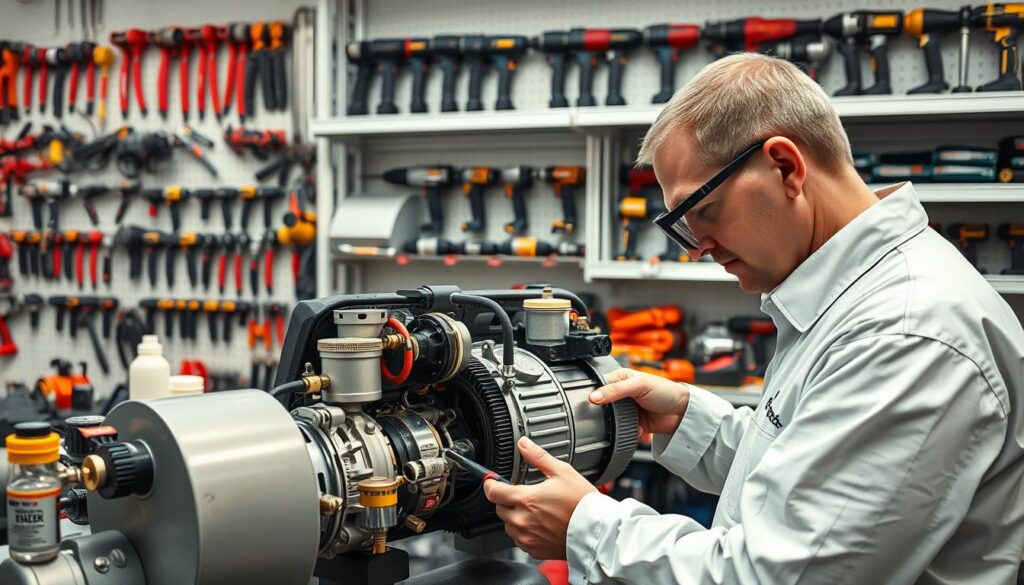
At the heart of every pneumatic tool lies a sophisticated mechanism that converts compressed air pressure into mechanical force. When you pull the trigger on an impact wrench or activate a pneumatic grinder, compressed air rushes through precisely engineered pathways to create motion. This process involves several critical components working in perfect harmony.
The compressed air system delivers pressurized air through supply lines to the tool’s inlet valve. Once inside, the air pressure acts upon internal mechanisms that vary by tool type. Air motors use rotary vanes that spin as air pressure pushes against them, creating continuous rotational motion. Impact mechanisms employ pistons that convert air pressure into rapid hammering action, delivering the torque needed for heavy-duty fastening applications.
These internal components operate at incredibly high speeds and pressures. A typical impact wrench may cycle hundreds of times per second, with internal parts moving at velocities that create significant friction and heat. Without proper lubrication and clean air supply, these components experience accelerated wear that degrades performance and leads to premature failure.
The efficiency of this energy conversion directly affects tool performance optimization. Contaminated air introduces moisture, dirt particles, and debris that act as abrasives on precision-machined surfaces. This contamination disrupts the smooth flow of air, reduces power output, and damages seals that maintain proper pressure within the tool.
The Hidden Costs of Maintenance Neglect
The true expense of neglecting preventive maintenance extends far beyond the immediate repair bill. Fleet operations that postpone routine care face a cascade of consequences impacting profitability in multiple ways. Understanding these hidden costs reveals why systematic maintenance delivers measurable value.
Reduced productivity represents the most immediate impact of maintenance neglect. A pneumatic tool operating at diminished capacity may still function, but it requires more time to complete each task. An impact wrench that once delivered 500 foot-pounds of torque in seconds may gradually decline to 350 foot-pounds, forcing technicians to work longer on each fastener. This efficiency loss compounds across every task, every shift, and every vehicle serviced.
20-30%
Energy waste from poorly maintained pneumatic systems compared to properly maintained equipment, according to U.S. Department of Energy compressed air system guidelines
Energy consumption increases significantly when pneumatic equipment operates inefficiently. A compressed air system must work harder to compensate for air leaks, worn seals, and clogged passages. This waste translates to thousands of dollars annually for even modest fleet operations.
The cost differential between preventive maintenance and catastrophic failure repairs proves dramatic. Regular lubrication costs pennies per application versus $150-400 for bearing replacement after seizure. Quarterly filter changes at $15-30 compare favorably to $300-800 for rebuilding an air motor damaged by contamination. Daily moisture draining requires seconds versus $200-500 for corrosion damage repair to internal components. Annual seal replacement at $25-75 prevents complete tool replacement at $400-2,000 after seal failure causes motor damage.
Workplace safety incidents resulting from equipment malfunction carry both human and financial consequences. A pneumatic tool that fails unexpectedly can injure operators, damage workpieces, or create hazardous situations. OSHA regulations for hand and portable powered tools establish employer responsibilities for maintaining equipment in safe operating condition—violations, workers’ compensation claims, and liability exposure represent costs that dwarf routine maintenance expenses.
The Return on Investment from Preventive Care
Systematic preventive maintenance delivers quantifiable returns that justify every minute and dollar invested in the program. Fleet shops implementing disciplined maintenance protocols consistently outperform competitors who treat tool care as an afterthought. The business case for structured maintenance becomes clear when examining specific performance metrics.
Extended equipment lifespan stands as the most obvious benefit. Pneumatic equipment maintained according to manufacturer specifications routinely exceeds expected service life by 40-60%. A nailer with a typical 5-year lifespan can deliver 7-8 years of reliable performance under proper care. This extension reduces replacement frequency and maximizes value extracted from each capital purchase.
Consistent performance output maintains productivity standards that directly impact profitability. Tools operating at peak efficiency complete tasks faster, require fewer repeated attempts, and produce higher-quality results. This consistency enables accurate job estimating, predictable project timelines, and satisfied customers receiving work completed on schedule.
The comprehensive ROI calculation for tool performance optimization through preventive care typically shows returns of 300-500% over a five-year period. This return comes from combining extended equipment life, reduced repair costs, minimized downtime, lower energy consumption, and improved safety outcomes. For fleet operations running multiple pneumatic tools, these savings quickly reach tens of thousands of dollars annually. According to ATRI’s analysis of trucking operational costs, equipment maintenance represents a significant controllable expense where preventive approaches deliver measurable savings.
Essential Supplies and Equipment for Air Tool Maintenance
Your pneumatic equipment performs only as well as the quality of supplies you use to maintain it. Stocking the right maintenance supplies prevents unexpected downtime and protects your investment in professional air tools. A well-organized approach to procurement ensures every scheduled maintenance task proceeds smoothly without delays or compromises.
The foundation of effective preventive care lies in understanding which products work best for specific applications. Generic substitutes often create more problems than they solve. Professional-grade maintenance supplies deliver consistent results that keep your tools operating at peak efficiency.
Selecting the Right Lubricants for Different Applications
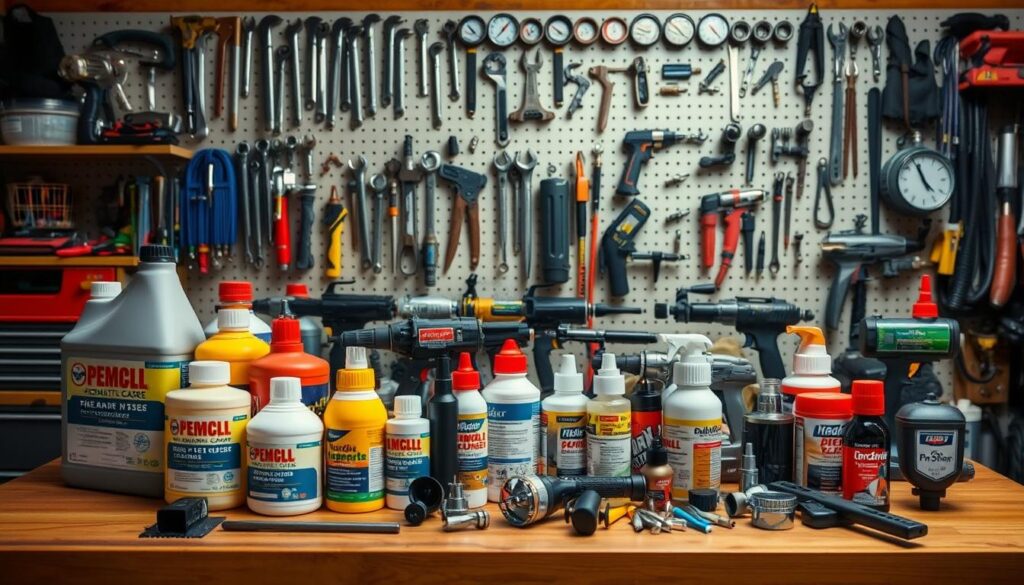
Pneumatic tool oil represents the single most important element in your maintenance supplies arsenal. The viscosity grade you select directly impacts tool performance and longevity. Light-weight oils with ISO viscosity grades between 32 and 46 work best for high-speed tools like die grinders and air drills.
Medium-weight options ranging from ISO 68 to 100 suit impact wrenches and ratchets perfectly. These tools operate at moderate speeds but generate significant torque. Heavy-duty pneumatic tool oil with viscosity grades above ISO 150 protects demolition hammers and large industrial equipment.
Temperature conditions in your workspace influence oil selection significantly. Cold environments require lighter oils that flow freely at low temperatures. Hot conditions demand heavier grades that maintain protective film strength under thermal stress.
⚠️ Critical Lubrication Warning
Never use motor oil or WD-40 as substitutes for proper pneumatic tool lubrication. Motor oils contain detergents that break down pneumatic seals and O-rings. WD-40 lacks the necessary viscosity and anti-wear additives that protect high-speed components—using these products accelerates internal damage rather than preventing it.
Quality pneumatic tool oil contains specific additives that enhance performance. Rust inhibitors protect internal components from moisture damage. Anti-wear compounds create a protective barrier on metal surfaces. These specialized formulations, which often reference ASTM D5183 standards for lubricant wear testing, extend component life significantly compared to generic alternatives.
| Oil Type | ISO Viscosity Grade | Best Applications | Key Benefits |
|---|---|---|---|
| Lightweight | 32-46 | Die grinders, air drills, sanders | Flows easily in high-RPM tools, reduces friction |
| Medium-Weight | 68-100 | Impact wrenches, ratchets, nailers | Balances protection with performance |
| Heavy-Duty | 150+ | Demolition hammers, chipping tools | Maximum protection under extreme loads |
| All-Season Synthetic | 46-68 | Multi-purpose general use | Temperature stable, extended intervals |
Safe and Effective Cleaning Solutions
Manufacturer-approved cleaning solvents dissolve accumulated grease and grime without damaging sensitive components. These specialized formulations respect the materials used in pneumatic tool construction while removing contaminants and leaving a protective residue that guards against corrosion.
Generic degreasers often contain harsh chemicals that attack rubber seals and plastic housings. Professional maintenance supplies designed for air tools maintain material compatibility. This consideration prevents premature failure of expensive components.
Safety considerations must guide every aspect of solvent selection and use. Adequate ventilation prevents harmful vapor accumulation in your workspace. Personal protective equipment including chemical-resistant gloves and safety glasses protects against skin contact and splashes. Proper disposal procedures comply with local environmental regulations, as many cleaning solvents qualify as hazardous waste requiring specific handling.
Building a Strategic Parts Inventory
A comprehensive replacement parts inventory minimizes maintenance downtime dramatically. Waiting for critical components to arrive extends repair times and reduces productivity. Strategic stocking ensures immediate availability when scheduled maintenance intervals arrive.
O-rings in various sizes represent the most frequently replaced components in pneumatic systems. These inexpensive seals prevent air leaks that rob tools of power. Stocking assortment kits covering common sizes provides cost-effective coverage for most situations. Gaskets, springs, and trigger valves fail predictably based on usage intensity. Tools operating in dusty environments consume filters more rapidly.
Your replacement parts inventory should reflect your specific tool fleet composition. Impact tools need different components than sanders or nailers. Analyzing your equipment mix guides intelligent purchasing decisions. Quality matters significantly when sourcing replacement components—original equipment manufacturer parts guarantee proper fit and performance while aftermarket alternatives may offer cost savings but sometimes compromise longevity.
Daily Maintenance Tasks for Optimal Performance
The most effective air tool maintenance schedule begins with simple, consistent daily habits that take less time than fixing a single breakdown. These fundamental daily maintenance tasks protect your investment and ensure every tool operates at peak efficiency. By dedicating just five to ten minutes at the start and end of each workday, you prevent the majority of performance issues that plague pneumatic equipment.
Think of daily maintenance as insurance that costs pennies and saves hundreds. The return on this minimal time investment compounds over months and years of reliable service.
Starting Your Day Right: Morning Checks
A comprehensive pre-operation inspection establishes the foundation for safe, productive work. Before connecting any pneumatic tool to your air supply, conduct a systematic visual examination of the entire unit.
Begin by checking the tool body for cracks, dents, or any physical damage that might compromise structural integrity. Even minor damage can indicate internal problems or create safety hazards during operation. Examine all air hoses from end to end, looking for cracks, bulges, abrasions, or weathering that signal deterioration. A compromised hose can fail suddenly, creating dangerous whipping hazards and work interruptions.
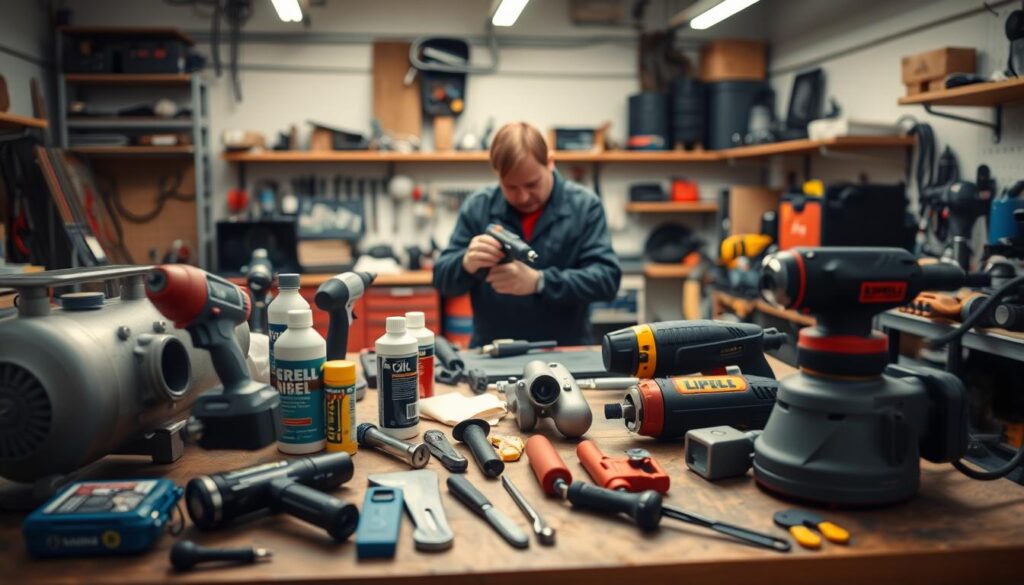
Verify that all fittings remain tight and secure. Loose connections waste compressed air, reduce tool power, and create annoying hissing sounds. Hand-tighten any connections that show movement, but avoid over-tightening which can damage threads. Test the trigger mechanism for smooth, consistent operation—sticky or stiff triggers often indicate internal contamination or lubrication deficiency. This pre-operation inspection takes less than two minutes but identifies problems before they escalate into costly repairs.
Lubrication: The Lifeblood of Pneumatic Performance
Proper lubrication technique separates tools that last twenty years from those that fail in two. Before each use, add pneumatic tool oil directly into the air inlet to lubricate the motor and other internal components.
The exact amount depends on tool type and size. Impact wrenches and large grinders require four to five drops, while nail guns and small ratchets need just two to three drops. Consult your manufacturer’s specifications for precise recommendations.
After adding oil, connect the tool to your air supply and run it briefly without load. This distributes lubrication throughout internal passages, coating friction surfaces before they experience operational stress. Listen carefully during this test run for any unusual sounds that might indicate problems. Tools stored for more than a week require additional lubrication before use, as extended idle periods allow protective oil films to drain away.
Conquering Moisture: The Silent Equipment Killer
Moisture removal represents the single most important daily maintenance task for compressed air systems. Water vapor in compressed air condenses inside tools, causing rust, corrosion, and premature seal failure.
Drain your air compressor tank daily as the simplest and most effective way to remove accumulated moisture from your system. Most tanks feature a drain valve at the lowest point specifically for this purpose. Open the valve until only air escapes, indicating complete water removal. Check and empty in-line moisture traps or filters installed between your compressor and tools—these devices capture water before it reaches sensitive equipment, but only function when regularly drained.
Watch for signs of excessive moisture during operation. Water droplets expelled from exhaust ports, rust stains around air inlets, or sluggish tool performance all indicate inadequate moisture control. Address these warning signs immediately by improving your filtration system or increasing drainage frequency. In humid climates or during summer months, consider draining moisture traps twice daily.
Protecting Your Investment After Hours
End-of-day cleaning and storage procedures determine how well your tools weather years of service. After completing work, wipe down each tool’s exterior with a clean, dry cloth to remove accumulated dust, oil, and debris. Pay special attention to exhaust ports and air inlets where material buildup commonly occurs.
Proper tool storage procedures begin with disconnecting each tool from the airline. Continuous connection maintains pressure on internal seals even when not in use, causing unnecessary wear and potential air leaks over time. Cover all air inlets with protective dust caps immediately after disconnection—these simple plastic caps prevent contamination from entering the tool during storage.
Store tools in designated locations away from ground-level moisture and airborne contaminants. Wall-mounted racks or toolbox drawers provide ideal protection. Never leave pneumatic equipment on shop floors where it can be damaged by foot traffic or exposed to spills. For tools used infrequently, add a few extra drops of oil through the air inlet before final storage to create a protective coating preventing internal rust during extended idle periods.
Weekly Maintenance Procedures
A structured weekly maintenance schedule catches problems that daily inspections might overlook. These intermediate tasks require more time and attention than your morning checks but prevent serious issues from developing. Setting aside dedicated time each week for these procedures ensures your pneumatic equipment operates at peak efficiency.
The weekly maintenance layer addresses wear patterns and contamination that accumulate gradually over several days of operation. This preventive approach stops minor concerns from escalating into costly repairs. Your investment in weekly care delivers measurable returns through extended tool life and consistent performance.

Removing Accumulated Debris and Surface Contaminants
Start your weekly maintenance by wiping down each tool with a clean, lint-free cloth to eliminate dirt, grease, and grime. Pay special attention to ventilation ports where dust and debris commonly accumulate. Blocked vents restrict airflow and cause internal components to overheat during extended use.
Clean all exterior moving parts with appropriate solvents that won’t damage protective coatings. Trigger assemblies, adjustment mechanisms, and exposed shafts collect contaminants that can migrate into sealed areas. Use mineral spirits or dedicated pneumatic tool cleaners rather than harsh chemicals that degrade rubber seals and plastic housings.
External cleanliness directly impacts internal component longevity. Contaminants on the tool exterior eventually find their way past seals and into the motor assembly. A thorough weekly cleaning prevents this contamination pathway and maintains the integrity of internal lubrication.
Examining Hoses and Connection Points
Air hose inspection reveals wear patterns before they cause complete failure. Check the entire length of each hose for abrasion damage, particularly where hoses contact work surfaces or drag across sharp edges. Surface cracking indicates deteriorating rubber that will soon develop leaks.
Test every coupling mechanism for proper engagement and secure connection. Loose couplings waste compressed air and reduce tool performance. Push and pull each connection firmly to verify it locks completely without movement or play.
Conduct the soapy water test to detect small air leaks that audible inspection misses. Mix dish soap with water and apply it to all connection points and suspected weak areas. Bubbles immediately form wherever air escapes, revealing leaks that waste energy and reduce system pressure. Internal blockages restrict airflow and starve tools of necessary pressure—disconnect hoses periodically and blow compressed air through them to clear accumulated debris.
Filter Element Inspection and Service
Filter maintenance protects internal components from contaminated compressed air. Remove the filter element and examine it against a light source to assess contamination levels. A darkened or discolored element indicates trapped particles that restrict airflow.
Clean reusable filter elements according to manufacturer specifications using compressed air blown from the clean side outward. This technique dislodges trapped particles without forcing them deeper into the filter media. Never tap filters against hard surfaces, as this damages the filtration material and reduces effectiveness.
Replace filter elements when cleaning no longer restores proper airflow. Compromised filtration allows contaminants to enter the tool motor, accelerating wear on pistons, cylinders, and bearings. The cost of replacement filters is minimal compared to internal component damage from unfiltered air.
Conducting Systematic Operational Checks
Performance testing establishes baseline metrics that reveal developing problems. Run each tool through its typical operating cycle and note response time from trigger pull to full speed. Delayed response indicates internal friction or inadequate lubrication.
Test fastening consistency for impact tools by driving fasteners into standard material. Measure the torque output and compare it to previous benchmarks. Declining torque values signal motor wear, air leaks, or insufficient air pressure reaching the tool. Document these measurements in your maintenance log for tracking performance trends over time.
Evaluate air consumption during operation by monitoring regulator gauges. Increased air usage without corresponding performance gains indicates internal leakage or seal deterioration. Check grinders and sanders for consistent speed under load, listening for unusual sounds that suggest bearing wear or internal component damage. Address any performance anomalies immediately rather than waiting until the tool fails completely.
Air Tool Maintenance Schedule: Monthly Requirements
Every thirty days, your air tool maintenance schedule should include comprehensive procedures that protect your investment through systematic care and accurate record-keeping. Monthly maintenance requirements go beyond routine cleaning and lubrication to address internal mechanisms, distribution system integrity, and professional documentation practices. This deeper level of care prevents premature wear and identifies potential problems before they cause costly downtime.
The monthly interval strikes the ideal balance between thorough inspection and practical scheduling. Most pneumatic tools operate at performance levels that reveal wear patterns clearly after four weeks of regular use. This timing allows you to track degradation trends while maintaining equipment before minor issues escalate into major failures.
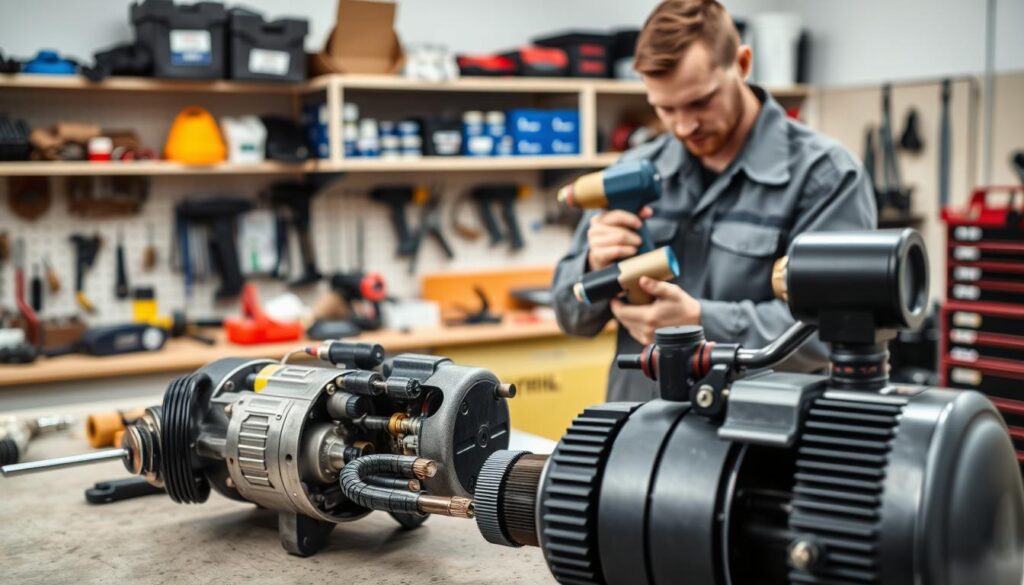
Systematic Partial Disassembly for Internal Inspection
Safety must come first before any disassembly work begins. Disconnect the air supply completely and release all residual pressure from the tool. Trigger the tool several times after disconnection to ensure no compressed air remains in the chamber. Wear safety glasses throughout the process, as small springs and components can release suddenly during disassembly.
Start with the tool housing, removing fasteners in a systematic pattern. Place removed screws and small parts in separate containers labeled by location. Take photographs at each disassembly stage using your smartphone to document the original configuration for reassembly reference.
Inspect internal components carefully as you expose them. Look for metal shavings, carbon buildup, or discoloration that indicates excessive heat. Check O-rings and seals for cracks, hardening, or deformation—any seal showing these signs requires immediate replacement to prevent air leaks and performance degradation.
Clean exposed components with appropriate pneumatic tool solvent. Use a soft bristle brush for textured surfaces and lint-free cloths for smooth areas. Allow components to dry completely before applying fresh lubricant. Never reassemble a tool with solvent residue present, as this contaminates the new oil and reduces its protective properties. Reassemble in reverse order, referring to your photographs for proper component orientation. Tighten fasteners to manufacturer specifications if torque values are provided.
Critical Lubrication Points for High-Impact Tools
Impact wrenches and ratchets contain specific internal lubrication points requiring monthly attention beyond air inlet oiling. The hammer mechanism represents the most critical area, enduring tremendous force with each impact cycle. Apply heavy-duty pneumatic tool grease directly to the hammer case and anvil contact surfaces during your monthly disassembly.
Gear mechanisms need different lubrication than the air motor. Use manufacturer-recommended gear oil on planetary gear sets and reduction gears. These components operate under high load and benefit from lubricants designed to maintain film strength under pressure. Standard air tool oil lacks the viscosity these mechanisms require for adequate protection.
Bearing surfaces throughout the tool need thorough inspection during monthly service. Rotate bearings by hand after cleaning to feel for rough spots or resistance. Smooth operation indicates healthy bearings, while grinding or catching suggests contamination or wear. Apply a thin film of bearing-grade lubricant to races and rolling elements before reassembly.
Comprehensive Air Compressor and Distribution System Review
Air compressor inspection extends equipment life throughout your entire pneumatic system. Begin with the compressor tank, draining it completely and inspecting the interior for rust or scale buildup. Use a flashlight to examine tank walls through the drain valve opening. Any internal corrosion requires immediate attention, as tank failure poses serious safety hazards.
Inspect the entire air line distribution system for physical damage and connection integrity. Walk the complete path from compressor to each tool station, checking for kinked hoses, damaged fittings, and loose connections. Pay special attention to areas where lines cross walkways or hang from overhead supports, as these locations experience the most stress and movement.
Verify pressure regulator accuracy using a calibrated test gauge. Compare the regulator display reading to your test gauge at multiple pressure settings. Discrepancies greater than 2 PSI indicate the need for regulator adjustment or replacement. Accurate pressure regulation protects tools from over-pressure damage and ensures consistent performance.
Conduct system-wide leak detection using soapy water solution. Apply the solution to all connections, valves, and fittings while the system holds pressure. Bubbles indicate escaping air that wastes compressor energy and reduces available pressure. Even small leaks compound across multiple points to create significant efficiency losses increasing operating costs.
Professional Documentation and Maintenance Record Systems
A maintenance log transforms reactive repairs into predictive maintenance planning. Record each service event with the date, procedures performed, and observations about tool condition. Note any unusual sounds, vibrations, or performance changes that could signal developing problems. These patterns become visible only through consistent documentation over time.
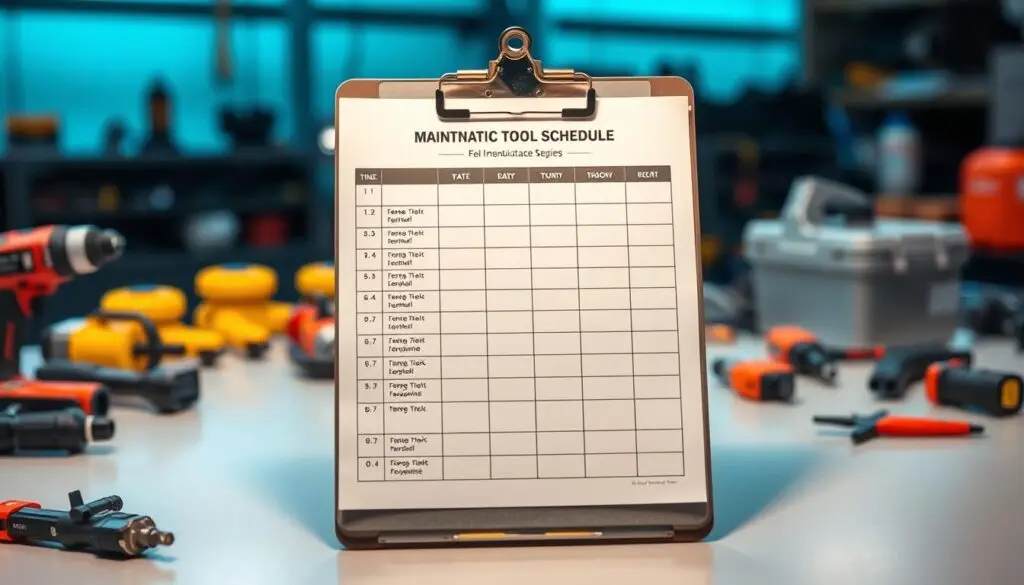
Create a maintenance schedule template listing all tools in your shop with their next service dates. Include columns for daily, weekly, and monthly maintenance requirements so nothing gets overlooked. Track parts replacements and their installation dates—this information reveals which components wear fastest in your specific applications, allowing you to stock critical replacement parts before failures occur.
Document performance metrics that indicate tool health. For impact wrenches, record the lowest pressure that achieves full torque on standard fasteners. For grinders, note the time required to complete benchmark tasks. Declining performance between service intervals signals accelerated wear demanding investigation before complete failure occurs.
The HDJ Perspective
After decades of working with fleet maintenance operations, we’ve observed that shops treating pneumatic tool maintenance as a formal program—rather than an afterthought—consistently report 40-50% lower tool replacement costs and significantly reduced unplanned downtime. The documentation habit proves particularly valuable: technicians who track performance metrics catch problems 2-3 weeks earlier than those relying on intuition alone. For multi-bay operations, assigning pneumatic tool maintenance responsibility to a specific team member creates accountability that prevents the “everybody’s job is nobody’s job” syndrome.
Quarterly and Annual Deep Maintenance
Quarterly and annual maintenance represents the most thorough level of care in a complete air tool maintenance schedule. These intensive service intervals involve comprehensive internal inspections that go far beyond surface-level cleaning and lubrication. The procedures performed during these deep maintenance sessions can add years to your equipment’s operational life while preventing expensive unexpected failures.
Most professional shops schedule quarterly maintenance for high-use tools and annual maintenance for moderate-use equipment. This strategic timing catches wear patterns before they cause serious damage. The investment in thorough periodic service pays dividends through consistent tool performance and reduced replacement costs.
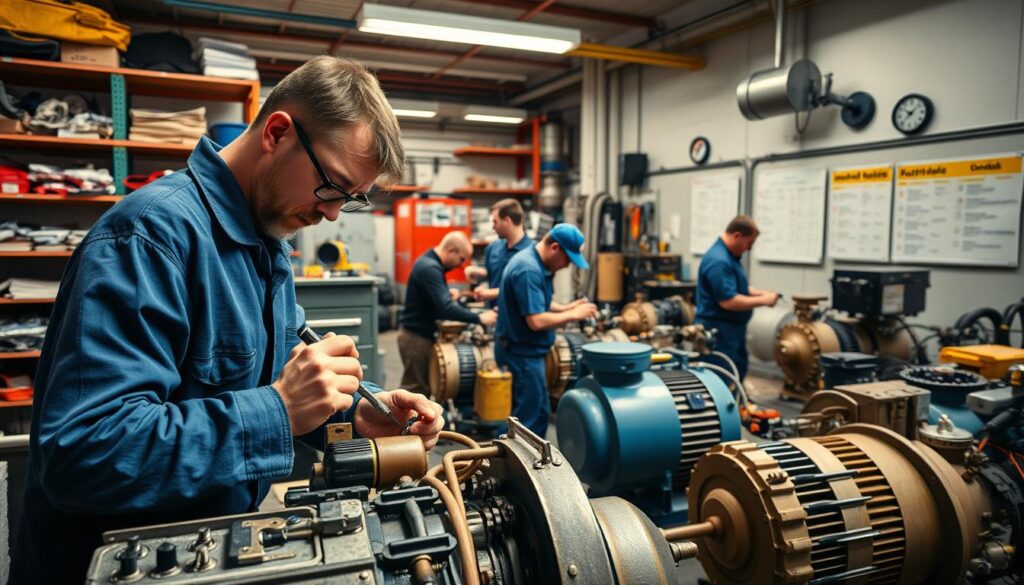
Systematic Teardown and Internal Inspection
Complete tool disassembly should occur every 500 to 1,000 hours of use or annually, whichever comes first. This full teardown allows you to examine components that remain hidden during routine maintenance. A systematic approach ensures you can reassemble tools correctly without missing critical steps.
Begin by photographing each stage of disassembly. These reference images become invaluable during reassembly, especially for complex impact wrenches and rotary tools. Label all fasteners and components as you remove them, organizing parts by assembly group.
Advanced inspection techniques reveal problems invisible to the naked eye. Use a borescope to examine internal chambers and pathways without complete disassembly. This flexible camera tool lets you spot early corrosion, scoring, or debris accumulation in hard-to-reach areas.
During teardown, clean every component with appropriate solvents. Remove all old lubricant and debris from bearing surfaces, air passages, and contact points. This complete cleaning reveals wear patterns that dirty components conceal. Replace all consumable parts during annual maintenance regardless of their apparent condition—this preventive replacement philosophy stops problems before they start.
Strategic Component Replacement Intervals
A well-planned component replacement schedule prevents unexpected tool failures during critical projects. Different parts wear at different rates based on their function and operating stresses. Tracking usage hours helps you time replacements precisely for maximum component life without risking failure.
| Component Type | Replacement Interval | Warning Signs | Consequences of Delay |
|---|---|---|---|
| Seals and O-rings | 500-750 hours or annually | Air leaks, reduced power, visible hardening | Internal contamination, complete pressure loss |
| Bearings | 1,000-1,500 hours or biennially | Grinding noise, excessive heat, wobble | Shaft damage, housing wear, tool seizure |
| Motor vanes/pistons | 800-1,200 hours or every 18 months | Power loss, irregular operation, increased air use | Cylinder scoring, complete motor failure |
| Springs | 1,000 hours or every 2 years | Weakened return action, sluggish response | Trigger malfunction, safety hazards |
Document every component replacement in your maintenance log. This historical data helps refine your component replacement schedule based on actual performance rather than manufacturer estimates. Tools used in dusty environments or extreme temperatures may require more frequent replacements. Purchase replacement components in advance for critical tools—keeping spare seals, bearings, and springs on hand eliminates downtime waiting for parts.
Professional Service Decision Criteria
Even with comprehensive in-house maintenance capabilities, certain situations warrant professional tool service. Knowing when to seek expert assistance protects your investment and ensures optimal tool performance. Strategic use of professional services complements rather than replaces your internal maintenance program.
Consider professional service when specialized tools or training are required. Precision torque calibration equipment costs thousands of dollars that few shops can justify. Certified technicians have access to manufacturer-specific diagnostic software identifying subtle performance issues. Warranty considerations often require authorized service centers to maintain coverage on new or rebuilt tools.
Persistent performance problems that continue despite proper maintenance often need factory-level diagnosis. High-precision assembly tools and specialized pneumatic devices need certified technicians familiar with their specific requirements. For infrequently used specialty tools, professional annual maintenance often costs less than maintaining internal expertise.
Free Professional Fleet Tools
Cost calculators, fault code lookup, maintenance planners, and more—built for owner-operators, fleet managers, and diesel techs. No signup required.
Troubleshooting Common Air Tool Problems
When your pneumatic tools start acting up, knowing how to diagnose and fix issues saves both time and money. Even with consistent maintenance, tools occasionally develop performance problems requiring immediate attention. Effective tool troubleshooting prevents minor issues from becoming expensive equipment repair projects.
Understanding systematic diagnostic procedures helps you identify root causes quickly. This approach minimizes downtime and keeps your shop operating smoothly.
Diagnosing Power Loss in Impact Tools and Grinders
Power loss represents one of the most frequent complaints with pneumatic equipment. When an impact wrench or grinder runs sluggishly or fails to deliver expected torque, several factors may be responsible. A methodical power loss diagnosis approach identifies the problem efficiently.
Start by checking your air supply pressure at the tool connection point. Use a pressure gauge to verify the tool receives its required PSI rating. Low pressure from the compressor or a malfunctioning regulator often causes inadequate performance before any internal problems develop.

If air pressure meets specifications, examine the tool’s lubrication status. Insufficient oil causes internal components to create excessive friction, dramatically reducing power output. Remove the air hose and add 4-5 drops of pneumatic tool oil directly into the air inlet, then run the tool briefly to distribute lubricant throughout the motor.
Clogged air filters or restricted air passages create another common power loss scenario. Inspect the filter element for dirt accumulation and clean or replace as needed. Debris in the motor housing restricts airflow and prevents the tool from reaching full operating speed. Worn motor components reduce efficiency even when air supply and lubrication are adequate—listen for unusual sounds indicating bearing wear or vane damage in rotary motors.
Identifying and Fixing Air Leaks
Air leaks waste compressed air, reduce tool efficiency, and indicate component failure. Proper air leak detection prevents energy waste and identifies failing seals before they cause complete tool failure. Multiple detection methods help locate even small leaks.
Auditory detection works well for larger leaks. In a quiet environment, listen carefully around connection points, trigger assemblies, and case seams while the tool is pressurized. Hissing sounds pinpoint leak locations without any equipment. For smaller leaks, apply soapy water solution to suspected areas while air pressure is applied—bubbles form immediately at leak points, making even tiny failures visible.
Pressure drop testing provides quantitative assessment of leak severity. Connect a pressure gauge, pressurize the tool, then shut off the air supply and monitor how quickly pressure decreases. Rapid pressure loss indicates significant internal leaking. Common leak locations include connection points where quick couplers attach to the tool inlet, worn O-rings and seals around the trigger mechanism, case cracks from impact damage, and exhaust port seals that deteriorate from heat and contamination.
Equipment repair for leaks depends on location and severity. Tighten loose fittings first, as this often resolves connection point leaks. For worn seals and O-rings, replacement is the only effective solution—attempting to reuse degraded seals creates recurring problems.
Resolving Excessive Vibration in Sanders and Polishers
Excessive vibration affects tool precision, operator comfort, and accelerates component wear. While all pneumatic tools produce some vibration during operation, abnormal levels indicate specific problems. Normal vibration feels consistent and relatively smooth during operation. Excessive vibration creates noticeable shaking, causes operator hand fatigue quickly, and may produce rattling sounds.
Unbalanced sanding pads or polishing bonnets cause vibration in orbital and rotary sanders. Ensure accessories are centered properly on the backing pad and secured tightly. Replace worn backing pads that no longer hold accessories flat and true. Inspect sanding discs for uneven wear or damage—a disc with one worn section creates an imbalanced rotating mass.
Worn bearings produce vibration that worsens as the tool warms up during use. This progressive increase in vibration indicates bearing replacement is necessary. To test for bearing problems, remove any accessories and run the tool without load. Excessive vibration or roughness without a sanding pad attached confirms internal component issues rather than accessory problems.
Addressing Overheating Issues in Nailers and Staplers
Overheating in pneumatic fastening tools indicates the equipment is working harder than designed. High-cycle tools like nailers and staplers generate heat during normal operation, but excessive temperature buildup signals problems requiring attention.
Signs of overheating include a hot-to-touch housing, reduced firing power as temperature increases, and slower cycle times between fastener drives. The tool may also exhibit air leaks from thermal expansion of components and seals.
Inadequate lubrication creates excessive friction between moving parts, converting mechanical energy to heat instead of useful work. Add pneumatic tool oil through the air inlet and work the trigger mechanism to distribute lubricant throughout the driver assembly. Air supply problems force the tool to work harder than necessary—verify your compressor delivers adequate CFM for the tool’s requirements.
Check the air pressure setting matches the tool’s specifications. Pressure set too low requires more cycles to drive fasteners fully, while pressure set too high increases friction and wear. Most nailers operate optimally between 90-120 PSI. Implement a work pattern allowing the tool to cool during material handling—operating a nailer at maximum speed for extended periods without breaks exceeds thermal design limits.
Best Practices for Extending Pneumatic Equipment Lifespan
Beyond scheduled maintenance tasks, environmental factors and operational protocols determine how long your air tools remain productive. The most comprehensive maintenance schedule delivers limited results without proper storage conditions, correct operating pressure, and trained operators. These foundational practices create the environment where your maintenance efforts generate maximum return on investment.
Strategic implementation of these best practices reduces unplanned downtime by up to 60 percent while extending component lifespan well beyond manufacturer expectations. The investment in proper systems and training pays dividends through fewer repairs and longer intervals between major overhauls.
Protecting Tools Through Proper Storage
Climate-controlled storage solutions prevent the environmental damage that undermines even the most diligent maintenance programs. Humidity remains the primary enemy of pneumatic tools. Moisture penetrates internal mechanisms and causes rust formation on precision surfaces that cannot be restored.
Temperature fluctuations create condensation inside tool housings when warm tools enter cold environments or vice versa. A dedicated storage area maintains consistent temperature between 50-75°F with humidity below 50 percent. This environment preserves lubrication viscosity and prevents moisture-related corrosion.
Practical storage solutions range from basic to sophisticated based on your needs. Airtight tool chests with desiccant packets provide affordable protection in moderate climates. Climate-controlled cabinets offer precise environmental management for high-value tool collections. Vapor barrier storage bags protect individual tools during seasonal storage or transportation. Wall-mounted racks in climate-controlled shops keep tools organized and accessible.
Operating at Correct Pressure Levels
Matching PSI requirements to tool specifications stands as one of the most critical yet frequently overlooked best practices. Every pneumatic tool has an optimal operating pressure range specified by the manufacturer. Deviation from this range accelerates wear and compromises both performance and safety.
Operating above recommended PSI requirements creates excessive internal stress. Components experience accelerated wear as hammers strike harder, motors spin faster, and seals compress beyond design limits. Over-pressurized tools also pose safety hazards through increased power that operators cannot control effectively. Conversely, insufficient pressure reduces tool efficiency and productivity—impact wrenches fail to deliver rated torque, sanders bog down under normal loads.
Implement pressure management protocols including dedicated pressure regulators at each workstation rather than relying on compressor output pressure. Use calibrated pressure gauges to verify actual operating pressure at the tool connection point. Label each tool with its optimal PSI requirements for quick reference. The TMC Recommended Practices provide detailed guidance on pneumatic system setup and maintenance for fleet operations.
Installing Professional Air Preparation Systems
In-line filtration systems transform compressed air quality from adequate to optimal. Multi-stage filtration removes contaminants that maintenance procedures cannot address. These systems represent the single most effective upgrade for extending pneumatic equipment lifespan across your entire tool inventory.
A comprehensive air preparation system includes several critical components working in sequence. Particulate filters remove solid contaminants like rust, scale, and dirt particles larger than 5 microns. Coalescing filters eliminate oil mist and aerosols that contaminate internal mechanisms. Activated carbon filters absorb odors and chemical vapors in sensitive applications.
Moisture removal through refrigerated air dryers prevents internal rust and corrosion. These systems cool compressed air below its dew point, causing water vapor to condense and drain away. The dried air then warms to ambient temperature but remains at reduced humidity levels, delivering air with dew points of 35-40°F suitable for most industrial applications. Automated lubrication systems maintain consistent oil delivery without operator intervention.
| System Component | Primary Function | Maintenance Interval | Performance Impact |
|---|---|---|---|
| Particulate Filter | Removes solid contaminants | Monthly inspection | Prevents abrasive wear |
| Coalescing Filter | Eliminates oil mist | Quarterly replacement | Protects sensitive components |
| Refrigerated Dryer | Removes moisture | Annual service | Prevents rust formation |
| Inline Lubricator | Delivers consistent oil | Weekly oil refill | Ensures continuous protection |
Developing Effective Training and Prevention Programs
Operator training programs address the human factor that determines whether maintenance schedules succeed or fail. Well-intentioned operators unknowingly damage tools through improper handling, incorrect storage, and failure to recognize early warning signs. Comprehensive training converts operators into partners in equipment preservation.
Effective training covers four essential areas. First, proper tool handling techniques prevent drops, impacts, and improper storage that damage sensitive components. Second, operators learn to recognize normal versus abnormal operation through changes in sound, vibration, or performance. Third, basic troubleshooting procedures empower operators to address minor issues before they escalate. Fourth, understanding maintenance requirements helps operators support scheduled service intervals.
Common operator mistakes that accelerate tool wear include leaving tools connected to air lines when not in use (exposing seals to constant pressure), over-lubricating tools until oil sprays from exhaust ports (attracting debris), operating at maximum pressure for all applications regardless of actual requirements, ignoring performance changes until complete failure occurs, and storing tools in unheated spaces exposed to temperature extremes.
Create a structured program combining initial training with ongoing reinforcement. New operators receive hands-on instruction before using pneumatic equipment independently. Monthly safety meetings review proper procedures and discuss recent maintenance issues. Document training completion and maintain certification records for insurance and compliance purposes.
Recognizing Wear Patterns and When to Replace Components
Every pneumatic tool component follows predictable wear patterns that signal when replacement becomes more economical than continued use. Learning to identify these indicators transforms your air tool maintenance schedule from calendar-based guesswork into condition-based precision. The ability to recognize early warning signs prevents catastrophic failures that damage surrounding components and create costly downtime.
Scheduled inspections should focus on both visual examination and functional testing. This dual approach catches problems before they escalate into performance issues. Smart replacement decisions balance component condition against operational criticality and usage intensity.
Tool-Specific Inspection Protocols
Different pneumatic tools require distinct inspection approaches based on their design and operational demands. Impact wrenches and ratchets experience the highest mechanical stress among pneumatic tools. Check the anvil for mushrooming or chipping at the drive square, which indicates metal fatigue from repeated impacts—ISO 11148-6 safety requirements for pneumatic assembly tools provide performance benchmarks for evaluating tool condition. Examine the hammer mechanism for cracks or excessive wear on striking surfaces. Test socket retention capability by attempting to pull sockets off without pressing the release button—weak retention suggests worn detent balls or spring fatigue.
For grinders and sanders, bearing play represents the most critical inspection point. Grasp the spindle and attempt to move it perpendicular to its axis. Any detectable movement indicates bearing wear requiring immediate attention. Listen for grinding noises or high-pitched squeals during operation, which signal advanced bearing deterioration. Check pad attachment integrity by ensuring backup pads sit flush and secure.
Nailers and staplers require careful driver blade inspection at regular intervals. Remove the fastener magazine and examine the driver for mushrooming, cracking, or bent conditions. Check magazine wear by looking for metal burrs or deformation where fasteners feed. Test the depth adjustment mechanism through its full range of motion—sticking or inconsistent adjustment indicates internal wear requiring service.
Quantitative Performance Indicators
Moving beyond visual assessment, performance metrics provide objective data for component replacement decisions. Establish baseline measurements when tools are new or freshly serviced. These benchmarks enable accurate tracking of performance degradation over time.
Power output measurements reveal motor efficiency decline before visible wear appears. For impact wrenches, measure maximum torque output using a calibrated torque transducer. Performance drops exceeding 15% from baseline specifications indicate internal wear requiring investigation. Track cycle time increases for repetitive operations as an efficiency indicator—nailers taking noticeably longer to reset between shots signal spring fatigue or valve wear.
Monitor air consumption increases using flowmeters installed in your air line system. Tools consuming 20% more air than baseline measurements suffer from internal leakage or seal wear. This metric catches problems that visual inspection might miss until failure occurs. For precision applications, establish accuracy and consistency metrics appropriate to each tool type.
Component Longevity Expectations
Understanding realistic equipment lifespan for major components enables strategic planning within your maintenance budget. Actual service life varies significantly based on usage intensity, maintenance quality, and operating conditions.
Pneumatic motors typically deliver 2,000 to 5,000 operating hours before requiring rebuild or replacement. Light-duty applications reach the upper range, while continuous heavy use approaches the lower limit. Common failure modes include vane wear in rotary vane motors and reduced blade clearance in turbine designs. Monitor motor performance through power output testing rather than relying solely on hour meters.
Bearings present both usage-based and calendar-based replacement considerations. Sealed ball bearings generally last 1,500 to 3,000 operating hours under normal conditions. However, environmental factors accelerate wear significantly—contamination from dust or moisture reduces bearing life by 50% or more. Replace bearings showing any detectable radial play, regardless of operating hours, to prevent damage to surrounding components.
Seals and O-rings deteriorate from both use and time. Expect replacement intervals of one to three years or roughly 1,000 operating hours, whichever comes first. Heat exposure accelerates rubber hardening and cracking while chemical exposure from certain lubricants or cleaning solvents causes premature degradation. Replace seals showing surface cracks, hardness changes, or dimensional distortion even without visible leakage.
Springs and wear plates experience fatigue failure based on cycle counts rather than time. Trigger return springs typically last 3,000 to 8,000 actuation cycles. Track cycles using mechanical counters for high-use tools to enable predictive replacement. Component replacement decisions should integrate multiple factors including visual wear indicators, performance metrics, usage history, and tool criticality to operations.
Frequently Asked Questions
How often should pneumatic tools be lubricated?
Pneumatic tools should be lubricated daily before each use by adding 2-5 drops of pneumatic tool oil directly into the air inlet. Impact wrenches and large grinders require 4-5 drops, while smaller tools like nail guns and ratchets need 2-3 drops. After adding oil, run the tool briefly without load to distribute lubrication throughout internal components. Tools stored for more than a week require additional lubrication before use, as protective oil films drain away during idle periods. Using the correct viscosity grade for your tool type—lightweight oils (ISO 32-46) for high-speed tools, medium-weight (ISO 68-100) for impact tools—ensures optimal protection.
What causes power loss in pneumatic impact wrenches?
Power loss in pneumatic impact wrenches typically results from insufficient air supply pressure, inadequate lubrication, clogged air filters, or worn internal components. Start diagnosis by checking air pressure at the tool connection point—low pressure is the most common cause and often results from regulator issues or undersized supply lines. If pressure is adequate, add pneumatic tool oil and run briefly to distribute lubrication, as dry internal components create excessive friction reducing power output. Inspect and clean or replace air filters that may be restricting airflow. Worn motor vanes, bearings, or damaged seals require partial disassembly and component replacement when basic troubleshooting doesn’t restore performance.
Why is moisture removal important for compressed air tools?
Moisture removal is critical because water vapor in compressed air condenses inside pneumatic tools, causing rust, corrosion, and premature seal failure that dramatically shortens tool lifespan. Internal corrosion damages precision-machined surfaces, reduces power output, and can cause complete motor failure. The U.S. Department of Energy identifies moisture contamination as a leading cause of compressed air system inefficiency. Drain air compressor tanks daily and empty in-line moisture traps regularly to prevent moisture from reaching tools. In humid climates or summer months, drain moisture traps twice daily. Installing refrigerated air dryers in the air preparation system prevents moisture damage across your entire tool fleet.
When should pneumatic tool seals and O-rings be replaced?
Replace pneumatic tool seals and O-rings every 500-750 operating hours or annually, whichever comes first. Environmental factors significantly affect seal lifespan—heat exposure accelerates rubber hardening while chemical exposure from certain solvents causes premature degradation. Warning signs requiring immediate seal replacement include visible air leaks, reduced power output, audible hissing during operation, and visible seal hardening, cracking, or deformation. During quarterly and annual maintenance, inspect all seals carefully and replace any showing deterioration regardless of operating hours to prevent air leaks and internal contamination. Keep a supply of common O-ring sizes in your parts inventory for quick repairs.
What supplies are essential for pneumatic tool maintenance?
Essential pneumatic tool maintenance supplies include pneumatic tool oil in appropriate viscosity grades (ISO 32-46 for high-speed tools like die grinders, ISO 68-100 for impact wrenches and ratchets, ISO 150+ for heavy-duty equipment), manufacturer-approved cleaning solvents that won’t damage seals, replacement O-rings and seals in various sizes, air filter elements for your specific tools, and basic hand tools for disassembly. Never substitute motor oil or WD-40 for proper pneumatic tool oil—motor oils contain detergents that break down pneumatic seals, and WD-40 lacks the viscosity and anti-wear additives required for high-speed component protection. Stock replacement parts based on your specific tool fleet composition.
How can fleet shops extend pneumatic equipment lifespan?
Fleet shops extend pneumatic equipment lifespan through climate-controlled storage maintaining 50-75°F with humidity below 50%, operating tools at manufacturer-specified PSI levels rather than maximum system pressure, installing multi-stage air filtration systems with particulate filters, coalescing filters, and refrigerated dryers, and implementing comprehensive operator training programs. Proper storage prevents moisture-related corrosion that destroys internal components, correct pressure settings reduce mechanical stress and seal wear, quality air preparation removes contaminants before they reach tools, and trained operators recognize problems early before minor issues become major failures. Documentation of maintenance activities and performance metrics enables predictive replacement rather than reactive repairs.
Protecting Your Pneumatic Investment Through Systematic Care
A structured approach to pneumatic equipment maintenance transforms random repair expenses into predictable, manageable costs. The daily, weekly, monthly, and annual tasks outlined in this guide create a preventive care program delivering measurable returns through extended equipment life and consistent performance.
Starting your maintenance schedule implementation doesn’t require perfection from day one. Begin with the essential daily tasks—pre-operation inspections, proper lubrication, and moisture drainage. These simple actions prevent the majority of premature failures and cost only minutes per day. Build from this foundation by adding weekly inspections and monthly documentation as your routine develops.
The strategies presented here work because they address wear before it becomes failure. Each maintenance level catches problems the previous level might miss. This layered approach protects your investment while keeping tools operating at peak efficiency for fleet maintenance demands.
Your specific environment and usage patterns will shape your final schedule. Track maintenance activities and tool performance over time—this data reveals which intervals work best for your operation and where you can refine your approach. The choice is clear: invest modest time in systematic preventive care, or accept the higher costs and disruptions of reactive repairs. Start today by assessing your current routine against these standards, then close the gaps one task at a time.
Share This Guide With Your Team
If this pneumatic maintenance guide will help other fleet techs or shop managers in your network, pass it along. Proper tool care benefits everyone working with compressed air equipment.


