
By Michael Nielsen, Editor & Publisher | 15+ Years in Diesel Repair
Last Updated: January 2026
📖 Estimated reading time: 24 minutes
Damaged or stripped threads can shut down critical diesel equipment when you need it most. Fleet managers and technicians face a growing challenge as replacement parts become scarce due to supply chain disruptions. Meanwhile, operational budgets strain under rising costs and extended equipment downtime.
A thread repair kit diesel specialists rely on offers a permanent solution without removing expensive components. These engineered systems restore functionality to tapped holes using precision tools and threaded inserts. Modern solutions often exceed original manufacturer specifications in strength and durability.
Today’s diesel engine repair operations demand more than temporary fixes. Professional-grade restoration systems provide cost-effective repair solutions that prevent costly equipment downtime. Whether you manage heavy equipment, agricultural machinery, or marine vessels, mastering stripped thread repair techniques protects your operational capacity and bottom line.
Key Takeaways
- Permanent over temporary: Modern thread repair inserts often exceed original equipment strength by 20-50%, creating connections stronger than factory specifications.
- Massive cost savings: Thread repair kits cost $150-$500 versus $3,000-$8,000 for component replacement, with repairs completing in under an hour.
- Aluminum vulnerability: Modern lightweight diesel engine blocks require specialized insert systems to prevent recurring thread damage from steel fastener interactions.
- Application matching matters: HeliCoil wire inserts suit moderate-stress applications while TIME-SERT solid bushings handle high-torque, high-temperature demands.
- Same-day return to service: Proper thread repair capabilities eliminate weeks of downtime waiting for replacement parts during supply chain delays.
- Prevention equals profit: Correct torque procedures and anti-seize compound application prevent the thread damage that creates emergency repair situations.
The Critical Problem of Stripped Threads in Diesel Equipment
Stripped threads in diesel engines create immediate operational problems that can halt production without warning. This pervasive issue affects everything from small agricultural tractors to massive mining equipment, costing industries billions in downtime annually. Understanding why threads fail becomes essential for anyone managing diesel-powered machinery.
Thread damage doesn’t happen randomly. Multiple factors combine to weaken these critical connection points over time, creating vulnerabilities that eventually result in complete failure. The primary thread damage causes include over-torquing during installation where technicians applying excessive force strip threads immediately or create stress points that fail later. Thermal cycling from repeated heating and cooling causes metal expansion and contraction, gradually loosening fastener grip. Corrosion from dissimilar metals creates galvanic reactions between steel bolts and aluminum housings that accelerate thread deterioration. Vibration-induced loosening from constant engine operation creates micro-movements that wear thread surfaces. Material fatigue from repeated assembly and disassembly cycles weakens threads until they can no longer hold.
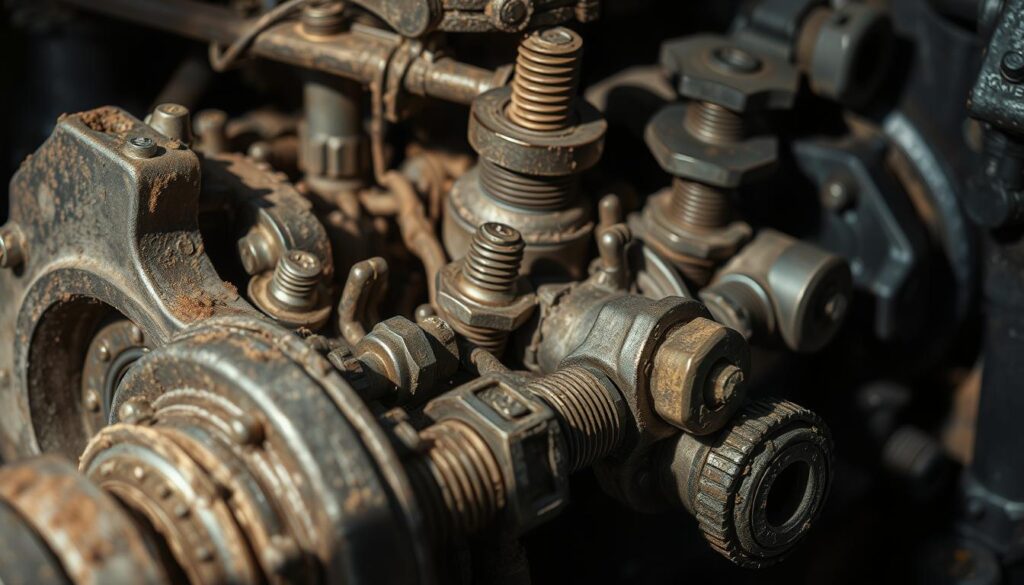
Modern diesel engines present unique repair challenges that older cast-iron designs never faced. Manufacturers increasingly use aluminum for cylinder heads, blocks, and various components to reduce weight and improve fuel efficiency. This shift creates significant vulnerability in thread integrity.
Aluminum engine block threads suffer damage far more easily than their steel counterparts. The material’s softer nature makes it particularly susceptible in high-stress applications like glow plug holes, injector hold-downs, and exhaust manifold studs. A steel bolt threaded into aluminum creates an inherent mismatch in hardness that favors thread stripping under stress.
Environmental factors compound these mechanical stresses considerably. Diesel equipment operates in punishing conditions that accelerate thread degradation through multiple pathways.
| Environment | Primary Threat | Affected Components | Degradation Timeline |
|---|---|---|---|
| Marine Applications | Salt exposure causing corrosion | Oil pans, intake manifolds, transmission housings | Accelerated damage within 6-12 months |
| Industrial Settings | Chemical contamination | Oil filter adapters, coolant passages | Variable based on chemical exposure |
| Cold Climates | Freeze-thaw cycles | Cylinder heads, water pump housings | Cumulative damage over multiple seasons |
| Mining Operations | Dust and abrasive particles | External mounting threads, access covers | Rapid wear in high-dust conditions |
The consequences of thread failure extend far beyond the immediate repair need. When aluminum engine block threads strip in critical locations, the cascading effects can be devastating. Minor oil leaks from damaged oil pan threads waste expensive lubricants and create environmental hazards. More seriously, catastrophic coolant breaches occur when water jackets are compromised by broken fasteners. These failures can lead to engine overheating, warped cylinder heads, and complete powerplant destruction.
$5,000 – $15,000
Daily lost productivity cost when heavy construction machinery sits idle due to thread failures
A single stripped thread can sideline equipment worth hundreds of thousands of dollars. According to ATRI’s Operational Costs of Trucking analysis, heavy construction machinery sitting idle costs operators between $5,000 and $15,000 per day in lost productivity. Agricultural equipment failures during harvest seasons result in crop losses that dwarf repair expenses. Fleet managers face operational disruptions that ripple through entire job sites when key machinery becomes unavailable. Backup equipment often doesn’t exist for specialized diesel machines, making thread failure prevention a critical business priority rather than just a maintenance concern.
Thread damage represents an inevitable maintenance challenge rather than an occasional nuisance. Every diesel engine will eventually experience thread issues as a natural consequence of its operational demands. The question isn’t whether threads will fail, but when—and whether operators are prepared with proper repair techniques when failure occurs.
Understanding Thread Repair Kits and How They Work
Every successful thread repair begins with understanding the specialized components and scientific principles that make restoration possible. Thread repair systems transform damaged fastener holes into connection points that exceed original factory specifications. This restoration capability makes these kits essential tools for diesel equipment maintenance and repair operations.
The thread restoration process relies on precision engineering rather than temporary fixes. Each component serves a specific function in removing damaged material and creating a superior threaded connection. Professional mechanics understand that proper thread repair requires both the right tools and knowledge of how they work together.
Components of a Thread Repair System
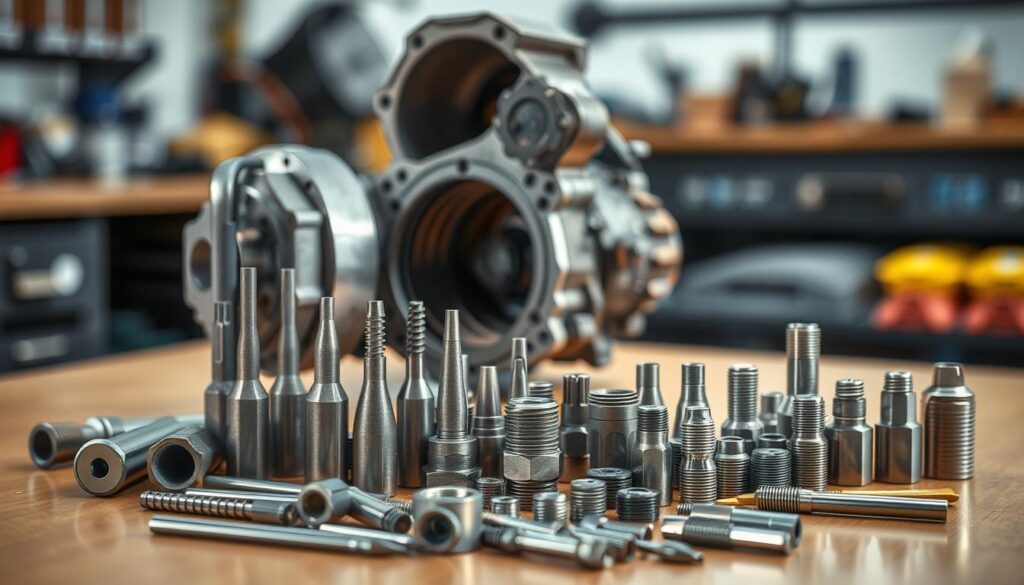
A complete thread repair kit contains multiple precision-engineered pieces that work in sequence. The oversized drill bit serves as the first critical tool in any repair operation. This high-speed steel or carbide bit removes all damaged thread material while creating a precision pilot hole. The bit diameter exceeds the original hole size to eliminate stripped sections completely.
Specialized tapping tools cut new threads to exact specifications within the enlarged hole. These taps feature proper flute design that evacuates metal chips effectively during the cutting process. Quality kits include screw taps sized appropriately for each application, ensuring clean thread formation.
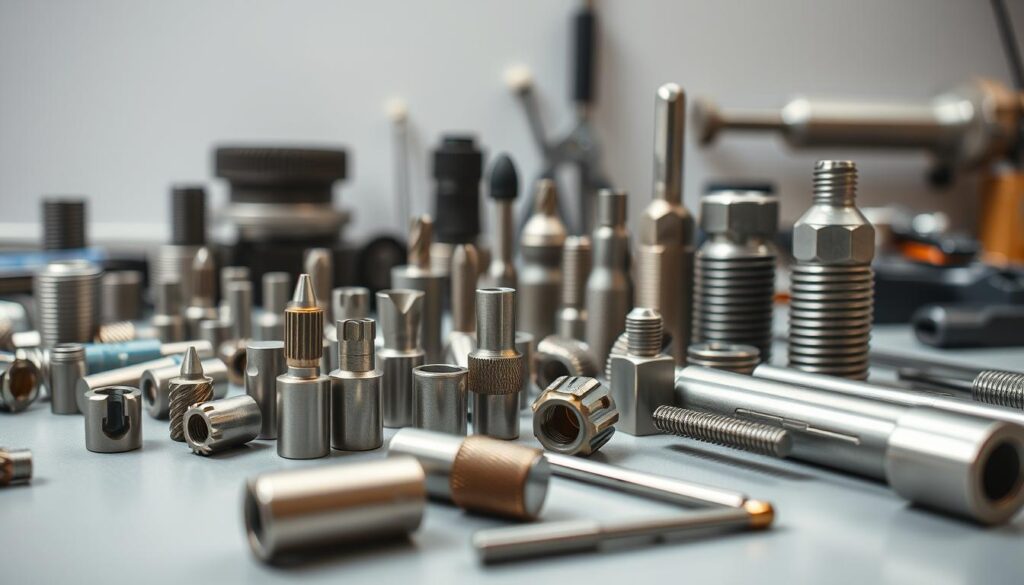
Insert installation tools represent the next essential element in thread repair systems. These tools position and drive threaded inserts to the proper depth and alignment. Some versions feature adjustable depth stops for consistent installation across multiple repairs.
The threaded insert itself forms the heart of any repair system. Self-tapping thread inserts utilize a conical shape with cutting slots or holes for self-tapping installation. This design works particularly well in difficult-to-cut materials like hardened aluminum alloys common in diesel applications. Additional tools round out professional-grade kits including countersinks that prepare blind holes for proper insert seating and tang break tools that remove installation tabs after insert placement.
| Component | Primary Function | Material Specification | Critical Feature |
|---|---|---|---|
| Oversized Drill Bit | Removes damaged threads and creates pilot hole | High-speed steel or carbide construction | Precision diameter for exact fit |
| Tapping Tool | Cuts new holding threads | Hardened steel with flute design | Chip evacuation capability |
| Insertion Tool | Installs threaded insert to proper depth | Tool steel with depth control | Adjustable stop mechanism |
| Threaded Insert | Creates new thread interface | Stainless steel or specialized alloy | Load distribution design |
| Tang Break Tool | Removes installation tab | Hardened steel punch design | Precise break point engagement |
The Science Behind Thread Restoration
Understanding thread insert technology requires examining the engineering principles that make repairs stronger than original threads. These systems don’t simply patch damage—they fundamentally improve the connection point through superior load distribution.
Threaded inserts spread fastener loads across a significantly larger surface area than standard tapped threads. This expanded contact zone reduces stress concentration at individual thread peaks. The result is improved pull-out resistance and dramatically extended service life.
The metallurgical advantage becomes particularly evident in aluminum diesel components. Steel inserts create a wear-resistant interface that eliminates the galling and thread deterioration common in aluminum-to-steel fastener applications. This material pairing prevents the gradual damage that occurs during repeated assembly and disassembly cycles.
Helical insert design delivers unique performance characteristics through its diamond-shaped wire cross-section. This geometry creates multiple load-bearing contact points along the fastener threads. The insert flexes slightly under load, maintaining consistent tension and preventing loosening from vibration. Solid bushing designs offer different advantages for high-torque applications, providing unyielding support for bolts subjected to extreme forces. The bushing wall thickness distributes rotational stress throughout the parent material rather than concentrating it at thread roots.
Properly installed thread inserts consistently exceed original thread strength by 20 to 50 percent. This improvement stems from the combination of superior load distribution, better material properties, and increased thread engagement length. Repaired threads often become the strongest connection points in the entire assembly. The science extends to installation precision as well, where correct insert depth ensures full thread engagement without bottoming issues while proper alignment prevents cross-threading during fastener installation.
Why Thread Repair Kit Diesel Solutions Are Essential
Every maintenance decision carries financial consequences, and thread repair technology consistently proves its value against traditional replacement approaches. Modern diesel operations face mounting pressure to reduce expenses while maintaining equipment availability. Thread repair kits address both requirements simultaneously through proven technical capabilities and measurable economic benefits.
The business case for thread repair extends beyond simple cost reduction. These systems enable maintenance teams to solve critical problems without removing major components from service. This capability transforms emergency breakdowns into manageable repairs that preserve operational schedules and protect profit margins.
Economic Analysis: Repair Versus Component Replacement
The financial advantages of thread repair become clear when examining real-world scenarios. A cylinder head for a modern diesel engine typically costs between $3,000 and $8,000 depending on engine model and manufacturer. In contrast, a complete thread repair kit with multiple inserts runs $150 to $500 and resolves the damage in under an hour.
Replacement part costs represent only a portion of the total expense. Hidden costs accumulate rapidly when components require replacement rather than repair. Supply chain delays currently extend part availability to weeks or months in many cases. Labor expenses for complete disassembly and reassembly add substantial costs to any major component replacement. Thread repair delivers immediate return on investment, typically within the first application. Subsequent repairs represent pure cost avoidance.

Consider specific scenarios that demonstrate diesel repair cost savings. Oil pan replacement requires 8 to 12 hours of skilled labor for removal, installation, and system refill. Drain plug thread repair completes in 30 minutes with the pan remaining in place. Cylinder head replacement necessitates complete engine teardown with associated risks and expenses. Glow plug hole repair performs with the head installed, eliminating major disassembly.
The risk factor deserves consideration in any cost analysis. Major component replacement introduces opportunities for additional problems during installation. New gaskets may leak, reassembly errors can cause damage, and compatibility issues sometimes emerge with replacement parts. Thread repair eliminates these risks by preserving the original component.
| Repair Factor | Thread Repair Kit | Component Replacement | Cost Difference |
|---|---|---|---|
| Parts Cost | $150-$500 | $3,000-$8,000 | 95% savings |
| Labor Time | 0.5-1 hour | 8-12 hours | 90% reduction |
| Part Availability | Immediate (kit on hand) | 2-8 weeks typical | Same-day completion |
| Additional Risks | Minimal | Gasket leaks, installation errors | Risk elimination |
Operational Impact Through Reduced Equipment Unavailability
Equipment downtime costs vary by industry and season, ranging from $500 to $5,000 per day depending on equipment type and operational demands. Construction equipment sitting idle during peak season represents lost contracts and missed opportunities. Agricultural machinery unavailable during harvest results in crop losses and compressed operating windows.
Thread repair technology enables same-day return to service in most applications. Traditional replacement approaches require days or weeks waiting for parts to arrive. This difference in turnaround time directly impacts revenue generation and operational capacity. Fleet maintenance efficiency improves dramatically when repair capabilities exist in-house. Maintenance teams transition from reactive crisis management to proactive planned maintenance.
Transportation fleets experience particular benefit from reduced equipment downtime costs. A single truck generating $1,000 daily revenue loses that income entirely when waiting for parts. Multiply that impact across a fleet, and the operational advantage of thread repair becomes substantial. Same-day repairs keep vehicles moving and revenue flowing.
Types of Thread Repair Kits for Diesel Applications
The thread repair market offers multiple proven technologies, each engineered for specific diesel applications. Selecting the appropriate system depends on factors like load requirements, operating temperatures, and installation accessibility. Professional technicians evaluate these diesel-specific repair kits based on performance history in similar repair scenarios.
Wire Coil and Solid Sleeve Insert Technologies
HeliCoil inserts represent the most widely recognized helical wire insert system in the industry. These inserts feature a tightly wound spring configuration with a diamond-shaped wire cross-section. The coiled design creates flexible threads that distribute fastener loads across multiple engagement points.
The primary advantage of HeliCoil technology lies in its minimal space requirements. These inserts add negligible wall thickness to the repair site, making them ideal for thin-walled aluminum castings. Installation requires only standard drilling and tapping equipment that most diesel shops already own.
However, HeliCoil inserts face limitations in demanding diesel environments. High-vibration applications can cause these wire coils to loosen over time. Extreme thermal cycling reduces their retention strength, and the required tang removal creates contamination risks in sensitive systems.
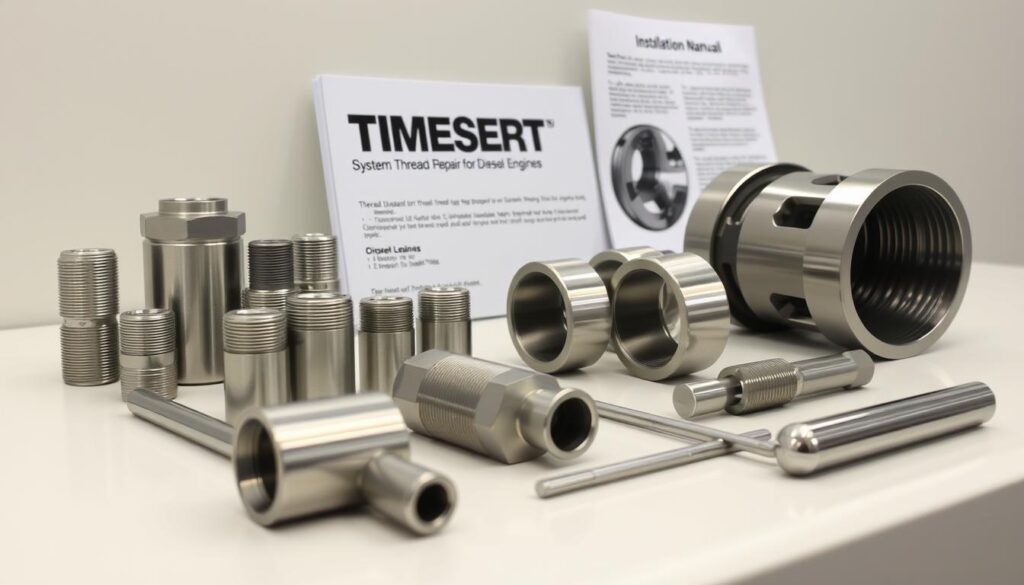
The TIME-SERT system addresses these shortcomings through solid bushing construction. These inserts feature a complete sleeve with precision-cut external threads and an integral stop flange. The flange positively locates the insert during installation and prevents rotation under load. TIME-SERT technology excels in high-torque fastener locations requiring 100+ ft-lb specifications. Turbocharger mounting points, main bearing cap studs, and cylinder head bolt holes benefit from this system’s superior vibration resistance.
“TIME-SERT installations in exhaust manifold repairs routinely withstand temperatures exceeding 1,200°F while maintaining torque specifications through thousands of thermal cycles.”
— Industry Technical Standard
| Insert Type | Best Applications | Temperature Range | Vibration Resistance |
|---|---|---|---|
| HeliCoil Wire Coil | Accessory mounts, low-torque fasteners | -40°F to 400°F | Moderate |
| ✓ TIME-SERT Solid Sleeve | Exhaust studs, turbo mounts, head bolts | -60°F to 1,400°F | Excellent |
| Thick-Wall Bushing | Transmission cases, differential housings | -40°F to 350°F | Superior |
Heavy-Duty Bushing Systems
Solid bushing repairs utilize thick-wall insert designs that provide maximum material strength. Heavy-duty systems feature insert walls substantially thicker than standard helical designs. These inserts completely isolate steel fasteners from aluminum parent material, preventing galvanic corrosion in dissimilar metal applications.
Diesel engine blocks made from aluminum alloys develop severe corrosion when steel bolts contact the base metal directly. Quality bushing installations create a stainless steel or black oxide-coated barrier that eliminates this electrochemical reaction. The substantial wall thickness delivers exceptional pull-out resistance in blind hole applications, with thread engagement increasing by 40-60% compared to wire coil inserts of equivalent length.
These systems serve as the authoritative choice for critical repairs where failure consequences are severe. Transmission bell housing bolt holes, differential cover threads, and hydraulic pump mounting locations require the absolute security that thick-wall bushing systems provide.
Purpose-Engineered Repair Solutions
Specialized diesel-specific repair kits address recurring failure points in popular engine platforms. Manufacturers design these kits around documented field problems with optimized insert dimensions and materials. Purpose-built kits for specific applications like Ford Power Stroke injector hold-down repairs incorporate lessons learned from thousands of field failures.
Insert length, thread pitch, and installation depth are precisely calculated for the specific application. Pre-sized drill bits and taps eliminate guesswork during the repair process. Glow plug hole repair kits for aluminum cylinder heads account for the unique thermal expansion characteristics of glow plug boss areas.
Purpose-built kits reduce installation time by 30-50% compared to generic repair systems. All components arrive pre-matched and verified for the target application. This specialization minimizes the risk of incorrect tool selection or improper insert sizing that could compromise repair integrity.
Common Diesel Engine Thread Repair Applications
Thread failures in diesel engines typically concentrate in high-stress areas where temperature extremes and constant vibration take their toll. These critical locations experience accelerated wear due to the demanding operational environment that diesel equipment creates. Knowing where diesel engine thread applications are most vulnerable allows maintenance teams to prepare appropriate repair solutions before minor issues escalate into major breakdowns.
Critical Repair Areas in Cylinder Heads
Glow plug holes represent one of the most frequent and consequential thread failures in diesel maintenance. These threaded openings in aluminum cylinder heads endure extreme thermal cycling from ambient temperature to over 1,800°F during operation. The expansion and contraction that occurs with every engine cycle gradually loosens the thread engagement over time.
Carbon buildup creates the primary trigger for glow plug thread damage. Combustion byproducts accumulate around the glow plug threads, causing the plugs to seize in their holes. When technicians attempt removal, the seized plug requires excessive torque that strips the relatively soft aluminum threads in the cylinder head.
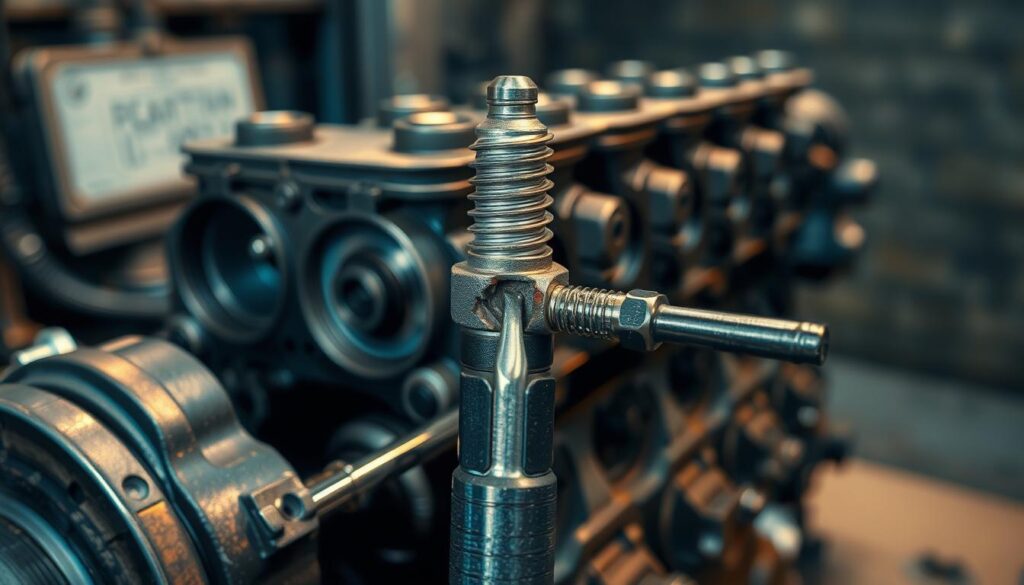
A stripped glow plug hole that isn’t properly addressed creates serious operational problems. Compression loss through damaged threads reduces engine efficiency and power output. More critically, escaped combustion gases can create dangerous hot spots or even pose safety hazards to operators and nearby personnel.
⚠️ Safety Warning
Never attempt glow plug removal on a cold engine with seized plugs. Allow the engine to reach operating temperature first—thermal expansion often frees seized plugs without excessive torque. Applying penetrating oil 24-48 hours before removal further reduces seizure risk and protects cylinder head threads.
Glow plug thread repair demands specialized insert systems rather than standard helical wire designs. TIME-SERT or solid bushing inserts provide the sealing integrity and temperature resistance these applications require. The extreme heat exposure eliminates standard helical coil inserts as viable options for long-term reliability.
Drain Plug Thread Complications
Oil pan threads suffer damage more frequently than any other location on diesel equipment. The drain plug experiences repeated removal and installation during every oil change interval. This constant cycling, combined with improper installation techniques, accelerates thread deterioration.
Over-tightening represents the leading cause of drain plug thread failure. Technicians applying excessive torque during oil changes gradually deform the threads until they no longer provide adequate holding strength. Cross-threading during installation causes immediate and severe damage that often requires repair before the next service interval.
The progression of drain plug damage follows a predictable pattern. Initial thread wear allows minor oil seepage around the plug. Technicians respond by tightening the plug further, which accelerates the thread destruction. Eventually, the drain plug either strips completely or seizes permanently in the oil pan.
Oil pan drain plug repair presents unique execution challenges compared to other thread restoration work. Limited access underneath the vehicle complicates the repair process. The risk of metal chips contaminating fresh engine oil requires careful prevention measures throughout the installation. Proper chip management during repair protects engine longevity—coating the tap with grease captures metal swarf before it falls into the oil pan. Thorough cleaning with compressed air and brake cleaner removes all debris before final insert installation.
Manifold Mounting Thread Issues
Exhaust manifold bolt holes create one of diesel engines’ most problematic thread scenarios. These mounting points endure extreme thermal stress from exhaust temperatures exceeding 1,200°F. Constant vibration combines with corrosive exhaust gases to attack both the fasteners and the threads they engage.
Broken manifold studs frequently cause secondary thread damage beyond the initial failure. Technicians drilling out seized or broken studs often inadvertently damage the original threads. In worst-case situations, the drill bit penetrates through into the water jacket, creating a cooling system leak that compounds the repair complexity.
Exhaust manifold thread restoration requires insert systems rated for continuous high-temperature exposure. Standard thread repair inserts cannot withstand the thermal environment that manifold applications create. TIME-SERT or heavy-duty bushing systems with high-temperature thread-locking compound provide the durability these repairs demand. The positive mechanical locking that quality insert systems provide actually improves reliability over original equipment specifications.
Turbocharger Mounting Point Failures
Turbo mounting threads experience operational stresses that few other fastener locations must endure. Constant vibration at frequencies that loosen conventional fasteners combines with oil contamination that degrades thread integrity. Thermal cycling from exhaust temperatures adds another layer of stress to these critical attachment points.
Turbocharger mounting repairs cannot accept compromise in quality or execution. A failed turbo mounting bolt allows the turbocharger to shift position, potentially damaging oil supply lines or exhaust connections. The resulting oil leak or exhaust leak creates immediate operational problems and potential fire hazards.
Turbocharger mounting repair demands the highest-quality insert systems with positive locking mechanisms. The vibration environment requires mechanical thread engagement that prevents backing out under operational loads. Thread inserts in these applications often provide superior holding strength compared to original threads, actually improving equipment reliability beyond factory specifications.
The HDJ Perspective
Thread repair capability has transitioned from a specialized skill to an essential maintenance competency. With supply chain disruptions extending delivery times and replacement part costs climbing, fleets that maintain in-house thread repair capabilities gain measurable competitive advantages. We’ve observed shops that invested $500-$1,000 in quality repair kits recovering that investment within the first month through avoided downtime and eliminated expedited shipping charges. The technology has matured to the point where properly executed repairs genuinely outperform original factory threads—a reality that smart fleet managers now factor into their maintenance planning.
Heavy Equipment and Machinery Thread Repairs
Thread damage in heavy equipment doesn’t stop at the engine—critical systems like transmissions and hydraulics face similar failures. Industrial machinery relies on hundreds of threaded connections throughout driveline components, hydraulic circuits, and structural mounting points. Each of these systems experiences unique stresses that can lead to heavy equipment thread damage requiring immediate attention.

Driveline Component Thread Restoration
Transmissions and differentials contain numerous threaded connections vulnerable to the same failure modes as engine components. Drain plugs, fill ports, and sensor mounting threads in aluminum housings face constant challenges from over-torquing, corrosion, and thermal cycling. Transmission thread repair becomes critical when these threads strip during routine service.
External leaks from damaged housing threads can result in catastrophic transmission failure if fluid loss goes undetected. A stripped drain plug thread may seem minor, but it can sideline expensive equipment for days while waiting for housing replacement. The severity increases with differential housing threads because repairs must prevent metal contamination of gear lubricants.
Aluminum transmission cases and differential covers often benefit from preventive insert installation during rebuilds, creating more durable threads than original equipment. Many professional rebuilders now install thread inserts in all drain and fill plug locations as standard practice. The investment adds minimal cost compared to future thread repairs or housing replacement.
Hydraulic Circuit Thread Solutions
Hydraulic systems powering heavy equipment implements and controls experience unique thread stresses. High-pressure pulsations, vibration from actuators, and exposure to hydraulic fluids create challenging conditions. Common applications include cylinder mounting bosses, valve manifold ports, pump mounting flanges, and accumulator mounting threads.
Damage often results from improper fitting installation by technicians unfamiliar with proper torque specifications. Under-tightening leads to leaks, prompting subsequent over-tightening that strips threads. Initial over-torquing causes immediate failure requiring emergency repairs.
⚠️ Safety Warning
Inadequate thread repairs in high-pressure hydraulic applications can result in catastrophic fitting ejection and severe injury when systems reach operating pressure. Always use solid bushing inserts with thread-locking compounds for pressure-containing threads and verify inserts are rated for system pressure plus 50% safety margin.
Insert selection for hydraulic applications follows strict guidelines: solid bushing inserts with thread-locking compounds for all pressure-containing threads, inserts rated for system pressure plus 50% safety margin, material compatibility with hydraulic fluid chemistry, and proper installation torque to prevent insert loosening under vibration. Helical wire inserts should only be used for low-pressure or non-pressurized mounting applications.
Structural and Mounting Thread Repairs
Equipment frames, implement mounting points, and accessory brackets present different thread repair challenges. These applications typically involve larger thread sizes from 1/2″ to 1″ diameter and beyond. Machinery mounting threads must withstand static loads, dynamic shock loads, and cyclic fatigue from equipment operation.
Frame thread damage commonly results from cracked mounting bosses that develop from shock loading during operation, worn threads from repeated implement changes throughout equipment life, and accident damage that creates immediate repair needs to restore equipment function.
Life-safety considerations include rollover protection structures and cab mounting threads. These applications require engineering judgment beyond standard repair procedures. Some situations demand welded reinforcement or replacement of the entire structural section rather than simple thread restoration. Professional equipment maintainers recognize that machinery mounting threads supporting implements like loaders, backhoes, or agricultural attachments experience extreme stress cycles during operation.
Selecting the Right Thread Repair Kit for Your Diesel Equipment
Thread repair kit selection involves multiple technical factors that determine whether your repair will last or fail prematurely. Making the correct choice requires understanding thread specifications, material properties, and the operating environment of your diesel equipment. The wrong selection wastes time and money, while the right choice restores full strength and functionality.
Thread Size and Pitch Considerations
Accurate thread identification forms the foundation of successful thread repair kit selection. The two primary thread families require different approaches and specifications. Metric threads measure diameter in millimeters with pitch specified as the distance between threads, such as M8 x 1.25. Unified threads measure diameter in inches with pitch specified as threads per inch, like 1/4″-20 UNC.
Diesel equipment typically employs metric thread repair standards for engine components following European and Asian design conventions. American-manufactured heavy equipment may use UNC thread repair standards or UNF (Unified Fine) threads for critical fastening applications. Exact pitch matching proves absolutely critical for repair success—even when the major diameter appears identical, incorrect pitch renders the repair completely ineffective.
When original thread size specifications remain unknown, several identification methods provide accurate measurements: thread pitch gauges quickly identify pitch by matching serrated blades to existing threads, digital calipers measure major diameter and thread depth for specification lookup, service manuals provide factory specifications for all threaded connections, and parts diagrams list fastener specifications by equipment model and component.
Thread engagement length determines insert selection beyond diameter and pitch. The insert must provide adequate engagement for the fastener strength being installed. Steel-into-steel applications typically require 1.5 times the fastener diameter for full strength. Steel fasteners into aluminum components demand 2.0-2.5 times diameter engagement to distribute loads properly. Quality manufacturers offer insert sizes from 2mm diameter up to 100mm in virtually all thread forms including METRIC, UNC, UNF, BSC, BA, BSP, and BSW.
Material Compatibility for Diesel Engines
Insert material selection directly impacts repair longevity and performance under diesel operating conditions. Material compatibility considerations extend beyond simple strength to include corrosion resistance, thermal expansion, and galvanic interaction with surrounding components.
Three primary insert materials serve different diesel applications. Stainless steel inserts conforming to ASTM A313 specifications provide maximum corrosion resistance for marine diesel applications and equipment exposed to salt, chemicals, or constant moisture. Phosphate-coated carbon steel inserts offer excellent performance at lower cost for general diesel equipment in typical operating environments. Specialized coatings including black oxide or proprietary finishes enhance specific properties like heat dissipation or chemical resistance.
Galvanic compatibility prevents accelerated corrosion when dissimilar metals contact in the presence of electrolytes. Steel inserts in aluminum diesel components actually provide beneficial isolation when properly installed, preventing direct aluminum-to-steel fastener contact that would corrode rapidly.
Material strength ratings must meet or exceed the fasteners being installed—Grade 8 bolts with 150,000+ PSI tensile strength require inserts capable of supporting these loads without deformation. Fastener grades follow SAE J429 mechanical requirements that specify minimum tensile and proof load values for each grade designation.
Temperature and Pressure Requirements
Operating environment parameters determine which thread repair systems will survive in specific diesel applications. Temperature resistance and pressure requirements vary dramatically across different equipment locations, demanding careful specification matching.
| Application Area | Temperature Range | Insert Requirements |
|---|---|---|
| Cylinder head repairs | 300-400°F continuous, 600°F+ spikes | High-temp materials, no organic adhesives |
| Exhaust system repairs | 800-1,200°F sustained | Stainless inserts, mechanical locking only |
| Transmission/hydraulic systems | 150-250°F typical operation | Standard inserts with appropriate sealants |
| External frame/mounting | Ambient to 180°F | All materials suitable, corrosion focus |
Temperature affects both insert materials and installation compounds. Standard thread-locking adhesives lose effectiveness above 350°F, requiring high-temperature formulations or mechanical locking features for hot-section applications. Pressure requirements prove critical for repairs in pressurized diesel systems—thread repairs adjacent to combustion chambers must seal against compression pressures exceeding 500 PSI and combustion pressures reaching 2,000+ PSI.
Hydraulic system repairs face different pressure requirements, typically 1,500-3,000 PSI for mobile equipment and up to 5,000 PSI for industrial applications. These sustained pressures demand insert systems with proven sealing performance under hydraulic fluid exposure and pressure cycling.
Free Professional Fleet Tools
Cost calculators, fault code lookup, maintenance planners, and more—built for owner-operators, fleet managers, and diesel techs. No signup required.
Step-by-Step Thread Repair Process
The thread repair installation process transforms damaged holes into stronger connections through carefully controlled steps. Each phase builds upon the previous operation to create a precisely machined receiving hole that accepts the thread insert perfectly. Mastering this thread repair technique ensures professional results that restore full load-bearing capacity to compromised fastener locations.
Preparation and Safety Measures
Verify that the component provides adequate access for thread repair tools before beginning any repair work. Confirm that the selected repair kit matches the thread specification exactly by comparing the damaged fastener to kit documentation. Assemble all required equipment including kit-provided tools, power drills, appropriate bits, cutting fluids, cleaning supplies, and measurement instruments.
Safety protocols for thread repair work protect against specific hazards inherent to machining operations. Wear safety glasses with side shields to guard against metal chips and cutting fluid spray that can cause serious eye injuries. Use respiratory protection when drilling damaged threads in components containing residual oil, fuel vapors, or materials that produce harmful dust. Ensure adequate ventilation in enclosed spaces where drilling and tapping operations generate fumes from cutting fluids.
Drilling Out the Damaged Thread
Removing damaged threads requires precision drilling that creates a clean, properly sized hole for the insert system. This critical machining operation establishes the foundation for all subsequent steps in the tapping procedure. The drill bit must remove all damaged thread material while maintaining perfect perpendicular alignment to the mounting surface.
Thread repair kits include drill bits sized specifically for the insert system being installed. Never attempt to substitute standard drill bits from general tool sets because even slight size variations result in incorrect hole dimensions that cause repair failure. Verify drill bit size through kit documentation or by measuring the bit diameter with precision calipers. Some insert systems require multiple drilling operations to achieve proper hole geometry—the initial through-drill removes damaged threads completely while the secondary counterbore operation creates the insert flange recess.
Drill alignment represents the most critical factor in successful thread repair installation. Use drill guides or bushings provided in quality repair kits to ensure the drill enters perpendicular to the mounting surface. Even slight angular deviation creates tapered holes that prevent proper insert seating and compromise repair strength. Set drill speed according to material type: 300-600 RPM for aluminum components, 200-400 RPM for cast iron, and 150-300 RPM for steel housings.
Tapping the New Thread
Cutting precision threads into the drilled hole creates the holding mechanism for the thread insert. The tapping procedure demands careful attention to alignment and lubrication to produce clean, accurate threads. Quality tapping ensures the insert threads into place smoothly and achieves maximum holding power in the repaired hole.
Proper cutting fluid application is absolutely essential for tap survival and thread quality. Select appropriate cutting fluids based on material: sulfur-based cutting oils for steel components, light machine oil for aluminum, and water-soluble fluids for cast iron. Attempting to tap threads dry results in tap breakage, torn threads, and repair failure. Flood the tap and hole with cutting fluid before beginning tapping operations and apply fluid continuously as tapping progresses.
Start the tap square to the hole using T-handle tap wrenches that provide tactile feedback for alignment sensing. The initial tap engagement determines alignment for the entire tapping operation—once the tap begins cutting at an angle, the resulting tapered threads cannot be corrected. Rotate the tap one-quarter turn forward, then one-eighth turn backward to break chips during the tapping procedure. This alternating rotation prevents chip packing while reducing cutting forces on the tap.
| Repair Phase | Critical Tool | Common Mistake | Success Factor |
|---|---|---|---|
| Drilling Preparation | Kit-specific drill bit with guide bushing | Using standard drill bits from tool set | Verify bit size matches kit specifications exactly |
| Drilling Operation | Variable speed drill (200-600 RPM) | Excessive speed causing heat damage | Frequent chip clearing with continuous fluid |
| Thread Tapping | T-handle tap wrench with kit tap | Attempting dry tapping without lubrication | Quarter-turn forward, eighth-turn back rhythm |
| Insert Installation | Thread-specific installation driver | Over-tightening or insufficient depth | Use depth stops or rotation counting |
Installing the Thread Insert
The insert installation phase completes the repair by placing the precision-threaded insert into the prepared hole. Installation tools are thread-form-specific and cannot be interchanged between different insert types. Helical insert drivers feature mandrels that engage the insert tang for rotational drive. Solid bushing drivers utilize hex or slotted configurations matching the insert’s driving feature for torque transmission.
Apply thread-locking compound to the insert’s external threads before installation unless high-temperature applications require specialized products. Medium-strength formulations provide adequate retention while allowing removal if future service requires it. Thread the insert onto the installation tool and carefully start it into the prepared hole. Maintain perfect alignment during initial engagement because cross-threading damages the newly cut threads and ruins the repair.
Drive the insert to proper depth, typically flush with or slightly below the mounting surface. Use installation tools with built-in depth stops for consistent results. For self-tapping inserts, apply thread-locking compound to the external threads before twisting in the insert with the included installation tool. The self-tapping design cuts its own holding threads as installation progresses, eliminating the separate tapping operation.
Traditional helical-type repairs require tang removal after insert installation to allow full fastener engagement. Position the specialized break-off tool’s blade precisely at the tang break-notch location and strike sharply with a hammer to shear the tang from the installed insert. Tang retrieval is absolutely critical in diesel engines where a loose tang could cause catastrophic damage if ingested into moving components. Use a magnetic pickup tool or flexible grabber to retrieve the broken tang from the hole.
Professional Tips and Best Practices
Professional-level thread repair separates competent mechanics from master technicians through specialized techniques and quality verification procedures. While basic thread repair follows straightforward steps, achieving consistent results in challenging diesel equipment applications demands advanced knowledge of material behavior, precision tool handling, and rigorous quality control.
Aluminum Engine Block Expertise
Aluminum engine thread repair presents unique challenges that demand modified techniques compared to cast iron or steel applications. Modern diesel engines predominantly use aluminum for weight savings, but this material’s softness, high thermal expansion, and susceptibility to galling require specialized handling.
Cutting tool sharpness becomes absolutely critical when working with aluminum. Dull drill bits and taps tear aluminum rather than cutting it cleanly, creating rough threads that compromise insert retention. Professional technicians verify cutting edge sharpness before beginning each repair and replace worn tools immediately when resistance increases or chip quality deteriorates.
Cutting speeds for aluminum differ significantly from steel applications. Drilling operations typically require 400-800 RPM to prevent material buildup on cutting edges. Tapping speeds should remain moderate with frequent reversal to clear stringy aluminum chips that pack in blind holes. Generous cutting fluid application prevents aluminum from welding to cutting tools during machining operations.
The galvanic corrosion challenge unique to aluminum makes complete fastener isolation through proper insert installation not just beneficial but essential for repair longevity. Thread engagement requirements in aluminum exceed those for steel due to aluminum’s lower shear strength—steel fasteners require 1.5-2.0 times the fastener diameter for general applications, with critical high-load fasteners needing up to 2.5 times diameter engagement.
Confined Space Solutions
Difficult access thread repair represents one of the most challenging aspects of diesel equipment service. Many thread repairs must be performed in confined spaces with limited access and awkward working angles. Cylinder head repairs often require working between valve train components or around fuel injection systems where tool clearance measures in millimeters.
Specialized tools enable repairs in locations where standard equipment cannot reach. Angle drilling attachments or offset drills provide access when straight-line drilling is impossible due to obstructions. Flexible shaft drivers for tapping operations allow technicians to position the drive motor outside restricted spaces while the tap operates within. Inspection mirrors and borescopes verify alignment and insert installation when direct visual access is blocked by surrounding components.
Maintaining perpendicular alignment in awkward positions requires additional techniques beyond normal procedures. Drill guides with extension posts help establish correct angles even when the technician cannot position themselves directly behind the tool. The decision between struggling with limited access and disassembling surrounding components depends on repair criticality and time constraints.
Verification and Testing Procedures
Thread repair quality control separates professional operations from amateur work through systematic inspection and functional testing. Visual inspection provides the first verification layer, examining installed inserts for proper depth relative to mounting surfaces. Inserts should sit flush or slightly recessed, never protruding above the surface where they might interfere with gasket sealing or component mating.
Complete insert circumference engagement must be verified with no visible gaps between insert and parent material threads. Installation damage such as cracked inserts, raised lips, or debris in threads indicates improper technique requiring repair removal and reinstallation.
Functional testing procedures appropriate to each application confirm repair integrity. Fasteners should thread smoothly through their full engagement length with resistance appropriate to the thread class. Binding, cross-threading, or excessive looseness indicates improper tap selection, insufficient thread cleaning, or installation errors. Torque wrenches should reach specified values without sudden loosening or stripping sensations that signal inadequate insert retention.
Pressure testing becomes mandatory for repairs in sealed or pressurized systems. Oil pan drain plugs, hydraulic system ports, and coolant passage threads must withstand full system pressure without leakage. Testing should occur at operating temperature when possible, as thermal expansion affects sealing characteristics in aluminum components.
Preventing Future Thread Damage in Diesel Equipment
The best thread repair is the one you never have to perform, making prevention strategies essential for long-term diesel equipment reliability. While thread repair capabilities restore damaged equipment, implementing robust thread damage prevention protocols eliminates the root causes of thread failure before costly downtime occurs.
Correct Installation Torque Methods
Proper torque creates optimal clamp load while maintaining thread integrity—the fundamental principle behind successful fastener installation. Under-torquing allows joint movement and loosening that accelerates wear, while over-torquing exceeds material yield strength causing permanent thread deformation or immediate stripping. Modern diesel engines specify precise torque specifications based on extensive engineering analysis of joint requirements, fastener grades, and material properties.
Professional mechanics select appropriate torque tools for each application. Beam-type wrenches provide reliable accuracy for general applications without batteries or calibration concerns. Click-type wrenches offer convenient indication of target torque achievement through audible and tactile feedback. Electronic torque wrenches with data logging capability serve critical applications requiring documentation and verification.
Proper torque procedure ensures consistent results across all installations. Fastener threads must be clean and properly lubricated per specification—dry torque values differ significantly from lubricated values, sometimes by 20-30%. Multi-fastener joints require advancing fasteners in the specified sequence to distribute clamp load evenly across the joint surface. Final torque passes should progress in steps rather than attempting to achieve target fastener torque in a single pull.
Key Recommendation
Calibrate torque wrenches annually or per manufacturer recommendations. Periodically verify installed fasteners achieve specified torque using a second calibrated wrench to identify potential tool problems before widespread thread damage occurs.
Thread Protection Compounds and Their Proper Use
Thread compounds prevent damage and ensure reliable fastener performance when selected and applied correctly. Anti-seize compound provides lubrication during installation that reduces installation torque and prevents galling between dissimilar metals. It creates a barrier against corrosion that facilitates future disassembly and fills minor surface irregularities that improve load distribution.
Selecting the appropriate anti-seize formulation matches compound properties to application requirements. Copper-based compounds serve general high-temperature applications including exhaust system fasteners up to 1,800°F. Nickel-based anti-seize handles extreme temperature applications exceeding copper compound limits, reaching 2,600°F. Aluminum-based formulations work for moderate-temperature applications where copper might cause galvanic corrosion issues.
| Anti-Seize Type | Temperature Range | Best Applications | Key Advantages |
|---|---|---|---|
| Copper-Based | -65°F to 1,800°F | Exhaust systems, general diesel fasteners | Excellent lubrication, cost-effective |
| Nickel-Based | -65°F to 2,600°F | Turbocharger components, extreme heat zones | Highest temperature resistance |
| Aluminum-Based | -60°F to 1,600°F | Aluminum engine blocks, marine applications | Prevents galvanic corrosion |
Application technique determines compound effectiveness. Apply anti-seize sparingly to fastener threads only, avoiding contact with mounting surfaces where it can reduce friction and compromise clamp load. Thin uniform coats that fill threads without excess provide optimal protection. Never apply anti-seize to both male and female threads—coating one surface provides sufficient protection while preventing excessive buildup.
Thread locker application prevents vibration-induced loosening in diesel equipment subjected to constant movement and stress. Anaerobic thread-locking compounds cure in the absence of oxygen within assembled threads, creating mechanical resistance to rotation. Threads must be clean and free of oil or anti-seize that would prevent curing by blocking oxygen exclusion. Anti-seize and thread locker serve opposite purposes and must never be mixed—using both simultaneously neutralizes thread locker effectiveness.
Systematic Inspection and Proactive Monitoring
Regular inspection identifies thread deterioration before catastrophic failure occurs, transforming maintenance from reactive to predictive. Under FMCSA Part 396 inspection requirements, fleet managers must ensure components remain in safe operating condition. During routine service, examine fasteners for corrosion, distortion, or damage that indicates potential thread problems. Check for evidence of loosening such as witness mark misalignment, disturbed paint or sealant, or backed-out fastener positions.
Documentation practices for critical fasteners create accountability and traceability. High-consequence joints—cylinder head bolts, main bearing caps, critical structural fasteners—deserve individual tracking with installation dates, torque values, and inspection history recorded. Per 49 CFR Part 396 inspection and maintenance requirements, this data identifies patterns that predict failure and supports warranty claims when premature failures occur.
Predictive replacement strategies prevent failures rather than responding to them. Fasteners subjected to severe service should be replaced preventively at intervals based on service experience rather than waiting for visible damage. Following TMC Recommended Practices for preventive maintenance intervals, replacing grade 8 fasteners in high-stress applications every major overhaul, regardless of appearance, costs far less than equipment damage from unexpected fastener failure.
Frequently Asked Questions
Can thread repair kits fix any stripped thread in diesel equipment?
Thread repair kits address most stripped thread situations in diesel engines and heavy equipment. Success depends on adequate parent material thickness surrounding the damaged area—the material must support the enlarged hole and insert system. Extremely thin castings or severely damaged material may require component replacement rather than repair. Most engine components including cylinder heads, oil pans, transmission housings, and manifolds contain sufficient material for reliable repairs using proper insert systems matched to the specific application and load requirements.
How long do thread repairs last compared to original factory threads?
Properly executed thread repairs using quality insert systems frequently outlast original factory threads. Steel inserts in aluminum components create wear-resistant interfaces that prevent the galling and deterioration common in aluminum-to-steel fastener applications. The insert’s superior material properties and expanded load distribution result in repairs that can remain serviceable for the remaining equipment life. Critical factors include selecting the correct insert type for the application, following proper installation procedures, and using appropriate torque specifications during subsequent fastener installations.
What is the difference between HeliCoil and TIME-SERT repairs?
HeliCoil uses helical wire coil inserts with a flexible, spring-like design suitable for moderate-stress applications where space constraints limit options. TIME-SERT employs solid bushing inserts with integral stop flanges that provide superior vibration resistance and temperature tolerance. TIME-SERT installations handle demanding applications like exhaust manifold studs, turbocharger mounting points, and cylinder head bolts where extreme temperatures and high torque specifications apply. HeliCoil requires tang removal after installation while TIME-SERT tangless designs eliminate this step and the associated contamination risk in sensitive diesel systems.
Do I need different thread repair kits for metric and standard threads?
Yes, thread repair kits are specific to thread families and sizes. Metric thread repairs require metric-specific kits with appropriate drill bits, taps, and inserts sized in millimeters. Standard thread repairs need UNC (coarse) or UNF (fine) designated kits measured in inches. Using incorrect thread family components results in failed repairs that may cause additional damage. Professional shops maintain kits for commonly encountered sizes in both metric and standard configurations to address the varied diesel equipment origins in their service area.
Can thread repairs be performed with the engine installed in the vehicle?
Many thread repairs complete successfully with engines installed in their vehicles or equipment. Oil pan drain plugs, accessory mounting threads, and some cylinder head repairs often proceed without engine removal. Critical factors include adequate tool access for drilling and tapping operations, ability to maintain proper perpendicular alignment, and capability to prevent metal chip contamination during the repair process. Complex repairs in confined spaces may require specialized angle drilling attachments or flexible drive tools. Some situations warrant partial disassembly for better access rather than risking repair quality.
What causes threads to strip more frequently in aluminum diesel components?
Aluminum diesel components strip more readily due to the material’s relative softness compared to steel fasteners. When steel bolts thread into aluminum, the inherent hardness mismatch concentrates stress on softer aluminum threads. Over-torquing accelerates this effect significantly. Thermal cycling from engine operation causes differential expansion rates between steel fasteners and aluminum housings, gradually loosening thread engagement and promoting wear. Corrosion from dissimilar metals in the presence of moisture creates galvanic reactions that further weaken aluminum threads over time.
Building Thread Repair Capability Into Your Maintenance Program
Thread repair benefits extend far beyond immediate fixes. Modern insert systems create permanent equipment repair solutions that often surpass original factory specifications in strength and durability. This technology transforms potential equipment failures into opportunities for improvement while delivering substantial cost savings.
Diesel equipment reliability depends on maintaining operational readiness at all times. Thread damage will occur through normal service cycles, thermal stress, and vibration—treating it as an inevitable maintenance requirement rather than an emergency creates significant operational advantages. Organizations that develop in-house thread repair capabilities gain measurable competitive advantages through reduced downtime, eliminated expedited shipping charges, and improved maintenance scheduling flexibility.
The economic case proves compelling regardless of fleet size. Thread repair kits allow technicians to complete same-day repairs without removing damaged components entirely, preserving operational schedules and protecting profit margins. Professional diesel maintenance operations should view thread repair as essential competency—proper training, quality tools, and stocked repair kits for common thread sizes create preparedness that directly impacts profitability.
Repairs performed with appropriate insert systems and correct installation procedures create threads stronger than original equipment. This reality transforms thread repair from a compromise solution into a genuine equipment enhancement. Fleet managers and shop owners who embrace these capabilities position their operations for competitive advantage through superior equipment availability and reduced maintenance costs.
Share This Thread Repair Guide
Know a fleet manager or diesel tech who could benefit from this information? Help your network avoid costly downtime and expensive component replacements.