By Michael Nielsen, Editor & Publisher | 15+ Years in Diesel Repair
Last Updated: December 2025
📖 Estimated reading time: 18 minutes
Hydraulic hose replacement represents one of the highest-impact maintenance activities fleet managers can control. When these critical fluid lines fail unexpectedly, the consequences cascade far beyond simple repair costs—worker safety is compromised, equipment sits idle, and project timelines collapse. Strategic replacement protocols transform this liability into a competitive advantage that protects personnel, preserves equipment, and maximizes uptime.
The financial case for proactive hose management is compelling. Fleet operations that implement systematic inspection and replacement programs reduce emergency repair expenses by 30-40% compared to reactive approaches. More importantly, they eliminate the safety hazards that make hydraulic system failures so dangerous—hot oil burns, fire risks from atomized fluid, and injection injuries that can occur faster than any worker can react.
This guide provides fleet managers and maintenance supervisors with actionable protocols for hydraulic hose inspection, replacement, and inventory management. You’ll learn how to identify failure signs before they become emergencies, execute replacements safely, and build maintenance programs that deliver measurable returns on investment.
Key Takeaways
- Safety first: Hydraulic fluid under pressure can penetrate skin and cause injection injuries requiring immediate surgical intervention—never check for leaks with bare hands.
- Proactive programs pay off: Systematic replacement protocols reduce total maintenance costs by 30-40% compared to reactive repairs.
- Daily inspections prevent disasters: Five-minute pre-operation checks catch problems before they escalate into catastrophic failures.
- Specification matching is critical: Pressure ratings, temperature ranges, and fluid compatibility must align with OEM requirements to prevent premature failure.
- Training drives results: Technician competency in lockout-tagout, depressurization, and proper installation techniques directly impacts safety and equipment reliability.
Understanding Hydraulic Hoses in Fleet Equipment
Hydraulic hoses function as the circulatory system of heavy equipment, transmitting pressurized fluid that powers every critical function from boom extension to steering control. When these lines maintain their structural integrity, loaders dig, excavators swing, and dump trucks operate with predictable precision. When they fail, everything stops.
The interconnected nature of hydraulic systems means that a single compromised hose can trigger cascading problems across multiple components. Pressure loss in one circuit often affects related systems, turning a $200 hose failure into thousands of dollars in secondary damage. Fleet managers who understand this relationship invest in systematic inspection protocols that catch problems early.
Modern fleet equipment operates hydraulic systems at pressures ranging from 3,000 to 5,000 PSI during normal operation, with pressure spikes that can exceed these levels by 300% or more during aggressive duty cycles. This extreme pressure creates the performance that makes heavy equipment productive—and the hazards that make proper maintenance non-negotiable.
Why Hydraulic Hose Failures Devastate Fleet Productivity
When a hydraulic hose loses pressure integrity, the affected equipment experiences immediate loss of functionality. This sudden failure forces operators to halt work mid-task, creating workflow disruptions that cascade across entire project schedules. The disabled machine becomes a bottleneck that affects every crew member who depends on its operation.
The productivity impact extends well beyond the failed equipment itself. Fleet dispatchers must scramble to reassign work to machines already operating at capacity. Project managers face difficult decisions about priority tasks while managing compressed deadlines and frustrated clients. These ripple effects multiply the true cost of every unplanned repair event.
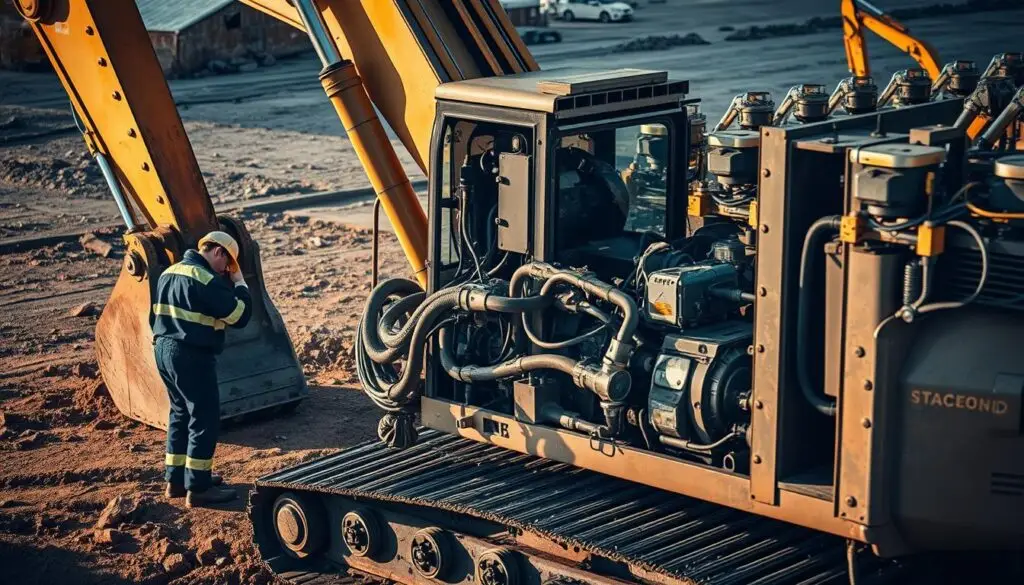
Even before complete failure occurs, degraded hoses cause performance problems that accumulate throughout the workday. Operators notice sluggish response, reduced lifting capacity, and delayed attachment movement. These symptoms indicate pressure drops that compromise efficiency long before catastrophic rupture occurs.
The True Cost of Unplanned Downtime
Emergency hydraulic repairs typically cost 3-5 times more than scheduled maintenance due to premium labor rates, expedited parts shipping, and after-hours technician availability. The failed hose replacement itself represents only a fraction of emergency response costs—the real expense comes from collateral impacts on production and personnel.
Industry benchmarks indicate that heavy equipment downtime costs range from $150 to $500 per hour depending on equipment type and operational context. Large excavators and specialized machinery command higher downtime costs due to their critical roles in project workflows. According to research from For Construction Pros, companies with 50 pieces of equipment facing typical 30% unplanned downtime rates could experience annual losses approaching $2 million.
The indirect costs often exceed direct repair expenses. Lost revenue opportunities, customer satisfaction impacts, contract penalties, equipment rental costs, and overtime labor expenses compound the financial damage. Fleet operations that implement preventive maintenance programs avoid these multiplied costs while improving equipment availability and project profitability.
$448-$760 per day
Average fleet vehicle downtime cost, per Milwaukee Tool research on construction downtime
Types of Hydraulic Hoses for Fleet Applications
Fleet equipment relies on three primary hose categories, each engineered for specific performance demands. Selecting the correct replacement hose requires understanding the fundamental differences in construction, pressure capacity, and operating characteristics. Making the wrong choice leads to premature failure and potential safety hazards.
Wire-Braided Hydraulic Hoses
Wire-braided hoses feature one or two layers of braided wire reinforcement surrounding the inner tube. This construction provides excellent flexibility while maintaining pressure integrity, making these hoses ideal for applications requiring frequent movement. The braided design allows repeated bending without concentrating stress in any single location.
These hoses typically handle working pressures up to 5,000 PSI, suitable for most standard mobile equipment applications. Forklifts, aerial lifts, and light construction equipment commonly utilize wire-braided assemblies. Their flexibility advantage makes installation easier in tight spaces and complex routing configurations. The SAE J517 standard provides detailed specifications for 100R-series hoses used across mobile and stationary equipment applications.
Wire-braided hoses demonstrate reasonable resistance to UV light exposure, though prolonged sun exposure will eventually cause the outer cover to harden and crack. Once degradation begins, the reinforcement can rust, reducing flexibility and compromising performance. Temperature operating ranges generally span -40°F to +212°F, accommodating most climate conditions encountered in fleet operations.
Wire-Spiral Hydraulic Hoses
Wire-spiral hoses incorporate multiple layers of spiral-wound wire reinforcement, creating a significantly stronger structure than braided alternatives. This multi-layer construction enables pressure ratings exceeding 6,000 PSI, with some configurations rated beyond 10,000 PSI for extreme applications.
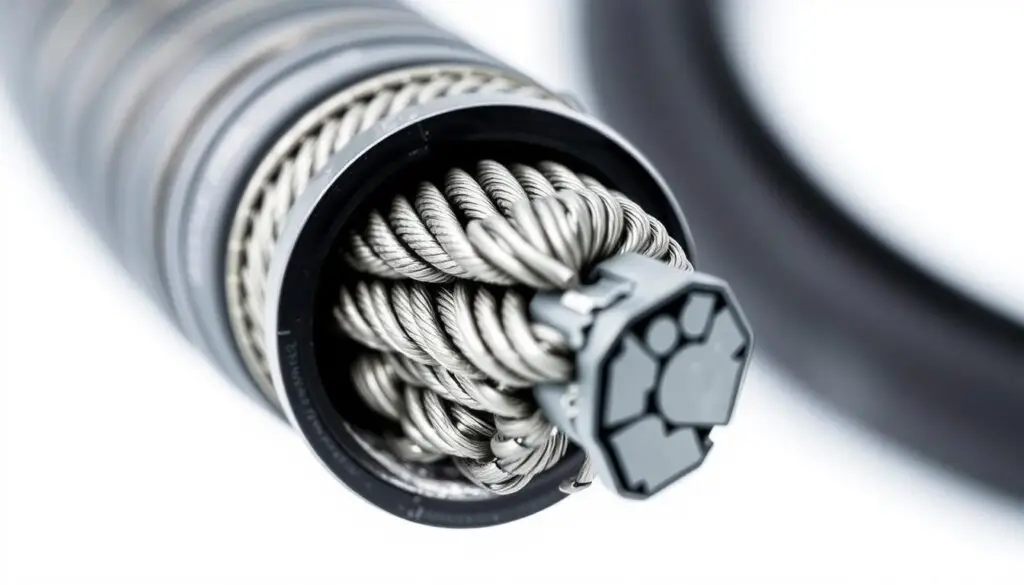
Excavators, large wheel loaders, and articulated dump trucks depend on wire-spiral hoses for their high-pressure hydraulic circuits. The robust construction handles the demanding pressure cycles these machines generate during aggressive duty operations. However, the stiffer construction requires larger minimum bend radii and more careful routing planning during installation.
Wire-spiral hoses exhibit reduced flexibility compared to braided counterparts. This rigidity actually provides benefits in certain applications by resisting collapse under vacuum conditions and maintaining position despite vibration. Installation requires attention to minimum bend radius specifications—typically 12-15 times the hose outside diameter—to prevent reinforcement fatigue.
Thermoplastic Hydraulic Hoses
Thermoplastic hoses utilize synthetic polymer construction instead of traditional rubber compounds. This modern approach delivers significant weight advantages, often reducing assembly weight by 30-40% compared to equivalent rubber hoses. The lighter weight simplifies handling and reduces stress on mounting points during operation.
These hoses demonstrate superior resistance to chemicals, fuels, and hydraulic fluids. Abrasion resistance typically exceeds rubber alternatives, extending service life in harsh operating environments. The smooth inner bore reduces friction losses, potentially improving system efficiency and reducing heat generation during continuous operation.
Thermoplastic hoses exhibit exceptional cold-weather performance, maintaining flexibility at temperatures where rubber hoses become stiff and prone to cracking. This cold-weather advantage makes them increasingly popular for equipment operating in northern climates. Pressure capacity ranges from 3,000 to 5,000 PSI for standard constructions, with temperature ranges typically spanning -40°F to +200°F.
| Hose Type | Pressure Rating | Temperature Range | Best Applications |
|---|---|---|---|
| Wire-Braided | Up to 5,000 PSI | -40°F to +212°F | Aerial lifts, forklifts, light construction |
| Wire-Spiral | 6,000+ PSI | -40°F to +212°F | Excavators, wheel loaders, heavy construction |
| Thermoplastic | 3,000-5,000 PSI | -40°F to +200°F | Cold climate operations, chemical exposure |
Establishing a Systematic Inspection Schedule
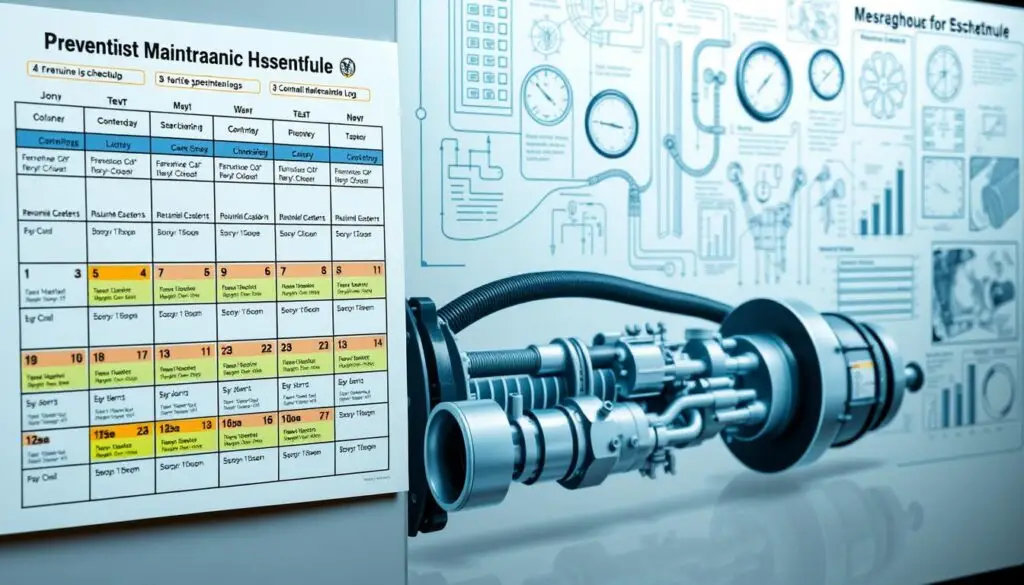
A structured inspection protocol forms the backbone of any effective hydraulic maintenance program. Systematic intervals allow maintenance teams to identify potential problems before they escalate into equipment-disabling failures. This approach transforms maintenance from crisis response to controlled asset management.
Daily Pre-Operation Visual Checks
Daily inspections represent your first line of defense against hydraulic hose failures. These quick assessments should take only 5-10 minutes as part of standard equipment checkout procedures. Operators can complete these checks before beginning their work shifts, establishing a habit that catches obvious problems before they cause harm.
Focus daily inspections on exposed hose sections, looking for obvious signs of leakage or fluid seepage. Examine hose surfaces for visible damage, cuts, or abrasion marks. Verify that fittings remain secure and properly mounted. Check routing to ensure no interference with moving components exists. Pay special attention to hoses under the equipment deck—these vulnerable areas face constant exposure to road debris and potential snagging during off-road travel.
Weekly Detailed Inspections
Weekly inspections build upon daily checks by examining hoses more thoroughly along their entire length. Schedule these detailed examinations during regular maintenance windows when equipment is not in active service. This deeper scrutiny identifies early warning signs that quick visual scans might miss.
Trace each hose from connection point to connection point. Look for early signs of cover deterioration or surface cracking. Verify that protective sleeving remains intact and properly positioned. Examine areas subject to vibration or repeated movement, as these locations experience accelerated wear. Document any changes observed—small issues discovered early can be addressed during planned maintenance rather than forcing emergency repairs.
Monthly Comprehensive Assessments
Monthly assessments provide baseline data for long-term condition monitoring and replacement planning. Reserve adequate time for these comprehensive examinations—typically 30-60 minutes per piece of equipment depending on system complexity.
Conduct detailed measurements and comparisons during monthly reviews. Assess hose flexibility through careful manual manipulation—hardening indicates elastomer degradation. Examine coupling assemblies for corrosion, looseness, or damage. Compare current condition against reference photographs taken at installation. Track age and usage hours to develop accurate service life predictions for different applications across your fleet.
Documentation and Record-Keeping
Effective documentation transforms inspection data into actionable intelligence. Tag each hose assembly with unique identifiers linking to equipment records and installation dates. Maintain digital or physical logs recording every inspection with findings and corrective actions. Create reference images of new hoses for future comparison.
Modern fleet management software automates much of this tracking. Digital systems send automatic inspection reminders, store photos directly with equipment records, and generate predictive maintenance alerts. The Technology & Maintenance Council’s Recommended Practices provide industry-standard frameworks for maintenance documentation and reporting that help fleets establish consistent, defensible inspection programs.
Identifying Warning Signs That Indicate Replacement
Recognizing failure indicators early gives maintenance teams the power to act before breakdowns occur. Every hydraulic hose tells a story through its physical condition—understanding how to read these signs transforms routine inspections into powerful diagnostic tools.
Surface Damage and Cover Compromise
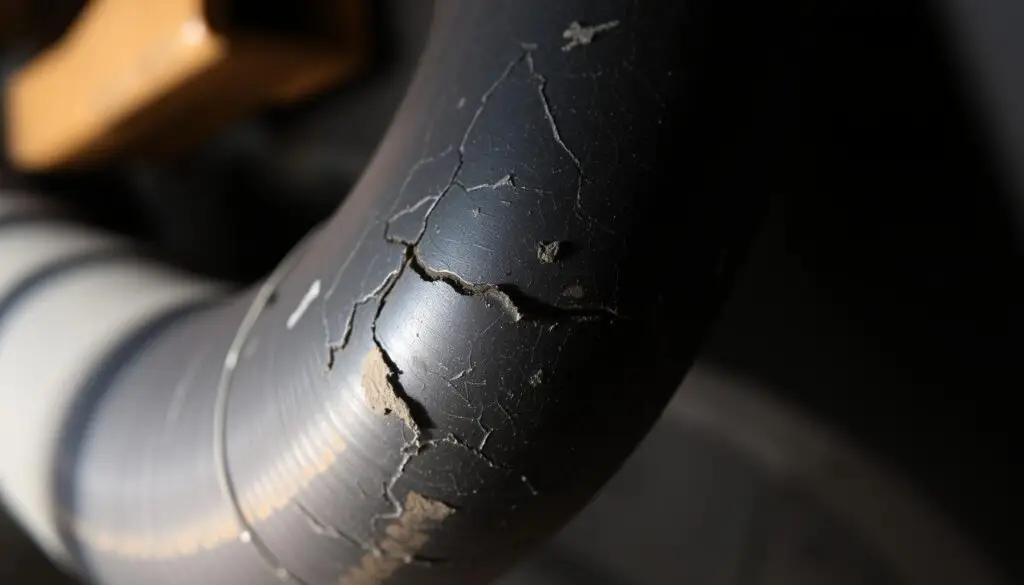
The outer cover serves as the first defense against environmental hazards. When this protective barrier shows signs of compromise, the entire assembly becomes vulnerable. Any abrasion that exposes the wire reinforcement layers beneath requires immediate replacement—no exceptions.
Cuts, nicks, gouges, and abrasion patterns signal different damage mechanisms. These conditions develop from improper routing, contact with sharp edges, or insufficient protection in high-traffic areas. Orange nonconductive hoses present unique challenges—UV exposure degrades these specialized hoses more rapidly than standard varieties. Once the fiber braid becomes visible through the deteriorated cover, the hose loses its nonconductive properties and must be replaced immediately.
Fluid Loss and Leakage Indicators
Hydraulic systems must maintain complete fluid containment for safe operation. Any breach in containment demands immediate investigation and typically requires replacement. Active leaks presenting as visible dripping or spraying warrant immediate equipment shutdown.
Fluid seepage represents a more subtle but equally serious condition. Dampness or staining around hoses and fittings indicates microscopic breaches that can rapidly progress to major leaks under operating pressure. Check for fluid puddles beneath parked equipment, inspect fittings for dampness, and monitor reservoir levels for unexplained fluid loss. Even minor seepage compromises the system’s ability to maintain proper pressure.
Material Degradation and Flexibility Loss
Wire-braided hoses eventually harden and crack as elastomer compounds degrade from heat exposure, chemical attack, or simple age. Testing flexibility through careful manual manipulation reveals conditions that visual inspection alone might miss.
Normal hydraulic hose exhibits rubber-like compliance when gently flexed. Hardening manifests as stiffness and resistance to bending. Surface cracking patterns provide clear evidence of material breakdown—fine cracks signal that the hose has reached its service life limit. Brittleness represents the final degradation stage, creating high risk of sudden catastrophic failure. Heat exposure accelerates all forms of material degradation, so hoses routed near exhaust components require more frequent assessment.
Connection Point Deterioration
Fitting integrity determines whether the hose-to-equipment interface can withstand full system pressure while accommodating vibration and movement. Corrosion appears as rust, pitting, or surface deterioration on metal components—visible corrosion should trigger replacement consideration immediately.
Fittings that repeatedly loosen despite proper torque have developed problems that only replacement can solve. Crimping defects or separation between the ferrule and hose indicate manufacturing problems or excessive stress. The ferrule must maintain complete contact with both the hose exterior and fitting body—any visible gap compromises the assembly’s pressure rating.
Stay Current on Fleet Maintenance Best Practices
Get practical guidance on preventive maintenance, diagnostic techniques, and cost control strategies delivered to your inbox.
Hydraulic Hose Replacement: Step-by-Step Procedures
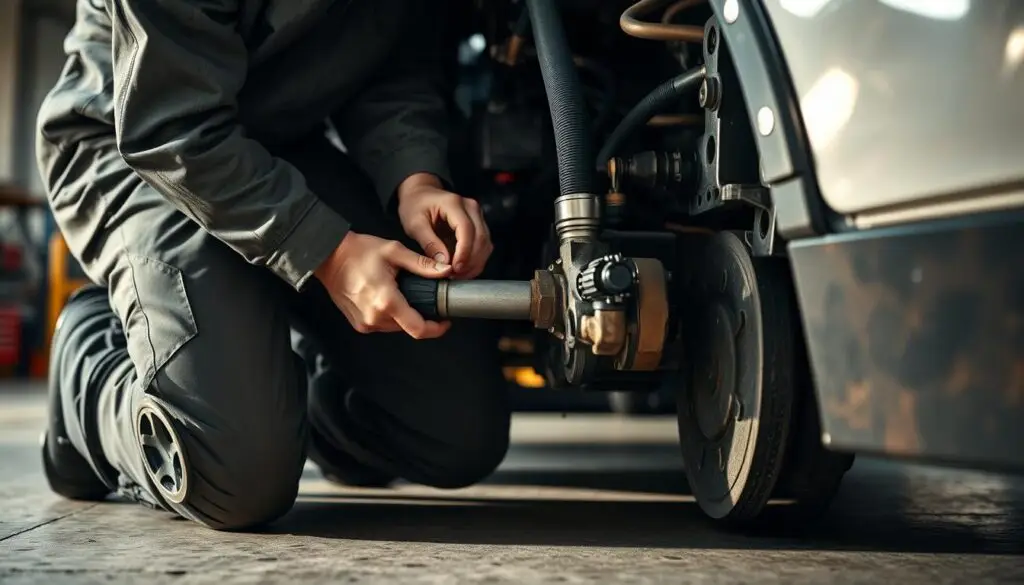
The difference between routine maintenance and costly complications lies in how carefully technicians execute each replacement step. Following established procedures protects equipment integrity while safeguarding personnel from hydraulic system hazards. A systematic approach reduces downtime and ensures reliable performance after reinstallation.
Preparing the Work Area
Position equipment on level, stable ground with adequate clearance for technician access. Ensure lighting allows clear visibility of all hydraulic connections and routing paths. Gather all necessary tools before beginning—adjustable wrenches, calibrated torque wrench, absorbent pads, protective caps for open ports, and cleaning materials for connection surfaces.
Verify the replacement hose matches specifications exactly before starting work. Check pressure ratings, hose diameter, fitting types, and overall length against original equipment requirements. Having the wrong replacement creates delays and potential safety issues. Keep manufacturer documentation accessible throughout the procedure for torque specifications and system-specific requirements.
Depressurizing the Hydraulic System
⚠️ Critical Safety Warning
Never attempt to disconnect a hose while the system is under pressure. Pressurized hydraulic fluid can cause severe injection injuries requiring immediate surgical intervention. Working on energized systems creates life-threatening hazards.
Begin by completely shutting down the equipment and removing the ignition key. Follow manufacturer-specific procedures for pressure release as outlined in the service manual. Operate all hydraulic functions through their complete range of motion to relieve residual pressure. Lower raised components to their resting positions.
Confirm zero pressure through gauge observation where available. If no gauge is accessible, wait several minutes after operating all functions before proceeding. Implement lockout-tagout procedures to prevent accidental equipment energization during service. OSHA’s lockout-tagout requirements under 29 CFR 1910.147 mandate that potentially hazardous stored energy be relieved, disconnected, or otherwise rendered safe before maintenance work begins.
Removing the Failed Hose
Position drain pans beneath connection points before loosening fittings. Even depressurized systems retain hydraulic fluid that will drain during disconnection. Use the two-wrench method—hold the adapter body stationary with one wrench while turning the fitting nut with the second. This technique protects threads and prevents stress on connected components.
Document exact routing and orientation before removal. Photographs from multiple angles showing how the hose passes through the equipment structure prove invaluable during reinstallation. Note clamps, brackets, and protective sleeves along the path. Cap or plug open hydraulic ports immediately after disconnection to prevent contamination—dirt entering the system causes valve damage and component failures throughout the circuit.
Installing the New Hose Assembly
Verify fitting compatibility by test-threading connections before final installation. Fittings should thread smoothly without force or binding—cross-threaded connections create leak paths and premature failures. Ensure proper hose orientation throughout installation—twist-induced stress concentrates at attachment points, causing accelerated wear and potential rupture.
Route the replacement hose to match the original configuration while correcting any issues that contributed to the previous failure. If the failed hose showed abrasion wear, adjust routing to eliminate contact points. Add protective sleeves where hoses pass near sharp edges or hot surfaces. Apply correct torque specifications using calibrated tools—under-tightened connections leak while over-tightened fittings damage threads and create stress concentrations.
System Testing and Verification
Conduct thorough visual inspection before pressurization. Verify all fittings are properly tightened and supported. Confirm routing provides adequate clearance from moving components, sharp edges, and heat sources. Remove lockout-tagout devices and inform personnel that startup is imminent.
Start the engine and allow the system to pressurize gradually while monitoring for leaks. Initial testing should occur at idle speed before advancing to full operating pressure. Operate all functions through complete cycles under progressively increasing loads. Watch for proper operation and listen for unusual sounds indicating trapped air or restriction. Inspect for hose bulging—any bulging requires immediate shutdown and replacement.
Selecting the Right Replacement Hoses
Proper hose selection requires matching three critical factors to your equipment’s actual operating requirements: pressure capacity, temperature tolerance, and fluid compatibility. Making the wrong choice can lead to premature failures, unexpected downtime, and serious safety hazards.
Matching Pressure Ratings
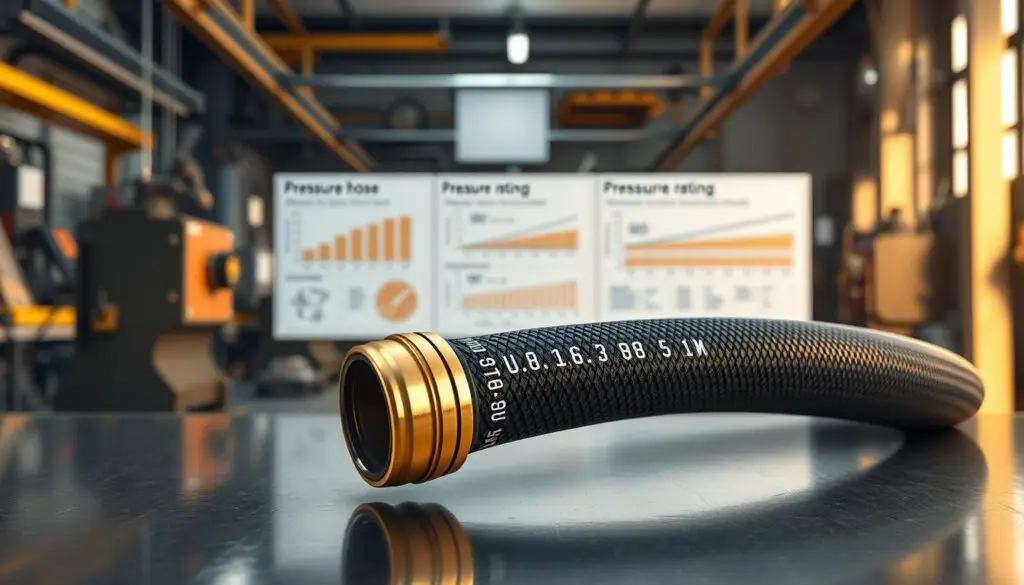
Every hydraulic hose carries a working pressure rating and a burst pressure rating. Industry standards recommend working pressure equal approximately one-fourth of burst pressure—this safety factor accounts for pressure fluctuations and unexpected surges common in mobile equipment.
Fleet operators must verify replacement hoses meet or exceed OEM specifications. Using under-rated hoses creates critical safety failures that can result in catastrophic rupture. When evaluating pressure ratings, consider maximum system pressure during peak operation, frequency and magnitude of pressure spikes, and age-related capacity degradation over service life.
Temperature Range Considerations
Operating temperature directly affects hose service life and performance. Standard hydraulic hoses function within -40°F to +212°F ranges, but applications exceeding these boundaries require extended-temperature ratings. Elevated temperatures accelerate rubber degradation dramatically—even when external appearance suggests the hose remains serviceable.
Temperature considerations extend beyond the hydraulic fluid itself. Ambient conditions, proximity to hot engine components, and radiant heat exposure all contribute to the thermal environment. Arctic operations require cold-weather hoses that maintain flexibility at extreme low temperatures, while desert conditions demand high-temperature resistant constructions.
Fluid Compatibility Requirements
Chemical compatibility between hose materials and hydraulic fluids prevents internal deterioration that remains invisible during external inspections. Petroleum-based, synthetic, and biodegradable fluids each require specific hose constructions. The inner tube material must resist chemical attack from the fluid it carries.
Fleet operations using biodegradable or environmentally-friendly hydraulic fluids face unique compatibility challenges. Many standard hoses designed for petroleum fluids experience accelerated degradation when exposed to alternative formulations. Verify compatibility with manufacturer specifications before specifying replacement hoses—this verification prevents costly cycles of repeated premature failures.
Proper Routing and Installation Techniques
Correct installation methods can extend component lifespan by 50% or more. Every bend, twist, and contact point affects how long a hose will last in demanding fleet applications. Following established routing standards eliminates the most common causes of premature failure.
Preventing Stress Through Positioning
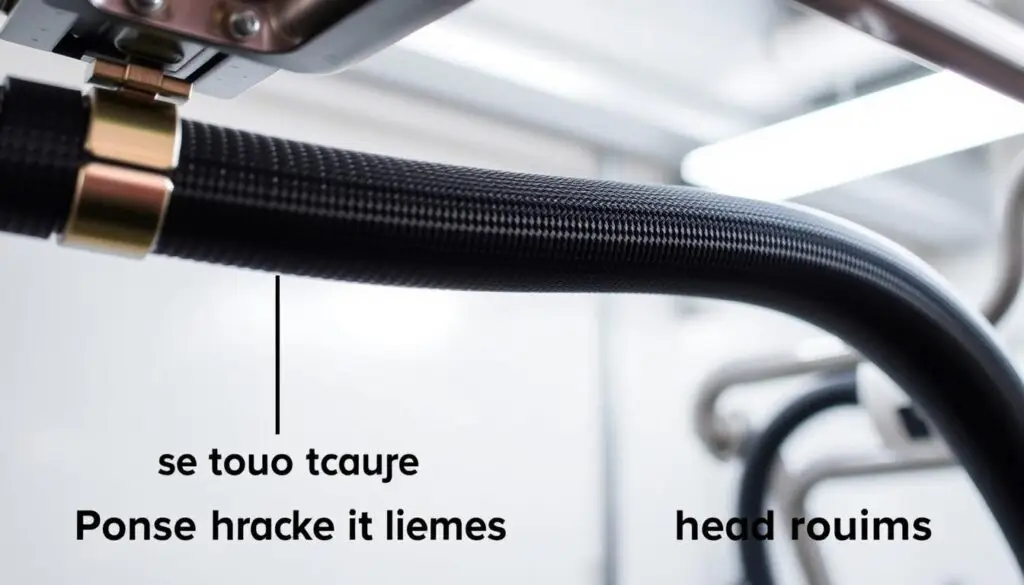
Excessive bending creates concentrated stress that leads to early failure. The internal reinforcement layers cannot withstand repeated flexing beyond design limits. Twisting during installation damages reinforcement even when external appearance seems normal—never twist a hose to make it fit into a tight space.
Hoses must be installed without tension or compression in their neutral position. Correct length allows slight slack when equipment is at rest, accommodating movement during operation without stretching or compressing the assembly. Verify proper length by checking for visible slack in neutral position, no stretching through full range of motion, and smooth curves without sharp bends.
Bend Radius Requirements
Bend radius measures from the hose centerline to the inside of the bend. Violating minimum specifications causes reinforcement wire fatigue and internal structure failure. Each hose type has specific minimum requirements—wire-spiral hoses typically require 12-15 times the outside diameter, while wire-braided designs allow tighter bends at 6-8 times outside diameter.
Measure bend radius during installation using templates or radius gauges. Many fleet operations create custom checking tools from plywood or sheet metal to ensure compliance before final tightening and pressurization. The OSHA Hazard Information Bulletin on hydraulic systems emphasizes that hose failures often result from improper specifications and installation practices.
Protecting Against Environmental Hazards
Contact with vehicle frames creates abrasion points that wear through protective covers. Off-road operation subjects hoses to debris impact and UV exposure. Implement protective solutions based on specific exposure risks—spiral wrap guards for general abrasion protection, spring guards for sections requiring flexibility, and heat-reflective sleeves for routing near exhaust components.
Appropriate mounting techniques prevent dynamic fatigue from repetitive motion. Select clamps that secure hoses without crushing or restricting flow. Cushioned clamps with rubber or plastic liners distribute pressure evenly—metal clamps without protective liners can cut into covers and cause leaks. Space supports at regular intervals based on hose size, typically every 18-24 inches for most applications.
The HDJ Perspective
After two decades covering fleet maintenance, we’ve seen the same pattern repeatedly: operations that treat hydraulic hose management as a routine maintenance task consistently outperform those that wait for failures. The financial case is clear—systematic programs cost less than emergency responses. But the real differentiator is cultural. Fleets that empower operators to report concerns, that give technicians time for thorough inspections, and that view replacement parts as investments rather than expenses build the kind of reliability that wins contracts and retains customers. The technology keeps advancing—smart sensors, predictive analytics, condition-based monitoring—but the fundamentals remain unchanged: inspect regularly, replace proactively, and never compromise on safety.
Implementing a Preventive Maintenance Program
Preventive maintenance transforms fleet operations from reactive crisis management to controlled, predictable equipment care. Systematic approaches to hydraulic hose management reduce unexpected failures and extend component lifespan while delivering measurable cost savings.
Developing Replacement Schedules
Most hydraulic hoses have operational lifespans ranging from two to ten years depending on application severity. Manufacturers provide service life recommendations based on controlled testing, but real-world factors including operating hours, pressure cycles, and environmental exposure significantly impact actual durability.
Fleet management systems should incorporate multiple factors when establishing replacement intervals. Base schedules on the most conservative estimate among manufacturer recommendations, accumulated hours, and environmental stress factors. Risk-based approaches prioritize critical equipment—steering systems, braking circuits, and load-handling equipment warrant shorter replacement intervals than less critical applications.
Recording Installation and Usage Data
Practical tracking systems identify individual hoses through physical tags or database records linked to equipment serial numbers. Durable tags attached during installation should include installation date, hose specification, and technician identifier. This simple practice enables accurate age tracking throughout service life.
Correlate hose failures with age, usage hours, and operating conditions to refine replacement predictions. The Technology & Maintenance Council publishes industry benchmarking data that helps fleets compare their maintenance metrics against peer operations. Historical data transforms into predictive intelligence that improves future planning accuracy.
Maintaining Critical Spare Parts
Identify which equipment failures cause maximum operational disruption and prioritize spare parts inventory accordingly. Calculate requirements using historical failure data and statistical analysis. Establish par-level systems that automatically trigger reordering when quantities fall below predetermined thresholds.
Consider maintaining pre-assembled hose assemblies versus components for custom fabrication. Pre-assembled units reduce repair time but require more storage and higher inventory investment. Component-based approaches offer flexibility but demand skilled technicians and fabrication equipment. The optimal strategy varies based on equipment criticality and operational requirements.
Share Your Hydraulic Maintenance Expertise
Fleet managers and maintenance supervisors with proven preventive maintenance strategies are invited to contribute insights that help the industry improve equipment reliability.
Training Fleet Maintenance Personnel
Workforce competency transforms hydraulic hose replacement from routine task into strategic operational advantage. Fleet operations depend on skilled personnel who diagnose problems quickly, execute repairs correctly, and prevent future failures through proper technique.
Core Competencies and Credentials
Successful technician training begins with fundamental knowledge of hydraulic system principles—pressure, flow, and fluid dynamics. Personnel must also develop proficiency with specialized tools including crimping equipment, torque specifications, and measurement instruments. Safety certifications validating lockout-tagout procedures, high-pressure hazards, and emergency response protect both workers and equipment.
The International Fluid Power Society and National Fluid Power Association offer certifications specifically designed for hydraulic specialists. Equipment manufacturers deliver specialized training for their product lines. These credentials establish industry-standard competency benchmarks that help fleet operations ensure consistent quality across their maintenance teams.
Practical Training Methods
Classroom knowledge alone doesn’t produce capable technicians. Effective skill development requires hands-on experience under controlled conditions before personnel work on operational equipment. Structured apprenticeship programs pair inexperienced technicians with seasoned professionals who model correct procedures and provide real-time feedback.
Using decommissioned equipment allows trainees to practice replacement procedures without operational pressure. They can make mistakes, learn from them, and refine technique before touching active fleet assets. Regular refresher training reinforces proper techniques and introduces updated procedures as equipment technology evolves.
Safety Protocols for Hydraulic Service
Safety protocols represent the foundation of responsible fleet maintenance. Hydraulic systems operating under extreme pressures create hazards that can result in catastrophic injuries when proper precautions are ignored.
⚠️ Injection Injury Warning
Never use bare hands to check for hydraulic leaks. Fluid under pressure can penetrate skin through pinhole leaks invisible to the naked eye. Injection injuries require immediate surgical intervention—delays of even a few hours can result in tissue death or amputation. Use cardboard or other materials to detect leaks safely.
Required Protective Equipment
Personal protective equipment serves as the final barrier between personnel and hydraulic hazards. Required PPE includes safety glasses or full face shields to protect eyes from high-pressure fluid streams, chemical-resistant gloves to prevent skin contact with hydraulic fluids, long-sleeved protective clothing for body coverage, and steel-toed safety boots for foot protection from dropped components.
Energy Control Procedures
Lockout-tagout represents legally mandated protocols under OSHA regulations that prevent equipment-caused injuries during maintenance. Complete procedures include identifying all energy sources, notifying affected personnel, shutting down equipment properly, isolating energy sources, applying individual locks, attaching information tags, and verifying zero-energy state before beginning work.
Each worker must apply their individual lock, ensuring equipment cannot restart until every person completes their work safely. OSHA estimates that proper lockout-tagout procedures prevent approximately 120 fatalities and 50,000 injuries annually. Fleet operations that bypass these procedures face substantial penalties and liability exposure.
High-Pressure Hazard Management
Hydraulic systems commonly operate at 3,000 to 5,000 PSI during normal operation. Pinhole leaks at these pressures create fluid streams invisible to the naked eye but capable of penetrating skin and injecting fluid deep into body tissue. Standard first aid proves inadequate for injection injuries—specialized treatment from physicians experienced with high-pressure injuries is essential.
If fluid injection occurs, apply a cold pack immediately to slow dispersion, seek medical assistance within the first hour, inform emergency personnel about the specific fluid involved, and request treatment from a physician experienced with injection injuries. Fleet maintenance facilities should maintain relationships with medical providers who understand injection injury treatment protocols.
Cost Management and Inventory Strategies
Smart financial planning separates successful fleet operations from those struggling with maintenance budgets. The approach toward hydraulic hose procurement directly impacts bottom-line results and equipment availability.
OEM Versus Aftermarket Components
OEM parts provide guaranteed compatibility with equipment manufacturer specifications and typically include warranty protection. Critical applications and newer equipment under warranty almost always require original manufacturer components. Aftermarket options deliver potential cost savings that become attractive for older fleet units no longer under warranty coverage.
Evaluation criteria for aftermarket hoses should include pressure rating certifications verified by independent testing laboratories, material quality verification for fluid and temperature compatibility, and fitting compatibility assessment. Total cost of ownership calculations provide the most accurate comparison—factor in expected service life differences, warranty coverage, and potential failure consequences.
Strategic Vendor Relationships
Bulk purchasing reduces per-unit costs for commonly used hose assemblies. Analyze replacement records to identify frequently needed specifications, then negotiate volume discounts with suppliers. Preferred vendor relationships deliver value beyond price—priority service during supply shortages, technical support, and after-hours emergency availability.
Vendor-managed inventory programs shift carrying costs to suppliers while maintaining on-site availability. Distributors maintain stock at your facilities and assume inventory investment responsibilities. Strategic partnerships unlock services beyond parts supply including on-site hose fabrication and emergency response capabilities.
Frequently Asked Questions
How often should hydraulic hoses be replaced?
Replacement intervals depend on application severity, operating conditions, and manufacturer specifications. Most hydraulic hoses have operational lifespans of two to ten years. Fleet operations should base replacement schedules on the most conservative estimate among manufacturer recommendations, accumulated operating hours, and environmental stress factors. High-pressure applications, equipment operating in extreme temperatures, and machines with aggressive duty cycles require more frequent replacement than light-duty applications.
What causes hydraulic hose failures?
The most common failure causes include improper installation (particularly twisting and exceeding minimum bend radius), external abrasion from contact with equipment structures, thermal degradation from heat exposure, and exceeding pressure ratings during operation. Fluid compatibility issues cause internal deterioration invisible during external inspections. Age-related elastomer degradation affects all hoses regardless of external appearance. Regular inspection protocols identify these problems before catastrophic failure occurs.
How do I safely check for hydraulic leaks?
Never use bare hands to check for hydraulic leaks—fluid under pressure can penetrate skin through pinhole openings invisible to the naked eye. Instead, use a piece of cardboard or similar material to detect fluid spray. Move the cardboard slowly along the hose length while looking for staining that indicates leak locations. Always wear appropriate personal protective equipment including safety glasses and chemical-resistant gloves when inspecting pressurized hydraulic systems.
What personal protective equipment is required for hydraulic work?
Required PPE includes safety glasses or full face shields, chemical-resistant gloves, long-sleeved protective clothing, and steel-toed safety boots. Face protection guards against high-pressure fluid streams that can cause severe eye injuries or blindness. Gloves prevent skin contact with hydraulic fluids that cause dermatitis and chemical burns. Protective clothing provides body coverage against unexpected spray during disconnection procedures.
How much does hydraulic hose failure cost in downtime?
Heavy equipment downtime costs typically range from $150 to $500 per hour depending on equipment type and operational context. Large excavators and specialized machinery command higher rates due to their critical project roles. Emergency repairs cost 3-5 times more than scheduled maintenance due to premium labor rates and expedited parts shipping. The total impact includes lost productivity, customer satisfaction damage, potential contract penalties, equipment rental costs, and overtime expenses—often exceeding direct repair costs by significant margins.
Building a Proactive Hydraulic Maintenance Culture
Transitioning from reactive repairs to proactive hydraulic hose management requires initial investment in training, inventory systems, and structured processes. Fleet operations that commit to these changes see measurable returns through reduced emergency repairs and extended equipment lifespan. The comprehensive approach outlined in this guide—proper selection, installation techniques, safety protocols, and cost management—creates programs that deliver real improvements in equipment uptime and workforce safety.
Taking a proactive stance significantly extends equipment service life while reducing accident risks and costly downtime. Systematic inspection and replacement schedules protect both personnel and equipment investments. Your organizational commitment to these practices reflects dedication to operational reliability and financial stewardship that distinguishes market leaders from competitors who merely respond to failures.
Share This Guide With Your Team
This hydraulic hose replacement guide provides actionable protocols for fleet managers and maintenance supervisors working to improve equipment reliability and safety.