By Michael Nielsen, Editor & Publisher | 15+ Years in Diesel Repair
Last Updated: December 2025
📖 Estimated reading time: 22 minutes
Determining the right time to replace filtration components in your equipment isn’t guesswork. Hydraulic filter change intervals are based on established industry guidelines, manufacturer specifications, and real-world operating environments. Clean fluid is the lifeblood of any system, directly impacting performance, reliability, and longevity.
Contaminated fluid causes excessive wear on pumps, valves, and cylinders. It leads to clogging, reduced efficiency, and unexpected system failures. Industry research reveals that unplanned downtime costs industrial facilities thousands of dollars per hour. A well-planned filter maintenance schedule prevents these costly disruptions while extending component life.
This guide provides actionable information on determining optimal filter replacement frequency for both mobile and industrial equipment. You’ll discover industry standards from ISO, SAE, and NFPA organizations. We’ll compare condition-based monitoring versus time-based approaches, helping you implement maintenance programs that maximize uptime and minimize operating costs.
Key Takeaways
- Industry standards matter: ISO 4406, SAE J1165, and NFPA guidelines provide proven benchmarks for filter replacement schedules and fluid cleanliness targets.
- Operating conditions drive intervals: Dusty environments, high temperatures, and elevated pressures can reduce filter service life by 50-75% compared to optimal conditions.
- Condition monitoring beats guesswork: Differential pressure indicators and fluid analysis deliver objective data for optimizing replacement timing rather than arbitrary schedules.
- ROI is substantial: Proactive filter maintenance delivers 300-400% returns by preventing pump failures, reducing downtime, and extending overall system life.
- Documentation protects investments: Proper maintenance records support warranty claims, ensure regulatory compliance, and enable continuous program improvement.
Understanding Hydraulic Filter Functions and Types
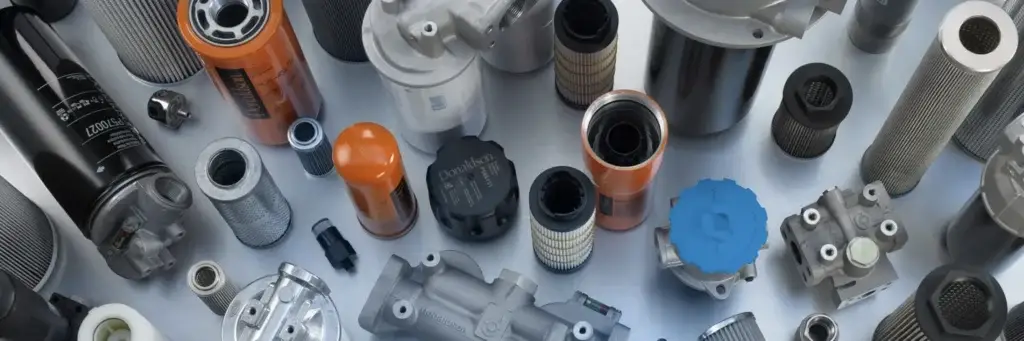
Hydraulic systems rely on multiple filtration strategies, each designed to protect specific components and maintain fluid cleanliness throughout the entire circuit. Quality filtration serves as your first line of defense against contamination, which remains the primary cause of hydraulic system failure. Installing filters at strategic points creates a comprehensive barrier that captures contaminants before they damage expensive components.
Multi-Stage Protection Strategies
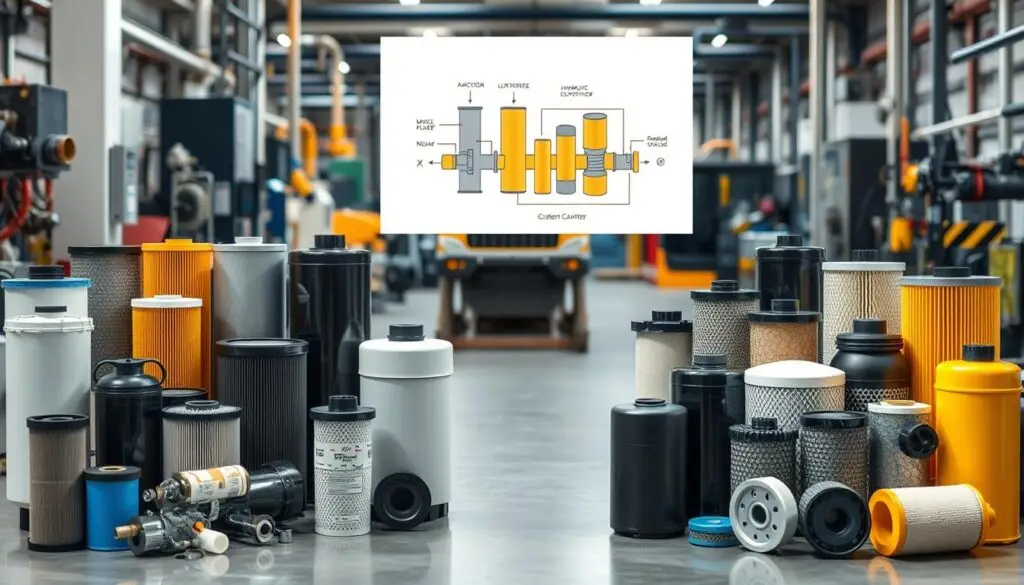
Primary filtration removes contaminants before they enter critical components, intercepting particles at key entry points. Secondary filtration captures particles generated by internal system wear and external contamination that bypasses initial barriers. Industry experts recommend multi-stage approaches with coarser filters followed by finer ones, creating layered protection that extends component life significantly.
Strategic Filter Placement
Return line filters capture wear particles and contamination before they recirculate through the system, making them the workhorses of contamination control. Pressure line filtration protects sensitive servo valves and proportional components from microscopic particles that cause malfunction. Suction filters prevent large debris from damaging pumps but require careful sizing to avoid cavitation issues.
Technical Rating Standards
Filter rating systems use beta ratio and micron ratings to specify performance. A beta ratio of 75 at 10 microns means the filter captures 98.7% of particles 10 microns or larger. Beta 1000 represents 99.9% efficiency, essential for protecting precision components. Understanding these specifications enables maintenance personnel to select appropriate hydraulic filter types and establish change intervals based on actual contamination control requirements rather than guesswork.
⚠️ Safety Warning
Hydraulic systems operate under extreme pressure, often exceeding 3,000 psi. Always relieve system pressure completely before servicing filters or disconnecting lines. According to OSHA’s lockout/tagout requirements, all potentially hazardous stored or residual energy must be relieved before maintenance begins. Pressurized fluid can cause severe injection injuries, burns, and tissue damage.
Current Industry Standards for Hydraulic Filter Replacement
Industry maintenance standards provide the essential foundation for establishing reliable hydraulic filter change intervals. Rather than relying on guesswork or arbitrary schedules, professional maintenance programs follow recognized frameworks developed by international standards organizations and industry associations. These standards create a common language for measuring contamination and determining when filter replacement becomes necessary.
The most effective approach combines multiple standards with manufacturer specifications. This layered strategy ensures equipment operates within safe contamination limits while maximizing component life.
The ISO 4406 Cleanliness Code
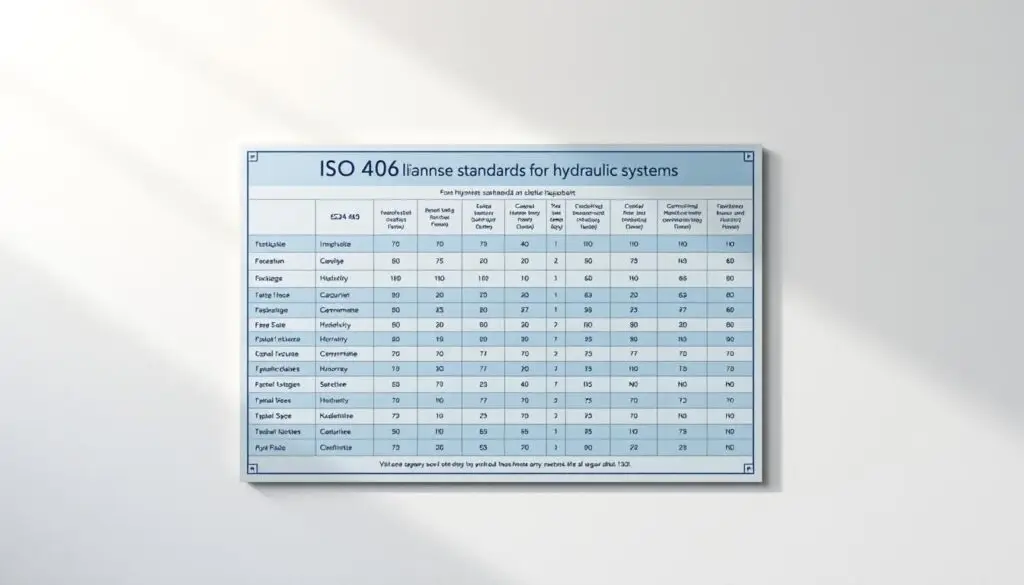
ISO 4406 standards represent the universal benchmark for hydraulic fluid contamination measurement. This three-number code quantifies particle concentrations at three critical size ranges: 4 microns, 6 microns, and 14 microns. Each number corresponds to a range code that indicates particles per milliliter of fluid.
For example, an ISO 18/16/13 rating suits general industrial systems, while high-performance servo systems require stricter ISO 15/13/10 levels. Achieving and maintaining these ISO cleanliness standards directly determines how frequently filters need replacement. Systems operating in harsher environments accumulate contaminants faster, requiring more aggressive filter change schedules.
Regular particle counting allows maintenance teams to monitor fluid cleanliness trends. When contamination levels approach the upper limits of the target ISO code, filter replacement becomes necessary regardless of time elapsed. The SAE J1165 standard endorses ISO’s solid contaminant code as the universal means for expressing particulate contamination levels in hydraulic fluid.
SAE and NFPA Technical Recommendations
SAE guidelines specifically address mobile equipment applications where contamination exposure varies dramatically. Construction, agricultural, and forestry equipment face unique challenges that stationary systems don’t encounter. The Society of Automotive Engineers provides filtration specifications tailored to these demanding environments.
NFPA standards complement ISO codes by offering practical recommendations for industrial fluid power systems. The National Fluid Power Association emphasizes system design considerations that affect filter performance and longevity. These guidelines help engineers select appropriate filter ratings and determine realistic change intervals based on application severity.
Following OEM Maintenance Specifications
OEM maintenance guidelines establish the minimum baseline for filter service intervals. Equipment manufacturers engineer these specifications based on component tolerances and expected operating conditions. A service interval of 10,000 hours generally applies to major piston pump overhauls, but filter elements require much more frequent attention.
Filter replacement typically occurs every 500 to 2,000 hours depending on contamination exposure. This creates a critical distinction between major component maintenance and consumable filter element schedules. OEM recommendations often assume ideal conditions, so real-world applications frequently demand shorter intervals to maintain proper system protection.
Factors Affecting Hydraulic Filter Change Intervals
While industry standards provide baseline guidance, actual filter change intervals must be adjusted based on several critical operational factors. Published recommendations represent starting points that require modification for specific applications. Equipment maintenance factors vary significantly based on how and where machinery operates.
A holistic assessment of these variables enables maintenance professionals to establish optimal schedules. Single-variable decision making often leads to premature failures or unnecessary replacements. Documentation of operating conditions creates the foundation for continuous improvement.
Environmental Conditions and Contaminant Entry
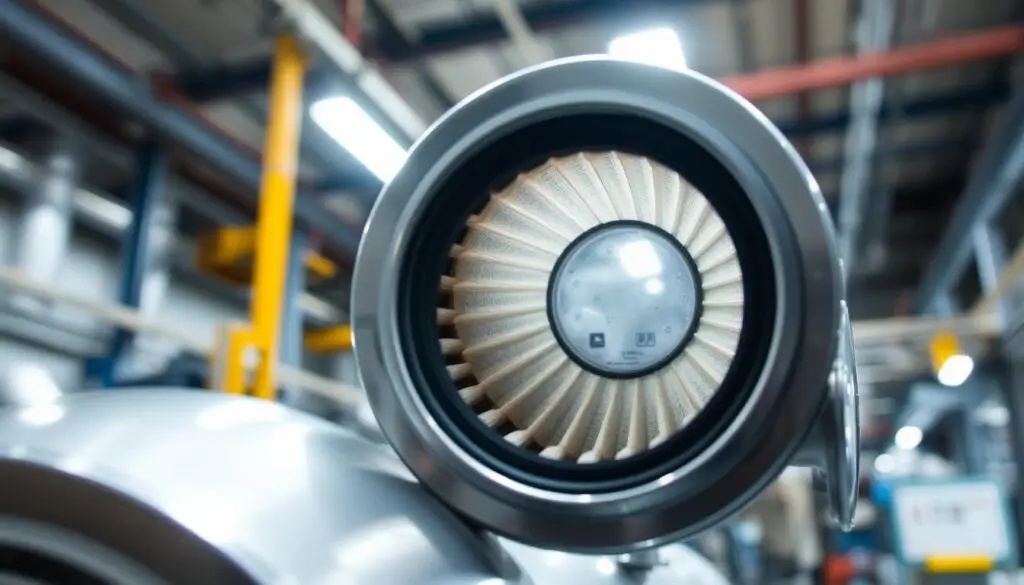
External contamination ingress represents the leading cause of premature filter loading and system failure. Equipment operating in dusty construction sites, agricultural fields, or mining operations faces contamination levels three to four times higher than identical machines in clean manufacturing environments. Operating environment factors determine how quickly filters reach capacity regardless of their rated service life.
Hydraulic contamination control becomes exponentially more challenging in severe conditions. Dusty environments require more frequent filter changes alongside improved sealing systems and breather upgrades. Environmental exposure directly correlates with maintenance frequency and total system reliability.
Pressure Levels and Thermal Conditions
System pressure effects on filter longevity are substantial and often underestimated. High-pressure systems operating above 3,000 psi generate increased wear particles from component stress. These systems require finer filtration with correspondingly shorter change intervals to maintain cleanliness standards.
Hydraulic fluid temperature should typically remain below 140°F (60°C) for optimal performance and fluid life. Temperatures above 160°F (71°C) accelerate fluid breakdown and seal degradation. Every 18°F increase above 140°F doubles the rate of oxidation, potentially cutting filter life in half.
70-80%
Percentage of hydraulic system failures attributable to fluid contamination — Donaldson Company
High-temperature applications demand enhanced cooling system maintenance and more frequent fluid analysis. Thermal stress compounds other equipment maintenance factors to accelerate replacement schedules significantly.
Fluid Characteristics and Flow Properties
Fluid type and viscosity fundamentally affect both contamination suspension and filter performance. Synthetic fluids with superior thermal stability may extend intervals compared to conventional petroleum-based oils. The chemical composition influences how particles interact with filter media and system components.
High-viscosity fluids in cold environments create excessive pressure drop across loaded filters. This condition necessitates earlier replacement to prevent bypass valve activation. Hydraulic contamination control strategies must account for seasonal viscosity variations in mobile equipment applications.
System Maturity and Design Configuration
Equipment age becomes increasingly significant as normal wear accelerates particle generation over time. Older systems require more aggressive filtration and shorter intervals to maintain performance standards. Component tolerances change as machinery accumulates operating hours, creating different maintenance requirements.
System design factors include reservoir sizing, filtration ratio, and whether offline filtration supplements primary filters. Larger reservoirs allow better contamination settling before fluid returns to active circulation. The ratio of total system flow rate to filter capacity determines how effectively contamination is captured.
| Factor Category | Optimal Conditions | Severe Conditions | Interval Impact |
|---|---|---|---|
| Operating Environment | Clean indoor facility | Dusty outdoor site | 3-4x shorter intervals |
| System Pressure | Below 2,000 psi | Above 3,000 psi | 40-50% shorter intervals |
| Fluid Temperature | Below 140°F (60°C) | Above 160°F (71°C) | 50% shorter intervals |
| Equipment Age | New systems (0-2 years) | Mature systems (10+ years) | 30-40% shorter intervals |
Operating environment factors, system pressure effects, and hydraulic fluid temperature must be assessed collectively rather than individually. This comprehensive approach enables maintenance teams to establish realistic schedules based on actual operating conditions.
Mobile Equipment Filter Change Schedules
Construction sites, agricultural fields, and forestry operations expose mobile hydraulic systems to contamination levels that demand specialized filter change schedules. These machines work in environments where dust, dirt, and debris constantly threaten system cleanliness. Operators must follow more aggressive maintenance intervals than stationary industrial equipment requires.
Daily visual inspections form the foundation of effective mobile equipment filter maintenance. Check oil levels in power unit tanks each day before operation. Verify pressure gauge readings and monitor pump noise for any changes that signal developing problems.

Construction Equipment: Excavators and Loaders
Excavator maintenance schedules typically require return filter changes every 500 to 1,000 operating hours. These machines face constant exposure to jobsite contamination. Case drain filters protecting hydraulic motors need more frequent attention at 250-hour intervals.
Loader hydraulic filters follow similar schedules, with suction strainers requiring annual cleaning under normal conditions. However, contamination events demand immediate inspection and replacement. Always replace filters when differential pressure indicators show filter loading, regardless of elapsed time.
Agricultural Machinery: Tractors and Harvesters
Agricultural machinery filters face unique challenges during harvest seasons when dust levels reach extreme concentrations. Tractors typically follow 600 to 1,000 hour intervals for primary filter changes. Pre-season replacements should occur regardless of accumulated hours.
Combines and harvesters require shorter intervals of 400 to 600 operating hours due to higher dust exposure during grain harvesting. Mid-season filter changes become necessary during extended harvest operations. Keep surfaces of pipes, components, and tanks clean to prevent contamination entry.
Forestry Equipment and Material Handlers
Forestry equipment operates in conditions combining particulate contamination with temperature extremes. Return filters need replacement every 500 to 750 hours, with quarterly inspection of all bypass indicators. Check hydraulic hoses for cracks or oil seepage between sleeves and hoses.
Material handlers accumulate hours rapidly in high-cycle operations. Calendar-based quarterly changes prove more practical than hour-based intervals. Remove dirt buildup from hydraulic cylinders, especially around piston rod pivots, to prevent contamination migration into the system.
Stay Current on Fleet Maintenance Best Practices
Heavy Duty Journal delivers practical maintenance guidance, regulatory updates, and cost-saving strategies directly to fleet managers and shop owners every week.
Industrial Hydraulic System Maintenance Intervals
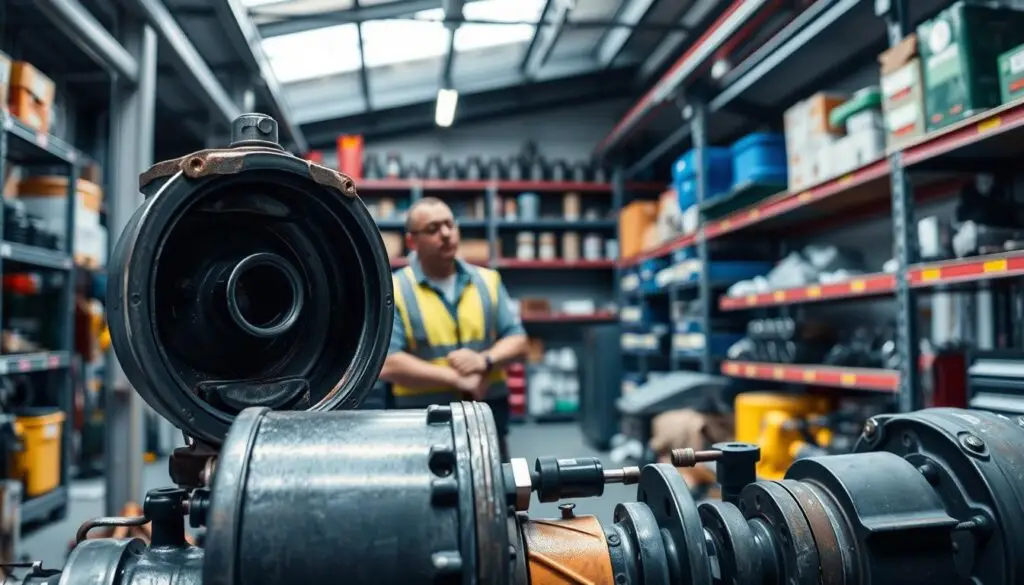
Industrial hydraulic filters protect sensitive components in applications where downtime directly impacts production efficiency. Factory-based systems operate in more controlled environments than mobile equipment, yet they often contain tighter tolerance components requiring superior fluid cleanliness. Establishing appropriate maintenance schedules for these systems balances production demands with preventive care requirements.
Send an oil sample to the oil manufacturer or a reputable testing service every six months to check for contaminants and wear. The sample should be analyzed for viscosity, wear metals, particle count, and neutralization value in hot conditions. Check air filters every six weeks to maintain proper system breathing.
Press Systems and Molding Applications
Manufacturing press systems, including stamping and hydraulic presses, typically follow 1,500 to 2,500-hour filter change intervals for return line filters. Annual replacement of pressure filters protects servo valves in these applications. For filters with contamination indicators, replace the element when the indicator shows a dirty filter.
Injection molding hydraulics demand more frequent attention due to precise control requirements and continuous operation. These systems require 1,000 to 1,500-hour return filter changes and six-month replacement of high-efficiency pressure filters. Systems operating three shifts may reach these hour thresholds in just four to six months, making semi-annual calendar-based changes appropriate.
Centralized Power Systems
Hydraulic power unit filters serving multiple machines present unique challenges because contamination affects multiple production processes simultaneously. These systems typically employ larger, higher-capacity filters that operate 2,000 to 3,000 hours between changes. The critical nature of centralized units warrants conservative semi-annual changes even if hour thresholds haven’t been reached.
Drain the power unit oil tank and clean the tank annually to remove accumulated sediment. If proportional valves require service, notify the component manufacturer immediately.
Precision Machine Tools
CNC machine maintenance demands exceptional cleanliness for precise positioning and smooth operation, typically requiring ISO 16/14/11 or cleaner fluid. Filter change intervals for these precision systems range from 1,000 to 2,000 hours with mandatory six-month maximum intervals regardless of hours.
Manufacturing equipment maintenance schedules should coordinate filter changes with other preventive tasks during production downtime. This approach minimizes disruption while maintaining optimal system cleanliness across all industrial applications.
Condition-Based Monitoring vs. Time-Based Replacement
Maintenance professionals must choose between following predetermined calendar intervals or monitoring actual filter condition to optimize replacement timing. Time-based replacement schedules offer simplicity and predictability, requiring filters to be changed after specific operating hours or calendar periods. However, this approach may lead to premature replacement of filters still functioning effectively or, conversely, allow filters to reach bypass conditions before the scheduled service.
Condition-based monitoring provides a more sophisticated alternative by replacing filters based on actual performance assessment. This strategy maximizes filter utilization and prevents unexpected failures. The investment in monitoring equipment and personnel training delivers significant returns through optimized filter life and reduced system contamination.
Pressure Drop Monitoring and System Limitations
The differential pressure indicator represents the most common tool for assessing filter condition in hydraulic systems. These mechanical or electronic devices measure pressure drop across the filter element. Most manufacturers recommend replacement when differential pressure reaches 25 psi, though specifications vary by system design.
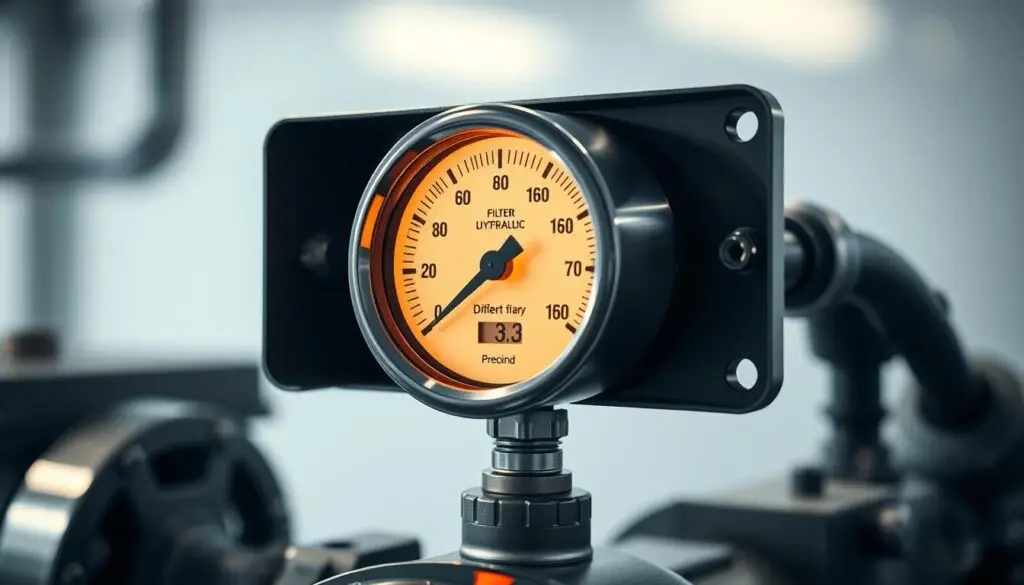
Several important limitations affect pressure-based monitoring accuracy. Temperature changes dramatically impact fluid viscosity, which directly influences pressure readings. Cold startups frequently trigger false bypass warnings as thick fluid creates temporarily high pressure drops.
Sudden contamination events can load filters rapidly between visual indicator checks. This timing gap may allow the filter bypass valve to activate without detection, compromising system protection.
Laboratory Testing and Contamination Measurement
Fluid analysis and particle counting deliver objective data about system cleanliness levels and filter performance. Quarterly or monthly sampling schedules provide trending information that enables data-driven replacement decisions. Automatic particle counters quantify contamination against ISO 4406 cleanliness targets.
Portable counting devices allow maintenance teams to conduct on-site testing. These measurements reveal whether filters maintain target cleanliness levels or require immediate replacement. According to Donaldson’s maintenance guidelines, predictive approaches using continuous monitoring can optimize replacement timing while avoiding unexpected failures.
Advanced Monitoring Systems and Technologies
Predictive maintenance platforms integrate multiple monitoring technologies for comprehensive system oversight. Continuous online particle counters track contamination levels in real-time. Automated differential pressure monitoring with data logging identifies gradual filter loading trends.
Integrated health monitoring systems combine pressure, temperature, particle count, and flow data. These platforms alert maintenance personnel to developing problems before component damage occurs.
The optimal approach combines both strategies: establish time-based maximum intervals as safety backstops while using condition-based monitoring to optimize replacement timing. This hybrid methodology prevents premature filter disposal while ensuring filters never operate in bypass mode due to excessive loading.
The HDJ Perspective
After reviewing maintenance programs across dozens of fleet operations, one pattern emerges consistently: shops that invest in condition monitoring technology recover their costs within the first year through reduced filter waste and prevented failures. The days of changing filters on arbitrary schedules are ending. Progressive maintenance managers now track particle counts and differential pressure as closely as they track fuel costs. The technology has become affordable enough that even small operations can implement basic monitoring. Those who adapt will see their equipment outlast competitors running on guesswork. Those who don’t will continue paying the premium for reactive maintenance.
Consequences of Premature and Delayed Filter Changes
The decision to replace hydraulic filters carries significant consequences whether executed too early or too late. Premature changes waste resources through unnecessary parts and labor expenses. Delayed replacements, however, create serious operational problems that cascade through entire systems and compromise hydraulic system efficiency.
Component Wear and System Degradation
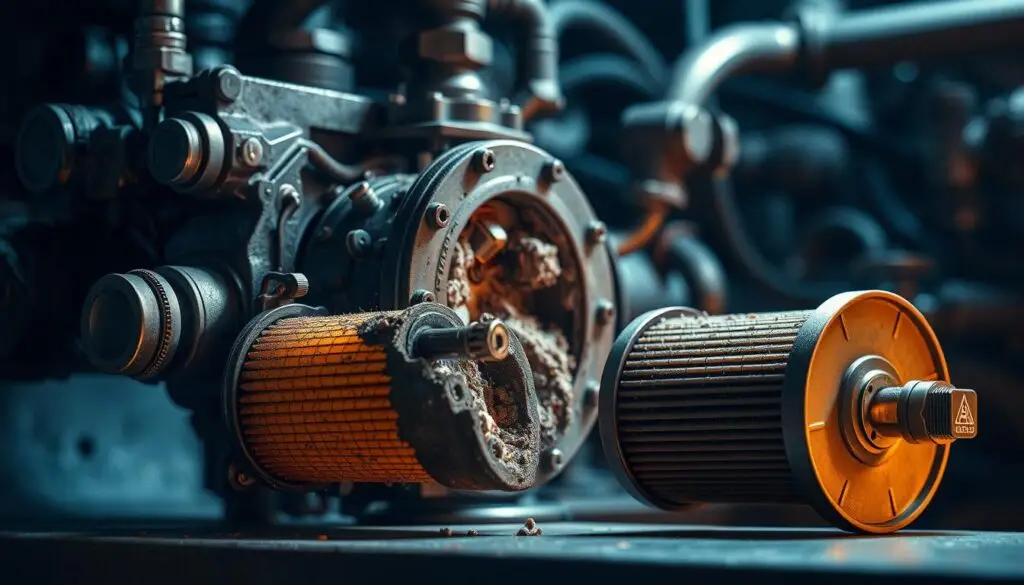
Contaminated hydraulic fluid accelerates component wear across pumps, valves, and actuators. Dirt, debris, and moisture particles act like sandpaper on precision surfaces. This abrasive action reduces efficiency and causes erratic operation.
Systems running with inadequate filtration generate excessive heat. They also experience reduced response times and unpredictable movements. Eventually, this degradation leads to catastrophic component failure that requires complete system rebuilds.
Bypass Valve Activation and Unfiltered Flow
When differential pressure exceeds design limits of 25-45 psi, the filter bypass valve opens automatically. This spring-loaded safety feature maintains fluid flow but allows unfiltered oil to circulate. A single hour of bypass operation introduces contamination equivalent to hundreds of normal operating hours.
Some filter types, particularly case drain filters, don’t include bypass valves. Instead, pressure builds until the filter housing ruptures—a destructive and dangerous failure mode.
Economic Impact of Filter Failure
Reactive maintenance following hydraulic filter failure costs 3-5 times more than preventive replacement. Consider this example: a $50 filter element changed 500 hours late can cause $5,000 in pump damage. Add equipment downtime costs of $10,000, and the total reaches $15,000—a 300:1 cost ratio that proves proactive maintenance pays dividends.
Severe Service Applications and Shortened Intervals
When hydraulic equipment faces harsh operating conditions, conventional filter replacement intervals become dangerously inadequate. Extreme environments accelerate contamination accumulation and filter media degradation at rates that far exceed standard specifications. Equipment operators must recognize these demanding situations and adjust maintenance schedules accordingly to prevent system failures.
Severe service applications demand proactive filter strategies that account for accelerated wear patterns. These challenging conditions expose hydraulic components to contamination levels that can overwhelm filters in a fraction of their rated service life. Understanding which applications qualify as severe service is essential for establishing appropriate maintenance protocols.
Dusty and Debris-Heavy Workplaces
Mining operations, quarrying sites, and demolition projects expose hydraulic systems to extreme particulate ingress. These environments generate persistent dust clouds that infiltrate even well-sealed systems. Mining equipment filters typically require replacement every 250-500 hours compared to 1,000+ hours for similar equipment in standard applications.
Demolition equipment filters face additional challenges from concrete dust and metallic debris. Daily visual inspection of bypass indicators becomes mandatory in these conditions. Tunneling operations present similar contamination challenges that warrant aggressive replacement schedules between 250-400 hours.
Elevated Temperature Challenges
Operations above 160°F (71°C) accelerate both fluid oxidation and filter media breakdown. High-temperature hydraulics in steel mills, forge presses, and desert-climate mobile equipment may require 40-50% reduction in standard intervals. This temperature threshold creates a compounding problem where degraded fluid generates varnish and sludge.
The accelerated fluid breakdown loads filters more rapidly while simultaneously compromising filter media integrity. This dual degradation effect means high-temperature operations often cut filter service life in half. Enhanced cooling system maintenance and more frequent fluid analysis become critical in these applications.
Around-the-Clock Operating Schedules
High-cycle and continuous operation systems accumulate operating hours at three to four times the rate of single-shift equipment. Steel mill systems, 24/7 manufacturing facilities, and continuous mining operations generate 4,000-6,000 annual operating hours. These applications benefit from calendar-based quarterly filter changes regardless of hour meters.
Continuous contamination generation without shutdown periods prevents particle settling in reservoirs. This constant circulation means filters experience progressive loading without relief periods. Continuous operation maintenance programs often incorporate offline kidney loop filtration systems that polish fluid during operation.
Share Your Hydraulic Maintenance Expertise
Are you a technician or maintenance manager with proven strategies for extending hydraulic system life? Heavy Duty Journal welcomes expert contributors who can share practical knowledge with our industry audience.
Filter Maintenance Cost-Benefit Analysis
The economics of hydraulic filter maintenance reveal surprising returns when preventive strategies are implemented correctly. Many organizations view filter maintenance costs as operational expenses without calculating the substantial savings these programs deliver. A comprehensive financial analysis demonstrates that strategic filter replacement generates 300-400% returns within the first year through avoided failures and extended component life.
Understanding total cost of ownership requires examining both visible expenses and hidden savings that proper filtration provides.
Direct Filter Replacement Costs
Filter maintenance costs include three primary components that are easy to track and budget. Filter elements range from $30 to $200 depending on system size and filtration efficiency requirements.
Labor represents 0.5 to 2.0 hours per replacement at typical shop rates. A standard excavator requiring four annual filter changes spends approximately $560 yearly when calculating $75 per filter plus one hour labor at $65 per hour.
Disposal fees for used elements add minimal expense but should be included in comprehensive cost analysis.
Avoided Repair and Downtime Expenses
The preventive maintenance benefits become apparent when comparing proactive filter replacement against reactive repair costs. Proper filtration extends hydraulic pump life from 8,000 hours to over 15,000 hours, avoiding $4,000 to $8,000 pump replacements.
Valve failures prevented through clean fluid save $500 to $3,000 per valve. Cylinder seal damage, costing $200 to $1,500 per repair, is virtually eliminated with an effective equipment maintenance program.
Downtime expenses vary dramatically by industry. A disabled excavator costs $500 to $1,500 daily in lost productivity. Manufacturing equipment downtime may reach $5,000 to $50,000 per hour depending on production value.
Reactive maintenance typically costs 3 to 5 times more than preventive approaches. Companies implementing comprehensive programs report 30-50% reduction in unplanned downtime.
Total Cost of Ownership Optimization
Calculating hydraulic maintenance ROI reveals compelling mathematics that justify robust filter programs. A facility operating ten hydraulic systems might spend $8,000 annually on proactive filter maintenance while avoiding an estimated $35,000 in repairs and downtime.
This delivers a 338% return on investment through combined benefits. Well-maintained systems consume 10-15% less energy, providing ongoing operational savings throughout equipment life.
The complete picture of preventive maintenance benefits includes extended component longevity, reduced repair frequency, decreased emergency service calls, and improved energy efficiency. Filter maintenance should be viewed as a high-return investment in operational reliability rather than a cost center.
Implementing an Effective Filter Change Program
Establishing a comprehensive filter maintenance program builds the foundation for long-term hydraulic system reliability. Moving from reactive repairs to systematic prevention requires documented procedures, trained personnel, and consistent monitoring. Organizations that implement structured filter change best practices reduce unplanned downtime by up to 40% while extending equipment service life.
A successful equipment maintenance program integrates three critical components: customized maintenance schedules, competent personnel, and standardized inspection routines. Each element supports the others to create a cohesive system that protects hydraulic equipment investments.
Developing Equipment-Specific Schedules
Start by creating a complete inventory of all hydraulic equipment in your facility. Document each system’s filter locations, element types, and part numbers. This baseline information feeds into your maintenance scheduling framework.
Assign baseline replacement intervals based on OEM recommendations and actual operating conditions. Production-critical equipment warrants conservative intervals, while redundant systems may extend to manufacturer maximums. Encode these schedules into a computerized maintenance management system (CMMS) for automated tracking and work order generation.
Equipment criticality determines interval adjustments. High-contamination environments require 25-50% shorter intervals than standard applications.
Building Competent Maintenance Teams
Maintenance training programs must go beyond classroom theory to include hands-on practice. Technicians need practical experience with actual filter elements and equipment before performing unsupervised replacements.
Effective training covers five essential areas: filter function and location identification, proper replacement procedures including lockout/tagout, correct element selection and installation, differential pressure indicator interpretation, and complete documentation requirements. Hands-on training with real equipment produces significantly better retention than lecture-based instruction alone.
Schedule refresher training annually and whenever new equipment enters service. Cross-train multiple technicians on critical systems to ensure coverage during absences.
Creating Systematic Inspection Routines
Establish tiered inspection protocols that match monitoring frequency to personnel capabilities. Daily operator checks focus on bypass indicators and visible leaks. Weekly maintenance technician inspections include differential pressure readings and housing condition assessments.
Monthly detailed inspections examine filter housings for damage, verify proper element seating, and document replacement history. Quarterly hydraulic system maintenance reviews incorporate fluid sampling for particle counting and cleanliness verification.
Document all inspections using standardized checklists. Record findings in your CMMS to track trends and identify recurring issues. Regular reviews of inspection data reveal opportunities to optimize intervals based on actual equipment performance.
Program success requires management commitment and adequate resource allocation. Review your filter change program quarterly during the first year, adjusting schedules based on actual filter life, system performance data, and contamination trends. Continuous improvement ensures your maintenance approach evolves with your equipment and operating conditions.
Documentation and Compliance Requirements
Documentation requirements for hydraulic system maintenance extend far beyond simple logbook entries to encompass warranty protection and regulatory compliance. Proper maintenance documentation creates a comprehensive history that supports decision-making, protects legal interests, and optimizes program effectiveness. Organizations that maintain detailed records gain strategic advantages in cost control and equipment reliability.
Capturing Critical Service Data
Effective maintenance record keeping requires capturing specific data elements for each filter change and service event. Record the date, equipment operating hours, filter location and part number, and technician name. Document the differential pressure reading before replacement and note the filter condition upon removal.
This granular data enables trending analysis that identifies patterns over time. Filters consistently failing before scheduled intervals indicate contamination problems or undersized components. Filters showing light loading at replacement suggest intervals can be safely extended, reducing costs without compromising protection.
Maintain both equipment-mounted logbooks and electronic CMMS records for accessibility. Management and maintenance planners need this information for strategic decisions about interval optimization and resource allocation.
Protecting Warranty Coverage
Equipment warranty compliance depends on following manufacturer-specified maintenance intervals and using approved replacement parts. Failure to follow OEM maintenance guidelines frequently voids warranties on expensive hydraulic components. Maintain documentation packages that include parts invoices showing approved filters, dated maintenance records demonstrating interval compliance, and fluid analysis reports confirming cleanliness standards.
These records become critical when submitting warranty claims for component failures. Manufacturers require proof that proper maintenance practices were followed before authorizing expensive repairs or replacements.
Meeting Regulatory Obligations
Multiple hydraulic safety standards and regulatory requirements apply to maintenance activities. OSHA requires specific safety practices for hydraulic system maintenance to protect workers from pressure-related hazards. EPA regulations classify many used filters as hazardous waste requiring special disposal procedures and documentation.
Industry-specific standards add additional requirements. MSHA imposes strict maintenance documentation requirements for mining equipment. Manufacturing facilities may face ISO certification audits requiring comprehensive maintenance records.
Comprehensive documentation protects organizations legally, supports warranty claims, enables program optimization, and demonstrates due diligence in equipment stewardship. These records transform maintenance from a cost center into a strategic asset that delivers measurable value through extended equipment life and reduced failure rates.
Frequently Asked Questions
How often should hydraulic filters be changed on construction equipment?
Construction equipment operating in typical jobsite conditions requires return filter changes every 500-1,000 operating hours. Case drain filters need replacement more frequently at 250-hour intervals. However, these baselines assume moderate contamination exposure. Equipment working in extremely dusty conditions, demolition sites, or quarrying operations may need intervals reduced by 50% or more. Always replace filters immediately when differential pressure indicators show loading, regardless of accumulated hours. Pre-season filter changes are recommended for seasonal equipment even if hour thresholds haven’t been reached.
What is the ISO 4406 cleanliness code and why does it matter for filter maintenance?
ISO 4406 is the international standard for measuring and expressing particle contamination levels in hydraulic fluid. The three-number code quantifies particles at 4, 6, and 14 micron sizes per milliliter. For example, ISO 18/16/13 indicates a moderate contamination level suitable for general industrial systems, while sensitive servo systems require cleaner ISO 15/13/10 fluid. This standard matters because it provides objective contamination targets that determine when filter changes become necessary. Rather than replacing filters on arbitrary schedules, maintenance teams can use particle counting against ISO targets to optimize replacement timing and verify that filtration is maintaining required cleanliness levels.
What happens if hydraulic filters are changed too late?
Delayed filter changes create cascading problems throughout hydraulic systems. When filters become fully loaded, bypass valves open to maintain flow, allowing unfiltered contaminated fluid to circulate. This contamination accelerates wear on pumps, valves, and cylinders. Particles act like sandpaper on precision surfaces, reducing efficiency and causing erratic operation. A single hour of bypass operation can introduce contamination equivalent to hundreds of normal operating hours. The economic impact is severe: reactive repairs typically cost 3-5 times more than preventive maintenance. A $50 filter changed late can cause thousands in pump damage plus significant downtime costs.
How does operating temperature affect hydraulic filter change intervals?
Hydraulic fluid temperature directly impacts both fluid life and filter performance. Systems should operate below 140°F (60°C) for optimal longevity. Above 160°F (71°C), fluid oxidation accelerates dramatically—every 18°F increase doubles the oxidation rate. High temperatures cause fluid breakdown that generates varnish and sludge, loading filters faster while simultaneously degrading filter media integrity. Equipment operating consistently above temperature limits may require intervals reduced by 40-50%. Maintaining proper cooling system function is as important as filter maintenance itself for protecting hydraulic systems.
Should I use time-based or condition-based filter replacement?
The optimal approach combines both strategies. Time-based intervals provide safety backstops ensuring filters are never grossly overdue for replacement. Condition-based monitoring through differential pressure indicators and fluid analysis optimizes actual replacement timing by replacing filters when genuinely needed rather than on arbitrary schedules. This hybrid method prevents premature disposal of effective filters while ensuring no filter operates in bypass mode. For critical equipment, invest in continuous monitoring technology. For less critical applications, establish conservative time-based maximums while checking indicators regularly to catch early loading that might indicate contamination problems requiring investigation.
Optimizing Your Hydraulic Filter Maintenance Strategy
Establishing effective hydraulic filter change intervals represents a critical decision that directly impacts equipment performance and operational costs. The comprehensive guidance presented demonstrates that successful hydraulic system maintenance requires balancing industry standards with real-world operating conditions. No single schedule fits every application.
The evidence supporting proactive filter maintenance best practices is compelling. Regular filter changes deliver measurable returns through reduced component wear, prevented system failures, and extended equipment life. The modest investment in a structured preventive maintenance program consistently outperforms reactive approaches that wait for system degradation.
Implementation starts with understanding your specific equipment and operating environment. Review manufacturer recommendations, assess actual contamination exposure, and establish baseline intervals. Install differential pressure indicators where absent. Consider fluid analysis for critical systems. Document every filter change with date, hours, and observed conditions.
Training maintenance personnel on proper procedures ensures consistency and quality. Staff who understand filter functions, recognize warning signs, and follow established protocols become your first line of defense against hydraulic system reliability problems.
The path forward combines structured scheduling with intelligent monitoring. Start with recommended hydraulic filter change intervals, then refine based on actual filter conditions and system performance data. This adaptive approach maximizes protection while controlling costs. Your equipment represents significant investment—protecting that investment through disciplined hydraulic system maintenance pays immediate dividends in uptime, safety, and operational efficiency.
Help Fellow Professionals Protect Their Equipment
Know a fleet manager or shop owner who could benefit from this hydraulic maintenance guidance? Share this resource with your professional network.