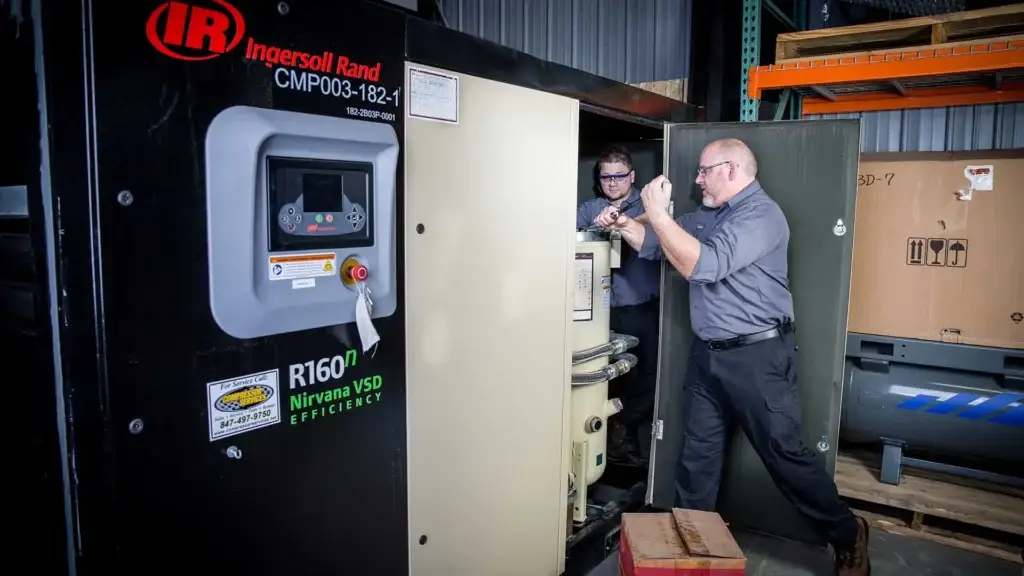
By Michael Nielsen, Editor & Publisher | 15+ Years in Diesel Repair
Last Updated: December 2025
📖 Estimated reading time: 20 minutes
Compressed air powers critical operations in every fleet maintenance facility—from impact wrenches and tire changers to paint booths and lift systems. When your shop’s air compressor fails unexpectedly, technicians stand idle, trucks remain on lifts, and revenue losses mount by the hour. A structured air compressor maintenance schedule transforms this unpredictable risk into manageable, routine operations that keep your bays productive.
Fleet maintenance shops demand reliable compressed air systems that deliver consistent pressure across multiple service bays. Unlike light-duty automotive applications, heavy-duty truck service requires sustained high-volume airflow for extended periods—changing out brake components, operating pneumatic lifts, and running multiple impact tools simultaneously. This intensity accelerates wear on compressor components and demands more rigorous preventive maintenance than manufacturer baselines typically specify.
The following guide provides fleet managers and shop supervisors with actionable maintenance frameworks tailored to commercial truck service environments. You’ll find daily inspection protocols, weekly and monthly service intervals, and annual overhaul procedures designed to maximize equipment uptime while protecting your capital investment.
Key Takeaways
- Preventive maintenance reduces emergency repairs by 70-90% compared to reactive approaches, with energy savings of 15-25% from properly maintained systems.
- Daily condensate drainage is critical in fleet shop environments—a 10 HP compressor can introduce 7-15 gallons of water daily depending on humidity.
- Maintenance requirements differ by compressor type: rotary screw units need oil changes every 2,000-8,000 hours; reciprocating compressors every 1,000-3,000 hours.
- OSHA requires safety relief valve testing and limits compressed air for cleaning to 30 PSI maximum with proper chip guarding.
- Documented service records are mandatory for manufacturer warranty coverage and regulatory compliance with ASME pressure vessel standards.
- Air leaks waste 20-30% of compressed air production in typical facilities—monthly leak detection delivers immediate cost savings.
Why Proactive Maintenance Prevents Costly Shop Downtime
The financial impact of compressor failure extends far beyond repair costs in a fleet maintenance operation. When compressed air stops flowing, impact wrenches fall silent, pneumatic lifts become immobile, and technicians billing $100+ per hour stand idle. For shops running multiple bays, a single day of downtime can cost $5,000-15,000 in lost productivity before accounting for emergency service premiums and expedited parts shipping.
Neglected air compressors follow a predictable deterioration path. Minor efficiency losses progress to elevated operating temperatures, accelerated component wear, and declining air quality. Eventually, this cascading degradation culminates in catastrophic failure requiring extensive repairs or complete equipment replacement—often at the worst possible time.
20-50%
Potential energy savings from a holistic compressed air system improvement, according to the U.S. Department of Energy
The maintenance benefits become clear when comparing reactive versus preventive approaches. Shops operating without structured maintenance schedules experience significantly higher costs across multiple categories. Energy consumption increases 15-30% as components become contaminated or worn, forcing systems to work harder to maintain pressure. Component lifespan decreases dramatically without proper lubrication, cleaning, and adjustment.
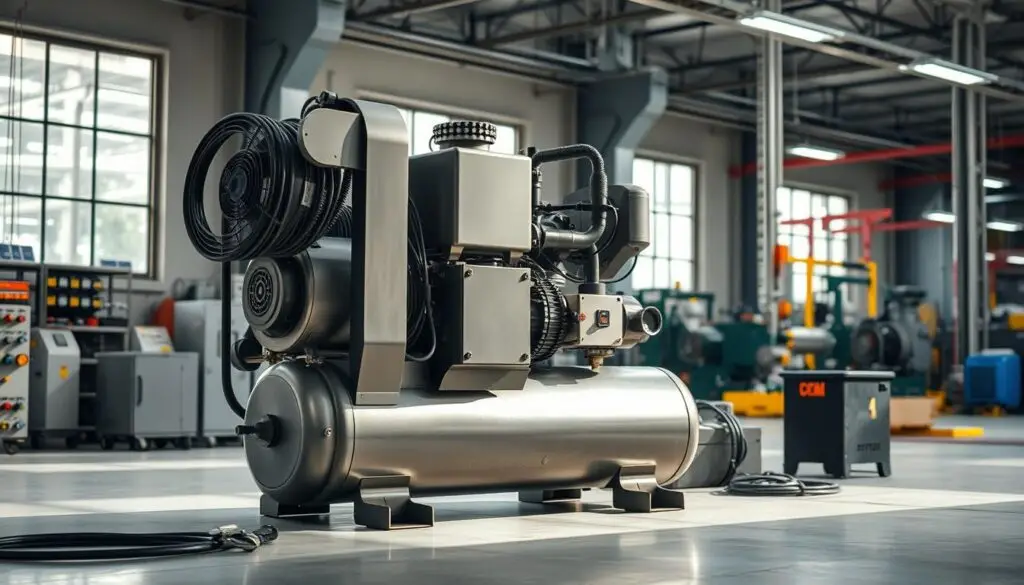
The reliability improvements from proactive maintenance deliver measurable returns that justify the investment. Scheduled service visits identify developing problems before they cause equipment downtime, allowing repairs during planned shutdowns rather than emergency situations. This predictability enables better resource allocation and budget forecasting—essential for fleet operations managing tight margins.
Warranty protection represents another critical benefit often overlooked by busy shop managers. Most manufacturers require documented preventive maintenance to honor warranty claims. Skipping scheduled service can void coverage, leaving your operation fully responsible for expensive repairs that would otherwise be covered.
| Cost Category | Reactive Approach | Preventive Approach | Potential Savings |
|---|---|---|---|
| Energy Consumption | $12,000-$18,000/year | $8,000-$10,000/year | 25-45% reduction |
| Emergency Repairs | $5,000-$15,000/incident | $500-$2,000 scheduled | 70-90% reduction |
| Equipment Lifespan | 8-12 years average | 15-20 years average | 50-100% extension |
| Production Downtime | 48-120 hours/year | 4-12 hours/year | 85-95% reduction |
Understanding Compressor Types and Their Maintenance Requirements
Not all air compressors operate the same way, and their maintenance requirements reflect fundamental mechanical differences. The three primary compressor types used in fleet maintenance applications—rotary screw, reciprocating piston, and centrifugal—each feature distinct designs demanding specialized service approaches. Applying a generic maintenance plan across different equipment types leads to premature component failure and costly downtime.
Rotary Screw Compressor Maintenance
Rotary screw compressors dominate larger fleet maintenance facilities due to their continuous-duty capability and energy efficiency. These units compress air using two intermeshing helical rotors that trap and reduce air volume as it moves through the compression chamber. This design requires consistent lubrication to prevent metal-to-metal contact between rotating elements.
Oil management represents the most critical maintenance consideration for rotary screw systems. The lubricant serves multiple functions: sealing gaps between rotors, removing heat generated during compression, and protecting internal components from wear. Most manufacturers recommend oil changes every 2,000 to 8,000 operating hours, depending on ambient conditions and air quality in your shop environment.
Major compressor manufacturers provide detailed maintenance frameworks that fleet shops can adapt to their specific operating conditions. Kaeser Compressors recommends 1,000-hour intervals for lubricant and filter changes on their rotary screw units, with separator cartridge replacement every 2 years or 1,000 hours—whichever comes first. Their technical documentation emphasizes that oil ageing from depleted additives changes lubricant characteristics, reducing cooling and sealing effectiveness long before visible contamination appears. Fleet shops operating in dusty environments or running high duty cycles should consider oil analysis programs to determine optimal change intervals for their specific conditions.
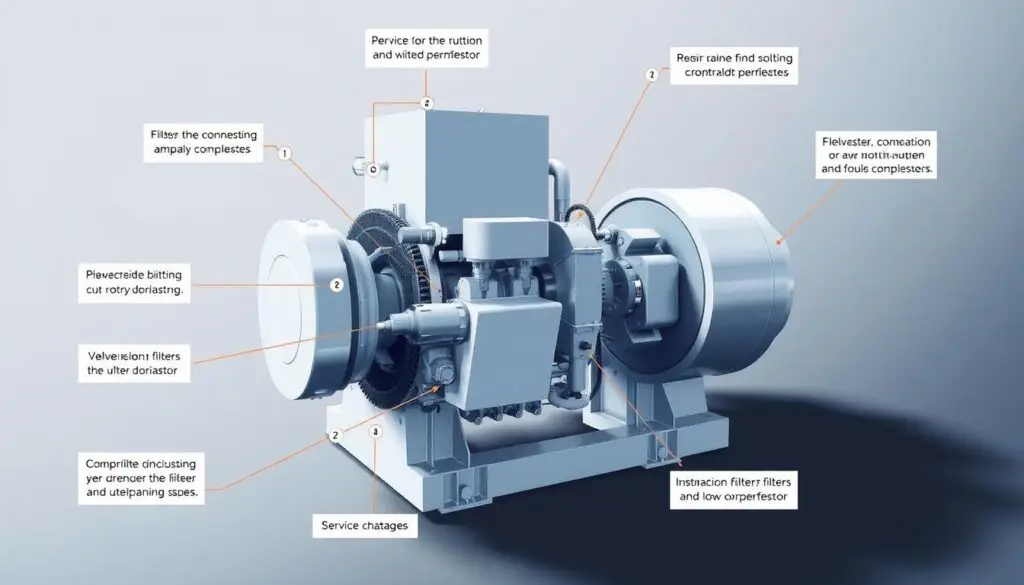
The oil separator element requires regular replacement to maintain air quality and prevent lubricant carryover into your compressed air system. This component typically needs service every 4,000 to 8,000 hours. Neglecting this replacement results in contaminated air that damages downstream equipment—pneumatic tools, paint systems, and brake cleaning equipment all suffer from oil-contaminated air supply.
Reciprocating Piston Compressor Service Requirements
Reciprocating compressors use pistons driven by a crankshaft to compress air in individual cylinders, similar to a diesel engine. This intermittent-duty design creates different maintenance challenges compared to continuous-operation rotary screw systems. The cycling nature of reciprocating operation stresses moving parts during each start and stop.
Valve maintenance represents the highest priority for reciprocating compressor reliability. Intake and discharge valves experience extreme pressure differentials and temperatures during each compression cycle. These components require inspection every 3,000 to 6,000 operating hours, with replacement needed when signs of wear or carbon buildup appear.
Crankcase maintenance differs substantially from rotary screw requirements. Oil changes typically occur every 1,000 to 3,000 hours, depending on duty cycle and ambient conditions. Drive belt tension and condition require weekly inspection on belt-driven units—loose or worn belts reduce efficiency and cause uneven loading on motor and compressor bearings.
Ingersoll Rand’s preventive maintenance guidelines for reciprocating compressors emphasize daily oil level checks, condensate drainage before each operating period, and verification that safety relief valves operate freely. Their factory-certified technicians recommend inspecting air filter elements weekly in shop environments where dust and debris circulate from grinding, welding, and parts cleaning operations. Following OEM-specified maintenance intervals protects warranty coverage—most manufacturers require documented service records to honor component warranty claims.
Centrifugal Compressor Considerations
Centrifugal compressors use high-speed rotating impellers to accelerate air and convert velocity into pressure. These machines typically serve high-capacity applications requiring continuous operation at consistent pressure levels. Their sophisticated design demands specialized maintenance expertise and precision measurement tools rarely found in-house at fleet maintenance operations.
Bearing maintenance is absolutely critical for centrifugal compressor reliability. These units operate at extremely high rotational speeds—often exceeding 20,000 RPM—making bearing integrity essential. Monthly vibration analysis helps detect early signs of bearing wear before catastrophic failure occurs. Most fleet operations contract with specialized service providers for centrifugal compressor maintenance rather than attempting in-house service.
| Compressor Type | Primary Maintenance Focus | Oil Change Interval | Typical Application |
|---|---|---|---|
| Rotary Screw | Lubrication and oil separation | 2,000-8,000 hours | Multi-bay fleet shops |
| Reciprocating Piston | Valve and piston ring wear | 1,000-3,000 hours | Smaller shops, mobile units |
| Centrifugal | Bearing condition, alignment | System-dependent | Large fleet terminals |
Daily Air Compressor Maintenance Tasks
Your compressor’s reliability depends on daily maintenance tasks performed every operating day. These routine checks take only 10 to 15 minutes but prevent equipment failures that could cost thousands in repairs and lost production. Establishing a consistent morning inspection protocol ensures small problems get identified before they escalate into major breakdowns.
Visual Inspection Protocol
A systematic visual inspection forms the foundation of effective daily maintenance. Walk completely around your compressor unit at the start of each shift. Check the floor beneath the unit for puddles or stains indicating leaks. Examine all visible connections, fittings, and hoses for signs of wear or damage.
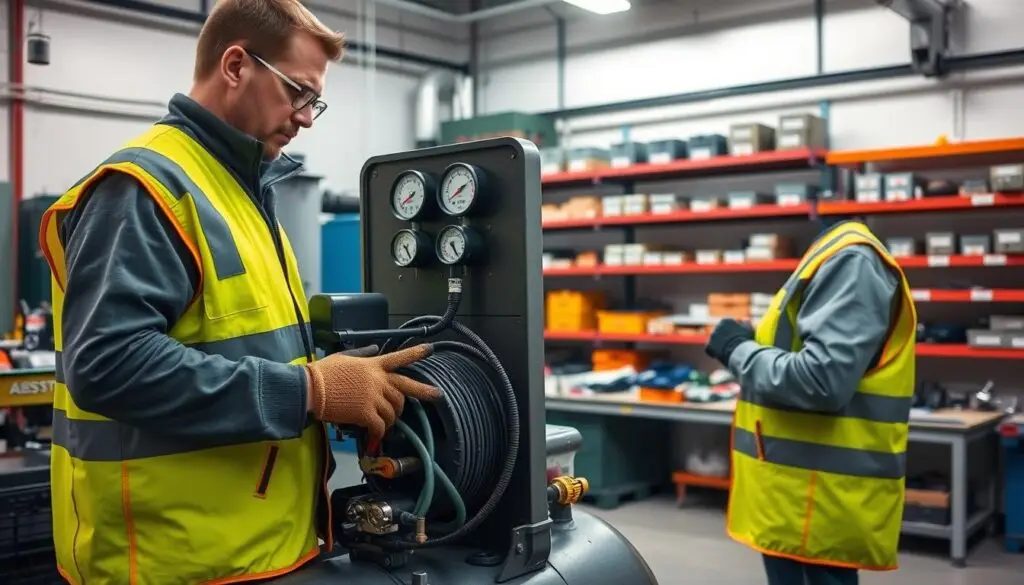
Use these techniques to identify leaks during your daily inspection: listen for hissing sounds near pipe joints, valve connections, and coupling points; look for oil accumulation around shaft seals, gaskets, and threaded connections; check for moisture or condensation in unusual locations suggesting air leakage; inspect hose condition for cracks, abrasions, or deterioration.
Your control panel and gauges provide critical information about compressor performance. Check all pressure gauges to verify readings display within the normal operating range specified by the manufacturer. Note any gauges that stick, fluctuate erratically, or show readings outside expected parameters. Many modern compressors feature diagnostic systems that alert operators to developing problems through the control panel—document any warning lights or unusual displays in your maintenance log.
Operating Parameter Monitoring
Tracking operating parameters daily establishes performance trends that help predict component failures. Record key performance metrics at the same time each day for consistency. Monitor compressor discharge temperature, which should remain consistent with previous readings under similar load conditions. Elevated temperatures suggest inadequate cooling, restricted airflow, or excessive system demand.
Verify that operating pressure matches the setpoint on your pressure switch. Document both loaded and unloaded pressures to track system performance over time. Gradual pressure drops under load may indicate worn valves, increased leakage, or deteriorating compression efficiency.
Condensate Drain Management
Moisture removal ranks among the most important daily maintenance tasks, particularly in humid shop environments or during summer months. Water vapor in compressed air condenses as it cools, collecting in receiver tanks, aftercoolers, and drain legs throughout your system. This condensate must be removed daily to prevent corrosion, contamination, and system damage.
According to the Fleet Maintenance publication, on a 75°F day with 75% relative humidity, a 10 HP compressor can introduce up to 7.5 gallons of water into a compressed air system. At 90°F with 90% relative humidity, that same compressor introduces 15 gallons of water per day. Fleet maintenance shops in southern states face particularly aggressive condensate accumulation during summer months.
Manual condensate drain valves require physical operation at least once per shift. Open the valve completely and allow water to drain until only air escapes. Automatic drain systems need daily verification to confirm proper function—check that automatic drains cycle regularly by listening for the discharge sound or observing the drain outlet. A failed automatic drain can allow water accumulation leading to rust, corrosion, and contaminated air quality that damages pneumatic tools and paint systems.
Stay Current on Fleet Shop Equipment
Get practical guidance on shop equipment maintenance, regulatory updates, and operational best practices delivered to your inbox.
Weekly and Monthly Maintenance Procedures
Scheduled weekly inspections catch developing issues before they escalate into costly failures. These intermediate maintenance tasks require more time than daily checks but deliver significant value in preventing system degradation. Dedicating one to two hours each week to these inspections protects your investment and sustains operational reliability.
Weekly Inspection Tasks
Air filter inspection represents the most critical weekly maintenance task for sustaining compressor efficiency. Contaminated filters restrict airflow, forcing the motor to work harder and consume more energy. Begin your intake system evaluation by removing the filter housing cover and visually examining the filter element. Look for visible dust accumulation, discoloration, or physical damage to the filter media.
Clean reusable filters with compressed air at low pressure (30-40 PSI), blowing from the clean side outward. Allow filters to dry completely before reinstallation. Replace disposable filters when inspection reveals saturation or damage—operating with compromised filters introduces contaminants that cause scoring on cylinder walls or premature oil contamination.

Check drive belt tension weekly using the deflection method recommended by your equipment manufacturer. Properly tensioned belts should deflect approximately one inch for every foot of span distance. Inspect belts for surface cracking or glazing, fraying edges suggesting misalignment, uneven wear patterns, and oil contamination from leaks.
Exterior cleaning and ventilation checks prevent overheating issues that compromise performance and reliability. Remove accumulated dust from motor cooling fins, heat exchangers, and aftercooler surfaces using compressed air or soft brushes. Verify adequate clearance around ventilation openings according to manufacturer specifications—most installations require minimum clearances of 18 to 24 inches for proper air circulation.
Monthly Service Requirements
Monthly maintenance moves beyond basic monitoring to address systems directly impacting performance, safety, and longevity. These procedures typically require one to three hours depending on equipment size and complexity.
Begin oil level verification when the compressor is off and cooled to room temperature for accurate readings. Visual inspection reveals critical information about oil condition—fresh compressor oil appears clear to amber, while darkening indicates contamination from carbon deposits or airborne particles. A milky or cloudy appearance signals moisture intrusion requiring immediate attention. Metallic particles visible in the oil suggest component wear requiring investigation.

Safety Relief Valve Testing
Safety relief valves prevent catastrophic over-pressurization that could cause tank rupture or system damage. According to OSHA 29 CFR 1910.169, every air receiver must be equipped with one or more spring-loaded safety valves with sufficient capacity to prevent pressure from exceeding maximum allowable working pressure by more than 10%.
Test relief valves monthly by manually lifting the lever mechanism while the system operates at normal pressure. The valve should release air immediately and reseat completely when released. Any hesitation, failure to lift, or continued leaking after reseating indicates a valve requiring replacement. Never attempt to adjust or repair safety relief valves—always replace malfunctioning units with properly rated equipment.
⚠️ Safety Warning
Never place any valve between the air receiver and its safety relief valve. OSHA regulations prohibit blocking or restricting safety device operation. Safety valves must be tested frequently and at regular intervals to verify proper operation.
Compressed Air Leak Detection
Air leaks represent one of the most significant and overlooked sources of energy waste in compressed air systems. Studies show facilities typically lose 20-30% of compressed air production to leaks. Monthly leak detection procedures identify and prioritize repairs that deliver immediate cost savings.
Conduct leak surveys using ultrasonic detection equipment or soap solution applied to suspected areas. Focus on common failure points: pipe joints, quick-disconnect fittings, hose connections, pneumatic tool couplings, and aging equipment seals. Tag identified leaks for tracking and schedule repairs based on severity. A quarter-inch leak at 100 PSI wastes approximately $2,500 annually in electricity costs.
Quarterly and Annual Maintenance Requirements
Every three months, your air compressor requires intensive maintenance targeting systems showing cumulative wear from continuous service. These quarterly procedures address components that deteriorate gradually over extended operating periods.
Quarterly Service Tasks
The oil separator element performs the critical function of removing lubricating oil from compressed air before it reaches your distribution system. Inspect the separator element for pressure drop across the component using the compressor’s monitoring system. A pressure differential exceeding 12-15 PSI indicates the element has reached capacity and requires immediate replacement.
Sullair structures their maintenance programs around 50, 250, 500, and 1,500-hour service intervals, with complete service kits containing all filters and consumables needed at each milestone. This tiered approach ensures fleet shops maintain ready stock of replacement parts, eliminating downtime from waiting on parts delivery. Their maintenance guidance specifies quarterly service should include air filter changes, fluid filter changes, fluid samples for analysis, and lubricant top-off—with annual service adding complete lubricant changes, inline filter replacement, coupling inspection, and separator element replacement.
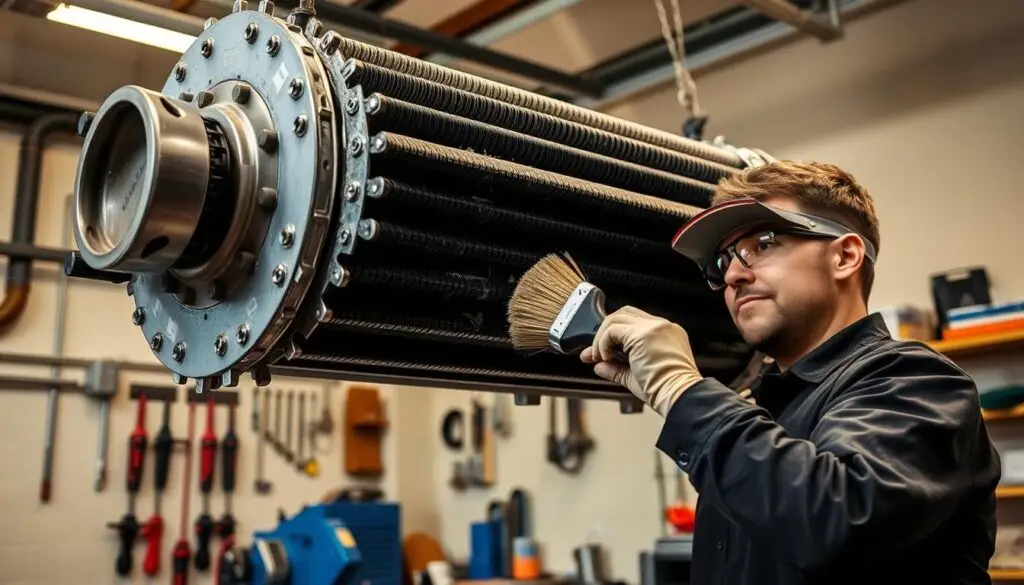
Thermal management directly affects compressor reliability, efficiency, and component lifespan. The heat exchanger and cooling system remove tremendous heat generated during air compression—typically 80-90% of input energy converts to heat. Remove accumulated dust from cooling fins and heat exchanger surfaces. For heavily soiled heat exchangers, apply commercial coil cleaner following manufacturer dilution recommendations.
Electrical system inspection identifies developing problems before they cause unexpected shutdowns or safety hazards. De-energize the compressor and follow lockout-tagout procedures. Inspect all electrical connections for tightness, discoloration, or corrosion indicating overheating or moisture exposure. Examine motor windings for signs of overheating. Use a megohmmeter to test insulation resistance between windings and ground.
Pressure switch calibration ensures the compressor operates within design parameters. Test current settings using precision test gauges rather than relying on installed instruments. Deviations exceeding 5 PSI indicate calibration adjustment or switch replacement is necessary.
Annual Comprehensive Overhaul
Once every twelve months, your air compressor demands thorough maintenance addressing wear patterns invisible during routine checks. The yearly overhaul includes replacing major elements approaching service life limits, preventing unexpected failures during critical production periods.
Complete oil system renewal ensures optimal lubrication performance for the coming year. This process involves more than simply draining old oil—complete system flushing removes accumulated deposits that standard drainage leaves behind. Oil filters and separator elements require annual replacement regardless of apparent condition, as these components accumulate microscopic debris restricting flow even when appearing clean externally.
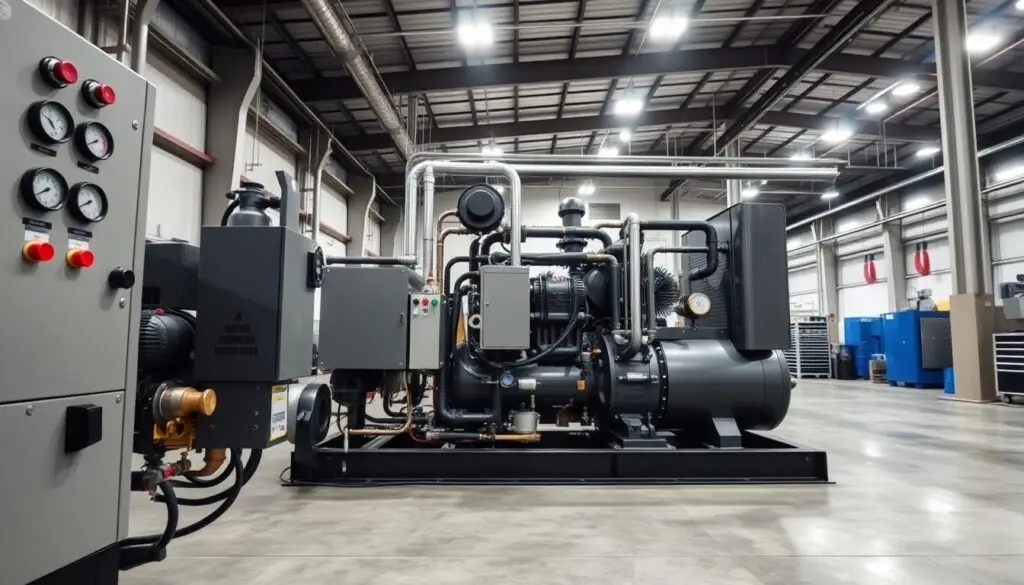
Valve inspection and service addresses components experiencing millions of cycles annually. Intake and discharge valves experience extreme pressure differentials and temperatures during each compression cycle. Remove valves for thorough inspection and cleaning—carbon deposits accumulate throughout the year, restricting flow and reducing efficiency. Replace damaged valves rather than attempting repairs that rarely restore proper function.
Engage qualified service technicians to conduct comprehensive performance testing during annual maintenance. Air quality testing verifies compressed air meets purity standards for your applications. Pressure vessel inspection examines internal surfaces for corrosion, scaling, or stress fractures—conditions that develop slowly but eventually cause catastrophic failures if left unaddressed.
Air receivers must comply with ASME Boiler and Pressure Vessel Code Section VIII requirements. According to the National Board of Boiler and Pressure Vessel Inspectors, internal inspection intervals vary by jurisdiction, but typical requirements call for inspection every 3-5 years depending on tank classification and usage. Maintain documentation of all pressure vessel inspections as required by your state or local jurisdiction.
OEM Maintenance Resources
Major air compressor manufacturers publish detailed maintenance schedules specific to their equipment. Consult these resources for model-specific service intervals:
- Ingersoll Rand — CARE maintenance programs with PackageCARE, PlannedCARE, and PartsCARE tiers; 10-year airend warranty with genuine parts
- Kaeser — Sigma Profile rotary screw technology; 1,000-hour standard service intervals; oil analysis programs
- Sullair — Customer Fleet Management (C.F.M.) parts program; 50/250/500/1,500-hour service kits; 2,000-4,000 hour routine maintenance cycles
Note: Always verify intervals against your specific model’s operator manual. Operating conditions in fleet maintenance environments may require more frequent service than baseline OEM recommendations.
The HDJ Perspective
In our experience visiting fleet maintenance facilities across the country, compressed air system maintenance ranks among the most neglected aspects of shop equipment management. Shop managers focus heavily on lift inspections and tool maintenance—both important—but often treat the air compressor as invisible infrastructure until it fails. The most successful operations we’ve seen treat compressed air maintenance with the same rigor applied to their fleet’s preventive maintenance programs. They track operating hours, document service history, and budget for component replacement before failures occur. This approach consistently delivers lower total ownership costs and virtually eliminates the emergency compressor failures that bring multi-bay operations to a standstill.
Compressed Air Safety Requirements for Fleet Shops
Compressed air systems in commercial truck maintenance facilities must comply with OSHA workplace safety standards. Understanding these requirements protects both personnel and your operation’s compliance status.
According to OSHA 29 CFR 1910.242(b), compressed air used for cleaning purposes must not exceed 30 PSI except where reduced to less than 30 PSI at the point of use, and then only with effective chip guarding and appropriate personal protective equipment. This regulation applies to common shop practices like blowing off parts, cleaning work areas, and removing debris from equipment.
Many fleet shops operate their compressed air systems at 125-175 PSI for powering impact wrenches and other pneumatic tools. However, cleaning applications require pressure reduction. Install blow-off guns with pressure-limiting nozzles rated for 30 PSI maximum dead-end pressure, and ensure technicians wear appropriate eye protection when using compressed air for cleaning.
⚠️ Safety Warning
Never use compressed air to clean clothing or skin. OSHA explicitly prohibits this practice due to the risk of air embolism—compressed air can enter the bloodstream through small cuts or abrasions, causing potentially fatal injuries. Post “No Air Cleaning on Personnel” signage near compressor stations.
Air receiver tanks require specific safety equipment and maintenance practices. Every receiver must have an indicating pressure gauge in a readily visible location, and all safety valves must be constructed and maintained in accordance with ASME Boiler and Pressure Vessel Code. Drain pipes and valves must be installed at the lowest point of every air receiver to remove accumulated oil and water.
Selecting Compressor Service Providers
Partnering with qualified service providers delivers value that in-house capabilities alone cannot match for complex maintenance requirements. Authorized service centers employ factory-trained technicians with specialized knowledge of specific compressor models and access to diagnostic equipment unavailable to general maintenance personnel.
When evaluating compressed air service providers, verify technician certifications through the Compressed Air and Gas Institute (CAGI) or manufacturer-specific training programs. Ask about their experience with your specific compressor type and brand. Request references from other fleet maintenance operations of similar size and scope.
Service agreements and preventive maintenance contracts provide priority response during emergencies, scheduled visits ensuring consistent maintenance execution, access to genuine parts through established supply channels, and technical support for troubleshooting and optimization. The expertise advantage becomes particularly valuable during complex repairs and system upgrades—qualified providers complete work faster and more reliably than inexperienced personnel.
Share Your Shop Equipment Expertise
Are you a fleet maintenance manager, shop supervisor, or equipment specialist with practical insights on compressed air systems? We’re looking for experienced professionals to share their knowledge with our readers.
Creating Your Maintenance Documentation System
Proper record keeping creates a data-driven framework that optimizes compressor performance and reduces operational costs. Comprehensive documentation transforms routine maintenance activities into strategic intelligence supporting better decision-making while protecting warranty coverage.
Your maintenance log should document the exact date and time of service along with total operating hours at maintenance. Record task descriptions, parts replaced with part numbers, and labor hours. Include operating parameters such as pressure readings, temperature measurements, and any observations about component condition.
Digital maintenance management platforms centralize scheduling, documentation, and reporting functions. These systems generate automated alerts via email or text message as maintenance deadlines approach. Hour-meter-based scheduling delivers superior accuracy compared to calendar-based approaches for equipment running variable hours.
Systematic data analysis reveals patterns enabling predictive maintenance strategies. Monitor temperature readings across multiple service intervals—gradually increasing operating temperatures often signal cooling system problems or bearing wear before catastrophic failure occurs. Track pressure output over time to identify declining compressor efficiency, and analyze oil consumption rates between service intervals to identify seal degradation or internal leakage.
Warning Signs Requiring Immediate Attention
Early detection of equipment distress signals separates proactive maintenance teams from those facing costly emergency repairs. Any deviation from established operational baselines should trigger investigation and troubleshooting procedures.
Grinding sounds typically indicate bearing failure with metal-on-metal contact—these sounds demand immediate shutdown and inspection. Knocking or banging sounds suggest loose components, worn bearings, or damaged internal parts. Squealing noises usually point to belt slippage or improper tension. Excessive vibration indicates mounting problems, rotor imbalance, misalignment, or bearing wear.
Inability to reach rated system pressure despite extended run times suggests worn compression elements, damaged valves, or excessive system leakage. Pressure fluctuations during operation create inconsistent air delivery affecting pneumatic tool performance. Excessive cycling—where the compressor loads and unloads more frequently than normal—indicates control system problems or air demand issues.
Rapid oil loss between service intervals indicates internal leakage, seal deterioration, or separator element failure. Milky or cloudy oil appearance signals moisture contamination compromising lubrication properties. Metal particles visible in oil samples provide definitive evidence of internal wear requiring immediate investigation.
Overheating represents a critical warning sign leading to immediate equipment damage if not addressed promptly. Elevated discharge temperatures exceeding manufacturer specifications indicate cooling system inadequacy or internal problems generating abnormal heat. Thermal shutdown events triggered by safety systems protect equipment but signal serious underlying issues requiring immediate maintenance.
Frequently Asked Questions
How often should I change the oil in my shop’s air compressor?
Oil change intervals depend on your compressor type, operating conditions, and manufacturer specifications. Rotary screw compressors typically require oil changes every 2,000 to 8,000 operating hours—Kaeser specifies 1,000-hour intervals for standard applications, while Sullair units using synthetic lubricants can extend to 8,000 hours with oil analysis confirmation. Reciprocating piston compressors need service every 1,000 to 3,000 hours according to Ingersoll Rand guidelines. Fleet maintenance shops with dusty environments or high humidity should use shorter intervals regardless of manufacturer baseline. Always use OEM-specified lubricants matching viscosity and performance requirements—generic substitutes can void warranty coverage and reduce component lifespan.
What’s the most important daily maintenance task for compressed air systems?
Condensate drainage is the single most critical daily maintenance task. Water accumulation causes internal corrosion, contaminates lubricating oil, and degrades air quality affecting pneumatic tools and paint systems. A 10 HP compressor can introduce 7-15 gallons of water daily depending on ambient conditions. Drain manual condensate valves at least once per shift, and verify automatic drains are cycling properly—failed automatic drains often go unnoticed until significant damage occurs.
How do I know if my air compressor needs professional service?
Several symptoms indicate the need for professional service: persistent overheating despite clean cooling systems, unusual grinding or knocking sounds, inability to maintain rated pressure, excessive oil consumption, and electrical issues beyond basic troubleshooting. Annual comprehensive overhauls should always involve qualified technicians with proper diagnostic equipment. For centrifugal compressors, virtually all maintenance beyond daily checks requires specialized expertise due to precision tolerances and high rotational speeds.
What are the OSHA requirements for compressed air in fleet shops?
OSHA 29 CFR 1910.242(b) limits compressed air used for cleaning to 30 PSI maximum at the point of blockage, with effective chip guarding and personal protective equipment required. Air receivers must comply with OSHA 1910.169, including visible pressure gauges, spring-loaded safety valves, and accessible drain valves. Safety valves must be tested regularly and cannot have any valve placed between the receiver and relief device. Never use compressed air to clean clothing or skin due to air embolism risks.
How much can air leaks cost my fleet maintenance operation?
Air leaks typically waste 20-30% of compressed air production in facilities without active leak management programs. A single quarter-inch leak at 100 PSI wastes approximately $2,500 annually in electricity costs. For multi-bay fleet shops with extensive distribution piping, total leak costs can exceed $9,000 annually for modulating-type rotary screw compressors running extended hours. Monthly ultrasonic leak detection surveys identify problems while they’re still small and inexpensive to repair.
Building Your Preventive Maintenance Program
A well-structured air compressor maintenance schedule transforms your fleet shop from reactive problem-solving to proactive equipment reliability. The frameworks outlined in this guide provide the foundation for predictable performance and protected capital investment.
Begin by assessing your current practices against the daily, weekly, monthly, quarterly, and annual intervals detailed throughout this guide. Identify gaps in your existing approach and prioritize corrective actions based on equipment condition and operational demands. Preventive maintenance delivers measurable returns through extended equipment lifespan, reduced energy consumption, and eliminated unexpected failures.
Documentation remains essential to maintenance success. Record every inspection, service action, and performance metric. This data reveals patterns predicting component wear and optimizes service intervals specific to your operating environment. Your compressed air system represents a substantial capital investment—protecting that investment through disciplined preventive maintenance ensures warranty coverage, maximizes uptime, and supports the production goals driving your fleet operation forward.
Share This Guide With Your Team
Help your shop supervisors and maintenance technicians keep your compressed air systems running reliably. Share this comprehensive guide with your team.