By Michael Nielsen, Editor & Publisher | 15+ Years in Diesel Repair
Last Updated: December 2025
📖 Estimated reading time: 22 minutes
Backhoe engine overheating problems cost construction operations thousands in repairs and project delays every year. When your equipment runs hot, the damage extends far beyond simple inconvenience—cylinder heads warp, gaskets fail, pistons score, and bearings seize. These failures can transform a minor temperature issue into a complete engine rebuild costing $15,000 to $25,000 or more.
The reality most operators discover too late is that the majority of overheating incidents are preventable. Industry data consistently shows that 70% of backhoe temperature problems can be diagnosed and fixed with basic tools and systematic troubleshooting. Most failures trace back to identifiable causes: cooling system malfunctions, thermostat failures, radiator blockages, or inadequate maintenance practices.
This guide provides operators, fleet managers, and maintenance personnel with practical diagnostic methods and proven repair solutions for heavy equipment temperature issues. You’ll learn to recognize warning signs before catastrophic failure occurs, identify specific component problems, and implement both immediate repairs and long-term preventive strategies that protect your investment.
Key Takeaways
- Cost of delay: Backhoe engine overheating causes cylinder head warping, gasket failure, and bearing damage—repairs ranging from $1,500 to $25,000+ depending on severity.
- Diagnostic advantage: 70% of temperature problems can be identified and resolved with basic tools and systematic troubleshooting procedures.
- Primary culprits: Low coolant levels, thermostat failures, radiator blockages, and fan system malfunctions account for most overheating incidents.
- Early detection pays: Recognizing warning signs within the first few minutes of temperature rise prevents minor issues from becoming major engine damage.
- Preventive maintenance ROI: Systematic cooling system care costs significantly less than emergency repairs and lost productivity from unplanned downtime.
How Backhoe Engine Temperature Management Works
Every minute of operation, your backhoe engine generates tremendous heat that must be carefully controlled to prevent catastrophic failure. The combustion process inside diesel engines creates intense thermal energy as fuel ignites under high pressure. Friction between moving parts adds even more heat to the system, making effective thermal management essential for equipment survival.
Without proper temperature regulation, metal components expand beyond design tolerances. Cylinder heads can warp, gaskets fail, and internal parts seize within minutes of extreme overheating. The engine cooling system serves as your backhoe’s primary defense against this thermal damage through a network of interconnected components working continuously to absorb, transport, and release heat into the surrounding air.
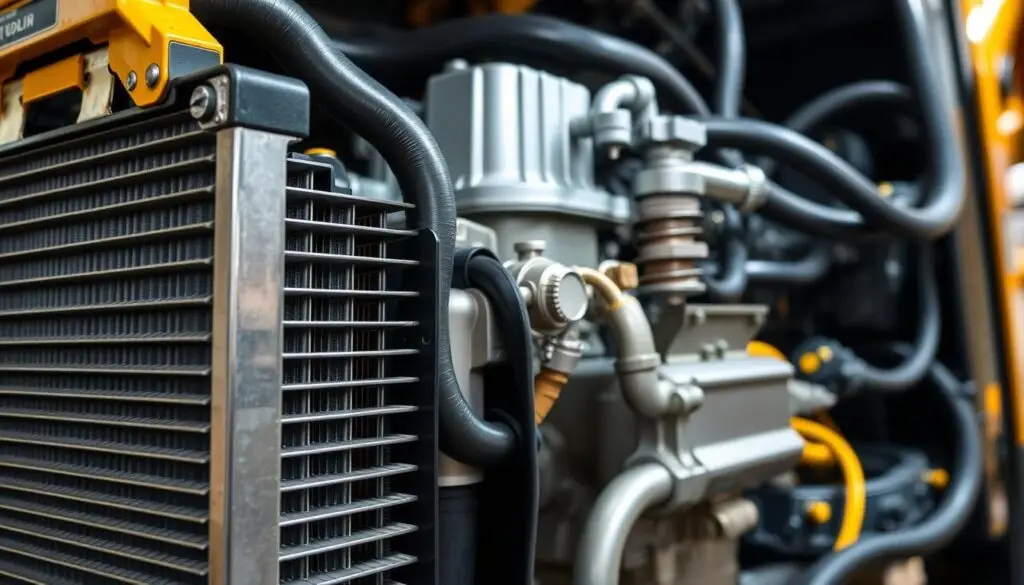
At the heart of this system lies the coolant circulation process. Liquid coolant flows through passages surrounding combustion chambers and cylinder walls, absorbing heat from extremely hot surfaces. The water pump drives this continuous circulation, pushing coolant through the engine block where temperatures reach their highest levels before traveling through hoses toward the radiator for cooling.
Inside the radiator, heat dissipation occurs through a straightforward but effective process. Hot coolant passes through thin metal tubes surrounded by cooling fins, and air flowing across these fins carries away thermal energy, dropping coolant temperature significantly—typically 30 to 50 degrees Fahrenheit per pass through a properly functioning radiator.
The thermostat acts as the system’s gatekeeper. This temperature-sensitive valve remains closed during engine warm-up, trapping coolant inside the engine block to help reach optimal operating temperature quickly. Once coolant reaches the designed temperature—typically between 180°F and 195°F—the thermostat opens to allow full circulation through the radiator.
Cooling fans provide critical airflow needed for heat dissipation. When backhoes operate at low speeds or sit idling during digging operations, natural airflow proves insufficient. The fan pulls air through the radiator core to maintain cooling effectiveness even during stationary operation—a critical function given how much time backhoes spend working without forward movement.
| Cooling Component | Primary Function | Impact on Temperature Regulation |
|---|---|---|
| Water Pump | Circulates coolant throughout the system | Maintains continuous fluid flow for heat absorption and transport |
| Radiator | Transfers heat from coolant to ambient air | Reduces coolant temperature by 30-50°F per pass |
| Thermostat | Regulates coolant flow based on temperature | Maintains engine within optimal 180-210°F range |
| Cooling Fan | Generates airflow across radiator | Ensures heat dissipation during low-speed or idle operation |
Modern backhoes incorporate sophisticated temperature sensors throughout the cooling system. These electronic monitors track coolant temperature in real-time, with dashboard gauges displaying this information while warning systems alert operators when temperatures exceed safe limits. Proper operating temperature for diesel engines typically ranges between 180 and 210 degrees Fahrenheit—this range allows efficient combustion while preventing thermal stress.
The coolant itself represents an engineered solution to temperature regulation challenges. A mixture of antifreeze and water provides performance advantages over water alone, raising the boiling point above 212°F and lowering the freezing point well below 32°F. Antifreeze meeting ASTM D6210 specifications for heavy-duty engines also contains corrosion inhibitors that protect metal surfaces and lubricate water pump seals to extend service life.
Warning Signs Your Backhoe Engine Is Overheating
Early detection of temperature problems separates minor maintenance issues from expensive engine replacements. Recognizing overheating symptoms before they escalate gives operators the power to prevent catastrophic damage that can sideline equipment for weeks. Your backhoe communicates thermal distress through multiple channels—from instrument panel alerts to physical changes you can see, hear, and smell.
The difference between a $200 repair and a $15,000 engine rebuild often comes down to recognizing warning signs within the first few minutes of a problem developing. Operators who develop sensitivity to these signals transform from passive equipment users into active protectors of valuable machinery.
Dashboard Temperature Readings and Alerts
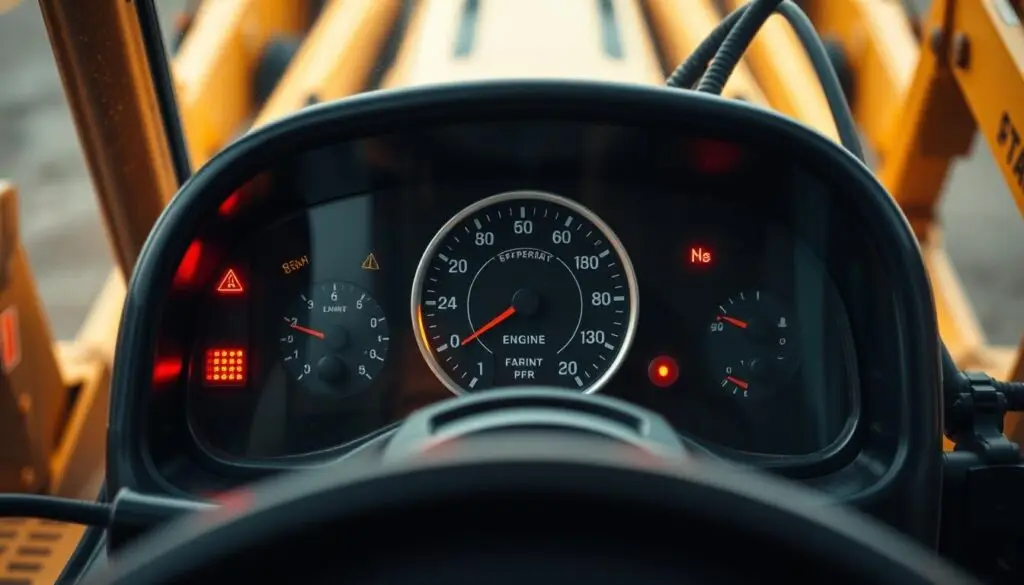
The temperature gauge serves as your primary defense against heat-related engine damage. Normal operating temperatures for most backhoe engines range between 180°F and 210°F (82°C to 99°C). When readings consistently approach or exceed this upper threshold, immediate action becomes necessary.
Modern backhoes feature digital displays providing precise coolant temperature readings. These systems offer advantages over traditional analog gauges by showing exact numerical values rather than approximations. Dashboard warnings typically activate when temperatures reach 220°F (104°C) or higher, but waiting for these alerts puts your engine at serious risk—damage is often already occurring before warning lights illuminate.
⚠️ Critical Temperature Warning
A temperature gauge reading in the red zone means damage is already occurring. Shut down immediately to prevent complete engine failure. Continuing operation risks cylinder head warping, head gasket failure, and bearing seizure.
Watch for temperature warning lights that illuminate in red or amber. Red indicators signal critical overheating requiring immediate shutdown. Amber lights suggest elevated temperatures that demand reduced load and careful monitoring. Many contemporary backhoes display diagnostic trouble codes when sensors detect abnormal temperature patterns—common codes include P0217 (engine coolant over temperature) that help technicians pinpoint problems.
Performance Changes and Power Loss
Physical symptoms manifest through noticeable changes in how your backhoe performs under load. Engine performance issues caused by overheating begin subtly but progress rapidly as temperatures climb. Reduced hydraulic response represents one of the earliest operational warnings operators can detect.
Power output decreases significantly when engines overheat because elevated temperatures affect fuel combustion efficiency. You’ll notice the engine struggling to maintain RPM under normal working loads—tasks that previously required moderate throttle suddenly demand full power to complete. This power loss often appears before temperature gauges reach warning zones.
Listen for unusual engine sounds accompanying thermal stress. Pinging or knocking noises indicate pre-ignition caused by excessive heat in the combustion chamber. These metallic sounds occur when fuel ignites prematurely, creating pressure waves that damage pistons and cylinder walls. Rough idling emerges as another telltale sign—the engine may shake, vibrate excessively, or run unevenly at idle speeds.
| Warning Category | Specific Indicators | Severity | Required Action |
|---|---|---|---|
| Dashboard Warnings | Gauge in red zone, warning lights, error codes | Critical | Immediate shutdown required |
| Performance Changes | Power loss, hesitation, rough idle, knocking | High | Reduce load and monitor closely |
| Visual/Odor Signs | Steam from engine, white exhaust, sweet smell | Critical | Stop operation immediately |
| Temperature Readings | Consistently above 210°F, fluctuating, rapid spikes | Moderate to High | Investigation and correction needed |
Visual Warnings and Distinctive Smells
Steam rising from the engine compartment represents one of the most dramatic overheating indicators. This steam occurs when coolant reaches boiling point and escapes through the radiator cap pressure relief valve or compromised hoses. The sight of steam billowing from under the hood demands immediate engine shutdown.
White smoke pouring from the exhaust pipe signals coolant entering the combustion chambers through a blown head gasket or cracked cylinder head. Unlike normal water vapor that dissipates quickly, this smoke appears thick and continuous. Blue-gray smoke suggests oil burning due to worn piston rings or valve seals exacerbated by heat, while black smoke indicates fuel combustion problems.
The sweet, distinctive odor of burning ethylene glycol (antifreeze) provides an olfactory warning that coolant leaks exist. This smell resembles maple syrup and becomes particularly noticeable when coolant contacts hot engine surfaces. Acrid, burnt oil smells indicate lubrication breakdown from excessive heat—engine oil loses viscosity at elevated temperatures, creating a sharp, unpleasant odor distinct from normal oil smells.
Cooling System Failures That Cause Overheating
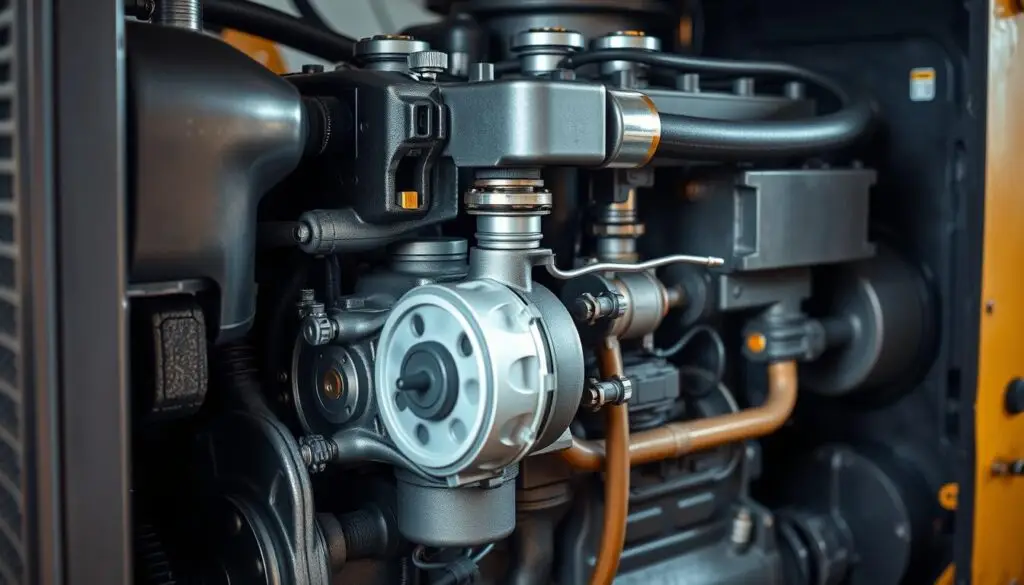
Your backhoe’s cooling system operates as an integrated network where failure of any component can trigger cascading temperature problems. The system must maintain precise fluid circulation, pressure, and volume to transfer heat away from the engine effectively. Three primary failure categories account for most overheating incidents: insufficient coolant levels, leaking components, and circulation pump malfunctions.
Low Coolant Levels and Loss Patterns
Low coolant levels represent the most frequent cause of cooling system failure in backhoe engines. The relationship between coolant volume and cooling capacity is direct—even a 10% reduction in fluid levels can decrease heat transfer efficiency by 25% or more. Without adequate coolant, the system cannot absorb and dissipate the tremendous thermal energy generated during normal operation.
Coolant loss occurs through several mechanisms. External leaks allow fluid to escape from hoses, connections, gaskets, and seals. Internal leaks permit coolant to enter combustion chambers through compromised head gaskets or cracked engine blocks. Evaporation through faulty pressure caps also contributes to gradual fluid loss that reduces system effectiveness over time.
⚠️ Safety Warning
Never open a hot cooling system. Pressurized coolant can exceed 250°F and cause severe burns. Wait at least 30-45 minutes after shutdown before removing the radiator cap. When opening, use a thick towel and turn the cap to the first stop position to release pressure gradually.
The pattern of coolant loss reveals important diagnostic information. Gradual loss over weeks indicates small leaks or minor consumption through normal system operation. Sudden, dramatic loss suggests major failures like blown hoses, ruptured radiator tanks, or catastrophic seal failures. External leaks show through visible puddles, stains, or dampness. Internal leaks prove more insidious, contaminating engine oil with coolant or producing white exhaust smoke.
Water Pump Problems and Impeller Damage
The water pump serves as the heart of the cooling system, forcing coolant circulation through engine passages, the radiator, and return lines. Water pump failure prevents adequate coolant flow even when fluid levels are correct and all other components function properly. Without effective circulation, coolant cannot transfer heat from the engine to the radiator.
Water pump failure occurs through several distinct mechanisms. Bearing wear allows the pump shaft to wobble, causing seal damage and eventual seizure—this deterioration produces squealing or grinding noises that progressively worsen. Seal failure allows coolant to escape through the pump’s weep hole, a small drain designed to indicate when internal seals have failed.
Impeller damage represents a particularly problematic failure mode. The impeller—the internal component with vanes that move coolant—can corrode, erode, or break. Cavitation damage occurs when coolant vaporizes inside the pump, creating bubbles that collapse violently and erode impeller material. A damaged impeller continues turning without moving coolant effectively, creating a diagnostic challenge where the pump appears to operate normally from external observation but circulation is dramatically reduced.
Testing for impeller damage requires observing coolant flow. Remove the radiator cap when the engine is completely cool, start the engine, and watch for coolant movement in the radiator. Strong circulation produces visible flow and ripples. Weak or absent movement indicates pump inefficiency requiring further investigation.
Radiator Problems Causing Engine Overheating
Radiator problems rank among the most common yet overlooked causes of backhoe engine overheating in construction environments. The radiator functions as a critical heat exchanger, transferring thermal energy from hot coolant to outside air through thousands of tiny metal passages. When these passages become blocked or damaged, cooling efficiency drops dramatically even when other system components work perfectly.
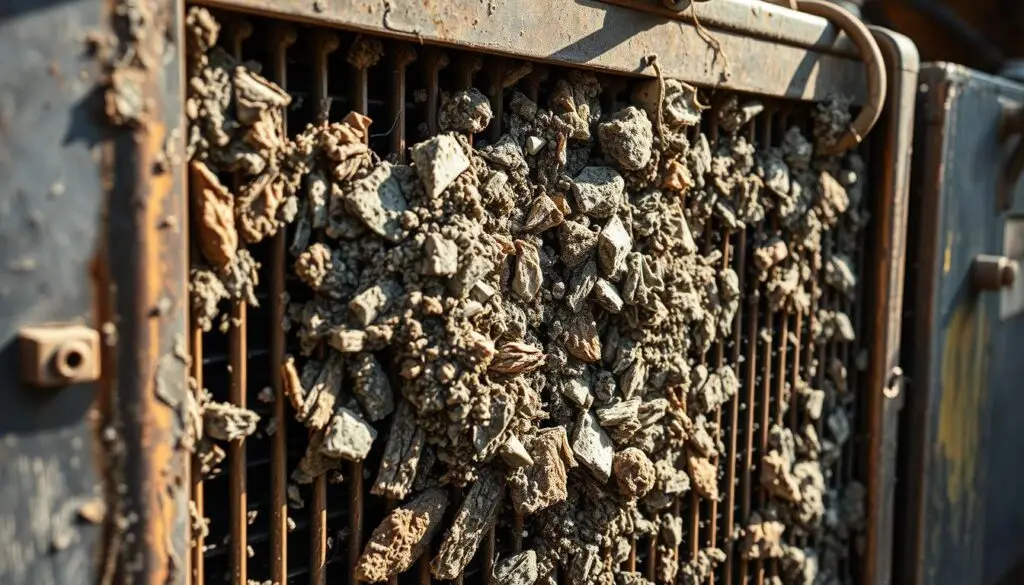
Backhoes operate in conditions that expose radiators to constant contamination. Dust clouds from excavation work, airborne debris from demolition sites, and mud splatter from wet terrain all accumulate on radiator surfaces. Over time, this contamination restricts airflow and creates insulation that prevents proper heat dissipation.
External Debris and Airflow Restriction
A clogged radiator represents the single most preventable cause of backhoe overheating. Construction sites generate enormous amounts of airborne particles that travel directly into radiator cores as cooling fans pull air through the system. Debris accumulates progressively, starting as a light coating that barely affects performance and eventually creating dense mats blocking 50% or more of available airflow.
The radiator core consists of hundreds of thin tubes with delicate fins attached to maximize surface area. Each square inch of fin surface helps transfer heat from coolant to air. When dirt, grass clippings, leaves, or other materials cover these fins, they create an insulating barrier that traps heat inside the cooling system.
Operators often underestimate how quickly debris accumulation reaches critical levels. A backhoe working in dusty conditions may require radiator cleaning weekly rather than monthly. Visual inspection from the front shows only surface contamination, while the worst blockages occur deep within the core where debris packs tightly between cooling passages.
Proper radiator cleaning techniques make the difference between effective maintenance and radiator damage. Compressed air provides the safest cleaning method when applied from the engine side of the radiator, blowing outward to push debris away from the core rather than deeper into it. Keep air pressure below 30 PSI to prevent fin damage. Low-pressure water washing removes stubborn contamination—direct the water stream at a 45-degree angle rather than perpendicular to the radiator face to lift debris without bending fins.
Internal Scale and Corrosion Damage
Internal scale deposits and corrosion represent the most insidious radiator problems because they develop invisibly inside cooling passages. Hard water minerals, coolant breakdown products, and rust particles accumulate on interior surfaces over months or years of operation. This contamination creates an insulating layer preventing heat transfer from coolant to radiator metal.
The chemistry of coolant solutions directly affects internal radiator condition. Old coolant loses its corrosion inhibitors and pH stability, allowing metal oxidation to accelerate. Mixing incompatible coolant types creates chemical reactions producing sludge and precipitates that settle throughout the cooling system. Following TMC recommended practices for coolant maintenance helps prevent these compatibility issues.
Scale deposits typically consist of calcium, magnesium, and silicate compounds left behind when water evaporates or when coolant temperatures cause minerals to precipitate from solution. These deposits bond tightly to metal surfaces, gradually narrowing coolant passages and reducing flow rates. A radiator with severe internal scaling may lose 40% or more of its cooling capacity while appearing perfectly clean externally.
Keep Your Equipment Running Cool
Staying current on maintenance best practices helps prevent costly overheating failures. Get the latest technical guidance delivered to your inbox.
Thermostat Failures and Temperature Regulation
A malfunctioning thermostat can transform a perfectly maintained backhoe into an overheating liability within minutes. This small but critical component controls coolant circulation between your engine and radiator, making it essential for proper temperature regulation. When thermostat failure occurs, your engine loses its ability to maintain safe operating temperatures.
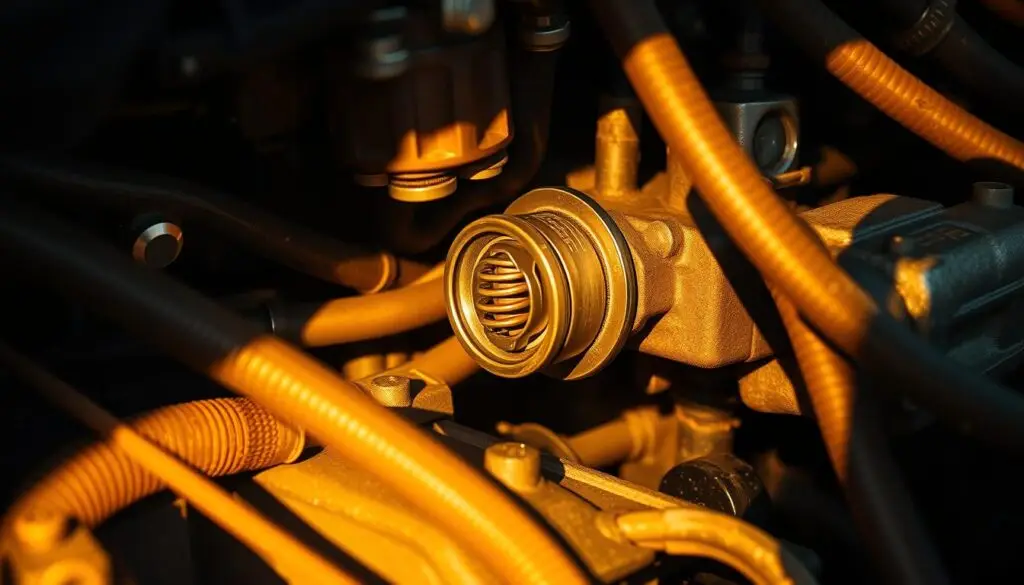
The thermostat acts as a temperature-controlled valve in your cooling system. During engine warm-up, it remains closed to trap coolant inside the engine block, allowing your backhoe to reach optimal operating temperature quickly. Once coolant reaches the designed temperature—typically between 180°F and 195°F—the thermostat opens to allow full circulation through the radiator.
Stuck Closed Thermostats Blocking Coolant Flow
A stuck thermostat represents one of the most common causes of rapid engine overheating. When the thermostat fails in the closed position, it creates a complete coolant flow restriction. Hot coolant becomes trapped in the engine with no path to the radiator for cooling.
Several factors cause thermostats to stick closed. Corrosion from old coolant eats away at internal components. Contamination from debris or scale deposits can jam the valve mechanism. The wax-pellet actuator inside the thermostat can also fail, preventing the valve from opening even at high temperatures.
Recognizing a stuck thermostat requires attention to specific symptoms. Your engine temperature will climb rapidly after startup—often reaching dangerous levels within just a few minutes of operation. The upper radiator hose will remain cool to the touch even as the engine overheats, confirming that hot coolant isn’t circulating to the radiator.
Thermostat testing provides definitive confirmation of failure. Remove the thermostat from the engine and place it in a pot of water on a heat source. Use a thermometer to monitor water temperature as it heats. A properly functioning thermostat will begin opening at its rated temperature, usually stamped on the component. Thermostat replacement restores proper cooling system function—always use the correct temperature-rated replacement specified by your equipment manufacturer.
Fan and Belt System Problems
Fan and belt system complications rank among the most frequently overlooked causes of backhoe engine overheating, particularly during idle operation. While coolant circulates internally to absorb heat, your machine depends on forced airflow through the radiator to dissipate that thermal energy into the atmosphere. When fans fail to spin at proper speeds or belts slip under load, cooling capacity drops dramatically.
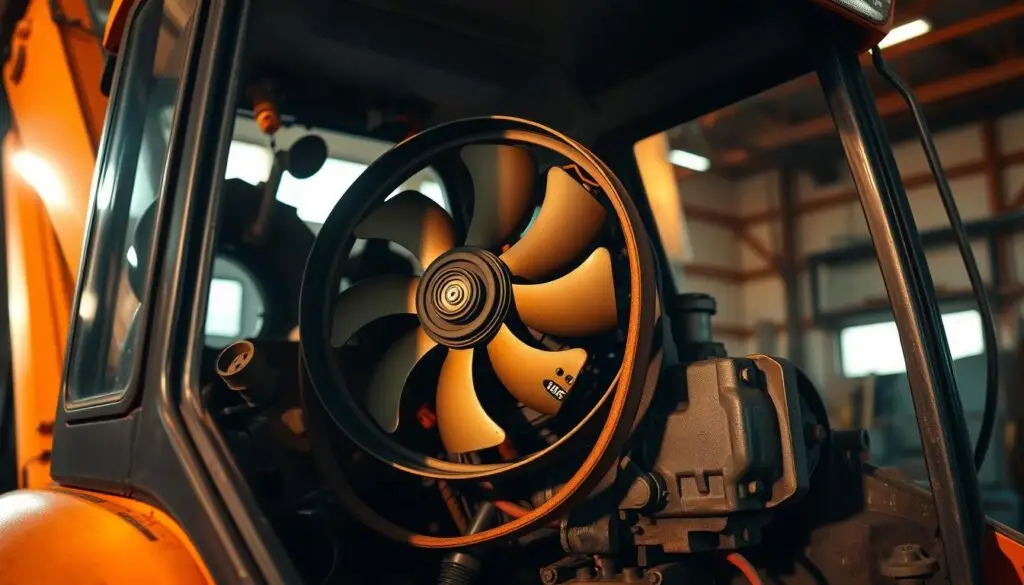
The cooling fan serves as the primary mechanism for pulling ambient air through radiator fins, especially during stationary operation or low-speed work when natural airflow proves insufficient. Unlike highway vehicles benefiting from constant ram air, backhoes frequently operate at idle or minimal ground speed while performing digging tasks—making mechanical airflow generation absolutely critical for temperature management.
Belt Wear and Tension Loss
Fan belt issues directly prevent cooling fans from achieving designed rotational speeds. The belt connecting your engine’s crankshaft pulley to the fan pulley must maintain proper tension and structural integrity to transmit power effectively. Deterioration through age, heat exposure, and contamination gradually reduces belt performance until complete failure occurs.
Visual inspection reveals multiple belt degradation patterns signaling impending failure. Cracking along the belt’s inner surface indicates heat damage and material fatigue. Glazing creates a smooth, shiny appearance that reduces friction and causes slippage. Fraying at belt edges suggests misalignment between pulleys or contact with adjacent components.
Proper tension testing requires pressing the belt midspan between pulleys with moderate thumb pressure. Deflection should measure between 1/2 and 3/4 inch for most applications, though manufacturer specifications vary by model. Excessive deflection indicates insufficient tension allowing slippage, while minimal deflection suggests over-tightening that damages bearings.
30-40%
A slipping fan belt might still turn the cooling fan, but at 30-40% below design speed—enough to prevent immediate overheating at idle, but insufficient once you engage hydraulics or increase engine RPM under load.
Fan Clutch and Hydraulic Drive Failures
Fan clutch failure manifests differently than belt problems but produces identical overheating symptoms. Modern backhoes use thermostatic fan clutches that engage and disengage based on temperature sensors, reducing parasitic power loss when cooling demands decrease. Viscous fan clutches contain silicone fluid that thickens with temperature increase, creating stronger coupling between the clutch input shaft and fan assembly.
Common fan clutch failure modes include clutches that never fully engage, leaving fans spinning at insufficient speed regardless of temperature. This condition creates cooling problems during any significant thermal load. Conversely, clutches stuck in the engaged position waste considerable power and generate excessive noise but usually prevent overheating.
Hydraulic fan drive systems represent the latest evolution in backhoe cooling technology, replacing traditional belt drives with dedicated hydraulic motors offering variable-speed control optimized for actual cooling needs. These systems receive pressurized fluid from your machine’s main hydraulic system through dedicated circuits. Low pressure in the fan motor circuit—caused by worn pumps, internal leakage, or relief valve problems—prevents the fan from achieving maximum design speed.
The HDJ Perspective
After decades of watching contractors struggle with equipment overheating, the pattern becomes clear: operators who understand their cooling systems prevent problems, while those who ignore warning signs face expensive repairs. The critical distinction is recognizing that overheating during idle or stationary digging points directly to fan system problems—not coolant or radiator issues. When your backhoe runs cooler during transport but overheats while trenching, investigate the fan and belt system first. This single insight can save thousands in diagnostic time and unnecessary parts replacement.
Engine Oil Problems Contributing to Overheating
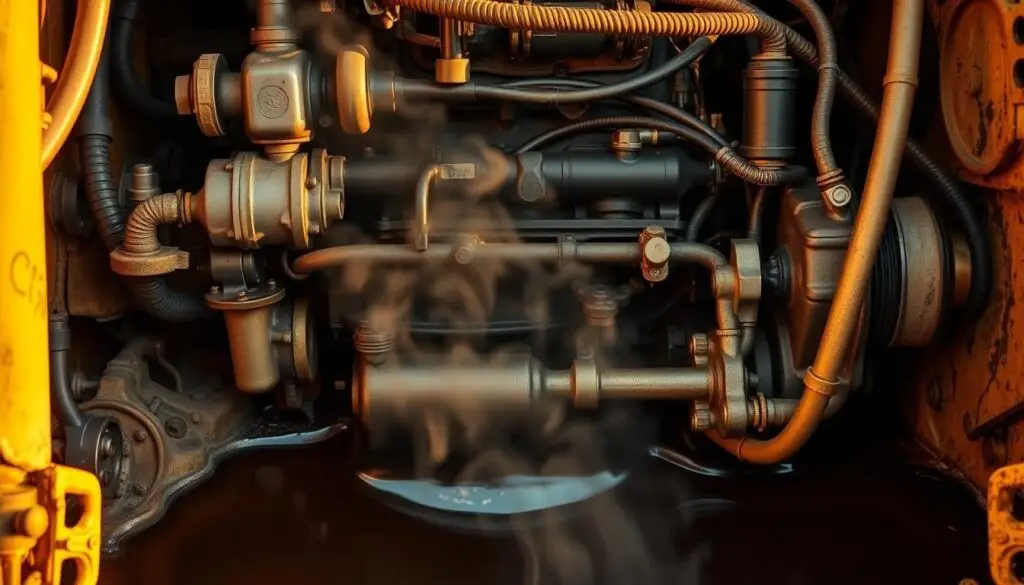
Overlooking engine oil quality and level can trigger a cascade of friction-related heat that overwhelms even a perfectly functioning cooling system. While most operators associate overheating exclusively with radiator or coolant problems, engine oil issues create substantial thermal challenges that frequently go undiagnosed. Oil serves dual purposes that directly impact temperature management—reducing friction between moving metal surfaces while simultaneously absorbing heat generated by combustion and mechanical operation.
Low Oil Levels and Inadequate Lubrication
A low oil level creates immediate problems for both lubrication and heat dissipation. When oil volume drops below the recommended range, the remaining oil cannot effectively reach all engine components. Critical surfaces like bearings, pistons, and cylinder walls experience increased metal-to-metal contact, generating excessive friction heat that adds to the thermal load your cooling system must handle.
As oil level drops, a dangerous cycle accelerates toward engine damage. The remaining oil circulates more rapidly through hotter engine zones and becomes hotter itself. High temperatures cause the oil to lose viscosity, making it thinner and less effective at maintaining protective films between moving parts. Thinner oil allows more metal contact, which increases friction and generates additional heat—a self-reinforcing cycle that rapidly escalates overheating conditions.
Contaminated and Degraded Oil
Oil contamination and degradation destroy the lubricating and heat transfer properties that prevent overheating. Even with adequate oil volume, contaminated or deteriorated oil cannot protect engine components or manage temperatures effectively. Fuel dilution occurs when diesel enters the crankcase through blow-by or injector leaks, thinning the oil and reducing its ability to maintain proper lubricating films.
Coolant contamination from head gasket failures or oil cooler leaks creates a milky appearance and completely destroys lubrication properties. Particulate contamination—metal particles from wear, carbon deposits from combustion, and dirt from inadequate filtration—transforms oil from a lubricant into an abrasive compound that accelerates wear and friction heat generation.
Following manufacturer-recommended oil change intervals prevents degradation-related overheating problems. Severe service conditions require more frequent intervals—continuous high-load operation, extremely dusty environments, and extended idle periods all accelerate oil degradation and demand shortened change schedules.
Step-by-Step Diagnostic and Repair Process
Troubleshooting overheating problems demands systematic investigation rather than random part replacement. Effective diagnosis combines proper safety protocols with logical testing sequences that identify root causes quickly. This structured approach saves both time and money while preventing additional damage to your backhoe engine.
Initial Safety and Cool-Down Protocol
When temperature warnings appear or overheating symptoms develop, immediate action prevents catastrophic engine damage. Reduce engine load gradually rather than shutting down abruptly under full power—sudden shutdown under heavy load causes thermal shock that can crack cylinder heads or warp engine blocks. Move the backhoe away from active work areas to a safe location before complete shutdown.
⚠️ Hot Coolant Hazard
Never open a hot cooling system immediately after shutdown. Pressurized coolant can reach temperatures exceeding 250°F, causing severe burns upon release. Wait a minimum of 30-45 minutes before touching any cooling system components. Wear heat-resistant gloves and safety glasses when working near hot parts.
While the system cools, perform visual inspections that don’t require opening pressurized components. Look for obvious coolant leaks, damaged or swollen hoses, debris blocking the radiator, or loose fan belts. Document everything you observe—these initial findings guide subsequent troubleshooting steps.
Systematic Component Testing
A methodical inspection sequence progresses from simple visual checks to complex component testing. Begin with fundamental checks: verify coolant level when the engine is completely cold, inspect all visible hoses for cracks or deterioration, check radiator external surfaces for damage or blockage, examine fan belts for proper tension and wear, and observe fan operation at various engine speeds.
Temperature pattern analysis provides valuable diagnostic clues. If overheating occurs only under heavy load, suspect radiator restrictions or inadequate airflow. Overheating that develops gradually over time often indicates coolant loss or accumulating deposits. Sudden overheating suggests component failure like thermostat malfunction or water pump breakdown.
Use temperature comparison techniques to identify coolant flow problems. Feel the upper and lower radiator hoses after the engine reaches operating temperature. The upper hose should be hot while the lower hose feels cooler, indicating proper circulation through the radiator. Both hoses hot suggests airflow problems or radiator internal blockage. Upper hose hot with cold lower hose indicates restricted flow, typically from thermostat failure.
Pressure Testing and Component Verification
Pressure testing reveals leaks that don’t appear during unpressurized inspection. A cooling system pressure tester attaches to the radiator fill neck and pressurizes the system to normal operating pressure, typically 13-16 PSI. Watch the pressure gauge for five to ten minutes after pressurizing. Rapid pressure loss indicates major leaks requiring immediate repair, while slow loss suggests minor seepage requiring monitoring.
Share Your Field Experience
Have you developed effective troubleshooting techniques for equipment overheating? Your practical insights help other fleet managers and technicians solve problems faster.
Preventive Maintenance for Cooling System Protection
The foundation of reliable backhoe operation rests on consistent preventive maintenance that addresses cooling system health before issues arise. Proactive care dramatically reduces downtime and prevents costly repairs by identifying potential problems early. Equipment receiving regular attention experiences fewer breakdowns and maintains optimal operating temperatures even under heavy loads.
Daily, Weekly, and Monthly Inspection Schedules
A structured maintenance schedule forms the backbone of effective overheating prevention. Different inspection intervals address specific maintenance needs based on problem development timelines. Daily checks catch immediate issues, while weekly and monthly procedures identify developing problems before they cause failures.
Daily maintenance tasks should become standard practice before starting work each day: check coolant levels in the overflow reservoir when the engine is completely cool, look for new leaks or puddles beneath the machine, and monitor temperature gauge behavior during normal operation to establish baseline patterns. These simple checks take only minutes but provide critical early warning of developing problems.
Weekly maintenance procedures require more thorough inspection: detailed visual examination of all hoses and connections for wear or damage, fan belt tension and condition checks, cooling fan operation verification across various temperature conditions, radiator face inspection for debris accumulation, and clamp tightness examination at hose connections.
Monthly maintenance tasks involve comprehensive coolant system care. Test coolant condition by checking color, clarity, and freeze protection using a hydrometer or refractometer. Inspect hose flexibility and check for soft spots or cracks signaling impending failure. According to John Deere cooling system maintenance guidelines, thermostats should be replaced whenever the system is flushed, with initial coolant service at 3 years or 3,000 hours.
Radiator Cleaning Procedures
Regular radiator inspection and cleaning maintains heat dissipation efficiency that prevents temperature buildup. External debris and internal deposits both restrict heat transfer and create overheating conditions. Cleaning frequency depends heavily on work conditions—backhoes operating in high-dust environments may require weekly or even daily cleaning.
External radiator cleaning techniques involve positioning the machine for easy radiator access and removing protective panels or guards. Use compressed air blown from the engine side toward the outside to push debris out rather than deeper into the core. Apply moderate air pressure to avoid damaging delicate fins, and direct airflow away from operators and bystanders.
For stubborn contamination, supplement with low-pressure water washing using wide spray patterns. Always work from the clean side to push contaminants out rather than forcing them deeper into passages. Internal cleaning through periodic system flushing removes mineral deposits and corrosion products—chemical flush products contain descaling agents that dissolve accumulated deposits.
Operational Best Practices
Proper operating practices complement mechanical maintenance by reducing thermal stress on cooling systems. How operators run equipment significantly impacts overheating risk. Engines should run at idle or low load for several minutes after cold starts—this warm-up period allows coolant circulation to stabilize and operating temperatures to reach normal ranges before applying working loads.
Load management practices prevent sustained high-temperature operation: avoid unnecessarily prolonged operation at maximum load capacity, allow brief cooling periods during extended heavy work cycles, and understand that high ambient temperatures reduce available cooling capacity. Environmental considerations also affect performance—select work areas with adequate ventilation when possible and position machines to maximize natural airflow to radiators.
Operators trained to recognize early overheating symptoms create the most effective defense against severe damage. Catching temperature rises early—while elevated but not critical—allows controlled shutdown that prevents engine damage. The general guidance for hydraulic system overheating applies equally to engine cooling: temperatures above 180°F damage seal compounds and accelerate fluid degradation.
Frequently Asked Questions
What temperature indicates my backhoe engine is overheating?
Normal operating temperature for most backhoe diesel engines ranges between 180°F and 210°F (82°C to 99°C). Temperatures consistently approaching 220°F require immediate load reduction and monitoring. Dashboard warning lights typically activate around 220-230°F, but engine damage may already be occurring at this point. If your gauge enters the red zone, shut down immediately—continuing operation risks cylinder head warping, head gasket failure, and bearing damage that can cost $15,000 or more to repair.
Why does my backhoe overheat only when idling or digging but run cool during transport?
This pattern points directly to fan system problems rather than coolant or radiator issues. During transport, natural airflow from vehicle movement provides cooling assistance. When stationary or moving slowly during digging operations, your backhoe relies entirely on mechanical fan airflow to cool the radiator. A slipping fan belt, failing fan clutch, or hydraulic fan drive problem prevents adequate airflow during stationary operation while symptoms remain hidden during travel when ram air compensates for fan deficiency.
How often should I check and change my backhoe’s coolant?
Check coolant levels daily before starting work, using the overflow reservoir when the engine is cold. Inspect coolant condition monthly by checking color, clarity, and freeze protection with a refractometer. For conventional coolant meeting ASTM D6210 specifications, complete replacement is typically recommended every 1-2 years or as specified by your equipment manufacturer. Extended-life coolants can last up to 5 years with proper maintenance and testing, though many manufacturers recommend adding chemical extenders at 300,000-hour intervals.
Can I continue operating my backhoe if it starts to overheat?
No—continuing operation when temperature warnings appear causes permanent damage. Each additional minute of operation at extreme temperatures increases repair costs exponentially. When overheating occurs, reduce load immediately and move to a safe location. Allow the engine to idle for 2-3 minutes before shutdown to prevent thermal shock from sudden temperature changes. Never add cold water to an extremely hot engine, as the temperature differential can crack cylinder heads and engine blocks. Wait at least 30 minutes before opening the cooling system for inspection.
How do I know if my thermostat is stuck closed versus a radiator blockage?
After the engine reaches normal operating temperature, carefully feel the upper and lower radiator hoses. With a stuck closed thermostat, the upper hose remains relatively cool because hot coolant cannot flow to the radiator—the engine overheats but the radiator stays cool. With radiator blockage, both hoses feel hot because coolant circulates to the radiator but cannot release heat effectively. You can confirm thermostat function by removing it and testing in heated water—a properly functioning thermostat begins opening at its rated temperature, typically stamped on the component.
Protecting Your Equipment Investment
Backhoe engine overheating presents manageable challenges when operators understand the underlying causes and apply systematic diagnostic approaches. The cooling system components, thermostat assemblies, radiator conditions, and lubrication quality all contribute to temperature regulation—recognizing these interconnected factors enables targeted repairs instead of costly guesswork.
Early detection remains your strongest defense against catastrophic damage. Temperature gauges, performance changes, and physical warning signs provide advance notice of developing problems. Operators trained to recognize these symptoms can stop operations before minor issues escalate into expensive failures. The Technology & Maintenance Council emphasizes that systematic maintenance approaches consistently outperform reactive repair strategies in reducing total equipment costs.
Regular maintenance following the schedules outlined in this guide dramatically reduces unexpected breakdowns. Coolant system inspections, radiator cleaning, and component testing catch potential failures before they cause downtime. These preventive practices deliver measurable returns through extended equipment life, reduced repair costs, and more productive operations. The investment in proper cooling system care costs far less than a single overheated engine—and the productivity losses that come with it.
Found This Guide Helpful?
Share this resource with other operators and fleet managers who can benefit from practical overheating prevention strategies.