By Michael Nielsen, Editor & Publisher | 15+ Years in Diesel Repair
Last Updated: December 2025
📖 Estimated reading time: 16 minutes
Fleet managers face a critical decision when hydraulic cylinders fail: repair the existing unit or invest in complete replacement? The hydraulic cylinder repair vs replacement cost analysis extends far beyond comparing invoice totals. With fleet vehicle downtime costing an average of $448 to $760 per day per vehicle according to Element Fleet Management research, making the wrong choice can cascade into significant operational losses.
Standard cylinder repairs typically cost between $300 and $700 for seal replacements, while new cylinders range from $400 for aftermarket options to $5,000+ for large or custom units. But these numbers only tell part of the story. A seemingly expensive repair delivering one-day turnaround may cost less than a budget replacement requiring two weeks of lead time when you factor in productivity losses.
This guide breaks down the complete cost picture for both options, establishes clear decision criteria based on equipment condition and operational requirements, and provides frameworks fleet managers can apply consistently across their hydraulic cylinder inventory.
Key Takeaways
- Cost threshold rule: When repair costs exceed 70-80% of replacement costs, replacement typically delivers better long-term value.
- Cylinder age matters: Units under five years old with isolated failures almost always favor repair due to remaining structural integrity.
- Damage type determines viability: Seal failures and minor rod scoring support economical repair; barrel damage and deep internal scoring require replacement.
- Downtime often outweighs parts cost: A three-day replacement wait versus one-day repair can create cost differentials exceeding the component price difference by 5-10x.
- Custom cylinders strongly favor repair: Replacement costs for non-standard specifications often reach $3,000-$10,000+, making repair the only practical option.
The True Cost of Hydraulic Cylinder Decisions
Equipment failures involving hydraulic cylinders trigger cascading financial impacts that extend well beyond the repair invoice. Fleet operations lose revenue during downtime, face customer satisfaction challenges from delayed projects, and may incur overtime costs to catch up on production schedules once equipment returns to service.
According to Siemens’ True Cost of Downtime 2024 report, unplanned downtime costs major companies approximately 11% of annual revenues, totaling $1.4 trillion globally. While most fleet operations don’t face automotive-industry-level costs of $2.3 million per hour, the proportional impact remains substantial for businesses of all sizes.
Consider a mid-sized contractor where equipment downtime costs $500 per hour in lost productivity. A three-day wait for cylinder replacement generates $12,000 in lost revenue. A one-day repair turnaround reduces that loss to $4,000—a differential of $8,000 that dwarfs most repair versus replacement price differences.
$448–$760/day
Average fleet vehicle downtime cost per vehicle — Element Fleet Management
Two-thirds of companies report that unscheduled downtime significantly impacts their operations, making cylinder service decisions a fleet-wide concern rather than isolated incidents. Smart maintenance budget optimization requires viewing each decision through a total cost lens that accounts for equipment availability, operational continuity, and business opportunity costs.
Complete Hydraulic Cylinder Repair Cost Breakdown
The total cost of hydraulic cylinder repair encompasses multiple expense categories beyond the initial quote. Understanding each component helps fleet managers evaluate proposals accurately and identify fair pricing from repair vendors.
Labor Rates and Turnaround Time
Labor costs represent the largest variable in repair expenses, ranging from $120 to $160 per hour depending on geographic location and shop specialization according to Fleet Maintenance industry data. Most standard cylinder repairs require approximately two hours of technician time, yielding labor expenses between $240 and $320 for straightforward seal replacements.
Expedited service adds significant premiums to base rates. After-hours repairs or mobile service calls typically increase labor costs by 25-50% above standard shop rates. Weekend emergency repairs can double labor expenses, making preventive maintenance scheduling financially advantageous for planned service intervals.
Parts and Material Costs
Standard repair kits containing seal sets range from $60 to $100 for common cylinder sizes. Specialized seals for high-pressure or high-temperature applications cost substantially more, sometimes reaching $200-$300 per kit. Complete resealing operations typically fall between $300 and $700 total, depending on cylinder size and seal complexity.
Rod damage requires additional investment beyond basic seal work. Chrome plating or resurfacing adds $200 to $500 to repair costs. When hydraulic pump issues accompany cylinder problems, repair or replacement costs escalate dramatically to $1,500-$3,000 for the pump component alone.
| Repair Type | Cost Range | Typical Timeline |
|---|---|---|
| Basic seal kit replacement | $300–$420 | 24 hours |
| Complete resealing service | $300–$700 | 1–2 days |
| Rod resurfacing/re-chroming | $200–$500 additional | 3–5 days |
| Hydraulic pump repair | $1,500–$3,000 | 5–7 days |
Hidden Costs: Transportation and Downtime
Transportation costs vary based on cylinder dimensions and repair facility distance. Local transport of small cylinders costs around $100, while oversized units requiring specialized hauling can exceed $500. These logistics expenses add 15-25% to total repair investment.
Cylinder removal and reinstallation labor represents another frequently overlooked expense. Depending on equipment configuration, this work adds 2-4 hours of billable time at standard shop rates. Mobile repair services eliminate transportation costs but charge premium rates that may offset these savings.
⚠️ Safety Warning
Hydraulic systems operate at pressures exceeding 2,000 PSI. Before any cylinder service, relieve all system pressure, follow lockout/tagout procedures per OSHA 29 CFR 1910.147 requirements, and wear appropriate PPE including safety glasses and face shields. Pressurized fluid can penetrate skin and cause severe tissue damage requiring immediate surgical intervention.
Full Replacement Cost Analysis
Replacement pricing varies dramatically based on sourcing strategy, cylinder specifications, and application requirements. Understanding the full cost picture helps operations teams budget accurately and identify legitimate savings opportunities.
OEM vs. Aftermarket Pricing
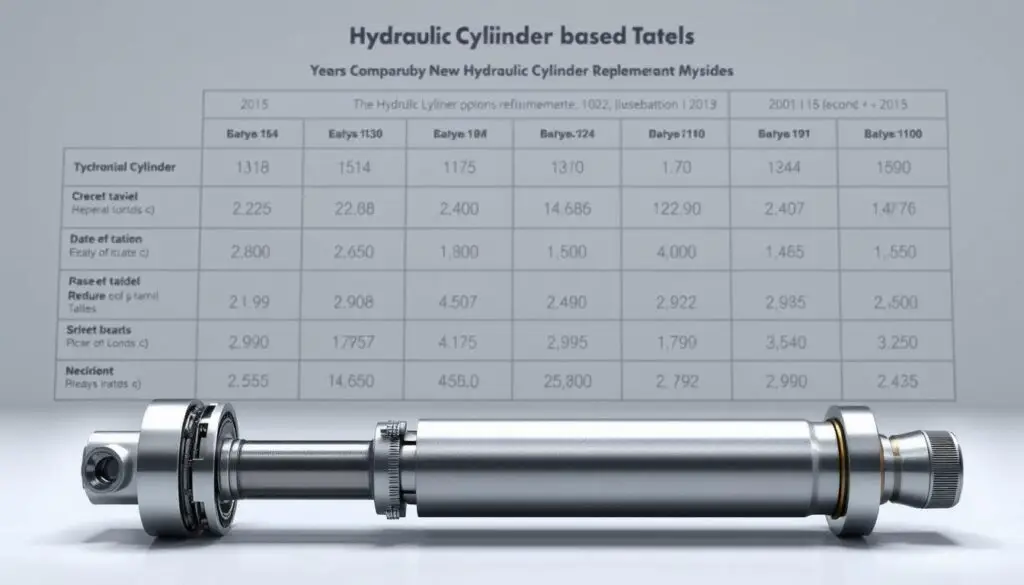
The pricing gap between original equipment manufacturers and aftermarket suppliers presents significant budget implications. OEM cylinder pricing typically commands a 30-50% premium over alternative options. A 3-inch bore original equipment cylinder costs $600 or more, while comparable aftermarket cylinders range from $400-$450.
Original equipment units provide guaranteed compatibility and manufacturer warranties that reduce integration risks. Aftermarket cylinders offer substantial savings but may require dimensional verification and compatibility testing before installation. Fleet managers must weigh immediate cost savings against potential fitment challenges and warranty coverage differences.
Cylinder exchange programs represent a middle ground balancing cost and reliability. These programs provide remanufactured units with warranty coverage at prices typically 25% below new OEM purchases. Exchange programs often deliver faster availability than new cylinder orders, reducing downtime impact.
| Cylinder Source | Price Range (3″ Bore) | Typical Lead Time |
|---|---|---|
| OEM New | $600–$900 | 2–6 weeks |
| Aftermarket | $400–$450 | 1–3 weeks |
| Exchange Program | $450–$675 | 3–7 days |
| Custom Fabrication | $3,000–$10,000+ | 6–12 weeks |
Installation and Integration Costs
New cylinder installation extends beyond the purchase price to include substantial labor components. Installation typically requires 2-4 hours of technician time at rates between $120-$160 per hour, yielding $240-$640 in labor expenses for standard installations.
New cylinders may require mounting bracket modifications, hydraulic line adaptations, or system pressure adjustments. These modifications add considerable hours to project timelines. System integration costs increase significantly when replacing cylinders on older equipment where exact replacements are unavailable.
Custom fabrication of mounting hardware or specialized hydraulic fittings can add $200-$800 to project costs. Fleet managers should anticipate these integration expenses during budget planning to avoid cost overruns on replacement projects.
Core Returns and Disposal
Returning failed cylinders for core credits offsets replacement expenses by $50-$200 depending on cylinder condition and size. Many suppliers require core returns within 30-60 days to qualify for credit programs. Cylinder condition significantly impacts credit value, with complete units commanding higher returns than severely damaged components.
Disposal fees for non-returnable cylinders range from $25-$100 based on local environmental regulations. Proper fluid drainage and environmental compliance add administrative costs to disposal processes that must factor into total replacement cost calculations.
Stay Current on Fleet Maintenance Strategies
Get practical guidance on equipment decisions, maintenance optimization, and cost management delivered to fleet professionals weekly.
Decision Framework: When to Repair vs. Replace
Consistent, objective decision-making requires evaluating specific equipment characteristics against established criteria. Four primary variables determine whether repair or replacement delivers optimal value for each cylinder situation.
Equipment Age and Maintenance History
Cylinder age plays a fundamental role in repair viability. Units less than five years old with isolated failures almost always make financial sense to repair because their structural components remain sound and parts availability is typically excellent. Equipment with regular preventive maintenance and minimal previous repairs typically delivers excellent repair outcomes.
Detailed maintenance records revealing proper fluid filtration, regular inspections, and timely seal replacements indicate well-maintained equipment where repair investments pay off. Conversely, cylinders lacking documentation or showing deferred maintenance patterns may have hidden degradation that makes replacement more prudent.
Damage Type Assessment
Distinguishing between surface-level failures and structural damage determines repair economics. According to Aggressive Hydraulics, most cylinders can be repaired economically when damage is limited to seals, head glands, pistons, bushings, or removable mounts.
Surface damage supporting economical repair includes visible oil leaks around seals, minor rod surface damage addressable through resurfacing, worn bushings or bearings that replace during standard rebuilds, and damaged mounting hardware requiring component substitution.
Structural failures typically favor replacement. Barrel scoring, tube wall damage, bent rods beyond straightening capacity, or cracked components compromise cylinder integrity. When rod assembly or barrel assembly replacement is required—especially on smaller assemblies made in high-volume production environments—the economics shift toward new cylinder purchase.
Key Recommendation
When repair costs exceed 70-80% of replacement costs, or when parts sourcing becomes difficult due to discontinued models, replacement delivers better long-term value. Below this threshold, repair typically provides superior ROI for cylinders with remaining service life.
Utilization Rates and Remaining Service Life
Equipment usage intensity directly affects repair decision economics. High-utilization equipment operating 2,000+ hours annually justifies repair investments due to substantial productive life remaining. Equipment with 5-10 years of expected remaining service represents ideal repair candidates that will generate sufficient operational value to recover repair costs multiple times over.
Conversely, equipment within 1-2 years of planned replacement should receive minimal investment regardless of repair feasibility. Fleet managers must align cylinder service decisions with broader asset lifecycle strategies to avoid repairing cylinders on equipment destined for disposal.
Parts Availability and Lead Time
Component availability dramatically impacts repair feasibility. Common cylinder configurations on popular equipment models feature readily available parts enabling quick, economical repairs. Standard components ship within days and install without custom modifications.
Obsolete or specialized cylinders face different economics. Extended lead times or custom components substantially increase costs and extend downtime. When repair timelines stretch to weeks while replacement units are available within days, the downtime cost differential may justify higher replacement expense.
Scenarios Favoring Repair
Specific failure patterns and equipment characteristics consistently produce superior returns through targeted repair interventions. Recognizing these scenarios prevents unnecessary replacement expenses.
Simple Component Failures
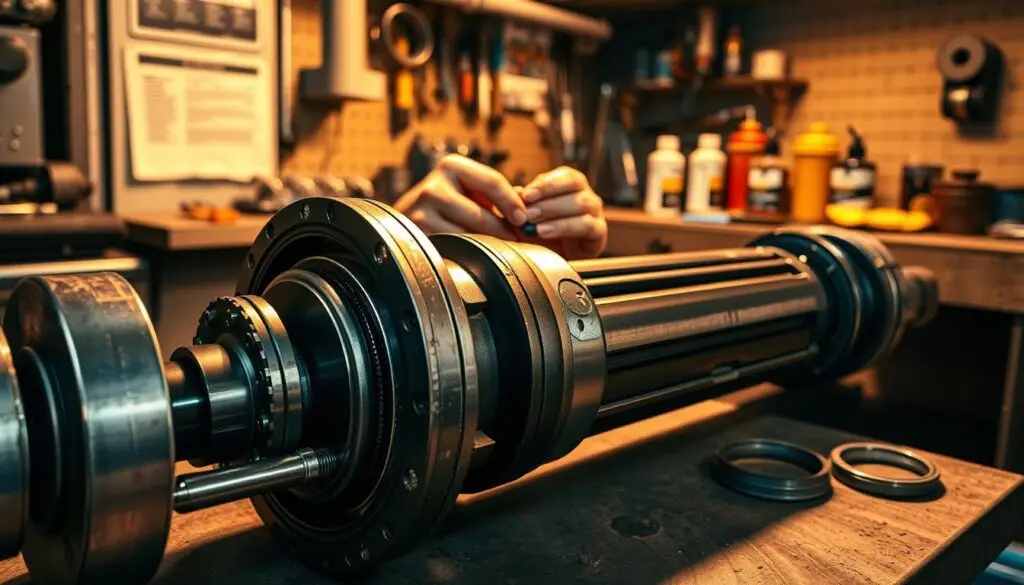
Seal failure repair represents the highest-value repair opportunity. When cylinders leak due to worn seals but internal components remain sound, simple seal replacement restores full functionality at $300-$700 including labor—typically 10-20% of replacement costs for standard cylinders.
Seal failures typically occur after 2,000-5,000 operating hours as predictable wear rather than equipment failure. The repair process remains straightforward: disassembly, inspection, seal installation, and reassembly within 2-4 hours of shop time.
Minor rod surface damage including light scoring, pitting, or corrosion responds well to rod resurfacing processes. Re-chroming or polishing services cost $200-$500 and eliminate leak paths while extending cylinder life by years. Early detection enables economical repair; delayed attention allows contaminants to damage seals and worsen internal scoring.
Recent Equipment Investments
Equipment less than two years old or within active warranty periods should default to repair unless catastrophic failure occurs. Remaining components retain substantial service life, making replacement financially wasteful. Warranty coverage often fully or partially offsets repair costs, creating compelling economics even for moderately expensive rebuilds.
Custom and Specialized Cylinders
Custom cylinder repair delivers exceptional value for non-standard specifications. Custom hydraulic cylinders with unique designs often cost $3,000-$10,000+ for replacements due to engineering, tooling, and low-volume production expenses. Repair costs remain relatively consistent regardless of customization, making rebuild dramatically more cost-effective.
Cylinders with unique mounting configurations, non-standard bore/stroke combinations, or specialized seal materials almost always favor repair. Custom specifications frequently extend lead times to 8-12 weeks for replacements, while repairs complete within standard timeframes.
The HDJ Perspective
In our experience working with fleet operations, the biggest mistake managers make isn’t choosing repair when they should replace—it’s failing to establish consistent decision criteria across their cylinder inventory. Operations that apply the 70-80% cost threshold rule and factor downtime into every calculation consistently outperform those making ad-hoc decisions. The key is treating hydraulic cylinder management as a systematic process rather than reacting to individual failures. Build your decision framework once, document it clearly, and empower maintenance teams to apply it consistently.
Scenarios Favoring Replacement
Certain damage patterns and equipment histories indicate when complete replacement delivers optimal return on investment. Recognizing these thresholds prevents the trap of repeated repair cycles that never restore reliable performance.
Structural Damage and Internal Scoring
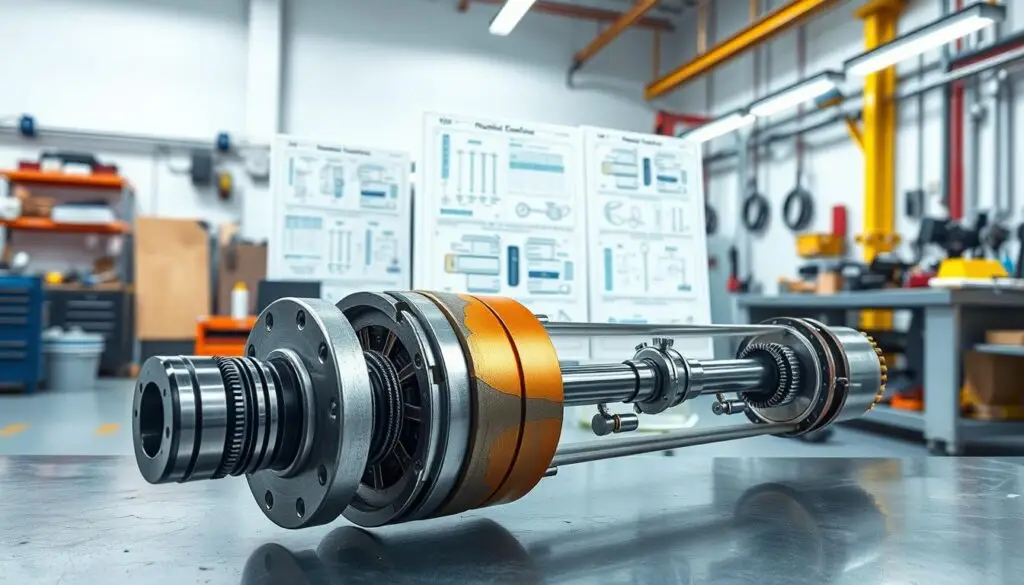
Barrel damage and internal scoring fundamentally compromise cylinder integrity. Deep grooves or scratches on the cylinder tube interior create leak paths that cannot be reliably sealed regardless of seal quality or installation precision. The compromised surface finish prevents proper seal contact, leading to immediate failure after repair attempts.
Barrel wall cracks, deformation, or extensive corrosion penetrating the metal structure represent structural failures that cannot be repaired safely. These conditions compromise pressure ratings and create safety hazards during operation.
Replacement indicators include deep internal scoring exceeding 0.005 inches that prevents seal seating, barrel wall cracks or structural deformation from impact damage, corrosion penetration compromising pressure vessel integrity, and piston damage beyond machining or replacement capacity.
Chronic Repair History
Cylinders requiring multiple previous repairs demonstrate diminishing returns favoring replacement. When equipment needs cylinder rebuilds more than twice within a five-year period, this pattern suggests underlying systemic problems that new components alone cannot solve.
Cylinders developing different failure modes after each repair—first seals, then rod damage, then bearing failure—indicate progressive degradation. This pattern shows that component replacement cannot restore reliable service; only complete replacement provides lasting performance improvement.
Calculating cumulative repair costs over equipment history reveals when replacement makes financial sense. When total repair expenditures exceed 100-120% of replacement costs, future repairs represent poor investments with declining reliability returns.
Obsolete Equipment and Parts Scarcity
Legacy equipment with discontinued cylinder models faces increasing repair challenges as parts availability diminishes. Proprietary designs from defunct manufacturers or models no longer in production create significant long-term value challenges for continued repair strategies.
Obsolete parts often require custom fabrication at premium prices—sometimes 200-300% more than standard components. When sourcing parts for discontinued models becomes difficult and repair costs exceed 70-80% of replacement, modern replacement cylinders prove more pragmatic. This strategic decision protects long-term equipment value by ensuring ongoing support throughout remaining service life.
Share Your Cylinder Management Experience
Have you developed effective repair vs. replacement protocols for your fleet? Heavy Duty Journal welcomes contributions from fleet managers and maintenance professionals sharing real-world insights.
ROI Calculations and Break-Even Analysis
Quantifying the financial impact of hydraulic cylinder decisions demands analytical frameworks capturing both immediate expenses and long-term value. Fleet managers who master ROI methodology transform cylinder maintenance from reactive spending into strategic investment.
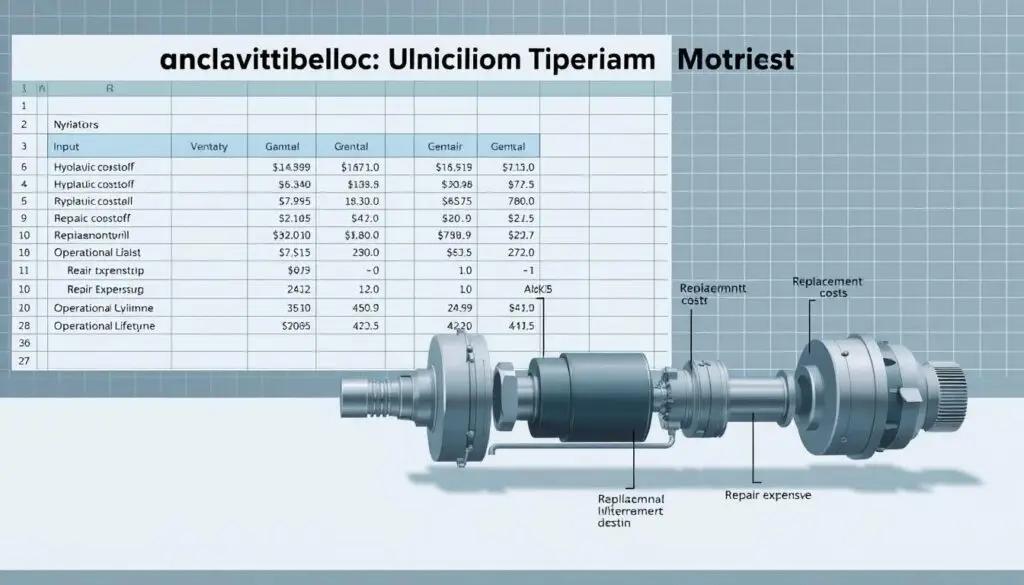
Cost-Per-Operating-Hour Analysis
Cost-per-operating-hour calculations reveal actual financial efficiency beyond initial price comparisons. A $400 repair delivering 3,000 additional operating hours costs $0.13 per hour of service. A $1,200 replacement providing 8,000 hours costs $0.15 per hour—the immediate advantage favors repair.
However, lifecycle analysis requires accounting for secondary failure probability. Repaired cylinders face 20-30% likelihood of additional failures within their extended service period. New cylinders typically operate failure-free through initial lifespan. Expected total maintenance costs over the planning horizon must include probability-weighted secondary repairs.
For equipment with five or more years of remaining service life, break-even analysis typically occurs at 1,500-2,500 operating hours. Rebuilt cylinders demonstrate improved efficiency, consuming less hydraulic fluid and reducing operational costs by 5-10% compared to worn units operating at marginal performance.
Downtime Cost Integration
Equipment unavailability creates cascading financial impacts that often exceed repair versus replacement price differentials. Using Element Fleet Management’s documented $448-$760 per day per vehicle downtime costs, a three-day replacement wait generates $1,344-$2,280 in lost productivity versus $448-$760 for one-day repair turnaround.
This $896-$1,520 downtime differential can transform decision calculus entirely. For high-value equipment during peak operational periods, rapid repair becomes financially optimal even at higher per-unit costs when lead times favor repair turnaround.
Total Cost of Ownership Framework
Comprehensive total cost of ownership incorporates every expense from initial service through end-of-life disposal. This framework provides complete financial visibility for strategic planning across the entire cylinder inventory.
| Cost Category | Repair Impact | Replacement Impact |
|---|---|---|
| Initial Investment | $300–$700 | $600–$5,000+ |
| Expected Service Hours | 2,000–5,000 hours | 5,000–10,000+ hours |
| Secondary Failure Risk | 20–30% probability | 5–10% probability |
| Typical Downtime | 1–3 days | 3–14 days |
Building a Fleet-Wide Cylinder Management Strategy
Systematic management across the entire cylinder inventory delivers compounding benefits through consistent decision-making, optimized vendor relationships, and proactive monitoring systems. Organizations that move beyond reactive repairs achieve measurable cost reductions while improving equipment reliability.
Condition-Based Maintenance Implementation
Regular inspections catch early warning signs when repairs remain simple and inexpensive. Visual examinations detect oil leaks, rod surface damage, and seal deterioration before complete failures occur. Operational testing identifies unusual noises, slow movement, and performance degradation that signal developing problems.
Fluid analysis programs represent powerful diagnostic tools. Periodic hydraulic oil sampling costs $30-$50 per test but detects contamination before it damages internal components. According to Machinery Lubrication, at least 75% of hydraulic system failures result from contaminated or degraded fluid, making proactive monitoring essential. Particle counts and fluid degradation analysis identify issues that visual inspections cannot reveal.
Preventive maintenance protocols should include hydraulic cylinder repacking every 2,000-3,000 operating hours. Replacing seals proactively costs $300-$400 compared to $1,500-$2,500 for repairs after complete failure—plus the avoided downtime costs.
Standardized Decision Criteria
Creating a maintenance decision matrix eliminates subjective decision-making across the organization. Structured frameworks incorporating equipment age, damage severity, repair costs, and parts availability produce consistent recommendations regardless of location or personnel.
Decision trees provide clear pathways: cylinders under five years old with isolated seal failures default to repair; units over ten years old with structural damage default to replacement; intermediate scenarios receive detailed ROI analysis using standardized calculations.
Documentation protocols capturing decision rationale, actual costs, and outcomes enable continuous improvement. Tracking empirical results allows refinement of decision criteria based on real-world performance data rather than assumptions.
Vendor Partnership Development
Quality repair shops offer preferred pricing with 10-15% discounts for fleet customers. Priority scheduling provides faster service turnarounds during high-demand periods when capacity constraints affect other customers.
Volume purchasing agreements for common components deliver 15-25% cost reductions. Seal kits, hydraulic hoses, and standard cylinders purchased through negotiated contracts lower total maintenance expenses significantly.
Frequently Asked Questions
How much does it cost to rebuild a hydraulic cylinder?
Standard hydraulic cylinder rebuilds cost between $300 and $700 for seal replacement and basic reconditioning. Labor rates typically run $120-$160 per hour with most repairs requiring approximately two hours. Rod resurfacing adds $200-$500 when surface damage requires chrome plating or polishing. Complex rebuilds involving multiple component replacements can reach $1,000-$1,500, while repairs requiring hydraulic pump work escalate to $1,500-$3,000 total.
When should I replace instead of repair a hydraulic cylinder?
Replace rather than repair when repair costs exceed 70-80% of new cylinder cost, when the cylinder has required multiple repairs within five years, when barrel or internal scoring damage prevents reliable sealing, or when parts are unavailable for obsolete models. Cylinders with structural damage including cracks, severe corrosion, or deformation should always be replaced regardless of repair cost estimates.
Is it cheaper to repair or replace hydraulic cylinders?
Repair is typically 50-70% cheaper than replacement for seal failures and minor damage on cylinders under five years old. A $400 repair versus $1,200 replacement provides immediate savings. However, when factoring total cost of ownership including downtime, secondary failure risk, and remaining service life, replacement sometimes delivers better long-term value despite higher upfront cost—particularly for cylinders with chronic repair history or structural issues.
How long do hydraulic cylinder repairs take?
Simple seal replacements complete within 24 hours at most repair facilities. Standard rebuilds requiring rod resurfacing extend to 3-5 days. Complex repairs involving custom parts or machine work may require 1-2 weeks. By comparison, new OEM cylinder orders often require 2-6 weeks lead time, while aftermarket units typically ship within 1-3 weeks. Exchange programs offer fastest replacement turnaround at 3-7 days.
What causes hydraulic cylinders to fail?
Seal wear from normal operation represents the most common failure mode, occurring after 2,000-5,000 operating hours. Contaminated hydraulic fluid accelerates seal and component degradation. Rod damage from debris, improper operation, or misalignment creates leak paths and accelerated wear. Excessive pressure from system faults or incorrect settings damages seals and can compromise barrel integrity. Corrosion from moisture contamination or environmental exposure weakens structural components over time.
Making Smart Hydraulic Cylinder Decisions
Effective hydraulic cylinder cost management requires systematic evaluation rather than reactive decision-making. The frameworks presented here—damage assessment protocols, cost threshold rules, and total cost of ownership calculations—transform cylinder maintenance from guesswork into strategic fleet optimization.
Repair typically costs 30-70% less than replacement when damage is limited to seals and minor surface issues on cylinders with remaining service life. Replacement delivers better value when structural damage compromises integrity, when chronic repair history indicates systemic problems, or when repair costs approach 70-80% of new cylinder pricing.
Fleet managers implementing consistent decision criteria and proactive monitoring programs routinely capture five to six-figure annual savings through optimized cylinder management. Start by auditing current practices, establishing standardized evaluation frameworks, and building vendor relationships that deliver volume pricing and priority service. Your hydraulic cylinders represent substantial capital investment within equipment worth hundreds of thousands of dollars—strategic management protects that investment while maintaining the equipment availability your operations require.
Share This Guide With Your Maintenance Team
If this analysis helps your cylinder management decisions, share it with colleagues facing similar equipment challenges.